
Gorilla Trekking Without Hiking Experience
Gorilla trekking without hiking experience is possible in Uganda, and you do not need to be an experienced mountain climber to encounter endangered mountain gorillas in their natural habitat. However, the activity requires realistic preparation, reasonable physical fitness, and an understanding that forest conditions can be unpredictable. For first-time trekkers, the difference between an enjoyable adventure and an exhausting experience often comes down to preparation and sensible planning.
At PrideMark Safaris, we regularly design Uganda and Rwanda safari itineraries for travelers with different interests, ages, and levels of outdoor experience. Based in Kabale, southwestern Uganda, close to Bwindi Impenetrable National Park and the routes toward Mgahinga Gorilla National Park, our approach is to help visitors understand the trekking environment before selecting accommodation, permits, and transport arrangements.
This guide explains how difficult gorilla trekking can be, whether beginners can manage the trails, which trekking sectors to consider, how porters can assist, and what to expect on the actual trekking day. It also discusses older travelers, fitness preparation, clothing, rainy-season conditions, and practical ways to make your first gorilla trekking safari more comfortable.
Can You Go Gorilla Trekking Without Hiking Experience?
Yes. Gorilla trekking without hiking experience is possible for many reasonably fit travelers who can walk on uneven ground and manage changing forest conditions. Uganda Wildlife Authority does not require visitors to provide evidence of previous hiking expeditions before joining a standard gorilla trek. Instead, visitors must meet the applicable age, health, permit, and park participation requirements.
That does not mean the experience is physically effortless. Gorilla trekking takes place in mountainous forests where trails can be steep, muddy, narrow, and covered with roots. Some encounters require relatively short walks, while others involve several hours of climbing, descending, and navigating dense vegetation. Beginners should prepare for these possibilities rather than expecting a gentle nature walk.
The important distinction is between hiking experience and physical readiness. Someone who regularly walks, climbs stairs, and remains active may cope well despite never having completed a formal mountain hike. Conversely, an experienced traveler who is currently unfit or has difficulty walking on uneven surfaces may find the same trek challenging.
At PrideMark Safaris, we encourage first-time trekkers to discuss their fitness concerns before booking. Understanding your comfort level helps us explain suitable travel arrangements and the questions to raise with park personnel. However, the Uganda Wildlife Authority manages trekking group assignments, and no tour operator can guarantee an easy route or a particular gorilla family.
How Difficult Is Gorilla Trekking in Uganda?
Visitors enjoy a close wildlife encounter with mountain gorillas in a lush forest setting, showing how rewarding gorilla trekking can be for first-time hikers exploring Uganda with PrideMark Safaris.
Gorilla trekking in Uganda is generally considered a moderately demanding outdoor activity, although individual treks can be considerably more challenging. According to Uganda Wildlife Authority’s gorilla tracking information, the activity may last approximately two to seven hours, depending on forest conditions and the location of the gorillas.
The difficulty comes from the environment rather than a requirement for technical climbing. Visitors normally walk through natural forest terrain rather than using ropes, climbing equipment, or specialized mountaineering techniques. However, steep slopes, slippery vegetation, changing weather, and uneven footing can make ordinary walking more demanding than expected.
What Makes Gorilla Trekking Physically Challenging?
Bwindi Impenetrable National Park contains densely forested hills, valleys, and mountain slopes. Visitors may descend into a valley to locate gorillas and then face a sustained climb on the return journey. Even when the gorillas are found relatively quickly, the return route can still require considerable effort.
Rain adds another challenge because wet soil, exposed roots, and vegetation can become slippery. Uganda’s gorilla forests receive rainfall throughout the year, including during traditionally drier months. Suitable footwear, careful movement, and the guidance of park rangers are therefore essential regardless of the season.
The location of the gorilla family is another major factor. Mountain gorillas move through their habitat according to feeding, resting, and social activities. Their movements determine where trackers locate them on a particular day, making it impossible to promise a fixed walking distance before the trek begins.
Gorilla Trekking Difficulty at a Glance
| Factor | What beginners should expect |
|---|---|
| Walking duration | Variable; potentially several hours |
| Terrain | Hills, forest paths, roots, and uneven ground |
| Weather | Rain and slippery conditions possible year-round |
| Technical climbing | Normally not required |
| Fitness | Reasonable walking stamina and mobility |
| Assistance | Local porters and other arrangements may be available |
For travelers attempting gorilla trekking without hiking experience, understanding these factors is more useful than relying on descriptions such as easy, moderate, or difficult. A trek that feels manageable to one visitor may be demanding for another, depending on fitness, balance, confidence, and previous outdoor activity.
Do You Need to Be Physically Fit for Gorilla Trekking?
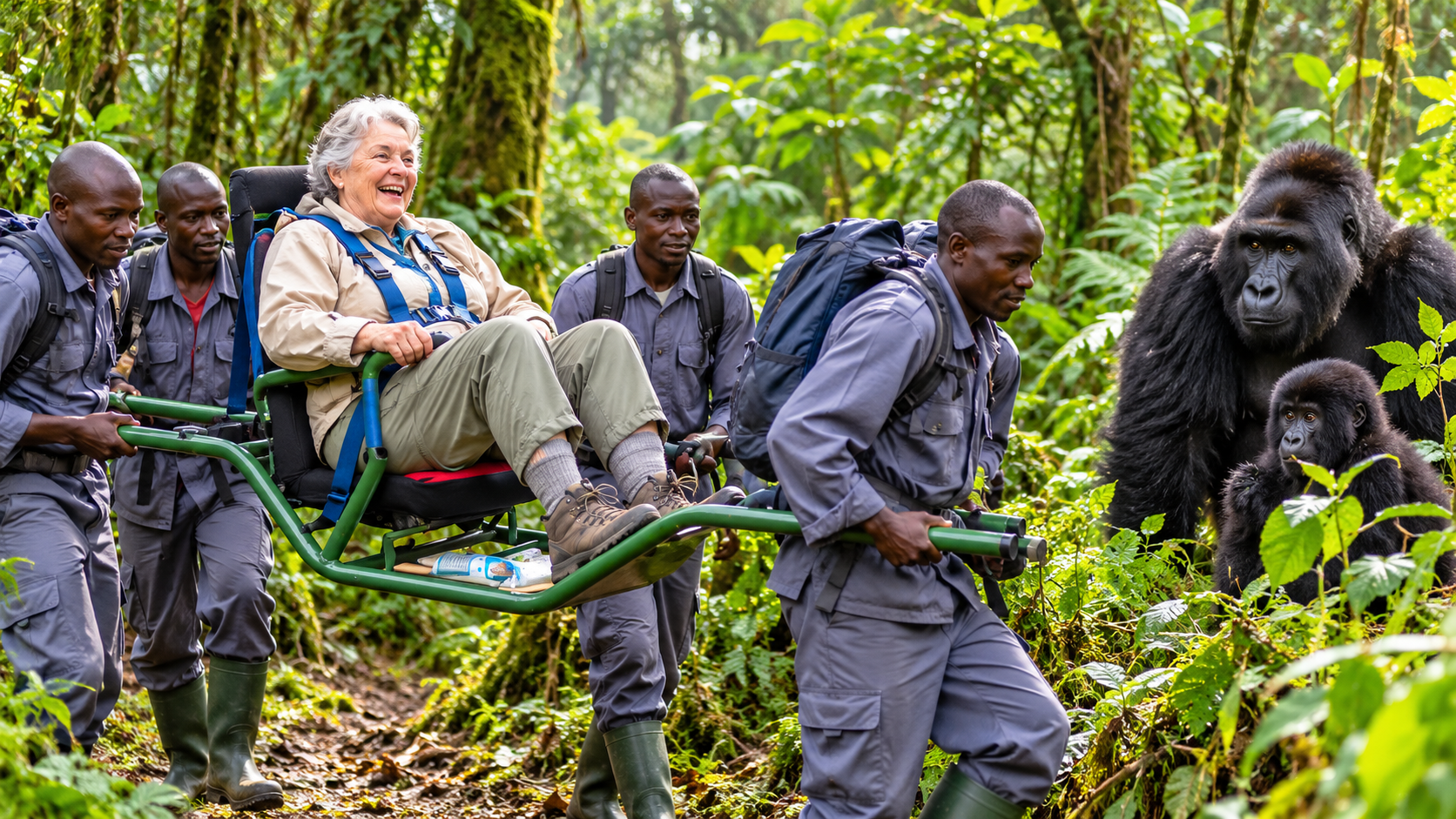
Discover assisted gorilla trekking in Uganda with Pride Mark Safaris, including sedan chair services, local porters and personalized safari planning for travellers with limited mobility.
You do not need to be an athlete, marathon runner, or experienced mountain hiker to participate in standard gorilla trekking. Nevertheless, reasonable cardiovascular fitness, balance, and the ability to walk for an extended period are important. The activity can involve repeated uphill and downhill movement, sometimes in warm or wet conditions.
A useful starting point is to consider whether you can comfortably walk for an hour on uneven terrain, climb several flights of stairs, and continue moving after short breaks. These are practical self-assessment examples rather than official fitness tests or guarantees that a person can complete a gorilla trek.
Travelers who struggle with everyday walking, experience significant breathlessness, or have medical conditions affecting mobility should seek appropriate professional advice before booking. A tour operator cannot determine medical fitness or guarantee that assistance will overcome every physical limitation. Park authorities must also approve any special participation arrangements.
PrideMark Safaris recommends beginning preparation several weeks before departure whenever possible. Consistent walking, gentle hill practice, and suitable footwear can improve confidence. The goal is not to train like a professional mountaineer but to become comfortable spending time on your feet in conditions less predictable than a paved road.
Best Gorilla Trekking Destinations for Beginners in Uganda
Uganda offers mountain gorilla trekking in Bwindi Impenetrable National Park and Mgahinga Gorilla National Park. Both destinations are managed by Uganda Wildlife Authority and require official trekking permits. Each offers a different landscape, but neither can guarantee that a beginner will receive a short or easy trek.
Bwindi has four main trekking sectors: Buhoma, Ruhija, Rushaga, and Nkuringo. These are geographically distinct access areas with different accommodation options and road connections. Mgahinga lies within the Virunga volcanic landscape near Kisoro and provides another regulated gorilla trekking experience.
Buhoma Gorilla Trekking Sector
Buhoma is located in northern Bwindi and is one of the park’s longest-established gorilla tourism areas. Its visitor infrastructure and accommodation options make it appealing to first-time travelers who want a well-organized safari with convenient access to their briefing point.
Buhoma is sometimes described as a beginner-friendly choice, but this should not be interpreted as a promise of easy walking. The terrain varies, and gorilla families can move into areas requiring substantial physical effort. A permit in Buhoma does not automatically mean the shortest or least demanding trek.
For travelers combining gorilla trekking with Queen Elizabeth National Park, Buhoma may also provide practical route connections. PrideMark Safaris recommends considering the complete journey, including lodge location and transport time, rather than choosing Buhoma solely because of its established reputation.
Ruhija Gorilla Trekking Sector
Ruhija lies in eastern Bwindi and is known for its highland forest environment, birdlife, and cooler mountain conditions. The landscape is beautiful but can involve steep walking, making appropriate fitness preparation valuable for first-time trekkers.
Travelers interested in forest birdwatching may find Ruhija particularly appealing. However, the difficulty of the gorilla trek depends on the assigned family and its location rather than the sector’s reputation alone.
Accommodation planning is especially important because the eastern access routes differ from those serving other Bwindi sectors. PrideMark Safaris advises confirming the correct briefing point before choosing a lodge, particularly when an early-morning transfer is required.
Rushaga Gorilla Trekking Sector
Rushaga is located in southern Bwindi and offers standard gorilla tracking as well as the specialized gorilla habituation experience. Its location makes it relevant for travelers approaching through Kisoro and certain Rwanda-to-Uganda itineraries.
For beginners, Rushaga can be considered when permit availability, accommodation, and travel arrangements are suitable. However, having several gorilla tracking opportunities does not mean that every trek is short or physically easy.
Visitors interested in the habituation experience should understand that it is a different activity with potentially greater time and physical demands. Someone concerned about their first forest hike may prefer to begin with standard gorilla trekking rather than assuming a longer encounter will be easier.
Nkuringo Gorilla Trekking Sector
Nkuringo occupies the southwestern side of Bwindi and is associated with dramatic ridges, mountain scenery, and steep terrain. Travelers who enjoy active walking and highland landscapes may find it particularly rewarding.
For someone attempting gorilla trekking without hiking experience, Nkuringo deserves careful consideration. The surrounding terrain can be demanding, although the exact difficulty of any trek depends on gorilla movements and the route taken by the group.
Nkuringo should not automatically be excluded for every beginner, but visitors with concerns about steep slopes should discuss those concerns before selecting the sector. Suitable preparation and honest expectations are more valuable than relying on a general difficulty ranking.
Mgahinga Gorilla National Park
Mgahinga Gorilla National Park is located near Kisoro in southwestern Uganda, within the Virunga volcanic region. Its bamboo vegetation, forested mountain slopes, and volcanic scenery provide a different environment from Bwindi’s extensive rainforest.
Some travelers find Mgahinga appealing because of its landscape and the opportunity to combine gorilla trekking with golden monkey tracking. However, volcanic terrain can still involve considerable walking, and the park should not be promoted as an automatically easier alternative to Bwindi.
Permit availability is more limited than in Bwindi, making advance coordination important. PrideMark Safaris recommends considering Mgahinga when its location fits your wider itinerary, not simply because you hope the trek will require less physical effort.
The entrance sign to Mgahinga Gorilla National Park in southwestern Uganda, a spectacular destination for mountain gorilla trekking and golden monkey tracking. Explore this beautiful national park with PrideMark Safaris.
Which Bwindi Gorilla Trekking Sector Is Easiest?
There is no officially guaranteed easiest gorilla trekking sector in Bwindi. Although visitors often compare Buhoma, Ruhija, Rushaga, and Nkuringo according to terrain and accessibility, the actual difficulty depends heavily on the gorilla family’s location on the trekking day.
A family located near a practical access route may produce a shorter outing, while another family in the same sector may require a longer forest search. Rainfall, trail conditions, and the group’s pace can further change the experience.
| Trekking sector | Beginner planning consideration |
|---|---|
| Buhoma | Established infrastructure; difficulty still varies |
| Ruhija | Highland forest; prepare for slopes |
| Rushaga | Southern access; check activity type |
| Nkuringo | Steep terrain; assess fitness carefully |
| Mgahinga | Volcanic landscape; limited permit availability |
At PrideMark Safaris, we recommend choosing the trekking location according to confirmed permit availability, realistic transport arrangements, and your physical comfort level. During the park briefing, visitors can communicate relevant mobility concerns to the rangers, who manage group assignments according to operational conditions.
Can You Request an Easier Gorilla Trek?
Visitors may explain their fitness concerns to park personnel during the morning briefing and request consideration for a less demanding assignment. Rangers may take relevant circumstances into account when organizing trekking groups, but no particular gorilla family, walking distance, or difficulty level can be guaranteed.
This is especially important for older travelers, beginners, and visitors who have limited experience walking on mountain trails. Communicating concerns early is preferable to waiting until the group has already entered difficult terrain.
A safari operator can help explain the request and ensure you know where and when to report for the briefing. However, the final decision belongs to Uganda Wildlife Authority personnel, who must consider the available gorilla families, visitor groups, and operational requirements.
If you are concerned about completing the trek, discuss porter assistance and any officially available mobility arrangements before your travel date. It is better to investigate practical options in advance than to arrive expecting services that may not be available without prior coordination.
How Porters Help First-Time Gorilla Trekkers
Hiring a porter is one of the most practical options for travelers attempting gorilla trekking without hiking experience. Porters are local workers who can carry personal belongings and provide assistance on difficult sections of the forest route, subject to the arrangements available at the trekking location.
A porter can reduce the weight you carry, making it easier to concentrate on your footing and balance. On slippery slopes or uneven ground, practical support may also improve comfort and confidence. However, hiring a porter does not eliminate the physical demands of the trek or guarantee that every route will be manageable.
What Does a Gorilla Trekking Porter Do?
A porter commonly carries a small daypack containing drinking water, packed food, waterproof clothing, and personal items. Depending on conditions and local arrangements, the porter may also help a visitor navigate challenging sections of the trail.
This support can be useful for travelers who are unfamiliar with hiking, carrying camera equipment, or concerned about fatigue. Even physically fit visitors may appreciate the convenience of walking without a heavy bag.
Porter services also create employment opportunities for people living around Uganda’s protected areas. Choosing to hire local assistance can contribute to the regional tourism economy while making your own trekking experience more comfortable.
How Much Does a Gorilla Trekking Porter Cost?
Porter charges can vary by trekking location and the services arranged. Travelers should confirm the current local rate, payment method, and any tipping expectations before the trek rather than relying on an outdated price quoted online.
PrideMark Safaris can help travelers enquire about porter arrangements as part of their safari preparation. Porter services are normally separate from the government gorilla permit unless a particular package explicitly includes them.
For first-time trekkers, the additional expense may be worthwhile because carrying less weight can improve comfort throughout the forest walk. However, a porter should be viewed as practical assistance rather than a substitute for suitable fitness preparation.
Gorilla Trekking for Older Travelers Without Hiking Experience
Age alone does not determine whether someone can enjoy gorilla trekking. Many older adults remain active and comfortable with extended walking, while some younger visitors find steep forest terrain difficult. The more relevant considerations are mobility, stamina, balance, general health, and the ability to cope with unpredictable conditions.
There is no general upper age limit for standard gorilla trekking in Uganda. The official minimum age is 15 years, but older visitors should assess their individual circumstances and seek medical advice where appropriate.
Travelers concerned about age-related mobility limitations should discuss their needs before booking permits and accommodation. Depending on the destination and circumstances, special assistance may be available, but arrangements must be confirmed rather than assumed.
Can Seniors Go Gorilla Trekking in Uganda?
Two visitors photograph a mountain gorilla in its natural forest habitat, capturing a memorable wildlife encounter during a gorilla trekking adventure. Discover Uganda’s mountain gorillas with PrideMark Safaris.
Yes, many older travelers can participate when their health and physical abilities are suitable. The experience should be planned around realistic expectations rather than assumptions that all seniors need an easy route or that age automatically prevents participation.
A comfortable lodge near the briefing point, adequate rest before trekking, appropriate clothing, and porter assistance may help make the journey more manageable. Travelers should also avoid combining a demanding forest trek with unnecessarily long road transfers on the same day.
PrideMark Safaris can help structure an itinerary with suitable accommodation and a less rushed schedule. However, any specific mobility assistance during the park activity must be arranged with the responsible authorities.
Can Travelers With Limited Mobility See Mountain Gorillas?
Some visitors with mobility limitations may be able to participate through specialized assistance arrangements where officially available. In certain gorilla trekking areas, locally organized carrying or stretcher-style assistance has been used to help eligible visitors navigate forest terrain.
However, these arrangements are not equivalent to a universally accessible trail, and availability, suitability, cost, and safety conditions must be confirmed in advance. No traveler should assume that every gorilla family or trekking location can be reached through such assistance.
Visitors with significant mobility concerns should provide relevant information before booking and seek professional medical guidance where necessary. PrideMark Safaris can help coordinate enquiries, but the final feasibility of participation depends on the park authorities and the specific circumstances.
The aim is to make informed decisions rather than promise an effortless encounter. Mountain gorilla tourism takes place in natural protected environments, and visitor safety and wildlife conservation remain the priorities.
How to Prepare for Gorilla Trekking Without Hiking Experience
Preparation does not need to involve intensive athletic training. For most healthy beginners, gradually increasing walking time, becoming comfortable with gentle slopes, and wearing suitable footwear are practical starting points. The aim is to build confidence and endurance without creating unnecessary strain before your holiday.
If you have a medical condition, joint problems, or uncertainty about exercise, consult an appropriate healthcare professional before beginning a new fitness routine. Preparation should match your abilities rather than follow a rigid program intended for experienced hikers.
Four-Week Beginner Preparation Plan
| Week | Suggested preparation |
|---|---|
| Week 1 | Comfortable walks and gentle mobility exercises |
| Week 2 | Gradually longer walks and moderate slopes |
| Week 3 | Uneven-ground practice where safe |
| Week 4 | Maintain activity and allow adequate recovery |
This is a general preparation example, not a medical prescription or an official park fitness requirement. Increase activity gradually according to your current fitness and avoid pushing through pain or unusual symptoms.
Practice Walking on Uneven Ground
Walking on smooth pavement is helpful for general fitness, but gorilla trekking often requires greater attention to balance and footing. Where safe, practice on gentle hills, grassy paths, or uneven walking routes.
The purpose is to become familiar with adjusting your steps rather than to complete a particular distance. Comfortable movement on varied surfaces can improve confidence when encountering roots, muddy patches, or slopes in the forest.
Improve Stamina With Regular Walking
Consistent walking is one of the simplest ways to prepare for a gorilla trek. Begin with distances that feel manageable and gradually increase your walking time as your fitness allows.
You do not need to recreate the steepest sections of Bwindi during training. The objective is to improve your ability to remain active for an extended period without becoming excessively fatigued.
Wear Your Trekking Boots Before Traveling
New hiking boots can cause discomfort or blisters if worn for the first time on trekking day. Wear your boots during preparation walks to check their fit, grip, and comfort.
Choose footwear that supports your feet and provides reliable traction on wet or uneven ground. A properly fitted pair of hiking boots is generally more useful than expensive equipment that has not been tested.
What to Wear for Beginner Gorilla Trekking
Suitable clothing can make a significant difference to comfort during gorilla trekking. The forest environment may be wet, cool, humid, or muddy, sometimes within the same outing. Clothing should protect against vegetation and insects while allowing comfortable movement.
Long trousers, a long-sleeved shirt, sturdy hiking boots, and a waterproof jacket are practical essentials. Lightweight layers allow visitors to adjust to changing temperatures without carrying excessive weight.
Essential Gorilla Trekking Packing List
| Item | Why beginners need it |
|---|---|
| Hiking boots | Grip and support on uneven ground |
| Waterproof jacket | Protection from rain |
| Long trousers | Protection from vegetation |
| Long-sleeved shirt | Protection from scratches and insects |
| Gardening-style gloves | Additional hand protection |
| Small daypack | Water and personal essentials |
| Drinking water | Hydration during the walk |
| Personal medication | Individual health needs |
Avoid carrying unnecessary equipment because extra weight can increase fatigue. A camera, spare battery, drinking water, and essential personal items are usually more practical than a large collection of accessories.
If you plan to hire a porter, pack your belongings in a manageable daypack. Remember that you remain responsible for following park rules, including restrictions on food, waste, and behavior near gorillas.
What Happens on Gorilla Trekking Day for Beginners?
Your gorilla trekking day normally begins early with breakfast at your accommodation before traveling to the official briefing point. The exact transfer depends on the national park, trekking sector, and lodge location.
At the briefing, Uganda Wildlife Authority personnel explain the activity, conservation requirements, and expected visitor behavior. This is also the appropriate time to communicate relevant concerns about mobility or physical fitness.
Morning Briefing and Group Allocation
Visitors are organized into trekking groups under park management. Standard gorilla trekking permits allow a maximum of eight visitors to visit a habituated gorilla family, subject to the official rules.
The rangers explain what to expect and provide instructions for safe movement and respectful wildlife observation. Beginners should listen carefully and ask questions if they do not understand any part of the procedure.
Walking Into the Forest
Once the group begins trekking, the pace and route are directed by authorized park personnel. Visitors may walk through forest trails, climb slopes, descend into valleys, or cross uneven sections of ground.
The duration varies because the gorillas are free-ranging animals. A beginner should be mentally prepared for a longer walk while remaining aware that the exact conditions cannot be predicted.
Meeting the Mountain Gorillas
When the gorilla family is located, the ranger provides instructions for the encounter. Visitors must maintain the required distance, avoid sudden movements, and respect the gorillas’ natural behavior.
The standard viewing allowance is up to one hour after the family is found. During this time, visitors may observe feeding, resting, grooming, or interactions between gorilla family members.
Returning to the Briefing Area
After the encounter, the group begins the return journey. The return route can still involve steep walking and may be physically demanding, especially after several hours in the forest.
For this reason, PrideMark Safaris recommends allowing sufficient rest time after trekking. A relaxed afternoon at the lodge can be more enjoyable than immediately beginning a long onward transfer.
Is Gorilla Trekking Safe for First-Time Hikers?
An unforgettable gorilla trekking encounter as two visitors pose for a photograph with mountain gorillas resting in the forest behind them. Experience the excitement of seeing mountain gorillas in their natural habitat with PrideMark Safaris.
Official gorilla trekking is a guided wildlife activity managed by trained Uganda Wildlife Authority personnel. Rangers and trackers help visitors navigate the forest, locate gorilla families, and follow conservation requirements.
However, no outdoor wildlife experience is completely risk-free. Slippery ground, steep terrain, changing weather, fatigue, and encounters with wild animals require caution.
Beginners should follow ranger instructions, avoid leaving the group, and communicate promptly if they experience difficulty. Trying to keep pace while concealing pain, dizziness, or exhaustion can create unnecessary risks.
Mountain gorillas are wild animals, even when habituated to carefully managed human observation. Visitors must never approach, touch, or provoke them. Responsible behavior protects both people and gorillas.
Gorilla Trekking Rules Every Beginner Should Know
Uganda Wildlife Authority enforces regulations intended to protect endangered mountain gorillas and manage visitor safety. These rules apply equally to experienced hikers and first-time trekkers.
The minimum age for standard gorilla trekking is 15 years, and a maximum of eight visitors may join a standard gorilla family encounter. Visitors must maintain the required viewing distance and follow ranger instructions.
How Close Can You Get to Gorillas?
UWA’s published rules require visitors to maintain a minimum distance of 10 metres from gorillas. This helps reduce disturbance and the risk of transmitting human illnesses to the animals.
If a gorilla approaches unexpectedly, remain calm and follow the ranger’s instructions. Do not attempt to touch the animal or move closer for photography.
Can You Take Photographs?
Photography is permitted, but flash photography is prohibited. Visitors should prepare their camera settings before the encounter because forest lighting can be unpredictable.
Beginners may find a lightweight camera or smartphone more convenient than heavy equipment. The most important priority is maintaining safe footing and respecting the gorillas’ space.
What If You Become Sick Before Trekking?
Visitors with colds or other infectious illnesses should not participate in gorilla trekking because mountain gorillas are vulnerable to some human diseases.
Notify your operator or park personnel if you become unwell. Refunds or alternative arrangements depend on applicable official conditions and should not be assumed.
Best Time for Gorilla Trekking Without Hiking Experience
Gorilla trekking operates throughout the year, but seasonal weather can affect trail conditions. Travelers who are concerned about muddy or slippery paths may prefer the generally drier periods around June to September and December to February.
However, Bwindi and Mgahinga are mountain environments where rain can occur at any time. Even during relatively dry months, trails may remain wet or become slippery after a sudden shower.
Dry-Season Gorilla Trekking for Beginners
The relatively dry months may offer more comfortable walking conditions, particularly for visitors unfamiliar with tropical forest terrain. Reduced rainfall can sometimes make paths less muddy, although this is not guaranteed.
Popular travel periods may also experience stronger demand for permits and accommodation. Beginners with fixed dates should check availability well in advance.
Rainy-Season Gorilla Trekking for Beginners
Rainier periods commonly occur around March to May and October to November. Forest trails can become slippery, and walking may require greater care.
These months can still offer rewarding gorilla encounters, but beginners should be realistic about the additional physical challenges. Waterproof clothing, reliable boots, and porter assistance may be particularly valuable.
PrideMark Safaris recommends choosing travel dates according to your comfort with outdoor conditions rather than assuming that any month guarantees an easy trek.
How Much Does Beginner Gorilla Trekking Cost?
The official gorilla permit is usually the largest fixed expense of a Uganda gorilla safari. The final cost also depends on accommodation, road transfers, group size, and any additional services.
Uganda Wildlife Authority determines permit prices according to visitor category and applicable tariffs. Travelers should confirm the current 2026–2027 rate for their selected dates rather than relying on older figures or assuming that a seasonal discount will apply.
| Expense | Planning consideration |
|---|---|
| Gorilla permit | Official UWA rate for your category |
| Accommodation | Lodge near the correct briefing point |
| Transport | Road transfer or domestic flight |
| Porter | Optional local assistance |
| Travel insurance | Suitable trekking and medical coverage |
Beginners should not necessarily choose the cheapest possible package. A slightly more comfortable itinerary, conveniently located accommodation, or an additional rest night may improve the overall experience.
At PrideMark Safaris, we recommend comparing complete safari quotations that clearly identify the permit, accommodation, meals, transfers, and optional expenses.
Can You Do Gorilla Trekking Without Hiring a Porter?
Yes. Hiring a porter is not generally compulsory for standard gorilla trekking. Visitors who are physically comfortable carrying their own belongings may participate without one.
However, for travelers with limited hiking experience, a porter can provide practical assistance and reduce the effort required to carry water, food, and equipment through the forest.
The decision should be based on your fitness, the equipment you intend to carry, and the assistance available at the trekking location. Even experienced hikers sometimes choose a porter for convenience.
Common Mistakes Beginners Should Avoid
An older traveler enjoys a memorable encounter with a mountain gorilla in its natural forest habitat. Gorilla trekking in Uganda can be a rewarding experience for senior visitors and first-time hikers who prepare appropriately and follow park guidelines.
One common mistake is assuming that gorilla trekking is a short, flat forest walk. The actual route depends on gorilla movements, and some encounters require substantial walking through steep terrain.
Another mistake is buying new hiking boots immediately before the trek. Unfamiliar footwear can cause blisters and discomfort, particularly during long walks.
Travelers also sometimes book accommodation far from their assigned trekking sector. This creates unnecessary early-morning travel and fatigue before the forest activity begins.
Finally, beginners should avoid assuming that requesting an easy trek guarantees one. Park authorities manage allocations according to operational conditions, and flexibility remains essential.
Why Plan Your First Gorilla Trek With PrideMark Safaris?
PrideMark Safaris is a Uganda-based safari operator headquartered in Kabale, southwestern Uganda, along the Kabale–Kisoro Road. Our location places us close to the regional routes serving Bwindi Impenetrable National Park and Mgahinga Gorilla National Park.
We organize Uganda and Rwanda safari experiences, including gorilla trekking, chimpanzee tracking, golden monkey encounters, wildlife safaris, and cultural journeys.
For travelers with limited hiking experience, our approach emphasizes realistic preparation, practical accommodation choices, suitable transport arrangements, and clear explanations of the trekking process.
We help visitors consider the complete itinerary rather than focusing only on the gorilla permit. However, ranger-led trekking assignments and decisions about the forest activity remain under the authority of Uganda Wildlife Authority.
Frequently Asked Questions About Gorilla Trekking Without Hiking Experience
Can a Complete Beginner Go Gorilla Trekking?
Yes. A complete beginner can participate if they meet the official requirements and are physically capable of managing the activity. Previous hiking experience is not mandatory, but reasonable fitness and preparation are important.
Is Gorilla Trekking Hard for Someone Who Does Not Exercise?
It may be difficult for someone who is generally inactive, particularly if the trek involves steep slopes or several hours of walking. Gradual preparation is recommended, and visitors with health concerns should seek professional advice.
Can I Request a Short Gorilla Trek?
You can communicate your fitness concerns during the briefing and request consideration for a less demanding assignment. However, the final allocation belongs to park authorities, and no short trek can be guaranteed.
Which Bwindi Sector Is Best for Beginners?
No sector is officially guaranteed to be the easiest. Buhoma has established visitor infrastructure, while the other sectors offer different landscapes and access arrangements. The actual trekking difficulty depends on gorilla movements and conditions on the day.
Can Older People Go Gorilla Trekking?
Yes. There is no general upper age limit, and many older travelers participate successfully. Individual mobility, fitness, and health are more important than age alone. Special assistance may be possible subject to advance confirmation.
How Long Does Gorilla Trekking Take?
Uganda Wildlife Authority indicates that the activity may take approximately two to seven hours, although actual duration varies. Visitors should prepare for a potentially demanding outing rather than expecting a fixed walking time.
Do I Need Hiking Boots?
Sturdy footwear with good grip is strongly recommended because trails can be muddy, steep, and uneven. Boots should be comfortable and tested before the trip.
Can I Hire Someone to Carry My Bag?
Yes. Local porters may be available to carry daypacks and provide practical assistance. Confirm the current arrangements and charges before trekking day.
Can I Stop and Rest During the Trek?
The ranger guides manage the group’s movement and may allow appropriate breaks depending on conditions. Visitors should communicate fatigue or discomfort promptly rather than continuing beyond their limits.
Is Gorilla Trekking Easier During the Dry Season?
Relatively dry weather can make some trails more comfortable, but it does not guarantee an easy trek. Gorilla movements, terrain, and individual fitness remain important factors.
What Happens If I Cannot Finish the Trek?
Inform the ranger immediately if you cannot continue. Available assistance depends on the circumstances and park arrangements. Refunds, transfers, or another trekking opportunity should not be assumed.
Can PrideMark Safaris Help First-Time Trekkers?
Yes. PrideMark Safaris can assist with itinerary planning, accommodation selection, transport, permit enquiries, and preparation guidance for first-time visitors. Official trekking assignments and park participation rules remain under Uganda Wildlife Authority management.
Final Thoughts: You Do Not Need to Be an Experienced Hiker to See Mountain Gorillas
Gorilla trekking without hiking experience is achievable for many travelers who prepare appropriately and understand the physical demands. You do not need specialized mountaineering skills, but you should be comfortable with walking, uneven ground, and the possibility of a long forest outing.
The most important steps are choosing a realistic itinerary, preparing your fitness, wearing suitable footwear, and communicating any mobility concerns before the trek. Hiring a porter and staying close to the correct briefing point may also improve comfort.
At PrideMark Safaris, we believe that first-time visitors deserve clear information rather than unrealistic promises of effortless trekking. Our goal is to help travelers approach Uganda’s gorilla forests with confidence, appropriate preparation, and respect for the wildlife they have come to see.
Plan Your First Gorilla Trekking Safari With PrideMark Safaris
If you have never hiked before but dream of seeing mountain gorillas, PrideMark Safaris can help you explore suitable Uganda gorilla trekking itineraries. We can discuss your preferred dates, travel budget, accommodation needs, and concerns about the physical demands of the experience.
From our base in Kabale, southwestern Uganda, we arrange safari journeys to Bwindi Impenetrable National Park, Mgahinga Gorilla National Park, and other destinations across Uganda and Rwanda.
Contact PrideMark Safaris to begin planning your first gorilla trekking experience.
Website: https://pridemarksafaris.com/
About Us: https://pridemarksafaris.com/about-us/
PrideMark Safaris — Discover East Africa. Experience the Extraordinary. Travel with Purpose.