

Laundry services at Uganda safari lodges can help travellers pack lighter and stay comfortable on longer journeys.
Laundry on a Uganda Safari becomes much more important than most travellers expect once the journey moves beyond the first few days. A longer Uganda safari can involve dusty game drives, humid forest walks, muddy gorilla trekking, chimpanzee tracking, boat cruises and long road transfers. By the middle of the trip, even travellers who packed carefully may find themselves wondering where clothes can be washed, how quickly they will dry and whether the next lodge offers laundry at all.
At PrideMark Safaris, we believe these practical details matter because they affect how comfortable a safari feels. Good planning is not only about choosing the right national parks and lodges. It is also about knowing how much clothing to pack, where laundry can be done, what happens in rainy weather and whether you really need to carry a fresh outfit for every single day.
The good news is that many safari lodges in Uganda offer some form of laundry service. The details, however, vary considerably from property to property. Some high-end lodges include laundry in the room rate, others charge per item, and some remote camps provide a simpler hand-washing service. Turnaround time can also change depending on weather, staffing and whether clothes are dried naturally.
That is why it helps to understand how safari laundry actually works before you arrive.
How Laundry Works at Uganda Safari Lodges
Laundry at a safari lodge is usually much simpler than the system you might find at a large city hotel.
Many remote properties do not operate large commercial laundry machines. Instead, clothes may be washed by hand, rinsed carefully and left to air-dry. In places where lodges are surrounded by forest or open savannah, this is often the most practical and environmentally sensible approach.
That does not mean the service is poor. In many cases, lodge staff are very experienced in handling trekking clothes, dusty safari shirts and lightweight outdoor clothing. The main difference is that turnaround can be slower and more dependent on the weather.
For example, some higher-end properties include laundry as part of the stay. Bwindi Lodge currently lists laundry among the services included in its accommodation rates, which is useful for travellers spending several days in the gorilla trekking region.
At other lodges, the service may be charged separately. The easiest approach is to ask for the laundry price list when you check in so you know exactly how the service works before handing over your clothes.
Why Laundry Takes Longer in Remote Areas
Safari laundry is often air-dried rather than machine-dried.
That means sunshine, humidity and rain all matter.
In dry savannah areas, a light shirt may dry quickly. In forest destinations such as Bwindi or Kibale, the same item may take much longer, especially during cooler or wetter periods.
Older lodge information from Bwindi has even advised guests that laundry can take up to 48 hours in wet conditions. (volcanoessafaris.com)
This is why one-night stays are not ideal for laundry.
If you arrive late in the afternoon and leave early the next morning, there may simply not be enough time for clothes to be properly washed and dried.
Two-night stays are much more practical.
Do Laundry Early During a Two-Night Stay
One of the simplest safari laundry habits is to hand clothes in as soon as you arrive at a lodge where you are staying for two nights.
Do not wait until the following evening.
If the weather changes or clothes take longer to dry, the lodge still has enough time to return everything before departure.
This is particularly useful in places such as Queen Elizabeth National Park, Kibale and Bwindi, where longer stays are common on well-paced Uganda itineraries.
At PrideMark Safaris, we often recommend itineraries that allow travellers enough time in important destinations rather than rushing through every park. This not only improves the safari experience but also makes practical things such as laundry much easier.
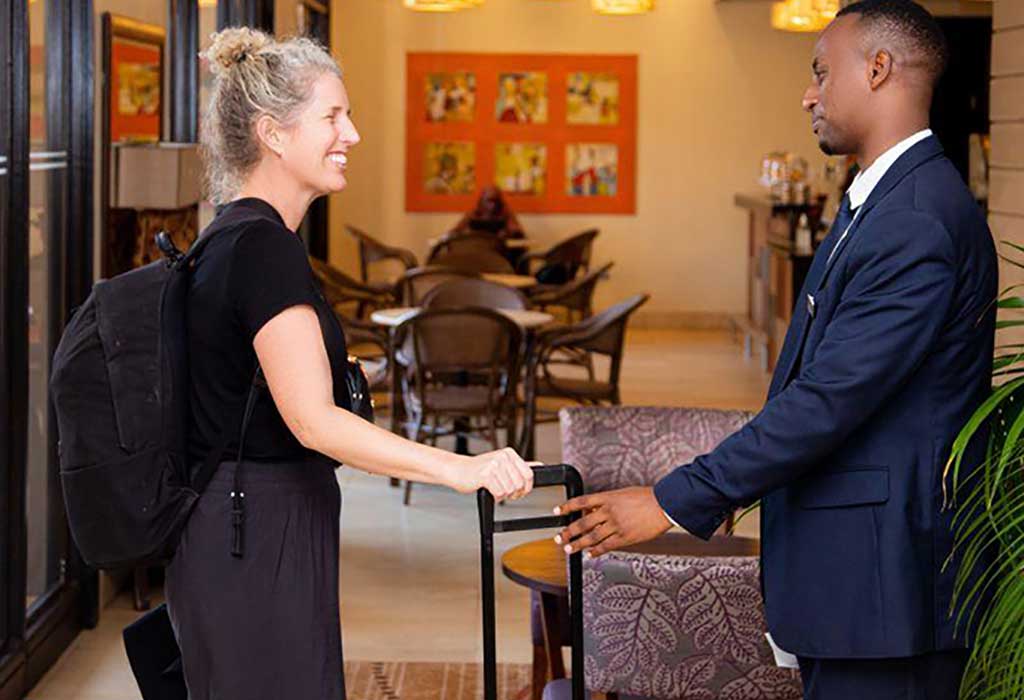
Many remote safari lodges wash clothing by hand and air-dry it naturally.
Muddy Clothes After Gorilla Trekking
Gorilla trekking is one of the activities most likely to leave travellers needing laundry.
Bwindi can be wet, steep and muddy, especially after rain. Even with good hiking boots, the lower part of your trousers may become covered in mud, and socks can become damp during the trek.
That is normal.
Most lodges around Bwindi are familiar with guests returning from the forest looking much less clean than when they left.
Some properties also offer boot cleaning in addition to laundry. Historical information from Bwindi Lodge, for example, has included complimentary boot cleaning and laundry among guest services. (volcanoessafaris.com)
The important thing is not to send your only trekking outfit for washing when you need it again the following morning.
Keep a backup pair of trekking trousers and another clean shirt.
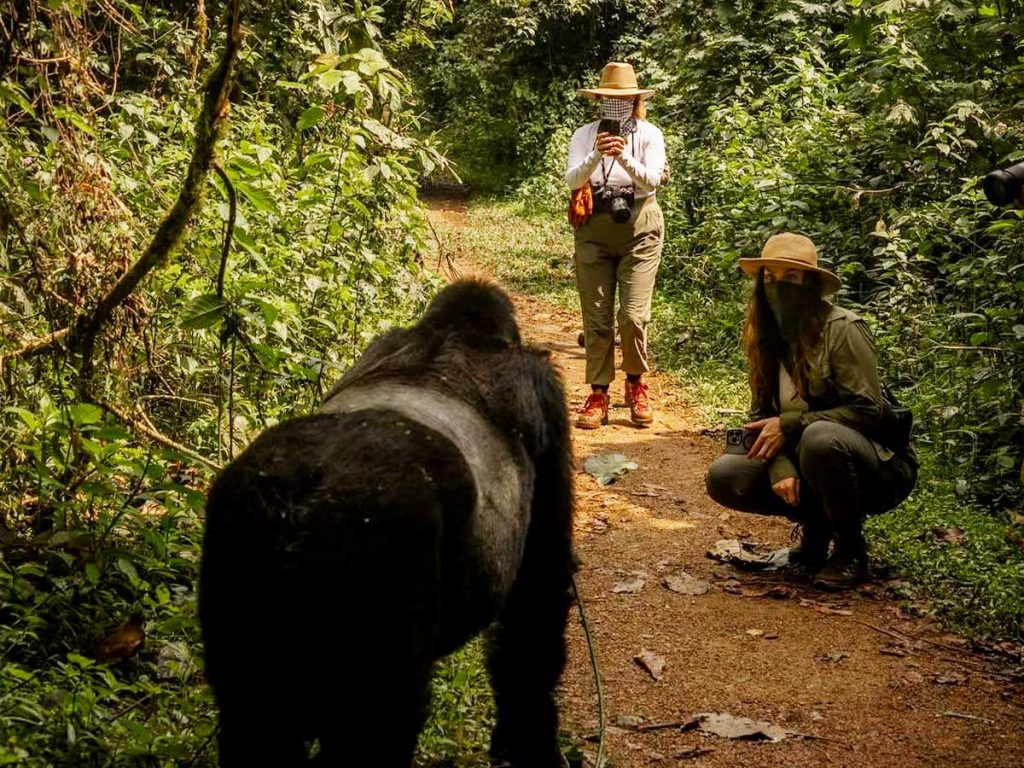
Gorilla trekking can leave trousers, socks and hiking boots muddy, especially after rain.
Laundry After Chimpanzee Tracking
Chimpanzee tracking in Kibale can also leave clothing damp or muddy.
The forest is humid, and rain can change trail conditions quickly. Long trousers, socks and hiking shoes can all pick up moisture and dirt.
If your itinerary includes only one chimpanzee trek, you may choose to wait until the next lodge before doing laundry.
If you are staying two nights in Kibale, however, it can be a good place to refresh a few lightweight items before continuing toward Queen Elizabeth National Park.
The exact service will depend on the lodge, so it is worth checking on arrival.
Dusty Clothes After Game Drives
Game-drive destinations create a different kind of laundry problem.
Instead of mud, travellers often deal with dust.
During dry periods, roads in Queen Elizabeth National Park, Murchison Falls and other wildlife areas can become dusty. A shirt that looked clean in the morning may look completely different after several hours with windows open.
These clothes are usually easier to wash and dry than heavy forest trekking gear.
This makes savannah lodges useful laundry stops on longer itineraries.
If your journey moves from Kibale into Queen Elizabeth National Park, for example, a two-night stay can be a convenient point to wash dusty and forest-used clothing before continuing south.
Laundry in Bwindi
Laundry planning matters particularly in Bwindi because of the climate and terrain.
The forest can be cool and damp, and clothes may dry slowly.
If your lodge includes laundry, use it early in the stay rather than on your final night.
Higher-end properties are more likely to include laundry in the room rate. Others may charge separately or offer only certain items.
Travellers who want specific lodge details can ask PrideMark to confirm laundry arrangements before the safari begins.
This is especially useful if you are packing light.

Laundry turnaround can depend on sunshine, humidity and rainfall.
Laundry in Kibale
Kibale is another destination where humidity can affect drying time.
If your itinerary includes chimpanzee tracking and forest walks, lightweight clothing is particularly useful.
A thick cotton shirt may take much longer to dry than a quick-dry travel shirt.
If you are staying two nights, hand laundry in early.
If you are staying one night, it may be better to wait until the next destination.
Laundry in Queen Elizabeth National Park
Queen Elizabeth National Park often works well as a laundry stop because many itineraries include two nights in the area.
Guests may spend mornings on game drives and afternoons on the Kazinga Channel, leaving enough time for lodge staff to wash and dry clothing.
Because conditions are often warmer than in Bwindi or Kibale, lighter items may dry more quickly.
Again, exact service levels vary by lodge.
Laundry in Murchison Falls National Park
Murchison Falls is another destination where travellers may stay several nights.
A typical programme may include game drives, a Nile boat cruise and a visit to the falls.
That creates a useful window for laundry.
If your lodge offers the service, hand clothing in on the first day rather than waiting until the end of the stay.
Warmer weather can help with drying, although conditions vary throughout the year.
Luxury, Midrange and Budget Laundry
The main difference between accommodation levels is often how laundry is charged and presented.
Luxury lodges are more likely to include laundry or offer a polished full-service system.
Midrange lodges often charge per item.
Budget properties may provide basic hand-washing or may not offer laundry at all.
This does not mean one option is better for every traveller.
A short three-day safari may not need laundry at all.
A twelve-day safari may make it an important consideration.
PrideMark can take this into account when recommending accommodation.
Underwear and Personal Items
One point travellers often forget is that some lodges may not wash underwear.
This can be because of local custom, lodge policy or staff practice.
Policies vary.
The safest approach is to carry a small amount of travel detergent and be prepared to hand-wash underwear or other personal items yourself if necessary.
Lightweight underwear dries quickly and takes very little luggage space.
Delicate Clothes and Special Fabrics
Safari laundry is usually designed for practical travel clothing.
It may not be suitable for delicate fabrics, expensive fashion items or clothes requiring dry cleaning.
If an item needs special care, do not hand it over unless you have confirmed that the lodge can handle it.
Safari clothing should ideally be simple, washable and durable.
This is one reason technical travel clothing works so well.
Why Quick-Dry Clothing Makes Safari Easier
Quick-dry clothing is one of the most useful things you can pack for Uganda.
It washes easily, dries faster and reduces how many outfits you need to carry.
General Uganda travel guidance also commonly recommends lightweight, breathable clothing suitable for tropical conditions. (intrepidtravel.com)
Quick-dry fabrics become particularly useful when you need to wash something by hand or when lodge laundry is delayed by rain.
They also help reduce luggage weight.
Why Heavy Jeans Are Less Practical
Heavy jeans may feel familiar and comfortable, but they are not always ideal for safari.
They take longer to dry.
They are heavier in your luggage.
They can feel hot during warm days.
They also take up more space.
Lightweight safari trousers are usually more practical for game drives and trekking.
You can still bring one heavier outfit for evenings if you prefer.
Hand-Washing at the Lodge
Some travellers prefer to wash a few items themselves.
This works well for socks, underwear and light shirts.
Carry a small amount of travel detergent.
Wash only a few items at a time and ask lodge staff where they prefer guests to hang them.
Avoid placing wet clothing over furniture, mosquito nets or lamps.
A lodge may have a drying area or provide hangers.
Packing Less When Laundry Is Available
One of the biggest advantages of lodge laundry is that it allows you to pack much less.
A traveller on a twelve-day safari does not need twelve shirts and twelve pairs of trousers.
If laundry is available every few days, you can rotate a smaller wardrobe.
This becomes especially useful when your safari includes domestic flights with luggage restrictions.
It also makes road travel easier because smaller bags are simpler to pack into safari vehicles.
A Simple Laundry Rhythm for a Long Safari
On a longer itinerary, it helps to think of laundry as something you do at selected points rather than at every lodge.
For example, you might wash clothes in Murchison Falls, again in Queen Elizabeth National Park, and then wash trekking gear in Bwindi if you have enough time.
That is usually enough for a long Uganda journey.
You do not need laundry every day.
You only need it at the right moments.
Never Send Every Outfit at Once
Always keep at least one complete clean outfit with you.
Laundry can be delayed.
Rain can slow drying.
A lodge may suddenly have many guests using the service.
If every shirt and every pair of trousers is in the laundry, you may have nothing suitable to wear.
Keep one shirt, one pair of trousers, underwear and socks in your room.
That gives you a backup.
Early Departures and Laundry Timing
Uganda safari days often start early.
You may leave for a game drive before sunrise or begin a transfer soon after breakfast.
If your laundry has not been returned by the evening before departure, ask the lodge staff.
Do not wait until the vehicle is already packed.
Your clothes may still be drying or waiting to be delivered.
Checking early gives staff time to solve the problem.
What to Do With Wet Clothes
Sometimes clothes simply do not dry in time.
If you must pack something damp, place it inside a separate waterproof bag.
Take it out as soon as you reach the next lodge.
Do not leave damp clothing sealed for several days because odour and mildew can develop.
A simple reusable waterproof bag is useful for this.
Laundry Bags and Packing Cubes
Keeping dirty clothes separate makes safari packing much easier.
A lightweight laundry bag or packing cube works well.
For muddy trekking gear, use something washable or waterproof.
This prevents mud and dust from spreading across the rest of your luggage.
You do not need specialised safari equipment.
A simple system is enough.
Hiking Boots and Shoes
Laundry service usually refers to clothing rather than footwear.
Some gorilla lodges may help clean muddy hiking boots.
Others may provide a brush or washing area.
Do not put boots into ordinary laundry unless staff specifically advise it.
Allow them to dry naturally and avoid strong heat that could damage materials.
Laundry During the Wet Season
Laundry needs more planning during wetter periods.
Forest areas may remain humid for much of the day.
Clothes can take longer to dry, especially thick cotton.
Quick-dry fabrics become particularly useful.
If you are travelling in a wet period, pack enough clothing to allow one set to remain damp while you wear another.
This is much easier than depending on overnight laundry.
Laundry Costs
There is no single national laundry price for Uganda safari lodges.
Some properties include it.
Some charge per item.
Some offer limited complimentary washing.
The cost depends on the lodge.
Ask for the current laundry list when you check in if price matters to you.
PrideMark can also confirm whether laundry is included in advance.
Tipping for Laundry Service
Travellers often ask whether they should tip separately for laundry.
Tipping in Uganda is generally optional but appreciated when service is good.
Some lodges prefer guests to use a shared staff tip box rather than tipping departments individually.
If you are unsure, ask your guide.
Laundry and Responsible Water Use
Safari lodges in remote areas often manage water carefully.
That means it is sensible not to send unnecessary laundry every day.
A shirt worn for only a short period may not need immediate washing.
Lightweight safari clothing can often be worn more than once.
This reduces water use and also saves time.
What PrideMark Safaris Can Check Before Booking
If laundry is important to you, tell us before the safari begins.
PrideMark can ask selected lodges about availability, charges and turnaround time.
We can also check whether laundry is included in the rate, whether underwear is accepted and whether boot cleaning is available.
This becomes especially useful on longer itineraries and for travellers who prefer to pack light.
At PrideMark Safaris, we design tailor-made journeys around the traveller, so practical lodge details can be considered alongside route, accommodation level and budget.
Frequently Asked Questions About Laundry on a Uganda Safari
Do Uganda Safari Lodges Offer Laundry?
Many do. The service varies by property, with some including laundry and others charging separately.
Is Laundry Free?
Sometimes. Some luxury lodges include it, while midrange and budget properties may charge per item.
How Long Does Laundry Take?
It can be same-day or next-day, but wet weather may slow drying. In some forest areas, travellers should allow up to 48 hours. (volcanoessafaris.com)
Can Lodges Wash Gorilla Trekking Clothes?
Usually yes, depending on the lodge and available time.
Do Lodges Wash Underwear?
Policies vary, so it is useful to carry a small amount of travel detergent.
Can I Wash Small Items Myself?
Yes. Lightweight items such as socks and underwear are easy to hand-wash.
Is Quick-Dry Clothing Worth Packing?
Yes. It is lighter, easier to wash and dries faster than heavy cotton.
Is Laundry Available in Bwindi?
Many Bwindi lodges offer laundry. Some higher-end properties include it in the room rate. (bwindilodge.com)
Should I Do Laundry on My Final Night?
Usually not. It is better to hand clothing in early during a two-night stay.
Can PrideMark Check Laundry Before I Travel?
Yes. PrideMark can confirm lodge laundry policies during itinerary planning.
Pack Lighter and Travel More Comfortably With PrideMark Safaris
Laundry on a Uganda Safari is a small detail, but it can make a long journey far more comfortable.
You do not need to carry a fresh outfit for every day.
Pack lightweight clothing.
Use quick-dry fabrics.
Keep one clean backup outfit.
Hand laundry in early during longer stays.
And avoid depending on overnight washing in wet forest regions.
At PrideMark Safaris, we create tailor-made Uganda journeys that consider not only the national parks and wildlife experiences but also the practical details that make travelling easier.
Whether your route includes gorilla trekking in Bwindi, chimpanzee tracking in Kibale, wildlife viewing in Queen Elizabeth National Park or game drives and Nile experiences in Murchison Falls, good planning can help you carry less luggage and travel more comfortably.
Plan your Uganda safari with PrideMark Safaris and let us help you build a practical, well-paced journey from arrival to departure.