
Uganda Gorilla Trekking Guide
This Uganda gorilla trekking guide brings together the decisions that matter before you enter the forest: where to trek, how permits work, what the experience feels like and how to build a realistic itinerary. Mountain gorilla encounters are extraordinary, but they are also carefully managed conservation activities. The best journey starts with sound information, responsible expectations and enough time to enjoy southwestern Uganda beyond the trekking day.
This detailed guide is written for first-time visitors, experienced wildlife travellers, couples, families and anyone comparing different ways to experience Uganda’s mountain gorillas. Use the contents below to jump to a planning topic, then follow the official resources and practical checklists before finalizing a booking. The article is informational; permit inventory, immigration rules and operational instructions should always be reconfirmed for your travel dates.
1. Understanding gorilla trekking in Uganda
A successful first encounter begins with understanding the difference between a forest walk and a scheduled wildlife sighting. Rangers locate gorilla groups in changing terrain, so visitors cannot choose an exact meeting point or promise themselves a particular photographic scene. PrideMark Safaris encourages guests to approach the day with patience, allowing enough flexibility for the pace of the forest, the ranger briefing and the needs of the gorillas.
Travelers sometimes focus exclusively on the hour near gorillas and overlook the journey leading to it. The sounds of birds, dense vegetation, steep ridges and conversations with local guides are part of the experience. PrideMark Safaris can help travelers plan a relaxed arrival day, a suitable overnight stay and a free evening afterward, rather than compressing the trek into an exhausting transfer schedule.
Gorilla trekking is a guided forest experience in which visitors search for a habituated mountain gorilla family under the supervision of trained rangers. Uganda offers this activity in Bwindi Impenetrable National Park and Mgahinga Gorilla National Park. A trek is not a zoo visit or a guaranteed short walk. Forest conditions, the family’s movements and the pace of the group determine how the day unfolds. For first-time visitors, the strongest preparation is to understand the experience rather than simply purchase a permit.
The adventure usually begins with a morning briefing at the relevant park headquarters. Visitors are assigned to groups and introduced to the conduct expected around gorillas. Guides and trackers coordinate the search, explain forest ecology and help visitors negotiate uneven ground. Once the gorillas are located, standard trekking generally permits a maximum of one hour with the family. The walk back can still take time, so the overall excursion may occupy much of the day.
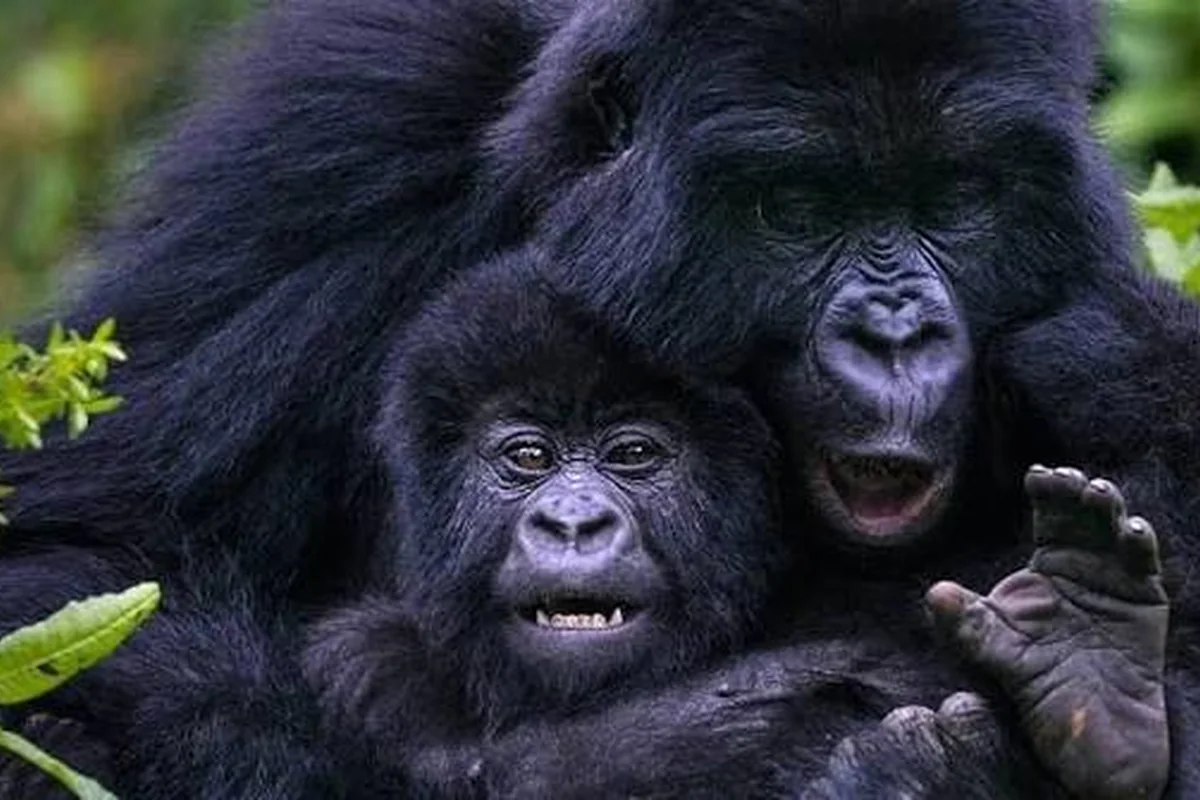
A touching moment between an adult mountain gorilla and a young gorilla in their natural forest habitat.
What visitors often misunderstand
The word trekking can sound like a short excursion, yet the day involves much more than the time spent watching gorillas. There is the briefing, the walk into the forest, the encounter itself and the return journey. Weather, elevation and vegetation influence every stage. A well-prepared traveller plans for the full day and avoids scheduling an inflexible departure immediately after the activity. The value of the experience lies in entering the gorillas’ natural habitat responsibly, not in measuring how many minutes were spent walking.
2. Why Bwindi and Mgahinga are different
Bwindi offers a different forest environment from the volcanic landscapes of Mgahinga. For guests who enjoy combining several experiences, the surrounding highlands can support village visits, scenic drives and time near Lake Bunyonyi. PrideMark Safaris compares each option against the visitor’s entry point, available permits and desired activities before recommending a park, rather than choosing on reputation alone.
Bwindi is a vast, steep and biodiverse forest with several trekking sectors and a broad choice of lodges. Mgahinga sits within the Virunga volcanic landscape, where bamboo and montane vegetation create a different atmosphere. Neither park is universally easier. Trail conditions, the gorillas’ location and the weather matter more than promotional descriptions. Visitors should choose according to permit availability, arrival route, accommodation and the rest of their safari.
Bwindi often suits travellers combining gorillas with Queen Elizabeth National Park, Lake Bunyonyi or southern Uganda cultural experiences. Mgahinga can be attractive when pairing a gorilla trek with golden monkey tracking or a journey through the southwestern highlands. Both parks are conservation areas rather than interchangeable attractions. We recommend deciding on a practical route before reserving hotels, because the wrong sector can add hours of driving.
How to compare park options
Ask three questions before selecting a park: where will you arrive, what other activities are essential, and how many nights can you spend in the region? These answers often narrow the options more effectively than comparing photographs. A route that appears short on a map can be slow on mountain roads. It is worth leaving space for a quiet evening before the trek, particularly after an international flight or a long transfer. The park should fit the journey rather than forcing the journey around a last-minute lodging choice.
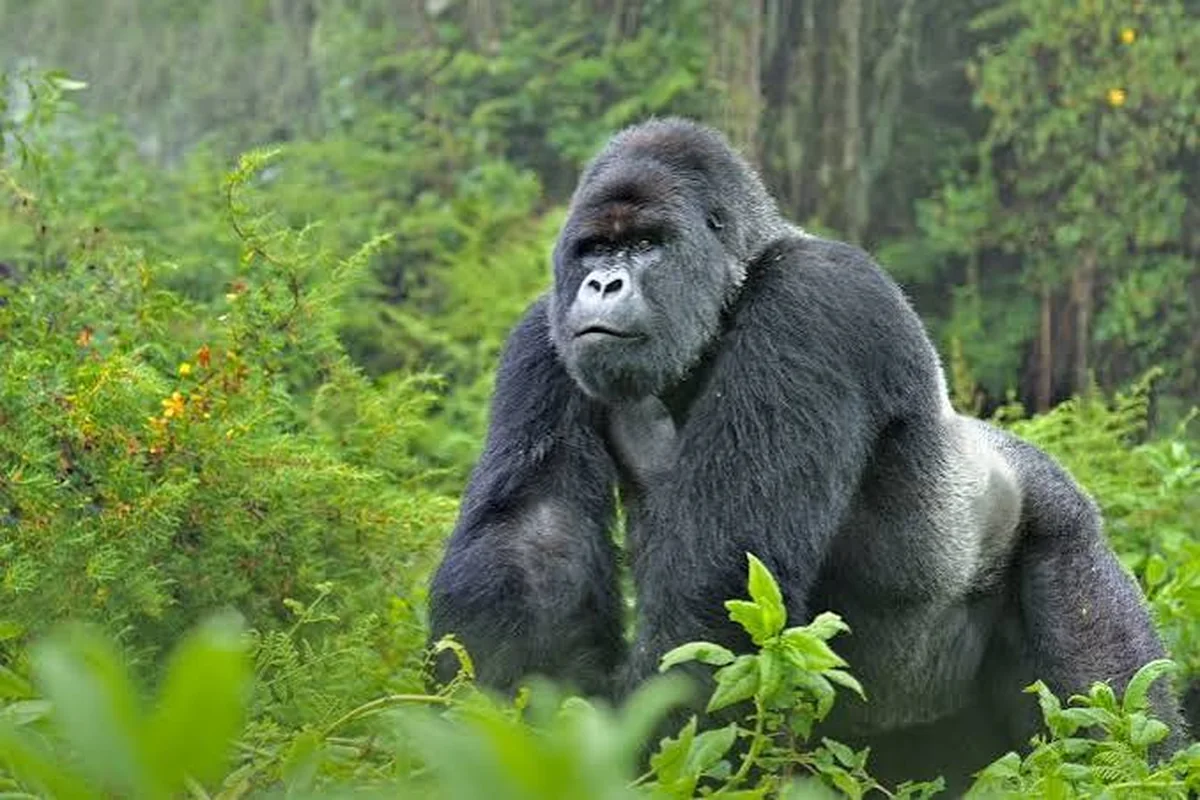
A magnificent silverback mountain gorilla in its natural forest habitat, showcasing one of Uganda’s most remarkable wildlife encounters.
3. Choosing among Bwindi’s four trekking sectors
Selecting a Bwindi sector is not simply a matter of picking the most famous name. The sector affects the morning reporting location, the practical lodge choices and the drive required from your previous stop. PrideMark Safaris recommends confirming the exact sector on the permit before paying for a lodge, especially where the accommodation name refers broadly to Bwindi rather than to a particular trekking headquarters.
Buhoma, Ruhija, Rushaga and Nkuringo each have distinctive surroundings, but no sector can guarantee a short or easy walk on a particular date. If travelers have mobility concerns, they should describe them accurately when requesting a quotation. PrideMark Safaris can discuss logistical options and communicate preferences, while leaving ranger decisions about group allocation and forest conditions to park authorities.
Buhoma lies in northern Bwindi and is often incorporated into journeys from the Ishasha area of Queen Elizabeth National Park. Ruhija is in the east, while Rushaga and Nkuringo serve the southern side. These are not simply four names for the same departure point. They have distinct access roads, briefing locations and accommodation catchments. A lodge advertised as being in Bwindi may still be far from the specific headquarters on a guest’s permit.
The best sector is the one that works with confirmed permit availability, realistic transfer times and your physical needs. Rushaga is frequently considered for itineraries arriving through Kisoro or from Rwanda, while Buhoma can work well for a north-to-south Uganda safari. Nkuringo is known for dramatic terrain and scenery; Ruhija offers a forested highland setting. Avoid treating any sector as automatically easy or hard because individual treks vary.
| Bwindi sector | Typical itinerary fit | Important consideration |
|---|---|---|
| Buhoma | Northern approach; Queen Elizabeth / Ishasha connections | Check exact lodge-to-briefing drive |
| Ruhija | Eastern Bwindi highlands | Mountain roads and variable terrain |
| Rushaga | Southern Bwindi; Kisoro / Kigali approaches | Confirm permit and lodge are both in Rushaga |
| Nkuringo | Southern scenic highlands | Steep local terrain and access roads |
Sector booking checklist
Request the exact trekking sector in writing and compare it with the lodge address. Confirm the briefing headquarters, estimated morning transfer and access road. If the operator suggests changing accommodation, ask whether the proposed property remains convenient for the permit sector. The nearest town is not always the nearest practical departure point. This small check can prevent a tiring predawn drive and allow guests to begin their trek rested. Permit details should be the source of truth whenever different websites describe locations inconsistently.
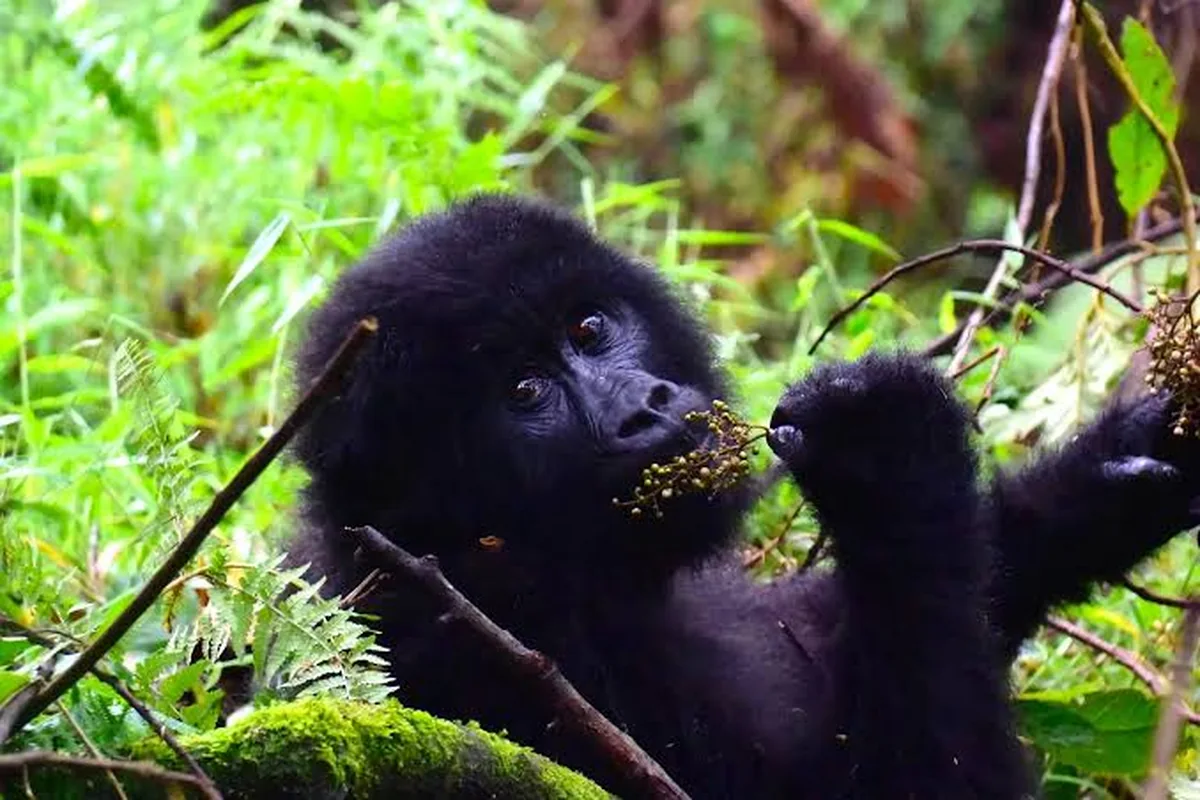
A young mountain gorilla enjoying natural forest vegetation, highlighting the fascinating feeding behaviour visitors may observe during gorilla trekking.
4. Gorilla permits and what they cover
Permits are often the first significant fixed cost in a gorilla itinerary, which makes early date planning valuable. Before committing to nonrefundable flights or accommodation, travelers should establish the intended trekking day and confirm the applicable permit category. PrideMark Safaris helps guests distinguish between an itinerary proposal, a permit request and an actual confirmed booking, so every stage is clear.
The final cost of a permit may depend on visitor residency classification and the tariff effective on the trekking date. Guests should not assume that a promotional rate or an older online article remains valid. PrideMark Safaris recommends checking the current Uganda Wildlife Authority tariff and any applicable permit conditions when building a quotation, particularly for journeys scheduled far in advance.
A gorilla permit is the essential authorization for a scheduled trek. It is issued through Uganda Wildlife Authority, and availability is limited by conservation rules and the number of habituated groups. For foreign non-residents, the published standard gorilla trekking permit price is US$800 in the current UWA conservation tariff. Other residency categories have different rates, and travelers should confirm the tariff applicable to their dates and status before making payment.
A permit is not the complete cost of a safari. Transport, accommodation, meals, porter services, personal equipment and optional activities are budgeted separately unless specifically included in a package. The published tariff states that the permit includes the guide fee, park entrance fees for the day and a community development contribution. We advise guests to request a written breakdown showing exactly what is included, what is optional and what must be paid directly.
| Permit category | Foreign non-resident tariff | Planning note |
|---|---|---|
| Standard gorilla trekking | US$800 | Standard viewing generally up to one hour |
| Gorilla habituation | US$1,800 | Longer specialized experience; confirm operating arrangements |
Official tariff reference: Uganda Wildlife Authority revised conservation tariff (2027–2028). Check any special promotions and subsequent notices directly with UWA.
Permit planning sequence
First agree on a travel window and the number of participants. Next check the appropriate permit category and the dates that are actually available. Only then lock in non-refundable transport and accommodation. Ask for confirmation of how the permit will be issued, what identifying information is required and how any change or cancellation would be handled. Policies can vary by permit type and applicable tariff. Keeping these steps in order reduces avoidable expense and makes the quotation easier to understand.
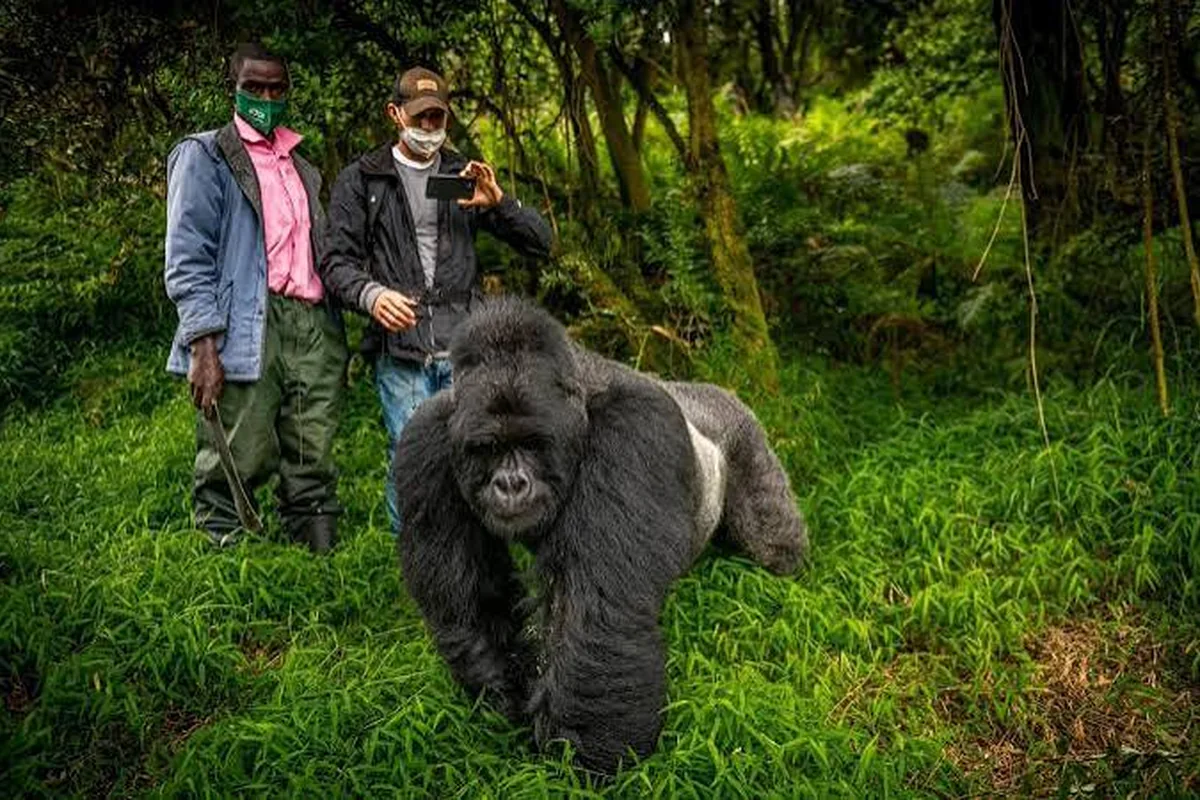
A silverback mountain gorilla photographed in a forest clearing with two people in the background.
5. Gorilla trekking versus gorilla habituation
The habituation experience is not merely a longer version of a standard trek. It follows a different visitor program, has different availability and may involve substantial time in the forest. PrideMark Safaris discusses whether the extra time near a gorilla group fits the guest’s budget, physical preparation and overall travel schedule. Travelers seeking a gentle, short walk should not assume habituation will be easier.
Standard gorilla trekking and the gorilla habituation experience are different products. A standard trek provides a supervised encounter with a habituated gorilla family, normally limited to one hour of viewing once the family is found. The habituation experience allows a longer period with a group undergoing a gradual process of becoming accustomed to human observers. The published UWA foreign non-resident habituation permit is US$1,800.
The longer experience is not automatically better for every traveller. It is more expensive, can require additional time and effort, and suits visitors with a particular interest in gorilla behavior or photography. Availability and operating arrangements should be confirmed before a route is finalized. PrideMark Safaris can help guests compare the two experiences based on travel dates, physical expectations, budget and the wider safari programme.
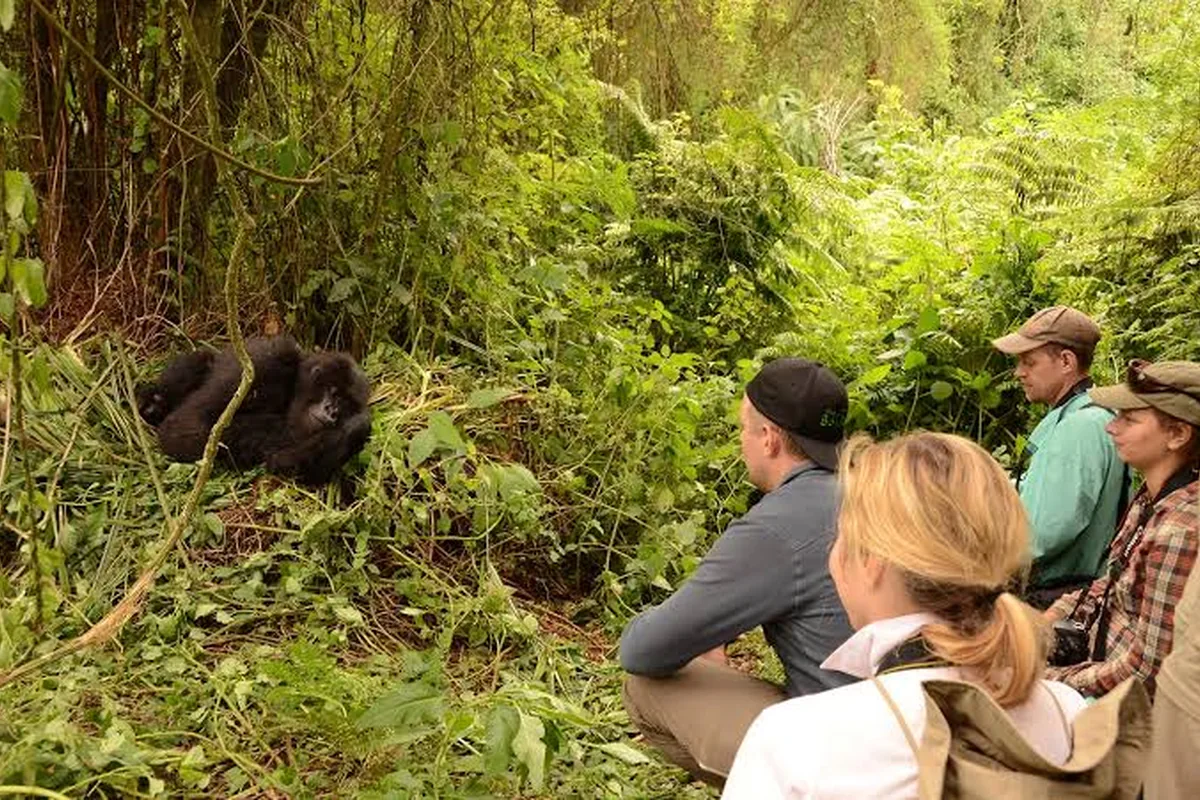
Visitors observe mountain gorillas in their natural forest habitat during a guided trekking experience.
Choosing the right experience
Travellers interested mainly in a first encounter may find standard trekking the right balance of time and cost. Those hoping to spend longer observing the gorillas should ask specifically about habituation, its limited locations and its physical demands. Neither experience permits visitors to approach animals freely or disregard ranger instructions. Both depend on wild gorillas moving through forest habitat. Be wary of descriptions promising close contact, easy access or a particular photographic scene. Ethical wildlife viewing is always guided by conservation priorities.
6. When to travel for gorilla trekking
Dry-season travel can make some paths more manageable, yet rain is possible in a tropical mountain forest at any time. The best month also depends on permit availability, flight costs and how gorilla trekking fits into a wider safari. PrideMark Safaris advises guests to compare complete itineraries instead of deciding on weather alone, especially when combining Bwindi with parks at different elevations.
Uganda offers gorilla trekking throughout the year, and the forest remains green in every season. Drier periods can make some trails less slippery, while wetter months bring lush vegetation and atmospheric landscapes. Rain is possible at any time in a tropical mountain forest, so no month should be marketed as completely dry. Travel dates should be selected with permit availability, international flights and the overall itinerary in mind.
Busy travel periods can reduce lodge and permit choices, making advance planning especially important. Quieter periods may offer more flexibility, but travelers should not assume permits will be available at the last minute. Pack waterproof protection and footwear with dependable grip regardless of season. The most useful planning question is not whether it might rain, but whether you have appropriate clothing, a sensible schedule and a guide who understands the conditions.
Seasonal packing decisions
During wetter periods, prioritize traction, a dry change of clothes and protection for cameras and documents. During busier travel periods, prioritize booking early and allowing sufficient time between destinations. Even when forecasts suggest sunshine, pack a compact waterproof layer because mountain conditions can change quickly. If photography is important, bring suitable protection for equipment rather than relying on an umbrella in dense vegetation. Seasonal planning should make the trip more resilient, not create unrealistic expectations of perfect weather.
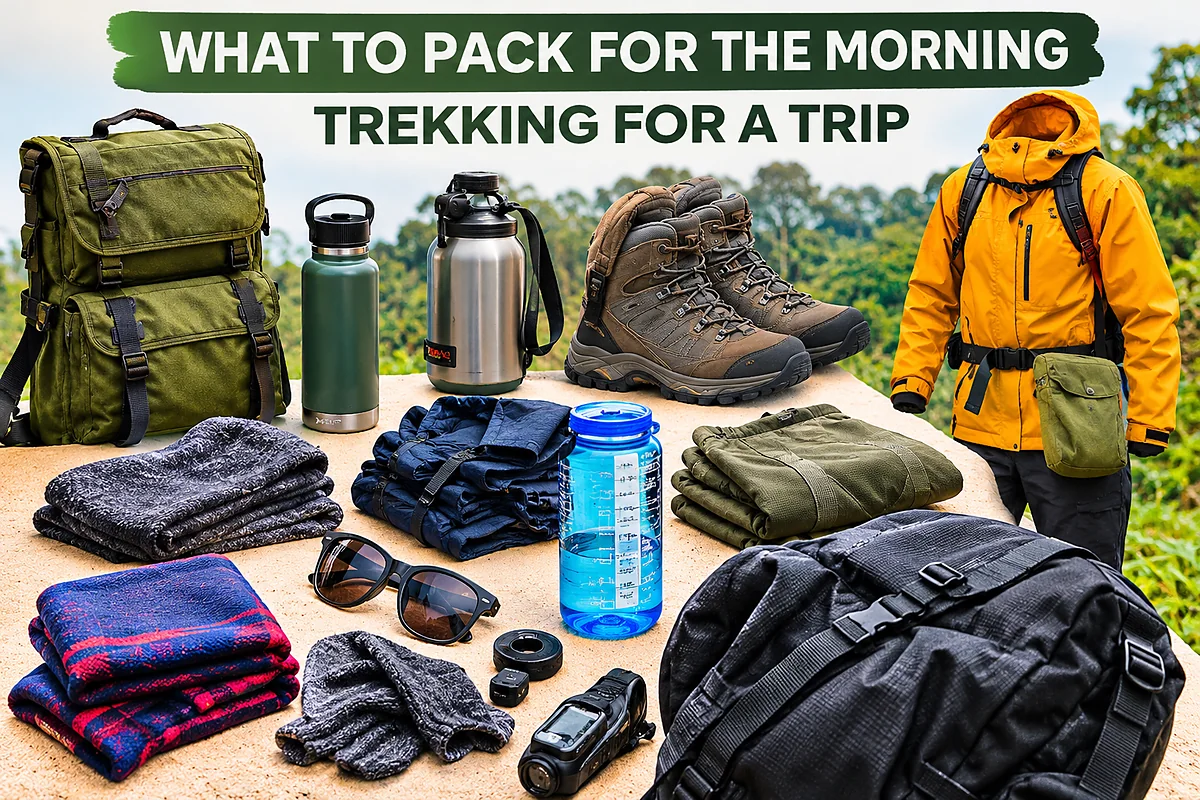
Essential gorilla trekking equipment, including hiking boots, a waterproof jacket, backpack, drinking water and protective clothing for a comfortable forest trek.
7. How difficult is the trek?
Physical preparation should emphasize comfortable walking on uneven ground, balance and endurance rather than speed. Practice wearing the boots you intend to bring and walking with a small daypack. PrideMark Safaris suggests discussing any relevant limitations well before departure so the itinerary can include sensible rest periods. Actual trekking difficulty varies with gorilla movements, weather and the terrain selected by rangers.
Gorilla trekking can involve steep slopes, roots, mud, thick vegetation and changes in elevation. Some groups locate gorillas relatively quickly, while others walk for several hours. The distance cannot be guaranteed before the trek because gorillas move naturally. Visitors should expect a genuine forest hike and allow for variable weather. Guides manage the group’s pace, but reasonable walking fitness and honest communication about limitations are important.
Prepare by walking regularly on uneven ground, taking stairs or hills when practical and breaking in your boots well before departure. Carry drinking water and energy snacks if permitted by the park’s briefing instructions. If you have knee concerns or reduced mobility, disclose these early so appropriate arrangements can be discussed. Hiring a local porter can make the day more comfortable and also provides direct employment to surrounding communities.
Preparing without overtraining
You do not need to train for an athletic race, but regular walking is useful. In the weeks before departure, build confidence on slopes and uneven paths at a comfortable pace. Practice walking in the boots you intend to wear and carrying a small daypack. If you are unsure about your capacity, discuss the expected terrain with a qualified healthcare professional and your operator. The aim is to arrive comfortable with sustained movement, not exhausted from an aggressive fitness programme.
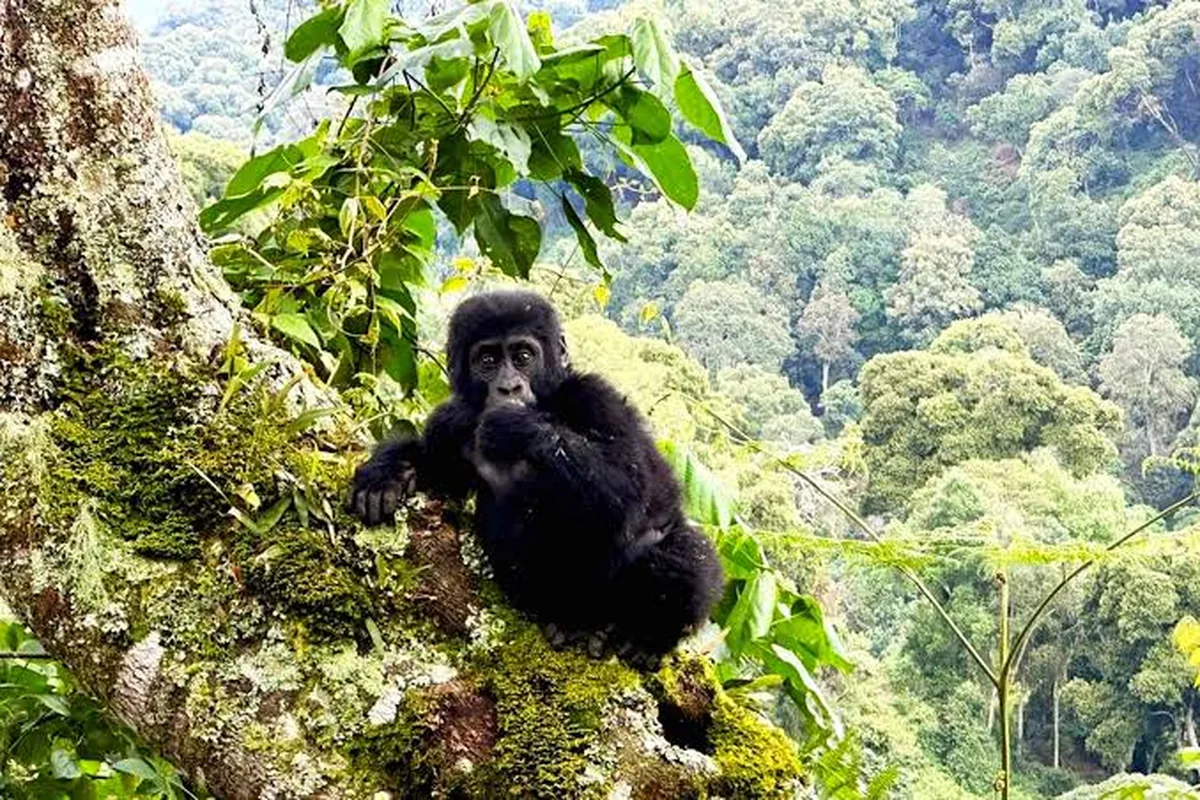
A young mountain gorilla resting on a moss-covered tree branch in a lush forest habitat.
8. Gorilla trekking for seniors and first-time hikers
Age alone does not determine whether someone will enjoy gorilla trekking. Some older travelers are experienced hikers, while younger visitors may find steep, muddy terrain demanding. PrideMark Safaris encourages honest conversations about stamina, previous injuries and comfort on slopes. Rangers control the trekking activity, and guests should not interpret an advance preference for an easier group as a guarantee of a particular route.
Age alone does not determine whether someone can enjoy gorilla trekking. Many older visitors complete the experience successfully, while some younger travellers find the forest challenging. What matters is personal mobility, stamina, medical advice where relevant and the willingness to adapt to conditions. Visitors should discuss limitations with their tour operator well before permits and accommodation are finalized, rather than waiting until the morning briefing.
A porter can assist with a daypack and provide support on difficult ground. In some circumstances, locally arranged carrying assistance may be available, but availability, suitability and charges must be checked in advance. No operator should promise a short or level trek. A well-planned itinerary includes time to rest before the activity, a nearby lodge and an unhurried transfer after the trek.
Discussing accessibility early
Some travellers need additional help with balance, stamina or uneven ground. Raise these needs during itinerary design, not after arrival. Ask about the lodge’s steps, vehicle access, porter arrangements and realistic alternatives if the trek proves unsuitable. Accessible travel planning is highly individual, and assistance options must be confirmed rather than assumed. The most considerate itinerary also allows a rest day after the trek and avoids making the guest feel rushed to keep up with an overly ambitious programme.
9. What to wear and pack
Pack for changing conditions rather than for a single weather forecast. Lightweight waterproof layers, long trousers, gloves where useful and a protective cover for camera equipment can make a significant difference. PrideMark Safaris recommends keeping valuables and essential medication in a secure daypack, with enough drinking water for a variable-length walk. Avoid carrying unnecessary equipment that makes steep paths more tiring.
Good equipment improves comfort without requiring expensive specialist clothing. Wear long trousers, a long-sleeved shirt, sturdy broken-in hiking boots and socks that help prevent blisters. A lightweight waterproof jacket, gardening-style gloves for gripping vegetation and a small daypack are practical. Neutral colors are generally comfortable for forest activities. Avoid relying on new footwear or heavy cotton garments that remain wet for long periods.
Carry water, a camera with flash disabled, sun protection for exposed sections and a waterproof cover for electronics. A walking stick may be available locally, depending on the briefing point. Keep your pack manageable, and consider hiring a porter if the terrain is unfamiliar. The goal is not to carry every possible item, but to stay dry, balanced and able to focus on the forest and the gorillas.
| Bring | Why it matters | Practical tip |
|---|---|---|
| Broken-in hiking boots | Grip on muddy or uneven trails | Test them before travelling |
| Rain jacket | Rain can occur throughout the year | Choose breathable waterproof fabric |
| Gloves and long sleeves | Help protect against vegetation | Avoid heavy bulky materials |
| Water and daypack | Comfort during unpredictable trek length | Keep the load light |
Packing for the return walk
A lightweight dry bag or waterproof liner helps protect a spare layer and essential documents. Keep frequently used items where they can be reached without unpacking everything. Carry only what you need and use a porter if appropriate. Bring a comfortable change of clothes to leave at the lodge for after the trek. Muddy footwear and damp jackets are common after forest activities, so accommodation with a practical drying arrangement can be surprisingly valuable. Comfort after the experience deserves as much attention as preparation before it.
Essential gorilla trekking equipment, including hiking boots, a waterproof jacket, backpack, drinking water and protective clothing for a comfortable forest trek.
10. Gorilla trekking rules and responsible viewing
Responsible gorilla viewing protects both the animals and the quality of the visitor experience. Even if a gorilla approaches unexpectedly, visitors should follow ranger instructions rather than moving closer for a photograph. PrideMark Safaris reminds guests that keeping a respectful distance, avoiding flash and reporting illness are not optional etiquette; they are core parts of the protected-area experience.
Gorilla encounters operate under conservation and public-health rules because mountain gorillas are vulnerable to human disturbance and disease. Follow the ranger’s instructions at all times, maintain the required separation distance and never attempt to touch a gorilla. Keep voices low, avoid sudden movements and do not use flash photography. The standard viewing period is limited, so photographers should prepare their settings before the encounter begins.
If you are unwell, especially with symptoms that could be infectious, inform your operator and park staff rather than attempting to hide the illness. Food and drink should not be consumed near gorillas, and litter must leave the forest with you. These restrictions protect the animals and preserve the experience for future visitors. Respect for the ranger’s judgment is more important than obtaining a particular photograph.
Photography without disturbing wildlife
Before approaching the gorillas, set your camera to operate without flash and learn how to adjust exposure quickly in shaded forest light. Avoid moving around to force a clear view or separating from the group for a different angle. Follow instructions if a gorilla approaches unexpectedly. A quiet moment observing behavior can be more memorable than a hurried sequence of photographs. Conservation rules are not obstacles to the experience; they are what makes responsible viewing possible over the long term.
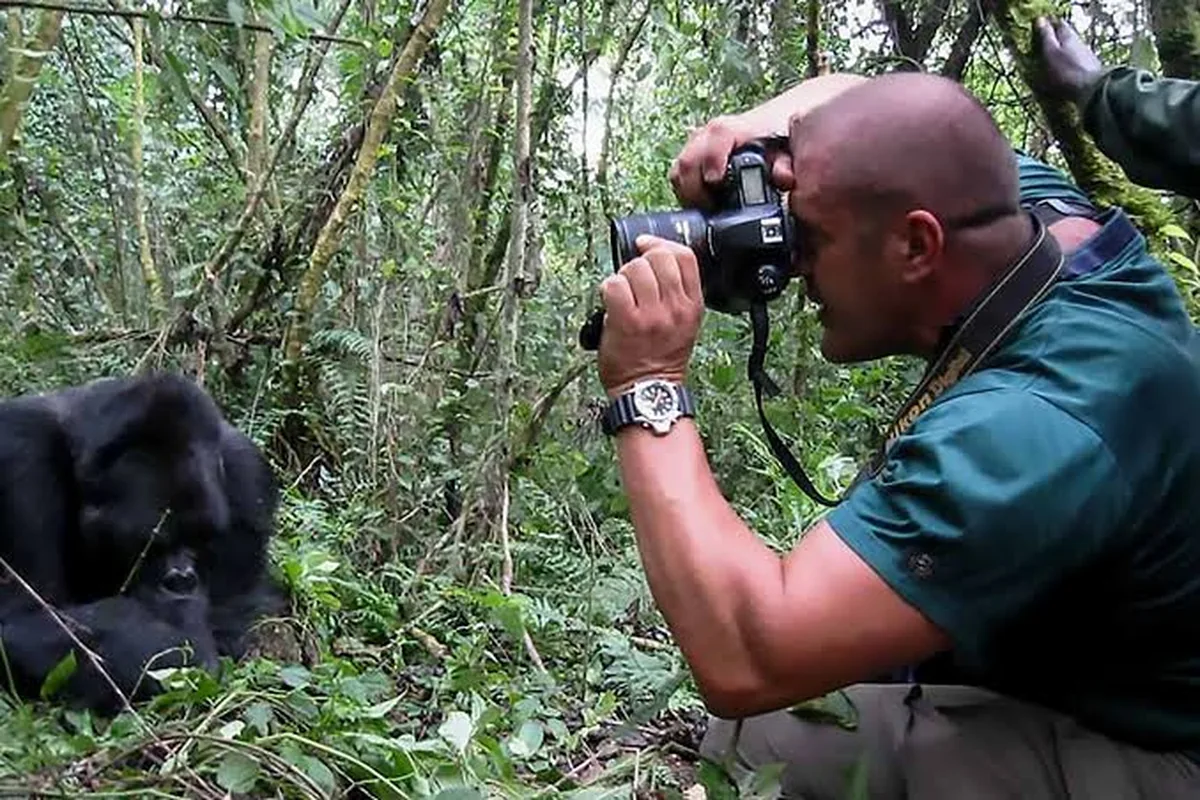
A visitor photographs a mountain gorilla during a forest trekking experience, capturing a memorable wildlife encounter.
11. How to reach Bwindi from Entebbe or Kigali
A Kigali arrival can shorten some overland approaches to southwestern Uganda, but crossing an international border introduces additional document and timing considerations. An Entebbe arrival provides a straightforward start for travelers who also want to visit Kibale, Queen Elizabeth or Murchison Falls. PrideMark Safaris compares routes using actual flight schedules, border requirements and the allocated trekking sector rather than relying on generic driving-time estimates.
For visitors choosing a fly-in safari, the nearest useful airstrip depends on the sector and lodge. Air travel reduces some road time but does not remove the need for transfers, check-in allowances and suitable connections. PrideMark Safaris can help compare a fly-in option with a private road safari so guests understand where the savings in travel time occur and what the extra cost covers.
An Entebbe arrival is convenient for visitors building a longer Uganda wildlife circuit. The overland journey toward southwestern Uganda can be broken up with destinations such as Lake Mburo or Queen Elizabeth National Park. Domestic flights to regional airstrips may reduce driving time, but ground transfers remain necessary and flight schedules must match the trekking sector. Driving times vary substantially with road conditions and the exact lodge location.
Kigali can be a practical arrival point for certain southern Bwindi itineraries, especially when the traveller wants a shorter regional programme. This option involves crossing an international border, so passport validity, visa eligibility and current immigration requirements must be checked. Neither Kigali nor Entebbe is automatically the best starting point. The decision should follow the confirmed permit sector, flight schedule, preferred safari duration and border logistics.
| Arrival choice | Useful for | Check before booking |
|---|---|---|
| Entebbe | Longer Uganda wildlife circuits | Road transfer or domestic flight connections |
| Kigali | Shorter southern Bwindi journeys | Border documentation and sector-specific route |
Related planning: Browse PrideMark Safaris safari experiences or request a tailored itinerary.
Comparing road and flight itineraries
A road safari allows additional stops and landscapes, while a fly-in arrangement can save time for travellers with limited days. Neither option removes the need to reach the correct briefing point on time. When comparing itineraries, check not only flight duration but also airstrip transfers, baggage allowances and schedule reliability. For a cross-border itinerary, consider border processing and the possibility of delays. Build in sensible margins so a transport disruption does not jeopardize the most important activity of the trip.

A 4×4 safari vehicle travelling through a scenic forest landscape, illustrating the road transfers involved in Uganda gorilla trekking adventures.
12. Where to stay near trekking headquarters
The best lodge is not always the most luxurious property advertised as being near Bwindi. A comfortable lodge far from your assigned headquarters may require an unexpectedly early departure over winding mountain roads. PrideMark Safaris evaluates accommodation according to its location, road access, meal arrangements and the needs of each traveler, while also considering comfort and budget.
Guests should ask whether the quotation includes dinner after trekking, packed lunch for the forest and transport to the correct briefing point. These small details affect the experience more than an attractive photograph alone. PrideMark Safaris can present accommodation alternatives at different price levels and explain why a particular lodge is a practical match for the confirmed sector.
Accommodation selection should begin with the sector shown on the permit. A lodge near Rushaga is not necessarily convenient for Buhoma, and the phrase “near Bwindi” can hide a lengthy early-morning transfer. Ask for the driving time to the exact briefing point, not simply the distance to the park boundary. Guests can choose from simple guesthouses, comfortable midrange lodges and high-end properties, depending on budget and availability.
Look beyond room photographs when comparing lodges. Consider access-road conditions, early breakfast arrangements, hot water, reliable communication and the ability to prepare a packed lunch. A well-located modest lodge may offer a smoother trekking morning than a luxurious property in the wrong sector. PrideMark Safaris matches lodging to permit location and the next day’s route rather than choosing accommodation by category alone.
Questions to ask every lodge
Ask whether the quoted rate includes meals, what time breakfast is served on trekking days and whether packed lunches are available. Check how long it takes to drive to the permit headquarters under ordinary road conditions. Enquire about room access if stairs are difficult, and ask whether there is somewhere to dry wet clothes and boots. A lodge’s strongest selling point is often its operational suitability, not a long list of decorative amenities. These practical details are especially important when travelling with older guests or children.
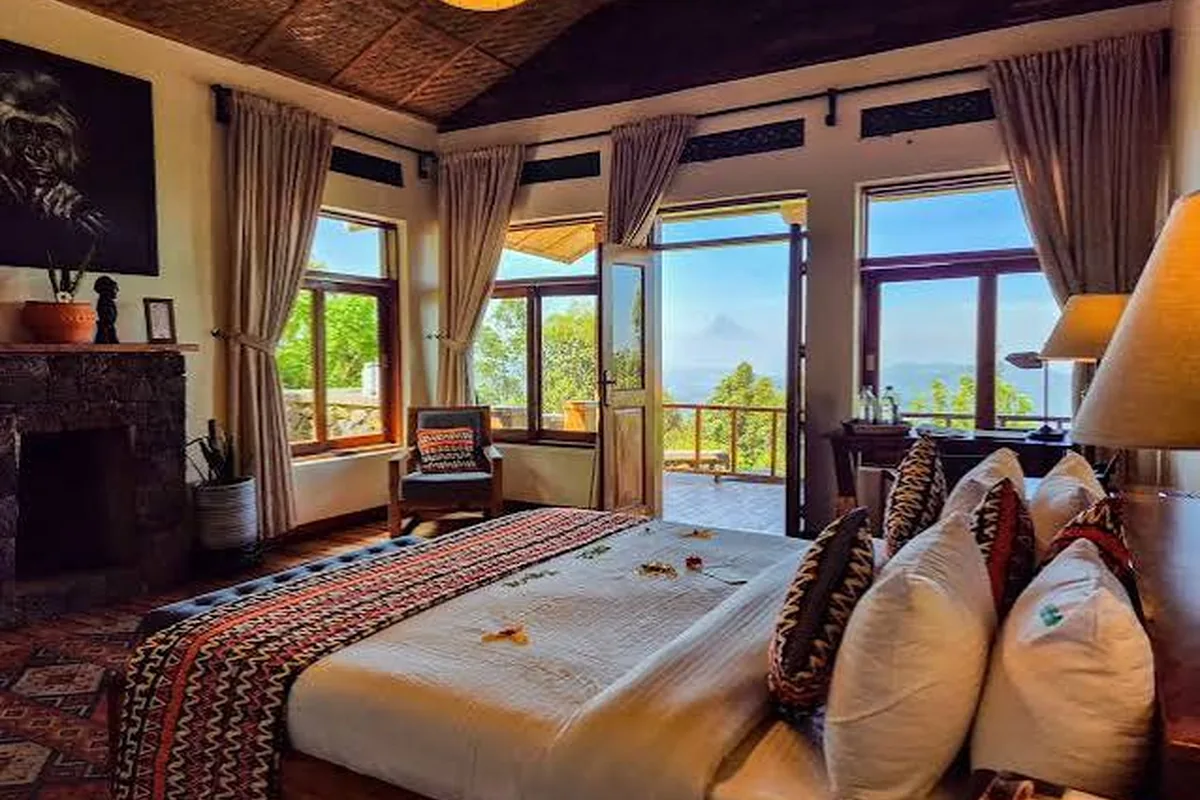
A beautifully furnished safari lodge bedroom with scenic views, offering a comfortable retreat during a Uganda gorilla trekking safari.
13. How much does a complete gorilla safari cost?
When comparing quotations, ask whether the gorilla permit is included, whether the vehicle is private, which meals are covered and what happens on arrival and departure days. A lower headline price can conceal major differences in accommodation, park activities and travel time. PrideMark Safaris prepares safari proposals that identify the planned services, helping guests compare realistic journeys rather than relying only on the total figure.
The permit is a major fixed element, but the final safari price depends on the number of travellers, duration, vehicle arrangement, accommodation level, travel season and additional activities. A private trip for one guest generally has a higher per-person transport cost than a trip shared by several guests. Cross-border transfers, domestic flights and premium lodges can also change the total considerably. Comparing package prices without comparing inclusions can be misleading.
Request a quotation that identifies the permit category, accommodation and meal basis, vehicle and fuel, guide services, park activities and any excluded costs. Confirm whether airport transfers, visas, drinks, porter fees and gratuities are included. The lowest headline price is not necessarily the best value if it omits essential services. A transparent itinerary helps travellers understand what they are paying for and prevents unexpected expenses during the journey.
Understanding value rather than price alone
A useful quotation allows you to see which costs are fixed and which depend on preferences. Permit charges are regulated, while accommodation, vehicle arrangements and optional activities offer more flexibility. Sharing a private vehicle among several travellers can reduce the per-person transport component, but room configurations and permit charges still matter. Ask whether prices are quoted per person or per group, and whether taxes are included. This prevents confusion when comparing two apparently similar safari offers.
14. Combining gorillas with wildlife and chimpanzees
A gorilla trek pairs naturally with chimpanzee tracking in Kibale because the two experiences reveal different primate behaviors and habitats. Adding Queen Elizabeth National Park introduces game drives and a Kazinga Channel boat cruise, while Lake Bunyonyi offers time to unwind. PrideMark Safaris can arrange these stops in a logical order that limits repeated long drives and leaves room for rest.
Travelers with more days may include Murchison Falls National Park, Ziwa Rhino Sanctuary or Lake Mburo National Park. Each extension adds value only when the available time supports it. PrideMark Safaris encourages guests to prioritize meaningful experiences over a rushed checklist, especially when a long international journey makes recovery time important.
A gorilla trek works particularly well as part of a wider Uganda safari. Queen Elizabeth National Park offers savannah game drives and the Kazinga Channel boat experience. Kibale National Park is renowned for chimpanzee tracking, while Lake Bunyonyi provides a scenic place to relax after forest hiking. Lake Mburo can add walking-safari opportunities, and Murchison Falls extends the journey into northern Uganda’s river and wildlife landscapes.
The best sequence depends on the arrival airport and available nights. Travellers with only a few days may prefer a focused gorilla itinerary, while a longer trip can combine primates, big-game viewing and cultural experiences without constant rushing. Resist packing too many distant parks into a short schedule. The quality of a safari depends as much on rest, timing and sensible road transfers as on the number of destinations listed.
Related planning: Browse PrideMark Safaris safari experiences or request a tailored itinerary.
Building a balanced route
For a shorter trip, focus on one gorilla trekking sector and nearby attractions rather than attempting to cover the entire country. With more time, a circuit linking Kibale, Queen Elizabeth and Bwindi can provide contrasting primate and savannah experiences. A final stop at Lake Bunyonyi may offer a welcome change of pace. Plan road journeys with realistic stops and meals. A memorable safari includes time to appreciate the landscapes between parks, not only the activities listed in bold on the itinerary.
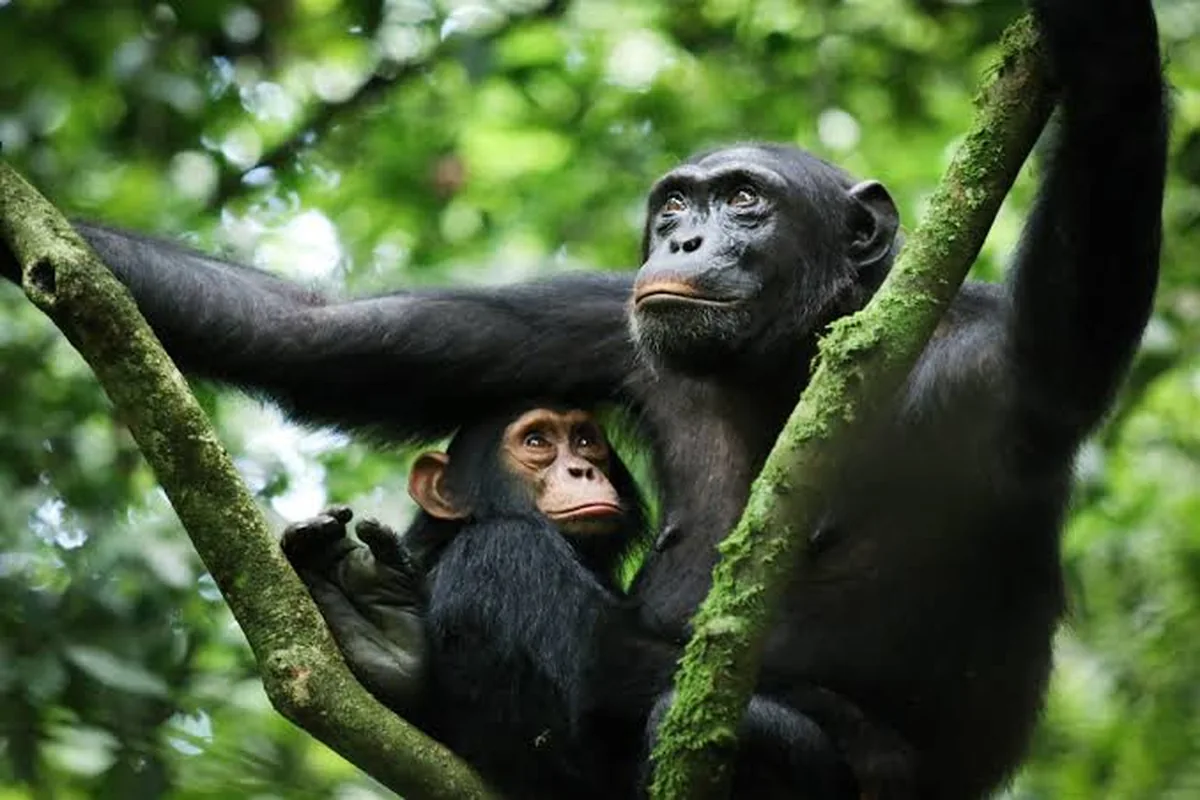
A chimpanzee mother holding her baby among forest branches, illustrating Uganda’s remarkable primate wildlife.
15. How to book safely and avoid common mistakes
Before making a deposit, travelers should receive a clear itinerary showing the trekking date, intended sector, accommodation level, transport arrangements and inclusions. Ask how changes are handled and which services are subject to confirmation. PrideMark Safaris recommends retaining written records of key arrangements, including permit confirmation once issued, so travelers understand what is reserved and what remains provisional.
Begin by selecting possible travel dates and deciding whether the safari will start in Entebbe or Kigali. Ask your operator to check permit availability for the relevant park and sector before committing to non-refundable lodging. Obtain a written itinerary, an itemized quotation and clear payment terms. Confirm the company’s legal and tourism credentials through official sources, and keep receipts and written correspondence for your records.
Common errors include booking a lodge in the wrong trekking sector, underestimating road transfers, arriving late the night before the trek and assuming a permit can be freely moved between dates. Another mistake is relying on generic online prices without checking the correct residency category and current tariff. A thoughtful booking process prioritizes accurate logistics and confirmed arrangements over dramatic promises or unusually cheap advertised packages.
Final confirmation before travel
A few weeks before departure, review your passport and visa requirements, flight arrival details, emergency contacts, luggage needs and confirmed accommodation. Ask the operator to reconfirm the permit sector and the guide’s meeting arrangements. Keep digital and offline copies of key documents. If your health or mobility circumstances have changed, inform the team promptly so practical adjustments can be discussed. Good preparation reduces uncertainty and leaves more room to enjoy the wildlife, people and scenery that make the journey special.
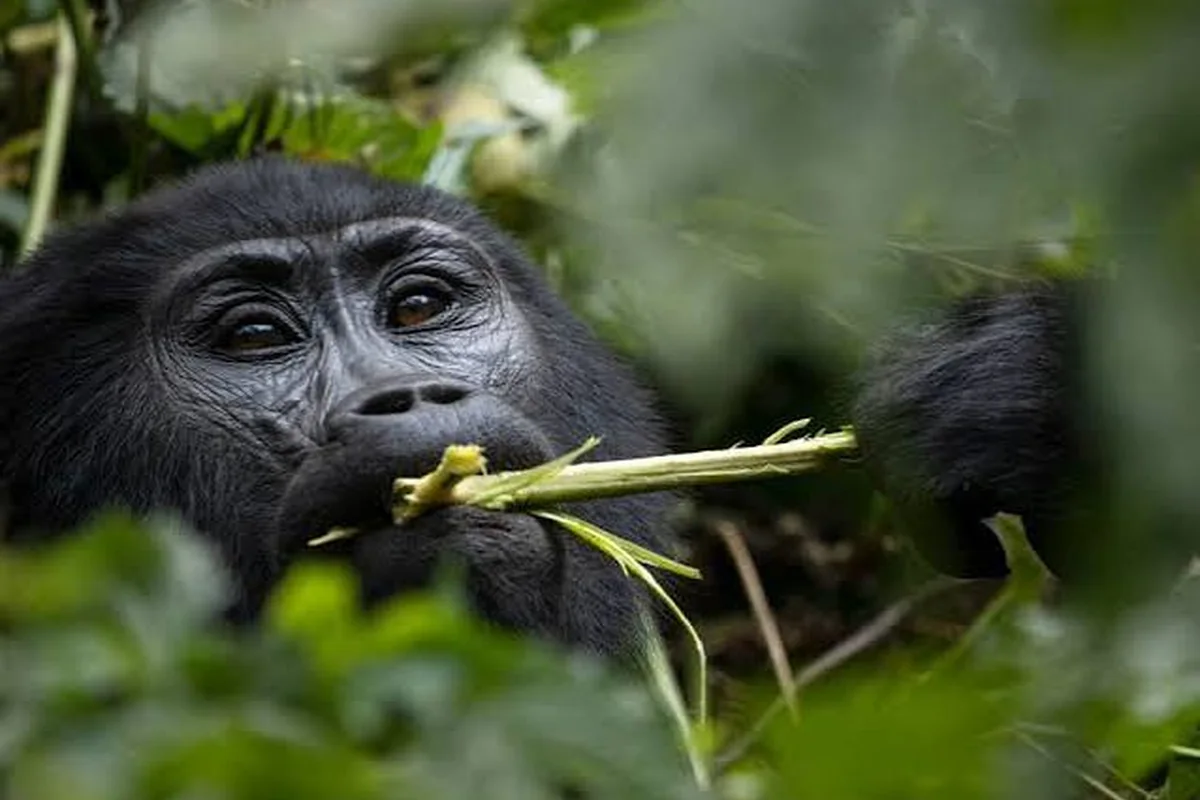
A mountain gorilla feeding on fresh vegetation in its natural forest habitat, illustrating the fascinating behaviour visitors can observe during gorilla trekking.
16. Planning your gorilla trek with PrideMark Safaris
The most useful first message includes your preferred travel month, number of guests, approximate budget, starting airport and whether gorilla trekking is the only priority. PrideMark Safaris can then suggest an appropriate length of stay, identify potential route conflicts and prepare a tailored quotation. Travelers who have not chosen dates can share a flexible window so permit planning starts with realistic options.
At PrideMark Safaris, we build gorilla trekking programmes around practical travel logistics and the guest’s priorities. We begin with the preferred dates, arrival point, number of travellers and desired accommodation level. From there, we consider permit availability, sector location, road or flight connections and opportunities to combine the trek with other wildlife experiences. The result should feel like a coherent journey rather than a collection of disconnected attractions.
Our team can prepare a tailored itinerary and quotation for a short gorilla-focused holiday or a longer Uganda and Rwanda safari. We encourage travellers to ask questions about walking conditions, inclusions, travel documents and accommodation before paying. Clear expectations are the foundation of a memorable experience. To discuss your plans, contact PrideMark Safaris and share your travel month, party size and preferred starting airport.
Recommended PrideMark Safaris gorilla trekking packages
There is no single ideal length for a Uganda gorilla safari. PrideMark Safaris offers focused short breaks and longer journeys that connect Bwindi with other national parks. The examples below are starting points for planning rather than a promise that every departure date or permit remains available. Open the individual itineraries to compare the style of travel, then contact PrideMark Safaris for a tailored proposal.
3-Day Uganda Gorilla Flying Luxury Safari — A short luxury fly-in option for guests who want to limit the longer road journey from Entebbe and concentrate on the Bwindi gorilla encounter. PrideMark Safaris can adapt the route, accommodation category and pace to your travel dates, subject to availability.
7-Day Uganda Primates & Game Safari — A balanced itinerary for visitors who want to combine primate experiences with savannah wildlife and additional landscapes. PrideMark Safaris can adapt the route, accommodation category and pace to your travel dates, subject to availability.
8-Day Uganda Wildlife Safari — An extended Uganda safari bringing together gorillas, chimpanzees and classic wildlife viewing. PrideMark Safaris can adapt the route, accommodation category and pace to your travel dates, subject to availability.
9-Day Gorilla Trekking and Wildlife Safari — A broader circuit for travelers interested in Bwindi, wildlife encounters and varied landscapes. PrideMark Safaris can adapt the route, accommodation category and pace to your travel dates, subject to availability.
16-Day Classic Uganda Experience Safari — A longer journey suited to visitors who want to explore several regions without limiting the trip to a single forest encounter. PrideMark Safaris can adapt the route, accommodation category and pace to your travel dates, subject to availability.
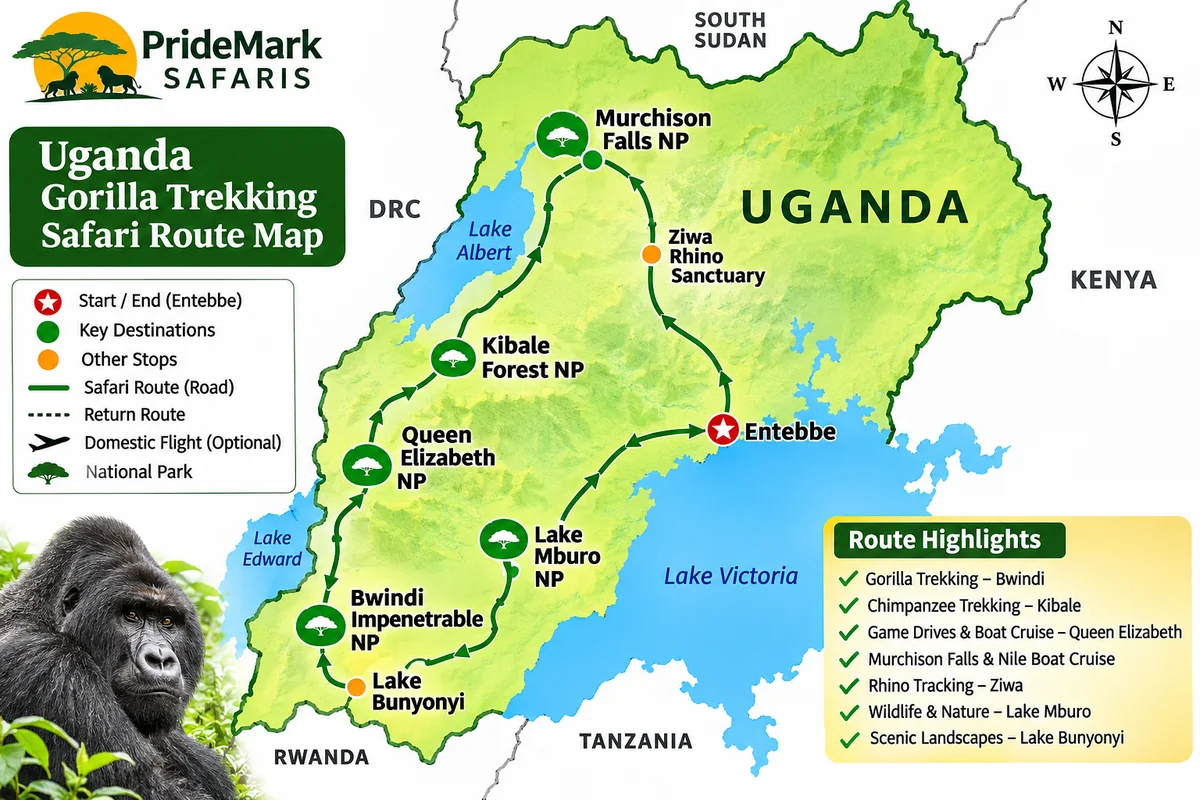
Explore Uganda’s gorilla trekking safari circuit, connecting Bwindi Impenetrable National Park with Uganda’s leading wildlife destinations.
Further reading for planning your Uganda gorilla safari
To explore specific questions in more depth, PrideMark Safaris recommends these related resources: Bwindi gorilla trekking planning guide; Can you request a particular gorilla family?; Queen Elizabeth National Park travel guide; Uganda safari ideas and packages. These pages complement the main guide with destination details, family allocation guidance and sample safari itineraries.
Frequently asked questions about gorilla trekking
Is seeing gorillas guaranteed?
A permit authorizes participation, not an absolute wildlife sighting guarantee. Trackers and rangers work to locate habituated families, but gorillas are wild animals and conditions can change.
How long is the gorilla viewing?
For standard trekking, the supervised viewing period is generally limited to one hour once the gorilla family is reached.
Can I trek twice?
Separate treks normally require separate permits and appropriate scheduling. Confirm availability before making plans.
Are children allowed?
Uganda applies a minimum age requirement for gorilla trekking. Confirm the current age rule with Uganda Wildlife Authority before booking a family itinerary.
Can I photograph the gorillas?
Yes, subject to ranger instructions. Flash photography is not allowed, and visitors must maintain the required distance.
What happens if it rains?
Treks usually operate in changing forest weather. Waterproof clothing and suitable footwear are important; follow park instructions if conditions affect operations.
Do I need a porter?
A porter is optional for many visitors but often helpful with bags and difficult ground. Hiring one also supports local livelihoods.
Can I start in Rwanda?
Yes, some itineraries begin in Kigali and cross into Uganda, subject to immigration requirements and the permit sector.
How early should I reserve?
Book as early as practical when your dates are fixed, especially during busy travel periods, because permits and suitable lodges are limited.
Can I visit other parks?
Yes. Gorilla trekking pairs well with Queen Elizabeth, Kibale, Lake Mburo and other Uganda destinations when sufficient travel time is allowed.
Tourism registration and official resources
PrideMark Safaris is listed by the Uganda Tourism Board as PRIDEMARK SAFARIS LTD, licence UTB/RTT/TT/2026/102323. Verify the listing on the official Uganda Tourism Board licensed tour companies directory. For conservation permits and tariff updates, refer to Uganda Wildlife Authority. For current entry requirements, consult the relevant official immigration authority before travel.
Plan your Uganda gorilla safari
Tell us your travel dates, number of guests, arrival airport and preferred accommodation level. We can prepare a practical route and itemized quotation.