
Book Your First Uganda Safari
Uganda safari booking guide: Discover how to plan your first safari step by step, from choosing the right parks and trip length to confirming permits, accommodation, payments and travel arrangements. This practical guide helps you ask better questions, compare offers fairly and book with confidence.

A pair of lions relaxes near a safari vehicle on the African savannah. A well-planned Uganda safari offers opportunities for memorable wildlife encounters with experienced guides.
How to Book Your First Uganda Safari: Start With the Experience
Booking a first safari can feel complicated because a Uganda holiday combines wildlife activities, road transfers, permits, accommodation and travel logistics. The easiest approach is to decide what you most want to experience before comparing prices. Some visitors dream of sitting quietly near a habituated mountain gorilla family. Others want open-vehicle game drives, a boat trip beneath Murchison Falls, chimpanzee tracking or an introduction to local culture. A well-designed itinerary connects those priorities without forcing every famous park into a short holiday.
Write down your top three experiences, your available travel dates, the number of people travelling and a comfortable overall budget. Share these with a safari specialist rather than asking for the cheapest possible package without context. A thoughtful operator can explain where extra spending improves the trip and where simpler choices work just as well. Your first decision is not which lodge has the best photograph; it is what kind of Uganda journey will leave you satisfied.
Choose the Right Safari Style
A private guided safari offers a dedicated vehicle, driver-guide and flexible pacing. It suits couples, families and friends who want to stop for photographs or adapt the daily schedule. A small-group departure may cost less per person and creates a social experience, but its dates, accommodation and activities are usually less flexible. A fly-in itinerary can reduce some long drives, although flights may add cost and still require road transfers. Self-drive travel demands more route planning, local driving confidence and awareness of park regulations.
For a first visit, a guided itinerary is often the simplest way to combine wildlife parks and primate experiences. Ask whether your quotation is private or shared, how many people occupy the vehicle, whether everyone has a suitable viewing position and how much luggage space is available. Also ask about guide language and experience. The safari style influences not only the price but the amount of time you spend waiting, travelling and enjoying wildlife.
Decide How Many Days You Really Need
A three- or four-day holiday can focus on one region, such as a gorilla trekking visit or a nearby wildlife park, but long transfers can take a large share of the schedule. Around five to seven days allows a more balanced introduction with selected highlights. Eight to ten days creates room for several ecosystems and a less hurried pace. Eleven to fourteen days can combine major parks, forest tracking, cultural experiences and rest days, subject to travel conditions and your budget.
Count arrival and departure days carefully. An international flight landing late in the evening should not be treated as a full sightseeing day. A gorilla trek is physically demanding and weather-dependent, so an overnight stay near the correct trekking sector is usually essential. Avoid itineraries that appear to fit distant parks together simply because a map makes them look close. Ask the operator for realistic transfer times, breaks and the number of nights in each destination.
Pick Travel Dates With Weather and Availability in Mind

A magnificent African elephant stands in a natural savannah habitat. Guided wildlife viewing is one of the unforgettable experiences travelers can include when booking a Uganda safari.
Uganda welcomes visitors throughout the year, but conditions vary by region and month. Many travellers favour relatively drier periods for easier forest trails and wildlife viewing. Rain remains possible in any season, particularly in highland forests. Wetter months can bring green landscapes, fewer visitors in some areas and occasionally more competitive lodge offers. Neither season guarantees a particular wildlife sighting.
If gorilla trekking is your priority, permit availability may matter more than the precise weather forecast. Ask for several acceptable travel dates and confirm the trekking permit before committing to non-refundable flights. Families should also consider school holidays, while photographers may want more time at each park rather than an ambitious checklist. When comparing offers for different months, check whether the lodge category, park activities and permit inclusions remain the same.
Set a Realistic Total Safari Budget
Safari quotations are easiest to compare when you separate the land package from international flights and personal expenses. The land package may include a vehicle, guide, fuel, lodging, meals, park entry and scheduled activities, but inclusions vary. Gorilla and chimpanzee permits are significant components when those activities are part of the itinerary. Domestic flights, visas, travel insurance, tips, drinks, laundry and optional activities may be separate.
Tell your operator whether your budget is per person or for the whole group, and whether it includes flights. A lower headline price may reflect shared transport, fewer park activities, more basic accommodation or omitted permits. Request an itemised explanation rather than assuming all quotations cover the same experiences. Build a modest contingency for personal spending and changes outside the operator’s control. A transparent budget is more valuable than an unrealistically low number that grows after booking.
Choose a Reputable Uganda Safari Operator
A reliable safari company should answer questions clearly, explain what is included, identify the legal business receiving payment and provide written booking terms. Look for a consistent online presence, verifiable contact details, recent independent feedback and knowledgeable responses about national parks and permit procedures. Attractive photographs alone do not establish reliability.
Ask who will meet you at the airport, who operates the vehicle, how guides are selected and what happens if a vehicle develops a problem. A good operator should be comfortable discussing realistic road conditions, accommodation substitutions and the limits of wildlife guarantees. You can also ask for a sample itinerary before paying. For Pridemark Safaris enquiries, provide your travel window and preferred experiences so the team can prepare a tailored proposal rather than a generic list of destinations.
Understand What a Safari Quotation Includes
A professional quotation should show the travel dates, group size, accommodation names or categories, room basis, meal plan, transport arrangement, activities, permits and the price per person or group. It should also identify exclusions and the payment schedule. If a lodge is described only as “similar standard,” ask how substitutions are approved and whether any price difference applies.
Check whether airport transfers, drinking water in the vehicle, park entrance fees, ranger-led activities and government taxes are included. Confirm the type of vehicle and whether it has a pop-up roof for game drives. If a quotation lists “gorilla trekking,” verify that the actual permit is included rather than merely the transfer to the park. Ask for all material promises in writing. A clear quotation protects both traveller and operator by reducing misunderstandings later.
Confirm Gorilla and Chimpanzee Permits Early
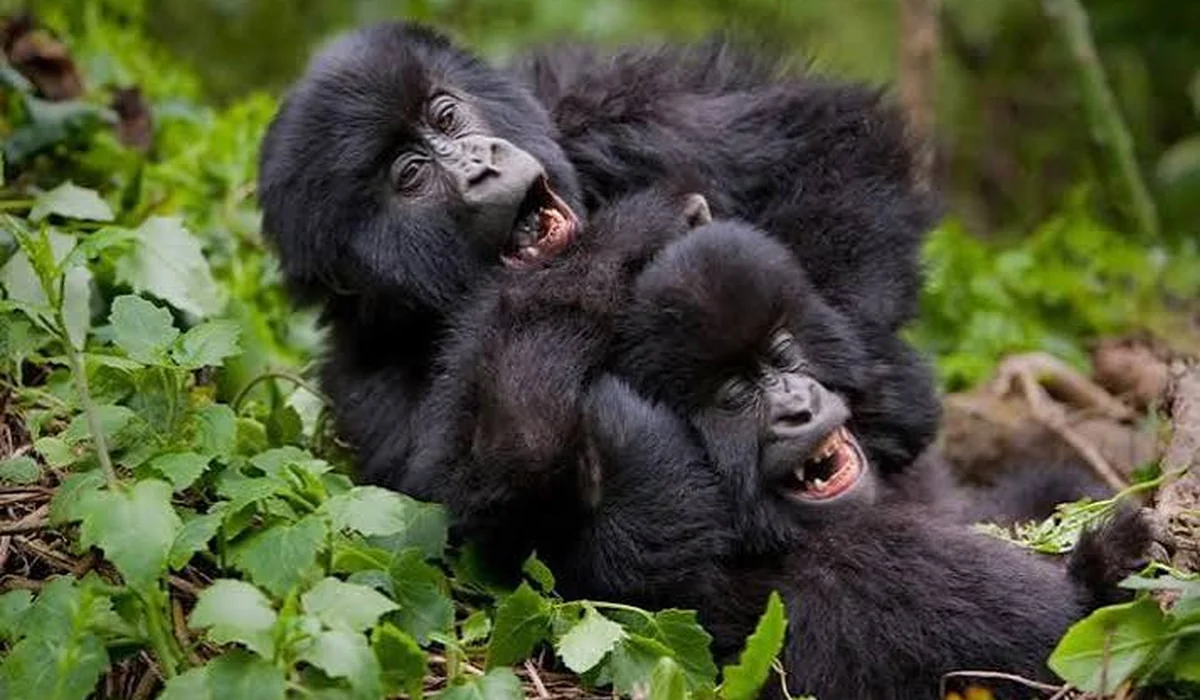
Two young mountain gorillas interact in a lush forest setting. Gorilla trekking is one of the remarkable wildlife experiences travelers can include when booking a Uganda safari.
Mountain gorilla trekking is one of Uganda’s most sought-after experiences, and permits are limited for each trekking date and location. The Uganda Wildlife Authority manages official permit arrangements and park rules. Availability and fees can change, so request a current confirmation rather than relying on an old blog post. The same principle applies to chimpanzee tracking in popular forest destinations.
Do not assume a permit is secured merely because a draft itinerary contains the activity. Ask the operator when the permit will be purchased, what information is needed and what written confirmation you will receive. The trekking sector affects which lodge and transfer route make sense. Check age requirements and health restrictions before committing, especially when travelling with children or anyone who may struggle with steep, muddy trails. Permits often have restrictive cancellation terms, making early clarity essential.
Select Parks That Match Your Interests
Bwindi Impenetrable National Park and Mgahinga Gorilla National Park are associated with mountain gorilla experiences. Kibale is renowned for chimpanzee tracking, while Queen Elizabeth and Murchison Falls offer varied game drives, landscapes and water-based excursions. Lake Mburo can be useful on certain southern routes, and Kidepo appeals to travellers with enough time for a more remote northern journey.
You do not need every park on your first trip. Pair destinations logically and leave time to enjoy them. A visitor with six days might prioritise gorillas and one wildlife park, while someone with ten or more days can build a broader circuit. Ask whether the itinerary includes boat excursions, guided walks or community visits and whether these are optional. A route should reflect your interests and actual road conditions, not simply the longest possible list of park names.
Choose Accommodation by Location and Comfort
Uganda offers guesthouses, simple safari lodges, mid-range properties, tented camps and high-end retreats. Price differences may reflect location, room size, service levels, views, meal arrangements and facilities. For forest trekking, proximity to the correct starting point is particularly important. A beautiful lodge in the wrong trekking sector can create an unnecessary early-morning transfer.
Ask whether rooms are en suite, whether mosquito nets or other insect protection are available, how electricity and hot water work and whether dietary needs can be accommodated. Some remote properties use solar power or generators with scheduled hours. Families should confirm bed arrangements, room proximity and child policies. Choose the comfort level you will appreciate after long activity days, rather than assuming that the most expensive property is always the best fit.
Review Driving Times and Safari Vehicle Details

Zebras roam across open savannah grassland as travelers observe them from a safari vehicle. Guided game drives offer an exciting way to experience Africa’s wildlife.
Road travel is part of many Uganda safaris. Routes may include paved highways, rough access roads, mountain bends and occasional delays caused by weather or roadworks. A map’s distance estimate does not capture all of these conditions. Ask for a day-by-day schedule showing approximate driving hours, sightseeing stops and the planned arrival time at each lodge.
Your vehicle should suit the number of guests and luggage. Clarify whether it is a safari van or four-wheel-drive vehicle, whether game-viewing roof access is available and whether seat belts are provided. Long transfers are more comfortable with regular breaks and sensible departure times. Avoid requesting unrealistic overnight drives to squeeze in extra parks. Good pacing is both a comfort consideration and an important part of responsible travel planning.
Check Payment Methods, Deposits and Cancellation Terms
Before sending money, request a written invoice that names the company, the services being purchased, the payment deadline and the accepted payment method. Confirm that bank or payment details match the company you have been communicating with. If details change unexpectedly, verify them using a previously confirmed phone number or contact channel. Keep copies of receipts and all relevant correspondence.
Understand how much is due as a deposit, when the balance is payable and which parts are non-refundable. Permit purchases and lodge reservations may carry different cancellation conditions. Ask how refunds are handled, whether postponement is possible and what happens if government regulations or travel conditions change. Do not rely on informal promises made only in a messaging app. Clear terms are a sign of professional booking practice, even when you hope never to use them.
Book International Flights in the Right Order
Most international visitors enter Uganda through Entebbe International Airport. Flight schedules, transit visas and airline baggage rules can influence your itinerary. If gorilla permits or a particular lodge are critical to your plans, coordinate the order of bookings carefully with your operator. A cheap flight is not necessarily a saving if it forces an extra hotel night or conflicts with a confirmed trekking date.
Share your arrival and departure flight details as soon as they are final. Allow enough time for immigration, baggage collection and airport transfers. Consider an arrival night near Entebbe before a long road journey, especially after overnight flights. When planning the last day, leave a sensible margin before international departure rather than scheduling a distant park transfer with no buffer. Keep the operator informed if an airline changes your schedule.
Prepare Passports, Visas and Entry Documents
Check your passport validity and Uganda’s current entry requirements using official sources well before departure. Many visitors need to arrange a visa through the official Uganda immigration system, but requirements depend on nationality and travel circumstances. Some travellers may need additional documents when crossing borders on a multi-country safari.
Keep digital and offline copies of your passport information page, visa approval, insurance details, booking confirmation and emergency contacts. Use official websites rather than unfamiliar intermediaries offering guaranteed approvals. Immigration rules can change, so do not treat a previous traveller’s experience as definitive. If your itinerary includes Rwanda, Kenya or another country, check each destination and transit point separately. Your safari operator can help you understand logistics but cannot replace the immigration authority’s decision.
Plan Health Precautions and Insurance
Arrange a pre-travel health consultation in good time. Discuss recommended vaccinations, malaria prevention, any personal medical needs and how to manage medications while travelling. Uganda’s entry health requirements may include specific vaccination documentation, so consult official health and immigration guidance for your circumstances. Forest trekking can be strenuous, and a realistic discussion of mobility or health concerns helps your operator recommend suitable activities.
Choose travel insurance that matches your actual itinerary, including remote destinations, medical treatment, evacuation where appropriate and any activities you plan to undertake. Read exclusions carefully; not every standard policy covers trekking or certain adventure activities. Carry necessary prescriptions in original packaging and a small personal first-aid kit. Tell your operator about dietary restrictions or mobility needs early enough to make arrangements, while keeping sensitive medical information limited to what is operationally necessary.
Know What to Expect From Your Safari Guide
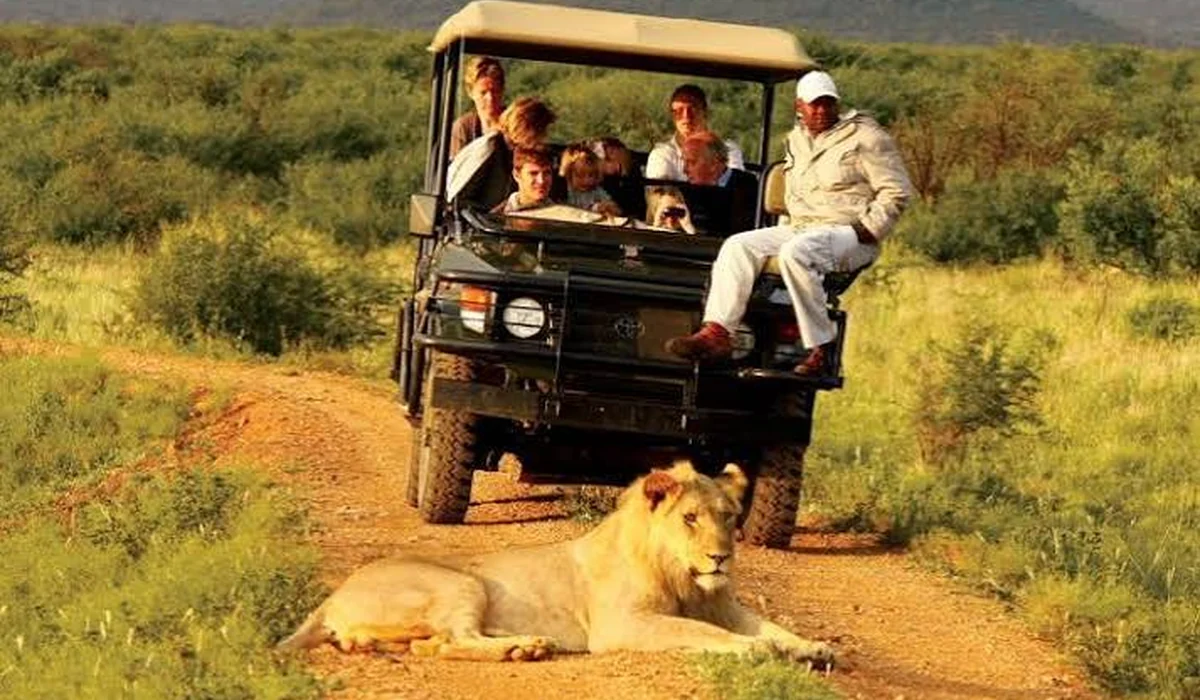
A lioness rests on a safari track as visitors observe from a nearby game drive vehicle. Guided wildlife experiences are an exciting part of planning an African safari.
A professional driver-guide does more than drive between lodges. Guides coordinate park visits, interpret wildlife behaviour, help with local logistics and adapt the day when weather or conditions change. On regulated activities such as gorilla or chimpanzee tracking, authorised park rangers lead the wildlife encounter and set the rules that visitors must follow.
Before departure, ask for a practical meeting plan: who will greet you, where to meet, how to identify the representative and which number to call if flights are delayed. During the safari, discuss interests such as birds, photography or shorter walking distances. Respect guide and ranger instructions around wildlife and never pressure staff to approach animals too closely. An informed, cooperative relationship with your guide can make the journey more enjoyable and safer.
Book a Safari That Respects Wildlife and Communities
Responsible travel begins with realistic expectations. Wild animals move freely, so sightings cannot be guaranteed. Choose operators who follow park regulations, respect viewing distances and avoid activities that disturb animals for photographs. During primate visits, hygiene rules and minimum distances help protect species vulnerable to human illness.
Consider how your trip benefits local communities through guiding, accommodation, crafts and conservation-related fees. Ask about community visits that are organised with consent and fair compensation rather than treating people as attractions. Reduce single-use waste, avoid feeding wildlife and follow local guidance on photography. These choices do not have to make the safari complicated; they are simply part of travelling thoughtfully in a destination whose wildlife and communities deserve long-term care.
Review Your Final Itinerary Before Departure
A few weeks before travel, request a final itinerary showing accommodation contacts, activity dates, permit status, pickup instructions, guide contact details and emergency procedures. Check spelling of traveller names where documents require them. Reconfirm dietary requests and any accessibility arrangements. Keep the itinerary available offline because mobile connectivity may vary in remote areas.
Pack for both warm lowland weather and cooler, wet forest conditions. Comfortable walking footwear, rain protection, layers, insect repellent and sun protection are useful. Ask your operator about luggage restrictions if domestic flights are included. Keep a little flexibility in your expectations: rain, road conditions or wildlife movements can change the order of activities. A well-prepared booking is not one where nothing changes; it is one where the important arrangements are clear and sensible alternatives exist.
Avoid Common First-Time Booking Mistakes
The most common errors are booking too late for popular permits, comparing prices without comparing inclusions, choosing distant lodges for early treks, underestimating driving times and leaving travel insurance until the last moment. Another mistake is paying before receiving written cancellation terms. First-time visitors sometimes try to fit six national parks into a single week, creating a holiday dominated by vehicle transfers.
Prevent these problems with a simple sequence: choose priorities, decide dates and duration, request a detailed quotation, check permits and accommodation, review payment terms and only then confirm the booking. Ask questions whenever wording is unclear. A reputable operator should be able to explain why an itinerary is arranged in a particular order and what changes would improve it. Booking carefully allows you to focus on the experience once you arrive.
Compare Safari Booking Options
Different booking approaches suit different travellers. Use the table below to clarify the trade-offs before requesting a proposal. These are general distinctions, not guarantees; individual packages can differ substantially.
| Option | Advantages | Questions to ask |
|---|---|---|
| Private guided safari | Flexible pace, dedicated guide, tailored stops | Vehicle type, group price, activity inclusions |
| Small-group safari | Shared costs and social atmosphere | Maximum group size, fixed dates, room sharing |
| Fly-in safari | May reduce some long road transfers | Baggage limits, flight schedules, road connections |
| Short regional safari | Focused experience with fewer destinations | Transfer time versus actual activity time |
| Extended multi-park safari | More varied wildlife and landscapes | Rest days, travel pace, total budget |
Ask each operator to quote the same number of travellers, comparable accommodation standards and the same core activities. Only then can you judge which proposal offers better value. A carefully planned seven-day trip can be more rewarding than a rushed ten-day schedule if it gives you more meaningful time in the parks.
Your 12-Step Uganda Safari Booking Checklist
Use this checklist when you receive a proposal. It turns a complicated booking process into manageable decisions and helps prevent expensive misunderstandings.
- List your top three wildlife experiences and preferred dates.
- Choose a realistic trip duration with arrival and departure buffers.
- Set a total budget and confirm the currency used in quotations.
- Decide whether you prefer a private or group safari.
- Request a written day-by-day itinerary with approximate drive times.
- Check the operator’s identity, reviews and communication channels.
- Compare accommodation categories, meal plans and room arrangements.
- Confirm gorilla or chimpanzee permit availability and inclusion.
- Review all inclusions, exclusions, taxes and optional activities.
- Read deposit, cancellation, refund and change conditions.
- Arrange flights, entry documents, health advice and travel insurance.
- Reconfirm pickup, guide contacts, accommodation and final itinerary.
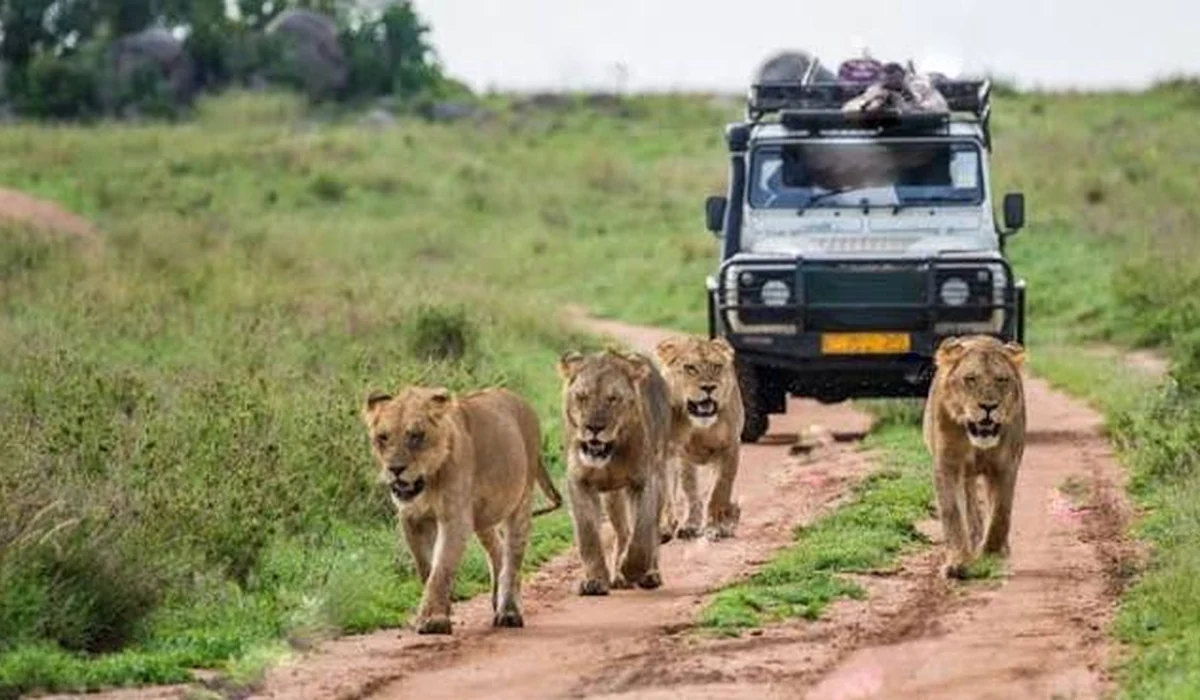
A group of lions walks along a safari track as a wildlife-viewing vehicle follows at a distance, capturing the excitement of a guided African safari.
Keep a copy of the completed checklist alongside your booking documents. If any major item remains unclear, request clarification before paying the balance. This is especially important for permit-dependent activities and long-distance transfers.
Frequently Asked Questions About Booking a Uganda Safari
These answers cover common concerns from first-time visitors. Individual park regulations, prices and immigration requirements can change, so confirm the details that apply to your travel dates.
How far in advance should I book my first Uganda safari?
Several months ahead is sensible for popular travel periods and gorilla trekking, although actual availability varies. Earlier enquiries provide more choice of permits, lodges and dates. Last-minute trips may be possible when permits and rooms remain available, but you should never assume they are.
Should I book through a local Uganda safari operator?
A knowledgeable local operator can coordinate guides, permits, accommodation and road transfers in one itinerary. Compare written quotations, verify business details and review terms before choosing. What matters most is reliable communication, transparent pricing and experience with your preferred destinations.
Is a gorilla trekking permit included in the safari price?
It depends on the package. Some quotations include the permit and others exclude it. Ask for written confirmation of the permit inclusion, trekking date and booking status. The activity appearing in an itinerary is not proof that a permit has already been secured.
Can I book a Uganda safari without gorilla trekking?
Yes. Uganda offers savannah game drives, boat trips, birdwatching, chimpanzee experiences, nature walks and cultural activities. A safari without gorilla trekking can focus on wildlife parks and other interests, often with different budget and pacing options.
What is the best duration for a first Uganda safari?
Many first-time travellers find seven to ten days a useful balance, but the right length depends on your priorities and travel style. Shorter trips can focus on one or two destinations, while longer journeys allow more parks and rest time.
Are Uganda safari prices per person or per vehicle?
Quotations may be calculated per person based on group size, or presented as a total private-trip cost. Confirm the currency, number of travellers, room occupancy and inclusions. A per-person price for four guests should not be compared directly with a solo-traveller price.
What happens if my flight arrives late?
Tell your operator as soon as possible. Airport pickup or the first overnight arrangement may need adjusting. The outcome depends on the booking terms and the next day’s itinerary, which is why an arrival buffer is helpful.
Do I need travel insurance for a Uganda safari?
Travel insurance is strongly recommended. Check coverage for medical care, evacuation, cancellation, delays and your planned activities. Review the policy wording rather than assuming that all trekking or remote travel is automatically included.
Can families with children book a Uganda safari?
Yes, many safari experiences suit families, but minimum ages and participation rules vary by activity and park. Check these before booking permits or lodging. The route, vehicle, room arrangements and driving schedule should also reflect children’s needs.
How do I request a custom Uganda safari itinerary?
Share your travel dates or preferred month, number of travellers, approximate budget, trip length and top experiences. Ask for a detailed proposal with accommodation options, inclusions, exclusions and payment terms. You can then refine the itinerary before confirming.
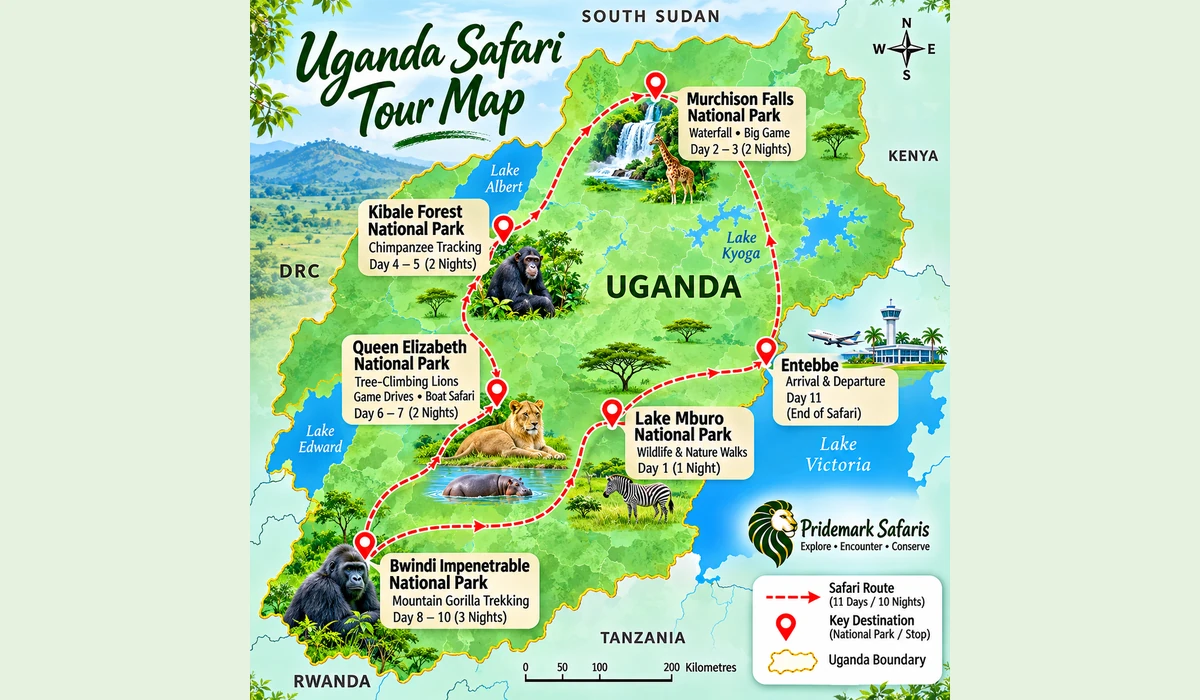
Explore Uganda’s major wildlife destinations with Pridemark Safaris. This illustrated safari map highlights a suggested route connecting Entebbe, Murchison Falls, Kibale Forest, Queen Elizabeth, Bwindi Impenetrable and Lake Mburo national parks.
Useful Official Resources Before You Book
For authoritative information, consult the Uganda Wildlife Authority for national parks, permits and visitor rules; the official Uganda immigration visa portal for entry applications; and the CDC Uganda travel health page for health guidance. Review your own government’s current travel advisory as well. These resources are more reliable for changing requirements than an undated travel article.
Explore more planning resources at Pridemark Safaris, including guidance on safari duration, accommodation, packing, wildlife viewing and the best time to travel. For the strongest itinerary, connect these topics rather than treating each decision separately: the season affects the trails, the parks affect the route, the route affects the accommodation, and the permits affect your booking sequence.
Ready to Book Your First Uganda Safari?
Tell Pridemark Safaris your preferred dates, number of travellers, budget range and must-see experiences. We can help you turn those details into a practical itinerary with clear inclusions and realistic travel times. Explore • Encounter • Conserve.