
Uganda Safari Mistakes to Avoid
Uganda safari mistakes to avoid can make the difference between a rushed trip and a memorable journey. Discover 18 common planning errors, how to prevent them, and what to check before booking your first wildlife adventure.
Planning a first Uganda safari is exciting, but it is easy to overlook important details when comparing routes, lodges, wildlife experiences and prices. This practical guide explains the Uganda safari mistakes to avoid, with realistic advice about gorilla permits, road transfers, health preparation, safari vehicles, national park rules and responsible tourism. It is designed to help you ask better questions before paying a deposit and to enjoy the journey once you arrive.
Why first-time Uganda safari mistakes happen
A first safari brings together several different kinds of travel: national park visits, forest walks, road transfers, lodge stays and sometimes permits for activities with limited daily capacity. Travelers who have never visited Uganda may assume every park works the same way or that a short distance on a map means a short journey. Those assumptions can create disappointment even when the wildlife and hospitality are excellent.
The best approach is to plan around experiences rather than a long list of place names. Decide whether gorillas, chimpanzees, savannah wildlife, birds, landscapes or cultural encounters matter most. Then give each priority enough time, budget and logistical attention. A well-paced itinerary usually delivers more satisfaction than an ambitious itinerary with constant transfers.
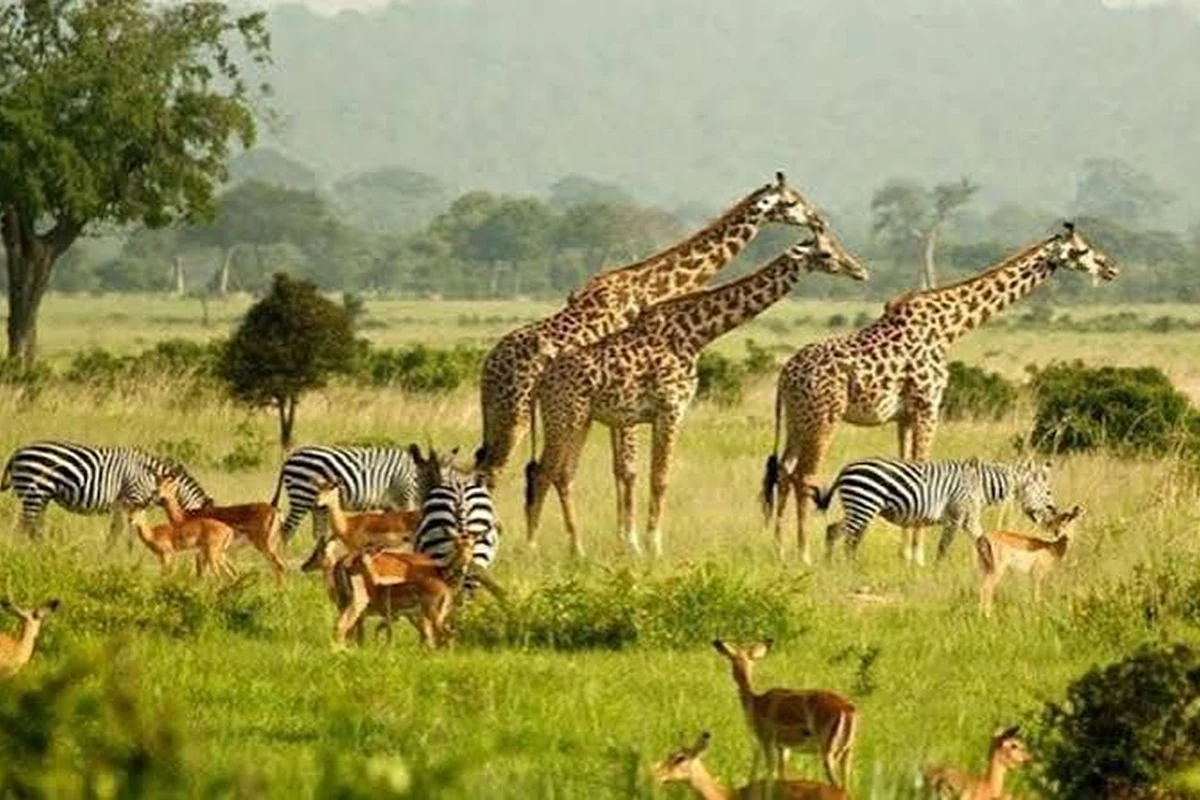
Giraffes, zebras and antelopes share a grassy savannah habitat, illustrating the variety of wildlife travelers may encounter on an African safari.
Mistake 1: Booking before defining your safari priorities
A quotation can look attractive without actually including the experiences you care about. Some itineraries emphasize game drives, while others prioritize gorilla trekking, chimpanzee tracking or quieter nature walks. If you book based only on the headline price, you might discover too late that your dream activity is absent or optional.
Write down your top three experiences and share them with your safari planner before asking for a final quotation. Mention your fitness level, preferred pace, travel companions and any accessibility needs. Ask the operator to explain why each destination appears in the route and which experiences are realistic rather than merely possible.
Mistake 2: Underestimating Uganda safari driving times
Uganda rewards overland travel with changing scenery, roadside markets and countryside views, but driving can be slower than a digital map suggests. Road surfaces, weather, traffic, park entry procedures and rest stops affect the day. Long transfers also reduce the time available for game drives or relaxing at the lodge.
Request a day-by-day schedule that identifies transfer days and realistic departure times. Avoid planning a major afternoon activity immediately after a demanding drive unless the operator confirms it is practical. Build in meal breaks and flexibility, especially when moving between southwestern parks and the north of the country.
For example, a day that includes a cross-country transfer, a park gate procedure and an afternoon boat cruise needs careful coordination. If the journey takes longer than expected, the boat activity may not be recoverable. A realistic itinerary identifies which activities are fixed-time bookings and which can be moved.
Mistake 3: Waiting too long to arrange gorilla permits
Gorilla trekking is one of the most sought-after Uganda safari experiences, and permits are date-specific with limited availability. A lodge reservation does not automatically secure a gorilla permit. Booking international flights before checking the relevant trekking date can leave you with expensive changes or a compromised itinerary.
Ask your operator to verify permit availability before treating an itinerary as confirmed. Request written confirmation of the trekking date, permit arrangement and applicable terms. Permit prices and booking procedures can change, so use the current Uganda Wildlife Authority information rather than relying on an old blog post or a screenshot of historic rates.
Mistake 4: Treating chimpanzee tracking as interchangeable with gorilla trekking
Both activities involve forest primates, but they differ in terrain, pace, behavior and the style of viewing. A chimpanzee tracking outing may involve moving through forest to locate an active community. Gorilla trekking can involve steep, muddy trails and an unpredictable search before the permitted viewing period. Neither activity should be sold as a guaranteed close-up photographic encounter.
Discuss the difference with your guide, and allow enough recovery time between physically demanding activities. If your schedule is tight, prioritize the primate experience that matters most. Always follow ranger instructions, health screening rules and minimum-distance requirements; these protect visitors and animals alike.
Before comparing two offers, ask whether the accommodation is priced per person sharing, whether a single supplement applies and whether the vehicle is private. A low headline price may exclude high-value activities. Conversely, a higher quotation may include meaningful conveniences that save money and stress during the trip.
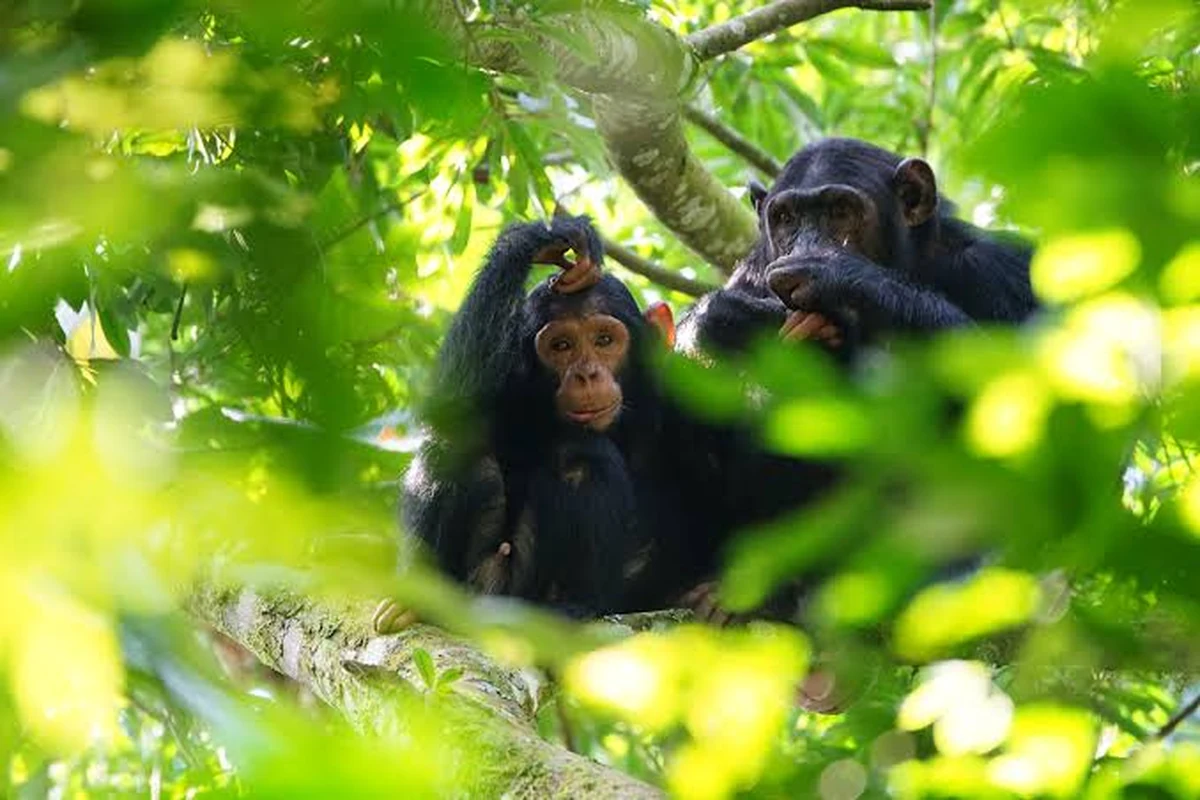
Two chimpanzees rest together among lush forest leaves, illustrating the remarkable primate encounters travelers can experience on a guided African forest safari.
Mistake 5: Choosing a safari based on price alone
Two Uganda safari quotations can have very different inclusions. One may cover park entry fees, a private vehicle, an experienced guide, meals and activities; another may list a low starting price but exclude essential permits or charge extra for transfers. A cheap quote is not necessarily poor value, but an incomplete quote is difficult to compare fairly.
Ask for an itemized list of what is included and excluded, including accommodation category, room arrangement, vehicle type, fuel, guide services, meals, drinks, park fees, permits, airport transfers and tips. Compare like with like and ask about cancellation conditions. A transparent mid-range itinerary may be better value than an unclear luxury offer.
Mistake 6: Packing for a beach holiday instead of varied safari conditions
Uganda has warm lowland areas, cooler highlands and forest environments that can be wet or muddy. Visitors sometimes arrive with only light clothing and fashionable shoes, then struggle with early morning game drives or steep forest trails. Overpacking is another problem because luggage space may be limited on safari vehicles or domestic flights.
Pack lightweight layers, a warm top for cool mornings, a rain jacket, sturdy walking footwear, sun protection and a small daypack. Neutral colors are practical for wildlife outings, while long sleeves can help with sun and insects. Check any domestic flight baggage restrictions and ask the operator whether trekking gaiters, gloves or walking sticks are useful.
Mistake 7: Ignoring travel health preparation
Travel health planning should begin well before departure, not on the evening before a flight. Entry requirements, vaccination guidance, malaria prevention recommendations and personal medication needs can vary by traveler and change over time. Assuming that every visitor needs the same precautions is unwise.
Consult a qualified travel health professional and review official guidance for Uganda. Confirm current entry requirements and keep necessary documents accessible. Carry personal prescriptions in their original packaging when possible, and ask a clinician about malaria prevention and other precautions relevant to your route and medical history. Your safari operator can help with logistics but should not replace medical advice.
Mistake 8: Forgetting travel insurance and contingency planning
Wildlife travel includes remote destinations, uneven terrain and activities that may require specialized assistance if plans change. Some standard insurance policies exclude trekking, certain adventure activities or medical evacuation. Travelers may also overlook trip interruption coverage or the costs associated with missed connections.
Read policy wording before purchasing and confirm that your planned activities are covered. Check emergency medical care, evacuation, cancellations and luggage provisions. Keep emergency contacts, policy details and copies of travel documents available offline. If an activity is important and nonrefundable, ask what happens if illness or weather prevents participation.
One especially rewarding habit is to let your guide interpret tracks, alarm calls, vegetation and animal behavior. That turns even a quiet game drive into an engaging learning experience. Keep voices low around wildlife and resist pressuring the guide to chase an animal for a better picture.
Mistake 9: Assuming wildlife sightings are guaranteed
Nature is unpredictable. Even in productive wildlife areas, animals move according to season, habitat, weather and their own behavior. A marketing photograph cannot promise that you will see a lion at a particular spot or find every animal on a checklist. This expectation can overshadow the remarkable experiences that do occur.
Approach game drives with curiosity and flexibility. Listen to your guide, appreciate birds and smaller animals, and allow time for patient observation. Ask operators about likely wildlife rather than guaranteed sightings. Photography plans should account for changing light and distance; a zoom lens or binoculars can be more useful than expecting animals to approach a vehicle.

A mother hippopotamus and her calf stand at the water’s edge, illustrating the remarkable wildlife encounters visitors may experience on an African safari.
Mistake 10: Ignoring park rules and ranger guidance
Visitors sometimes assume that a wildlife sighting justifies leaving a vehicle, approaching an animal or making noise to attract attention. These choices can endanger people, disturb wildlife and undermine conservation. Forest trekking rules are particularly important because close contact and human illness can affect vulnerable primates.
Stay within authorized viewing areas and follow instructions from guides and rangers. Do not feed wildlife, use flash where prohibited, fly drones without authorization or request unsafe approaches for photographs. Respect the required distance from animals, even when an animal comes closer on its own. Good safari etiquette is a core part of responsible travel.
Mistake 11: Booking accommodation without checking its location
A lodge may be beautiful but inconvenient for a dawn game drive or early trekking briefing. Descriptions such as “near the park” do not always reveal the actual travel time to the correct entrance or trekking sector. In Bwindi, for example, staying in the wrong sector can create a serious logistical problem.
Ask which park gate or trekking briefing point your accommodation serves and how long the morning transfer usually takes. Check whether the rate includes meals and whether electricity, Wi-Fi and hot water are available as needed. For early activities, location and reliability may matter more than a long list of luxury amenities.
Mistake 12: Scheduling every hour of the trip
A packed itinerary can look exciting on paper but leave little space for rest, delays or unexpected opportunities. Consecutive early departures, long drives and strenuous walks can be tiring, especially for first-time visitors arriving after an international flight.
Build in an arrival buffer where possible and avoid combining multiple demanding experiences in one day. Allow time for a relaxed lunch, a scenic stop or an afternoon at the lodge. A slower day can improve the quality of the next game drive and gives your guide flexibility to respond to conditions.
Mistake 13: Overlooking seasonality and local weather
Uganda can be visited at different times of year, but rainfall patterns influence trail conditions, road comfort and photography. A dry-season itinerary is not guaranteed to be dry, and a wetter-season trip can still provide excellent wildlife experiences. The wrong assumption is that one month is perfect for every activity and traveler.
Compare your preferred travel dates with your priorities. For forest trekking, be prepared for mud and rain at any time. For game drives, ask about typical visibility and road access in the parks you plan to visit. Pack for variable conditions and maintain a flexible attitude rather than expecting a fixed weather forecast months in advance.
It is also wise to check the spelling of names across passports, airline reservations and permits. Small administrative inconsistencies can become major problems when a booking is tied to an identity document. Keep digital and printed copies, but protect personal data and use official application channels.

An African elephant stands at the water’s edge while visitors observe from a safari boat, illustrating the memorable wildlife encounters possible on guided boat excursions.
Mistake 14: Not checking passports, visas and entry rules early
A safari can unravel before it begins if a passport, visa application or required travel document is overlooked. Requirements depend on nationality and can change. Third-party visa websites may also cause confusion or charge unnecessary fees.
Check the official Uganda immigration portal and the relevant government travel advice for your passport. Confirm passport validity requirements, visa rules and any applicable health documentation well ahead of departure. Save copies of approvals and keep them accessible without an internet connection. Ask your airline about transit-country rules as well.
Mistake 15: Misunderstanding private versus shared safaris
Private and shared tours can both be rewarding, but the experience differs. A private vehicle usually allows greater control over stops, pacing and photography, while a shared departure may reduce costs and create a social atmosphere. Travelers sometimes discover the arrangement only after paying a deposit.
Ask how many guests will be in the vehicle, how seats and window access are arranged, and whether the guide is dedicated to your group. Confirm whether the itinerary can change if another guest has different interests. For families, photographers and travelers with special requirements, this detail can be as important as the hotel category.
Mistake 16: Forgetting about money, tipping and connectivity
Visitors can be surprised by cash-only purchases, limited card acceptance or patchy mobile coverage outside major towns. Tipping practices also vary by service and are not always included in the quoted safari cost.
Ask your operator which expenses may require cash, what currency is most practical and whether optional activities can be paid by card. Budget separately for tips, souvenirs and personal purchases. Download maps, important addresses and booking confirmations before leaving a strong connection, and discuss local SIM or eSIM options if staying connected matters.
Mistake 17: Choosing unrealistic safari durations
Three days may be enough for a focused single-destination experience, but it is rarely enough to combine Uganda’s major primate and savannah highlights without significant travel pressure. First-time visitors sometimes try to fit Bwindi, Kibale, Queen Elizabeth and Murchison Falls into an itinerary better suited to one or two areas.
Match the trip length to the number of destinations. A five- to seven-day route can focus on a few complementary highlights; longer trips allow more varied parks and rest days. Ask your planner to show actual driving days, not only activity days. When time is limited, choosing fewer destinations often produces a better safari.
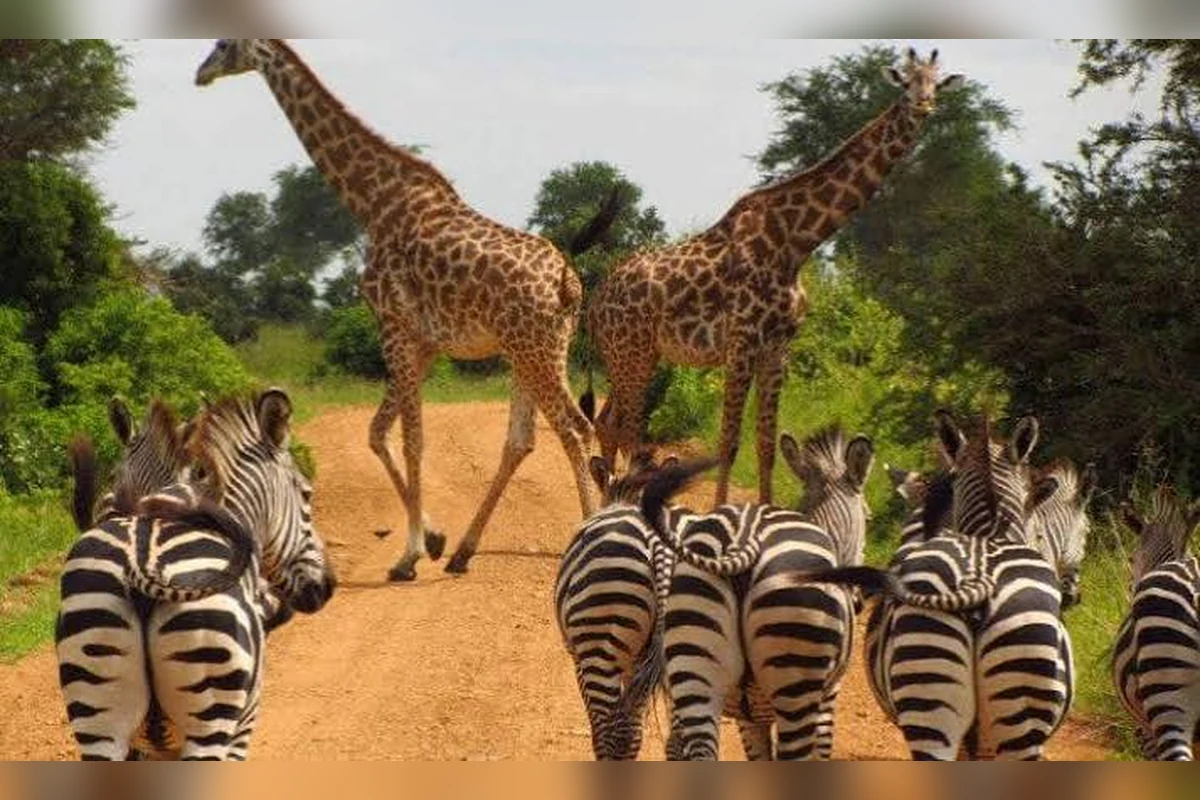
Giraffes and zebras share a woodland safari track, illustrating the diverse wildlife encounters travelers may experience during a guided African safari.
Mistake 18: Overlooking responsible tourism and community respect
Safari experiences depend on healthy habitats and respectful relationships with communities around protected areas. Visitors may unintentionally create problems by distributing gifts without guidance, photographing people without permission or buying wildlife products.
Choose operators that respect park regulations, local employment and conservation initiatives. Ask before photographing residents, follow community-host guidance and buy locally made products from reputable sellers. Responsible travel is not an optional extra: it helps protect the people and wildlife that make Uganda special.
A useful question is: “If I remove one destination, what would I gain?” The answer may be a second game drive, a less tiring transfer, a better lodge location or time to enjoy a community visit. Value comes from the quality of each day, not simply the number of parks listed.
How to compare two Uganda safari quotations
The most useful comparison is not the total price alone but the experiences, services and risks behind it. Look for clear descriptions of accommodation, vehicle arrangements, activity permits and transfer days. Ask whether a quoted gorilla permit is actually available for the proposed date and whether a lodge is near the correct trekking sector.
A detailed quotation should state the deposit amount, payment schedule, refund terms and what happens if permits or lodges become unavailable. Request a written itinerary with each overnight location. If one operator cannot explain a significant price difference, pause before making payment and ask for clarification.
A practical first-time safari booking timeline
Several months before travel, decide on priorities, budget, travel window and the number of days available. At that stage, compare possible routes and ask about permits for limited-capacity activities. Once the itinerary and major inclusions are clear, confirm bookings and review the terms before making payments.
In the weeks before departure, recheck travel documents, health guidance, insurance, baggage limits and the contact details for your guide or airport pickup. In the final days, download confirmations, prepare your daypack and keep some flexibility for weather. A simple timeline reduces last-minute stress and makes it easier to spot missing arrangements.
What Pridemark Safaris can help you plan
A useful safari planning conversation starts with your goals rather than a generic package. Share your preferred dates, party size, interests and approximate budget. Explain whether you prefer a comfortable mid-range lodge, a luxury stay or a cost-conscious itinerary that still includes the experiences most important to you.
Pridemark Safaris can be contacted to discuss route design, accommodation preferences, transfers and wildlife activities. Before committing, request a written proposal and verify all inclusions, permit arrangements and payment conditions. The goal is a trip you understand clearly before departure, with realistic expectations and time to enjoy each destination.
Uganda safari mistakes to avoid: pre-booking checklist
Use this checklist before paying a deposit. It brings together the decisions most likely to affect the quality and reliability of your trip. If an answer is unclear, request clarification in writing rather than assuming that a service is included.
- I have identified my three highest-priority wildlife or cultural experiences.
- The itinerary gives realistic driving times and shows each overnight location.
- Gorilla and chimpanzee permit arrangements have been explained and checked.
- I understand what is included and excluded from the quoted price.
- The safari vehicle, guide arrangements and group size are clear.
- My lodges are convenient for the correct park gates and trekking sectors.
- I have reviewed travel documents, insurance and health preparation.
- I understand cancellation, payment and refund conditions.
- The route includes enough rest time and flexibility for changing conditions.
- I know how to contact the operator before departure and during the safari.
Keep a copy of the final itinerary and quotation together. Share your flight details, any dietary requirements and relevant mobility considerations with your operator. Clear communication at this stage makes the arrival and first transfer smoother for everyone.

A giraffe walks through a scenic grassland landscape as visitors enjoy a guided horseback safari, illustrating an alternative way to experience African wildlife.
Quick comparison: avoidable mistake and better choice
| Common mistake | Better approach |
|---|---|
| Too many parks in too few days | Prioritize experiences and allow transfer time |
| Booking flights before permits | Confirm limited-capacity activities first |
| Comparing only headline prices | Review written inclusions and exclusions |
| Choosing lodges by photos alone | Check park gates and trekking sectors |
| Assuming wildlife is guaranteed | Travel with flexible expectations |
| Ignoring ranger instructions | Follow park rules and wildlife distances |
Frequently asked questions: Uganda safari mistakes to avoid
What is the biggest mistake first-time Uganda safari visitors make?
Trying to include too many distant parks in too few days is a common planning problem. Choose your most important experiences first, then allow realistic transfer times and recovery periods.
How early should I book a Uganda safari?
Book as early as practical if gorilla trekking or specific lodges are priorities. Permit and room availability varies by date; confirm availability before purchasing nonrefundable flights.
Can I book gorilla permits after arriving in Uganda?
Last-minute availability cannot be assumed. Check current availability and official rules with the Uganda Wildlife Authority or a reputable operator before finalizing travel plans.
Is a private Uganda safari better than a group safari?
Neither is universally better. Private tours offer more flexibility; shared tours may be more economical. Compare vehicle occupancy, guide arrangements and the pace of the itinerary.
Do I need travel insurance for a Uganda safari?
Travel insurance is strongly recommended. Check that your policy covers your planned trekking activities, medical needs, cancellations and emergency evacuation where applicable.
What should I wear for a Uganda safari?
Pack comfortable layers, practical walking shoes, sun protection and rain gear. Forest trekking can be muddy and cool even when savannah areas are warm.
Are wildlife sightings guaranteed?
No. Wildlife moves freely and sightings depend on conditions. Experienced guides can improve the experience but cannot promise particular animals or photographs.
How many days are best for a first Uganda safari?
The right duration depends on your priorities. Around seven to ten days can allow a combination of primate tracking and savannah wildlife, but shorter focused routes can also work.
Should I pay for a safari before receiving an itinerary?
Request a clear written itinerary, inclusions, exclusions, payment schedule and cancellation terms first. Verify important permit and accommodation arrangements.
Where can I check official Uganda travel requirements?
Use the official Uganda immigration website, your government travel advisory and a qualified travel health source. Requirements and recommendations can change.
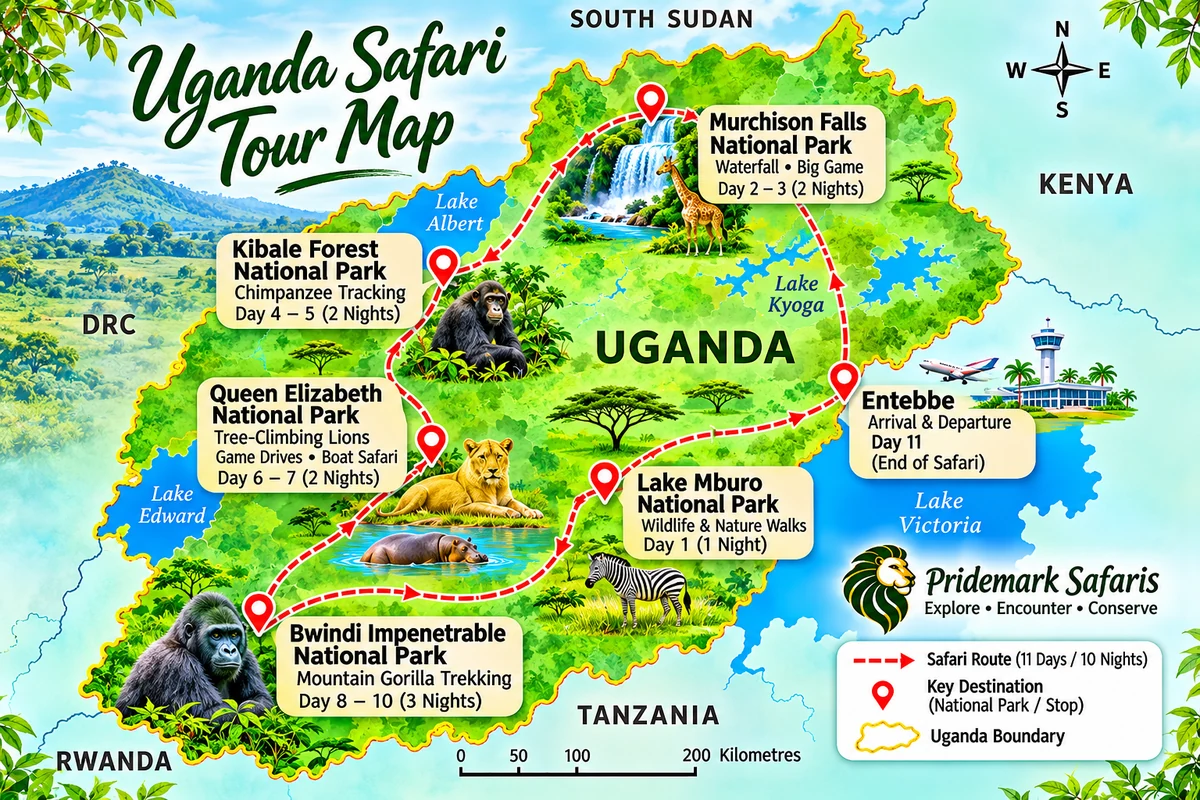
Explore Uganda’s leading wildlife destinations with Pridemark Safaris. This illustrated 11-day safari route connects Entebbe, Murchison Falls, Kibale Forest, Queen Elizabeth, Bwindi Impenetrable and Lake Mburo national parks.
Official resources and further reading
For park rules and permit information, consult the Uganda Wildlife Authority. For visa information, use the official Uganda e-visa portal. For travel health guidance, review the CDC Uganda travel health page and speak with a qualified professional. Advice and entry rules may change, so verify details before departure.
Continue planning with Pridemark Safaris’ guides on gorilla trekking, safari costs, safari duration, accommodation and booking your first Uganda safari.
Plan your first Uganda safari with confidence
Now that you know the Uganda safari mistakes to avoid, focus on the experiences that matter most. Contact Pridemark Safaris for a tailored itinerary, transparent inclusions and a practical route suited to your time and interests.
Pridemark Safaris · Explore • Encounter • Conserve