
Explore Uganda’s Breathtaking Mountain Gorilla Habitats
The Uganda gorilla trekking experience takes you deep into the mist-covered rainforests of southwestern Uganda, where endangered mountain gorillas live freely in their natural habitat. From the ancient forests of Bwindi Impenetrable National Park to the volcanic slopes of Mgahinga Gorilla National Park, Uganda offers extraordinary opportunities to observe these magnificent primates while discovering the beauty of Africa’s diverse landscapes.
At Pridemark Safaris, we help travelers explore Uganda’s gorilla paradise through thoughtfully planned safari adventures that combine wildlife encounters, breathtaking scenery, and meaningful cultural experiences. Whether you’re watching a powerful silverback protect his family, observing playful young gorillas, or hiking through lush mountain vegetation, every moment reveals something remarkable about Uganda’s natural heritage and the importance of protecting its endangered wildlife.
Why Uganda Is One of Africa’s Most Remarkable Gorilla Destinations
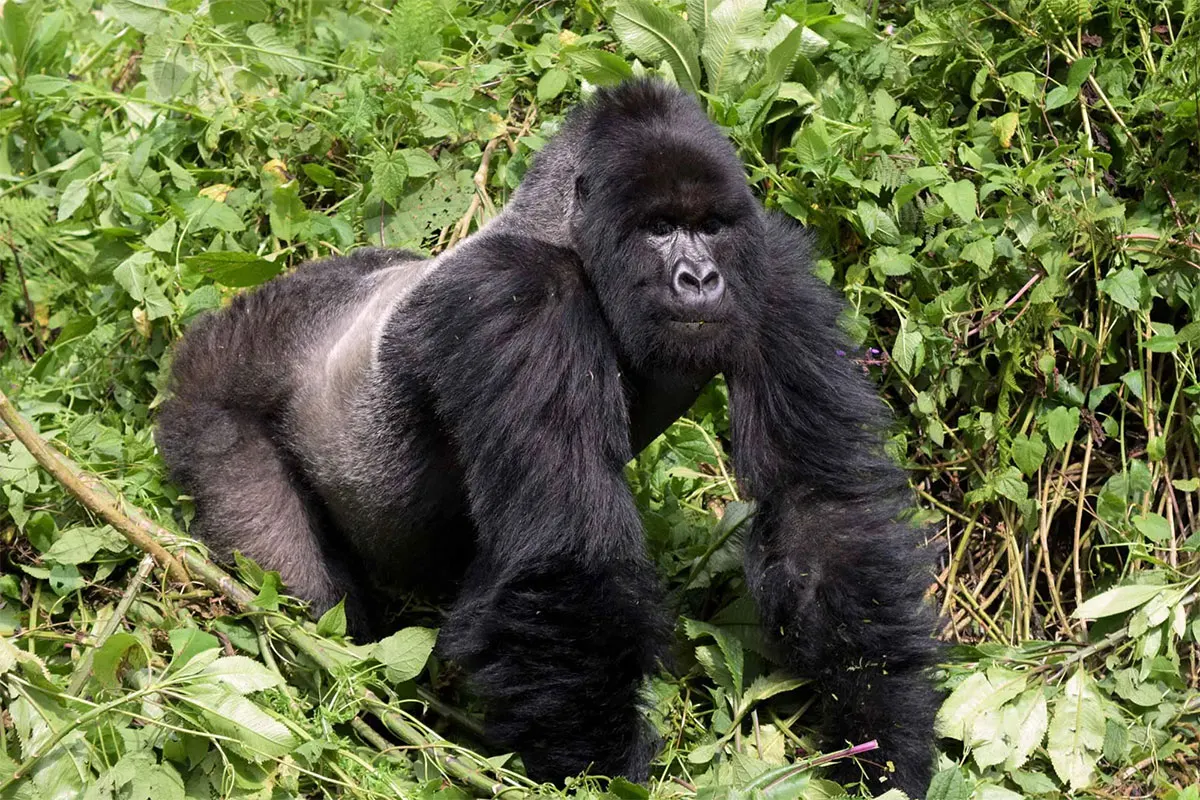
Uganda occupies a special place in African wildlife tourism because it protects mountain gorillas within two distinct forest ecosystems. Unlike conventional game drives, where animals are often observed from vehicles, gorilla trekking requires visitors to enter the forest on foot, accompanied by trained rangers who understand the gorillas’ movements and behavior.
The experience combines physical exploration with intimate wildlife observation. Travelers may walk through bamboo stands, cross narrow streams, climb forested slopes, and listen to birds calling from the canopy before reaching their assigned gorilla family. The encounter is carefully controlled, making conservation and visitor responsibility central parts of the activity.
Another advantage of gorilla trekking in Uganda is the opportunity to combine the experience with other wildlife attractions. Travelers can explore Queen Elizabeth National Park, track chimpanzees in Kibale Forest, relax beside Lake Bunyonyi, or discover the volcanic scenery around Kisoro without leaving the country.
What Makes Uganda’s Gorilla Paradise Special?
Uganda offers something more substantial than simply seeing a mountain gorilla. The journey introduces visitors to one of Africa’s most biologically important rainforest environments, where dense vegetation, changing elevations, and local communities create a destination with remarkable natural and cultural depth.
The country’s gorilla trekking experience stands out for several reasons, including its variety of trekking locations, conservation-led visitor management, and access to other wildlife destinations. The two gorilla parks also provide different landscapes, allowing visitors to choose between the thick forests of Bwindi and the volcanic environment of Mgahinga.
| Feature | What Uganda Offers |
|---|---|
| Gorilla destinations | Bwindi Impenetrable and Mgahinga Gorilla national parks |
| Gorilla encounters | Guided visits to habituated mountain gorilla families |
| Trekking landscapes | Montane rainforest, bamboo forest, valleys, and volcanic slopes |
| Additional experiences | Golden monkeys, forest walks, birdwatching, and cultural visits |
| Safari combinations | Chimpanzee tracking, savannah game drives, and scenic lakes |
These advantages make Uganda particularly attractive to travelers who want a complete safari rather than a single wildlife activity. Pridemark Safaris can structure a journey around the gorilla encounter while allowing time for other destinations, comfortable accommodation, and meaningful experiences with communities living around the protected forests.
Bwindi Impenetrable National Park: The Heart of Uganda’s Gorilla Paradise
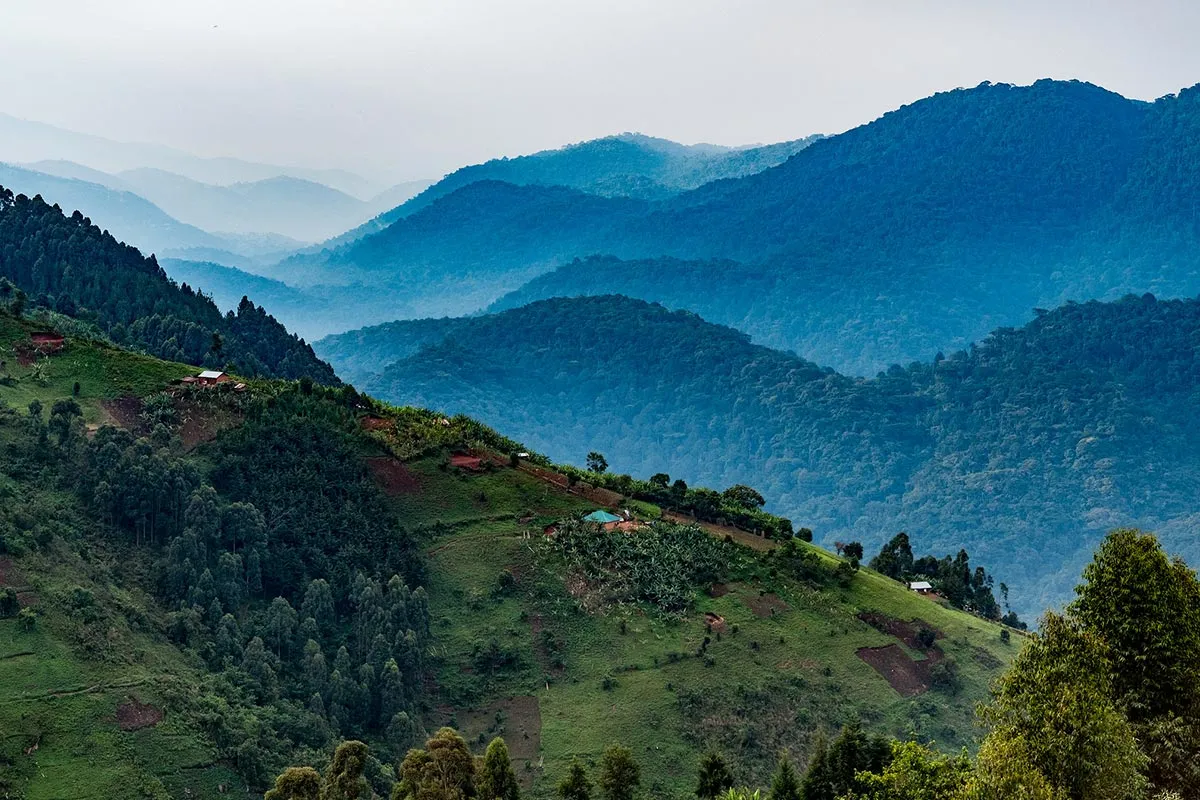
Bwindi Impenetrable National Park is Uganda’s best-known mountain gorilla destination and one of the country’s most important conservation landscapes. The park protects approximately 321 square kilometers of forest in southwestern Uganda, where steep ridges, valleys, streams, and dense vegetation support exceptional biodiversity, including a significant population of endangered mountain gorillas.
The name Impenetrable reflects the character of the forest, where thick undergrowth and tangled vegetation can make movement challenging. Nevertheless, designated trekking routes and experienced ranger teams allow visitors to explore the landscape safely. The forest’s uneven terrain adds adventure to the experience while emphasizing why careful preparation is essential.
Bwindi’s international conservation significance extends beyond mountain gorillas. The forest supports numerous bird species, butterflies, trees, and other mammals, making it an important destination for nature enthusiasts. Its designation as a UNESCO World Heritage Site recognizes the exceptional biological value of an ecosystem that has survived major environmental changes.
Understanding Bwindi’s Four Gorilla Trekking Sectors
One of the most important planning details is that Bwindi does not have a single gorilla trekking entrance. The park operates through four principal trekking sectors: Buhoma, Ruhija, Rushaga, and Nkuringo. Each has designated briefing locations, access routes, accommodation options, and habituated gorilla families available for regulated visits.
Selecting the appropriate sector is important because a permit is associated with a particular trekking location. Travelers staying near one entrance cannot assume they can conveniently trek from another. Some sectors are separated by lengthy journeys on winding mountain roads, making accommodation planning particularly important.
| Trekking sector | Location and character | Suitable interests |
|---|---|---|
| Buhoma | Northern Bwindi, established tourism infrastructure | First-time visitors and northern safari routes |
| Ruhija | Eastern Bwindi, elevated forest terrain | Birdwatching and quieter forest surroundings |
| Rushaga | Southern Bwindi, multiple trekking groups | Gorilla trekking and habituation experiences |
| Nkuringo | Southwestern Bwindi, steep ridges and valleys | Scenic landscapes and active travelers |
The actual difficulty of a gorilla trek depends on the movements of the assigned gorilla family, weather, and forest conditions rather than the sector alone. Pridemark Safaris recommends choosing the trekking area according to permit availability, accommodation location, accessibility, and the overall safari route.
Buhoma Sector: Where Uganda’s Gorilla Tourism Developed
Buhoma lies along the northern edge of Bwindi and is historically significant as the area where organized gorilla tourism began in the park. Its established visitor infrastructure includes accommodation across several comfort categories, community tourism initiatives, and access to forest activities beyond the primary gorilla trekking experience.
The surrounding landscape combines cultivated hillsides, village settlements, and thick rainforest. Visitors approaching Buhoma often notice how agricultural communities and protected forest boundaries exist close together. This relationship demonstrates why conservation programs must consider both wildlife protection and the livelihoods of people living beside the park.
For travelers combining gorilla trekking in Uganda with Queen Elizabeth National Park, Buhoma can fit naturally into a northern approach to Bwindi. However, route suitability depends on the chosen lodges, road conditions, and permit availability. A carefully arranged itinerary reduces unnecessary driving and allows sufficient rest before trekking.
Ruhija Sector: Highland Forests and Exceptional Birdlife
Ruhija occupies the eastern section of Bwindi and is characterized by high-elevation forest, cool conditions, and dramatic views across densely vegetated hills. Its setting appeals to travelers who enjoy remote mountain environments and want to experience the forest beyond the excitement of encountering mountain gorillas.
The sector is particularly attractive to birdwatchers because Bwindi supports several Albertine Rift endemic bird species. Experienced birding guides can help visitors identify forest specialists, although sightings depend on weather, habitat, and patience. Combining birdwatching with gorilla trekking creates a broader appreciation of the forest’s ecological importance.
Treks in Ruhija may involve steep or slippery terrain, especially following rainfall. Travelers should prepare for changing conditions and avoid assuming that a particular sector guarantees an easy route. Good walking boots, suitable clothing, and realistic fitness expectations contribute significantly to a comfortable experience.
Rushaga Sector: A Major Center for Gorilla Encounters
Rushaga is located in southern Bwindi and is known for its concentration of habituated gorilla families and its association with the Gorilla Habituation Experience. This makes it an important destination for travelers considering either a standard gorilla trek or a more extended conservation-focused encounter.
The landscape around Rushaga features forested hills, cultivated slopes, and viewpoints overlooking southwestern Uganda’s mountainous countryside. Accommodation options range from simpler guesthouses to more comfortable safari lodges. Choosing accommodation close to the designated briefing point can make the trekking morning considerably easier.
Rushaga is especially relevant when planning the Gorilla Habituation Experience, which differs from conventional trekking in duration and purpose. Visitors should not assume that ordinary gorilla permits provide access to this activity, because it requires a separate permit and follows different visitor-management arrangements.
Nkuringo Sector: Dramatic Landscapes and Mountain Adventure
Nkuringo occupies a spectacular position along Bwindi’s southwestern edge, where steep ridges overlook deep forested valleys. On clear days, travelers may enjoy expansive views toward the Virunga volcanic landscape, making the sector particularly appealing to photographers, hikers, and visitors who appreciate dramatic mountain scenery.
The terrain around Nkuringo can be demanding, and some gorilla treks involve significant descents followed by challenging climbs. However, gorilla family movements vary, so no trekking sector has a fixed difficulty level. Visitors should discuss mobility concerns and physical limitations before their trekking day.
Nkuringo also offers opportunities to explore local communities and surrounding landscapes beyond the gorilla encounter. When arranging accommodation, Pridemark Safaris considers both the scenic appeal of the location and the practical requirements of reaching the correct briefing point early in the morning.
Mgahinga Gorilla National Park: Where Gorillas Meet Volcanoes
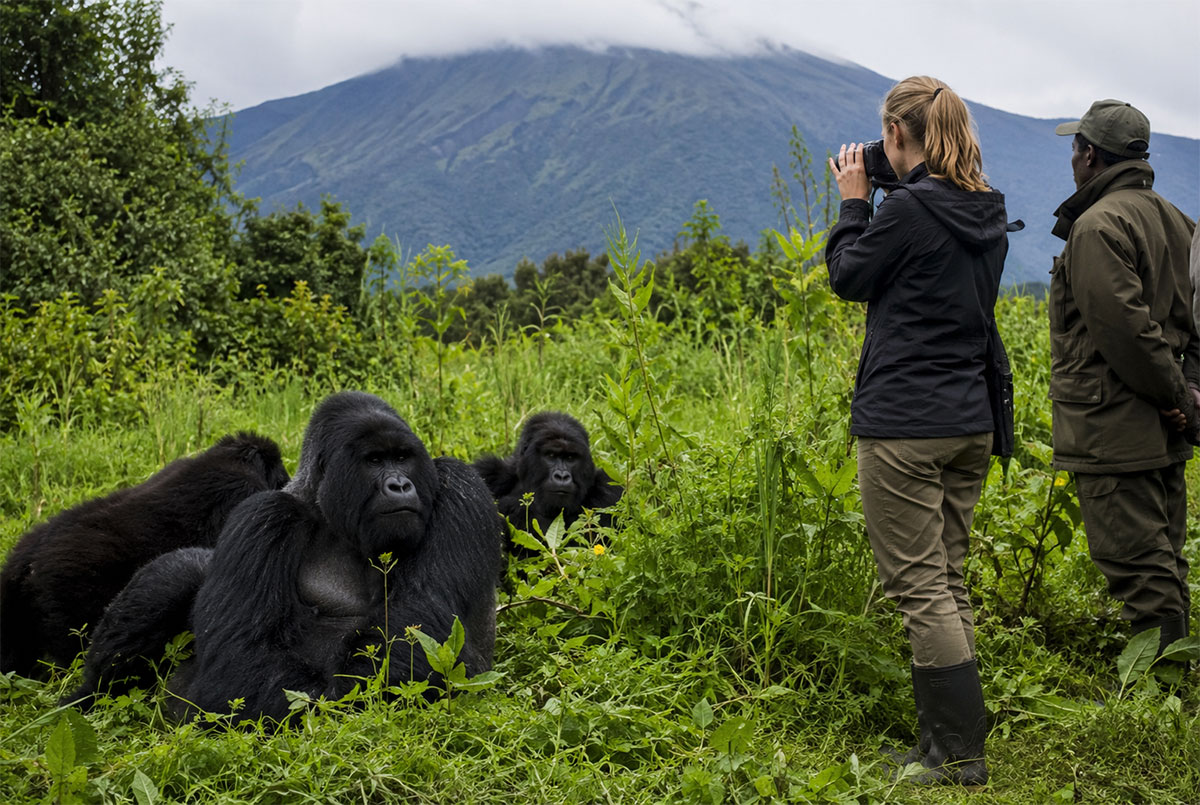
Mgahinga Gorilla National Park offers a different setting for gorilla trekking in Uganda. Located near Kisoro in the country’s southwestern corner, the park forms part of the larger Virunga Conservation Area, a transboundary landscape shared by Uganda, Rwanda, and the Democratic Republic of the Congo.
The park covers approximately 33.7 square kilometers, making it considerably smaller than Bwindi. Despite its size, Mgahinga protects important mountain gorilla habitat along the slopes of three prominent volcanoes: Mount Muhabura, Mount Gahinga, and Mount Sabyinyo. These mountains dominate the landscape and create a distinctive trekking environment.
Mgahinga’s gorilla trekking experience centers on the habituated Nyakagezi gorilla family. Because visitor numbers are strictly limited, permits require advance planning. The family moves naturally through its habitat, and trekking duration depends on where rangers locate the gorillas on the day of the visit.
Why Choose Mgahinga for Gorilla Trekking?
Mgahinga appeals to travelers who want to experience mountain gorillas in a landscape shaped by volcanic activity. Bamboo vegetation, mountain slopes, and expansive views distinguish the park from Bwindi’s dense rainforest. The combination creates an especially memorable setting for visitors interested in both primates and mountain scenery.
Another attraction is the opportunity to track golden monkeys, a distinctive primate associated with the Albertine Rift region. Their energetic movements through bamboo vegetation provide an interesting contrast to the slower, more deliberate behavior frequently observed among mountain gorillas.
Visitors with additional time can also explore designated volcano hiking routes and community-based cultural activities. These experiences require appropriate planning, guides, and sometimes separate activity fees. Pridemark Safaris recommends allowing enough time to appreciate Mgahinga rather than treating the park as a rushed addition to a gorilla safari.
Bwindi Versus Mgahinga: Which Gorilla Destination Should You Choose?
Choosing between Bwindi and Mgahinga depends on the experience a traveler wants rather than one park being universally better. Both protect mountain gorillas, operate under Uganda Wildlife Authority regulations, and provide opportunities to observe habituated families with trained guides.
Bwindi offers four trekking sectors and a larger selection of accommodation and routing possibilities. Mgahinga offers a compact volcanic landscape, golden monkey tracking, and convenient connections to attractions around Kisoro. Permit availability and travel logistics may ultimately determine the most practical choice.
| Consideration | Bwindi Impenetrable | Mgahinga Gorilla |
|---|---|---|
| Main landscape | Dense montane rainforest | Volcanic slopes and bamboo forest |
| Trekking areas | Four main sectors | Ntebeko trekking area |
| Additional highlights | Birdwatching and forest walks | Golden monkeys and volcano hiking |
| Accommodation | Several locations around the forest | Kisoro and nearby lodges |
| Gorilla habituation | Available in designated areas | Not offered as the standard habituation activity |
For first-time visitors, either destination can provide an outstanding encounter when permits, accommodation, and transfers are properly arranged. Travelers who want multiple gorilla trekking days may find Bwindi’s various sectors useful, while those interested in golden monkeys and volcanoes may prefer including Mgahinga.
What to Expect During Gorilla Trekking in Uganda
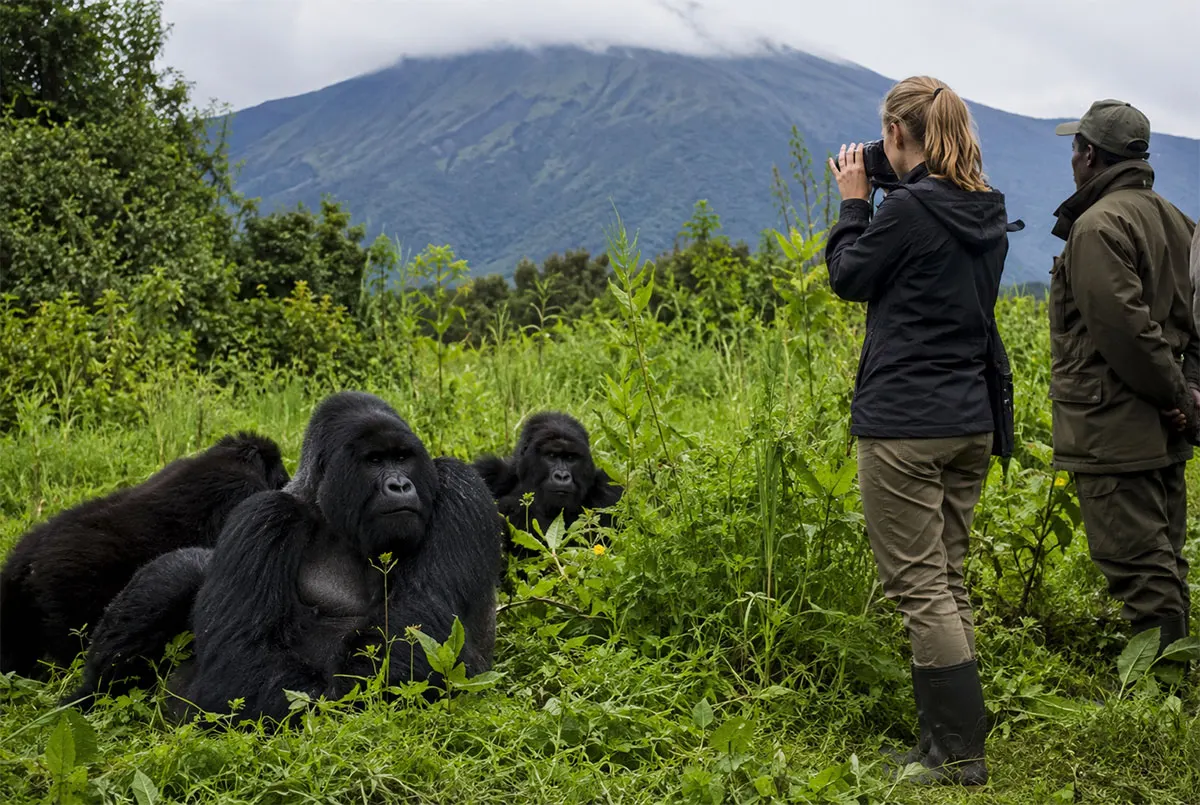
A gorilla trekking day begins with an early arrival at the designated park briefing point. Visitors meet Uganda Wildlife Authority rangers, receive important conservation instructions, and are organized into trekking groups. The briefing explains appropriate behavior around gorillas, forest safety, and the importance of following instructions throughout the experience.
After the briefing, visitors travel with their assigned ranger team toward the area where the gorilla family is expected to be found. Depending on the sector and the family’s location, this may involve driving to a trailhead before continuing on foot. Rangers coordinate with trackers who monitor gorilla movements within the forest.
The trek itself can be relatively short or extend for several hours. Mountain gorillas move naturally while searching for food, resting, and interacting with other family members. Their location changes daily, meaning even travelers returning to the same sector can experience completely different walking conditions and wildlife encounters.
The First Encounter With a Mountain Gorilla Family
Reaching a gorilla family is often the most memorable moment of the entire safari. After walking through dense vegetation, visitors may suddenly notice a silverback resting nearby, juveniles playing among branches, or females feeding quietly on leaves and stems. Rangers carefully manage the group’s approach to minimize disturbance.
The experience is different from observing wildlife inside an enclosure. These gorillas live freely within protected forest habitat, and their behavior is not staged for visitors. They may continue feeding, grooming, resting, or interacting with one another while the ranger team ensures that people respect the required viewing distance.
Visitors participating in standard gorilla trekking are normally permitted a maximum of one hour with the gorilla family once the encounter begins. This time restriction helps reduce prolonged human disturbance and potential disease transmission. The encounter may be shortened if rangers determine that the gorillas require additional space.
Understanding Gorilla Behavior During Your Encounter
Mountain gorillas live in social groups that commonly include a dominant silverback, adult females, younger males, juveniles, and infants. The silverback plays an important role in group leadership, protection, and social stability. Observing these relationships helps visitors appreciate the complexity of gorilla family life.
Gorillas communicate through body posture, facial expressions, vocalizations, and physical interactions. Young gorillas may play energetically, while adults often spend considerable time feeding or resting. Although mountain gorillas are generally not aggressive toward visitors who follow the rules, they remain powerful wild animals.
Rangers interpret behavior and provide instructions when gorillas move or display signs of discomfort. Visitors should avoid sudden movements, direct approaches, and attempts to attract attention. The most rewarding encounters often come from remaining quiet and observing natural behavior without interfering.
Uganda Gorilla Trekking Permits: What Travelers Need to Know
A valid permit is compulsory for gorilla trekking in Uganda. Permits are issued by the Uganda Wildlife Authority and authorize visitors to participate in a regulated trek at a designated location on a specific date. The permit system controls visitor numbers and supports the management of endangered mountain gorilla populations.
A standard permit covers the organized gorilla tracking activity, ranger guiding, and the authorized viewing period. The published conservation tariff also identifies park entry for the trekking day and a community development contribution among the permit components. Accommodation, private transport, porter services, and personal expenses are generally separate.
Permit availability is limited because only a small number of visitors can visit each habituated gorilla family daily. Travelers planning during popular holiday periods should therefore arrange permits before finalizing nonrefundable accommodation or flights. Pridemark Safaris recommends confirming the correct trekking sector before completing other safari arrangements.
How Much Does Gorilla Trekking in Uganda Cost?
Uganda’s published standard gorilla trekking permit rate for foreign non-residents is US$800 per person, with separate rates for eligible foreign residents, other African nationals, and East African Community citizens. Uganda Wildlife Authority also has announced seasonal pricing arrangements, so the exact amount should be confirmed for the intended travel dates.
| Visitor category | Published standard gorilla permit rate |
|---|---|
| Foreign non-resident | US$800 |
| Eligible foreign resident | US$700 |
| Rest of Africa | US$500 |
| East African Community citizen | UGX 300,000 |
These are published standard permit figures rather than a guaranteed quotation for every future departure. Reduced seasonal rates may apply during April, May, and November, subject to Uganda Wildlife Authority conditions. Travelers should verify eligibility, payment requirements, and the current tariff before purchasing permits.
The total safari cost also depends on accommodation, transport, travel duration, meals, and optional activities. A permit-only quotation should not be confused with a complete gorilla safari package. Pridemark Safaris recommends reviewing a detailed itinerary that clearly separates mandatory permit costs from the other services included.
How to Book Gorilla Trekking Permits
Booking begins by selecting preferred travel dates and identifying the most suitable gorilla trekking destination. Because permits are associated with specific locations, travelers should decide whether their itinerary works best through Buhoma, Ruhija, Rushaga, Nkuringo, or Mgahinga before making final accommodation arrangements.
Pridemark Safaris can assist travelers with coordinating permit requests and safari arrangements. The process involves checking availability through authorized channels, collecting the necessary visitor information, explaining payment conditions, and arranging the itinerary around the confirmed trekking date and location.
Travelers should request written confirmation showing the trekking date, designated entry point, visitor details, and applicable permit charges. A proposed itinerary or preliminary quotation does not itself confirm a permit reservation. Official Uganda Wildlife Authority booking requirements must be satisfied before a permit can be considered secured.
When Should You Reserve Gorilla Permits?
Booking several months before departure is advisable, particularly when traveling during popular dry-season periods or when accommodation preferences are limited. Advance planning provides more flexibility when selecting a trekking sector, choosing a lodge, and coordinating domestic flights or longer road transfers.
Travelers arranging a last-minute safari may still find permits available, but availability cannot be assumed. The practical approach is to check the available trekking dates first, then build the remaining itinerary around the confirmed permit location rather than committing to a particular lodge prematurely.
Gorilla Habituation Experience: Spending More Time With Gorillas
The Gorilla Habituation Experience offers an alternative to the standard gorilla trek for travelers who want a longer encounter and a closer understanding of conservation work. This activity takes place in designated areas of Bwindi, particularly associated with the Rushaga region, under the supervision of authorized personnel.
Habituation is the gradual process through which wild gorillas become accustomed to the controlled presence of researchers, trackers, and eventually visitors. The process requires patience and careful monitoring because gorillas must remain free to behave naturally while learning that supervised human observation does not present a threat.
Unlike a standard gorilla trek, the habituation experience permits up to four hours of observation after the designated gorilla group is located. The overall excursion can take considerably longer because participants must first trek through the forest to reach the group.
Standard Gorilla Trekking Versus Gorilla Habituation
| Standard gorilla trekking | Gorilla habituation experience |
|---|---|
| Up to one hour with gorillas | Up to four hours with gorillas |
| Visits habituated gorilla families | Involves gorillas undergoing habituation |
| Available in Bwindi and Mgahinga | Available in designated Bwindi areas |
| Maximum eight visitors per family | Smaller visitor group, normally up to four |
| Standard trekking permit required | Separate habituation permit required |
The habituation experience is particularly appealing to travelers interested in primate behavior, conservation research, and extended wildlife photography. However, longer observation does not mean that gorillas will remain continuously visible or that visitors can approach them more closely than permitted.
The habituation permit is more expensive than the standard trekking permit, and tariffs can change. Travelers considering this activity should request the applicable official rate before booking. Pridemark Safaris recommends discussing fitness expectations, available dates, and the differences between the two experiences before choosing.
Best Time for Gorilla Trekking in Uganda
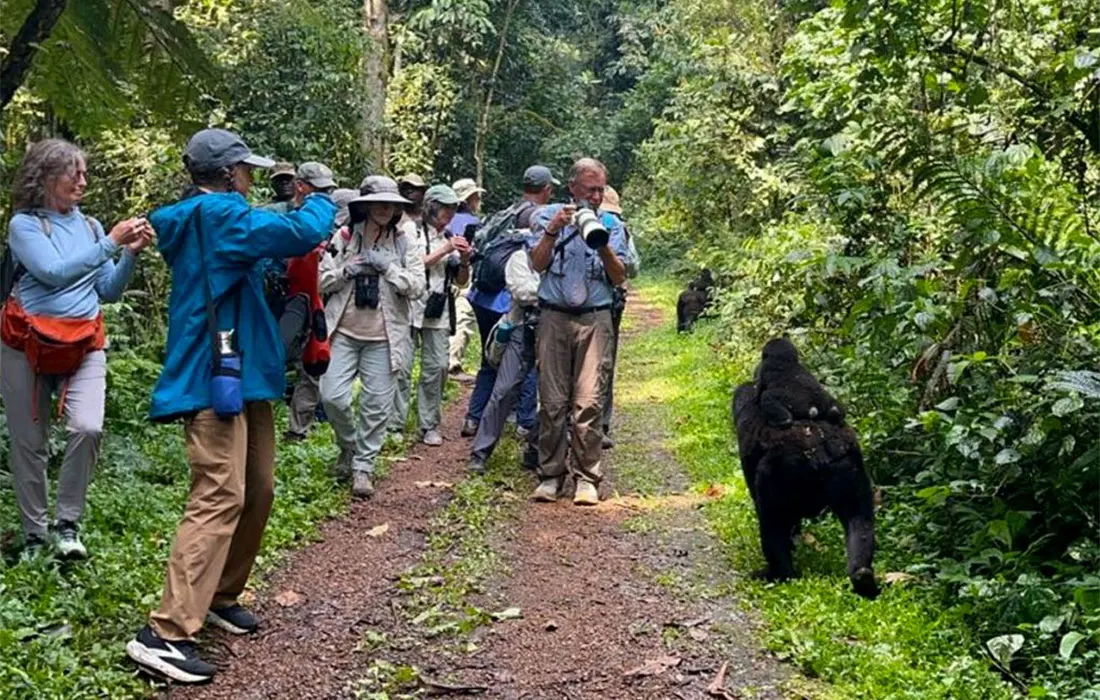
Gorilla trekking in Uganda is available throughout the year, making the country suitable for visitors with different travel schedules. However, rainfall, trail conditions, accommodation demand, and personal preferences can influence the best time to visit. There is no completely dry season in the mountain forests.
Uganda’s southwestern highlands experience seasonal rainfall patterns, with comparatively drier conditions often occurring from June through August and from December through February. Wetter periods commonly include March through May and September through November, although actual conditions vary between locations and individual days.
Gorillas remain within their natural habitat throughout the year, and organized trekking continues during rainy periods when conditions permit. Rainfall does not automatically prevent successful encounters, but muddy trails and slippery slopes can make the walking experience more physically demanding.
Gorilla Trekking During the Drier Months
Drier months are popular because trails may be easier to navigate and outdoor activities can be more comfortable. Reduced rainfall can make steep sections less slippery, although forest paths may remain wet due to shade, streams, and localized showers.
These periods are particularly suitable for travelers combining gorilla trekking with savannah wildlife safaris, scenic drives, and outdoor activities elsewhere in Uganda. However, demand for permits and well-located accommodation can increase, making advance reservations important.
Visitors should still pack waterproof clothing during the drier months. Bwindi and Mgahinga are mountain environments where weather can change quickly. A sunny morning does not guarantee that the afternoon will remain dry, particularly at higher elevations.
Gorilla Trekking During the Rainy Months
The wetter months transform Uganda’s gorilla forests into exceptionally lush landscapes. Mist may settle between hills, streams become more prominent, and vegetation appears especially vibrant. For photographers interested in rainforest scenery, these conditions can create atmospheric opportunities.
The principal challenge is the terrain. Heavy rain can make trails slippery, increase the difficulty of steep climbs, and affect travel times on unpaved access roads. Visitors should carry reliable rain protection and consider hiring a porter to assist with personal belongings.
Travelers with flexible schedules may find greater accommodation choice during some wetter periods. Official low-season permit offers may also apply in designated months, but travelers should verify current conditions because discounted permits can carry restrictions on changes or rescheduling.
| Travel period | Typical considerations |
|---|---|
| December–February | Often comparatively drier; popular travel period |
| March–May | Generally wetter; muddy trails are more likely |
| June–August | Often comparatively drier; strong demand for permits |
| September–November | Rainfall commonly increases; lush forest conditions |
At Pridemark Safaris, we encourage travelers to choose dates based on the overall safari experience rather than rainfall alone. Gorilla sightings depend on the movements of wild animals, and weather conditions cannot be guaranteed. Appropriate preparation matters during every season.
How Difficult Is Gorilla Trekking in Uganda?
Gorilla trekking requires a reasonable level of physical fitness because the activity takes place in mountainous forests rather than on prepared tourist walkways. Depending on the assigned gorilla family, visitors may encounter steep slopes, muddy paths, dense vegetation, uneven ground, and sections without established trails.
Some treks are relatively manageable, while others require several hours of demanding walking. The distance covered is unpredictable because gorillas move daily. Travelers should avoid relying on a fixed trekking duration when assessing their fitness or planning activities immediately afterward.
Altitude also influences the experience. Both Bwindi and Mgahinga contain elevated terrain, and visitors arriving from lower-altitude destinations may notice that uphill walking requires additional effort. Taking breaks, drinking water, and maintaining a comfortable pace can help reduce unnecessary exhaustion.
Can Older Travelers Participate in Gorilla Trekking?
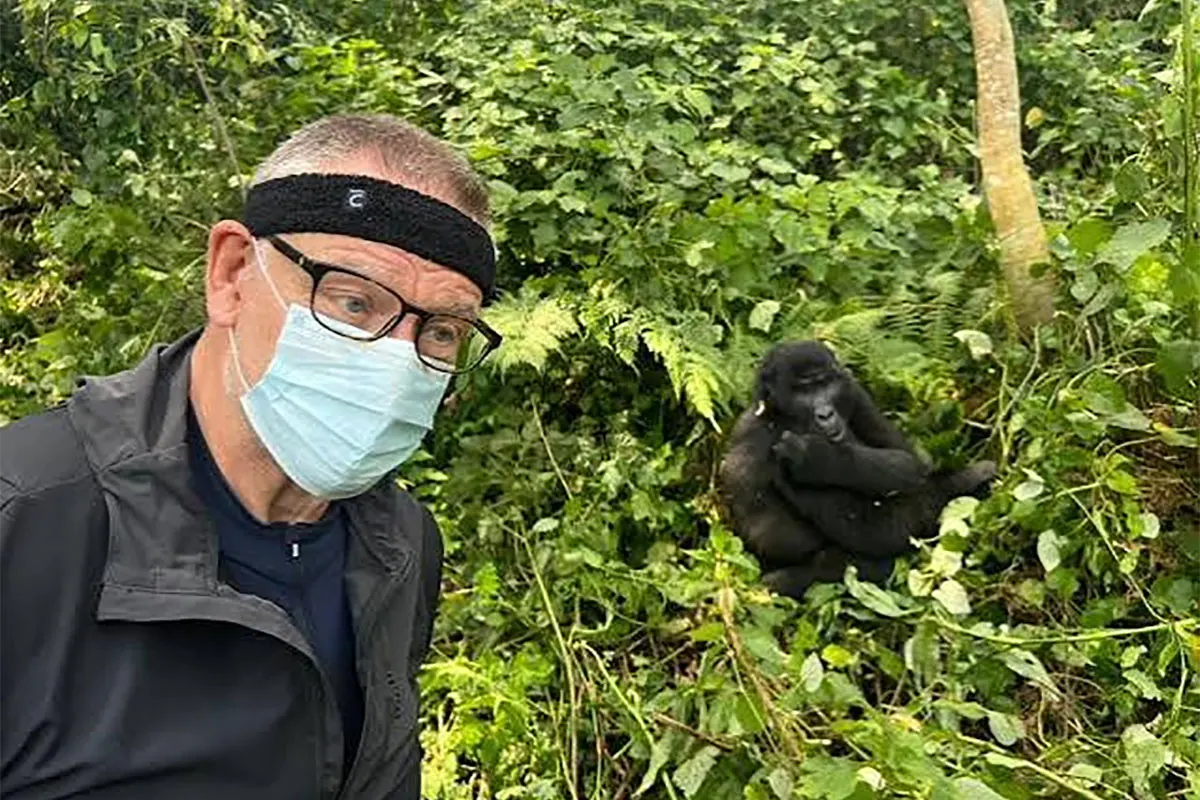
Age alone does not determine whether an adult can enjoy a gorilla trek. Many older travelers participate successfully, particularly when they prepare appropriately and communicate their physical abilities to the guiding team. Mobility, stamina, existing medical concerns, and comfort on uneven terrain are more relevant considerations.
Visitors with walking difficulties should explain their needs before booking and again during the ranger briefing. Where available, porter assistance or specialized carrying arrangements may be organized at additional cost, subject to local availability and suitability.
Pridemark Safaris recommends discussing accessibility requirements before purchasing nonrefundable permits. Although rangers may consider visitor fitness when assigning trekking groups, no operator can guarantee a short or easy trek because gorilla locations change naturally.
Preparing Physically for Your Gorilla Safari
Travelers do not need to be professional hikers, but preparation can improve comfort and confidence. Regular walking, moderate hill climbing, and exercises that strengthen the legs are useful before departure. Practicing on uneven ground can also help visitors become familiar with conditions resembling forest trails.
Footwear should be tested before traveling rather than worn for the first time on trekking day. Well-fitting boots with good grip and ankle support are especially useful when walking through mud, roots, and steep sections of the forest.
Visitors should also prepare mentally for uncertainty. The trek may take longer than expected, rainfall can begin without warning, and the assigned gorilla family may move deeper into the forest. Patience and flexibility are essential parts of the experience.
What to Pack for Gorilla Trekking in Uganda
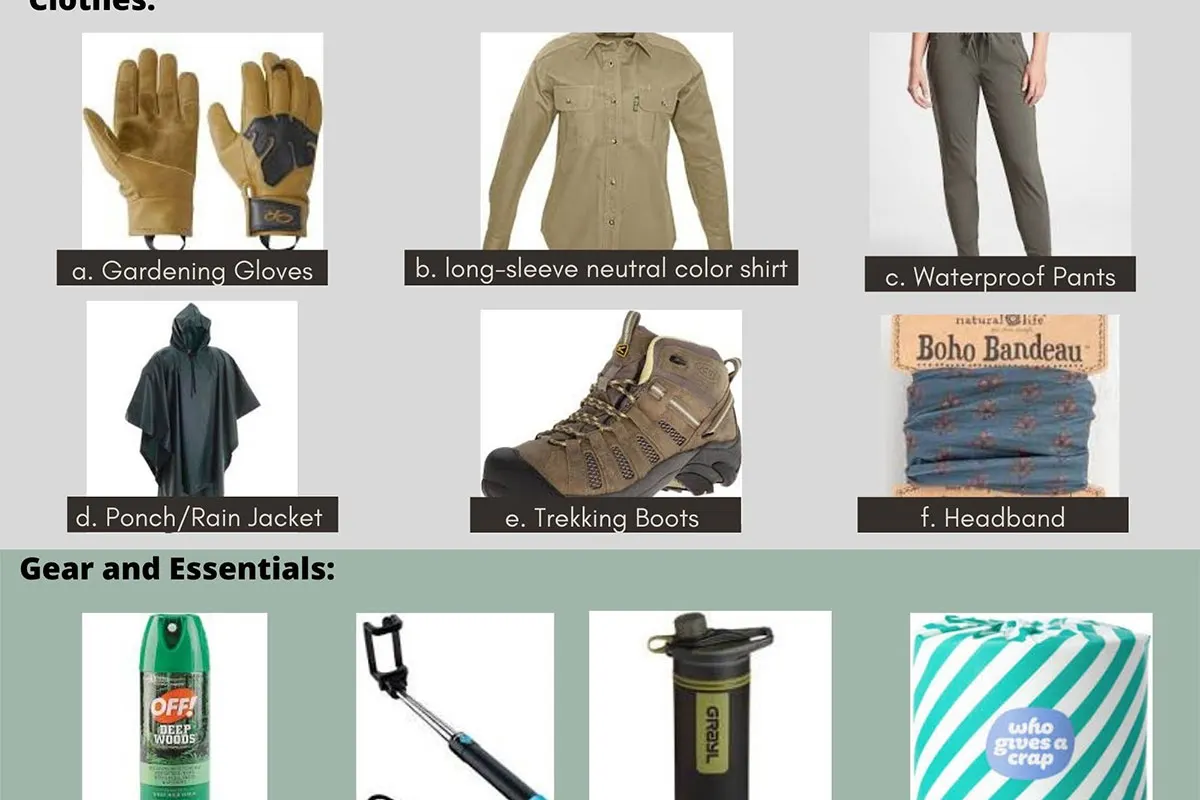
Packing appropriately makes a noticeable difference during a gorilla trekking adventure. The most useful items are those that protect visitors from rain, insects, vegetation, and uneven ground while remaining comfortable during several hours of walking.
Clothing should be practical rather than elaborate. Long trousers and long-sleeved shirts help protect exposed skin from vegetation and insects. Neutral or muted colors are suitable for forest activities, while breathable materials improve comfort during strenuous sections of the trek.
| Essential item | Why it matters |
|---|---|
| Waterproof hiking boots | Provide traction and support on uneven trails |
| Rain jacket | Protects against sudden mountain rainfall |
| Long trousers and sleeves | Reduce scratches and insect exposure |
| Gardening or trekking gloves | Help when using hands for support |
| Small waterproof daypack | Carries water, snacks, and personal items |
| Drinking water | Supports hydration during extended walking |
| Camera without flash | Allows permitted wildlife photography |
| Walking stick | Provides balance on slippery sections |
A lightweight backpack is usually sufficient for carrying essentials, but visitors should avoid bringing unnecessary weight. Porters may be hired locally to assist with bags and difficult terrain. This service can improve the trekking experience while creating direct income opportunities for people living around the park.
Pridemark Safaris recommends preparing trekking equipment before arriving at the park. Some items may be available locally, but selection and sizes cannot be guaranteed. Travelers should also carry personal medication and any necessary medical supplies in their daypack.
Gorilla Trekking Rules and Responsible Wildlife Encounters
Gorilla trekking is carefully regulated because mountain gorillas are endangered and vulnerable to diseases transmitted by humans. Visitor rules are designed to reduce stress, protect natural behavior, and minimize unnecessary contact between people and gorilla families.
Uganda Wildlife Authority requires visitors to follow ranger instructions throughout the activity. The minimum standard trekking age is 15, and conventional gorilla visits are limited to a maximum of eight tourists per habituated family each day.
Visitors must maintain the separation distance specified by the rangers, avoid physical contact, and never use flash photography. Eating, drinking, and smoking near gorillas are prohibited. People showing signs of potentially infectious illness may be prevented from participating to protect gorilla health.
Official guidance has historically emphasized a minimum separation of seven meters, while stricter health precautions may be applied. Visitors should always follow the current distance and disease-prevention instructions given during the park briefing rather than relying on an older published rule.
Why Visitors Must Never Touch Mountain Gorillas
Mountain gorillas share many biological characteristics with humans, making them susceptible to several human respiratory infections. Even apparently minor illnesses can create serious health risks for gorilla populations, particularly when individuals have limited exposure to common human pathogens.
Touching gorillas also interferes with their natural behavior and can create unpredictable situations. Although habituated families tolerate carefully controlled human observation, they remain wild animals capable of reacting defensively when threatened or approached improperly.
The safest and most respectful encounter is one in which visitors observe quietly while maintaining the required distance. Responsible behavior protects the gorillas and helps ensure that future generations can continue experiencing these extraordinary animals in their natural habitat.
The Conservation Importance of Gorilla Trekking in Uganda
Gorilla tourism plays an important role in supporting Uganda’s conservation system. Permit revenue contributes to protected-area management, ranger operations, wildlife monitoring, and community-related initiatives. This creates a financial connection between responsible tourism and the continued protection of mountain gorilla habitat.
Conservation involves much more than protecting individual gorillas. Effective management must also address habitat loss, illegal activities, disease risks, and pressures affecting communities living around national parks. The survival of mountain gorillas depends on coordinated efforts involving government agencies, conservation organizations, researchers, and local residents.
The recovery of mountain gorilla populations across the wider Virunga and Bwindi landscapes demonstrates the value of sustained conservation work. However, their endangered status means that long-term protection remains essential, particularly as human populations and land-use pressures increase around protected habitats.
How Gorilla Tourism Benefits Local Communities
Communities surrounding Bwindi and Mgahinga contribute to the broader conservation landscape through tourism employment, hospitality services, guiding, porter work, crafts, agriculture, and cultural experiences. These activities can create alternatives to livelihoods that place additional pressure on protected forests.
Revenue-sharing arrangements and community development projects are intended to strengthen the relationship between conservation and local well-being. Their effectiveness depends on implementation, community participation, and fair distribution of benefits, making responsible tourism choices particularly important.
Travelers can contribute by hiring local porters, purchasing locally produced goods, respecting community customs, and choosing appropriately managed cultural experiences. Pridemark Safaris encourages visitors to recognize that the communities surrounding gorilla habitats are an essential part of Uganda’s conservation story.
The Role of Rangers and Trackers
Behind every successful gorilla trekking experience is a coordinated team of trained rangers and trackers. Their work involves monitoring gorilla movements, maintaining visitor safety, observing wildlife behavior, and supporting the management of protected areas.
Trackers often begin their work before visitors enter the forest, using knowledge of gorilla movements and signs such as feeding areas, trails, and nesting sites. This preparation helps ranger teams identify the approximate location of the assigned family.
Visitors should appreciate that gorilla encounters depend on professional field knowledge rather than predictable animal behavior. The work of these conservation teams is central to maintaining a safe, respectful, and educational trekking experience.
How to Get to Uganda’s Gorilla Trekking Destinations
Most international travelers enter Uganda through Entebbe International Airport, located near Lake Victoria. From Entebbe, visitors can travel by road toward southwestern Uganda or arrange domestic flights to airstrips serving the Bwindi and Mgahinga regions. The most suitable route depends on the trekking sector, available travel time, and overall safari itinerary.
Road journeys provide opportunities to experience Uganda’s changing landscapes, including cultivated hills, rural trading centers, lakes, and protected wildlife areas. However, the journey to southwestern Uganda is substantial, and travelers should allow sufficient time rather than planning a rushed arrival immediately before trekking.
Traveling to Bwindi by Road
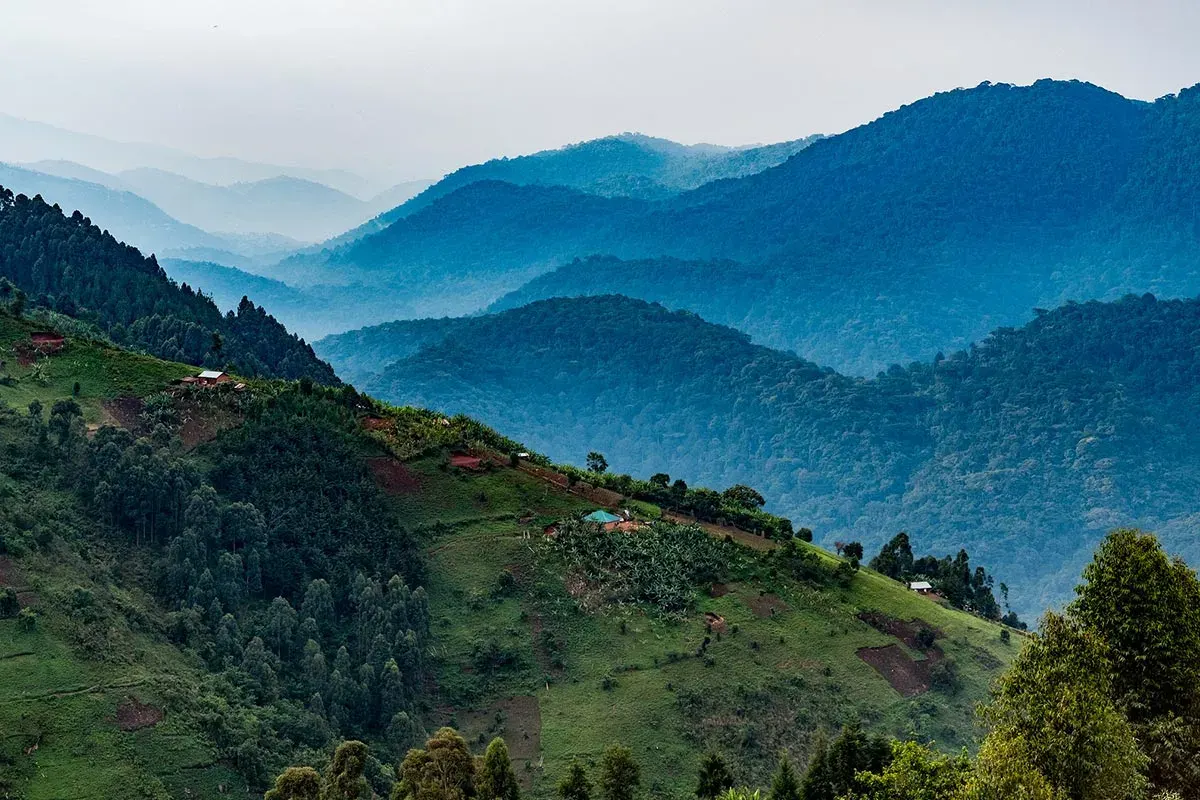
A road journey from Kampala or Entebbe to Bwindi commonly takes approximately eight to eleven hours, depending on the chosen trekking sector, traffic, road conditions, and stops. The final sections may involve winding mountain roads that require careful driving, particularly during periods of heavy rainfall.
For travelers interested in exploring more of Uganda, Pridemark Safaris recommends considering an itinerary that includes overnight stops or other attractions along the route. This approach turns a long transfer into part of the safari experience while reducing fatigue before the gorilla trek.
Flying to Bwindi and Mgahinga
Domestic flights can reduce the time spent traveling by road. Scheduled or chartered services may operate between Entebbe and Kihihi or Kisoro, subject to airline schedules and availability. Kihihi generally serves northern Bwindi itineraries, while Kisoro is useful for southern Bwindi and Mgahinga.
Travelers should remember that flights do not eliminate road transfers entirely. The distance between an airstrip and a lodge depends on the trekking sector and accommodation location. Pridemark Safaris can help coordinate the different transport components when preparing a suitable safari itinerary.
Reaching Uganda’s Gorilla Parks From Rwanda
Some travelers enter southwestern Uganda through Rwanda, using Kigali as an international arrival point. Road transfers through authorized border crossings can provide access to southern Bwindi or Mgahinga, depending on immigration requirements, road conditions, and the final destination.
This arrangement can be convenient for certain regional itineraries, but travelers must confirm entry requirements for both countries. Border procedures, visa eligibility, vehicle arrangements, and travel times should be reviewed before departure rather than assuming that crossing between countries will always be straightforward.
Where to Stay During Gorilla Trekking in Uganda
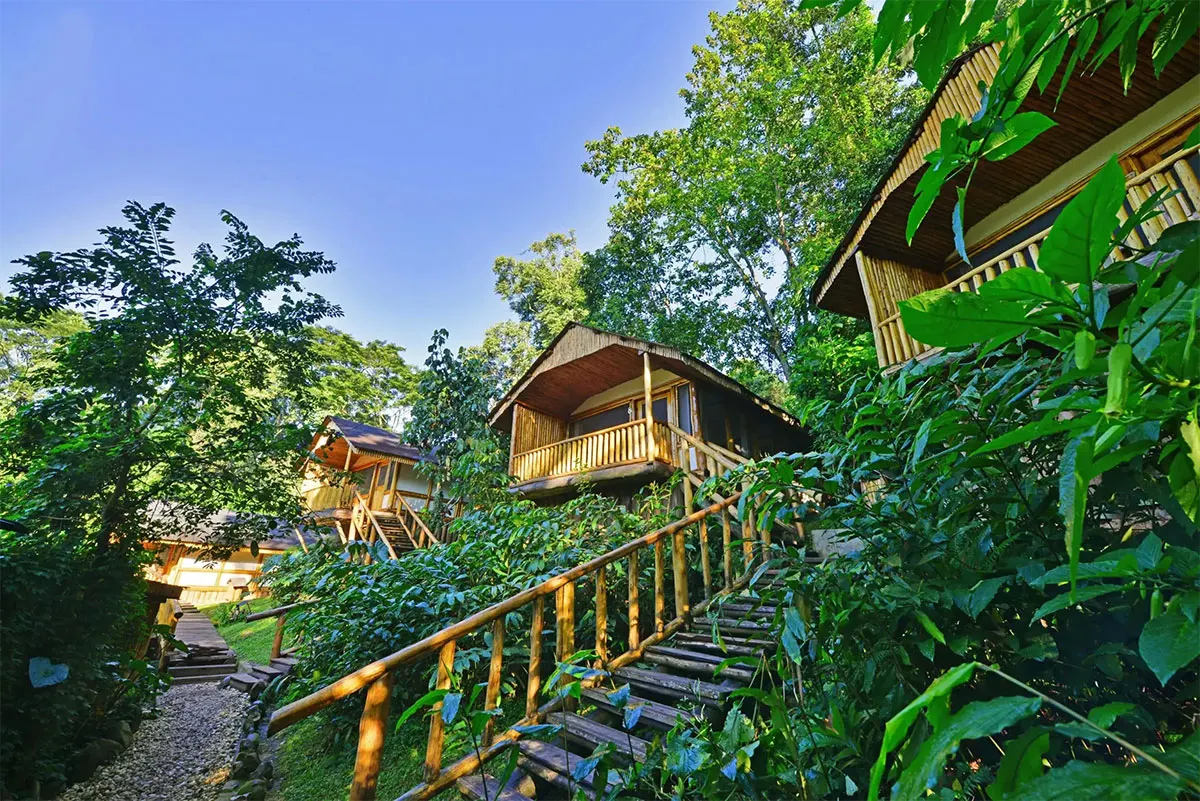
Accommodation around Uganda’s gorilla parks ranges from modest guesthouses to comfortable midrange lodges and exclusive forest retreats. The best choice depends on travel preferences, available budget, and proximity to the designated gorilla trekking briefing point.
A well-located lodge can make a significant difference on trekking morning. Staying near the correct sector reduces the risk of delays and unnecessary early driving. This is especially important because Bwindi’s different trekking areas are separated by mountain roads and cannot be treated as interchangeable entrances.
| Accommodation category | Typical characteristics |
|---|---|
| Budget | Simple rooms, essential facilities, practical meals |
| Midrange | Comfortable rooms, private bathrooms, scenic surroundings |
| Luxury | Higher-end accommodation, personalized service, premium facilities |
Travelers should evaluate accommodation based on more than room appearance. Reliable access roads, meal arrangements, packed lunches, warm showers, and suitable departure times are all relevant to the trekking experience.
Pridemark Safaris considers accommodation location alongside permit availability when preparing safari proposals. A beautiful lodge may be unsuitable if it requires an excessively long transfer to the assigned trekking sector.
Other Experiences to Combine With Gorilla Trekking in Uganda
Although mountain gorillas are the main attraction, southwestern Uganda offers several additional experiences worth including in a safari. Combining destinations creates a more complete understanding of the country’s wildlife, landscapes, and cultural diversity.
Travelers with limited time may prefer a short itinerary focused entirely on gorillas. Those with additional days can explore chimpanzee habitats, savannah national parks, crater lakes, and community-based tourism experiences.
Chimpanzee Tracking in Kibale National Park
Kibale National Park is one of Uganda’s leading chimpanzee tracking destinations. The forest supports several primate species, and guided chimpanzee excursions offer visitors an opportunity to observe the behavior of another great ape in its natural habitat.
Chimpanzee encounters differ from mountain gorilla experiences because chimpanzees are often more active, vocal, and mobile. Combining the two activities allows travelers to appreciate differences in social behavior, movement, feeding, and habitat use.
Wildlife Safaris in Queen Elizabeth National Park
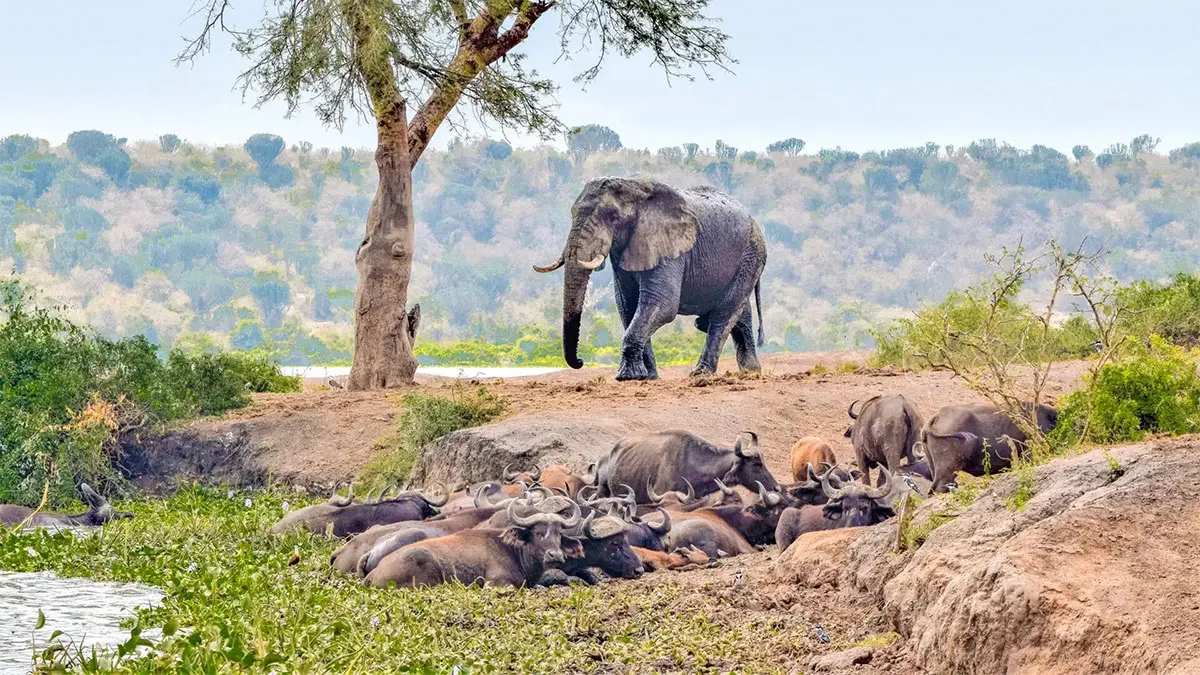
Queen Elizabeth National Park offers a contrasting landscape of savannah grasslands, crater lakes, wetlands, and woodland habitats. Visitors may encounter elephants, buffaloes, antelopes, hippos, and other wildlife during guided game drives and boat excursions.
The Ishasha sector is particularly associated with tree-climbing lions, although sightings are never guaranteed. Including Queen Elizabeth National Park before or after Bwindi can create an appealing combination of traditional wildlife viewing and rainforest exploration.
Relaxing at Lake Bunyonyi
Lake Bunyonyi lies in southwestern Uganda near Kabale and is known for its islands, surrounding terraced hills, and peaceful scenery. The lake provides an attractive setting for relaxation following a physically demanding gorilla trek.
Visitors can enjoy scenic boat excursions, community visits, and views across the surrounding countryside. Accommodation ranges from simple lakeside properties to more comfortable retreats, making the destination suitable for different travel styles.
Golden Monkey Tracking in Mgahinga
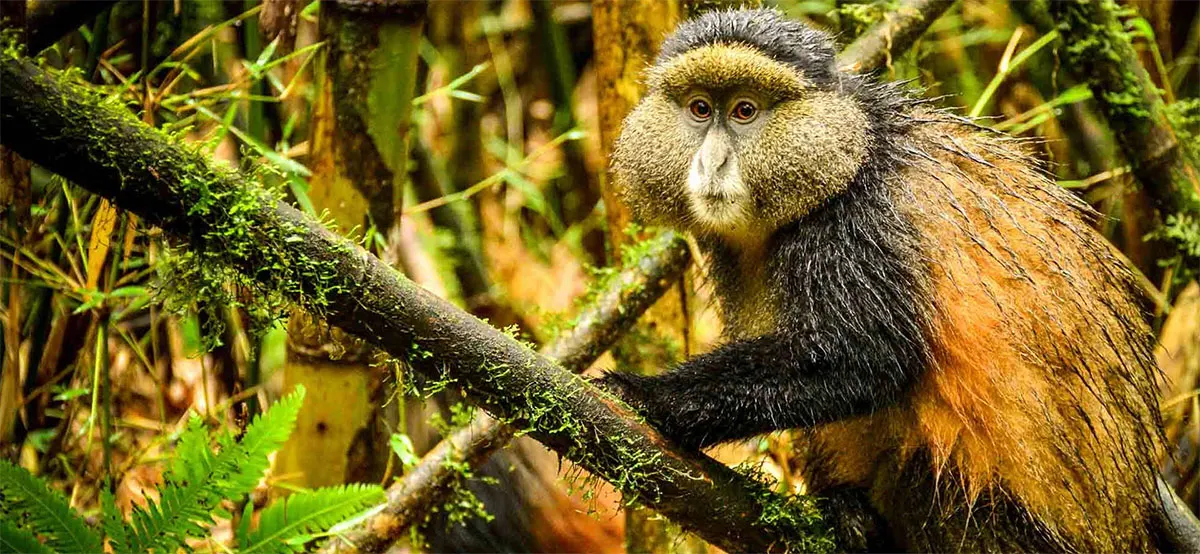
Golden monkey tracking provides another distinctive primate experience within Mgahinga Gorilla National Park. These monkeys inhabit bamboo-rich environments and are recognized by their striking coloration and energetic behavior.
Unlike mountain gorillas, golden monkeys frequently move quickly through vegetation, creating a different type of wildlife encounter. Travelers who enjoy primate photography and forest exploration may find the combination particularly rewarding.
Sample Gorilla Safari Itineraries With Pridemark Safaris
The ideal itinerary depends on how much time travelers have available, their preferred level of comfort, and whether they want to combine gorillas with other wildlife attractions. The following examples illustrate practical safari structures rather than fixed departures or guaranteed packages.
Three-Day Uganda Gorilla Trekking Safari
| Day | Suggested experience |
|---|---|
| Day 1 | Travel from Entebbe or Kampala to Bwindi |
| Day 2 | Gorilla trekking and afternoon relaxation |
| Day 3 | Return journey to Entebbe or Kampala |
A three-day itinerary is suitable for travelers whose primary objective is seeing mountain gorillas. However, the road transfers are long, and the schedule leaves limited flexibility for additional activities. Travelers should carefully consider flight arrival and departure times.
Five-Day Gorilla and Wildlife Safari
| Day | Suggested experience |
|---|---|
| Day 1 | Travel toward Queen Elizabeth National Park |
| Day 2 | Game drive and boat safari |
| Day 3 | Transfer to the appropriate Bwindi sector |
| Day 4 | Gorilla trekking experience |
| Day 5 | Return journey or onward travel |
This itinerary combines savannah wildlife with rainforest exploration. The route should be adjusted according to the confirmed gorilla trekking sector and accommodation location. Travelers may also prefer an additional night to reduce driving pressure.
Seven-Day Uganda Primate and Wildlife Safari
| Day | Suggested experience |
|---|---|
| Day 1 | Arrival and overnight near Entebbe |
| Day 2 | Travel to Kibale |
| Day 3 | Chimpanzee tracking |
| Day 4 | Transfer to Queen Elizabeth National Park |
| Day 5 | Wildlife viewing and transfer toward Bwindi |
| Day 6 | Gorilla trekking |
| Day 7 | Return or onward travel |
A longer itinerary allows travelers to experience different Ugandan ecosystems while maintaining a manageable travel schedule. Depending on flight arrangements and the chosen gorilla sector, Pridemark Safaris may recommend additional nights or domestic flights.
Why Plan Your Gorilla Safari With Pridemark Safaris?
Planning gorilla trekking in Uganda involves coordinating several important details that can affect the entire journey. Permit availability, trekking sectors, accommodation locations, transportation, and park regulations must fit together correctly.
Pridemark Safaris approaches gorilla safari planning by considering the complete travel experience rather than treating the gorilla permit as an isolated booking. A suitable itinerary should account for arrival arrangements, realistic road transfers, trekking preparation, accommodation preferences, and opportunities to explore other Ugandan destinations.
Our aim is to help travelers make informed decisions about their gorilla adventure. This includes explaining the differences between Bwindi and Mgahinga, clarifying what a permit covers, and identifying practical considerations that may otherwise be overlooked during independent planning.
Personalized Gorilla Safari Planning
Every traveler approaches a gorilla safari with different expectations. Some prefer comfortable accommodation and shorter travel days, while others prioritize photography, hiking, conservation experiences, or combining several national parks.
Pridemark Safaris can help structure an itinerary around these preferences while respecting the limitations of permit availability and wildlife conditions. A thoughtfully arranged safari should balance adventure with comfort and provide sufficient time to appreciate each destination.
Responsible and Conservation-Minded Travel
Mountain gorilla tourism depends on protecting the animals and the forests they inhabit. Responsible operators have an important role in explaining park rules, encouraging appropriate visitor behavior, and supporting tourism arrangements that respect conservation priorities.
Pridemark Safaris encourages travelers to follow Uganda Wildlife Authority regulations, respect local communities, and approach gorilla encounters as opportunities to observe wildlife rather than control it.
Frequently Asked Questions About Gorilla Trekking in Uganda
Is gorilla trekking in Uganda worth it?
For travelers interested in wildlife, conservation, and nature-based adventure, gorilla trekking offers an unusually personal encounter with endangered mountain gorillas. Unlike viewing animals from a safari vehicle, visitors enter the forest on foot and observe gorillas in their natural habitat. The experience requires considerable planning and expense, but many travelers value its rarity and conservation significance.
Are gorilla sightings guaranteed in Uganda?
Gorilla trekking takes place in natural forest environments, so sightings cannot be absolutely guaranteed. However, experienced trackers monitor the movements of habituated gorilla families, giving visitors a strong chance of locating their assigned group. Trekking duration and visibility vary according to gorilla movements, terrain, vegetation, and weather conditions.
Can children participate in gorilla trekking?
The minimum age for standard gorilla trekking in Uganda is 15. This requirement reflects the physical demands of trekking, the importance of following wildlife safety instructions, and disease-prevention considerations. Families traveling with younger children can explore alternative safari activities, although suitable arrangements depend on the child’s age and the specific destination.
How long does a gorilla trek take?
The overall trekking duration varies considerably because mountain gorillas move through the forest naturally. Some groups are located relatively quickly, while others require several hours of walking through challenging terrain. Once the assigned family is reached, standard trekking permits generally allow a maximum of one hour of observation under ranger supervision.
Is gorilla trekking safe?
Gorilla trekking is conducted under the supervision of trained Uganda Wildlife Authority personnel who understand the forest environment and gorilla behavior. Visitors receive safety instructions before entering the park and must follow ranger directions throughout the activity. Although outdoor trekking involves natural risks, appropriate preparation and responsible behavior help make the experience safer.
What is the difference between gorilla trekking and gorilla habituation?
Standard gorilla trekking involves visiting a habituated family for up to one hour, while the Gorilla Habituation Experience permits a longer period of observation with gorillas undergoing habituation. The activities have different permits, visitor limits, and arrangements. Travelers should choose according to their interests, physical preparation, available time, and budget.
Can I trek gorillas in Uganda more than once?
Yes. Travelers can arrange multiple gorilla treks, provided separate permits are available for each trekking day. Repeating the experience can be particularly interesting because gorilla family behavior, forest conditions, and walking routes vary. Visitors may also consider trekking in different sectors to experience contrasting landscapes within Uganda’s protected mountain gorilla habitats.
What happens if it rains during gorilla trekking?
Gorilla trekking normally continues during rainfall when park authorities consider conditions suitable. Mountain rainforests experience changing weather throughout the year, so waterproof clothing and appropriate hiking boots are essential. Heavy rain may increase trail difficulty, but it does not automatically mean the activity will be canceled.
Can I take photographs of mountain gorillas?
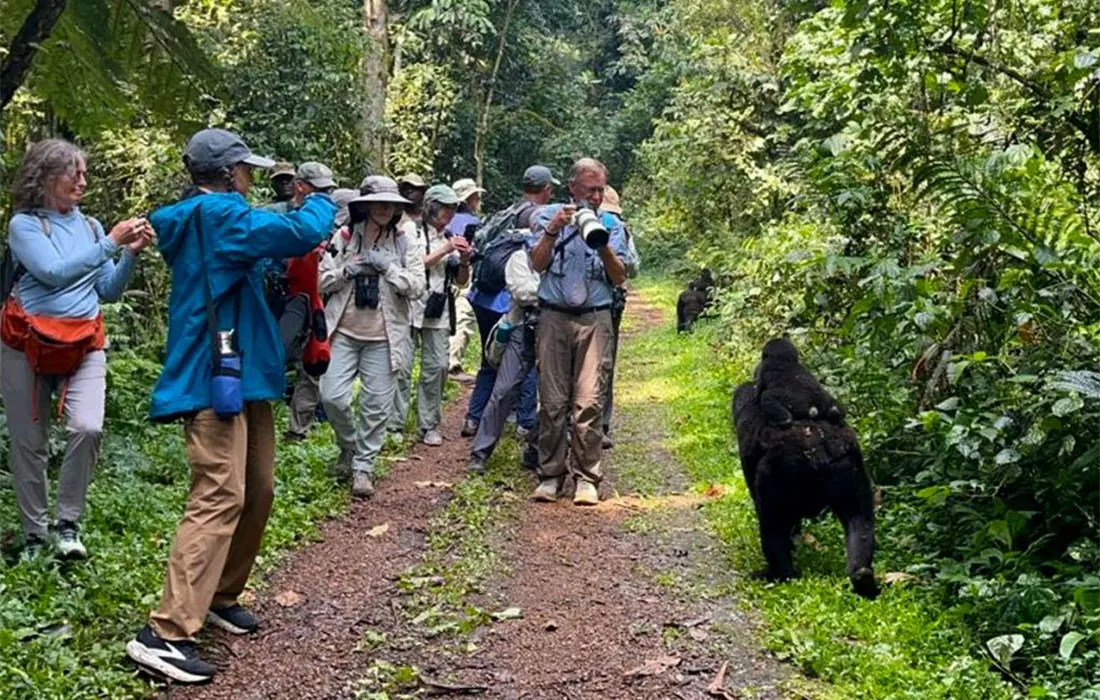
Photography is permitted during authorized gorilla encounters, but flash photography is prohibited. Visitors should follow ranger instructions, maintain the required viewing distance, and avoid sudden movements while using cameras. Lightweight equipment is generally easier to manage on forest trails, particularly when the trek involves steep or muddy terrain.
Is Uganda better than Rwanda for gorilla trekking?
Both Uganda and Rwanda offer regulated mountain gorilla encounters in protected natural habitats. Uganda provides trekking in Bwindi and Mgahinga, while Rwanda’s gorilla tourism is centered on Volcanoes National Park. The most suitable destination depends on travel budget, available time, preferred landscapes, permit costs, and whether visitors want to combine gorillas with other safari attractions.