
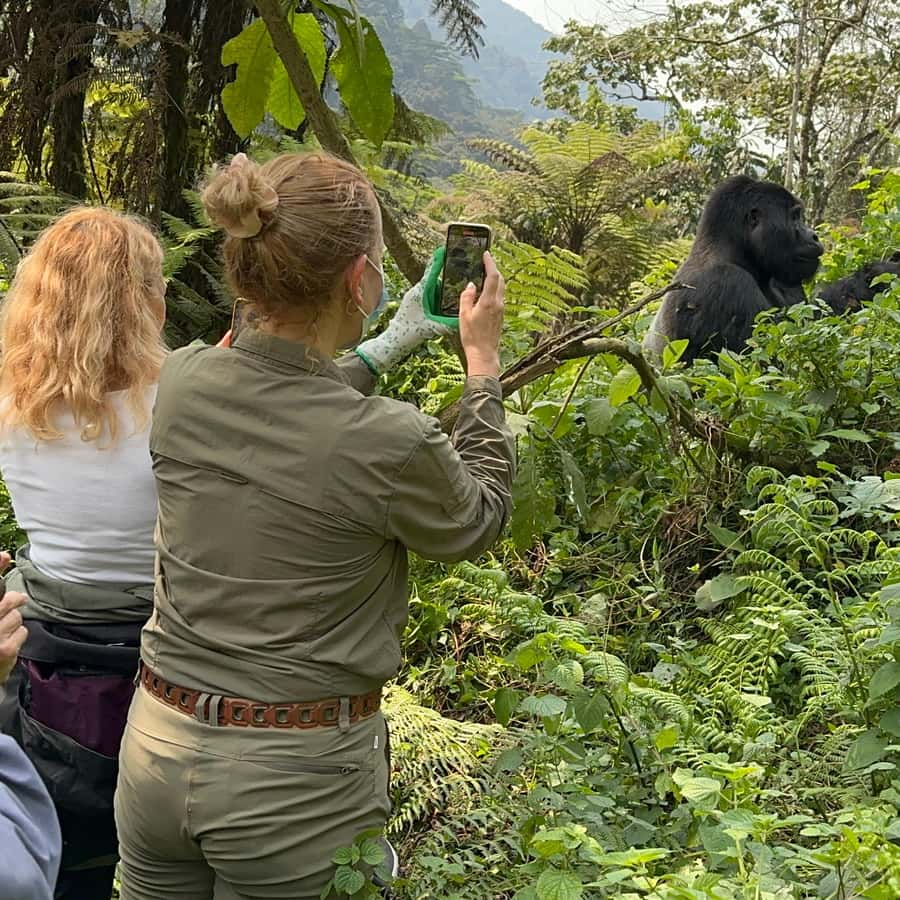
A close encounter with mountain gorillas in the rainforest of Uganda.
What happens during a gorilla trek? It begins long before you actually see a gorilla. Your morning starts with an early breakfast, preparation for the forest and a briefing with your ranger team. Then comes the walk through dense vegetation, hills, muddy trails, streams and changing forest conditions as trackers work ahead to locate the gorilla family. When you finally reach the gorillas, the atmosphere changes completely. The walking becomes quiet, cameras come out, and you may find yourself standing among one of the world’s most remarkable wildlife encounters. In Uganda, standard gorilla trekking takes place in Bwindi Impenetrable National Park and Mgahinga Gorilla National Park, and the entire experience can take several hours depending on where the gorillas have moved that day.
For a first-time visitor, it is natural to imagine gorilla trekking as a simple hike followed by an instant wildlife sighting. In reality, the experience is much more interesting. You are not walking along a predictable trail toward an enclosure where gorillas are waiting for visitors. You are entering a living rainforest and following the signs of a wild animal family whose location can change from day to day. That uncertainty is part of the magic.
This detailed guide explains what happens during a gorilla trek from the moment you wake up to the moment you return from the forest. It covers the briefing, the first steps into the rainforest, how trackers find the gorillas, what the encounter is like, how long you stay with the family, what you can photograph, how difficult the terrain may be, what happens if it rains, what to wear, and what you should realistically expect from your Uganda gorilla trekking experience.
Gorilla Trekking in Uganda: Quick Facts
| Quick Fact | What Travelers Should Know |
|---|---|
| Where does gorilla trekking happen? | Standard gorilla tracking in Uganda takes place in Bwindi Impenetrable National Park and Mgahinga Gorilla National Park. |
| How long does the trek take? | UWA states that gorilla treks may last approximately 2 to 7 hours, depending on the circumstances of the trek. |
| How long is the gorilla encounter? | Standard tracking allows a maximum of one hour of viewing with the gorilla group. |
| Minimum age | The published UWA gorilla tracking rules state that the minimum tracking age is 15 years. |
| Maximum visitors | UWA’s published rules state a maximum of eight visitors per gorilla group. |
| Distance from gorillas | UWA’s published rules require visitors to maintain a 10-metre distance from the gorillas. |
| Photography | Photography is permitted, but flash photography is not allowed. |
| Terrain | Expect natural rainforest conditions, including steep sections, uneven ground, vegetation, mud and potentially wet trails. |
| Who leads the trek? | Visitors trek with trained guides and ranger teams. Trackers also work in the forest to locate and monitor gorilla groups. |
| Best mindset | Be flexible. The forest, weather and gorilla location cannot be controlled like a normal sightseeing schedule. |
What Happens Before a Gorilla Trek?
One of the biggest secrets to enjoying what happens during a gorilla trek is understanding that the experience starts before you enter the forest. The night before, your safari guide should confirm your trekking sector, reporting point and morning arrangements. This matters because Bwindi is divided into several trekking sectors, including Buhoma, Ruhija, Rushaga and Nkuringo, while Mgahinga offers gorilla tracking in the Virunga landscape. Your accommodation should therefore be planned around the location of your permit and briefing point rather than simply being described as a lodge “near Bwindi.”
The morning usually begins early. You will have breakfast, put on your hiking clothing and make sure your backpack contains the essentials you need. This is not the morning to discover that your hiking boots are still wet, your rain jacket is packed at the bottom of your luggage or your camera battery is empty. Gorilla trekking rewards simple preparation. A good pair of hiking boots, long trousers, a long-sleeved shirt, a waterproof jacket, drinking water and a small backpack can make the experience much more comfortable.
Your safari guide will normally make sure you arrive at the correct briefing location in good time. The exact reporting arrangements can vary by sector and current park procedures, so travelers should always follow the instructions provided by their operator and the Uganda Wildlife Authority. Once you arrive, you will meet the ranger team and other visitors who are trekking that morning.
The Morning Briefing: Your First Step Into the Experience
The briefing is more important than it may initially appear. It is not simply an introduction before the “real” adventure begins. Rangers explain how the trek will work, what visitors should expect in the forest and how everyone should behave around the gorillas. You will be reminded to follow the ranger’s instructions, stay with the group and respect the required distance from the animals.
UWA’s published gorilla tracking rules state that visitors should not enter the forest if they have a cold or another infectious illness because mountain gorillas can be vulnerable to human diseases. The rules also state that visitors should maintain a 10-metre distance from gorillas, avoid flash photography and keep the forest clean. These rules exist to protect both visitors and the gorillas.
The briefing is also the moment when the ranger can explain the nature of the particular trek ahead. Nobody can guarantee that the gorilla family will be located at a certain point. Gorilla groups move, feed, rest and travel through the forest. Trackers work to establish where the group is and communicate that information to the trekking team.
Important: Follow the ranger’s instructions even when they differ from what you expected. Wildlife encounters are unpredictable, and the ranger’s priority is to manage the interaction safely and responsibly.
Entering the Forest: Where the Gorilla Trek Really Begins
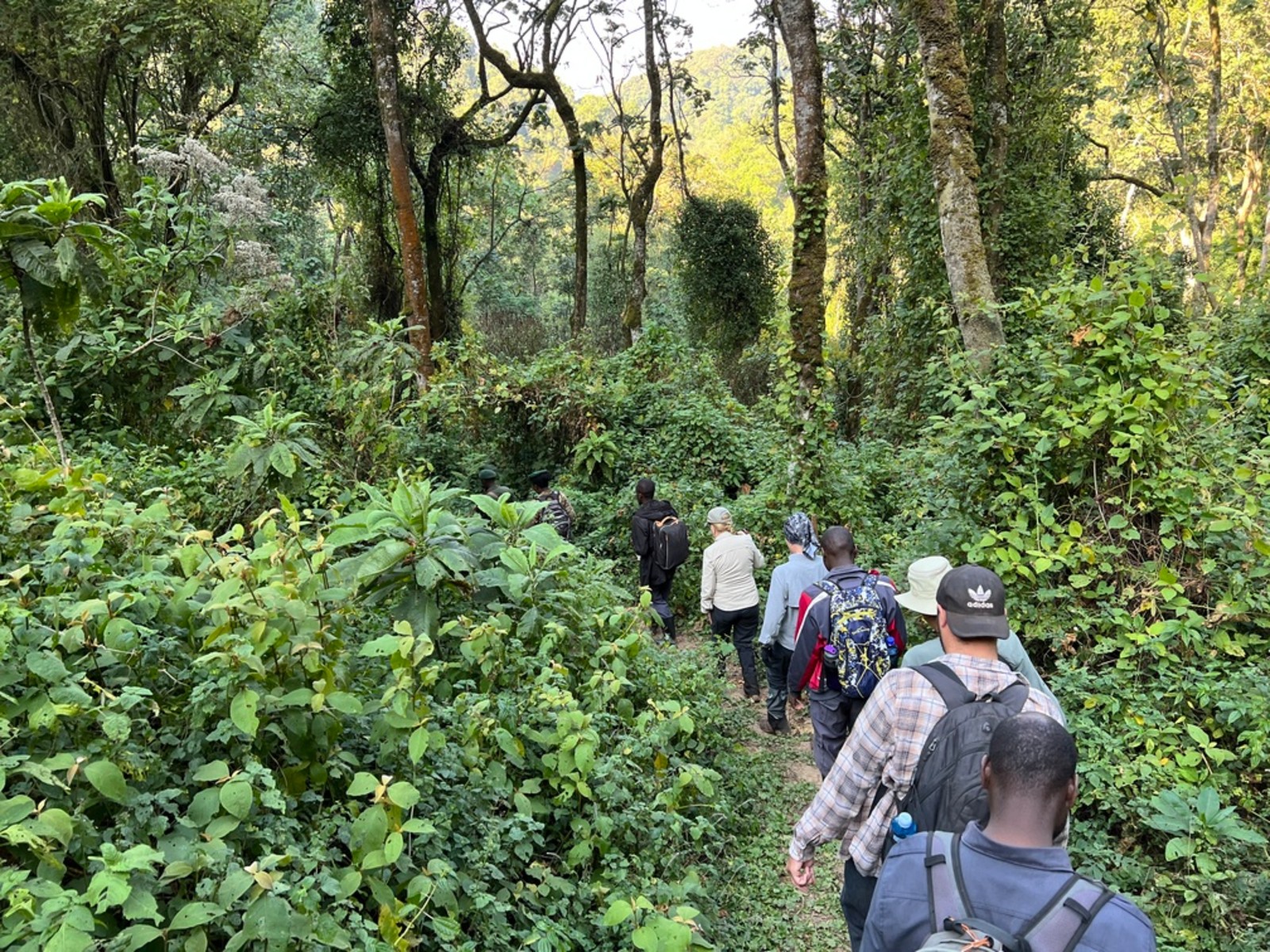
Trekkers moving through the dense vegetation of Bwindi Impenetrable Forest.
The first part of the trek may feel surprisingly ordinary. You walk, talk quietly and follow your guide along the forest route. Then gradually the surroundings begin to change. The vegetation becomes thicker. The ground becomes less predictable. You may cross exposed roots, step over fallen branches, walk through mud or climb a steep section of forest floor. The soundscape also changes. Instead of traffic, buildings and phones, you hear birds, insects, leaves moving in the wind and the footsteps of your group.
This is where many travelers begin to understand why gorilla trekking in Uganda is different from an ordinary wildlife drive. During a game drive, your vehicle provides mobility and allows you to cover large distances comfortably. During a gorilla trek, your own feet take you into the habitat. You become part of the movement through the forest.
The guide normally establishes the pace according to the group. You do not need to race. If somebody needs a short rest, the group can pause. The terrain and the position of the gorilla family ultimately determine how the day unfolds. Some visitors may reach the gorillas relatively quickly, while others may have a longer walk before the encounter begins.
UWA describes standard gorilla tracking as an activity requiring moderate fitness and notes that treks may last approximately two to seven hours. This range is important because it prevents travelers from assuming that every trek will take exactly the same amount of time.
Map of Uganda’s Gorilla Trekking Area
Bwindi and Mgahinga are both in southwestern Uganda, but they are distinct protected areas. Bwindi contains four major trekking sectors, while Mgahinga lies in the Virunga Mountains near Kisoro. The map below gives travelers a visual reference for the general location of the gorilla trekking areas. Your actual permit sector should always be confirmed before travel because the sector determines where you report for your trek.
Interactive map showing the general location of Bwindi Impenetrable National Park.
How Do Trackers Find the Gorillas?
One of the most fascinating parts of what happens during a gorilla trek is the search itself. You are not simply following a marked tourist trail until a gorilla happens to appear. Ranger and tracker teams use knowledge of the forest, recent observations and signs left by the animals to locate the group. Their experience helps the trekking party move through the forest while minimizing unnecessary disturbance.
Trackers may identify clues such as broken vegetation, feeding signs, nests or other indications of recent gorilla movement. Experienced trackers understand the landscape and the behaviour of the families they monitor. They communicate with the wider ranger team so that visitors can eventually be guided toward the gorilla group.
This means the trek contains an element of anticipation. You may walk for some time without seeing anything larger than a bird or monkey. Suddenly your guide may stop. Everyone becomes quiet. The ranger listens. A tracker moves ahead. The atmosphere changes because the group knows that the gorillas may be nearby.
That moment is often one of the most exciting parts of the entire gorilla trekking experience. The encounter has not started yet, but you can feel that something is about to happen.
How Difficult Is Gorilla Trekking?
There is no single answer because gorilla trekking difficulty varies considerably. The forest is not a flat hiking park with a predictable surface. Bwindi contains steep and rugged sections, and the conditions can change after rainfall. Mgahinga’s volcanic landscape can also involve significant climbs. The location of the gorilla family on that particular day can therefore have a major influence on how demanding your trek feels.
Fitness is helpful, but it is not the only factor. Good footwear, sensible pacing and preparation can make a meaningful difference. If you are worried about the physical demands, tell your safari operator before the trek. Your operator can help you understand the sector, accommodation location and practical arrangements before you travel.
You should also remember that “difficulty” is not measured only by distance. A short trail with a steep incline and slippery ground can feel harder than a longer trail over gentle terrain. Wet vegetation, mud, altitude, humidity and the need to move carefully can all influence your experience.
Travel tip: Do not judge your expected trek only by the number of kilometres. Ask about terrain, elevation, recent weather conditions and the general characteristics of your trekking sector.
What Happens When You Finally Find the Gorillas?

A mountain gorilla family resting and moving through the forest.
Eventually, the search changes into an encounter. Your ranger may signal that the gorillas are close. The group becomes quieter. You may have to move slowly through vegetation or position yourself carefully. Then you see the first gorilla.
For many visitors, this is the moment that is difficult to describe accurately in advance. You may see a silverback sitting calmly among the vegetation, a mother caring for an infant, juveniles playing or another gorilla feeding on leaves. Sometimes the gorillas are immediately visible. Sometimes vegetation partially hides them. Their behaviour is natural, and that is precisely what makes the experience so special.
The first few seconds can feel almost surreal. You have spent hours travelling across Uganda and walking through a rainforest, and suddenly a mountain gorilla is standing or sitting in front of you. The temptation is to focus entirely on getting the perfect photograph, but many experienced travelers later say that the most valuable part is simply watching.
Look at the animals’ behaviour. Watch how juveniles interact with adults. Notice how a gorilla moves through the vegetation. Listen to the sounds around you. Observe how the family uses the forest. The camera can record an image, but it cannot replace the experience of being there.
What Happens During the One-Hour Gorilla Encounter?
For standard gorilla tracking, the encounter with the habituated family is limited. UWA’s published rules state that visits are limited to one hour per gorilla group per day. The one-hour period begins once visitors reach the gorillas. This is an important distinction because the entire tracking experience is much longer than the actual viewing period.
During that hour, your ranger manages the encounter. You may be able to watch the gorillas feeding, resting, moving, grooming or interacting with one another. Their behaviour can change quickly, so the hour rarely feels repetitive. A quiet gorilla may suddenly stand and move through the vegetation. A juvenile may become playful. A silverback may reposition himself while watching the surroundings.
You should not expect the gorillas to perform for you. There is no guarantee that a particular animal will walk toward the group, sit in a perfect photographic position or remain visible throughout the hour. The animals are wild and the encounter is conducted on their terms.
This is why the best approach is patience. Let the ranger guide the group and enjoy whatever the forest gives you. Some travelers arrive hoping for a dramatic silverback photograph and end up becoming fascinated by a tiny infant clinging to its mother. Others become absorbed in the social interactions within the family. Every encounter can feel different.
Can You Take Photos During a Gorilla Trek?
Yes, photography is one of the most popular parts of the experience, but there are important rules. UWA’s published gorilla tracking regulations prohibit flash photography. This protects the animals from unnecessary disturbance and also helps keep the encounter calm.
A small camera or phone can be convenient, but serious wildlife photographers may prefer a camera with a longer lens. Remember, however, that a large camera does not guarantee a better photograph. Dense vegetation, low light, movement and distance can make photography challenging. Sometimes the gorilla may be partially hidden behind leaves, which can actually create beautiful and authentic photographs.
Keep your camera ready but do not allow photography to become the only reason you are watching the gorillas. Take some photographs, then lower the camera and experience the moment directly.
Photography tip: Turn off the flash before entering the forest and keep your camera settings prepared before the gorilla encounter begins. You do not want to spend your limited viewing time trying to find the correct settings.
What Happens If It Rains During a Gorilla Trek?
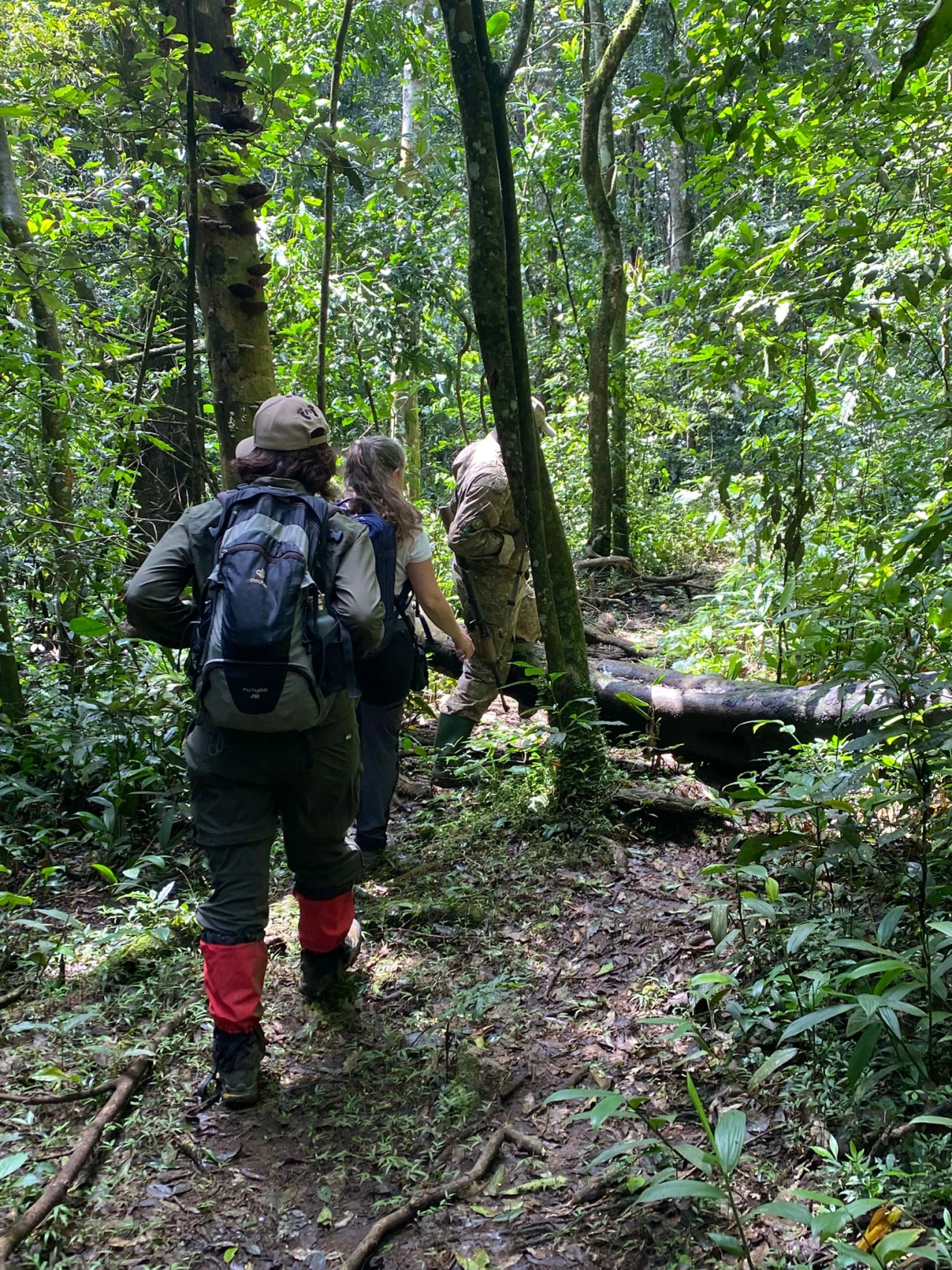
Rainforest trekking conditions can include wet vegetation, muddy trails and fallen branches.
Rain does not automatically mean that your gorilla trek becomes impossible. Bwindi is a rainforest environment, and weather can change quickly. A morning that begins with clear skies can become wet later in the day. The forest may also remain damp after rainfall.
This is why waterproof preparation is so important. A lightweight rain jacket can protect your upper body, while waterproof covers can protect cameras and other electronics. Good boots with reliable grip are particularly useful because wet ground can become slippery.
Interestingly, rain can also change the character of the forest. Leaves become glossy, mist can settle between the trees and the rainforest can feel even more atmospheric. The important thing is to be prepared rather than expecting perfect weather.
Map of Mgahinga Gorilla National Park
Mgahinga Gorilla National Park is Uganda’s other destination for standard gorilla tracking. It sits in the Virunga landscape in southwestern Uganda, close to the borders with Rwanda and the Democratic Republic of Congo. Its volcanic scenery gives the trekking environment a different character from the broader forest landscape of Bwindi.
Interactive map showing the general location of Mgahinga Gorilla National Park.
What Happens After the Gorilla Encounter?
Eventually, the ranger will indicate that it is time to leave the gorillas. This can feel surprisingly difficult. You may have spent hours waiting for the encounter and then discovered that the hour passed much faster than expected.
The group begins the return journey through the forest. Depending on the location of the gorilla family and the route taken, the return may follow a different path or involve terrain that feels completely different from the morning. You may be tired, muddy and hungry, but this is often when the experience begins to sink in.
Once you return to the briefing area, there is usually a debriefing process. You can then meet your driver or safari guide and return to your lodge. A warm shower, lunch and a comfortable chair may suddenly feel like luxuries.
Many travelers spend the rest of the afternoon talking about what they saw. One person remembers a silverback. Another remembers an infant. Someone else remembers the moment the forest suddenly went silent. This is one of the beautiful things about what happens during a gorilla trek: different people can walk through the same forest and return with completely different memories.
What Should You Wear and Carry for Gorilla Trekking?
Good preparation makes a substantial difference. The forest can be wet, muddy, steep and full of vegetation, so clothing should be chosen for practicality rather than appearance. Sturdy hiking boots with good traction are among the most useful items you can bring. Long trousers and a long-sleeved shirt can protect your skin from vegetation and insects, while a waterproof jacket provides protection when the weather changes.
Some travelers also choose gardening-style gloves to protect their hands when moving through vegetation. Gaiters can be useful in wet and muddy conditions. A walking stick can provide additional balance, particularly on steep or slippery sections. Your safari operator can advise you on what is appropriate for your specific trek.
| Item | Why It Helps |
|---|---|
| Hiking boots | Provide grip and ankle support on uneven and muddy ground. |
| Long trousers | Help protect your legs from vegetation, insects and damp foliage. |
| Long-sleeved shirt | Provides additional protection from vegetation and insects. |
| Rain jacket | Useful because rainforest weather can change quickly. |
| Small backpack | Provides space for water, personal items and photography equipment. |
| Water | Important during a multi-hour forest walk. |
| Camera or phone | Allows you to document the experience, subject to park rules. |
| Gloves | Can make it more comfortable to move through vegetation or use natural support. |
| Walking stick | Can provide additional stability on difficult sections. |
Why the Gorilla Trek Is More Than Just Seeing a Gorilla
It is easy to think that the goal is simply to reach the gorillas. But the walk through the forest is part of the experience. You see a landscape that cannot be appreciated from a vehicle window. You notice the texture of the trees, the layers of vegetation and the sounds of the forest. You begin to understand how much skill and patience are involved in following wildlife through such a complex environment.
You also gain a better appreciation for the work of the ranger and tracker teams. They are not simply guides pointing out animals. They help manage the encounter, interpret animal behaviour, locate the group and protect the rules that make responsible tourism possible.
Gorilla tourism also contributes to conservation and surrounding communities. UWA explains that park revenue-sharing programmes are designed to support communities around protected areas, while Bwindi has specific revenue-sharing arrangements connected with gorilla tourism. This creates an important link between tourism, local livelihoods and the long-term protection of wildlife.
Is Gorilla Trekking the Same as Gorilla Habituation?
No. This is an important distinction for travelers planning a Uganda primate safari. Standard gorilla tracking provides a maximum of one hour of viewing with the gorilla group. The Gorilla Habituation Experience is a different product designed around a longer period of observation, subject to the current UWA rules and availability.
If you want to understand the difference in more detail, read our guide to gorilla trekking versus gorilla habituation in Uganda. The key point is that you should not assume that every gorilla permit provides the same experience or duration.
Which Bwindi Sector Should You Trek From?
Bwindi is not one small trailhead. It is a large protected forest divided into different trekking sectors. The main sectors commonly used for gorilla tracking are Buhoma, Ruhija, Rushaga and Nkuringo. The sector printed or assigned for your trek matters because it determines where you report, where your ranger team meets you and which accommodation locations are practical.
This is why choosing a lodge only because it has beautiful photographs can sometimes be a mistake. A beautiful lodge can still be inconvenient if it requires a long early-morning transfer to your briefing point. A good Uganda safari itinerary should connect the permit sector, accommodation and road route logically.
For travelers planning a longer Uganda safari, Bwindi can also be combined with Queen Elizabeth National Park, Kibale National Park, Lake Bunyonyi, Mgahinga Gorilla National Park or other destinations in western Uganda. PrideMark Safaris’ Uganda gorilla and wildlife safari itineraries provide examples of how the forest experience can be combined with other wildlife activities.
What Should You Not Expect During a Gorilla Trek?
A realistic understanding of what happens during a gorilla trek also means knowing what the experience is not. Do not expect a paved hiking trail. Do not expect guaranteed sunshine. Do not expect the gorillas to remain in one place. Do not expect every photograph to be perfectly clear. Do not expect the trek to take exactly the same amount of time as another traveler’s trek.
Most importantly, do not expect the gorillas to behave like animals in a zoo. They are wild animals living in their natural environment. Your experience is therefore shaped by their behaviour, the terrain and the conditions of the forest.
That unpredictability is not a weakness. It is the reason the encounter feels authentic.
Is Gorilla Trekking Safe?
Gorilla trekking is a regulated wildlife activity conducted under Uganda Wildlife Authority procedures. Visitors are accompanied by authorized personnel and are required to follow specific rules designed to reduce disturbance and protect both people and gorillas.
Visitors should maintain the required distance, listen to ranger instructions, avoid flash photography and never attempt to approach or touch a gorilla. If a gorilla changes position or comes closer than expected, allow the ranger to manage the situation rather than attempting to move toward the animal.
Health is also important. Because humans can transmit illnesses to gorillas, travelers who are unwell should follow the current UWA health guidance rather than assuming that they can simply continue with the trek.
Frequently Asked Questions About What Happens During a Gorilla Trek
How long does a gorilla trek take in Uganda?
UWA states that gorilla treks may last approximately two to seven hours. The actual duration depends on factors including the location of the gorilla group, terrain, weather and the route used by the trekking team.
How long do you stay with gorillas?
For standard gorilla tracking, UWA’s published rules limit the viewing period to a maximum of one hour with the gorilla group. The overall trek is longer because the group must first be located.
What happens if the gorillas are far away?
The trek may take longer. Trackers work to locate the group, and visitors continue walking with the ranger team until the gorillas are reached. This is why travelers should keep their schedule flexible after the trek rather than booking an activity immediately afterward.
Do you walk the entire time?
Not necessarily. The trek involves walking, but there may also be pauses for rest, observation, navigation and waiting while the tracker team works. Your guide manages the pace of the group.
Is gorilla trekking very difficult?
The difficulty varies. Bwindi and Mgahinga contain natural, sometimes steep terrain, and weather can affect trail conditions. UWA describes gorilla tracking as requiring moderate fitness. Travelers should prepare for uneven ground and potentially several hours of walking.
Can children go gorilla trekking in Uganda?
UWA’s published gorilla tracking rules state that the minimum age for tracking is 15 years. Families should always confirm the current rules applicable to their travel date before booking.
Can I take pictures of the gorillas?
Yes, photography is allowed, but UWA’s published rules prohibit flash photography. Always follow the ranger’s instructions about positioning, distance and behaviour.
Can gorillas touch tourists?
Visitors should never attempt to touch gorillas. The required distance must be respected, and if a gorilla moves closer, visitors should follow the ranger’s instructions rather than reaching toward the animal.
What happens if it rains during the trek?
The trek can continue in wet conditions depending on the circumstances. Rain can make trails muddy and slippery, so a waterproof jacket and suitable hiking footwear are highly recommended.
What happens after gorilla trekking?
After the viewing period, the group leaves the gorillas and walks back through the forest to the briefing area. You then return to your lodge or continue with the day’s itinerary, depending on your safari plan.
What should I carry during gorilla trekking?
Carry water, a small backpack, rain protection, suitable clothing and any necessary personal items. If you bring a camera or phone, protect it against rain and moisture.
Are gorilla treks guaranteed to find gorillas?
The trek is specifically organized to locate a habituated gorilla family, but wildlife is unpredictable. Travelers should understand that the forest is a natural environment and that the animals’ movements cannot be controlled like a scheduled attraction.
The Real Answer to What Happens During a Gorilla Trek
So, what happens during a gorilla trek? You wake before the forest is fully alive, prepare your hiking gear, travel to the correct briefing point and meet your ranger team. You listen to the rules, enter the rainforest and begin walking. Sometimes the trail is gentle. Sometimes it climbs. Sometimes it is muddy. Sometimes rain arrives. Sometimes you stop and wait while trackers search for signs of the gorilla family.
Then, eventually, the forest changes.
Your guide becomes quieter. You hear something moving in the vegetation. You take another few steps. Leaves shift. Suddenly, there it is: a mountain gorilla living naturally in the forest.
The next hour is not a performance. It is observation. You watch. You listen. You photograph without flash. You notice family relationships, movement, feeding and quiet moments that could never be recreated anywhere else. Then your ranger tells you it is time to leave, and you begin the walk back.
The most important thing to understand is that the gorilla itself is only one part of the adventure. The forest, the trackers, the anticipation, the physical challenge, the changing weather and the final encounter all belong to the same story.
That is what makes a gorilla trekking experience in Uganda so memorable. You are not simply travelling to see an animal. You are entering its world for a carefully managed moment and leaving with a much deeper appreciation of the forest that protects it.
Ready to Experience Gorilla Trekking in Uganda?
Let PrideMark Safaris help you plan the details that matter: the right trekking sector, accommodation, transport, gorilla permit arrangements and the rest of your Uganda safari.
Continue Planning Your Uganda Gorilla Safari
If you are researching your trek before booking, these related guides can help you understand the experience more clearly:
- Gorilla Trekking vs Gorilla Habituation in Uganda
- Bwindi vs Mgahinga Gorilla Trekking
- What Happens If You Miss Gorilla Trekking Time?
- How to Identify a Genuine Safari Company
- How Much Cash Should You Carry on an African Safari?
Official Gorilla Trekking Information
For the most important rules and current official information, travelers should always check the Uganda Wildlife Authority before travel because regulations, permits and tariffs can change.