
What to Wear for Gorilla Trekking in Rwanda
Understanding the conditions before choosing clothing
Volcanoes National Park lies in Rwanda’s highland volcanic landscape, where vegetation can be dense and paths can change from firm earth to slippery mud within a short distance. Visitors often picture a straightforward forest walk, yet gorilla trackers may lead groups through bamboo, nettles, damp grass and uneven slopes. The right clothing is therefore not about looking adventurous in photographs. It is about remaining comfortable, protected and able to concentrate on the wildlife experience.
Weather forecasts for Musanze are helpful but cannot predict conditions on every hillside. A morning may begin cool and cloudy, become warm during a climb and turn wet as the group approaches the gorillas. Clothing should work as a flexible system: breathable layers against the skin, protective outer garments and footwear that remains secure when the ground becomes slippery. This approach suits first-time visitors as well as experienced hikers.
PrideMark Safaris advises guests to prepare for a full morning outdoors rather than packing only for the one hour usually permitted with a habituated gorilla family. Reaching the family and returning to the starting point can take considerably longer. The distance and gradient depend on where the gorillas are located and the route selected by the park team that day. No outfit can guarantee an easy trek, but appropriate equipment reduces avoidable discomfort.
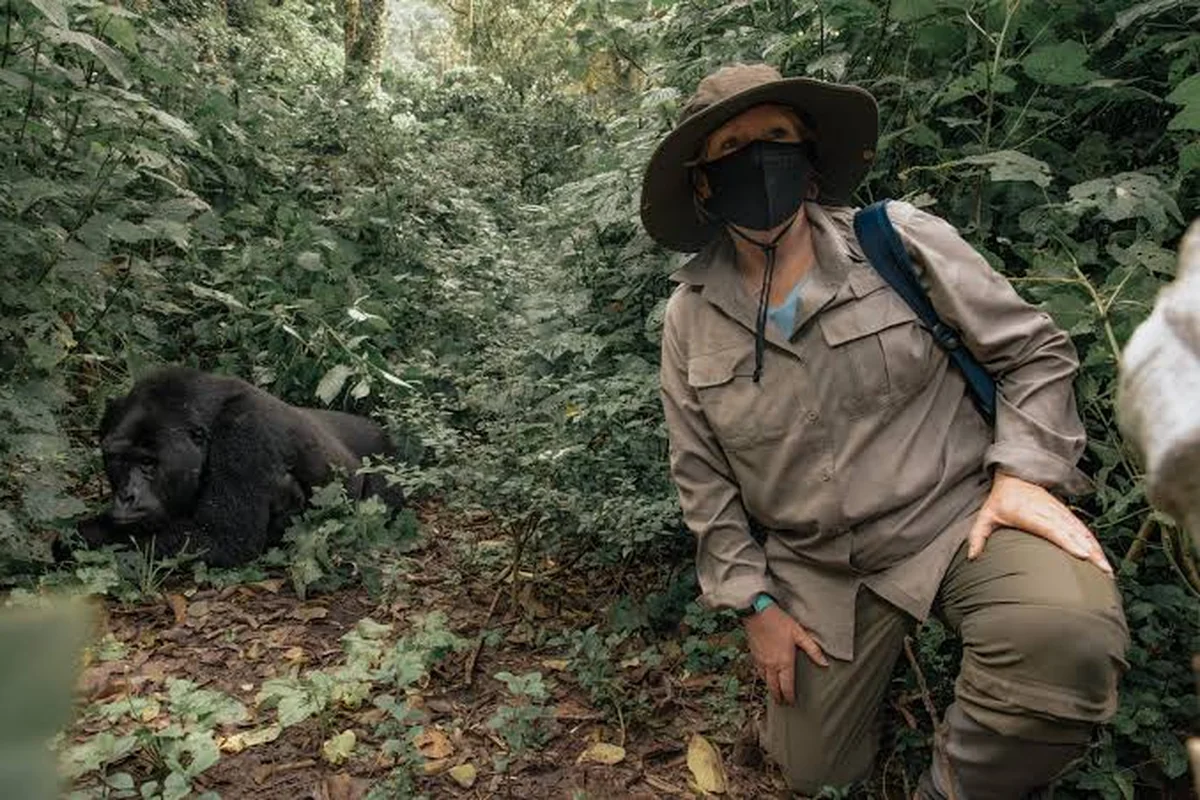
A gorilla trekking visitor dressed in long sleeves, outdoor trousers and a wide-brimmed hat during a mountain gorilla encounter.
Choose supportive waterproof hiking boots
Well-fitting hiking boots are the most important clothing decision for many visitors. Look for a grippy outsole, reliable ankle support and a comfortable fit when worn with trekking socks. Waterproof or water-resistant construction helps on damp ground, although no boot remains completely dry when water enters from above. Test the boots on local walks before traveling so that pressure points and rubbing become apparent while there is still time to address them.
Boots should feel secure on downhill sections without crushing the toes. Tight boots can become painful after hours of walking, while oversized footwear encourages blisters and reduces control on slippery terrain. If you already own sturdy hiking shoes that fit perfectly, evaluate their grip and protection rather than automatically buying an unfamiliar pair. For many routes, however, supportive boots provide better coverage against mud and vegetation.
When planning what to wear for gorilla trekking in Rwanda, do not rely on new trainers, fashion boots or smooth-soled casual shoes. These can lose traction on wet clay and provide limited protection when the trail is rough. After the trek, remove mud and let footwear dry naturally at the lodge. Bringing lightweight spare shoes for evenings allows the hiking boots time to air out before departure.
Wear long, durable trekking trousers
Long trousers protect legs from brush, insects, stinging plants and minor scratches. Choose flexible hiking fabric that allows you to step over roots and climb uneven ground without restriction. Quick-drying synthetic or technical blends often perform better than heavy denim when conditions become wet. The ideal trousers feel comfortable at the waist, do not drag under the heel and can be tucked neatly into socks or gaiters.
Some travelers prefer convertible hiking trousers, but exposed legs are usually less practical in dense vegetation. Shorts can leave the skin vulnerable even when the weather feels warm at the lodge. If you are deciding what to wear for gorilla trekking in Rwanda, prioritize coverage and movement over a lightweight appearance. A second pair of trousers is useful on multi-day itineraries when the first pair needs cleaning.
Avoid extremely loose hems that catch on branches or collect mud. Equally, very tight trousers may restrict movement during steep steps and make long periods of walking uncomfortable. Try squatting, stepping up and sitting while wearing your chosen trousers. These simple tests reveal whether the fabric and cut will work in the field far more reliably than appearance alone.
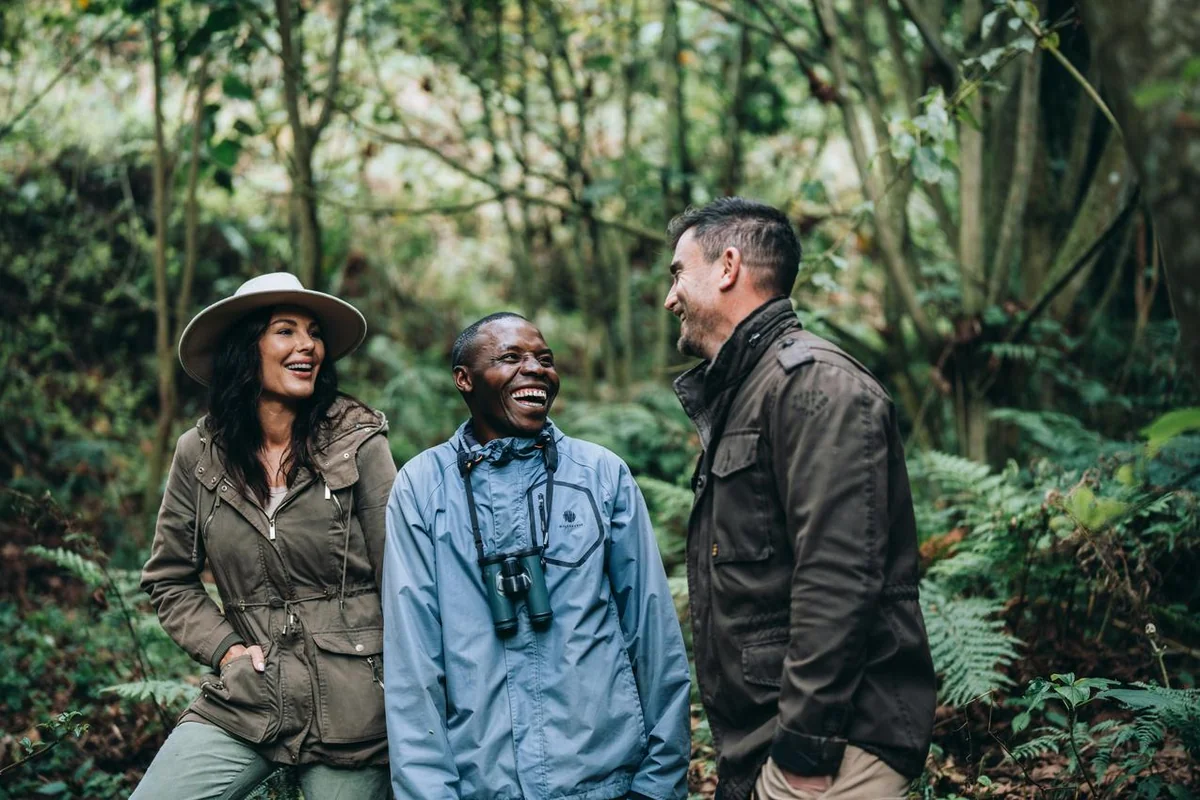
Tourists and a safari guide wearing practical outdoor jackets, illustrating comfortable clothing choices for a guided forest trekking experience.
Select a breathable long-sleeved shirt
A long-sleeved shirt offers protection from vegetation while helping regulate temperature. Lightweight hiking fabric that moves moisture away from the skin is a practical choice. Many visitors begin their trek in cool conditions and then warm up as they climb, so a shirt that remains comfortable when slightly damp is valuable. A collar or higher neckline can provide extra coverage without requiring a heavy garment.
Cotton may feel pleasant during a short city walk but can remain damp after sweating or rainfall. That prolonged moisture can become uncomfortable when the group stops in cooler forest conditions. Choose a shirt you can move freely in, especially around the shoulders and elbows. Neutral earth tones are convenient for a safari wardrobe, although there is no need to purchase an entirely new collection of matching outdoor clothing.
For travelers researching what to wear for gorilla trekking in Rwanda, a practical layering plan is more useful than one thick shirt. Wear a breathable base layer, carry a light insulating layer if needed and keep rain protection accessible. This makes it easier to adapt to changing weather without overheating on a climb or becoming chilled during a pause.
Pack a lightweight waterproof rain jacket
A waterproof jacket with a hood belongs in the daypack even when the morning sky looks clear. Mountain weather changes quickly, and rain can make the trail colder and more slippery. Select a jacket that covers the torso well, closes securely and allows enough room for a shirt or light fleece beneath it. Adjustable cuffs and a usable hood are more important than decorative features.
An ordinary windbreaker may reduce the chill but will not necessarily withstand persistent rain. Check whether your jacket is actually designed to resist rainfall, and inspect seams and closures before departure. A breathable waterproof shell is useful because trekking generates heat. If the jacket traps too much moisture inside, you may become wet from perspiration even when the rain stays outside.
Keep the jacket near the top of your bag rather than burying it beneath camera equipment and snacks. When considering what to wear for gorilla trekking in Rwanda, remember that a raincoat is protective equipment, not a seasonal luxury. It is worthwhile in both wetter and relatively drier periods, and it also helps during windy pauses on exposed ground.

A visitor wearing a red outdoor jacket near a mountain gorilla, illustrating suitable clothing layers for a gorilla trekking adventure.
Use gardening-style or trekking gloves
Gloves can make a noticeable difference when you need to steady yourself against vegetation or use a walking stick on rough ground. Lightweight, durable gardening gloves or outdoor work gloves often provide a useful balance of grip and protection. They help reduce minor scratches from rough stems and make contact with wet vegetation more comfortable. Choose a pair that fits closely enough for secure hand movement.
Gloves should not be so thick that you cannot adjust a camera, zip a pocket or hold a trekking pole. Try them at home with the items you intend to carry. If the fabric becomes wet, spare dry gloves may be helpful, although this is optional rather than essential. Travelers with sensitive skin may prefer a softer lining or a more carefully fitted pair.
When discussing what to wear for gorilla trekking in Rwanda, gloves are sometimes overlooked because they appear less important than boots. In practice, the forest environment makes hand protection worthwhile. Follow your guide’s instructions about where to hold vegetation and avoid touching plants unnecessarily. Gloves reduce minor contact irritation; they do not make every plant or surface safe.
Wear long trekking socks and consider gaiters
Comfortable hiking socks help manage friction between the foot and boot. Look for a fit that stays in place without bunching, with enough cushioning for extended walking. Moisture-managing materials are useful when feet become warm or damp. Bring a spare pair in your luggage so that you can change after the trek rather than spending the rest of the day in wet socks.
Long socks also allow you to tuck trouser cuffs inside, creating an extra barrier against small insects and loose vegetation. Some visitors prefer gaiters, which cover the area between boots and trousers and help keep mud and debris out. Gaiters are particularly useful after rain or when vegetation is thick, but they are not compulsory for every traveler.
If you are preparing what to wear for gorilla trekking in Rwanda, test the combination of socks, trousers and boots together. A comfortable boot can feel tight with thick socks, and poorly adjusted gaiters may rub during a long climb. Small fitting details are easier to correct before the safari than halfway through a muddy forest walk.
Carry a warm but lightweight layer
Rwanda’s volcanic highlands can feel cool early in the morning, especially before the group begins walking. A lightweight fleece or similar insulating layer can make the briefing and initial transfer more comfortable. Choose something that compresses easily into a daypack and can be removed when the pace increases. A bulky winter coat is generally less adaptable for active trekking.
The best combination is usually a breathable shirt, an optional fleece and a waterproof outer shell. This lets you change layers without carrying several heavy garments. If you tend to feel cold, consider an additional thin layer rather than relying on one very thick item. Ask your safari planner about your expected departure time and accommodation location when deciding how much insulation to bring.
In any guide to what to wear for gorilla trekking in Rwanda, temperature management deserves attention alongside rain protection. Sweating heavily during a climb and then stopping in a cool area can feel uncomfortable. Remove a layer before overheating and put it back on when resting. This simple habit helps maintain comfort throughout a variable trekking morning.
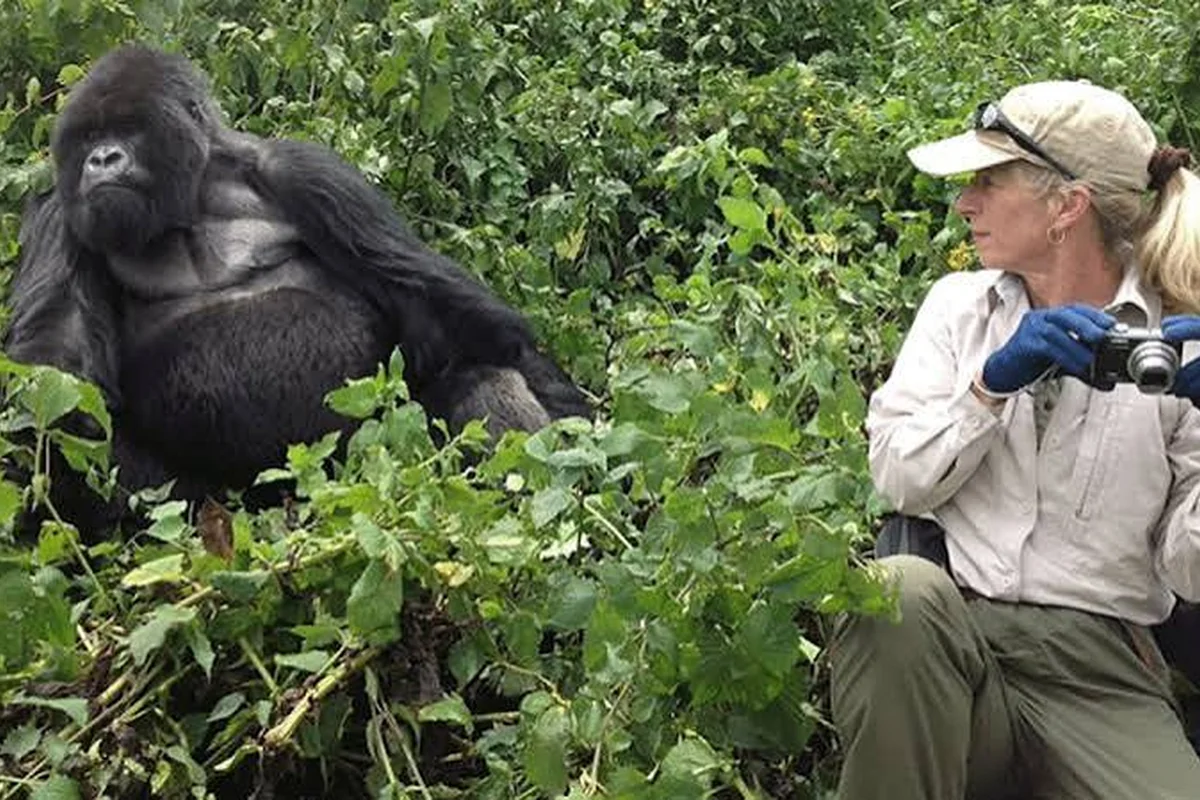
A visitor observes a magnificent silverback mountain gorilla in its natural forest habitat.
Protect your head and eyes appropriately
A lightweight hat can help on exposed approaches and during sunny breaks. A brimmed design provides shade, while a close-fitting cap is less likely to snag on vegetation. Sunglasses may be useful on the drive and open sections of the walk, but dense forest can be shaded, so they should be easy to store securely. A simple neck covering is optional for travelers who want additional sun protection.
Choose headwear that does not obstruct hearing or your view of the guide. Wide, rigid brims can be awkward in thick vegetation. Avoid hanging sunglasses loosely around the neck where they might swing into branches. If you wear prescription glasses, consider a secure strap and an appropriate cleaning cloth for mist or rain. Protecting visibility is part of moving confidently on uneven ground.
When deciding what to wear for gorilla trekking in Rwanda, headwear should support the activity rather than become another item to manage. A small hat that packs away easily is often enough. Remember that the forest encounter requires calm, controlled movements, and keep loose accessories secured before approaching the gorilla family.
| Item / condition | Main purpose | Planning advice |
|---|---|---|
| Hiking boots | Grip, ankle support and a broken-in fit | Avoid new or smooth-soled shoes |
| Long trousers | Protect legs from plants and scratches | Choose flexible quick-drying fabric |
| Rain jacket | Protection from changing mountain weather | Keep it accessible in your pack |
| Gloves | Hand protection and useful grip | Check fit before travel |
Bring a compact, weather-resistant daypack
A small daypack is not clothing, but it completes the practical trekking outfit. It should sit comfortably on the shoulders and hold drinking water, a rain jacket, any personal medication, snacks if permitted, and a few small essentials. A rain cover or waterproof liner protects sensitive items if the weather changes. Avoid carrying unnecessary weight simply because there is space in the bag.
Pack the items you might need quickly in accessible compartments. A reusable water bottle or hydration system is preferable to relying on a single small drink. Keep cameras protected but reachable, and ensure straps do not dangle where they can catch on branches. A porter may be available for hire to help with your bag and provide assistance, subject to local arrangements and fees.
For visitors considering what to wear for gorilla trekking in Rwanda, the relationship between clothing and the daypack matters. Layers are useful only if you have somewhere to store them. A well-organized bag reduces interruptions and allows you to focus on your footing, the guide’s instructions and the experience of observing mountain gorillas in their natural habitat.
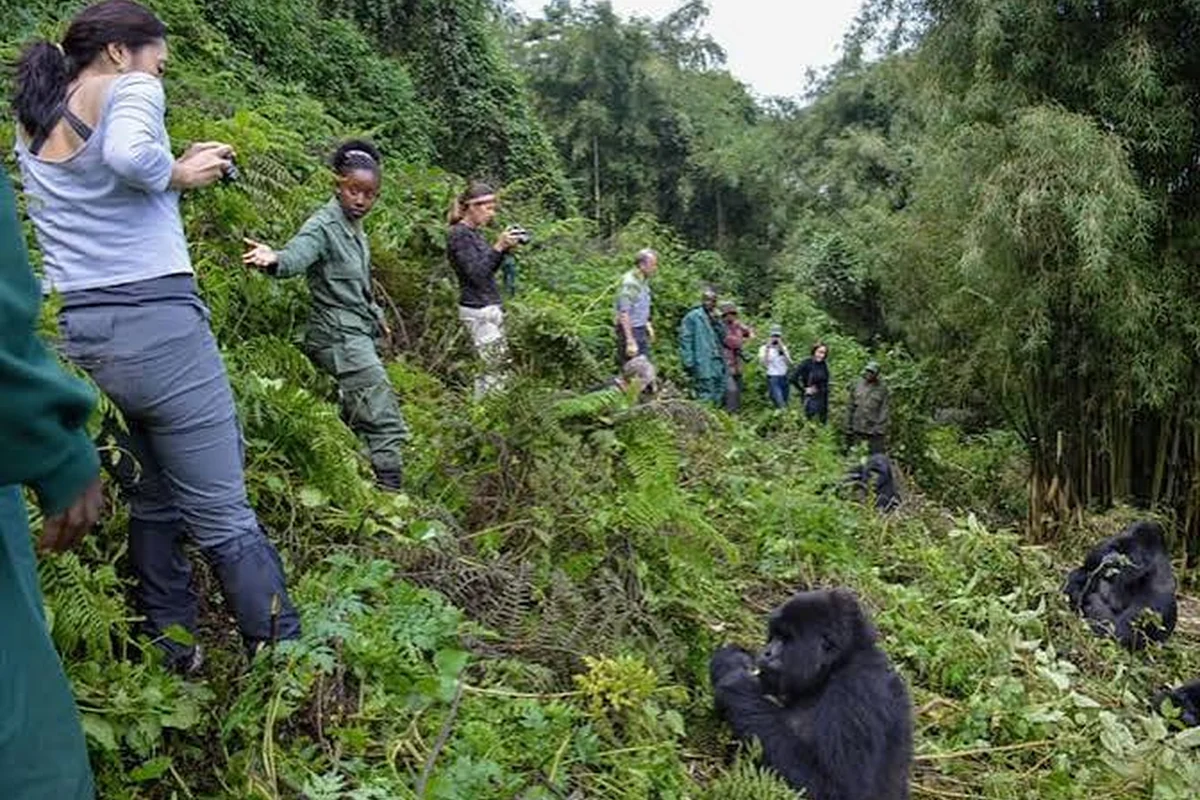
Visitors wearing practical outdoor clothing observe mountain gorillas in a lush forest environment during a guided trekking experience.
What not to wear during a gorilla trek
Leave sandals, flip-flops and smooth-soled fashion shoes at the lodge. They offer limited traction and protection on muddy, uneven trails. Shorts and sleeveless tops expose more skin to vegetation, while heavy jeans can become uncomfortable when wet. Extremely bulky jackets may overheat you during a climb. The goal is not to follow a rigid fashion rule but to avoid clothing that creates predictable problems in forest conditions.
Avoid strong fragrances if possible and keep jewelry minimal. Loose scarves, long dangling accessories and unsecured straps can catch on branches. Bright colors are not automatically forbidden, but subdued practical clothing is generally easy to coordinate and comfortable for wildlife travel. Most importantly, choose garments that you have worn and tested before the trek rather than experimenting with unfamiliar equipment on the morning itself.
PrideMark Safaris recommends reviewing your full outfit the evening before departure. Lay out boots, socks, trousers, shirt, rain jacket and gloves together. Check that you can walk, bend and reach comfortably. If you have to choose between fashionable new equipment and proven comfortable clothing, the latter is often the safer and more sensible option for a demanding outdoor activity.
Clothing for wetter and drier periods
Rwanda experiences seasonal changes in rainfall, but showers can occur outside the wettest months. During wetter periods, waterproof outerwear, dependable boot traction and a dry bag become especially valuable. Expect muddy sections and allow extra time for drying clothing between activities. Pack a second pair of socks and consider a second set of trekking clothes if your itinerary includes another outdoor excursion soon afterward.
In relatively drier periods, the trail may be firmer in places, yet morning moisture and isolated showers remain possible. Breathable fabrics and adequate drinking water are important because exertion can make you warm even in cool highland air. Do not leave the rain jacket behind merely because the trip falls within a popular travel season. The mountain environment remains variable throughout the year.
Anyone asking what to wear for gorilla trekking in Rwanda should base the final packing list on expected weather, personal comfort and the number of trekking days. A traveler trekking twice needs more spare clothing than someone completing a single trek. Ask the lodge whether laundry or drying assistance is available, particularly when the itinerary includes consecutive active days.
| Item / condition | Main purpose | Planning advice |
|---|---|---|
| Wet conditions | Waterproof shell, boots, gaiters | Extra socks and dry bag |
| Cool mornings | Breathable shirt and light fleece | Remove layers before overheating |
| Drier periods | Sun protection and breathable clothing | Carry rain protection anyway |
| Consecutive treks | Spare trekking outfit | Allow drying time |
Practical clothing advice for different travelers
Women and men can follow the same core principles: secure footwear, covered legs and arms, breathable layers and rain protection. Fit and comfort matter more than gender-specific labels. Sports bras or other supportive undergarments may improve comfort for some visitors, while others may need particular sock or boot styles. Choose clothing that supports free movement and avoids rubbing during long walks.
Older travelers should pay particular attention to balance, boot grip and manageable layers. A trekking pole or locally supplied walking stick can help on uneven ground, although it does not remove all difficulty. Visitors with knee concerns or limited mobility should discuss their needs with their clinician and safari operator before booking. Porter support or a carrying chair may sometimes be arranged, but availability, costs and suitability require confirmation.
For families, remember that Rwanda’s gorilla trekking activity has a minimum participation age set by park authorities. Children below the permitted age cannot join simply by wearing suitable hiking equipment. Check current eligibility before purchasing permits. For all eligible visitors, selecting what to wear for gorilla trekking in Rwanda should be part of a wider plan covering fitness, timing and realistic expectations.
Packing checklist for the night before trekking
Prepare a simple checklist and use it the night before departure. Set out broken-in hiking boots, trekking socks, long trousers, a long-sleeved shirt and gloves. Put a waterproof jacket, lightweight fleece, water and personal essentials into the daypack. Charge the camera, protect electronics from rain and confirm the meeting time with your guide. This preparation makes the early morning feel more relaxed.
Keep your passport or identification and permit arrangements accessible according to the instructions from your operator. Confirm whether your lodge will provide breakfast before departure or a packed meal. Do not pack food for consumption near gorillas; follow park staff instructions on when and where eating is permitted. Carry any necessary medication in its original packaging where practical and keep it readily available.
As a final check on what to wear for gorilla trekking in Rwanda, try on the complete outfit rather than assessing each item separately. Make sure the rain jacket fits over the fleece, the trouser hems work with your boots and the backpack does not pull awkwardly on your shoulders. A five-minute check can prevent discomfort later in the forest.
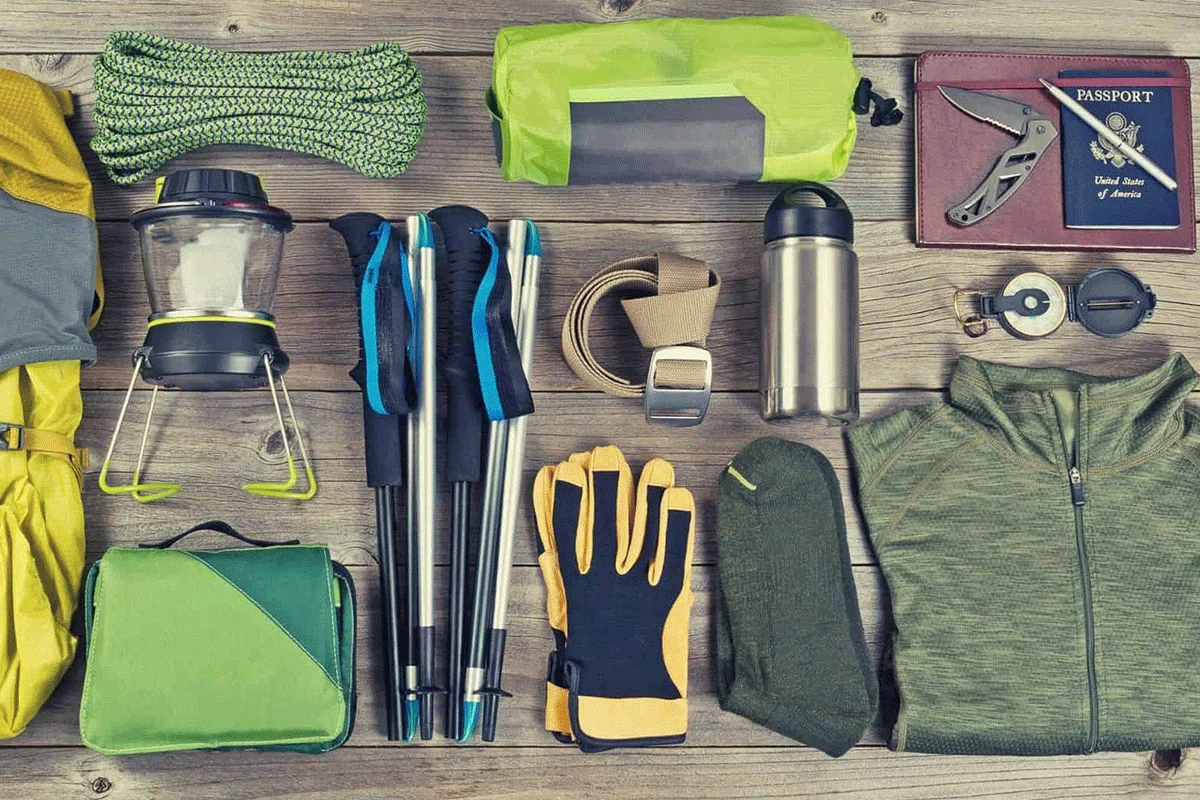
Essential outdoor clothing and trekking equipment to consider when preparing for a gorilla trekking adventure in Rwanda.
Permits, safety and the gorilla encounter
Clothing preparation is only one part of responsible gorilla tourism. Rwanda’s standard international visitor gorilla trekking permit is commonly listed at US$1,500 per person, although eligibility-based rates and official rules can change. Confirm the applicable permit price and availability before making nonrefundable travel commitments. A permit is for the regulated trekking experience, not a guarantee of a particular family, distance or easy walking route.
Park guides explain the rules during the briefing. Visitors should maintain the required separation from gorillas, avoid flash photography, follow instructions about movement and remain quiet during the encounter. If you feel unwell with symptoms of a communicable illness, tell your operator before the trek because gorillas are vulnerable to human infections. Safety and conservation requirements take priority over a visitor’s preferred itinerary.
PrideMark Safaris can help guests plan transport from Kigali, accommodation around Musanze or Kinigi, permit arrangements and appropriate trekking preparation. We encourage travelers to share mobility concerns and clothing questions early so practical solutions can be discussed. When reviewing what to wear for gorilla trekking in Rwanda, remember that good preparation supports a respectful experience for both visitors and the gorillas.
Sample beginner-friendly preparation schedule
Two or three weeks before travel, begin walking regularly in the footwear you intend to use. Include some hills or stairs if your fitness allows and consult a health professional if you have medical concerns. Review the clothing list and identify any missing essentials. Avoid leaving new boot purchases until the last day because there may be no opportunity to discover whether they cause blisters.
Several days before departure, check the forecast and organize layers for cool mornings and possible rain. Confirm permit details, pickup time and accommodation arrangements with your operator. Pack spare socks and a dry change of clothes for after the trek. If you are combining gorilla trekking with other Rwanda experiences, plan enough time to rest rather than filling every hour with activities.
On the trekking morning, dress in comfortable layers, eat as advised by your lodge and arrive ready for the briefing. Tell the guide if you need assistance or have concerns about the pace. Adjust clothing before becoming too hot or cold, and follow all park instructions. This approach turns what to wear for gorilla trekking in Rwanda from a packing question into a practical part of a well-organized safari.
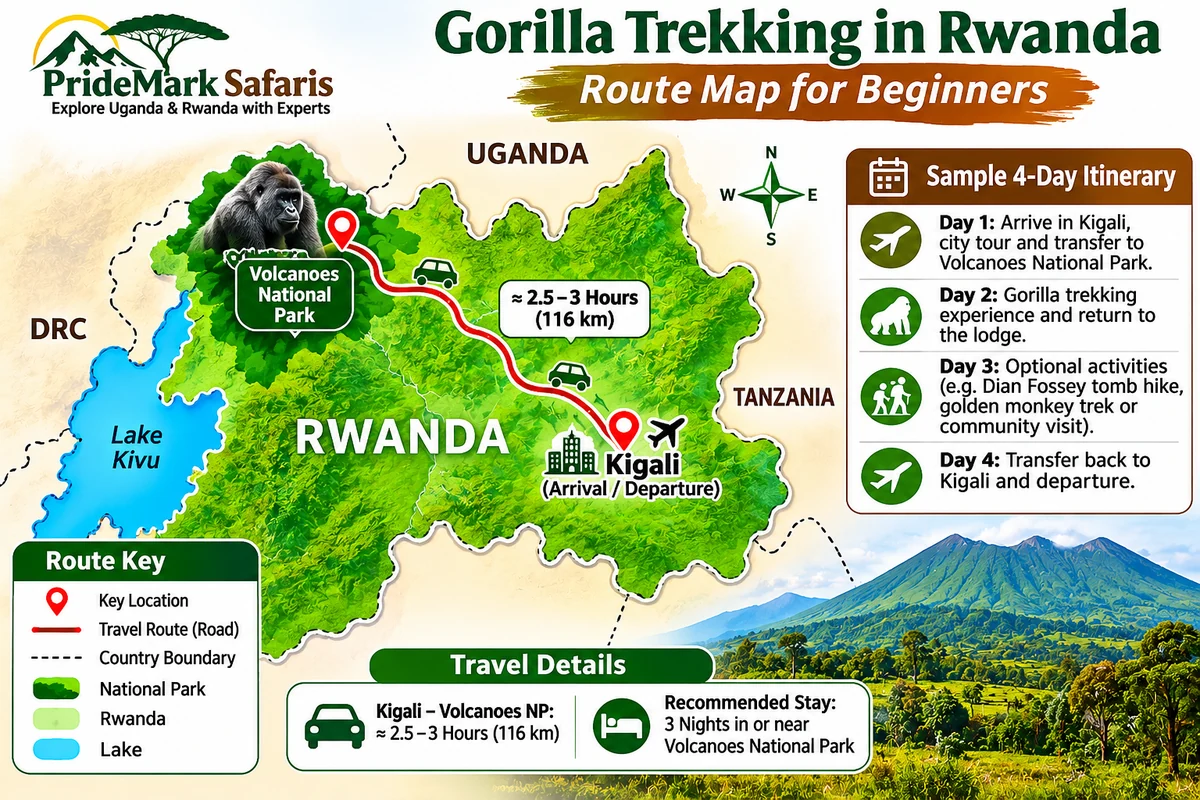
PrideMark Safaris’ illustrated route map showing the journey from Kigali to Volcanoes National Park for a mountain gorilla trekking adventure.
Frequently asked questions
Can I wear trainers for gorilla trekking in Rwanda?
Trainers may lack the grip and protection needed for wet, uneven terrain. Broken-in hiking boots with reliable traction are generally a more practical choice.
Are jeans suitable for gorilla trekking?
Jeans are not ideal because they can feel heavy and dry slowly when wet. Flexible, quick-drying long trekking trousers are usually more comfortable.
Do I need gloves?
Gloves are strongly recommended for protecting hands from rough vegetation and improving comfort when using walking sticks or steadying yourself.
What shoes should I wear during the rainy season?
Choose supportive hiking boots with grippy soles and good water resistance. Consider gaiters and bring spare dry socks for after the trek.
Should I wear bright colors?
There is no need to buy an entirely new wardrobe. Comfortable, practical clothing in subdued colors is a convenient choice for forest trekking.
Will I need a warm jacket?
A lightweight fleece is useful for cool mornings. Combine it with a breathable shirt and a waterproof shell so you can adjust layers.
Can I wear shorts?
Long trousers are preferable because they protect legs against vegetation, insects and minor scratches.
What size daypack is best?
A compact pack that comfortably holds water, rainwear and personal essentials is usually sufficient. Avoid carrying unnecessary weight.
Can I hire a porter?
Porter services are often available through local arrangements, but confirm availability, pricing and what assistance can be provided in advance.
What is the single most important item?
Well-fitting, broken-in hiking boots with dependable traction are among the most important pieces of equipment for many visitors.
Plan your Rwanda gorilla trekking safari
Knowing what to wear for gorilla trekking in Rwanda is a strong starting point, but a successful trip also depends on permits, realistic travel timing and clear expectations. PrideMark Safaris can help you plan a thoughtful itinerary that allows time for the forest experience and suitable rest. Contact our team to discuss your preferred travel dates, accommodation level and trekking needs.
For official visitor information, consult Visit Rwanda’s gorilla tracking guidance. Park rules and prices may change, so verify details when booking. Our priority is to help travelers prepare responsibly, travel comfortably and appreciate the conservation importance of Rwanda’s mountain gorillas.