Can You Touch Gorillas? 10 Essential Things to Know

What Should I Do If a Gorilla Charges at Me? 10 Vital Tips
September 21, 2026
Why Do Gorillas Beat Their Chests? 7 Amazing Secrets
September 21, 2026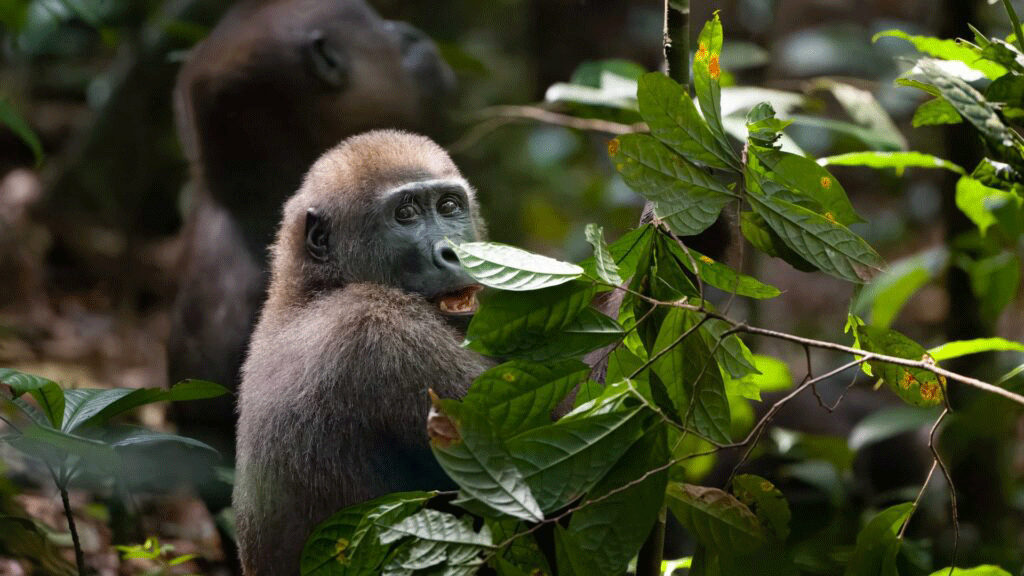
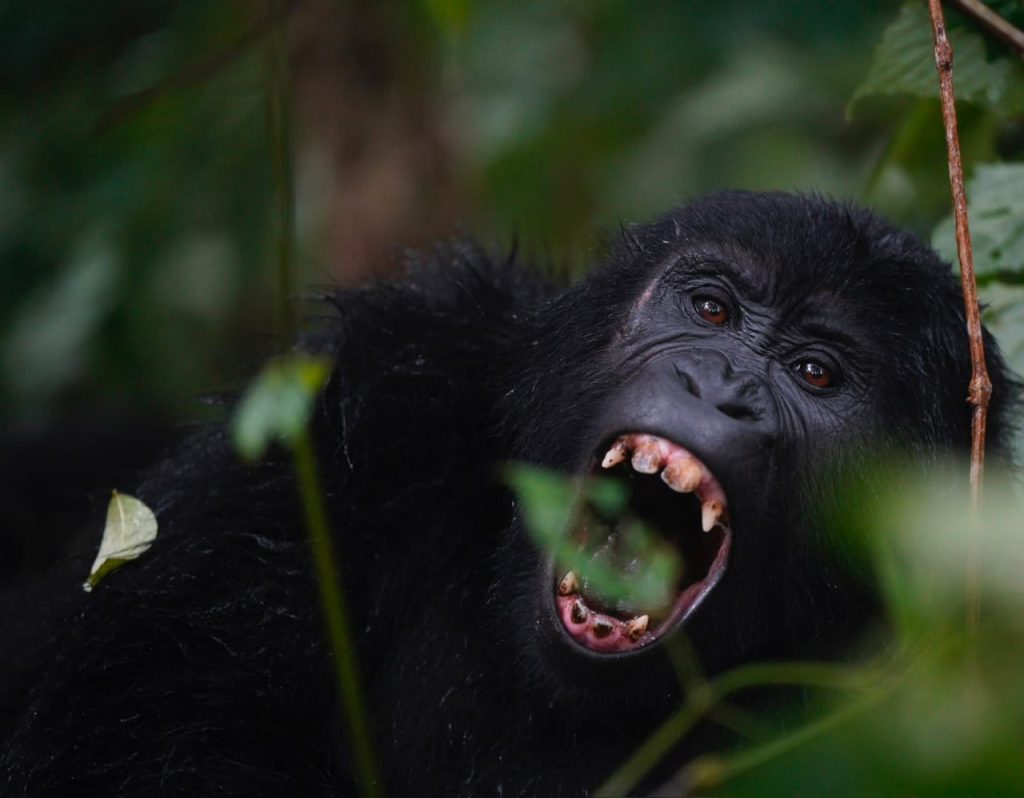
Can You Touch Gorillas? It is one of the most natural questions people ask before their first gorilla trek. After all, you may travel thousands of kilometres to stand quietly in an ancient African rainforest and suddenly find yourself much closer to a mountain gorilla than you ever imagined. A curious juvenile may move through the vegetation, a relaxed female may pass nearby, or a powerful silverback may appear just beyond the leaves. The moment can feel almost magical, but there is an important difference between being close to a gorilla and being allowed to touch one.

Visitors observing a mountain gorilla with a ranger in Bwindi Impenetrable National Park.
The simple answer: No, tourists should not deliberately touch gorillas. A gorilla may sometimes move closer to a visitor or even make unexpected contact, especially because young gorillas can be curious. If that happens, the correct response is not to reach out, stroke the animal, hold its hand or attempt a selfie. Stay calm, maintain as much distance as possible, and follow your ranger’s instructions.
Quick Facts: Can You Touch Gorillas?
Before getting into the details, here is the most important information a first-time gorilla trekker should know. Gorilla trekking is a controlled wildlife experience rather than an opportunity to interact physically with the animals. In Uganda, trekking takes place in Bwindi Impenetrable National Park and Mgahinga Gorilla National Park, where visitors are accompanied by guides and trackers and allocated to habituated gorilla families. Uganda Wildlife Authority states that gorilla treks can last approximately two to seven hours and include one hour of observation once the gorilla family has been located.
| Question | What You Should Know |
|---|---|
| Can you touch gorillas? | No. Tourists should never deliberately touch a wild mountain gorilla. |
| Can gorillas touch tourists? | A gorilla may sometimes approach a visitor unexpectedly. If it does, do not reach out or attempt contact. |
| Why is touching prohibited? | Physical contact can disturb the animal and increase the opportunity for disease transmission between humans and gorillas. |
| How far away should visitors stay? | Gorilla Doctors recommends maintaining at least 7 metres, while its health-monitoring teams commonly work at 7–10 metres or more. |
| What if a gorilla approaches? | Remain calm, do not touch it and follow your ranger’s instructions about creating distance. |
| Can I take a selfie with a gorilla? | Do not move closer or attempt physical contact for a photograph. |
| Where can I trek gorillas in Uganda? | Bwindi Impenetrable National Park and Mgahinga Gorilla National Park. |
| How long is a gorilla trek? | UWA states that treks may take approximately 2–7 hours, depending on where the gorilla family is located. |
Can You Touch Gorillas? The Clear Answer Every Tourist Should Know
Can You Touch Gorillas? No. Even though you may see photographs and videos online showing a tourist appearing to touch a gorilla, those unusual moments should not be treated as permission or as normal gorilla trekking behaviour. Gorilla Doctors specifically warns that viral videos of tourists being touched by mountain gorillas have encouraged some visitors to seek similar encounters. The organisation explains that close or direct contact is not in the best interest of gorilla conservation because disease transmission between humans and gorillas is a real concern.
The important distinction is between a visitor deliberately initiating contact and a gorilla unexpectedly coming close. Mountain gorillas are wild animals. They do not understand a tourism rule in the way a person does. A young gorilla may investigate something interesting, walk through a group of visitors or come closer than the recommended viewing distance. The visitor, however, understands the rules and is expected to behave responsibly. If the gorilla closes the distance, your job is not to create a memorable touching photograph. Your job is to avoid contact and listen to the ranger.
This is one of the most important mindset changes to make before a gorilla trek. You are not visiting a petting zoo. You are entering the natural habitat of an endangered great ape. Even habituated gorillas remain wild animals with their own social relationships, moods, movements and boundaries. Habituation means that a gorilla group has become accustomed to the presence of people under controlled circumstances. It does not turn the gorillas into domesticated animals.
What If a Gorilla Touches You First?
This is where the question becomes much more interesting. What happens if a gorilla comes toward you and makes contact before you have an opportunity to move? The first thing to understand is that you should not panic. Do not scream, push the gorilla away, grab its hand or suddenly run. Instead, remain calm and listen to your ranger. If the animal has moved within the recommended distance, your guide can determine how best to create space.
Gorilla Doctors explains that gorillas themselves do not know the 7-metre visitor rule and may sometimes approach people. Visitors are expected to make the effort to move away and avoid touching the animal. This is an important distinction because it explains why responsible gorilla trekking does not depend on the gorilla behaving like a human tourist. The animal may do something unexpected. The visitor must be prepared to respond appropriately.
If a gorilla approaches you:
Stay calm. Avoid sudden movements. Do not reach toward the gorilla. Do not attempt to stroke it. Do not hold onto it. Do not make loud noises. Listen carefully to your ranger and follow the instructions given to you.
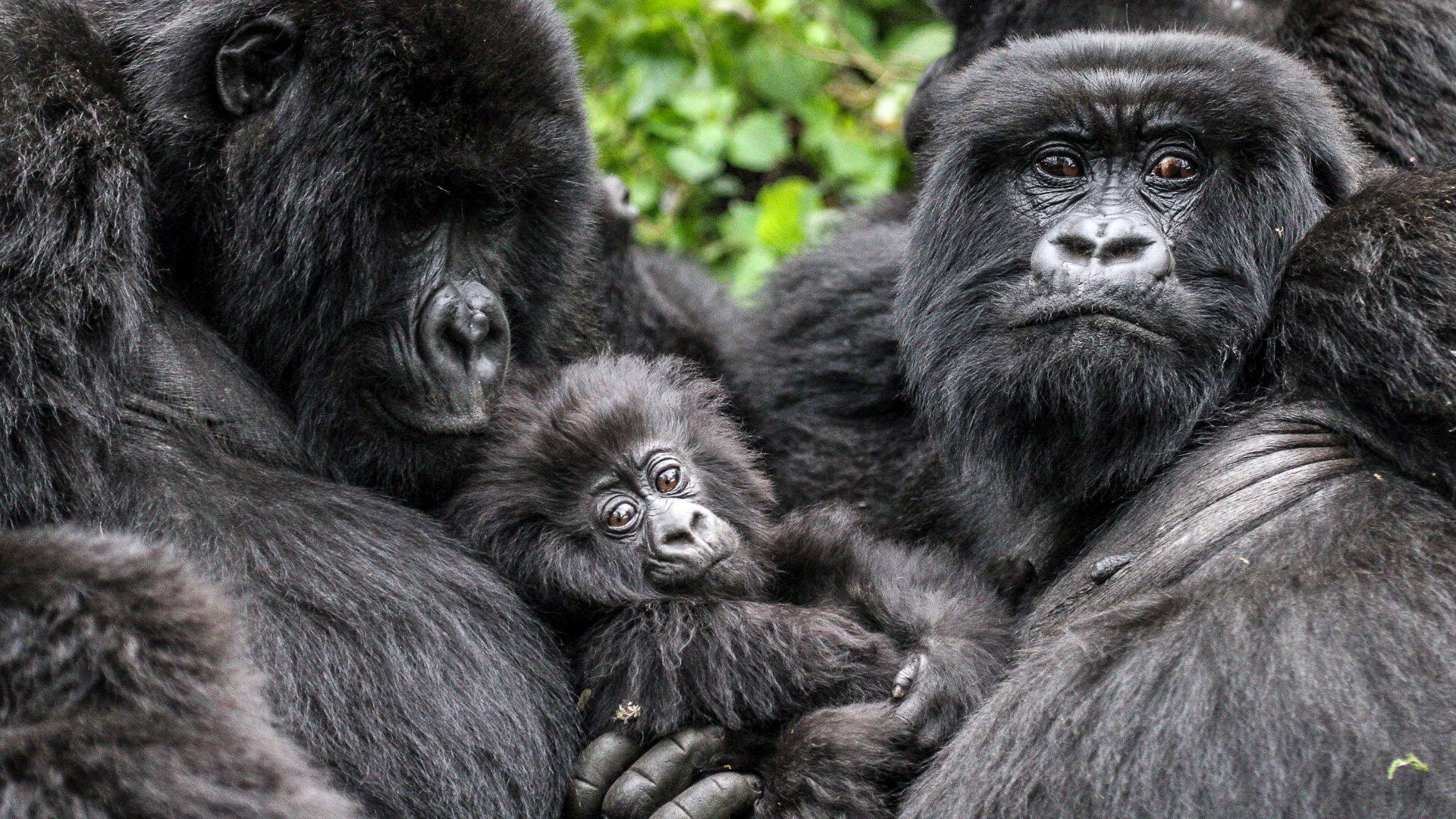
A mountain gorilla family resting together in the forest.
Why Does Distance Matter So Much During Gorilla Trekking?
One of the most important gorilla trekking rules is maintaining an appropriate distance from the animals. Gorilla Doctors has long recommended a minimum distance of seven metres between people and mountain gorillas. Its more recent health-monitoring guidance describes maintaining 10 metres during veterinary health checks. The exact operational instructions given to tourists can depend on current park protocols, so visitors should always follow the instructions issued by the ranger and park authorities on the day.
Distance is not simply about preventing a frightened tourist from getting too close to a powerful animal. It is also about protecting the gorillas themselves. Humans and gorillas are biologically similar enough that several diseases can potentially move between the two species. A person who feels perfectly healthy can still carry an infection without obvious symptoms. For a small population of endangered animals, disease transmission is therefore a serious conservation concern.
Distance also gives gorillas room to behave naturally. Imagine a family feeding quietly in the vegetation. If people continually move closer, the gorillas may stop feeding, change direction, become more alert or move away. Responsible tourism aims to allow visitors to observe the animals without turning every encounter into a human-animal interaction.
The Hidden Reason You Must Not Touch a Gorilla
When tourists hear that touching gorillas is prohibited, they sometimes assume the rule exists only because a gorilla could bite, scratch or injure somebody. Visitor safety is certainly important, but there is another side of the story that deserves much more attention: gorilla health. Mountain gorillas can be vulnerable to pathogens carried by humans, and direct or close contact can create opportunities for transmission.
Gorilla Doctors explains that gorillas are susceptible to human diseases and that tourism best practices are designed to reduce this risk. Its guidance includes maintaining distance, staying away from gorillas when sick and following health precautions. The organisation also notes that masks, when required, help reduce transmission risk but are not a complete guarantee against infection.
This is why responsible gorilla tourism is about more than your personal adventure. The person standing beside you in the forest may be thinking about getting the perfect photograph, but the bigger picture is that every visitor becomes part of the conservation environment for the duration of the trek. Your behaviour can help protect the health of an entire gorilla family.
Never trek while sick.
If you have symptoms such as coughing, sneezing, fever or another illness, tell your safari company and park staff rather than assuming you should simply continue. Current health procedures and park instructions should always be followed.
Why Are Young Gorillas Sometimes More Likely to Come Close?
Young gorillas are among the most entertaining animals you may see during a trek. They wrestle, climb, play, tumble through vegetation and investigate their surroundings. Their curiosity is part of what makes watching a gorilla family so captivating. It can also make a visitor wonder whether a youngster might come close enough to touch.
If a young gorilla moves toward you, resist the temptation to encourage the interaction. Do not hold out your hand. Do not make playful gestures. Do not move closer. The youngster may simply be investigating something, and the interaction should be allowed to end naturally. If the animal gets close, your ranger will help determine the appropriate response.
Remember that a youngster is also part of a social group. A silverback or adult female may be nearby even if you cannot immediately see them. A seemingly playful interaction can therefore change quickly if a family member becomes concerned. This is another reason why visitors should never try to create physical contact simply because a young gorilla appears friendly.
What If a Silverback Comes Very Close?
Seeing a silverback at close range can be one of the most powerful moments of a gorilla trek. The mature male may appear enormous when viewed from only a short distance, and the silver hair across his back makes him instantly recognizable. But size and appearance should never tempt you into treating the animal as a photographic prop.
If a silverback approaches, remain calm and let the ranger manage the situation. Do not stare aggressively, shout, wave your arms or deliberately move toward him. You should never try to demonstrate bravery by challenging a silverback. The best visitor behaviour is quiet, predictable and respectful.
A close encounter can still be extraordinary without physical contact. You may be able to observe the silverback’s facial expressions, body language, feeding behaviour and interactions with other members of the family. Those observations can tell you much more about gorilla society than a quick photograph of a hand touching an animal ever could.
Why Your Ranger Is More Important Than Your Camera
A good gorilla trek is not simply a walk through the forest followed by an hour of photography. The ranger and trackers are an essential part of the experience. They understand the forest, follow gorilla movements and help visitors respond appropriately when the animals change position or behaviour.
This is especially important because the visitor sees only a small part of what is happening. You may see one gorilla sitting quietly in the vegetation, while the ranger may know that another silverback is nearby. You may think the family is relaxed because everyone is feeding, while the guide may notice a subtle change in posture or vocalization. Your ranger has context that a first-time visitor does not.
For this reason, one of the best gorilla trekking safety tips is simply to listen. If the ranger tells you to stop, stop. If the ranger asks you to move backward, move slowly. If the ranger tells you to lower your voice, lower it. If the ranger tells you that the observation is over, accept the decision. Your permit gives you a managed opportunity to observe the gorillas; it does not give you unlimited access to them.
Can You Take a Photo If a Gorilla Comes Close?
Yes, photography is one of the great pleasures of gorilla trekking, but the camera should never be allowed to control your behaviour. If a gorilla approaches, do not move toward it simply because your current camera angle is not perfect. Do not step outside the position established by the ranger. Do not lie down or crawl closer to obtain a dramatic low-angle photograph unless the ranger has specifically instructed you to do so.
The best gorilla photographs often come from patience rather than proximity. Modern cameras and lenses can capture remarkable detail without the photographer physically approaching the animal. You can photograph a silverback’s face, a youngster playing, a mother carrying an infant or a family feeding in the vegetation while remaining a respectful observer.
Most importantly, put the camera down occasionally. A gorilla trek is one of those rare travel experiences where trying to photograph every second can cause you to miss the actual experience. Watch the animals. Listen to the forest. Notice the way the family moves together. Those memories often stay with travellers long after the photographs have been stored on a phone.

Mountain gorillas in their natural forest environment in Mgahinga.
Gorilla Trekking Rules Every Visitor Should Understand
The question “Can You Touch Gorillas?” is really part of a larger conversation about responsible gorilla trekking. Visitors should understand that the rules are there because tourism and conservation must work together. Uganda Wildlife Authority’s current management framework covers gorilla tracking and habituation activities and identifies the designated entry sectors in Bwindi and Mgahinga.
Visitors should remain with their official group and follow their guide. They should not attempt to track gorillas independently or leave the designated arrangements. The gorillas being visited are habituated to controlled human presence, but they remain wild animals. The distinction between habituated and domesticated is crucial throughout the entire experience.
Visitors should also avoid unnecessary noise, sudden movements and attempts to attract a gorilla’s attention. Feeding wildlife is inappropriate, and touching wildlife should never be part of the experience. If the gorilla moves away, allow it to move away. If it approaches, listen to the ranger. If the ranger asks you to change position, cooperate.
Can Touching a Gorilla Make It Aggressive?
There is no good reason for a tourist to find out. A gorilla’s reaction to unwanted contact is not something a visitor should test. Even a habituated gorilla can respond unpredictably if its personal space is invaded. The safer approach is to avoid creating the situation in the first place.
This is particularly important because tourists sometimes interpret calm behaviour as an invitation. A gorilla sitting quietly does not mean it wants to be touched. A youngster looking at a visitor does not mean it wants to play. A silverback walking past does not mean visitors can reach out. Wildlife behaviour should be observed rather than interpreted through human ideas of friendliness.
Can You Touch Gorillas for a Selfie?
No. Never move closer to a gorilla to create a selfie or attempt to touch the animal for a photograph. A selfie requires you to focus on the camera rather than the animal and can encourage visitors to forget the required distance. It can also encourage other tourists to imitate the behaviour.
A respectful gorilla photograph does not need physical contact. In fact, a photograph showing a gorilla behaving naturally in the forest can tell a much more meaningful conservation story than a photograph showing a tourist reaching toward the animal. Your goal should be to document the encounter without changing it.
Where Can You See Mountain Gorillas in Uganda?
Uganda is one of the world’s important destinations for mountain gorilla trekking. According to Uganda Wildlife Authority, gorilla trekking takes place in Bwindi Impenetrable National Park and Mgahinga Gorilla National Park. Bwindi is divided into four principal trekking sectors: Buhoma, Ruhija, Rushaga and Nkuringo. Mgahinga provides another gorilla trekking experience in the Virunga Mountains.
The choice of sector matters when planning your safari. Bwindi is a large, mountainous forest, and the different sectors have different access routes and accommodation options. Travellers should therefore plan their lodge and transport around their confirmed trekking sector rather than assuming that every Bwindi accommodation option is equally convenient.
UWA describes gorilla trekking as requiring moderate fitness because treks can take approximately two to seven hours. Terrain can be steep, muddy and uneven, so visitors should prepare appropriately. A porter can also be extremely helpful, particularly for carrying a daypack and assisting visitors on difficult sections of the trail.
Full-Length Map: Bwindi Gorilla Trekking Area
Understanding the geography makes the gorilla experience easier to imagine. Bwindi is not one simple trail. Its trekking sectors are spread around the forest, which is why accommodation location and the starting point on your permit matter when planning a Uganda gorilla safari.

Full-Length Map: Uganda’s Gorilla Region
Uganda’s gorilla destinations are located in the southwestern part of the country. This is why many Uganda safari itineraries combine gorilla trekking with other attractions such as Queen Elizabeth National Park, Kibale Forest and Lake Bunyonyi. The journey between destinations also gives visitors a chance to experience Uganda’s changing landscapes, highlands, crater areas and rural communities.

What a Real Gorilla Encounter Actually Feels Like
There is something wonderfully strange about the first few minutes after your ranger tells you that the gorillas are nearby. The forest suddenly becomes quieter. Everyone starts looking between leaves and branches. The trackers communicate softly. You may hear vegetation moving before you can see anything. Then, almost without warning, a dark shape appears between the plants.
At first, the gorilla may seem far away. Then you notice another one. Perhaps there is a female feeding nearby, a youngster playing behind a branch or a silverback sitting quietly in the vegetation. The excitement builds because the animals are not performing for you. They are simply living their lives, and you have been given a temporary window into that world.
This is why touching is unnecessary. The real magic is not physical contact. The real privilege is being accepted into the edge of their world for a short time without forcing the animals to change what they are doing. You can watch a gorilla peel vegetation, groom another family member, interact with a youngster or simply rest beneath the forest canopy.
When travellers ask, “Can You Touch Gorillas?”, what they are often really asking is whether they can experience that incredible closeness. The answer is yes, you can experience an extraordinary closeness without touching. In fact, maintaining respectful distance is part of what makes the encounter responsible and sustainable.
Why a Close Encounter Should Not Become a Physical Encounter
A close gorilla encounter can be emotional because humans and gorillas share many similarities. Their hands, facial expressions, family interactions and social behaviours can look surprisingly familiar. It is natural to feel a powerful desire to connect. But conservation requires us to turn that emotional reaction into respectful behaviour rather than physical contact.
Think about it this way: the greatest compliment you can give a wild animal is allowing it to remain wild. You do not need to touch it to prove that you appreciate it. You do not need to make it react for a video. You do not need to approach it for a photograph. You simply need to observe carefully and leave the forest without disturbing the family.
What Should You Do If a Gorilla Walks Directly Toward You?
If a gorilla begins walking toward you, stop and pay attention to your ranger. Do not assume that you should immediately sprint backward. Sudden movement can create its own problems, especially on steep forest terrain. Your ranger may ask you to move slowly, lower your gaze, change position or remain where you are depending on the circumstances.
Never reach toward the gorilla. Keep your hands to yourself. Do not offer food. Do not try to photograph the animal by stepping closer. Do not attempt to block its path. If it wants to move through the area, allow it to do so under the guidance of the ranger.
What Should You Wear for a Gorilla Trek?
Your clothing will not determine whether a gorilla touches you, but proper preparation can make the entire encounter safer and more comfortable. Bwindi is a wet montane forest environment, and conditions can change quickly. Wear sturdy hiking shoes with good grip, long trousers, a long-sleeved top, rain protection and clothing that can tolerate mud and vegetation.
Gardening gloves or similar protective gloves can also be useful for dealing with vegetation, although visitors should still follow the exact advice given by their guide. A daypack should remain manageable rather than overloaded. Water, snacks where permitted, rain protection, personal medication and camera equipment are among the things visitors commonly need.
Why Hiring a Porter Can Improve Your Gorilla Trek
Gorilla trekking can involve steep terrain, slippery sections and long periods of walking. A porter can carry your bag and provide practical assistance on difficult parts of the trail. This can allow you to concentrate more fully on the forest and the gorillas rather than worrying about a heavy backpack.
Hiring a porter can also contribute directly to the local economy around the gorilla parks. Many people living near tourism areas depend on opportunities connected to visitors. Responsible tourism therefore has a human side as well as a wildlife side. The person helping you on the trail is not simply carrying your bag; they are part of the wider community surrounding the conservation area.
Can Gorillas Recognize Individual Tourists?
Visitors sometimes wonder whether a gorilla remembers people who have visited before. Habituated gorillas are accustomed to human presence, and individual animals may show different levels of tolerance or curiosity. However, tourists should not assume that a gorilla recognizes them personally or that a previous encounter gives them permission to behave differently on a future trek.
Every visit should be treated as a fresh wildlife encounter. Follow the current instructions, maintain the recommended distance and allow the ranger to interpret the animals’ behaviour. The fact that a gorilla appeared relaxed on a previous visit does not mean that another encounter will be identical.
Frequently Asked Questions About Touching Gorillas
Can You Touch Gorillas During Gorilla Trekking?
No. Tourists should not deliberately touch mountain gorillas. The correct approach is to observe them respectfully from the recommended distance and follow the instructions of the ranger.
Can Gorillas Touch Tourists?
A gorilla may sometimes approach a tourist unexpectedly. Gorilla Doctors notes that gorillas do not understand the visitor distance rule and may come closer. If this happens, the visitor should avoid touching the animal and follow the guide’s instructions to create distance.
What If a Baby Gorilla Touches Me?
Do not encourage the interaction. Keep calm and do not touch the youngster back. Follow the ranger’s instructions and allow the animal to move away naturally.
Can I Shake a Gorilla’s Hand?
No. Even if a gorilla appears to extend its hand or move close enough for contact, do not intentionally shake its hand. Physical contact is not part of responsible gorilla tourism.
Can I Hug a Gorilla?
Absolutely not. Do not hug, hold, stroke or embrace a gorilla. These actions create unnecessary physical contact and can disturb the animal or increase disease-transmission risks.
Can I Touch a Gorilla’s Baby?
No. Never attempt to touch a gorilla infant. The infant is part of a family group and should be left completely undisturbed.
Why Can’t Tourists Touch Gorillas?
The main reasons are conservation, animal welfare, disease prevention and visitor safety. Gorillas are susceptible to human diseases, while physical contact can also create unpredictable wildlife interactions.
What If a Gorilla Comes Within 7 Metres?
Do not panic. Gorillas can move closer on their own. Avoid touching the animal and follow your ranger’s instructions about moving away or repositioning. The responsibility for maintaining distance rests with the visitor as far as reasonably possible.
Are Gorillas Dangerous to Tourists?
Mountain gorillas are powerful wild animals and should always be treated with respect. Gorilla trekking is nevertheless a managed activity involving guides, trackers, designated trekking areas and rules intended to reduce risks to both visitors and gorillas.
Where Can I See Gorillas in Uganda?
Uganda Wildlife Authority identifies Bwindi Impenetrable National Park and Mgahinga Gorilla National Park as Uganda’s gorilla trekking destinations. Bwindi has four principal sectors: Buhoma, Ruhija, Rushaga and Nkuringo.
How Long Does Gorilla Trekking Take?
UWA states that gorilla trekking may take approximately two to seven hours depending on the location of the gorilla family and the conditions of the trek. Visitors receive one hour of observation once the habituated family has been located.
The Most Important Lesson: Let the Gorilla Stay Wild
Can You Touch Gorillas? The answer is no, but there is a much more beautiful idea behind that simple rule. You do not need to touch a gorilla to experience a deep connection with the animal. You can sit quietly in the forest and watch a family interact. You can watch a youngster play beneath the trees. You can see a silverback move through the vegetation. You can hear the soft sounds of the forest around you and realize that, for a short moment, you are witnessing a completely wild world.
If a gorilla approaches you, respect the encounter without trying to control it. If a gorilla looks at you, appreciate the moment without moving closer. If a youngster comes near, let it continue on its way. If your ranger gives an instruction, follow it immediately. And if you leave the forest without ever touching a gorilla, that does not mean you missed the experience.
Quite the opposite. You have experienced gorilla trekking in the way it is intended: as a respectful meeting between humans and wildlife where the animal remains free to behave naturally. That is the kind of encounter worth remembering, photographing and sharing.
Ready to Experience Uganda’s Mountain Gorillas?
Plan your Bwindi or Mgahinga gorilla trekking adventure with PrideMark Safaris. We can help arrange gorilla permits, accommodation, transport, guides and a complete Uganda safari itinerary.