What Happens to Gorillas After Tourists Leave? The Hidden Side of Gorilla Tourism
Discover what mountain gorillas do after the trekking groups disappear into the forest — from feeding and resting to family life, conservation and the realities behind responsible gorilla tourism in Uganda.
Have you ever wondered what happens to gorillas after tourists leave? During a gorilla trekking experience in Uganda, visitors usually spend only a short period observing a habituated gorilla family. Then the ranger signals that it is time to leave, the group walks back through the forest, and the gorillas are once again surrounded by the sounds of Bwindi or Mgahinga.
But what happens next?
The answer is fascinating. The gorillas simply continue living their lives. They feed, rest, groom one another, play, travel through the forest, protect their family and care for their young. In other words, the hour visitors spend with them is only a tiny window into a much larger daily existence.

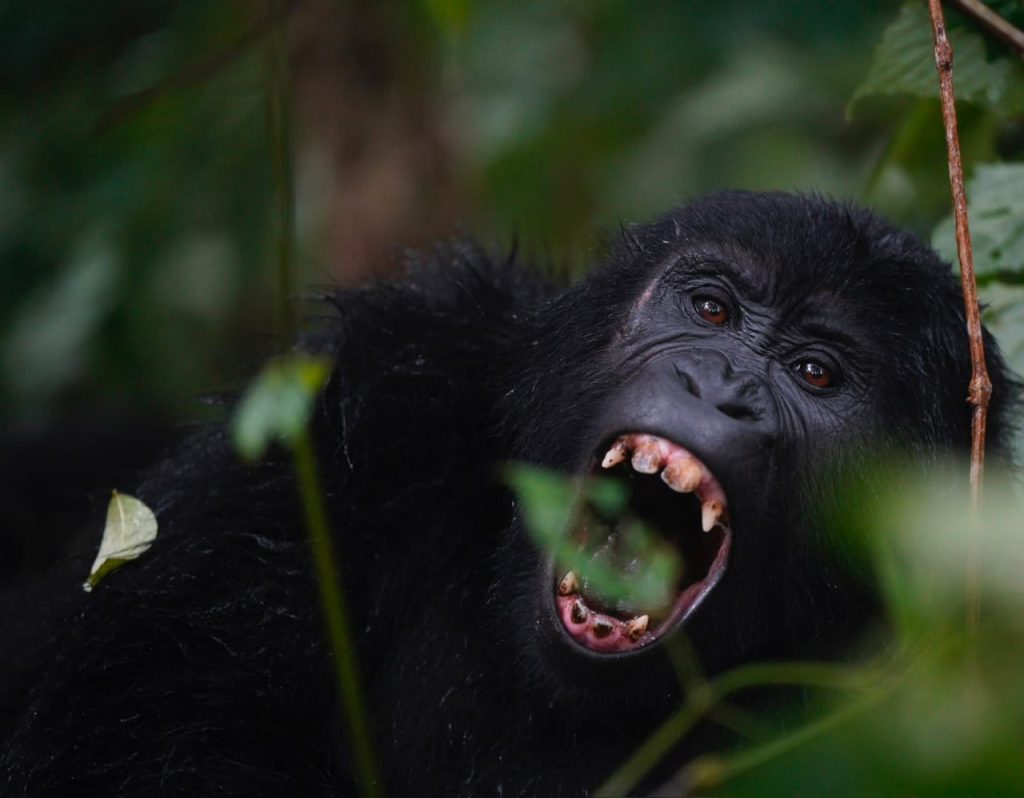
A mountain gorilla in the dense forests of Bwindi, Uganda.
Mountain Gorilla Tourism: Quick Facts
Standard observation time with a habituated gorilla family
Minimum distance required under current UWA gorilla tracking rules
Approximate total duration of many Uganda gorilla treks
Bwindi and Mgahinga offer gorilla trekking in Uganda
Table of Contents
What Do Gorillas Do After Tourists Leave?
One of the biggest misconceptions about gorilla trekking is that the gorillas spend their entire day waiting for visitors. They do not. Mountain gorillas are wild animals with complex social lives and natural routines that existed long before modern tourism.
Once a trekking group leaves, the gorilla family continues moving through its habitat. Depending on the time of day, the animals may feed on leaves and shoots, rest beneath vegetation, groom each other, interact with juveniles or move towards another feeding area.
This is one reason responsible gorilla tourism is so important. The goal is not to turn gorillas into performers. Visitors are guests in their environment.
They Return to Feeding
Food takes up a significant part of a mountain gorilla’s daily routine. Their forest environment provides leaves, shoots, stems, flowers, fruits and other vegetation. A gorilla family may move gradually through the forest while feeding, especially when food availability changes.
After visitors leave, a silverback may lead the family towards another feeding area while mothers continue caring for infants and juveniles explore their surroundings.
This normal behaviour is an important reminder that a gorilla trekking encounter is not a wildlife show. You are observing an animal while it is doing something it would naturally do whether humans were watching or not.

Mountain gorillas continue their natural activities after visitors leave the forest.
Gorilla Family Life Continues
Perhaps the most fascinating part of the hidden side of gorilla tourism is what happens socially. Mountain gorillas live in family groups where relationships matter enormously.
The dominant silverback provides leadership and protection. Females care for infants, while young gorillas spend considerable time playing, climbing, exploring and learning social behaviour. Older juveniles interact with younger members and gradually develop the skills they will need as adults.
Grooming is also an important social behaviour. These quiet interactions help reinforce relationships within the group. When tourists leave, the gorillas continue communicating through body movements, facial expressions, vocalisations and physical contact.
If you want to understand these behaviours in greater detail, read our guide on how mountain gorillas communicate.
They Rest, Move and Sleep
Gorilla life is not constant activity. Rest is an important part of the day. After feeding and travelling, members of the group may settle down in a quiet part of the forest.
Depending on their location and daily movements, they may remain in one area for some time before continuing. The forest provides cover, food and places to rest.
As evening approaches, gorillas eventually settle into sleeping sites. These may be constructed using vegetation, creating a relatively comfortable resting place for the night.
The Hidden Conservation Story Behind Gorilla Tourism
There is another answer to the question “what happens to gorillas after tourists leave?” — conservation work continues.
While visitors return to their lodges, guides and rangers continue monitoring the forest and protecting wildlife. Gorilla conservation involves much more than the hour spent watching a family. It includes habitat protection, monitoring, veterinary support, law enforcement, research and community engagement.
Uganda’s conservation journey has produced remarkable results. According to Uganda Wildlife Authority, the 2018 Bwindi census recorded 459 mountain gorillas, compared with historically much lower numbers in earlier decades. UWA says the recovery has been built through sustained protection, research, tourism and community participation.
Tourism therefore has a much larger role than simply giving travellers an unforgettable experience. When properly managed, it creates an economic reason to protect forests and wildlife while supporting livelihoods around protected areas.
Why Responsible Gorilla Tourism Matters
Gorillas are closely related to humans, which makes responsible behaviour especially important. Human illnesses can potentially threaten habituated gorillas, which is why visitors are expected to follow strict health and distance rules.
Uganda Wildlife Authority regulations state that visitors should maintain the required distance from gorillas, avoid visiting when suffering from infectious illness, avoid eating and drinking around the animals and follow ranger instructions.
| Responsible Behaviour | Why It Matters |
|---|---|
| Keep the required distance | Reduces stress and limits opportunities for disease transmission. |
| Do not visit when sick | Mountain gorillas can be vulnerable to human respiratory illnesses. |
| Follow your ranger’s instructions | Rangers understand gorilla behaviour and help protect both visitors and wildlife. |
| Do not litter | Keeps the forest ecosystem clean and protects wildlife. |
| Keep voices low | Allows visitors to observe natural behaviour without unnecessary disturbance. |
Do Gorillas Miss Tourists After They Leave?
This is a question many travellers ask after an emotional encounter. The honest answer is that we should not interpret gorilla behaviour using human emotions too easily.
Habituated gorillas have become accustomed to the presence of carefully managed human visitors, but that does not mean they depend on tourists for food, entertainment or companionship.
The best interpretation is simpler: tourists leave, and the gorillas continue living their natural lives.
That is actually one of the most beautiful aspects of gorilla trekking. You are not visiting a zoo. You are briefly entering a living ecosystem, witnessing a family and then leaving them to continue their lives.
What Tourists Can Learn From This
The hidden side of gorilla tourism teaches an important lesson: the best wildlife encounter is one where the animal’s needs come first.
Visitors should arrive with curiosity rather than expectations that the gorillas will perform. A silverback may stare at you. A juvenile may play nearby. A mother may ignore you completely. Another gorilla may disappear into thick vegetation.
All of these are natural outcomes.
If you are planning your first encounter, our Bwindi Gorilla Trekking Guide explains trekking sectors, permits, preparation, accommodation and practical planning.
Gorilla Tourism Is About More Than the Photograph
A photograph may be the memory you take home, but the real story continues after your camera is packed away.
Behind every gorilla encounter are rangers walking forest trails, researchers monitoring individual animals, communities living around protected areas and conservation organisations working to protect the habitat.
That is the hidden side of gorilla tourism.
When you trek responsibly, you are not simply purchasing an hour with a gorilla family. You are participating in a tourism model that can help make conservation economically meaningful while giving communities an incentive to protect the forests surrounding them.
For travellers who want to combine gorillas with other wildlife experiences, PrideMark Safaris also offers Uganda safari packages combining primates, wildlife, landscapes and cultural experiences.
Ready to Discover Uganda’s Mountain Gorillas?
Experience the forests of Bwindi or Mgahinga with PrideMark Safaris and discover the fascinating world that exists beyond the one hour spent with a gorilla family.
We can help you plan permits, accommodation, transport and a complete Uganda gorilla safari around your travel dates and budget.