
Uganda Safari Cost for 5 Days: Complete 2027/2028 Price and Planning Guide
Understanding the Uganda safari cost for 5 days is the first step toward planning a rewarding African wildlife holiday without unexpected expenses. Five days can be enough to experience mountain gorillas, explore open savannahs, enjoy a boat safari and discover some of Uganda’s remarkable landscapes. However, the actual cost depends on the experiences you select and how your itinerary is organized.
A carefully planned five-day safari can offer exceptional value, whether you prefer a budget-friendly wildlife journey, a comfortable mid-range holiday or a luxury gorilla trekking experience. The important thing is understanding where your money goes and what your quotation includes.
At PrideMark Safaris, we help travelers compare practical routes, accommodation options, permit requirements and transport arrangements before choosing an itinerary.
Request My 5-Day Safari Quote Explore Affordable Uganda SafarisHow Much Does a 5-Day Uganda Safari Cost?
Quick answer: The cost of a five-day Uganda safari depends on whether the trip includes gorilla trekking, the number of travelers sharing transport, accommodation category, travel dates and activities. A wildlife-only itinerary may cost considerably less than a gorilla and wildlife safari because the gorilla permit is a major additional expense.
For example, the standard Uganda gorilla trekking permit announced for foreign non-residents in 2027 is US$800 per person. Two international travelers who both want to trek gorillas must therefore allow US$1,600 for their two permits before adding private transport, accommodation and other activities.
This cost is set by the Uganda Wildlife Authority, not independently by safari operators. The applicable tariff and permit availability must be verified for the actual travel dates.
However, a five-day safari does not automatically have to include gorillas. Travelers whose main interest is seeing elephants, lions, buffaloes, hippos and antelopes can build a wildlife-focused journey around Queen Elizabeth, Murchison Falls or Lake Mburo National Park.
These itineraries may offer a lower overall cost because they do not require the same expensive primate permits.
A useful starting point is our complete Uganda safari cost guide, which explains the broader budgeting decisions involved in planning a private safari.
Six Important Things to Know Before Comparing Prices
1. Permits Matter
Mountain gorilla trekking can represent a substantial share of the safari budget. Check that the permit is included.
2. Group Size Matters
Two or more travelers sharing a vehicle can normally reduce the cost per person compared with a solo private safari.
3. Accommodation Matters
Budget, mid-range and luxury lodges have very different rates, meal plans and room arrangements.
4. Your Route Matters
Long driving distances, additional parks and unnecessary transfers can increase fuel and vehicle costs.
5. Activities Matter
Game drives, boat cruises, chimpanzee tracking and nature walks may carry different charges.
6. Inclusions Matter
A low advertised price is not necessarily good value if park entry, meals, permits or airport transfers are excluded.
There is no responsible way to offer one fixed five-day safari price that applies to every traveler. A honeymoon couple choosing a luxury rainforest lodge will have a different budget from two friends sharing a comfortable mid-range room. Similarly, a five-day gorilla safari will have a different cost structure from a five-day wildlife and boat safari.
The most useful approach is to request a dated, itemized quotation showing the entire cost for your particular itinerary. PrideMark can prepare alternative options that make the differences easy to understand.
Compare My Safari Budget OptionsUganda Safari Cost for 5 Days: Complete Breakdown of Expenses
A five-day safari is made up of several different services. Some costs apply to the whole traveling group, while others are charged individually. Understanding that difference helps you evaluate whether a quotation is reasonably priced.
For example, a private safari vehicle normally has a combined operating cost covering the vehicle, driver-guide and fuel. Two travelers can share that cost. A gorilla permit, however, is issued for one eligible participant and cannot simply be shared between travelers.
| Cost Category | What It Covers | How It Affects the Total |
|---|---|---|
| Safari vehicle | Vehicle use, operational expenses and agreed transport services | Usually shared between travelers |
| Fuel | Road journeys, transfers and game-drive distances | Depends on the route and itinerary |
| Driver-guide | Driving, guiding and daily safari coordination | Normally built into the tour quotation |
| Accommodation | Four nights in the selected lodges | Depends on room type, location and lodge category |
| Meals | Breakfast, lunch and dinner as specified | Depends on the meal plan |
| Gorilla permit | One regulated standard gorilla trekking experience | Charged individually if included |
| Park entrance | Access to designated national parks | Depends on the parks and entry periods |
| Boat cruises | Scheduled water-based wildlife experiences | May be included or optional |
| Community activities | Guided cultural or community experiences | Check if an additional fee applies |
| Administration | Reservations, operational planning and supplier coordination | Included in the operator’s final package price |
| Personal expenses | Tips, laundry, drinks, souvenirs and extras | Usually paid by the traveler |
Why the Full Package Price Is More Important Than the Daily Rate
Some travelers begin by dividing a safari quotation by five days. This produces a useful comparison figure, but it does not show what has been included.
A five-day safari that includes an US$800 gorilla permit may have a significantly higher average daily cost than one that concentrates on game drives. This does not necessarily mean the operator’s accommodation or transport is more expensive. It may simply reflect the cost of the regulated wildlife experience.
Similarly, an operator offering five nights of accommodation instead of four nights is providing something different from a five-day, four-night itinerary.
When comparing proposals, start by checking that both itineraries have the same number of accommodation nights, the same visitor categories, similar lodges, equivalent transport and the same permits.
Our Uganda safari for US$2,000 planning guide provides additional ideas for understanding what a defined travel budget may offer.
Request a Detailed Cost BreakdownExample: Calculating the Cost of a 5-Day Gorilla and Wildlife Safari
A practical example can make safari pricing much easier to understand. The following calculation illustrates a private road safari for two foreign non-resident adults sharing one room.
The assumed journey includes four nights of accommodation, a private safari vehicle, gorilla trekking in Bwindi, activities in Queen Elizabeth National Park and scheduled road transfers.
| Expense | Illustrative Group Cost |
|---|---|
| Two standard gorilla permits at US$800 each | US$1,600 |
| Four nights in a shared room at US$225 per night, with assumed meals | US$900 |
| Private vehicle, driver-guide and fuel at an assumed US$240 per day | US$1,200 |
| Combined allowance for park entry and scheduled wildlife activities | US$250 |
| Drinking water allowance | US$40 |
| Illustrative operational and contingency allowance | US$260 |
| Total for Two Travelers | US$4,250 |
| Illustrative Cost Per Person Sharing | US$2,125 |
This example shows why a five-day safari with gorilla trekking may require a substantial budget even when accommodation is not luxurious.
The two gorilla permits alone account for US$1,600 of the example’s US$4,250 combined cost. The vehicle and accommodation account for another large share.
A traveler attempting to reduce the price should therefore ask which components can be adjusted without affecting the main purpose of the safari.
How Could the Example Become Less Expensive?
One possibility is choosing a lower-priced lodge that remains conveniently located for the intended activities. Another is traveling with more people who can share vehicle costs.
A third option may be adjusting the dates to a period when suitable accommodation offers better value. However, visitors must confirm the actual permit rate applicable to those dates.
Removing the gorilla experience would also reduce the cost substantially, but it would create a different type of holiday.
The objective should not be to remove the most meaningful activity just to achieve a particular headline price. It should be to understand your priorities and reduce expenses that do not improve the experience.
Why This Calculation Is Not a Fixed Safari Price
Real quotations are influenced by the availability of particular lodges, vehicle requirements, fuel costs, the number of paying passengers and actual supplier rates.
A luxury lodge can cost significantly more than the accommodation allowance used above. A shorter route may require less fuel than a journey with several long transfers. Different room occupancy arrangements can also change the calculation.
For a reliable final figure, provide your travel dates, number of guests, preferred lodge category and desired activities to PrideMark Safaris.
How Gorilla Trekking Changes the Cost of a 5-Day Uganda Safari
Gorilla trekking is one of Uganda’s most distinctive wildlife experiences, but it is also one of the most important items in a short safari budget.
The mountain gorillas live in protected habitat in Bwindi Impenetrable National Park and Mgahinga Gorilla National Park. Access is regulated by the Uganda Wildlife Authority, which issues permits according to official visitor categories and available trekking arrangements.
The UWA tariff notice dated 26 February 2026 announced the following standard gorilla tracking rates effective from 1 January 2027.
| Visitor Category | Standard Gorilla Permit |
|---|---|
| Foreign non-resident | US$800 |
| Foreign resident | US$700 |
| Rest of Africa category | US$500 |
| East African Community citizen | UGX 300,000 |
Eligibility is determined by official documentation and UWA requirements. The applicable rate must be confirmed when making a booking.
Are Discounted Gorilla Permits Available?
UWA introduced low-season rates for April, May and November, including US$600 for foreign non-residents and US$500 for foreign residents. The notice also states that low-season permits cannot be rescheduled.
Travelers considering these months should ask whether the published discount applies to the exact trekking date being requested, particularly for future travel years.
What Does the Gorilla Permit Cover?
The standard trekking permit provides access to a regulated gorilla trekking experience, with authorized park personnel and up to one hour observing a habituated gorilla family.
It is not a complete safari package. A permit alone does not include all accommodation, road transfers, personal expenses or other excursions.
Your safari quotation should clearly identify whether the gorilla permit is included in the package total.
Why Gorilla Permit Availability Matters Before Booking a Lodge
Bwindi has several trekking sectors: Buhoma, Ruhija, Rushaga and Nkuringo. The sector attached to your permit has practical consequences for where you should sleep.
Choosing accommodation in one section of Bwindi without checking your trekking location can result in an unnecessarily long early morning road journey.
To understand the destination, explore our Bwindi Impenetrable National Park guide. You can also read official protected-area information from UNESCO’s Bwindi World Heritage listing.
Is Gorilla Trekking Worth Including in a Five-Day Safari?
For travelers whose primary reason for visiting Uganda is to see mountain gorillas, it can be the central experience around which the rest of the itinerary is organized.
However, adding gorillas should not force every other day into an uncomfortable travel schedule. A good five-day itinerary allows time to reach the trekking area, rest before the activity and return without unnecessary pressure.
Check Gorilla Permit AvailabilityBest 5-Day Uganda Safari Routes for Different Budgets
The route is one of the most important decisions when planning a short safari. Uganda’s wildlife destinations are spread across different regions, so a five-day holiday works best when it concentrates on a manageable geographic area.
Trying to visit too many parks can increase fuel expenses, reduce time for actual activities and leave travelers spending most of their holiday inside a vehicle.
For a more detailed look at trip duration, see how many days you need for a Uganda safari.
Route 1: Queen Elizabeth National Park and Bwindi
Best for: Travelers who want gorilla trekking and savannah wildlife in the same five-day journey.
A suitable route may begin in Entebbe or Kampala, continue to Queen Elizabeth, then move south toward Bwindi before returning to Entebbe.
The main experiences can include game drives, a Kazinga Channel boat cruise and one gorilla trek.
This is a compelling combination because Queen Elizabeth and Bwindi offer dramatically different habitats. One day you may be watching elephants and Uganda kob in open country; another day you may be walking through dense mountain rainforest.
Explore PrideMark’s 5-Day Gorilla and Game Safari Adventure for an existing itinerary that combines these experiences.
Route 2: Murchison Falls and Kibale Forest
Best for: Travelers interested in game drives, the Nile and chimpanzee tracking.
This type of itinerary combines savannah wildlife with a tropical forest primate experience. Murchison Falls offers open landscapes, river wildlife and dramatic scenery, while Kibale is known for its chimpanzee tracking opportunities.
The distances require careful planning. A five-day itinerary should clearly show the transfer between destinations and leave enough time for the scheduled activities.
Travelers can review the 5-Day Murchison Falls and Kibale Forest Safari and request a date-specific quotation.
Route 3: Queen Elizabeth and Lake Mburo
Best for: Visitors who want a wildlife-focused safari without a gorilla permit.
Queen Elizabeth offers game viewing and water-based wildlife experiences, while Lake Mburo provides a different savannah setting with species such as zebras, impalas and elands.
Depending on the arrangements, Lake Mburo may also offer guided walking activities and boat experiences. These should be organized according to official rules and current availability.
This route can suit travelers who want more time for game drives rather than dedicating part of their short holiday to gorilla trekking.
Read about Lake Mburo National Park and its wildlife attractions.
Route 4: Bwindi and Mgahinga From Kigali
Best for: Visitors arriving in Kigali who want to prioritize mountain gorillas and the southwestern highlands.
Kigali can provide a practical starting point for parts of southwestern Uganda, although cross-border travel requires appropriate documents and careful scheduling.
A five-day itinerary may include standard gorilla trekking in Bwindi or Mgahinga, golden monkey tracking where available, and additional time enjoying the surrounding landscapes.
The itinerary should be based on confirmed permits rather than an assumption that activities can be booked at any time.
Travelers considering this route should compare overall transport costs, border requirements and accommodation with the equivalent Entebbe departure.
Which Route Offers the Best Value?
The answer depends on your wildlife priorities. A traveler who dreams of mountain gorillas may find the Queen Elizabeth and Bwindi combination most rewarding, even though the permit increases the cost.
A visitor who wants long game drives, boat cruises and savannah photography may prefer a wildlife-focused route that uses the budget differently.
The most effective way to compare these possibilities is to request two itineraries using the same travel dates, group size and accommodation category.
Help Me Choose the Best 5-Day RouteSample 5-Day Uganda Gorilla and Wildlife Safari Itinerary
The following itinerary demonstrates how five days can be organized around two major destinations: Queen Elizabeth National Park and Bwindi Impenetrable National Park.
It follows a logical sequence of road travel, savannah wildlife activities and gorilla trekking. Actual timings and accommodation locations should be confirmed for the selected travel dates.
Day 1: Entebbe or Kampala to Queen Elizabeth National Park
Your Uganda safari begins with pickup from your agreed location in Entebbe or Kampala. After meeting your driver-guide and reviewing the itinerary, begin the road journey toward western Uganda.
The route passes through changing rural landscapes, towns, farmland and hills. You may notice the transition from busy urban surroundings to quieter countryside as you travel west.
Arrival time depends on your starting location, departure time, road conditions and planned stops.
After reaching the Queen Elizabeth area, check into your accommodation and enjoy dinner. An additional wildlife activity should only be included if there is sufficient daylight and the confirmed schedule allows it.
Accommodation: Selected budget, mid-range or luxury lodge near Queen Elizabeth National Park.
Day 2: Morning Game Drive and Kazinga Channel Boat Cruise
Begin the day with an early game drive in an appropriate section of Queen Elizabeth National Park.
The park’s savannah habitats support elephants, buffaloes, Uganda kob, waterbuck, warthogs, lions and other wildlife. Leopards may also be encountered, although sightings are never guaranteed.
The morning is particularly attractive for photography because temperatures may be cooler and the light can be softer.
After returning from the game drive, enjoy lunch and prepare for the scheduled boat cruise on the Kazinga Channel.
The waterway links Lakes George and Edward and provides opportunities to observe hippos, birds, crocodiles and large mammals along the shoreline.
Because the boat experience offers a different perspective from a vehicle, it can add considerable variety to a short wildlife itinerary.
Read more about the park through our Queen Elizabeth National Park destination guide.
Day 3: Transfer From Queen Elizabeth to Bwindi
After breakfast, continue south toward Bwindi Impenetrable National Park.
The journey passes through changing landscapes, from savannah and agricultural areas to the increasingly green highlands of southwestern Uganda.
The chosen road should match your actual Bwindi trekking sector. A journey toward Buhoma may differ considerably from a transfer to Rushaga or Nkuringo.
If Ishasha is included, the guide can explain the wildlife viewing possibilities and the time available for a game drive. Tree-climbing lions are a notable attraction, but sightings are not guaranteed.
Arrive at your selected lodge with time to relax, organize your trekking equipment and prepare for the next morning.
A good night’s rest is valuable because gorilla trekking can involve several hours of walking.
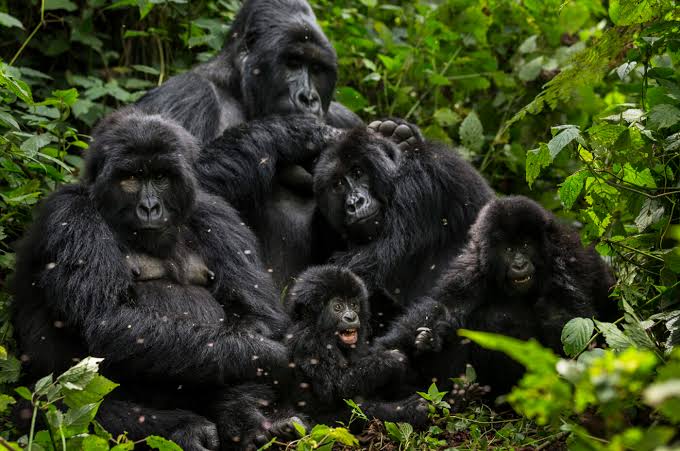
Day 4: Gorilla Trekking in Bwindi
Today is the main primate experience of your safari. After an early breakfast, travel to the designated briefing point for your assigned trekking sector.
Park officials provide information about gorilla trekking rules, safety and visitor conduct.
You then enter the forest with authorized personnel to search for your assigned habituated gorilla family.
The length and difficulty of the walk can vary. Some routes involve steep paths, muddy ground and dense vegetation.
Once the group is located, standard trekking visitors may spend up to one hour observing the gorillas. The encounter takes place under the supervision of park personnel.
After returning from the forest, you may spend the remainder of the day resting at your lodge.
An optional cultural experience may be included when practical, but it should not be promised without considering the trekking duration and visitor’s energy level.
Day 5: Return to Entebbe or Kampala
After breakfast, depart Bwindi and begin the return journey toward Kampala or Entebbe.
This is normally a substantial travel day, particularly when using road transport. The exact duration depends on the trekking sector, road conditions and stops.
For international travelers, flight departure times should be checked carefully. An evening international flight may be feasible with suitable planning, but a comfortable buffer is essential.
Travelers with early flights should consider arranging an additional night in Entebbe rather than depending on a long same-day road transfer.
This sample itinerary demonstrates why a five-day safari should not be overloaded with additional distant destinations. Its strength lies in offering time for both a classic wildlife park and a meaningful gorilla experience.
Customize This 5-Day SafariAccommodation Costs on a Five-Day Uganda Safari
Accommodation is one of the largest adjustable elements in a five-day safari budget. Uganda offers everything from simple guesthouses and safari camps to comfortable lodges and high-end luxury properties.
The appropriate choice depends on how much comfort you expect, the activities you are undertaking and the amount of your budget you want to reserve for wildlife.
Budget Accommodation
Budget lodges and camps can suit travelers who care more about visiting the national parks than spending time at a luxury property.
A well-chosen budget lodge should still provide acceptable cleanliness, safe accommodation and clear meal arrangements.
However, the facilities may be simpler. Some rooms may have fewer amenities, while certain properties may use more basic construction or shared facilities.
The lowest advertised room rate should not automatically determine your choice. Location is particularly important around Bwindi.
Mid-Range Accommodation
Mid-range accommodation often offers a practical balance between comfort and cost.
Travelers may enjoy private bathrooms, comfortable bedding, good meals and attractive surroundings without paying premium luxury rates.
For many couples and first-time safari travelers, this category is a sensible starting point.
A mid-range lodge near the correct gorilla briefing point can be especially valuable because it helps reduce unnecessary early morning transfers.
Luxury Accommodation
Luxury safari lodges may provide larger rooms, more extensive amenities, high levels of service, private views and distinctive architectural settings.
Some properties offer excellent forest or savannah views that become part of the holiday.
However, luxury accommodation does not mean that the mountain gorillas will be easier to locate or that a safari vehicle will see more lions.
The wildlife experiences remain subject to natural conditions and park regulations.
Why Lodge Location Can Be More Important Than the Room Rate
Consider two accommodation options with different prices. One is close to the planned activity; the other is considerably farther away.
The cheaper lodge may appear attractive, but additional driving, fuel use and time can reduce the saving.
For gorilla trekking, staying close to the correct sector can also mean a less stressful morning.
A professionally prepared quotation should therefore identify the actual accommodation name, room type and meal basis.
If a lodge is described only as “similar accommodation,” ask which alternatives may be used and whether the price changes.
Understanding Full Board, Half Board and Bed and Breakfast
Full board normally means accommodation with breakfast, lunch and dinner. Half board commonly means breakfast and one main meal, while bed and breakfast covers the room and morning meal.
However, travel-day arrangements may differ from full nights at the lodge. For example, Day 1 may include lunch and dinner, while departure Day 5 may include breakfast only.
The itinerary should state the exact meal arrangements for each day. This avoids confusion about meals during long road transfers.
Compare Budget and Luxury LodgesTransport, Fuel and Safari Guide Costs
Transport is another significant factor in the Uganda safari cost for 5 days.
Unlike a city holiday, a wildlife safari frequently involves long-distance road travel, national park roads, early departures and multiple transfers.
A private safari vehicle may be used for the entire trip, including travel between the airport, accommodation and national parks.
Why Private Transport Costs More for Solo Travelers
A vehicle has operating costs whether it carries one guest or several paying travelers.
If a solo traveler books a private vehicle and guide, there is nobody else sharing those fixed expenses.
Two travelers sharing the same vehicle divide the transport cost between them. A small private group may reduce the cost per person even further.
However, the group must still fit comfortably inside the selected vehicle. A crowded safari vehicle is not necessarily good value.
What Should Be Included in the Vehicle Cost?
- Agreed use of the safari vehicle
- Fuel for the scheduled route
- Driver-guide services
- Relevant driver expenses
- Scheduled transfers
- Vehicle maintenance and operational arrangements
- Game drives specifically included in the itinerary
These items are commonly combined into one transport charge. A quotation does not always show them individually, but it should make clear what the service covers.
Does a Safari Vehicle Need Four-Wheel Drive?
Four-wheel-drive vehicles are commonly used for Uganda wildlife safaris because some national park roads and rural access routes can be rough or muddy.
The most suitable vehicle depends on the route, time of year and group size.
A vehicle with a pop-up roof can be useful for wildlife viewing, particularly when photographing animals on game drives.
Travelers should confirm the actual vehicle arrangement rather than assuming that all quotations provide the same type of transport.
Road Travel Versus Domestic Flights
Domestic flights can reduce some long road journeys, particularly when traveling toward southwestern Uganda.
However, flights usually add another significant expense and still require ground transfers between airstrips, lodges and park starting points.
For a short itinerary, a domestic flight may be worthwhile when time is the main priority.
For travelers focused on keeping their budget manageable, a carefully planned road itinerary often provides better cost control.
Read our flying versus driving on a Uganda safari guide to understand the trade-offs.
Airport Transfers and Unexpected Charges
Airport transfers should be identified clearly in the quotation.
Confirm whether the stated price includes pickup on arrival, drop-off at the end of the safari and any additional transfers required by your flights.
If you arrive late at night, an extra hotel night may be necessary before starting the safari.
This cost should not be overlooked when comparing packages that begin directly from Entebbe or Kampala.
Park Entrance Fees and Wildlife Activity Costs
National park entry and specialist activities are not always included in the same way by every operator.
Some packages include all scheduled park activities, while others list optional experiences that travelers pay for separately.
The best approach is to request a clear list of included and excluded activities before confirming the booking.
Queen Elizabeth National Park
Queen Elizabeth is a useful destination for a five-day wildlife and gorilla safari because it can be connected geographically with Bwindi.
The main experiences include game drives and boat cruises on the Kazinga Channel.
The park’s entrance and activity charges should be checked against the applicable UWA conservation tariffs.
A private safari quotation should explain whether the scheduled game drive is included and whether a separate UWA ranger or guide service is required.
Murchison Falls National Park
Murchison Falls offers a different type of experience built around the Nile, savannah wildlife and dramatic waterfall scenery.
The itinerary may include game drives, a Nile boat cruise and a visit to the waterfall viewpoint.
Some activities have separate fees. The quotation should show which excursions are included rather than simply listing the national park as a destination.
Kibale National Park
Chimpanzee tracking is a major reason travelers visit Kibale.
UWA’s published revised tariff effective January 2027 lists US$300 for a foreign non-resident chimpanzee tracking permit in Kibale.
This means adding chimpanzee tracking can substantially change the cost of a five-day safari.
Travelers should also allow sufficient time for the forest experience rather than treating it as a short roadside stop.
Explore Kibale Forest National Park for additional destination information.
Lake Mburo National Park
Lake Mburo can be a valuable destination for visitors interested in zebras, antelopes, birdlife and a different savannah landscape.
Its location also makes it useful for selected southwestern Uganda road safari routes.
Game drives, guided nature walks and boat activities should be quoted according to the actual itinerary and park tariff.
Optional Cultural Experiences
Community experiences may include guided village visits, local craft activities and introductions to cultural traditions.
These experiences should be organized respectfully with appropriate local partners.
They may carry separate fees, so travelers should avoid assuming that every activity mentioned in a destination description is included in the package.
Request an All-Inclusive Activity QuoteUganda Safari Cost for 5 Days: Solo Travelers, Couples and Groups
The number of travelers has a major influence on the price of a private safari.
This is especially important in Uganda, where a five-day itinerary can involve long road journeys and a dedicated vehicle.
Five-Day Uganda Safari for One Person
A solo traveler can enjoy the flexibility of a private itinerary, including choosing departure times and spending more time at preferred wildlife locations.
However, the individual normally covers the full private transport cost.
A solo accommodation arrangement may also differ from the per-person price available to two travelers sharing a room.
To reduce the cost, solo visitors may ask about suitable shared departure opportunities or choose a focused shorter route.
Any shared departure must be confirmed as an actual group arrangement, not merely an advertised possibility.
Five-Day Uganda Safari for Two People
Two people traveling together can normally share vehicle, fuel and driver-guide expenses.
They may also share a double or twin room, depending on preference.
For this reason, a private five-day safari for two can provide attractive per-person value without requiring a larger group.
Couples should specify whether they want one double bed or separate twin beds when requesting a quotation.
Five-Day Uganda Safari for Four People
Four travelers sharing a vehicle can distribute some fixed costs across more people.
However, accommodation may require two rooms, and every traveler participating in a permit-based activity requires the appropriate individual permit.
For example, four foreign non-resident gorilla permits at the announced standard 2027 rate represent US$3,200 before other safari expenses.
Therefore, group savings come mainly from shared services, not from reducing individual permit costs.
Five-Day Uganda Safari for Families
Family pricing requires additional care because children’s ages, rooming arrangements and activity eligibility can affect the itinerary.
Standard mountain gorilla trekking has a minimum age of 15 years under published UWA rules.
Younger children may require alternative activities and suitable supervision during the adult trekking experience.
Families should confirm interconnecting rooms, extra beds, child meal policies and any age-related park restrictions before comparing prices.
Private Safari Versus Shared Safari
A private safari gives the traveling party greater control over the itinerary.
Shared departures may reduce some costs, but travelers must accept a group schedule and the preferences of other participants.
Neither format is automatically better. The right choice depends on budget, privacy and the importance of flexibility.
PrideMark’s affordable Uganda safari collection provides more ideas for value-focused private itineraries.
Get Prices for My Group SizeCheapest Time to Book a Five-Day Uganda Safari
Seasonal demand can affect accommodation rates and availability in Uganda.
The relatively drier periods of June to August and December to February are popular with many international travelers.
The wetter periods, particularly parts of March to May and October to November, can sometimes offer better accommodation availability.
However, there is no universally cheapest month for every safari. A lodge may offer a promotion while international airfares remain expensive, or a permit may have a fixed official rate regardless of room discounts.
Does Low Season Always Mean a Cheaper Safari?
No. Low-season travel can create savings when accommodation providers reduce rates, but not every service becomes cheaper.
Vehicle operating costs, scheduled park activities and many other expenses may remain similar.
Travelers should therefore compare actual quotations for two or three possible date ranges rather than assuming a particular month guarantees the lowest price.
April, May and November Gorilla Permit Rates
The official UWA tariff notice introduced discounted low-season gorilla permits for specified visitor categories during April, May and November.
For foreign non-residents, the announced low-season permit rate is US$600.
These permits have specific conditions, including a restriction on rescheduling.
Travelers should verify their applicability for the actual booking year.
Is a Rainy-Season Safari Still Worthwhile?
Yes, for many visitors. Uganda’s landscapes can become particularly green during wetter months.
Rain can also create beautiful atmospheric conditions for forest photography.
The trade-off is that some tracks may become muddy and walking conditions can be more demanding.
A traveler choosing the wetter season should prioritize suitable footwear, rain protection and realistic travel schedules.
Read our cheapest time to visit Uganda guide for more detailed seasonal planning advice.
Budget, Mid-Range and Luxury Five-Day Uganda Safaris Compared
Safari accommodation categories are not identical across Uganda. Different lodges provide different levels of comfort, service and facilities.
The following comparison is a general guide rather than a formal star rating system.
| Feature | Budget | Mid-Range | Luxury |
|---|---|---|---|
| Accommodation | Simple lodges and camps | Comfortable established properties | Premium lodges and exclusive settings |
| Room facilities | Essential amenities | More extensive private facilities | Higher levels of comfort and service |
| Meals | Specified basic meal plan | Broader meal arrangements | Premium dining experiences may be offered |
| Transport | Efficient agreed safari vehicle | Private vehicle options | Premium vehicle options or optional flights |
| Gorilla trekking | Official permit required | Official permit required | Official permit required |
| Personalization | May be more limited | Flexible arrangements | More extensive tailoring possible |
Which Category Offers the Best Value?
For many first-time travelers, mid-range accommodation provides a sensible balance between comfort and price.
However, a budget safari can be equally rewarding when the main goal is wildlife viewing and the selected properties meet the traveler’s needs.
Luxury travelers may place greater importance on privacy, lodge atmosphere and comfort after demanding activities.
For this reason, the best safari category is not the cheapest or most expensive. It is the option that uses the budget effectively for the traveler’s priorities.
How to Save Money on a 5-Day Uganda Safari Without Losing the Best Experiences
Saving money on a safari does not necessarily mean removing important wildlife activities. Often, better planning delivers more value than reducing the number of experiences.
1. Choose a Logical Safari Route
A route that connects nearby destinations normally avoids unnecessary road distance.
For example, Queen Elizabeth and Bwindi can work together geographically for travelers seeking gorillas and savannah wildlife.
Trying to add Murchison Falls to the same short journey could create excessive driving.
2. Travel With Another Person
Sharing transport costs is one of the clearest ways to improve per-person value.
Two travelers using one private safari vehicle will normally pay less per person for that shared transport than a solo traveler.
3. Compare Two Accommodation Categories
Ask for a budget and a mid-range version of the same itinerary.
Keep the park visits, activities and transport consistent so that the main difference is the accommodation.
This helps you decide whether the extra comfort is worth the difference in price.
4. Stay Near Your Trekking Sector
A hotel with a low room rate can be poor value if it is far from the relevant trekking starting point.
Ask the operator to confirm that your selected accommodation matches the actual permit location.
5. Avoid Unnecessary Domestic Flights
Domestic flights may save travel time but usually increase the budget.
If your schedule allows comfortable road travel, driving can offer better value.
However, never remove a flight merely to save money if it creates an impractical arrival or departure schedule.
6. Book Permit-Dependent Activities Early
Early planning is particularly important when gorilla trekking is the main purpose of the trip.
Although advance booking does not guarantee a discount, it improves your ability to coordinate permits and suitable accommodation.
7. Choose Activities You Actually Want
Some travelers are passionate about primates; others prefer savannah wildlife, birdwatching or cultural experiences.
The most efficient itinerary should prioritize your interests.
Do not pay for an expensive optional activity simply because it appears in a standard package.
8. Ask for a Complete Package Price
A low headline rate can become much more expensive when permits, park entry, meals and transfers are added.
Ask the operator for a clear total and a detailed list of what is included.
9. Consider Flexible Travel Dates
Flexible dates may make it easier to compare accommodation rates and permit availability.
The difference between two travel windows may be more important than switching between similar lodges.
10. Do Not Sacrifice Safety or Reliability
Some expenses should not be reduced simply to achieve a lower quote.
Reliable transport, legitimate permits, appropriate accommodation and realistic itinerary planning are essential.
A good safari budget should reduce waste rather than compromise important services.
Explore additional ideas in PrideMark’s affordable Uganda safari guide.
Help Me Reduce My Safari CostWhat Is Normally Included in a Five-Day Uganda Safari Package?
Package inclusions vary according to the specific itinerary.
A professionally prepared quotation should identify every major service you are purchasing.
Commonly Included Services
- Agreed private safari transport
- Professional driver-guide services
- Fuel for scheduled road journeys
- Four nights of accommodation unless otherwise specified
- Meals listed in the day-by-day itinerary
- Scheduled game drives
- Specified park entrance fees
- Boat cruises when included in the program
- Gorilla permits when explicitly included
- Bottled drinking water as stated
- Airport transfers when specified
Commonly Excluded Expenses
- International flights
- Uganda visa expenses
- Travel and medical insurance
- Tips and gratuities
- Personal shopping
- Alcoholic and premium beverages
- Laundry services
- Optional activities
- Additional hotel nights outside the itinerary
- Changes caused by personal travel decisions
These lists are examples and should never replace the actual inclusions and exclusions attached to a confirmed PrideMark quotation.
Why Meal Plans Deserve Special Attention
A five-day safari often includes four accommodation nights.
On arrival Day 1, breakfast may not be included because the traveler has not yet spent a night at the lodge.
On departure Day 5, the quotation may include breakfast and possibly lunch, depending on the arrangements.
This is why meal details should be written day by day instead of simply describing the whole safari as “full board.”
How to Book a Five-Day Uganda Safari With Confidence
Booking a safari involves more than choosing a package and paying a deposit.
The best booking process should help you understand the itinerary, confirm important services and avoid uncertainty about what you are purchasing.
Step 1: Confirm Your Travel Dates
Begin with your preferred arrival and departure dates.
If your travel plans are flexible, provide alternative dates as well.
This is especially useful for travelers planning gorilla trekking, because permits are tied to specific arrangements.
Step 2: Explain Your Wildlife Priorities
Tell the safari planner whether mountain gorillas, chimpanzees, lions, elephants, birdwatching or scenic landscapes are your main interests.
This information helps identify a route that uses the five days effectively.
Step 3: Choose Your Accommodation Level
Indicate whether you prefer budget, mid-range or luxury accommodation.
You can also request two versions of the same itinerary to compare the difference in cost.
Step 4: Review the Detailed Quotation
Check the package price against the complete itinerary.
Look for specific information about permits, accommodation, meals, park fees, scheduled activities, vehicle arrangements and airport transfers.
Step 5: Confirm Permit and Lodge Availability
Before making non-refundable arrangements, confirm whether the important services are available.
For gorilla trekking, do not assume that receiving a quotation means your permit has already been secured.
UWA’s February 2026 notice also suspended the former seven-day unpaid permit reservation window, meaning full payment is required to secure permits under that procedure.
Step 6: Review Payment and Cancellation Conditions
Read the payment schedule and applicable cancellation terms.
Understand which amounts are refundable, which services are non-refundable and what happens if dates change.
Travel insurance can be important for protecting against unexpected events, depending on the policy and coverage.
Step 7: Verify Travel Documents
International travelers should check passport validity, visa requirements and any other applicable entry conditions.
Uganda’s official immigration website provides tourist visa information, including application requirements and published fees.
Requirements can change, and eligibility differs by nationality, so confirm the rules that apply to your passport and travel dates.
Step 8: Receive Your Confirmed Itinerary
After the booking arrangements have been completed, request a confirmed itinerary showing the agreed services.
The document should clearly identify your travel dates, accommodation, activities, pickup arrangements and relevant contacts.
Start My 5-Day Safari BookingIs Five Days Enough for a Uganda Safari?
Five days can be enough for a focused Uganda safari, but not for visiting all the country’s major wildlife destinations.
Uganda contains a wide variety of habitats, from mountain rainforest to savannah, wetlands and large lakes.
The national parks are spread across different regions, so transfer time is a major planning consideration.
A five-day journey can comfortably concentrate on one main destination with selected additional activities, or combine two geographically compatible parks when the schedule allows.
What it cannot realistically do is provide a relaxed, in-depth experience of every major Ugandan national park.
When Should You Choose Seven Days Instead?
Seven days can be preferable when travelers want more time for game drives, a wider combination of wildlife destinations or fewer long travel days.
An extra two days may allow the itinerary to include another activity without making every morning an early departure.
For example, the 7-Day Uganda Primates and Game Safari offers a longer safari format for travelers who have more time available.
When Is a Ten-Day Safari Better?
Ten days provides greater flexibility for a broader circuit that may combine gorillas, chimpanzees, savannah wildlife and scenic destinations.
It can also make the overall journey feel less rushed because there is more time between major activities.
Travelers interested in this approach can review PrideMark’s 10-Day Uganda Highlight Safari.
How Should You Decide?
Choose five days when you have a limited holiday and clear priorities.
Choose a longer safari when you want to explore several regions, spend more time photographing wildlife or include multiple primate activities.
The best itinerary is not necessarily the one with the highest number of destinations. It is the journey that gives you enough time to enjoy the experiences you are paying for.
Compare 5-Day and 7-Day SafarisHow PrideMark Safaris Approaches Five-Day Safari Planning
A successful short safari requires attention to several details that are easy to overlook.
The travel route must be realistic. Accommodation must work with the planned activities. Permit availability must be confirmed before the itinerary is finalized.
Travelers should also understand the difference between the time spent driving and the time available for wildlife experiences.
A safari that appears to offer many attractions may actually leave very little time for enjoying them if the destinations are too far apart.
Planning Around the Traveler’s Priorities
PrideMark can help visitors compare different safari styles according to their available time, preferred accommodation level and main wildlife interests.
A traveler who wants mountain gorillas may be better served by concentrating on Bwindi and one other destination.
A traveler whose main interest is savannah wildlife may prefer a route that allows more game drives and boat activities.
Why Transparent Quotations Matter
A clear quotation helps the traveler understand exactly what is being purchased.
It should identify the total price, the price per person, room occupancy, scheduled activities and any services that are excluded.
This is particularly important when comparing different safari operators because similar itinerary titles do not always represent equivalent packages.
A five-day gorilla and wildlife safari that includes all permits and scheduled excursions cannot be compared fairly with a quotation that excludes those major expenses.
The objective is to help travelers choose a journey that matches their expectations and budget, rather than focusing only on the lowest displayed price.
Frequently Asked Questions About Uganda Safari Cost for 5 Days
1. How much does a Uganda safari cost for 5 days?
The price depends on the itinerary, number of travelers, lodge category, transport, permits and activities. A gorilla and wildlife safari normally costs more than a wildlife-only trip because gorilla trekking requires an additional official permit. Request a quotation for your actual dates rather than relying on a general daily price.
2. How much is a 5-day Uganda safari for two people?
Two travelers can share the private vehicle, guide and some accommodation expenses. The combined cost still depends on which parks they visit, their accommodation preferences and whether they include gorilla trekking. A quotation should show both the total for two people and the cost per person sharing.
3. Can I do a 5-day Uganda safari for US$1,000?
A US$1,000 budget may be difficult for a private five-day gorilla safari because the standard foreign non-resident gorilla permit alone is US$800 under the published 2027 tariff. A wildlife-focused trip without gorilla trekking may provide more flexibility, depending on group size and the route.
4. Is US$2,000 enough for a five-day Uganda safari?
US$2,000 per person can be a useful planning target for certain carefully designed itineraries, especially with two travelers sharing transport. However, gorilla trekking, accommodation and other costs can push the final price higher. It should be treated as a target budget rather than a guaranteed package rate.
5. How much does a five-day luxury Uganda safari cost?
Luxury pricing depends heavily on the selected lodges, room categories, transport and any domestic flights. Premium accommodation can represent a substantial share of the total budget. Request a customized luxury quotation showing specific properties rather than a general estimate.
6. Does a five-day Uganda safari include gorilla trekking?
Not automatically. Some five-day safaris focus on gorillas, while others concentrate on wildlife parks, chimpanzees or scenic destinations. The itinerary and inclusions must explicitly state whether gorilla trekking and its permit are included.
7. How much is a Uganda gorilla permit in 2027?
The standard foreign non-resident permit announced by UWA for January 2027 onward is US$800. Different visitor categories have different rates. Check official information before booking.
8. Are gorilla permits cheaper during the rainy season?
UWA has announced discounted low-season rates for April, May and November, including US$600 for foreign non-residents. The conditions and applicability to your specific trekking date must be confirmed before payment.
9. How many accommodation nights are included in a five-day safari?
A typical five-day safari includes four accommodation nights. However, the exact arrangement depends on the itinerary. An additional night may be necessary when arriving late or departing on an early flight.
10. Is a private Uganda safari more expensive than a group safari?
A private safari can cost more per person when only one traveler uses the vehicle. However, two or more travelers sharing private transport can achieve better per-person value. Shared group departures may offer savings but reduce some scheduling flexibility.
11. Can solo travelers book a five-day Uganda safari?
Yes. A solo traveler can book a private itinerary or inquire about a suitable shared departure. A private solo safari generally has a higher per-person transport cost because the vehicle is not shared.
12. Which month is cheapest for a Uganda safari?
Some of Uganda’s wetter and quieter travel periods can offer better accommodation value, particularly parts of March to May and October to November. However, prices depend on the actual lodges, activities and travel dates.
13. Is June a good month for a five-day Uganda safari?
Yes. June generally begins a popular relatively dry period for Uganda tourism. It can work well for gorilla trekking and wildlife combinations, although early planning is advisable because demand may increase.
14. Is August a good time to visit Uganda?
August is a popular month for wildlife and gorilla safaris. Relatively drier conditions can be attractive for forest trekking and savannah activities. However, rainfall remains possible and availability should be checked early.
15. Can I visit Queen Elizabeth and Bwindi in five days?
Yes. These destinations can be combined in a carefully planned five-day road safari. The itinerary should allow realistic transfer time, game viewing and the scheduled gorilla trek.
16. Is five days enough to see the Big Five in Uganda?
It depends on your route and wildlife sightings. The Big Five are not all concentrated in one Ugandan national park. A short itinerary cannot guarantee seeing every species. Read our Big Five in Uganda guide for destination planning.
17. Are park entrance fees included in safari packages?
They may be included, but you should never assume so. The written quotation should identify the national parks being visited and confirm whether the necessary entrance fees are covered.
18. Is the Kazinga Channel boat cruise included?
It depends on the selected itinerary. Some Queen Elizabeth safari packages include a scheduled cruise, while other itineraries offer it as an optional activity. Confirm the boat arrangements and applicable fee.
19. Does the safari price include meals?
Meal inclusions depend on the accommodation and itinerary. Ask whether the quotation is full board, half board or bed and breakfast, and check the meal arrangements on transfer days.
20. Are airport transfers included?
Many private safari itineraries include agreed pickup and drop-off services, but arrangements differ. Confirm your arrival airport, flight times and whether additional transfers carry extra charges.
21. Can I start my Uganda safari from Kigali?
Yes. Kigali can be a convenient starting point for some southwestern Uganda itineraries. Cross-border travel requires suitable immigration documents, and the route should account for border formalities and road travel.
22. Can I start from Entebbe International Airport?
Yes. Entebbe is a common arrival point for Uganda safaris. Your itinerary should consider your actual landing time and the distance to the first destination.
23. Is Uganda cheaper than Rwanda for gorilla trekking?
Uganda’s published standard foreign non-resident permit is lower than Rwanda’s standard gorilla permit price. However, overall holiday cost depends on transport, accommodation, trip duration and the specific route.
24. Is a five-day safari better than a three-day safari?
Five days usually allows greater flexibility and more time for additional wildlife activities. A three-day journey can work for a focused trip, but five days may offer a better balance between travel and experiences.
25. Should I choose a five-day or seven-day safari?
Choose five days if you have limited time and clear priorities. Seven days may be preferable if you want additional destinations, more game drives or a less rushed itinerary.
26. Are Uganda safari prices negotiable?
Some elements, such as accommodation category and itinerary design, may be adjustable. Official permits and government charges are controlled separately. The most productive approach is to discuss your budget and ask which options can be modified.
27. Can I customize a five-day Uganda safari?
Yes. PrideMark can prepare a customized itinerary based on travel dates, group size, preferred accommodation and wildlife interests. The final route must remain practical within the available five days.
28. When should I book a Uganda safari?
Book early when travel dates are fixed, especially if gorilla trekking is involved. Permit availability and preferred accommodation can become limited during popular periods.
29. Are Uganda safari deposits refundable?
Refundability depends on the operator’s booking terms and the conditions attached to individual services. Read the cancellation policy carefully before making a payment, particularly when non-refundable permits are involved.
30. Is Uganda safe for a five-day wildlife safari?
Uganda has established wildlife tourism activities and national park management arrangements. Travelers should use appropriate operators, follow park rules, check current travel advice and maintain suitable travel insurance.
31. What should I pack for a five-day Uganda safari?
Useful items include comfortable clothing, closed shoes, sun protection, rainwear, binoculars, camera equipment, personal medication and travel documents. Gorilla trekking requires additional preparation for forest walking.
32. How much cash should I carry during a safari?
The amount depends on which expenses are prepaid. Travelers may need money for tips, drinks, souvenirs and optional activities. Read our Uganda safari cash planning guide for more practical advice.
33. Can I pay for a Uganda safari in US dollars?
Many international safari quotations are presented in US dollars. Payment methods and currency arrangements depend on the operator. Request written payment instructions and verify them before transferring funds.
34. Does safari pricing change for children?
Yes, it can. Accommodation policies, child-specific park fees and activity age limits may affect the price. Provide the ages of all children when requesting a quote.
35. Can children go gorilla trekking?
Standard Uganda gorilla trekking has a published minimum age of 15 years. Families traveling with younger children should arrange suitable alternatives and supervision.
36. Are chimpanzee permits included in five-day safaris?
Only when explicitly included in the itinerary. Chimpanzee tracking is a separate activity with its own booking and permit requirements.
37. Can I include both gorillas and chimpanzees in five days?
A focused itinerary may be possible depending on the route, permits and arrival location. However, adding both experiences can create substantial travel demands. A longer trip may be more comfortable.
38. Do luxury safari lodges improve wildlife sightings?
Luxury lodges can improve accommodation comfort and offer attractive locations, but wildlife sightings depend on natural animal behavior, habitat and the experience of the scheduled activities.
39. Are domestic flights worth the extra cost?
They can be worthwhile when saving travel time is a priority. However, road travel may provide better value when the itinerary allows sufficient time.
40. What information does PrideMark need to calculate my safari price?
Provide your travel dates, number of travelers, arrival airport, available days, accommodation preference and must-see wildlife. Mention any mobility needs or special requirements so the itinerary can be planned appropriately.
Explore Related PrideMark Uganda Safari Guides
The following pages can help you continue planning different aspects of your holiday.
Official Uganda Safari Planning Resources
Reliable safari planning should use official sources for permits, entry requirements and conservation rules.
- Uganda Wildlife Authority – Official national park information, conservation rules and wildlife permits.
- UWA Revised Conservation Tariff Notice – Published gorilla and chimpanzee permit updates effective for the stated periods.
- UNESCO – Bwindi Impenetrable National Park – Information about the protected forest and its conservation significance.
- Uganda Directorate of Citizenship and Immigration Control – Official tourist visa requirements and application guidance.
Always verify current tariffs and requirements for the actual date of your safari.
Final Advice: How Much Should You Budget for Five Days in Uganda?
The best way to estimate your Uganda safari cost for 5 days is to begin with the activities you care about most.
If mountain gorillas are your priority, confirm permit availability first and build the itinerary around Bwindi or Mgahinga.
If you prefer game drives and boat safaris, consider a route that concentrates on wildlife destinations without adding unnecessary primate permits.
Once you have selected the route, compare accommodation categories and decide whether private or shared arrangements best match your preferences.
A good quotation should make it easy to understand what you are paying for and why.
The lowest advertised price is not always the best value. A well-located lodge, reliable vehicle, realistic travel schedule and complete activity inclusions can make a significant difference to the overall quality of the holiday.
PrideMark Safaris can help you compare these possibilities and develop an itinerary around your actual dates, available budget and travel interests.