At PrideMark Safaris, we approach preparation as a connected travel plan rather than a packing exercise. A well-chosen lodge, sensible transfer schedule, properly arranged permit, and honest discussion about walking ability all matter. A traveler who reaches the briefing rested and informed is better placed to enjoy the forest than someone who concentrates only on buying expensive hiking gear.
Gorilla trekking takes place in Bwindi Impenetrable National Park and Mgahinga Gorilla National Park. Both protect mountain gorillas, yet their landscapes and access arrangements differ. Bwindi has several trekking sectors, while Mgahinga offers a different mountain environment. A permit is tied to specific arrangements, so travelers should not assume they can arrive at any gate and join a group.
The forest walk is unpredictable because gorillas move within their habitat. One party may encounter its assigned family after a shorter approach, while another may spend several hours negotiating slopes and vegetation. Weather, trail conditions, and the location of the gorillas affect the day. This uncertainty is part of the experience, and it deserves space in your itinerary.
Visitors normally join a briefing before entering the forest with trained guides and trackers. The briefing covers expected behavior, safe observation, and the instructions to follow when the group reaches the gorillas. Listening carefully matters more than memorizing advice from online forums, because the ranger can respond to the conditions and animals present that morning.
The standard gorilla trekking experience allows a limited viewing period once the gorillas are located. That viewing time is separate from the walk into and out of the forest. Travelers should prepare for the whole excursion, including the return journey, rather than imagining the outing ends immediately after the encounter. A relaxed schedule afterward is usually sensible.
One of the most useful preparation steps is identifying the exact trekking sector and meeting point on the confirmed booking. Bwindi sectors are not interchangeable shortcuts, and driving between some locations can take substantial time. PrideMark Safaris plans accommodation around the assigned trekking area, helping avoid unnecessary early departures and stressful road transfers.
It is also important to distinguish between standard trekking and gorilla habituation. They are different activities with different permit arrangements and time allocations. Travelers should select the experience they actually want before making lodge or transport commitments. Do not assume that purchasing a standard trekking permit gives access to an extended habituation encounter.
Good preparation combines physical readiness, practical logistics, health precautions, and respect for conservation rules. This guide explains how to prepare for gorilla trekking in Uganda without suggesting that every visitor faces the same trail or requires the same equipment. The most effective plan is individual, realistic, and flexible enough to accommodate the forest.

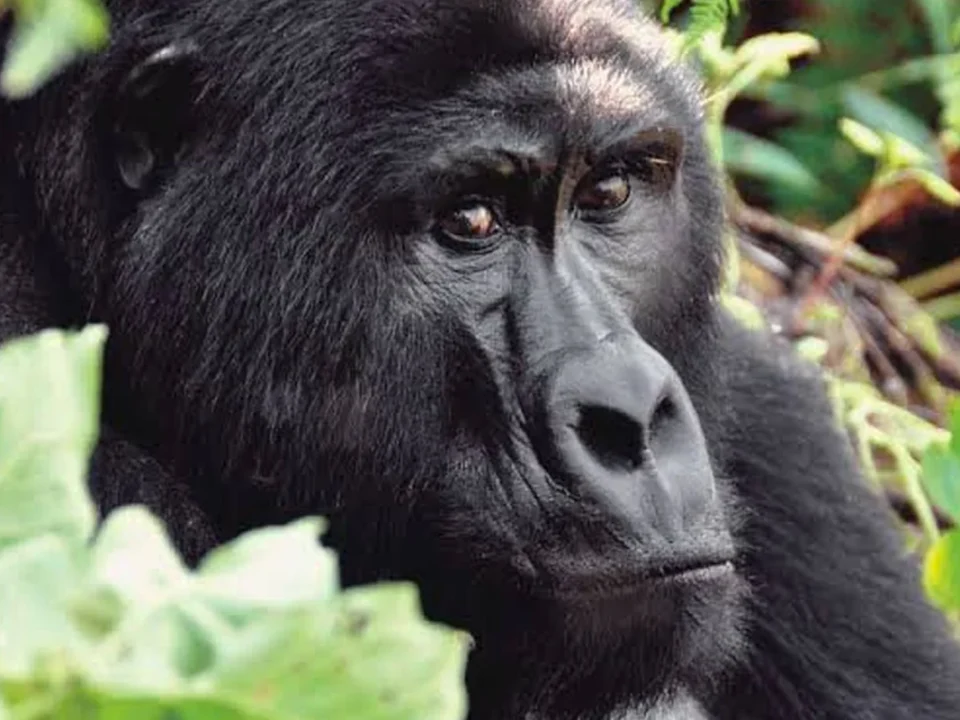
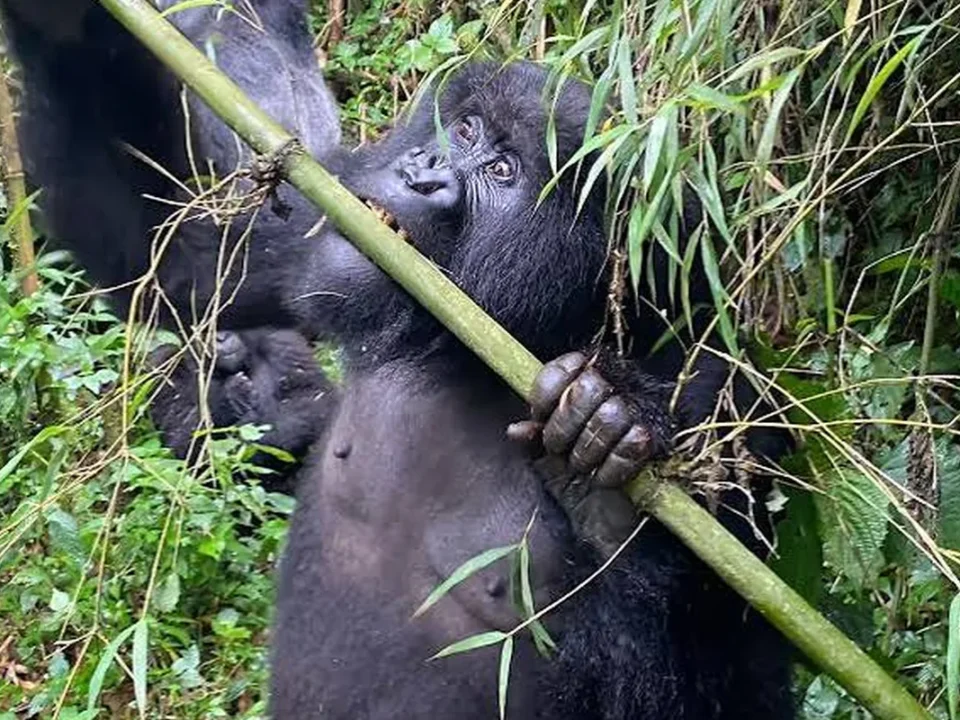
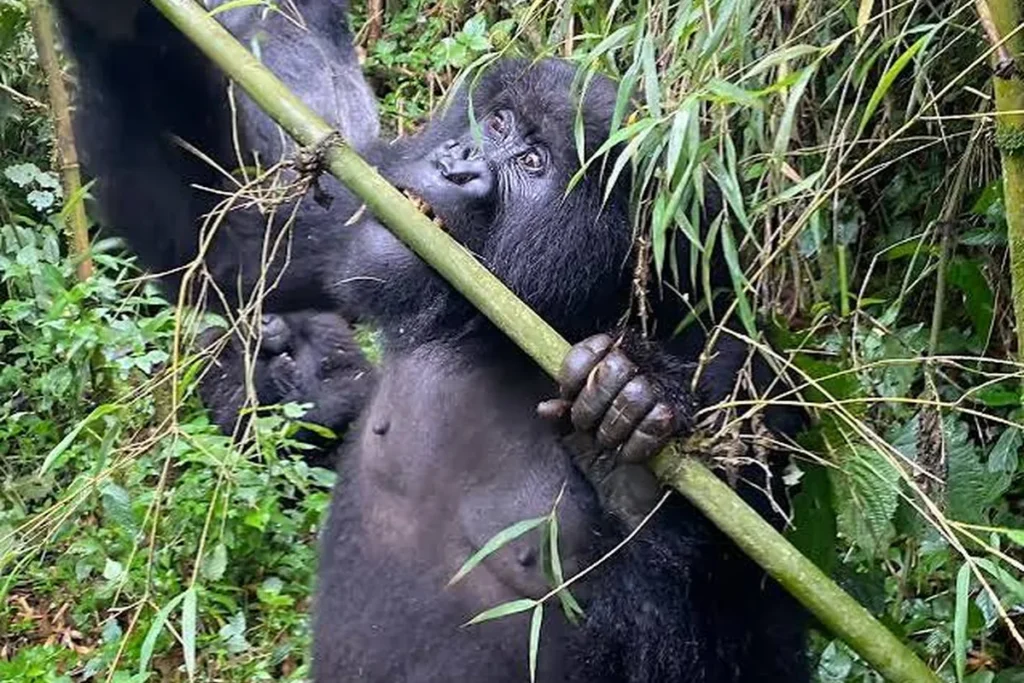
A young mountain gorilla feeds on fresh vegetation in its natural rainforest habitat.
Physical Fitness and Walking Preparation Before Your Safari
Walking is the most useful foundation for trekking preparation. Start with a comfortable distance and increase your time gradually over several weeks. Include hills where possible, because uneven gradients demand more from your legs than level pavement. Consistency matters more than an exhausting training session shortly before departure, which can leave you tired or injured.
Practice walking on surfaces that require attention, such as natural paths, grass, and gentle woodland trails. The goal is to develop balance and confidence when the ground is not perfectly smooth. Avoid deliberately unsafe terrain or slippery slopes during training. Properly chosen routes and supportive footwear provide a better preparation experience than taking unnecessary risks.
For travelers who already exercise regularly, a few longer walks with moderate elevation can reveal whether their footwear and clothing remain comfortable. Carry a light daypack with water and a rain layer. This rehearsal can uncover rubbing straps, uncomfortable socks, or a bottle that is difficult to reach, giving you time to make adjustments before the safari.
People who are less active should begin gently and increase activity according to their ability. Short walks repeated consistently may be more useful than attempting a demanding hike too soon. If walking causes unusual breathlessness, chest discomfort, dizziness, or persistent pain, stop and seek appropriate medical advice instead of treating those symptoms as normal training discomfort.
Basic leg strength can help with steps, muddy slopes, and standing from a crouched position. Controlled step-ups, supported squats, and simple balance exercises may be useful when appropriate for your health and fitness. You do not need a complicated gym program. What matters is building enough stability and endurance to move carefully over varied ground.
Fitness cannot guarantee an easy trek because the gorillas determine the route. A fit visitor may still encounter a long or slippery walk, while someone with modest fitness may have a more manageable day. Preparation improves your resilience and comfort, but it should never be presented as a promise about how quickly your group will find gorillas.
If you have mobility limitations, a recent operation, joint pain, or a medical condition affecting exertion, discuss the activity with a qualified clinician before traveling. Share practical information with the safari operator early, including walking distance, stair tolerance, and any equipment you normally use. These details support planning without requiring you to disclose more personal information than necessary.
Porters may be available to carry bags and provide practical support on difficult ground, subject to local arrangements. They can reduce the burden of a daypack, but they cannot remove every slope or obstacle. Travelers should understand the distinction between assistance and guaranteed accessibility. Any specialized carrying arrangements need advance discussion and confirmation.
Rest is part of preparation. Long international flights, road journeys, and late arrivals can undermine an otherwise good fitness routine. Avoid placing a strenuous trek immediately after an exhausting travel day when the itinerary can reasonably allow recovery. PrideMark Safaris considers arrival timing and overnight stops as part of the physical preparation for the experience.
Nine Amazing Tips for a More Comfortable Gorilla Trek
Tip one is to confirm the park, sector, and trekking date before finalizing other reservations. A permit confirmation is the starting point for selecting accommodation and calculating transfers. An attractive lodge is not automatically convenient for every briefing point. Aligning these elements early avoids rushed mornings and prevents a common mistake: planning around a park name instead of a specific entrance.
Tip two is to wear boots that are already comfortable. New footwear can cause blisters, especially when socks become damp and the path requires repeated downhill steps. Try your boots on longer training walks and check that your toes have space when descending. Good grip, stable support, and a secure fit are more important than a fashionable brand.
Tip three is to dress in layers suited to changing forest conditions. A breathable base layer, long trousers, and a lightweight rain jacket are practical choices. Vegetation can brush against arms and legs, while temperatures may feel cooler during a briefing and warmer during a climb. Choose clothing that allows movement without becoming cumbersome when wet.
Tip four is to pack only what you need for the day. Water, a modest snack, rain protection, necessary medication, and a protected camera or phone usually matter more than spare gadgets. A heavy bag makes climbing and balance harder. If you hire a porter, organize the contents so essential items remain easy to access when requested.
Tip five is to follow the ranger rather than attempting to set your own pace or route. The guides coordinate movement around the gorillas and assess terrain as the group progresses. Stay with the assigned party and communicate if you need a brief pause. Taking a shortcut or stepping away for a photograph can create avoidable risks.
Tip six is to be honest about your walking ability at the briefing. Rangers may consider practical circumstances when organizing trekking groups, although the location of gorillas remains unpredictable. Saying that you need a steadier pace is more helpful than pretending you have no limitations. The goal is safe participation, not competing with other travelers.
Tip seven is to keep your hands available for balance. Use a walking stick if offered and appropriate, and avoid carrying loose items that occupy both hands. Put your phone or camera away while negotiating difficult ground. There will be opportunities to take photographs when the ranger indicates it is safe and appropriate to do so.
Tip eight is to prepare for rain even when the morning sky looks clear. Mountain forests can be damp, and wet leaves, roots, and clay may become slippery. Protect electronics in a dry pouch and keep a rain jacket accessible rather than buried at the bottom of your bag. A slower, deliberate step is often safer than rushing.
Tip nine is to leave enough time after trekking for recovery and onward travel. The return walk may be tiring, and a delayed finish can affect road transfers. Avoid scheduling a tight flight connection or an ambitious afternoon program based on the assumption that every trek ends early. A flexible itinerary protects the enjoyment of the day.
| Preparation tip | Why it matters |
|---|---|
| Confirm your sector | Matches the lodge and transfer to the correct briefing point |
| Test footwear | Reduces the chance of blisters and poor grip |
| Pack rain protection | Prepares you for changing mountain forest conditions |
| Allow recovery time | Protects your schedule if the trek takes longer than expected |
Essential Clothing, Footwear and Trekking Equipment

Essential gorilla trekking equipment, including hiking boots, waterproof clothing, a backpack, gloves, binoculars and a camera.
Footwear deserves the most careful attention. Select sturdy hiking boots or trail shoes with dependable grip, and test them in conditions similar to those you expect. Ankle support can be helpful for some walkers, but fit and comfort remain essential. Pack socks that manage moisture and consider an extra dry pair for after the trek.
Long trousers and long sleeves help protect skin from vegetation, insects, and incidental scratches. Clothing should be breathable enough for exertion and robust enough for a forest trail. Neutral or subdued colors are a practical choice, but there is no need to purchase an entirely new wardrobe if suitable outdoor clothing is already available.
A lightweight waterproof layer is more versatile than a bulky coat in most trekking conditions. It should be easy to put on when rain begins and compact enough to carry when the weather clears. Some visitors also prefer a small pack cover or dry bag. Protecting medication, documents, and electronics from moisture is particularly important.
Gardening-style gloves can help some visitors when moving past rough vegetation or using hands for balance, but they are not a substitute for safe footing. Check that gloves allow you to grip a walking stick securely. Avoid touching unfamiliar plants unnecessarily, and follow the ranger when navigating areas with thick undergrowth.
A modest daypack is preferable to an oversized backpack. Pack drinking water, a small energy snack, rain protection, sunscreen, insect repellent, and any personal essentials. Follow local instructions on food and waste, and never leave litter in the forest. Keep the bag organized so you can retrieve what you need without emptying it on the trail.
Walking sticks can provide confidence on uneven slopes. Ask about availability at the briefing point or through your operator rather than assuming you must fly with a specialized pole. If you use your own poles, check whether their tips are suitable for forest conditions and whether they can be used safely near other trekkers.
Camera equipment should be practical rather than excessive. A compact camera or phone is often easier to manage on a difficult trail than several heavy lenses. Flash photography is not permitted around the gorillas, and ranger instructions take priority over getting a particular shot. Secure straps help prevent accidental drops during movement.
Choose a reusable water bottle or hydration system that is easy to drink from without stopping for long. Hydration needs vary with weather, exertion, and personal health, so follow appropriate advice rather than a rigid universal quantity. Carry enough water for a potentially lengthy excursion, while keeping your pack at a manageable weight.
Packing well means reducing friction between your equipment and the experience. The right items should help you walk comfortably, remain dry, and focus on the forest. They should not turn the trek into a complicated expedition. PrideMark Safaris encourages travelers to review their packing choices against the confirmed route and their own physical needs.
| Bring | Practical purpose | Packing note |
|---|---|---|
| Broken-in hiking footwear | Grip and comfort | Test before travel |
| Waterproof jacket | Protection from rain | Keep accessible |
| Water and small snack | Energy and hydration | Follow ranger rules |
| Medication | Personal health needs | Keep dry and accessible |
Health Precautions and Personal Medical Preparation
Mountain gorillas are vulnerable to some infections that affect humans, making health precautions a conservation responsibility as well as a personal concern. Visitors who are unwell should disclose symptoms and follow the guidance of the relevant park authorities. Do not conceal illness because a permit is expensive; doing so can endanger wildlife and other people.
Before departure, consult a qualified travel-health professional about recommended vaccinations, malaria prevention where relevant, routine medication, and individual health needs. Requirements can depend on your travel history and route. This article cannot replace medical advice, and travelers should avoid relying on a generic online checklist for decisions involving personal health.
Carry essential medication in its original packaging when practical and keep an accessible supply in your hand luggage. If you have a condition that might affect walking, temperature tolerance, or exertion, ask your clinician what precautions are appropriate. Inform your operator of any assistance needs that could influence transport or trekking arrangements.
Altitude and physical effort may affect travelers differently. Bwindi and Mgahinga are mountain environments, but individual responses depend on many factors. Allow time to acclimatize to your itinerary where sensible and avoid assuming that every visitor will feel the same. If you experience concerning symptoms, notify the guide and seek medical help promptly.
Food and water hygiene matter during the wider safari, not just on trekking day. Drink safe water, eat appropriately prepared meals, and wash or sanitize hands when facilities are available. An upset stomach can turn a manageable forest walk into an unpleasant experience. Plan meals and hydration sensibly before leaving the lodge.
Gorilla observation rules include keeping the prescribed distance, avoiding direct contact, and obeying ranger directions if an animal approaches. Do not move closer to improve a photograph or attempt to touch a gorilla. These precautions help protect both visitors and the animals. The ranger will explain how to behave if a gorilla moves toward the group.
Face-covering requirements and other health procedures can change with park guidance and public-health conditions. Confirm the rules that apply to your trekking date rather than assuming an old photograph represents current practice. PrideMark Safaris can help travelers identify the relevant briefing requirements, but the final instructions come from the park authorities.
Consider suitable travel insurance that addresses medical treatment, evacuation, trip interruption, and activities planned during the safari. Policies vary widely, and gorilla trekking may be subject to specific wording or exclusions. Read the actual terms before buying. A general promise of coverage from a salesperson is not a substitute for the policy document.
Health preparation is most effective when it is practical and respectful. Bring what you need, communicate relevant limitations, and accept that a trek may be postponed or declined if safety or conservation rules require it. The experience is valuable, but no photograph or itinerary should take precedence over protecting people and endangered gorillas.
Preparing for Bwindi Versus Mgahinga Gorilla National Park
Bwindi is known for steep forested hills, dense vegetation, and several distinct trekking sectors. Its varied geography means one visitor’s experience may differ considerably from another’s. Planning should start with the sector printed on the booking confirmation, not with a generic description of Bwindi. The correct lodge and approach road depend on that detail.
Buhoma, Ruhija, Rushaga, and Nkuringo are commonly used names when discussing Bwindi trekking arrangements. They are not simply interchangeable hotel neighborhoods. Travel between sectors may involve winding mountain roads and significant driving time. A lodge that looks close on a map may be inconvenient for a particular briefing point.
Mgahinga Gorilla National Park lies in the Virunga mountain landscape near Uganda’s borders with Rwanda and the Democratic Republic of the Congo. Its scenery and trekking environment differ from Bwindi, and weather can change quickly. Visitors should not assume that one park is always easier, because gorilla movement and daily conditions influence the actual walk.
For travelers arriving through Kigali, cross-border routing may be attractive, but immigration requirements, transfer time, and the chosen park still need careful coordination. An itinerary beginning in Entebbe has different road or flight considerations. PrideMark Safaris reviews the full route instead of choosing a trekking destination solely on the shortest apparent distance.
Accommodation choices should support a restful evening before the trek. Consider the journey from the lodge to the briefing point, meal arrangements, road access, and the likelihood of an early start. A beautiful property far from the correct sector may add avoidable fatigue. Convenience is a meaningful part of the value of a safari.
Rain can affect both forest trails and access roads. A well-planned itinerary leaves reasonable margins for transfers and avoids promising precise arrival times on mountain roads. Travelers should bring suitable rain protection regardless of season. The absence of heavy rain at the lodge does not guarantee dry conditions inside the forest.
If you hope to combine gorilla trekking with golden monkey tracking, Mgahinga may be relevant because both activities are associated with the park. Each activity requires its own arrangements and availability checks. Do not assume that purchasing one permit automatically includes the other. A combined visit also needs sufficient time for separate activities.
Bwindi can pair well with other southwestern Uganda experiences, including Lake Bunyonyi, cultural visits, and wildlife routes through Queen Elizabeth National Park. These additions can make the journey more rewarding, but they should not crowd out rest before the trek. An itinerary is stronger when it balances travel, activities, and recovery.
The best choice between Bwindi and Mgahinga depends on confirmed permit availability, travel route, interests, and personal needs. Neither park should be marketed as a guaranteed easy option. PrideMark Safaris can explain the practical differences and help travelers select arrangements that match their priorities without making promises about daily gorilla locations.
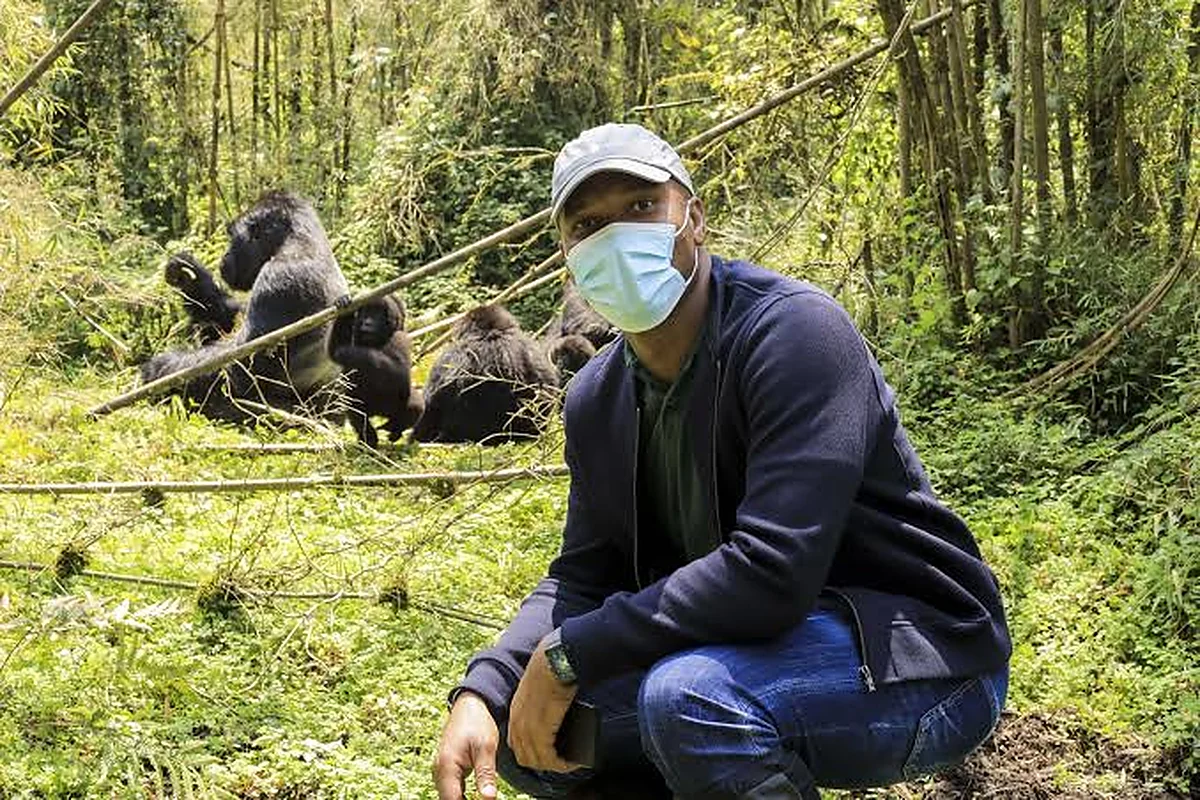
A visitor wearing a face mask poses in a forest clearing with mountain gorillas visible in the background.
Permits, Accommodation and Transport Arrangements
Gorilla trekking permits should be arranged through the appropriate authorized booking channels, with availability confirmed before other nonrefundable commitments are made. The permit is for a specified activity and date, and the assigned location matters. Travelers should verify the booking details carefully and keep copies accessible during the safari.
Permit fees and conditions can change, so use the official Uganda Wildlife Authority information applicable to your booking. Do not rely on a price quoted in an undated social-media post. The total safari cost also includes expenses beyond the permit, such as accommodation, road transfers, meals, porters, and optional activities depending on the package.
Ask your operator to explain what is included in the quotation. A package may include the gorilla permit, guide, vehicle, accommodation, and meals, but inclusions vary by itinerary. Review exclusions for visas, tips, travel insurance, drinks, and personal purchases. A clear quotation is more useful than an attractive headline price without a breakdown.
For road travel, allow realistic time between Entebbe, Kampala, southwestern Uganda, and the trekking region. Long distances and variable road conditions make tight schedules unwise. If flying to a regional airstrip, remember that an onward vehicle transfer is usually still needed. Flight arrangements must match the lodge and trekking sector.
If entering Uganda from Rwanda, confirm passport, visa, and border-crossing requirements for your nationality and route. Rules may differ between travelers, and a visa suitable for one itinerary may not cover another. Check official immigration sources before travel. Cross-border plans should also account for border processing and the location of your overnight stay.
Accommodation should be booked near the correct trekking briefing point when possible. Confirm the meal plan, early breakfast options, packed lunch arrangements, and the time the vehicle will depart. A comfortable lodge can improve the overall experience, but proximity and reliable logistics are especially important on trekking morning.
Before paying a deposit, request clear terms covering cancellation, rescheduling, and any nonrefundable permit component. Changes to gorilla permits may be subject to authority rules, deadlines, and approval. Do not assume that a permit can be freely transferred to another traveler or moved to a new date without restrictions.
A practical pre-departure checklist includes permit confirmation, identification, lodge details, emergency contacts, transport arrangements, suitable clothing, and any relevant health documentation. Keep digital copies backed up and retain essential details offline. Remote areas may have inconsistent connectivity, so important booking information should not depend entirely on a live internet connection.
PrideMark Safaris builds gorilla trekking into complete Uganda and regional safari itineraries, including road transfers and complementary wildlife experiences. The most useful planning conversation starts with your dates, group size, preferred accommodation standard, and any walking concerns. Those details help turn a general wish to see gorillas into workable arrangements.
| Booking element | What to confirm | Why it matters |
|---|---|---|
| Gorilla permit | Date, activity, park and sector | Determines the trekking arrangements |
| Accommodation | Distance from briefing point and meals | Supports an easier trekking morning |
| Transport | Pickup time, route and road or flight connections | Avoids rushed or unrealistic transfers |
| Quotation | Inclusions, exclusions and cancellation terms | Clarifies the full trip commitment |
Common Preparation Mistakes Travelers Should Avoid
One common mistake is booking accommodation before knowing the trekking sector. A lodge may advertise Bwindi access while remaining inconvenient for your particular briefing location. Confirm the permit arrangements first, then choose the overnight stay. This simple sequence prevents long predawn transfers and reduces the chance of arriving tired or late.
Another mistake is treating the forest walk as a guaranteed short stroll. Gorilla locations change, and trails may involve mud, vegetation, and sustained climbing. Even travelers who are physically active should prepare for uncertainty. Build a margin into the day and avoid making an onward travel commitment that depends on finishing the trek early.
Wearing brand-new boots is an avoidable problem. Blisters and pressure points can become painful on steep or wet ground. Break in footwear on training walks and use socks that remain comfortable over several hours. If your chosen boots cause discomfort before departure, address the issue rather than hoping the problem disappears in Uganda.
Overpacking is equally unhelpful. A heavy camera bag, multiple spare outfits, and unnecessary electronics can make the walk harder without improving the gorilla encounter. Keep the daypack focused on hydration, weather protection, medication, and a few useful essentials. Arrange porter support where appropriate and available, but do not rely on it to compensate for unsuitable luggage.
Visitors sometimes underestimate the importance of communicating health and mobility concerns. An operator cannot plan responsibly around needs it does not know about. Share practical limitations early and seek medical guidance where necessary. The objective is to identify sensible support or alternatives, not to exclude travelers who might participate with appropriate arrangements.
Another mistake is assuming photographs on social media represent current park rules. Distance requirements, health procedures, and operational guidance can be updated. Follow official instructions at the briefing and ask questions if anything is unclear. A dramatic photograph taken by someone else does not authorize you to approach wildlife in the same way.
Rushing between destinations can also undermine the trek. A late arrival, little sleep, and an early briefing create unnecessary stress. If possible, arrive in the trekking region with time to settle in, check equipment, and eat properly. The evening before the trek should be straightforward rather than filled with avoidable transport uncertainty.
Some travelers focus so much on the permit price that they overlook what the rest of the safari requires. Road transport, lodging, meals, tips, and optional activities may affect the budget. Compare quotations by inclusions and suitability, not just by the headline total. An inexpensive itinerary can become costly if important arrangements are missing.
The final mistake is treating the gorilla encounter as a performance that must match a perfect photograph. Gorillas are wild animals, and their behavior cannot be scripted. Follow ranger instructions, observe quietly, and appreciate the forest as well as the animals. Preparation should make the experience more comfortable, not create unrealistic expectations.

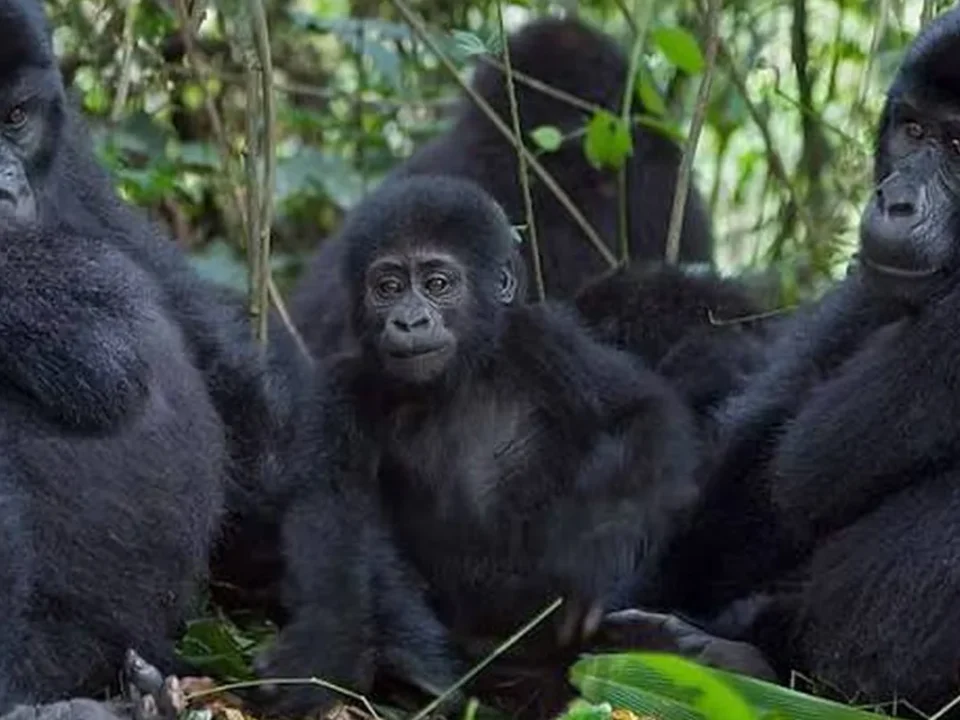
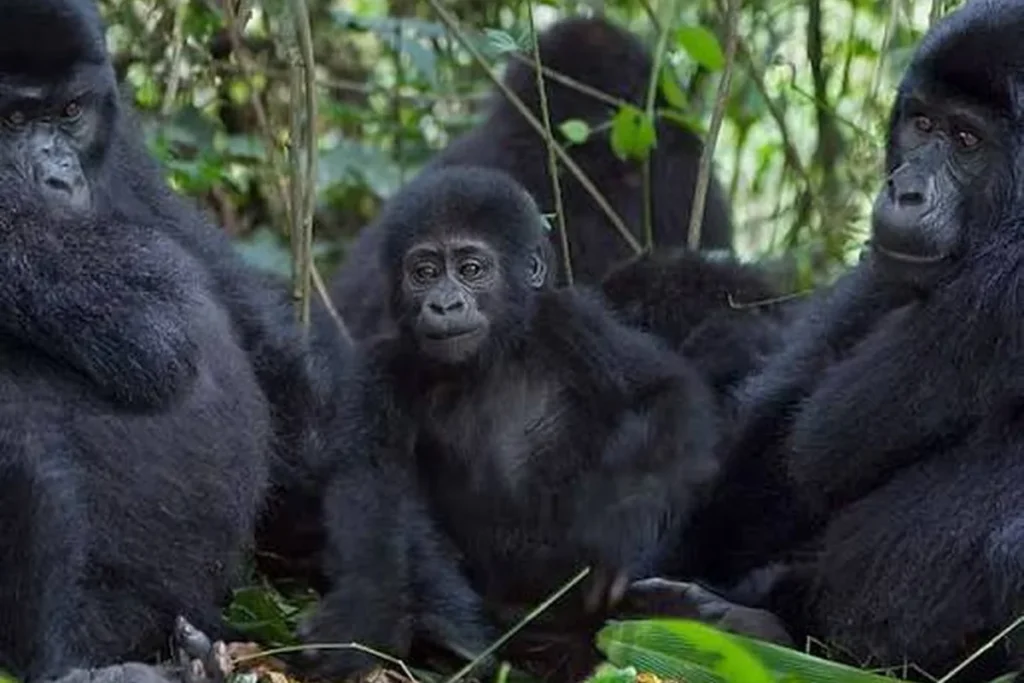
Two adult mountain gorillas and a young gorilla resting together among lush green rainforest vegetation.
How PrideMark Safaris Helps Travelers Prepare
PrideMark Safaris helps travelers coordinate the details that influence trekking comfort, beginning with dates, permit availability, and the correct briefing location. We consider where visitors arrive, how they will travel, and where they will sleep before the activity. A coherent route reduces unnecessary transfers and gives travelers a clearer picture of the day ahead.
We encourage guests to discuss walking expectations before the itinerary is finalized. Some visitors want an active mountain experience, while others are concerned about slopes, pace, or endurance. Those preferences help shape practical recommendations, although no operator can guarantee the exact difficulty of a trek because gorillas move freely within the forest.
Our itineraries can combine gorilla trekking with other Uganda experiences, including wildlife viewing, boat excursions, and relaxed stays in southwestern Uganda. The aim is to build a journey with enough time to enjoy each destination. We avoid treating the gorilla trek as an isolated appointment disconnected from the travel days around it.
Guests should receive a clear explanation of package inclusions, exclusions, and relevant booking conditions. We recommend reviewing permit arrangements, accommodation, meals, transport, and any optional porter support before travel. Transparent planning is particularly important for travelers comparing different accommodation categories or considering a cross-border itinerary from Rwanda.
We also encourage visitors to rely on current guidance from the Uganda Wildlife Authority and the rangers responsible for the trek. Park personnel determine safe conduct in the forest, and their instructions always take precedence over an itinerary description. A responsible operator prepares travelers to follow those instructions rather than suggesting that commercial arrangements override them.
For a shorter safari, our three-day gorilla trekking itinerary offers a focused visit, while longer routes can include wildlife parks and additional activities. Travelers with limited time should still account for transfers and recovery. The right duration depends on the arrival point, chosen sector, available permits, and the pace at which the group prefers to travel.
Before departure, we recommend a final review of your documents and practical essentials. Confirm the trekking date, accommodation, transfer pickup, identification, suitable footwear, rain layer, and medication. If your circumstances change, communicate early so the available options can be checked. Last-minute assumptions are rarely as useful as timely, specific information.
Learning how to prepare for gorilla trekking in Uganda is ultimately about making informed decisions. Training, clothing, health awareness, and logistics all contribute to the experience, but none can control the forest. With realistic expectations and a well-organized route, visitors can concentrate on observing mountain gorillas respectfully and enjoying the landscape around them.
If you are planning a gorilla safari, contact PrideMark Safaris with your travel dates, group size, preferred accommodation category, and any questions about walking conditions. We can help discuss suitable itineraries and the steps needed to check permit availability. The best preparation begins with accurate information and a plan that reflects your actual travel needs.
Frequently Asked Questions
How early should I start preparing for gorilla trekking?
Begin walking preparation several weeks before departure if your health allows. Increase distance and hills gradually rather than attempting a demanding workout at the last moment. Also confirm permits and accommodation early, because logistics can be as important as fitness. The right preparation period depends on your starting condition and travel arrangements.
Do I need to be very fit to trek gorillas?
You do not need to be an elite athlete, but the forest can be steep, muddy, and physically demanding. A reasonable level of walking endurance and balance is helpful. The route varies because gorillas move. If you have medical or mobility concerns, seek professional advice and discuss practical needs before booking.
How long does a gorilla trek take?
The overall excursion can last several hours, depending on where the gorillas are and the trail conditions. The walk to and from the family is separate from the permitted viewing period. Avoid booking tight onward connections on trekking day. Your ranger can provide the most relevant guidance at the morning briefing.
What shoes should I wear for gorilla trekking?
Choose comfortable hiking footwear with reliable grip that you have already worn on longer walks. Wet roots, muddy slopes, and uneven paths make secure footing important. Wear suitable socks and check for pressure points before departure. Footwear that fits your feet well is more valuable than a particular brand or expensive design.
Can beginners go gorilla trekking in Uganda?
Beginners can participate when they are appropriately prepared and meet the applicable park requirements. Practice walking on hills, pack sensibly, and communicate any concerns about pace or balance. The trek is not guaranteed to be easy, so realistic expectations matter. Follow the assigned ranger and avoid comparing your ability with other visitors.
Should I hire a porter for gorilla trekking?
A porter can help carry your daypack and may provide practical assistance on challenging sections, subject to local availability and arrangements. Hiring one can make the walk more comfortable, but it does not eliminate uneven terrain. Ask your operator about expected costs and procedures. Consider your fitness, luggage, and support needs when deciding.
Is Bwindi harder than Mgahinga?
Neither park is consistently easier for every traveler. Bwindi has varied forested slopes and several trekking sectors, while Mgahinga has a distinct mountain setting. Gorilla locations, weather, and the assigned route influence difficulty on the day. Choose based on confirmed permits, travel logistics, interests, and realistic expectations rather than a blanket ranking.
What should I pack in my daypack?
Carry water, a light snack, a rain jacket, any essential medication, and a safely protected camera or phone. A small first-aid kit and dry pouch may also be useful. Keep the pack light and follow park instructions on food and waste. Pack for changing weather without bringing unnecessary heavy equipment.
Can I trek if I have a medical condition?
Suitability depends on the condition, its stability, and the physical demands of the outing. Discuss your circumstances with a qualified clinician and share relevant mobility or assistance needs with your operator. Park rules and safety decisions still apply. Avoid assuming that a diagnosis automatically prevents participation or guarantees that a trek will be manageable.
What happens if it rains during the trek?
Rain can make vegetation wet and trails slippery, but conditions and operational decisions depend on the park authorities. Bring a lightweight waterproof jacket and protect electronics and medication. Move carefully, use suitable footwear, and follow ranger instructions. Do not assume that a sunny morning at the lodge means the forest will stay dry.
Does a gorilla permit include transport and accommodation?
A standard gorilla permit should not be assumed to cover your hotel, road transfers, or personal expenses. Some tour packages bundle these services with the permit, while others do not. Check the written quotation carefully and ask about meals, porters, tips, and optional activities. Confirm the applicable permit terms with authorized booking sources.
How can I arrange a prepared gorilla safari?
Start with your intended travel dates, number of travelers, preferred accommodation standard, and arrival location. Share any walking or mobility concerns early. PrideMark Safaris can discuss route options and help coordinate availability inquiries, accommodation, and transport. Confirm the exact itinerary and inclusions before paying for services or making nonrefundable arrangements.
Related Gorilla Trekking Resources
For official conservation and permit information, consult the Uganda Wildlife Authority. Travelers comparing itineraries can also review our three-day gorilla trekking safari, fly-in luxury gorilla safari, and five-day gorilla and wildlife safari. Package details and availability should be confirmed before booking.