Uganda’s mountain gorilla trekking takes place in Bwindi Impenetrable National Park and Mgahinga Gorilla National Park. Routes and weather vary, and trekkers should prepare for changing conditions rather than rely on a single forecast. The Uganda Wildlife Authority explains that trekking can involve several hours of walking. A comfortable waterproof outer layer therefore belongs on a practical packing checklist.
This guide from PrideMark Safaris explains waterproof materials, breathable designs, jacket sizing, hoods, ponchos, packing methods and common mistakes. It also offers nine straightforward tips and answers to frequently asked questions. You do not need to buy the most expensive technical garment to prepare well. You need a jacket that suits the conditions, fits your body and works with your other trekking clothes.
Before buying anything, consider what you already own. A properly maintained waterproof shell that fits over your hiking clothes may be perfectly adequate. If you are shopping for a new jacket, focus on the details that matter in a rainforest: sealed seams, usable ventilation, a secure hood and enough movement for climbing. Our recommendations are practical travel advice, not official equipment requirements imposed by park authorities.
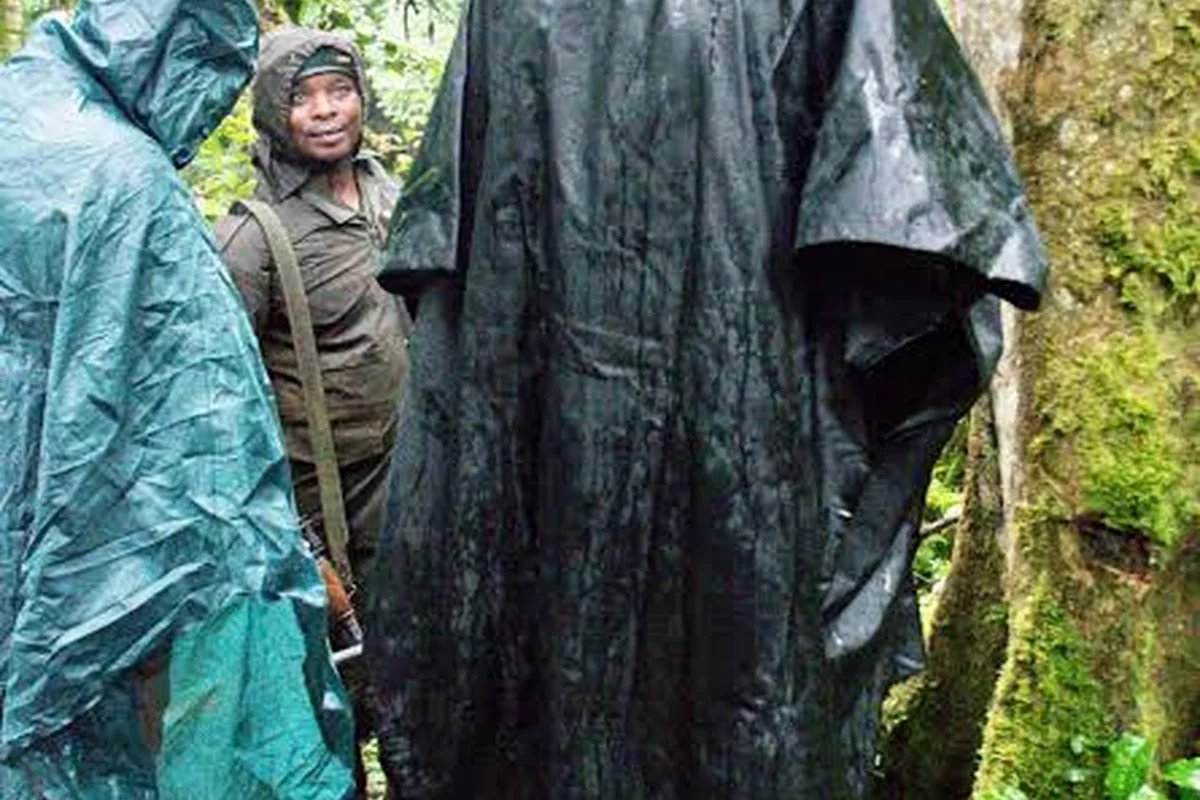
Trekkers wearing hooded rain ponchos in a dense Ugandan forest, illustrating practical rain protection for wet gorilla trekking conditions.
1. Why a Rain Jacket Matters During Gorilla Trekking
A forest walk is not a city stroll
In Bwindi, the walk to a gorilla family may involve shaded paths, open ridges, wet undergrowth and steep ground. A jacket that feels comfortable for ten minutes in a car may feel restrictive after an hour of uphill walking. Rain protection is therefore part of sensible preparation, not a guarantee of a dry day. The best rain jackets for gorilla trekking in Uganda balance protection with enough freedom to move through vegetation and follow ranger instructions without distraction.
Rain can arrive between forecasts
Mountain weather changes locally, and rain may begin even when the morning looks bright. A light shell packed near the top of a daypack can be reached quickly without emptying the bag onto a muddy path. It is worth practicing this at home. Keeping the jacket accessible matters more than buying the most expensive design, because a perfectly waterproof coat offers little value when it remains buried beneath lunch and spare clothing.
Wet vegetation is a separate challenge
A jacket is useful even when the sky is clear. Leaves, grasses and branches can hold moisture after overnight rain or mist, transferring water to sleeves and shoulders as hikers pass. This is why coverage at the wrists and neck deserves attention. A secure cuff and properly adjusted collar can reduce water entry, although no jacket will prevent every splash or keep trousers and boots dry on their own.
Comfort supports attention and patience
Trekking involves periods of steady walking, pauses while guides assess the route and a wildlife encounter that deserves full attention. Feeling cold or clammy can make those transitions uncomfortable. A breathable outer layer, worn over suitable clothing, helps manage changing effort levels. Visitors should also remember that overheating can happen under a rain shell, especially on climbs, so the ability to open vents or remove the jacket matters.
Plan clothing as a system
Rain jackets work best alongside quick-drying base layers, long trousers, sturdy boots and a protected daypack. A rain cover for the pack keeps spare clothes and electronics from becoming soaked. Gloves and gaiters can be useful in particular conditions, but neither replaces a jacket. PrideMark Safaris recommends checking the forecast, listening to the local guide and packing layers that can be adjusted without delaying the group.
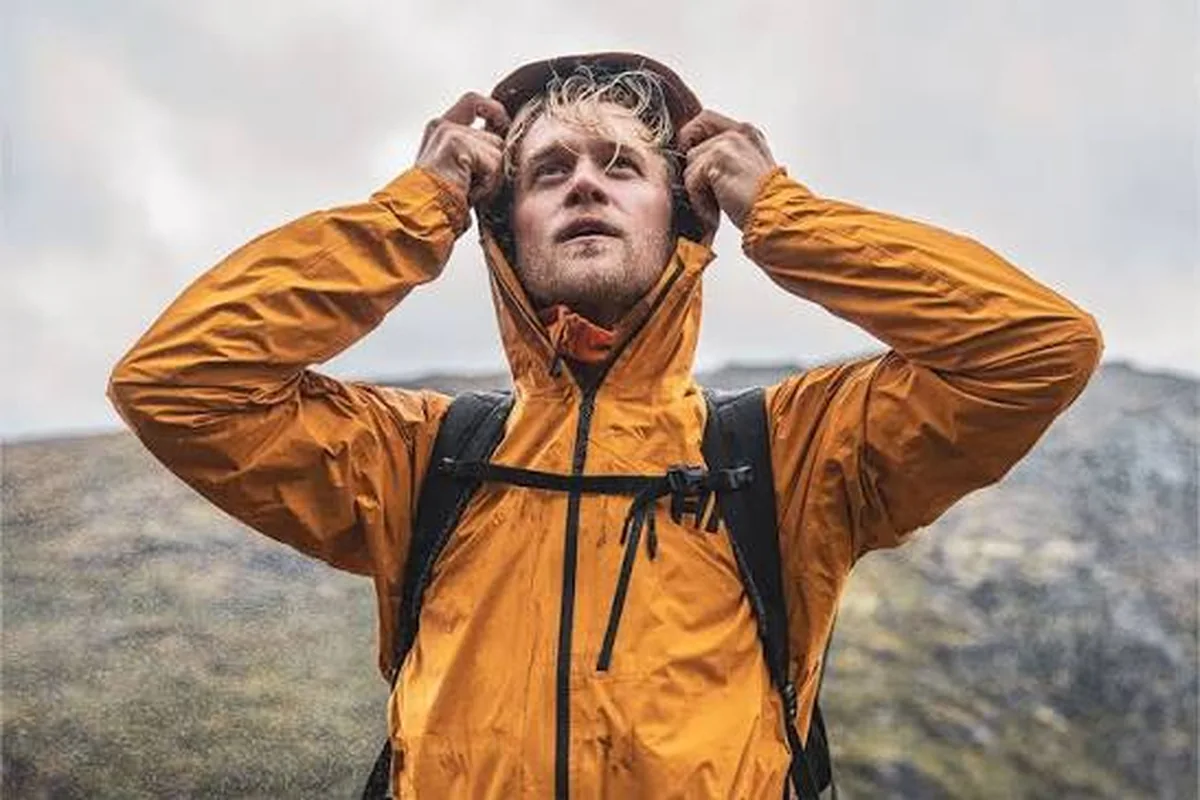
A hiker adjusts the hood of an orange rain jacket, demonstrating the importance of comfortable hood coverage, secure fitting and freedom of movement.
2. Types of Rain Jackets and Their Practical Uses
Lightweight waterproof shells
A compact waterproof shell is often the most versatile choice for visitors who want one outer layer for forest walks and other safari activities. It should fit over a light insulating layer without pulling across the shoulders. Some models pack into a pocket; others fold into a pouch. Packability is helpful, but judge the jacket first by hood fit, seam construction, breathability and whether the cuffs close securely.
Two-layer and lined jackets
Some rain jackets include a separate hanging liner that protects the waterproof membrane from skin contact. These can feel comfortable during gentle walking but may be heavier and slower to dry than simpler shells. The choice depends on the overall itinerary. Travelers who will also visit cooler highland areas may appreciate the feel of a lined jacket, while those trying to minimize luggage may prefer a lighter option.
Three-layer technical shells
A three-layer shell typically bonds the face fabric, waterproof membrane and inner protective layer together. These jackets can be durable and useful for frequent outdoor travel, although quality and fit vary considerably. They are not automatically necessary for a single gorilla trek. If choosing one, look for comfortable articulation at the elbows, a hood that does not block peripheral vision and zippers that can be operated with damp hands.
| Jacket type | Advantages | Considerations |
|---|---|---|
| Lightweight waterproof shell | Compact, adaptable, easy to layer | Check seams, hood and ventilation |
| Lined rain jacket | Comfortable inner feel | Can be heavier and slower to dry |
| Three-layer shell | Often durable for frequent outdoor use | May cost more than occasional trekkers need |
| Softshell or windbreaker | Comfortable in breeze and light drizzle | Often unsuitable for sustained rain |
| Insulated waterproof coat | Provides warmth in cool weather | Can overheat during uphill walking |
Softshells and windbreakers
Softshell jackets and lightweight windbreakers may be pleasant in cool breezes or brief drizzle, but many are not intended for sustained rain. Labels such as water-repellent or shower-resistant should not be treated as equivalent to waterproof construction. They can be useful as an additional layer on a longer safari, yet a visitor relying on only one jacket for wet forest trekking should understand the limitations before departure.
Insulated waterproof jackets
A thick insulated waterproof coat may seem reassuring when packing from a cold country. However, strenuous uphill walking in humid conditions can produce considerable heat. A separate lightweight fleece beneath a waterproof shell is often more adaptable than a bulky all-in-one coat. This layering approach allows hikers to adjust warmth during stops without giving up rain protection when they need it most.
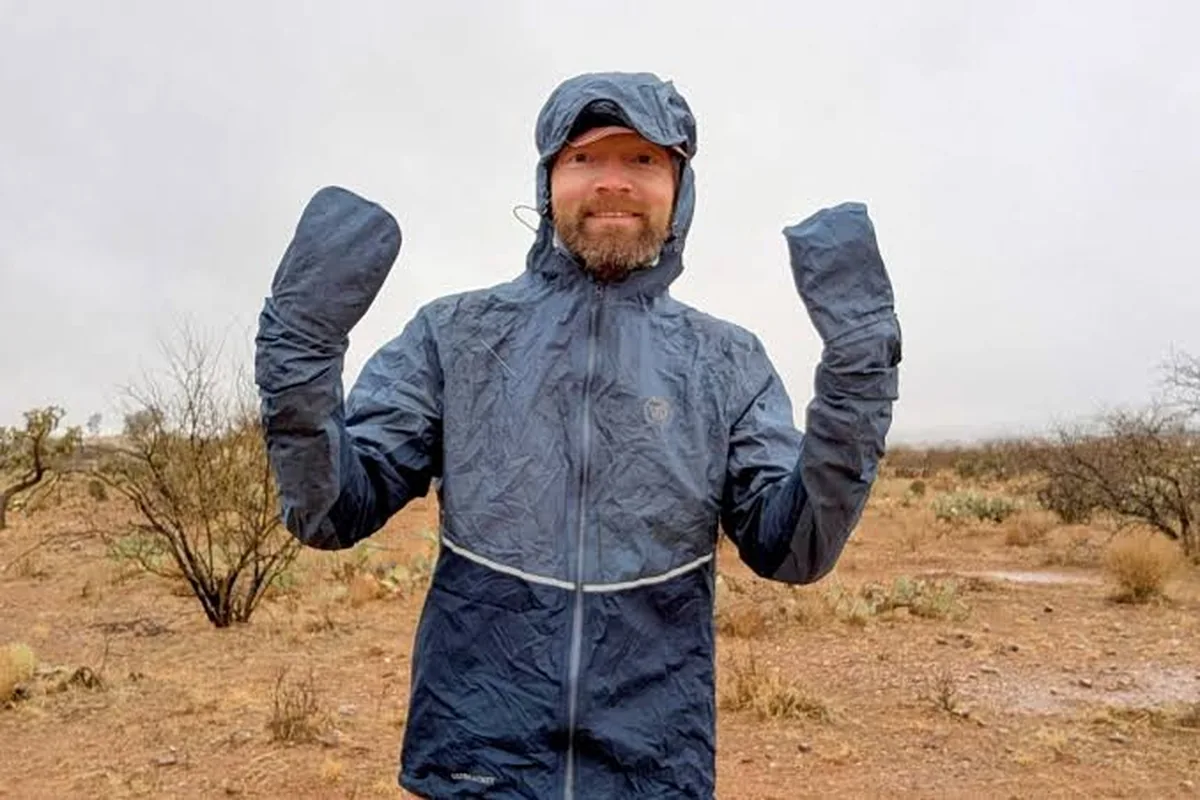
A hiker demonstrates a hooded rain jacket with extended hand coverings, highlighting different rain protection features for outdoor adventures.
3. Waterproof Versus Water-Resistant Jackets
Understand the wording
Water-resistant fabric sheds light moisture for a period, while a waterproof jacket is designed to prevent rain passing through under specified conditions. The distinction matters when comparing the best rain jackets for gorilla trekking in Uganda. Manufacturers may describe a hydrostatic-head test result, but laboratory numbers alone do not predict comfort in a humid forest. Seams, zippers, hood shape and the age of the garment also influence performance.
Look closely at seams
Needle holes along stitched seams can provide routes for water to enter unless they are sealed. Waterproof jackets commonly use seam tape or other sealing methods on critical joins. Check the inside of the shoulders and hood as well as the outer label. A jacket advertised as waterproof but with unsealed seams may not perform as expected during persistent rain, particularly where shoulder straps press against the fabric.
Durable water repellent is not the membrane
Many shells have a durable water-repellent finish, often called DWR, that encourages droplets to bead on the outer fabric. This finish can wear down with use and washing. When the face fabric becomes saturated, the jacket may feel clammy even if its underlying waterproof barrier still works. Follow the maker’s cleaning and reproofing instructions rather than assuming every wet-looking jacket has failed.
Zippers and closures matter
A storm flap or appropriately designed water-resistant zipper helps limit water entry at the front. Pocket placement should be considered when carrying a daypack with a hip belt. Test whether the main zipper catches on the inner flap and whether the collar closes comfortably. Tiny frustrations become more noticeable when fingers are cold or when a group is waiting to continue walking.
Avoid false promises
No garment guarantees that a hiker will remain completely dry in every situation. Water can enter through an open collar, sleeves, a lifted hem or contact with wet plants. Sweat can also make the inside feel damp. A realistic purchase decision focuses on reducing exposure while keeping the wearer comfortable and mobile, rather than searching for a jacket marketed as completely weatherproof in every circumstance.
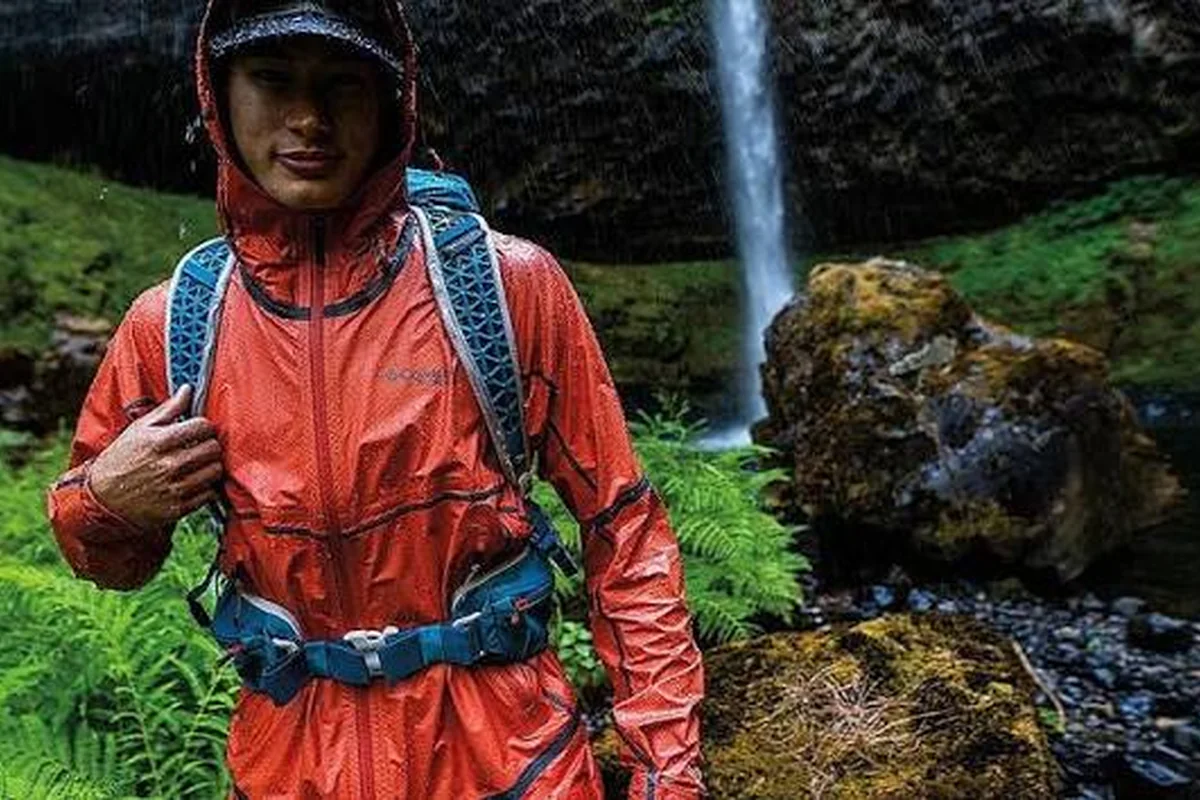
A hiker wearing an orange hooded rain jacket and backpack near a waterfall, illustrating practical rain protection for wet outdoor adventures.
4. Breathability, Ventilation and Moisture Management
Rain protection can trap perspiration
Walking uphill generates body heat. A waterproof barrier that keeps external rain out may also slow the escape of moisture from sweat. This is why breathability matters when selecting the best rain jackets for gorilla trekking in Uganda. The wearer may experience condensation on the inside even without a leak. Good ventilation and sensible layering are practical ways to reduce that problem.
Pit zips and adjustable openings
Underarm zippers, two-way front zippers and adjustable cuffs provide ways to release heat. Not every jacket needs all these features, but ventilation is especially useful when the pace changes between climbs and pauses. Open vents cautiously in heavy rain because they can also admit water. During a dry interval, loosening the collar may be enough to improve comfort without fully removing the jacket.
Base layers influence the result
A moisture-managing shirt beneath the shell helps move sweat away from the skin. Cotton may stay damp longer and feel uncomfortable when the group stops. Lightweight synthetic or suitable wool blends are common alternatives. Pack a dry layer for later in the day if the itinerary includes a long drive or a cool lodge evening. A rain jacket should complement these layers rather than compensate for clothing that remains wet.
Fit changes airflow
A shell worn tightly against the torso may limit airflow and restrict movement. Excessively loose fabric, however, can snag or flap against vegetation. Try the jacket while wearing the clothes planned for trekking. Raise both arms, bend forward and reach across the body. The hem should remain reasonably secure, and the shoulders should move freely without dragging the cuffs far above the wrists.
Use the jacket when needed
Wearing a shell from breakfast until evening is not always the best strategy. If the weather is dry and the group is working hard, stowing the jacket may prevent overheating. Keep it accessible in case conditions change. The guide’s instructions and immediate weather should determine the final decision, not a fixed rule that a raincoat must remain on for every minute of the trek.
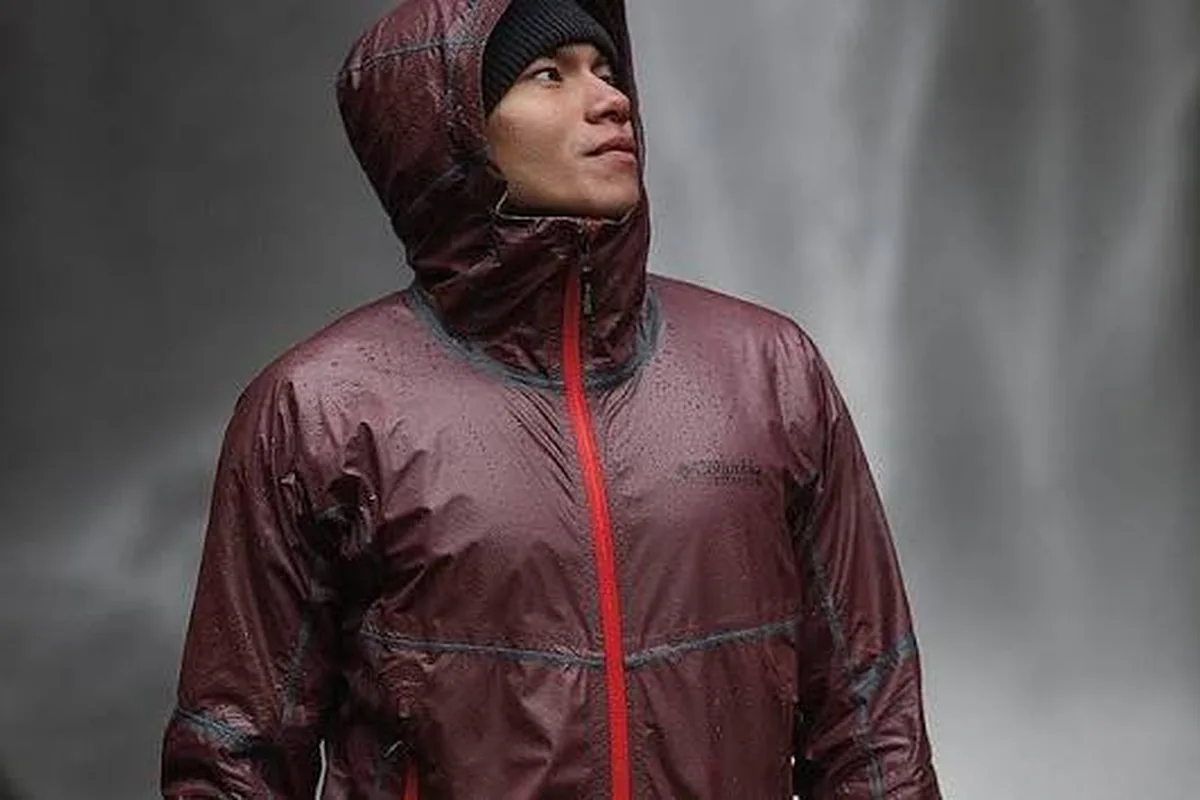
A hooded outdoor rain jacket with a full-length front zipper, illustrating useful rain-protection features for gorilla trekking preparation.
5. Choosing the Correct Size, Hood and Length
Test with your actual layers
A rain jacket should fit over the base layer and light midlayer you intend to wear. Shopping in a thin T-shirt can produce the wrong size for a cooler morning. Check the chest and shoulders while moving your arms as though using a walking stick. If the fabric pulls sharply across the back, consider another size or cut. If the jacket hangs excessively, try a more tailored model.
Hood design affects visibility
An adjustable hood should protect the forehead without falling over the eyes. Side and rear adjustments can help it move with the head when looking toward a guide or scanning the trail. A small structured peak may keep some rain away from the face. Practice tightening the hood before departure, because adjusting unfamiliar cords during a downpour can be awkward and distracting.
Cuffs protect the sleeve opening
Adjustable hook-and-loop cuffs or elastic closures can reduce water entry where sleeves meet gloves. Test the fit while gripping a walking stick and raising your hands. Tight cuffs can become uncomfortable, while loose ones may allow water to run inside. If gloves are part of the clothing system, practice how their cuffs overlap with the jacket sleeves. This small detail can make a noticeable difference in persistent wet weather.
| Feature | What to check | Practical benefit |
|---|---|---|
| Hood | Adjusts without blocking vision | More comfortable movement in rain |
| Seams | Appropriate sealing or tape | Reduces leakage at stitched joins |
| Cuffs | Secure adjustable closure | Limits water entering sleeves |
| Ventilation | Easy-to-use openings | Helps release heat on climbs |
| Hem and fit | Coverage with full arm movement | Reduces riding up and restriction |
Hem and back coverage
A jacket ending at the waist may ride upward when climbing or carrying a pack. A slightly longer hem can provide additional coverage, but a very long coat may restrict stride length on steep terrain. Check whether the jacket includes a drawcord and whether it remains comfortable when seated in a vehicle. The ideal length allows normal walking while limiting exposure at the lower back.
Pockets and pack straps
Backpack shoulder straps and hip belts can cover or press against pockets. Put on the daypack before deciding that a jacket has enough usable storage. A secure chest pocket can be convenient for a tissue or small item, but valuables and electronics still need suitable waterproof protection. Avoid stuffing heavy objects into jacket pockets because they can pull the garment out of position while walking.
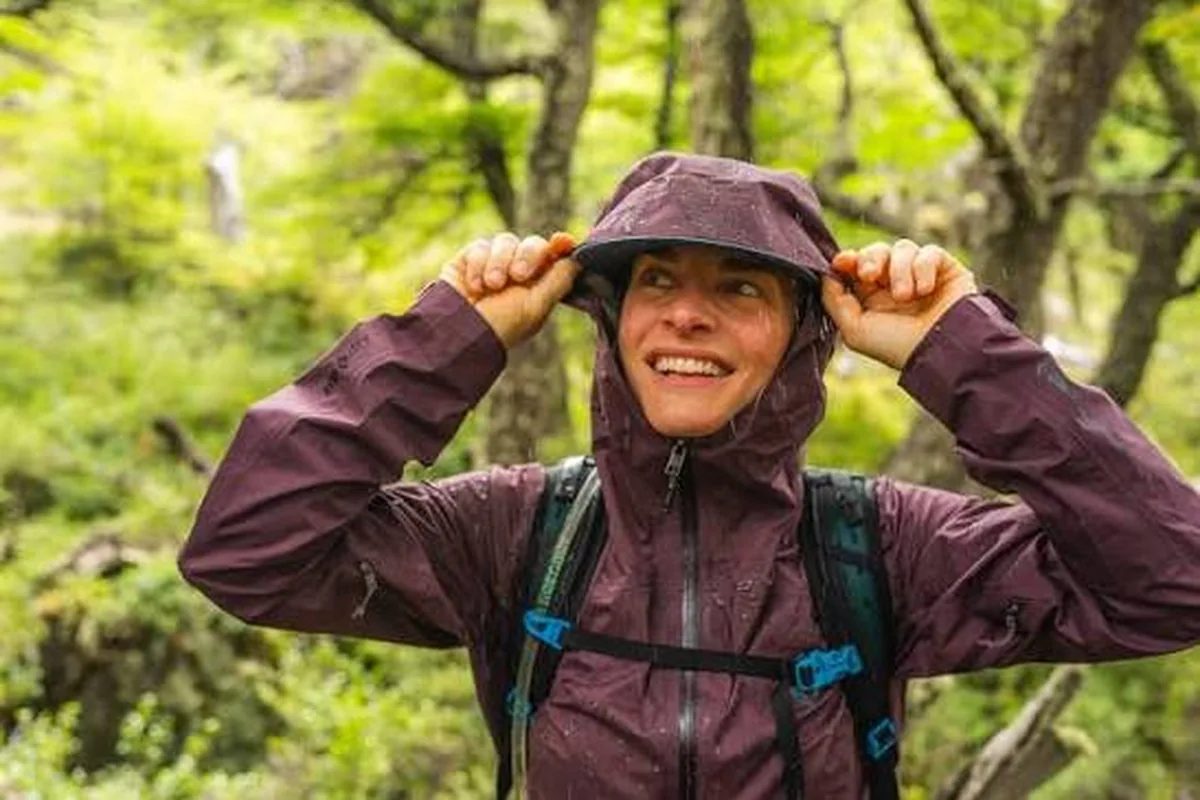
A hiker adjusts the hood of a rain jacket while wearing a backpack, demonstrating the importance of comfortable hood coverage and fit during forest trekking.
6. Rain Jackets for Bwindi and Mgahinga Forest Conditions
Bwindi has varied trekking sectors
Bwindi trekking departures take place in different sectors, including Buhoma, Ruhija, Rushaga and Nkuringo. The walk and conditions depend on the assigned gorilla group and the day’s route. Some paths are steep or shaded, and vegetation may remain damp after rainfall. A comfortable, flexible shell is therefore useful even when the forecast does not predict continuous rain. Follow the guide’s advice on when to put it on.
Mgahinga brings mountain conditions
Mgahinga lies in the Virunga mountain landscape, where cooler conditions and changing cloud cover can influence clothing choices. A waterproof outer layer over an appropriate insulating layer offers flexibility during a chilly start and a warmer climb. Do not assume that conditions will match a lowland safari destination. Check the specific trekking location before packing and be ready to adjust layers during the walk.
The trail is not a fashion runway
Dark or muted colours are practical for forest travel, although colour alone does not determine suitability. Choose a garment that can tolerate contact with branches and muddy hands. Avoid dangling straps and decorative accessories that might snag. A hood that stays in place and sleeves that allow reaching movements are more important than a fashionable silhouette. Prioritize comfort and a quiet, functional design.
Keep the camera protected
Rain jackets do not replace proper rain protection for cameras, phones and binoculars. Use a dry bag or a reliable waterproof pouch for sensitive equipment and follow park rules about photography. The jacket should allow easy access without leaving the front open for long periods in rain. Practice putting equipment away quickly so that the group can move safely when a guide asks everyone to continue.
Respect the gorillas and the forest
A rain jacket is personal equipment, not permission to approach wildlife or move away from the ranger-led group. Follow the Uganda Wildlife Authority’s current gorilla tracking rules and instructions given at the briefing. Keep all packaging and damaged gear out of the forest. If a jacket tears or a zipper breaks, tell the guide and deal with it at an appropriate safe stopping point.
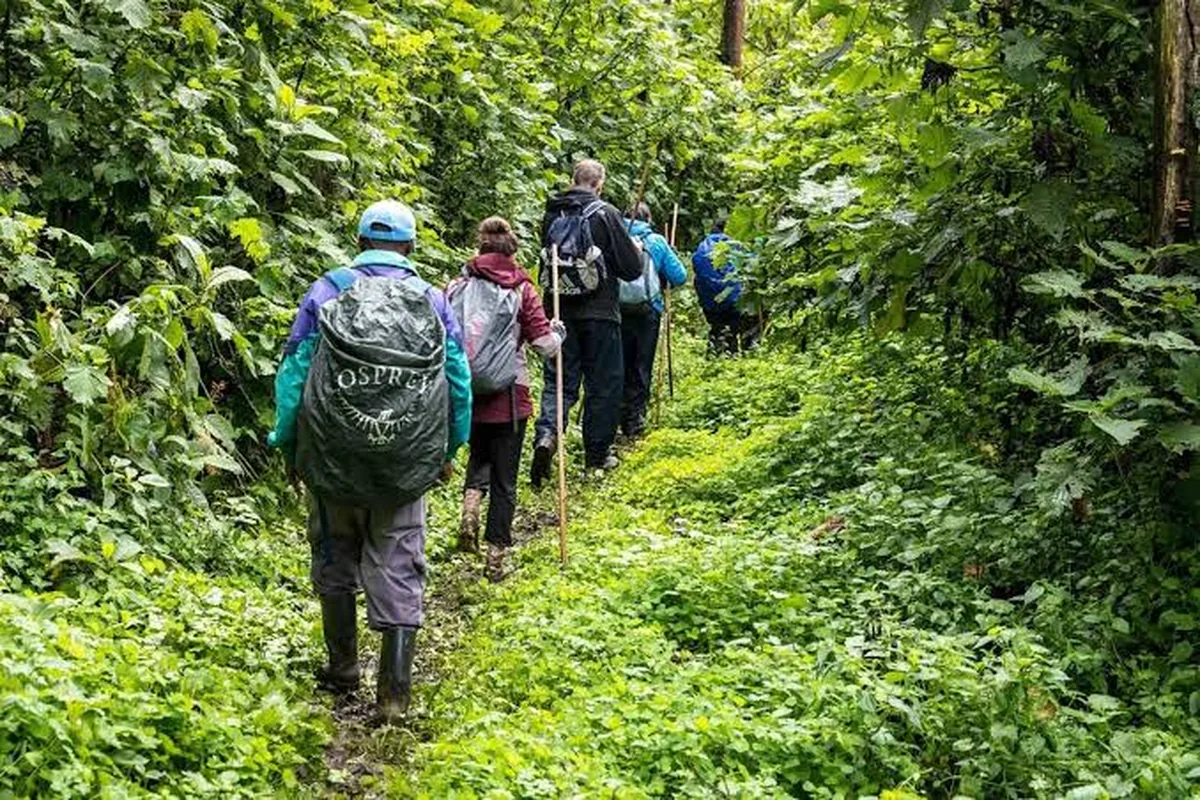
Trekkers walk through dense green forest vegetation wearing outdoor jackets, backpacks and sturdy footwear, illustrating the importance of preparing for changing rainforest conditions.
7. Rain Jackets Versus Ponchos for Gorilla Trekking
Why ponchos appeal to travelers
A poncho can be inexpensive, lightweight and quick to pull over clothing and sometimes a small pack. It may provide generous coverage while standing still. For some visitors, it works well as an emergency rain layer. However, a loose poncho can catch on vegetation, obscure hand placement or flap during a climb. Think about the route and how freely you need to move before choosing it as the only rain protection.
Where fitted jackets perform better
A fitted jacket generally stays closer to the body and allows the arms to move independently. Adjustable cuffs, a secure hem and a shaped hood can make it easier to use trekking poles and navigate narrow paths. This is one reason many hikers prefer a proper shell when comparing the best rain jackets for gorilla trekking in Uganda with ponchos. Comfort still depends on the particular garment, not just its category.
Pack coverage is a separate decision
Some ponchos cover a backpack, but the resulting drape can be bulky on narrow trails. A rain jacket normally leaves the pack exposed, so a pack cover or waterproof liner is useful. A liner or dry bag also helps if the pack cover shifts or the bag rests on wet ground. Choose a system that you can manage without repeatedly removing the backpack in awkward places.
When a poncho can still help
For a traveler who already owns a suitable jacket, a compact poncho may be useful as a backup during non-trekking activities or at a lodge. It can also serve during brief stops when movement is limited. Avoid assuming that one solution is always superior. Test the poncho outdoors with a daypack and walking stick to see whether it obstructs your view, catches the wind or restricts your stride.
Choose based on the whole journey
A multi-day Uganda safari may include boat excursions, game drives, lodge walks and transfers as well as the gorilla trek. A packable jacket is often easier to reuse across these activities. If luggage space is limited, versatility matters. Travelers should weigh the jacket’s comfort, durability and pack size against the specific activities they have booked rather than selecting clothing based only on a single rainy photograph.
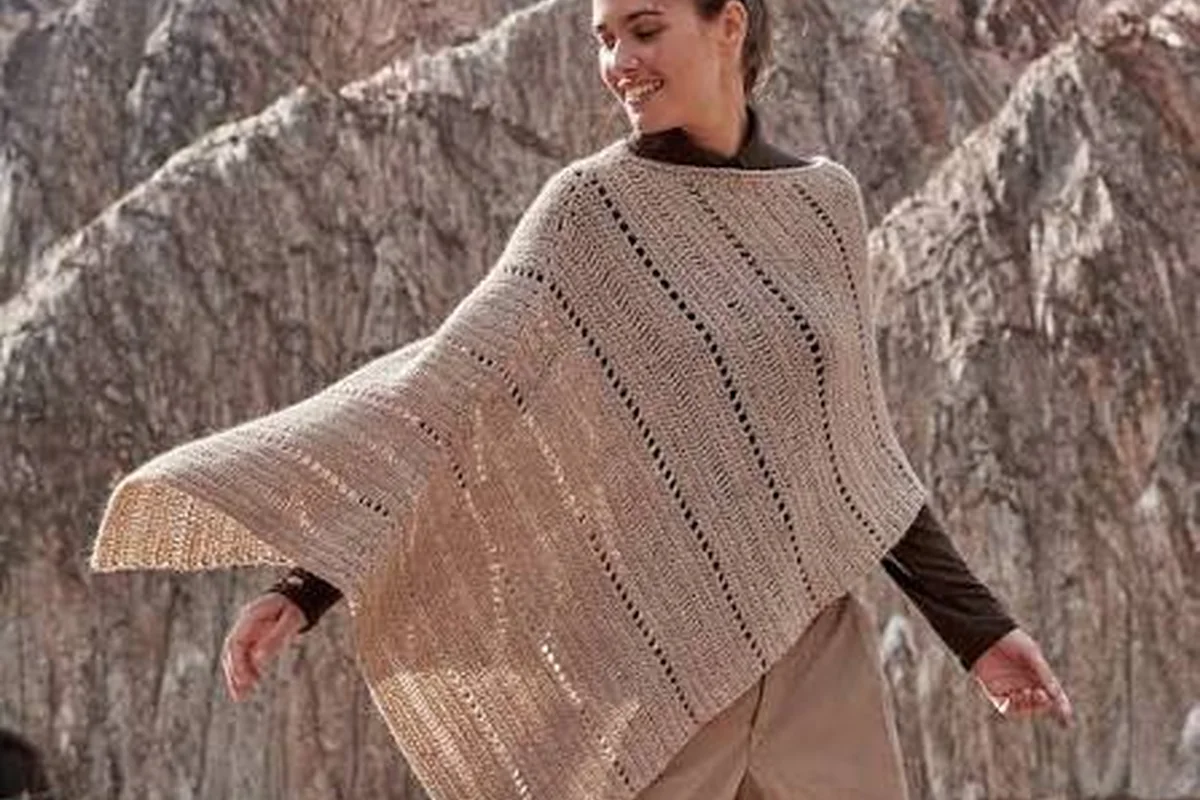
A beige knitted fashion poncho, illustrating why ordinary knitwear should not be confused with waterproof rain ponchos for gorilla trekking.
8. Nine Essential Tips for Choosing and Using a Rain Jacket
Tips one to three: fit, test and waterproofing
First, try the jacket with the layers and backpack you will actually use. Second, test it during a walk rather than judging it only in a shop mirror. Third, examine waterproof construction, including seam sealing and the closure at the front. These checks help identify problems before travel. A garment that rubs the neck or rides up during movement can become tiring over a long forest outing.
Tips four to six: airflow, hood and sleeves
Fourth, choose practical ventilation for uphill walking. Fifth, make sure the hood adjusts securely without blocking side vision. Sixth, check the cuffs while wearing gloves or holding a walking stick. These details determine how usable the jacket feels once conditions change. A highly technical shell is not automatically the best choice if its controls are awkward or its hood cannot be fitted comfortably.
Tips seven to nine: packing, care and backup
Seventh, keep the jacket near the top of the daypack. Eighth, clean and maintain it according to the manufacturer’s instructions, paying attention to the water-repellent finish. Ninth, carry a dry spare layer protected in a bag for after the trek. These steps make ordinary equipment more effective. Good preparation reduces avoidable discomfort without promising that weather or trail conditions can be controlled.
Try a realistic rehearsal
Before leaving home, wear the jacket over your planned trekking clothes and walk for thirty to sixty minutes, including a slope if possible. Carry the daypack and use walking sticks if you plan to take them. Notice whether the jacket feels clammy, whether pockets remain accessible and whether the hood stays in place. Make adjustments early rather than discovering an uncomfortable fit at the park briefing.
Keep priorities simple
A suitable jacket does not have to be expensive or covered in technical labels. Fit, adequate waterproofing, ventilation, secure closures and durability should lead the decision. If choosing between a premium jacket with poor fit and a simpler jacket that moves comfortably and protects against rain, the better-fitting option may serve you more effectively. Consider expected use after the safari as part of value.
9. Common Mistakes, Packing Advice and Safari Planning
Mistake: relying on a thin fashion jacket
Some casual jackets are designed for short journeys between buildings, not extended walks in wet vegetation. A water-repellent finish may work in drizzle but fail to keep the wearer comfortable in persistent rain. Read the product description and check the seams before travel. If uncertain, bring a proven waterproof shell rather than assuming that any jacket with a hood will perform equally well.
Mistake: forgetting to test the hood
Travelers often check chest size and ignore the hood until rain starts. A hood that falls across the eyes or turns poorly with the head can make uneven trails harder to navigate. Try it while looking left and right, bending and carrying a backpack. The collar should not press painfully against the chin when fully closed. Adjustments should be straightforward even with damp fingers.
Mistake: packing wet clothes together
After trekking, a damp jacket folded tightly against dry clothes can transfer moisture and create an unpleasant smell. Separate wet items when possible and allow the jacket to air-dry in a suitable place at the lodge. Follow care labels, and do not place technical waterproof fabrics directly against intense heat. If the safari continues the next morning, check that your dry backup layer remains protected.
| Common mistake | Better approach | Why it matters |
|---|---|---|
| Buying without trying layers | Test with fleece and daypack | Checks real-world fit |
| Relying on water resistance | Choose appropriate waterproof protection | Better prepared for sustained rain |
| Ignoring hood fit | Adjust and test visibility | Supports safer trail awareness |
| Packing jacket at bag bottom | Keep shell near top of pack | Faster response to changing weather |
| Storing wet jacket with dry clothes | Separate and air-dry after trekking | Protects spare clothing |
Mistake: treating rainwear as complete protection
A jacket covers the upper body but not every part of a hiker. Boots, socks, trousers, gloves and a daypack also require thought. Even excellent rainwear cannot prevent slips, scratches or fatigue. Walk at the pace directed by the guide, use appropriate footwear and keep hands free when negotiating difficult ground. A sensible clothing system supports the experience without replacing careful movement.
How PrideMark Safaris can help
PrideMark Safaris can advise travelers on likely trekking conditions, sector arrangements, suitable clothing and the practical equipment to pack for their itinerary. We arrange tailored Uganda and Rwanda safaris, including permits subject to availability, accommodation and ground transport. Contact our reservations team before departure with any questions about clothing or the planned route. Preparing early allows you to focus on the experience rather than last-minute shopping.
Frequently Asked Questions About Rain Jackets for Gorilla Trekking
1. Do I need a waterproof jacket for gorilla trekking in Uganda?
A waterproof jacket is a sensible item to pack because forest conditions can change and vegetation may remain wet after rain. It is practical preparation rather than a guarantee that you will encounter a storm. Choose a jacket you can move in comfortably and keep it accessible during the trek. A compact shell can also be useful on other parts of a Uganda safari. Follow any specific advice from your guide about conditions on the day.
2. What is the best rain jacket material for Bwindi?
There is no single material that suits everyone. Look for a waterproof construction with sealed seams, a comfortable lining or inner surface and enough breathability for active walking. The exact membrane or coating matters less than how the complete jacket fits and performs. Test the hood, cuffs and ventilation before travel. A lightweight technical shell is often practical, especially when combined with a separate base layer and a small insulating layer.
3. Are water-resistant jackets enough for gorilla trekking?
A water-resistant jacket may be adequate for brief drizzle but should not be assumed to protect against persistent rain. Manufacturers use these terms differently, so inspect the label and seam construction. If you already own a jacket, test it in appropriate conditions and check its condition. For a forest trek where weather is uncertain, a genuinely waterproof shell is a more dependable choice than a casual windbreaker marketed for light showers.
4. Should I wear a poncho or a rain jacket?
A rain jacket is generally easier to manage on narrow, uneven trails because it stays closer to the body and allows independent arm movement. A poncho can offer broad coverage and may work as backup rainwear, but loose fabric may catch on plants or flap while climbing. Try both with a daypack and walking stick. The right choice depends on fit, comfort, mobility and the activities included in the wider safari.
5. Will a rain jacket make me too hot while trekking?
It can, particularly during a steep climb or when humidity is high. Breathable fabric helps, but ventilation and layering are just as important. Choose a jacket with openings you can adjust, and avoid wearing an unnecessarily thick insulating layer beneath it. When conditions are dry and the guide agrees, you may be more comfortable carrying the shell in your daypack. Put it back on promptly if rain or cold wind develops.
6. What colour rain jacket should I take?
Neutral or muted colours are a practical choice for forest activities, but fit and function are more important than an exact shade. Avoid highly reflective accessories or loose decorative attachments that could distract or snag. Select a durable jacket that is easy to clean after mud and wet vegetation. If a park briefing or your guide provides clothing advice for a particular activity, follow those instructions rather than relying on a universal colour rule.
7. How should a rain jacket fit over trekking clothes?
Try it over the base layer and light fleece you plan to pack. You should be able to raise your arms, bend forward and reach across your body without severe pulling. The hem should not ride far up the back, and the cuffs should stay near the wrists. Check the fit with your daypack on. A jacket that is too tight restricts movement, while an excessively loose one can snag on vegetation.
8. Do I need a hood if I have a hat?
A hat may help shield the face from drizzle or sunlight, but it does not replace a secure waterproof hood during heavier rain. An adjustable hood can protect the head and neck while allowing you to look around comfortably. Test it over any cap you plan to wear, since a brim can change the fit. Avoid hoods that obstruct peripheral vision or make it difficult to hear and respond to your guide.
9. Can I use my normal winter raincoat?
You can use an existing coat if it is waterproof, comfortable and allows enough movement. However, heavy insulated winter coats can become uncomfortably warm during strenuous forest walking. A separate waterproof shell and lightweight insulating layer usually offer more flexibility. Try the coat on a brisk walk with your daypack before packing. If you become overheated or the fabric restricts your shoulders, consider a lighter alternative.
10. How do I keep my phone and camera dry?
Use a suitable waterproof pouch or dry bag rather than relying only on a jacket pocket. Rain can enter through zippers, and moisture can transfer from wet hands when equipment is removed. Keep frequently used items accessible but secure. Follow park photography rules, including restrictions on flash, and listen to your guide about when it is safe to stop. Check equipment protection before the trek rather than improvising in the rain.
11. How do I care for a rain jacket after trekking?
Shake off loose dirt and let the jacket dry in a ventilated place, following its care label. Technical waterproof garments may need specialized cleaning and occasional restoration of their water-repellent finish. Avoid harsh detergents or excessive heat unless the manufacturer specifically permits them. Do not store a damp jacket tightly folded for long periods. Proper care helps maintain performance and makes the garment more useful on future outdoor trips.
12. Can PrideMark Safaris help me prepare for wet trekking conditions?
Yes. PrideMark Safaris can discuss practical packing needs in relation to your itinerary, planned trekking location and travel dates. Our team can help coordinate gorilla trekking arrangements, accommodation and transfers, with permits subject to availability. We can also explain what to expect from the briefing and why suitable footwear and layers matter. For personalized guidance, contact the reservations team before departure so there is time to prepare comfortably.
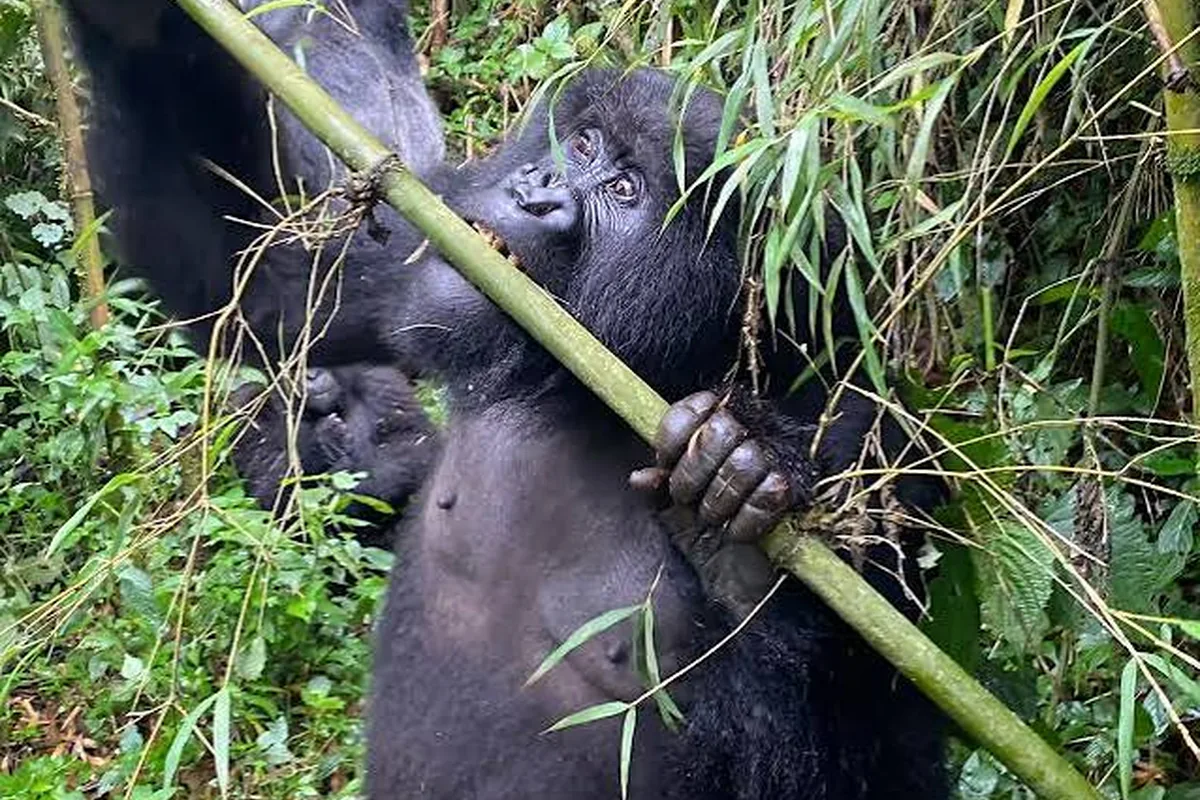
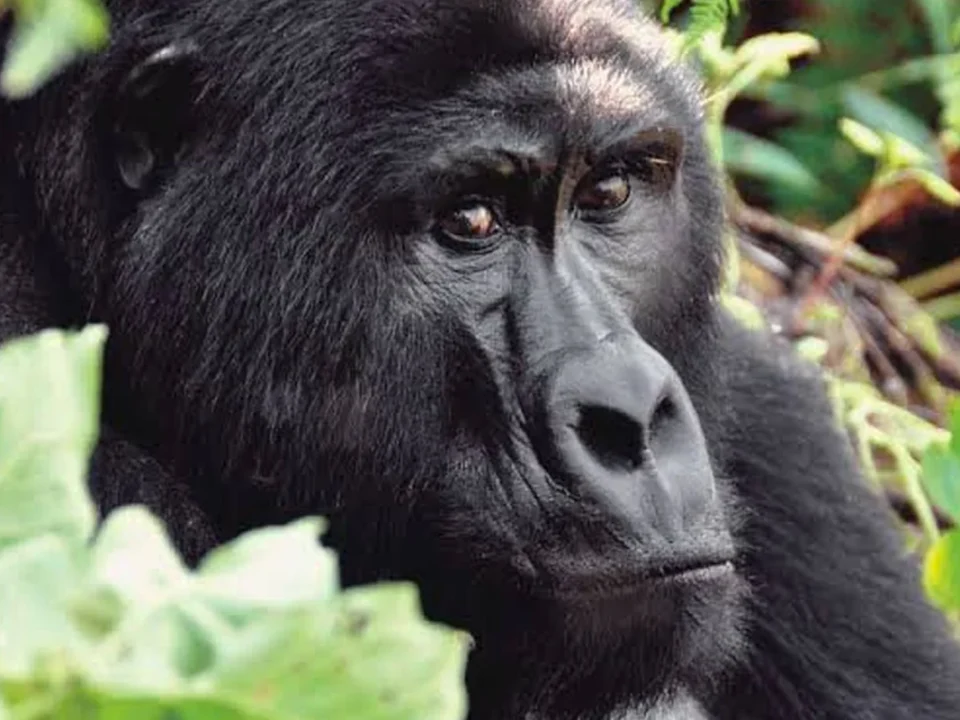
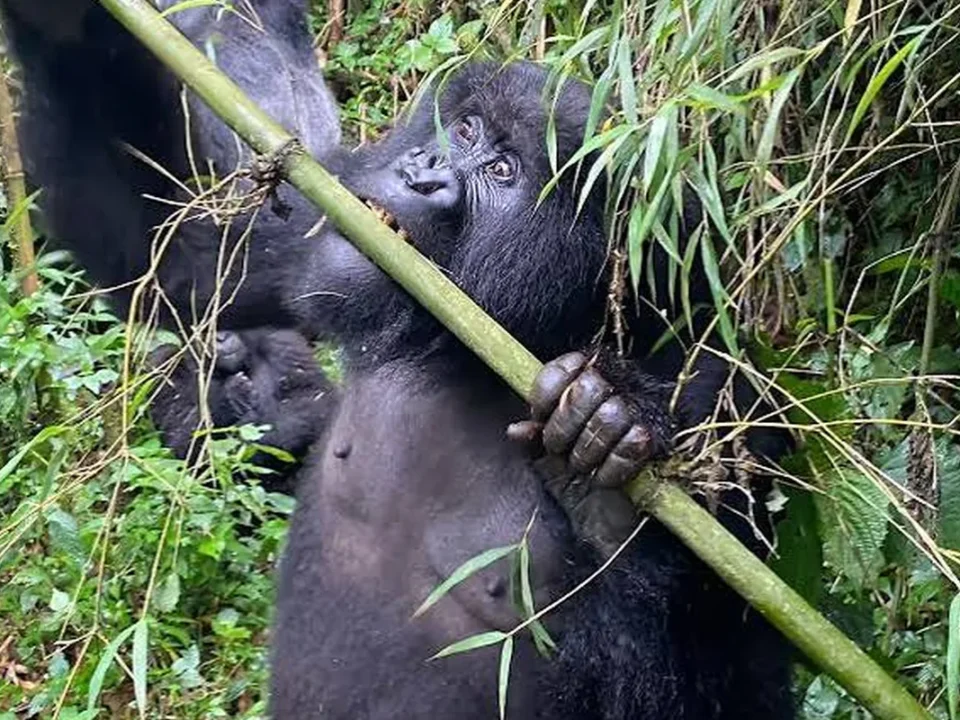
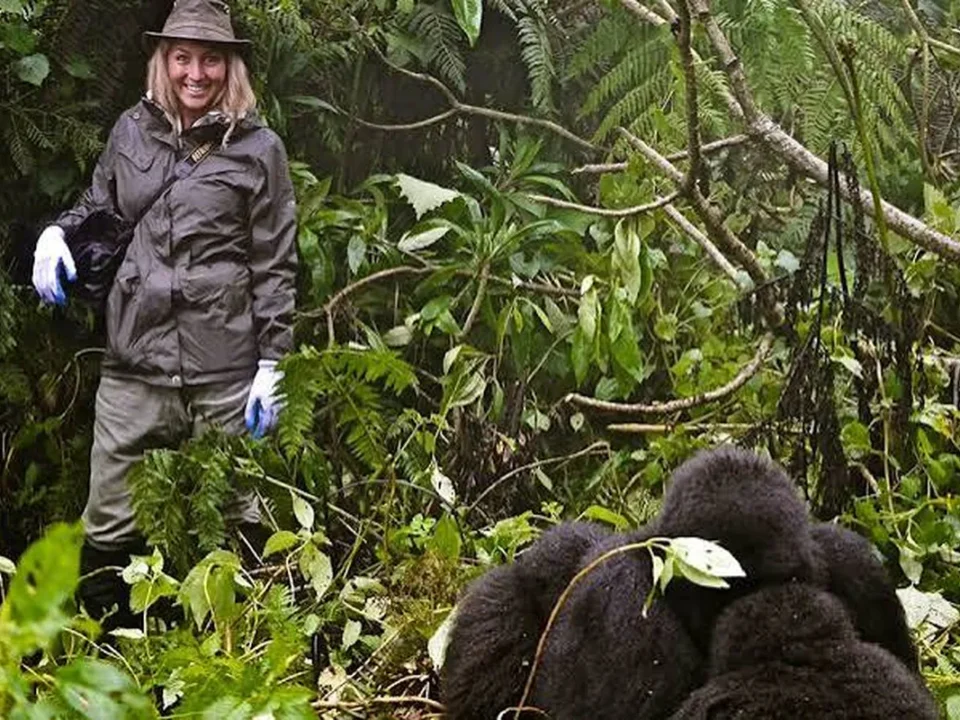
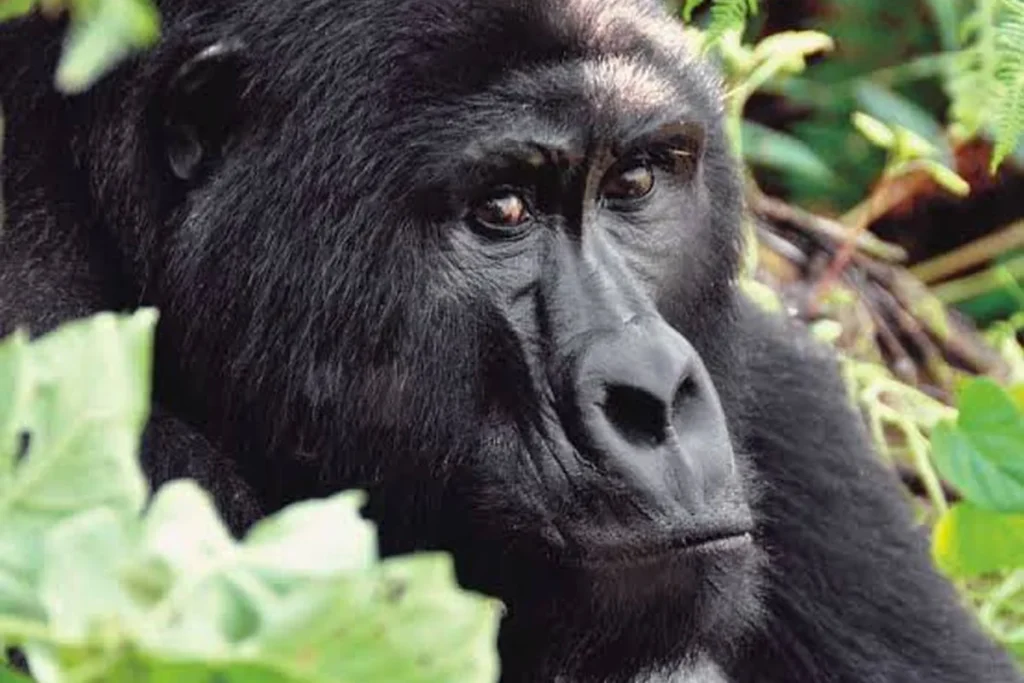
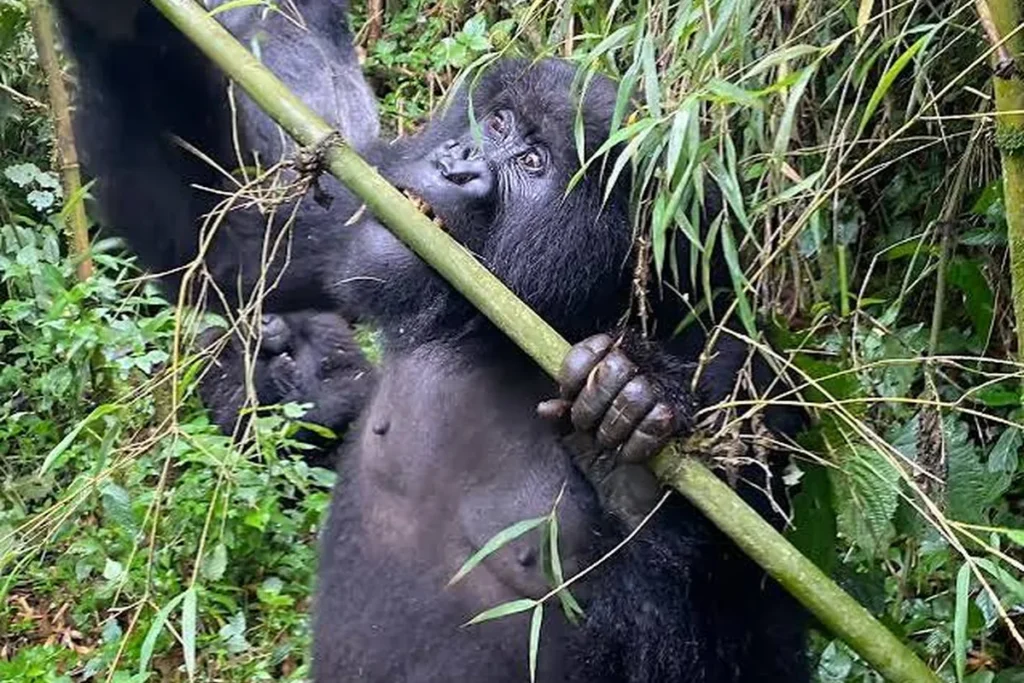
A young gorilla holds a bamboo stem while surrounded by lush forest vegetation, highlighting the remarkable wildlife visitors can encounter during gorilla trekking.
Quick Pre-Trek Rain Jacket Checklist
Lay out the clothing you intend to wear for the trek and check every layer together. Put on your base shirt, fleece if needed, rain shell and daypack. Walk up and down stairs, raise your arms and adjust the hood. Check that your backpack straps do not trap the collar awkwardly. Practice reaching your waterproof phone pouch without leaving the jacket open for an extended period. Small rehearsals are especially valuable for visitors who have never used technical outdoor clothing before.
On the evening before trekking, confirm the meeting time and weather advice with your safari guide or lodge. Place your rain jacket at the top of the pack, alongside a protected spare layer and essential personal items. Do not overload pockets or carry loose straps that can catch on vegetation. During the trek, adjust ventilation when safe and follow the ranger’s pace. After returning, separate damp clothing from dry items and allow the jacket to dry according to its care instructions.
Final Thoughts: Pack for Comfort, Not Just Rain
The best rain jackets for gorilla trekking in Uganda are the ones that combine dependable rain protection, comfortable movement and practical ventilation. Check the hood, cuffs and seams, wear the jacket with your planned layers and keep it accessible throughout the day. Remember that a jacket is only one part of sensible trekking preparation. Follow your guide, respect wildlife rules and leave space in your daypack for dry spare clothing.
For a tailored gorilla trekking itinerary, contact PrideMark Safaris. Our Uganda-based team can help with permits subject to availability, suitable accommodation, transport and practical preparation for your journey. You can also learn more about our company on the About Us page and explore safari experiences on our homepage.