Bwindi vs Mgahinga Gorilla Trekking: 7 Important Differences Explained

What Happens If You Arrive Late for Gorilla Trekking in Uganda?
November 14, 2026
Gorilla Trekking Briefing in Uganda: 9 Amazing Facts
November 16, 2026
Introduction: Choosing Between Uganda’s Two Mountain Gorilla Destinations
Choosing between Bwindi Impenetrable National Park and Mgahinga Gorilla National Park is not simply a matter of deciding where mountain gorillas live. Both destinations offer regulated encounters with wild mountain gorillas, but the journeys surrounding those encounters can feel remarkably different. Understanding those differences helps travelers select a destination that suits their interests, physical abilities, available time, and expectations.

At PrideMark Safaris, we believe a rewarding gorilla safari begins with informed planning. A traveler who dreams of walking through an ancient rainforest may prefer Bwindi, while someone fascinated by volcanic landscapes and golden monkeys may find Mgahinga especially appealing. Neither choice is universally superior, and the best experience depends on the details of the individual itinerary.
The Bwindi vs Mgahinga gorilla trekking comparison becomes particularly important when travelers consider accommodation locations, permit availability, transport arrangements, trekking terrain, and additional activities. These practical factors can influence the entire safari, sometimes more significantly than the differences between the gorilla groups themselves. Careful planning helps visitors enjoy their time without unnecessary travel pressure or unrealistic expectations.
Mountain gorillas are wild animals whose movements respond to feeding opportunities, social relationships, terrain, and environmental conditions. Although experienced trackers monitor habituated groups, no operator can promise that gorillas will remain in a particular location or that a trek will follow a predetermined route. This uncertainty is part of encountering wildlife in its natural habitat rather than observing animals in captivity.
Uganda’s two gorilla destinations are managed by the Uganda Wildlife Authority, which regulates trekking permits, visitor access, conservation activities, and encounters with habituated gorilla groups. The authority identifies Bwindi’s four main trekking sectors and Mgahinga’s Ntebeko entry point, making the location of the permit an essential consideration when booking accommodation.
Bwindi vs Mgahinga Gorilla Trekking: Quick Comparison
The following comparison highlights the principal differences
before examining each destination in greater detail.
| Comparison Factor | Bwindi Impenetrable | Mgahinga Gorilla |
|---|---|---|
| Landscape | Dense montane rainforest and steep valleys | Volcanic slopes, bamboo and montane vegetation |
| Main Trekking Entry Points | Buhoma, Ruhija, Rushaga and Nkuringo | Ntebeko |
| Trekking Opportunities | Multiple habituated gorilla groups across several sectors | Smaller trekking operation associated with the Nyakagezi group |
| Trekking Difficulty | Variable, often involving steep forest slopes | Variable, with mountain terrain and elevation |
| Accommodation | Broad selection around several sectors | Smaller selection near the park, with more options around Kisoro |
| Additional Wildlife | Forest birds, primates and other rainforest wildlife | Golden monkeys, birds and mountain wildlife |
| Additional Experiences | Forest walks, cultural activities and gorilla habituation | Golden monkey tracking, volcanic hiking and cultural experiences |
| Best Suited To | Travelers seeking itinerary and accommodation flexibility | Travelers seeking volcanic scenery and varied mountain activities |
The table illustrates why selecting a park requires looking
beyond the gorilla encounter itself. Bwindi offers a larger
network of trekking locations, while Mgahinga concentrates
its experience within a distinctive volcanic environment.
Both can provide extraordinary wildlife encounters, but
the surrounding travel arrangements require different
planning approaches.
Difference One: Rainforest Landscapes Versus Dramatic Volcanic Scenery
Bwindi Impenetrable National Park: Trekking Through an Ancient Forest
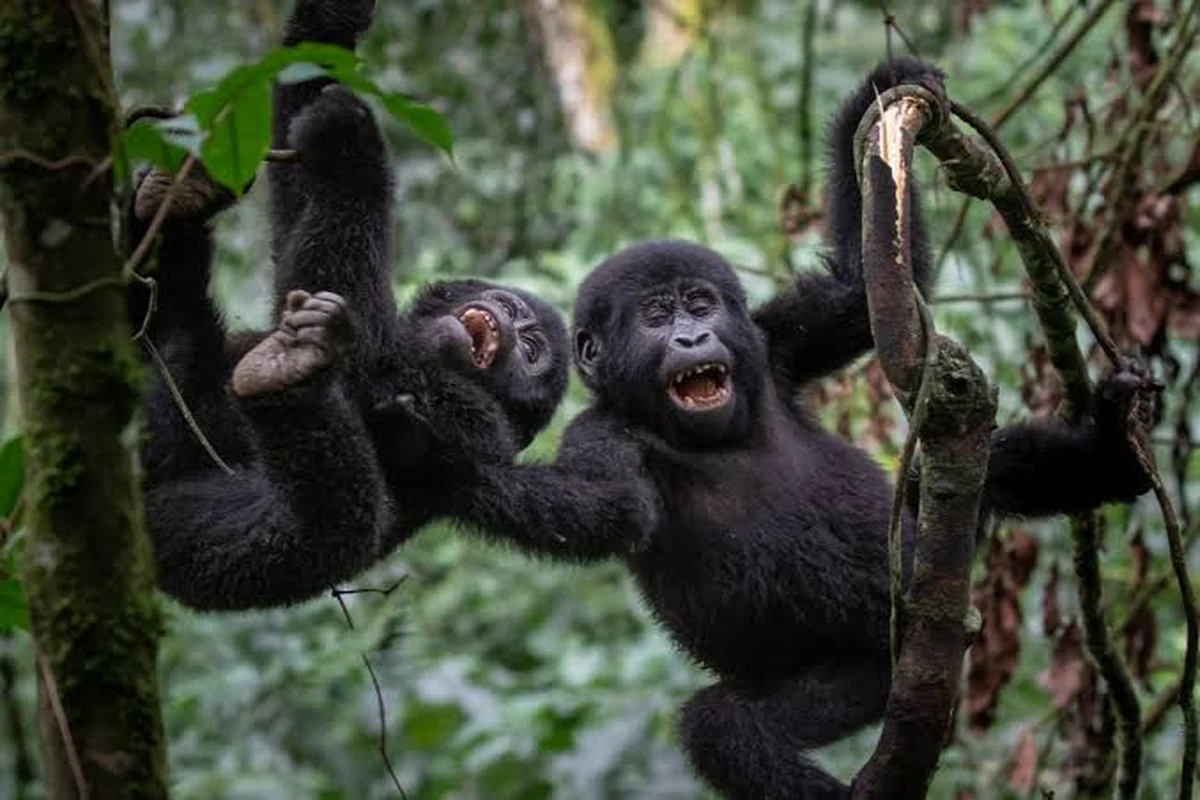
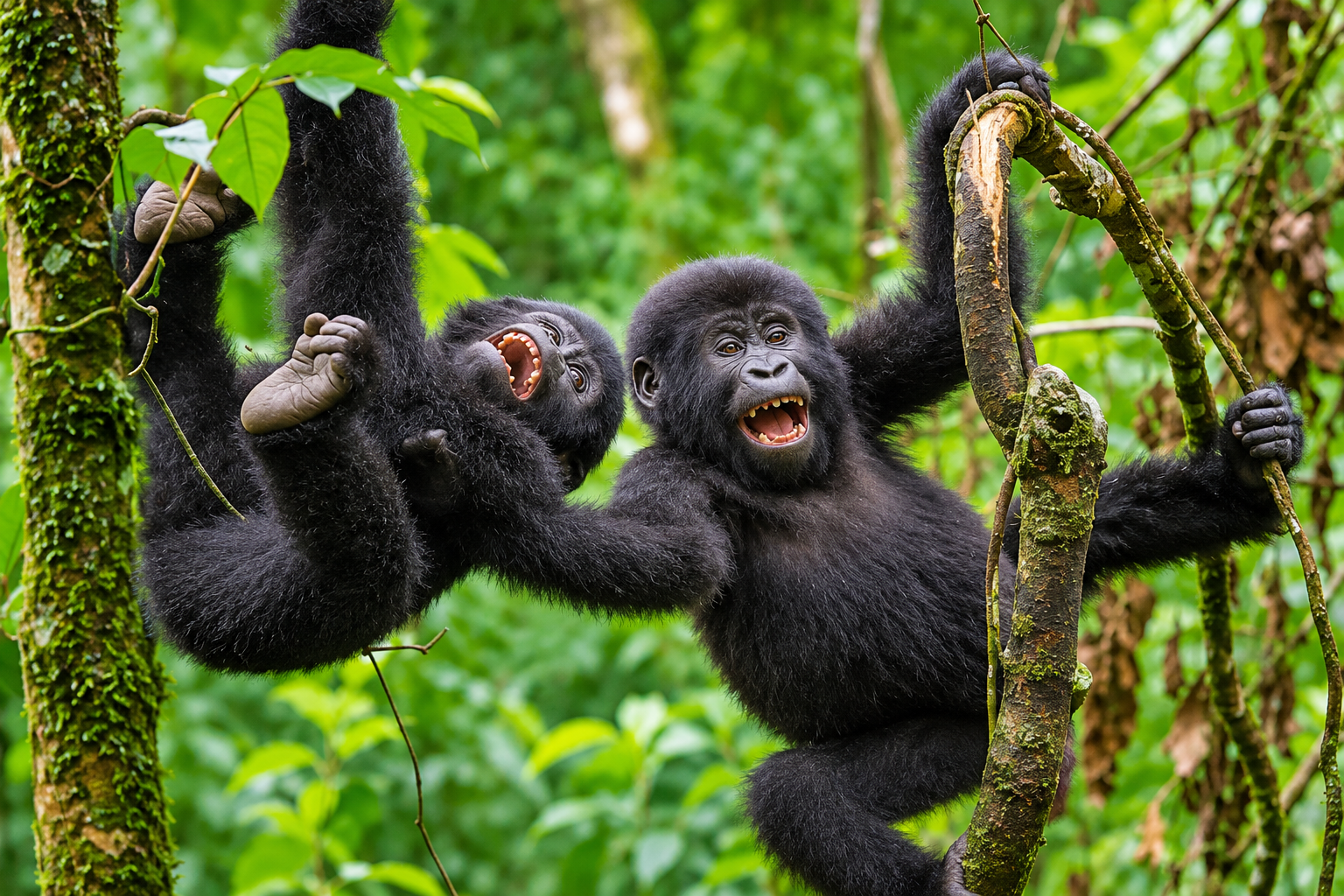
Playful young mountain gorillas in Uganda’s tropical forest, highlighting the wildlife experiences available on gorilla trekking safaris.
Bwindi is celebrated for its exceptionally rich forest environment, where towering trees, climbing plants, ferns, tangled vegetation, and deep valleys create a remarkable mountain landscape. The forest often feels enclosed and mysterious, with changing light filtering through the canopy. Travelers entering this environment experience the distinctive atmosphere of a tropical mountain forest that supports an extraordinary variety of wildlife.
The name Impenetrable reflects the challenging character of parts of the forest, although designated trails and ranger-guided routes make responsible exploration possible. Thick vegetation, uneven ground, exposed roots, and steep slopes can make progress demanding. These characteristics contribute to Bwindi’s identity as a wilderness destination rather than a conventional sightseeing attraction with predictable walking paths.
One of Bwindi’s most memorable qualities is the gradual transition from cultivated hillsides and rural communities into protected forest. Visitors traveling toward the park encounter terraced landscapes, villages, tea-growing areas in some approaches, and mountain roads before reaching the trekking sectors. This transition provides a broader impression of southwestern Uganda and the relationship between communities and protected natural environments.
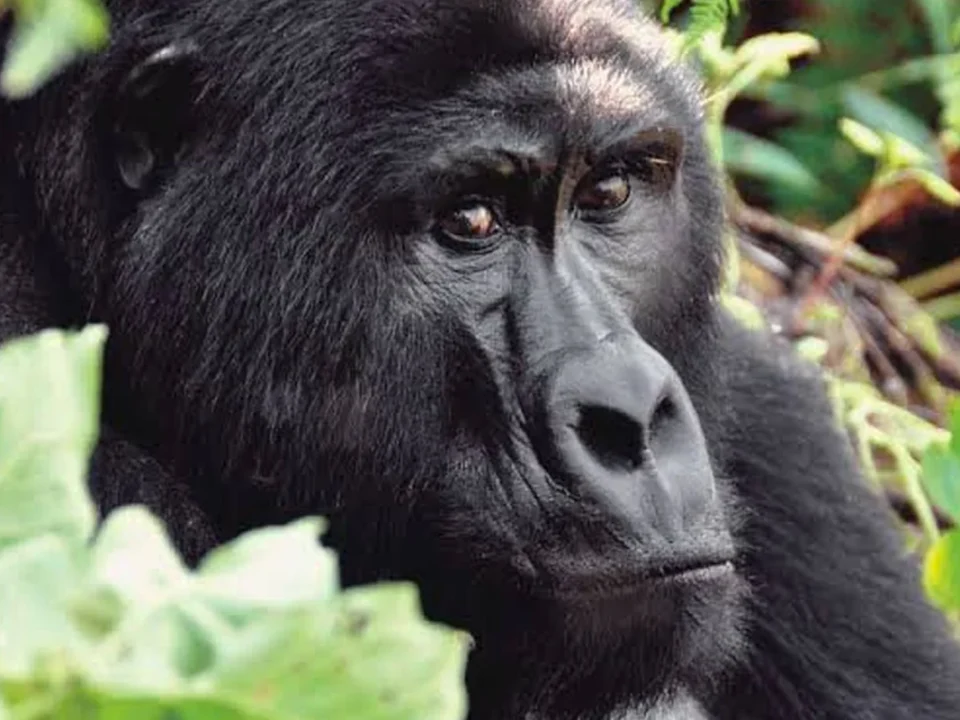
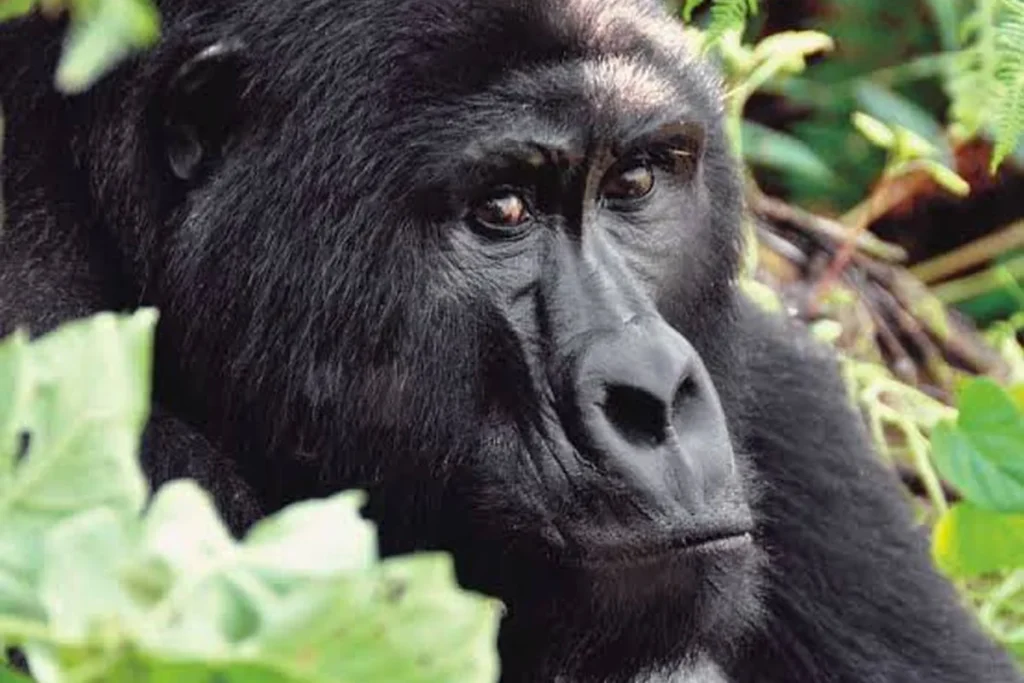
Within the forest, the surrounding vegetation influences how travelers experience gorilla encounters. A gorilla family may be resting beneath trees, feeding among leafy plants, or moving through dense undergrowth. Visibility can change as animals move, and photography sometimes requires patience because leaves, branches, and uneven light affect the available view.
For travelers interested in forest ecology, Bwindi offers considerably more than a single wildlife encounter. The forest supports numerous bird species, other primates, butterflies, and diverse plant communities. Guided nature activities can introduce visitors to ecological relationships that are easily overlooked when attention is concentrated entirely on finding mountain gorillas.
Bwindi’s landscape also creates differences between its trekking sectors. Buhoma, Ruhija, Rushaga, and Nkuringo occupy different parts of the protected area, each with its own surrounding terrain and approach roads. Consequently, travelers should avoid treating Bwindi as one compact destination where every lodge and trekking starting point is conveniently interchangeable.
Mgahinga Gorilla National Park: Gorilla Trekking Beneath Volcanoes
Mgahinga presents a strikingly different setting. Located within the Virunga volcanic landscape, the park is associated with the slopes of Mount Muhabura, Mount Gahinga, and Mount Sabyinyo. These mountains create a dramatic backdrop, with their shapes sometimes visible above cultivated hillsides and forest vegetation when weather conditions permit.

The vegetation changes across the mountain environment, creating combinations of bamboo, montane forest, and higher-altitude habitats. Travelers may encounter sections that feel more open than Bwindi’s dense rainforest, although the actual trekking route depends on the location of the gorillas and the terrain selected by the ranger team.
The volcanic scenery gives Mgahinga a distinctive sense of place. Rather than experiencing only a forested mountain environment, visitors become aware of the broader Virunga ecosystem shared across national boundaries. The mountains form an impressive geographical setting, but visitors should understand that wildlife movements and access arrangements remain subject to conservation management.
For photographers, Mgahinga offers opportunities to capture mountain scenery alongside the broader safari experience. Clear mornings can reveal striking views of volcanic slopes, while mist and cloud may create atmospheric landscapes. However, weather conditions are unpredictable, and the presence of volcanoes does not guarantee unobstructed mountain photographs during every visit.
Mgahinga can also appeal to travelers who appreciate understanding how different habitats connect. Bamboo vegetation, mountain forests, volcanic slopes, and surrounding agricultural landscapes demonstrate the ecological complexity of southwestern Uganda. These environments support wildlife beyond mountain gorillas and help explain why protecting connected habitats remains important.
Which Park Has Better Scenery?
The answer depends on what a traveler considers beautiful. Bwindi is especially appealing to visitors who value dense rainforest, deep valleys, rich vegetation, and the feeling of entering an ancient wilderness. Mgahinga may appeal more strongly to visitors who prefer mountain panoramas, volcanic formations, and the varied appearance of high-altitude landscapes.
Neither park offers consistently clearer gorilla photographs or universally better wildlife visibility. A forest opening in Bwindi may provide excellent photographic conditions, while a gorilla encounter in Mgahinga can occur behind dense vegetation. Wildlife positioning, light, weather, and ranger instructions influence photography more directly than the park’s general appearance.
When advising travelers, PrideMark Safaris recommends considering the complete landscape experience rather than choosing a park based solely on promotional photographs. Visitors who want a classic rainforest adventure may favor Bwindi, while those seeking a combination of mountain scenery and gorilla trekking may find Mgahinga especially rewarding.
Difference Two: Gorilla Families, Trekking Sectors, and Permit Availability
Why Bwindi Offers More Trekking Locations

A mountain gorilla mother shares a playful moment with her young one in a lush tropical forest.
One of the most significant differences in Bwindi vs Mgahinga gorilla trekking is the organisation of the gorilla trekking experience. Bwindi operates through four principal sectors: Buhoma, Ruhija, Rushaga, and Nkuringo. These locations provide access to different habituated gorilla groups and create more options when designing a multi-day safari.
The existence of several trekking sectors gives Bwindi greater operational flexibility, but travelers should not confuse flexibility with unlimited availability. Gorilla permits are controlled, and each habituated group has a restricted number of visitors. Popular dates can become difficult to secure, particularly when travelers request a specific sector or accommodation arrangement.
The Uganda Wildlife Authority explains that permits are booked according to the designated entry point and trekking date. Visitors are then allocated to specific gorilla groups through the approved management process. This distinction is important because a traveler generally cannot assume that booking a permit guarantees an encounter with a particular named gorilla family.
Buhoma: A Well-Established Gateway to Bwindi
Buhoma is among Bwindi’s best-known tourism areas and offers an established setting for gorilla trekking. Its surrounding accommodation choices, community activities, and forest experiences make it attractive to travelers seeking a well-developed safari base. The area’s character combines forest scenery with tourism services that have developed around conservation-oriented visitation.
Travelers approaching Bwindi from Queen Elizabeth National Park may find Buhoma particularly relevant when constructing a broader southwestern Uganda itinerary. Nevertheless, actual travel times depend on the chosen route, road conditions, and accommodation location. A carefully planned safari should account for these practical details instead of relying on simplified distance estimates.
Buhoma can also appeal to travelers who want activities beyond gorilla trekking without immediately transferring to another destination. Guided forest walks, birdwatching opportunities, and selected community experiences can provide meaningful additions. Availability and suitability should be confirmed before travel because not every activity operates under identical arrangements.
Ruhija: High-Elevation Forest and Birdwatching Appeal

Ruhija occupies a higher-elevation forest environment and is particularly interesting to travelers who enjoy mountain scenery and birdwatching. Its cooler conditions and forest habitats create a different atmosphere from some other approaches to Bwindi. Visitors should nevertheless prepare for changeable weather and terrain rather than assuming that one sector always provides easier walking.
For bird enthusiasts, Ruhija can be especially appealing because Bwindi’s forest habitats support numerous sought-after species. Combining a gorilla trek with guided birdwatching can turn the visit into a broader natural-history experience. Specialist birding arrangements should be planned separately from the gorilla permit because the activities have different schedules and guiding requirements.
Accommodation location matters considerably in Ruhija. A lodge described as being near Bwindi may still be inconvenient for an early-morning briefing if it lies closer to another sector. Travelers should therefore confirm the precise trekking entry point before finalising accommodation, especially when booking independently.
Rushaga: A Major Centre for Gorilla Trekking Experiences
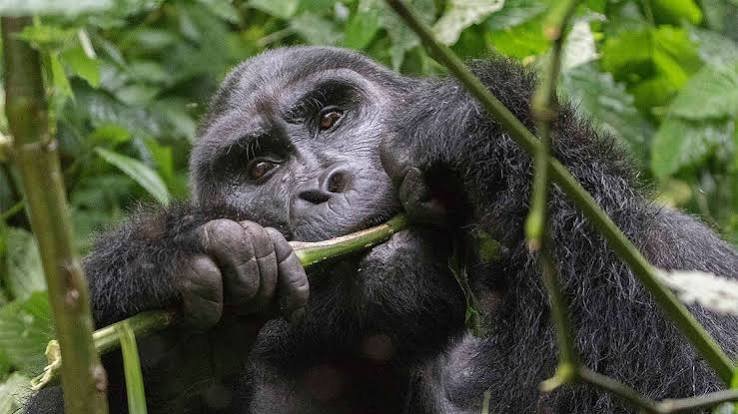
Rushaga is another important trekking sector in southern Bwindi and is particularly relevant to visitors interested in the park’s gorilla habituation experience. Its surrounding hills and forest landscapes provide a memorable setting for wildlife tourism, while nearby accommodation supports travelers seeking different levels of comfort.
The gorilla habituation experience differs from standard trekking because it involves observing a group undergoing the process of becoming accustomed to carefully managed human presence. Participation is regulated and subject to special arrangements. Travelers should not assume that a standard gorilla trekking permit includes habituation or that the two experiences are interchangeable.
Rushaga can be useful when designing a safari that combines gorilla trekking with other destinations around Kisoro and southern Bwindi. However, travelers should still allow appropriate transfer time between locations, particularly when moving across mountain roads or planning activities on consecutive mornings.
Nkuringo: Dramatic Hills and a Remote Forest Atmosphere
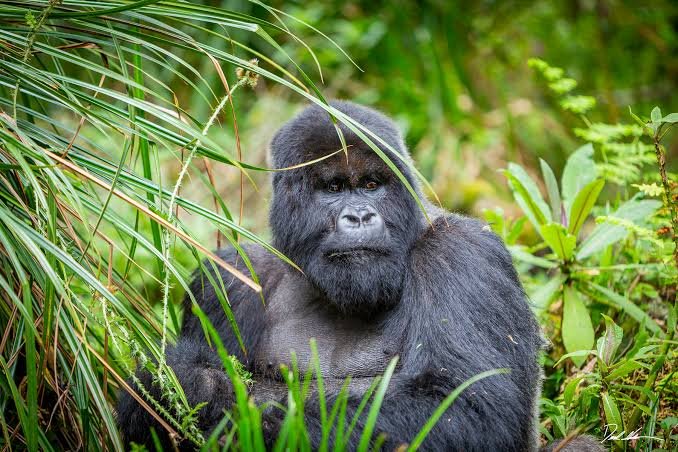
Nkuringo is associated with dramatic mountain scenery and a more remote-feeling approach to Bwindi. The surrounding hills can create impressive views, while the forest environment offers an adventurous setting for gorilla trekking. Visitors who appreciate quieter landscapes and challenging walking opportunities may find the sector especially attractive.
The terrain around Nkuringo can involve substantial changes in elevation, making realistic fitness preparation important. However, the difficulty of an individual gorilla trek still depends on the animals’ location and the route selected by the guides. It would be misleading to promise that every trek in Nkuringo is harder than every trek elsewhere.
For travelers interested in photography, Nkuringo’s surrounding landscapes may provide attractive opportunities outside the forest. Sunrise, mist, distant hills, and cultivated slopes can contribute to the overall safari experience. These landscape opportunities are separate from the unpredictable conditions of photographing gorillas during the regulated encounter.
Mgahinga and the Nyakagezi Gorilla Group
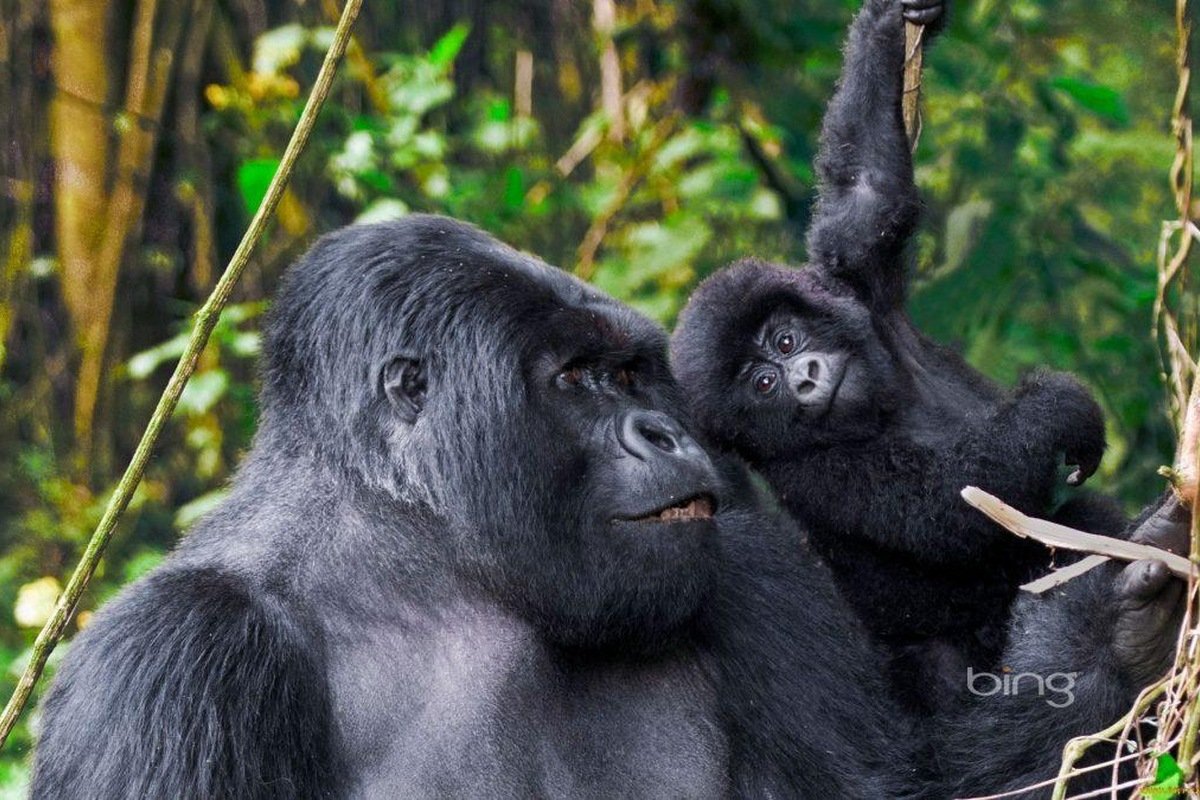
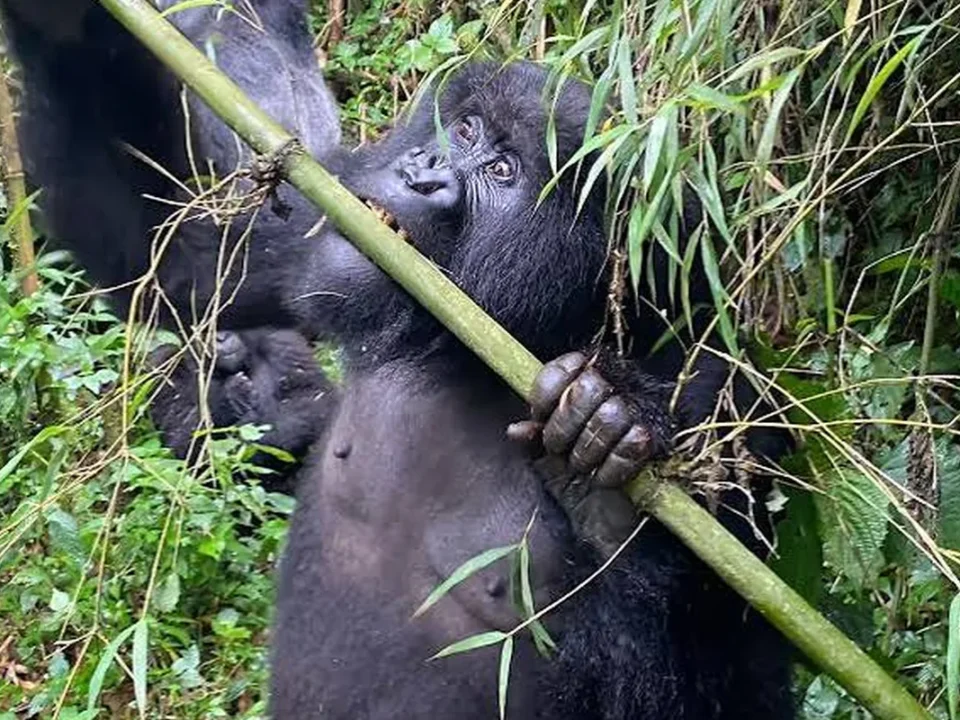
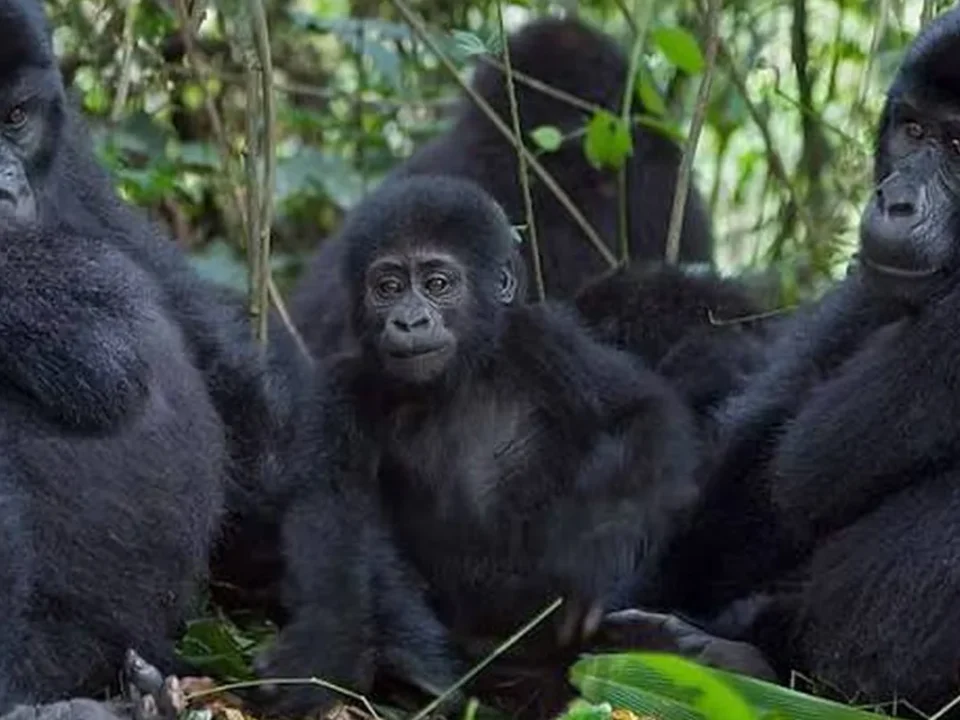
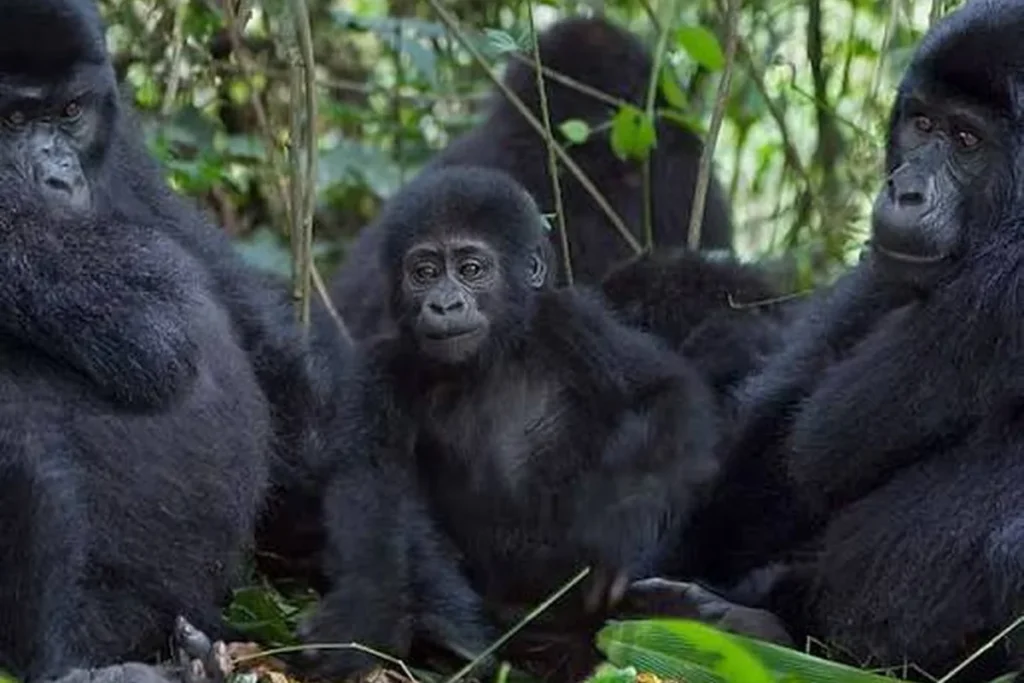
A young mountain gorilla plays beside a silverback in a lush tropical forest.
Mgahinga operates on a much smaller scale than Bwindi and is particularly associated with the habituated Nyakagezi gorilla group. The park’s trekking arrangements are concentrated around the Ntebeko entry point, which simplifies the basic geographical structure of the experience compared with Bwindi’s four sectors.
The smaller operation means that travelers generally have fewer permit options to choose from. Uganda Wildlife Authority’s public information describes Mgahinga as offering approximately eight gorilla trekking permits per day, although travelers should confirm current allocations before booking. A limited number of permits can make advance planning particularly important.
The Nyakagezi group’s movements and management arrangements are monitored by conservation authorities. Because Mgahinga forms part of a wider transboundary mountain ecosystem, travelers should not rely on outdated claims about gorilla movements or permit availability. Current information from the Uganda Wildlife Authority is the appropriate basis for planning.
Which Park Offers Better Permit Availability?
Bwindi generally provides more opportunities to find a suitable trekking date because it has multiple habituated groups and several sectors. This can be particularly useful for travelers whose schedules are constrained by international flights, accommodation reservations, or other safari activities. Nevertheless, greater overall capacity does not guarantee availability for a particular date.
Mgahinga may suit travelers who deliberately prefer its landscape and smaller trekking operation, provided permits are available. Rather than treating the limited capacity as a disadvantage in every circumstance, visitors can consider whether the park’s setting and additional activities justify planning around its specific trekking arrangements.
At PrideMark Safaris, we recommend confirming permits before making non-refundable accommodation arrangements. This is especially important for Mgahinga and for travelers requesting a particular Bwindi sector. The correct booking sequence reduces the risk of discovering that a chosen lodge is far from the confirmed trekking entry point.
Difference Three: Trekking Difficulty, Altitude, and Physical Preparation
Is Bwindi Gorilla Trekking More Difficult Than Mgahinga?
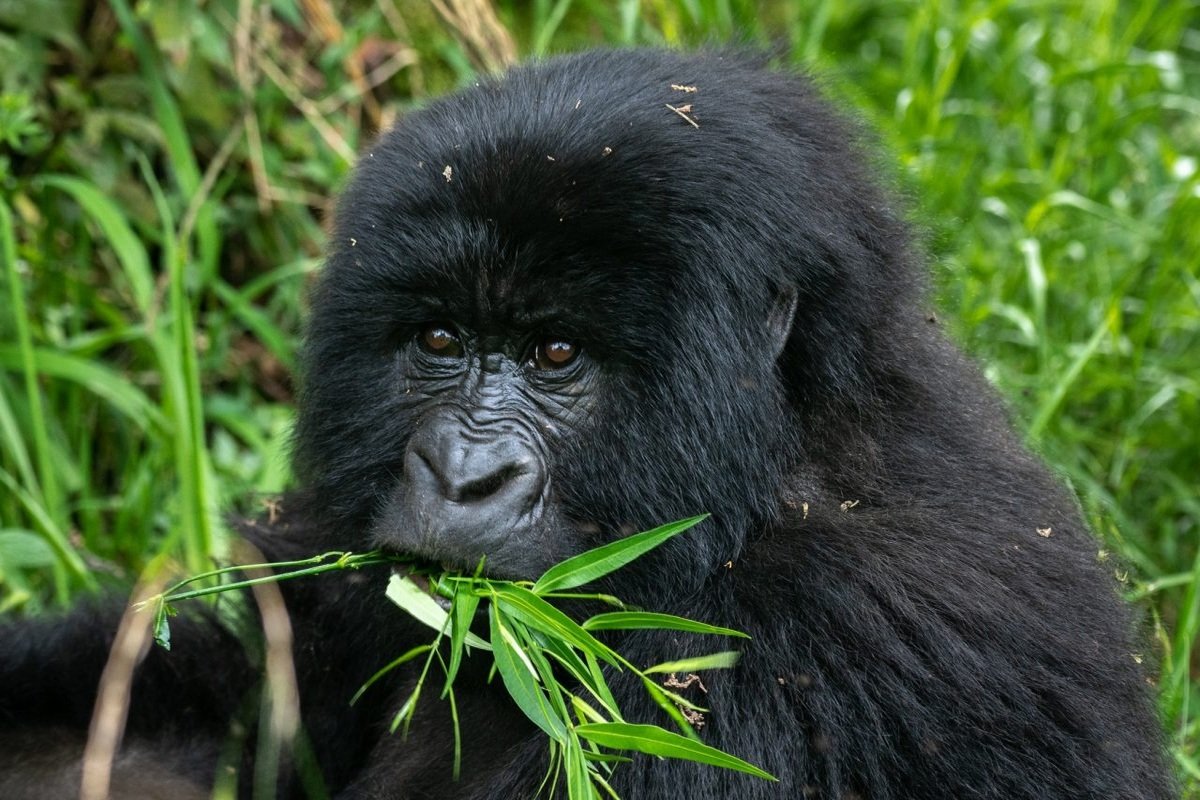
A common question in the Bwindi vs Mgahinga gorilla trekking comparison is which destination requires greater physical effort. There is no reliable answer that applies to every trek because gorillas move freely through mountainous habitats. The distance visitors walk can vary considerably, even when they return to the same park on consecutive days.
Bwindi’s terrain frequently involves steep forest slopes, muddy paths, exposed roots, and dense vegetation. In some places, the forest canopy limits visibility and makes the environment feel enclosed. Rangers and trackers may follow established paths initially before moving through less-developed sections where careful footing becomes particularly important.
Mgahinga introduces different challenges associated with volcanic slopes and mountain elevation. Although some sections can feel more open, other routes involve steep ground, vegetation, and demanding climbs. Visitors should not assume that the smaller park automatically offers shorter or easier treks, especially when gorillas are feeding at higher elevations.
The Uganda Wildlife Authority describes gorilla trekking as an activity requiring moderate fitness and indicates that excursions may last approximately two to seven hours. These figures are general guidance rather than guaranteed walking durations. The time spent reaching the gorillas depends on their location and the conditions encountered along the route.
Both parks occupy mountainous environments where elevation can influence physical comfort. Visitors arriving from lower-altitude destinations may notice that climbing requires more effort than expected. The effect varies between individuals and should not be confused with a predictable difference in the difficulty of every trek.
Mgahinga’s volcanic setting makes elevation particularly noticeable in the surrounding landscape. Travelers planning additional mountain hikes should distinguish those demanding activities from standard gorilla trekking. Climbing a volcano involves different routes, physical requirements, and time commitments, and should be evaluated as a separate adventure.
Bwindi also contains significant elevation changes, especially where trekking routes descend into valleys or climb steep forest slopes. A journey that begins with a manageable downhill section can become more challenging on the return. This is one reason visitors should consider overall stamina rather than focusing exclusively on the initial walking distance.
Preparing Physically for Gorilla Trekking
Preparing for gorilla trekking does not require becoming an expert mountaineer. Regular walking, gentle hill climbing, and activities that improve cardiovascular endurance can help travelers feel more comfortable. Visitors should build fitness gradually and consider their personal health circumstances when selecting additional hikes or demanding activities.
Appropriate footwear is particularly important. Sturdy walking boots with reliable grip can improve stability on muddy or uneven terrain. Long trousers, lightweight long sleeves, rain protection, and suitable socks can help protect against vegetation and changing weather conditions while keeping the traveler reasonably comfortable.
A small daypack can carry drinking water, snacks, rainwear, and essential personal items. Travelers should also consider the availability of local porters where permitted and appropriate. Porter services can reduce the burden of carrying equipment while providing income opportunities for people living around the protected areas.
Travelers with mobility limitations or health concerns should discuss their needs before booking. The availability of assistance, suitable routes, or other arrangements must be confirmed with the relevant authorities. Neither park should be advertised as universally accessible, because wildlife movements and terrain conditions remain unpredictable.
How Rangers Manage Trekking Groups
Gorilla trekking takes place under the supervision of trained guides and rangers who explain the applicable conservation and visitor rules. Their responsibilities include coordinating movements, maintaining appropriate distances, interpreting gorilla behaviour, and helping visitors navigate the forest safely.
Visitors should follow instructions even when the gorillas appear calm or approachable. Mountain gorillas are powerful wild animals, and their behaviour can change unexpectedly. Maintaining the required distance and avoiding unnecessary disturbance are essential aspects of responsible wildlife tourism.
The gorilla encounter is generally limited to one hour once the group has been located. This restriction helps manage human presence around the animals and protects the integrity of the wildlife experience. Visitors should use that time to observe rather than attempting to influence gorilla behaviour.
Which Destination Is Better for Less Experienced Hikers?
For travelers concerned about physical difficulty, the most useful approach is to discuss individual fitness, medical considerations, and preferences with the safari organiser before selecting a permit. Bwindi’s multiple sectors may provide more planning choices, but a particular sector cannot guarantee an easy trek.
Mgahinga can also provide a manageable experience for appropriately prepared visitors, depending on the gorillas’ location. Its smaller size should not be used as evidence that every trek will be short. A realistic itinerary includes enough time for the activity and avoids scheduling demanding transfers immediately afterward.
Difference Four: Accessibility, Transport, and Safari Route Planning
Reaching Bwindi from Entebbe and Kampala
Bwindi is situated in southwestern Uganda, a considerable distance from the country’s principal international arrival point at Entebbe. Road journeys generally require a substantial part of the travel itinerary, especially when visitors begin from Entebbe or Kampala. The exact duration depends on the selected trekking sector, route, weather, and road conditions.
The drive can become part of the safari experience rather than simply a transfer. Travelers may pass rural communities, cultivated hillsides, trading centres, and varied landscapes as they move toward southwestern Uganda. However, these scenic opportunities should not lead visitors to underestimate the time required for a comfortable journey.
Different Bwindi sectors are approached by different roads, making the selected permit essential to route planning. Buhoma may fit naturally into certain itineraries involving Queen Elizabeth National Park, while southern sectors can be practical for travelers combining gorilla trekking with Kisoro and nearby destinations.
Some travelers prefer domestic flights to regional airstrips followed by road transfers. Such arrangements can reduce long-distance driving but do not eliminate the need for ground transport. Flight schedules, luggage restrictions, weather conditions, and the final distance to the lodge must all be considered.
Reaching Mgahinga Through Kisoro
Mgahinga is closely associated with Kisoro, an important town in southwestern Uganda near the Virunga mountain region. Travelers typically use Kisoro as a transport and accommodation reference point when planning access to the park. The final journey to the Ntebeko area depends on the accommodation location and road conditions.

The route toward Kisoro offers attractive scenery, including hills, agricultural landscapes, and distant mountains. For travelers who enjoy photography and cultural landscapes, the approach can be a memorable part of the journey. Nevertheless, mountain roads require appropriate travel planning, especially during periods of heavy rainfall.
Domestic air connections to Kisoro may be relevant for visitors seeking to reduce time spent on the road. Availability and schedules should be checked before building an itinerary around a flight. Road transfers remain necessary, and early-morning trekking arrangements should account for the distance between the lodge and the park entrance.
Combining Gorilla Trekking with Queen Elizabeth National Park
Travelers who want to combine mountain gorillas with a classic savannah safari frequently consider Queen Elizabeth National Park. The park offers opportunities to experience landscapes and wildlife that differ considerably from those found in Bwindi or Mgahinga, making the combination attractive for visitors seeking variety.
Bwindi can fit conveniently into this broader route, particularly when the selected trekking sector aligns with the direction of travel. However, the distance between individual locations should be checked rather than assuming that all Bwindi entrances are equally accessible from Queen Elizabeth.
A safari combining Queen Elizabeth with Mgahinga is also possible, although the route may require different transfer arrangements. Travelers should allow sufficient time to reach Kisoro and avoid placing a long road journey immediately before an early trekking briefing whenever possible.
Combining Gorilla Trekking with Lake Bunyonyi
Lake Bunyonyi is a popular southwestern Uganda destination known for its islands, surrounding hills, and peaceful lakeside atmosphere. It can provide a relaxing contrast to physically demanding gorilla trekking, particularly for visitors who want time to enjoy scenery after their forest adventure.
The lake may be incorporated into itineraries involving either park, depending on the wider route. Its suitability should be assessed using actual travel distances and accommodation arrangements rather than assuming that all southwestern Uganda attractions are close together.
For travelers combining wildlife, relaxation, and landscape photography, a well-paced itinerary can be more rewarding than visiting too many destinations. Allowing time to enjoy each location creates a stronger travel experience and reduces the fatigue associated with repeated long transfers.
Which Park Is Easier to Reach?
Neither destination is universally easier to reach. Bwindi’s accessibility depends heavily on the trekking sector, while Mgahinga’s route is closely connected to Kisoro. The best option depends on whether the visitor is arriving by road, using a domestic flight, or traveling from another national park.
At PrideMark Safaris, our recommended planning approach is to begin with the intended international arrival point, confirm the gorilla permit location, and then arrange accommodation and additional destinations around that decision. This helps create a practical route instead of forcing the itinerary around unsuitable lodge locations.
Difference Five: Accommodation, Comfort, and Overall Safari Atmosphere
Accommodation Choices Around Bwindi
Bwindi offers accommodation across several tourism areas, including options for travelers seeking budget-friendly stays, comfortable mid-range lodges, and luxury forest experiences. The range is one of the park’s advantages, although the availability of a particular property depends on the sector and travel dates.
Some lodges emphasise forest views and proximity to trekking briefings, while others focus on privacy, hospitality, or distinctive hillside settings. Travelers should evaluate the actual location and services rather than relying solely on attractive promotional photographs. A beautiful lodge becomes less convenient when it requires an unnecessarily long morning transfer.
Accommodation near Buhoma can be particularly useful for visitors trekking from that sector, while properties around Rushaga, Nkuringo, and Ruhija serve their respective areas. The choice should follow the permit location, not precede it, unless the traveler is prepared to adjust trekking dates or sectors.
For luxury travelers, Bwindi’s established tourism infrastructure can provide a broader selection of premium accommodation styles. However, luxury does not remove the physical challenges of trekking or guarantee a particular gorilla encounter. Comfort at the lodge and conditions in the forest are separate aspects of the safari.
Budget-conscious travelers can also find accommodation that supports an enjoyable gorilla experience without unnecessary extras. The key considerations are cleanliness, reliable meals, appropriate transport arrangements, and proximity to the confirmed trekking point. Spending more on accommodation does not automatically produce a better wildlife encounter.
Accommodation Around Mgahinga and Kisoro
Mgahinga has a smaller accommodation network immediately associated with the park, while Kisoro and the surrounding area provide additional places to stay. Visitors may choose accommodation based on mountain views, accessibility, personal budget, or the desire to explore other attractions around the Virunga region.
The smaller selection can appeal to travelers seeking a less-developed tourism atmosphere. However, it also means that accommodation choices should be considered carefully, particularly when travelers have specific expectations about luxury facilities, accessibility, dining, or additional services.
Some visitors may prefer staying in or near Kisoro because it provides access to local services and opportunities to explore the surrounding region. Others may prioritise accommodation closer to the park entrance to reduce travel before the morning briefing. Both approaches can work when transport is arranged appropriately.
Mgahinga’s volcanic surroundings can create a memorable accommodation experience even when the lodge itself is relatively simple. Views of mountains, rural landscapes, and changing cloud formations may contribute to the atmosphere. Weather and visibility remain variable, so mountain views should be treated as a potential attraction rather than a guarantee.
Does Bwindi Offer a More Luxurious Safari?
Bwindi generally provides a wider selection of established luxury accommodation, making it attractive to travelers who prioritise premium hospitality and extensive lodge choices. This is particularly relevant when comparing several properties within a specific trekking sector.
Mgahinga can still suit travelers seeking comfortable or high-end accommodation, depending on available properties and the wider Kisoro region. The distinction is primarily the breadth of choice rather than an absolute difference in the quality of every individual lodge.
A traveler seeking a luxury safari should also consider transport, meals, guiding, and the overall pace of the itinerary. An expensive lodge paired with rushed transfers may be less satisfying than a thoughtfully arranged mid-range safari that allows sufficient time to appreciate the destination.
Choosing Accommodation for a Gorilla Safari
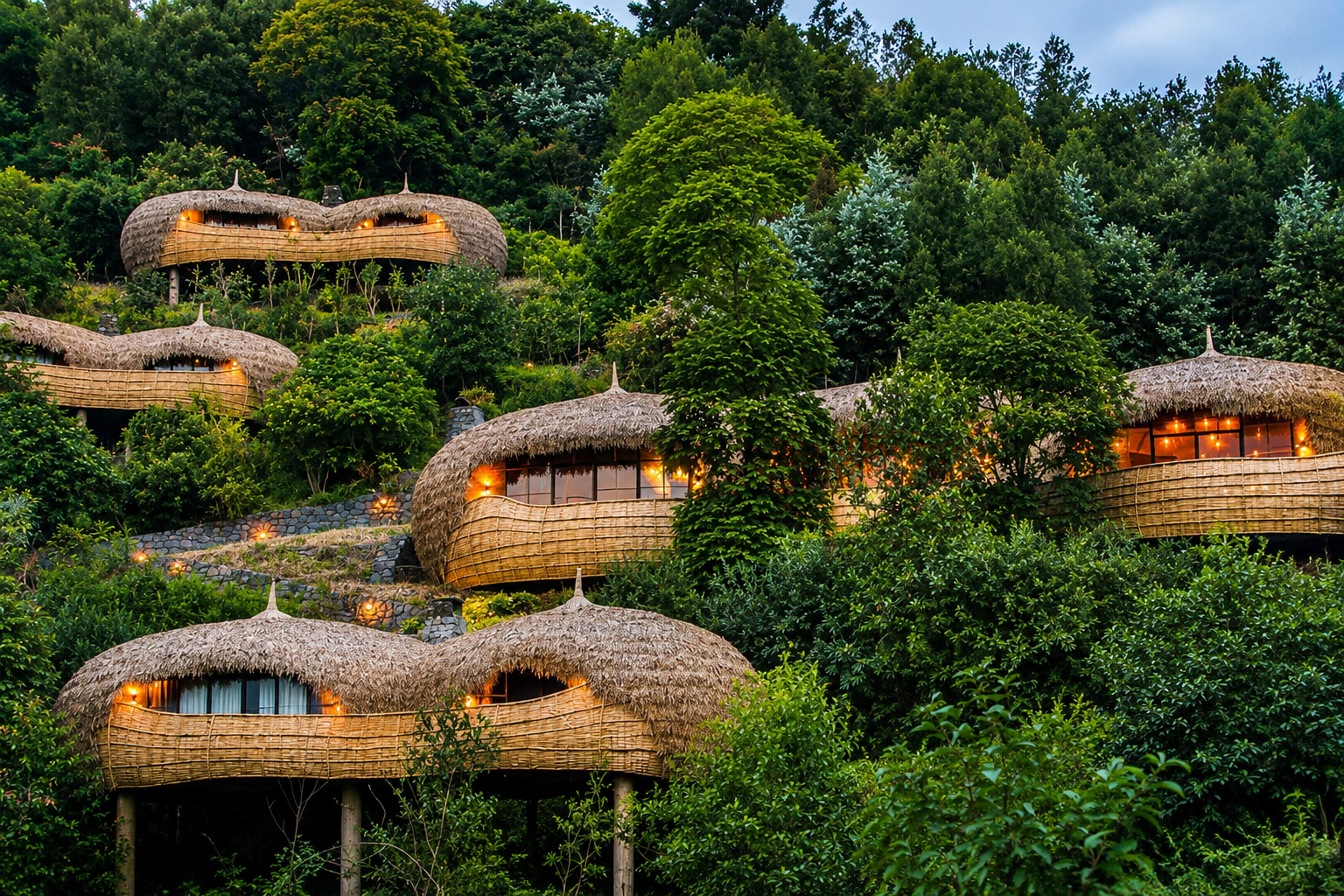
The most important accommodation decision is ensuring that the property matches the trekking entry point. Visitors should also ask about early breakfast arrangements, packed meals, transport to the briefing location, and assistance with practical trekking preparations.
Travelers staying for multiple nights may value additional facilities, relaxing surroundings, or nearby activities. Those spending only one night before trekking may place greater emphasis on convenience and reliable morning transport. These different priorities can lead to equally sensible accommodation choices.
When arranging Bwindi vs Mgahinga gorilla trekking itineraries, PrideMark Safaris encourages travelers to consider comfort and location together. The best accommodation is not necessarily the most expensive property, but the one that supports the intended wildlife experience without creating unnecessary logistical difficulties.
Difference Six: Additional Wildlife, Golden Monkeys, and Cultural Experiences
Why Mgahinga Is Special for Golden Monkey Tracking
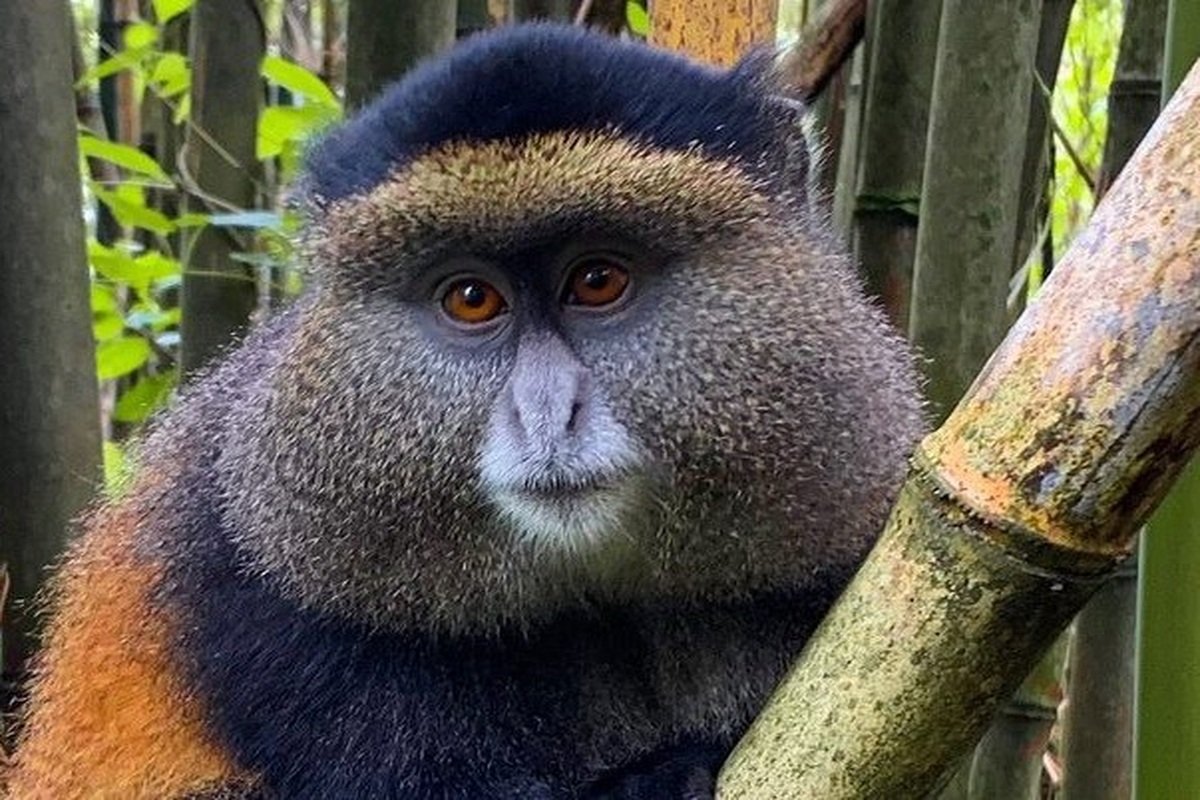
One of Mgahinga’s strongest attractions is the opportunity to combine mountain gorilla trekking with golden monkey tracking. Golden monkeys are distinctive primates associated with the Virunga mountain ecosystem, and their appearance and behaviour offer a fascinating contrast to the much larger mountain gorillas.
Golden monkeys move actively through forest and bamboo vegetation, often creating a lively wildlife-viewing experience. Their movements can make photography challenging, but observing their social interactions and feeding behaviour provides a different perspective on primate ecology. Visitors interested in several primate species may therefore find Mgahinga particularly appealing.
The Uganda Wildlife Authority lists both golden monkey tracking and golden monkey habituation among Mgahinga’s tourism activities. These experiences require their own arrangements and should not be assumed to be included in a standard gorilla permit. Travelers should confirm availability, fees, and schedules before making plans.
A safari combining gorillas and golden monkeys can be especially rewarding because the two encounters reveal different aspects of the mountain ecosystem. Gorillas often spend considerable time feeding or resting, while golden monkeys may move rapidly through vegetation. The contrast helps visitors appreciate the diversity of primate behaviour.
Volcano Hiking in Mgahinga
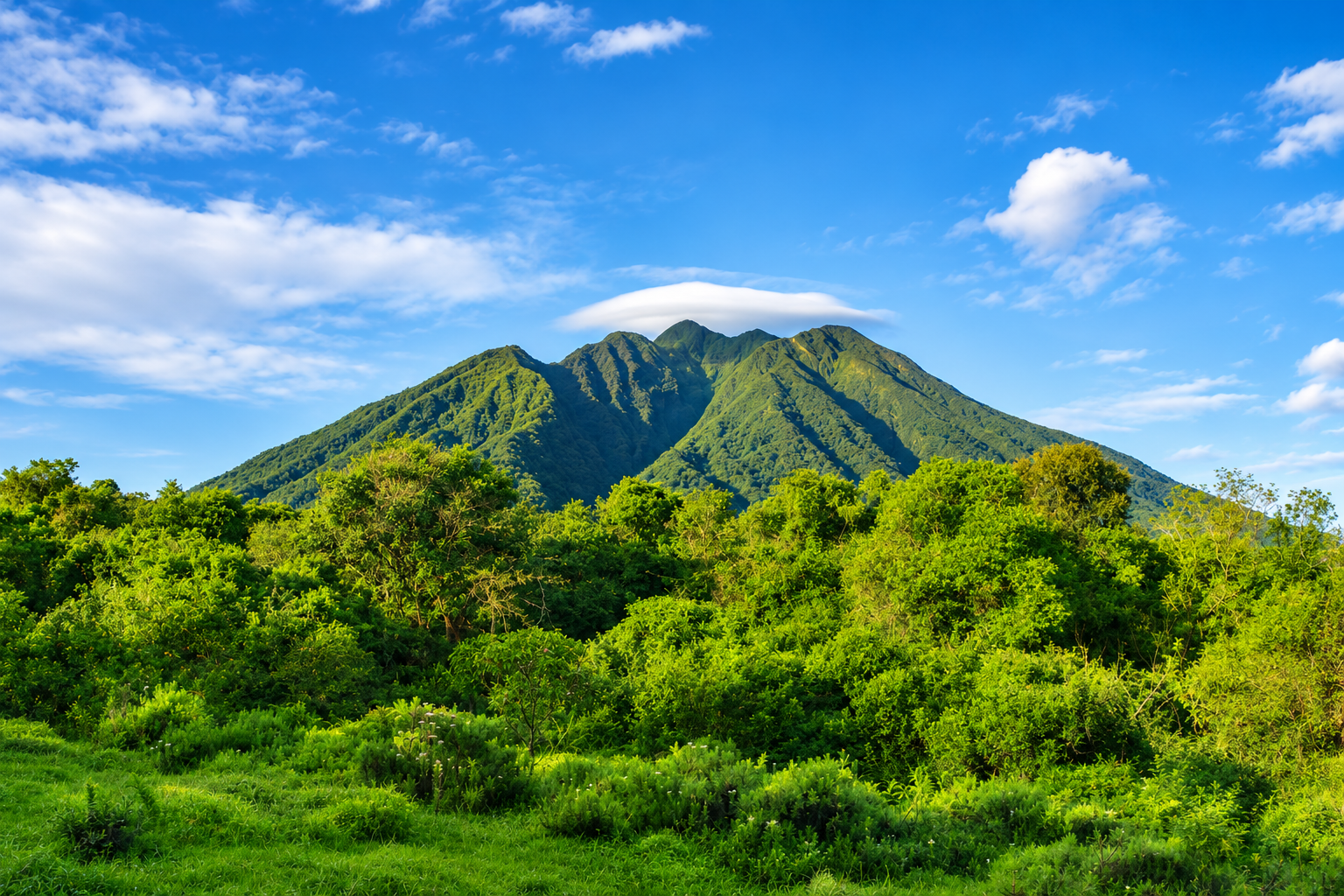
A breathtaking mountain landscape surrounded by lush tropical forests, showcasing the natural beauty of Uganda’s highlands.
Mgahinga also offers opportunities to explore its volcanic landscape through organised hiking activities. Mount Gahinga, Mount Muhabura, and Mount Sabyinyo provide distinctive mountain settings, although the difficulty and arrangements vary between routes. These hikes should be considered separate adventures rather than casual additions to a gorilla trekking morning.
Volcano hiking appeals to travelers who enjoy challenging physical activities, mountain scenery, and broader exploration of the Virunga region. Weather, fitness, available daylight, and ranger guidance all influence the experience. Visitors should select routes appropriate to their abilities and follow authorised park arrangements.
The combination of gorilla trekking, golden monkey tracking, and mountain scenery makes Mgahinga particularly attractive for travelers who want to remain in one geographical area while enjoying different outdoor experiences. A multi-day visit can reveal more of the park’s character than a brief arrival followed by immediate departure.
Bwindi’s Forest Wildlife and Birdwatching Opportunities
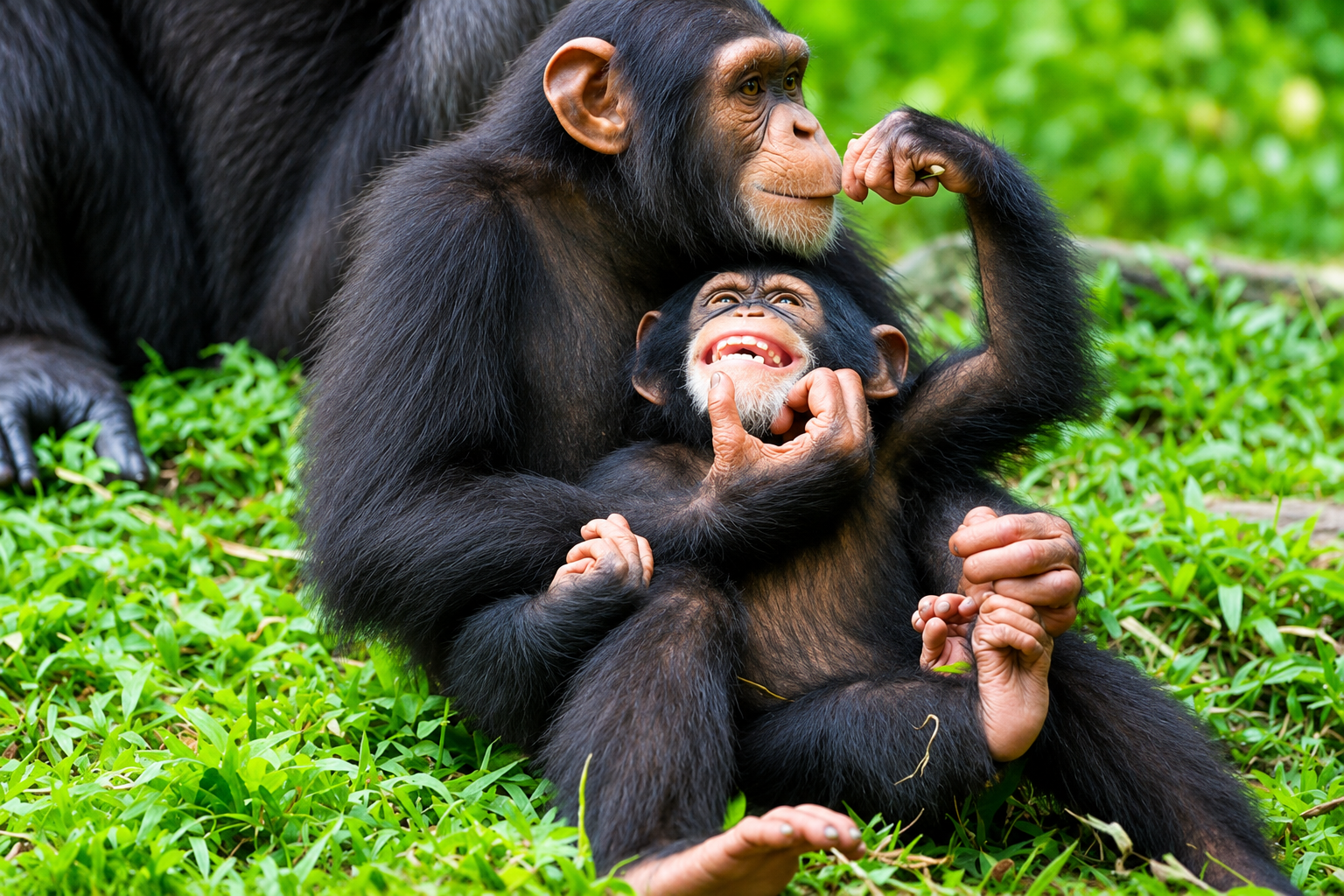
A playful baby chimpanzee enjoys a joyful moment with an adult chimpanzee, highlighting the strong social bonds among these intelligent primates.
Bwindi offers a different range of additional wildlife experiences, particularly for visitors interested in forest birds, plants, and ecological diversity. Its extensive rainforest provides habitats for numerous species, making guided nature activities valuable for travelers who want to understand the environment surrounding mountain gorillas.
Birdwatching is especially important in Bwindi because the forest supports a rich variety of birdlife, including species associated with the Albertine Rift region. Specialist birding excursions may involve patient observation, listening for calls, and moving slowly through suitable habitats rather than following the pace of a conventional sightseeing walk.
Guided forest walks can also introduce visitors to the importance of vegetation, water sources, and habitat conservation. These activities offer an opportunity to appreciate Bwindi beyond its best-known attraction and may be especially enjoyable for travelers who prefer quieter forms of nature exploration.
Gorilla Habituation: An Important Bwindi Advantage
Bwindi offers a regulated gorilla habituation experience, which is distinct from standard gorilla trekking. The activity involves visiting a gorilla group undergoing a carefully managed process of becoming accustomed to human observers, with specialist conservation personnel involved in the experience.
The habituation experience is designed differently from a conventional one-hour trekking encounter and has separate permit requirements. It can appeal to travelers interested in gorilla behaviour, research, and conservation management, but it should not be described as unrestricted access to wild animals.
For visitors considering habituation, it is important to understand that the experience remains subject to conservation rules and the animals’ behaviour. The gorillas are not trained performers, and their responses cannot be predetermined. Respecting their space is fundamental to the activity.
Travelers interested in this option should consult the Uganda Wildlife Authority’s gorilla trekking information and confirm current habituation arrangements before booking. The availability of habituation in Bwindi is a meaningful difference when comparing the two destinations.
Cultural Experiences Around Both Parks

Both Bwindi and Mgahinga are surrounded by communities whose histories and livelihoods are connected to the landscapes. Responsible cultural tourism can help visitors understand these relationships while supporting local enterprises and community-led initiatives.
Batwa cultural experiences are available in the wider regions associated with both parks, although their formats, organisers, and locations differ. Travelers should seek experiences that respect community representation, provide transparent benefits, and avoid treating local people merely as tourist attractions.
Around Bwindi, visitors may encounter community initiatives involving crafts, cultural interpretation, guided walks, and local hospitality. Around Mgahinga, cultural experiences can introduce travelers to the history of communities associated with the Virunga landscape.
At PrideMark Safaris, we encourage travelers to include cultural activities thoughtfully rather than treating them as brief additions with little context. Meaningful interactions are more valuable when visitors have time to listen, ask respectful questions, and understand the communities they are visiting.
Difference Seven: Permit Costs, Safari Budgets, and Which Park Offers Better Value
Understanding Gorilla Trekking Permit Prices
Gorilla trekking permits represent a major component of the cost of visiting either destination. The Uganda Wildlife Authority establishes permit fees according to visitor categories, and travelers should use the tariff applicable to their travel dates rather than relying on old articles or promotional advertisements.
The published tariff lists standard gorilla tracking at USD 800 for foreign non-residents, USD 700 for foreign residents, and USD 500 for eligible visitors from the rest of Africa. East African Community citizen rates and certain activity tariffs are subject to revisions, making direct confirmation particularly important.
A standard gorilla trekking permit generally includes the regulated gorilla encounter, guiding arrangements, and specified conservation-related charges. It does not automatically include the full safari package, such as private transport, accommodation, meals, domestic flights, or optional activities.
Comparing the Wider Safari Budget
The total cost of Bwindi vs Mgahinga gorilla trekking depends on much more than the permit. Accommodation standards, road transfers, domestic flights, the number of nights, and additional experiences can create substantial differences between otherwise similar itineraries.
A luxury Bwindi itinerary involving premium accommodation and private transfers may cost considerably more than a simpler Mgahinga safari. Conversely, a Mgahinga itinerary including additional mountain activities, several nights of accommodation, and specialist transport may exceed the cost of a straightforward Bwindi visit.
The fairest comparison therefore involves evaluating complete itineraries rather than comparing parks in isolation. Travelers should examine what is included, which expenses remain optional, and whether the schedule allows enough time to enjoy the experience.
Is Mgahinga Cheaper Than Bwindi?
Mgahinga is not automatically cheaper than Bwindi. Although the parks differ in accommodation selection and trekking capacity, the standard international gorilla permit categories have historically been aligned. The final price depends on the complete travel arrangements and applicable tariff.
Bwindi’s wider accommodation selection may help travelers find options that match different budgets. Mgahinga’s proximity to Kisoro can also create practical accommodation possibilities, depending on the desired comfort level and available transport.
Travelers should request a clear quotation showing the permit, accommodation, transport, meals, guiding, and additional activities. Transparent pricing makes it easier to understand value without assuming that a lower advertised package price necessarily includes the same services.
Conservation Value Beyond the Price
Gorilla trekking fees support a regulated conservation tourism system rather than simply purchasing access to wildlife. Conservation authorities manage visitor numbers, protect habitats, monitor gorilla groups, and enforce rules intended to reduce disturbance.
The published permit arrangements also identify a community development contribution as part of the gorilla trekking fee. This reflects the importance of linking conservation tourism with benefits for communities living around protected areas.
Visitors can support responsible tourism by choosing authorised experiences, respecting park regulations, and purchasing suitable local services. The quality of a gorilla safari should therefore be evaluated partly through its conservation practices rather than exclusively through comfort or price.
Best Time to Visit Bwindi and Mgahinga for Gorilla Trekking
Both destinations can be visited throughout the year, subject to permit availability and operational conditions. However, seasonal rainfall can influence road accessibility, trail conditions, visibility, and the comfort of walking through mountain habitats.
The relatively drier periods are often preferred by visitors because some trails may be less muddy and outdoor activities can be more comfortable. Nevertheless, rainforest and mountain weather remain changeable, and rain can occur even during periods generally considered drier.
Wetter periods can bring lush vegetation, atmospheric scenery, and fewer visitors in some circumstances. They may also create slippery paths and slower road journeys. Travelers who are comfortable with unpredictable weather may still enjoy these conditions when properly prepared.
The best travel period ultimately depends on personal priorities, including available leave, budget, photography interests, and the wider itinerary. Travelers seeking particular accommodation or trekking dates should prioritise confirming availability rather than assuming that a seasonal preference guarantees suitable permits.
Which Is Better for First-Time Gorilla Trekking Visitors?
For first-time visitors, Bwindi is often an attractive starting point because its multiple sectors and broader accommodation selection provide more planning flexibility. Travelers can select arrangements that fit their budget and preferred safari route, subject to permit availability.
Mgahinga can be equally rewarding for a first encounter, particularly when the traveler is drawn to the Virunga landscape or wants to combine gorillas with golden monkeys. Its smaller trekking operation does not make the encounter less meaningful.
The most important considerations are suitable physical preparation, a confirmed permit, appropriate accommodation, and realistic expectations. First-time visitors should understand that the experience takes place in a natural environment where the animals determine their own movements.
Can You Visit Both Bwindi and Mgahinga on One Safari?
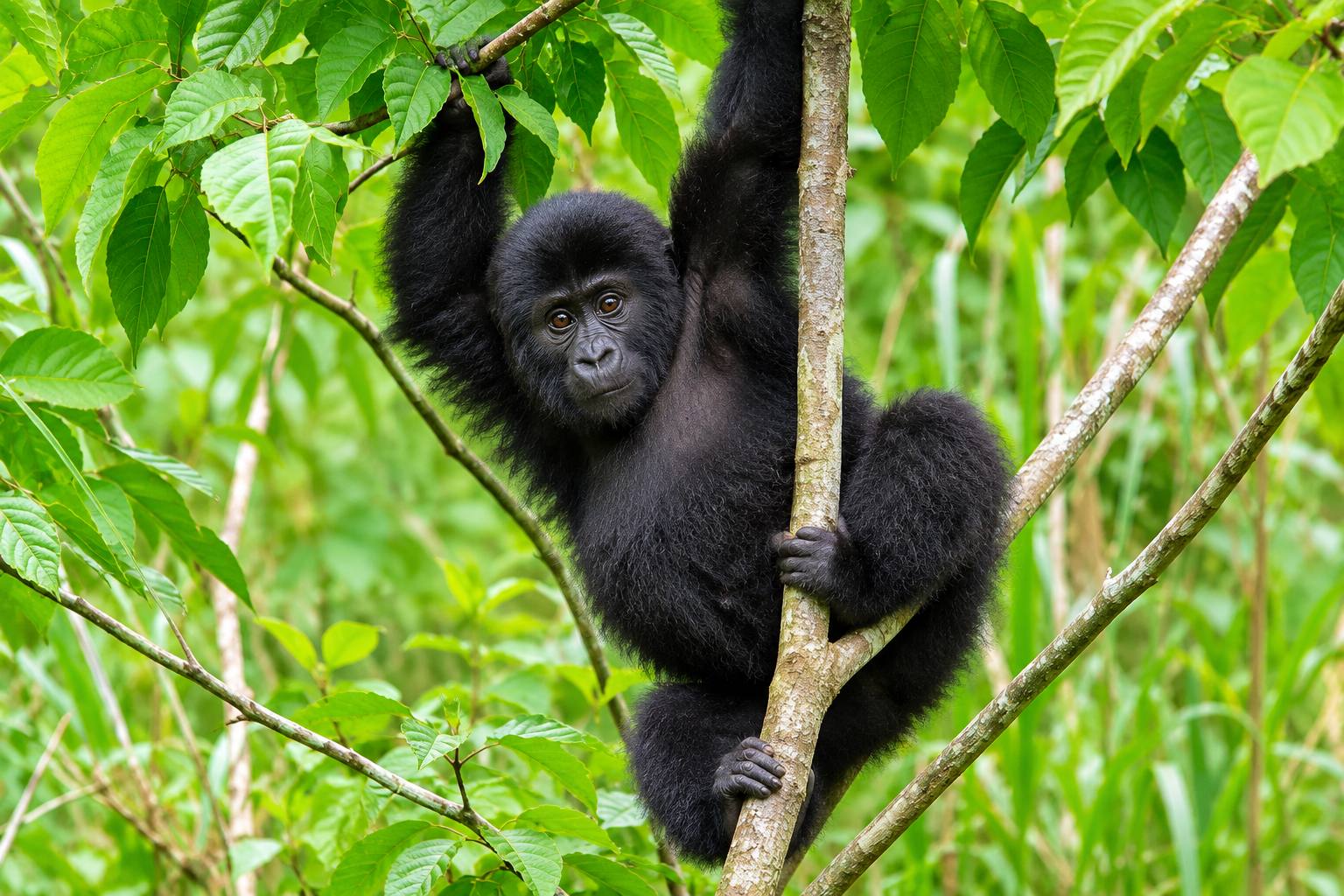
A curious young mountain gorilla explores lush forest vegetation, highlighting the beauty of Uganda’s gorilla trekking experiences.
A curious young mountain gorilla explores lush forest vegetation, highlighting the beauty of Uganda’s gorilla trekking experiences.[/caption]
Visiting both parks can be worthwhile for travelers with sufficient time and a strong interest in mountain gorillas or southwestern Uganda’s landscapes. The destinations offer different environmental settings, and experiencing both can deepen an appreciation of the region’s biodiversity.
A combined itinerary may involve gorilla trekking in one park and additional activities in the other. Travelers could, for example, plan a Bwindi gorilla encounter followed by golden monkey tracking in Mgahinga, subject to permits and practical arrangements.
Those wishing to trek gorillas in both parks need separate permits for the respective encounters. The additional expense should be considered carefully, particularly when a single gorilla trek already fulfils the traveler’s primary wildlife objective.
For many visitors, combining one gorilla trekking experience with other wildlife destinations offers better variety than repeating similar activities. The ideal choice depends on whether the traveler values repeated gorilla encounters or a broader introduction to Uganda’s natural attractions.
Responsible Gorilla Trekking in Both National Parks
Mountain gorillas share important biological similarities with humans, making responsible visitor behaviour particularly important. Visitors should follow health-related restrictions and avoid trekking when experiencing symptoms that could place the animals at risk.
During the encounter, visitors must follow ranger instructions concerning distance, movement, noise, and photography. Approaching gorillas independently, attempting to touch them, or trying to attract their attention undermines the principles of responsible wildlife tourism.
The one-hour observation limit should be respected even when visitors are enjoying an exceptional encounter. Conservation rules exist to protect wild animals rather than to reduce the quality of the visitor experience.
Responsible tourism also extends beyond the forest. Supporting legitimate local services, avoiding litter, respecting community spaces, and following authorised routes contribute to the wider sustainability of the destination.
At PrideMark Safaris, we regard responsible planning as an essential part of an enjoyable safari. A successful encounter should leave travelers with meaningful memories while respecting the wildlife and communities that make the experience possible.
Frequently Asked Questions About Bwindi vs Mgahinga Gorilla Trekking
Is Bwindi Better Than Mgahinga for Gorilla Trekking?
Bwindi may be more suitable for travelers who want multiple trekking sectors, a broad accommodation selection, and flexible safari planning. Mgahinga may be preferable for those interested in volcanic landscapes, golden monkeys, and exploring the Kisoro region. Both offer authentic encounters with wild mountain gorillas under the management of the Uganda Wildlife Authority.
Which Park Has More Mountain Gorillas?
Bwindi protects a substantially larger mountain gorilla population and supports more habituated groups available for tourism. Mgahinga has a smaller gorilla trekking operation associated with the Nyakagezi group. However, the number of gorillas in a park does not determine the quality of an individual encounter, because each visit depends on the behaviour and location of the assigned group.
Is Gorilla Trekking Easier in Mgahinga Than Bwindi?
Mgahinga is not consistently easier than Bwindi. Both destinations contain mountainous terrain, and gorillas move according to their natural behaviour. Some treks may involve relatively manageable walking, while others require several hours of demanding movement. Visitors should prepare for uneven ground and discuss their physical abilities with the safari organiser before booking.
Can You See Golden Monkeys in Bwindi?
Golden monkey tracking is particularly associated with Mgahinga Gorilla National Park, where visitors can arrange a separate guided experience. Bwindi is better known for its rainforest biodiversity, forest birds, and mountain gorilla encounters. Travelers specifically interested in combining golden monkeys and gorillas should therefore consider Mgahinga as an important destination.
How Many Hours Can You Spend With Mountain Gorillas?
Standard gorilla trekking generally permits one hour of observation after the assigned gorilla group has been located. The time required to reach the animals varies according to terrain, weather, and their movements. Bwindi also offers a separate gorilla habituation experience under different arrangements, which should not be confused with ordinary trekking.
Is Bwindi or Mgahinga Better for Photography?
Both parks can provide memorable photography opportunities. Bwindi offers rich rainforest surroundings, while Mgahinga provides volcanic landscapes and distinctive mountain vegetation. Actual gorilla photography conditions depend on lighting, vegetation, the animals’ positions, and conservation restrictions. Neither park guarantees unobstructed views or a particular photographic outcome.
How Far in Advance Should Gorilla Permits Be Booked?
Travelers should arrange permits as early as practical once their travel dates are reasonably certain. Advance planning is particularly important for popular travel periods, limited accommodation choices, and Mgahinga’s smaller trekking operation. Availability changes, so visitors should confirm permits through authorised arrangements before committing to non-refundable travel services.
Can Children Participate in Gorilla Trekking?
The standard minimum age for gorilla trekking in Uganda is 15. Families traveling with younger children should plan suitable alternative activities while eligible members participate in trekking. Age requirements and other participation conditions should be confirmed through the Uganda Wildlife Authority before booking.
Bwindi or Mgahinga for Your Uganda Gorilla Safari?
The choice between Bwindi vs Mgahinga gorilla trekking depends on the type of safari experience a traveler hopes to enjoy. Bwindi stands out for its extensive rainforest, multiple trekking sectors, varied accommodation, and opportunities for additional forest experiences. Mgahinga offers a distinctive combination of mountain gorillas, golden monkeys, volcanic scenery, and adventures around the Virunga landscape.
Travelers seeking flexible accommodation and several possible trekking locations may find Bwindi particularly suitable. Those who appreciate mountain environments and want to explore different primate experiences within a smaller protected area may prefer Mgahinga. Both destinations deserve recognition for their conservation importance and exceptional natural settings.
Ultimately, neither park should be selected solely because it appears easier, cheaper, or more popular. A successful safari requires confirmed permits, realistic travel arrangements, suitable accommodation, appropriate preparation, and respect for wildlife regulations. These considerations make the difference between an unnecessarily stressful journey and a well-organised experience.
At PrideMark Safaris, we help travelers explore the possibilities of gorilla trekking in southwestern Uganda and consider how each destination fits into a wider safari itinerary. Whether your interests lie in Bwindi’s rainforest or Mgahinga’s volcanic landscapes, thoughtful planning can make the experience more rewarding.
Ready to plan your Uganda gorilla trekking adventure? Contact PrideMark Safaris to discuss your preferred destination, travel dates, accommodation expectations, and safari interests.