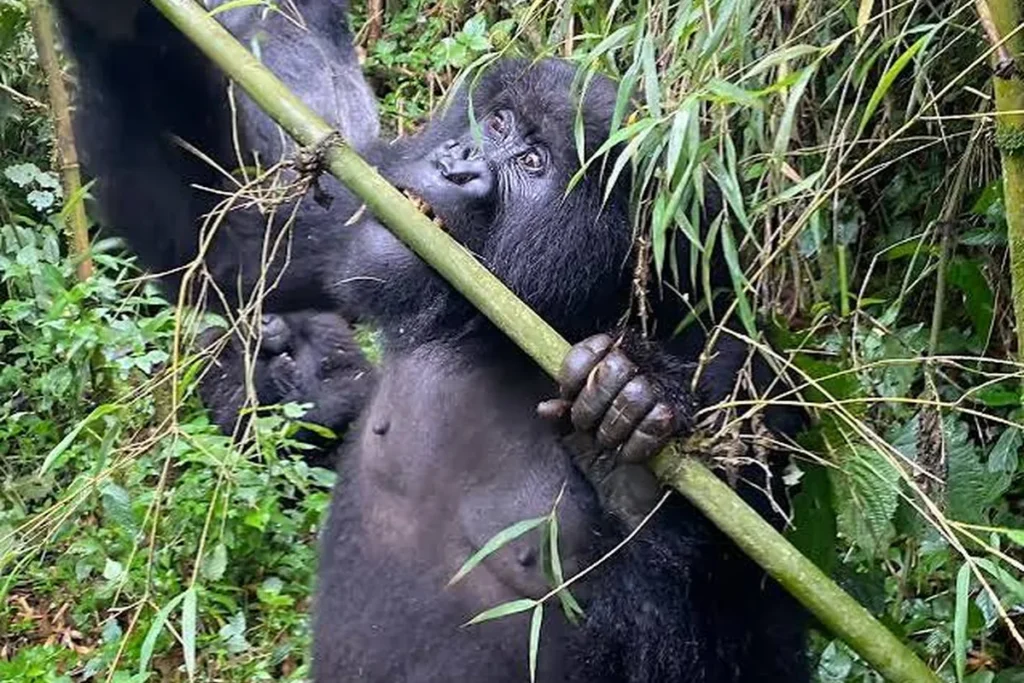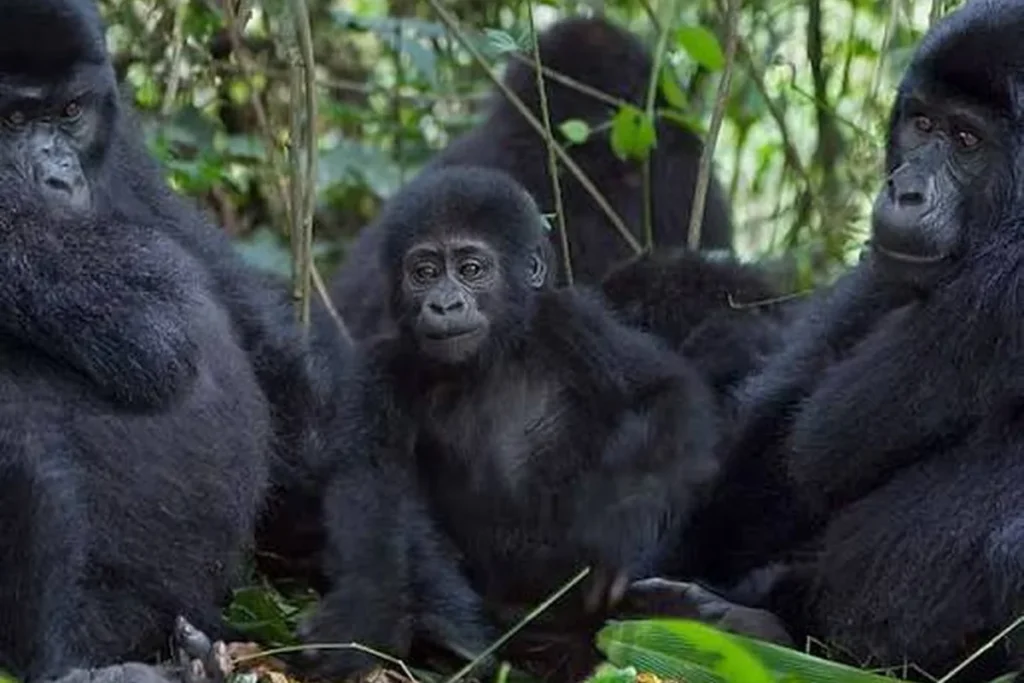
Understanding the rainforest photography experience
Dense canopy shade, uneven ground, changing weather and moving subjects make a gorilla encounter unlike photographing animals from a safari vehicle. Your photographic plan must work while you stand quietly in a small group, sometimes on damp slopes, with limited room to move. The most memorable frames often show a glance, a hand resting on vegetation or a youngster watching an adult rather than a dramatic pose. In gorilla trekking photography in Uganda, careful planning usually matters more than owning the newest camera.
Practice using your camera while wearing gloves or standing in shade before the trip. Learn how to change shutter speed, ISO and autofocus mode without searching through menus. Familiarity reduces distraction when the ranger announces that the gorillas are nearby. Keep the camera accessible but secure on the walk. This matters especially in Bwindi and Mgahinga, where conditions can change quickly along the forest trail. Successful gorilla trekking photography in Uganda also depends on calm decisions and a willingness to put the animals first.
Dense canopy shade, uneven ground, changing weather and moving subjects make a gorilla encounter unlike photographing animals from a safari vehicle. The encounter may include rain, backlighting, foliage and periods when the animals face away. None of those conditions means the trek has failed. A thoughtful sequence can combine portraits, hands, family interactions and rainforest details. Avoid judging the experience solely by whether you obtained a perfectly unobstructed face. In gorilla trekking photography in Uganda, careful planning usually matters more than owning the newest camera.
Keep your elbows close to your body, breathe steadily and check sharpness on a few frames rather than every shot. If the light changes, make one deliberate exposure adjustment. Watch your footing before raising the camera. A photograph is not worth slipping, separating from the group or disrupting the ranger’s guidance. The most memorable frames often show a glance, a hand resting on vegetation or a youngster watching an adult rather than a dramatic pose.
More equipment does not always improve results. Every extra lens adds weight, creates decisions and may need protection from moisture. A compact kit with a reliable camera and one flexible zoom is often easier to manage. Bring only accessories that you know how to use and that do not interfere with other visitors. For gorilla trekking photography in Uganda, the most useful habit is to prepare thoughtfully and let the ranger control the pace. In gorilla trekking photography in Uganda, careful planning usually matters more than owning the newest camera.
Dense canopy shade, uneven ground, changing weather and moving subjects make a gorilla encounter unlike photographing animals from a safari vehicle. Watch the gorillas quietly between photographs. Their expressions and interactions become easier to anticipate when you stop staring only at the viewfinder. Do not block another visitor’s view or step outside the ranger’s designated area. Ethical behavior helps protect the animals and makes the experience better for the entire group.
Look for a clear eye, a recognizable gesture and a foreground that supports the scene. Forest vines can add depth, but they can also obscure the face. Shift your framing slightly from your permitted position instead of moving toward the animal. Photographing the wider habitat gives context that a tightly cropped portrait cannot communicate. The most memorable frames often show a glance, a hand resting on vegetation or a youngster watching an adult rather than a dramatic pose. In gorilla trekking photography in Uganda, careful planning usually matters more than owning the newest camera.
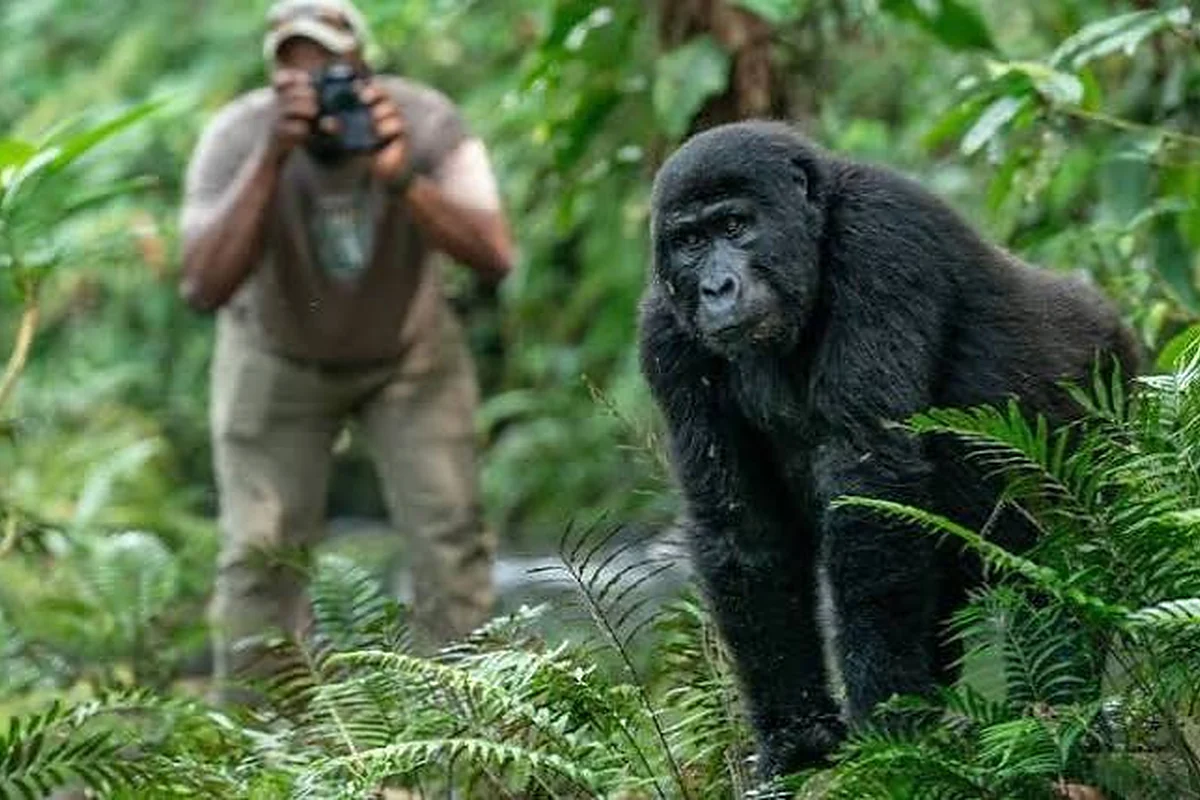
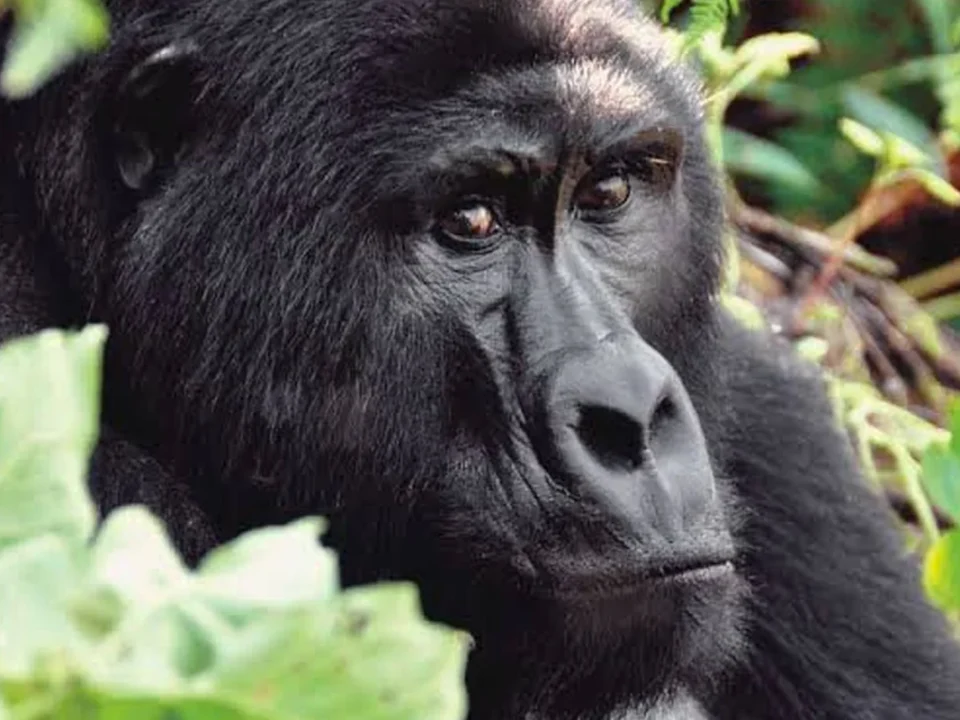
A wildlife photographer photographing a mountain gorilla among lush rainforest vegetation.
Choosing cameras and lenses for the trek
A weather-sealed mirrorless or DSLR body is useful, but it is not essential. A versatile zoom avoids repeated lens changes in a wet environment. A 24–70 mm equivalent can capture family context, while a 70–200 mm equivalent offers portraits from a respectful distance. Consider the weight of the complete kit because you may carry it for hours before seeing gorillas. In gorilla trekking photography in Uganda, careful planning usually matters more than owning the newest camera.
The encounter may include rain, backlighting, foliage and periods when the animals face away. None of those conditions means the trek has failed. A thoughtful sequence can combine portraits, hands, family interactions and rainforest details. Avoid judging the experience solely by whether you obtained a perfectly unobstructed face. This matters especially in Bwindi and Mgahinga, where conditions can change quickly along the forest trail. Successful gorilla trekking photography in Uganda also depends on calm decisions and a willingness to put the animals first.
A weather-sealed mirrorless or DSLR body is useful, but it is not essential. Keep your elbows close to your body, breathe steadily and check sharpness on a few frames rather than every shot. If the light changes, make one deliberate exposure adjustment. Watch your footing before raising the camera. A photograph is not worth slipping, separating from the group or disrupting the ranger’s guidance. In gorilla trekking photography in Uganda, careful planning usually matters more than owning the newest camera.
More equipment does not always improve results. Every extra lens adds weight, creates decisions and may need protection from moisture. A compact kit with a reliable camera and one flexible zoom is often easier to manage. Bring only accessories that you know how to use and that do not interfere with other visitors. Consider the weight of the complete kit because you may carry it for hours before seeing gorillas.
Watch the gorillas quietly between photographs. Their expressions and interactions become easier to anticipate when you stop staring only at the viewfinder. Do not block another visitor’s view or step outside the ranger’s designated area. Ethical behavior helps protect the animals and makes the experience better for the entire group. For gorilla trekking photography in Uganda, the most useful habit is to prepare thoughtfully and let the ranger control the pace. In gorilla trekking photography in Uganda, careful planning usually matters more than owning the newest camera.
A weather-sealed mirrorless or DSLR body is useful, but it is not essential. Look for a clear eye, a recognizable gesture and a foreground that supports the scene. Forest vines can add depth, but they can also obscure the face. Shift your framing slightly from your permitted position instead of moving toward the animal. Photographing the wider habitat gives context that a tightly cropped portrait cannot communicate.
Practice using your camera while wearing gloves or standing in shade before the trip. Learn how to change shutter speed, ISO and autofocus mode without searching through menus. Familiarity reduces distraction when the ranger announces that the gorillas are nearby. Keep the camera accessible but secure on the walk. Consider the weight of the complete kit because you may carry it for hours before seeing gorillas. In gorilla trekking photography in Uganda, careful planning usually matters more than owning the newest camera.
| Equipment | Practical recommendation |
|---|---|
| Camera body | Use familiar equipment with dependable battery life |
| Lens | Favor a versatile zoom and manageable weight |
| Protection | Carry rain cover and waterproof storage |
Nine amazing photography tips that actually help
Begin with practical settings, then prioritize calm observation. Prepare exposure and autofocus before reaching the family, switch flash off, watch the background, and make deliberate compositions. Take several short bursts rather than continuously firing. Leave room for unexpected movement and remember that your viewing opportunity is primarily an encounter with wildlife, not a controlled photo session. In gorilla trekking photography in Uganda, careful planning usually matters more than owning the newest camera.
Keep your elbows close to your body, breathe steadily and check sharpness on a few frames rather than every shot. If the light changes, make one deliberate exposure adjustment. Watch your footing before raising the camera. A photograph is not worth slipping, separating from the group or disrupting the ranger’s guidance. This matters especially in Bwindi and Mgahinga, where conditions can change quickly along the forest trail. Successful gorilla trekking photography in Uganda also depends on calm decisions and a willingness to put the animals first.
Begin with practical settings, then prioritize calm observation. More equipment does not always improve results. Every extra lens adds weight, creates decisions and may need protection from moisture. A compact kit with a reliable camera and one flexible zoom is often easier to manage. Bring only accessories that you know how to use and that do not interfere with other visitors. In gorilla trekking photography in Uganda, careful planning usually matters more than owning the newest camera.
Watch the gorillas quietly between photographs. Their expressions and interactions become easier to anticipate when you stop staring only at the viewfinder. Do not block another visitor’s view or step outside the ranger’s designated area. Ethical behavior helps protect the animals and makes the experience better for the entire group. Leave room for unexpected movement and remember that your viewing opportunity is primarily an encounter with wildlife, not a controlled photo session.
Look for a clear eye, a recognizable gesture and a foreground that supports the scene. Forest vines can add depth, but they can also obscure the face. Shift your framing slightly from your permitted position instead of moving toward the animal. Photographing the wider habitat gives context that a tightly cropped portrait cannot communicate. For gorilla trekking photography in Uganda, the most useful habit is to prepare thoughtfully and let the ranger control the pace. In gorilla trekking photography in Uganda, careful planning usually matters more than owning the newest camera.
Begin with practical settings, then prioritize calm observation. Practice using your camera while wearing gloves or standing in shade before the trip. Learn how to change shutter speed, ISO and autofocus mode without searching through menus. Familiarity reduces distraction when the ranger announces that the gorillas are nearby. Keep the camera accessible but secure on the walk.
The encounter may include rain, backlighting, foliage and periods when the animals face away. None of those conditions means the trek has failed. A thoughtful sequence can combine portraits, hands, family interactions and rainforest details. Avoid judging the experience solely by whether you obtained a perfectly unobstructed face. Leave room for unexpected movement and remember that your viewing opportunity is primarily an encounter with wildlife, not a controlled photo session. In gorilla trekking photography in Uganda, careful planning usually matters more than owning the newest camera.

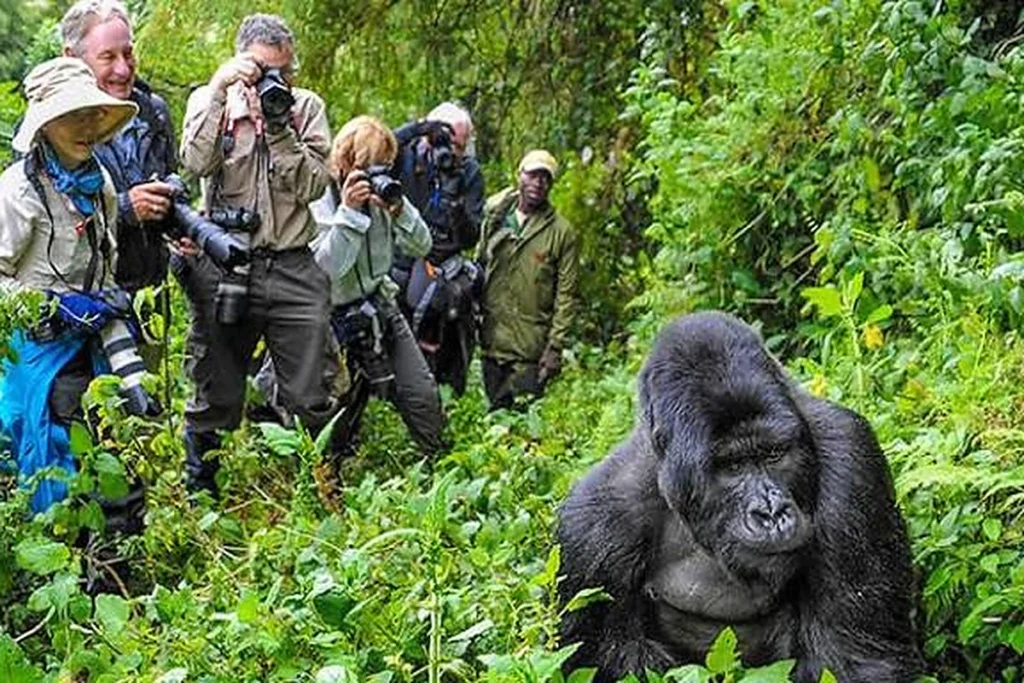
Two wildlife photographers capture images of a silverback gorilla surrounded by lush green rainforest vegetation.
Camera settings for dark forest conditions
The forest can be surprisingly dim even around midday. A wide aperture gathers more light; a shutter speed around 1/250 second is a starting point for relatively still subjects, while movement may need faster settings. Auto ISO can help balance changing light, but check the resulting noise and exposure. These are starting points rather than guaranteed settings for every camera. In gorilla trekking photography in Uganda, careful planning usually matters more than owning the newest camera.
More equipment does not always improve results. Every extra lens adds weight, creates decisions and may need protection from moisture. A compact kit with a reliable camera and one flexible zoom is often easier to manage. Bring only accessories that you know how to use and that do not interfere with other visitors. This matters especially in Bwindi and Mgahinga, where conditions can change quickly along the forest trail. Successful gorilla trekking photography in Uganda also depends on calm decisions and a willingness to put the animals first.
The forest can be surprisingly dim even around midday. Watch the gorillas quietly between photographs. Their expressions and interactions become easier to anticipate when you stop staring only at the viewfinder. Do not block another visitor’s view or step outside the ranger’s designated area. Ethical behavior helps protect the animals and makes the experience better for the entire group. In gorilla trekking photography in Uganda, careful planning usually matters more than owning the newest camera.
Look for a clear eye, a recognizable gesture and a foreground that supports the scene. Forest vines can add depth, but they can also obscure the face. Shift your framing slightly from your permitted position instead of moving toward the animal. Photographing the wider habitat gives context that a tightly cropped portrait cannot communicate. These are starting points rather than guaranteed settings for every camera.
Practice using your camera while wearing gloves or standing in shade before the trip. Learn how to change shutter speed, ISO and autofocus mode without searching through menus. Familiarity reduces distraction when the ranger announces that the gorillas are nearby. Keep the camera accessible but secure on the walk. For gorilla trekking photography in Uganda, the most useful habit is to prepare thoughtfully and let the ranger control the pace. In gorilla trekking photography in Uganda, careful planning usually matters more than owning the newest camera.
The forest can be surprisingly dim even around midday. The encounter may include rain, backlighting, foliage and periods when the animals face away. None of those conditions means the trek has failed. A thoughtful sequence can combine portraits, hands, family interactions and rainforest details. Avoid judging the experience solely by whether you obtained a perfectly unobstructed face.
Keep your elbows close to your body, breathe steadily and check sharpness on a few frames rather than every shot. If the light changes, make one deliberate exposure adjustment. Watch your footing before raising the camera. A photograph is not worth slipping, separating from the group or disrupting the ranger’s guidance. These are starting points rather than guaranteed settings for every camera. In gorilla trekking photography in Uganda, careful planning usually matters more than owning the newest camera.
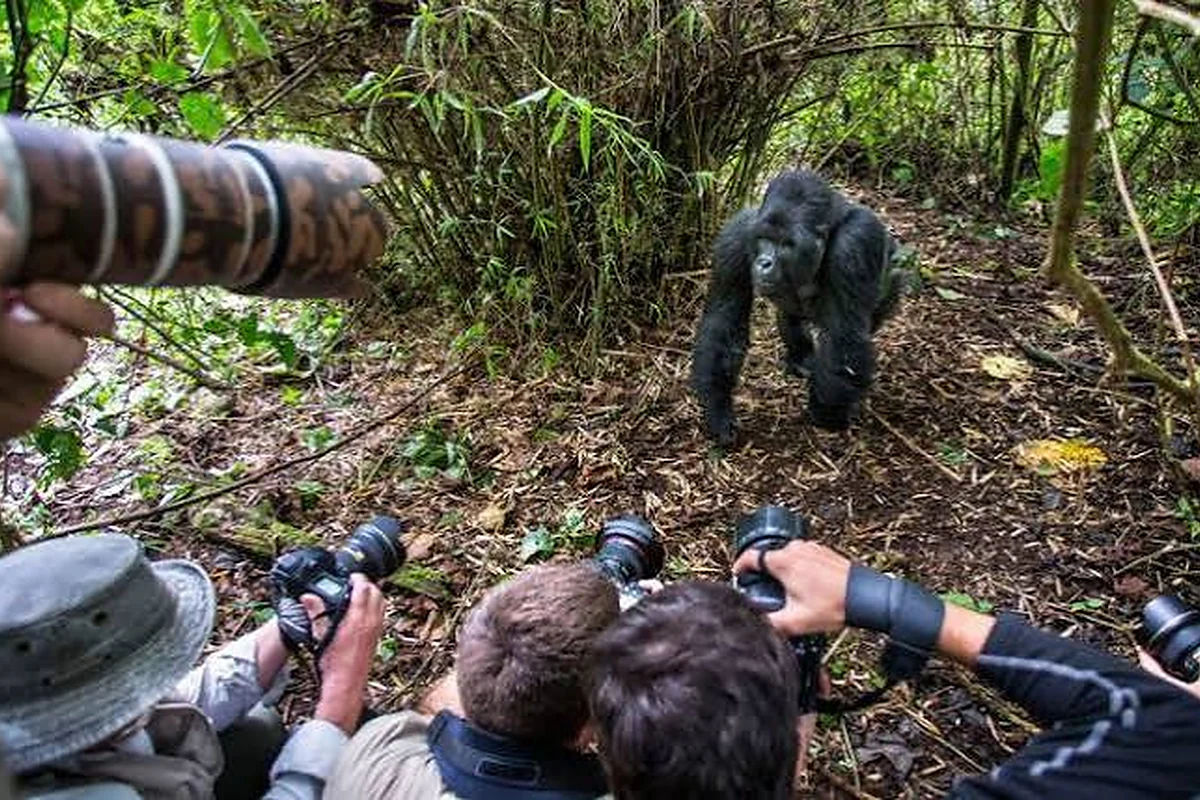
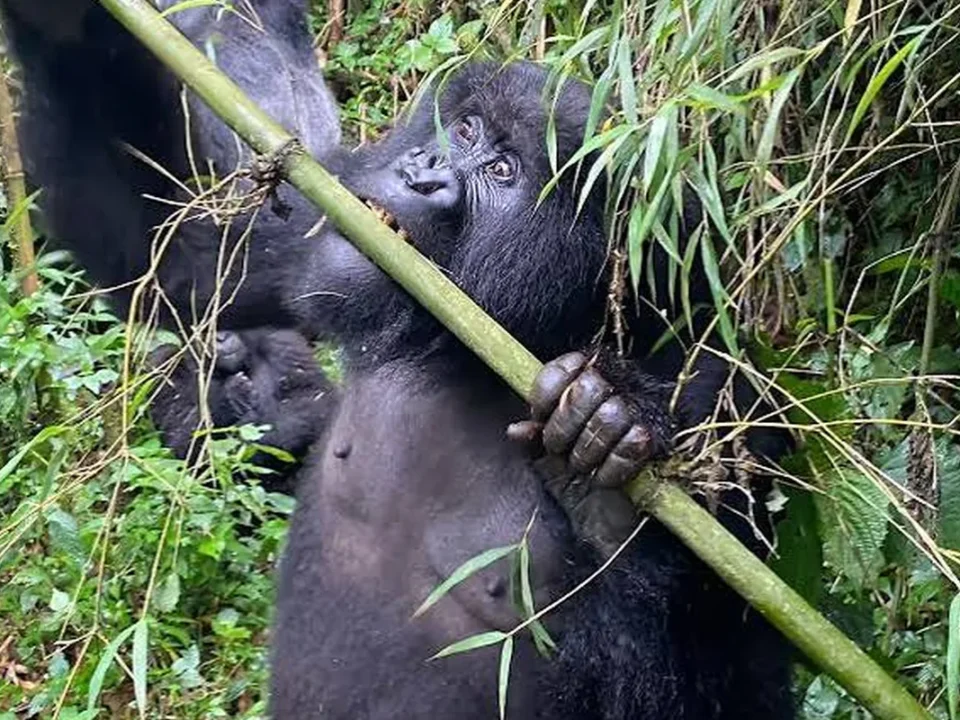
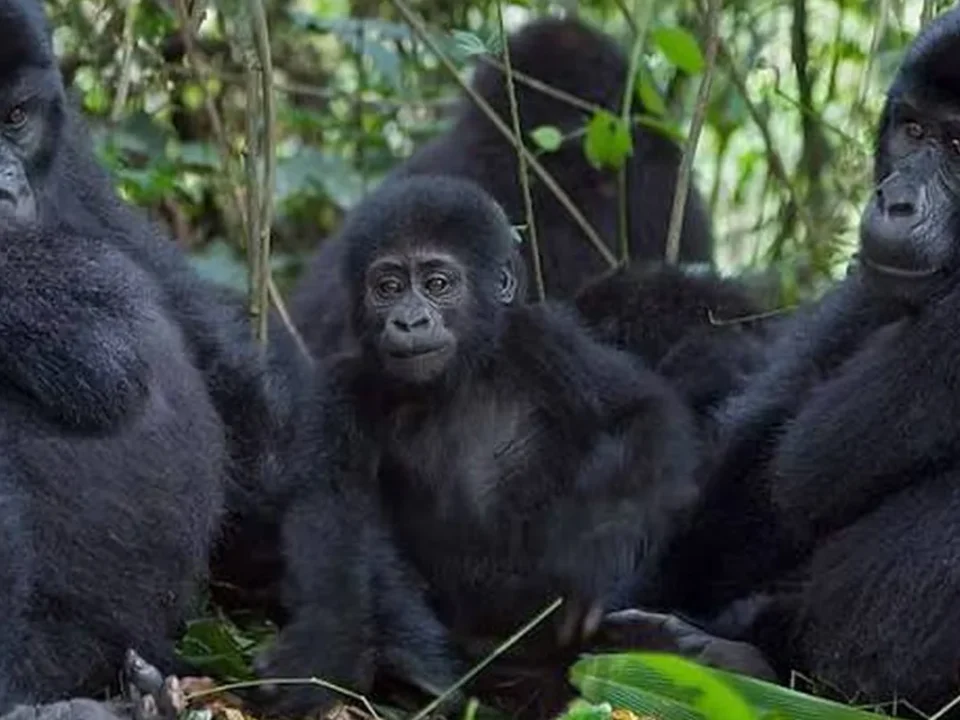
Wildlife photographers capturing images of a young gorilla surrounded by dense forest vegetation.
Smartphone photography and simple equipment
Modern phones can produce meaningful gorilla images, especially when the subject is still and the light is reasonable. Clean the lens, disable flash, avoid excessive digital zoom and steady your hands. Tap to focus on the gorilla’s face and lower exposure slightly if bright leaves dominate. A phone is often easier to carry, though its small sensor may struggle in deep shade. In gorilla trekking photography in Uganda, careful planning usually matters more than owning the newest camera.
Watch the gorillas quietly between photographs. Their expressions and interactions become easier to anticipate when you stop staring only at the viewfinder. Do not block another visitor’s view or step outside the ranger’s designated area. Ethical behavior helps protect the animals and makes the experience better for the entire group. This matters especially in Bwindi and Mgahinga, where conditions can change quickly along the forest trail. Successful gorilla trekking photography in Uganda also depends on calm decisions and a willingness to put the animals first.
Modern phones can produce meaningful gorilla images, especially when the subject is still and the light is reasonable. Look for a clear eye, a recognizable gesture and a foreground that supports the scene. Forest vines can add depth, but they can also obscure the face. Shift your framing slightly from your permitted position instead of moving toward the animal. Photographing the wider habitat gives context that a tightly cropped portrait cannot communicate. In gorilla trekking photography in Uganda, careful planning usually matters more than owning the newest camera.
Practice using your camera while wearing gloves or standing in shade before the trip. Learn how to change shutter speed, ISO and autofocus mode without searching through menus. Familiarity reduces distraction when the ranger announces that the gorillas are nearby. Keep the camera accessible but secure on the walk. A phone is often easier to carry, though its small sensor may struggle in deep shade.
The encounter may include rain, backlighting, foliage and periods when the animals face away. None of those conditions means the trek has failed. A thoughtful sequence can combine portraits, hands, family interactions and rainforest details. Avoid judging the experience solely by whether you obtained a perfectly unobstructed face. For gorilla trekking photography in Uganda, the most useful habit is to prepare thoughtfully and let the ranger control the pace. In gorilla trekking photography in Uganda, careful planning usually matters more than owning the newest camera.
Modern phones can produce meaningful gorilla images, especially when the subject is still and the light is reasonable. Keep your elbows close to your body, breathe steadily and check sharpness on a few frames rather than every shot. If the light changes, make one deliberate exposure adjustment. Watch your footing before raising the camera. A photograph is not worth slipping, separating from the group or disrupting the ranger’s guidance.
More equipment does not always improve results. Every extra lens adds weight, creates decisions and may need protection from moisture. A compact kit with a reliable camera and one flexible zoom is often easier to manage. Bring only accessories that you know how to use and that do not interfere with other visitors. A phone is often easier to carry, though its small sensor may struggle in deep shade. In gorilla trekking photography in Uganda, careful planning usually matters more than owning the newest camera.
| Situation | Helpful approach |
|---|---|
| Deep shade | Open aperture, check shutter speed and ISO |
| Rainfall | Protect camera and wipe water carefully |
| Movement | Use continuous autofocus when appropriate |
Rain, mud and protecting expensive gear
Pack a fitted rain cover or a simple protective sleeve and carry a dry microfiber cloth. Keep spare batteries and cards in a waterproof pouch. A small dry bag protects equipment during heavy showers, but it should open quietly when needed. Avoid leaving a camera exposed during long wet walks, and let damp equipment acclimatize before sealing it in storage after the trek. In gorilla trekking photography in Uganda, careful planning usually matters more than owning the newest camera.
Look for a clear eye, a recognizable gesture and a foreground that supports the scene. Forest vines can add depth, but they can also obscure the face. Shift your framing slightly from your permitted position instead of moving toward the animal. Photographing the wider habitat gives context that a tightly cropped portrait cannot communicate. This matters especially in Bwindi and Mgahinga, where conditions can change quickly along the forest trail. Successful gorilla trekking photography in Uganda also depends on calm decisions and a willingness to put the animals first.
Pack a fitted rain cover or a simple protective sleeve and carry a dry microfiber cloth. Practice using your camera while wearing gloves or standing in shade before the trip. Learn how to change shutter speed, ISO and autofocus mode without searching through menus. Familiarity reduces distraction when the ranger announces that the gorillas are nearby. Keep the camera accessible but secure on the walk. In gorilla trekking photography in Uganda, careful planning usually matters more than owning the newest camera.
The encounter may include rain, backlighting, foliage and periods when the animals face away. None of those conditions means the trek has failed. A thoughtful sequence can combine portraits, hands, family interactions and rainforest details. Avoid judging the experience solely by whether you obtained a perfectly unobstructed face. Avoid leaving a camera exposed during long wet walks, and let damp equipment acclimatize before sealing it in storage after the trek.
Keep your elbows close to your body, breathe steadily and check sharpness on a few frames rather than every shot. If the light changes, make one deliberate exposure adjustment. Watch your footing before raising the camera. A photograph is not worth slipping, separating from the group or disrupting the ranger’s guidance. For gorilla trekking photography in Uganda, the most useful habit is to prepare thoughtfully and let the ranger control the pace. In gorilla trekking photography in Uganda, careful planning usually matters more than owning the newest camera.
Pack a fitted rain cover or a simple protective sleeve and carry a dry microfiber cloth. More equipment does not always improve results. Every extra lens adds weight, creates decisions and may need protection from moisture. A compact kit with a reliable camera and one flexible zoom is often easier to manage. Bring only accessories that you know how to use and that do not interfere with other visitors.
Watch the gorillas quietly between photographs. Their expressions and interactions become easier to anticipate when you stop staring only at the viewfinder. Do not block another visitor’s view or step outside the ranger’s designated area. Ethical behavior helps protect the animals and makes the experience better for the entire group. Avoid leaving a camera exposed during long wet walks, and let damp equipment acclimatize before sealing it in storage after the trek. In gorilla trekking photography in Uganda, careful planning usually matters more than owning the newest camera.
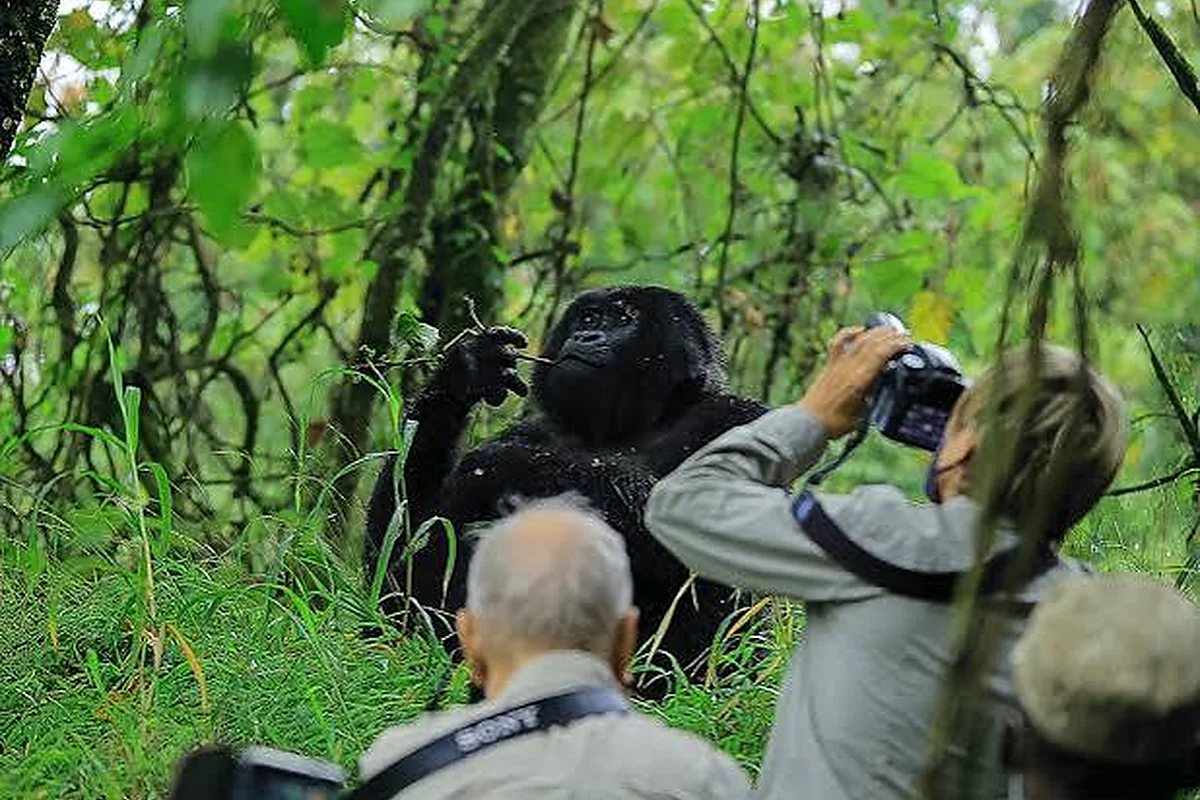
Visitors using digital cameras to photograph a mountain gorilla surrounded by green forest vegetation.
Ethical photography and official gorilla rules
Wildlife welfare always outranks a photograph. The Uganda Wildlife Authority prohibits flash photography and requires visitors to respect the viewing distance stated in its current guidance. Remain with your assigned ranger, never move closer for a cleaner background, and do not use food, sounds or gestures to attract attention. If a gorilla approaches, follow the ranger’s directions rather than improvising. In gorilla trekking photography in Uganda, careful planning usually matters more than owning the newest camera.
Practice using your camera while wearing gloves or standing in shade before the trip. Learn how to change shutter speed, ISO and autofocus mode without searching through menus. Familiarity reduces distraction when the ranger announces that the gorillas are nearby. Keep the camera accessible but secure on the walk. This matters especially in Bwindi and Mgahinga, where conditions can change quickly along the forest trail. Successful gorilla trekking photography in Uganda also depends on calm decisions and a willingness to put the animals first.
Wildlife welfare always outranks a photograph. The encounter may include rain, backlighting, foliage and periods when the animals face away. None of those conditions means the trek has failed. A thoughtful sequence can combine portraits, hands, family interactions and rainforest details. Avoid judging the experience solely by whether you obtained a perfectly unobstructed face. In gorilla trekking photography in Uganda, careful planning usually matters more than owning the newest camera.
Keep your elbows close to your body, breathe steadily and check sharpness on a few frames rather than every shot. If the light changes, make one deliberate exposure adjustment. Watch your footing before raising the camera. A photograph is not worth slipping, separating from the group or disrupting the ranger’s guidance. If a gorilla approaches, follow the ranger’s directions rather than improvising.
More equipment does not always improve results. Every extra lens adds weight, creates decisions and may need protection from moisture. A compact kit with a reliable camera and one flexible zoom is often easier to manage. Bring only accessories that you know how to use and that do not interfere with other visitors. For gorilla trekking photography in Uganda, the most useful habit is to prepare thoughtfully and let the ranger control the pace. In gorilla trekking photography in Uganda, careful planning usually matters more than owning the newest camera.
Wildlife welfare always outranks a photograph. Watch the gorillas quietly between photographs. Their expressions and interactions become easier to anticipate when you stop staring only at the viewfinder. Do not block another visitor’s view or step outside the ranger’s designated area. Ethical behavior helps protect the animals and makes the experience better for the entire group.
Look for a clear eye, a recognizable gesture and a foreground that supports the scene. Forest vines can add depth, but they can also obscure the face. Shift your framing slightly from your permitted position instead of moving toward the animal. Photographing the wider habitat gives context that a tightly cropped portrait cannot communicate. If a gorilla approaches, follow the ranger’s directions rather than improvising. In gorilla trekking photography in Uganda, careful planning usually matters more than owning the newest camera.
| Priority | Why it matters |
|---|---|
| Gorilla welfare | No flash and follow ranger instructions |
| Visitor safety | Stay with the group and watch footing |
| Good photographs | Work patiently within permitted positions |
Planning the best photographic itinerary
Good photography begins before the trek: choose a sensible arrival schedule, sleep near the assigned briefing point, and keep the camera ready without exhausting yourself. Bwindi has several trekking sectors, and permit allocation affects where you begin. Mgahinga offers a different landscape, but neither destination guarantees open views or a particular gorilla pose. Allow time for transfers and unpredictable forest conditions. In gorilla trekking photography in Uganda, careful planning usually matters more than owning the newest camera.
The encounter may include rain, backlighting, foliage and periods when the animals face away. None of those conditions means the trek has failed. A thoughtful sequence can combine portraits, hands, family interactions and rainforest details. Avoid judging the experience solely by whether you obtained a perfectly unobstructed face. This matters especially in Bwindi and Mgahinga, where conditions can change quickly along the forest trail. Successful gorilla trekking photography in Uganda also depends on calm decisions and a willingness to put the animals first.
Good photography begins before the trek: choose a sensible arrival schedule, sleep near the assigned briefing point, and keep the camera ready without exhausting yourself. Keep your elbows close to your body, breathe steadily and check sharpness on a few frames rather than every shot. If the light changes, make one deliberate exposure adjustment. Watch your footing before raising the camera. A photograph is not worth slipping, separating from the group or disrupting the ranger’s guidance. In gorilla trekking photography in Uganda, careful planning usually matters more than owning the newest camera.
More equipment does not always improve results. Every extra lens adds weight, creates decisions and may need protection from moisture. A compact kit with a reliable camera and one flexible zoom is often easier to manage. Bring only accessories that you know how to use and that do not interfere with other visitors. Allow time for transfers and unpredictable forest conditions.
Watch the gorillas quietly between photographs. Their expressions and interactions become easier to anticipate when you stop staring only at the viewfinder. Do not block another visitor’s view or step outside the ranger’s designated area. Ethical behavior helps protect the animals and makes the experience better for the entire group. For gorilla trekking photography in Uganda, the most useful habit is to prepare thoughtfully and let the ranger control the pace. In gorilla trekking photography in Uganda, careful planning usually matters more than owning the newest camera.
Good photography begins before the trek: choose a sensible arrival schedule, sleep near the assigned briefing point, and keep the camera ready without exhausting yourself. Look for a clear eye, a recognizable gesture and a foreground that supports the scene. Forest vines can add depth, but they can also obscure the face. Shift your framing slightly from your permitted position instead of moving toward the animal. Photographing the wider habitat gives context that a tightly cropped portrait cannot communicate.
Practice using your camera while wearing gloves or standing in shade before the trip. Learn how to change shutter speed, ISO and autofocus mode without searching through menus. Familiarity reduces distraction when the ranger announces that the gorillas are nearby. Keep the camera accessible but secure on the walk. Allow time for transfers and unpredictable forest conditions. In gorilla trekking photography in Uganda, careful planning usually matters more than owning the newest camera.

A group of visitors with cameras exploring a lush forest, illustrating the photography experience during a guided wildlife trek.
How PrideMark Safaris helps photographers prepare
A well-organized safari allows you to focus on the experience instead of last-minute transport questions. Discuss your camera kit, hiking ability, accommodation preferences and desired itinerary with the operator before booking. The team can explain the difference between regular trekking and a habituation experience, while confirming the relevant permits and logistics. No ethical operator can promise a specific gorilla family or photographic result. In gorilla trekking photography in Uganda, careful planning usually matters more than owning the newest camera.
Keep your elbows close to your body, breathe steadily and check sharpness on a few frames rather than every shot. If the light changes, make one deliberate exposure adjustment. Watch your footing before raising the camera. A photograph is not worth slipping, separating from the group or disrupting the ranger’s guidance. This matters especially in Bwindi and Mgahinga, where conditions can change quickly along the forest trail. Successful gorilla trekking photography in Uganda also depends on calm decisions and a willingness to put the animals first.
A well-organized safari allows you to focus on the experience instead of last-minute transport questions. More equipment does not always improve results. Every extra lens adds weight, creates decisions and may need protection from moisture. A compact kit with a reliable camera and one flexible zoom is often easier to manage. Bring only accessories that you know how to use and that do not interfere with other visitors. In gorilla trekking photography in Uganda, careful planning usually matters more than owning the newest camera.
Watch the gorillas quietly between photographs. Their expressions and interactions become easier to anticipate when you stop staring only at the viewfinder. Do not block another visitor’s view or step outside the ranger’s designated area. Ethical behavior helps protect the animals and makes the experience better for the entire group. No ethical operator can promise a specific gorilla family or photographic result.
Look for a clear eye, a recognizable gesture and a foreground that supports the scene. Forest vines can add depth, but they can also obscure the face. Shift your framing slightly from your permitted position instead of moving toward the animal. Photographing the wider habitat gives context that a tightly cropped portrait cannot communicate. For gorilla trekking photography in Uganda, the most useful habit is to prepare thoughtfully and let the ranger control the pace. In gorilla trekking photography in Uganda, careful planning usually matters more than owning the newest camera.
A well-organized safari allows you to focus on the experience instead of last-minute transport questions. Practice using your camera while wearing gloves or standing in shade before the trip. Learn how to change shutter speed, ISO and autofocus mode without searching through menus. Familiarity reduces distraction when the ranger announces that the gorillas are nearby. Keep the camera accessible but secure on the walk.
The encounter may include rain, backlighting, foliage and periods when the animals face away. None of those conditions means the trek has failed. A thoughtful sequence can combine portraits, hands, family interactions and rainforest details. Avoid judging the experience solely by whether you obtained a perfectly unobstructed face. No ethical operator can promise a specific gorilla family or photographic result. In gorilla trekking photography in Uganda, careful planning usually matters more than owning the newest camera.
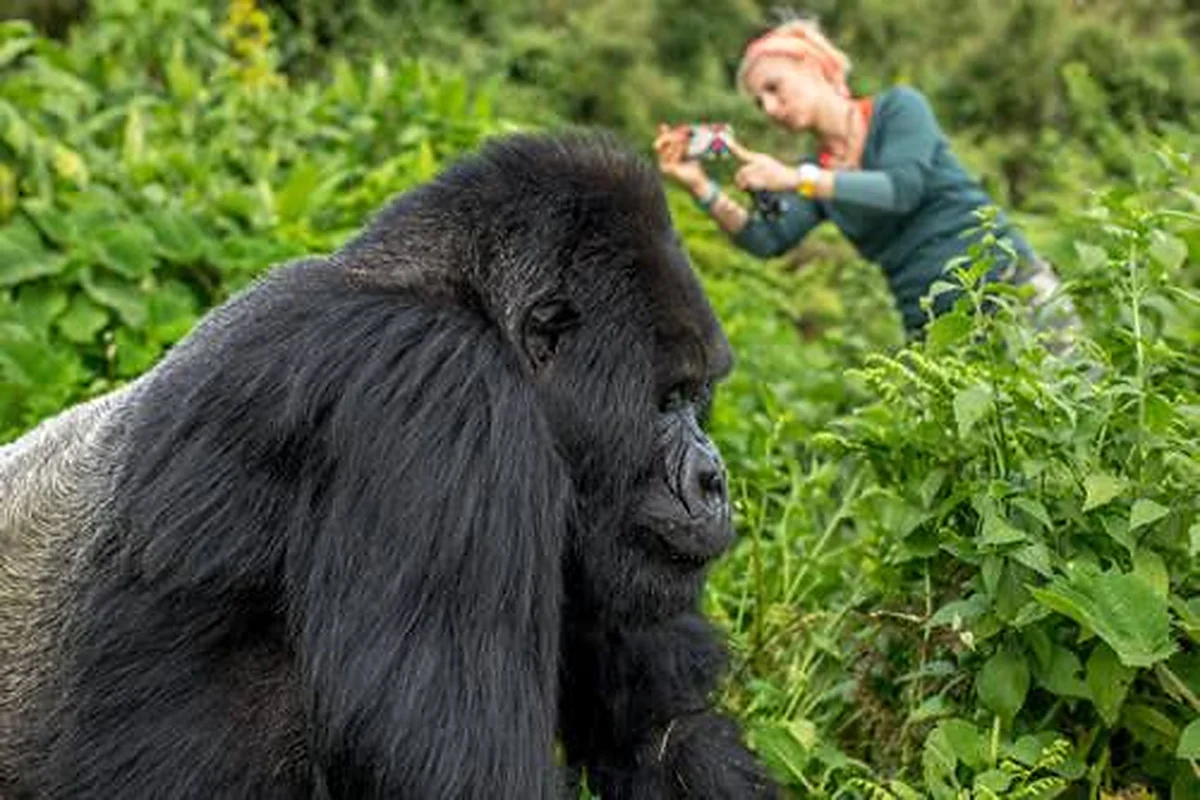
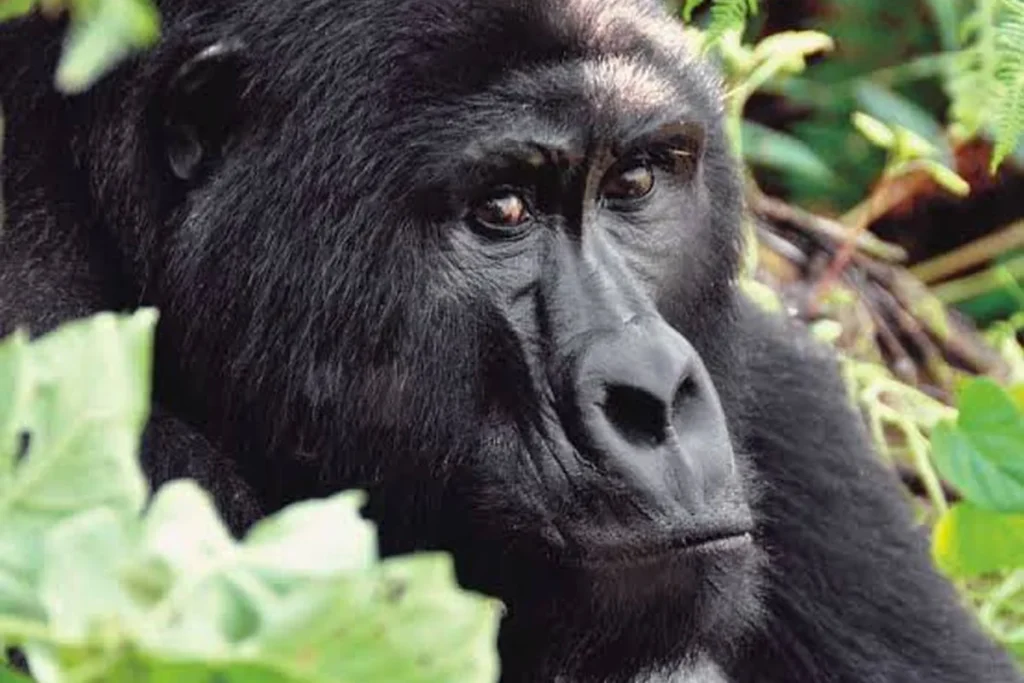
A silverback gorilla resting among lush green vegetation while a visitor photographs it in the background.
Frequently Asked Questions About Gorilla Photography
Is flash photography allowed during gorilla trekking?
No. UWA prohibits flash photography during gorilla visits. Disable both the camera flash and any automatic phone flash setting before the encounter. Flash can disturb animals and is not a substitute for good low-light technique. Use the available natural light, a steady stance and suitable exposure settings while following the ranger’s instructions.
What is the best camera for photographing gorillas?
A camera you know well is often more valuable than an unfamiliar expensive model. Mirrorless and DSLR cameras offer flexible lenses and low-light control, while a good smartphone can capture satisfying images. Think about weather resistance, battery life and weight. Choose equipment you can operate quickly and safely without distracting the group.
Which lens should I carry?
A versatile standard or short telephoto zoom suits many situations. A lens around 24–70 mm equivalent captures wider family scenes, while 70–200 mm equivalent can frame portraits from the permitted distance. You cannot predict where gorillas will sit, so flexibility helps. Avoid changing lenses repeatedly in rain, mud or blowing debris.
Can I photograph gorillas with my phone?
Yes, a smartphone can be useful when you keep expectations realistic. Clean the lens, disable flash and avoid aggressive digital zoom, which reduces detail. Tap to focus and take several steady frames when the gorilla pauses. In very dark conditions, a larger camera sensor may perform better, but a phone remains a practical lightweight option.
How much time will I have for photographs?
Ordinary gorilla trekking provides a maximum of one hour of viewing once the group reaches the gorillas, subject to ranger management and safety. The hike itself may take considerably longer. Use the time thoughtfully: make a few establishing photographs, observe behavior and then photograph moments that genuinely interest you. Do not spend every minute reviewing images.
Can I use a tripod?
A full-size tripod can be awkward on narrow, muddy paths and in a group encounter. Whether any support is appropriate depends on ranger instructions and practical conditions. Many photographers do better with careful handholding and image stabilization. Do not spread equipment across the path, block another visitor or position a support closer to gorillas.
Are gorillas easy to photograph in the rainforest?
Not always. Their dark fur, deep shade and foliage create difficult exposure and autofocus conditions. Backlighting can make faces appear very dark, while a bright leaf can confuse the camera meter. Learn a few adjustments before traveling and accept that some moments will remain partly obscured. Authentic rainforest photographs do not need studio-like lighting.
What shutter speed works for gorilla photography?
A shutter speed around 1/250 second may work as a starting point for a relatively still gorilla, but moving animals and shaky hands may require faster settings. Light availability, focal length and stabilization all matter. Check a few images at full magnification when practical. Never use flash to compensate for an exposure problem.
How should I protect my camera from rain?
Use a rain sleeve or fitted cover, keep a clean microfiber cloth handy and store spare batteries and cards in waterproof pouches. A small dry bag helps during prolonged showers. After the trek, dry the exterior carefully and allow the equipment to adjust to room conditions before storing it. Avoid opening the camera unnecessarily in wet vegetation.
Can I move closer to take a better photograph?
No. Do not approach gorillas or leave the position approved by the ranger to improve your composition. Current UWA tariff guidance specifies a 10-metre distance, and the ranger may direct visitors farther away. If an animal moves toward you, remain calm and follow instructions. Your safety and gorilla welfare come before the image.
Is Bwindi better than Mgahinga for photography?
Both parks offer extraordinary opportunities, but no park guarantees a clear view or particular animal behavior. Bwindi has several trekking sectors and dense forest environments; Mgahinga has different terrain and scenery. Choose according to permit arrangements, travel route and physical requirements rather than promises of easy photographs. Discuss current logistics with your safari operator.
Can PrideMark Safaris arrange a photography-focused trek?
You can discuss a photography-oriented itinerary with PrideMark Safaris, including suitable accommodation, transfer timing, equipment considerations and permit options. Regular gorilla trekking still follows UWA group limits, viewing times and ranger instructions. A specialist itinerary can improve preparation and convenience, but cannot guarantee lighting, gorilla positions or particular photographs.
Plan Your Gorilla Photography Safari
The best gorilla trekking photography in Uganda combines technical readiness with patient wildlife observation. Pack a manageable camera kit, learn your settings and allow the ranger to direct every movement near the animals. For help planning accommodation, transport and permit logistics, contact PrideMark Safaris. Explore our three-day gorilla trekking itinerary or fly-in luxury option for trip ideas.
Official guidance: UWA conservation tariff and gorilla rules and UWA tracking guidelines. Confirm applicable rules with the ranger at the briefing.