A hat is only one part of a sensible outfit. Full-length trousers, comfortable hiking boots, suitable socks, a rain jacket and a small daypack may be more consequential for many travelers. Still, thoughtful headwear can make an outdoor day more pleasant. Use these recommendations as practical guidance, not as a substitute for current park instructions or a properly fitted rain layer.
1. Why a Good Hat Matters During Gorilla Trekking
For this part of the preparation process, the best hats for gorilla trekking should support clear vision, a secure fit and comfort during changing weather. Consider how the hat behaves during a real walk rather than relying on appearance alone.
Coverage on the trail
In selecting the best hats for gorilla trekking, consider whether the design remains comfortable for hours, not just minutes.
A hat is a small item, but it can make a noticeable difference during a long forest walk. Gorilla trekking involves changing light, dripping foliage, occasional rain and periods of physical effort. A brim helps shade your face in exposed sections and can keep some falling moisture away from your eyes. The right hat should remain comfortable beneath a backpack and should never obstruct your view of the trail or the instructions of your ranger.
Comfort rather than appearance
The best-looking safari hat is not automatically the most practical. Focus on whether the crown feels comfortable, whether the brim stays out of your eyes and whether the hat remains secure when you bend or climb. A hat that constantly slips backward or catches on branches becomes a distraction. Try your choice during an ordinary walk rather than waiting until the morning of your gorilla trek.
What a hat cannot do
The best hats for gorilla trekking provide useful coverage without blocking the view of the path ahead.
A hat is not a substitute for a rain jacket, suitable footwear, insect precautions or sun protection for exposed skin. A wide brim may provide some shade, but it does not guarantee ultraviolet protection from every angle. Similarly, a water-resistant hat can shed light moisture without being fully waterproof. Treat the hat as one practical part of your overall trekking clothing system.
Respectful wildlife viewing
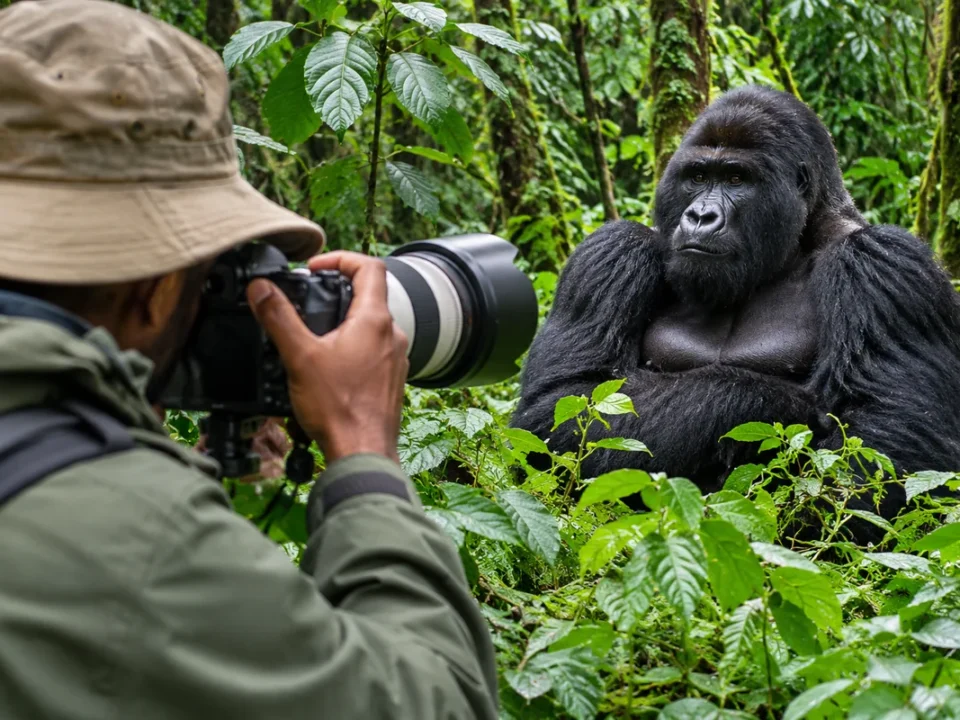
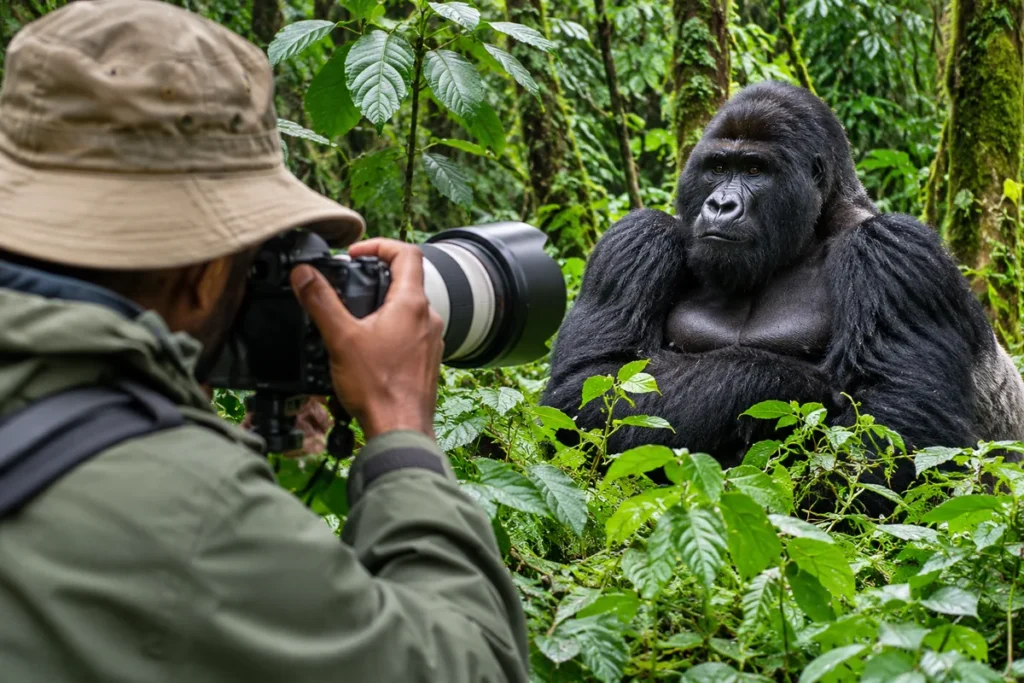
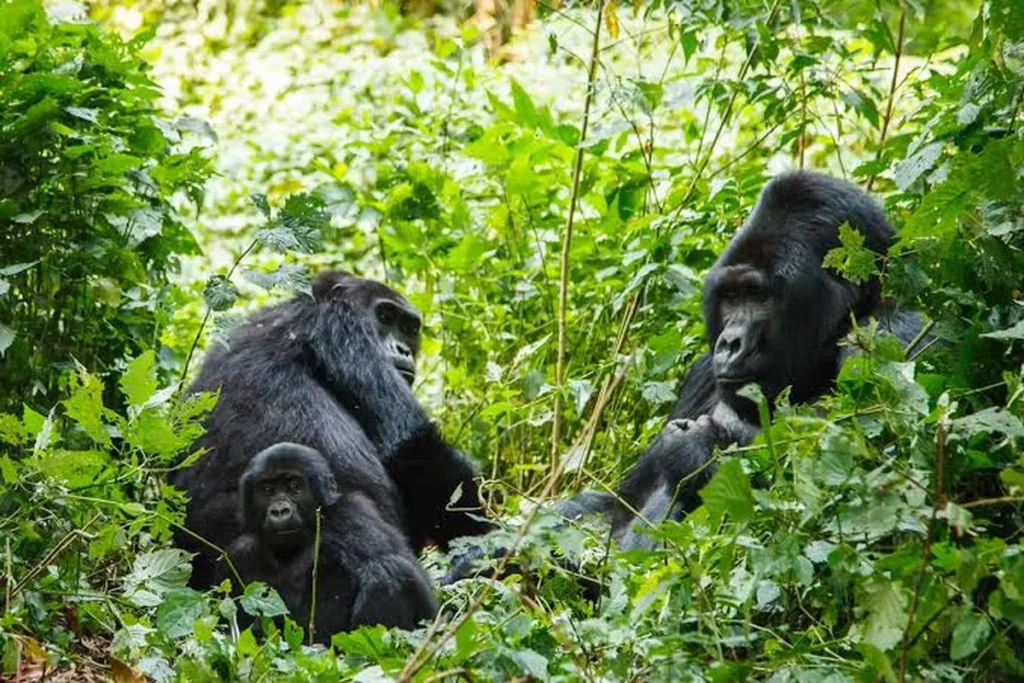
Once your group reaches the gorillas, follow the park ranger’s instructions about distance, movement and photography. Avoid hats with dangling decorations or noisy attachments that could distract you or others. Your clothing should help you stay focused on the wildlife and your guide rather than becoming an obstacle. Preparation matters more than accessories.
Before deciding, imagine wearing the hat while climbing a muddy slope, stopping in light rain and turning to listen to your ranger. The same design must remain comfortable through all three situations. This is why a simple, well-fitting hat often performs better than a more elaborate accessory that has never been tested outdoors.
For travelers who will also enjoy game drives, boat cruises or birdwatching, versatility is useful. A hat that works on the gorilla trek and on other outdoor activities reduces the number of accessories you need to carry. It also makes the packing process simpler. Choose a design that fits your itinerary rather than purchasing a separate specialist hat for every activity.
Forest conditions also make practical storage important. A hat that becomes soaked should not be sealed inside a plastic bag for days. Let it dry when you return to your accommodation, following the care instructions. A small habit like this can reduce odors and help the fabric and brim retain their shape throughout a longer safari.
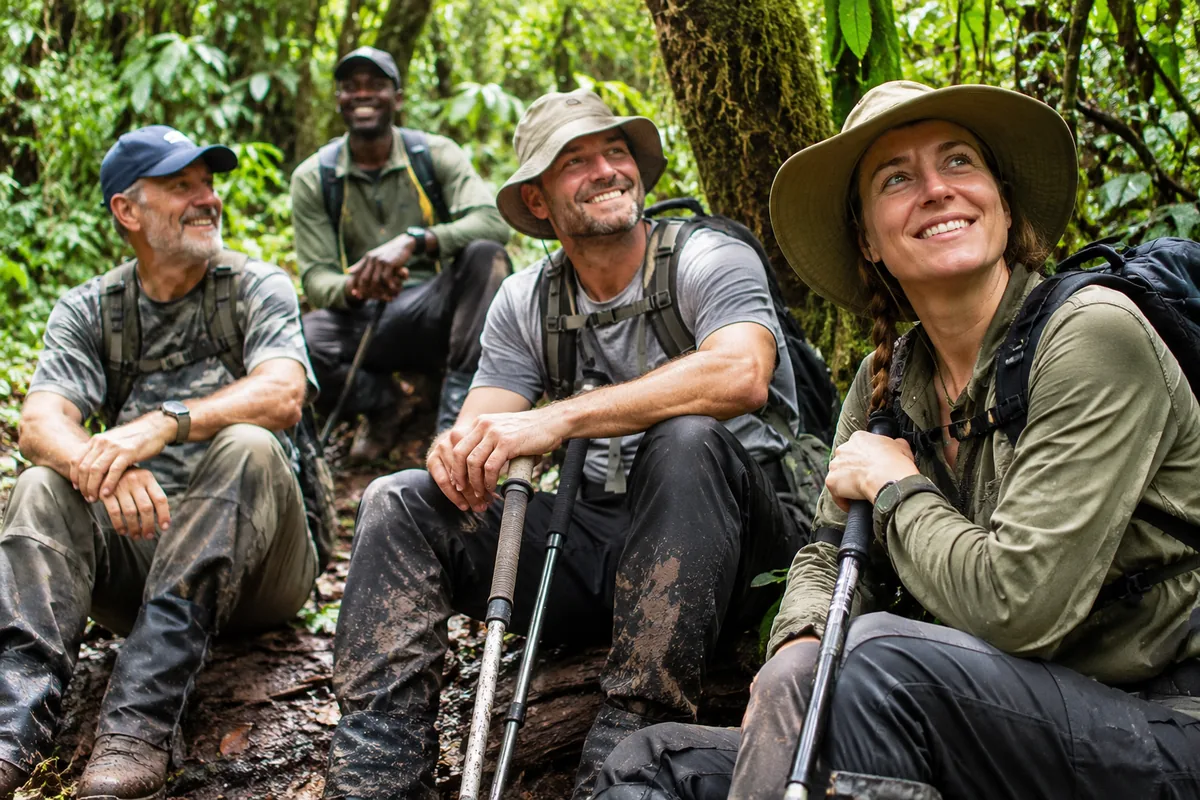
Hikers wearing different practical hat styles during a forest trekking break.
2. Best Hats for Gorilla Trekking: Types and Styles
When comparing the best hats for gorilla trekking, focus on what the design actually does for your day: shade, packability, breathability and compatibility with a rain hood. A simple, tested choice is often more useful than an elaborate accessory.
Wide-brimmed hiking hats
For most travelers, the best hats for gorilla trekking are practical, secure and simple to adjust.
Wide-brimmed hats cover the face, ears and part of the neck more effectively than a short-front cap when sunlight reaches open trails. Choose a brim that is flexible enough for dense vegetation yet structured enough not to flop into your vision. A chin cord can be helpful in wind, but it should be adjusted so it does not snag. The best hats for gorilla trekking are often simple, lightweight designs rather than stiff expedition styles.
Bucket hats
Bucket hats are compact, usually easy to pack and often have soft downward brims. They can be convenient under overhanging branches, although the brim may provide less shade than a broad safari hat. Check that the fabric dries reasonably quickly and that the hat remains comfortable when damp. A secure fit is especially important if the brim is soft and moves when you look down.
Baseball caps
When assessing the best hats for gorilla trekking, remember that a hat complements rather than replaces other protective clothing.
A baseball cap is familiar and comfortable for many travelers. Its visor shades the eyes but leaves the ears and neck more exposed. A cap may be sufficient when combined with a hooded rain jacket and other sun protection, but it is not necessarily the most versatile standalone option. If choosing a cap, favor a breathable material and an adjustable closure that does not press against your head.
Waterproof rain hats
A waterproof rain hat can be useful during sustained showers, especially when its brim channels water away from your face. Check for taped seams and a realistic waterproof specification rather than relying on the word rain in a product name. Some waterproof hats feel warmer during climbs because ventilation is limited. For many travelers, a breathable hiking hat plus a reliable rain-jacket hood is a flexible alternative.
Packable safari hats
Compare the best hats for gorilla trekking by testing them during a walk with your intended backpack.
Packable hats are convenient on multi-stop safaris because they can fit inside a daypack. Not every packable hat returns to its original shape, so test it after folding. Avoid crushing a rigid brim if it is not designed for packing. Practical safari clothing is clothing you can use comfortably across the journey, not just in one photograph.
| Hat type | Main benefit | Consideration |
|---|---|---|
| Wide-brimmed hiking hat | Broad shade and coverage | May catch on branches |
| Bucket hat | Packable and flexible | Moderate brim coverage |
| Baseball cap | Comfortable under many hoods | Less ear and neck coverage |
| Waterproof rain hat | Useful in sustained rain | Can feel warm during climbs |
| Packable safari hat | Convenient for travel | Check brim recovery |
When shopping, compare features rather than labels. The fabric, brim, crown and adjustment system determine how a hat behaves. If two hats feel similar, choose the one you can clean, pack and wear comfortably with the rest of your safari clothing. A familiar and reliable item is often the wiser choice.
Forest conditions also make practical storage important. A hat that becomes soaked should not be sealed inside a plastic bag for days. Let it dry when you return to your accommodation, following the care instructions. A small habit like this can reduce odors and help the fabric and brim retain their shape throughout a longer safari.
Think about the way the hat interacts with your other layers. When a rain jacket hood is pulled up, a broad brim may bunch against the fabric or push the hood backward. A smaller cap may sit neatly underneath. Neither arrangement is inherently correct; comfort and clear vision should decide which combination you use.
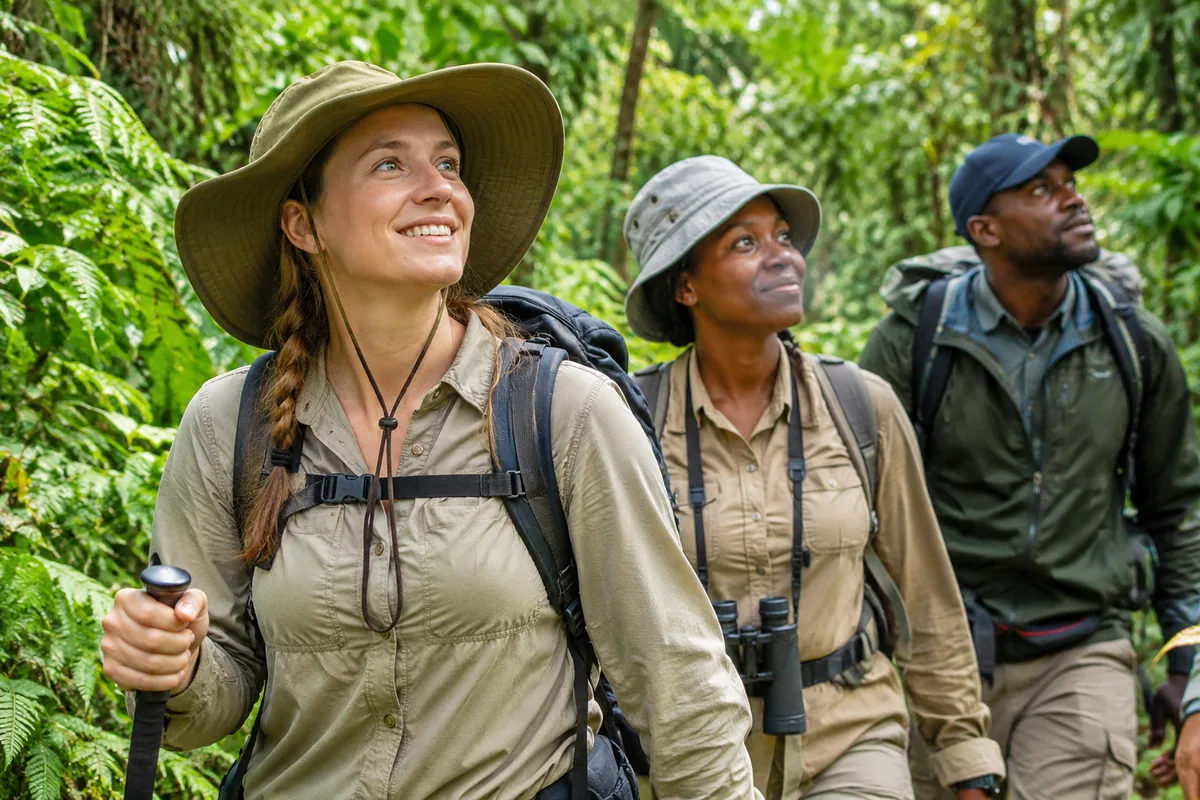
Different hat styles worn by hikers during a forest trekking adventure.
3. Wide-Brimmed Hats, Bucket Hats and Caps Compared
The best hats for gorilla trekking are not identical for every traveler. Differences in brim width, fit and personal comfort explain why several styles can work well. Choose the option that stays secure while you move.
Coverage differences
A wide-brimmed hat generally offers the broadest coverage of the three common styles, while a bucket hat balances moderate coverage and packability. A cap concentrates shade over the face. None of these categories is automatically superior for every traveler. Your head shape, the density of the vegetation and whether you wear a hood all affect comfort and usefulness.
Visibility and branch clearance
The best hats for gorilla trekking should remain easy to pack without damaging the brim or crown.
A very wide brim may touch leaves or branches along a narrow trail. If the brim folds into your eyes, it can make uneven ground harder to see. A smaller bucket brim may be easier to manage in dense vegetation. Try looking upward and downward while wearing the hat; the right choice lets you see clearly without constant adjustment.
Managing wind and movement
Although forest paths may feel sheltered, there can be breezy viewpoints or open sections during transfers. A secure crown, adjustable band or removable chin cord can help. Avoid cords hanging loosely around equipment. If a hat slips during a simple brisk walk, it is unlikely to become more secure on a steep trail.
Personal preference and practical testing
Choosing the best hats for gorilla trekking involves balancing rain protection against airflow during climbs.
Some people dislike the feeling of a brim near their ears, while others prefer the coverage of a full safari hat. Choose a design you will actually wear. If possible, try the hat with sunglasses, a rain jacket and your daypack. The best hats for gorilla trekking should work with your other clothing rather than compete with it.
A useful comparison includes a brief walking test. Bend forward, look toward your feet, turn your head and imagine navigating low branches. If you keep adjusting the hat, reconsider the design. These small movements matter more in forest terrain than they do when trying on headwear in a mirror.
Think about the way the hat interacts with your other layers. When a rain jacket hood is pulled up, a broad brim may bunch against the fabric or push the hood backward. A smaller cap may sit neatly underneath. Neither arrangement is inherently correct; comfort and clear vision should decide which combination you use.
Comfort is particularly personal. One traveler may find a lightweight bucket hat ideal, while another prefers the stable feel of a cap. There is no reason to copy another traveler’s gear list exactly. Use recommendations to identify the relevant features, then choose the fit and style that work best for you.
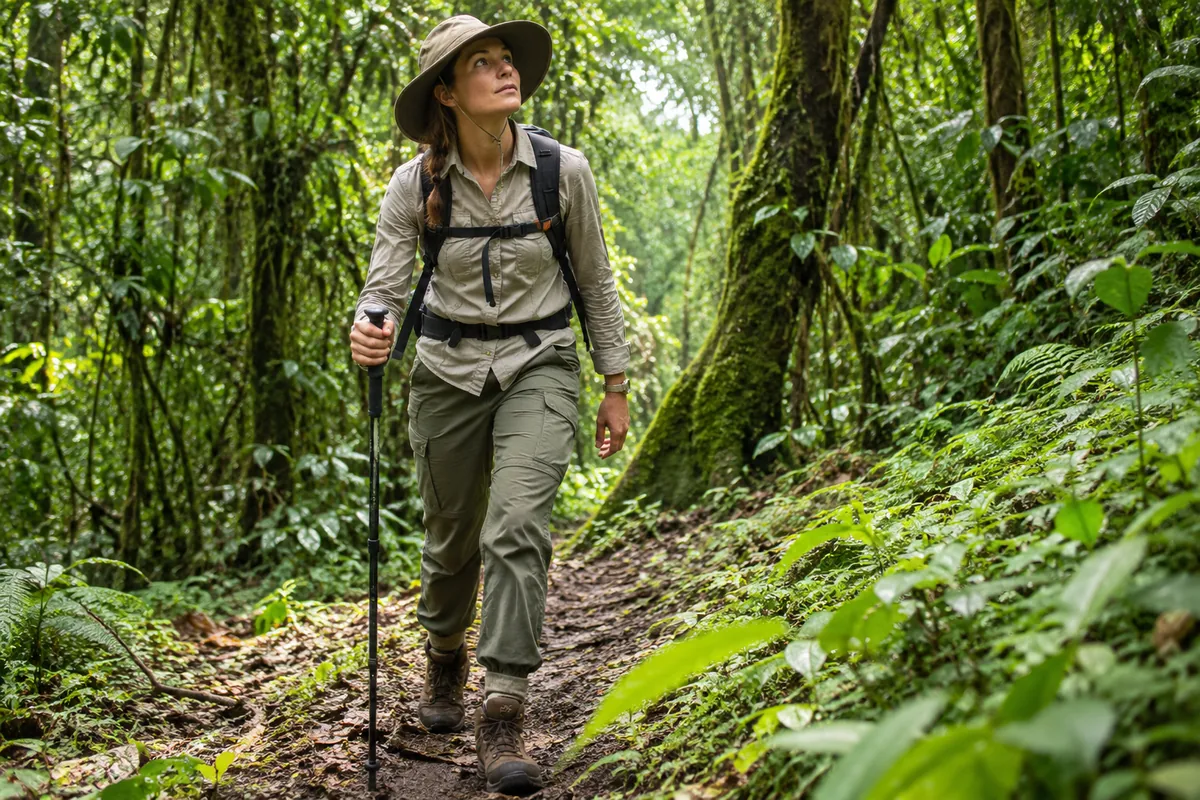
A hiker wearing a wide-brimmed safari hat while trekking through dense forest.
4. Best Hats for Gorilla Trekking: Materials and Breathability
For damp forest conditions, the best hats for gorilla trekking balance quick drying, comfort and practical rain protection. Remember that fabric performance varies by construction, and keep a waterproof layer available.
Nylon and polyester
Lightweight nylon and polyester are common choices because they can be durable, compact and relatively quick to dry. However, performance depends on the weave, lining and construction. A tightly coated fabric may resist water while feeling less breathable than an uncoated version. Compare the complete hat rather than assuming every synthetic product behaves alike.
Cotton and canvas
In humid forests, the best hats for gorilla trekking often use lightweight fabrics that feel comfortable when damp.
Cotton hats can feel soft and familiar, but thicker cotton or canvas may retain water longer after rain. A cotton blend may still work for a traveler who prioritizes comfort, particularly if a separate waterproof hood is available. Avoid relying on a heavy, soaked hat as your only head covering for a full day in damp conditions.
Mesh ventilation
Ventilation panels may help release heat during a climb. Look closely at where the mesh sits and how much sun or rain it allows through. Mesh at the crown can improve airflow but reduce coverage in that area. Balance ventilation against the likelihood of brushing wet foliage, and remember that a breathable hat is not always a rainproof hat.
Water-repellent finishes
Before buying the best hats for gorilla trekking, check the fabric label and the manufacturer’s care advice.
A water-repellent treatment may cause light rain to bead initially, but the finish can diminish after washing or repeated use. It should not be confused with a fully waterproof construction. Follow the manufacturer’s care instructions if the fabric has a special coating. For a long wet trek, a hooded jacket remains an important backup.
Sun-protection claims
Some hats are sold with a UPF rating, which refers to the fabric’s tested ultraviolet protection. Coverage also depends on the hat’s shape and how you wear it. A brim does not protect all exposed skin, especially in reflected or angled sunlight. Use other appropriate sun-protection measures when spending time outside.
| Material | Potential advantage | Main limitation |
|---|---|---|
| Nylon or polyester | Lightweight and often quick-drying | Performance varies by weave |
| Cotton or canvas | Soft and familiar | May stay damp longer |
| Mesh panels | Improved ventilation | May admit rain or sun |
| Waterproof membrane | Better rain resistance | May reduce airflow |
Manufacturers sometimes emphasize individual features without explaining trade-offs. Waterproof coatings can reduce ventilation; airy mesh can admit moisture; thick fabrics can feel warm. There is no perfect material for every condition. Prioritize the combination that matches your comfort and the layers you already own.
Comfort is particularly personal. One traveler may find a lightweight bucket hat ideal, while another prefers the stable feel of a cap. There is no reason to copy another traveler’s gear list exactly. Use recommendations to identify the relevant features, then choose the fit and style that work best for you.
It is worth remembering that gorilla trekking is managed by trained park personnel. Your ranger will explain the day’s procedures and direct the group along the route. Clothing should support this experience, not become a source of distraction. Keep your hat secure, listen carefully and make wildlife-viewing rules your priority.
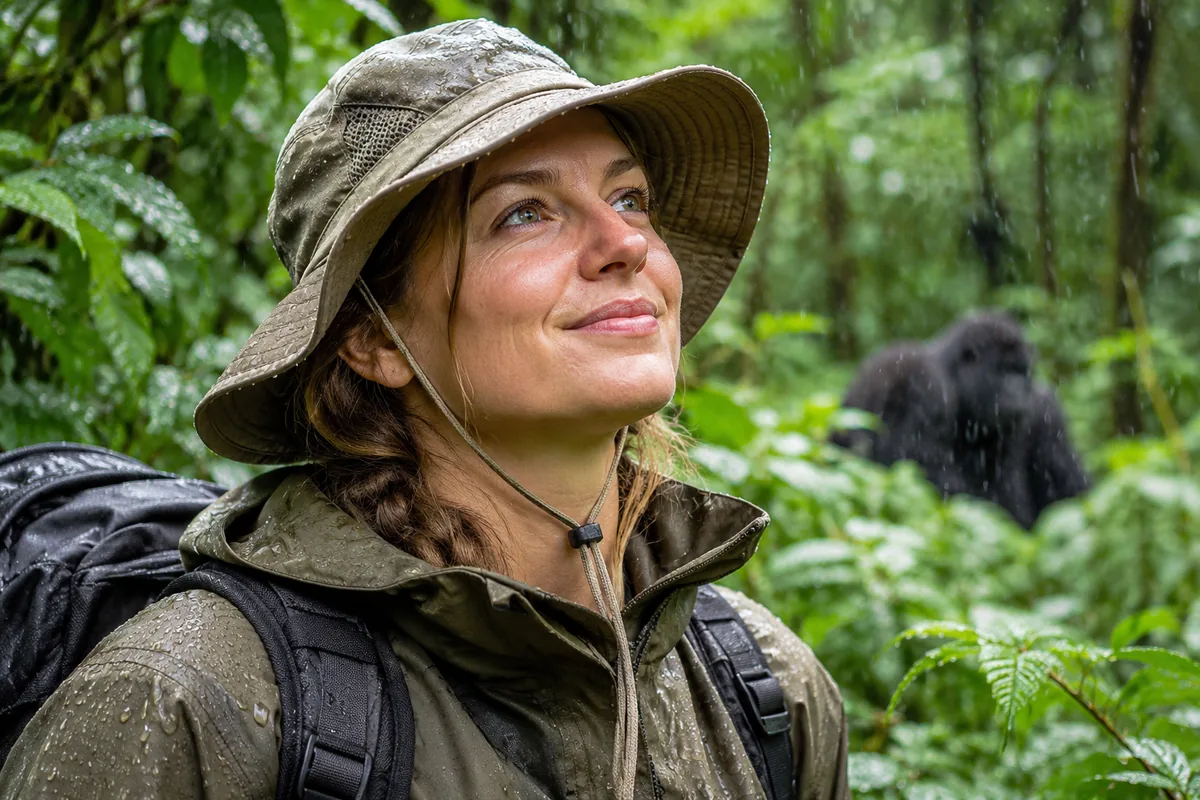
A hiker wearing a wide-brimmed hat during rainy forest conditions.
5. Best Hats for Gorilla Trekking: Size, Fit and Brim
The best hats for gorilla trekking should fit comfortably without squeezing or slipping. Check your hat while wearing your backpack and rain jacket, and make sure it does not interfere with peripheral vision.
Measure before buying
When evaluating the best hats for gorilla trekking, assess visibility while looking down at uneven ground.
If shopping online, measure your head around the area where the hat band will sit and compare the result with the brand’s size chart. Labels such as medium and large are not consistent across all manufacturers. A hat should sit securely without leaving a painful pressure line. Adjustable drawcords can fine-tune fit but cannot rescue a fundamentally incorrect size.
Test the crown
A deep crown may slip over your eyebrows when you bend, while a shallow crown may feel unstable. Wear the hat for several minutes and move your head naturally. Look down at your feet, turn side to side and simulate stepping over a branch. The crown should remain comfortable without requiring constant attention.
Select a practical brim width
The best hats for gorilla trekking should work with a hood without creating uncomfortable pressure.
A broad brim gives more shade but may brush vegetation. A narrow brim is easier to manage but covers less skin. Consider a medium, flexible brim if you want a balance. The best hats for gorilla trekking are the ones that preserve your visibility and feel comfortable through repeated movement.
Compatibility with rain jackets
Try your hat with the rain jacket you will pack. Some bulky brims interfere with a fitted hood, and some caps work well beneath one. Check whether the hood can be tightened without blocking peripheral vision. You may decide to remove the hat during heavy rain; that is easier when it can be folded or stored safely.
Glasses and hair
For changing weather, the best hats for gorilla trekking are versatile enough to use with additional layers.
Hat fit can change with sunglasses, hair tied up or a head covering underneath. Try your complete setup. A tight band may cause discomfort during long walks, especially if it presses against glasses. Avoid sharp clips or decorative accessories that could catch on vegetation.
Fit also changes during a day outdoors. Sweat, hairstyle and the position of sunglasses can affect comfort. A small adjustment mechanism is useful, but it should not create a hard pressure point. Wear the hat for at least a short practice walk before placing it in your suitcase.
It is worth remembering that gorilla trekking is managed by trained park personnel. Your ranger will explain the day’s procedures and direct the group along the route. Clothing should support this experience, not become a source of distraction. Keep your hat secure, listen carefully and make wildlife-viewing rules your priority.
For travelers who will also enjoy game drives, boat cruises or birdwatching, versatility is useful. A hat that works on the gorilla trek and on other outdoor activities reduces the number of accessories you need to carry. It also makes the packing process simpler. Choose a design that fits your itinerary rather than purchasing a separate specialist hat for every activity.
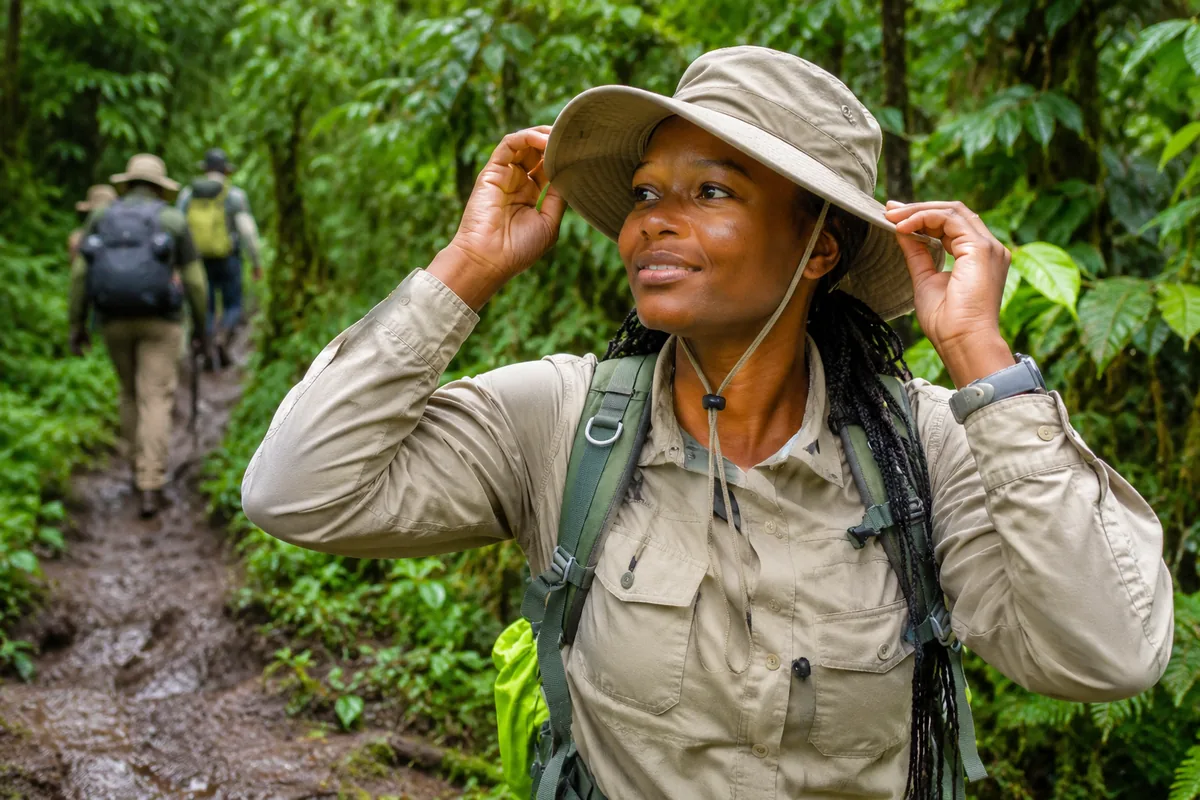
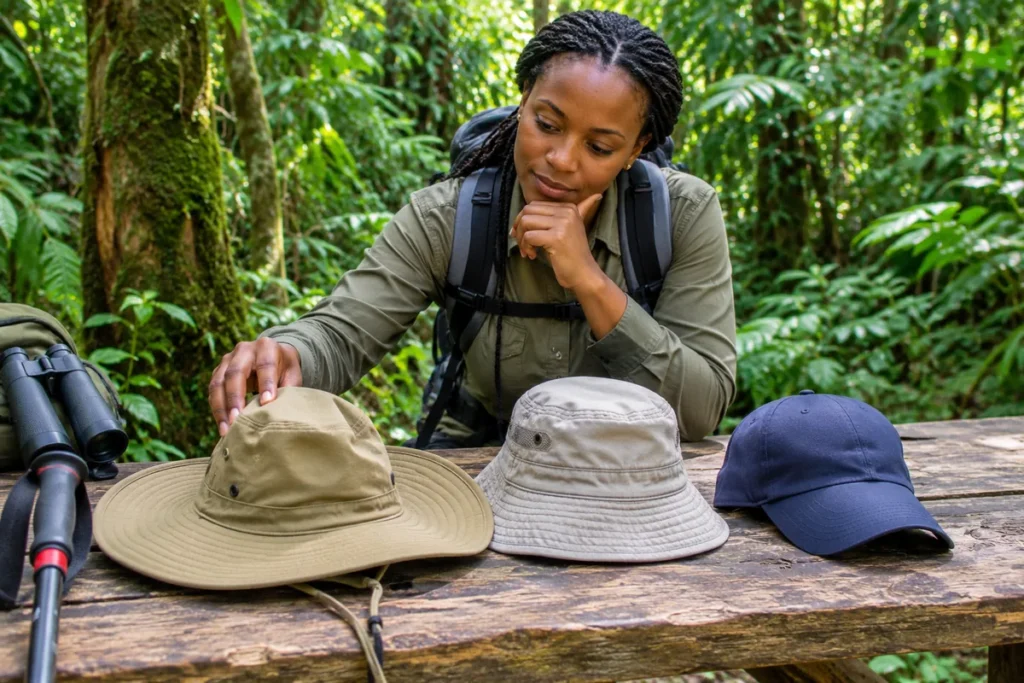
A hiker adjusts her trekking hat to ensure a comfortable and secure fit.
6. Best Hats for Gorilla Trekking in Bwindi and Mgahinga
When packing the best hats for gorilla trekking in Uganda, prepare for variable forest weather rather than assuming any particular day will be dry. Follow the current advice of your guide and ranger.
Bwindi conditions
Bwindi Impenetrable National Park contains steep, densely vegetated forest terrain, although the exact route varies with the gorilla group and ranger decisions. Expect a mixture of shade, damp vegetation and possible rain. A lightweight hat that can be put away quickly is often more practical than a rigid style. Do not assume that a dry morning means the entire trek will remain dry.
Mgahinga conditions
On narrow trails, the best hats for gorilla trekking should not repeatedly snag on low branches.
Mgahinga Gorilla National Park has volcanic mountain terrain where weather and temperature can change during the day. A hat may be useful for exposed moments, while a jacket hood can help when rain or wind increases. Pack layers that work together. The goal is to adapt without stopping repeatedly to reorganize clothing.
Rainy and drier periods
Rain can occur outside the main rainy seasons, so treat seasonal labels as broad planning guidance rather than guarantees. If you prefer a breathable hat, carry a waterproof hood for prolonged rain. If you choose a waterproof hat, consider whether it feels too warm during active walking. Ask your operator for up-to-date preparation advice before departure.
Trail etiquette
If rain is expected, the best hats for gorilla trekking still need a dependable backup rain strategy.
Listen to the briefing and follow the rangers’ directions at all times. A hat should not interfere with hearing instructions or seeing where you step. Secure loose straps and remove any accessory that becomes distracting. Park rules and wildlife guidance take priority over any clothing recommendation in a packing article.
The exact route to a gorilla family cannot be predicted from a general packing guide. Weather, terrain and trekking duration vary. Prepare for several possibilities rather than one idealized photograph of a forest trail. Ask your operator for current practical advice, and follow the rangers on the day.
For travelers who will also enjoy game drives, boat cruises or birdwatching, versatility is useful. A hat that works on the gorilla trek and on other outdoor activities reduces the number of accessories you need to carry. It also makes the packing process simpler. Choose a design that fits your itinerary rather than purchasing a separate specialist hat for every activity.
Forest conditions also make practical storage important. A hat that becomes soaked should not be sealed inside a plastic bag for days. Let it dry when you return to your accommodation, following the care instructions. A small habit like this can reduce odors and help the fabric and brim retain their shape throughout a longer safari.
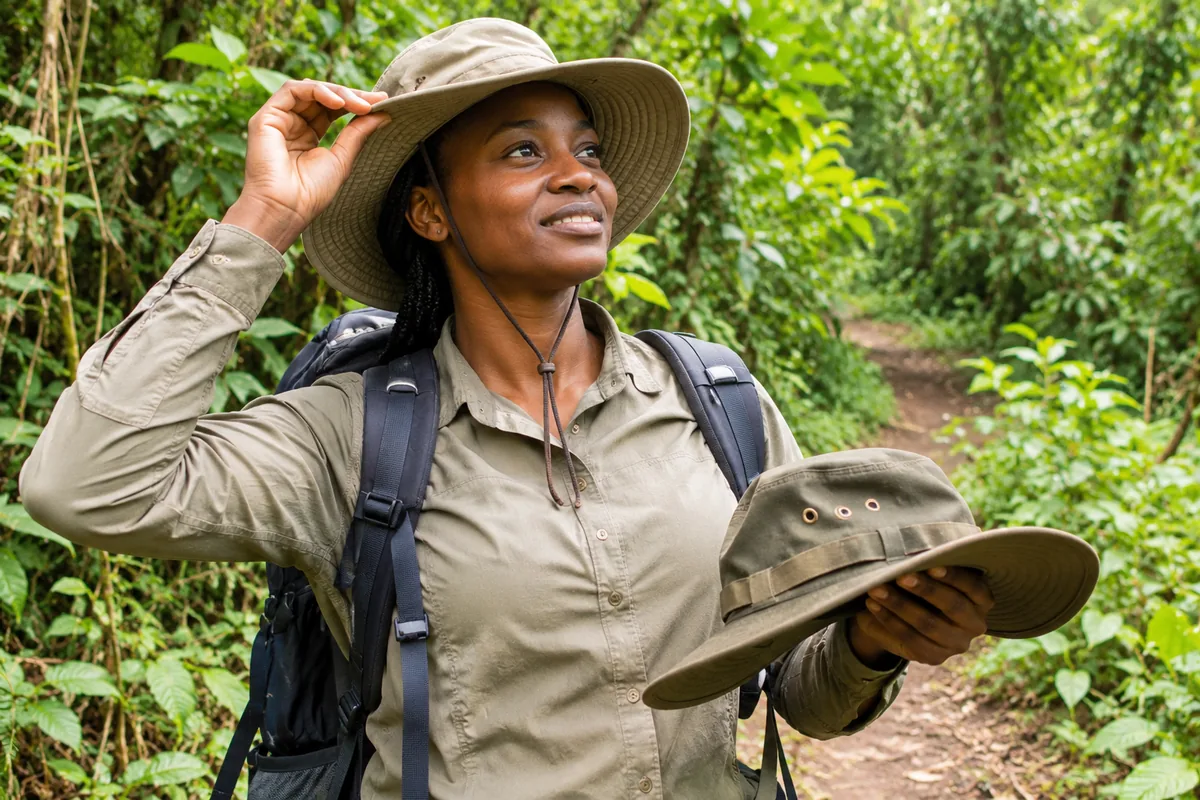
A wide-brimmed safari hat offers useful head and face coverage during trekking.
7. Hats Versus Hoods and Other Head Protection
The best hats for gorilla trekking can work alongside a hood, but a poor combination may reduce visibility or comfort. Test your complete clothing system before departure.
Hat or hood?
A hat can offer shade and light protection from dripping leaves, while a rain-jacket hood is often more useful in heavy rain. A hood may reduce peripheral vision or hearing if poorly adjusted. Test both options together and make sure you can turn your head comfortably. Neither should compromise your awareness of the trail or ranger instructions.
Using a cap beneath a hood
The best hats for gorilla trekking should remain comfortable during both brief stops and uphill walking.
Some hikers prefer a baseball cap under a rain hood because the visor helps keep water off their face. This can work well if the hood is roomy enough and does not push the cap forward. Practice the combination before travel. If it feels cramped, a different hat or a better-adjusted hood may be more comfortable.
Buffs and neck coverings
A lightweight neck gaiter or buff can provide flexible coverage for the neck and ears, but it is not a substitute for proper sun protection or insect precautions. Choose breathable fabric and avoid covering your face in a way that makes communication difficult. Wildlife health precautions and any mask requirements should be confirmed from current official guidance.
When no hat is comfortable
For a longer safari, the best hats for gorilla trekking are easy to clean and use on other outdoor excursions.
Some travelers prefer using only a hood or other suitable head covering. There is no single hat design required for every gorilla trek. The practical question is whether your head and face remain comfortable and adequately protected for the conditions. The best hats for gorilla trekking are recommendations, not a universal compulsory item.
If you already own a comfortable cap and a reliable rain hood, you may not need to buy a new safari hat. Spending on well-fitting footwear or a good rain layer may offer greater benefit. Think of headwear as a supportive accessory within an overall practical outfit.
Forest conditions also make practical storage important. A hat that becomes soaked should not be sealed inside a plastic bag for days. Let it dry when you return to your accommodation, following the care instructions. A small habit like this can reduce odors and help the fabric and brim retain their shape throughout a longer safari.
Think about the way the hat interacts with your other layers. When a rain jacket hood is pulled up, a broad brim may bunch against the fabric or push the hood backward. A smaller cap may sit neatly underneath. Neither arrangement is inherently correct; comfort and clear vision should decide which combination you use.
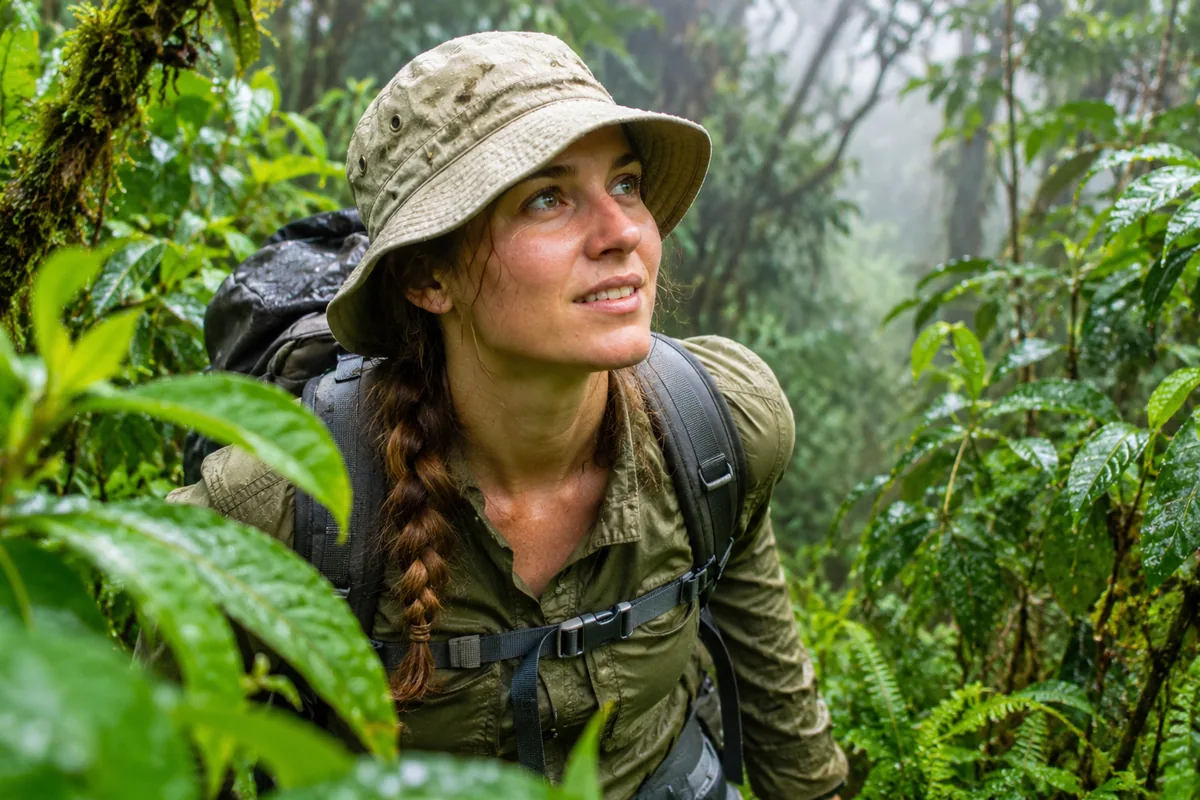
A lightweight bucket hat worn during damp rainforest trekking conditions.
8. Nine Essential Tips for Choosing a Gorilla Trekking Hat
These tips help identify the best hats for gorilla trekking based on fit, weather management and everyday practicality. Choose a hat you have tested rather than one selected solely for its safari appearance.
Tip 1: Choose comfort first
Try the hat on for a meaningful period before buying. A tight band can become unpleasant during a long walk, and a loose hat may shift every time you bend. Prioritize a secure, comfortable fit over a fashionable silhouette.
Tip 2: Look for breathable fabric
The best hats for gorilla trekking need not be expensive when a simpler hat fits well and performs reliably.
Forest walking can involve steep climbs and considerable effort. Lightweight fabric and thoughtful ventilation may improve comfort. Remember that breathable does not necessarily mean waterproof.
Tip 3: Keep the brim practical
A medium or flexible brim can offer useful coverage without catching on every branch. Test your view when looking down at uneven ground. Avoid a brim that repeatedly falls across your eyes.
Tip 4: Check drying performance
For practical packing, the best hats for gorilla trekking are those you can store and retrieve quickly.
A hat may become wet from rain or vegetation. Quick-drying material can be convenient for a multi-day safari. Check the care label and try drying it after a normal wash.
Tip 5: Pack for rain
Bring a rain-jacket hood or another reliable rain layer even if your hat has a water-repellent finish. Light resistance and full waterproofing are not the same thing. Keep your rain layer easy to reach.
Tip 6: Secure loose cords
When reviewing the best hats for gorilla trekking, choose a brim that shades without obstructing your vision.
An adjustable chin strap can help in windy areas, but it should not hang where it might snag. Remove or shorten unnecessary attachments. Simple designs are often easiest to manage.
Tip 7: Test the hat with your gear
Wear the hat with your backpack, glasses and rain jacket. Walk, look down and turn your head. Check that it does not interfere with your hood or peripheral vision.
Tip 8: Consider packability
The best hats for gorilla trekking are tested before departure and adjusted for comfort on the trail.
A crushable hat is easy to store during transfers or heavy rain. Test whether it returns to shape after packing. Keep it in an accessible pocket rather than buried beneath other equipment.
Tip 9: Follow local guidance
The best hats for gorilla trekking complement responsible behavior. Follow the instructions of rangers and guides, especially near gorillas. A hat should never become more important than visibility, safe movement or wildlife-viewing rules.
These nine tips are a checklist, not a product ranking. Personal comfort, budget and fit should guide the final choice. The best hats for gorilla trekking are those you can wear securely and forget about while concentrating on the forest and the experience.
Think about the way the hat interacts with your other layers. When a rain jacket hood is pulled up, a broad brim may bunch against the fabric or push the hood backward. A smaller cap may sit neatly underneath. Neither arrangement is inherently correct; comfort and clear vision should decide which combination you use.
Comfort is particularly personal. One traveler may find a lightweight bucket hat ideal, while another prefers the stable feel of a cap. There is no reason to copy another traveler’s gear list exactly. Use recommendations to identify the relevant features, then choose the fit and style that work best for you.
9. Best Hats for Gorilla Trekking: Buying, Packing and Care
The best hats for gorilla trekking should be easy to clean, dry and pack. Good care makes a familiar hat more reliable for future outdoor adventures.
Before purchasing
Check fit, crown depth, brim flexibility, fabric composition and the care label. Try the hat with your jacket and sunglasses. If a product claims waterproofing or a UPF rating, look for specific supporting details. Avoid paying extra for features you do not need.
What to pack
Pack one comfortable hat you have already tested and a suitable rain jacket with a functioning hood. Consider a spare only if you will use it on other safari activities or need a backup. Keep the hat accessible during transfers, briefing and the forest walk.
Cleaning after trekking
Brush away dry debris and follow the garment’s care label. Some hats can be hand-washed while structured hats require more careful treatment. Allow the fabric to dry completely before packing it away. Avoid aggressive heat or detergents that may damage coatings.
Storage and long-term use
Store the hat in a clean, dry place and avoid crushing a rigid brim. Inspect cords, seams and fasteners before another trip. A well-maintained hat can serve on birdwatching walks, nature trails and ordinary travel days beyond gorilla trekking.
Planning your safari
PrideMark Safaris can help arrange gorilla trekking itineraries, permits, transfers and accommodation in Uganda and Rwanda. Our team can also share practical packing guidance tailored to your travel dates. Contact us early, particularly when your itinerary depends on limited trekking permit availability.
| Common mistake | Better approach | Why it helps |
|---|---|---|
| Buying without a fitting test | Walk and bend while wearing it | Reveals slipping or pressure |
| Assuming water-resistant means waterproof | Carry a reliable rain hood | Prepares for sustained rain |
| Choosing an oversized brim | Check visibility on uneven ground | Reduces distractions |
| Ignoring care instructions | Dry and clean as directed | Protects fabric and shape |
| Packing too many hats | Choose one versatile design | Saves space |
Before departure, pack your hat where it will be easy to reach and make sure it is dry and clean. Keep your overall luggage manageable. If you are unsure about clothing for your particular dates or route, contact PrideMark Safaris for trip-specific guidance.
Comfort is particularly personal. One traveler may find a lightweight bucket hat ideal, while another prefers the stable feel of a cap. There is no reason to copy another traveler’s gear list exactly. Use recommendations to identify the relevant features, then choose the fit and style that work best for you.
It is worth remembering that gorilla trekking is managed by trained park personnel. Your ranger will explain the day’s procedures and direct the group along the route. Clothing should support this experience, not become a source of distraction. Keep your hat secure, listen carefully and make wildlife-viewing rules your priority.
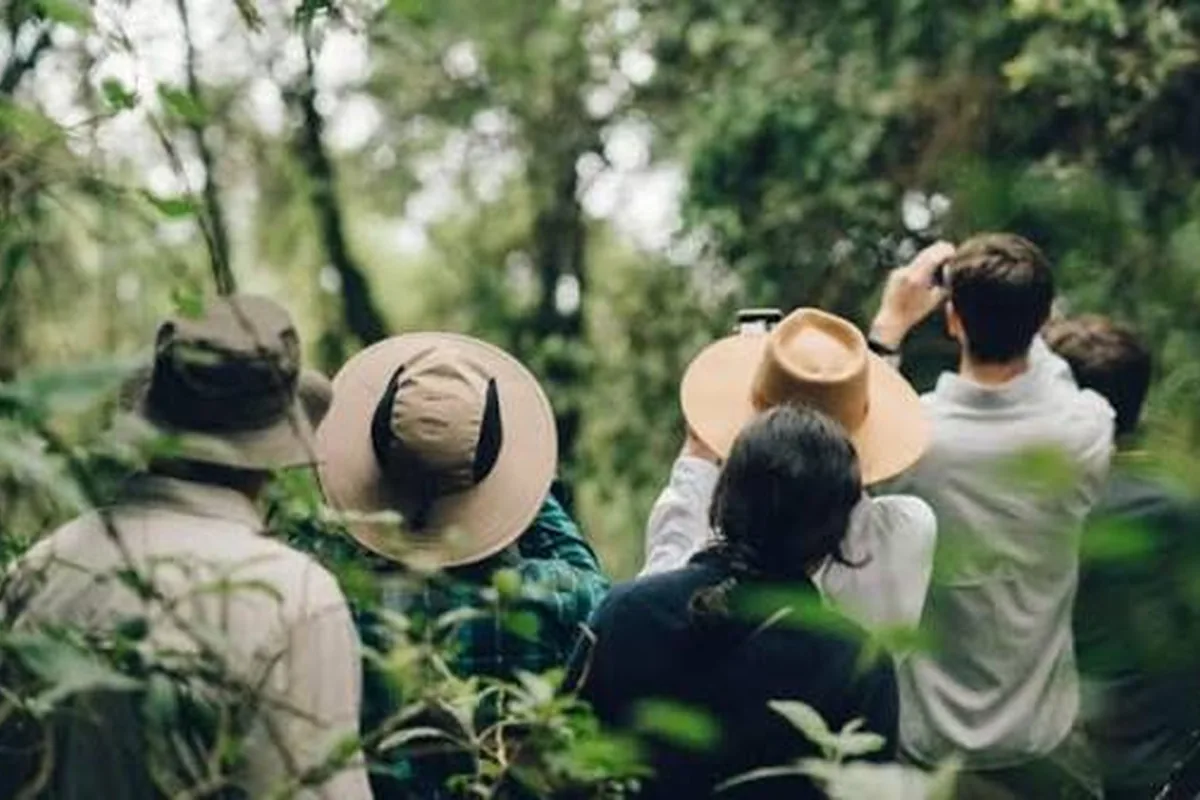
Visitors wearing different safari hats while exploring dense forest vegetation, illustrating practical headwear choices for trekking adventures.
Frequently Asked Questions About the Best Hats for Gorilla Trekking
What is the best hat for gorilla trekking?
When comparing the best hats for gorilla trekking, remember that comfort and fit are more important than a particular brand or style.
A lightweight, breathable hiking hat with a comfortable fit and practical brim is a good choice for many travelers. A bucket hat, wide-brimmed hat or cap can work depending on your preferences and rainwear. Test the hat with your jacket and daypack before departure.
Do I need a wide-brimmed hat?
A wide brim provides useful shade for the face, ears and neck, but it is not compulsory. In dense vegetation, a very broad brim may catch on branches. A flexible medium brim is a reasonable compromise for many people.
Can I wear a baseball cap?
Yes. A baseball cap can be comfortable and easy to wear under a rain hood. Its main limitation is reduced coverage of the ears and neck. Combine it with other appropriate protection for exposed skin.
Is a waterproof hat necessary?
When comparing the best hats for gorilla trekking, remember that comfort and fit are more important than a particular brand or style.
Not necessarily. A waterproof hat may help in rain, but a good hooded rain jacket is an effective alternative for many trekkers. Breathability, comfort and your personal rain strategy matter more than buying every specialized item.
Are bucket hats good for trekking?
When comparing the best hats for gorilla trekking, remember that comfort and fit are more important than a particular brand or style.
Bucket hats can be useful because they are lightweight, packable and often have soft brims. Check whether the hat fits securely and whether the brim stays clear of your eyes. Choose fabric appropriate for damp conditions.
What colour hat should I choose?
Neutral colours such as olive, tan, grey and brown are easy to coordinate with safari clothing. Colour is less important than fit and fabric performance. Avoid choosing an uncomfortable hat simply because it looks traditional.
Should I buy a hat with a chin strap?
An adjustable strap may help in wind, but it should be secured so it does not catch on branches or equipment. A hat that fits well may not need a strap. Test any cord before using it on a forest trail.
Is cotton suitable for a trekking hat?
Cotton can feel comfortable, but heavier cotton fabrics may stay wet longer after rain. Lightweight synthetic fabrics often dry faster. A cotton hat can still be practical when paired with a waterproof hood and when the wearer finds it comfortable.
Can a hat protect me from insects?
A hat provides some physical coverage but does not guarantee protection from bites. Use appropriate insect precautions and follow advice relevant to your destination. Do not rely on clothing alone to prevent insect exposure.
Do I need a hat in Bwindi?
A hat is a useful optional part of a trekking outfit in Bwindi, where conditions can be damp and routes vary. Many travelers appreciate the shade and comfort it provides. A reliable rain layer remains important regardless of whether you wear a hat.
How many hats should I pack?
When comparing the best hats for gorilla trekking, remember that comfort and fit are more important than a particular brand or style.
One comfortable, tested hat is sufficient for many trips. A spare may be useful if you have several outdoor activities or prefer a separate casual hat. Avoid overpacking accessories that serve the same purpose.
Where can I find current gorilla trekking guidance?
Consult the Uganda Wildlife Authority for official park information and ask your tour operator for practical updates. PrideMark Safaris can help with planning and packing advice. Follow the instructions of your ranger during the trek.
Final Thoughts on Choosing a Trekking Hat
The best hats for gorilla trekking are comfortable, secure and compatible with the rest of your outdoor clothing. A breathable bucket hat, a flexible wide-brimmed hat or a familiar cap can all be reasonable choices. Focus on visibility, fit and weather preparedness rather than treating any single style as essential.
For tailored gorilla trekking trips, PrideMark Safaris can help plan accommodation, permits, transfers and other safari arrangements. Read official guidance from the Uganda Wildlife Authority and follow the instructions of park rangers during your visit.