
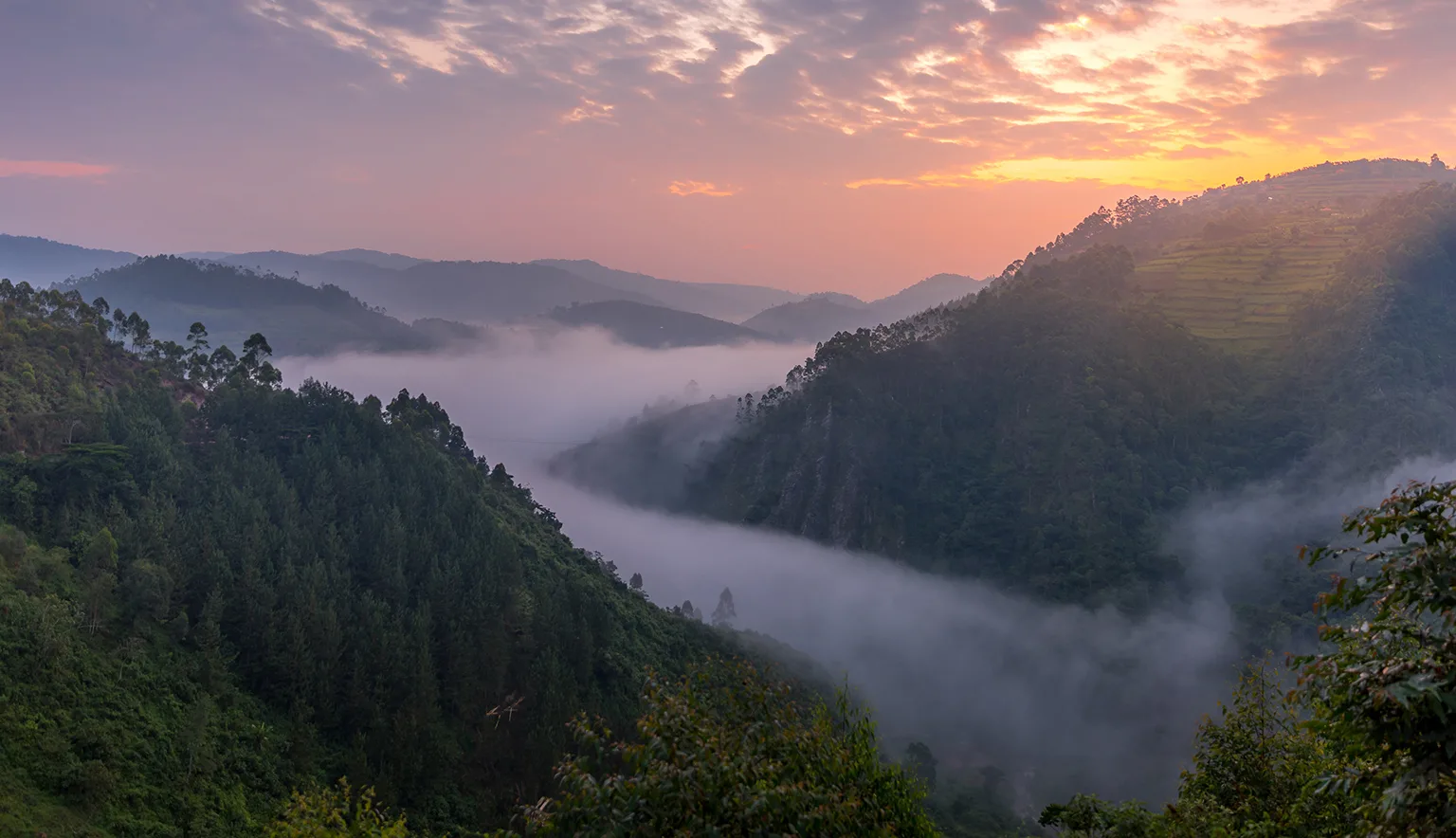
The ancient rainforest landscape of Bwindi Impenetrable National Park in southwestern Uganda.
Step into Uganda’s ancient mountain rainforest for a life-changing encounter with wild mountain gorillas, rare Albertine Rift birds, forest trails and communities whose future is closely connected to conservation
Why Bwindi Impenetrable National Park Belongs on Your Uganda Safari
Bwindi Impenetrable National Park is Uganda’s most celebrated gorilla trekking destination, a UNESCO World Heritage Site and one of Africa’s richest surviving forests. Its steep ridges, tangled vines, fern-filled valleys and misty canopy protect mountain gorillas as well as an extraordinary collection of birds, butterflies, primates and plants. A Bwindi safari is therefore much more than a wildlife sighting. It is an immersive journey through an ancient living landscape where conservation, community livelihoods and responsible tourism meet.
Located in the far southwest of Uganda along the eastern edge of the Albertine Rift, the park covers approximately 321 square kilometres. The forest rises from lower valleys at about 1,160 metres to high ridges above 2,600 metres, creating several habitats within a relatively compact area. This change in altitude helps explain Bwindi’s exceptional biodiversity. Warm lowland forest, cool montane vegetation, bamboo, swamps, streams and dense undergrowth support species with very different ecological needs, making every walk feel layered and alive.
The word “impenetrable” describes the forest honestly. In many places, thick vegetation closes around the slopes, and ranger guides or trackers may clear a careful route through vines and shrubs. Yet the experience is not about conquering the forest. Visitors move through Bwindi slowly, listening to distant calls, watching light fall through the canopy and learning how trackers read broken stems, nests and footprints. When a gorilla family finally appears, the hours of anticipation make the encounter feel intimate, earned and difficult to compare with any ordinary game drive.
Bwindi Impenetrable National Park
Step into Uganda’s ancient mountain rainforest for a life-changing encounter with wild mountain gorillas, rare Albertine Rift birds, forest trails and communities whose future is closely connected to conservation.
Why Bwindi Impenetrable National Park Belongs on Your Uganda Safari
Bwindi Impenetrable National Park is Uganda’s most celebrated gorilla trekking destination, a UNESCO World Heritage Site and one of Africa’s richest surviving forests. Its steep ridges, tangled vines, fern-filled valleys and misty canopy protect mountain gorillas as well as an extraordinary collection of birds, butterflies, primates and plants. A Bwindi safari is therefore much more than a wildlife sighting. It is an immersive journey through an ancient living landscape where conservation, community livelihoods and responsible tourism meet.
Located in the far southwest of Uganda along the eastern edge of the Albertine Rift, the park covers approximately 321 square kilometres. The forest rises from lower valleys at about 1,160 metres to high ridges above 2,600 metres, creating several habitats within a relatively compact area. This change in altitude helps explain Bwindi’s exceptional biodiversity. Warm lowland forest, cool montane vegetation, bamboo, swamps, streams and dense undergrowth support species with very different ecological needs, making every walk feel layered and alive.
The word “impenetrable” describes the forest honestly. In many places, thick vegetation closes around the slopes, and ranger guides or trackers may clear a careful route through vines and shrubs. Yet the experience is not about conquering the forest. Visitors move through Bwindi slowly, listening to distant calls, watching light fall through the canopy and learning how trackers read broken stems, nests and footprints. When a gorilla family finally appears, the hours of anticipation make the encounter feel intimate, earned and difficult to compare with any ordinary game drive.
Essential planning information
Quick Facts About Bwindi Impenetrable National Park
The following Bwindi Impenetrable National Park facts give travellers a practical starting point before selecting a trekking sector, permit date and lodge. Because the park has separate trailheads connected by winding mountain roads, the sector named on your permit should guide where you stay. Pridemark Safaris matches accommodation and transport to the confirmed sector so that guests do not face a long transfer on the morning of their gorilla trek.
| Quick fact | Details |
|---|---|
| Country and region | Southwestern Uganda, on the eastern edge of the Albertine Rift |
| Park size | Approximately 321 km², or 32,092 hectares |
| Altitude | Approximately 1,160 to 2,607 metres above sea level |
| Protected status | Gazetted as a national park in 1991 and inscribed as a UNESCO World Heritage Site in 1994 |
| Famous for | Mountain gorilla trekking, the gorilla habituation experience, Albertine Rift birding and rainforest walks |
| Main trekking sectors | Buhoma, Ruhija, Rushaga and Nkuringo |
| Typical gorilla encounter | Up to one hour with a habituated family after the gorillas are located |
| Minimum trekking age | Normally 15 years for gorilla trekking |
| Best-known dry periods | June to September and December to February, although trekking operates throughout the year |
| Closest airstrips | Kihihi for the northern side and Kisoro for the southern side |
| Recommended stay | At least two nights near the assigned trekking sector; three or more nights for added forest and cultural activities |
| Safari specialist | Pridemark Safaris, a licensed destination management company based in Kabale, southwestern Uganda |
The signature experience
Gorilla Trekking in Bwindi Impenetrable National Park
Gorilla trekking in Bwindi begins early at the headquarters of the sector printed on your permit. After registration, visitors attend a ranger briefing covering forest behaviour, health precautions, photography and what to do if a gorilla approaches. Trekking groups are then assigned to habituated gorilla families. Allocation can consider fitness, age and the known position of each family, although the gorillas are wild and move freely, so no operator can promise a short or easy route.
The search may last from a couple of hours to much of the day. Trackers enter the forest earlier and communicate with ranger guides, but the group still walks across natural ground that can be steep, wet, muddy or crossed by roots. This unpredictability is central to an authentic Bwindi gorilla trekking safari. The mountain gorillas are not kept in an enclosure or staged for visitors; each encounter happens wherever the family has chosen to feed, rest or travel that morning.
Once the gorillas are found, the standard visit normally allows up to one hour in their presence. That hour may reveal a silverback watching over the group, mothers grooming infants, juveniles tumbling through vegetation or adults quietly feeding on leaves and stems. Rangers control the viewing distance and explain behaviour without forcing the animals to react. Visitors should follow every instruction, keep voices low, avoid flash photography and never touch a gorilla, even when curiosity brings one closer. The Uganda Wildlife Authority gorilla tracking information should be checked again before travel.
Bwindi Gorilla Permits and What They Include
A gorilla permit is compulsory and is issued for one person, one date and a specific trekking area. Under the latest accessible Uganda Wildlife Authority tariff covering July 2024 to June 2026, the standard permit was listed at USD 800 for a foreign non-resident, USD 700 for a foreign resident, USD 500 for a citizen of the rest of Africa and UGX 300,000 for an East African Community citizen. Pridemark Safaris reconfirms the applicable current tariff and live availability before requesting payment because rates and booking rules can change.
The permit covers the authorised gorilla encounter, ranger-guide services, park entry for the activity day and a contribution toward conservation and community development. It does not normally include transport to Bwindi, accommodation, meals, porter services, personal equipment, visas, insurance or gratuities. Permits are limited and often become scarce during June to September, Christmas, New Year and other popular travel periods, so travellers with fixed dates should reserve before making non-refundable flight arrangements.
Important permit note: The price displayed here reflects UWA’s latest accessible published tariff, which ended on 30 June 2026. Pridemark Safaris will verify the current official rate, the correct trekking sector and availability before confirming your booking. A permit should never be assumed to be secured until the official reservation has been completed.
Gorilla Habituation Experience in Bwindi
The gorilla habituation experience is designed for travellers who want more time in the forest and a deeper understanding of how wild gorillas gradually become accustomed to carefully managed human presence. Participants accompany a specialised team and may spend up to four hours with a gorilla group once it is located. The full activity can be long and physically demanding, but the extra observation time is especially valuable for photographers, primate enthusiasts and guests interested in conservation work.
Habituation is not simply a longer version of the ordinary trek. The gorillas may be less relaxed around people, the route can be more demanding and the day follows the needs of researchers and trackers. Under the 2024–2026 UWA tariff, the experience was listed at USD 1,500 for a foreign non-resident, with other residency categories priced differently. Availability is more limited than standard trekking, so Pridemark Safaris should check the current operating sector, official tariff and permit space before building the rest of the itinerary.
Choose the right trailhead
Buhoma, Ruhija, Rushaga and Nkuringo Trekking Sectors
Bwindi is not entered through one central gate. Its four main gorilla trekking sectors lie around different sides of the forest, and driving between them can take several hours. Buhoma is in the north, Ruhija in the east, and Rushaga and Nkuringo in the south. The “best sector for gorilla trekking in Bwindi” depends less on a promise of better gorillas and more on permit availability, lodge style, walking ability, road route and the other destinations included in the safari.
| Sector | Position | Character and planning advantage | Useful access point |
|---|---|---|---|
| Buhoma | Northern Bwindi | Uganda’s original Bwindi trailhead, with a broad choice of lodges, established community activities and convenient links to the Ishasha area of Queen Elizabeth National Park. | Kihihi Airstrip |
| Ruhija | Eastern Bwindi | High-elevation forest, excellent birding and a quieter mountain atmosphere, with reasonable road connections toward Kabale and the northern side when conditions allow. | Kabale by road or Kihihi by air and road |
| Rushaga | Southern Bwindi | A busy southern trekking base with several gorilla experiences and useful links to Kisoro, Lake Mutanda, Mgahinga and arrivals travelling through Rwanda. | Kisoro Airstrip |
| Nkuringo | Southwestern Bwindi | Dramatic ridge views, rewarding hiking and attractive upscale lodge options; some trails can feel physically demanding because of the terrain. | Kisoro Airstrip |
Travellers frequently make the mistake of booking a lodge based only on its name or photographs and later discover that it is far from their assigned briefing point. The correct order is to confirm the gorilla permit, note the sector, and then choose a lodge and road transfer that fit it. As a Kabale-based operator with local knowledge of southwestern Uganda, Pridemark Safaris can coordinate these details and allow realistic driving time for changing road and weather conditions.
A biodiversity stronghold
Wildlife, Birds and Forest Life Beyond the Gorillas
Mountain gorillas are Bwindi’s famous residents, but the forest’s ecological value is far broader. Uganda Wildlife Authority describes a park supporting about 120 mammal species, more than 350 bird species and over 200 butterfly species. Primates include black-and-white colobus, blue monkeys, red-tailed monkeys, L’Hoest’s monkeys and baboons. Forest elephants, duikers and other shy mammals also occur, although thick vegetation and secretive behaviour mean Bwindi is not a conventional big-game viewing destination.
The park stands where several ecological regions meet, and its wide altitude range shelters remarkable plant diversity. UNESCO records more than 160 tree species and over 100 fern species, while describing Bwindi as an important surviving area of Afromontane lowland forest extending into the montane belt. Streams descend through deep valleys and feed rivers flowing toward Lake Edward. These waters, forest soils and layered vegetation create microhabitats for amphibians, reptiles, insects and plants that may be overlooked during a gorilla-focused visit.
Birdwatching in Bwindi Forest
Birdwatching in Bwindi Impenetrable National Park is among the finest specialist experiences in Uganda. The park protects many Albertine Rift endemics and highly sought-after forest birds, including the African green broadbill, Shelley’s crimsonwing, Grauer’s swamp warbler, Chapin’s flycatcher and short-tailed warbler. Sightings are never guaranteed, yet skilled local bird guides understand calls, feeding levels, seasonal movement and the quiet patience needed to locate species inside a dense canopy.
Ruhija and the Mubwindi Swamp trail are particularly associated with serious birding, while Buhoma’s forest-edge and waterfall trails can be productive and more accessible for general visitors. A dedicated birding safari should not be compressed into the spare afternoon after arrival. Two or more full birding days provide time to work different elevations and habitats, and early starts improve activity. Pridemark Safaris can arrange a specialist guide and keep the daily programme flexible around weather and recent sightings.
Nature Walks, Waterfalls and Forest Crossings
Guided nature walks reveal details that are easily missed during a purposeful gorilla search. Around Buhoma, forest trails lead toward waterfalls and offer chances to study medicinal plants, butterflies, birds and primate signs. Longer routes can cross between communities on opposite sides of the park, turning the forest into a destination rather than a single activity venue. Every official walk must follow current UWA access requirements, and longer trails should be selected according to fitness, rainfall and the time available before dark.
These walks are ideal on the day before or after gorilla trekking because they slow the experience down. Guests begin to notice how farms end sharply at the protected boundary, how mist moves across the ridges and why an isolated forest requires cooperation with surrounding communities. A well-planned Bwindi itinerary leaves space for this wider story instead of arriving late, trekking once and departing immediately after the certificate presentation.
Travel with respect
Batwa and Bakiga Cultural Experiences Around Bwindi
The landscapes around Bwindi are also home to Bakiga communities and Batwa people with distinct histories and relationships to the forest. Cultural walks may include storytelling, music, dance, craft demonstrations, food traditions, farming practices and explanations of plants once used for medicine or shelter. A meaningful visit should never treat people as scenery. It should be hosted with consent, pay participants fairly, allow respectful questions and make clear how visitor income supports local livelihoods.
The Batwa were historically forest-dwelling hunter-gatherers, and their displacement following forest protection remains an important and sensitive part of Bwindi’s conservation story. Responsible tourism should acknowledge this history instead of presenting an oversimplified performance. Pridemark Safaris can recommend community-led experiences that place local voices at the centre. Travellers should ask permission before photographing individuals, avoid photographing children without a responsible adult’s consent and purchase crafts directly when they genuinely value the work.
Community tourism helps spread safari benefits beyond lodges and permit systems. Porter work, guiding, craft sales, agricultural supply, transport and cultural programmes can all connect conservation with household income. These links matter because Bwindi is an island of protected forest surrounded by densely cultivated land. When nearby communities see reliable value in protecting wildlife and habitat, tourism becomes part of a larger conservation partnership rather than an experience consumed in isolation.
Weather and seasons
Best Time to Visit Bwindi Impenetrable National Park
The best time to visit Bwindi Impenetrable National Park depends on whether the priority is firmer trails, fewer visitors, photography, birding or travel value. Gorilla trekking operates throughout the year because the forest is the gorillas’ permanent home. June to September and December to February are commonly preferred for relatively drier conditions, but “dry season” does not mean a rain-free rainforest. Showers remain possible and trails can be muddy in any month.
| Travel period | Typical conditions | Planning considerations |
|---|---|---|
| June to September | A generally drier period with popular travel dates | Often easier underfoot, but permits and preferred lodges should be reserved early. |
| October to November | A wetter period with lush forest and regular showers | Trails may be slippery, while softer light, fewer visitors and active birdlife can reward flexible travellers. |
| December to February | Another relatively drier window, including busy festive dates | A strong time for combined gorilla and wildlife itineraries; Christmas and New Year require advance booking. |
| March to May | Usually the wetter main rainy season | Expect mud and longer travel margins; the forest is intensely green and availability may be more flexible. |
Photography can be excellent after rain because dust is low and the foliage becomes saturated with colour, although moisture demands protection for cameras and phones. Birding interest also changes through the year as breeding behaviour and migrant presence vary. Travellers who can choose dates should balance weather preferences with permit availability rather than waiting for a theoretically perfect month. Pridemark’s guide to Uganda through a photographer’s lens offers further inspiration for a camera-focused safari.
Road and air access
How to Get to Bwindi from Entebbe, Kampala, Kigali and Queen Elizabeth National Park
Driving from Entebbe or Kampala to Bwindi normally takes a full safari day and often between eight and eleven hours, depending on the selected sector, stops, traffic and road conditions. The journey crosses central and southwestern Uganda, with changing scenery around the Equator, Mbarara, Ntungamo, Kabale or Rukungiri. It is long, but it adds a valuable sense of the country. A private 4×4, an early departure and an optional stop informed by this Uganda Equator guide make the transfer more comfortable.
A domestic flight shortens the journey. Kihihi Airstrip is generally convenient for Buhoma and parts of northern Bwindi, while Kisoro Airstrip serves Rushaga, Nkuringo and the southern region. Scheduled operations and weather can affect timing, and a road transfer is still required between the airstrip and lodge. Fly-in gorilla safaris suit travellers with limited time, although luggage restrictions on small aircraft must be checked before packing.
Bwindi also combines naturally with Queen Elizabeth National Park. The route from the Mweya or Ishasha areas toward Buhoma creates a rewarding transition from open savannah to rainforest and may include wildlife viewing in Ishasha, known for tree-climbing lions. Exact travel time varies with the lodge and roads. Guests trekking in southern Bwindi may need a longer transfer, so the itinerary should prioritise arriving before evening rather than placing another major activity on the same afternoon.
A Bwindi gorilla safari from Kigali can be practical for the southern sectors because Kigali is closer to southwestern Uganda than Entebbe is. The journey crosses an international border, so each traveller must confirm entry eligibility, visa requirements, passport validity and current border procedures before departure. Driving time is sensitive to the crossing, sector and road conditions. Pridemark Safaris can plan the ground route, but immigration approval always remains with the relevant authorities.
Interactive location guide
Maps of Bwindi Impenetrable National Park
These interactive maps help show why sector-based planning matters. Buhoma lies on the northern side of Bwindi and often connects well with Kihihi and Ishasha, while Rushaga represents the southern approach used for many itineraries through Kisoro, Kabale or Kigali. Map travel estimates should remain a guide only. Mountain roads, rain, border formalities and lodge location can change the actual driving time.
Buhoma and Northern Bwindi
Use this map to understand the northern approach from Kihihi and the Ishasha region. Confirm the exact lodge pin before setting out.
Rushaga and Southern Bwindi
Use this map for the southern approach from Kisoro, Kabale or Rwanda. Rushaga and Nkuringo remain separate trailheads.
Ruhija, Nkuringo and individual lodges should be searched separately when finalising navigation. Online routes occasionally suggest roads that are slow or unsuitable after heavy rain. Pridemark Safaris provides the driver-guide with the confirmed permit sector, lodge location and practical local route, removing the need for visitors to solve these connections independently.
Sleep close to your trailhead
Where to Stay in Bwindi
Accommodation around Bwindi ranges from simple community camps and comfortable mid-range lodges to private luxury properties with forest views, fireplaces, spas and highly personalised service. Price is important, but sector location is more important. A beautiful lodge on the wrong side of the forest can turn the trekking morning into an impractical pre-dawn drive. The lodge should match the permit first, followed by budget, room style, accessibility and preferred atmosphere.
Buhoma has one of the widest selections and a lively established tourism community. Ruhija offers a quieter highland setting that appeals to birders and travellers who enjoy cool forest air. Rushaga provides convenient choices near the southern briefing area, while Nkuringo is known for dramatic ridge scenery and attractive lodges overlooking the folded hills. Some properties use the word “Bwindi” in marketing even when they are a considerable drive from a particular trailhead, so exact coordinates should always be checked.
Two nights is the sensible minimum for a standard trek: arrive during daylight, sleep near the sector, trek the following morning and rest before leaving the next day. Three nights create a better-paced stay with room for a community experience, birding, a forest walk or simple relaxation. Travellers booking the habituation experience, carrying specialist photography equipment or wanting a second gorilla trek should consider additional nights rather than compressing the programme.
How Many Days Do You Need for a Bwindi Safari?
A three-day Bwindi gorilla trekking tour is the classic road itinerary from Kampala or Entebbe, with one long transfer day in each direction and the gorilla trek between them. Four days allow more recovery time or a cultural and forest activity. A fly-in itinerary can reduce road hours but still needs safe margins around flight schedules. Starting from Kigali may also shorten access to southern Bwindi, subject to border and visa arrangements.
For a richer Uganda safari, Bwindi combines well with game viewing and a Kazinga Channel boat cruise in Queen Elizabeth National Park, chimpanzee trekking in Kibale, golden monkey tracking in Mgahinga, canoeing or relaxation around Lake Mutanda and Lake Bunyonyi, and wildlife experiences in Lake Mburo. The best route follows geography rather than adding destinations simply to increase the day count. Pridemark Safaris can shape the circuit around flight times, permit dates and the pace each guest will actually enjoy.
Prepare for rainforest terrain
What to Pack and How Fit You Need to Be
Gorilla trekking does not require technical climbing, but it does require confidence walking on uneven natural ground. A moderate level of fitness improves the day because routes may involve steep climbs, slippery descents and vegetation. Regular walking, hills or stairs in the weeks before travel can help. Guests with mobility concerns should discuss them honestly before permit selection so that Pridemark Safaris can request an appropriate allocation where possible, although the final route always depends on wild gorilla movement.
Wear broken-in waterproof hiking boots with dependable grip, long trousers, a breathable long-sleeved shirt and gardening-style gloves for protection when steadying yourself near vegetation. Carry a light waterproof jacket or poncho, drinking water, packed food, insect repellent, sunscreen, personal medication and a small dry bag for electronics and documents. Neutral earth colours are comfortable in the forest. Heavy clothing becomes tiring quickly, while shorts leave legs exposed to scratches, insects and stinging plants.
A porter is one of the most useful additions to a Bwindi trek. Porters carry a daypack and provide a steady hand on difficult ground, allowing guests to conserve energy and pay more attention to the forest. Hiring one also creates direct local income. Even fit travellers often appreciate the help. Camera users should bring spare batteries, moisture protection and enough memory, but flash must remain off. The most valuable photographs usually come from patience and quiet observation rather than moving constantly for a different angle.
Health, Safety and Responsible Gorilla Viewing
Mountain gorillas can be vulnerable to human respiratory illness because of their genetic closeness to people. Anyone who is unwell should report symptoms honestly and follow current ranger guidance. During the encounter, maintain the instructed distance, keep food packed away, avoid sudden movement, never imitate gorilla sounds without ranger direction and turn away if you need to cough or sneeze. Requirements concerning masks and minimum distance can change, so the briefing given on the day takes priority over older online advice.
Travel insurance should cover the destinations, planned activities, medical treatment and evacuation appropriate to the trip. Travellers should obtain personalised health advice from a qualified clinic well before departure and check Uganda’s current entry requirements through official channels. Inside the forest, remain with the group and follow the ranger guide. Rangers understand gorilla behaviour and terrain, and their instructions protect visitors, staff and wildlife at the same time.
Conservation with local value
Why Responsible Tourism Matters in Bwindi
Bwindi’s mountain gorillas survive inside an isolated protected forest bordered by intensively used farmland and growing communities. That reality makes conservation a shared social and ecological challenge. Permit income funds park management and monitoring, while tourism supports guides, trackers, porters, lodge workers, drivers, farmers, artisans and community enterprises. UNESCO recognises the importance of community benefits to the forest’s long-term future, but continued protection still depends on careful disease prevention, habitat security and trusted relationships with neighbours.
Visitors contribute positively when they book legitimate permits, follow ranger rules, select responsible accommodation, hire local porters, buy genuine crafts and choose community experiences with transparent benefits. They should avoid litter, single-use waste where practical, wildlife disturbance and offers involving unauthorised forest access. Responsible travel is not a separate luxury added to a safari. It is the behaviour that keeps a fragile wildlife experience possible for the next visitor and, more importantly, for the gorillas themselves.
Pridemark Safaris approaches Bwindi as a home region rather than a distant product. Being based in Kabale supports practical knowledge of the southern highlands, changing road conditions and realistic travel times. The company can secure the correct permit category, match the confirmed sector with suitable accommodation, arrange an experienced driver-guide and combine the trek with Uganda or Rwanda experiences without forcing the itinerary into an exhausting schedule.
Answers before you travel
Frequently Asked Questions About Bwindi Impenetrable National Park
Where is Bwindi Impenetrable National Park located?
Bwindi Impenetrable National Park is in southwestern Uganda on the eastern edge of the Albertine Rift. Its trekking trailheads are spread around the forest in Buhoma, Ruhija, Rushaga and Nkuringo, so the correct access route depends on the sector assigned to the visitor’s gorilla permit.
How much is a gorilla permit for Bwindi?
The latest accessible UWA tariff, valid from July 2024 through June 2026, listed a standard gorilla permit at USD 800 for foreign non-residents, USD 700 for foreign residents, USD 500 for citizens of the rest of Africa and UGX 300,000 for East African Community citizens. Because that tariff period has ended, Pridemark Safaris will confirm the current official price and availability before booking.
Is gorilla trekking in Bwindi difficult?
The difficulty changes daily because gorillas move freely. Some groups are found after a relatively short walk, while others require several hours across steep, muddy and densely vegetated terrain. Moderate fitness, good boots, a porter and honest discussion of mobility needs help make the experience more manageable.
Which is the best Bwindi gorilla trekking sector?
No sector guarantees a better gorilla encounter. Buhoma has established tourism services and good Ishasha access, Ruhija appeals to birders, Rushaga connects conveniently with Kisoro and southern routes, and Nkuringo offers impressive ridge scenery. The best choice depends on live permit availability, lodge preference, fitness and the wider safari route.
What is the best month for gorilla trekking in Bwindi?
June to September and December to February are popular because conditions are often relatively drier, but trekking takes place all year. Rain remains possible in every month. The best date is one that combines confirmed permit availability, suitable preparation and a travel schedule with enough flexibility for mountain weather.
How long can visitors stay with the mountain gorillas?
A standard trek normally allows up to one hour with the assigned habituated gorilla family once it has been located. The separate gorilla habituation experience can allow up to four hours after locating the group, subject to the applicable permit, current operations and ranger instructions.
Can children go gorilla trekking in Bwindi?
The normal minimum age for gorilla trekking is 15 years. Families travelling with younger children can plan alternative supervised activities, depending on the lodge and location. Age rules should be reconfirmed before permits are requested, and proof of age may be required.
Can I travel from Kigali to Bwindi?
Yes. Kigali can provide practical road access to Rushaga, Nkuringo and other parts of southwestern Uganda. The journey crosses an international border, so passport, visa, entry eligibility and border procedures must be confirmed in advance. Travel time varies with the crossing, sector, road and immigration processing.
Are mountain gorilla sightings guaranteed?
Sighting success is generally very high because trackers monitor habituated families, but gorillas remain wild and nature cannot be guaranteed absolutely. Trek duration, exact location, weather and animal behaviour vary. Following ranger instructions and approaching the day with patience creates the best experience.
How far in advance should I book Bwindi gorilla trekking?
Travellers with fixed dates should book several months ahead, especially for June through September and the festive season. Permit supply is limited by date and sector, while preferred lodges also fill. Pridemark Safaris checks permit space before confirming the rest of the itinerary.
What else can I do near Bwindi?
Visitors can add guided forest walks, waterfall trails, specialist birding, respectful Batwa or Bakiga community experiences, Lake Mutanda, Lake Bunyonyi, golden monkey tracking in Mgahinga and wildlife viewing in Queen Elizabeth National Park. The most suitable combination depends on the Bwindi sector and available days.
Why book a Bwindi safari with Pridemark Safaris?
Pridemark Safaris is a licensed destination management company based in Kabale, close to Uganda’s southwestern safari region. The team can coordinate current permit availability, sector-correct accommodation, private transport, border-aware routes and complete Uganda or Rwanda itineraries at budget, mid-range and luxury levels.
Your gorilla journey starts here
Plan a Bwindi Safari with Pridemark Safaris
Tell us your preferred dates, number of travellers, comfort level and arrival airport. We will check the current gorilla permit position, recommend the right trekking sector and design a realistic private safari around your time in Uganda or Rwanda.
Quick Facts About Bwindi Impenetrable National Park
The following Bwindi Impenetrable National Park facts give travellers a practical starting point before selecting a trekking sector, permit date and lodge. Because the park has separate trailheads connected by winding mountain roads, the sector named on your permit should guide where you stay. Pridemark Safaris matches accommodation and transport to the confirmed sector so that guests do not face a long transfer on the morning of their gorilla trek.
| Quick fact | Details |
|---|---|
| Country and region | Southwestern Uganda, on the eastern edge of the Albertine Rift |
| Park size | Approximately 321 km², or 32,092 hectares |
| Altitude | Approximately 1,160 to 2,607 metres above sea level |
| Protected status | Gazetted as a national park in 1991 and inscribed as a UNESCO World Heritage Site in 1994 |
| Famous for | Mountain gorilla trekking, the gorilla habituation experience, Albertine Rift birding and rainforest walks |
| Main trekking sectors | Buhoma, Ruhija, Rushaga and Nkuringo |
| Typical gorilla encounter | Up to one hour with a habituated family after the gorillas are located |
| Minimum trekking age | Normally 15 years for gorilla trekking |
| Best-known dry periods | June to September and December to February, although trekking operates throughout the year |
| Closest airstrips | Kihihi for the northern side and Kisoro for the southern side |
| Recommended stay | At least two nights near the assigned trekking sector; three or more nights for added forest and cultural activities |
| Safari specialist | Pridemark Safaris, a licensed destination management company based in Kabale, southwestern Uganda |
The signature experience
Gorilla Trekking in Bwindi Impenetrable National Park
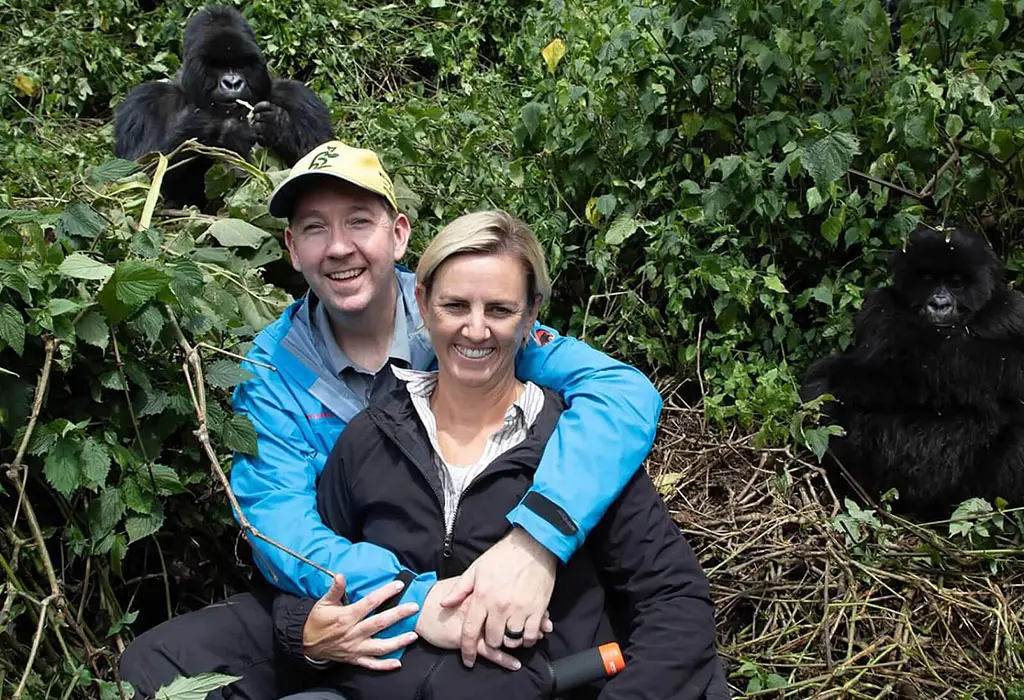
A honeymoon couple enjoying a memorable gorilla safari in Bwindi Impenetrable National Park, Uganda.
Gorilla trekking in Bwindi begins early at the headquarters of the sector printed on your permit. After registration, visitors attend a ranger briefing covering forest behaviour, health precautions, photography and what to do if a gorilla approaches. Trekking groups are then assigned to habituated gorilla families. Allocation can consider fitness, age and the known position of each family, although the gorillas are wild and move freely, so no operator can promise a short or easy route.
The search may last from a couple of hours to much of the day. Trackers enter the forest earlier and communicate with ranger guides, but the group still walks across natural ground that can be steep, wet, muddy or crossed by roots. This unpredictability is central to an authentic Bwindi gorilla trekking safari. The mountain gorillas are not kept in an enclosure or staged for visitors; each encounter happens wherever the family has chosen to feed, rest or travel that morning.
Once the gorillas are found, the standard visit normally allows up to one hour in their presence. That hour may reveal a silverback watching over the group, mothers grooming infants, juveniles tumbling through vegetation or adults quietly feeding on leaves and stems. Rangers control the viewing distance and explain behaviour without forcing the animals to react. Visitors should follow every instruction, keep voices low, avoid flash photography and never touch a gorilla, even when curiosity brings one closer. The Uganda Wildlife Authority gorilla tracking information should be checked again before travel.
Bwindi Gorilla Permits and What They Include
A gorilla permit is compulsory and is issued for one person, one date and a specific trekking area. Under the latest accessible Uganda Wildlife Authority tariff covering July 2024 to June 2026, the standard permit was listed at USD 800 for a foreign non-resident, USD 700 for a foreign resident, USD 500 for a citizen of the rest of Africa and UGX 300,000 for an East African Community citizen. Pridemark Safaris reconfirms the applicable current tariff and live availability before requesting payment because rates and booking rules can change.
The permit covers the authorised gorilla encounter, ranger-guide services, park entry for the activity day and a contribution toward conservation and community development. It does not normally include transport to Bwindi, accommodation, meals, porter services, personal equipment, visas, insurance or gratuities. Permits are limited and often become scarce during June to September, Christmas, New Year and other popular travel periods, so travellers with fixed dates should reserve before making non-refundable flight arrangements.
Important permit note: The price displayed here reflects UWA’s latest accessible published tariff, which ended on 30 June 2026. Pridemark Safaris will verify the current official rate, the correct trekking sector and availability before confirming your booking. A permit should never be assumed to be secured until the official reservation has been completed.
Gorilla Habituation Experience in Bwindi
The gorilla habituation experience is designed for travellers who want more time in the forest and a deeper understanding of how wild gorillas gradually become accustomed to carefully managed human presence. Participants accompany a specialised team and may spend up to four hours with a gorilla group once it is located. The full activity can be long and physically demanding, but the extra observation time is especially valuable for photographers, primate enthusiasts and guests interested in conservation work.
Habituation is not simply a longer version of the ordinary trek. The gorillas may be less relaxed around people, the route can be more demanding and the day follows the needs of researchers and trackers. Under the 2024–2026 UWA tariff, the experience was listed at USD 1,500 for a foreign non-resident, with other residency categories priced differently. Availability is more limited than standard trekking, so Pridemark Safaris should check the current operating sector, official tariff and permit space before building the rest of the itinerary.
Choose the right trailhead
Buhoma, Ruhija, Rushaga and Nkuringo Trekking Sectors
Bwindi is not entered through one central gate. Its four main gorilla trekking sectors lie around different sides of the forest, and driving between them can take several hours. Buhoma is in the north, Ruhija in the east, and Rushaga and Nkuringo in the south. The “best sector for gorilla trekking in Bwindi” depends less on a promise of better gorillas and more on permit availability, lodge style, walking ability, road route and the other destinations included in the safari.
| Sector | Position | Character and planning advantage | Useful access point |
|---|---|---|---|
| Buhoma | Northern Bwindi | Uganda’s original Bwindi trailhead, with a broad choice of lodges, established community activities and convenient links to the Ishasha area of Queen Elizabeth National Park. | Kihihi Airstrip |
| Ruhija | Eastern Bwindi | High-elevation forest, excellent birding and a quieter mountain atmosphere, with reasonable road connections toward Kabale and the northern side when conditions allow. | Kabale by road or Kihihi by air and road |
| Rushaga | Southern Bwindi | A busy southern trekking base with several gorilla experiences and useful links to Kisoro, Lake Mutanda, Mgahinga and arrivals travelling through Rwanda. | Kisoro Airstrip |
| Nkuringo | Southwestern Bwindi | Dramatic ridge views, rewarding hiking and attractive upscale lodge options; some trails can feel physically demanding because of the terrain. | Kisoro Airstrip |
Travellers frequently make the mistake of booking a lodge based only on its name or photographs and later discover that it is far from their assigned briefing point. The correct order is to confirm the gorilla permit, note the sector, and then choose a lodge and road transfer that fit it. As a Kabale-based operator with local knowledge of southwestern Uganda, Pridemark Safaris can coordinate these details and allow realistic driving time for changing road and weather conditions.
A biodiversity stronghold
Wildlife, Birds and Forest Life Beyond the Gorillas
Mountain gorillas are Bwindi’s famous residents, but the forest’s ecological value is far broader. Uganda Wildlife Authority describes a park supporting about 120 mammal species, more than 350 bird species and over 200 butterfly species. Primates include black-and-white colobus, blue monkeys, red-tailed monkeys, L’Hoest’s monkeys and baboons. Forest elephants, duikers and other shy mammals also occur, although thick vegetation and secretive behaviour mean Bwindi is not a conventional big-game viewing destination.
The park stands where several ecological regions meet, and its wide altitude range shelters remarkable plant diversity. UNESCO records more than 160 tree species and over 100 fern species, while describing Bwindi as an important surviving area of Afromontane lowland forest extending into the montane belt. Streams descend through deep valleys and feed rivers flowing toward Lake Edward. These waters, forest soils and layered vegetation create microhabitats for amphibians, reptiles, insects and plants that may be overlooked during a gorilla-focused visit.
Birdwatching in Bwindi Impenetrable Forest
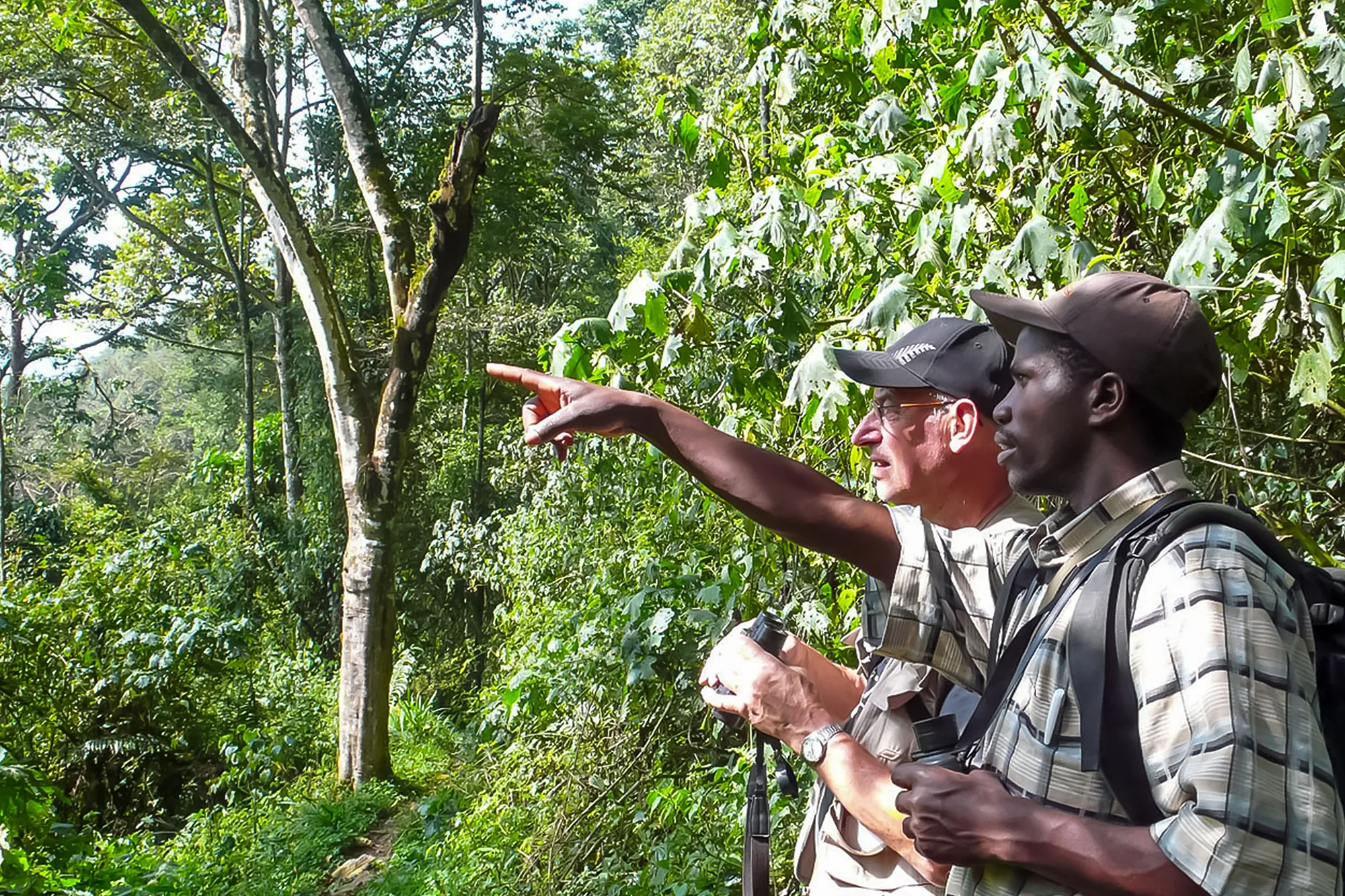
A guest enjoying a guided birdwatching experience in the forests of Bwindi Impenetrable National Park.
Birdwatching in Bwindi Impenetrable National Park is among the finest specialist experiences in Uganda. The park protects many Albertine Rift endemics and highly sought-after forest birds, including the African green broadbill, Shelley’s crimsonwing, Grauer’s swamp warbler, Chapin’s flycatcher and short-tailed warbler. Sightings are never guaranteed, yet skilled local bird guides understand calls, feeding levels, seasonal movement and the quiet patience needed to locate species inside a dense canopy.
Ruhija and the Mubwindi Swamp trail are particularly associated with serious birding, while Buhoma’s forest-edge and waterfall trails can be productive and more accessible for general visitors. A dedicated birding safari should not be compressed into the spare afternoon after arrival. Two or more full birding days provide time to work different elevations and habitats, and early starts improve activity. Pridemark Safaris can arrange a specialist guide and keep the daily programme flexible around weather and recent sightings.
Nature Walks, Waterfalls and Forest Crossings
Guided nature walks reveal details that are easily missed during a purposeful gorilla search. Around Buhoma, forest trails lead toward waterfalls and offer chances to study medicinal plants, butterflies, birds and primate signs. Longer routes can cross between communities on opposite sides of the park, turning the forest into a destination rather than a single activity venue. Every official walk must follow current UWA access requirements, and longer trails should be selected according to fitness, rainfall and the time available before dark.
These walks are ideal on the day before or after gorilla trekking because they slow the experience down. Guests begin to notice how farms end sharply at the protected boundary, how mist moves across the ridges and why an isolated forest requires cooperation with surrounding communities. A well-planned Bwindi itinerary leaves space for this wider story instead of arriving late, trekking once and departing immediately after the certificate presentation.
Travel with respect
Batwa and Bakiga Cultural Experiences Around Bwindi
The landscapes around Bwindi are also home to Bakiga communities and Batwa people with distinct histories and relationships to the forest. Cultural walks may include storytelling, music, dance, craft demonstrations, food traditions, farming practices and explanations of plants once used for medicine or shelter. A meaningful visit should never treat people as scenery. It should be hosted with consent, pay participants fairly, allow respectful questions and make clear how visitor income supports local livelihoods.
The Batwa were historically forest-dwelling hunter-gatherers, and their displacement following forest protection remains an important and sensitive part of Bwindi’s conservation story. Responsible tourism should acknowledge this history instead of presenting an oversimplified performance. Pridemark Safaris can recommend community-led experiences that place local voices at the centre. Travellers should ask permission before photographing individuals, avoid photographing children without a responsible adult’s consent and purchase crafts directly when they genuinely value the work.
Community tourism helps spread safari benefits beyond lodges and permit systems. Porter work, guiding, craft sales, agricultural supply, transport and cultural programmes can all connect conservation with household income. These links matter because Bwindi is an island of protected forest surrounded by densely cultivated land. When nearby communities see reliable value in protecting wildlife and habitat, tourism becomes part of a larger conservation partnership rather than an experience consumed in isolation.
Weather and seasons
Best Time to Visit Bwindi Impenetrable National Park
The best time to visit Bwindi Impenetrable National Park depends on whether the priority is firmer trails, fewer visitors, photography, birding or travel value. Gorilla trekking operates throughout the year because the forest is the gorillas’ permanent home. June to September and December to February are commonly preferred for relatively drier conditions, but “dry season” does not mean a rain-free rainforest. Showers remain possible and trails can be muddy in any month.
| Travel period | Typical conditions | Planning considerations |
|---|---|---|
| June to September | A generally drier period with popular travel dates | Often easier underfoot, but permits and preferred lodges should be reserved early. |
| October to November | A wetter period with lush forest and regular showers | Trails may be slippery, while softer light, fewer visitors and active birdlife can reward flexible travellers. |
| December to February | Another relatively drier window, including busy festive dates | A strong time for combined gorilla and wildlife itineraries; Christmas and New Year require advance booking. |
| March to May | Usually the wetter main rainy season | Expect mud and longer travel margins; the forest is intensely green and availability may be more flexible. |
Photography can be excellent after rain because dust is low and the foliage becomes saturated with colour, although moisture demands protection for cameras and phones. Birding interest also changes through the year as breeding behaviour and migrant presence vary. Travellers who can choose dates should balance weather preferences with permit availability rather than waiting for a theoretically perfect month. Pridemark’s guide to Uganda through a photographer’s lens offers further inspiration for a camera-focused safari.
Road and air access
How to Get to Bwindi from Entebbe, Kampala, Kigali and Queen Elizabeth National Park
Driving from Entebbe or Kampala to Bwindi normally takes a full safari day and often between eight and eleven hours, depending on the selected sector, stops, traffic and road conditions. The journey crosses central and southwestern Uganda, with changing scenery around the Equator, Mbarara, Ntungamo, Kabale or Rukungiri. It is long, but it adds a valuable sense of the country. A private 4×4, an early departure and an optional stop informed by this Uganda Equator guide make the transfer more comfortable.
A domestic flight shortens the journey. Kihihi Airstrip is generally convenient for Buhoma and parts of northern Bwindi, while Kisoro Airstrip serves Rushaga, Nkuringo and the southern region. Scheduled operations and weather can affect timing, and a road transfer is still required between the airstrip and lodge. Fly-in gorilla safaris suit travellers with limited time, although luggage restrictions on small aircraft must be checked before packing.
Bwindi also combines naturally with Queen Elizabeth National Park. The route from the Mweya or Ishasha areas toward Buhoma creates a rewarding transition from open savannah to rainforest and may include wildlife viewing in Ishasha, known for tree-climbing lions. Exact travel time varies with the lodge and roads. Guests trekking in southern Bwindi may need a longer transfer, so the itinerary should prioritise arriving before evening rather than placing another major activity on the same afternoon.
A Bwindi gorilla safari from Kigali can be practical for the southern sectors because Kigali is closer to southwestern Uganda than Entebbe is. The journey crosses an international border, so each traveller must confirm entry eligibility, visa requirements, passport validity and current border procedures before departure. Driving time is sensitive to the crossing, sector and road conditions. Pridemark Safaris can plan the ground route, but immigration approval always remains with the relevant authorities.
Interactive location guide
Maps of Bwindi Impenetrable National Park
These interactive maps help show why sector-based planning matters. Buhoma lies on the northern side of Bwindi and often connects well with Kihihi and Ishasha, while Rushaga represents the southern approach used for many itineraries through Kisoro, Kabale or Kigali. Map travel estimates should remain a guide only. Mountain roads, rain, border formalities and lodge location can change the actual driving time.
Buhoma and Northern Bwindi
Use this map to understand the northern approach from Kihihi and the Ishasha region. Confirm the exact lodge pin before setting out.
Rushaga and Southern Bwindi
Use this map for the southern approach from Kisoro, Kabale or Rwanda. Rushaga and Nkuringo remain separate trailheads.
Ruhija, Nkuringo and individual lodges should be searched separately when finalising navigation. Online routes occasionally suggest roads that are slow or unsuitable after heavy rain. Pridemark Safaris provides the driver-guide with the confirmed permit sector, lodge location and practical local route, removing the need for visitors to solve these connections independently.
Sleep close to your trailhead
Where to Stay in Bwindi
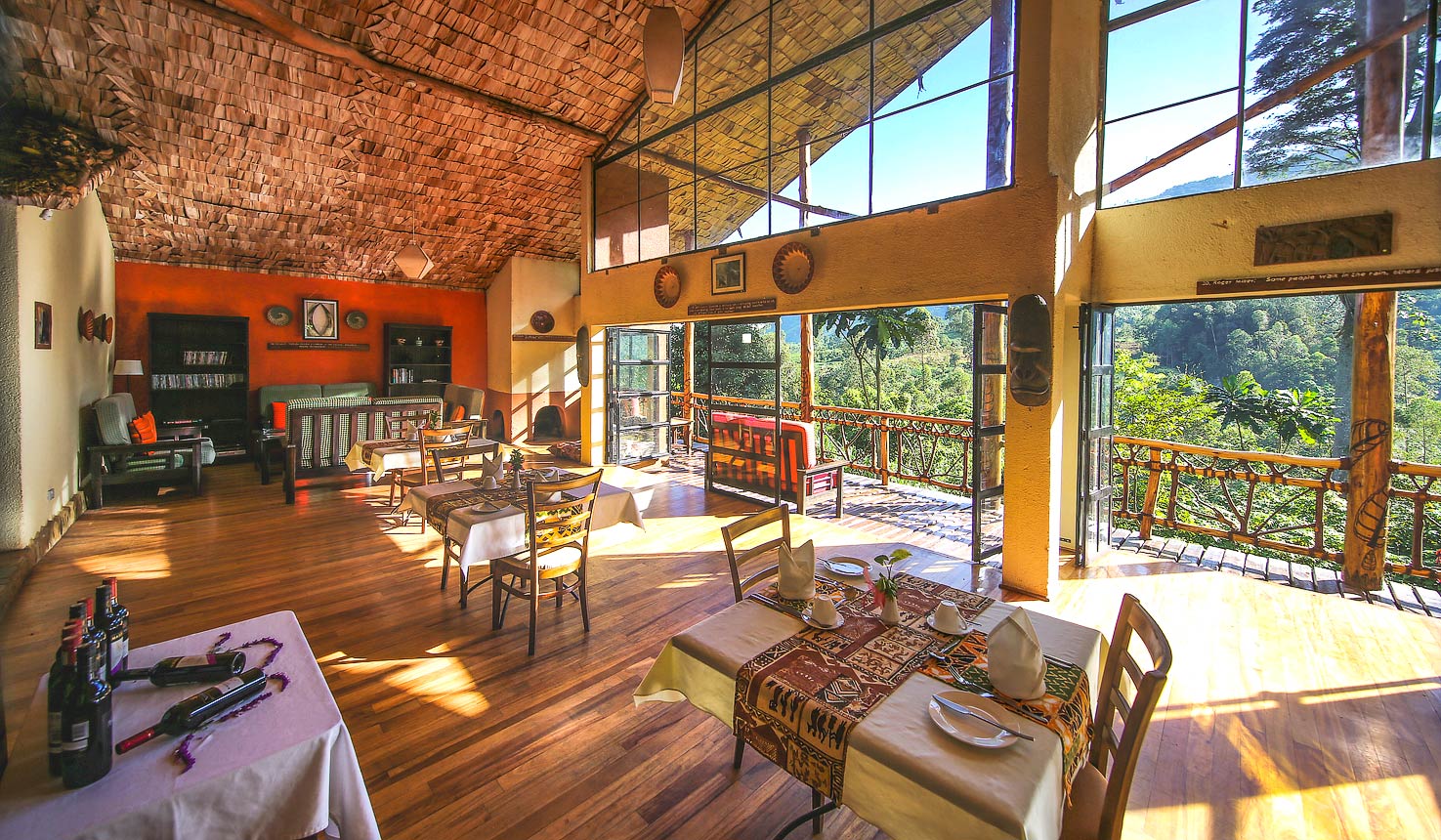
Mahogany Springs offers comfortable accommodation near the Buhoma sector of Bwindi Impenetrable National Park.
Accommodation around Bwindi ranges from simple community camps and comfortable mid-range lodges to private luxury properties with forest views, fireplaces, spas and highly personalised service. Price is important, but sector location is more important. A beautiful lodge on the wrong side of the forest can turn the trekking morning into an impractical pre-dawn drive. The lodge should match the permit first, followed by budget, room style, accessibility and preferred atmosphere.
Buhoma has one of the widest selections and a lively established tourism community. Ruhija offers a quieter highland setting that appeals to birders and travellers who enjoy cool forest air. Rushaga provides convenient choices near the southern briefing area, while Nkuringo is known for dramatic ridge scenery and attractive lodges overlooking the folded hills. Some properties use the word “Bwindi” in marketing even when they are a considerable drive from a particular trailhead, so exact coordinates should always be checked.
Two nights is the sensible minimum for a standard trek: arrive during daylight, sleep near the sector, trek the following morning and rest before leaving the next day. Three nights create a better-paced stay with room for a community experience, birding, a forest walk or simple relaxation. Travellers booking the habituation experience, carrying specialist photography equipment or wanting a second gorilla trek should consider additional nights rather than compressing the programme.
How Many Days Do You Need for a Bwindi Safari?
A three-day Bwindi gorilla trekking tour is the classic road itinerary from Kampala or Entebbe, with one long transfer day in each direction and the gorilla trek between them. Four days allow more recovery time or a cultural and forest activity. A fly-in itinerary can reduce road hours but still needs safe margins around flight schedules. Starting from Kigali may also shorten access to southern Bwindi, subject to border and visa arrangements.
For a richer Uganda safari, Bwindi combines well with game viewing and a Kazinga Channel boat cruise in Queen Elizabeth National Park, chimpanzee trekking in Kibale, golden monkey tracking in Mgahinga, canoeing or relaxation around Lake Mutanda and Lake Bunyonyi, and wildlife experiences in Lake Mburo. The best route follows geography rather than adding destinations simply to increase the day count. Pridemark Safaris can shape the circuit around flight times, permit dates and the pace each guest will actually enjoy.
Prepare for rainforest terrain
What to Pack and How Fit You Need to Be
Gorilla trekking does not require technical climbing, but it does require confidence walking on uneven natural ground. A moderate level of fitness improves the day because routes may involve steep climbs, slippery descents and vegetation. Regular walking, hills or stairs in the weeks before travel can help. Guests with mobility concerns should discuss them honestly before permit selection so that Pridemark Safaris can request an appropriate allocation where possible, although the final route always depends on wild gorilla movement.
Wear broken-in waterproof hiking boots with dependable grip, long trousers, a breathable long-sleeved shirt and gardening-style gloves for protection when steadying yourself near vegetation. Carry a light waterproof jacket or poncho, drinking water, packed food, insect repellent, sunscreen, personal medication and a small dry bag for electronics and documents. Neutral earth colours are comfortable in the forest. Heavy clothing becomes tiring quickly, while shorts leave legs exposed to scratches, insects and stinging plants.
A porter is one of the most useful additions to a Bwindi trek. Porters carry a daypack and provide a steady hand on difficult ground, allowing guests to conserve energy and pay more attention to the forest. Hiring one also creates direct local income. Even fit travellers often appreciate the help. Camera users should bring spare batteries, moisture protection and enough memory, but flash must remain off. The most valuable photographs usually come from patience and quiet observation rather than moving constantly for a different angle.
Health, Safety and Responsible Gorilla Viewing
Mountain gorillas can be vulnerable to human respiratory illness because of their genetic closeness to people. Anyone who is unwell should report symptoms honestly and follow current ranger guidance. During the encounter, maintain the instructed distance, keep food packed away, avoid sudden movement, never imitate gorilla sounds without ranger direction and turn away if you need to cough or sneeze. Requirements concerning masks and minimum distance can change, so the briefing given on the day takes priority over older online advice.
Travel insurance should cover the destinations, planned activities, medical treatment and evacuation appropriate to the trip. Travellers should obtain personalised health advice from a qualified clinic well before departure and check Uganda’s current entry requirements through official channels. Inside the forest, remain with the group and follow the ranger guide. Rangers understand gorilla behaviour and terrain, and their instructions protect visitors, staff and wildlife at the same time.
Conservation with local value
Why Responsible Tourism Matters in Bwindi
Bwindi’s mountain gorillas survive inside an isolated protected forest bordered by intensively used farmland and growing communities. That reality makes conservation a shared social and ecological challenge. Permit income funds park management and monitoring, while tourism supports guides, trackers, porters, lodge workers, drivers, farmers, artisans and community enterprises. UNESCO recognises the importance of community benefits to the forest’s long-term future, but continued protection still depends on careful disease prevention, habitat security and trusted relationships with neighbours.
Visitors contribute positively when they book legitimate permits, follow ranger rules, select responsible accommodation, hire local porters, buy genuine crafts and choose community experiences with transparent benefits. They should avoid litter, single-use waste where practical, wildlife disturbance and offers involving unauthorised forest access. Responsible travel is not a separate luxury added to a safari. It is the behaviour that keeps a fragile wildlife experience possible for the next visitor and, more importantly, for the gorillas themselves.
Pridemark Safaris approaches Bwindi as a home region rather than a distant product. Being based in Kabale supports practical knowledge of the southern highlands, changing road conditions and realistic travel times. The company can secure the correct permit category, match the confirmed sector with suitable accommodation, arrange an experienced driver-guide and combine the trek with Uganda or Rwanda experiences without forcing the itinerary into an exhausting schedule.
Answers before you travel
Frequently Asked Questions About Bwindi Impenetrable National Park
Where is Bwindi Impenetrable National Park located?
Bwindi Impenetrable National Park is in southwestern Uganda on the eastern edge of the Albertine Rift. Its trekking trailheads are spread around the forest in Buhoma, Ruhija, Rushaga and Nkuringo, so the correct access route depends on the sector assigned to the visitor’s gorilla permit.
How much is a gorilla permit for Bwindi?
The latest accessible UWA tariff, valid from July 2024 through June 2026, listed a standard gorilla permit at USD 800 for foreign non-residents, USD 700 for foreign residents, USD 500 for citizens of the rest of Africa and UGX 300,000 for East African Community citizens. Because that tariff period has ended, Pridemark Safaris will confirm the current official price and availability before booking.
Is gorilla trekking in Bwindi difficult?
The difficulty changes daily because gorillas move freely. Some groups are found after a relatively short walk, while others require several hours across steep, muddy and densely vegetated terrain. Moderate fitness, good boots, a porter and honest discussion of mobility needs help make the experience more manageable.
Which is the best Bwindi gorilla trekking sector?
No sector guarantees a better gorilla encounter. Buhoma has established tourism services and good Ishasha access, Ruhija appeals to birders, Rushaga connects conveniently with Kisoro and southern routes, and Nkuringo offers impressive ridge scenery. The best choice depends on live permit availability, lodge preference, fitness and the wider safari route.
What is the best month for gorilla trekking in Bwindi?
June to September and December to February are popular because conditions are often relatively drier, but trekking takes place all year. Rain remains possible in every month. The best date is one that combines confirmed permit availability, suitable preparation and a travel schedule with enough flexibility for mountain weather.
How long can visitors stay with the mountain gorillas?
A standard trek normally allows up to one hour with the assigned habituated gorilla family once it has been located. The separate gorilla habituation experience can allow up to four hours after locating the group, subject to the applicable permit, current operations and ranger instructions.
Can children go gorilla trekking in Bwindi?
The normal minimum age for gorilla trekking is 15 years. Families travelling with younger children can plan alternative supervised activities, depending on the lodge and location. Age rules should be reconfirmed before permits are requested, and proof of age may be required.
Can I travel from Kigali to Bwindi?
Yes. Kigali can provide practical road access to Rushaga, Nkuringo and other parts of southwestern Uganda. The journey crosses an international border, so passport, visa, entry eligibility and border procedures must be confirmed in advance. Travel time varies with the crossing, sector, road and immigration processing.
Are mountain gorilla sightings guaranteed?
Sighting success is generally very high because trackers monitor habituated families, but gorillas remain wild and nature cannot be guaranteed absolutely. Trek duration, exact location, weather and animal behaviour vary. Following ranger instructions and approaching the day with patience creates the best experience.
How far in advance should I book Bwindi gorilla trekking?
Travellers with fixed dates should book several months ahead, especially for June through September and the festive season. Permit supply is limited by date and sector, while preferred lodges also fill. Pridemark Safaris checks permit space before confirming the rest of the itinerary.
What else can I do near Bwindi?
Visitors can add guided forest walks, waterfall trails, specialist birding, respectful Batwa or Bakiga community experiences, Lake Mutanda, Lake Bunyonyi, golden monkey tracking in Mgahinga and wildlife viewing in Queen Elizabeth National Park. The most suitable combination depends on the Bwindi sector and available days.
Why book a Bwindi safari with Pridemark Safaris?
Pridemark Safaris is a licensed destination management company based in Kabale, close to Uganda’s southwestern safari region. The team can coordinate current permit availability, sector-correct accommodation, private transport, border-aware routes and complete Uganda or Rwanda itineraries at budget, mid-range and luxury levels.
Your gorilla journey starts here
Plan a Bwindi Safari with Pridemark Safaris
Tell us your preferred dates, number of travellers, comfort level and arrival airport. We will check the current gorilla permit position, recommend the right trekking sector and design a realistic private safari around your time in Uganda or Rwanda.