
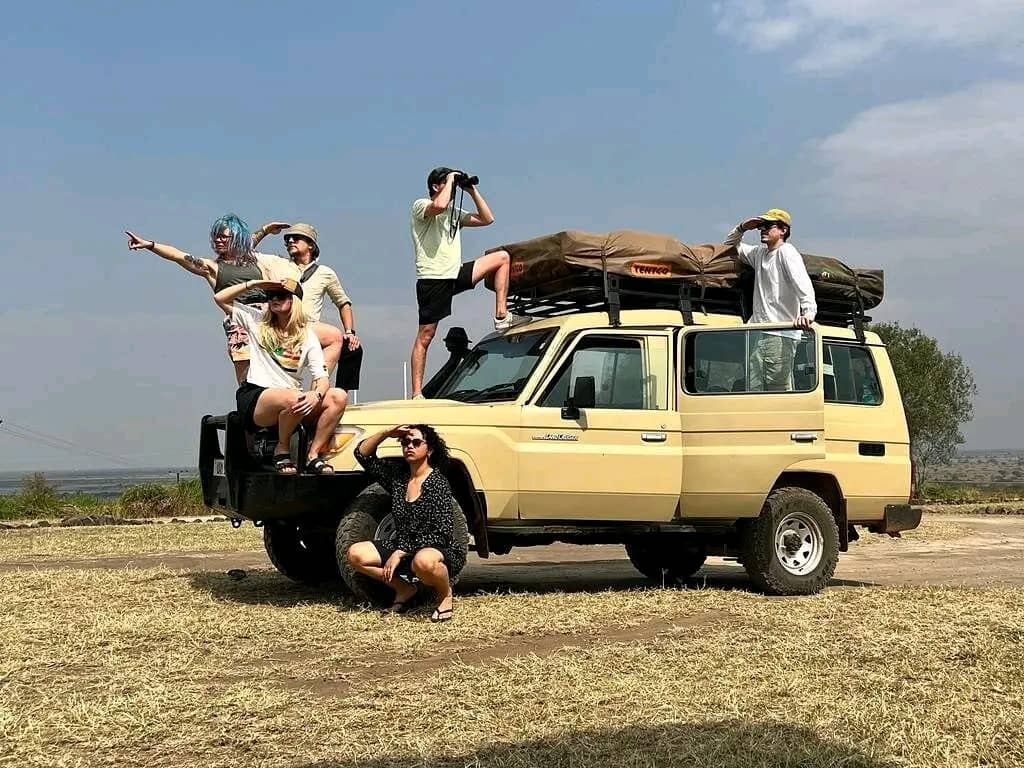
A first-time Uganda safari can feel comfortable and well organised with professional guiding, private transport and carefully planned wildlife experiences.
First-Time Uganda Safari planning can feel exciting and intimidating, especially if you are nervous about wildlife, roads, safari lodges, toilets, trekking or being far from home.A professionally organised safari is very different from travelling through wildlife areas alone. You travel with an experienced guide, stay in established accommodation and take part in regulated activities inside Uganda’s protected areas.
Those concerns are normal when your only image of an African safari comes from wildlife documentaries or dramatic social-media clips. A professionally organised Uganda safari is very different from simply entering the wilderness alone. You travel with experienced guides, stay in established accommodation and participate in regulated activities inside protected areas.
PrideMark Safaris specialises in tailor-made Uganda and Rwanda journeys, including wildlife safaris, gorilla trekking, chimpanzee tracking and cultural experiences. Travellers can explore our Uganda safari ideas before choosing a route that matches their interests, budget and comfort level.
Uganda’s national parks and regulated wildlife activities are managed by the Uganda Wildlife Authority, which provides official information about protected areas, visitor activities and conservation.
The goal of this guide is therefore not to tell nervous travellers that they should simply “stop worrying.” It is to explain what actually happens so that you can prepare properly and know what to expect.
Is Uganda Suitable for a First African Safari?
Yes. Uganda can be an excellent first African safari destination, particularly for travellers who want more than one type of wildlife experience.
A single itinerary can combine open savannah game drives, boat cruises, tropical forests, chimpanzee tracking and mountain gorilla trekking. This variety means first-time visitors do not need to spend their entire holiday doing the same activity every day.
PrideMark’s Uganda safari packages include short wildlife journeys as well as longer combinations covering several parks.
Uganda Wildlife Authority manages national parks including Murchison Falls, Queen Elizabeth, Kibale, Bwindi, Mgahinga, Lake Mburo and Kidepo Valley. Each has a different landscape and safari style, so your itinerary can be designed around the experiences you feel most comfortable trying.
1. You Will Not Be Driving Through Wildlife Alone
One of the biggest fears first-time travellers have is imagining themselves alone in a vehicle surrounded by dangerous animals.
That is not how a professionally organised private safari works.
With PrideMark Safaris, travellers are accompanied by a professional driver-guide who understands the route, wildlife areas, road conditions and practical safari procedures.
Inside national parks, your guide knows when it is appropriate to stop, where vehicles are allowed to drive and how guests should behave around wildlife.
Your job is not to decide whether an elephant is too close or whether it is safe to leave the vehicle.
Listen to your guide.
That single habit removes a large amount of unnecessary anxiety from a first safari.
What Happens When an Animal Comes Close to the Vehicle?
Sometimes elephants, buffaloes, giraffes, antelopes or even lions may move closer than expected.
This can feel intense the first time it happens.
Remain inside the vehicle unless your guide specifically tells you otherwise. Avoid sudden loud movements and allow the guide to assess the animal’s behaviour.
Safari animals are wild, and sightings can never be controlled. Your guide’s role is to position the vehicle responsibly while maintaining appropriate behaviour around wildlife.
Being close to an elephant from inside a safari vehicle can eventually become one of the highlights of the journey rather than something frightening.
Wildlife may sometimes approach safari vehicles, but travellers should remain calm, stay inside and follow their guide’s instructions.
2. Safari Vehicles Are Designed for Wildlife Viewing
Most private Uganda road safaris use a suitable safari vehicle such as a 4×4 Land Cruiser.
A pop-up roof provides elevated wildlife viewing while allowing guests to remain inside the vehicle.
Travellers often imagine that a safari vehicle is completely open on every side. The actual vehicle arrangement depends on the operator and route, but on a typical private Uganda safari you remain within a proper road vehicle during transfers and most game drives.
You can sit when travelling and stand through the viewing roof when appropriate.
For nervous travellers, having your own private vehicle can feel especially reassuring because the daily pace can be discussed directly with the guide.
Private Safaris Can Feel Easier Than Large Group Tours
A private safari allows more flexibility.
You can tell your guide that you feel nervous around elephants, prefer shorter game drives or need regular stops.
You do not have to pretend to be comfortable simply because ten other travellers are following the same schedule.
Private travel can also make practical matters such as meal stops, photography breaks and toilet requests easier to manage.
3. Wild Animals Do Not Usually Wander Into Your Bedroom
Many first-time travellers worry about sleeping inside or close to national parks.
Safari lodges are designed to host guests in wildlife destinations, but travellers must still follow the property’s safety instructions.
At some lodges, wildlife may move through surrounding areas, especially after dark.
That does not mean guests should walk around independently at night.
Some properties may provide an escort between rooms and the restaurant after dark. If that system exists, use it.
Do not leave food outside, approach animals around the lodge or walk into vegetation simply because you cannot immediately see wildlife.
A peaceful lodge overlooking the savannah can actually become one of the most relaxing parts of a Uganda safari.
What If You Hear Animals at Night?
You may hear hippos, insects, birds, monkeys or other wildlife depending on where you stay.
For someone on their first safari, unfamiliar sounds can seem much more dramatic at 2:00 a.m.
Remember that lodges operate in these environments every day.
Follow lodge instructions, keep doors properly secured and contact staff if you are genuinely concerned rather than leaving your room to investigate.
4. You Can Ask for a Toilet Break During a Game Drive
This is one of those questions many travellers are too embarrassed to ask.
Yes, bathroom breaks are a normal part of safari travel.
PrideMark has already prepared a detailed guide explaining what happens when you need the toilet during a game drive.
The important thing is to tell your guide rather than leaving the vehicle independently.
Facilities may be available at lodges, park gates, visitor areas or designated stops depending on the route.
Where facilities are not immediately available, your guide will determine what is practical and safe.
Never walk toward a bush, riverbank or waterhole without permission.
Do Not Stop Drinking Water Because You Fear Toilet Breaks
Dehydrating yourself to avoid using the toilet is not a sensible safari strategy.
Carry drinking water and tell your guide when you need a stop.
A professional safari guide has handled this situation many times before.
There is nothing embarrassing about it.
5. You Do Not Have to Be Extremely Fit for Every Safari
A classic game drive requires very little physical effort.
Most of the wildlife viewing takes place from the safari vehicle.
Boat cruises are also comparatively relaxed because visitors remain seated while observing wildlife from the water.
Activities such as gorilla trekking, chimpanzee tracking, mountain hiking and some walking safaris require greater physical effort.
The important thing is to choose activities that suit your fitness.
Do not book a difficult trekking itinerary simply because somebody told you that every visitor to Uganda must do it.
A Uganda safari can still be extraordinary without strenuous hiking.
Gorilla Trekking Requires More Preparation
Gorilla trekking is different from a game drive.
The trek takes place on foot through natural forest terrain and the duration can vary according to the gorillas’ location, terrain and conditions.
Visitors must follow official Uganda Wildlife Authority procedures and ranger instructions.
PrideMark has several dedicated gorilla-planning resources, including our guide on going gorilla trekking alone in Uganda.
If trekking worries you, discuss fitness, accommodation location and route planning before paying for the trip.
6. Gorilla Encounters Are Managed by Trained Rangers
Seeing a silverback mountain gorilla for the first time can feel intimidating.
These animals are extremely powerful.
However, visitors do not enter the forest independently and decide how to approach them.
Gorilla trekking is conducted under regulated procedures with ranger guides and trackers.
If a gorilla moves unexpectedly, visitors should remain calm and follow ranger instructions.
PrideMark has already addressed one of the most common fears in our guide, What Should I Do If a Gorilla Charges at Me?.
Understanding the rules before trekking often reduces anxiety significantly.
Gorilla trekking in Uganda is conducted with trained rangers who guide visitors through the forest and explain how to behave around mountain gorillas.
Never Run or Make Your Own Decision During a Gorilla Encounter
Do not try to prove that you know how to handle wildlife.
Do not run after a gorilla.
Do not move closer for a photograph.
Do not touch one.
Listen to the ranger.
Gorilla tourism is designed around controlled human behaviour in a wild environment. Visitors play an important role by following instructions.
7. Long Road Journeys Can Be Planned Properly
Uganda is not a tiny safari destination.
National parks are spread across different regions, and a route that looks short on a map may involve several hours on the road.
This surprises some first-time travellers.
A well-designed itinerary should therefore avoid forcing too many destinations into too few days.
For example, PrideMark’s 7-Day Pearl of Africa Wildlife Adventure combines selected western and northern experiences rather than attempting to cover every national park in Uganda.
Travellers who are especially worried about long drives should tell their consultant before the itinerary is designed.
Fewer Parks Can Produce a Better First Safari
You do not need to visit Murchison Falls, Kibale, Queen Elizabeth, Bwindi, Lake Mburo and Kidepo in one short trip.
Choose the places that match your interests.
A nervous first-time traveller may enjoy two nights in one lodge much more than arriving somewhere new every evening.
Quality matters more than the number of destinations listed on the itinerary.
8. Safari Food Is Usually More Familiar Than You Expect
First-time travellers sometimes imagine that every meal will involve unfamiliar local food.
Safari lodges frequently serve a mixture of international and Ugandan dishes, although menus vary by accommodation level and location.
Vegetarian, vegan and other dietary requests may often be possible when communicated early.
The most important step is to tell PrideMark about serious allergies or dietary requirements before the safari begins.
Do not wait until arriving at a remote lodge to reveal an important food restriction.
Packed Lunches Are Normal on Longer Activity Days
Some safari days require packed meals.
This commonly happens when travellers will be away from the lodge during lunch.
A packed lunch might include sandwiches, fruit, snacks, eggs or other items depending on the lodge.
If you have dietary restrictions, make sure these are passed to the lodge before the meal is prepared.
9. You Will Not See Dangerous Animals Every Second
Wildlife documentaries compress days or weeks of filming into dramatic sequences.
A real safari moves differently.
There may be long periods when you are watching antelopes, birds, landscapes or nothing at all.
Then suddenly a lion appears.
Wildlife sightings are not guaranteed.
This slower rhythm is part of the experience.
For nervous travellers, it also means you are not constantly surrounded by predators.
Many hours of a safari are peaceful.
There Is More to Uganda Than Lions and Leopards
Uganda’s appeal includes elephants, giraffes, zebras, buffaloes, antelopes, hippos, crocodiles, primates and extraordinary birdlife.
Queen Elizabeth National Park is one of the country’s best-known mixed wildlife destinations, while Kibale is particularly famous for primates.
Travellers interested in a broad wildlife itinerary can explore PrideMark’s 8-Day Uganda Wildlife Safari.
10. Insects Can Be Managed With Sensible Preparation
Mosquitoes and other insects exist in Uganda, but you do not need to spend the safari worrying about every insect you see.
Pack appropriate insect repellent, wear suitable clothing when needed and follow professional medical advice about travel health before departure.
Lodges may use mosquito nets, screens or other measures depending on the property.
Keep room doors closed where appropriate and avoid leaving unnecessary lights on with doors wide open.
Preparation is more useful than panic.
Speak to a Qualified Travel-Health Professional Before Travel
Health advice can change depending on your medical history, route and current public-health requirements.
Consult an appropriate travel-health professional before travelling rather than relying only on safari blogs or social-media comments.
For current destination entry and tourism information, travellers can also consult official Ugandan authorities and recognised travel resources.
11. Your Guide Is the Person to Tell When You Are Uncomfortable
This may be the most important point on the entire page.
Do not suffer silently.
Tell your guide if you:
- feel motion sick;
- need the toilet;
- are frightened by an animal;
- need a break;
- feel unwell;
- are cold or overheated;
- are tired;
- do not understand what is happening;
- need help during a trek.
A professional guide cannot respond to a concern they do not know about.
Good communication can transform a stressful moment into a manageable one.
What Happens If Something Does Not Go According to Plan?
Safari travel takes place in the real world.
Weather changes.
Animals move.
Road conditions can change.
Flights can be delayed.
A traveller may become unwell.
The correct response is usually not panic but communication.
For example, PrideMark’s guide on missing gorilla trekking time explains why travellers should contact their guide immediately rather than attempting to solve the situation independently.
Good safari planning includes understanding that some elements cannot be controlled.
Is a Uganda Safari Safe for Solo Travellers?
Solo travel is possible.
Private transport can be especially useful because the driver-guide provides continuity throughout the route.
Solo travellers should still follow normal travel precautions and book through reputable operators.
PrideMark Safaris is based in Uganda and offers tailor-made trips rather than expecting every traveller to follow one identical itinerary.
You can learn more about the company on the About PrideMark Safaris page.
Solo travellers can enjoy a well-organised Uganda safari with private transport, professional guiding and carefully planned accommodation.
Is a Uganda Safari Suitable for Women Travelling Alone?
Women travel independently in Uganda, but personal safety planning remains important just as it would in any unfamiliar destination.
Use organised airport transfers, avoid wandering through unfamiliar areas alone at night, maintain sensible control of valuables and communicate your itinerary clearly.
On safari, your professional guide becomes an important source of local knowledge and logistical support.
Is Uganda Good for Older First-Time Safari Travellers?
Yes, depending on the activities selected.
A game-drive and boat-cruise itinerary can be much less physically demanding than one centred on mountain hiking and difficult forest trekking.
Older travellers should discuss mobility and comfort requirements honestly during planning.
This helps determine vehicle arrangements, lodge selection and the amount of walking involved.
What Is the Best Uganda Safari for Nervous First-Time Travellers?
For many first-time visitors, combining Lake Mburo and Queen Elizabeth National Park can provide a gentle introduction to safari travel.
Lake Mburo offers a smaller-scale wildlife environment, while Queen Elizabeth adds larger wildlife, game drives and the Kazinga Channel.
Travellers who become more confident can then add Kibale or Bwindi depending on their interest in primates.
Another option is a focused Murchison Falls safari with game drives and a Nile boat cruise.
There is no single route that suits everyone.
A Simple 5-Day First-Time Uganda Safari
Day 1: Arrive in Entebbe and rest after the international flight.
Day 2: Travel toward Lake Mburo National Park and enjoy a gentle introduction to Uganda’s landscapes.
Day 3: Continue towards Queen Elizabeth National Park, check into the lodge and enjoy a relaxed afternoon or evening activity.
Day 4: Morning wildlife viewing followed by a Kazinga Channel boat cruise.
Day 5: Begin the return journey towards Entebbe.
This route avoids forcing a nervous first-time visitor into several demanding activities immediately after arrival.
A 7-Day Safari With Primates
Travellers who feel comfortable adding a forest experience can extend the itinerary.
Day 1: Entebbe arrival.
Day 2: Transfer toward Kibale.
Day 3: Chimpanzee tracking.
Day 4: Continue to Queen Elizabeth National Park.
Day 5: Game drive and Kazinga Channel boat safari.
Day 6: Continue towards Lake Mburo.
Day 7: Wildlife activity and return towards Entebbe.
The exact schedule should be adjusted according to travel dates, lodge availability, permits and confirmed activity times.
What Should Nervous Travellers Pack?
Do not attempt to carry your entire house.
Focus on practical items.
Comfortable clothing, sturdy footwear, sun protection, insect repellent, personal medication, a lightweight rain jacket, reusable water bottle where appropriate, binoculars and basic camera equipment cover many safari needs.
For trekking activities, packing requirements become more specific.
Your PrideMark consultant can explain what is suitable for the itinerary you actually book.
Questions to Ask Before Booking Your First Uganda Safari
Before paying a deposit, ask:
- How long are the driving days?
- Will the safari be private or shared?
- What vehicle will be used?
- Which activities start early?
- What is included in the price?
- Which permits are required?
- What accommodation is booked?
- What happens if an activity cannot operate?
- Are meals included?
- Who will meet me at the airport?
- Who do I contact during the safari?
PrideMark also has a detailed guide on how to identify a genuine safari company that first-time travellers can use before making a booking decision.
What If You Are Afraid of Sleeping Near Wildlife?
This is a common concern for first-time safari travellers.
Some lodges are located inside or close to wildlife areas, which means guests may hear hippos, monkeys, birds or other animals after dark.
The important thing is to follow the lodge’s instructions.
If staff advise guests to use an escort after dark, wait for that escort rather than walking independently.
Keep room doors properly closed, avoid leaving food outside and never walk toward wildlife for a photograph.
Most guests quickly become comfortable once they understand how the lodge operates.
What If You Are Nervous About Safari Roads?
Road conditions in Uganda vary.
Some roads are paved, while routes inside or around national parks may include gravel, dirt, mud or uneven sections.
This is one reason safari vehicles matter.
A suitable 4×4 vehicle is designed to handle these conditions more comfortably than an ordinary small car.
Travellers who are prone to motion sickness should mention this before departure, sit where they feel most comfortable and carry any medication recommended by their doctor.
You can also ask PrideMark to design the itinerary with fewer very long driving days.
Can You Take Domestic Flights Instead of Driving?
Yes, on selected routes.
Domestic flights can reduce road travel when visiting destinations such as Bwindi or other remote regions.
However, flights do not remove every transfer.
Guests still need road transport between the airstrip and the lodge or park activity.
Flight schedules are also fixed, so they should be checked carefully during planning.
For nervous travellers who dislike long drives, domestic flights can sometimes make the safari feel significantly easier.
Domestic flights can reduce long road transfers and make selected Uganda safari routes more comfortable for first-time travellers.
What If You Get Sick During the Safari?
Tell your guide immediately.
Do not hide symptoms because you are worried about disrupting the itinerary.
Your guide can help assess the next practical step, whether that means returning to the lodge, reaching a clinic, changing an activity or contacting appropriate medical assistance.
Travellers should also carry their regular medication and adequate travel insurance.
Medical decisions should always be made with qualified healthcare professionals rather than relying only on safari advice.
What Travel Insurance Should First-Time Safari Travellers Have?
Travel insurance is strongly recommended.
The policy should be appropriate for the activities you intend to do.
If the itinerary includes gorilla trekking, chimpanzee tracking, hiking or domestic flights, confirm that these are covered.
You should also check medical treatment, emergency evacuation, trip cancellation, baggage and flight disruption provisions.
Do not assume every policy automatically covers every safari activity.
Read the wording carefully before travelling.
Will There Be Mobile Network or Internet During the Safari?
Mobile coverage varies.
Some lodges have reliable Wi-Fi, while remote destinations may have slow, intermittent or unavailable connections.
First-time travellers who feel more comfortable staying connected should discuss this before choosing accommodation.
You can also prepare by downloading important documents, emergency contacts, maps and booking details before leaving Entebbe.
A temporary loss of internet should not create a problem if the essential information is already saved offline.
What If You Are Afraid of Snakes?
Snakes exist in Uganda, but seeing one is not guaranteed and many safari visitors complete their entire holiday without encountering one.
Do not walk through long grass or unfamiliar vegetation without guidance.
Wear appropriate footwear during forest walks or nature activities.
If you see a snake, do not approach, touch or attempt to identify it yourself.
Move away calmly and inform your guide or lodge staff.
The same principle applies to any unfamiliar wildlife.
Are Night Game Drives Suitable for Nervous Travellers?
Night game drives can be exciting, but they are not essential.
Some travellers enjoy the atmosphere and possibility of seeing nocturnal species.
Others find darkness and unfamiliar animal sounds uncomfortable.
If you are already anxious about wildlife, start with daytime game drives.
You can always add a night drive later if you feel confident.
A safari should be tailored to your comfort level rather than built around activities you feel pressured to complete.
Should Nervous Travellers Start With Lake Mburo?
Lake Mburo can be a gentle introduction to Uganda safari travel.
It is smaller than some of Uganda’s major national parks and can be combined easily with road travel from central Uganda.
Visitors may see zebras, impalas, giraffes, buffaloes and numerous birds.
The official Uganda Wildlife Authority Lake Mburo National Park page provides current information about the park and its visitor activities.
Starting with a smaller park can help first-time travellers understand how game drives work before moving on to larger wildlife destinations.
Lake Mburo can be a gentle introduction to Uganda safari travel, with open landscapes, manageable wildlife viewing and a relaxed atmosphere.
Is Queen Elizabeth National Park Good for First-Time Travellers?
Yes.
Queen Elizabeth offers a mixture of vehicle-based and boat-based wildlife experiences.
This is useful for nervous travellers because not every activity depends on driving close to animals.
A Kazinga Channel boat cruise can provide excellent views of hippos, elephants, buffaloes, crocodiles and birds from the water.
Travellers can review the official Uganda Wildlife Authority Queen Elizabeth National Park information before travelling.
The combination of game drives and boat experiences makes the park one of Uganda’s most balanced first-safari destinations.
Queen Elizabeth National Park offers first-time safari travellers a balanced mix of game drives, boat safaris and varied wildlife experiences.
Should You Add Bwindi on Your First Safari?
Add Bwindi if mountain gorillas are genuinely one of your priorities.
Do not include it simply because you feel that visiting Uganda without gorilla trekking would be a mistake.
Bwindi trekking involves forest walking, an early briefing and a degree of uncertainty about how long the trek will take.
Travellers who feel physically and mentally prepared often find it unforgettable.
Those who do not can enjoy an excellent Uganda safari without gorilla trekking.
The official Uganda Wildlife Authority Bwindi Impenetrable National Park page provides park information for travellers researching the experience.
How to Make Your First Safari Feel Less Intimidating
Preparation makes a major difference.
Read your itinerary carefully before travelling.
Know which days involve long drives.
Understand which activities require walking.
Ask what time each day normally begins.
Check what meals are included.
Know which accommodation you are staying at.
Save your consultant’s contact details.
When travellers understand the structure of the journey, the unfamiliar parts feel far more manageable.
Do Not Overload the First Two Days
After an international flight, many travellers are tired even if they feel excited.
Avoid immediately adding the most physically demanding activities unless the flight schedule makes that unavoidable.
A first night near Entebbe, a comfortable breakfast and a manageable first transfer can create a much better introduction to Uganda.
The safari does not need to prove itself in the first 24 hours.
Give yourself time to settle into the country.
A Good First Safari Should Build Confidence
The best first safari often begins gently.
Your first wildlife drive teaches you how the vehicle works.
Your first close elephant sighting teaches you to trust your guide.
Your first lodge night shows you that unfamiliar animal sounds are part of the environment.
By the time you reach a more adventurous activity such as chimpanzee or gorilla trekking, you may already feel far more confident than you did on arrival.
Final Advice for Nervous First-Time Travellers
Do not compare your comfort level with somebody else’s.
One traveller may enjoy a night game drive on the first evening.
Another may need two days before they feel relaxed around wildlife.
Both can have excellent safaris.
Tell PrideMark what worries you before the journey begins.
The more accurately we understand your concerns, the easier it is to recommend suitable parks, accommodation, activities and travel times.
A successful safari is not measured by how many fears you forced yourself to ignore.
It is measured by how much you enjoyed the experience.
Why Book Your First Uganda Safari With PrideMark Safaris?
A first safari becomes easier when the person designing it understands what makes you nervous.
PrideMark Safaris is based in southwestern Uganda and specialises in tailor-made wildlife and primate experiences in Uganda and Rwanda.
Rather than simply adding as many destinations as possible, the itinerary can be adjusted around your preferred pace, interests, accommodation style and budget.
Travellers can choose from shorter wildlife journeys, gorilla-focused trips and longer Uganda combinations on our Safari Ideas page.
Our aim is not to make you feel brave enough to ignore sensible concerns.
Our aim is to give you enough information, preparation and professional support that those concerns become manageable.
Frequently Asked Questions About a Uganda Safari for Nervous First-Time Travellers
Are lions likely to attack a safari vehicle?
Wildlife is unpredictable, but professionally conducted game drives follow park procedures and guide instructions. Remain in the vehicle and follow your guide rather than attempting to interact with animals.
Can elephants come close to the vehicle?
Yes, wildlife may sometimes approach or cross near safari vehicles. Stay calm and allow your guide to manage the situation.
Can I ask to return to the lodge if I feel uncomfortable?
Discuss your concern with your guide. On a private itinerary there may be greater flexibility, although park routes, distance and booked activities still affect what is practical.
What if I need the toilet during a game drive?
Tell your guide. Do not leave the vehicle independently. Read PrideMark’s complete game-drive toilet guide before travelling.
Do I have to go gorilla trekking?
No. Uganda offers game drives, boat cruises, birding, cultural experiences, scenery and many other wildlife activities.
What if I am scared when I see a gorilla?
Remain with your trekking group and listen carefully to your ranger. Do not run or make sudden independent decisions.
Are safari lodges safe at night?
Established safari accommodation provides safety procedures appropriate to its location. Follow lodge instructions, particularly regarding walking outside after dark.
Will I definitely see lions?
No. Wildlife sightings can never be guaranteed.
Can I request an easier safari itinerary?
Yes. Tell PrideMark about your comfort level, preferred pace and any mobility concerns before the itinerary is finalised.
Is a private safari better for nervous travellers?
It can be. Private transport gives you direct communication with your guide and usually offers greater flexibility than a fixed group itinerary.
Plan Your First Uganda Safari With Confidence
An Uganda Safari for Nervous First-Time Travellers does not require you to become fearless before getting on the plane.
It requires good information.
Understand what will happen.
Know who your guide is.
Choose an itinerary that matches your comfort level.
Respect wildlife rules.
Ask questions when you are uncertain.
And avoid forcing yourself into experiences you genuinely do not want simply because somebody else considers them essential.
Uganda can introduce you to elephants on open savannah, hippos along the water, chimpanzees calling through tropical forest and mountain gorillas moving quietly through mist-covered vegetation.
Your first safari should leave you excited to return to Africa — not relieved that you survived an overloaded itinerary.
Start planning with PrideMark Safaris: Browse our safari ideas
Learn more about PrideMark: About PrideMark Safaris