Can I Use the Toilet During a Game Drive? What Actually Happens?

What Happens If My Safari Vehicle Breaks Down in the Bush? 5 Key Things to Know
September 17, 2026
African Safari FAQs: 20 Essential Tips for a Great Trip
September 18, 2026

Can I use the toilet during a game drive?
Yes, you can ask to use the toilet during a game drive. In fact, needing a bathroom break is one of the most normal things that can happen during a safari. You may be sitting quietly in a safari vehicle watching elephants cross the road, following a pride of lions through the grass, photographing giraffes against the morning sky, or searching for a leopard in the trees when suddenly you realize that nature has its own plans. There is absolutely no reason to feel embarrassed.
The important thing to understand is that a game drive takes place in a wildlife environment rather than an ordinary town or highway. There may not be a public restroom around the next corner. Your driver-guide therefore has to think about your comfort while also considering wildlife, terrain, park regulations, other safari vehicles and the safety of everyone in the vehicle. The answer to “Can I use the toilet during a game drive?” is therefore yes, but the way you take that bathroom break depends on where you are and what is happening around you.
A professional safari guide has almost certainly dealt with this question many times. Travelers of all ages need bathroom breaks. Children need them. Older travelers need them. People who have been drinking plenty of water need them. Someone who has been sitting in a vehicle for several hours may need one simply because that is what happens on a long journey.
The best approach is wonderfully simple: tell your guide.
Pridemark safaris says, you do not have to wait until you are desperate. If you think you will need a bathroom soon, let your guide know. This gives them time to find an appropriate place rather than trying to solve the problem when it has become an emergency.
Quick Facts About Using the Toilet During a Game Drive
| Question | Quick Answer |
|---|---|
| Can I use the toilet during a game drive? | Yes. Tell your driver-guide when you need a bathroom break. |
| Do safari vehicles have toilets? | Most standard safari vehicles do not have onboard toilets. |
| What if there is no toilet nearby? | Your guide can look for an appropriate stopping point or facility. |
| Can I get out anywhere? | No. Never leave the vehicle without your guide’s permission. |
| What is a bush toilet? | A discreet toilet stop in an appropriate outdoor location when conditions allow. |
| Can children ask for bathroom breaks? | Yes. Families should tell the guide early. |
| Should I drink less water? | No. Staying hydrated is important, especially in warm weather. |
| What if it is urgent? | Tell the guide immediately and clearly explain that it is urgent. |
| Can I walk behind a bush alone? | No. Follow the guide’s instructions about where you may go. |
| Are formal toilets available on every game drive? | No. Facilities vary by park, route and location. |
What Actually Happens When You Need the Toilet?
When travelers first ask “Can I use the toilet during a game drive?”, they sometimes imagine that everyone will panic, the entire safari will be interrupted, and the driver will have to race back to the lodge.
That is usually not how it works.
The process is much calmer.
You simply tell your driver-guide that you need a bathroom break. The guide then considers the situation. If you are near a lodge, visitor center, picnic area or another established facility, the guide may take you there. If you are far away from a formal toilet, the guide will consider whether an appropriate outdoor stop is possible.
The key word is appropriate.
A safari guide does not simply stop beside the first bush they see. They consider whether wildlife is nearby, whether the ground is suitable, whether there is water nearby, whether another vehicle is approaching, whether the area is permitted for stopping and whether passengers can safely leave the vehicle.
Sometimes the guide may tell you to wait a few minutes because you are close to a suitable facility. Sometimes they may drive to another location. If the need is urgent, tell them clearly.
This is one of those situations where your guide’s experience is extremely valuable. You may see a quiet piece of grassland and think, “That looks perfect.” Your guide may see something completely different: fresh animal tracks, thick vegetation, a water source nearby, or a location where stopping is not permitted.
Why You Should Tell Your Guide Early
One of the easiest ways to make safari bathroom breaks comfortable is to communicate early.
Imagine that you have just started a morning game drive. You know you may need the toilet within the next 30 minutes, but you decide not to say anything because you do not want to interrupt the safari.
Twenty minutes later, the need becomes stronger.
Another ten minutes pass.
Suddenly you are no longer concentrating on the wildlife. You are concentrating on one thing only.
This is completely unnecessary.
If you tell your guide early, they have much more flexibility. They can consider the route and find a suitable opportunity without making the situation stressful.
You can simply say:
“Could we please have a bathroom break when we reach a suitable place?”
That is enough.
If the need is urgent, say so. There is no need to feel embarrassed.
Do Safari Vehicles Have Toilets?
Most ordinary safari vehicles do not have toilets inside them.
Safari vehicles are generally designed to provide excellent wildlife viewing, comfortable seating, good visibility and access to the surrounding landscape. Many have pop-up roofs or open sides, allowing travelers to stand or raise their heads for better views and photographs.
That design does not normally include a bathroom.
Some specialized luxury safari vehicles or mobile safari arrangements may offer different facilities, but travelers should never assume that every safari vehicle has a toilet simply because the safari itself is described as luxury.
If having an onboard toilet is important to you, ask your safari company before booking.
This is particularly important for travelers who have mobility limitations, young children, medical needs or a strong preference for formal bathroom facilities.
What Is a Bush Toilet on Safari?
The phrase “bush toilet” can sound intimidating to someone who has never been on safari.
In reality, it simply refers to using an appropriate outdoor location when a formal toilet is unavailable and the guide determines that a stop can safely be made.
However, a bush toilet does not mean that you should jump out of the safari vehicle and disappear into the vegetation.
That would be unsafe.
A proper bush stop is controlled by the guide. The guide assesses the surroundings and gives you instructions about where you can go and how far you can move.
The experience can be surprisingly ordinary. You may find yourself laughing afterward because something that seemed embarrassing before the safari turned out to be one of the simplest parts of the day.
The important thing is to respect the environment.
Do not leave toilet paper, wet wipes, plastic packaging or other waste behind. Do not damage vegetation to create privacy. Do not approach water. Do not walk toward animals. And never wander farther away from the vehicle than your guide permits.
Is It Safe to Get Out of a Safari Vehicle?
This is where travelers should take the question seriously.
A safari vehicle provides an important layer of protection and separation between people and wildlife. Wild animals may tolerate vehicles in ways that they would not tolerate a person walking directly toward them.
That means you should never decide for yourself that it is safe to get out.
Even when you cannot see an animal, one could be nearby.
Tall grass can hide wildlife. Bushes can block your view. A quiet-looking area near water may have hippos or crocodiles nearby. Elephants can move surprisingly quickly. Buffaloes can be unpredictable when approached too closely.
Your driver-guide understands these risks much better than a first-time visitor.
So if you are wondering “Can I use the toilet during a game drive?”, the answer comes with one very important condition:
Ask your guide first.
If the guide says that you should remain inside the vehicle, remain inside. If they select another location, follow their instructions.
What If You Need the Toilet During a Lion Sighting?
This is one of the most interesting safari dilemmas.
You have been driving for hours.
Suddenly your guide spots lions.
Everyone becomes excited. Cameras come out. The vehicle stops. The lions are resting beneath a tree.
And then you realize you need the toilet.
What should you do?
Tell your guide.
If it is urgent, make that clear. If you can comfortably wait a few minutes, tell the guide that you need a bathroom break soon.
The guide can then decide what makes sense.
The lions may be resting far enough away for the vehicle to reposition safely. Alternatively, the guide may decide that the current location is unsuitable for anyone to leave the vehicle and continue toward a safer stopping point.
This is one reason why guides should make the final decision.
The wildlife encounter is exciting, but your safety is more important than getting out of the vehicle immediately.
What If Elephants Are Nearby?

Elephants are another reason not to decide for yourself where to take a bathroom break.
A herd can appear relaxed while still being highly aware of everything around it. A mother elephant with a calf may also behave differently from a herd spread across open grassland.
Your guide will watch the animals and determine how close the vehicle should remain.
If elephants are near the intended stopping area, the guide may choose to continue driving until a safer location is available.
This may mean waiting a little longer.
That is perfectly normal.
A good safari is not about forcing the wilderness to fit a timetable. It is about experiencing wildlife responsibly while adapting to what is happening around you.
Can Children Use the Toilet During a Game Drive?
Absolutely.
Families should actually be especially proactive about this.
Children may not always recognize how quickly a small need can become an emergency. A child may happily watch zebras for 20 minutes and then suddenly announce that they need the toilet immediately.
Parents can reduce the problem by encouraging children to use the toilet before leaving the lodge or campsite.
During longer drives, tell the guide if your child may need a break.
Do not allow children to leave the vehicle alone.
A child may see a bush and think that it provides privacy, but the surrounding environment may contain wildlife that the child cannot see.
A safari guide can help determine the safest solution.
What About Older Travelers?
Older travelers should never feel uncomfortable asking for bathroom breaks.
Long vehicle journeys can be tiring, and individual mobility and bathroom needs vary considerably.
If you are traveling with an older family member, tell the safari company during the planning stage if frequent or easily accessible toilet facilities are important.
This can influence the way the itinerary is designed.
The operator may consider shorter game drives, accommodation locations, meal stops and the amount of time spent away from formal facilities.
The goal is not to remove adventure from the safari. It is to make the adventure comfortable.
Should You Drink Less Water So You Do Not Need the Toilet?
No.
This is one of the worst ways to solve the problem.
Safari days can be warm, and travelers can spend considerable time in the sun. Staying hydrated is important.
Instead of deliberately restricting water, use sensible planning.
Drink normally.
Use the toilet before leaving your lodge.
Carry water.
Tell your guide when you need a bathroom break.
If you know that you need frequent stops, communicate that before the safari begins.
There is no reason to spend an entire game drive thirsty because you are embarrassed about asking for the toilet.
What Should You Carry for Safari Bathroom Breaks?
A small personal hygiene kit can make things much easier.
Useful items include:
| Item | Why It Can Help |
|---|---|
| Toilet paper or tissues | Useful when formal facilities are unavailable |
| Hand sanitizer | Helpful after using an outdoor facility |
| Wet wipes | Useful for personal hygiene |
| Small waste bag | Allows you to carry waste out responsibly |
| Personal hygiene products | Important for individual needs |
| Water | Useful for hydration and hand cleaning when appropriate |
| Light scarf or wrap | Can provide additional privacy where appropriate |
The most important rule is to take your waste with you.
A national park is not a place to leave tissues or wet wipes behind.
What About Women Traveling on Safari?
Women sometimes have additional concerns about privacy and hygiene, especially during long game drives.
These concerns are completely understandable.
The best solution is to discuss practical needs with the safari company before the trip. Your driver-guide can then understand that you may need more privacy or a suitable facility.
Women should also consider carrying personal hygiene supplies in an easily accessible day bag rather than packing them deep inside luggage.
If you are traveling during your menstrual period, having the supplies you need close at hand can make a long game drive much more comfortable.
Again, never feel embarrassed about asking the guide for a suitable stop.
What About Night Game Drives?
Night drives require even greater caution.
During daylight, travelers can see considerably more of the surrounding landscape. At night, visibility is limited, and animals that are difficult to detect can be nearby.
For that reason, you should never assume that a dark patch of bush is suitable for a bathroom stop.
If you need the toilet during a night drive, tell your guide.
Let the guide determine what is appropriate.
The same principle applies to walking around a camp or lodge after dark. Follow the accommodation’s instructions because wildlife can move through areas around camps.
Why Water Is Especially Important
Never walk toward a river, lake or waterhole simply because it appears to offer privacy.
Water attracts wildlife.
In Uganda and other African safari destinations, waterways can be associated with hippos, crocodiles and other animals.
A location that looks peaceful from the vehicle may not be peaceful at ground level.
This is another reason why your guide may choose a location that seems less private to you but is considerably safer.
Can You Use the Toilet at a Picnic Stop?
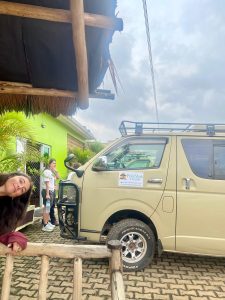
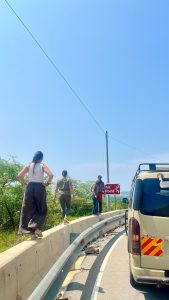
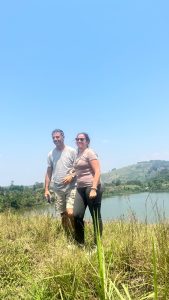
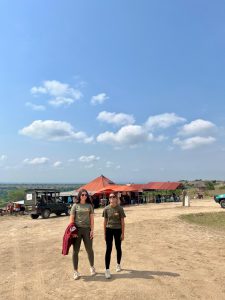
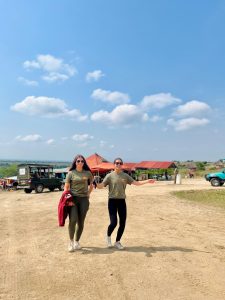
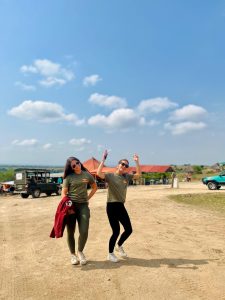


If your safari itinerary includes a designated picnic or visitor facility with toilets, that can be an excellent opportunity for a bathroom break.
This is one reason longer safari itineraries are often organized around natural pauses.
A full-day game drive does not necessarily mean sitting in the vehicle continuously from morning until evening.
Depending on the park and itinerary, the day may include meals, planned stops, sightseeing and other activities.
Your safari operator can explain the specific facilities available along your route.
What About Uganda Safari Toilet Stops?
Uganda is an excellent example of why bathroom breaks need to be considered within the wider context of protected-area travel.
A Uganda safari can include large savannah parks such as Murchison Falls National Park and Queen Elizabeth National Park, as well as forest destinations such as Kibale and Bwindi.
The facilities and driving conditions can vary considerably between destinations.
In a large savannah park, you may spend significant periods away from a lodge or formal building.
This means you should not assume that a restroom will always be only a few minutes away.
At the same time, you should not worry that you will be trapped in the vehicle all day without any possibility of a break.
Your guide knows the route and can help determine suitable opportunities.
For example, Uganda Wildlife Authority has published specific guidance for Murchison Falls concerning vehicle movement and stopping. The guidance states that unnecessary stopping is prohibited, while emergency stopping is allowed. This illustrates why travelers should communicate with their guide rather than independently deciding where to stop. Uganda Wildlife Authority guidance
Full-Length Uganda Safari Map
A Uganda safari route can involve long distances between destinations, which is another reason to discuss bathroom needs while planning the itinerary.
Entebbe/Kampala → Murchison Falls → Kibale → Queen Elizabeth → Bwindi → Lake Bunyonyi → Lake Mburo → Entebbe/Kampala


How the map relates to bathroom planning
Long travel days between destinations are different from game drives. During transfers, there are generally more opportunities to stop at towns, restaurants, fuel stations, lodges and other facilities.
During a game drive inside a protected area, however, the options can be more limited.
This is why it helps to distinguish between a road transfer and a game drive when planning your safari.
Uganda’s Major Safari Areas


A map like this is particularly useful for first-time travelers because it helps explain why a bathroom stop during a game drive cannot always be treated like a normal roadside stop.
Uganda’s protected areas cover large landscapes, and the experience changes from one destination to another.
What If There Is No Formal Toilet Nearby?
This is probably the situation that worries first-time safari travelers most.
You are far from the lodge.
There is no building.
You cannot see a restroom.
What happens?
First, tell your guide.
The guide will assess the situation.
If you can wait, they may continue toward a suitable facility.
If it is urgent, they will consider the safest available option according to the local conditions and park rules.
The important thing is that you should not solve the problem yourself.
Do not simply open the vehicle door and walk away.
Do not choose a private-looking area without asking.
Do not approach water.
Do not disappear into thick vegetation.
Your guide’s job is partly to understand these environmental risks.
How Long Does a Bathroom Stop Usually Take?
There is no single answer because every situation is different.
A stop at a formal restroom can be very quick.
A remote stop may take longer because the guide first needs to assess the surroundings and position the vehicle appropriately.
The actual bathroom break may only take a few minutes, but the guide may need additional time to make sure everyone is safe before the vehicle continues.
This is one reason passengers should not pressure the driver to stop immediately in an unsuitable place.
What If You Have a Medical Reason for Frequent Toilet Breaks?
If you have a personal or medical need for frequent bathroom access, tell your safari operator before your trip.
You do not necessarily need to provide private medical details to everyone in the group.
Simply explain the practical requirement.
For example:
“I need reasonably regular access to bathroom facilities, so we’d like an itinerary that allows suitable stops.”
That information can be very useful when the operator is planning the route.
The safari company may recommend particular accommodation, shorter drives or an itinerary with more predictable access to facilities.
What If You Are Traveling With a Large Group?
Group safaris require a little more coordination.
One person may need the toilet while everyone else wants to continue watching wildlife.
This is another reason to communicate politely with the driver-guide.
The guide can determine whether the entire vehicle should stop or whether another arrangement is possible.
Travelers should also remember that everyone in the vehicle is sharing the safari experience.
A short bathroom break is normal, but passengers should respect the guide’s safety decisions and avoid turning a simple stop into a long unscheduled activity.
Safari Toilet Etiquette: What You Should and Should Not Do
| Do | Don’t |
|---|---|
| Tell the guide when you need a break | Do not leave without permission |
| Use formal toilets when available | Do not litter |
| Follow the guide’s instructions | Do not approach animals |
| Carry tissues and sanitizer | Do not walk toward water |
| Take waste with you | Do not leave wet wipes behind |
| Ask for help if you need privacy | Do not wander into thick vegetation |
| Stay hydrated | Do not deliberately dehydrate yourself |
| Plan ahead | Do not wait until the last second if possible |
The Most Important Difference Between a Safari and a Normal Road Trip
On an ordinary road trip, you might pull into a gas station whenever you need a bathroom.
A safari is different.
The road may run through an ecosystem where wildlife has priority over human convenience.
You might be driving through beautiful grassland and suddenly encounter a herd of elephants.
You might be approaching a river where hippos are present.
You might be following fresh lion tracks.
You might be in an area where stopping is restricted.
That is why the question is not simply, “Where is the nearest bush?”
The real question is:
“Where can we safely and responsibly take a bathroom break?”
Your guide is the person best placed to answer that.
7 Easy Tips for a Comfortable Safari Bathroom Experience
1. Use the toilet before leaving your lodge
It sounds obvious, but it is one of the easiest things you can do.
If your game drive starts early in the morning, give yourself enough time to use the bathroom before getting into the vehicle.
2. Tell your guide early
Do not wait until you are desperate.
A simple request gives your guide more options.
3. Keep water with you
Do not sacrifice hydration because you are worried about bathroom breaks.
4. Carry a small hygiene kit
Tissues, sanitizer and a small waste bag take very little space.
5. Never leave the vehicle without permission
This is one of the most important safari safety rules.
6. Follow the guide’s instructions
The guide understands the local environment and wildlife behavior.
7. Leave no trace
Take your waste with you and help keep the wildlife habitat clean.
What First-Time Safari Travelers Often Discover
One funny thing about safari is that the questions people are most nervous about asking before the trip often become the things they laugh about afterward.
Before the safari, you may wonder:
“What if I need the toilet while we are looking for lions?”
After the safari, you may laugh because your guide calmly found a suitable stopping point and the entire situation took only a few minutes.
The same thing happens with questions about showers, laundry, charging phones, food, mosquitoes, early mornings and long drives.
Safari companies and guides deal with these practical realities every day.
You are not expected to become an expert in wilderness travel before arriving.
You simply need to listen, communicate and respect the environment.
The Comfort of a Well-Planned Safari
A good safari itinerary is not just about putting as many wildlife sightings as possible into every hour.
Comfort matters too.
Travelers need meals.
They need water.
They need rest.
They need bathroom breaks.
They need time to appreciate the scenery rather than constantly feeling rushed from one sighting to another.
This is particularly important on multi-day Uganda safaris.
A thoughtful itinerary can balance game drives with accommodation, meals, sightseeing and appropriate pauses.
If you are booking a safari, ask practical questions before you pay.
Ask how long the longest game drives are.
Ask where meals take place.
Ask whether there are formal toilets along the planned route.
Ask what happens if a passenger urgently needs a bathroom.
Ask whether the vehicle has any special facilities.
A professional operator should be comfortable answering these questions.
Frequently Asked Questions
Can I use the toilet during a game drive?
Yes. Tell your driver-guide when you need a bathroom break. The guide will determine the safest and most appropriate option based on the surroundings and local rules.
Do safari vehicles have toilets?
Most standard safari vehicles do not have toilets. If an onboard toilet is important to you, confirm the exact vehicle facilities with your safari company before booking.
What happens if I need the toilet urgently?
Tell your guide immediately and explain that it is urgent. The guide can then assess the situation and determine what can safely be done.
Is a bush toilet safe?
It can be possible in appropriate circumstances, but it should only happen according to the guide’s instructions. Never choose a location yourself.
Can I walk behind a bush?
Only if your guide has assessed the area and specifically allows you to do so. Never walk away from the vehicle independently.
What if lions are nearby?
Tell the guide. The guide will decide whether to move the vehicle or wait until a safer opportunity is available.
What if elephants are nearby?
The guide will consider the animals’ location and behavior before allowing anyone to leave the vehicle. Never attempt to walk away from the vehicle without permission.
Can children have bathroom breaks?
Yes. Parents should tell the guide early and should never allow children to leave the vehicle independently.
Should I avoid drinking water?
No. Staying hydrated is important. Plan bathroom breaks rather than deliberately restricting water.
Are toilets available everywhere in Uganda’s national parks?
No. Facilities vary between parks and locations. Your safari operator can explain what facilities are available on your specific itinerary.
What should I carry?
Tissues or toilet paper, hand sanitizer, wet wipes and a small waste bag are useful. Always carry waste out of the protected area.
Is it embarrassing to ask a safari guide for the toilet?
Not at all. Bathroom breaks are a normal part of safari travel, and experienced guides are accustomed to handling them.
Final Answer: Can I Use the Toilet During a Game Drive?
Yes, you can use the toilet during a game drive.
The important thing is that you should not expect to find a public restroom everywhere you go, and you should never leave the safari vehicle without your guide’s permission.
When nature calls, simply tell your driver-guide.
If a formal toilet is nearby, they may take you there. If you are in a remote area, the guide may identify an appropriate stopping point if conditions and park rules allow. If wildlife is nearby or stopping is not safe, you may need to wait a little longer.
That is completely normal.
The best safari travelers are not the ones who try to ignore their basic needs. They are the ones who communicate, stay hydrated, respect the guide and understand that they are traveling through a living wilderness.
So when you are sitting in a safari vehicle watching a herd of elephants, searching for a leopard or enjoying the golden African sunset and suddenly think, “Can I use the toilet during a game drive?”, remember that you are absolutely allowed to ask.
Just tell your guide.
Your safari does not have to stop being an adventure simply because nature has called. Sometimes, a few minutes later, you will be back in your seat, camera ready, watching the wild unfold in front of you.