
Chimpanzee Trekking in Kibale Forest
Kibale Forest chimpanzee trekking is one of Uganda’s most memorable rainforest activities. This practical visitor guide explains what a guided trek feels like, how to prepare, what to pack, how to plan your route and why responsible wildlife viewing matters. It complements our Uganda chimpanzee trekking guide and our existing Chimpanzee Tracking in Kibale article.
1. Why Kibale Forest deserves a place on your Uganda itinerary
Kibale National Park is one of Uganda’s best-known destinations for guided chimpanzee encounters. Its moist evergreen and semi-deciduous forest provides habitat for chimpanzees and many other primates. For visitors who have already imagined Uganda as a country of savannah game drives and mountain gorillas, the forest introduces a completely different landscape: towering trees, layered vegetation, calls overhead, and wildlife that may appear suddenly along a narrow trail.
Unlike a zoo visit or a staged wildlife attraction, Kibale Forest chimpanzee trekking involves entering an active forest ecosystem with trained guides. The chimpanzees move freely, and their location, behaviour, and visibility change throughout the day. That unpredictability is part of the attraction, but it is also why a good safari itinerary leaves room for briefings, travel, rest, and the possibility of difficult walking conditions.
For travellers considering a longer Uganda safari, Kibale fits particularly well between Murchison Falls and Queen Elizabeth National Park. It can also form the centrepiece of a shorter primate-focused holiday. The right itinerary depends on your arrival airport, available nights, preferred accommodation, and whether you also intend to trek mountain gorillas in Bwindi.
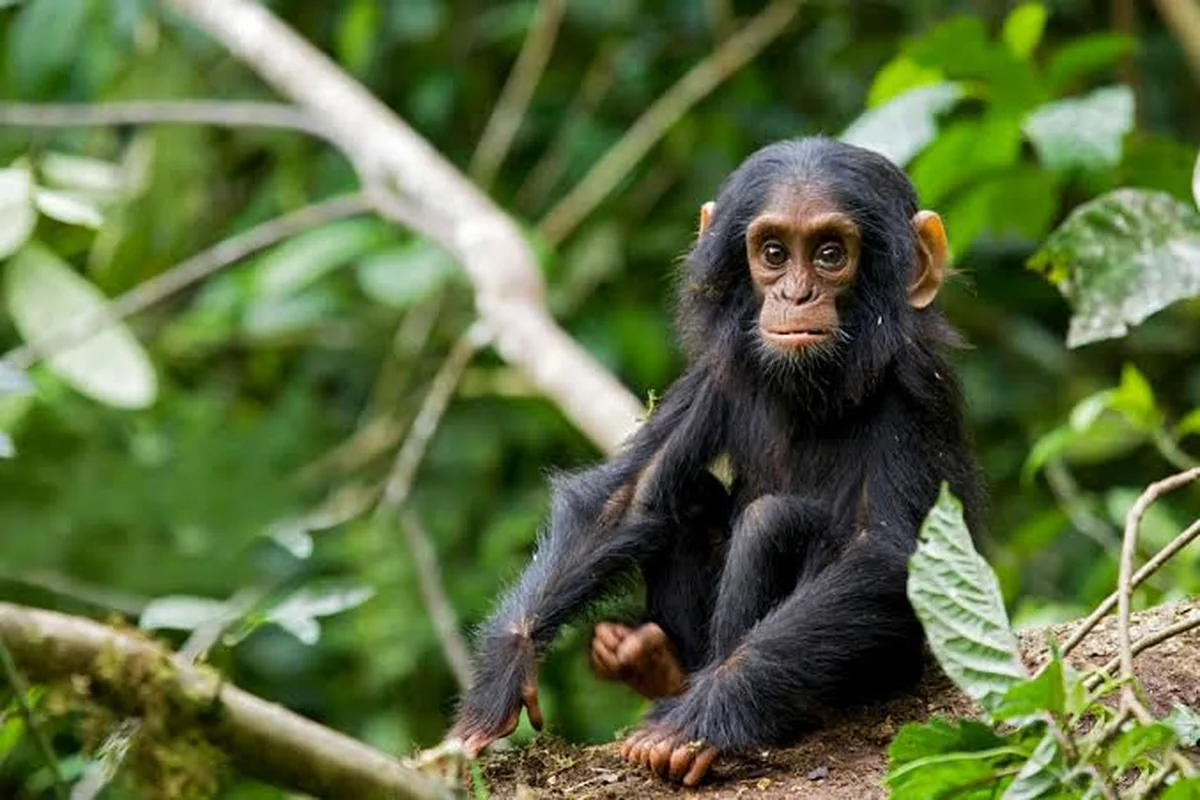
A young chimpanzee rests on a fallen tree in a lush tropical forest, highlighting the remarkable primate encounters visitors may experience during chimpanzee trekking in Uganda.
2. What actually happens during a chimpanzee trek
A typical trekking morning begins with arrival at the designated meeting point, registration and a ranger-led briefing. The briefing covers how visitors should behave around chimpanzees, how to move through the forest, and what to do when animals approach or become excited. The guide then leads the group into the forest, using current tracking information and signs such as calls, movement and feeding activity.
Walking time cannot be guaranteed. On some days chimpanzees may be relatively close to the starting point; on others the group may need to follow forest trails for considerably longer. You might hear a chorus of pant-hoots before you see a chimpanzee, or you may first notice leaves moving high in the canopy. Staying attentive to the guide is more useful than trying to rush ahead for a photograph.
When the group reaches chimpanzees, the ranger manages viewing distances and the permitted observation period. Visitors should expect to stand quietly, move only when directed, and allow the animals to choose their own routes. A sighting may involve a chimpanzee resting in a tree, several individuals grooming, or a more energetic group moving through dense vegetation.
3. Choosing a suitable trekking session
Kibale commonly offers scheduled chimpanzee tracking sessions, subject to park arrangements and permit availability. Morning sessions are popular with travellers who want the rest of the day for a relaxed lodge afternoon or a community activity. Afternoon sessions can work well when the previous night is spent nearby and the itinerary is designed around a later forest visit.
Neither session guarantees closer sightings or easier walking. Weather, fruiting trees, chimpanzee movements, group dynamics and the guide’s information can all affect the experience. Rather than promise that one session is always better, a responsible safari planner checks the currently available permit sessions and matches them to the guest’s travel schedule.
For a relaxed trip, staying near Kibale the night before trekking is usually preferable to attempting a very early departure from a distant destination. This reduces the risk of late arrival and leaves time to prepare clothing, charge camera batteries and review the briefing instructions.
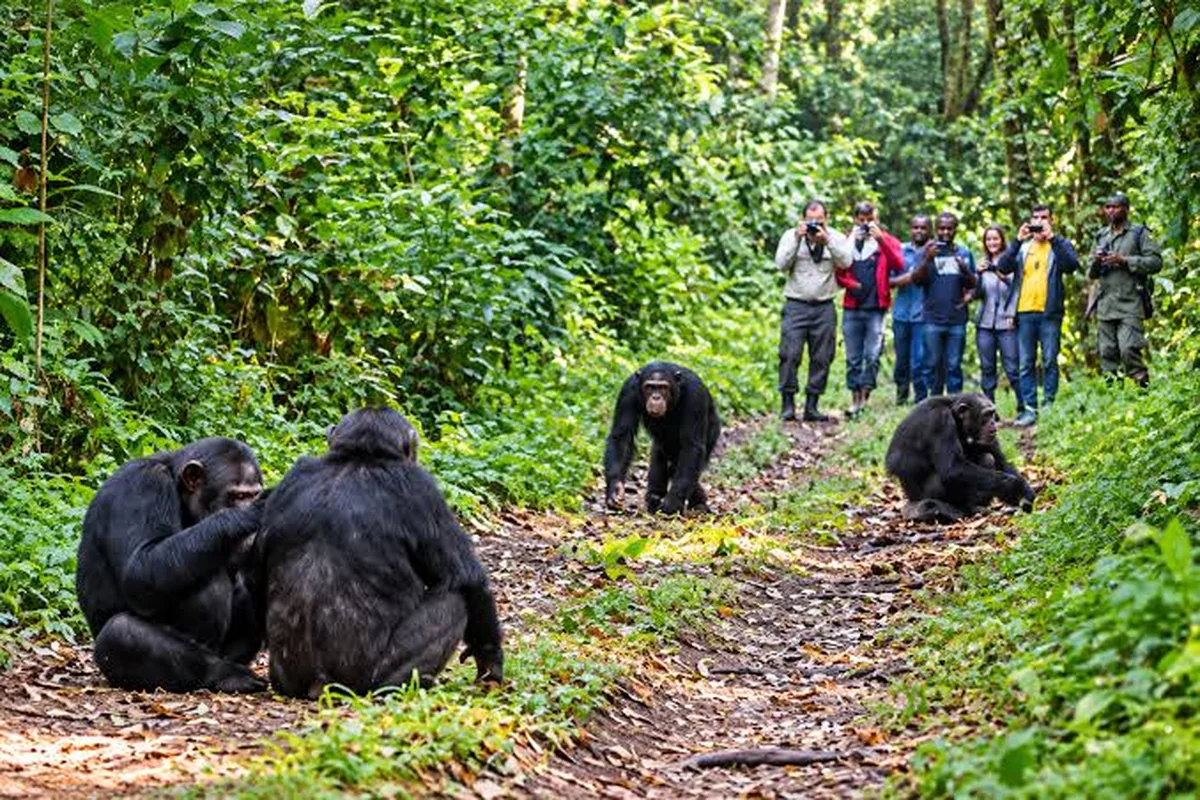
Visitors photograph and observe a group of chimpanzees along a tropical forest trail during a guided primate encounter.
4. Understanding permits, booking and availability
A chimpanzee tracking permit is separate from national park accommodation, transport, and most other safari activities. The permit generally covers the designated tracking experience under park management; a quotation should state clearly what is included. Fees and booking rules can change, so travellers should confirm the applicable tariff with the Uganda Wildlife Authority or their licensed safari operator before making a payment.
Permits are limited and may sell out for popular dates, particularly when demand is high. If chimpanzee tracking is a central reason for travelling, secure a confirmed permit before finalising non-refundable accommodation or a tightly scheduled itinerary. Your operator may request passport details and other information required for the booking.
When comparing quotations, do not look only at the permit price. Ask whether the package includes the driver-guide, vehicle, fuel, accommodation, meals, bottled drinking water, any applicable park charges and activities such as Bigodi wetland walks. A lower headline price can be misleading when important components are excluded.
| Booking item | What to confirm |
|---|---|
| Chimpanzee tracking permit | Correct visitor category, date, session and official current price |
| Transport | Vehicle, fuel, driver-guide and transfers |
| Accommodation | Number of nights, room type and meal plan |
| Other activities | Whether Bigodi or other visits are included |
5. Trekking compared with chimpanzee habituation
Standard chimpanzee trekking and the chimpanzee habituation experience are different activities. Tracking is designed for visitors who want a guided forest walk and a regulated period observing a chimpanzee community. Habituation involves spending longer with a community undergoing a managed process of becoming accustomed to the presence of researchers and observers, subject to the programme offered and current park rules.
The longer experience can suit dedicated primate enthusiasts and photographers, but it may involve an earlier start, more time walking and greater patience. It is not simply a premium version of an ordinary trek: the pace, focus and permit category differ. A visitor who mainly wants a memorable first chimpanzee encounter may find standard trekking entirely satisfying.
Before booking, check which experience is available on your chosen date, its current fee, the official permitted viewing duration and any age or fitness requirements. Avoid assuming that a longer activity guarantees better photographs or that the animals will remain at eye level.
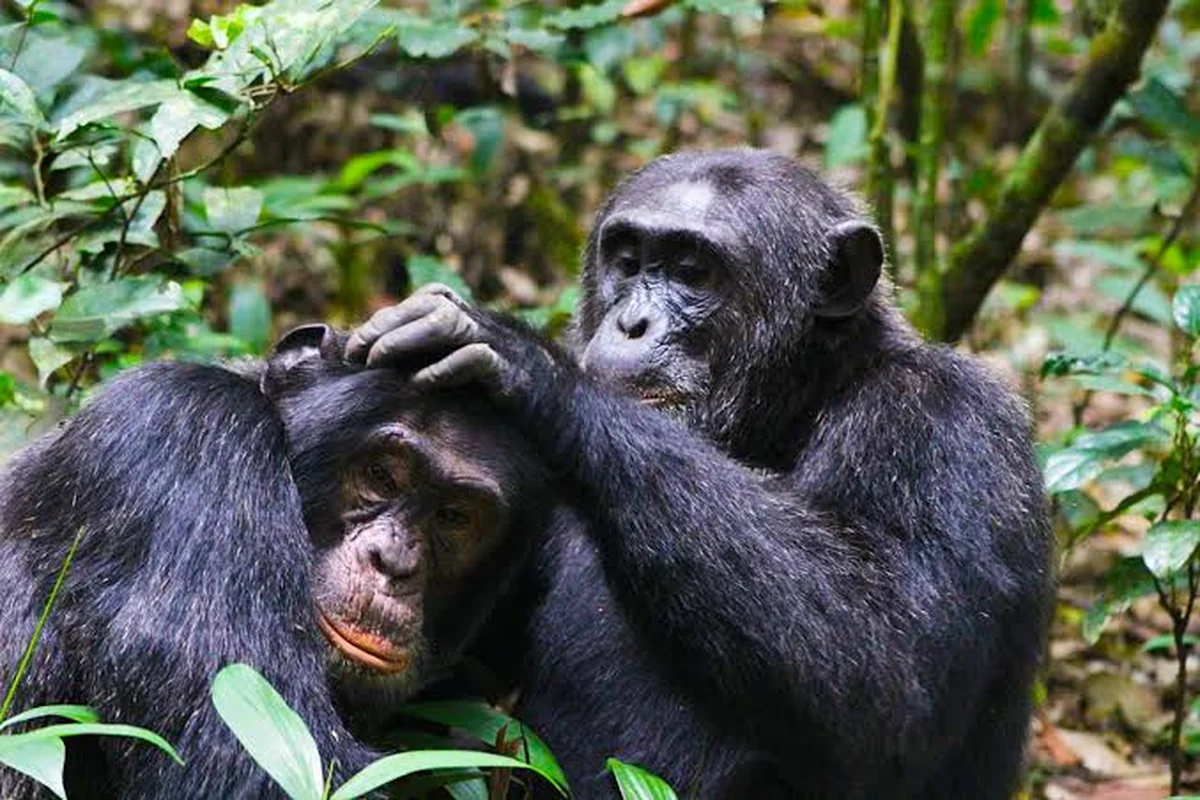
Two chimpanzees grooming each other in their natural forest habitat, demonstrating the fascinating social behaviour visitors may observe during chimpanzee trekking in Uganda.
6. How difficult is walking in Kibale?
Forest terrain can be muddy, uneven and slippery. Roots cross the path, rain can fall without much warning, and guides may leave a well-used trail when tracking conditions require it. The experience is therefore different from a flat, paved nature walk, even when the distance travelled turns out to be short.
Many reasonably active visitors can enjoy Kibale Forest chimpanzee trekking, but comfort levels vary. People with knee problems, limited balance, respiratory concerns or recent injuries should discuss their circumstances with the operator in advance. The guide can explain the day’s conditions, but no operator can promise a particular walking distance or an entirely level route.
Prepare by taking regular walks before your holiday and wearing boots you have already used. A small daypack, walking stick if appropriate and a measured pace can help. If you need special assistance, ask about realistic options before purchasing a permit rather than expecting arrangements to be made on the morning of the activity.
7. What to wear in the forest
Lightweight long trousers and a long-sleeved shirt protect against branches, insects and incidental contact with vegetation. Choose breathable fabric that can handle humidity and occasional rain. Bright white clothing is not necessary; muted outdoor colours are practical because they are less likely to show mud and dirt after a wet walk.
Wear sturdy walking shoes or hiking boots with reliable grip. Tuck trousers into long socks or use gaiters if you prefer additional protection against mud and insects. A light waterproof jacket is useful even when the morning begins with sunshine. Avoid heavy clothing that becomes uncomfortable during a humid climb.
Gloves can be useful when holding vegetation for balance, but they are not a substitute for following the guide’s instructions. Pack only what you need for a few hours in the forest so your bag remains comfortable. The best clothing is clothing that allows you to move safely and focus on the chimpanzees.
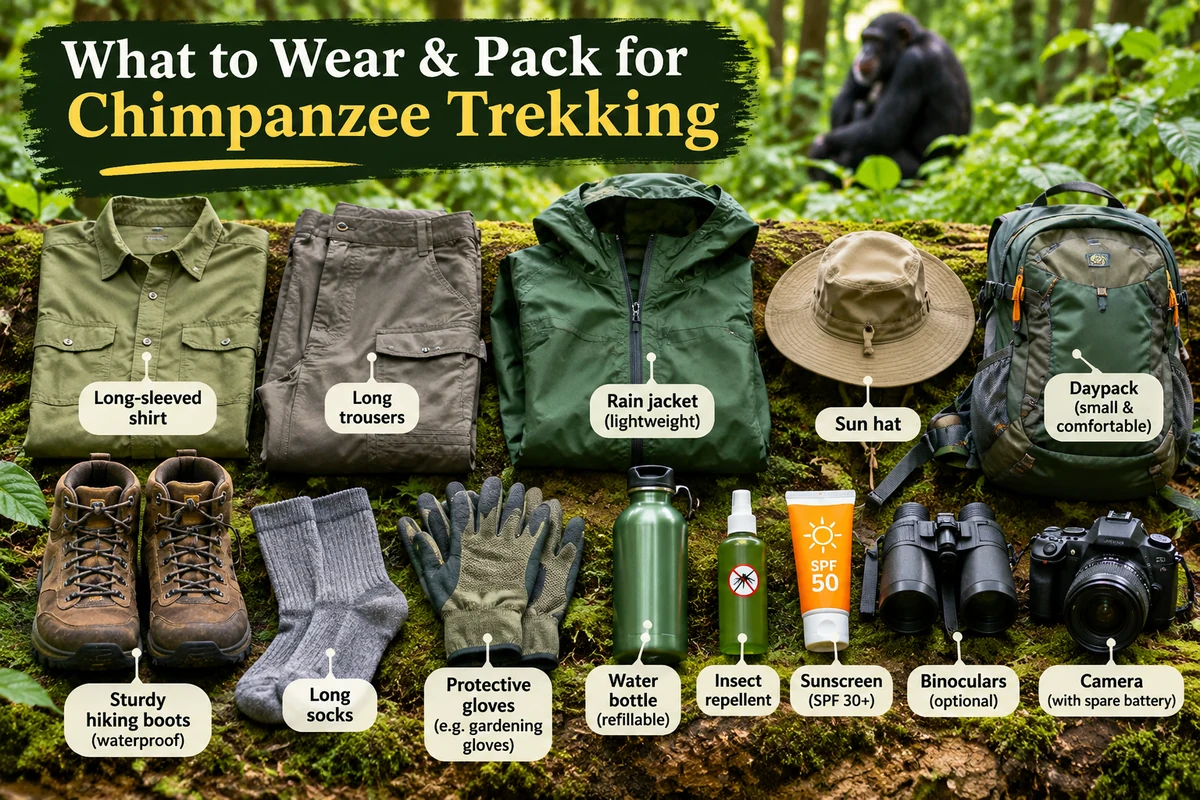
Essential clothing and equipment for chimpanzee trekking in Uganda, including waterproof hiking boots, long-sleeved clothing, a rain jacket, gloves, drinking water and a comfortable daypack.
| Recommended item | Why it helps |
|---|---|
| Long trousers and long sleeves | Protect against vegetation and insects |
| Grippy hiking footwear | Better footing on wet roots and muddy ground |
| Waterproof jacket | Rain protection in changing forest weather |
| Small daypack and drinking water | Comfort and hydration |
| Camera without flash | Photograph wildlife responsibly |
8. A practical daypack checklist
Carry drinking water, a compact rain layer, any personal medication, insect repellent, tissues and a small waterproof pouch for valuables. A camera or phone with a charged battery is usually enough for casual photographs. If you use a larger camera, keep the equipment manageable; the forest is not a convenient place to change lenses repeatedly.
Bring a little food only if park rules permit it for your trekking session, and never eat near chimpanzees or offer food to wildlife. Check the ranger’s guidance about bags and snacks at the briefing. Binoculars may be useful when chimpanzees remain high in trees, although thick foliage can still limit visibility.
Avoid carrying excessive equipment. An overloaded bag can make an otherwise enjoyable walk tiring. Guests travelling with a professional driver-guide can leave non-essential luggage securely at their lodge or vehicle according to the arrangements made for the day.
9. Best time of year to visit Kibale
Chimpanzee tracking is offered across much of the year, but conditions change with rainfall. Drier periods may make some paths easier to walk, while wetter months bring lush vegetation and potentially muddier ground. Rainforest weather is variable, so even a trip during a generally drier season should include waterproof clothing.
The best time depends on more than weather. Consider permit availability, accommodation rates, how Kibale fits into a wider Uganda route and whether you want to combine the forest with a game drive or gorilla trek. A single destination can be pleasant at different times for different travellers.
If your dates are flexible, compare several departure windows rather than choosing a month from a generic online chart alone. Ask the operator what the relevant permits cost for your actual travel dates, and check whether any promotional rates come with restrictions on changes or cancellations.
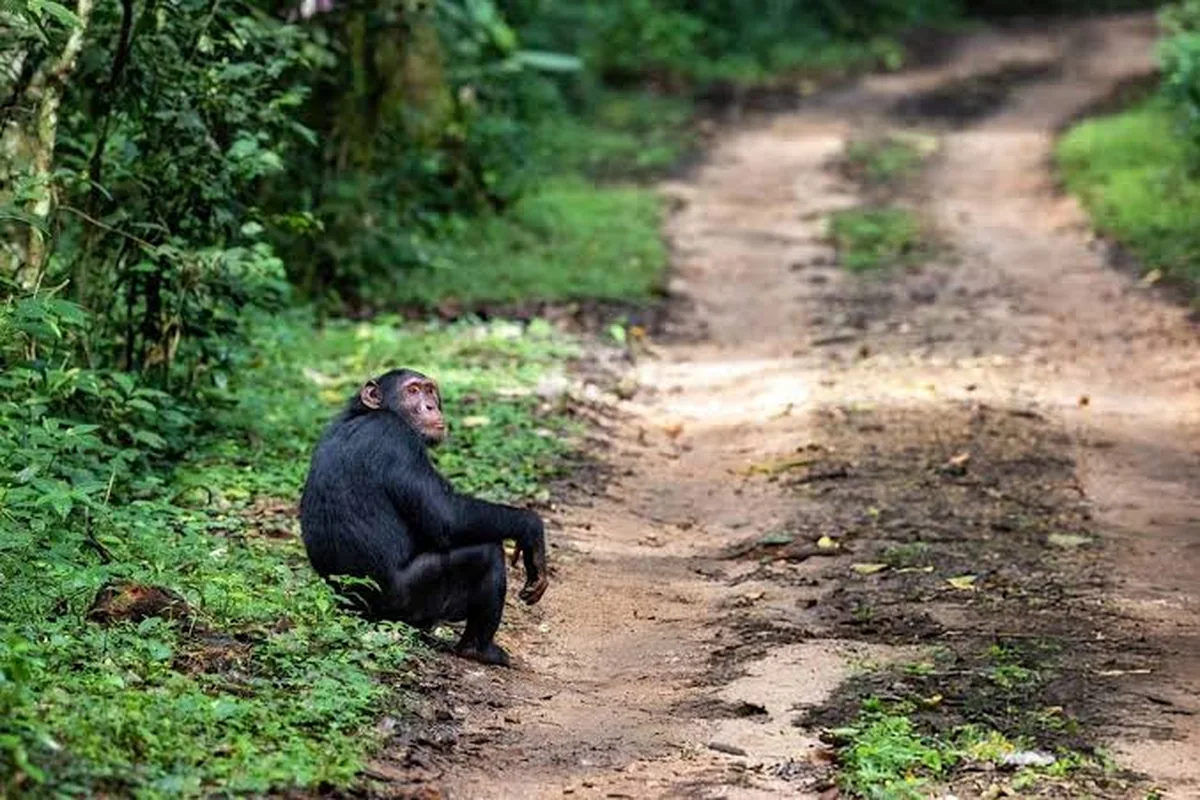
A wild chimpanzee rests beside a forest trail, offering a glimpse into the natural environment visitors may explore during chimpanzee trekking in Uganda.
10. Chimpanzee behaviour visitors may observe
Chimpanzees are highly social primates. Depending on the group and the moment, you may observe grooming, feeding, resting, climbing, calling or movement between trees and the forest floor. An infant staying close to an adult can be a memorable sight, but encounters with particular individuals or behaviours cannot be scheduled.
Noise is part of the forest experience. Chimpanzees sometimes communicate through loud calls, and a group may become active with little warning. Follow the ranger’s instructions rather than imitating calls or trying to attract attention. Quiet observation gives visitors a better chance to appreciate the animals without interfering with their behaviour.
The most rewarding encounters are not necessarily the closest ones. Watching a chimpanzee select food, groom another individual or navigate a tree can reveal far more about its daily life than a quick posed-looking photograph.
11. Safety, distance and responsible wildlife viewing
Chimpanzees are powerful wild animals, not pets. Follow the park’s current minimum-distance rules, remain with the guide and avoid direct approaches. Never touch, feed, corner or attempt to follow an individual on your own. If a chimpanzee moves toward the group, listen carefully to the ranger rather than making a sudden movement.
Human illnesses can pose risks to great apes. Travellers who feel unwell should disclose symptoms and follow the park’s health guidance, even when this may affect their plans. Avoid coughing or sneezing toward wildlife and comply with any current mask or hygiene requirements communicated by the authorities.
Photography should not interfere with safety. Keep flash disabled, avoid blocking trails and do not step away from the group for a clearer angle. Responsible chimpanzee tourism depends on guests treating the forest as a protected habitat rather than a stage for pictures.
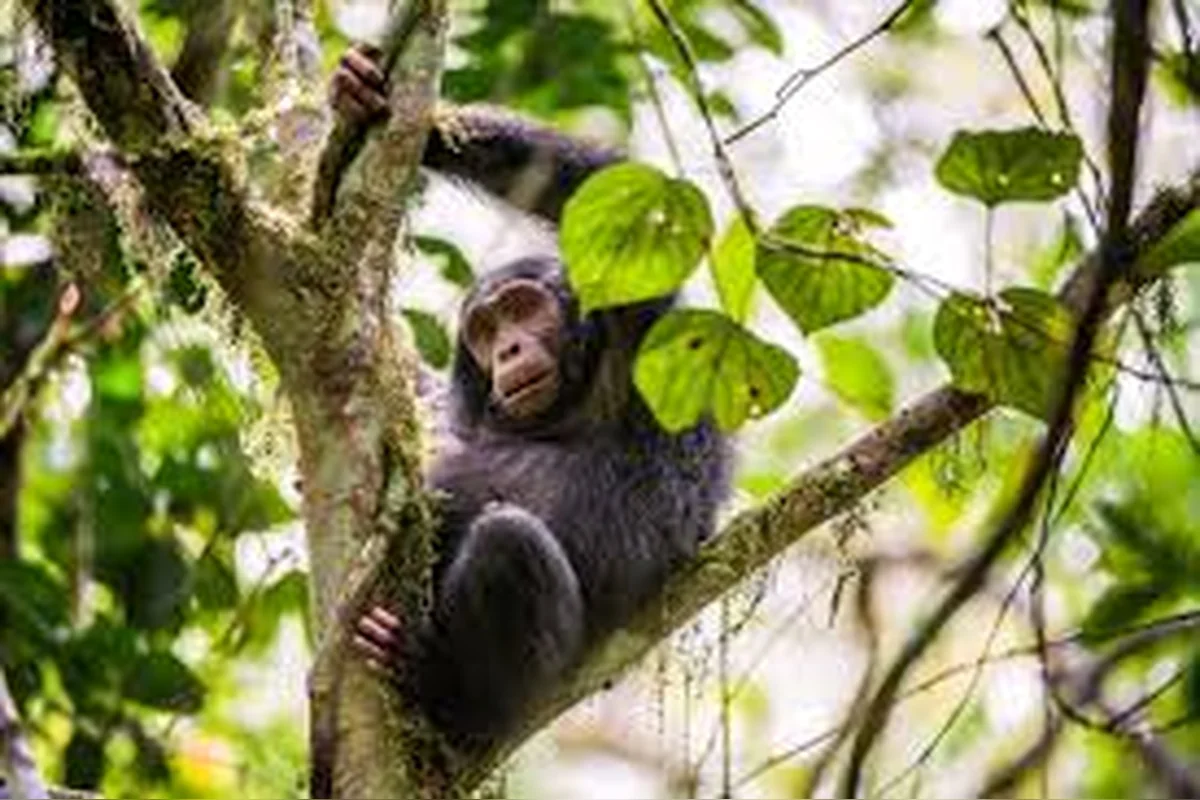
A young chimpanzee climbs among the branches of a tropical forest tree, demonstrating the agility and natural climbing behaviour of these fascinating primates.
12. Photography in low-light rainforest
Kibale’s forest canopy creates uneven light. A chimpanzee may be brightly lit in a gap between branches one moment and in deep shade the next. Rather than relying on flash, use a camera capable of handling higher sensitivity settings and practise changing exposure quickly before your trip.
Photographing behaviour often works better than trying to capture every face. A chimpanzee climbing, grooming or reaching for fruit can communicate the experience even when leaves partially obscure the subject. Keep your movements slow and avoid repeatedly moving in front of other visitors.
If using a phone, clean the lens, keep the battery charged and take a few short videos where permitted. The forest is humid and rain can arrive suddenly, so carry a simple waterproof cover. Most importantly, take time to put the camera down and enjoy observing the animals.
13. Where to stay around Kibale and Fort Portal
Accommodation ranges from simpler guesthouses and forest camps to comfortable midrange lodges and higher-end properties. The best choice depends on your budget, preferred meal plan, driving time to the briefing point and the amount of time you want to spend relaxing at the lodge.
A lodge described as being in the Kibale area may still require a substantial morning transfer. Ask for the actual travel arrangement rather than assuming every property is beside the trekking starting point. If you plan a morning trek, a convenient overnight location can make a noticeable difference.
For guests who value quiet evenings, look for a property with comfortable rooms, reliable meals and a pleasant natural setting. For a short budget itinerary, cleanliness, safe access and a realistic departure time may matter more than extra facilities.
14. How Kibale fits into a Uganda safari route
Visitors commonly reach the Kibale region by road from Kampala or Entebbe, often via Fort Portal. Travel time varies with traffic, road conditions and stops, so itineraries should avoid presenting a single exact driving time as guaranteed. A long transfer is more enjoyable when the day includes suitable breaks.
Kibale combines naturally with Queen Elizabeth National Park, where travellers can experience savannah game drives and the Kazinga Channel. Some itineraries continue south toward Bwindi for mountain gorilla trekking. Others connect Kibale with Murchison Falls, making a broader circuit through Uganda’s contrasting landscapes.
A good itinerary considers more than the map. The dates of permits, time of the morning briefing, luggage, meal arrangements and energy after long drives all matter. A route that looks efficient on paper may be tiring if every day is packed with activities.
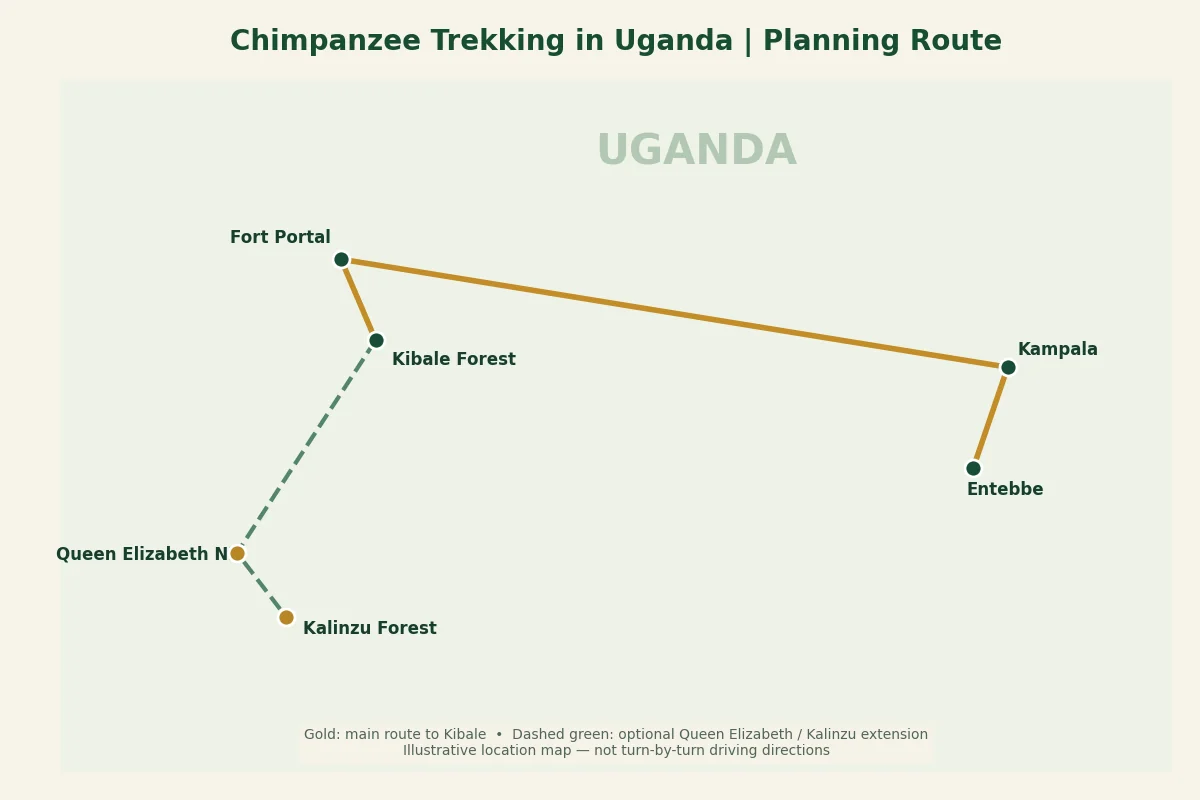
Illustrative route map showing the journey from Entebbe through Kampala and Fort Portal to Kibale Forest, with an optional extension to Queen Elizabeth National Park and Kalinzu Forest.
15. Planning your safari with PrideMark Safaris
Begin by deciding whether chimpanzee trekking is your main priority or one experience within a longer safari. Share your intended month, number of travellers, approximate budget, preferred accommodation category and interest in other parks. These details allow a safari operator to design a route that fits your priorities rather than offering a generic package.
Ask for a written quotation identifying the permit category, accommodation and meal plan, transport, included activities, bottled drinking water and any exclusions. Confirm payment conditions and permit availability before committing. For international guests, it is also wise to review entry requirements and allow enough time between the final road transfer and departure flight.
PrideMark Safaris can help arrange a tailored Uganda primate itinerary, including chimpanzee tracking, gorilla trekking and wildlife viewing. Travellers can compare a shorter Kibale-focused trip with a longer itinerary and choose the balance of forest activities, comfortable travel and free time that suits them.
Related PrideMark Safaris planning resources
Explore the Kibale Forest National Park destination page, compare Kibale vs Kalinzu Forest, and see our 3-day chimpanzee trekking safari. Travellers combining primate experiences may also find our gorilla and chimpanzee tracking guide useful.
Frequently asked questions
Is a chimpanzee sighting guaranteed?
No. Chimpanzees are wild and free-ranging. Experienced guides use tracking knowledge, but sightings and visibility cannot be guaranteed.
Can beginners join?
Many beginners can participate, provided they are comfortable with potentially uneven and muddy forest paths. Discuss individual mobility needs before booking.
Should I book permits before accommodation?
When chimpanzee tracking is essential to the trip, first establish permit availability and coordinate the booking with suitable accommodation.
Can I combine Kibale with gorilla trekking?
Yes. Many Uganda itineraries connect Kibale with Bwindi, with time allowed for road transfers and both permit dates.
Is the forest always dry in the dry season?
No. Kibale is a rainforest environment, and showers or muddy conditions remain possible at different times of year.
Can I use flash photography?
Do not use flash when photographing chimpanzees. Follow all current instructions from the ranger and park authorities.
Plan your Kibale chimpanzee safari
Ask PrideMark Safaris for a tailored itinerary with clearly identified permits, accommodation, transport and activities. We can help you combine Kibale with Queen Elizabeth National Park or Bwindi according to your available time.