What Happens If My Safari Vehicle Breaks Down in the Bush? 5 Key Things to Know

Can Children Go on an African Safari? 10 Essential Safe ParentTips
September 17, 2026
Can I Use the Toilet During a Game Drive? What Actually Happens?
September 18, 2026
A safari vehicle breakdown can sound frightening, especially when you imagine being stopped in the middle of a national park with wild animals somewhere nearby. In reality, vehicle problems are one of the practical risks that safari operators plan for, and a breakdown does not automatically mean that a safari has become dangerous or that travelers will be stranded overnight. What matters most is the condition of the vehicle, the driver’s experience, communication with the safari company, the location of the breakdown, the park’s rules and the operator’s recovery arrangements. Before booking an African safari, travelers should understand what normally happens, what they should do, what they should never do and what questions to ask their safari company about vehicle maintenance and emergency support.
A safari vehicle is one of the most important parts of an African safari. It is not simply transportation between the lodge and the national park. The vehicle may spend several hours on rough tracks, climb steep or uneven roads, cross muddy sections, carry passengers and luggage and operate far away from ordinary roadside garages. In destinations such as Uganda, safari vehicles may travel through large protected areas including Murchison Falls National Park, Queen Elizabeth National Park, Kidepo Valley National Park and Lake Mburo National Park. The distances, terrain and road conditions can vary considerably, which is why vehicle preparation and recovery planning are important parts of responsible safari operations.
The good news is that most travelers never experience a serious breakdown. Safari operators routinely prepare vehicles for long journeys, carry basic tools and spare equipment and use drivers who are familiar with the roads and conditions. However, no vehicle is completely immune to mechanical problems. A puncture, overheating, battery issue, electrical fault, suspension problem or another mechanical failure can happen even when a vehicle has been properly maintained. The purpose of this article is therefore not to make travelers worried about safari vehicles. It is to explain what happens if something goes wrong so that you can travel with realistic expectations.
If you are asking, what happens if my safari vehicle breaks down in the bush?, the most important thing to understand is that passengers should not try to solve the situation themselves. Your driver and safari company should take responsibility for assessing the situation, communicating with the appropriate people and deciding whether the vehicle can be repaired safely or whether another vehicle needs to be sent. In a protected area, travelers also need to follow park rules and the instructions of their guide because the environment is different from a normal roadside breakdown.
Quick Facts About Safari Vehicle Breakdowns
| Question | What Travelers Should Know |
|---|---|
| Are safari vehicle breakdowns common? | Serious breakdowns are not something travelers should expect on every safari. Well-maintained vehicles and experienced operators work to reduce the risk, but mechanical problems can never be completely eliminated. |
| What should passengers do first? | Remain calm, stay with the vehicle unless the guide gives different instructions, and follow the driver’s directions. |
| Can the driver repair the vehicle? | Sometimes. A trained safari driver may be able to fix minor issues such as a puncture or certain mechanical faults, but repairs should only be attempted when it is safe to do so. |
| What if the vehicle cannot be repaired? | The safari company may arrange recovery, assistance or another vehicle depending on the location, nature of the problem and available support. |
| Should passengers get out? | Not automatically. In a wildlife area, passengers should remain inside the vehicle unless the guide determines that leaving it is safe and necessary. |
| Can wild animals approach a broken vehicle? | Wildlife may be nearby in a national park. This is why passengers should remain calm, avoid attracting animals and follow the guide’s instructions. |
| Does a breakdown mean the safari is ruined? | No. A breakdown may cause a delay, but a good operator can often repair the vehicle or arrange alternative transport. |
| What should travelers ask before booking? | Ask about vehicle maintenance, spare tyres, recovery arrangements, communication systems, driver experience and what happens if the vehicle becomes unusable. |
Why Safari Vehicle Breakdowns Are Different From Normal Roadside Breakdowns
A vehicle breakdown in the city is usually inconvenient rather than frightening. You can pull over, call a mechanic, use a rideshare application, walk to a nearby business or wait for roadside assistance. In the bush, the situation can be different because there may be no garage nearby, mobile-phone coverage may vary, roads may be rough and the vehicle may be operating inside a protected wildlife area. That does not mean the situation is automatically dangerous, but it does mean that the driver and safari company need to handle the problem differently.
Protected areas also have rules governing where vehicles may travel and where they may stop. For example, Uganda Wildlife Authority guidance for Murchison Falls National Park states that unnecessary stopping is prohibited but emergency stops are permitted. The same guidance emphasizes designated routes and speed limits. These rules exist partly because visitors are operating in an environment where both people and wildlife need protection. :contentReference[oaicite:1]{index=1}
This is one reason why travelers should not simply leave the vehicle and start walking toward the nearest road or lodge. Even if the vehicle appears to be close to another road, the surrounding landscape may contain wildlife, difficult terrain or areas where visitors are not supposed to walk. A safari vehicle provides a much more controlled environment than walking through a national park without an authorized guide.
The response also depends on what has actually happened. A flat tyre is very different from an engine failure. A vehicle that has overheated may need time to cool down before the driver can safely inspect it. A dead battery may be relatively straightforward to address if the driver has appropriate equipment. A major engine or transmission failure may require another vehicle. The driver should make that assessment rather than passengers trying to diagnose the problem.
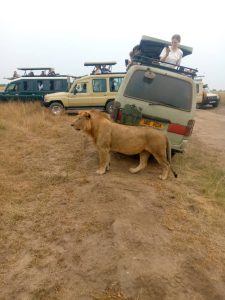
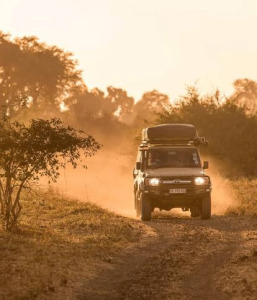
Safari vehicles operate on a wide range of terrain, making preparation and vehicle maintenance important parts of a well-organized safari.
1. Stay Calm and Stay With the Vehicle Unless Your Guide Says Otherwise
The first and most important thing to do during a safari vehicle breakdown is to stay calm. This may sound obvious, but the environment can make a mechanical problem feel much more dramatic than it actually is. Hearing a strange noise from the engine, feeling the vehicle stop or realizing that you are several kilometres from the nearest lodge can immediately cause passengers to imagine the worst. In most situations, however, the driver will first assess the problem and communicate with the safari company or relevant support personnel.
Passengers should listen carefully to the guide or driver. If the vehicle is safely stopped and the driver asks everyone to remain seated, do so. If the driver needs passengers to move within the vehicle for safety or weight distribution, follow those instructions. If an emergency requires everyone to leave the vehicle, the guide should give clear directions about where to go and how to remain safe.
The most important rule is that passengers should not independently decide to walk away from the vehicle. A national park is not an ordinary roadside environment. Animals can be difficult to see even when they are relatively close, and the safest response is usually to remain together and follow professional instructions. The CDC also advises safari travelers to maintain safe distances from wildlife and follow the guidance of trained professionals when in wildlife areas.
This is particularly important when traveling with children or elderly passengers. A family should not allow children to wander around while adults wait for a mechanic. Older travelers may also need assistance if they are required to move. A good guide should take the needs of every passenger into account and keep the group together.
2. The Driver Will Assess Whether the Problem Can Be Fixed Safely
The second important thing to understand is that not every vehicle breakdown requires a rescue vehicle. Safari drivers often have practical mechanical knowledge and may carry tools and spare equipment for common problems. A puncture, loose connection, minor electrical issue or another relatively simple fault may be repairable at the location. The driver may inspect the vehicle, identify the cause and determine whether a repair can be performed safely.
This is one reason the quality and preparation of the safari vehicle matter so much. A vehicle intended for remote safari travel should be maintained before a trip rather than relying on repairs after a problem occurs. Experienced operators also understand that rough roads place additional demands on tyres, suspension, steering components and other parts of a vehicle.
Travelers should understand, however, that a driver attempting a repair does not mean passengers should become involved. The driver may need space around the vehicle, and some repairs can involve hot engine components, tools or other hazards. Passengers should remain where the guide tells them to remain.
If the issue is overheating, for example, the driver may need to wait before opening or working around the engine. If there is a tyre problem, the driver may position the vehicle appropriately before changing the wheel. If there is a serious mechanical failure, attempting to drive the vehicle further could make the situation worse. The driver therefore needs to decide whether continuing is safe.
This is where professional safari planning becomes important. A safari vehicle is not expected to be magically immune to mechanical problems. Instead, the operator should have processes that reduce the likelihood of failure and a response plan for dealing with problems when they occur.
Common Safari Vehicle Problems and What They May Mean
| Vehicle Problem | Possible Situation | Typical Response |
|---|---|---|
| Flat tyre | Sharp stones, rough tracks or normal tyre damage can cause punctures. | Driver may change the tyre if conditions are safe and a suitable spare is available. |
| Overheating | Engine temperature becomes too high, especially in demanding conditions. | Driver may stop, allow the engine to cool and inspect the cause before deciding whether to continue. |
| Battery problem | Battery may be weak or an electrical fault may prevent starting. | Driver may diagnose the problem and use appropriate equipment if available. |
| Electrical fault | Lights, ignition or another electrical component may stop functioning correctly. | Driver assesses whether the fault can be safely repaired or whether assistance is required. |
| Suspension issue | Rough roads can place significant demands on suspension components. | Vehicle may need inspection before continuing. |
| Major engine failure | Serious mechanical damage may prevent the vehicle from moving. | Safari company may need to arrange another vehicle or recovery assistance. |
| Fuel-related problem | Fuel shortage or fuel-system problems can stop a vehicle. | Driver and operator determine the safest way to obtain assistance or fuel. |
3. Your Safari Company Should Have a Communication and Recovery Plan
The third key thing travelers should understand is that the driver should not be the only person responsible for solving a serious breakdown. A professional safari operation should have a way for the driver to communicate with the company’s operations team or another responsible contact. Depending on the destination and location, communication may involve mobile phone coverage, radio communication, park personnel or another established method.
Communication is particularly important when the vehicle cannot be repaired at the location. The safari company needs to know where the vehicle is, what has happened, how many passengers are present and what type of assistance is required. The response might involve another safari vehicle, a mechanic, recovery equipment or another appropriate solution.
Uganda Wildlife Authority operates protected areas across the country and provides official visitor and park-management channels. Its current official website lists a toll-free number of 0800 100 960 and the reservations email reservations@wildlife.go.ug. Travelers should rely on official or verified contact details rather than unofficial numbers circulating online. :contentReference[oaicite:2]{index=2}
However, travelers should not assume that calling UWA automatically means UWA will come and repair every private safari vehicle. A safari operator’s own recovery and communication arrangements remain important. UWA manages protected areas and park operations, while safari companies remain responsible for the vehicles they use to transport their clients. The exact response to a breakdown can therefore vary depending on the location, operator and circumstances.
Before your safari begins, it is reasonable to ask the company what happens if the vehicle becomes disabled. You do not need to demand a complicated emergency plan, but you should understand who the driver contacts, how another vehicle would be arranged and what happens if the breakdown occurs far from a lodge.

Safari vehicles may operate far from towns and workshops, making communication and recovery planning important.
4. Wildlife Safety Becomes the Priority While You Wait
The fourth key thing is perhaps the one that concerns travelers most: wildlife. What happens if a safari vehicle breaks down while animals are nearby? The answer depends entirely on the circumstances, which is why passengers should never make their own decisions about getting out of the vehicle.
Wild animals generally behave according to their own routines. A vehicle that stops is not automatically an invitation for animals to approach, and a vehicle breakdown does not mean predators will suddenly surround it. However, animals can be nearby without passengers seeing them, particularly in thick vegetation or tall grass. This is one reason guides are trained to observe the surroundings and make decisions about where passengers should remain.
Passengers should not shout at animals, throw objects, feed wildlife, approach animals for photographs or attempt to scare an animal away. Such behaviour can create unnecessary risk and can also violate park regulations. Uganda Wildlife Authority’s Murchison Falls guidance specifically prohibits feeding wildlife and hooting, and emphasizes visitor safety and wildlife protection. :contentReference[oaicite:3]{index=3}
The safest approach is to remain calm and allow the guide to monitor the situation. If an animal comes near the vehicle, passengers should remain quiet and follow instructions. A guide may decide that staying in the vehicle is safest, or in a particular emergency may determine that passengers need to move to another safe position. The guide’s assessment should take precedence over a passenger’s desire to take a photograph or get a closer look.
This is also why safari vehicles are designed to provide a controlled platform for wildlife viewing. Travelers should never assume that because an animal appears relaxed, it is safe to approach. Elephants, buffaloes, hippos and other large animals can be unpredictable, and even seemingly harmless animals should not be touched or fed.
5. If the Vehicle Cannot Be Repaired, Another Vehicle May Be Arranged
The fifth key thing is what happens when the problem is serious enough that the safari vehicle cannot continue. In this situation, the safari operator may arrange another vehicle or another appropriate recovery solution. The exact response depends on the park, distance, road conditions, availability of another vehicle and the nature of the mechanical failure.
This is why travelers should avoid judging an operator’s emergency capability simply by looking at the vehicle itself. A polished safari Land Cruiser is useful, but the company’s operations system matters too. A responsible operator should know which vehicles are operating in different areas, where its drivers are located and how to respond when one vehicle becomes unavailable.
In some circumstances, the replacement vehicle may come from the same safari company. In other circumstances, an operator may need to coordinate with another authorized vehicle or local service provider. The time required can vary significantly. A minor problem close to a lodge may be resolved quickly, while a major mechanical failure deep inside a remote park may take considerably longer.
Travelers should therefore build some flexibility into their expectations. A safari itinerary is not like a railway timetable. Wildlife sightings, weather, road conditions, traffic, park procedures and unexpected mechanical issues can all affect timing. A responsible guide should communicate what is happening rather than leaving passengers wondering.
If a breakdown causes a missed activity, the operator should explain what can realistically be done to adjust the itinerary. Depending on the circumstances, this could mean changing the timing of a game drive, arranging another activity later or modifying the following day’s schedule. The exact compensation or refund question depends on the terms of the safari contract and the cause of the disruption, so travelers should read their booking terms and insurance policy carefully.
What Should You Do If Your Safari Vehicle Breaks Down?
| Step | What Travelers Should Do |
|---|---|
| 1. Stay calm | Do not panic or assume the situation is immediately dangerous. |
| 2. Listen to the guide | The driver or guide should assess the situation and give passengers instructions. |
| 3. Stay inside when instructed | Do not leave the vehicle simply because it has stopped. |
| 4. Avoid wildlife interaction | Never feed, approach, call or provoke animals. |
| 5. Let the driver assess the vehicle | Do not interfere with repairs unless specifically asked and it is safe. |
| 6. Allow communication with the operator | The driver may contact the safari company’s operations team or relevant support. |
| 7. Follow the recovery plan | If another vehicle is sent, follow the guide’s instructions about transferring safely. |
| 8. Keep your belongings secure | Keep passports, phones, cameras, medication and valuables with you. |
| 9. Stay hydrated | If the wait is prolonged, drink water and follow the guide’s instructions. |
| 10. Document the incident afterward | If necessary, record the details for insurance or communication with the operator after reaching safety. |
How Good Safari Companies Reduce the Risk of Vehicle Breakdowns
The best way to deal with a vehicle breakdown is to reduce the likelihood of one happening in the first place. This begins before the vehicle leaves the safari company’s base. Operators should maintain vehicles properly, inspect tyres, check fluids, examine suspension and steering components, verify electrical systems and make sure essential equipment is functioning correctly.
Safari vehicles experience demanding conditions. Gravel, mud, dust, potholes, corrugations, steep tracks and long distances can place more stress on a vehicle than normal urban driving. Regular maintenance therefore matters. A company that operates a fleet of safari vehicles should have systems for scheduled servicing as well as inspections before long trips.
Spare tyres are particularly important because punctures can occur on rough roads. The exact equipment carried varies between operators and vehicle types, but travelers can reasonably ask whether the vehicle carries suitable spare tyres, tools and basic emergency equipment. They can also ask how the company handles a major breakdown that cannot be repaired at the roadside.
The Uganda Wildlife Authority’s published conservation tariff includes provisions for guided game drives and UWA game-drive vehicles, demonstrating that safari transport operates within an organized park system rather than being completely unmanaged. :contentReference[oaicite:4]{index=4} However, travelers should still assess their individual safari company’s vehicle standards because a private safari company’s vehicle is not automatically the same as a UWA vehicle.
What to Check Before Your Safari Vehicle Leaves
| Vehicle Area | Why It Matters |
|---|---|
| Tyres | Tyres are exposed to rough tracks, stones and long-distance driving. |
| Spare tyre | A usable spare can help address a puncture without waiting for outside assistance. |
| Engine and fluids | Proper fluid levels and engine condition help reduce preventable mechanical problems. |
| Brakes | Reliable brakes are essential on steep, uneven and sometimes slippery roads. |
| Suspension | Rough roads can place significant stress on suspension components. |
| Battery | A healthy battery reduces the likelihood of starting and electrical problems. |
| Communication | The driver should have a reliable way to contact the operator or relevant support. |
| Emergency equipment | Basic tools and suitable emergency equipment can help address minor problems. |
| Driver experience | An experienced driver can recognize problems early and make informed decisions. |

Choosing an experienced safari operator and properly prepared vehicle is an important part of reducing breakdown risks.
What Happens If a Safari Vehicle Breaks Down in Uganda?
Uganda is an excellent example of why travelers should ask practical questions about safari transport. The country has a wide network of protected areas, including Murchison Falls, Queen Elizabeth, Kidepo Valley, Lake Mburo, Kibale and other destinations managed within Uganda’s conservation system. UWA’s official parks and reserves information lists the country’s major protected areas and provides information for visitors. :contentReference[oaicite:5]{index=5}
The nature of the breakdown response can therefore vary depending on where you are. A problem near a park gate or lodge may be easier to address than a major mechanical failure deep inside a large protected area. Road conditions also differ between parks and between different routes within the same park.
Murchison Falls National Park, for example, has specific guidance on vehicle movement, speed and emergency stopping. UWA states that emergency stops are permitted even though unnecessary stops are prohibited, reflecting the fact that unexpected situations can occur while vehicles are inside the park. :contentReference[oaicite:6]{index=6}
This does not mean travelers should expect breakdowns. It simply means that a safari company should be prepared for unexpected events. The driver should know the park routes, understand how to communicate with the operator and know the appropriate procedures for dealing with a vehicle problem.
Uganda Wildlife Authority also maintains visitor and operational channels, including its official toll-free number. Travelers should verify current contact information through UWA’s official website because phone numbers and procedures can change. UWA’s website currently lists 0800 100 960 as its toll-free contact. :contentReference[oaicite:7]{index=7}
What If the Breakdown Happens During a Long Transfer Between Parks?
A vehicle breakdown does not only happen during a game drive. It can happen while travelling between safari destinations. This is sometimes less concerning from a wildlife perspective because the vehicle may be on a public road rather than deep inside a national park, but it can still be inconvenient if the nearest town or garage is far away.
Long transfers are one reason travelers should ask about the condition and preparation of the safari vehicle before the trip. A vehicle that has already travelled thousands of kilometres should not simply be assumed to be ready for another long journey without inspection. Professional operators should manage servicing and fleet rotation according to their own maintenance systems.
Travelers should also carry their essential personal items in the vehicle rather than placing everything in luggage that might be inaccessible during a delay. Passports, phones, medication, water, travel documents and insurance information should be kept where passengers can reach them.
If a transfer is delayed, the driver or operator should communicate the updated plan. Depending on the situation, passengers may be asked to wait in the vehicle, move to a safe location or transfer to another vehicle. The correct decision depends on the actual location and circumstances.
Does Travel Insurance Cover a Safari Vehicle Breakdown?
Travel insurance policies differ, so travelers should not assume that every policy automatically covers every consequence of a vehicle breakdown. A mechanical problem itself may be the responsibility of the safari operator, while expenses resulting from missed connections, delayed travel, medical emergencies or other consequences may fall under different insurance provisions.
Before travelling, read the policy carefully and check whether it includes trip interruption, delays, emergency medical treatment, evacuation and other relevant benefits. SafariBookings also recommends that safari travelers consider insurance covering cancellation, medical illness and emergency evacuation. :contentReference[oaicite:8]{index=8}
Keep your insurance policy number and emergency contact information accessible during the safari. If a significant incident occurs, follow the insurer’s reporting requirements. It is also useful to keep receipts and records of unexpected expenses if your policy requires documentation.
What You Should Never Do During a Safari Vehicle Breakdown
Knowing what not to do is just as important as knowing what to do. A breakdown can make people impatient, especially if they have an important activity scheduled later in the day. However, impatience can create unnecessary risks. The safest response is usually controlled, calm and guided by the driver.
- Do not walk away from the vehicle without instructions.
- Do not approach wildlife to take photographs.
- Do not feed or call animals toward the vehicle.
- Do not shout, throw objects or deliberately disturb wildlife.
- Do not attempt mechanical repairs unless you are specifically asked and it is safe.
- Do not pressure the driver to continue driving if the vehicle has a serious fault.
- Do not assume that another vehicle will arrive within a specific number of minutes.
- Do not leave passports, medication or valuables unattended.
- Do not panic other passengers, especially children.
- Do not ignore instructions from the guide or park authorities.
These rules are not intended to make a breakdown frightening. They simply recognize that a protected wildlife area is different from a normal road. UWA’s park regulations emphasize visitor safety, wildlife protection and controlled vehicle movement, and visitors are expected to comply with those rules. :contentReference[oaicite:9]{index=9}
What If You Are Travelling With Children?
A vehicle breakdown can feel more stressful when children are travelling with you, but the same basic principles apply. Parents should keep children inside the vehicle unless the guide gives different instructions. Children should not be allowed to wander around because they are bored or curious. Parents can reassure them that the driver is dealing with a mechanical problem and that another vehicle or assistance may be arranged if necessary.
It is useful for parents to carry snacks, water, sun protection and any essential medication in an accessible bag rather than buried in the luggage compartment. A few simple activities, such as books, wildlife guides or games, can also help children remain calm during an unexpected delay.
Most importantly, parents should model calm behaviour. Children often take their emotional cues from adults. If parents remain composed and follow the guide’s instructions, the situation is much less likely to become frightening for younger travelers.
What About Elderly Travelers or Passengers With Mobility Difficulties?
Older travelers and people with mobility limitations should mention their needs to the safari operator before departure. A breakdown may require passengers to remain seated for an extended period or, in some circumstances, transfer carefully to another vehicle. Knowing a passenger’s mobility needs in advance allows the operator and guide to plan appropriately.
This is another reason private safari vehicles can be useful for certain groups. A private vehicle allows the guide to focus on one group’s needs rather than managing a mixed group with different schedules and physical abilities. Families should discuss accessibility and mobility requirements before confirming their itinerary.
How to Choose a Safari Company With Good Vehicle Safety Practices
One of the best ways to reduce anxiety about a possible breakdown is to choose a safari company that takes vehicle preparation seriously. Travelers should not judge a company only by its website, photographs or price. Ask practical questions about the vehicle and listen to how clearly the company answers.
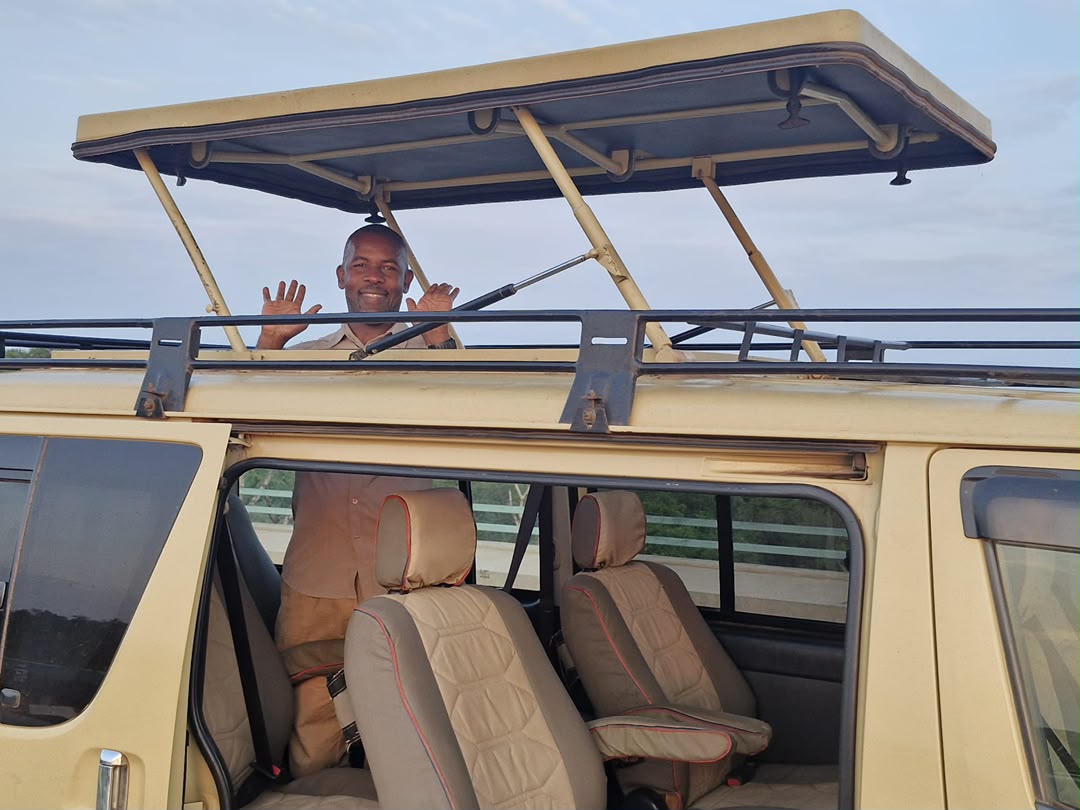
A professional operator should be able to tell you what type of vehicle will be used, how many passengers it carries, whether it has a pop-up roof where appropriate, how vehicles are maintained and what happens if the assigned vehicle develops a serious problem. They should also be able to explain how the driver communicates with the company’s operations team.
You can also ask whether the company has backup vehicles or arrangements with other operators. The answer will vary between companies, but asking the question tells you something about how the operator thinks about contingency planning.
The company should also be transparent about the fact that mechanical problems can happen. Be cautious of anyone who promises that a safari vehicle can never break down. No responsible vehicle operator can guarantee that a mechanical failure will never occur. The more useful question is not whether a breakdown is theoretically possible but what the company does when something unexpected happens.
10 Questions to Ask Your Safari Company Before Booking
| Question | Why Ask It? |
|---|---|
| What type of safari vehicle will we use? | Different vehicles offer different levels of comfort and capability. |
| How old is the vehicle? | Vehicle age alone does not determine reliability, but it can provide useful context. |
| How are the vehicles maintained? | Regular servicing and inspections help reduce preventable problems. |
| Does the vehicle carry spare tyres? | Important for dealing with punctures on remote roads. |
| What emergency equipment does the vehicle carry? | Helps you understand how the company prepares for common problems. |
| How does the driver contact the office? | Communication is important when a vehicle cannot continue. |
| What happens if the vehicle cannot be repaired? | Reveals the company’s recovery and replacement arrangements. |
| Does the company have backup vehicles? | Can be useful when a major mechanical failure occurs. |
| Who pays for recovery if the vehicle breaks down? | Clarifies financial responsibility before the trip. |
| What happens if a breakdown causes us to miss an activity? | Helps clarify the operator’s policy for itinerary disruptions. |
Common Myths About Safari Vehicle Breakdowns
Myth 1: A breakdown means you will be stranded for days
A breakdown does not automatically mean that travelers will be stranded for days. The actual response depends on the problem, location, communication and available support. A simple puncture may be fixed relatively quickly, while a major mechanical failure may require another vehicle. Travelers should allow for uncertainty rather than assuming either extreme.
Myth 2: Wild animals will immediately surround a broken vehicle
There is no reason to assume that a broken vehicle will automatically attract predators or other dangerous animals. Wildlife behaviour is complex and animals generally continue with their normal routines. Nevertheless, animals may be nearby without being obvious, which is why passengers should follow the guide’s instructions and avoid leaving the vehicle unnecessarily.
Myth 3: Safari vehicles never break down
No mechanical vehicle can be guaranteed never to develop a problem. Even well-maintained vehicles can experience unexpected mechanical or tyre issues. A responsible safari company focuses on reducing risk through maintenance and having procedures for dealing with unexpected situations.
Myth 4: The driver should keep driving no matter what
This is incorrect. If a driver identifies a serious mechanical problem, continuing to drive could create a larger failure or a safety problem. The driver needs to assess the vehicle and decide whether it is safe to continue.
Myth 5: Passengers should help repair the vehicle
Passengers normally do not need to become mechanics. The driver should handle the assessment and repair process where appropriate. Passengers should stay clear of tools, engine components and other potential hazards unless the driver specifically requests assistance and it is safe.
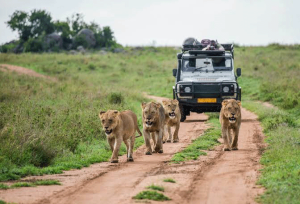

A properly prepared safari vehicle and experienced driver are central to a safe and comfortable wildlife experience.
What Travelers Can Do Before Leaving for Safari
Although passengers cannot control every mechanical aspect of a safari vehicle, there are several simple things they can do to make an unexpected delay easier. Keep your phone charged, carry your essential medication, keep water accessible and make sure you have your travel insurance details. If you are travelling with children, keep snacks and basic entertainment within reach.
It is also useful to save your safari company’s main contact details and emergency contact information before leaving your accommodation. Do not rely entirely on internet access because some remote areas may have limited connectivity. Your driver should have the appropriate operational contacts, but passengers should also retain important travel information.
| Before the Safari | Recommended Action |
|---|---|
| Save contacts | Keep the safari company’s office and emergency contact details accessible. |
| Charge devices | Start the day with a charged phone and camera. |
| Pack water | Keep drinking water accessible during game drives and transfers. |
| Carry medication | Keep essential medication with you rather than in inaccessible luggage. |
| Check insurance | Know your insurer’s emergency procedures and policy number. |
| Listen to the briefing | Pay attention when the guide explains wildlife and vehicle safety. |
| Ask questions | Ask the operator what happens if the vehicle becomes unusable. |
So, What Happens If My Safari Vehicle Breaks Down in the Bush?
What happens if my safari vehicle breaks down in the bush? In most cases, the first response is not panic but assessment. The driver stops safely, assesses the problem, keeps passengers informed and determines whether the vehicle can be repaired. If the problem is minor and it is safe to do so, the driver may make a basic repair. If the vehicle cannot continue, the safari company should arrange appropriate assistance or another vehicle according to the circumstances.
The most important thing for travelers is to stay with the group, follow the guide’s instructions and avoid treating the breakdown as an opportunity to walk around the bush. Wildlife may be nearby even when passengers cannot see it, and protected-area regulations exist to protect both visitors and animals. UWA’s current Murchison Falls guidance specifically permits emergency stops while prohibiting unnecessary stopping and emphasizes controlled vehicle movement. :contentReference[oaicite:10]{index=10}
A vehicle breakdown may cause an unexpected delay, but it does not automatically mean that your safari is ruined. The quality of the response depends heavily on the safari operator’s preparation, the driver’s experience, communication systems, vehicle maintenance and access to replacement or recovery support. That is why asking questions before booking is worthwhile.
The best safari companies do not promise that nothing will ever go wrong. Instead, they prepare for the possibility that something might go wrong and know what to do when it does. Travelers should therefore look beyond the appearance of the safari vehicle and ask about maintenance, spare tyres, emergency equipment, communication, recovery arrangements and backup vehicles.
Ultimately, a safari is an adventure in a natural environment. Roads can be rough, weather can change, wildlife can behave unpredictably and mechanical problems can occasionally happen. Being prepared does not make the experience less exciting. It simply means that when something unexpected occurs, you know how to respond calmly and safely.
Frequently Asked Questions About Safari Vehicle Breakdowns
What happens if my safari vehicle breaks down in the bush?
The driver will normally assess the mechanical problem and determine whether it can be safely repaired. If the vehicle cannot continue, the safari operator may arrange assistance, recovery or another vehicle depending on the location and circumstances. Passengers should remain calm and follow the guide’s instructions.
Is it dangerous if a safari vehicle breaks down?
A breakdown does not automatically make a safari dangerous. The main priority is to remain with the vehicle or in another location directed by the guide, avoid wildlife interaction and allow trained personnel to manage the situation.
Should I get out of a broken safari vehicle?
Not unless the guide or driver instructs you to do so. In a wildlife area, passengers should not independently leave the vehicle because animals may be nearby.
Can a safari driver repair a broken vehicle?
A driver may be able to fix certain minor problems, such as a puncture, depending on the equipment available and the nature of the problem. A major mechanical failure may require another vehicle or specialist assistance.
What if the safari vehicle breaks down near wild animals?
Remain calm, stay in the vehicle unless instructed otherwise and do not attempt to attract, feed or approach wildlife. The guide should monitor the surroundings and determine the safest response.
Do safari vehicles carry spare tyres?
Many safari vehicles are equipped for remote travel and may carry spare tyres and tools, but equipment varies between operators and vehicle types. Ask your safari company before departure if this is an important concern.
Can a safari company send another vehicle?
Depending on the operator, location and availability, another vehicle may be sent if the original vehicle cannot be repaired. The time required will depend on distance, road conditions and the circumstances of the breakdown.
What happens if a breakdown causes me to miss a game drive?
The operator should explain the options for adjusting the itinerary. Depending on the circumstances, another activity or alternative game-drive time may be arranged. Any refund or compensation depends on the booking terms and applicable insurance.
Should I ask about vehicle breakdowns before booking a safari?
Yes. Ask how vehicles are maintained, what emergency equipment is carried, how drivers communicate with the office and what happens if a vehicle cannot continue.
Is a safari vehicle breakdown covered by travel insurance?
Not necessarily. Insurance policies vary. Travelers should read their policy carefully to understand coverage for delays, trip interruption, medical emergencies, evacuation and other expenses associated with an unexpected incident.
Does UWA repair private safari vehicles?
Travelers should not assume that UWA will repair every private safari vehicle. UWA manages Uganda’s protected areas and provides park-related services and official visitor channels, while safari companies remain responsible for their own vehicles and client transport arrangements. UWA’s current official website lists its toll-free number as 0800 100 960. :contentReference[oaicite:11]{index=11}
What is the most important thing to remember during a safari vehicle breakdown?
Stay calm, stay with your group, listen to your guide and do not approach wildlife. Let the driver and safari company handle the mechanical and recovery arrangements.
Planning a Uganda Safari? Ask About the Vehicle Before You Book
When planning a Uganda safari, the vehicle should be considered part of the safari experience rather than simply a means of transportation. You will spend many hours inside it, travel on different types of roads and rely on your driver to navigate wildlife areas safely. Ask about the vehicle, maintenance procedures, driver experience, emergency communication and what happens if an unexpected mechanical problem occurs.
At PrideMark Safaris, travelers can discuss their itinerary, destinations, group size, accommodation preferences and transportation requirements before the safari is finalized. A well-planned trip should include not only the exciting moments you expect to experience but also sensible preparation for the unexpected.