What Should I Do If a Gorilla Charges at Me? 10 Vital Tips

African Safari FAQs: 20 Essential Tips for a Great Trip
September 18, 2026
Can You Touch Gorillas? 10 Essential Things to Know
September 21, 2026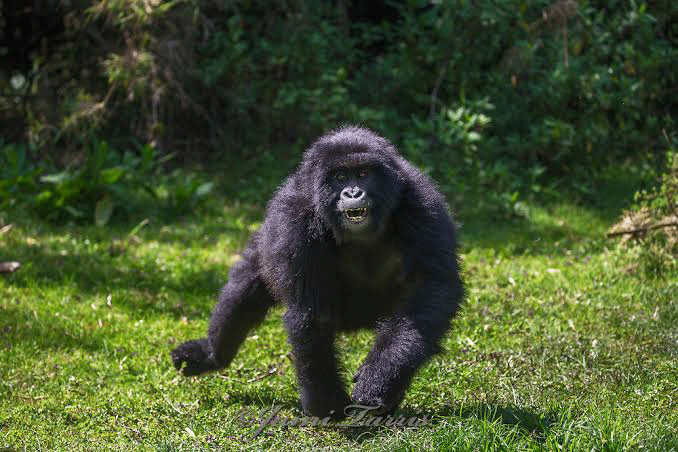
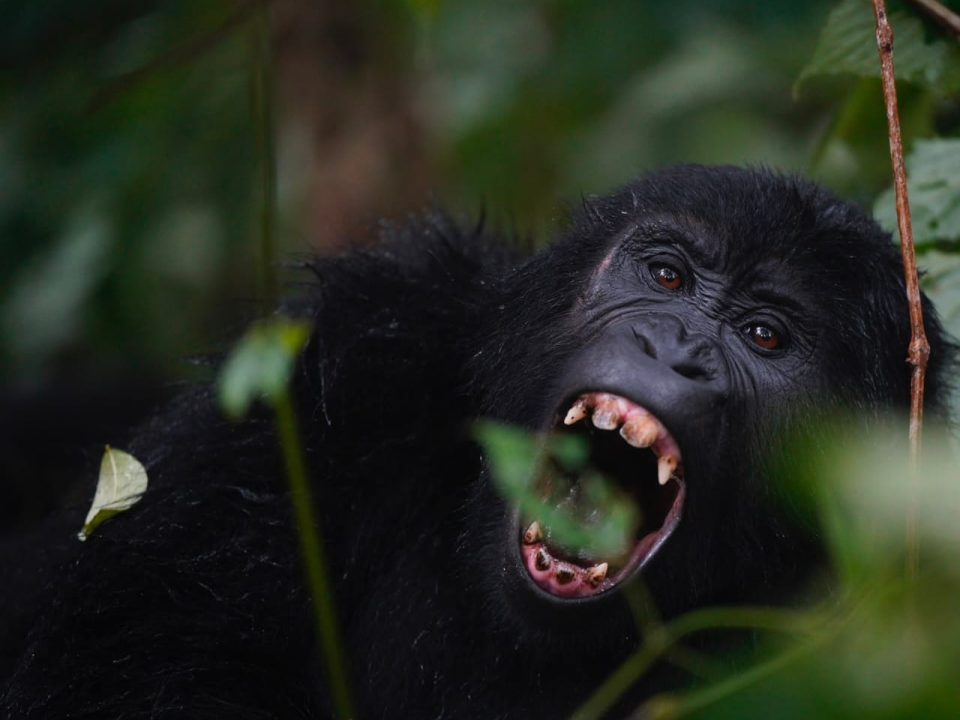
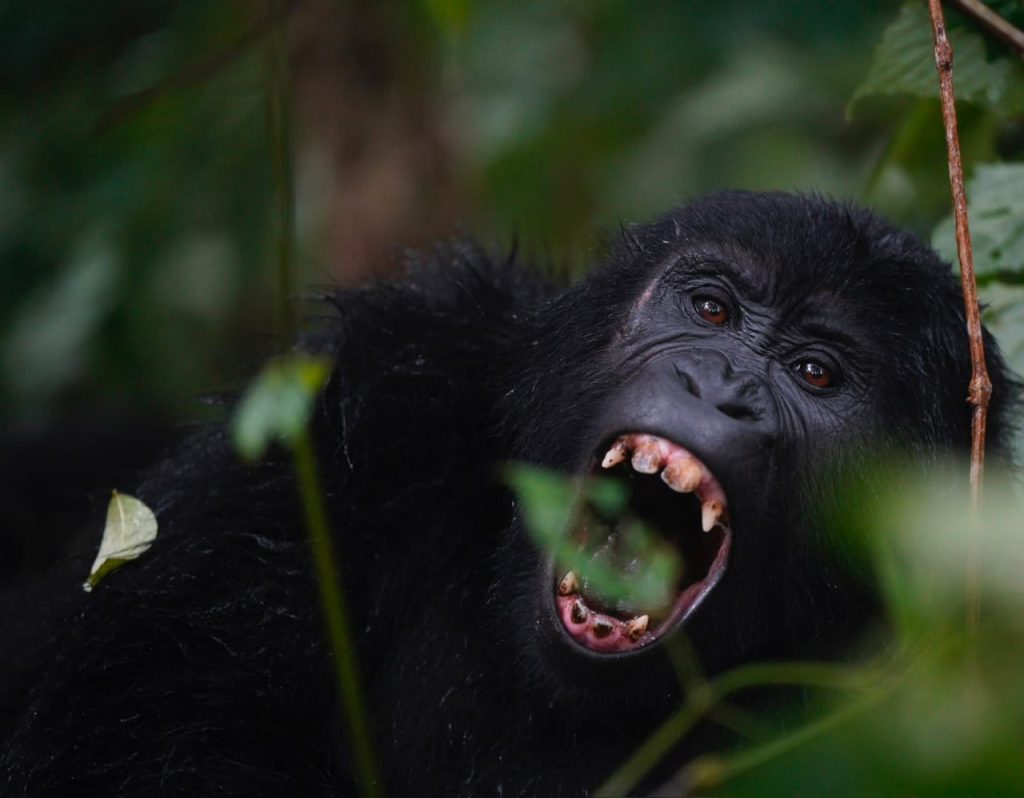
A gorilla charge can look frightening, especially when you are standing in the middle of the misty forest and a powerful silverback suddenly moves toward you. The good news is that preparation changes everything. This detailed guide explains what to do, what not to do, why gorillas may charge, how your ranger helps, and how to stay calm during a close encounter.
 A mountain gorilla in the vegetation of Bwindi, Uganda.
Quick Facts About Gorilla Charges
Before going deeper into the experience, it helps to understand the basic facts. Gorilla trekking is a carefully managed wildlife activity, not a situation where visitors are simply released into the forest alone. In Uganda, gorilla trekking takes place in Bwindi Impenetrable National Park and Mgahinga Gorilla National Park. Uganda Wildlife Authority explains that treks may last around two to seven hours and include up to one hour observing a habituated gorilla family once it is found. The encounter is therefore exciting, but it is also highly regulated, with guides and trackers helping visitors understand where to stand and how to behave.
| Question | What You Should Know |
|---|---|
| What should I do if a gorilla charges at me? | Stay calm, do not run, avoid direct eye contact, remain quiet and follow the ranger’s instructions. |
| Should I run? | No. Running can turn a tense display into a chase and separates you from the group and ranger. |
| Should I scream? | No. Keep your voice low and avoid loud or sudden sounds. |
| Should I stare at the gorilla? | Avoid prolonged direct eye contact. Lower your gaze and remain non-confrontational. |
| Should I touch the gorilla? | No. Even if a gorilla comes close, do not reach out or attempt contact. |
| Who manages the encounter? | Your ranger and guide. Follow their instructions immediately. |
| Where can I trek gorillas in Uganda? | Bwindi Impenetrable National Park and Mgahinga Gorilla National Park. |
| How long can a trek last? | UWA states that gorilla treks may last approximately 2–7 hours depending on the location of the family and terrain. |
1 What Should I Do If a Gorilla Charges at Me? First, Understand the Charge
What Should I Do If a Gorilla Charges at Me? The first thing is to understand that the dramatic appearance of a charge does not automatically mean that a gorilla intends to make physical contact. Mountain gorillas communicate through posture, movement, vocalisations, chest beating, displays and changes in distance. A silverback may move toward people because he is assessing the situation, protecting his family, responding to something unfamiliar or communicating that the visitors are too close. From a human perspective, a large gorilla running toward you can feel like an emergency, but reacting correctly means resisting the natural urge to panic.
This is one of the reasons the ranger is such an important part of gorilla trekking. The ranger is not simply there to lead you through the forest. Rangers and trackers spend significant time around the gorilla groups and understand the animals’ behaviour, movements and warning signs. A visitor may see a huge silverback moving forward and immediately think, “This is an attack,” while an experienced ranger may recognize a display and know exactly how the group should respond. Your responsibility is therefore not to become an expert in gorilla behaviour in one morning. Your responsibility is to listen, stay composed and allow the trained team to manage the encounter.
 Rangers play an important role in managing gorilla trekking encounters in Bwindi.
2 Never Run When a Gorilla Charges
If you remember only one answer to the question “What Should I Do If a Gorilla Charges at Me?”, remember this: do not run. Running is one of the strongest instinctive reactions humans have when a large animal suddenly approaches, but it is precisely the reaction you should control during a managed gorilla encounter. Turning away and sprinting through dense forest is also physically risky because Bwindi is a steep, uneven environment with roots, vines, slippery ground and thick vegetation. You could fall, collide with another visitor or become separated from your ranger.
Instead, remain where you are and let your ranger direct you. The important distinction is that “do not run” does not mean you should deliberately stand aggressively or challenge the gorilla. It means you should avoid a panicked escape response. Keep your movements slow and controlled. If your ranger tells you to move, move slowly and exactly as instructed. If the ranger tells you to stay still, stay still. The guide has a much better understanding of the immediate situation than a frightened visitor who has just seen a silverback move toward the group.
3 Stay Calm and Control Your Body
The next gorilla charge safety tip sounds simple but can be surprisingly difficult: breathe and stay calm. When something large suddenly moves toward you, your body can react before your brain has processed what is happening. Your heart rate rises, your muscles tighten and your first instinct may be to step backward quickly or shout. Instead, deliberately slow your breathing and remind yourself that you have a trained ranger beside you. Calm does not mean pretending that nothing is happening. It means making sure your fear does not dictate your movements.
A calm body also makes it easier to follow instructions. If the ranger signals you to lower yourself, you can do it smoothly. If the ranger tells the group to remain still, you can remain still. If the ranger moves the group away slowly, you can move without creating unnecessary panic. The forest can be surprisingly quiet during a gorilla encounter, and sudden human reactions can attract attention. Keeping your voice and movements controlled is therefore part of respectful wildlife viewing as well as personal safety.
4 Lower Your Gaze and Avoid Prolonged Direct Eye Contact
Another important part of what to do if a gorilla charges is to avoid turning the encounter into a confrontation. Visitors are commonly instructed to avoid prolonged direct eye contact with gorillas, particularly during tense moments. Instead of staring directly at a silverback, lower your gaze and keep your posture non-confrontational. You should still remain aware of the animal and listen to your ranger, but there is no reason to lock eyes with a gorilla as if you are trying to prove courage.
This advice is also useful beyond a charge. Gorillas are wild animals, even when they have been habituated for controlled tourism. Habituation does not make a gorilla a pet. It means the animal has become accustomed to the presence of people under specific conditions. The distinction matters. A habituated gorilla may allow a carefully managed group to observe it, but visitors must continue behaving like guests in the forest rather than treating the animals like domestic animals.
 Mountain gorillas are highly social animals living in family groups
5 Crouch and Avoid Sudden Movements
If your ranger tells you to crouch during a charge, do it slowly. Lowering yourself can form part of the non-confrontational response taught during gorilla trekking. The key word is slowly. Dropping suddenly, waving your arms, jumping or making theatrical movements is not what you want. You are trying to communicate calm through your body rather than adding another unpredictable movement to an already tense situation.
This is also why visitors should avoid trying to imitate gorillas. You may find advice online suggesting that tourists should beat their chests, show their teeth or make loud gorilla sounds. That is not a good general rule for a visitor. You do not know the social context of the gorilla in front of you, and you do not have the ranger’s experience. Do not turn a safety encounter into a game. Your best response is quiet, respectful and guided by the people responsible for the trek.
6 Follow Your Ranger’s Instructions Immediately
If you are wondering what happens when a gorilla charges during a Uganda gorilla trek, the answer is closely connected to the people accompanying you. Gorilla trekking is not an independent hike. You enter the forest with trained staff who understand the terrain and are familiar with the behaviour of habituated gorilla groups. The ranger can tell you whether to stop, crouch, move, change position or leave an area. When the ranger gives an instruction during a close encounter, do not wait to see what the animal does before responding.
It is particularly important that the entire group listens rather than having several people react independently. One person running can cause others to panic. Someone shouting can disturb the atmosphere. Someone stepping forward to take a photograph can reduce the distance between the group and the gorillas. The safest group is a coordinated group, and coordination comes from listening to the ranger.
7 Respect the Gorilla’s Space Before a Charge Happens
The best way to deal with a gorilla charge is to reduce the circumstances that can contribute to a stressful encounter in the first place. Distance matters. Gorilla Doctors explains that a minimum distance of 7 metres has been established as an important protection measure around mountain gorillas, although a gorilla itself may sometimes approach the visitor group. The important point is that the visitor should never deliberately close the distance or attempt to touch an animal that has moved closer.
This can be one of the most surprising parts of gorilla trekking. You may spend hours walking through thick vegetation searching for a family, only for a curious juvenile to move closer than expected. In that moment, excitement can take over. Someone may instinctively reach out a hand or move closer for a photograph. Resist that temptation. The rules are designed to protect the animals and visitors, and they remain important even when the gorilla appears relaxed.
 A gorilla family observed in Bwindi’s forest environment.
8 Never Try to Touch a Gorilla
One of the most important gorilla trekking safety rules is simple: do not touch the gorillas. Even if a gorilla walks near you, appears curious or briefly comes within your personal space, do not reach toward it. Visitors sometimes imagine that a calm gorilla approaching them means that contact is acceptable. It does not. Gorilla Doctors emphasizes maintaining distance and avoiding contact because the rules protect the health and welfare of the animals as well as the people visiting them.
The disease issue is especially important because humans and gorillas share many biological similarities. Human respiratory infections can pose serious risks to gorillas. That is why responsible gorilla trekking involves health precautions, controlled visitation and strict behavioural rules. A responsible visitor therefore does more than avoid being injured. They also avoid becoming a potential source of disease or stress for an endangered great ape.
There is another reason not to touch: a wildlife encounter should remain a wildlife encounter. When a gorilla chooses to move through the forest near a visitor, the visitor should allow it to continue naturally. The experience becomes more meaningful when you watch the animal’s behaviour rather than trying to make the animal interact with you.
9 Do Not Shout, Tease or Challenge the Gorilla
If a gorilla charges, your goal is not to win a staring contest, make the gorilla laugh or capture the most dramatic photograph of your life. Keep your voice low and avoid shouting. Do not imitate the gorilla, mock its behaviour, wave your arms or deliberately make noises to get a reaction. A wild animal should never be treated like an attraction that performs on command.
Photography requires the same discipline. You may be excited and want to raise your camera immediately, but your camera should never become more important than the encounter itself. Sudden movements, repeated repositioning or trying to get closer for a better angle can interfere with the guide’s instructions. Let the ranger establish where you should stand. Once you are safely positioned, take your photographs quietly and without using flash where prohibited by the park rules.
10 What Should I Do If a Gorilla Charges at Me After the Charge Ends?
What Should I Do If a Gorilla Charges at Me once the animal has stopped? The answer is still the same: remain calm and wait for the ranger’s direction. Do not immediately stand up and rush away just because the gorilla has stopped moving toward you. Give the ranger time to assess what is happening. The gorilla may return to its group, continue feeding, sit down, move through vegetation or simply watch the visitors for a moment.
The ranger may decide that the group should remain where it is, reposition quietly or end the observation. Whatever decision is made, accept it. The purpose of a gorilla trek is not to remain with the animals at any cost. Uganda’s trekking system is designed around controlled encounters, and UWA notes that the observation period is limited. If the group becomes uncomfortable or the situation changes, the responsible choice may be to increase distance or leave.
Once the situation is clearly over, do not immediately turn it into a dramatic story about being “attacked by a gorilla.” A charge can be frightening, but wildlife behaviour is more complicated than a simple human idea of anger or aggression. Your guide can help explain what you saw. Listen to that explanation because it can transform a frightening few seconds into one of the most fascinating lessons about gorilla social behaviour you experience on safari.
Where Can You Experience Gorilla Trekking in Uganda?
Uganda’s two gorilla trekking destinations are Bwindi Impenetrable National Park and Mgahinga Gorilla National Park. UWA describes Bwindi as being divided into four main trekking sectors: Buhoma, Ruhija, Rushaga and Nkuringo. Mgahinga lies in the Virunga Mountains and provides another opportunity to trek habituated mountain gorillas. The exact logistics of your trek depend on your permit, sector, accommodation and the location of the gorilla family assigned to your visit.
Bwindi’s landscape is particularly important to understand before trekking. This is not a flat zoo-like environment with marked viewing platforms. It is a mountainous rainforest with thick vegetation, uneven ground and changing conditions. UWA recommends moderate fitness because a trek can last several hours. That is why appropriate hiking shoes, rain protection, water, comfortable clothing and the support of a porter can make the day considerably easier.

Full-width Bwindi Impenetrable National Park map.
Why the Map Matters to Gorilla Trekkers
A map helps explain why a gorilla trek can feel very different from one visitor to another. Bwindi is not a single small trail. The park contains separate trekking sectors, and the terrain, access roads and accommodation options vary. When planning a Uganda gorilla safari, it is therefore useful to know your permit sector before booking accommodation. Staying close to the correct trailhead can make the morning of your trek much easier and gives you more time to prepare without a long transfer before the briefing.

Uganda relief map showing the country’s geography.
Why Gorilla Trekking Is Carefully Managed
Understanding the rules makes the question “What Should I Do If a Gorilla Charges at Me?” much less frightening. Gorilla trekking is carefully managed because the animals are wild, socially complex and vulnerable to human disturbance and disease. UWA states that visitor safety is important and that strict distance guidelines are used around gorillas. Gorilla Doctors likewise emphasizes that keeping visitors at an appropriate distance helps protect gorilla health and natural behaviour.
The conservation side is just as important. Gorilla tourism creates a direct reason to protect the forest and maintain controlled wildlife encounters. Uganda Wildlife Authority also operates revenue-sharing programmes with communities around protected areas, helping fund projects and livelihoods in areas adjacent to parks. Responsible tourism therefore involves more than getting a photograph. It means respecting the animal, respecting the forest and respecting the communities and conservation teams that make the experience possible.
 Mgahinga Gorilla National Park is Uganda’s second gorilla trekking destination.
What If a Gorilla Comes Much Closer Than Seven Metres?
This is one of the most common questions first-time trekkers ask. What should I do if a gorilla charges at me, or what should I do if a gorilla simply walks toward me? The important distinction is that the visitor is expected to respect the distance, while a wild gorilla does not understand a human measuring tape. Juveniles may approach out of curiosity, and gorillas may sometimes move through the same area as the visitors.
If a gorilla approaches, do not reach out to touch it. Do not step forward for a selfie. Do not make a sudden retreat that could cause you to stumble. Instead, listen to the ranger. If there is room and the ranger instructs you to move back, do so slowly. If there is nowhere safe to move, remain calm and let the ranger manage the situation. The animal’s movement does not give you permission to break the trekking rules.
What If You Are Afraid During the Trek?
It is perfectly normal to feel nervous before seeing a mountain gorilla for the first time. In fact, many people who are comfortable with ordinary safari animals discover that gorilla trekking feels different because the animals are intelligent, powerful and sometimes surprisingly close. The solution is not to hide that feeling or pretend to be fearless. Tell your guide if you are nervous. A good guide can explain what is happening and help you understand the gorillas’ behaviour.
Preparation also reduces anxiety. Read the trekking rules before arriving. Wear suitable clothing. Listen carefully during the morning briefing. Stay with the group. Keep your camera ready before reaching the gorillas rather than moving around once the encounter begins. Most importantly, remember that you are not responsible for managing the gorilla. You are responsible for managing yourself.
What You Should Never Do During a Gorilla Charge
When people search for what to do if a gorilla charges, they often find dramatic advice online. Some suggestions are contradictory, exaggerated or presented without explaining when they apply. For a tourist, the safest approach is much simpler. Do not run. Do not scream. Do not chase the animal. Do not stare aggressively. Do not beat your chest. Do not show your teeth or try to imitate the gorilla. Do not reach out to touch it. Do not leave the group. Do not ignore the ranger.
These rules are not designed to make your encounter boring. They are what allow the encounter to remain a respectful observation of wild animals. The most memorable gorilla experience is not necessarily the one where the gorilla comes closest. It may be the moment when you sit quietly in the forest and watch a family feeding, grooming, playing or resting while the forest seems to disappear around you.
Frequently Asked Questions About Gorilla Charges
What Should I Do If a Gorilla Charges at Me?
Stay calm, do not run, lower your gaze, avoid sudden movements and follow the instructions of your ranger. Do not shout or attempt to challenge the gorilla. The ranger is responsible for managing the encounter and should be your immediate source of instructions.
Are Gorilla Charges Common During Gorilla Trekking?
Charges are not the normal objective of a gorilla trek, but gorillas are wild animals and visitors must be prepared for displays of dominance, warnings or changes in behaviour. A charge should always be taken seriously even when it stops without physical contact.
Can You Run Away From a Charging Gorilla?
You should not run. Running can create a dangerous reaction and can also cause you to lose your footing on Bwindi’s steep and uneven forest terrain. Stay calm and follow the ranger’s instructions.
Should I Look a Gorilla in the Eyes?
Avoid prolonged direct eye contact, particularly during a tense encounter. Lower your gaze and maintain a calm, non-confrontational posture while keeping enough awareness to follow your guide.
Should I Crouch if a Gorilla Charges?
If your ranger instructs you to crouch, lower yourself slowly and remain quiet. Do not suddenly drop to the ground or make exaggerated movements.
What If a Gorilla Comes Close to Me?
Do not touch it or move toward it. Stay calm and follow your ranger’s instructions. The gorilla may move away on its own, or the ranger may guide the group into a safer position.
Can I Touch a Gorilla During a Trek?
No. Visitors should never deliberately touch gorillas. Maintaining distance helps protect the gorillas from human disease and reduces unnecessary disturbance.
Why Do Gorillas Charge People?
A gorilla may move toward people as part of a warning, dominance display, protective behaviour or reaction to something it perceives as unusual. Only the ranger observing the situation can interpret the immediate context reliably.
Are Mountain Gorillas Dangerous?
Mountain gorillas are powerful wild animals and must always be treated with respect. At the same time, Uganda’s gorilla tourism programme is structured around habituated groups, trained guides, trackers and strict visitor rules. Following those procedures is an essential part of keeping encounters controlled.
Where Can I Go Gorilla Trekking in Uganda?
Uganda’s gorilla trekking destinations are Bwindi Impenetrable National Park and Mgahinga Gorilla National Park. Bwindi has four major trekking sectors: Buhoma, Ruhija, Rushaga and Nkuringo.
How Long Does a Gorilla Trek Take?
Uganda Wildlife Authority states that gorilla treks may last approximately two to seven hours, depending on the trek and location of the gorilla family. Once the gorillas are located, visitors are allowed a controlled observation period.
The Golden Rule: Respect the Gorilla and Trust Your Ranger
What Should I Do If a Gorilla Charges at Me? Stay calm. That simple sentence is worth remembering before you leave your lodge. A gorilla charge can be visually dramatic, but panic does not help. Running, shouting, staring aggressively or trying to challenge the animal can create unnecessary problems, while calm behaviour gives your ranger the opportunity to manage the situation properly.
Your gorilla trek is a privilege. You are entering an ancient forest to spend a short period observing one of the world’s most remarkable great apes. The best encounters are those in which the gorillas are allowed to remain themselves: feeding, resting, playing, grooming and moving through their forest without being treated like performers. Follow the rules, listen to the ranger and give the animals the respect they deserve.
Ready for Your Uganda Gorilla Adventure?
Let PrideMark Safaris help you plan a responsible Uganda gorilla trekking experience in Bwindi or Mgahinga, with accommodation, transport, permits and experienced local safari support.