Flying vs Driving on a Uganda Safari: Ultimate Guide

Where Are the Big Five in Uganda? A Park-by-Park Guide
September 30, 2026
Uganda Safari for $2000: 6 Amazing Tours to Try
October 2, 2026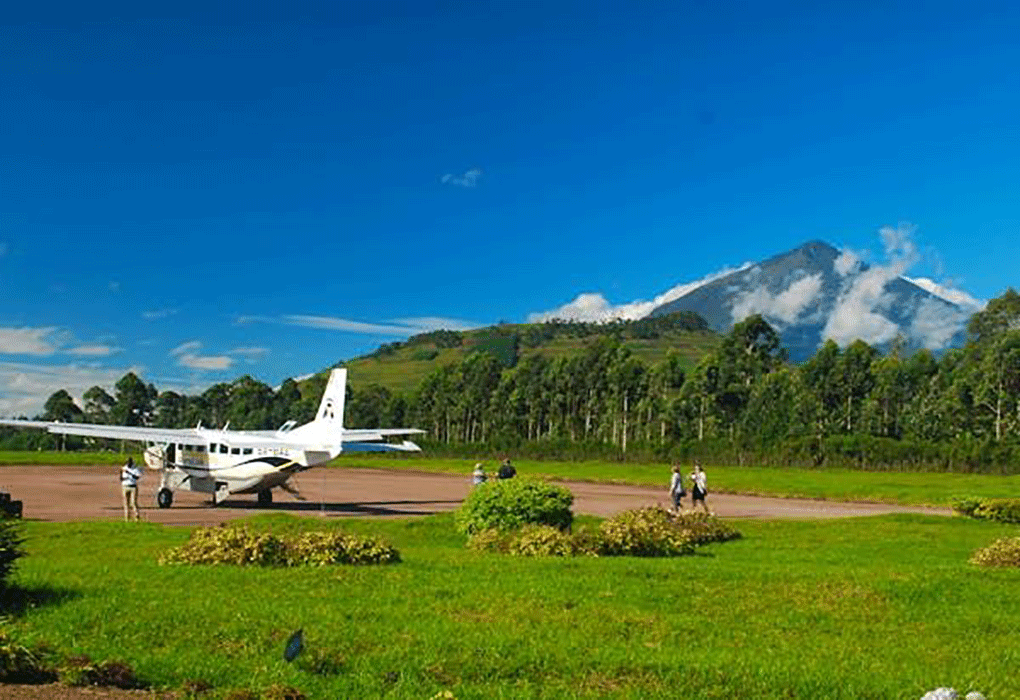
Flying vs Driving on a Uganda Safari, Uganda is one of those safari destinations where the journey is often just as memorable as the destination. You might leave the busy streets of Kampala or Entebbe in the morning, watch the landscape gradually change from bustling towns to green countryside, pass roadside markets and small villages, see tea plantations spreading across rolling hills, and eventually arrive at a national park where elephants, lions, hippos or chimpanzees are waiting beyond the next bend.
But there is one important question many travelers face when planning their trip: should you fly between Uganda’s safari destinations or travel by road?
The answer depends on much more than simply comparing the price of a flight with the price of a vehicle. Your choice affects how much time you spend traveling, how much of Uganda you actually see, the type of safari experience you have, your comfort level, your budget and even the way your itinerary can be designed.
For some travelers, a small aircraft connecting Entebbe with a remote safari destination can save several hours and make it possible to enjoy more time in the wilderness. For others, driving on a Uganda safari is part of the adventure itself. The road becomes a moving window into Uganda, revealing landscapes and everyday life that you would completely miss from the air.
So when comparing flying vs driving on a Uganda safari, there is no single answer that works for everyone.
The better question is: which option suits your safari style, budget, available time and destinations?
This guide explores both options in detail, including travel time, cost considerations, comfort, scenery, luggage, wildlife experiences, road conditions, domestic flights, family travel, luxury safaris, gorilla trekking, chimpanzee trekking and the destinations where flying or driving makes the most sense.
Quick Facts: Flying vs Driving on a Uganda Safari
| Travel factor | Flying | Driving |
|---|---|---|
| Travel time | Usually much faster | Usually considerably longer |
| Cost | Generally more expensive | Usually more economical for private groups |
| Scenery | Limited | Excellent |
| Flexibility | Depends on flight schedules | Very high |
| Remote destinations | Very useful | Possible with a capable safari vehicle |
| Small groups | Can be convenient | Can offer better value |
| Families | Comfortable for some families | Flexible for stops and activities |
| Photography | Less opportunity during transfer | Many roadside photography opportunities |
| Cultural interaction | Limited during transfers | Much greater |
| Luggage | Weight restrictions may apply | Generally more flexible |
| Roadside stops | Limited | Easy to arrange |
| Scenic experience | Short transfer | Part of the safari |
| Best for | Time-conscious travelers | Travelers who enjoy the journey |
| Safari vehicle | Usually required at destination | Can often remain with you |
| Gorilla trekking | Useful for distant combinations | Often preferred for classic circuits |
| Chimpanzee trekking | Useful depending on route | Often practical |
| Luxury safari | Excellent for saving time | Excellent for private scenic journeys |
| Budget safari | Can increase costs | Often more cost-effective |
The table gives you the quick answer, but the real difference becomes clearer when you understand what each type of travel actually feels like.
What Does Flying on a Uganda Safari Actually Mean?
When travelers hear “flying safari,” they sometimes imagine flying directly into every national park and stepping immediately into a luxury lodge. Uganda’s domestic safari flights are more practical than that.
Scheduled and chartered flights can connect Entebbe or other airstrips with safari destinations including areas around Murchison Falls, Kidepo Valley, Queen Elizabeth, Bwindi and other parts of the country, depending on the operator and itinerary.

This can make a dramatic difference to an itinerary.
Imagine, for example, that you have only one week in Uganda and want to combine wildlife with gorilla trekking. Spending an entire day traveling between distant destinations by road can reduce the amount of time available for game drives, forest experiences and relaxation.
Flying can compress those transfers.
That is one of the biggest reasons travelers consider flying vs driving on a Uganda safari in the first place.
However, flying does not mean there is no road travel.
You still need transfers between airstrips, lodges, parks and activities. Some destinations may also require a relatively long transfer after landing.
The aircraft simply removes a significant portion of the overland journey.
Why Driving Is Such a Big Part of the Uganda Safari Experience
There is something wonderfully African about traveling through Uganda by road.
The vehicle becomes part of the adventure.
You might leave Entebbe surrounded by tropical greenery, pass through Kampala’s busy streets and gradually enter quieter countryside. The urban landscape gives way to open farmland, banana plantations, wetlands and rolling hills.
Eventually, the scenery begins to feel completely different.

You see Uganda between the destinations.
You see people walking along village roads. You see children heading home from school, farmers working in gardens, roadside fruit stalls and small trading centers. You pass through changing landscapes and discover how dramatically Uganda’s scenery varies from one region to another.
A road journey also gives your guide opportunities to explain what you are seeing.
A particular crop may become a lesson about local agriculture. A roadside market can become an introduction to Ugandan food. A hill covered in tea may lead to a conversation about the country’s tea-growing regions.
These moments rarely appear on a flight itinerary.
Flying vs Driving on a Uganda Safari: Which Is Faster?
If your priority is saving time, flying generally has the advantage.
Uganda is geographically compact compared with some other East African safari destinations, but road journeys can still take many hours because safari routes do not always follow direct highways.
Road conditions, traffic, weather, construction, urban congestion and the winding nature of some routes can all influence travel times.
A journey that looks relatively short on a map may take considerably longer than a traveler expects.

Flying can reduce those long transfer periods.
That makes it especially useful for travelers with:
- Seven or eight days available
- Expensive international flights already booked
- A strong preference for lodge time
- Mobility concerns
- Families with young children
- Travelers wanting multiple remote destinations
- Luxury safari budgets
- Travelers who want more time for activities
However, speed is not automatically better.
If you have two or three weeks in Uganda, you may actually prefer the road because you have enough time to enjoy the journey.
Is Flying More Expensive Than Driving in Uganda?
In many situations, yes.
Domestic safari flights add another cost to the itinerary because you are paying for an aviation service rather than simply traveling in the safari vehicle already included in your package.
But the calculation becomes more complicated for groups.
Imagine a private safari with four travelers.
The cost of putting four people on a domestic flight may be substantial. A safari vehicle is already required for game drives, however, so driving may make financial sense because the vehicle and driver-guide are already part of the safari arrangement.
For a larger private group, this difference can become even more noticeable.

So when comparing flying vs driving on a Uganda safari, do not simply ask:
“Which is cheaper?”
Ask:
“What am I gaining by spending more?”
If an additional flight gives you half a day or an entire day that can be used for wildlife viewing, relaxation or another activity, the additional expense may fit your priorities.
Driving Gives You More of Uganda
One of the strongest arguments for traveling by road is simple: you actually see the country.
A safari is not only about national parks.
Uganda’s landscapes are extraordinarily varied.
You can move from Lake Victoria’s tropical environment through cultivated countryside and into the savannah landscapes around Murchison Falls. Later, the landscape may become greener and more mountainous around southwestern Uganda.


That gradual transformation is one of the most rewarding aspects of a Uganda safari.
Instead of simply appearing at your destination, you understand how the destination fits into the wider country.
Driving Gives You More Flexibility
A private safari vehicle can be remarkably flexible.
You can stop for photographs.
You can pause for lunch.
You can take a short break when needed.
You can sometimes stop at a viewpoint, market, cultural attraction or roadside landmark if your itinerary and guide allow it.
This flexibility is particularly valuable for photographers.
A traveler might spot an interesting landscape and ask the driver-guide to stop.
A flight cannot offer that.


The Case for Flying: More Time in the Wild
There is one advantage of flying that is difficult to ignore: time saved can become safari time.
Consider a traveler visiting Uganda for only eight days.
They may want:
- Entebbe
- Murchison Falls
- Kibale Forest
- Queen Elizabeth
- Bwindi
- Gorilla trekking
Trying to fit all of these into a short itinerary by road can create long transfer days.
A carefully designed flying itinerary can reduce some of those long journeys.
Instead of spending most of a day in a vehicle, the traveler may arrive closer to the next destination and use the remaining time for a game drive, lodge experience or rest.
That is why flying can be particularly attractive for premium short-duration safaris.
Which Is Better for Gorilla Trekking: Flying or Driving?
Gorilla trekking in Bwindi is one of the biggest factors influencing transport decisions.


For travelers coming from central Uganda, the road journey can be long.
Flying closer to Bwindi can therefore be attractive, particularly for travelers who:
- Have limited time
- Prefer luxury travel
- Want to minimize long road transfers
- Are combining Uganda with another East African destination
- Prefer to conserve energy before trekking
However, driving to Bwindi offers something unique.
The landscape changes dramatically as you approach southwestern Uganda.
The hills become increasingly dramatic, the vegetation changes and the journey itself becomes part of the experience.
For travelers who enjoy scenic road travel, that approach to Bwindi can be unforgettable.
Flying vs Driving for Chimpanzee Trekking
Kibale National Park is Uganda’s most famous destination for chimpanzee trekking.


This makes driving particularly practical.
For example, travelers combining Kibale with Queen Elizabeth and Bwindi can create a logical road circuit rather than repeatedly flying back toward central Uganda.
However, flights can still be useful when Kibale is being combined with destinations that are geographically distant.
The best option therefore depends heavily on your overall itinerary rather than Kibale alone.
Flying vs Driving to Murchison Falls National Park
Murchison Falls is another destination where both approaches can work.


Driving gives you the opportunity to experience the changing landscape as you move northward.
Flying can dramatically shorten the transfer.
For a short luxury safari, flying can therefore make sense.
For a longer Uganda road circuit, driving can be more immersive.
Murchison Falls also has an important advantage for road travelers: the journey can be integrated with other northern Uganda experiences depending on the itinerary.
Flying vs Driving on a Uganda Safari to Queen Elizabeth National Park
Queen Elizabeth National Park is particularly interesting because of its location within western Uganda.


This is one of the strongest arguments for driving a western Uganda safari.
Instead of treating every park as an isolated destination, you create a geographical journey.
Kibale → Queen Elizabeth → Bwindi becomes a logical road circuit.
Flying becomes more useful when your itinerary is built around distant destinations and limited time.
Flying vs Driving to Kidepo Valley National Park
Kidepo Valley is one of the destinations where flying can make a particularly significant difference.
Located in northeastern Uganda, Kidepo is far from the country’s main tourism circuit.


For travelers with limited vacation time, flying can make Kidepo considerably easier to include.
For adventurous travelers with more time, however, the road journey can become part of the experience.
Kidepo is therefore an excellent example of how the “best” transportation method depends on the traveler.
What About Scenic Views?
This category belongs strongly to driving.
From the moment you leave Entebbe, Uganda unfolds around you.


You can see villages, farms, wetlands, forests, mountains and lakes.
In southwestern Uganda, the famous rolling hills can become a major part of the journey.
The landscape around Kabale and the Kigezi region, for example, is dramatically different from the open savannah of Murchison Falls.
Flying gives you a bird’s-eye perspective, but it does not provide the same intimate connection with the communities and landscapes below.
Is Driving Comfortable on a Uganda Safari?
Modern safari vehicles can be comfortable, particularly when the itinerary is planned carefully.
However, travelers should understand that Uganda is not a destination where every safari road is a smooth highway.
Some roads are excellent.
Others can be rough.
Inside national parks, tracks may be uneven, dusty or muddy depending on the season.


This is particularly important for long-distance safari circuits.
What Is the Best Choice for Older Travelers?
For older travelers, comfort and energy management can become important factors.
Long road transfers can be tiring even when the vehicle is comfortable.
Flying can reduce those long transfer periods.
But this does not automatically mean flying is better for every older traveler.
Some travelers genuinely enjoy road journeys and are perfectly comfortable spending several hours in a safari vehicle, especially when the route includes scenic stops.
A well-designed itinerary can also divide long journeys into manageable sections.
The key is to discuss mobility, comfort expectations and daily travel distances with your safari operator before booking.
What Is Better for Families With Children?
Families often appreciate the flexibility of driving.
A vehicle allows parents to control breaks more easily.
Children can stop for snacks, stretch their legs where appropriate and enjoy changing scenery.
Flying can save time, however, which can be valuable when traveling with very young children.


What About Luggage on Uganda Safari Flights?
This is an important practical issue.
Safari aircraft can have luggage restrictions that differ from standard international airline baggage allowances.
Travelers may need to use soft-sided bags rather than large hard-shell suitcases, depending on the flight operator.
This should always be confirmed before booking.
Driving is considerably more flexible.
A safari vehicle can generally accommodate more luggage, although space is still finite.
If you are traveling with large suitcases, photography equipment or specialist gear, discuss luggage requirements with your safari company before finalizing a flying itinerary.
Flying vs Driving on a Uganda Safari for Photographers
Photography is another area where the choice becomes interesting.
Flying gives you aerial views and can save time.
Driving gives you opportunities to stop.
A photographer may see a beautiful landscape, a group of cattle, an interesting village scene, birds along a wetland or changing light across the hills.
The vehicle can stop when appropriate.


For wildlife photographers working with limited time, flying may allow more hours inside the destination itself.
Should Luxury Travelers Fly or Drive?
Luxury travelers are often the most likely to choose flights because time is valuable.
If someone has spent significantly on a high-end lodge, they may prefer to spend their holiday at the lodge and in the park rather than sitting in a vehicle for long transfer days.
Flying can make a premium itinerary feel more spacious.
However, luxury does not have to mean flying.
A private safari vehicle with a professional guide, comfortable seating, good accommodation and carefully planned stops can create an extremely comfortable road safari.
For some luxury travelers, that private road journey is actually part of the luxury experience.
Is a Road Safari More Authentic?
“Authentic” is a subjective word, so it is better to describe what road travel actually provides.
Driving allows more interaction with the country outside protected areas.
You see communities.
You see agriculture.
You see markets.
You see changing landscapes.
You see the relationship between towns, villages, farmland and protected areas.


A Hybrid Safari Can Be the Best of Both Worlds
One of the most useful things to understand about flying vs driving on a Uganda safari is that you do not necessarily have to choose one.
You can combine both.
This is often an excellent strategy.
For example, you might drive through western Uganda because the destinations naturally connect by road, then fly to or from a more distant destination.
Or you could fly into a remote park and continue overland through a scenic region.


Example: A Road-Based Uganda Safari
A longer itinerary could follow a western Uganda circuit such as:
Entebbe → Murchison Falls → Kibale → Queen Elizabeth → Bwindi → Lake Bunyonyi → Entebbe
This type of itinerary allows travelers to experience Uganda progressively.
The road becomes part of the story.
Murchison introduces the northern savannah.
Kibale introduces the rainforest and chimpanzees.
Queen Elizabeth combines savannah and wetlands.
Bwindi brings the mountain forest and gorilla trekking.
Lake Bunyonyi provides a peaceful scenic ending.


A shorter premium itinerary could instead use domestic flights to reduce some long transfers.
The exact routing depends on flight schedules and available airstrips, but the concept is straightforward:
Entebbe → safari destination → air transfer → western Uganda → Entebbe
This approach can be especially useful when travelers have only one week and want to prioritize wildlife and primate experiences.
How Many Hours Should You Spend Driving in a Safari Vehicle?
There is no universal rule.
A three-hour drive can feel easy when the landscape is beautiful and the journey is broken by interesting stops.
A seven-hour transfer can feel long if the road is rough and there are few opportunities to stop.
This is why itinerary design matters more than simply counting kilometers.
A good safari planner considers:
- Road conditions
- Destination sequence
- Activities
- Traveler age
- Mobility
- Accommodation
- Departure times
- Weather
- Flight schedules
- Park entry times
- Trekking schedules
The goal is not simply to minimize driving.
The goal is to create a journey where the driving makes sense.
When Driving Is Usually a Practical Choice
Driving can work particularly well when:
You have two or more weeks
More time allows you to enjoy longer transfers without sacrificing too much safari time.
You are traveling as a private group
The cost per traveler can become more attractive when several people share a vehicle.
You love landscapes
Uganda’s scenery is one of the biggest reasons to travel by road.
You want flexibility
Private road travel allows more control over stops and timing.
You want cultural experiences
Road journeys expose you to more of the country outside national parks.
Your destinations form a natural circuit
Western Uganda is particularly suitable for overland safari routes.
When Flying Can Make More Sense
Flying becomes particularly attractive when:
You have limited time
Seven or eight days can feel much longer when long transfers are removed.
You are traveling on a premium budget
The additional cost may be worthwhile for time savings.
You want to visit remote destinations
Kidepo is an obvious example.
You want to maximize time at lodges
Flying can turn transfer days into activity or relaxation time.
You are combining Uganda with another destination
A compressed Uganda itinerary can fit more easily into a larger East African trip.
Uganda Safari Driving vs Flying: The Decision Table
| If your priority is… | Consider |
|---|---|
| Saving time | Flying |
| Saving money | Driving |
| Scenic landscapes | Driving |
| Flexibility | Driving |
| Remote destinations | Flying |
| Cultural observations | Driving |
| Short safari | Flying |
| Long safari | Driving or hybrid |
| Large private group | Driving |
| Luxury short break | Flying |
| Photography along the route | Driving |
| Maximum lodge time | Flying |
| Western Uganda circuit | Driving |
| Kidepo-focused safari | Flying can be practical |
| First-time country exploration | Driving |
| Best of both | Hybrid |
The Most Important Question: What Kind of Traveler Are You?
The answer to flying vs driving on a Uganda safari ultimately depends on your travel personality.
If you look at a six-hour road journey and think, “That sounds like an adventure,” you may love driving.
If you look at the same journey and think, “I would rather be watching elephants by lunchtime,” flying may be more appropriate.
If you have three weeks, driving becomes much easier to justify.
If you have seven days, flights become more attractive.
If you are traveling with four or six friends, driving may offer better value.
If you are traveling as a couple on a high-end safari, flying may provide the convenience you want.
And if you cannot decide, a hybrid itinerary may be the answer.
So, Should You Fly or Drive on a Uganda Safari?
There is no universal winner between flying and driving.
Flying vs driving on a Uganda safari is really a choice between two different ways of experiencing Uganda.
Flying prioritizes time, convenience and efficient connections.
Driving prioritizes landscapes, flexibility, cultural observation and the journey itself.
For travelers with limited time and a higher budget, flying can make it possible to experience more destinations without spending large portions of the holiday on the road.
For travelers with more time, driving can transform the safari into a broader Ugandan adventure where the countryside between the national parks becomes part of the experience.
And for many travelers, the ideal answer is somewhere in the middle.
Fly where the distances are most demanding.
Drive where the scenery and destinations naturally connect.
That way, you can enjoy the efficiency of Uganda’s domestic aviation network without missing the remarkable experience of traveling through Uganda by road.
Plan Your Uganda Safari With the Right Transport
At PrideMark Safaris, we understand that transportation should be designed around the traveler rather than simply added to an itinerary.
A honeymoon couple with eight days in Uganda may need a very different transport plan from a family spending three weeks in the country. A photographer may value scenic road journeys, while a luxury traveler may prefer to save every possible hour. A traveler visiting Kidepo may benefit from a completely different routing from someone focusing on Kibale, Queen Elizabeth and Bwindi.
That is why the question should not simply be “Should I fly or drive?”
It should be:
“Which combination of transport gives me the best use of my time in Uganda?”
Our safari planners can help create itineraries around your preferred destinations, budget, accommodation level, travel dates and available time.
Whether your dream is a classic road safari through Uganda’s western circuit, a time-saving fly-in safari, or a combination of both, the journey can be designed around what you want to experience.
Uganda Safari Transport: Frequently Asked Questions
Is it better to fly or drive on a Uganda safari?
It depends on your available time, budget, destinations and travel preferences. Flying saves significant transfer time, while driving offers greater flexibility and allows you to experience Uganda’s landscapes and communities along the way.
Is driving around Uganda safe for tourists?
Traveling with an experienced professional safari driver-guide is the preferred approach for visitors unfamiliar with Uganda’s roads. Professional guides understand safari routes, road conditions and park access requirements.
Are domestic flights available for Uganda safaris?
Domestic safari flights connect several tourism destinations and airstrips, although schedules, routes and luggage conditions vary. Your safari operator should confirm the current flight options for your specific itinerary before booking.
Is flying expensive in Uganda?
Domestic safari flights generally add to the cost of an itinerary. The final price depends on the route, airline, dates, number of travelers and whether the flight is scheduled or chartered.
How long are Uganda safari road transfers?
Travel times vary significantly by route, road conditions and traffic. Some transfers are relatively short, while journeys connecting distant regions can take most of a day.
Can I combine flying and driving?
Yes. A hybrid safari can combine domestic flights for long-distance transfers with road travel where scenic routes or connected national parks make driving more practical.
Which is better for gorilla trekking?
Both options can work. Driving provides a scenic overland experience, while flying can reduce the amount of travel time before the trek. The best option depends on the rest of your itinerary.
Should I drive or fly to Kidepo Valley?
Both are possible. Driving creates a longer adventure through northern Uganda, while flying can significantly reduce travel time and is particularly useful for shorter itineraries.
Can I bring a large suitcase on a Uganda safari flight?
Safari flights can have luggage restrictions, and travelers may need soft-sided bags with specific weight limits. Always confirm the current requirements with the flight operator or your safari company.
Is a Uganda road safari worth it?
For travelers who enjoy scenery, photography, cultural observations and flexible travel, the road journey can be an important part of the safari experience rather than simply a transfer between destinations.