Gorilla Tracking in Bwindi: Discover the Incredible Secrets of Finding Mountain Gorillas
Ever wondered how gorilla trackers can walk into the dense Bwindi forest
and actually find a mountain gorilla family hidden somewhere among thousands
of trees, vines, slopes and streams? Discover the remarkable skills, signs
and field techniques used to locate Uganda’s mountain gorillas.
One of the biggest mysteries for first-time visitors planning a
gorilla trekking safari in Uganda is how the guides and trackers
manage to find mountain gorillas in the enormous and seemingly impenetrable
Bwindi forest. You arrive at the park headquarters, receive your briefing,
meet your ranger and begin walking into a landscape that appears almost
impossibly dense. There are trees everywhere, thick vegetation underfoot,
steep hills, streams, tangled vines and countless sounds coming from the forest.
Yet, after several hours, your tracking team suddenly stops. The ranger listens,
studies the vegetation and quietly signals that the gorillas are close.
The moment can feel almost magical, but finding the gorillas is not luck.
How gorilla trackers find mountain gorillas in Bwindi is the
result of years of experience, daily monitoring, knowledge of individual gorilla
families and the ability to interpret subtle signs left behind by the animals.
Trackers read the forest almost like a map. A crushed plant, a feeding site,
a nest, a footprint, dung or a broken branch can provide useful information
about where a gorilla family has been and which direction it may have taken.
Uganda Wildlife Authority explains that gorilla tracking takes place in
Bwindi Impenetrable National Park and Mgahinga Gorilla National
Park. In Bwindi, the main tourism sectors are Buhoma, Ruhija, Rushaga and
Nkuringo. UWA notes that a gorilla trek may take roughly two to seven hours,
depending on conditions and the movements of the gorilla family. Once the
family is located, visitors normally have a limited viewing period with the
gorillas.
Quick Facts: How Gorilla Trackers Find Gorillas in Bwindi
| Question | Answer |
|---|---|
| Where do trackers begin? | Often from the previous known location of the gorilla family, particularly the previous night’s nest area. |
| What do trackers look for? | Nests, feeding remains, crushed vegetation, footprints, dung and other signs of recent gorilla movement. |
| Do trackers simply walk randomly? | No. They follow known information about the family’s previous location and interpret fresh signs in the forest. |
| Can gorillas move after trackers find their trail? | Yes. Gorillas are wild animals and can change direction, feeding location and movement patterns. |
| How long can tracking take? | The duration is unpredictable. UWA indicates that gorilla treks may last approximately 2–7 hours. |
| Which Bwindi sectors offer gorilla trekking? | Buhoma, Ruhija, Rushaga and Nkuringo. |
Why Finding Gorillas in Bwindi Is Difficult
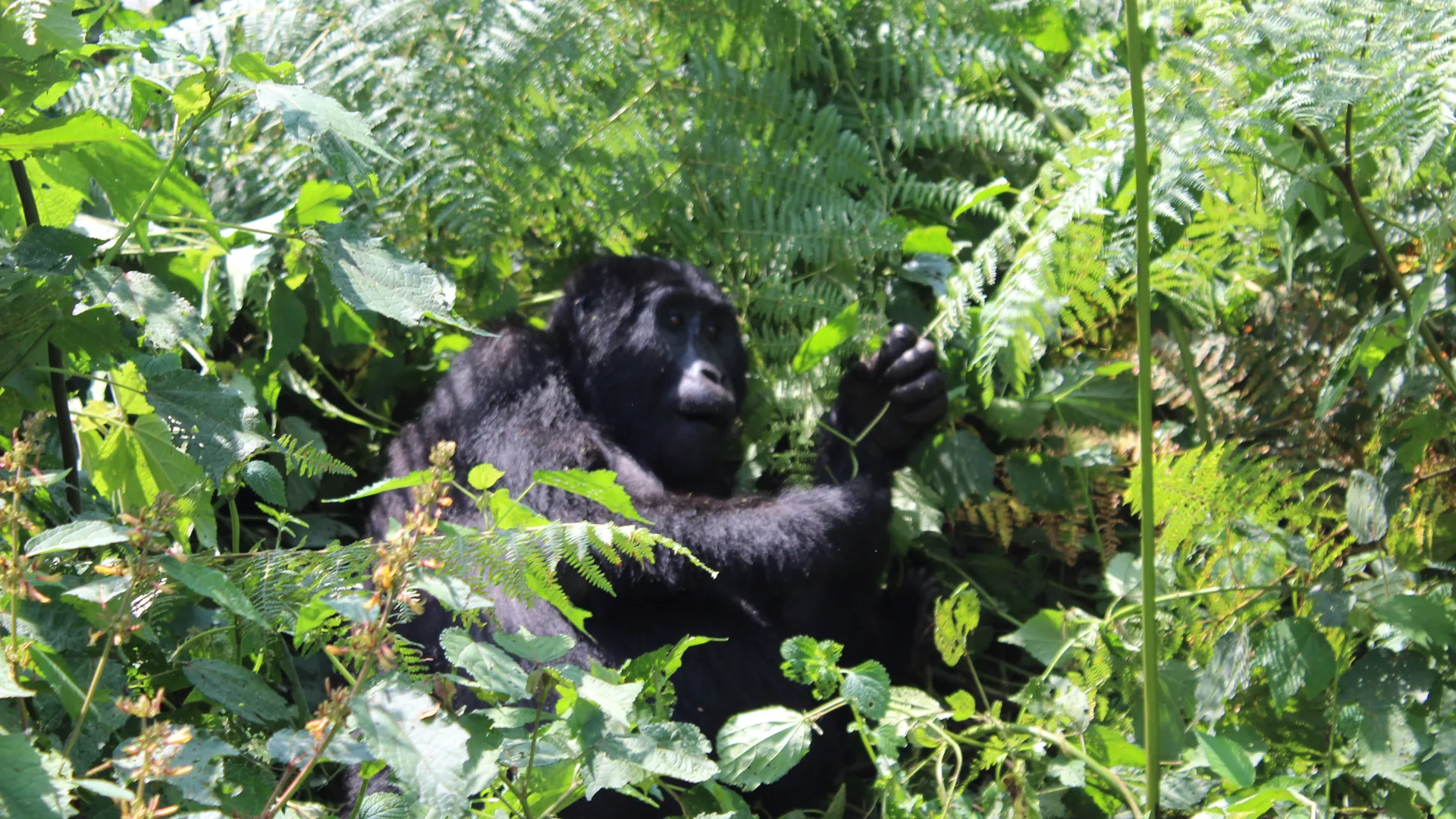
Bwindi Impenetrable National Park is not an open savannah where wildlife can
be located from a vehicle using binoculars. It is a mountainous forest ecosystem
filled with dense vegetation and difficult terrain. The park covers a large
forest landscape and contains steep slopes, valleys, streams and thick
undergrowth. This environment is perfect for mountain gorillas, but it creates
a fascinating challenge for people trying to locate them.
Mountain gorillas are also constantly moving. A family may spend part of the
morning feeding in one location before gradually moving to another area.
The group may climb a slope, cross a small drainage channel, move through thick
vegetation or stop to rest. This means that the location where trackers last
saw the gorillas is not necessarily where visitors will find them later.
This is why gorilla tracking in Bwindi is fundamentally different
from simply visiting an enclosure or a predictable wildlife viewing area.
The animals determine where the encounter happens. The job of the tracking team
is to understand their movements well enough to locate them while minimizing
disturbance.
blindly. They begin with information about the gorilla family’s most recent
location and then use physical signs, experience and field information to follow
the group’s movements.
The Tracking System Begins Before Visitors Arrive
One of the most important things visitors do not see happens before the
trekking group enters the forest. Gorilla tracking is supported by daily
monitoring of habituated gorilla families. Trackers and monitoring teams build
knowledge of where particular families have been, what individuals are present,
and how the animals have been moving.
This means that the morning gorilla trek is not an isolated event. It is part
of an ongoing monitoring process. The information collected over previous days
helps tracking teams know where to begin and what signs to look for.
In research settings, field teams have also used GPS devices to record important
locations such as nest sites and group positions. Long-term tracking records can
help researchers understand gorilla ranging behaviour and movement patterns.
This combination of field observation and technology gives conservation teams
a much clearer picture of the lives of mountain gorillas.
1. Previous-Night Gorilla Nests Are One of the Biggest Clues
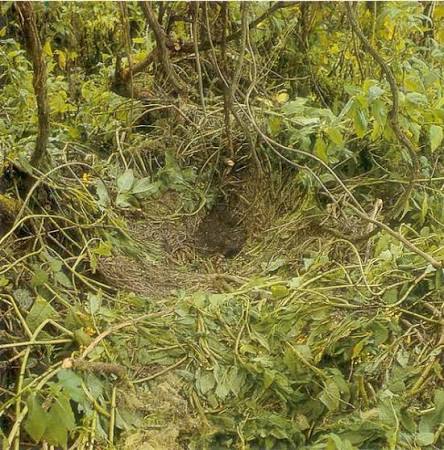
One of the most important answers to the question
“How do gorilla trackers find gorillas in Bwindi?” is simple:
they know where the gorillas slept.
Mountain gorillas construct nests for sleeping, and members of a family usually
sleep in the same general area. These nests are made from vegetation and can
leave a noticeable cluster of flattened or arranged vegetation on the forest
floor.
For trackers, the previous night’s nesting area provides an important starting
point. Instead of entering Bwindi and asking, “Where could the gorillas be?”,
the tracking team can begin from a location connected directly to the family’s
most recent activity.
From there, the team studies the surrounding area and follows signs showing
where the gorillas moved after leaving the nesting site.
This is one reason experienced trackers are so valuable. A person unfamiliar
with the forest may see a patch of flattened vegetation and walk past it
without understanding what it means. A trained tracker knows that such signs
can be part of a much larger story.
2. Following Gorilla Trails Through the Forest
Once trackers reach the relevant nest area, the next challenge is determining
where the gorillas went. This is where the ability to read a forest trail becomes
extremely important.
Gorillas are large animals. When an entire family moves through dense vegetation,
it can leave behind a sequence of disturbances. Plants may be bent, leaves may
be crushed, stems may be broken and the forest floor may show signs of repeated
movement.
Trackers examine these signs and try to determine the most likely direction
taken by the family. They are not looking for one magical footprint. Instead,
they interpret a combination of clues.
A useful way to imagine the process is to think of the forest as a giant
detective story. One clue alone may not tell you much. Several clues pointing
in the same direction can become highly informative.
3. Reading Gorilla Feeding Signs
Mountain gorillas spend a significant portion of their day feeding. As they
consume vegetation, they naturally leave evidence behind.
Trackers may notice partially eaten leaves, broken stems, stripped vegetation,
damaged branches or patches where a gorilla family has been feeding. The
concentration and freshness of feeding remains can help experienced trackers
understand the recent movement of the group.
This is particularly useful because gorillas do not leave a conventional trail
like a vehicle on a dirt road. Their trail is biological and environmental.
Every feeding location can become another piece of information.
An experienced tracker gradually learns to distinguish fresh disturbance from
older disturbance. This is an important skill because Bwindi is naturally full
of broken branches, fallen leaves and other forest debris.
Fresh Feeding
Recently disturbed vegetation may indicate that gorillas have passed
through an area relatively recently.
Broken Stems
Broken stems and branches can form part of the trail created as gorillas
move and feed through dense vegetation.
Discarded Food
Chewed or discarded plant material can help trackers identify feeding
activity.
Vegetation Disturbance
Multiple signs together can help reveal the direction in which the
family has moved.
4. Reading Disturbed Vegetation
One of the most impressive skills of a Bwindi gorilla tracker
is the ability to interpret vegetation disturbance. To an ordinary visitor,
a bent branch may simply look like part of the forest. To a tracker, it may
be one small part of a trail.
Gorillas can push through vegetation, pull plants toward themselves, break
stems while feeding and create openings as they move. When several members
of a family travel through the same area, the combined disturbance can create
a detectable route.
Trackers also consider the terrain. A gorilla family moving downhill does not
necessarily leave the same type of evidence as one climbing a steep slope.
Rain can also alter the appearance of tracks and vegetation.
This is why successful tracking depends on experience rather than simply
knowing a list of signs. Trackers must interpret the signs in context.
5. Footprints and Knuckle Prints
Footprints and knuckle impressions can provide another clue. Mountain gorillas
use both their hands and feet while moving through their forest environment,
particularly across soft or muddy ground.
When the forest floor is suitable, experienced trackers can examine impressions
left behind by the animals. These signs become especially useful when combined
with other evidence such as vegetation disturbance and feeding remains.
However, trackers do not depend on footprints alone. Bwindi’s forest floor can
contain impressions made by many animals and environmental factors. The most
reliable approach is to interpret several clues together.
6. Dung and Other Biological Signs
Dung is another important sign used in gorilla research and tracking. Gorilla
dung may help teams understand the presence and movement of a group, while
nest sites and dung can also provide information useful for population
monitoring.
During scientific surveys, researchers have used nest counts and dung
characteristics to help determine group composition. These methods demonstrate
just how much information gorillas leave behind even when the animals themselves
cannot be seen.
It is important to understand that trackers are not simply following a single
biological clue. The strength of gorilla tracking comes from combining many
observations into one picture.
Nests tell trackers where a family slept. Feeding signs can show where it has
been feeding. Disturbed vegetation can indicate movement. Tracks can provide
additional evidence. Together, these clues help trackers close the distance.
7. Trackers Know the Gorilla Families
Another major advantage of professional gorilla trackers is familiarity.
Trackers do not treat every gorilla family as an unknown group.
Habituated gorilla families are monitored over time, allowing conservation
personnel to learn about individual animals, group composition and ranging
patterns.
Experienced trackers may recognize individual gorillas by physical characteristics
and understand the general range used by particular families. They learn where
groups have previously been seen and become familiar with the terrain in which
those families move.
This accumulated knowledge is one of the most important reasons why visitors
have a realistic opportunity of finding gorillas during a trekking experience.
It would be dramatically more difficult if every morning began without any
previous information.
8. GPS, Field Records and Modern Tracking
Modern conservation work combines traditional forest knowledge with technology.
GPS devices and other field-recording systems can be used to document important
locations and movement information.
Research on mountain gorillas has documented the use of GPS waypoints to record
locations such as nest sites and the group’s position during the day. Long-term
datasets can then be used to study ranging patterns and changes in gorilla
movements.
Technology does not replace the tracker. A GPS device can tell a team where a
previous location was recorded, but it does not automatically interpret every
broken stem or tell a person which direction a moving gorilla family has taken.
That is where human experience remains extremely important.
In other words, modern gorilla tracking is best understood as a combination of
technology + field observation + local knowledge + years of experience.
9. Listening to the Forest
Gorilla tracking is not only visual. Experienced trackers pay attention to
sounds coming from the forest.
Mountain gorillas communicate through a variety of vocalizations and physical
behaviours. In the right circumstances, sounds can provide useful information
about the presence or activity of a group.
However, sound should not be treated as a guaranteed tracking system. Bwindi
is a noisy natural environment. Birds, insects, wind, falling vegetation,
streams and other wildlife can make it difficult to identify exactly where a
sound originates.
Instead, listening forms another layer of information that can support what
trackers have already learned from the physical trail.
10. The Final Approach to the Gorilla Family
As trackers become increasingly confident that the gorillas are nearby, the
atmosphere of the trek can change.
Conversations become quieter. The team may move more slowly. The ranger watches
the vegetation carefully and listens for signs of the animals. Visitors are
reminded to follow instructions and maintain appropriate behaviour around the
gorillas.
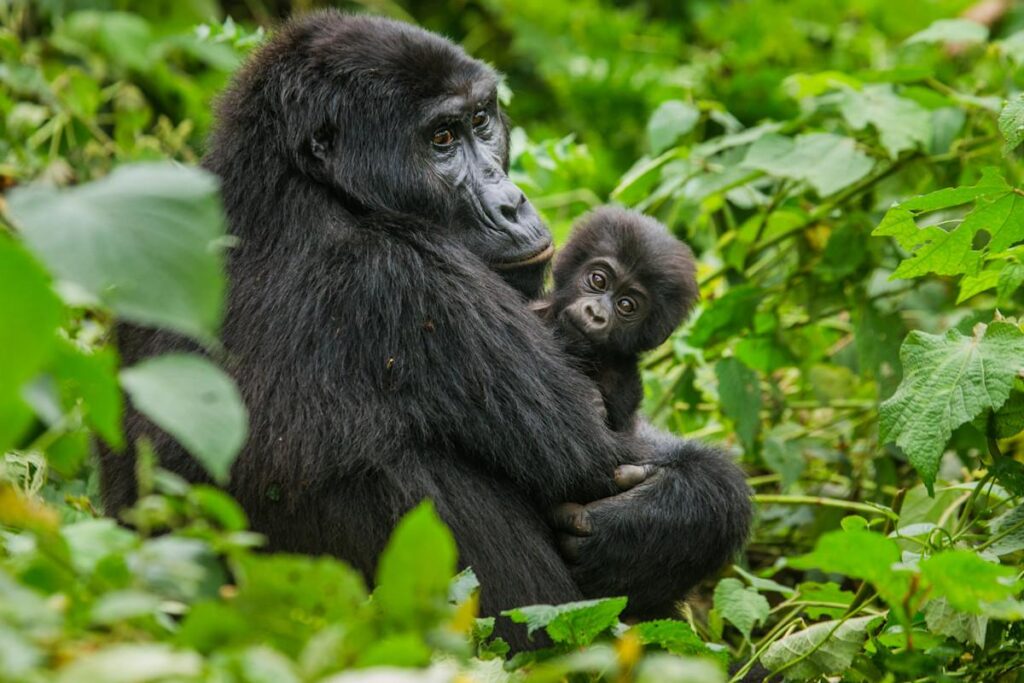
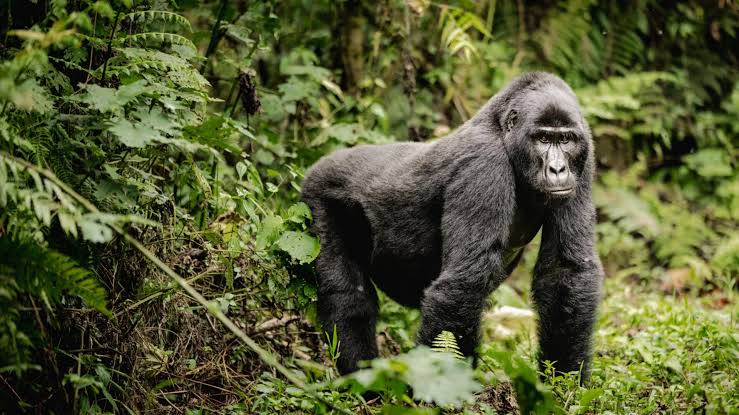
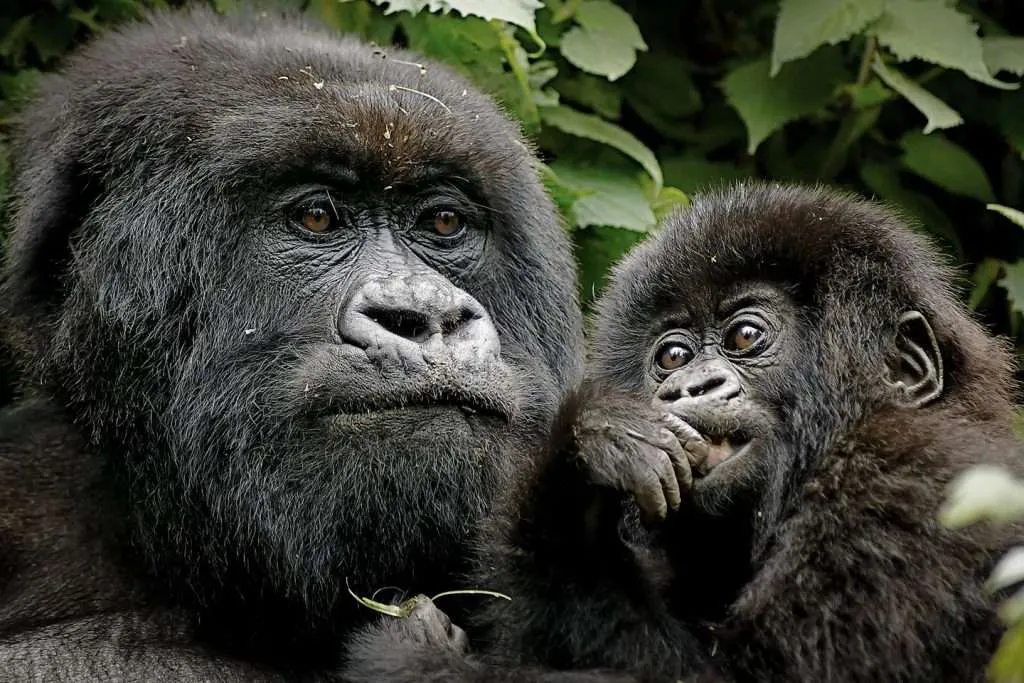
Then comes the unforgettable moment: vegetation moves and a gorilla appears.
Sometimes it is a juvenile climbing nearby. Sometimes a female is feeding.
Sometimes a silverback is resting in the vegetation. The first sighting can
happen suddenly because the forest remains dense until the final few metres.
The encounter is the result of a process that began long before visitors saw
the first gorilla.
Why Gorilla Tracking Is Never Completely Predictable
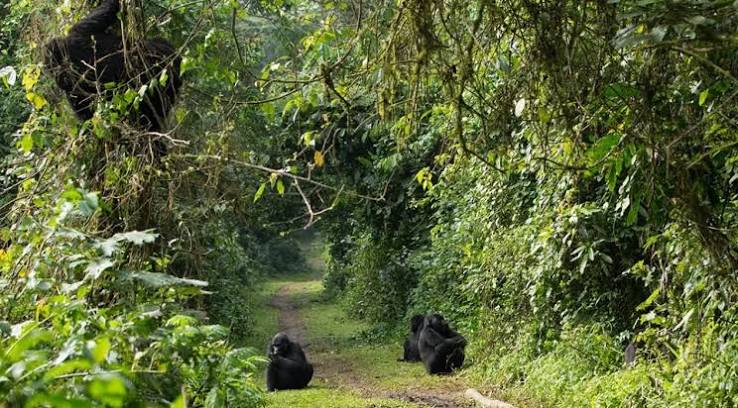
Even with highly experienced trackers, there is no precise timetable for finding
a mountain gorilla family.
Gorillas are wild animals. They are not waiting at a predetermined location
for tourists. They can move, feed, rest, climb, cross valleys and change
direction.
Weather can also influence the trekking experience. Rain can make trails muddy
and slippery and can alter the appearance of signs on the forest floor.
Dense vegetation can slow the team down.
This is why visitors should never book a gorilla trek expecting a guaranteed
thirty-minute walk to the animals. Uganda Wildlife Authority indicates that
gorilla tracking can take approximately two to seven hours, although individual
experiences vary.
PrideMark Safaris therefore recommends approaching the experience as a genuine
wilderness adventure. The unpredictability is not a flaw in gorilla trekking;
it is part of what makes the encounter authentic.
Trackers vs Rangers vs Guides: Who Does What?
Visitors sometimes use the words tracker, ranger and guide interchangeably,
but the roles can be different within the overall trekking operation.
| Role | Typical Responsibility |
|---|---|
| Trackers | Search for and monitor gorilla families, interpret signs and provide information about the group’s location and movements. |
| Rangers | Provide protection, enforce park rules, support visitor safety and contribute to wildlife monitoring. |
| Guide | Helps visitors understand the forest, explains gorilla behaviour and manages the visitor experience. |
| Researchers / Monitoring Teams | Collect longer-term information about gorilla health, behaviour, ranging and conservation. |
In practice, these roles support one another. The visitor experiences a single
trek, but behind that experience is a wider system of conservation, monitoring,
guiding and protection.
What Visitors Actually Experience During Gorilla Trekking
When you book a Bwindi gorilla trekking safari, you do not
normally follow the trackers from the very beginning of their monitoring work.
Instead, you join the organized visitor experience at the relevant park
headquarters or sector starting point.
After registration and briefing, your group begins the forest walk with
ranger and guide support. Depending on the gorilla family’s location, the
walk can be relatively short or considerably longer.
Along the way, your guide may point out evidence of wildlife activity, plants,
birds, forest features and gorilla signs. This means the trek itself becomes
an educational experience even before the gorillas are found.
Eventually, the tracking team receives or establishes information about where
the family is. The group approaches carefully and follows the instructions
of the ranger.
Once the gorillas are located, visitors are allowed to observe them according
to the applicable Uganda Wildlife Authority rules. Standard gorilla trekking
provides a limited viewing period, allowing the animals to remain protected
while giving visitors an extraordinary opportunity to observe them in their
natural environment.
Bwindi Gorilla Trekking
Learn more about Bwindi, its trekking sectors, terrain and planning
considerations.
Bwindi National Park
Discover Bwindi’s biodiversity, location, history and major activities.
Gorilla Trekking vs Habituation
Compare standard gorilla trekking with Uganda’s Gorilla Habituation
Experience.
Bwindi vs Mgahinga
Find out which Ugandan gorilla destination may be better for your safari.
How Difficult Is Gorilla Tracking in Bwindi?
Gorilla trekking should be approached as a real forest hike rather than a
conventional sightseeing excursion.
Bwindi contains steep terrain, uneven ground, thick vegetation and sections
where the trail can become muddy, particularly after rain. The difficulty also
changes depending on where the gorilla family has moved.
One of the unusual aspects of gorilla trekking is that the animals themselves
can influence the difficulty of the hike. A gorilla family that is relatively
close to the starting point can create a shorter trek. Another family may have
moved farther into the forest, resulting in a longer and more physically
demanding experience.
This is another reason why no responsible safari company should promise a
specific trekking duration in advance.
How to Prepare for Your Bwindi Gorilla Trek
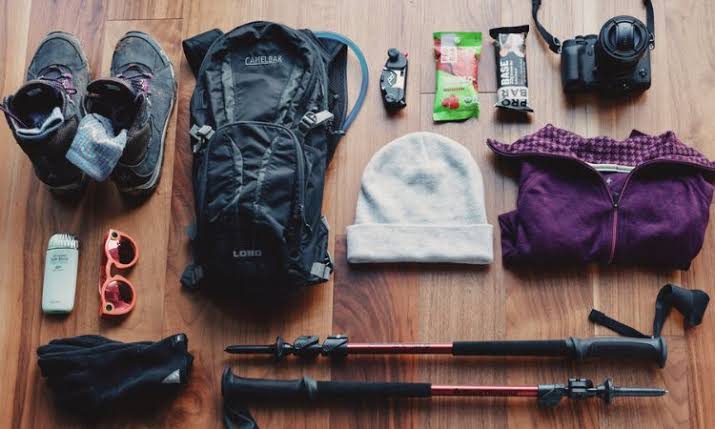
Understanding how gorilla trackers find mountain gorillas in Bwindi
also helps you understand how to prepare. You should expect a genuine
rainforest trekking experience.
Wear Suitable Hiking Shoes
Choose sturdy, comfortable hiking shoes or boots with good grip. Bwindi can
become slippery, and you may encounter uneven terrain, roots and steep slopes.
Wear Long Trousers
Long trousers help protect your legs from vegetation, mud and insects while
walking through the forest.
Carry Rain Protection
Bwindi is a rainforest environment, and weather can change. A lightweight
waterproof jacket is useful even when the morning begins dry.
Use Insect Repellent
Apply suitable insect repellent before entering the forest and follow your
safari company’s recommendations.
Carry Drinking Water
A trek can last several hours, so adequate drinking water is important.
Consider Hiring a Porter
Hiring a porter can make the trek easier by helping carry your daypack and
supporting you on challenging sections of the trail. Porter services can also
provide direct economic benefits to communities around the park.
Listen to Your Ranger
Once you are near the gorillas, your ranger’s instructions become particularly
important. Follow the rules relating to distance, movement, photography,
noise and general behaviour.
Why Gorilla Tracking Helps Conservation
The skills used to locate gorillas are not important only because tourists
want to see them. Tracking is also a major component of conservation and
scientific monitoring.
Knowing where habituated gorilla families are, identifying individual animals,
recording group composition and observing changes in behaviour can help
conservation teams understand the population.
Daily field observations can also contribute to detecting changes that deserve
attention. Injuries, illness, births, deaths, group movements and changes in
social structure can all be important information for conservation personnel.
This means that when you participate in a responsible gorilla trekking
experience, you are entering a tourism system connected to a much larger
conservation effort.
It is the result of conservation, daily monitoring, skilled tracking,
responsible tourism and the protection of one of Africa’s most remarkable
forests.
Common Myths About How Gorillas Are Found
Myth 1: Trackers Know the Exact Location of the Gorillas All Day
Not necessarily. Trackers have valuable information about the family’s recent
location, but the gorillas continue moving. Their exact position can change
throughout the morning.
Myth 2: Trackers Use Only GPS
GPS and other field-recording technologies can be useful, but they do not
replace human interpretation of the forest. Trackers still rely heavily on
experience and physical signs.
Myth 3: Gorillas Are Easy to See Once You Enter Bwindi
Bwindi is dense forest. Even when gorillas are nearby, vegetation can hide
them extremely well. You may hear or sense that the animals are close before
actually seeing them.
Myth 4: Every Gorilla Trek Takes the Same Amount of Time
No. Trek duration varies according to gorilla movements, terrain, weather and
other conditions.
Myth 5: Trackers Chase the Gorillas
Gorilla tracking is a controlled wildlife activity. The objective is to locate
and observe habituated gorillas while following conservation rules designed to
minimize disturbance.
Why the Trackers Make Your Gorilla Trek Possible
Imagine arriving in Bwindi with no knowledge of where the gorillas slept the
previous night, no information about their movements and no understanding of
the forest signs they leave behind. Finding a gorilla family in that situation
would be extraordinarily difficult.
The work of trackers changes everything. Their knowledge transforms a vast
forest into a landscape of clues. A nest becomes a starting point. A feeding
site becomes evidence. A broken stem becomes part of a trail. A footprint
becomes another clue. A GPS location provides another reference point.
Eventually, all these pieces come together.
That is why the moment you finally see a mountain gorilla in Bwindi should not
be considered a lucky accident. It is the culmination of conservation work,
field knowledge and remarkable human skill.
Ready to Experience Gorilla Trekking in Bwindi?
A gorilla trek in Bwindi is one of the most extraordinary wildlife
experiences in Africa. Walk through Uganda’s ancient rainforest, learn
how trackers read the forest and eventually come face-to-face with a
habituated mountain gorilla family.
PrideMark Safaris can help you plan your Uganda gorilla
trekking safari, including permits, accommodation, transportation,
trekking-sector selection and combinations with other destinations such
as Queen Elizabeth National Park, Kibale Forest and Lake Bunyonyi.
Frequently Asked Questions About Gorilla Tracking in Bwindi
1. How do gorilla trackers find mountain gorillas in Bwindi?
Trackers use information about the gorilla family’s recent location and
follow signs such as previous-night nests, feeding remains, disturbed
vegetation, tracks and other evidence of recent movement. Their knowledge
of individual gorilla families and the forest is also extremely important.
2. Do gorilla trackers start from the gorillas’ nests?
Previous-night nest locations are an important starting point for locating
habituated gorilla families. From the nest area, trackers follow fresh
signs showing where the family moved after leaving the sleeping site.
3. What signs do gorilla trackers follow?
Trackers may interpret nests, feeding remains, crushed or broken vegetation,
footprints or knuckle impressions, dung and other signs of recent gorilla
activity.
4. How long does it take to find gorillas in Bwindi?
There is no fixed duration. Uganda Wildlife Authority indicates that
gorilla treks may last approximately two to seven hours. The actual time
depends on the location and movements of the gorilla family, terrain,
weather and other conditions.
5. Can trackers guarantee that tourists will see gorillas?
Gorilla trekking is organized around habituated families and tracking
teams work to locate them, but gorillas remain wild animals. Their movement
is naturally unpredictable, so no responsible operator should promise an
exact location or a precise trekking duration.
6. Do gorilla trackers use GPS?
GPS and other digital field-recording systems can be used in gorilla
monitoring and research to record locations and movement information.
However, technology works alongside traditional field skills rather than
replacing experienced trackers.
7. Why are gorilla trackers so important?
Trackers make it possible to locate habituated gorilla families while also
contributing to daily monitoring and conservation knowledge. Their
understanding of the animals and forest is built through extensive field
experience.
8. Where does gorilla trekking take place in Bwindi?
Bwindi’s principal gorilla trekking sectors are Buhoma, Ruhija, Rushaga
and Nkuringo. Your permit and accommodation should be planned carefully
so that your logistics match your trekking sector.
9. Is gorilla trekking in Bwindi difficult?
It can be physically demanding because Bwindi is a mountainous rainforest
with steep slopes, uneven ground, thick vegetation and potentially muddy
trails. Difficulty also varies depending on where the gorilla family has
moved.
10. What should I wear for gorilla trekking?
Comfortable hiking clothing, long trousers, sturdy hiking shoes or boots,
a waterproof jacket and suitable insect protection are recommended.
Travelers should also carry drinking water and prepare for changing
rainforest conditions.
The Forest Has a Story — Trackers Know How to Read It
How gorilla trackers find mountain gorillas in Bwindi is one
of the most fascinating parts of Uganda’s gorilla trekking experience.
Visitors see the final result when a ranger parts the vegetation and a
mountain gorilla suddenly appears, but the real story began much earlier.
It began with a nest, continued through feeding trails and disturbed vegetation,
and was interpreted by people who have spent years learning the forest and its
gorillas.
The next time you walk through Bwindi and your guide stops to examine a broken
branch or patch of vegetation, remember that you are watching a highly
specialized form of wildlife tracking. The forest may look wild and chaotic
to an untrained eye, but to an experienced gorilla tracker, it contains clues.
And somewhere beyond those clues, hidden in the green heart of Bwindi,
a mountain gorilla family is going about its day.
Plan your Bwindi gorilla trekking adventure with PrideMark Safaris and
discover the forest, the trackers and the mountain gorillas of Uganda.https://pridemarksafaris.com/