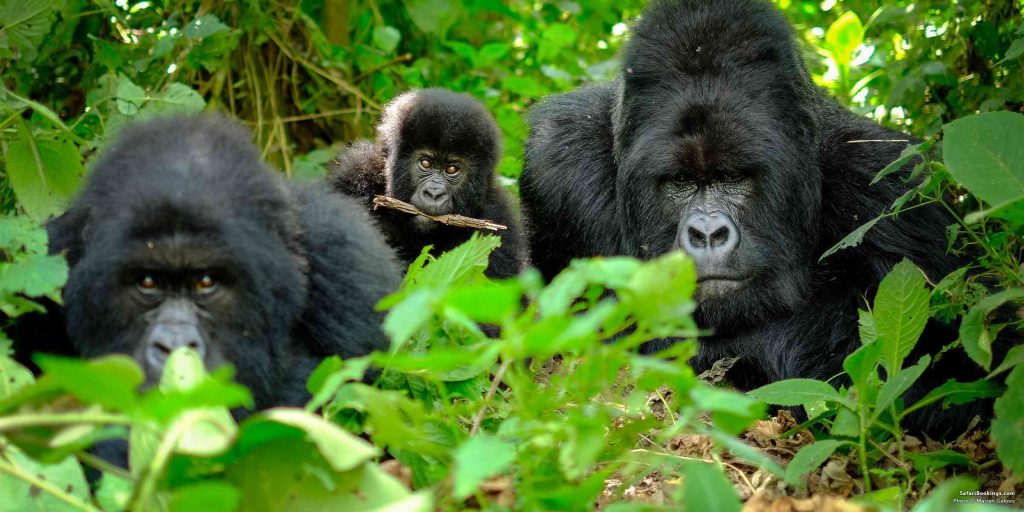
How Mountain Gorillas Communicate: Amazing Sounds, Gestures & Body Language
Discover the fascinating world of mountain gorilla communication and learn
how gorillas use sounds, gestures, facial expressions, touch and body language
to maintain family bonds, communicate emotions, resolve tension and interact
with one another in the forests of Bwindi.
How mountain gorillas communicate is one of the most fascinating
aspects of a gorilla trekking experience in Uganda. When visitors enter the
misty forests of Bwindi Impenetrable National Park, they often expect the most
memorable moment to be seeing a silverback, a playful juvenile or a mother
carrying her infant. What many people do not immediately realize is that the
gorilla family may already be communicating long before the first animal comes
into view.
A low rumbling sound from a feeding gorilla, a brief grunt between two individuals,
a juvenile reaching toward another gorilla, a mother touching her infant or a
silverback standing upright can all form part of the social life of the group.
Mountain gorillas do not communicate through human language, but they possess a
remarkably rich system of vocalizations, gestures, facial expressions, postures,
movements and physical contact.
This makes gorilla communication particularly interesting for
travelers visiting Bwindi. Instead of simply looking at gorillas, you can learn
to observe what they are doing and consider what their behavior may be telling
you about their relationships and the situation around them.
Recent scientific research conducted on habituated mountain gorillas in Bwindi
documented 63 distinct gesture actions across ten behavioral
contexts. Researchers recorded thousands of intentional gesture instances,
demonstrating that mountain gorilla communication is considerably more complex
than the familiar image of a silverback beating his chest.
Quick Facts About Mountain Gorilla Communication
| Communication Method | What It Can Communicate |
|---|---|
| Vocalizations | Social contact, reassurance, alarm, tension, attention and other context-dependent information. |
| Chest beating | A conspicuous display associated with silverbacks and social or competitive contexts. |
| Gestures | Requests, social interaction, play, attention and other forms of intentional communication. |
| Facial expressions | Help communicate emotional and social states. |
| Body posture | Can communicate confidence, submission, excitement, tension or readiness to interact. |
| Touch | Supports bonding, infant care, grooming and social relationships. |
| Movement | Positioning, approach, withdrawal and other movements can carry social information. |
Mountain Gorilla Communication Is More Than Sound
When people hear the word “communication,” they often think about speech.
Mountain gorillas demonstrate why communication is much broader than spoken
language.
A gorilla can communicate through a sound, but the same animal can also
communicate through posture, movement, touch, facial expression or a gesture.
In many situations, several signals occur together.
For example, a silverback may change his posture, look toward another gorilla,
move through the vegetation and produce a vocalization. A juvenile may approach
an adult using a particular movement or gesture and then change its posture
depending on the adult’s response.
This is why interpreting mountain gorilla behavior requires
context. It is risky to assign one fixed human meaning to every sound or
movement.
The meaning of a sound or gesture depends on who is producing it, who is receiving
it, what the gorillas are doing and what is happening around them.
How Mountain Gorillas Communicate Through Sounds
Vocal communication is one of the easiest forms of gorilla communication for
visitors to notice during a trek. You may hear sounds coming from the vegetation
even before you can see the gorillas.
Mountain gorillas use a variety of vocalizations, and researchers have spent
decades studying their acoustic behavior. Different calls can occur during
feeding, travel, social interactions, conflict, play or situations requiring
increased attention.
The sound of the forest therefore becomes part of the experience. A visitor who
pays attention may begin to recognize that the gorillas are not simply sitting
silently in the vegetation. They are continually exchanging information.
The Gentle Belch Vocalization
One of the sounds visitors may hear during a peaceful gorilla encounter is a
low, soft rumbling or belch-like vocalization. This sound is commonly associated
with relaxed social situations such as feeding and resting.
Because mountain gorilla families can move through thick vegetation, vocal
communication can help individuals maintain awareness of one another even when
they are not constantly visible.
Imagine a family spread across dense vegetation. One gorilla may be feeding
several metres away from another individual. A soft vocalization can provide
information that helps maintain social contact without requiring the animals to
remain physically close together.
Low, soft rumbling or belch-like vocalization.
Feeding, resting and relaxed social activity.
Observe quietly and allow the gorillas to continue their natural behavior.
Grunts and Social Contact
Gorillas also produce various grunts and short vocalizations during social
interactions. The exact interpretation depends on the context.
A sound made between a mother and infant may have a different social function
from a vocalization produced during tension between adults.
This is one of the reasons why professional ranger-guides are valuable during
gorilla trekking. Their experience with habituated gorilla families allows them
to observe behavior in context rather than interpreting a sound in isolation.
Alarm Calls, Screams and More Urgent Sounds
Not all gorilla vocalizations are associated with calm behavior. Some sounds
occur when an individual becomes alarmed, distressed or involved in a social
conflict.
More intense vocalizations can attract the attention of other members of the
group. In these moments, visitors should not attempt to interpret or respond
to the gorilla themselves. The correct response is to remain calm and follow
the instructions of the ranger-guide.
Gorilla communication is therefore also important for survival and social
coordination. A group member does not exist in isolation. Individuals constantly
monitor the behavior of others and respond to changes in the social environment.
What Does Gorilla Chest Beating Mean?
Few animal behaviors are as recognizable as the mountain gorilla chest beat.
Images of silverbacks standing upright and beating their chests have become
symbols of gorilla conservation and African wildlife.
But the meaning is more interesting than the popular image suggests.
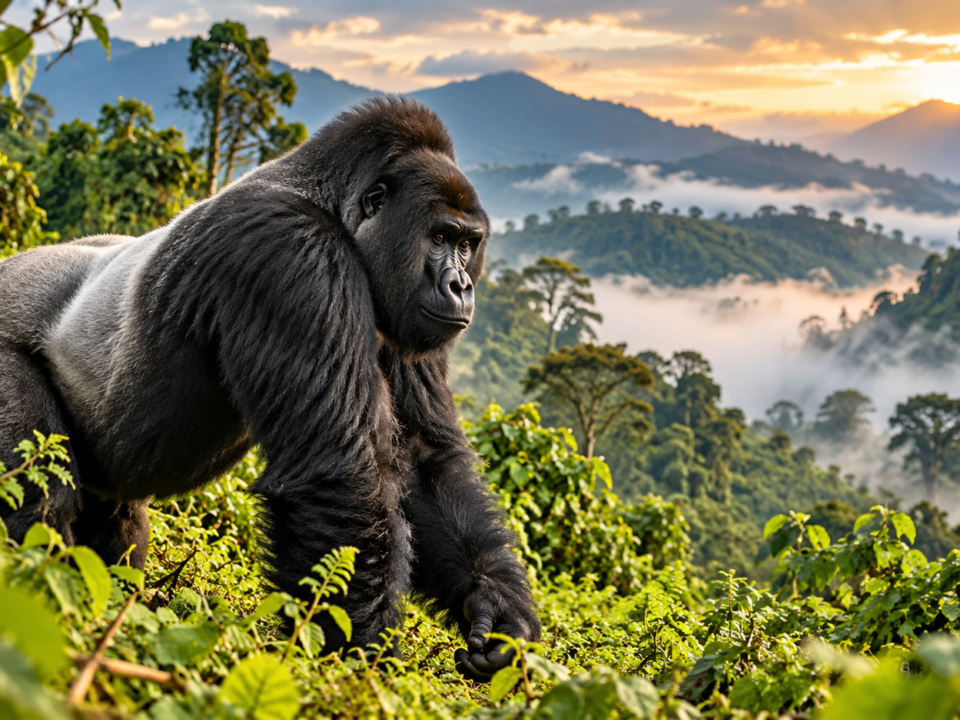
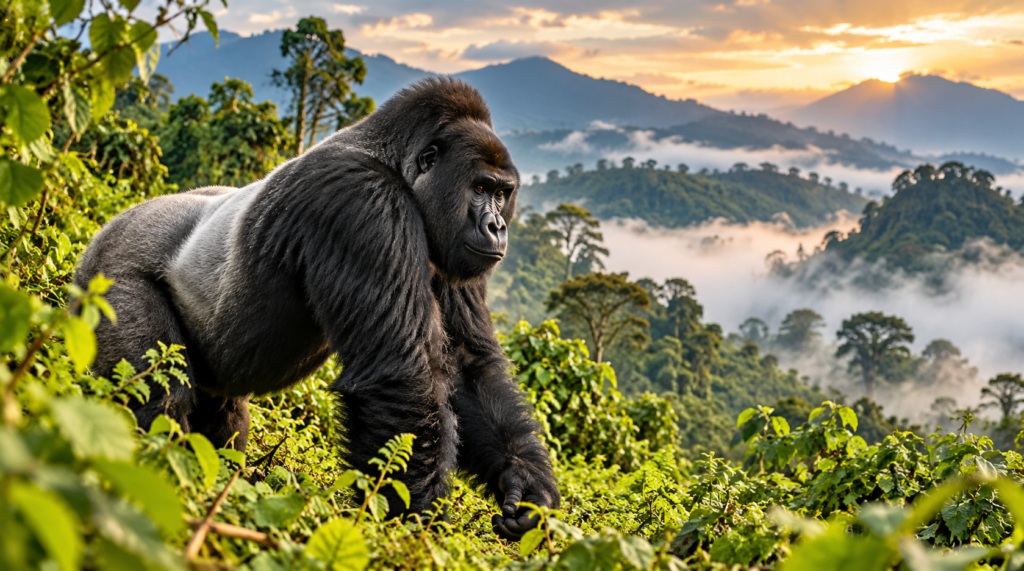
Chest beating is a highly visible display associated particularly with silverback
males. It can occur in different social contexts and can communicate information
related to the animal’s presence, size, status, arousal or interaction with
other individuals.
It should therefore not automatically be interpreted as “the gorilla is angry.”
Context matters.
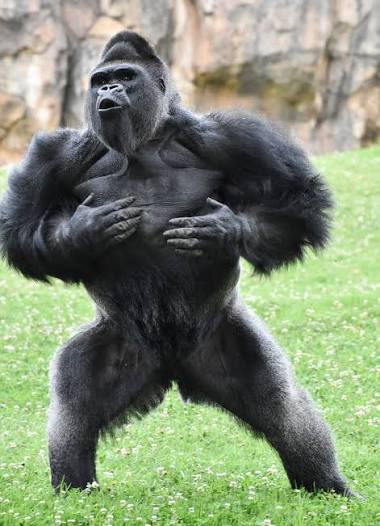
display behavior.
gorilla is preparing to attack. Visitors should always rely on their ranger-guide
to interpret the situation and should never respond by approaching, shouting or
making sudden movements.
How Mountain Gorillas Use Gestures
Perhaps one of the most exciting developments in gorilla research is the growing
understanding of intentional gestures.
A 2025 study of habituated mountain gorillas in Bwindi documented 63 gesture
actions across ten behavioral contexts. The research involved 49 habituated
gorillas from four social units and recorded 3,220 instances of intentional
gestures.
This research provides strong evidence that mountain gorilla communication is
not limited to vocal sounds. Their physical actions can also play an important
communicative role.
Gestures can occur during social interactions, play, attention-getting,
movement and other situations. Some gestures are shared with other great apes,
while researchers have also identified actions that may be distinctive to
mountain gorillas.
Reaching
Reaching movements can occur during social interactions and may communicate
an individual’s intention depending on the situation.
Touching
Physical contact can support social interaction, reassurance, bonding
and infant care.
Movement
Approaching, moving away or positioning the body can communicate social
information.
Play Gestures
Young gorillas use physical movements extensively during social play
and interaction.
Understanding Gorilla Body Language
Gorilla body language is one of the most fascinating things to
observe during a trek. The gorillas communicate not only with sounds but also
with their entire bodies.
Posture, movement, orientation and distance can provide important clues about
what is happening within the group.
Relaxed Body Posture
A gorilla sitting comfortably, feeding quietly or resting among members of its
family may indicate a calm social environment. Visitors should nevertheless
avoid assuming that every posture has a single fixed meaning.
Upright Posture
When a silverback stands upright, the change in posture can increase his apparent
size and make the display more conspicuous. Depending on the circumstances,
this can be part of a social display or response to something happening nearby.
Moving Toward Another Gorilla
Approach behavior can have many meanings. A gorilla may be moving toward another
individual for social contact, play, access to food, protection or because of
social tension.
Moving Away
Withdrawal can also communicate information. A subordinate animal may move away
from a dominant individual, while a mother may reposition herself to protect
or manage an infant.
Facial Expressions and Eye Behavior
The face provides another important part of the communication system.
Gorillas can change their facial expressions during play, social interaction,
tension and other situations.
The eyes and direction of gaze can also form part of social interaction.
Visitors should never attempt to deliberately stare at a gorilla to test its
reaction.
During a gorilla trek, your ranger-guide may instruct you to look away or
change your position if an animal approaches closely or becomes highly attentive
to the visitor group. These instructions exist to reduce unnecessary social
pressure on the animal.
Touch, Grooming and Family Bonds
Physical contact is an important part of gorilla social life. Members of a family
may sit close together, touch one another, groom, carry infants or engage in
physical play.
These behaviors help strengthen social relationships and are particularly
important within a close-knit gorilla family.
For visitors, some of the most touching moments during gorilla trekking occur
when a mother gently interacts with her infant or when juveniles play around
adults.
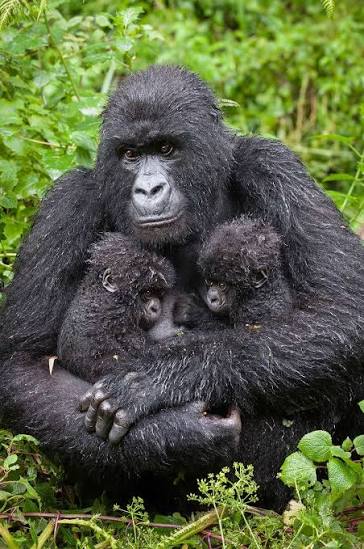
mountain gorilla social life.
How Mothers and Infants Communicate
The relationship between a mother and infant provides some of the clearest
examples of gorilla communication.
Infants depend heavily on adults for protection, transportation, feeding and
social learning. They communicate through vocalizations, movements, touch,
facial expressions and physical proximity.
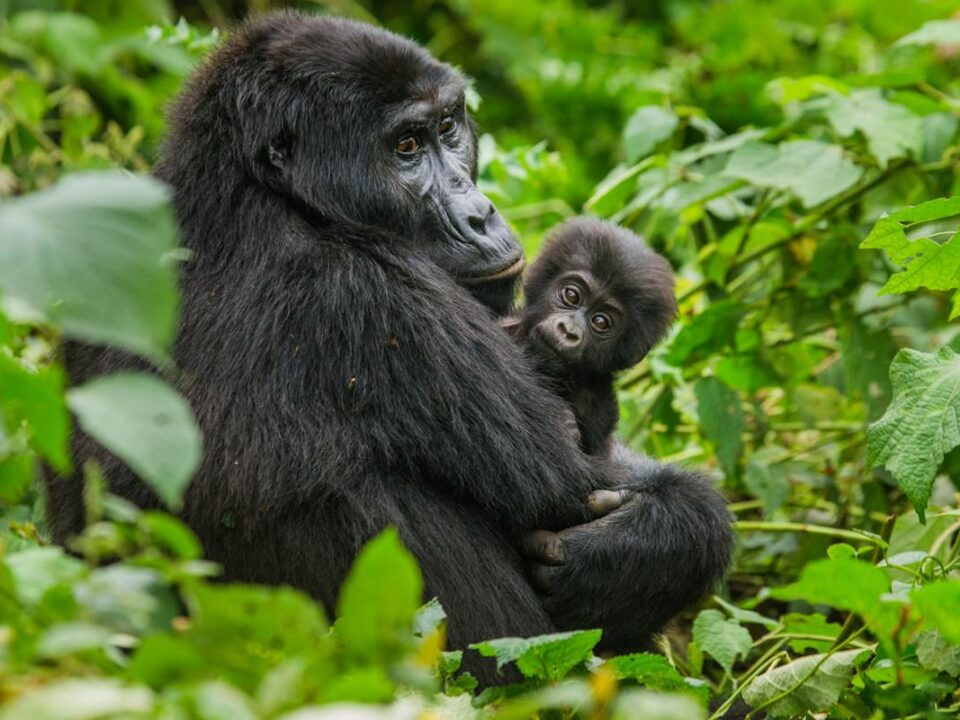
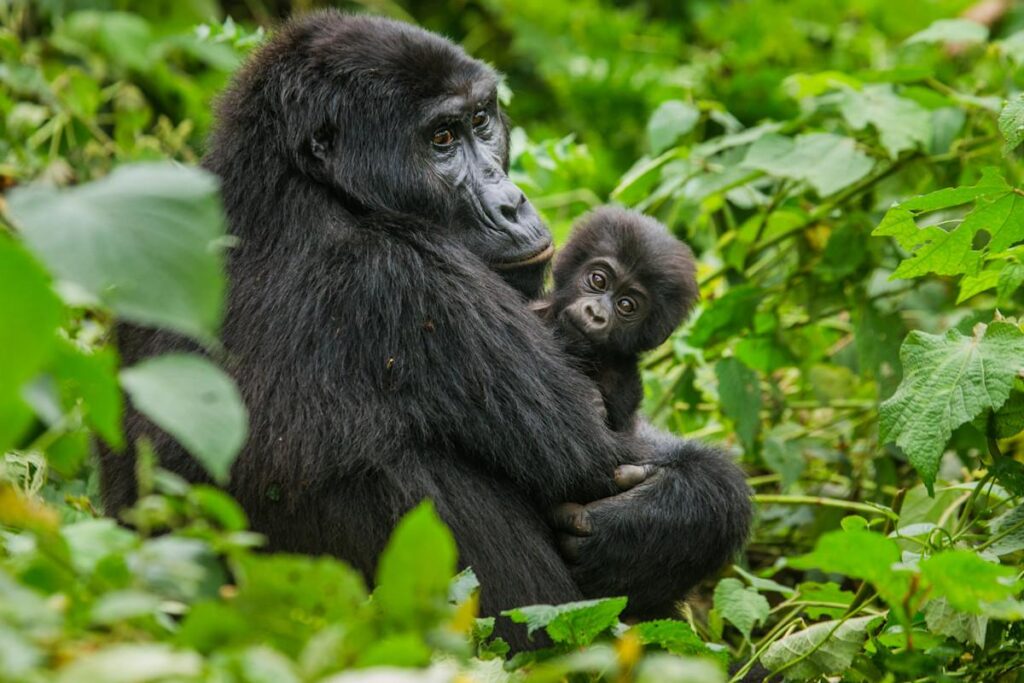
An infant may reach toward its mother, cling to her body, move toward her,
vocalize or initiate play. The mother responds through touch, movement,
positioning and other behaviors.
Watching this interaction during a gorilla trek can reveal how communication
is deeply connected to family relationships.
How Young Gorillas Communicate Through Play
Juvenile gorillas are often among the most entertaining members of a family.
Their play can involve chasing, climbing, wrestling, touching and exaggerated
body movements.
Play is not simply entertainment. It provides young gorillas with opportunities
to practice social skills and learn how to interact with other members of the
group.
During play, young gorillas may produce vocalizations and facial expressions
that help maintain the interaction.
A relaxed open-mouthed expression and playful movement can look surprisingly
familiar to human observers, but it is important to interpret these behaviors
within the context of gorilla social behavior rather than assuming that they
have exactly the same meaning as human expressions.
How Silverbacks Communicate With Their Families
The silverback plays an important role in the social organization of a gorilla
family. His behavior can influence group movement, social interactions and
responses to potential threats.
Silverbacks use vocalizations, body posture, movement and displays to communicate
with group members and other gorillas.
The famous chest beat is only one part of this behavioral repertoire. A silverback
can also change his posture, move toward or away from another animal, vocalize
or physically position himself between members of his family and a potential
disturbance.
This is one reason why observing the silverback alone does not tell the whole
story. To understand gorilla communication, watch the entire family and notice
how individuals respond to one another.
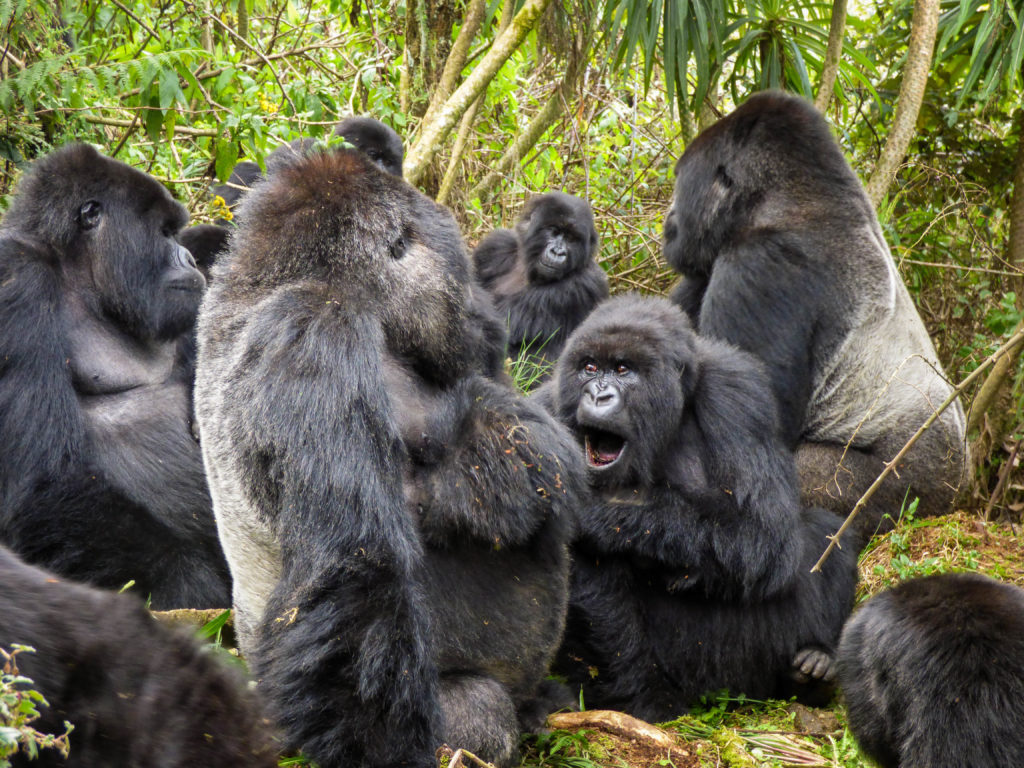
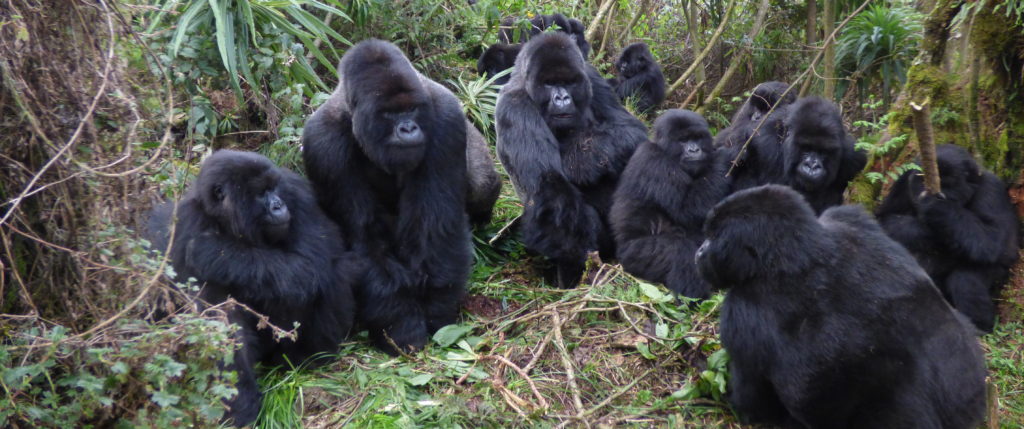
communication within a mountain gorilla family.
How Visitors Can Read Gorilla Communication During a Trek
You do not need to be a scientist to appreciate mountain gorilla
communication. During your trek, start by watching rather than
photographing immediately.
Listen to the sounds around you. Notice which gorillas are close together.
Watch how juveniles approach adults. Observe how the silverback responds to
movement within the group.
Look for changes in posture. A gorilla that was feeding may suddenly stop,
look toward something and change its body position. Another animal may respond.
These small interactions are part of the communication happening around you.
Your guide and ranger are also valuable interpreters. Their experience can help
explain what you are seeing without disturbing the animals.
Listen
Pay attention to soft vocalizations, grunts and changes in the sound
of the group.
Watch Posture
Notice whether individuals are relaxed, upright, moving or displaying.
Watch Relationships
Observe how mothers, infants, juveniles, females and silverbacks
interact.
Follow Your Guide
Let the ranger-guide explain the context and follow all instructions
during the encounter.
What Gorilla Body Language Means for Visitors
Understanding gorilla body language is not only interesting; it can also help
visitors behave responsibly.
Gorillas are wild animals, even when they are habituated to human presence.
Visitors should never deliberately provoke a response, shout at the animals,
imitate their vocalizations, move suddenly toward them or attempt to touch them.
Uganda Wildlife Authority’s gorilla tracking guidelines include important
measures designed to protect both visitors and gorillas. These include maintaining
the required distance, avoiding visits when ill, limiting visitor numbers around
a gorilla group and following ranger instructions.
Responsible gorilla trekking reminder:
Always follow the instructions of your Uganda Wildlife Authority ranger-guide.
Do not attempt to interpret a gorilla’s behavior and then act independently.
The ranger’s priority is to protect both the visitors and the gorillas.
What Scientists Are Still Learning About Gorilla Communication
One of the most exciting things about gorilla communication is
that researchers are still discovering new information.
The recent Bwindi gesture study is particularly important because systematic
descriptions of wild Eastern gorilla gestures have historically been limited.
Researchers studying 49 habituated mountain gorillas documented 63 gesture
actions and approximately six gesture instances per hour of observation on
average.
The study also found that many gesture forms were shared with other great ape
species, while several potentially mountain-gorilla-specific gestures were
identified.
This research gives conservationists and primatologists a better understanding
of how gorillas interact and provides another piece of evidence showing that
great ape communication is remarkably sophisticated.
It also demonstrates why long-term observation of wild gorillas is so valuable.
A brief tourist encounter may last only part of a day, but researchers can build
much deeper knowledge by repeatedly observing individuals and social groups over
long periods.
The Main Types of Mountain Gorilla Communication
| Type | Examples | Why It Matters |
|---|---|---|
| Vocal | Belch-like sounds, grunts, alarm calls and other vocalizations | Helps individuals exchange information through sound. |
| Gestural | Reaching, touching, movement-based gestures and other intentional actions | Allows gorillas to communicate through physical signals. |
| Postural | Standing upright, changing body position and movement | Can communicate social state, attention or display. |
| Facial | Changes in facial expression and gaze | Provides additional social information. |
| Tactile | Touching, grooming, carrying and physical contact | Strengthens family relationships and social bonds. |
Why Bwindi Is Such an Important Place to Study Mountain Gorilla Communication
Bwindi Impenetrable National Park is one of the world’s most important mountain
gorilla habitats. Uganda Wildlife Authority identifies Bwindi as one of Uganda’s
two mountain gorilla destinations, alongside Mgahinga Gorilla National Park.
The park is divided into four major gorilla trekking sectors: Buhoma, Ruhija,
Rushaga and Nkuringo. These sectors provide access to habituated gorilla families
and allow visitors to experience mountain gorilla behavior in different parts
of the forest.
Gorilla trekking in Bwindi normally involves a guided forest walk followed by
observation of a habituated gorilla family. UWA currently describes the trek as
an activity that may take approximately two to seven hours, with a designated
observation period once the family is found.
This makes a gorilla trek much more than simply taking photographs. For an
attentive visitor, it becomes an opportunity to witness an extraordinary social
system unfolding in real time.
Why Understanding Gorilla Communication Matters for Conservation
Understanding how mountain gorillas communicate can make visitors more respectful
observers, but the importance extends much further than tourism.
Scientists and conservationists need to understand gorilla social relationships,
behavior, family structure and individual responses in order to monitor populations
effectively.
Long-term behavioral observation can help researchers understand changes in
family groups, social relationships, reproduction, infant development and
responses to environmental pressures.
Uganda’s conservation progress demonstrates why this work matters. UWA reports
that Uganda’s mountain gorilla population has benefited from long-term protection,
ecological monitoring, veterinary interventions, law enforcement, research,
tourism and community engagement.
Responsible gorilla tourism contributes to this wider conservation system by
creating economic value around protecting the forest and the animals that live
inside it.
Ready to Experience Mountain Gorilla Communication in Bwindi?
Seeing mountain gorillas in the wild is extraordinary. Understanding what
they are communicating makes the experience even more meaningful.
With PrideMark Safaris, you can plan a carefully organized Uganda gorilla
trekking safari to Bwindi, including gorilla permits, accommodation,
transportation, local guiding and combinations with other remarkable
destinations such as Queen Elizabeth National Park, Kibale Forest and
Lake Bunyonyi.
Frequently Asked Questions About Mountain Gorilla Communication
1. How do mountain gorillas communicate?
Mountain gorillas communicate through a combination of vocalizations,
gestures, facial expressions, body postures, movement and physical contact.
Communication is highly contextual, meaning that the same type of behavior
may have different meanings depending on the situation.
2. What sounds do mountain gorillas make?
Mountain gorillas produce a range of vocalizations including soft
belch-like sounds, grunts and more urgent calls associated with alarm,
distress or social tension. The meaning depends on the context in which
the sound occurs.
3. Why do gorillas beat their chests?
Chest beating is a conspicuous display associated particularly with
silverback males. It can communicate information about presence, social
status, arousal and interactions with other gorillas. It should not
automatically be interpreted as a sign that the gorilla intends to attack.
4. Do mountain gorillas use gestures?
Yes. Scientific research in Bwindi has documented a substantial repertoire
of intentional mountain gorilla gestures. A 2025 study identified 63
gesture actions across ten behavioral contexts among habituated mountain
gorillas.
5. Do gorillas understand each other’s body language?
Mountain gorillas respond to each other’s posture, movement, gestures,
facial expressions and vocalizations. Their social communication is
sophisticated and closely connected to relationships within the family.
6. Do gorillas communicate with humans?
Habituated gorillas can tolerate the presence of people during controlled
tourism encounters, but visitors should not think of this as ordinary
human conversation. Gorillas may respond to human presence through their
normal behavioral signals, which is why visitors must follow ranger
instructions and avoid deliberately provoking reactions.
7. Can tourists hear gorillas before seeing them?
Yes. In the dense forest, visitors may hear gorilla vocalizations before
they can see the animals. Sound can travel through vegetation and provide
clues about where members of the family are located.
8. How do baby gorillas communicate with their mothers?
Infants communicate through vocalizations, touch, physical contact,
movement, facial expressions and proximity. Mothers also respond through
touch, positioning, carrying and other social behaviors.
9. Where can I observe mountain gorilla communication in Uganda?
Mountain gorilla trekking takes place in Bwindi Impenetrable National Park
and Mgahinga Gorilla National Park. Bwindi’s main trekking sectors include
Buhoma, Ruhija, Rushaga and Nkuringo.
10. How long is a gorilla trek in Bwindi?
Uganda Wildlife Authority states that gorilla treks may take approximately
two to seven hours depending on circumstances including the location and
movements of the gorilla family and the terrain.
The Incredible Language of Mountain Gorillas
How mountain gorillas communicate is a question that opens a
fascinating window into the social lives of one of Africa’s most remarkable
great apes.
Their communication is not based on one sound or one gesture. It is a rich
combination of vocalizations, gestures, posture, facial expression, movement,
touch and social behavior.
A soft vocalization during feeding can help maintain social contact. A juvenile’s
playful movement can invite interaction. A mother and infant communicate through
touch and proximity. A silverback can use posture and dramatic displays to
communicate information to members of his family and other gorillas.
The more you understand these signals, the more meaningful a gorilla trekking
experience becomes.
Instead of simply seeing a group of gorillas in the forest, you begin to see
relationships, personalities, social negotiations and family bonds unfolding
around you.
And that is the real magic of a Uganda gorilla safari: for a brief moment,
you are not simply looking at wildlife. You are witnessing a sophisticated
social world communicating right in front of you.
Explore Bwindi with PrideMark Safaris and experience the remarkable world
of Uganda’s mountain gorillas.