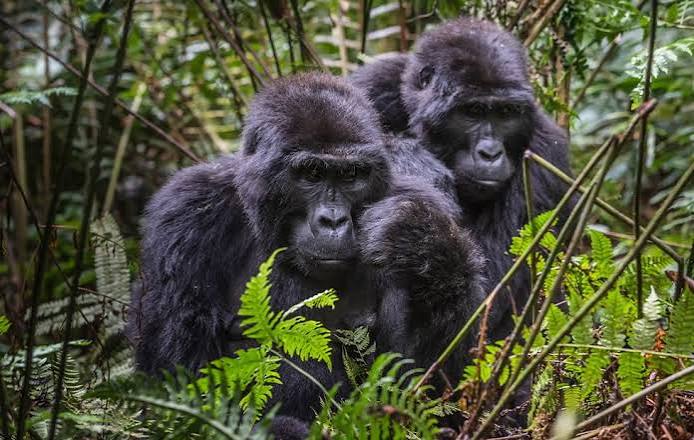
How GPS, Camera and Field Research Help Scientists Study Mountain Gorillas
Mountain gorilla research brings together forest knowledge,
careful observation and scientific technology. GPS helps teams record
locations, cameras preserve visual evidence, and field research explains
what gorillas are doing. Together, these methods help scientists ask
better questions about movement, behaviour, health and conservation.
For travellers, understanding mountain gorilla research adds meaning to
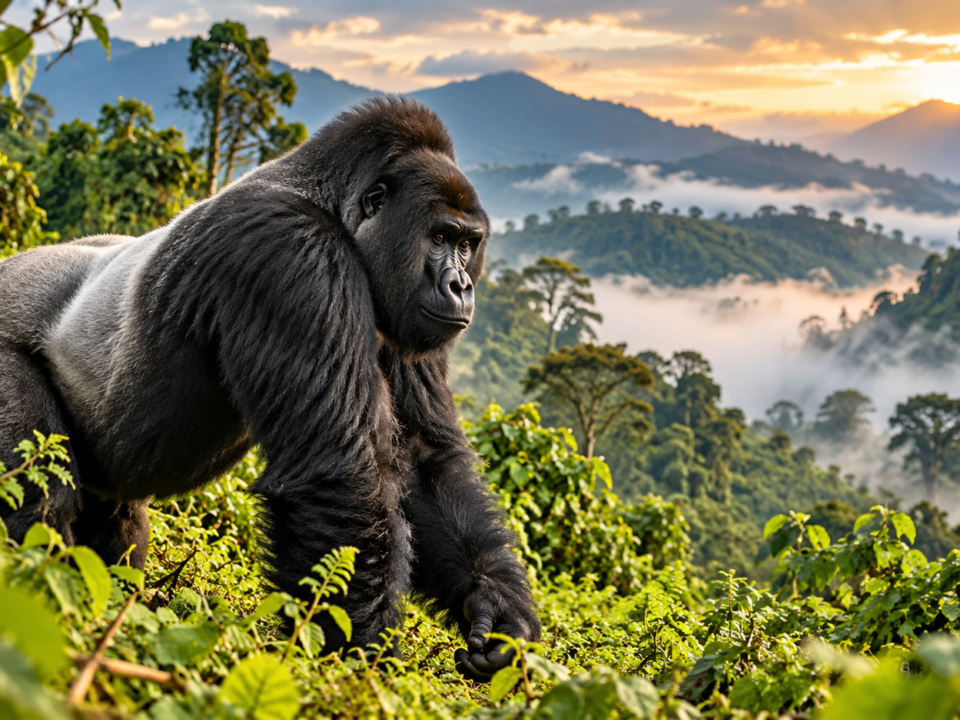
an encounter in the forest. A silverback resting beside his family is
also part of a changing social group, a living ecosystem and a
conservation story built through years of patient study.

gorilla movement, feeding and conservation.
Why Mountain Gorilla Research Matters
Protecting mountain gorillas requires more than knowing where a family
was last seen. Conservation teams need to understand the habitat the
animals use, how individuals interact, and whether changes in health
or behaviour require further investigation.
Mountain gorilla research helps turn individual sightings into
useful records. A location, photograph or observation becomes more
valuable when it includes a date, a clear identity and consistent
information about the circumstances.
Imagine two records of a gorilla feeding. One simply says “gorilla
eating.” The other identifies the individual, names the food plant,
records the time and describes nearby group members. The second
record can answer far more questions when compared with observations
collected over many days.
Visitors exploring
Bwindi Impenetrable National Park
or
Mgahinga Gorilla National Park
encounter a landscape where skilled trackers, researchers and
conservation staff contribute different kinds of knowledge.
1. GPS Helps Mountain Gorilla Research Record Where Groups Travel
GPS stands for Global Positioning System. A handheld GPS receiver
allows a researcher or tracker to record coordinates while working
in the forest. In mountain gorilla research, these location records
can document where a group was observed.
A published study of Bwindi mountain gorillas used handheld GPS
units to record group locations. Repeated points helped researchers
examine home ranges and the areas groups used most intensively.
Read the
scientific study of long-term mountain gorilla ranging patterns
for an example of this approach.
GPS coordinates are observations, not a complete movement history
A recorded point tells scientists where a group was observed at a
particular time. It does not show every step taken between sightings.
Researchers must consider how often locations were recorded and
whether some parts of the forest were harder to reach.
tracking device to a gorilla. The Bwindi study described here
recorded locations using equipment carried by people. Seeing a
tracker with a GPS unit does not mean the animals are wearing
satellite collars.https://pridemarksafaris.com/safari-ideas/uganda-safaris/3-day-gorilla-trekking-in-uganda/
2. Cameras Create Visual Records for Mountain Gorilla Research
Photographs allow researchers to preserve details that may be
difficult to describe in field notes. A clear image can be reviewed
later, compared with earlier photographs or discussed with another
specialist.
Identifying individual gorillas
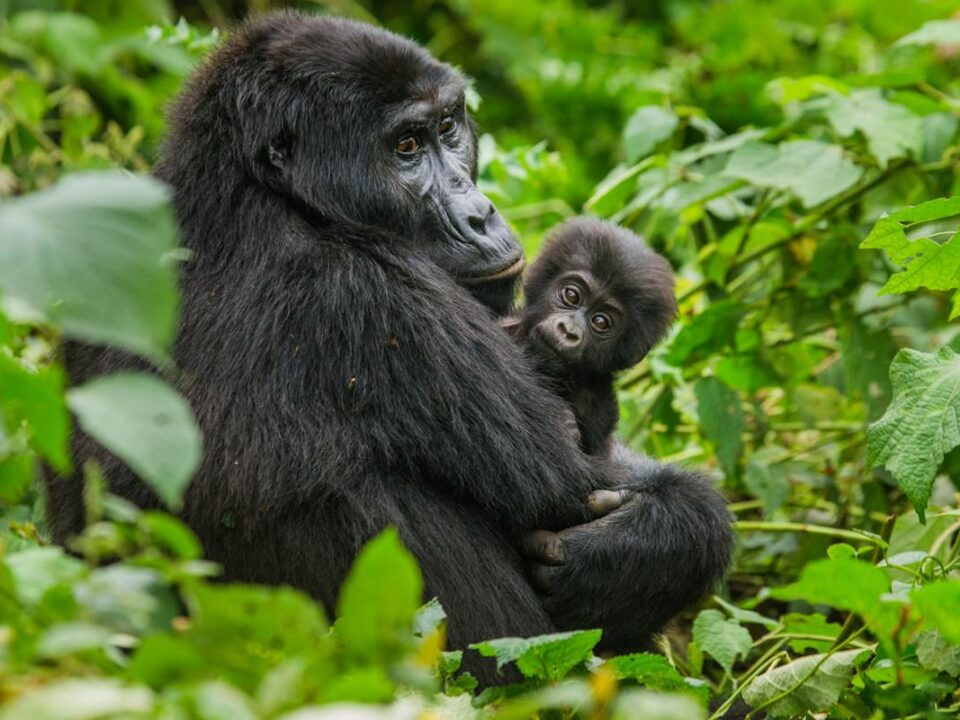
Gorilla noseprints have distinctive patterns that help trained
observers recognise individuals. The Dian Fossey Gorilla Fund
illustrates this with its
gorilla noseprint identification resource
.
Photographs can support identification, alongside an observer’s
knowledge of the animal.
Reliable identity matters in mountain gorilla research. If two
individuals are confused, their observations may be incorrectly
combined. Researchers also need to acknowledge when a photograph
is too dark, blurred or obstructed to support a confident identification.https://pridemarksafaris.com/
Recording behaviour on video
Video can preserve the order of actions in an interaction. A short
sequence may show who approached first, how another animal responded,
and whether the encounter involved play, feeding or a change in position.
However, a clip captures only a limited moment. Scientific interpretation
becomes stronger when footage is linked to field notes explaining what
happened before and after filming. A dramatic-looking image alone may
give a misleading impression of an otherwise ordinary interaction.https://pridemarksafaris.com/contacts/
3. Camera Traps Extend Observation Across the Forest
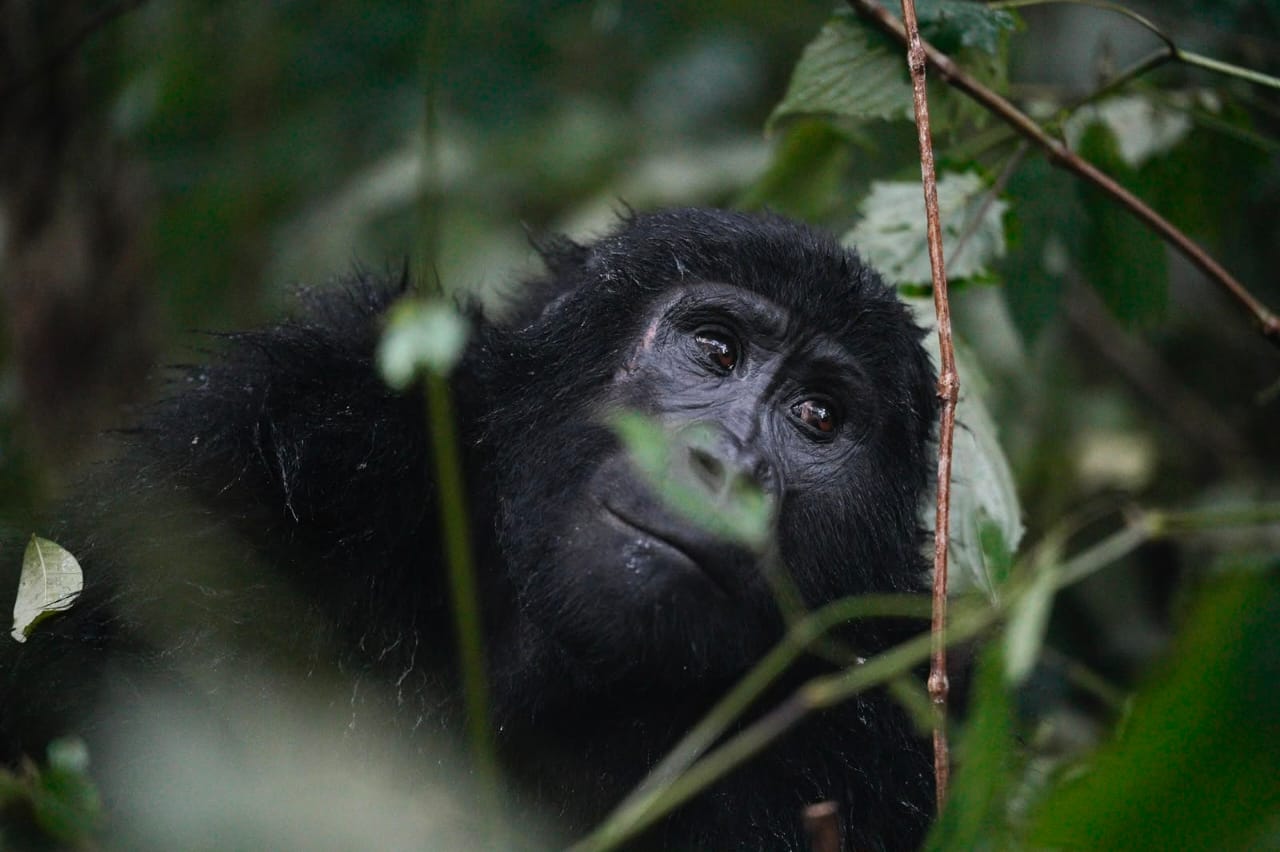
Camera traps are unattended cameras, often triggered by movement
and heat. They can record animals passing through a selected location
without a person standing beside the camera.
Their contribution to mountain gorilla research depends on the study
design. A camera beside a trail samples that trail; it does not
represent every animal or every activity in the surrounding forest.
WCS Uganda describes support for wildlife population monitoring in
Bwindi using camera-trapping techniques. Its
gorilla conservation information
provides context for research and monitoring in Uganda.
Why camera placement matters
Researchers must decide what question a camera should answer before
selecting its position. Cameras placed along obvious paths may record
different activity from cameras placed using a systematic sampling
design.
Missing footage also requires caution. An animal might pass outside
the detection zone, vegetation might block the view, or a battery
might fail. No photograph is not automatically proof that gorillas
were absent.https://pridemarksafaris.com/
require an appropriate scientific method, rather than simply adding
together the animals visible in every photograph.
4. Field Observation Gives Mountain Gorilla Research Its Context
Technology is most useful when people understand what they are
recording. Field researchers follow agreed observation methods so
that records collected by different people can be compared.
Observing a group systematically
A study may use observations at set intervals to record the activities
of visible group members. This can help describe how observed time
is divided among feeding, resting, travelling and social behaviour.
Following the behaviour of one individual
Another approach focuses on one identified animal for a defined
observation period. The observer records specified behaviours and
interactions, rather than switching attention whenever another
gorilla does something interesting.
Recording important events
Some questions require event records, such as a group encounter or
an unusual interaction. The researcher records the participants,
sequence and circumstances as accurately as visibility allows.
These methods improve mountain gorilla research by reducing selective
attention. A memorable moment may be fascinating, but a consistent
record of ordinary behaviour is often necessary to understand what
is typical.https://pridemarksafaris.com/blogs/
5. Health Monitoring Adds Another Layer to Mountain Gorilla Research
Observing gorilla health requires specialised judgement. Gorilla
Doctors describes assessments of body condition, activity, breathing,
skin and hair, the head and face, and stool characteristics.
Trackers’ reports can lead to veterinary monitoring visits when an
animal appears ill or injured. Follow-up observations help veterinarians
assess whether its condition is improving or deteriorating.
Learn more about
how Gorilla Doctors monitors wild gorilla health
.
Why observation and laboratory testing work together
A visible symptom can indicate a problem without revealing its cause.
Laboratory analysis adds information that cannot be obtained from a
photograph alone. Gorilla Doctors’ publications include research
using fecal samples to investigate respiratory infections.https://pridemarksafaris.com/
Mountain gorilla research therefore benefits from linking field records
with carefully collected and labelled samples. The meaning of a
laboratory result depends partly on knowing when, where and from
which animal a sample was collected.
Sampling belongs to authorised teams working under appropriate
protocols. Safari visitors should leave samples, nests and other
wildlife evidence undisturbed.
6. Combining Evidence Makes Mountain Gorilla Research Stronger
Different tools answer different questions. Their greatest value often
comes from using them together, while being clear about what each
record can and cannot establish.
| Research tool | Useful evidence | Main limitation |
|---|---|---|
| Handheld GPS | Location of an observation | Does not explain behaviour or every movement between points |
| Photographs | Visible features and identification clues | Image quality and viewing angle affect interpretation |
| Video | Sequence of visible actions | Usually records only a limited period |
| Camera traps | Activity within a camera’s detection area | Coverage depends on placement and equipment performance |
| Field observations | Behaviour and social context | Visibility and observer consistency matter |
| Laboratory analysis | Information from collected samples | Interpretation depends on sample quality and the test used |
An illustrative research question
Suppose a group appears to spend more time in one part of the forest.
GPS records could help describe the change. Field observations could
document feeding behaviour there, while habitat surveys could examine
the available plants.
Scientists would still need to test alternative explanations. The
apparent change might reflect a real shift in habitat use, a change
in observation effort, or differences in how easily the group could
be followed. This example illustrates scientific reasoning; it is
not a report of a particular gorilla family.
7. Good Mountain Gorilla Research Recognises Its Limits
Rain, dense vegetation and steep terrain make forest research demanding.
Equipment must function reliably, and researchers must maintain
consistent records even when observations are incomplete.
Separating “not seen” from “not present”
If an observer cannot see an individual through vegetation, the correct
record may be “not visible.” Assuming it has left the group would add
an unsupported conclusion to the data.https://pridemarksafaris.com/contacts/
Keeping records comparable
Clear definitions help different observers record the same behaviour
consistently. Dates, times, identities and observation conditions
also need to be stored carefully so later analysis remains meaningful.
Protecting animals and sensitive information
Research must follow relevant permissions and welfare protocols.
Detailed location data also requires responsible handling. Public
education can explain a study without publishing precise, recent
coordinates of vulnerable wildlife.
The quality of mountain gorilla research is measured by the reliability
of its evidence and interpretation, rather than by how much equipment
a team carries.
What Mountain Gorilla Research Can Teach Safari Visitors
Learning about mountain gorilla research changes the way you watch
a family. Instead of concentrating only on the silverback, you may
notice feeding choices, infants’ play, resting positions and the
movements of other group members.https://pridemarksafaris.com/bwindi-mountain-gorillas/
Your guide can help explain visible behaviour while you follow the
park’s instructions. Use your camera respectfully, avoid flash,
maintain the required distance and never encourage an animal to
approach for a better photograph.
A tourism trek is an opportunity to observe wildlife. It does not
automatically provide access to research groups, laboratories or
sample collection. Any specialist research visit requires separate
arrangements and permission.
Discover Mountain Gorillas With PrideMark Safaris
Plan a Uganda safari that combines a memorable gorilla encounter
with a deeper appreciation of forest conservation.
Mountain Gorilla Research: Frequently Asked Questions
How do scientists study mountain gorillas?
Depending on the question, scientists use field observations,
location records, photographs, video, habitat surveys and sample
analysis. Combining methods helps them interpret the evidence.
Does GPS tracking mean gorillas wear collars?
No. Researchers can record group locations using handheld GPS
units carried by people. This differs from attaching a tracking
device to an animal.
How do researchers recognise individual gorillas?
Trained observers use distinctive features, including noseprint
patterns, supported by photographs and familiarity with the animals.
Poor visibility can make identification uncertain.
Can camera traps replace field researchers?
Camera traps add valuable observations but cover only selected
locations. Researchers are still needed to design studies, interpret
footage and connect it with other evidence.
Can tourists take part in mountain gorilla research?
A standard tourism permit does not authorise research activities.
Visitors can learn from their guides, observe responsibly and
respect conservation rules. Specialist research participation
requires separate permission.
Why are long-term records valuable?
Repeated observations help scientists distinguish short-lived events
from persistent patterns. Comparable records are especially useful
when studying changes that unfold slowly.
A Deeper Understanding of Life in the Forest
Mountain gorilla research depends on patient people as well as useful
technology. GPS contributes locations, cameras preserve visible
details, and field observations explain the circumstances.
Careful analysis turns these records into knowledge.
When you visit the forest, that knowledge can make a quiet moment
with a gorilla family even more meaningful. Explore
PrideMark Safaris’ safari ideas
or
contact our team to discuss your gorilla trekking journey
.