Realistic expectations
Realistic expectations is an important part of understanding the demands of a gorilla trekking day in southwestern Uganda. How difficult is gorilla trekking in Uganda depends on the weather, the location of the gorilla family, the steepness of the trail and the visitor’s walking ability. A single difficulty label cannot capture those changing conditions. We recommend planning for a proper
Why there is no fixed difficulty
Why there is no fixed difficulty is an important part of understanding the demands of a gorilla trekking day in southwestern Uganda. The forest is not a managed city park. Slopes, roots, wet leaves and narrow passages can slow a group even when the distance appears modest on a map. Rangers guide visitors and determine safe approaches, but the animals move naturally through their habitat. Travelers should focus on secure footing, a sustainable pace and clear communication instead of trying to predict the exact number of
The difference between trekking and viewing
The difference between trekking and viewing is an important part of understanding the demands of a gorilla trekking day in southwestern Uganda. Uganda Wildlife Authority describes gorilla trekking as requiring moderate fitness, with outings often taking approximately two to seven hours. The standard gorilla viewing allowance is a maximum of one hour once the group reaches the animals. That distinction matters when planning the day: the outward search, the encounter and the return all require attention, and a late onward transfer can become unnecessarily stressful.
What moderate fitness means
What moderate fitness means is an important part of understanding the demands of a gorilla trekking day in southwestern Uganda. For travelers considering this activity, preparation is more valuable than reassurance that everything will be easy. Walk regularly, practise modest hills, use boots that already fit and pack only what you need. Tell your guide about any difficulty early. These habits cannot remove every challenge, but they make the experience more comfortable and allow visitors to concentrate on the remarkable forest environment.

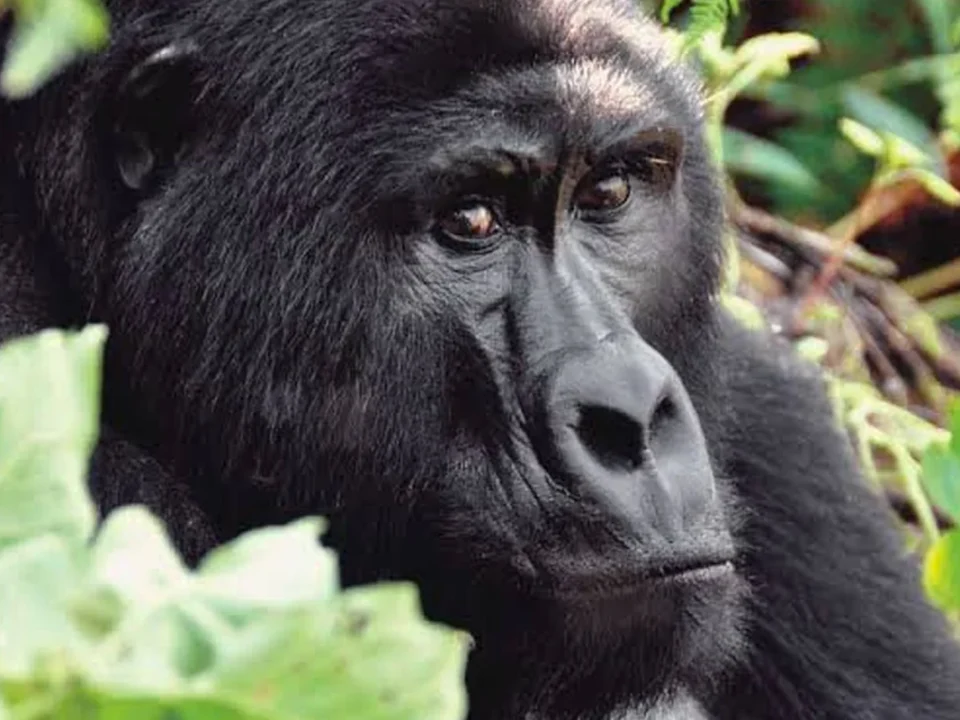
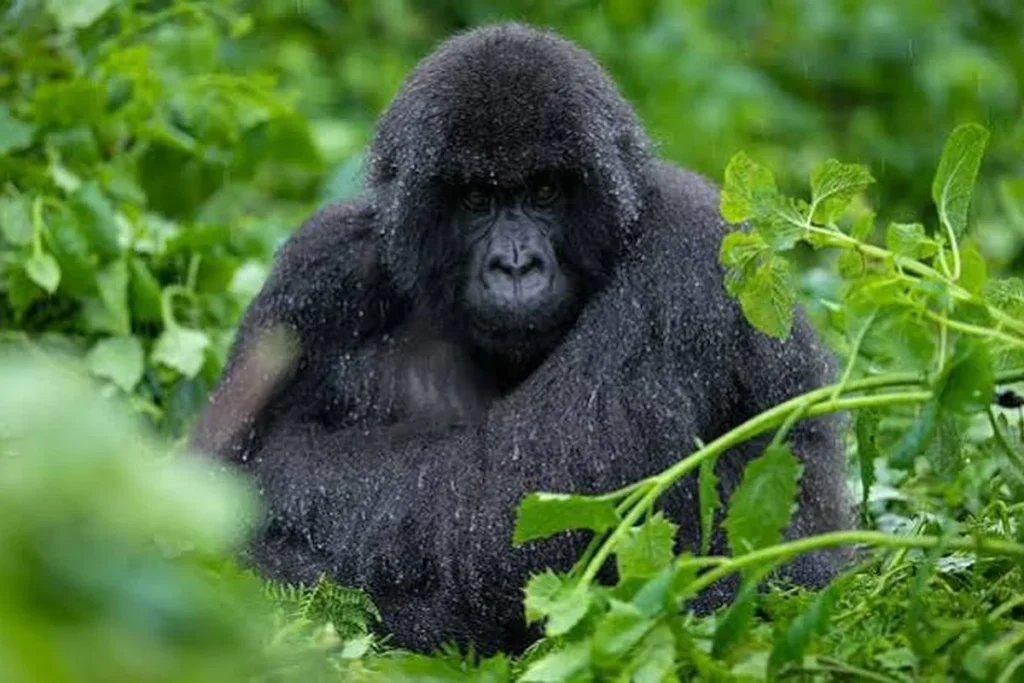
A mountain gorilla resting on the forest floor during rainfall, illustrating the natural conditions visitors may encounter while gorilla trekking.
Who usually finds the walk demanding
Who usually finds the walk demanding is an important part of understanding the demands of a gorilla trekking day in southwestern Uganda. PrideMark Safaris plans around the confirmed trekking sector, the location of the lodge and the traveler’s actual needs. We do not promise that a particular gorilla family will be close to headquarters or that a specific route will be flat. Instead, we discuss realistic walking expectations, porter arrangements where available and a sensible schedule with enough time for rest before and after the trek.
How to prepare honestly
How to prepare honestly is an important part of understanding the demands of a gorilla trekking day in southwestern Uganda. A visitor’s confidence often improves when the itinerary avoids unnecessary fatigue. Arriving at the park after a demanding late drive, sleeping briefly and rushing to the briefing can make even a moderate walk feel harder. We prefer practical timing, a comfortable overnight stay near the correct sector and enough flexibility after trekking to account for weather and changing gorilla movements.
What Makes the Forest Walk Challenging?
Steep climbs
Steep climbs is an important part of understanding the demands of a gorilla trekking day in southwestern Uganda. For travelers considering this activity, preparation is more valuable than reassurance that everything will be easy. Walk regularly, practise modest hills, use boots that already fit and pack only what you need. Tell your guide about any difficulty early. These habits cannot remove every challenge, but they make the experience more comfortable and allow visitors to concentrate on the remarkable forest environment.
Slippery descents
Slippery descents is an important part of understanding the demands of a gorilla trekking day in southwestern Uganda. PrideMark Safaris plans around the confirmed trekking sector, the location of the lodge and the traveler’s actual needs. We do not promise that a particular gorilla family will be close to headquarters or that a specific route will be flat. Instead, we discuss realistic walking expectations, porter arrangements where available and a sensible schedule with enough time for rest before and after the trek.
Mud after rain
Mud after rain is an important part of understanding the demands of a gorilla trekking day in southwestern Uganda. A visitor’s confidence often improves when the itinerary avoids unnecessary fatigue. Arriving at the park after a demanding late drive, sleeping briefly and rushing to the briefing can make even a moderate walk feel harder. We prefer practical timing, a comfortable overnight stay near the correct sector and enough flexibility after trekking to account for weather and changing gorilla movements.
Roots and vines
Roots and vines is an important part of understanding the demands of a gorilla trekking day in southwestern Uganda. Every trekking group is different, and a route that feels manageable to one person may be strenuous for another. Neither age nor the price of a safari package reliably predicts the outcome. Visitors with mobility concerns or significant medical conditions should seek individualized advice before travel and discuss their limitations with the safari planner. Park staff remain responsible for safety decisions during the activity.
Highland conditions
Highland conditions is an important part of understanding the demands of a gorilla trekking day in southwestern Uganda. How difficult is gorilla trekking in Uganda depends on the weather, the location of the gorilla family, the steepness of the trail and the visitor’s walking ability. A single difficulty label cannot capture those changing conditions. We recommend planning for a proper forest hike rather than a short sightseeing stroll, while remembering that many reasonably active travelers complete the experience successfully with patience and suitable preparation.
Humidity and temperature
Humidity and temperature is an important part of understanding the demands of a gorilla trekking day in southwestern Uganda. The forest is not a managed city park. Slopes, roots, wet leaves and narrow passages can slow a group even when the distance appears modest on a map. Rangers guide visitors and determine safe approaches, but the animals move naturally through their habitat. Travelers should focus on secure footing, a sustainable pace and clear communication instead of trying to predict the exact number of steps.
| Factor | What to expect | Planning response |
|---|---|---|
| Steep slopes | Require careful pacing | Practise hills |
| Wet roots | Can reduce traction | Wear grippy boots |
| Changing weather | Alters comfort and footing | Carry rain protection |
How Long and How Far Will You Walk?
Briefing and departure
Briefing and departure is an important part of understanding the demands of a gorilla trekking day in southwestern Uganda. Every trekking group is different, and a route that feels manageable to one person may be strenuous for another. Neither age nor the price of a safari package reliably predicts the outcome. Visitors with mobility concerns or significant medical conditions should seek individualized advice before travel and discuss their limitations with the safari planner. Park staff remain responsible for safety decisions during the activity.
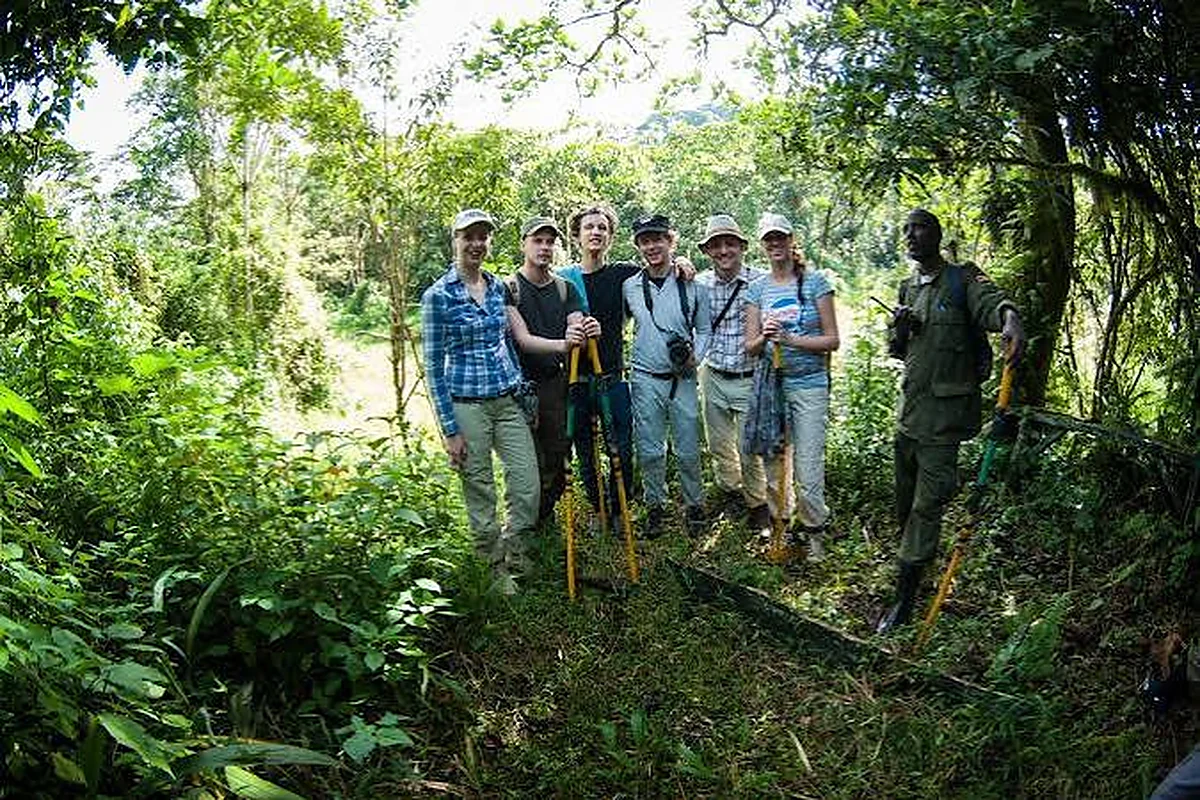
Visitors and a ranger pause together on a green forest trail during a gorilla trekking excursion.
How gorilla movements change routes
How gorilla movements change routes is an important part of understanding the demands of a gorilla trekking day in southwestern Uganda. How difficult is gorilla trekking in Uganda depends on the weather, the location of the gorilla family, the steepness of the trail and the visitor’s walking ability. A single difficulty label cannot capture those changing conditions. We recommend planning for a proper forest hike rather than a short sightseeing stroll, while remembering that many reasonably active travelers complete the experience successfully with patience and suitable
Why kilometres mislead
Why kilometres mislead is an important part of understanding the demands of a gorilla trekking day in southwestern Uganda. The forest is not a managed city park. Slopes, roots, wet leaves and narrow passages can slow a group even when the distance appears modest on a map. Rangers guide visitors and determine safe approaches, but the animals move naturally through their habitat. Travelers should focus on secure footing, a sustainable pace and clear communication instead of trying to predict the exact number of steps.
Two to seven hours as a guide
The official broad time estimate is a planning reference, not a promise about your individual trek. Uganda Wildlife Authority describes gorilla trekking as requiring moderate fitness, with outings often taking approximately two to seven hours. The standard gorilla viewing allowance is a maximum of one hour once the group reaches the animals. That distinction matters when planning the day: the outward search, the encounter and the return all require attention, and a late onward transfer can become unnecessarily stressful.
The one-hour encounter
The standard hour with gorillas is separate from the time spent hiking to find them and returning. For travelers considering this activity, preparation is more valuable than reassurance that everything will be easy. Walk regularly, practise modest hills, use boots that already fit and pack only what you need. Tell your guide about any difficulty early. These habits cannot remove every challenge, but they make the experience more comfortable and allow visitors to concentrate on the remarkable forest environment.
Why you need a flexible afternoon
Why you need a flexible afternoon is an important part of understanding the demands of a gorilla trekking day in southwestern Uganda. PrideMark Safaris plans around the confirmed trekking sector, the location of the lodge and the traveler’s actual needs. We do not promise that a particular gorilla family will be close to headquarters or that a specific route will be flat. Instead, we discuss realistic walking expectations, porter arrangements where available and a sensible schedule with enough time for rest before and after the trek.
Nine Amazing Tips for a More Comfortable Trek
Train on hills
Train on hills is an important part of understanding the demands of a gorilla trekking day in southwestern Uganda. Uganda Wildlife Authority describes gorilla trekking as requiring moderate fitness, with outings often taking approximately two to seven hours. The standard gorilla viewing allowance is a maximum of one hour once the group reaches the animals. That distinction matters when planning the day: the outward search, the encounter and the return all require attention, and a late onward transfer can become unnecessarily stressful.
Break in your boots
Break in your boots is an important part of understanding the demands of a gorilla trekking day in southwestern Uganda. For travelers considering this activity, preparation is more valuable than reassurance that everything will be easy. Walk regularly, practise modest hills, use boots that already fit and pack only what you need. Tell your guide about any difficulty early. These habits cannot remove every challenge, but they make the experience more comfortable and allow visitors to concentrate on the remarkable forest environment.
Hire a porter
Hire a porter is an important part of understanding the demands of a gorilla trekking day in southwestern Uganda. PrideMark Safaris plans around the confirmed trekking sector, the location of the lodge and the traveler’s actual needs. We do not promise that a particular gorilla family will be close to headquarters or that a specific route will be flat. Instead, we discuss realistic walking expectations, porter arrangements where available and a sensible schedule with enough time for rest before and after the trek.
Carry a light pack
Carry a light pack is an important part of understanding the demands of a gorilla trekking day in southwestern Uganda. A visitor’s confidence often improves when the itinerary avoids unnecessary fatigue. Arriving at the park after a demanding late drive, sleeping briefly and rushing to the briefing can make even a moderate walk feel harder. We prefer practical timing, a comfortable overnight stay near the correct sector and enough flexibility after trekking to account for weather and changing gorilla movements.
Use deliberate steps
Use deliberate steps is an important part of understanding the demands of a gorilla trekking day in southwestern Uganda. Every trekking group is different, and a route that feels manageable to one person may be strenuous for another. Neither age nor the price of a safari package reliably predicts the outcome. Visitors with mobility concerns or significant medical conditions should seek individualized advice before travel and discuss their limitations with the safari planner. Park staff remain responsible for safety decisions during the activity.
Communicate with rangers
Communicate with rangers is an important part of understanding the demands of a gorilla trekking day in southwestern Uganda. How difficult is gorilla trekking in Uganda depends on the weather, the location of the gorilla family, the steepness of the trail and the visitor’s walking ability. A single difficulty label cannot capture those changing conditions. We recommend planning for a proper forest hike rather than a short sightseeing stroll, while remembering that many reasonably active travelers complete the experience successfully with patience and suitable preparation.
Wear practical clothing
Wear practical clothing is an important part of understanding the demands of a gorilla trekking day in southwestern Uganda. The forest is not a managed city park. Slopes, roots, wet leaves and narrow passages can slow a group even when the distance appears modest on a map. Rangers guide visitors and determine safe approaches, but the animals move naturally through their habitat. Travelers should focus on secure footing, a sustainable pace and clear communication instead of trying to predict the exact number of steps.
Schedule recovery time
Schedule recovery time is an important part of understanding the demands of a gorilla trekking day in southwestern Uganda. Uganda Wildlife Authority describes gorilla trekking as requiring moderate fitness, with outings often taking approximately two to seven hours. The standard gorilla viewing allowance is a maximum of one hour once the group reaches the animals. That distinction matters when planning the day: the outward search, the encounter and the return all require attention, and a late onward transfer can become unnecessarily stressful.
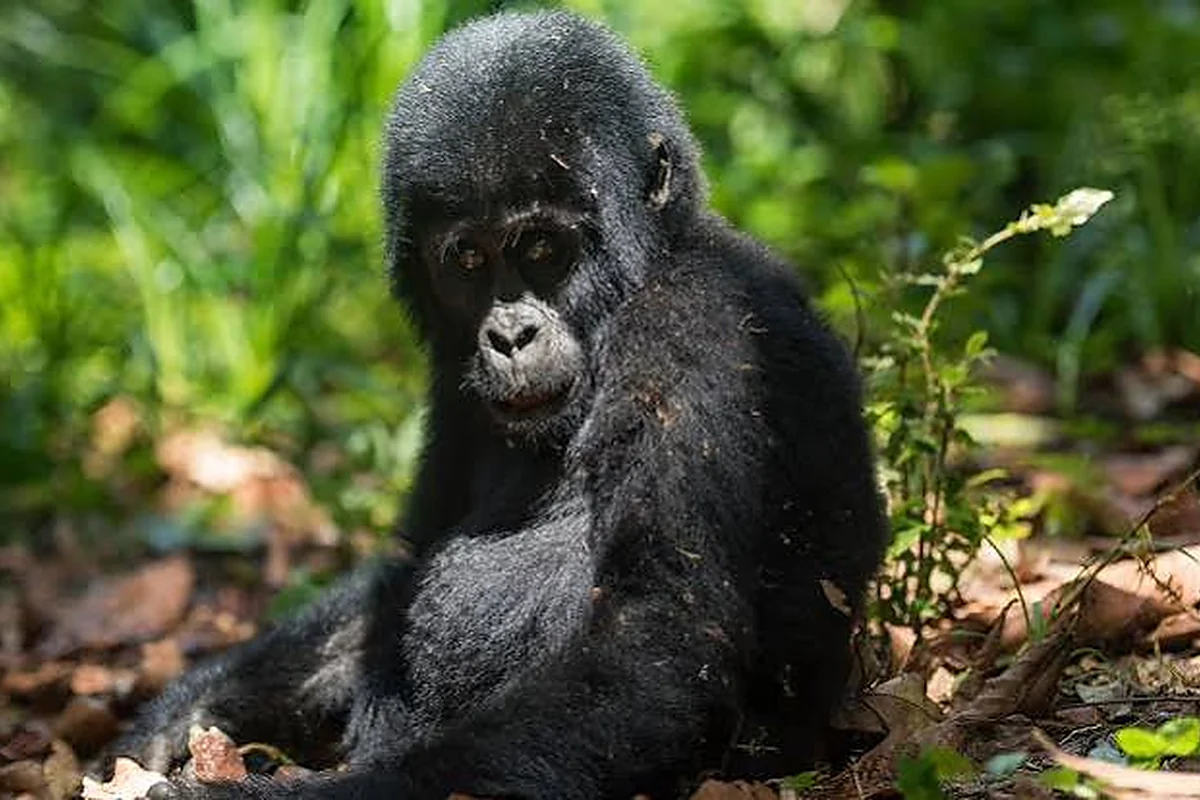
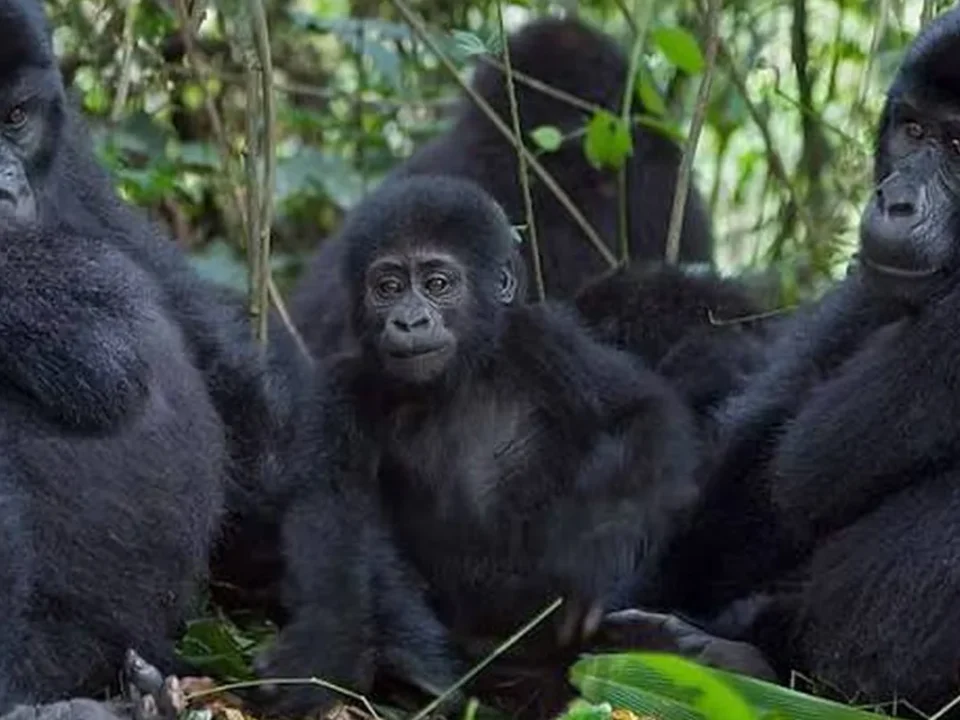
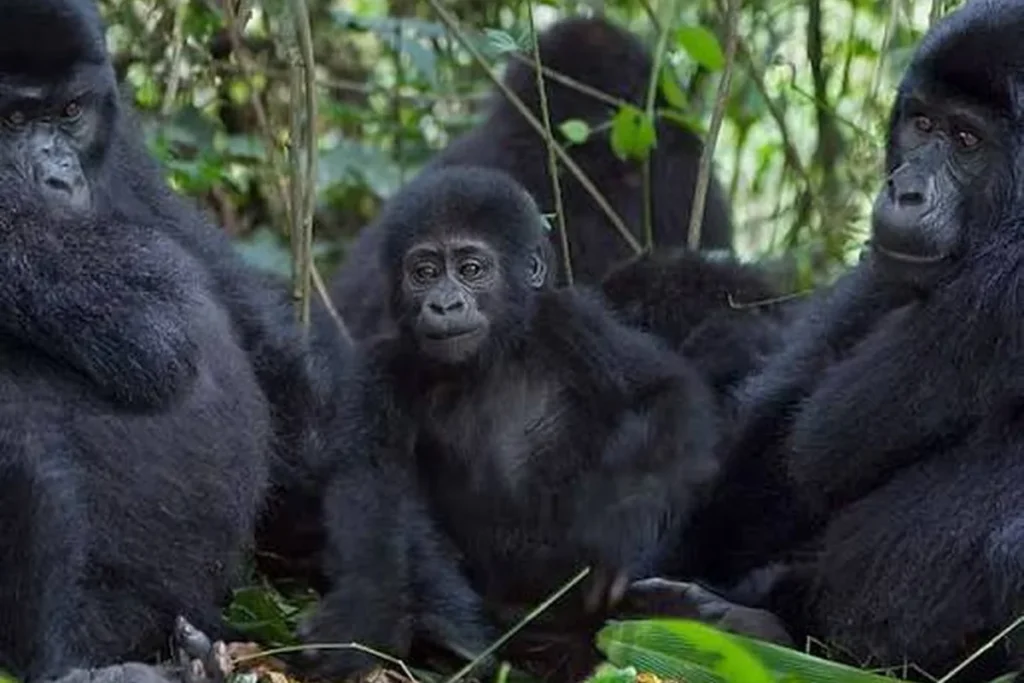
A young mountain gorilla sits quietly on the forest floor in its natural habitat
Bwindi Versus Mgahinga Difficulty
Buhoma terrain
Buhoma is a northern Bwindi entry area with established accommodation options, but that convenience does not guarantee gentle walking. A visitor’s confidence often improves when the itinerary avoids unnecessary fatigue. Arriving at the park after a demanding late drive, sleeping briefly and rushing to the briefing can make even a moderate walk feel harder. We prefer practical timing, a comfortable overnight stay near the correct sector and enough flexibility after trekking to account for weather and changing gorilla movements.
Ruhija terrain
Ruhija occupies an elevated eastern forest setting where cool mornings and uneven slopes can affect comfort. Every trekking group is different, and a route that feels manageable to one person may be strenuous for another. Neither age nor the price of a safari package reliably predicts the outcome. Visitors with mobility concerns or significant medical conditions should seek individualized advice before travel and discuss their limitations with the safari planner. Park staff remain responsible for safety decisions during the activity.
Rushaga terrain
Rushaga is a southern Bwindi trekking base with several lodge choices and access to distinct gorilla experiences. How difficult is gorilla trekking in Uganda depends on the weather, the location of the gorilla family, the steepness of the trail and the visitor’s walking ability. A single difficulty label cannot capture those changing conditions. We recommend planning for a proper forest hike rather than a short sightseeing stroll, while remembering that many reasonably active travelers complete the experience successfully with patience and suitable preparation.
Nkuringo terrain
Nkuringo is associated with dramatic highland scenery and potentially strenuous slopes. The forest is not a managed city park. Slopes, roots, wet leaves and narrow passages can slow a group even when the distance appears modest on a map. Rangers guide visitors and determine safe approaches, but the animals move naturally through their habitat. Travelers should focus on secure footing, a sustainable pace and clear communication instead of trying to predict the exact number of steps.
Mgahinga volcanic slopes
Mgahinga offers volcanic landscapes and golden monkey experiences, yet elevation can add to physical effort. Uganda Wildlife Authority describes gorilla trekking as requiring moderate fitness, with outings often taking approximately two to seven hours. The standard gorilla viewing allowance is a maximum of one hour once the group reaches the animals. That distinction matters when planning the day: the outward search, the encounter and the return all require attention, and a late onward transfer can become unnecessarily stressful.
Avoid easy-sector guarantees
Avoid easy-sector guarantees is an important part of understanding the demands of a gorilla trekking day in southwestern Uganda. For travelers considering this activity, preparation is more valuable than reassurance that everything will be easy. Walk regularly, practise modest hills, use boots that already fit and pack only what you need. Tell your guide about any difficulty early. These habits cannot remove every challenge, but they make the experience more comfortable and allow visitors to concentrate on the remarkable forest environment.
| Factor | What to expect | Planning response |
|---|---|---|
| Buhoma | Northern forest | No guaranteed easy route |
| Ruhija | Eastern highlands | Prepare for elevation |
| Rushaga | Southern forest | Check permit sector |
| Nkuringo | Steep highlands | Discuss fitness |
| Mgahinga | Volcanic slopes | Plan for altitude |
Fitness Preparation Before Departure
Start regular walks
Start regular walks is an important part of understanding the demands of a gorilla trekking day in southwestern Uganda. The forest is not a managed city park. Slopes, roots, wet leaves and narrow passages can slow a group even when the distance appears modest on a map. Rangers guide visitors and determine safe approaches, but the animals move naturally through their habitat. Travelers should focus on secure footing, a sustainable pace and clear communication instead of trying to predict the exact number of steps.
Practise inclines
Practise inclines is an important part of understanding the demands of a gorilla trekking day in southwestern Uganda. Uganda Wildlife Authority describes gorilla trekking as requiring moderate fitness, with outings often taking approximately two to seven hours. The standard gorilla viewing allowance is a maximum of one hour once the group reaches the animals. That distinction matters when planning the day: the outward search, the encounter and the return all require attention, and a late onward transfer can become unnecessarily stressful.
Work on balance
Work on balance is an important part of understanding the demands of a gorilla trekking day in southwestern Uganda. For travelers considering this activity, preparation is more valuable than reassurance that everything will be easy. Walk regularly, practise modest hills, use boots that already fit and pack only what you need. Tell your guide about any difficulty early. These habits cannot remove every challenge, but they make the experience more comfortable and allow visitors to concentrate on the remarkable forest environment.
Build steady stamina
Build steady stamina is an important part of understanding the demands of a gorilla trekking day in southwestern Uganda. PrideMark Safaris plans around the confirmed trekking sector, the location of the lodge and the traveler’s actual needs. We do not promise that a particular gorilla family will be close to headquarters or that a specific route will be flat. Instead, we discuss realistic walking expectations, porter arrangements where available and a sensible schedule with enough time for rest before and after the trek.
Plan hydration
Plan hydration is an important part of understanding the demands of a gorilla trekking day in southwestern Uganda. A visitor’s confidence often improves when the itinerary avoids unnecessary fatigue. Arriving at the park after a demanding late drive, sleeping briefly and rushing to the briefing can make even a moderate walk feel harder. We prefer practical timing, a comfortable overnight stay near the correct sector and enough flexibility after trekking to account for weather and changing gorilla movements.
Manage footwear and blisters
Manage footwear and blisters is an important part of understanding the demands of a gorilla trekking day in southwestern Uganda. Every trekking group is different, and a route that feels manageable to one person may be strenuous for another. Neither age nor the price of a safari package reliably predicts the outcome. Visitors with mobility concerns or significant medical conditions should seek individualized advice before travel and discuss their limitations with the safari planner. Park staff remain responsible for safety decisions during the activity.
Seniors and Travelers With Limited Mobility
Age is not a fitness test
Age is not a fitness test is an important part of understanding the demands of a gorilla trekking day in southwestern Uganda. PrideMark Safaris plans around the confirmed trekking sector, the location of the lodge and the traveler’s actual needs. We do not promise that a particular gorilla family will be close to headquarters or that a specific route will be flat. Instead, we discuss realistic walking expectations, porter arrangements where available and a sensible schedule with enough time for rest before and after the trek.
Discuss walking limitations
Discuss walking limitations is an important part of understanding the demands of a gorilla trekking day in southwestern Uganda. A visitor’s confidence often improves when the itinerary avoids unnecessary fatigue. Arriving at the park after a demanding late drive, sleeping briefly and rushing to the briefing can make even a moderate walk feel harder. We prefer practical timing, a comfortable overnight stay near the correct sector and enough flexibility after trekking to account for weather and changing gorilla movements.
Porter assistance
A porter may carry your bag and offer practical support on difficult sections, subject to local arrangements. Every trekking group is different, and a route that feels manageable to one person may be strenuous for another. Neither age nor the price of a safari package reliably predicts the outcome. Visitors with mobility concerns or significant medical conditions should seek individualized advice before travel and discuss their limitations with the safari planner. Park staff remain responsible for safety decisions during the activity.
Additional support arrangements
Special mobility assistance may be possible in some circumstances, but availability and suitability must be confirmed beforehand. How difficult is gorilla trekking in Uganda depends on the weather, the location of the gorilla family, the steepness of the trail and the visitor’s walking ability. A single difficulty label cannot capture those changing conditions. We recommend planning for a proper forest hike rather than a short sightseeing stroll, while remembering that many reasonably active travelers complete the experience successfully with patience and suitable preparation.
Medical clearance when appropriate
Medical clearance when appropriate is an important part of understanding the demands of a gorilla trekking day in southwestern Uganda. The forest is not a managed city park. Slopes, roots, wet leaves and narrow passages can slow a group even when the distance appears modest on a map. Rangers guide visitors and determine safe approaches, but the animals move naturally through their habitat. Travelers should focus on secure footing, a sustainable pace and clear communication instead of trying to predict the exact number of steps.
Avoid guaranteed easy routes
Avoid guaranteed easy routes is an important part of understanding the demands of a gorilla trekking day in southwestern Uganda. Uganda Wildlife Authority describes gorilla trekking as requiring moderate fitness, with outings often taking approximately two to seven hours. The standard gorilla viewing allowance is a maximum of one hour once the group reaches the animals. That distinction matters when planning the day: the outward search, the encounter and the return all require attention, and a late onward transfer can become unnecessarily stressful.
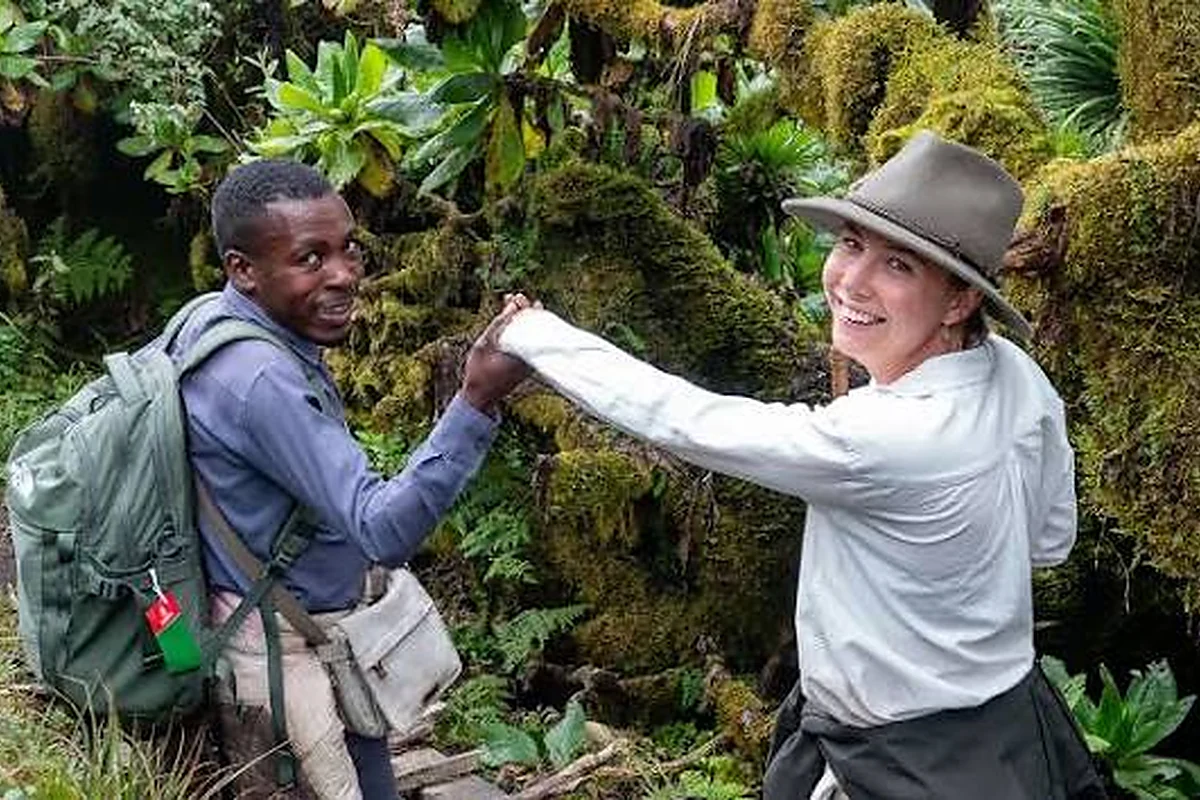
A trekking guide offers a helping hand to a visitor navigating the lush forest terrain.
What to Pack for Gorilla Trekking
Supportive boots
Supportive boots is an important part of understanding the demands of a gorilla trekking day in southwestern Uganda. How difficult is gorilla trekking in Uganda depends on the weather, the location of the gorilla family, the steepness of the trail and the visitor’s walking ability. A single difficulty label cannot capture those changing conditions. We recommend planning for a proper forest hike rather than a short sightseeing stroll, while remembering that many reasonably active travelers complete the experience successfully with patience and suitable preparation.
Long trousers and sleeves
Long trousers and sleeves is an important part of understanding the demands of a gorilla trekking day in southwestern Uganda. The forest is not a managed city park. Slopes, roots, wet leaves and narrow passages can slow a group even when the distance appears modest on a map. Rangers guide visitors and determine safe approaches, but the animals move naturally through their habitat. Travelers should focus on secure footing, a sustainable pace and clear communication instead of trying to predict the exact number of steps.
Rain protection
Rain protection is an important part of understanding the demands of a gorilla trekking day in southwestern Uganda. Uganda Wildlife Authority describes gorilla trekking as requiring moderate fitness, with outings often taking approximately two to seven hours. The standard gorilla viewing allowance is a maximum of one hour once the group reaches the animals. That distinction matters when planning the day: the outward search, the encounter and the return all require attention, and a late onward transfer can become unnecessarily stressful.
Water and food
Water and food is an important part of understanding the demands of a gorilla trekking day in southwestern Uganda. For travelers considering this activity, preparation is more valuable than reassurance that everything will be easy. Walk regularly, practise modest hills, use boots that already fit and pack only what you need. Tell your guide about any difficulty early. These habits cannot remove every challenge, but they make the experience more comfortable and allow visitors to concentrate on the remarkable forest environment.
Walking stick considerations
Walking stick considerations is an important part of understanding the demands of a gorilla trekking day in southwestern Uganda. PrideMark Safaris plans around the confirmed trekking sector, the location of the lodge and the traveler’s actual needs. We do not promise that a particular gorilla family will be close to headquarters or that a specific route will be flat. Instead, we discuss realistic walking expectations, porter arrangements where available and a sensible schedule with enough time for rest before and after the trek.
Camera and electronics
Photographers should prioritize manageable equipment and remember that flash photography is prohibited. A visitor’s confidence often improves when the itinerary avoids unnecessary fatigue. Arriving at the park after a demanding late drive, sleeping briefly and rushing to the briefing can make even a moderate walk feel harder. We prefer practical timing, a comfortable overnight stay near the correct sector and enough flexibility after trekking to account for weather and changing gorilla movements.
Personal medication and essentials
Personal medication and essentials is an important part of understanding the demands of a gorilla trekking day in southwestern Uganda. Every trekking group is different, and a route that feels manageable to one person may be strenuous for another. Neither age nor the price of a safari package reliably predicts the outcome. Visitors with mobility concerns or significant medical conditions should seek individualized advice before travel and discuss their limitations with the safari planner. Park staff remain responsible for safety decisions during the activity.
| Factor | What to expect | Planning response |
|---|---|---|
| Boots | Traction and ankle support | Break in before travel |
| Rain jacket | Changing forest weather | Keep lightweight |
| Water | Hydration during long hikes | Carry sufficient supply |
Planning With PrideMark Safaris
Our sector-first approach
Our sector-first approach is an important part of understanding the demands of a gorilla trekking day in southwestern Uganda. For travelers considering this activity, preparation is more valuable than reassurance that everything will be easy. Walk regularly, practise modest hills, use boots that already fit and pack only what you need. Tell your guide about any difficulty early. These habits cannot remove every challenge, but they make the experience more comfortable and allow visitors to concentrate on the remarkable forest environment.
Lodge location matters
Lodge location matters is an important part of understanding the demands of a gorilla trekking day in southwestern Uganda. PrideMark Safaris plans around the confirmed trekking sector, the location of the lodge and the traveler’s actual needs. We do not promise that a particular gorilla family will be close to headquarters or that a specific route will be flat. Instead, we discuss realistic walking expectations, porter arrangements where available and a sensible schedule with enough time for rest before and after the trek.
Short gorilla itineraries
Short gorilla itineraries is an important part of understanding the demands of a gorilla trekking day in southwestern Uganda. A visitor’s confidence often improves when the itinerary avoids unnecessary fatigue. Arriving at the park after a demanding late drive, sleeping briefly and rushing to the briefing can make even a moderate walk feel harder. We prefer practical timing, a comfortable overnight stay near the correct sector and enough flexibility after trekking to account for weather and changing gorilla movements.
Longer wildlife combinations
Longer wildlife combinations is an important part of understanding the demands of a gorilla trekking day in southwestern Uganda. Every trekking group is different, and a route that feels manageable to one person may be strenuous for another. Neither age nor the price of a safari package reliably predicts the outcome. Visitors with mobility concerns or significant medical conditions should seek individualized advice before travel and discuss their limitations with the safari planner. Park staff remain responsible for safety decisions during the activity.
Mgahinga and golden monkeys
Mgahinga and golden monkeys is an important part of understanding the demands of a gorilla trekking day in southwestern Uganda. How difficult is gorilla trekking in Uganda depends on the weather, the location of the gorilla family, the steepness of the trail and the visitor’s walking ability. A single difficulty label cannot capture those changing conditions. We recommend planning for a proper forest hike rather than a short sightseeing stroll, while remembering that many reasonably active travelers complete the experience successfully with patience and suitable preparation.
Responsible trekking expectations
Responsible trekking expectations is an important part of understanding the demands of a gorilla trekking day in southwestern Uganda. The forest is not a managed city park. Slopes, roots, wet leaves and narrow passages can slow a group even when the distance appears modest on a map. Rangers guide visitors and determine safe approaches, but the animals move naturally through their habitat. Travelers should focus on secure footing, a sustainable pace and clear communication instead of trying to predict the exact number of steps.
How to request tailored planning
How to request tailored planning is an important part of understanding the demands of a gorilla trekking day in southwestern Uganda. Uganda Wildlife Authority describes gorilla trekking as requiring moderate fitness, with outings often taking approximately two to seven hours. The standard gorilla viewing allowance is a maximum of one hour once the group reaches the animals. That distinction matters when planning the day: the outward search, the encounter and the return all require attention, and a late onward transfer can become unnecessarily stressful.
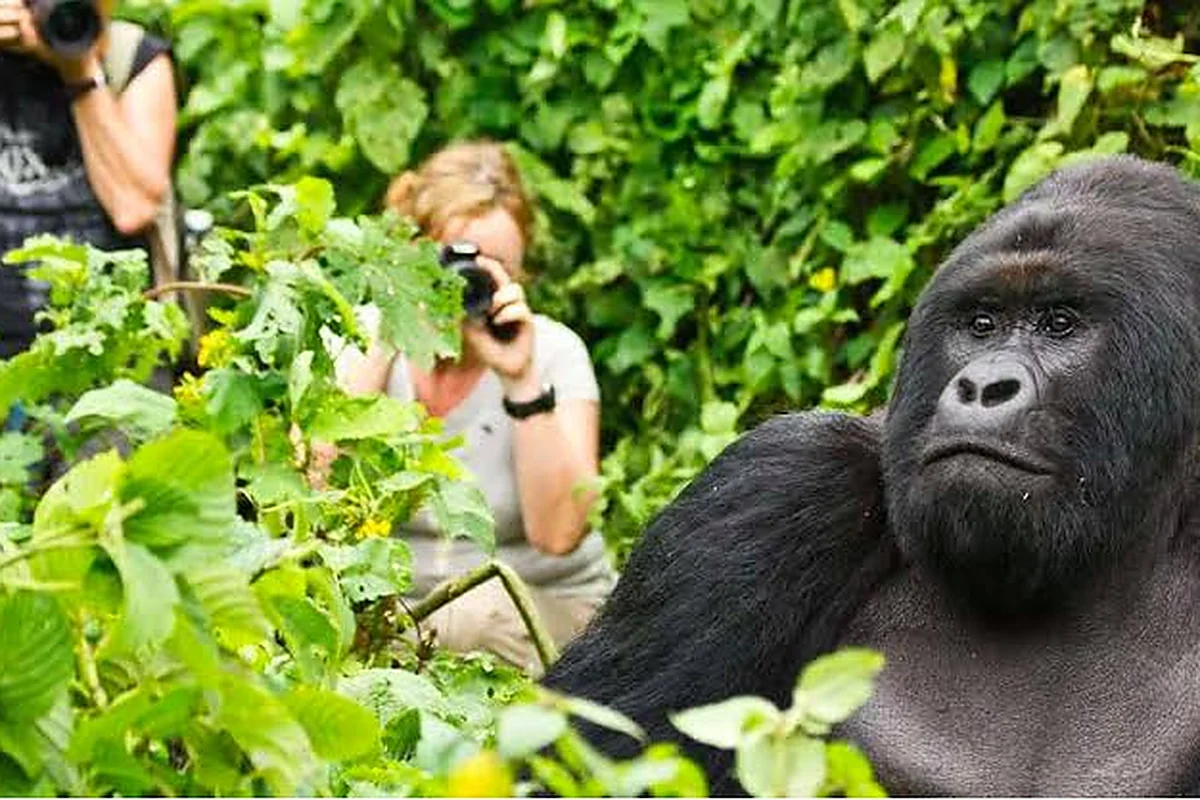
A mountain gorilla rests among lush vegetation as two visitors photograph the wildlife encounter.
Frequently Asked Questions
Is gorilla trekking in Uganda difficult for beginners?
How difficult is gorilla trekking in Uganda depends on the weather, the location of the gorilla family, the steepness of the trail and the visitor’s walking ability. A single difficulty label cannot capture those changing conditions. We recommend planning for a proper forest hike rather than a short sightseeing stroll, while remembering that many reasonably active travelers complete the experience successfully with patience and suitable preparation.
How long does a gorilla trek take?
The forest is not a managed city park. Slopes, roots, wet leaves and narrow passages can slow a group even when the distance appears modest on a map. Rangers guide visitors and determine safe approaches, but the animals move naturally through their habitat. Travelers should focus on secure footing, a sustainable pace and clear communication instead of trying to predict the exact number of steps.
Is Bwindi more difficult than Mgahinga?
Uganda Wildlife Authority describes gorilla trekking as requiring moderate fitness, with outings often taking approximately two to seven hours. The standard gorilla viewing allowance is a maximum of one hour once the group reaches the animals. That distinction matters when planning the day: the outward search, the encounter and the return all require attention, and a late onward transfer can become unnecessarily stressful.
Do I need hiking experience?
For travelers considering this activity, preparation is more valuable than reassurance that everything will be easy. Walk regularly, practise modest hills, use boots that already fit and pack only what you need. Tell your guide about any difficulty early. These habits cannot remove every challenge, but they make the experience more comfortable and allow visitors to concentrate on the remarkable forest environment.
How fit should I be?
PrideMark Safaris plans around the confirmed trekking sector, the location of the lodge and the traveler’s actual needs. We do not promise that a particular gorilla family will be close to headquarters or that a specific route will be flat. Instead, we discuss realistic walking expectations, porter arrangements where available and a sensible schedule with enough time for rest before and after the trek.
Can I hire a porter?
A visitor’s confidence often improves when the itinerary avoids unnecessary fatigue. Arriving at the park after a demanding late drive, sleeping briefly and rushing to the briefing can make even a moderate walk feel harder. We prefer practical timing, a comfortable overnight stay near the correct sector and enough flexibility after trekking to account for weather and changing gorilla movements.
Which Bwindi sector is easiest?
Every trekking group is different, and a route that feels manageable to one person may be strenuous for another. Neither age nor the price of a safari package reliably predicts the outcome. Visitors with mobility concerns or significant medical conditions should seek individualized advice before travel and discuss their limitations with the safari planner. Park staff remain responsible for safety decisions during the activity.
Can seniors trek gorillas?
How difficult is gorilla trekking in Uganda depends on the weather, the location of the gorilla family, the steepness of the trail and the visitor’s walking ability. A single difficulty label cannot capture those changing conditions. We recommend planning for a proper forest hike rather than a short sightseeing stroll, while remembering that many reasonably active travelers complete the experience successfully with patience and suitable preparation.
What happens if it rains?
The forest is not a managed city park. Slopes, roots, wet leaves and narrow passages can slow a group even when the distance appears modest on a map. Rangers guide visitors and determine safe approaches, but the animals move naturally through their habitat. Travelers should focus on secure footing, a sustainable pace and clear communication instead of trying to predict the exact number of steps.
Can I request a shorter route?
Uganda Wildlife Authority describes gorilla trekking as requiring moderate fitness, with outings often taking approximately two to seven hours. The standard gorilla viewing allowance is a maximum of one hour once the group reaches the animals. That distinction matters when planning the day: the outward search, the encounter and the return all require attention, and a late onward transfer can become unnecessarily stressful.
Does the viewing hour include walking?
For travelers considering this activity, preparation is more valuable than reassurance that everything will be easy. Walk regularly, practise modest hills, use boots that already fit and pack only what you need. Tell your guide about any difficulty early. These habits cannot remove every challenge, but they make the experience more comfortable and allow visitors to concentrate on the remarkable forest environment.
How can PrideMark Safaris help?
PrideMark Safaris plans around the confirmed trekking sector, the location of the lodge and the traveler’s actual needs. We do not promise that a particular gorilla family will be close to headquarters or that a specific route will be flat. Instead, we discuss realistic walking expectations, porter arrangements where available and a sensible schedule with enough time for rest before and after the trek.
Related Gorilla Trekking Resources and Safari Packages
Explore the Uganda Wildlife Authority gorilla trekking guidance, our Bwindi versus Mgahinga comparison and the Bwindi sector guide. Consider the 3-day gorilla trekking safari, 4-day Mgahinga safari, 5-day gorilla and game safari or 9-day wildlife safari. These links support practical planning and should be checked against confirmed permit availability before travel.