Can Mountain Gorillas Recognise Humans? 7 Amazing Discoveries

Do Mountain Gorillas Mourn Their Dead? 7 Remarkable Discoveries About Their Emotional World
November 12, 2026
How Difficult Is Gorilla Trekking in Uganda? 9 Amazing Tips
November 13, 2026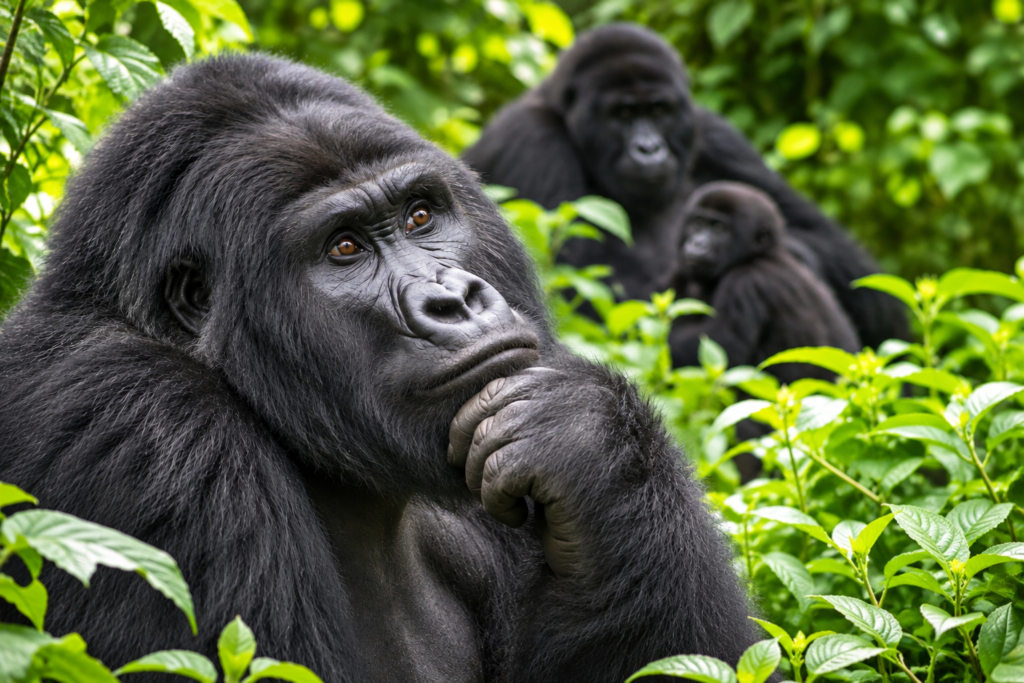
Deep within the mist-covered rainforests of Uganda, mountain gorillas live in a remarkable world shaped by memory, intelligence, social relationships, and extraordinary survival instincts. These magnificent primates communicate with familiar companions, recognise changes in their surroundings, and respond differently to situations based on previous experiences. Yet one particularly fascinating question continues to capture the imagination of wildlife enthusiasts: Can mountain gorillas recognise humans?
Imagine walking through the ancient vegetation of Bwindi Impenetrable National Park, accompanied by experienced wildlife rangers searching for a habituated gorilla family. Suddenly, the forest opens slightly, revealing an enormous silverback resting among the undergrowth. He briefly raises his head, observes the approaching visitors, and returns to feeding while younger gorillas play nearby.
At that extraordinary moment, you might wonder whether the silverback knows the difference between the ranger who regularly monitors his family and the tourists encountering him for the first time. Could he remember familiar voices, distinguish human faces, or associate particular individuals with previous experiences? These questions introduce an intriguing dimension of mountain gorilla intelligence that scientists continue to investigate.
Mountain gorillas share many characteristics with other great apes, including sophisticated social behaviour, prolonged parental care, learning abilities, and flexible responses to their environment. Their lives depend on recognising familiar companions, interpreting communication signals, and adjusting to changing circumstances. Understanding these abilities provides an important foundation for investigating how they perceive humans entering their natural habitat.
Scientific research offers fascinating evidence that gorillas can distinguish certain familiar human voices and respond differently according to previous interactions. Studies of habituation in Uganda also demonstrate that wild mountain gorillas can learn to tolerate predictable human presence. However, researchers distinguish these findings from the stronger claim that individual mountain gorillas necessarily recognise every familiar human face.
For travellers exploring Uganda, this subject adds remarkable depth to an already unforgettable wildlife experience. Watching a gorilla family becomes more meaningful when visitors understand that these animals possess individual personalities, complex relationships, and behavioural abilities that continue to challenge scientific understanding. Their responses to humans are part of a much larger story involving learning, conservation, and coexistence.
At PrideMark Safaris, we believe that exceptional wildlife travel should inspire curiosity about the animals and landscapes being explored. Our approach to explaining mountain gorilla behaviour emphasises responsible observation, scientifically grounded information, and respect for the extraordinary primates that make Uganda one of Africa’s most remarkable safari destinations.
This detailed guide explores seven fascinating discoveries about gorilla intelligence, human recognition, memory, communication, and habituation. It also examines the differences between scientific evidence and popular assumptions, explains how these discoveries relate to gorilla trekking, and reveals why understanding mountain gorilla intelligence matters for the long-term protection of these endangered animals.
Understanding Mountain Gorilla Intelligence and Their Relationship With Humans
Mountain gorillas, scientifically classified as Gorilla beringei beringei, are a subspecies of eastern gorilla inhabiting protected mountain forests in Uganda, Rwanda, and the Democratic Republic of Congo. Their natural environment includes steep slopes, dense vegetation, bamboo forests, and high-altitude ecosystems that demand considerable adaptability from the animals living within them.

In Uganda, mountain gorillas inhabit Bwindi Impenetrable National Park and Mgahinga Gorilla National Park. These protected landscapes provide suitable vegetation, shelter, breeding environments, and opportunities for complex social interaction. The animals spend substantial portions of their daily lives feeding, resting, travelling, and maintaining relationships with other members of their social groups.
Mountain gorilla intelligence is closely connected to the challenges of living within these environments. Individuals must navigate forest terrain, respond to changing food availability, recognise familiar companions, and interpret social signals. Young gorillas gradually develop these abilities through experience, exploration, observation, and prolonged interaction with their mothers and other group members.
Unlike animals that live predominantly solitary lives, mountain gorillas generally form organised social groups containing mature males, adult females, juveniles, and infants. The relationships within these groups are not interchangeable. Individuals develop familiarity, preferences, and associations that influence how they interact, travel, rest, and respond to unfamiliar circumstances.
A dominant silverback frequently contributes to group protection and coordination, although mountain gorilla societies involve considerably more than the decisions of one powerful male. Adult females maintain important relationships, young gorillas develop social skills, and different individuals respond to companions according to their shared experiences and established social histories.
These social abilities raise an important scientific question: if gorillas can distinguish familiar companions within their own species, could they also learn to distinguish particular humans? The possibility is intriguing because humans and gorillas share certain cognitive capacities, but recognition across species must be investigated rather than automatically assumed.
When considering whether mountain gorillas recognise humans, scientists examine several different processes. These include recognition of voices, familiarity with human appearance, memory of previous encounters, interpretation of behaviour, and habituation to repeated human presence. Each process provides different evidence about what gorillas may learn from interactions with people.
Understanding these distinctions is essential because a mountain gorilla that remains calm near tourists is not necessarily recognising each visitor individually. Its behaviour may reflect familiarity with the general circumstances of guided encounters. The scientific challenge is determining whether the animal recognises particular people or simply responds to a predictable situation.
Discovery One: Gorillas Can Distinguish Familiar Human Voices
What Scientific Experiments Reveal About Gorilla Voice Recognition

One of the most compelling discoveries about gorilla intelligence comes from experiments investigating whether gorillas can distinguish human voices. Researchers studying western gorillas at Zoo Atlanta examined how the animals responded to recordings of unfamiliar people and individuals with whom they had previously experienced different types of interactions.
The study, published in Animal Cognition, investigated whether human vocal signals carried information that gorillas could use to distinguish familiar and unfamiliar individuals. Researchers compared responses to unfamiliar voices, familiar voices associated with positive interactions, and familiar voices associated with less positive experiences during the animals’ lives.
The findings revealed meaningful differences in the gorillas’ responses. They showed greater attention and more distress-related behaviour when hearing unfamiliar voices or voices associated with negative experiences than when hearing familiar voices associated with positive interactions. These observations suggested that the animals could distinguish categories of human speakers through sound.
This discovery is important because it demonstrates that gorillas do not necessarily treat every human voice as an identical environmental signal. Instead, some individuals can respond differently according to familiarity and previous experience. Their reactions indicate that auditory information may carry social meaning extending beyond communication with members of their own species.
However, the research involved captive western gorillas rather than wild mountain gorillas. Although these animals belong to the same genus, their living environments and experiences with humans differ considerably. Captive gorillas may encounter particular caregivers repeatedly under conditions that are not equivalent to brief wildlife tourism encounters in African forests.
The study therefore supports the broader possibility of human voice recognition among gorillas without proving that every mountain gorilla possesses the same ability under natural conditions. Further field research would be necessary to establish whether wild mountain gorillas consistently distinguish individual trackers, researchers, or other people using their voices.
Readers interested in the scientific evidence can explore the published research on gorillas distinguishing familiar human voices, which provides an important foundation for understanding recognition abilities and the influence of previous human interactions.
Can Mountain Gorillas Recognise Humans by Their Voices?

The question of whether mountain gorillas recognise humans through their voices becomes particularly interesting when considering the people who regularly work in gorilla habitats. Wildlife trackers, conservation personnel, and researchers may encounter the same families repeatedly while monitoring their movements, health, reproductive histories, and social behaviour.
Human voices possess distinctive characteristics, including pitch, rhythm, pronunciation, tone, and speaking patterns. In many social animals, acoustic signals help distinguish familiar individuals when direct visual contact is difficult. Mountain gorilla habitats, with their dense vegetation and limited visibility, provide an environment where auditory information can be especially useful.
Gorillas themselves rely on vocal communication to maintain contact with companions and respond to social circumstances. Their ability to interpret meaningful sounds within their own species makes the investigation of human voice recognition particularly relevant. Nevertheless, recognising another gorilla’s vocalisation does not automatically establish recognition of individual human speakers.
A mountain gorilla may become familiar with the sounds produced during repeated encounters with conservation personnel. These could include human voices, footsteps, movement through vegetation, and other recurring environmental signals. Determining whether the animal associates those sounds with a particular person requires carefully designed observations rather than assumptions based on apparent calmness.
For visitors, this research reveals why quiet, predictable behaviour matters during gorilla trekking. Human sounds form part of the sensory environment experienced by gorillas, and unnecessary noise can alter the circumstances of an encounter. Respecting ranger instructions helps reduce disturbance while allowing visitors to observe the animals behaving as naturally as possible.
Why Previous Human Experiences May Influence Gorilla Responses

The relationship between recognition and previous experience is another important aspect of gorilla intelligence. In the voice recognition experiment, the animals’ responses were associated not only with familiarity but also with the nature of earlier interactions. This suggests that recognising a familiar signal may be connected to learned expectations.
An animal that has repeatedly encountered a particular person under predictable conditions may respond differently from one encountering an unfamiliar individual. However, researchers must distinguish between recognition of the person and recognition of the broader situation. Clothing, movement, location, and other contextual signals may contribute to the animal’s response.
This distinction matters for wildlife conservation because gorillas encounter humans in different circumstances. Some interactions involve trained researchers and rangers, while others may involve tourists or people living near protected areas. These encounters are not necessarily equivalent, and gorillas may respond according to the circumstances they have experienced.
The discovery that gorillas can distinguish categories of human voices highlights the importance of consistent, responsible behaviour around wildlife. It also reinforces the scientific value of investigating how animals learn from encounters with people, especially in protected landscapes where conservation and tourism create repeated opportunities for contact.
Discovery Two: Mountain Gorillas Possess Remarkable Social Recognition Abilities
How Mountain Gorillas Recognise Familiar Family Members
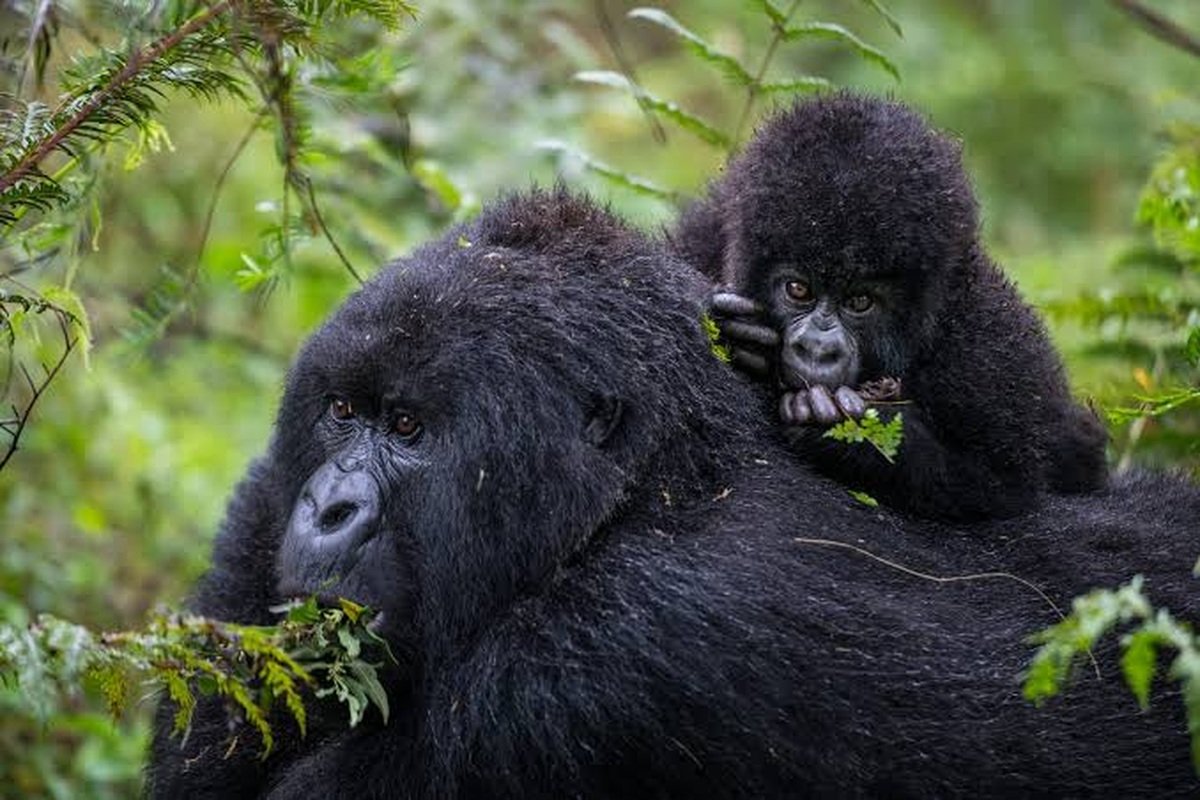
Before scientists can fully answer whether mountain gorillas recognise humans, they must understand how these primates distinguish individuals within their own social groups. Mountain gorilla families contain members whose relationships develop over extended periods, creating opportunities for familiarity, social learning, and individual recognition to influence everyday behaviour.
A mother mountain gorilla maintains a particularly important relationship with her infant. During early development, the infant depends on maternal care for nourishment, protection, warmth, and movement. As the young gorilla grows, it gradually becomes more independent while continuing to recognise and respond to familiar social companions.
Young gorillas also develop relationships with siblings, juveniles, adult females, and mature males. Their behaviour may vary according to the individual involved, the circumstances of an interaction, and the history of previous encounters. Such differences reveal that gorilla social life depends on more than simple responses to movement or physical appearance.
Dominant silverbacks often maintain important relationships with younger members of their groups. Juveniles may rest near familiar males, engage in playful interactions, or remain close during periods of uncertainty. These relationships contribute to the social environment in which younger gorillas develop communication skills and learn appropriate behaviour.
Adult females likewise maintain associations that influence group stability and social organisation. Their interactions can involve proximity, tolerance, feeding arrangements, and responses to changes in group composition. Recognising familiar companions allows gorillas to navigate these relationships within communities where different individuals have different social roles.
These patterns demonstrate why social recognition is fundamental to mountain gorilla intelligence. The animals must respond appropriately to companions whose identities and previous interactions matter. This provides a foundation for investigating whether similar learning processes might influence their responses to repeatedly encountered humans.
Does Recognising Other Gorillas Mean They Can Recognise People?
Recognising members of one’s own species and recognising individuals from another species are related but distinct abilities. Mountain gorillas have extensive opportunities to learn about other gorillas through ordinary social life. Human encounters, by contrast, occur under different conditions and may involve unfamiliar signals, behaviours, and expectations.
A gorilla’s ability to distinguish familiar companions therefore cannot be treated as direct proof that it recognises individual tourists. Nevertheless, sophisticated social recognition makes the broader question scientifically reasonable. Animals capable of retaining information about social partners may also acquire information about frequently encountered members of another species.
Researchers studying animal cognition investigate whether recognition depends on visual appearance, vocal signals, smell, previous experiences, or combinations of sensory information. The answer may vary across species and circumstances. Some animals rely heavily on sound, while others use visual characteristics or multiple signals together.
For mountain gorillas, the dense forest environment creates opportunities for recognition through more than one sensory channel. A familiar human encounter may involve recurring voices, movements, clothing, scents, and environmental circumstances. Separating these influences would help scientists determine whether a gorilla recognises a particular person.
The important conclusion is that mountain gorillas possess complex social abilities, but the exact extent of their recognition of individual humans remains a question for research. This uncertainty should inspire curiosity rather than encourage exaggerated claims about what the animals understand.
How Social Relationships Reveal Gorilla Intelligence

The intelligence of mountain gorillas becomes especially visible through the ordinary interactions that occur within their families. A juvenile learning when to approach an adult, a mother responding to her infant, or a silverback monitoring nearby companions demonstrates behaviour shaped by social context and experience.
These everyday activities may appear simple during a brief wildlife encounter, but they form part of an intricate system of relationships. Individuals continually receive information about companions, interpret behaviour, and adjust their actions. Their responses are influenced by age, familiarity, social position, and the circumstances surrounding each interaction.
For travellers, recognising this complexity changes the meaning of gorilla trekking. Instead of viewing a gorilla family as a collection of impressive animals, visitors can appreciate a community of individuals with established relationships and distinct behavioural histories. This perspective encourages respectful observation and a deeper understanding of the animals’ natural lives.
At PrideMark Safaris, we encourage travellers to approach gorilla encounters with curiosity about these relationships. Observing natural family behaviour offers a more meaningful experience than attempting to attract attention or encourage the animals to respond directly to visitors.
Discovery Three: Gorilla Memory May Help Them Remember Familiar Humans
The Connection Between Gorilla Memory and Intelligence

Memory is essential to recognition because an animal must retain information from previous experiences to distinguish something familiar from something unfamiliar. Mountain gorillas demonstrate learning through their daily activities, including navigation, feeding, communication, and participation in established social relationships within their natural environment.
Living in dense mountain forests requires gorillas to respond to changing vegetation, terrain, weather, and social circumstances. They must locate suitable feeding areas, move through challenging landscapes, and maintain contact with companions. Experience contributes to these activities, although researchers must investigate the specific cognitive processes involved in different behaviours.
Young mountain gorillas gradually acquire important skills through exploration and observation. They learn how to move across uneven ground, handle vegetation, interact with companions, and respond to social signals. Their development reflects a prolonged period of learning that supports increasing independence within the family group.
These abilities suggest that memory plays an important role in mountain gorilla life. However, remembering familiar feeding areas or social partners does not automatically demonstrate the ability to recognise a human face after a long period. Different memory tasks involve different information and may rely on different cognitive processes.
When investigating whether mountain gorillas recognise humans, researchers must therefore distinguish between remembering previous encounters and identifying the particular people involved. A gorilla may remember that human visits usually occur under predictable conditions without necessarily recognising each person as a distinct individual.
Can Mountain Gorillas Remember Human Faces?
Human facial recognition is a particularly fascinating area of great ape cognition. Research involving certain great apes has documented recognition of familiar human faces, suggesting that some individuals can retain information about people they have encountered previously. Such findings contribute to broader investigations of memory and recognition across closely related primate species.
However, evidence from one great ape species or an individual living in a managed environment cannot automatically be applied to wild mountain gorillas. Differences in experience, environment, familiarity, and experimental conditions may influence recognition abilities and the ways they become visible to researchers.
For mountain gorillas, recognising a human face would require distinguishing relevant visual features from those of other people. Scientists would also need to determine whether the animal relies on facial information rather than clothing, body shape, voice, movement, or other signals associated with a familiar person.
This is especially challenging during natural wildlife encounters because several signals usually occur together. A familiar researcher may approach through a familiar location, use a recognisable voice, and behave according to established routines. The gorilla’s response could reflect any combination of these characteristics.
The question of whether mountain gorillas recognise humans through facial memory therefore remains scientifically interesting but insufficiently resolved. Rather than assuming the ability is either universal or absent, researchers can investigate the conditions under which individual recognition may occur.
Could a Gorilla Remember a Tourist After a Previous Trek?
Many visitors wonder whether a mountain gorilla might remember them if they return to Uganda for another trekking experience. The idea is understandable because close wildlife encounters can feel exceptionally memorable to the people involved, especially when a gorilla briefly looks toward the group.
Nevertheless, a memorable human experience does not establish that the gorilla experiences the encounter in the same way. Tourists generally spend a limited period observing a habituated family, and many visitors may appear within the broader pattern of regulated human encounters experienced by the animals.
Even if a gorilla possesses the cognitive capacity to remember particular people, it does not follow that every tourist encounter creates a lasting individual memory. The duration, circumstances, distinctiveness, and significance of an interaction may influence whether information is retained.
There is currently insufficient evidence to promise travellers that a gorilla will remember them personally after a brief visit. Such claims would require controlled research demonstrating recognition beyond general familiarity with tourists and other environmental cues.
The most meaningful purpose of gorilla trekking is therefore not to become personally recognised by the animals. It is to observe their natural behaviour responsibly and appreciate the extraordinary intelligence, social relationships, and conservation importance of these remarkable primates.
Discovery Four: Gorilla Habituation Demonstrates Their Ability to Learn From Human Presence
What Gorilla Habituation Really Means
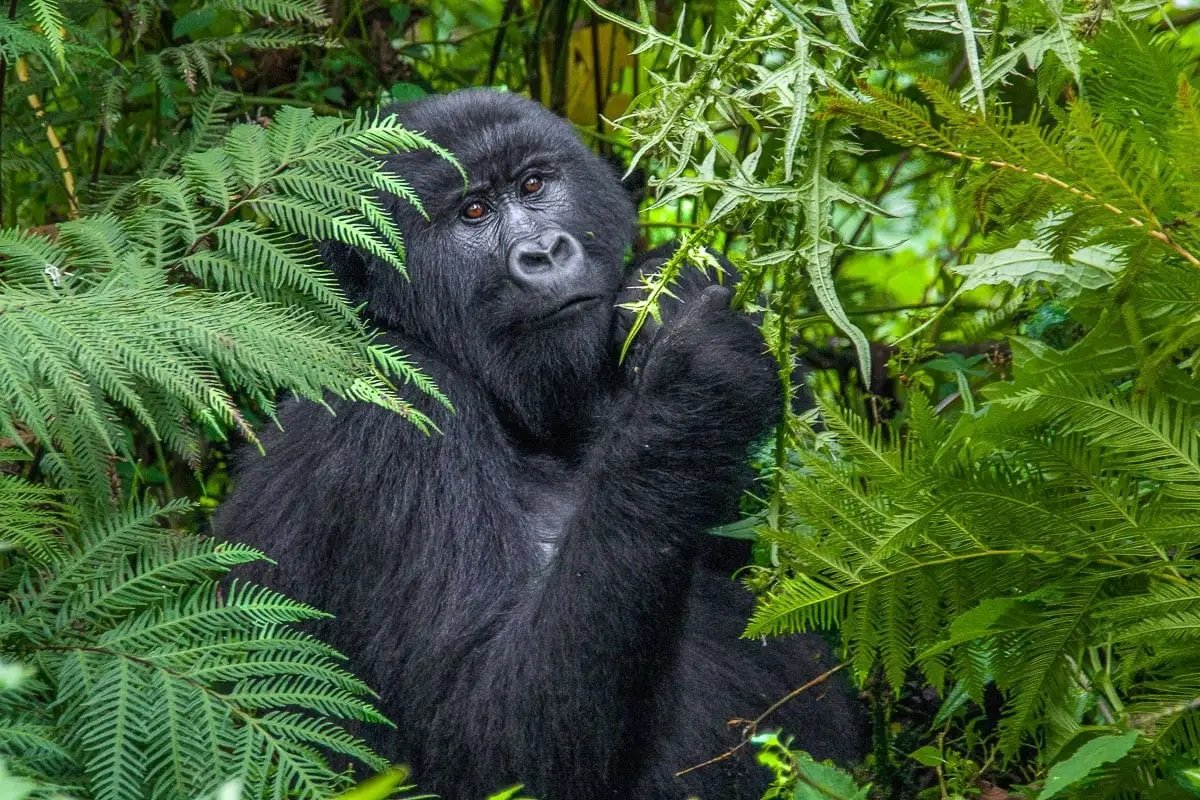
Gorilla habituation is one of the most important concepts for understanding how mountain gorillas respond to humans. It involves repeated, carefully managed encounters intended to reduce certain defensive or avoidance responses to predictable human presence, allowing scientific monitoring and regulated wildlife observation under controlled conditions.
Wild mountain gorillas that have not become accustomed to humans may respond to encounters with uncertainty, avoidance, or defensive behaviour. These responses are understandable because unfamiliar people can represent unpredictable elements within the animals’ environment. Conservation teams therefore approach habituation through structured observation and repeated non-threatening encounters.
Over time, some gorilla groups become less reactive to familiar patterns of human presence. They may continue feeding, resting, or interacting with companions while trained observers remain nearby. This behavioural adjustment makes carefully regulated tourism possible without requiring the animals to approach visitors or participate in direct interactions.
Habituation does not mean domestication, friendship, or complete acceptance of every human behaviour. Mountain gorillas remain wild animals capable of responding defensively when disturbed. Their tolerance of predictable observation should never be interpreted as permission for tourists to approach closely, touch them, or attempt to influence their actions.
Research conducted at Bwindi has explored habituation as a relationship involving both human activities and the gorillas’ own behavioural responses. Rather than portraying gorillas as passive subjects controlled entirely by researchers, this work recognises that the animals influence how encounters develop through their individual behaviour.
The study, Gorilla Habituation and the Role of Animal Agency in Conservation and Tourism Development at Bwindi, provides a valuable perspective on the interactions between mountain gorillas, researchers, trackers, rangers, tourists, and the forest environment.
Does Habituation Prove That Mountain Gorillas Recognise Humans?
Can mountain gorillas recognise humans because they have become habituated to their presence? Habituation demonstrates learning, but it does not independently establish individual human recognition. The distinction is essential because an animal can become accustomed to a recurring situation without identifying every person involved.
A habituated gorilla may continue feeding while a guided tourist group observes from the permitted distance. This behaviour could indicate that the animal has learned that such encounters generally do not require immediate avoidance. It does not necessarily reveal whether the gorilla distinguishes one visitor from another.
Individual recognition would require evidence that the gorilla responds differently to particular people while other relevant conditions are controlled. Researchers might investigate differences in responses to familiar and unfamiliar voices, appearances, or combinations of signals under carefully designed scientific conditions.
Habituation and recognition may nevertheless interact. Repeated exposure to people creates opportunities for animals to learn about human behaviour, and some encounters may involve recurring individuals. Whether that learning develops into reliable identification of particular people remains a separate question.
For visitors, understanding this distinction prevents a common misunderstanding. A calm silverback is not necessarily welcoming tourists as familiar friends. He may simply be continuing his normal activities because the encounter occurs within circumstances to which he has become accustomed.
The Important Role of Gorilla Habituation in Bwindi
Bwindi Impenetrable National Park provides an important setting for studying habituation because its mountain gorilla populations experience different levels of human contact. Some groups are monitored and visited under regulated arrangements, while others have different histories of interaction with people.
Research at Bwindi has documented that individual gorillas may respond differently to tourism and conservation activities. Some appear more tolerant of human presence than others, demonstrating why habituation should not be understood as an identical behavioural outcome for every animal.
The forest environment also influences these encounters. Dense vegetation, steep terrain, changing visibility, and the movements of gorilla families create circumstances that cannot be controlled as easily as conditions in a laboratory or managed animal facility.
Researchers and trackers must therefore interpret gorilla behaviour within its natural context. A group may remain in an area, move away, continue feeding, or respond to disturbances according to factors extending beyond the presence of people alone.
For travellers, this variability is part of the authenticity of gorilla trekking. Every encounter occurs within the animals’ natural habitat, and the gorillas remain free to behave according to their own circumstances rather than following a predetermined visitor experience.
Discovery Five: Mountain Gorillas May Distinguish Familiar Trackers From Unfamiliar Visitors
Why Trackers and Researchers Have Different Experiences With Gorillas
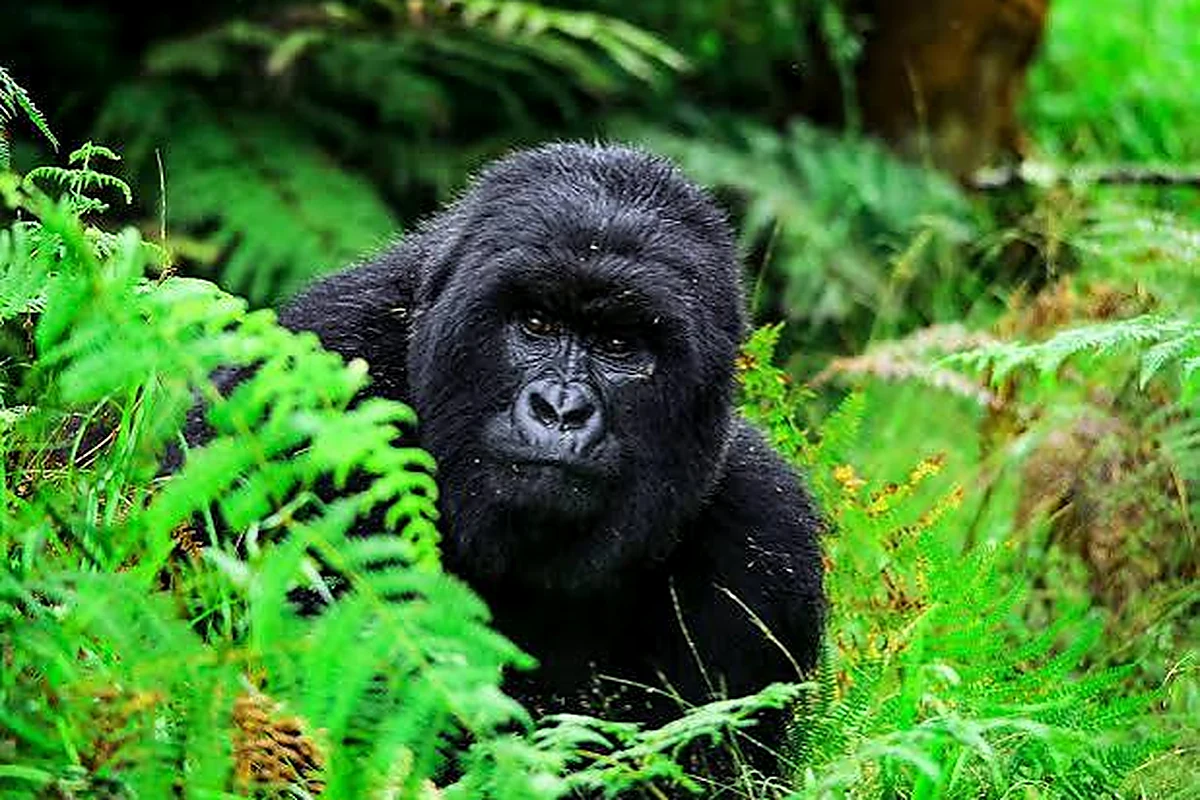
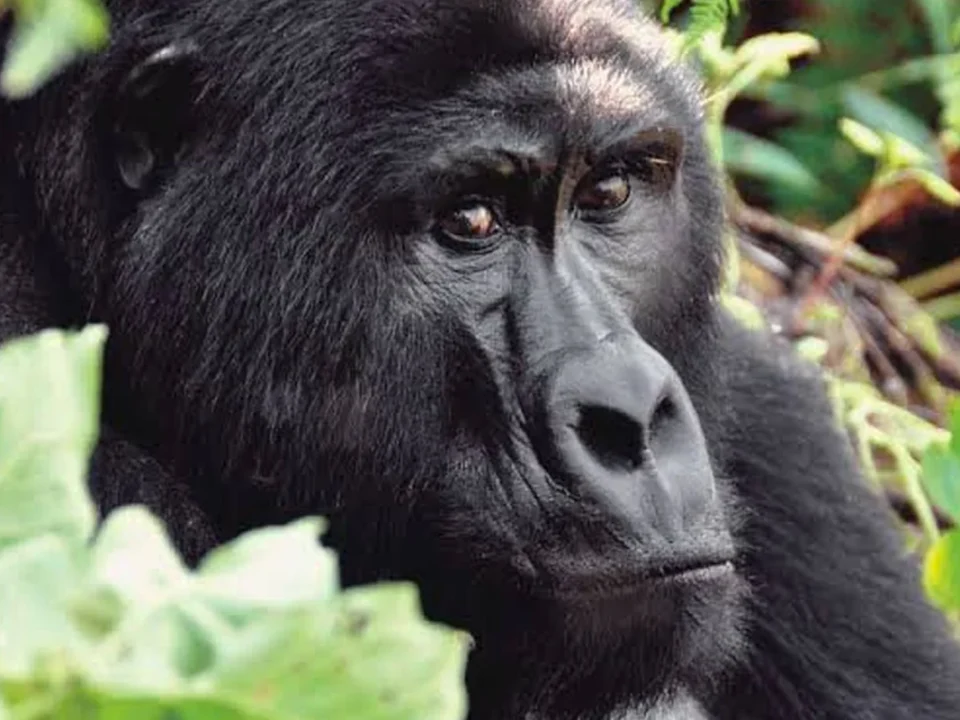
A mountain gorilla looks toward the camera while sitting among lush green ferns in its forest habitat.
Wildlife trackers and researchers occupy an important position in mountain gorilla conservation because their work may involve repeated encounters with particular families. Through monitoring activities, they help gather information about group movements, births, health concerns, social relationships, and changes in family composition.
Unlike most tourists, who encounter a gorilla family during a single guided visit, conservation personnel may observe the same animals repeatedly. These encounters create opportunities for familiarity with recurring human voices, movements, and behavioural patterns, although the extent of individual recognition remains scientifically uncertain.
Trackers also develop knowledge about the gorillas themselves. They may recognise individual animals through physical characteristics, social relationships, and observed behaviour. This human ability to identify gorillas should not be confused with proof that every gorilla identifies individual trackers in return.
Nevertheless, repeated interactions make the question of mutual recognition especially interesting. If gorillas can distinguish familiar human voices under certain experimental conditions, it is reasonable to investigate whether similar abilities influence their responses to recurring conservation personnel in the wild.
Scientific investigation must account for differences in clothing, location, voice, behaviour, and the general circumstances of encounters. Without such controls, apparent familiarity could result from several environmental cues rather than recognition of a particular person.
Can Mountain Gorillas Recognise Humans Who Protect Them?
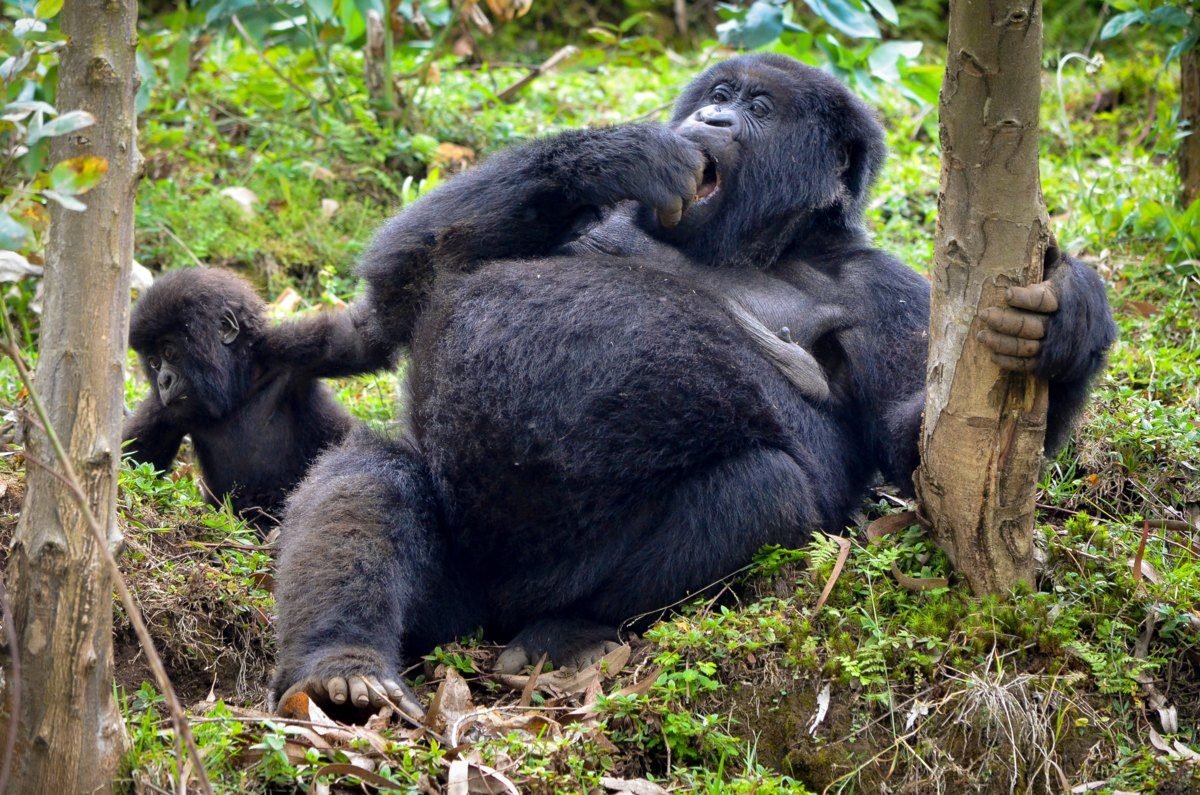
The relationship between mountain gorillas and conservation personnel raises another intriguing question: might gorillas distinguish people associated with predictable, non-threatening encounters from those who behave differently? Research involving captive western gorillas suggests that previous interactions can influence responses to familiar human voices.
However, the findings should not be interpreted as proof that wild mountain gorillas understand human conservation roles. A gorilla cannot be assumed to recognise someone as a ranger, researcher, or protector in the same conceptual way that people understand those occupations.
Instead, the animal may learn associations between particular signals and previous experiences. Familiar voices or predictable behaviour might influence its response, while unfamiliar circumstances could produce greater attention or avoidance. Such learning would be meaningful without requiring human-like interpretations of professional identity.
Field research at Bwindi has recorded accounts from conservation personnel describing varied relationships between gorillas and people. These observations provide valuable insights into habituation and coexistence, although interpretations of friendship or protection require additional evidence before they can be treated as established cognitive abilities.
The distinction matters because conservation education should respect the intelligence of gorillas without assigning them knowledge that researchers have not demonstrated. Their responses may be complex and meaningful even when scientists cannot determine precisely what the animals understand.
Do Mountain Gorillas Recognise Tourists Differently From Rangers?
Tourists and rangers may create different patterns of sensory information during encounters. Rangers are familiar with park procedures and wildlife behaviour, while visitors depend on professional guidance to understand appropriate conduct within the forest.
A gorilla might respond to differences in movement, noise, group size, or predictability without necessarily recognising the identities of individual people. This means that observable differences in behaviour cannot automatically establish whether the animal knows who is a ranger and who is a tourist.
Visitors should therefore avoid interpreting a gorilla’s attention as evidence of personal recognition. A silverback looking toward a group may simply be monitoring its surroundings, while a juvenile approaching the edge of an observation area may be responding to curiosity or ordinary movement.
These behaviours can be fascinating without requiring exaggerated explanations. The natural intelligence of mountain gorillas is better appreciated through careful observation of their communication, social relationships, and responses to their environment.
For those planning a Uganda gorilla trekking experience, PrideMark Safaris can help connect the adventure with broader opportunities to explore the country’s protected landscapes and understand the importance of responsible wildlife tourism.
Discovery Six: Mountain Gorillas Interpret Communication and Human Behaviour
How Mountain Gorillas Communicate Within Their Families
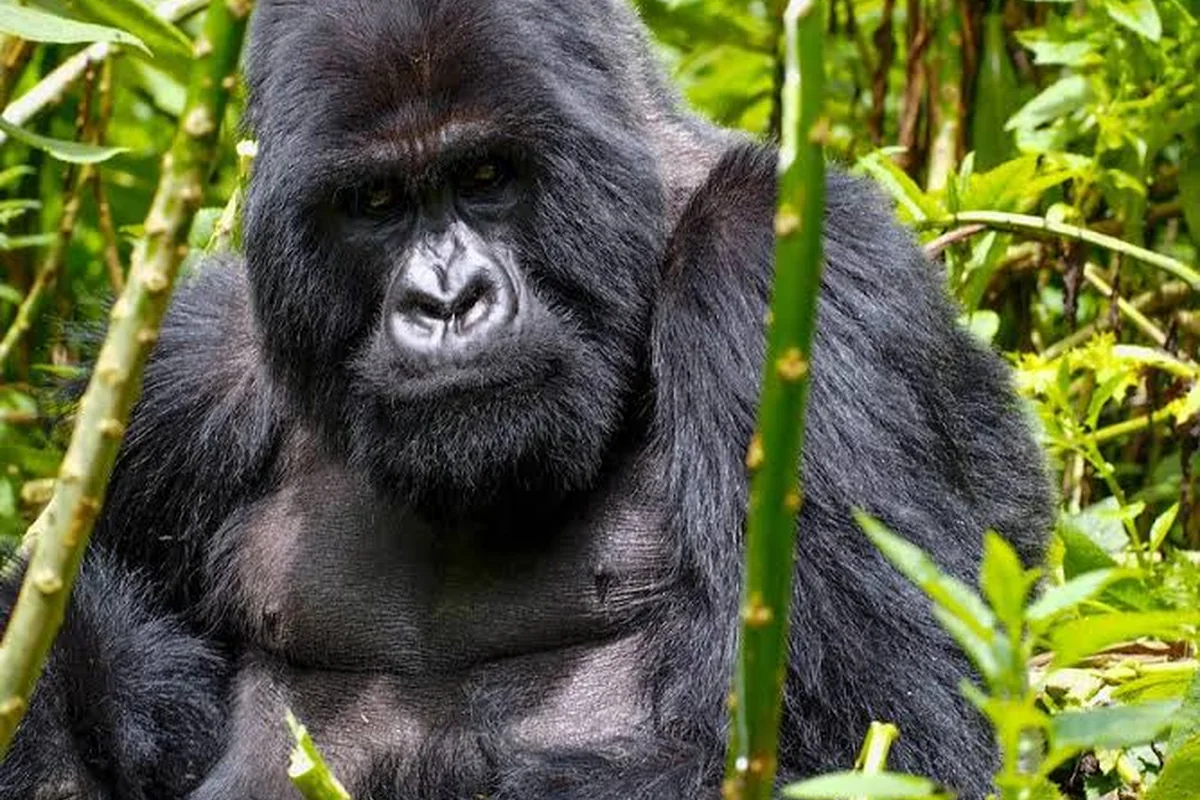
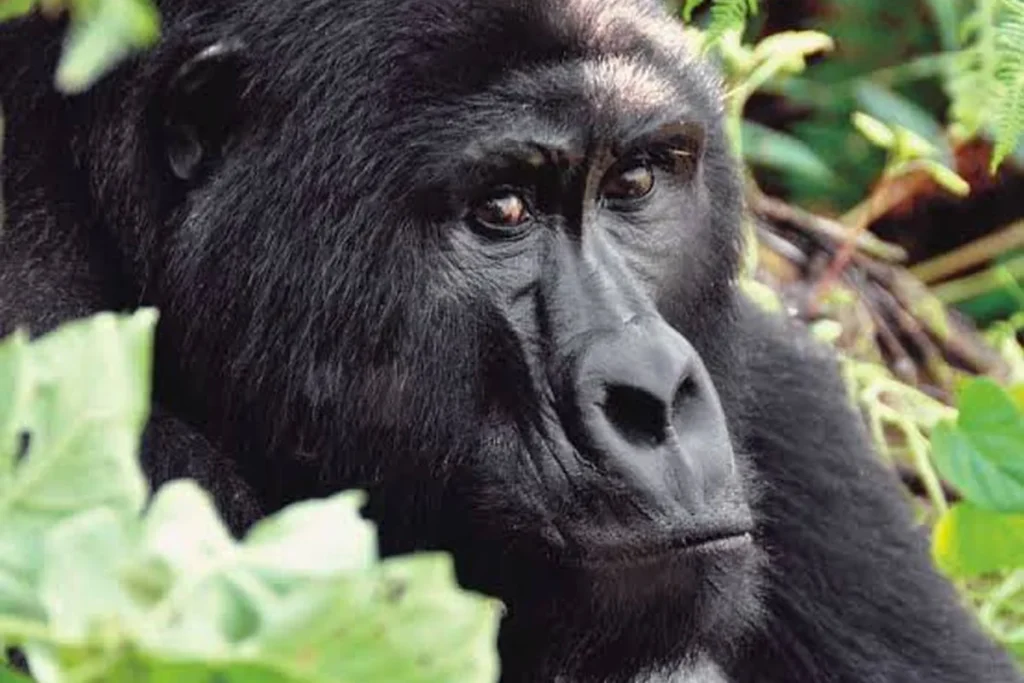
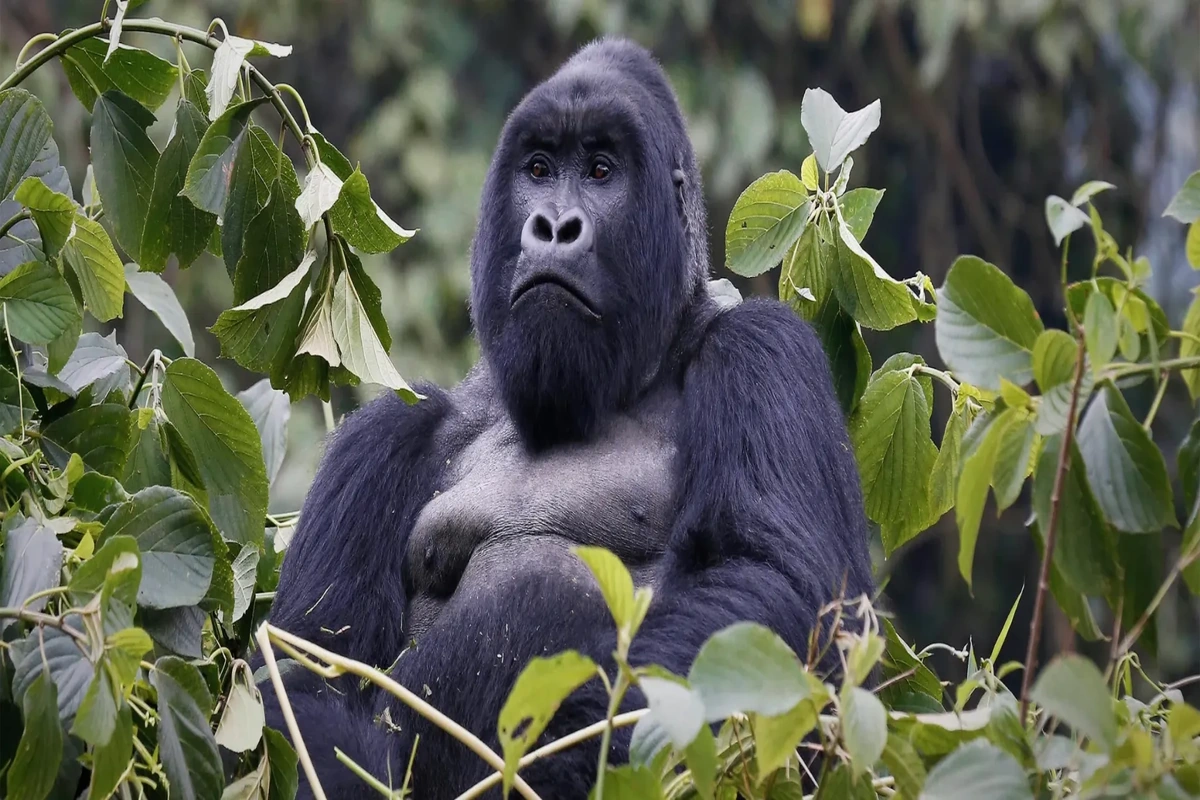
A magnificent silverback mountain gorilla resting among lush vegetation in its natural forest habitat.
Mountain gorillas communicate through a combination of vocalisations, facial expressions, body postures, movement, and physical contact. These signals help individuals maintain social relationships, respond to changes in their surroundings, and coordinate activities within family groups.
Different vocalisations may occur during feeding, resting, movement, and social interaction. Their interpretation depends on context because the same general type of sound may carry different significance according to the circumstances and individuals involved.
Facial expressions and body movements also contribute to communication. A gorilla’s posture, orientation, and interaction with companions can provide information about its current behaviour. Scientists interpret these signals through repeated observation rather than assuming that they correspond directly to human expressions.
Young gorillas gradually develop communication skills through social experience. Their interactions with mothers, siblings, juveniles, and mature males create opportunities to learn how different signals influence the behaviour of other group members.
This communication system forms an important part of mountain gorilla intelligence. It allows individuals to participate in social relationships that require awareness of companions and flexibility in responding to changing situations.
Can Mountain Gorillas Understand Human Body Language?
Can mountain gorillas recognise humans through their movements and body language? Gorillas can respond to human behaviour, but scientists must distinguish between noticing a signal and understanding the intentions that a person associates with it.
Human movements can alter the circumstances of a gorilla encounter. Sudden actions, unnecessary noise, or approaching too closely may create disturbance, while predictable behaviour under ranger supervision helps maintain a controlled observation environment.
This does not mean that mountain gorillas interpret every human gesture according to human social conventions. A visitor may consider a particular expression friendly, but the animal may respond to its movement, proximity, or unfamiliarity rather than the meaning intended by the person.
Similarly, prolonged staring should not be used as a way to test whether a gorilla recognises someone. Direct attention and eye contact can carry different meanings in animal communication, and visitors should follow the instructions provided by trained wildlife personnel.
Understanding these limitations is essential because respectful wildlife observation requires recognising that gorillas possess their own communication systems. Human visitors should adapt their behaviour to conservation guidelines rather than expecting wild animals to interpret human intentions.
Why Mountain Gorillas May React to Unfamiliar Human Behaviour
Unfamiliar situations can attract attention from animals because they differ from previously experienced patterns. For mountain gorillas, an unexpected movement, unusual sound, or change in the proximity of people may influence how individuals respond during an encounter.
Such responses do not necessarily indicate fear, aggression, curiosity, or recognition in isolation. Researchers must consider the broader context, including the animal’s previous behaviour, nearby companions, environmental conditions, and the sequence of events surrounding the encounter.
A silverback may monitor activity near his family, while younger gorillas may continue playing or feeding. Different individuals can respond differently to the same circumstances because their age, social relationships, experience, and immediate activities vary.
These differences reveal why gorilla behaviour should not be reduced to simple labels. The animals are capable of flexible responses shaped by multiple influences, and their actions require careful interpretation.
For visitors, the most valuable approach is to remain attentive to ranger guidance and appreciate the behaviour occurring naturally. Quiet observation allows the gorillas’ social interactions to remain the focus of the experience.
Why Silence and Respect Matter During Gorilla Trekking
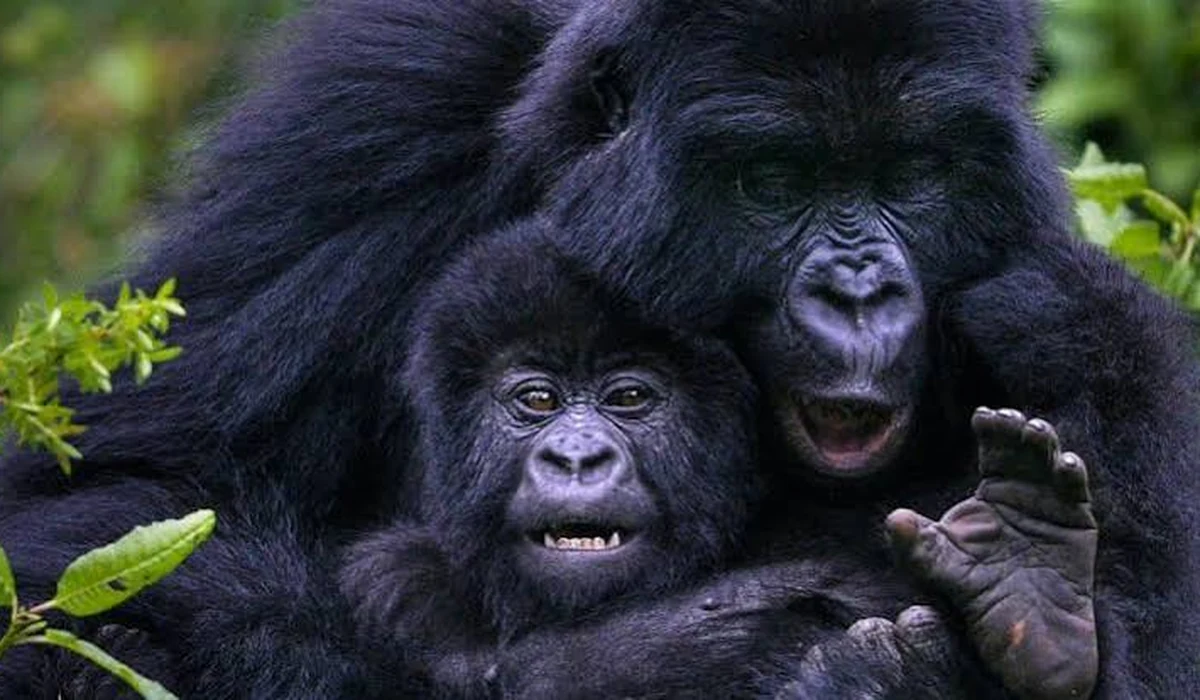
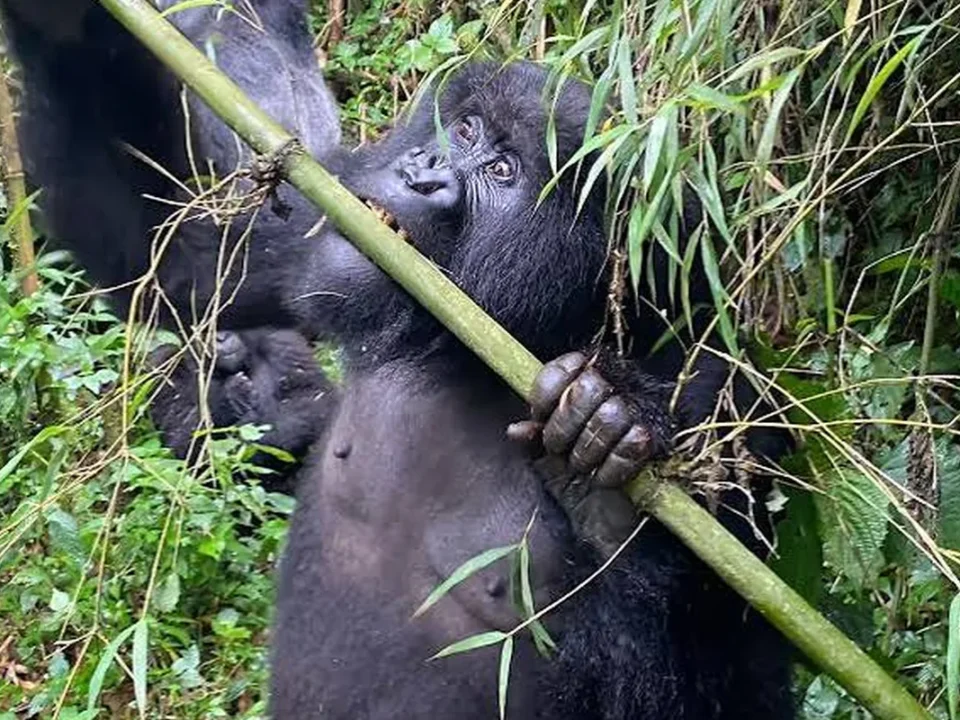
An adult mountain gorilla cuddles a young gorilla in their natural habitat. Discover what happens if you don’t see gorillas during trekking in Uganda with Pridemark Safaris.
The atmosphere of a mountain gorilla encounter is often defined by subtle sounds and movements. Leaves shift as animals feed, juveniles move through the vegetation, and adults communicate while maintaining contact with familiar companions.
Excessive noise can interrupt this environment and may influence how gorillas respond. Visitors are therefore encouraged to remain quiet, avoid sudden movements, and follow instructions from the guides responsible for managing the encounter.
These precautions are not merely formalities. They support the wider objective of observing wild animals without unnecessary disturbance and reducing risks associated with close human presence.
A respectful encounter also provides better opportunities to appreciate natural behaviour. Instead of attempting to attract a gorilla’s attention, visitors can observe feeding, resting, parental care, and social interactions that reveal the complexity of family life.
This approach reflects the conservation values associated with responsible gorilla trekking and reinforces the importance of treating mountain gorillas as intelligent wild animals rather than performers for tourism.
Discovery Seven: Understanding Gorilla Intelligence Helps Protect Their Future
Why Gorilla Intelligence Matters for Conservation
Mountain gorilla intelligence is important for conservation because the animals’ survival depends on more than access to food and suitable habitat. Social relationships, learning, communication, and behavioural flexibility influence how individuals function within their families and respond to environmental challenges.
Young gorillas require prolonged periods of development before becoming increasingly independent. During this time, they learn through interactions with their mothers and other group members. Protecting stable family environments therefore supports the social conditions in which essential behavioural skills develop.
Adult gorillas also depend on established relationships that influence group organisation and reproduction. Changes in family composition can affect interactions among surviving individuals, creating consequences that extend beyond the loss or movement of one animal.
Conservation research considers these social processes alongside population monitoring, habitat protection, and health management. Understanding behaviour helps scientists interpret changes within groups and identify circumstances that may require closer investigation.
The study of whether mountain gorillas recognise humans contributes to this broader knowledge by examining how animals respond to people who share or enter their environment.
How Gorilla Research Improves Wildlife Protection
Scientific monitoring provides valuable information about gorilla populations, reproductive histories, movements, health concerns, and social relationships. Long-term observation allows researchers to understand changes that may not be visible during isolated encounters.
Behavioural research also contributes to understanding the consequences of human presence. Studies of habituation, tourism pressure, and visitor conduct help identify circumstances in which observation may influence gorilla behaviour.
For example, research published in Frontiers in Public Health examined compliance with rules during mountain gorilla tourism encounters at Bwindi. The study highlighted concerns about close contact and the potential transmission of human diseases to gorillas.
These findings demonstrate why conservation requires more than creating opportunities for visitors to see wildlife. Effective management must consider the health, behaviour, and ecological needs of the animals.
Readers can explore the research on tourism encounters and disease risks at Bwindi to understand the importance of maintaining appropriate visitor conduct.
The Connection Between Human Recognition and Responsible Tourism
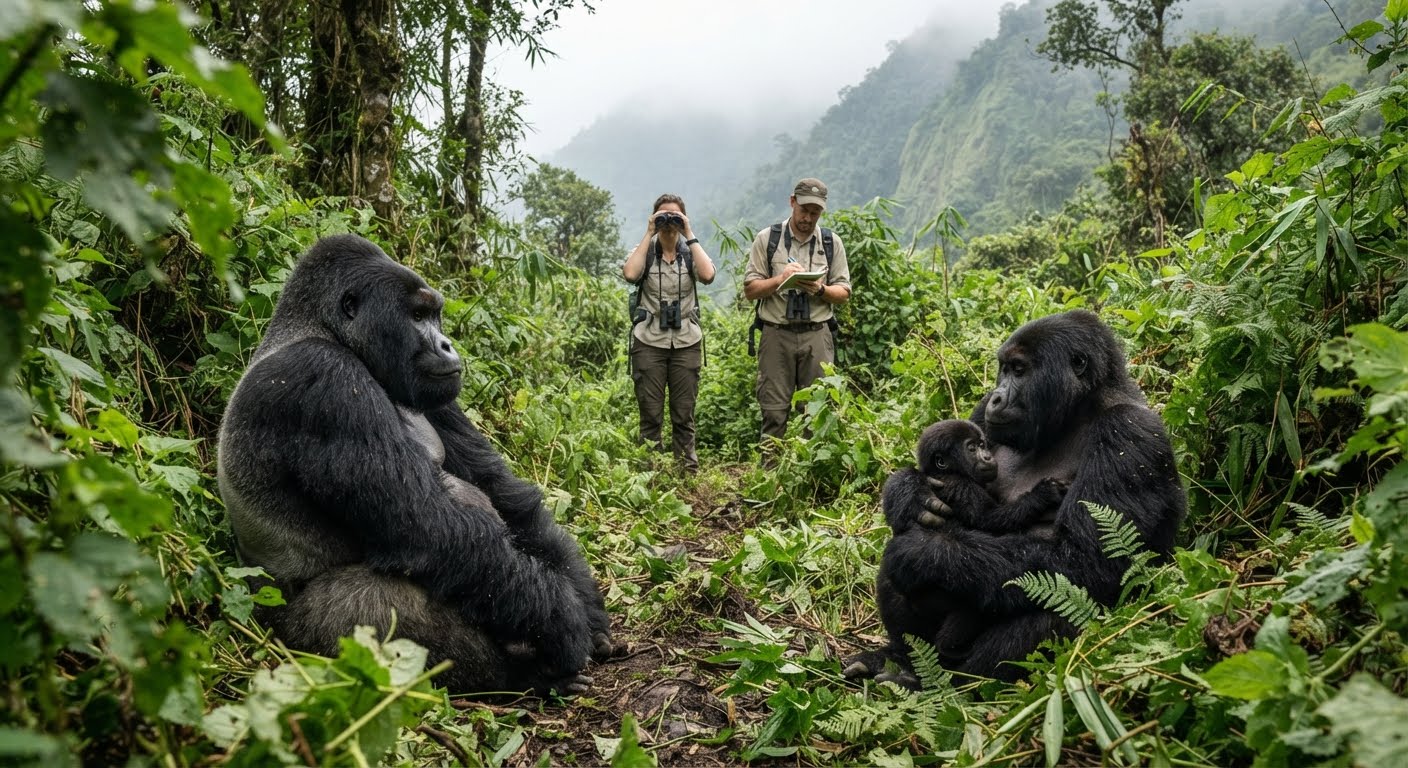
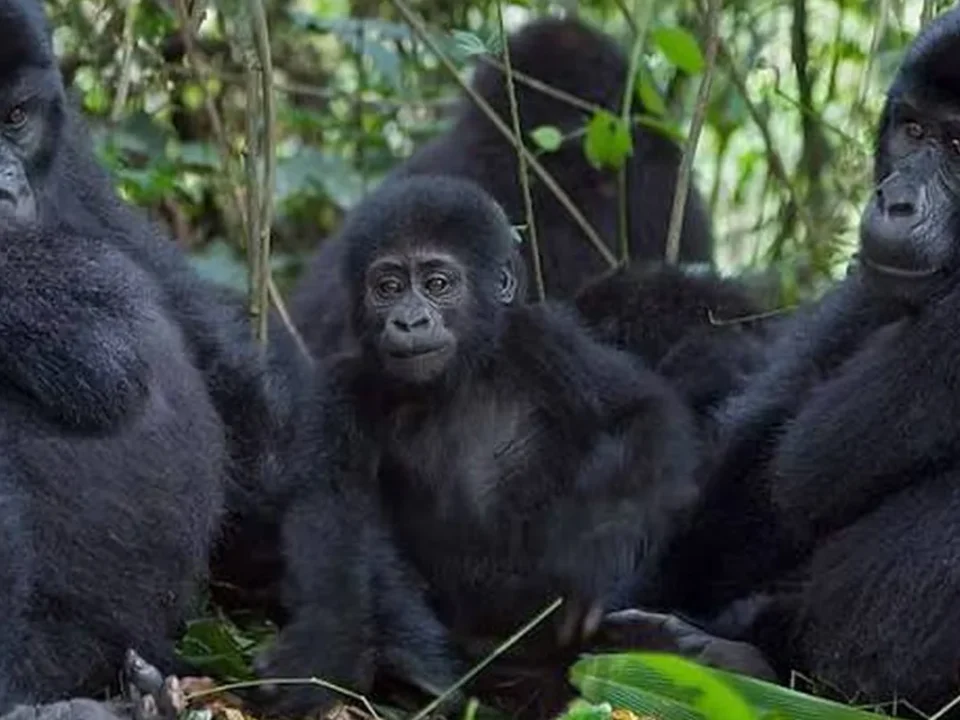
scene showing a gorilla family and researchers in a mountain forest.
If mountain gorillas can distinguish certain familiar human signals, that ability may influence how they respond to repeated encounters. However, recognition should never be used as a justification for increasing contact or encouraging animals to interact directly with visitors.
Habituation already creates a complex relationship between wildlife observation and animal behaviour. Gorillas that become accustomed to people may lose some avoidance responses, making careful management especially important.
Tourism activities must therefore balance educational and economic opportunities with the protection of gorilla health and natural behaviour. This includes regulated visitor numbers, appropriate viewing distances, trained guides, and responsible responses to signs of disturbance.
The most meaningful outcome of studying gorilla intelligence is not discovering ways to make gorillas interact more closely with humans. It is improving understanding of their needs so that conservation programmes can protect them more effectively.
For travellers, this perspective transforms gorilla trekking into an opportunity to support wildlife protection while learning about the extraordinary animals inhabiting Uganda’s mountain forests.
Why Protecting Gorilla Families Is Essential
Mountain gorilla families represent interconnected social communities in which individual relationships influence daily life. Mothers provide prolonged care, young gorillas develop social skills, and mature males contribute to group organisation and protection.
Disruptions to these relationships can influence behaviour, reproduction, and group composition. Conservation efforts therefore benefit from monitoring entire social groups rather than considering population numbers alone.
Suitable forest habitats remain fundamental to this work. Mountain gorillas require vegetation for feeding, areas for resting and nesting, and protected landscapes that support movement and natural social activities.
Conservation also depends on cooperation with communities living near protected areas. Employment, environmental education, responsible tourism, and local participation can contribute to long-term support for wildlife protection.
Understanding gorilla intelligence reinforces the importance of these efforts by revealing that protecting mountain gorillas means safeguarding complex social lives as well as individual animals.
Where Can You Observe Mountain Gorilla Intelligence in Uganda?
Uganda offers two protected destinations where visitors can observe mountain gorillas under regulated conditions. Both provide opportunities to experience the animals’ natural habitats and appreciate the social behaviour, communication, and learning abilities that make these primates extraordinary.
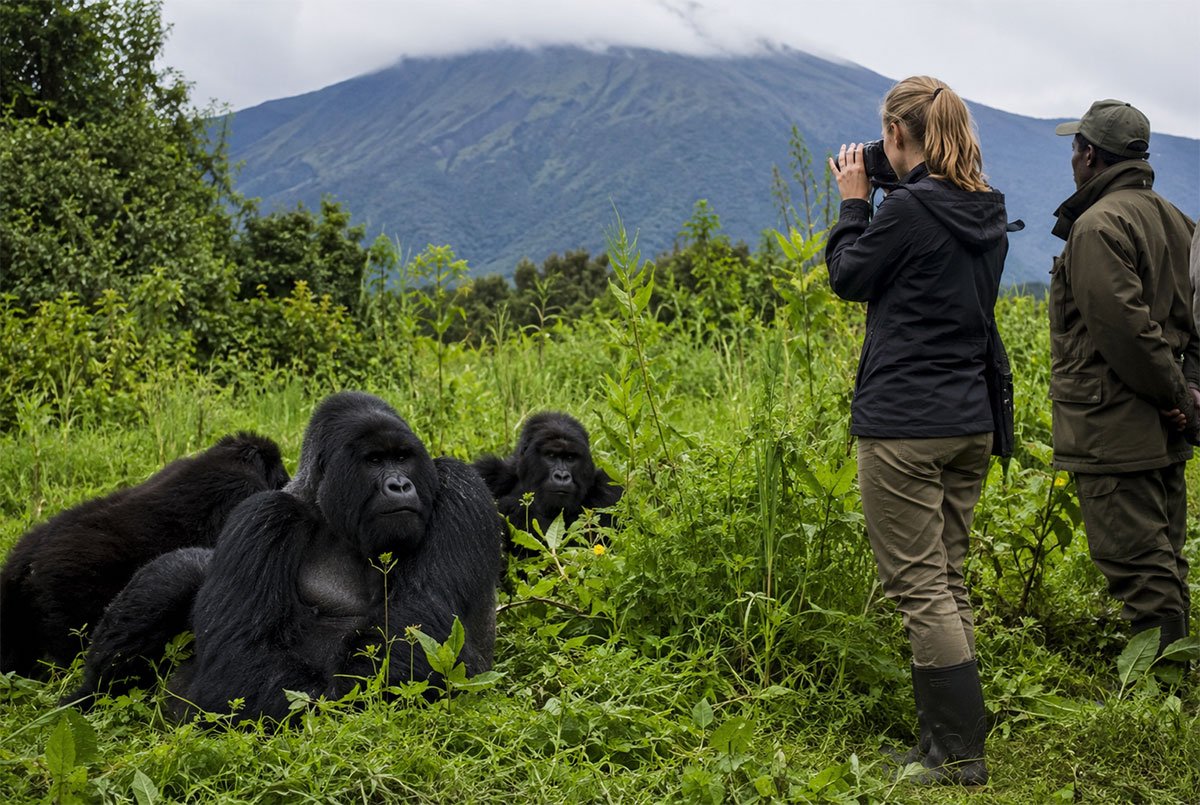
Bwindi Impenetrable National Park: Uganda’s Remarkable Gorilla Habitat
Bwindi Impenetrable National Park is one of Africa’s most important mountain gorilla conservation landscapes. Located in southwestern Uganda, the park contains ancient montane forest, steep ridges, valleys, and diverse vegetation that support mountain gorillas and numerous other wildlife species.
The park is divided into recognised gorilla trekking sectors, including Buhoma, Ruhija, Rushaga, and Nkuringo. Each sector provides access to particular trekking arrangements, and the experience varies according to terrain, gorilla movements, weather, and the location of habituated families.
During a typical trek, visitors begin with a briefing conducted by wildlife authorities before entering the forest with trained guides. Trackers help locate the assigned gorilla family, and the observation takes place under established conservation guidelines.
The encounter may reveal gorillas feeding on vegetation, juveniles interacting with companions, mothers caring for infants, or a silverback resting near his family. These behaviours offer valuable insights into mountain gorilla intelligence without requiring direct interaction between humans and animals.
Travellers seeking an extended wildlife experience can explore the Uganda safari packages offered through PrideMark Safaris, including itineraries that combine gorilla trekking with other protected wildlife destinations.
Mgahinga Gorilla National Park: Intelligence Among the Volcanoes

Mgahinga Gorilla National Park occupies Uganda’s portion of the Virunga mountain ecosystem. Its volcanic landscapes, montane vegetation, and distinctive scenery create a remarkable setting for mountain gorilla conservation and regulated wildlife tourism.
The park is also known for golden monkeys, offering visitors opportunities to appreciate different primate species within the same broader landscape. These experiences can reveal similarities and differences in primate behaviour, social organisation, and adaptation to mountain environments.
Gorilla trekking at Mgahinga follows official park procedures, with experienced guides accompanying visitors into suitable habitat. The location of gorillas depends on their natural movements, and wildlife encounters remain subject to environmental conditions and conservation arrangements.
Visitors interested in combining mountain gorillas with golden monkey experiences can explore the 4-Day Mgahinga Gorilla and Golden Monkey Safari and request further itinerary details through PrideMark Safaris.
Mgahinga demonstrates that observing gorilla intelligence is not limited to one forest landscape. Across their natural habitats, mountain gorillas maintain complex relationships and respond to environmental circumstances that shape their daily lives.
Comparing Gorilla Recognition, Memory, and Habituation
Understanding whether mountain gorillas recognise humans requires separating several related concepts. Although recognition, memory, and habituation can influence one another, they do not describe identical cognitive processes.
| Gorilla Ability | What It Means | Scientific Interpretation |
|---|---|---|
| Social recognition | Distinguishing familiar companions | Important in gorilla family relationships |
| Human voice recognition | Responding differently to familiar human voices | Demonstrated in captive western gorillas |
| Memory | Retaining information from previous experiences | Relevant to learning and social behaviour |
| Habituation | Reduced responses to repeated, predictable human presence | Documented among wild mountain gorillas |
| Human facial recognition | Distinguishing people through facial information | Requires further direct evidence in wild mountain gorillas |
| Tourist recognition | Identifying a particular visitor after an encounter | Not established as a general ability |
These distinctions are especially important because popular wildlife descriptions sometimes use recognition, familiarity, and friendship interchangeably. A gorilla may become accustomed to human presence without recognising every person, while individual recognition could occur without implying friendship or human-like emotional interpretations.
For travellers, the practical lesson is straightforward. Mountain gorillas are intelligent, socially complex animals capable of learning from experience, but their behaviour should be understood through scientific evidence rather than assumptions about what they think or feel.
What Happens During a Gorilla Trekking Encounter?
A mountain gorilla trekking experience begins long before visitors encounter the animals. Travellers typically arrive at a designated park briefing point, where wildlife authorities explain the trekking arrangements, conservation guidelines, and appropriate conduct during observation.
The forest walk may involve steep terrain, dense vegetation, and changing weather conditions. Experienced guides and trackers assist visitors while monitoring the location and behaviour of the assigned gorilla family.
Once the gorillas are located, visitors observe them from the required distance under ranger supervision. The animals may continue feeding, resting, moving, or interacting with companions, depending on their natural activities and the circumstances of the encounter.
A silverback may briefly look toward the visitors before returning to his previous activity. This can be an extraordinary moment, but it should not automatically be interpreted as recognition of a particular person.
Younger gorillas may display curiosity, while adults may remain focused on feeding or caring for infants. Their behaviour varies according to individual characteristics, social relationships, and environmental conditions.
The most rewarding encounters are those in which visitors appreciate the gorillas’ natural activities without attempting to influence them. This allows the experience to remain centred on wildlife observation rather than direct human interaction.
Gorilla Trekking Guidelines That Protect Mountain Gorillas
Responsible gorilla tourism depends on following official conservation rules. Mountain gorillas are vulnerable to human diseases, and inappropriate behaviour during encounters can increase disturbance and health risks.
Visitors should follow the current instructions provided by the Uganda Wildlife Authority and the trained guides accompanying each trek. Regulations and operational requirements may be updated, so official park briefings should always take precedence over general travel information.
| Visitor Guideline | Conservation Importance |
|---|---|
| Maintain the required viewing distance | Helps reduce disturbance and disease risks |
| Follow ranger instructions | Supports safe, regulated encounters |
| Avoid trekking when ill | Protects gorillas from potentially transmitted infections |
| Do not touch or feed gorillas | Prevents inappropriate direct contact |
| Avoid flash photography | Reduces unnecessary disturbance |
| Remain quiet and avoid sudden movements | Supports natural gorilla behaviour |
| Respect the permitted observation period | Limits prolonged human presence |
Research on gorilla tourism has highlighted the importance of maintaining appropriate distances and reducing unnecessary close contact. These precautions protect both the animals and the long-term sustainability of conservation-based tourism.
For official information about trekking arrangements, visitors can consult the Uganda Wildlife Authority before travelling.
Frequently Asked Questions About Mountain Gorilla Intelligence
Can Mountain Gorillas Recognise Humans?
Mountain gorillas can learn from repeated human encounters, and research involving other gorilla populations demonstrates recognition of familiar human voices. However, direct scientific evidence does not establish that every wild mountain gorilla recognises individual people. Habituation, personal recognition, and responses to familiar circumstances must be distinguished when interpreting their behaviour.
Can Mountain Gorillas Recognise Human Faces?
The possibility of human facial recognition among mountain gorillas is scientifically interesting, but evidence specifically demonstrating this ability in wild populations remains limited. Research involving other great apes suggests that some individuals can recognise familiar humans, although findings from different species and environments should not automatically be applied to mountain gorillas.
Can Mountain Gorillas Recognise Their Trackers?
Mountain gorillas may become familiar with the voices, movements, and recurring behaviour of trackers who monitor them repeatedly. However, familiarity with predictable encounters does not necessarily prove identification of a particular person. Establishing individual recognition would require observations that distinguish personal identity from other environmental signals.
Do Mountain Gorillas Remember Tourists?
There is insufficient evidence to conclude that mountain gorillas consistently remember individual tourists after brief encounters. Gorillas possess learning and memory abilities, but recognising a particular visitor requires more specific evidence than calm behaviour or a moment of eye contact during a trek.
Are Mountain Gorillas More Intelligent Than Other Gorillas?
Mountain gorillas possess sophisticated social and learning abilities, but there is no sound basis for ranking entire gorilla subspecies by intelligence using simple comparisons. Different populations experience different environments, social circumstances, and opportunities for learning, making broad claims about superiority scientifically inappropriate.
Can Gorillas Recognise Human Voices?
Yes, experiments involving captive western gorillas have demonstrated different responses to categories of familiar and unfamiliar human voices. The findings suggest that familiarity and previous interactions can influence recognition. Whether the same patterns occur consistently among wild mountain gorillas requires further research.
Why Do Mountain Gorillas Become Habituated to Humans?
Habituation occurs through repeated, carefully managed encounters that reduce certain avoidance or defensive responses to predictable human presence. The process supports conservation monitoring and regulated tourism, but it does not make mountain gorillas domestic animals or remove the need for strict visitor guidelines.
Do Mountain Gorillas Understand Human Language?
There is no evidence that wild mountain gorillas understand ordinary human conversation in the same way people do. They may respond to familiar sounds, voices, gestures, and environmental cues, but recognising a signal is different from understanding the language or intentions associated with it.
Can Mountain Gorillas Recognise Human Emotions?

Mountain gorillas respond to behaviour and social signals, but scientific evidence does not establish that they interpret human emotions exactly as humans do. A gorilla may notice changes in movement, vocal tone, or posture without understanding the emotional experience a person intends to communicate.
Why Do Silverback Gorillas Look at Tourists?
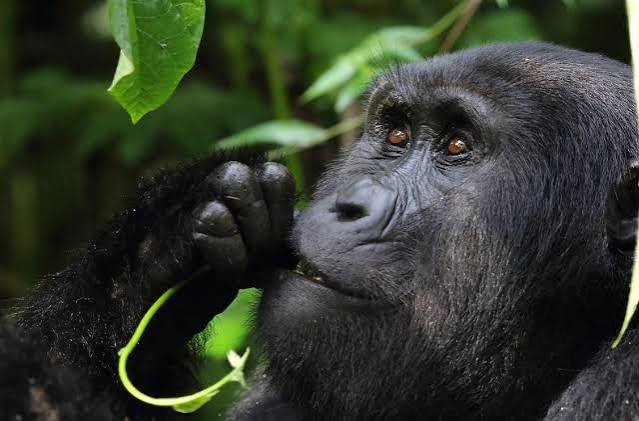
Discover where to see mountain gorillas in Uganda with PrideMark Safaris, from Bwindi Impenetrable National Park to Mgahinga Gorilla National Park.
A silverback may look toward visitors as part of ordinary environmental monitoring. Such attention can reflect awareness of movement or other sensory information and does not necessarily indicate personal recognition, aggression, or curiosity. Visitors should avoid assigning a single interpretation without considering the broader behavioural context.
Where Can Visitors Observe Mountain Gorillas in Uganda?
Mountain gorillas can be observed through regulated trekking experiences in Bwindi Impenetrable National Park and Mgahinga Gorilla National Park. Both protected areas offer opportunities to appreciate gorilla behaviour within natural forest environments while supporting conservation through appropriately managed tourism.
How Can Travellers Plan a Gorilla Trekking Safari?
Travellers should consider permit availability, travel arrangements, suitable accommodation, physical demands, and official park guidelines when planning a gorilla trekking experience. PrideMark Safaris provides information about Uganda safari itineraries and opportunities to combine gorilla trekking with other wildlife destinations.
Final Thoughts: Can Mountain Gorillas Recognise Humans?

So, can mountain gorillas recognise humans? Scientific research provides compelling reasons to investigate this possibility. Gorillas demonstrate complex social recognition, learning, memory, and responses to familiar circumstances, while experiments involving captive western gorillas show that some individuals can distinguish categories of human voices.
Field research in Uganda further demonstrates that mountain gorillas can adjust their behaviour through repeated, carefully managed human encounters. Habituation reveals important learning abilities, but it should not be confused with definitive evidence that every gorilla recognises individual tourists, trackers, or researchers.
The most accurate conclusion is that mountain gorillas possess cognitive abilities that make human recognition plausible, while the precise extent of individual recognition in wild populations remains an important scientific question. Understanding this distinction allows wildlife enthusiasts to appreciate gorilla intelligence without overstating what research has demonstrated.
For visitors, the extraordinary value of gorilla trekking lies in observing these intelligent primates within their natural environment. Their family relationships, communication, parental care, and responses to changing circumstances reveal a social world far more complex than their impressive physical appearance alone might suggest.
A meaningful encounter does not require a gorilla to recognise a particular tourist. The opportunity to observe a silverback protecting his family, an infant learning from its mother, or juveniles interacting naturally is already an extraordinary privilege that encourages respect for wildlife and the landscapes supporting it.
At PrideMark Safaris, we invite travellers to discover Uganda’s mountain gorillas through responsible safari experiences that celebrate wildlife, conservation, and the remarkable intelligence of these endangered primates. Explore the country’s magnificent forests and experience an adventure that deepens your understanding of Africa’s natural heritage.
Plan your mountain gorilla adventure with PrideMark Safaris and discover the extraordinary world of gorilla intelligence in Uganda.