What Happens If You Cannot Finish Gorilla Trekking in Uganda?
Gorilla trekking in Bwindi Impenetrable National Park or Mgahinga Gorilla National Park is an escorted forest activity, not a race to a fixed destination. A visitor who becomes exhausted, uncomfortable, or unwell should tell the ranger immediately. The team can assess the situation and explain whether a pause, practical assistance, or a return is appropriate. The sensible decision depends on conditions that day, not on what another traveler managed.
An important distinction is between ordinary tiredness and a symptom that needs urgent attention. Visitors should not feel obliged to label their condition before speaking up. Describe what you feel and how it is changing. The ranger can then consider the immediate trail situation and coordinate help, while medical assessment remains a matter for qualified professionals.
The question of whether you can complete the walk is different from whether the gorillas will be found quickly. Mountain gorillas move through forest habitat, and tracking teams work with their changing locations. Some visits involve comparatively manageable approaches; others require prolonged climbing, uneven footing, or slippery descents. Neither the operator nor the visitor can reliably predict the exact physical demand before the group sets out.
For booking purposes, distinguish a confirmed service from a reasonable request. A lodge, vehicle, porter or specialist arrangement may each have separate conditions. Written confirmation is especially important when mobility support is essential. This approach protects the traveler from misunderstanding and helps the safari operator coordinate responsibly with the people providing each service.
Visitors sometimes worry that admitting difficulty will disappoint their companions or waste the permit fee. That pressure can lead to poor decisions, particularly on steep ground where fatigue affects balance and concentration. The better approach is to communicate early, before discomfort becomes a safety problem. A ranger can advise on immediate options, but a guaranteed continuation, vehicle pickup, or refund should never be assumed.
For travelers who fear they cannot finish gorilla trekking in Uganda, preparation starts before the permit is purchased. Discuss ordinary walking ability, any limitations, preferred pace, and the need for porter support when arranging the safari. A carefully planned itinerary may reduce avoidable fatigue from long transfers or poor rest, although it cannot remove the natural challenges of a mountain forest.
For booking purposes, distinguish a confirmed service from a reasonable request. A lodge, vehicle, porter or specialist arrangement may each have separate conditions. Written confirmation is especially important when mobility support is essential. This approach protects the traveler from misunderstanding and helps the safari operator coordinate responsibly with the people providing each service.
Our role at PrideMark Safaris is to explain these uncertainties clearly while helping guests plan sensible logistics. We can discuss arrival timing, appropriate accommodation areas, porter arrangements and how to raise mobility concerns with the relevant park team. We cannot decide a ranger’s safety judgment or promise that a specific gorilla family will be allocated to a visitor.
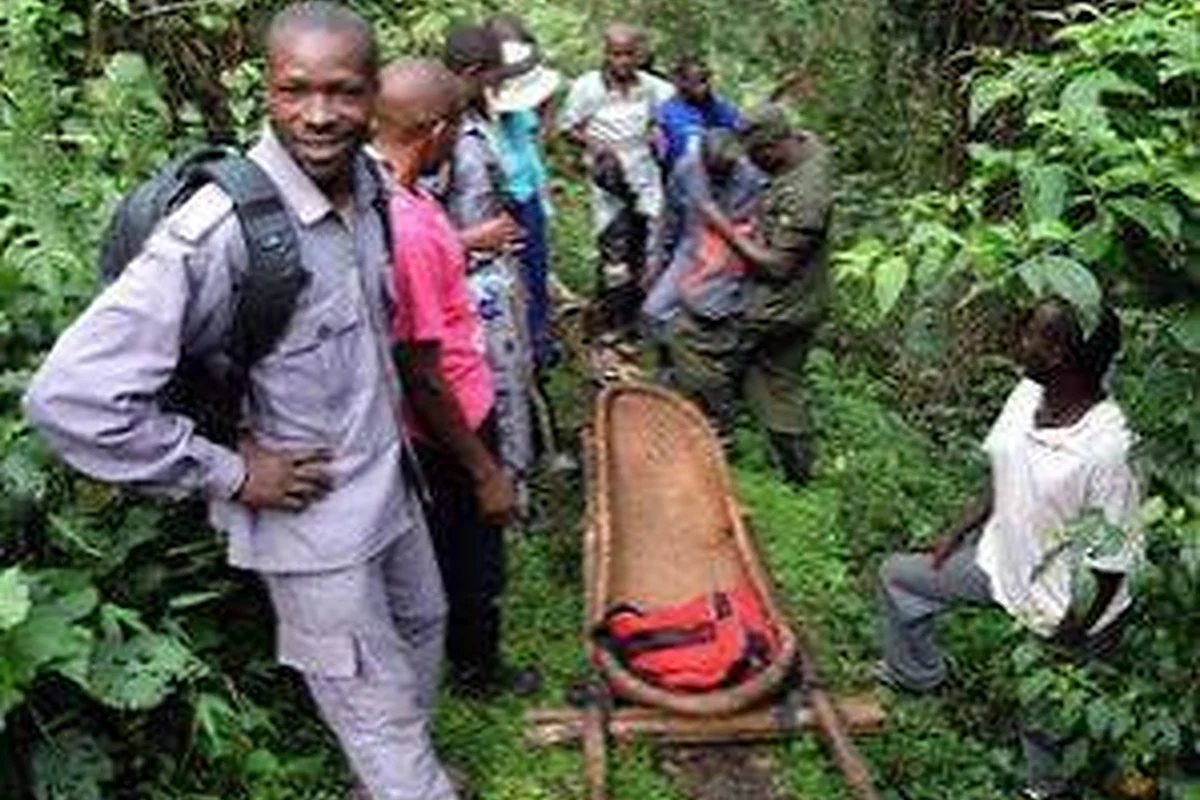
A group of trekkers and guides beside a stretcher on a forest trail, illustrating assistance that may be needed during a difficult gorilla trek.
Why Travelers May Struggle to Complete the Trek
Physical fatigue is the most familiar reason for stopping, but it is not the only one. Steep slopes, muddy roots, dense vegetation, altitude, and a heavy daypack can combine to make a normally active traveler feel unexpectedly tired. The experience is often harder when someone has spent the previous day on a long road transfer and has not slept or hydrated well.
Trekking groups do not all start with identical expectations or abilities. Someone accustomed to flat city walks may find wet forest slopes unfamiliar, while a regular hiker may struggle with humidity or poor sleep. Honest information about recent walking experience helps everyone plan sensibly. It is more useful than describing yourself simply as fit or unfit.
Weather changes the character of the trail. Rain can turn clay into slippery mud and make narrow paths harder to negotiate, even when the walking distance remains short. Wet clothing and poor footwear can add discomfort. A trek in a drier period is not automatically easy, however, because steep gradients, roots, and vegetation remain part of the landscape throughout the year.
Before making a decision, ask what the next section of trail is likely to involve and whether the group is near a suitable stopping point. The answer may change as trackers relay new information. This is why clear communication is more valuable than a rigid promise about distance, timing or difficulty made before the trek begins.
Health symptoms deserve more attention than a simple feeling of being tired. Dizziness, chest discomfort, breathing difficulty, confusion, severe pain, or sudden weakness should be reported immediately rather than explained away as normal exertion. A visitor should not attempt to diagnose these symptoms while walking. The ranger can coordinate an appropriate response and seek additional help where available.
Anxiety can also influence the experience. Some guests feel uneasy on narrow slopes, when crossing muddy patches, or when the group moves through dense undergrowth. Feeling nervous does not mean the trek is impossible, but it is a reason to communicate honestly. Asking for a slower pace or a short pause is more useful than trying to conceal fear from the guide.
Before making a decision, ask what the next section of trail is likely to involve and whether the group is near a suitable stopping point. The answer may change as trackers relay new information. This is why clear communication is more valuable than a rigid promise about distance, timing or difficulty made before the trek begins.
Age alone is not a reliable measure of trekking ability. Some older visitors are comfortable with demanding walks, while younger travelers may have joint problems, limited endurance, or little experience on uneven ground. The most useful planning information is practical: how far someone can comfortably walk, whether they manage steps and slopes, and what support they usually require.
| Difficulty factor | What changes on the trail | Practical response |
|---|---|---|
| Steep slopes | Greater effort and balance demands | Slow down and ask for support |
| Rain and mud | Slippery footing | Use suitable boots and ranger guidance |
| Fatigue | Reduced stability and concentration | Tell the ranger early |
Nine Practical Tips If You Cannot Continue
Tip one is to speak up at the first sign of difficulty. Tell the ranger whether the problem is breathlessness, tired legs, pain, fear, or a possible injury. Specific information helps the team make a sensible decision. Saying only that you are fine when you are struggling may delay assistance and make a manageable situation more difficult.
Before leaving the lodge, check that you understand the morning meeting time, expected transfer and items you must carry. Small logistical mistakes can create unnecessary stress before the trek begins. A prepared daypack and a relaxed departure do not guarantee an easy walk, but they give visitors a better chance to concentrate on the ranger’s instructions.
Tip two is to pause safely rather than stopping abruptly on a narrow or exposed section. Follow the ranger’s instructions about where to stand or sit, especially when the path is muddy. A short rest can help with ordinary exertion, but it is not a substitute for evaluating concerning symptoms. Never move away from the group to find a resting place independently.
For booking purposes, distinguish a confirmed service from a reasonable request. A lodge, vehicle, porter or specialist arrangement may each have separate conditions. Written confirmation is especially important when mobility support is essential. This approach protects the traveler from misunderstanding and helps the safari operator coordinate responsibly with the people providing each service.
Tip three is to reduce unnecessary weight. A porter may be able to carry a daypack and help with footing where arrangements and conditions permit. Porters are local workers who should be paid fairly, and their services are generally separate from the trekking permit. Their assistance can make a substantial practical difference, but it does not guarantee that every route will be manageable.
Tip four is to take small, deliberate steps on slopes and avoid rushing to catch up. On wet ground, balance matters more than speed. Use a walking stick if it helps and follow guidance when crossing roots or uneven patches. If your legs begin to shake or you cannot place your feet confidently, explain that to the ranger before attempting the next section.
For booking purposes, distinguish a confirmed service from a reasonable request. A lodge, vehicle, porter or specialist arrangement may each have separate conditions. Written confirmation is especially important when mobility support is essential. This approach protects the traveler from misunderstanding and helps the safari operator coordinate responsibly with the people providing each service.
Tip five is to drink water and eat an appropriate snack during an authorized break. Dehydration and insufficient food can worsen ordinary fatigue, particularly after an early start. Carry supplies in an accessible bag rather than buried beneath equipment. Do not treat food or water as a remedy for alarming symptoms; seek the ranger’s help if the problem seems unusual or severe.
Tip six is to be realistic about whether continuing remains safe. A visitor may be deeply motivated to see the gorillas after traveling a long distance, yet determination cannot replace stable footing or adequate breathing. The ranger’s judgment and the visitor’s condition should take priority over the financial cost of the permit or the expectations of companions.
Tip seven is to ask what returning would involve before committing to another difficult stretch. The route back may not be a simple downhill walk, and a vehicle is not necessarily able to reach the group inside the forest. The ranger can explain what support may be available at that location, including whether additional staff need to be contacted.
Tip eight is to keep companions informed through the ranger rather than negotiating a separate route. Trekking groups are managed for safety and conservation reasons. If someone needs to turn back, the park team must determine how the group and the returning visitor will be supervised. Do not assume that a friend can simply escort you through unfamiliar forest without official guidance.
Tip nine is to document what happened after everyone is safe. Note the trekking date, permit details, symptoms or circumstances, and the names or roles of officials who advised you. This information can be useful if you later ask about an administrative decision, insurance claim, or a possible exception. Documentation does not itself create an entitlement to a refund.

A visitor observing a mountain gorilla in a dense rainforest while accompanied by a ranger.
What Rangers, Porters and Support Teams Can Do
Uganda Wildlife Authority rangers lead the trekking experience and set the practical boundaries for movement near gorillas. Their knowledge of the terrain and current conditions is central to decisions about pauses, route changes, and whether a guest should continue. Visitors should follow instructions rather than relying on advice from other travelers who may have walked a different route.
It is reasonable to ask a porter what assistance they can safely provide and when you should seek the ranger instead. A porter should not be expected to improvise medical care or take unsafe risks. Clear expectations support both the visitor and the worker. Respect for local staff is part of a responsible safari experience, not an optional courtesy.
A porter can carry belongings and provide an extra steadying hand on difficult ground, depending on the terrain and local arrangements. This is particularly useful for guests who become tired when balancing a backpack. A porter is not a medical professional, and hiring one should not be confused with arranging specialized evacuation or mobility assistance.
Before making a decision, ask what the next section of trail is likely to involve and whether the group is near a suitable stopping point. The answer may change as trackers relay new information. This is why clear communication is more valuable than a rigid promise about distance, timing or difficulty made before the trek begins.
Some travelers ask about sedan chairs or stretcher-style assistance sometimes described in tourism material. Such arrangements are specialized, may be expensive, and depend on local availability, staffing, suitability and advance coordination. They should never be described as an automatic service included with the permit. Anyone considering this option should confirm details before committing to travel.
Rangers may request help from other park personnel when circumstances warrant it, but response times and practical options depend on the visitor’s position and conditions. Dense forest, poor weather and steep ground can complicate movement. For that reason, guests should not interpret the presence of trained staff as a guarantee of immediate vehicle access or rapid medical evacuation.
Before making a decision, ask what the next section of trail is likely to involve and whether the group is near a suitable stopping point. The answer may change as trackers relay new information. This is why clear communication is more valuable than a rigid promise about distance, timing or difficulty made before the trek begins.
When organizing a trip, PrideMark Safaris can help guests ask the right questions about porter availability and realistic support needs. The final arrangements for assistance within the park remain subject to the relevant authorities and providers. We encourage guests to describe their needs accurately instead of choosing the cheapest option and hoping the route will be easy.
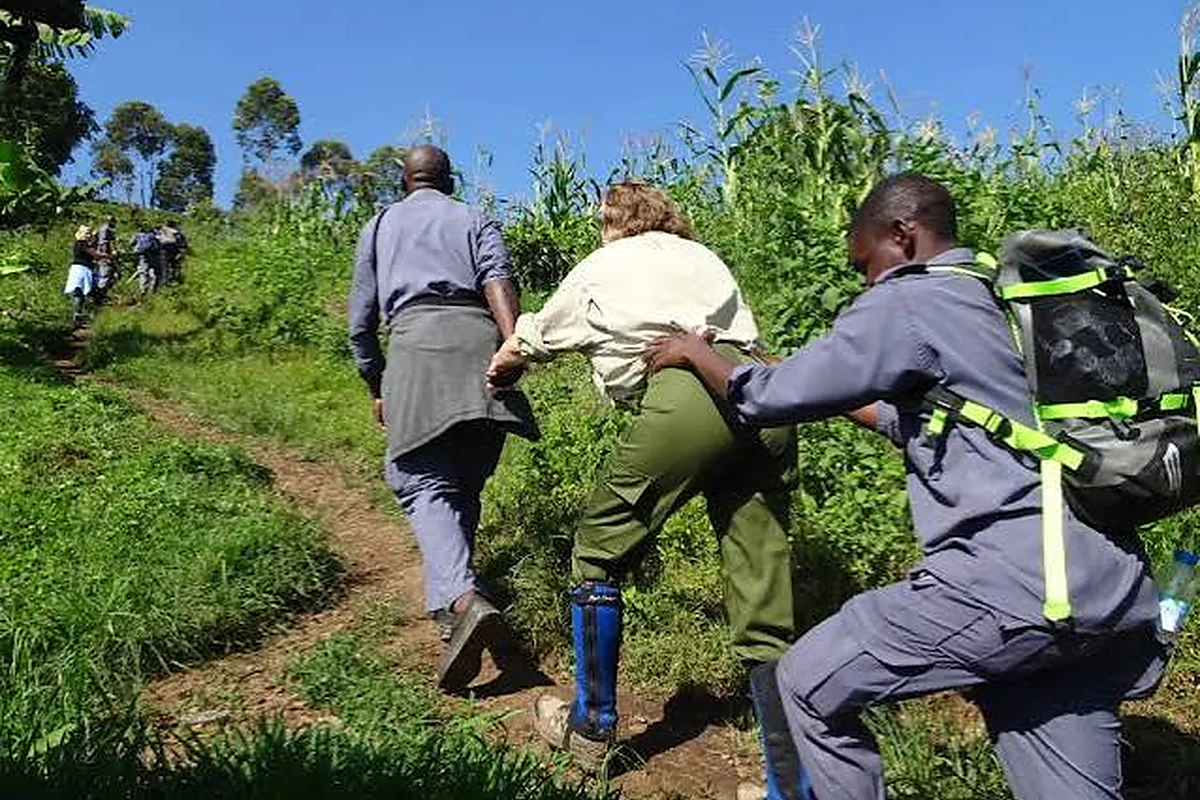
Guides help a tourist climb a steep hillside trail, illustrating the physical challenges and assistance that may be needed during gorilla trekking.
| Support | What it may provide | What to confirm |
|---|---|---|
| Ranger | Trail guidance and coordination | Follow official instructions |
| Porter | Bag carrying and steadying assistance | Availability and separate fee |
| Specialist mobility support | Potential additional assistance | Suitability, staffing and cost |
Illness, Injury and Safety During Gorilla Trekking
Illness during a gorilla trek raises two separate concerns: the visitor’s wellbeing and the health of the gorillas. Mountain gorillas are vulnerable to some human infections, so guests who are unwell before departure should inform their operator and park officials. A person with potentially contagious symptoms should not assume they can participate simply because a permit has been paid for.
Visitors sometimes focus on reaching the gorillas and forget to assess the return journey. If you are already exhausted, the effort required after the encounter matters. Tell the ranger before committing to a difficult section, especially if your balance or breathing is deteriorating. A memorable wildlife encounter is not worth an avoidable injury.
If an injury occurs on the trail, stop and alert the ranger. Continuing on a painful ankle or unstable knee may turn a minor problem into a more serious one. The ranger can assess the immediate practical situation and coordinate appropriate assistance. Avoid moving an injured person unnecessarily when there is concern about a serious injury.
For booking purposes, distinguish a confirmed service from a reasonable request. A lodge, vehicle, porter or specialist arrangement may each have separate conditions. Written confirmation is especially important when mobility support is essential. This approach protects the traveler from misunderstanding and helps the safari operator coordinate responsibly with the people providing each service.
Guests with existing medical conditions should seek individualized advice from a qualified clinician before travel, especially if exertion, altitude or uneven terrain could affect them. A general safari article cannot determine medical fitness. Travelers should also check that any insurance policy actually covers the planned activity, destination and possible emergency transport rather than assuming ordinary travel cover is sufficient.
Carry essential personal medication in the daypack, not in luggage left at the lodge. Keep it protected from moisture and ensure that a companion or guide knows about any urgent support instructions you choose to share. Practical preparation includes appropriate footwear, rain protection, drinking water and a charged phone, though mobile reception cannot be relied upon throughout the forest.
For booking purposes, distinguish a confirmed service from a reasonable request. A lodge, vehicle, porter or specialist arrangement may each have separate conditions. Written confirmation is especially important when mobility support is essential. This approach protects the traveler from misunderstanding and helps the safari operator coordinate responsibly with the people providing each service.
An incomplete trek caused by illness or injury should be recorded accurately. Different situations can be treated differently under official rules, and an insurance provider may require supporting documents. Do not promise yourself a replacement permit or automatic refund based on what happened to another visitor. Ask for the applicable official procedure and retain all relevant records.

Trekkers make their way through dense forest vegetation, illustrating the physical challenges of navigating gorilla trekking trails.
Returning Before You See the Gorillas
A traveler who decides to return before the gorillas are located should not retrace the path alone. Forest tracks can be confusing, and the safest way back may depend on the group’s current position. The ranger must manage any separation and arrange suitable supervision. The visitor should remain with the authorized team until a clear plan has been communicated.
If an interruption occurs, try to record facts rather than impressions while details remain fresh. Note when the concern began, whom you informed and what instructions you received. Keep any medical documents and official correspondence. This information may help clarify a later question, although it cannot change the conditions under which the original permit was issued.
The rest of the trekking group may be able to continue, but that decision belongs to the park team. A return can affect staffing and the pace of the remaining group, particularly where the route is difficult. It is best to communicate concerns early so the ranger can consider the options without an avoidable last-minute crisis.
Before making a decision, ask what the next section of trail is likely to involve and whether the group is near a suitable stopping point. The answer may change as trackers relay new information. This is why clear communication is more valuable than a rigid promise about distance, timing or difficulty made before the trek begins.
Visitors sometimes assume the forest walk ends immediately after the gorilla viewing hour. In reality, the group still needs to return to an appropriate exit point, and that walk may also be demanding. When assessing whether to continue toward the gorillas, consider the effort required afterward. The prospect of a sighting should not obscure the physical demands of the return.
If you cannot finish gorilla trekking in Uganda, the experience may end without a sighting, but that does not mean you should take unsafe risks to change the outcome. Conservation rules and visitor safety take precedence. Ask the ranger to explain the next steps, then contact the booking operator once you are back at a safe location.
Before making a decision, ask what the next section of trail is likely to involve and whether the group is near a suitable stopping point. The answer may change as trackers relay new information. This is why clear communication is more valuable than a rigid promise about distance, timing or difficulty made before the trek begins.
After returning, avoid making immediate assumptions about blame or compensation. A trek can be difficult because of natural conditions rather than poor service. A constructive review should establish what happened, what was communicated, and whether any applicable policy provides an option. Keep the discussion factual and separate the permit conditions from the other services in your safari package.
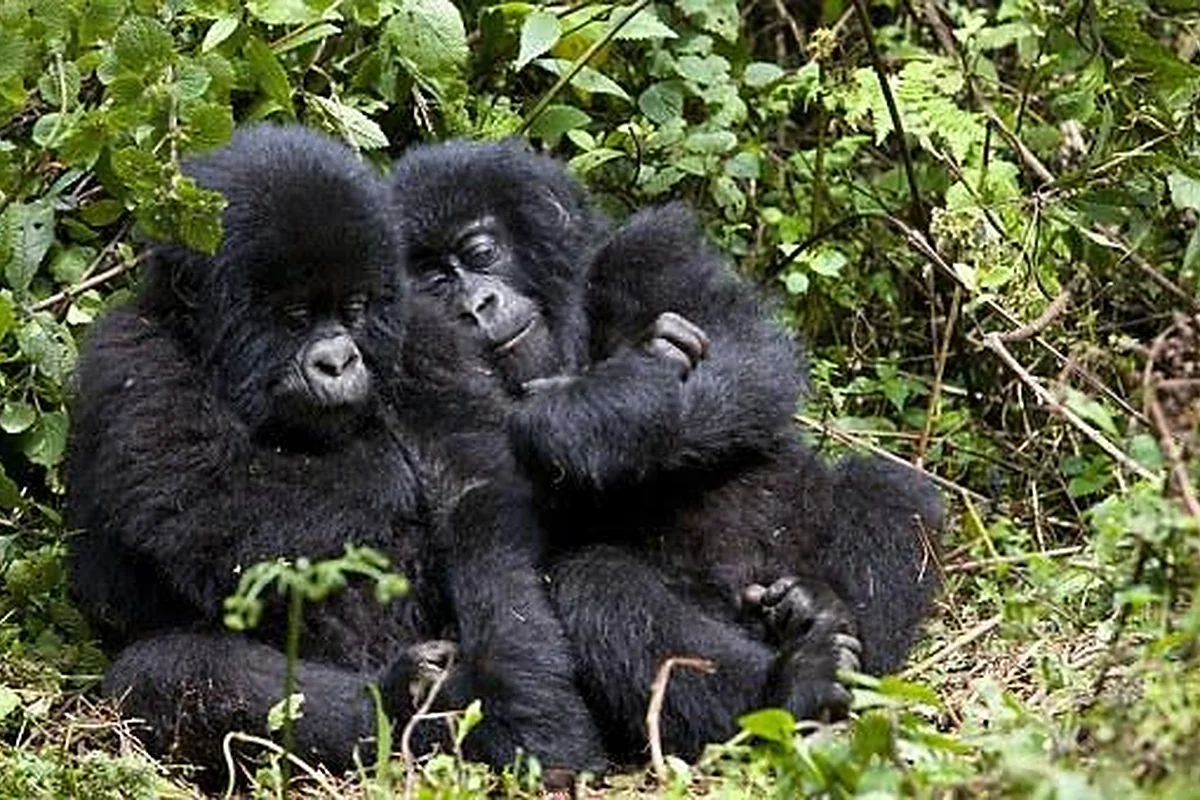
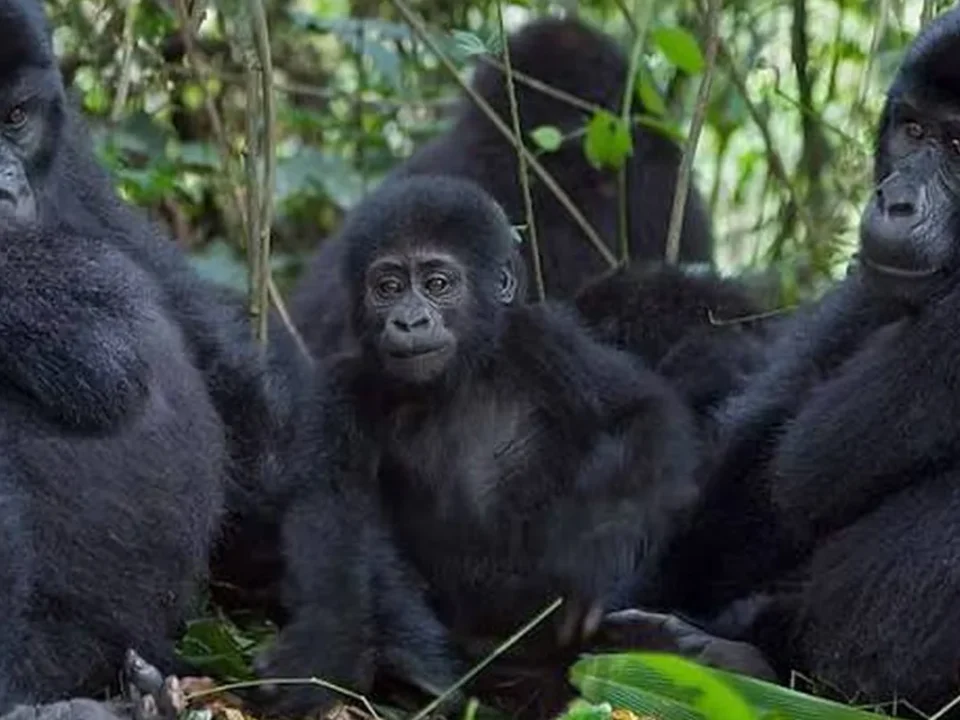
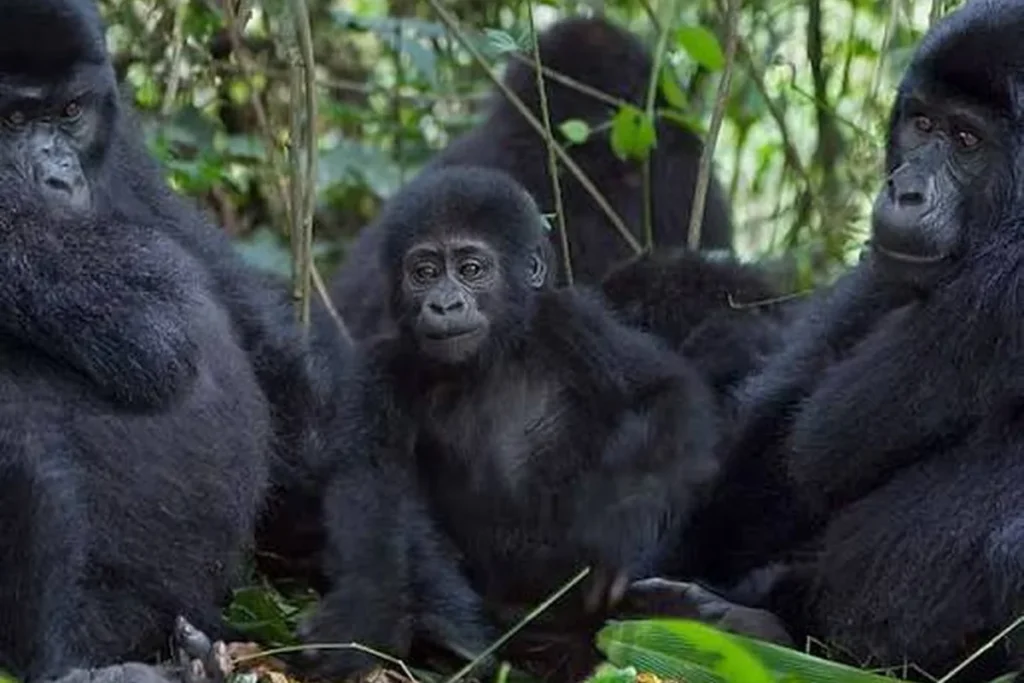
Three young gorillas resting closely together amid dense forest vegetation, illustrating the remarkable wildlife encounters visitors hope to experience during gorilla trekking.
Refunds, Rescheduling and Insurance After an Incomplete Trek
A gorilla permit is a regulated authorization for a specified trekking activity, not a guarantee that every visitor will complete the walk or enjoy an identical experience. Standard cancellation schedules and special provisions may apply in different circumstances. An early voluntary return should not be treated as automatically refundable. Any decision must follow the official terms applicable to that booking.
Planning a safari budget should include reasonable flexibility for rest, porter services and unforeseen changes. Guests may choose different accommodation standards, but the need for clear information remains the same. Ask which services are included and which require separate payment. A transparent quotation makes it easier to compare itineraries on more than headline price.
Questions about illness are especially sensitive. A person excluded from trekking because of an infectious condition may face different administrative rules from a person who voluntarily stops after becoming tired. Likewise, an injury during an authorized activity may require a separate review. These distinctions matter, and travelers should request written guidance instead of relying on informal assurances.
For booking purposes, distinguish a confirmed service from a reasonable request. A lodge, vehicle, porter or specialist arrangement may each have separate conditions. Written confirmation is especially important when mobility support is essential. This approach protects the traveler from misunderstanding and helps the safari operator coordinate responsibly with the people providing each service.
Rescheduling also needs to be distinguished from refunds. A date change requested before the trek is not the same as asking to repeat a trek that has already begun. Permit changes can depend on deadlines, availability and the rules attached to the particular permit. A booking operator cannot independently override the park authority’s decision.
Travel insurance may offer a separate route for certain covered events, but policies differ substantially. Some exclude strenuous activities, pre-existing conditions or cancellation for personal preference. Others require prompt notification and medical evidence. Read the policy before departure and retain receipts, official statements and correspondence if a claim becomes necessary.
For booking purposes, distinguish a confirmed service from a reasonable request. A lodge, vehicle, porter or specialist arrangement may each have separate conditions. Written confirmation is especially important when mobility support is essential. This approach protects the traveler from misunderstanding and helps the safari operator coordinate responsibly with the people providing each service.
For current administrative guidance, consult the Uganda Wildlife Authority and the conditions supplied with the actual permit. PrideMark Safaris can assist with communicating booking details and clarifying the operator’s own services, but we cannot guarantee that UWA or an insurer will approve a claim.
| Situation | Important distinction | Next action |
|---|---|---|
| Voluntary early return | Not automatically refundable | Ask about permit terms |
| Illness or injury | May require documented review | Retain official records |
| Travel insurance claim | Separate contract and exclusions | Contact insurer promptly |
How to Reduce the Risk of Stopping Early
Choose an itinerary that gives you enough rest before the trekking morning. Arriving late after a demanding road journey can leave you tired before the forest walk begins. A sensible schedule allows time to check equipment, eat properly and sleep. When comparing packages, ask about transfer times and lodge location rather than focusing only on the number of nights.
Ultimately, success is not measured by ignoring discomfort. A responsible trek is one in which visitors respect the gorillas, follow park instructions and make decisions appropriate to their abilities. Whether the encounter takes place or the visitor must return early, clear communication and careful planning remain the most useful safeguards.
Prepare with regular walks that resemble the demands of the activity. Gentle hill training, stairs and uneven paths may help visitors become more comfortable with changes in gradient, provided the activity suits their health. Build gradually instead of attempting strenuous training immediately before departure. Fitness preparation reduces avoidable surprises but cannot predict where the gorillas will be found.
Before making a decision, ask what the next section of trail is likely to involve and whether the group is near a suitable stopping point. The answer may change as trackers relay new information. This is why clear communication is more valuable than a rigid promise about distance, timing or difficulty made before the trek begins.
Choose boots that fit well and have reliable grip, then wear them before the trip. New boots can cause blisters, while smooth soles are unhelpful on muddy slopes. Long trousers, suitable layers and rain protection make it easier to manage changing forest conditions. Keep the daypack light and leave unnecessary valuables at the lodge.
Consider hiring a porter from the beginning rather than waiting until you are exhausted. Porter assistance supports local livelihoods and may improve balance and endurance on uneven trails. Discuss any special support requirements in advance. A standard porter arrangement and a specialized mobility arrangement are different services, so make sure you understand what has actually been confirmed.
Before making a decision, ask what the next section of trail is likely to involve and whether the group is near a suitable stopping point. The answer may change as trackers relay new information. This is why clear communication is more valuable than a rigid promise about distance, timing or difficulty made before the trek begins.
Before booking, tell PrideMark Safaris about your realistic walking capacity and any practical concerns you want us to consider. We can help match accommodation and transfers to the broader itinerary and explain what needs confirmation with park staff. For related planning, see our three-day gorilla trekking safari and fly-in gorilla safari.
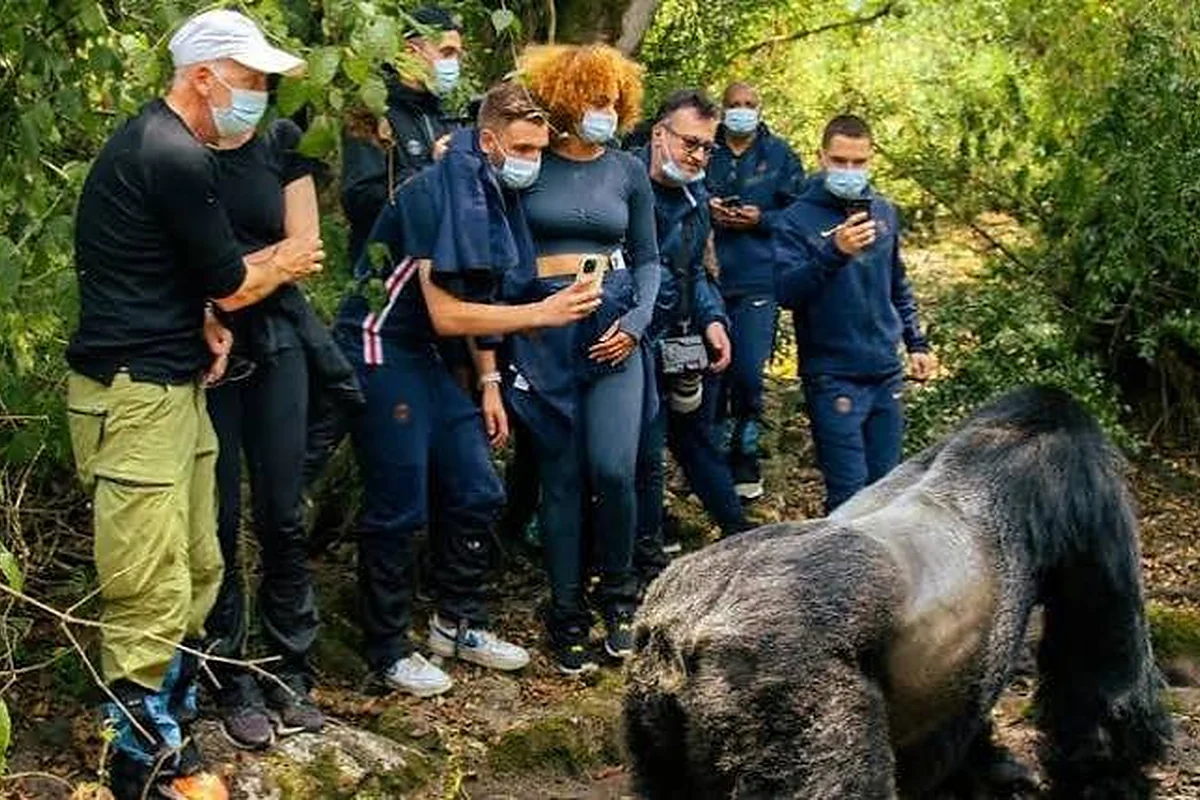
A group of visitors wearing face masks observes a silverback gorilla in a forest setting, illustrating the remarkable experience of encountering mountain gorillas.
Planning a Responsible Gorilla Safari With PrideMark Safaris
Good safari planning begins with realistic expectations. Some guests enjoy long forest walks, while others prefer to minimize transfers, carry less equipment and build rest time into the schedule. We explain that trekking difficulty varies and that ranger decisions are made in the park. The objective is not to promise an easy trek but to help guests arrive prepared for the experience.
When a traveler worries they cannot finish gorilla trekking in Uganda, we encourage a detailed conversation before finalizing accommodation and permit arrangements. Useful information includes previous hiking experience, comfort on steps and slopes, and whether the guest expects to need a porter. These details help identify questions for the park team without suggesting that an operator can guarantee a particular route.
For booking purposes, distinguish a confirmed service from a reasonable request. A lodge, vehicle, porter or specialist arrangement may each have separate conditions. Written confirmation is especially important when mobility support is essential. This approach protects the traveler from misunderstanding and helps the safari operator coordinate responsibly with the people providing each service.
Our itineraries can combine the trek with other experiences at a measured pace. A visitor may choose to add wildlife viewing in Queen Elizabeth National Park or quieter time near Lake Bunyonyi, depending on interests and travel logistics. Explore our five-day gorilla and game safari for an example of combining different activities.
We also explain the difference between permit fees, porter costs, accommodation and private transport. Understanding these components helps travelers budget for useful support instead of making decisions based on a misleadingly low headline price. Where a service depends on the park authority or a separate provider, we identify it as something that must be confirmed.
For booking purposes, distinguish a confirmed service from a reasonable request. A lodge, vehicle, porter or specialist arrangement may each have separate conditions. Written confirmation is especially important when mobility support is essential. This approach protects the traveler from misunderstanding and helps the safari operator coordinate responsibly with the people providing each service.
If you are uncertain about your ability to complete the trek, contact PrideMark Safaris before purchasing a permit. We can discuss a realistic travel schedule and the practical questions to raise with park staff. A thoughtful plan cannot eliminate uncertainty in the forest, but it can reduce avoidable stress and help visitors make safer, better-informed decisions.
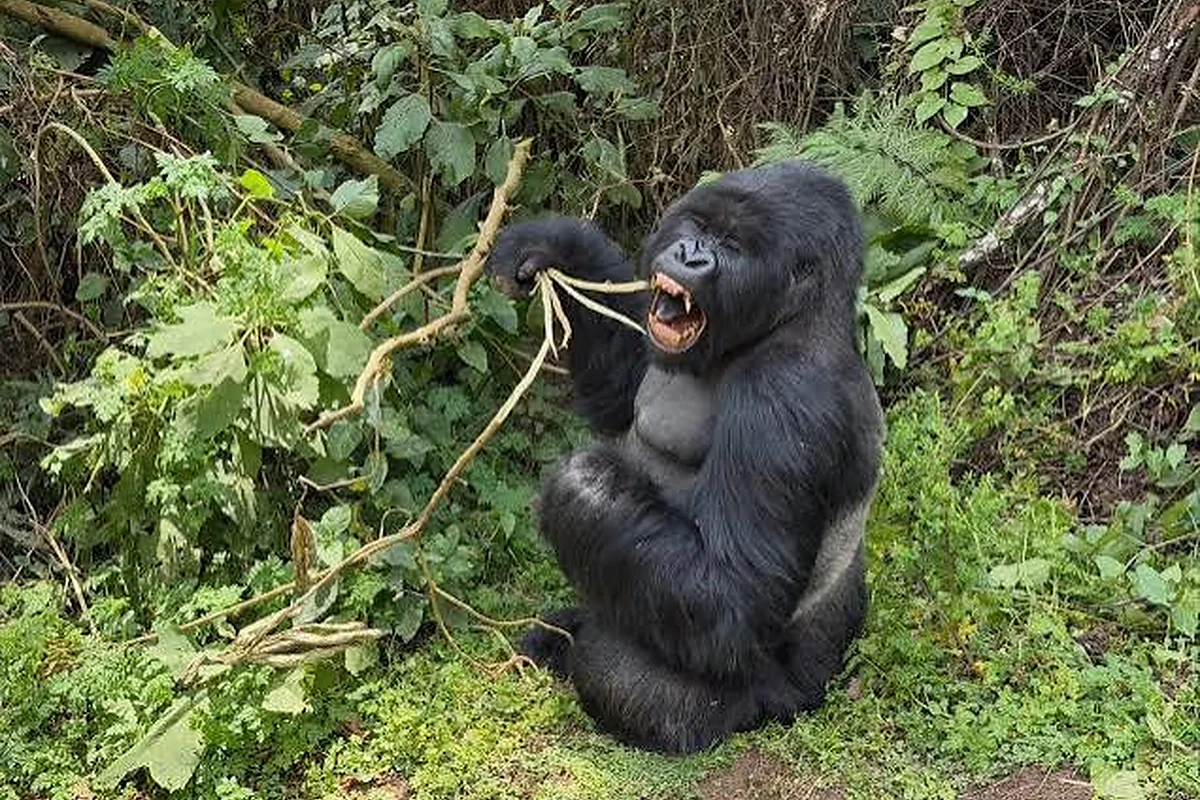
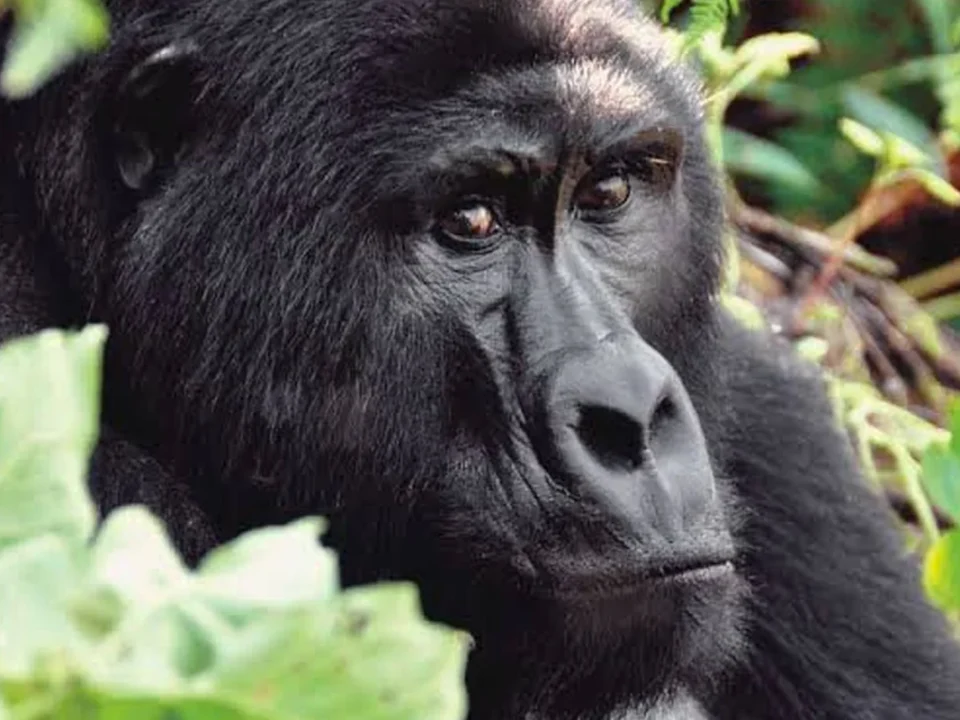
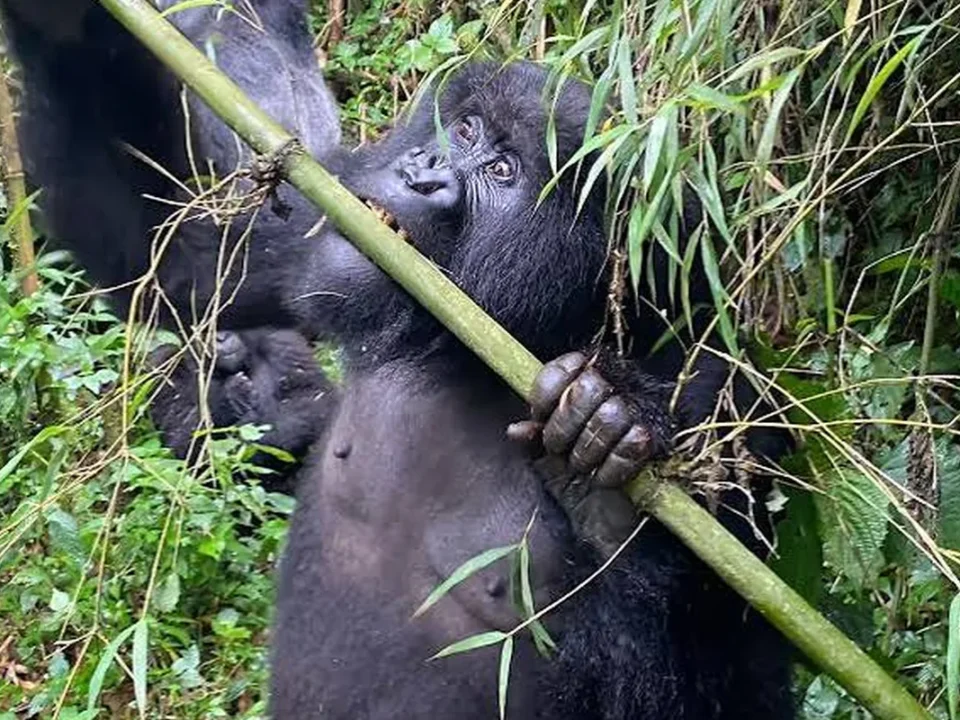
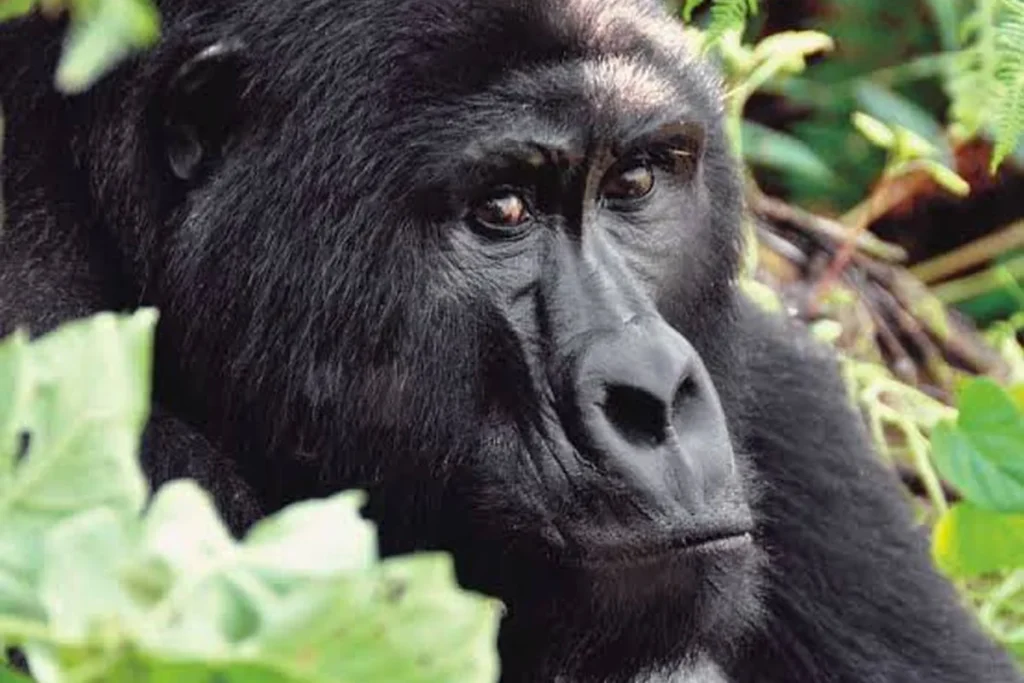
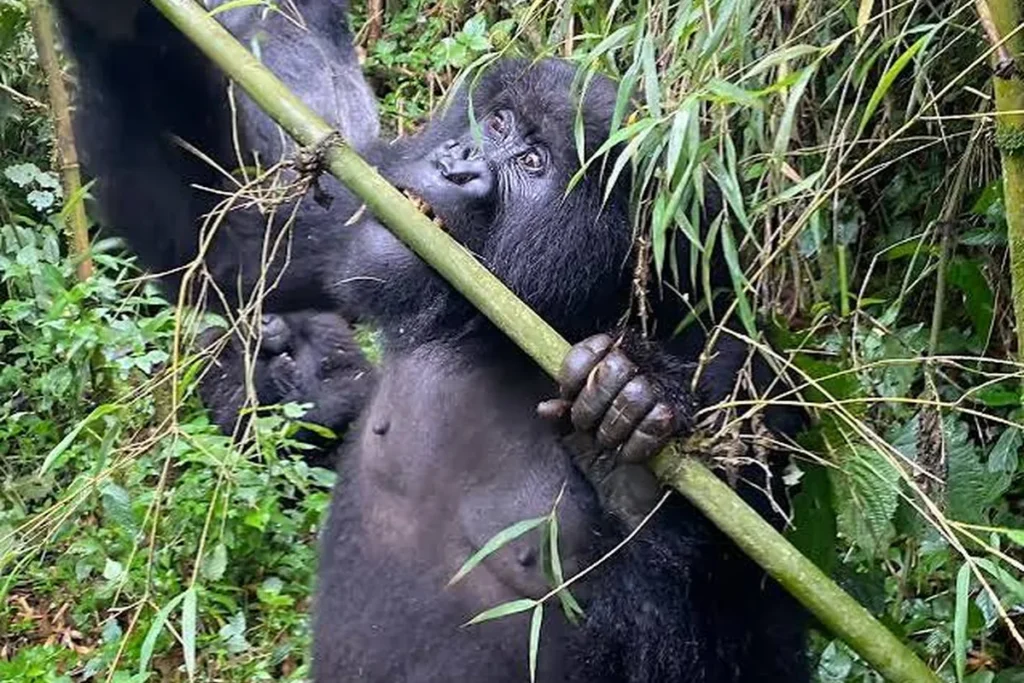
A silverback gorilla sitting among dense green vegetation while feeding on a branch in its natural forest habitat.
Frequently Asked Questions
What happens if I get too tired during gorilla trekking?
Tell the ranger as soon as you begin struggling. The team can advise whether a rest, slower pace, assistance or return is appropriate. Do not wait until you cannot walk safely. Conditions vary across routes, and the decision must account for the location, the group and your condition. A porter may help with belongings, but assistance is not a promise that you will reach the gorillas.
Can I turn back before seeing the gorillas?
Yes, you should communicate if you cannot continue safely, but you must not leave the group independently. The ranger will determine how to manage a return and whether the remaining group can proceed. The forest is not a public walking trail with guaranteed vehicle access. Turning back may mean missing the encounter, and an unused portion of the experience does not automatically qualify for a refund.
Will I get a refund if I cannot complete the trek?
Do not assume so. Refunds and exceptional cases are governed by the official conditions attached to the permit and the circumstances of the interruption. Voluntary withdrawal due to tiredness may be treated differently from a documented medical event. Ask the park authority or booking operator for the applicable procedure and preserve any supporting records. Insurance may also have separate conditions that require evidence.
Can a porter carry me through the forest?
A standard porter generally helps carry a bag and may provide steadying assistance. Carrying a visitor requires a different, specialized arrangement that may not be available or appropriate on every route. Ask about staffing, cost, suitability and advance booking before travel. Never assume a porter can safely lift or transport a person over steep terrain simply because porter services are offered at the starting point.
Is Bwindi harder than Mgahinga?
Neither destination can be guaranteed easier for every visitor. Both involve mountainous terrain, changing weather and gorillas that move through their habitats. The difficulty of an individual trek depends on the allocated group, its location and trail conditions. Choose the destination based on the overall itinerary and discuss mobility concerns in advance, rather than relying on a simple ranking of the parks.
How long can a gorilla trek take?
The time spent walking varies considerably because trackers follow the gorillas’ current location. Some groups reach them relatively quickly, while others walk for several hours. The return also requires time and effort. The standard permitted viewing period is generally up to one hour once the gorillas are encountered. Do not schedule a tight onward journey that depends on an unusually short trek.
Can older travelers finish gorilla trekking?
Many older travelers participate, but age by itself cannot predict how someone will manage the forest. Comfort with slopes, stamina, balance and any health considerations are more useful indicators. Discuss your needs with a healthcare professional where appropriate, and tell the operator about practical limitations. Porter assistance and a carefully paced itinerary can help, but no operator can guarantee a gentle route.
What if I feel sick before the briefing?
Inform the operator and park officials before joining the trek, particularly if you have symptoms that could be contagious. Gorilla health protection is an important part of the rules. Do not conceal illness to avoid losing the permit fee. Ask officials what the applicable procedure is for your circumstances and seek medical advice when needed. Any rescheduling or refund must follow the relevant official conditions.
Can my group continue if I stop?
Possibly, but the ranger must decide how the group will be managed and how you will return safely. The answer depends on staffing, route conditions and your circumstances. Do not expect a companion to escort you away independently or assume that everyone must automatically abandon the activity. Early communication gives the park team more opportunity to consider workable options.
What equipment helps on difficult gorilla trekking trails?
Well-fitting hiking boots with grip, long trousers, rain protection and a manageable daypack are useful starting points. A walking stick can improve balance for some people, and a porter can reduce the weight you carry. Bring water, suitable food and necessary personal medication. Equipment cannot remove steep slopes or mud, but it can make ordinary forest conditions more manageable.
Should I train before gorilla trekking?
Regular walking and gradual hill or stair practice may help build confidence and endurance, provided these activities suit your health. Focus on consistent preparation rather than a strenuous last-minute workout. If you have a medical condition or significant mobility limitation, seek individualized professional guidance. The goal is to improve your comfort on uneven ground, not to meet an invented universal fitness standard.
How can PrideMark Safaris help me plan?
We can discuss realistic transfer schedules, accommodation location, luggage needs, porter questions and the type of support you may want to confirm before booking. We also explain that the park authority controls trekking operations and safety decisions. Contact us early with your walking concerns so the itinerary can be planned thoughtfully, without promising a particular trekking route, permit exception or outcome.
For personalized safari planning, contact PrideMark Safaris and explain your concerns before committing to travel. We can help you consider a realistic itinerary and identify arrangements that need official confirmation. Safe participation and honest expectations matter more than making an unsupported promise about the forest.