At PrideMark Safaris, we help travelers prepare for Uganda’s varied landscapes, from the dense forests of Bwindi and Mgahinga to open wildlife habitats. The aim is to travel comfortably, protect delicate optics and enjoy each wildlife encounter without unnecessary gear.
1. Do You Need Binoculars for Gorilla Trekking?
Binoculars are useful on a Uganda safari, but they are not essential for the actual gorilla encounter. Gorilla viewing takes place under ranger supervision at a regulated distance, and a comfortable unaided view is often possible. Binoculars become more valuable while waiting for a group to be located, scanning forest edges for birds, or observing wildlife encountered elsewhere on your journey. The best purchase therefore depends on your wider itinerary, not only the hour spent observing gorillas.
Travelers sometimes imagine gorilla trekking as a conventional game drive where animals are spotted from far away. In reality, teams move on foot through thick vegetation, often across steep or muddy ground. During that walk, keeping both hands available for balance and walking sticks can matter more than having optics ready. A small, protected pair is generally more practical than a heavy, high-powered model that swings against your chest.
Before buying equipment, decide whether you will also visit bird-rich habitats such as Mabamba, Kibale, Queen Elizabeth National Park or Lake Mburo. If you plan several days of birding, binoculars may become one of your most-used accessories. If your trip focuses almost exclusively on gorillas and you prefer to travel light, borrowing a pair or relying on your eyes may be sensible.
At PrideMark Safaris, we encourage guests to pack for the conditions they will actually encounter. Ask whether you will be birdwatching, how much time you expect to spend on forest trails, and whether your accommodation-to-park transfers leave room for additional equipment. A lightweight pair is a convenience, not a substitute for following the ranger’s instructions.
Practical decision before packing
Think about the sequence of your travel day: an early departure, a vehicle transfer, a ranger briefing and a potentially demanding forest walk. Each additional item needs a safe place in your bag and a reason to be carried. Binoculars can make a separate birding walk more rewarding, but carrying them simply because they appear on a packing checklist is not always helpful. Compare the benefit of an occasional view with the weight, rain protection and accessibility requirements. A good choice is the one that lets you pay attention to the landscape and guide rather than constantly adjusting equipment.
A helpful planning question is whether you would miss the binoculars if you left them at your lodge for one morning. If the answer is no, you may not need them for the gorilla trek. If you love identifying birds and observing distant mammals, they may be a valued addition to the wider safari. Make this choice before departure, and remember that wildlife viewing should remain calm, respectful and guided.
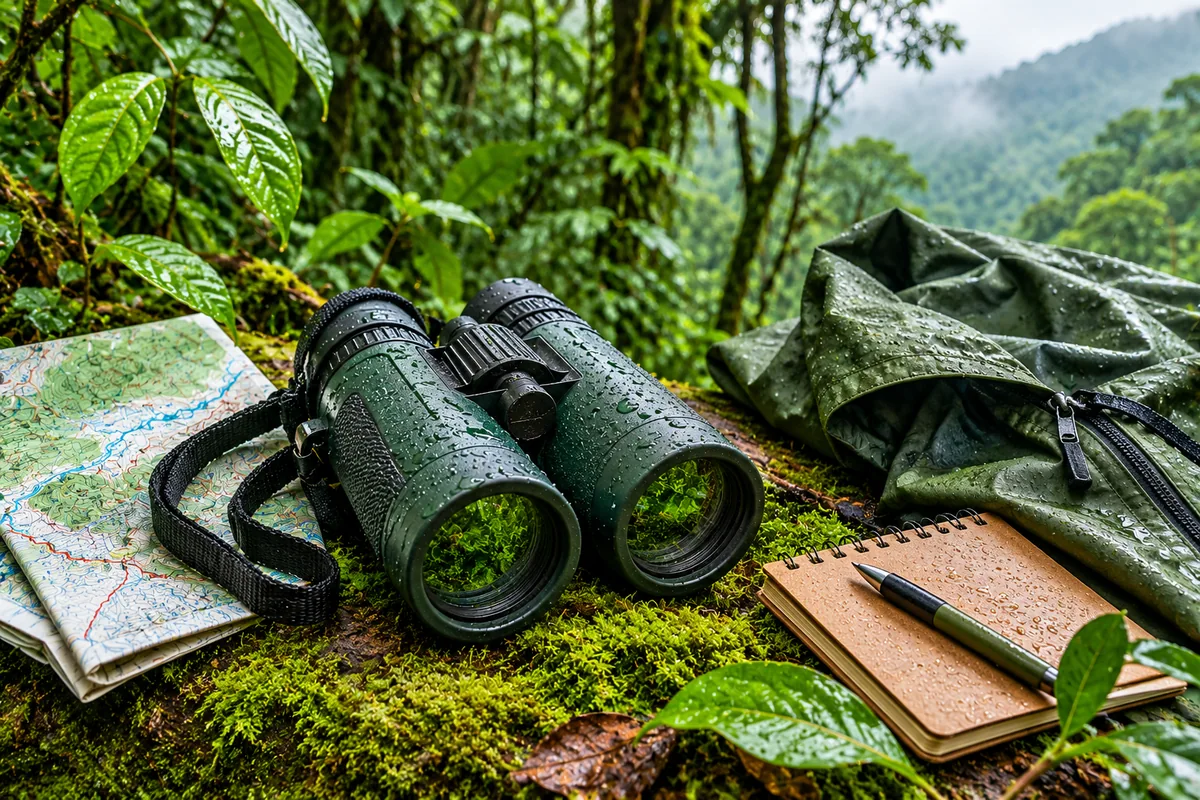
Binoculars, a forest map, rain jacket and field notebook prepared for a rainforest wildlife excursion.
2. Best Types of Binoculars for Rainforest Wildlife Viewing
Roof-prism binoculars have straight barrels and are usually compact enough for a trekking daypack. They are a popular all-round option because they pack neatly and can be handled with one hand when necessary. Porro-prism designs often have wider, offset barrels and may offer attractive optical performance for the price, but they can be bulkier on a demanding forest walk.
Compact binoculars are tempting because they fit in a pocket, yet very small objective lenses gather less light. In a shaded rainforest, that compromise becomes noticeable around dawn, under dense canopy and during overcast weather. A mid-size pair often balances carrying comfort with a brighter image better than either tiny travel binoculars or oversized observation models.
Consider how quickly you can bring the binoculars to your eyes, focus on a moving bird and return them safely to their case. A smooth central focusing wheel, comfortable eyecups and secure grip are more useful than a long list of marketing features. Practice before traveling so the controls feel familiar when a guide points out a bird among moving branches.
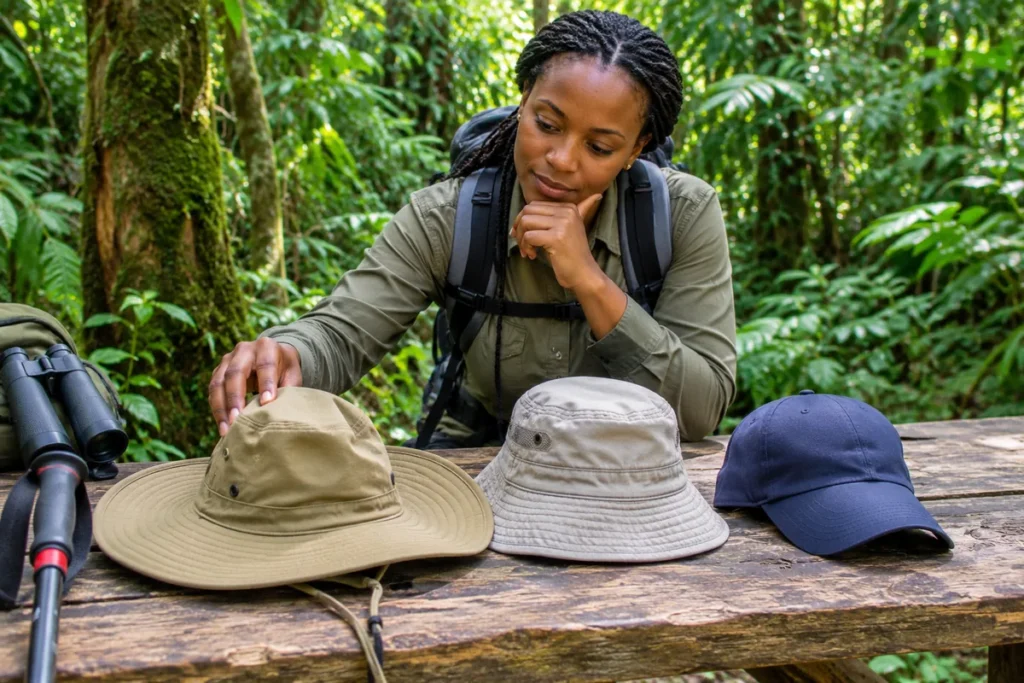
Choose equipment for your own hands and eyesight. Travelers who wear glasses should look for adequate eye relief and adjustable eyecups; people with smaller hands may prefer narrower barrels. Try binoculars in person when possible, looking at shaded and brightly lit objects to judge ease of use. A product that feels natural is more likely to be used during the trek.
| Design | Strengths | Trade-offs |
|---|---|---|
| Roof-prism | Compact straight-barrel design; easy to pack | Quality and comfort vary by model |
| Porro-prism | Often good optical value; comfortable depth perception | Can be bulkier for forest trekking |
| Pocket compact | Very light and convenient | Small lenses may struggle in shade |
| Mid-size | Balanced portability and viewing comfort | Heavier than tiny travel models |
Try the controls before you buy
In a shop or on a familiar walk, use each candidate pair for several minutes rather than judging it only by appearance. Locate a bird-sized object against a leafy background, then switch to a subject at a different distance. Notice whether the focus wheel turns smoothly, whether your fingers naturally reach it, and whether the eyecups stay in place. If you use glasses, repeat the test with them on. A model that is comfortable for one traveler can feel awkward for another, even when the published specifications look similar.
Do not judge brightness only while looking across a brightly lit store. Try to view a shaded area as well. Compare clarity, contrast and ease of holding the image steady. Consider how the binoculars will fit into a rain-protected case and whether you can lift them without disturbing other gear. These practical details are easy to overlook but become important on a wet trail.
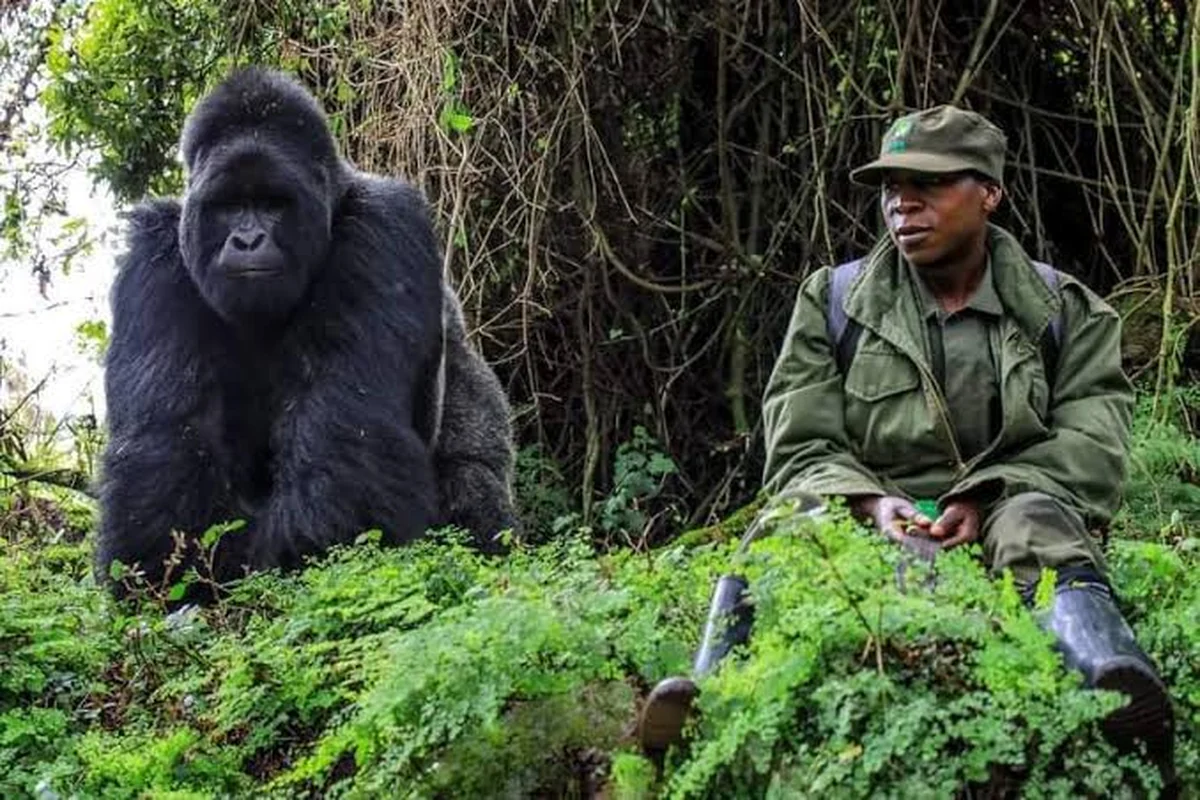
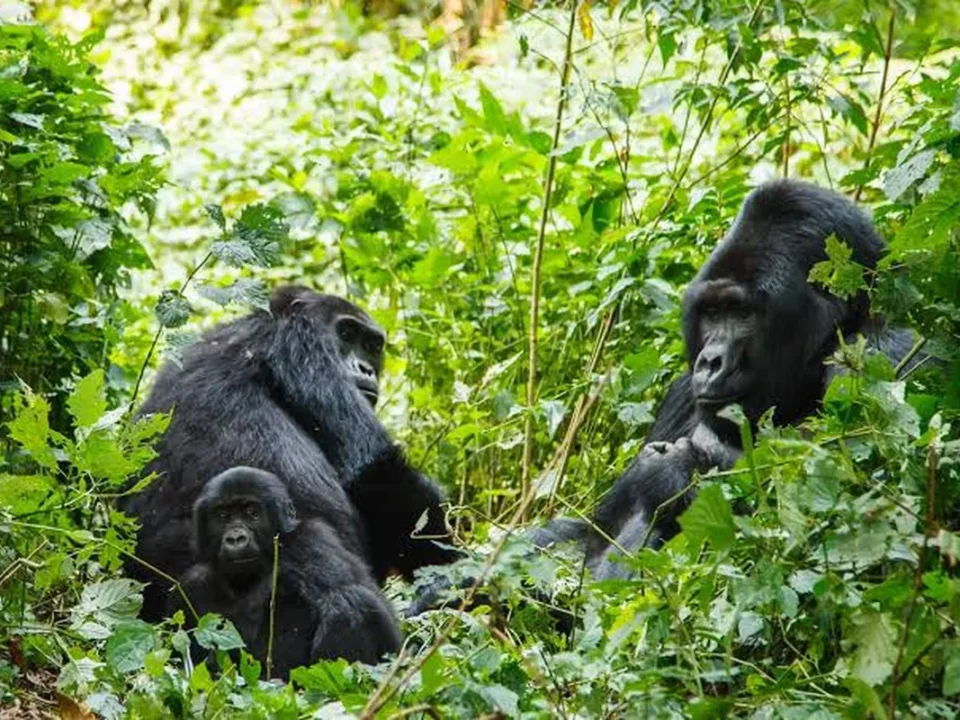
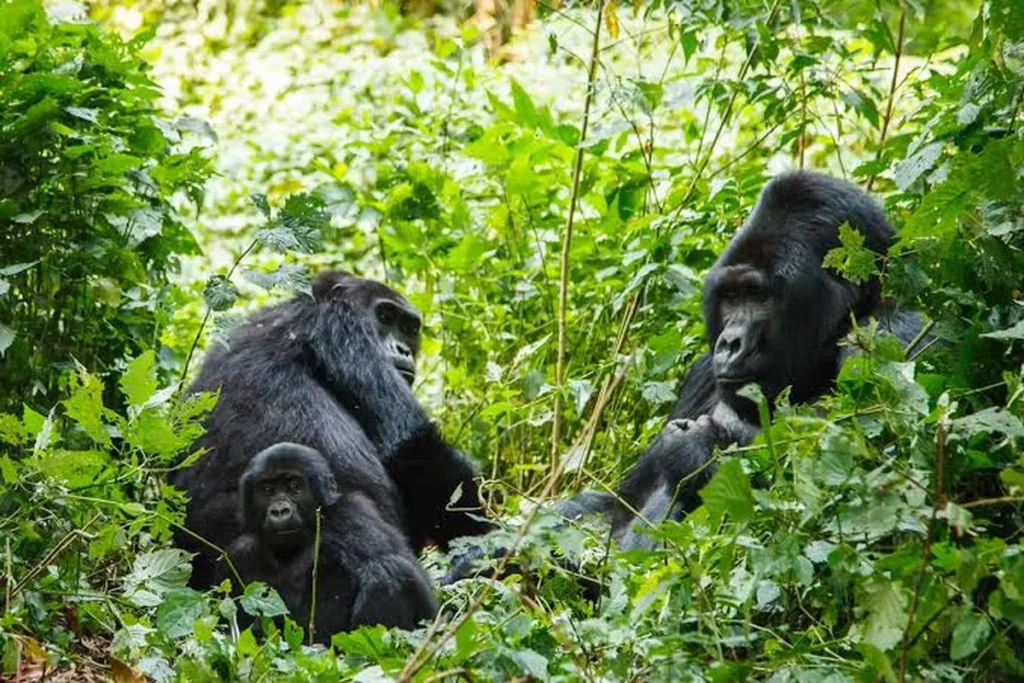
A silverback gorilla and a uniformed ranger in a lush forest environment, highlighting the importance of guided gorilla encounters.
3. 8×32 vs 8×42 vs 10×42: Which Size Works Best?
The first number in a binocular specification indicates magnification, while the second gives the objective-lens diameter in millimeters. An 8×42 pair makes a distant object appear eight times closer and has 42 mm objective lenses. Larger objectives can admit more light, although coatings, glass quality and the observer’s eyes also affect the image. Bigger is not automatically better.
An 8×32 model is often the most convenient compromise for a visitor who wants binoculars mainly for general safari use and occasional forest birdwatching. It usually weighs less than a comparable 8×42 pair and can be easier to carry during a steep walk. Its smaller objective lenses may make the view less comfortable in dim conditions, especially at the edges of daylight.
An 8×42 pair is a strong all-round choice when forest birdwatching is a priority. Eight-power magnification is relatively steady in the hand and generally offers a generous field of view. The larger objective lenses can help under canopy, but the added bulk is worth considering. Check the actual weight and dimensions rather than assuming all models in the same class feel alike.
A 10×42 model can help with distant birds on open edges and savannah sections, but higher magnification also amplifies hand shake and can make it harder to locate a subject quickly. Dense vegetation often favors a wider field of view over extra power. For many first-time visitors, 8× magnification is easier to manage without practice.
Remember that binoculars do not change wildlife-viewing rules. A stronger model is not permission to move closer to gorillas, leave a trail or linger beyond ranger guidance. The best binoculars for gorilla trekking are those that serve the wider safari without creating unnecessary weight or distraction.
| Specification | Typical advantage | Consideration |
|---|---|---|
| 8×32 | Light and steady for long walks | Less light-gathering area than 42 mm |
| 8×42 | Bright, versatile, easy to locate birds | More weight and volume |
| 10×42 | Extra reach for distant subjects | More hand shake and narrower field |
| Compact 8×25 | Smallest packing footprint | Less comfortable in dim forest conditions |
Understanding real-world viewing
Magnification does not tell the whole story. A pair with higher power can make a distant bird look larger, yet it can also exaggerate small hand movements and reduce the amount of habitat visible at once. In tangled forest, locating the bird is often the hardest part. A wide field helps you find movement first and then examine it carefully. A steady, comfortable image can therefore be more useful than the highest number printed on the binocular body.
The objective-lens number is also only one part of performance. Glass quality, coatings, ergonomics and your own eyesight influence how pleasant the view feels. Weight and dimensions can differ considerably between models with identical specifications. If possible, compare a few options side by side outdoors. Avoid buying based on magnification alone; think about what you expect to see and where you will be standing.
4. Waterproof and Fog-Proof Binoculars for Uganda
Uganda’s montane forests can be damp even outside the wettest months. Rain, mist, condensation and wet leaves are normal considerations. Choose binoculars described by the manufacturer as waterproof, ideally with sealed construction and a clear immersion or weather-resistance specification. The word ‘water-resistant’ alone may offer limited reassurance during prolonged rain.
Fog-proof construction generally means the binoculars are internally purged with a dry gas and sealed to reduce internal condensation. It does not stop moisture from forming on the outer glass when temperature and humidity change. Keep a clean microfiber cloth accessible, and allow equipment to adjust gradually when moving between an air-conditioned vehicle and humid forest air.
Rubber armor can improve grip when hands are damp, but it should not be confused with waterproofing. Look for well-fitted objective covers, a comfortable neck strap and a case that closes securely. A dry bag or waterproof pouch inside your backpack provides another layer of protection when the rain becomes heavy.
After the trek, wipe off visible water, brush away loose dirt and let the binoculars dry in a ventilated place before storage. Avoid leaving damp optics sealed in a bag for days. If you notice persistent fogging inside the barrels, seek professional service rather than trying to dismantle them.
Do not assume every rugged-looking model is weather-sealed. Read the maker’s specifications, warranty and cleaning guidance. A modest, genuinely sealed pair may be a wiser choice than an expensive model that lacks the protection you need.
Rainforest handling habits
Before leaving the vehicle, make sure the case closes properly and that the strap cannot snag on branches. During light rain, a protective cover may be sufficient for short periods, but heavy showers call for more reliable protection. Keep a small dry bag where you can reach it without spreading the contents of your backpack on wet ground. Protecting binoculars is usually easier than cleaning or repairing them after water has entered the mechanism.
When moving between cool indoor spaces and humid outdoor air, condensation may appear on exposed glass. Give the binoculars time to adjust and wipe gently only with suitable materials. Avoid storing damp straps or cases in sealed luggage for long periods. At the end of each day, inspect the optics in good light so that moisture, dirt or damage is noticed before the next excursion.
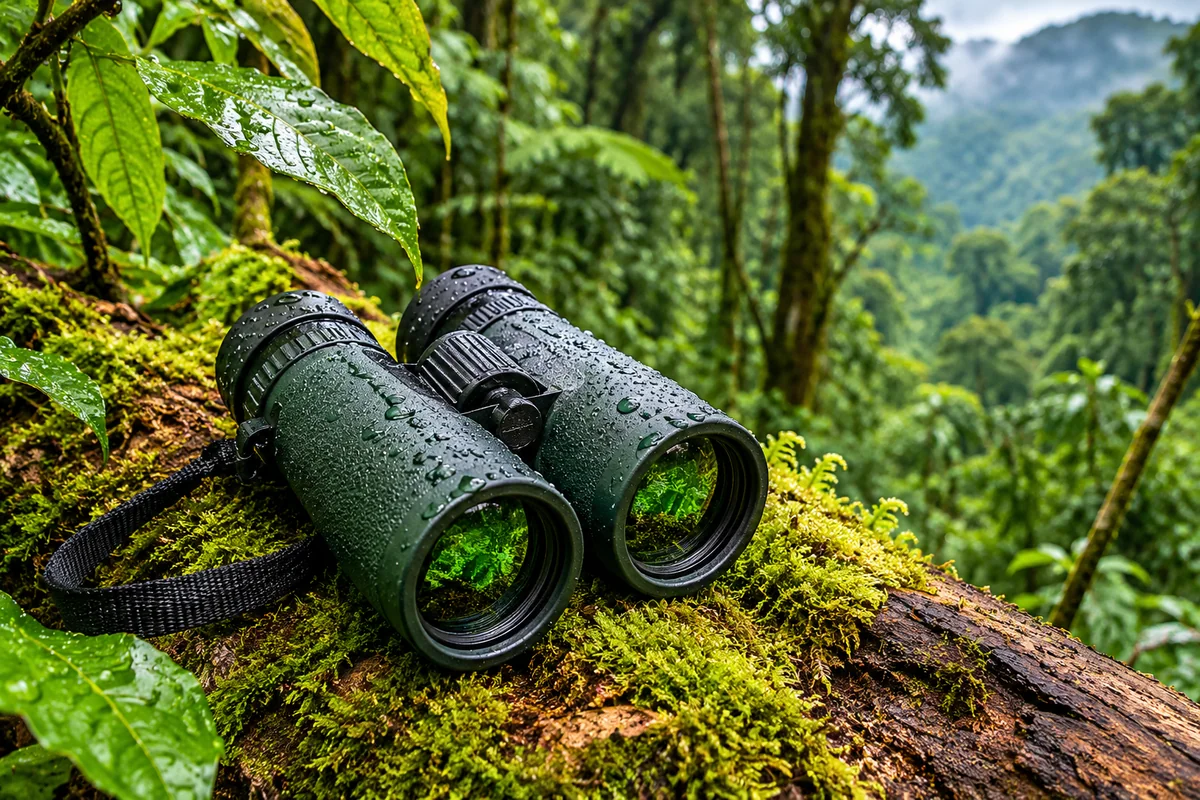
Water-resistant binoculars resting on a moss-covered log, illustrating the importance of weather protection during rainforest wildlife viewing.
5. Magnification, Lens Quality, Field of View and Comfort
Magnification attracts attention, but field of view determines how much of the scene you can see at once. A wider view helps locate a small bird in branches and track movement without repeatedly losing the subject. Check the published field-of-view figure at a stated distance, and compare models using the same units. High magnification frequently comes with a narrower field.
Optical coatings influence contrast, glare control and transmission. Terms such as fully multi-coated lenses are useful starting points, but they do not guarantee a particular result. When comparing models, look for a sharp central image, comfortable edge performance and natural colors. View a shaded subject against bright foliage to see how the binoculars handle challenging light.
Close-focus distance matters if you also enjoy butterflies, flowers and nearby birds. Eye relief matters if you wear glasses, because insufficient eye relief can make it difficult to see the entire field. Adjustable diopter settings help compensate for differences between your eyes. Set the diopter once before the trek and avoid constantly changing it.
Weight becomes more noticeable after several hours on a trail. A harness can distribute weight across the shoulders and reduce bouncing, while a padded strap may be adequate for a smaller pair. Check that straps do not interfere with a rain jacket, backpack chest strap or walking stick. A secure carry system should let you access the binoculars without swinging them into rocks or branches.
The best binoculars for gorilla trekking should be easy to focus, comfortable to hold and bright enough for your intended activities. Paying more for specifications you will rarely use is not necessarily an improvement. Test real-world handling before choosing.
Comfort during long walks
A pair of binoculars may feel light when held for a minute, yet become noticeable after hours of hiking. Test the strap or harness while wearing the same style of backpack and rain jacket you expect to use. The binoculars should rest securely without bouncing against your body or catching on vegetation. If you plan to use a walking stick, consider whether you can safely raise and lower the optics without losing balance.
Ease of focusing matters just as much as lens specifications. Birds may move quickly between patches of light and shadow, leaving little time to adjust. Practice bringing the binoculars to your eyes while looking at the subject, then make small focus changes. Familiar handling helps you observe more and spend less time struggling with the equipment.
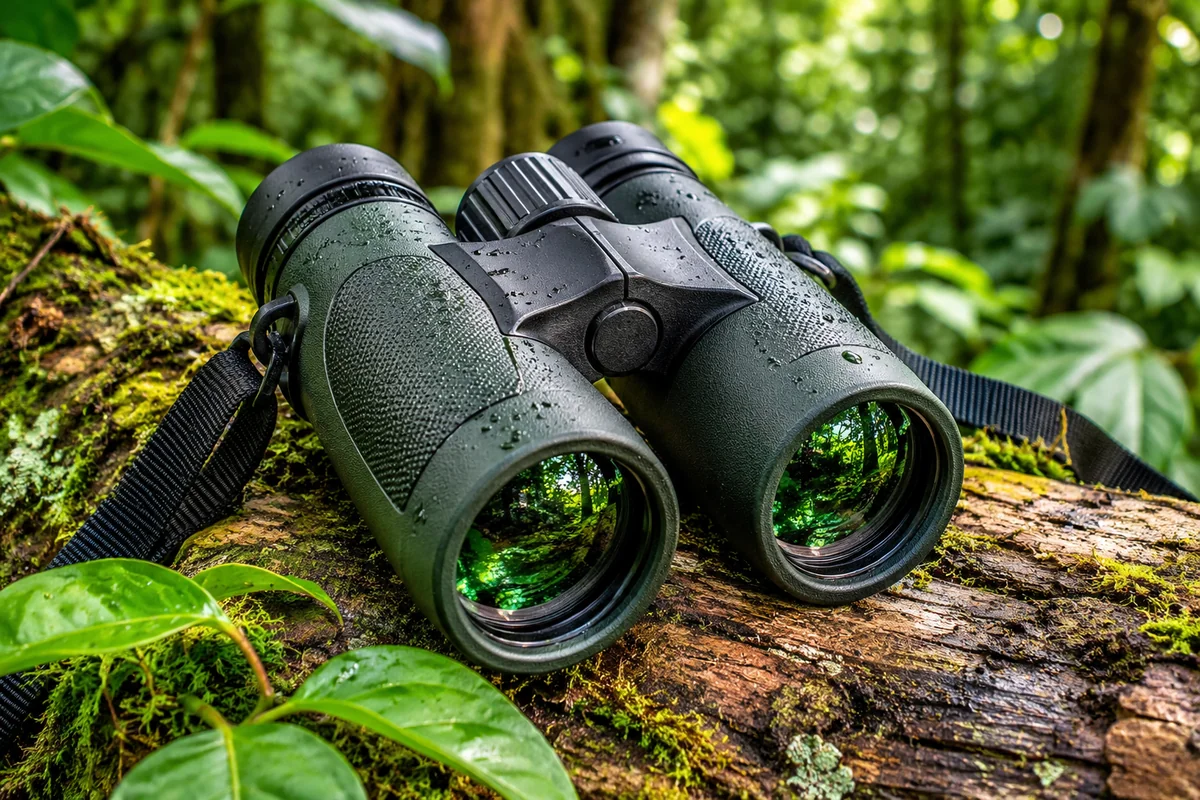
A close-up of binoculars highlighting their objective lenses, focus wheel and textured grip.
6. Using Binoculars in Bwindi and Mgahinga Forests
Bwindi Impenetrable National Park and Mgahinga Gorilla National Park offer remarkable forest environments, but the trekking experience varies with terrain, weather, vegetation and the location of the habituated gorilla group. Expect changing light as you move between open clearings and dense canopy. Keep binoculars stowed securely while navigating steep or slippery sections.
Birdwatchers may appreciate binoculars before the gorilla encounter, during breaks approved by the guide, and on separate nature walks. Uganda’s forest birdlife rewards patient observation, but a gorilla trek is primarily a guided wildlife activity with a defined purpose. Ask the guide when stopping to look for birds is appropriate rather than delaying the group independently.
When the gorillas are located, listen carefully to the ranger’s briefing. Follow current distance requirements, avoid flash photography and keep movements calm. Do not use binoculars as a reason to approach animals or step away from the designated group. If a gorilla moves toward visitors, follow ranger instructions rather than attempting to reposition for a better view.
Forest vegetation can obscure subjects. Use a wide field of view to find an opening, then focus carefully. A small binocular that can be raised quickly is often more practical than a large model. If rain begins, protect the eyepieces and avoid rubbing gritty droplets across the glass.
For official park and activity guidance, consult the Uganda Wildlife Authority at ugandawildlife.org. Rules and arrangements can change; confirm details again before departure with your tour operator and ranger.
Forest etiquette and observation
A guided gorilla trek is not an independent birding expedition. Guides and rangers manage the pace, route and visitor behavior for safety and conservation. If you notice an interesting bird, ask whether there is time to stop rather than separating from the group. Binoculars should never distract you from a slippery step, a ranger instruction or a change in the animals’ behavior.
Gorilla encounters are governed by specific viewing rules, and those instructions take priority over any photography or observation plan. Do not reach through foliage, push ahead of other guests or attempt to improve your angle by moving closer. Wildlife observation is often more rewarding when visitors remain patient and quiet. Keep the equipment secondary to the experience and respect the forest around you.
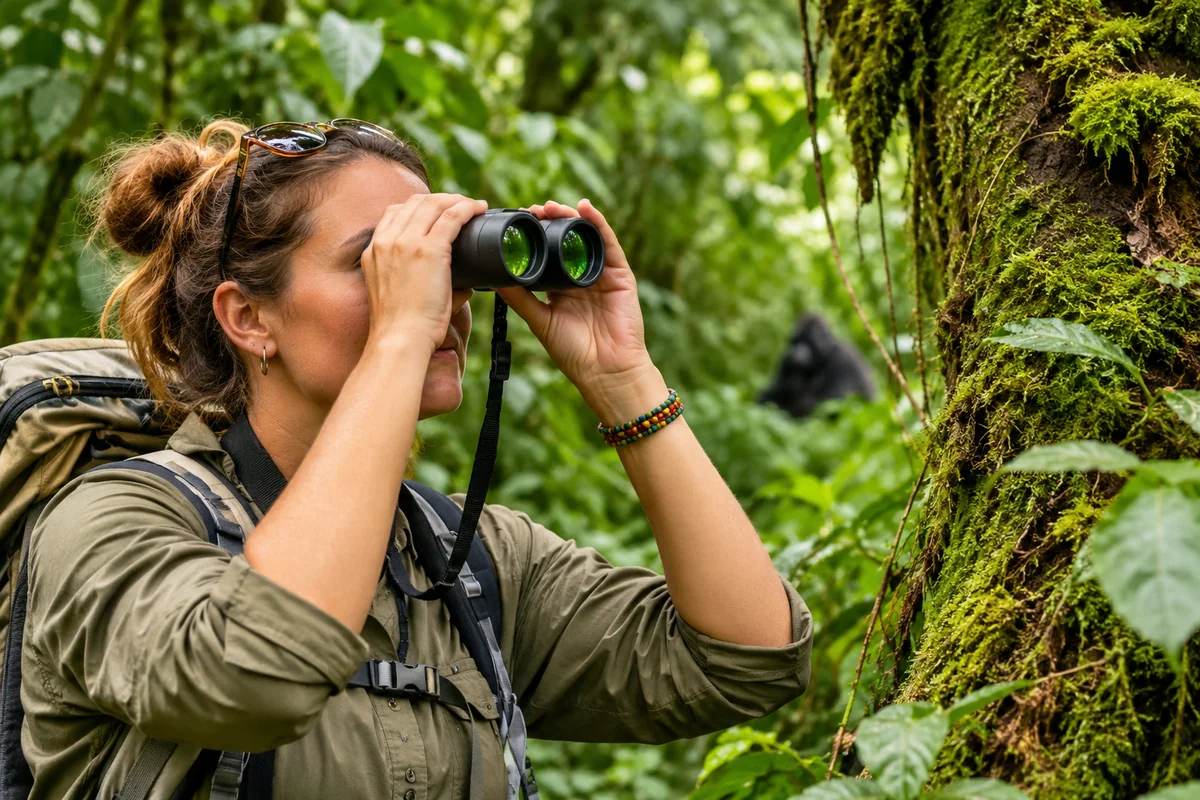
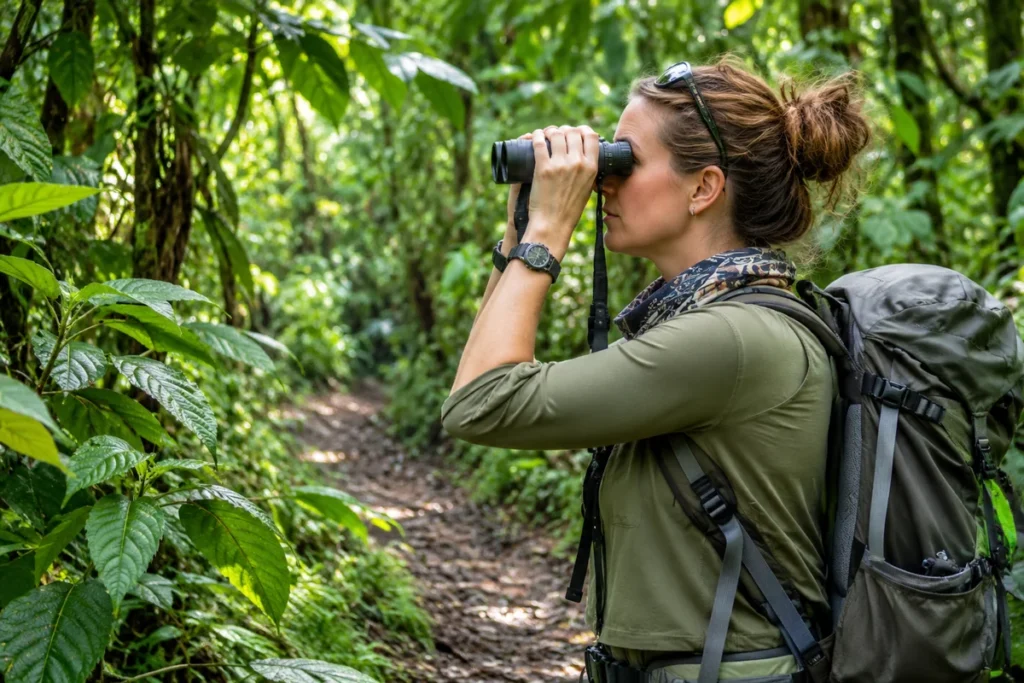
A traveler uses binoculars to observe wildlife among dense rainforest vegetation.
7. Binoculars vs Cameras for Wildlife Observation
Binoculars and cameras do different jobs. Binoculars help you observe movement, behavior and distant details in real time without needing to record anything. Cameras capture images that you can keep, share and study later. A camera with a long lens may provide reach, but it is heavier and can be slower to bring into action than compact binoculars.
If photography is your main goal, carrying a camera, lens, spare battery, waterproof cover and binoculars may create an uncomfortable load. Decide what you genuinely need on the trek itself and what can remain in the vehicle. Many visitors find that one camera and a modest pair of binoculars are enough for a broader safari, while others prefer a camera alone.
Smartphones are convenient for travel memories, but their digital zoom cannot always match dedicated optics for observing distant birds. Conversely, binoculars cannot replace the ability to take photographs. Choose based on the activity rather than expecting a single device to excel at everything.
During the gorilla encounter, avoid spending the entire permitted observation period looking through equipment. Take time to watch quietly and experience the animals’ behavior directly. Responsible observation matters more than obtaining a perfect image or testing a new optical accessory.
Travelers planning both gorilla trekking and birdwatching can discuss their itinerary with PrideMark Safaris to determine which equipment will be most useful on each day.
Choosing what to carry on each safari day
The right equipment can change from one day to the next. A birdwatching excursion may justify binoculars, a field guide and a camera, while a steep forest trek may call for a lighter pack. On a boat cruise, binoculars can help identify birds along the shoreline. On a game drive, they may be useful for observing animals at a distance from the vehicle. You do not need to carry every item for every activity.
Make a simple plan the evening before each outing. Charge camera batteries if you are bringing a camera, check the weather, clean binocular lenses and decide which accessories will stay behind. This avoids rushed packing and reduces the chance of leaving sensitive equipment unprotected. A well-chosen lightweight kit often makes travel more comfortable than a bag full of rarely used devices.
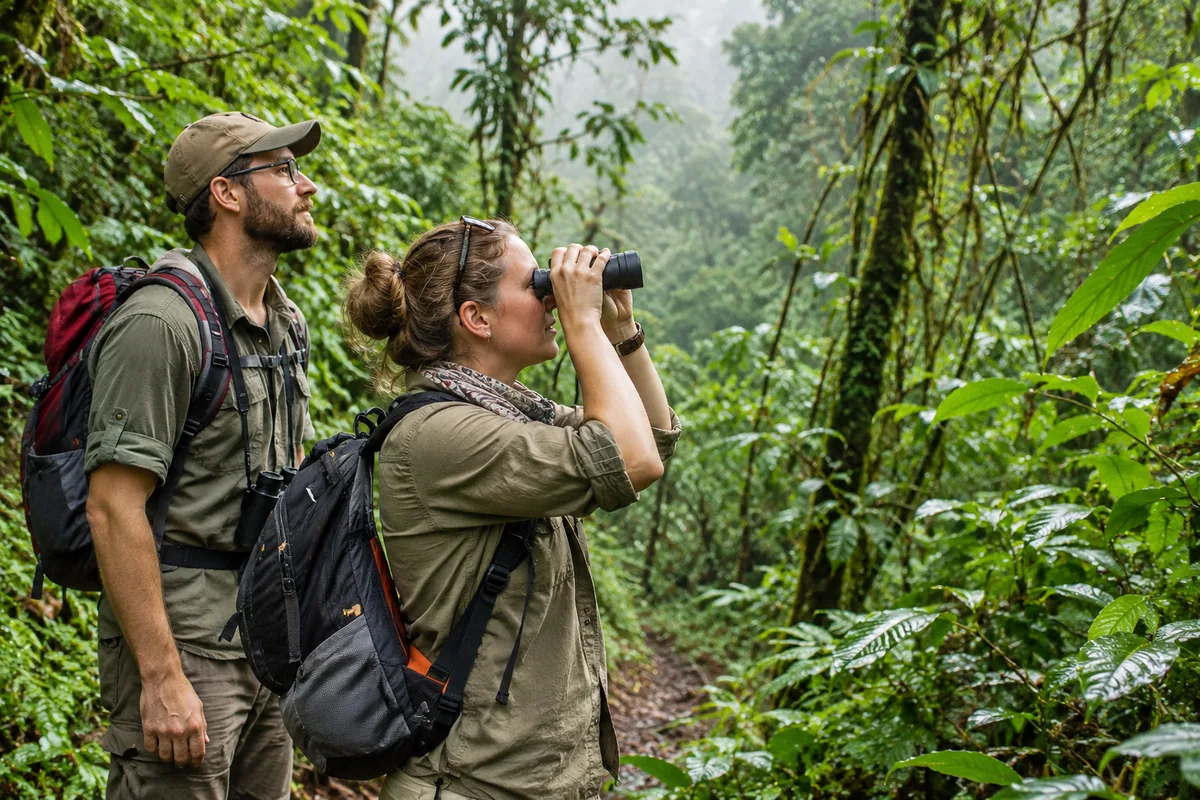
Two travelers pause along a lush rainforest trail to observe wildlife, with one using binoculars.
8. Nine Amazing Tips for Choosing the Right Binoculars
Tip 1 — Prioritize practical magnification. Start by trying an 8× model. It is generally easier to hold steady and locate wildlife through foliage than a higher-powered pair. Choose 10× only if you have a clear reason and can handle the narrower view and added shake.
Tip 2 — Balance brightness with weight. A 42 mm objective may improve comfort in shaded conditions, but a lighter 32 mm model can be easier to carry all day. Consider how far you may walk and what other gear is in your pack.
Tip 3 — Verify waterproof construction. Read the manufacturer’s specification rather than relying on a seller’s description. Rain, mist and wet vegetation make proper sealing an important feature for Uganda’s forests.
Tip 4 — Test binoculars with your glasses. If you wear spectacles, check eye relief and eyecup adjustment. You should see a comfortable full field without pressing the binoculars awkwardly against your face.
Tip 5 — Check the focus wheel. Try focusing from a near object to a distant one. The control should move smoothly and predictably, even when your hands are slightly damp.
Tip 6 — Choose a secure carrying system. A harness, fitted strap or padded case can keep binoculars from bouncing on rough terrain. Make sure they do not obstruct walking sticks or backpack straps.
Tip 7 — Practice before the safari. Learn to adjust the diopter, locate moving subjects and replace the lens caps quickly. Familiarity saves time when wildlife appears unexpectedly.
Tip 8 — Pack cleaning and rain protection. Carry a microfiber cloth, protective case and small dry bag. Avoid harsh cleaners or rubbing muddy lenses without first removing grit.
Tip 9 — Match the purchase to your full itinerary. The best binoculars for gorilla trekking may be the pair that also serves birdwatching in Kibale, boat cruises or savannah game drives. Think about all your activities rather than one encounter.
How to compare options fairly
Rather than comparing marketing slogans, make a short list of your requirements: manageable weight, comfortable eye relief, useful field of view, genuine weather protection and a price you can justify. Look at the warranty and service arrangements too. A good fit for occasional travel may be different from the ideal choice for a dedicated birdwatcher who uses binoculars every week.
Borrowing a pair before purchase can be especially helpful. Take it on a local walk and try focusing on birds in shaded trees. Notice how often you reach for it and whether it becomes a burden. This experience can prevent spending on features you do not need. Remember that the best binoculars for gorilla trekking are not necessarily the most expensive pair available.
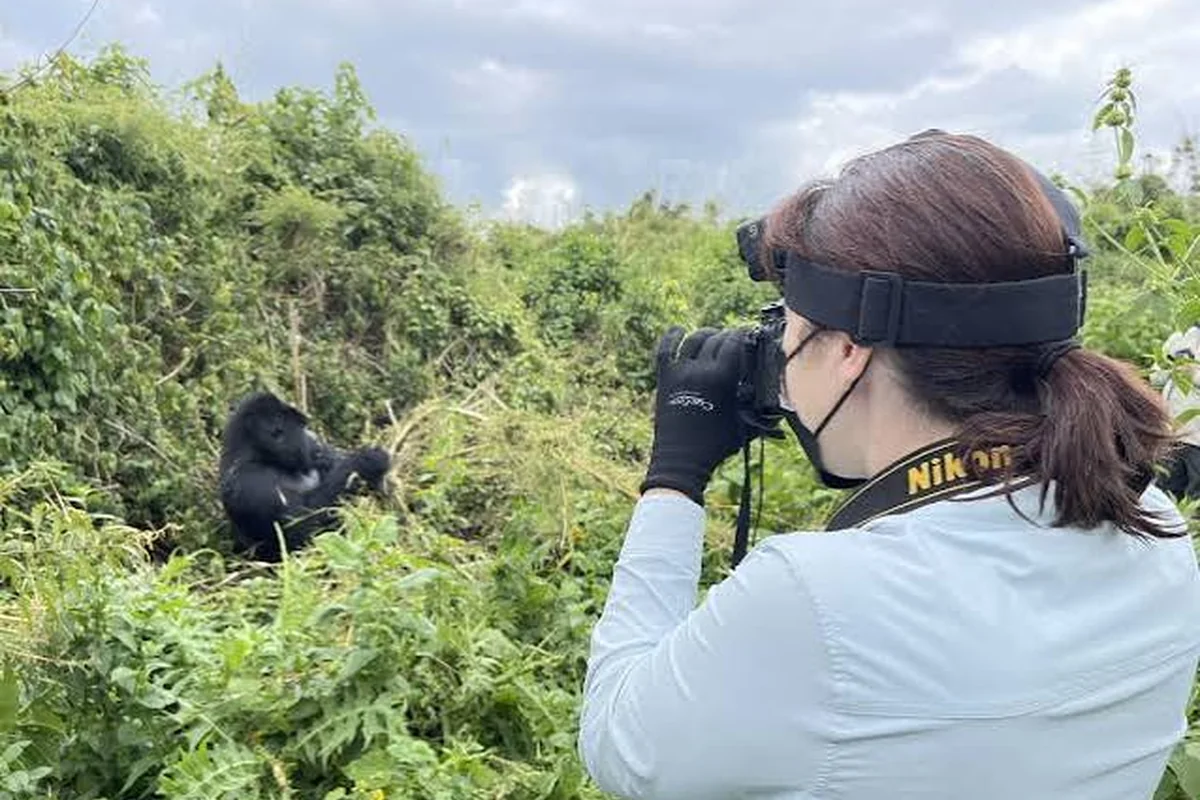
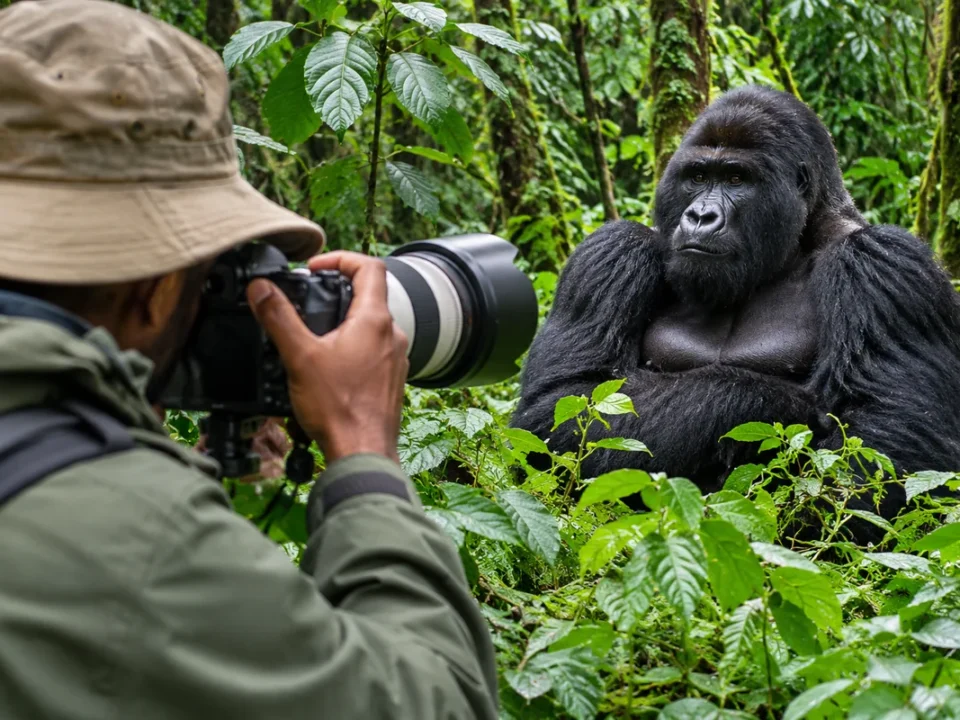
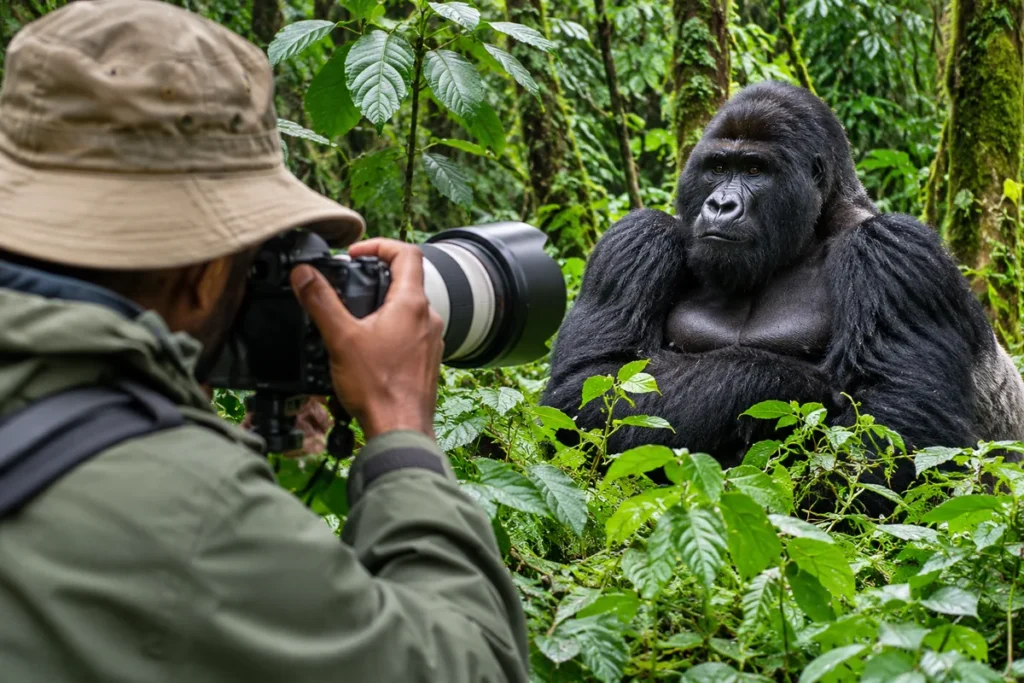
A visitor photographs a gorilla among lush vegetation during a forest wildlife encounter.
9. Binocular Care, Packing and Maintenance Checklist
Before travel, inspect the lenses for scratches, test the focus and diopter controls, and confirm that caps and straps are secure. Pack the binoculars in a protective case that fits comfortably inside your daypack. If the manufacturer supplies a cleaning cloth, bring it in a clean pouch; grit trapped in fabric can scratch optical surfaces.
On trekking morning, place the binoculars where you can reach them without unpacking the entire bag, but keep them protected while walking. Carry a rain cover or dry bag, especially when the weather is uncertain. If you use a neck strap, shorten it enough to prevent the binoculars from swinging into branches.
During breaks, avoid setting optics directly on wet soil. Replace lens caps when not observing and use a soft blower to remove dust before wiping. Never use a shirt sleeve to polish gritty glass. Follow the manufacturer’s guidance for stubborn marks.
At the lodge, dry the exterior gently and allow moisture on the case or strap to evaporate before packing for the next day. Store binoculars away from prolonged direct heat. If they are accidentally submerged or show internal condensation, follow the manufacturer’s service instructions.
Finally, remember that binoculars are optional for gorilla trekking. Good footwear, weather protection, drinking water, ranger guidance and a comfortable daypack take priority. For a customized itinerary covering gorillas, forest birding and other wildlife, contact PrideMark Safaris.
| Item | Purpose | Packing advice |
|---|---|---|
| Protective case | Guards against bumps and debris | Use inside a daypack |
| Dry bag | Adds rain protection | Keep accessible during showers |
| Microfiber cloth | Cleans outer lenses safely | Store clean and dry |
| Harness or strap | Prevents dropping and bouncing | Adjust for backpack straps |
| Lens caps | Protects glass between sightings | Check attachment before departure |
A simple end-of-day routine
Once you return to the lodge, remove the binoculars from any wet outer pouch and inspect the case and strap. Allow them to air-dry in a sheltered, ventilated area. Brush away loose particles before cleaning glass, and avoid household tissues or abrasive fabric. Put caps back on after the lenses are dry. If you are moving lodges the next morning, pack the optics only after checking for lingering moisture.
Keep the binoculars within reach during transfers only when you can store them securely. Loose equipment can be damaged when a vehicle stops suddenly. When flying, follow the airline’s baggage rules and use adequate padding. These small habits protect your investment and ensure the binoculars remain useful for future trips beyond Uganda.
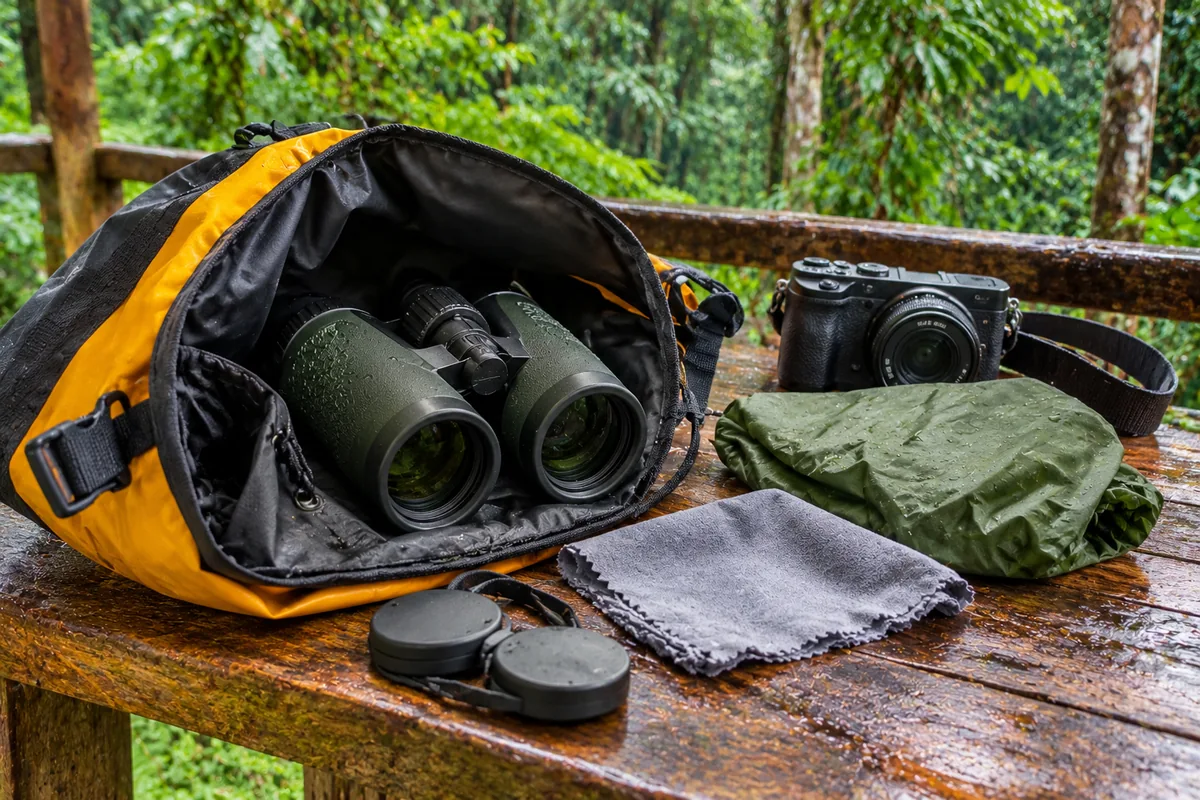
An AI-generated image showing binoculars inside an open yellow-and-black dry bag on a wet wooden surface, accompanied by a camera, microfiber cloth, lens caps and folded protective cover. It illustrates practical packing and equipment care for rainforest excursions.
Frequently Asked Questions About Gorilla Trekking Binoculars
Are binoculars necessary for gorilla trekking in Uganda?
No. They are optional. Gorilla encounters take place under ranger supervision at a regulated distance, and binoculars are often more useful for birds and other wildlife during the wider safari.
What magnification is best for rainforest birdwatching?
Many visitors find 8× magnification comfortable because it offers a steadier image and generally wider field of view than 10× models. Individual preferences and intended habitats matter.
Are 8×32 binoculars good enough for Bwindi?
They can be an excellent lightweight option. A high-quality 8×32 pair is practical for carrying, although an 8×42 model may be more comfortable in dim forest light.
Should I buy 8×42 or 10×42 binoculars?
Choose 8×42 for easier handheld viewing and a typically wider field. Consider 10×42 if you regularly watch distant birds in open habitats and can hold the image steady.
Can I use binoculars while observing gorillas?
Use them only when appropriate and in accordance with ranger instructions. They are not a reason to move closer, change position or interfere with the animals.
Are waterproof binoculars worth buying?
Yes, especially if you plan forest walks or birdwatching in damp conditions. Check the manufacturer’s actual waterproof specification rather than relying on marketing language.
What does fog-proof mean?
It generally refers to sealed, dry-gas-purged construction that reduces internal fogging. External condensation can still occur when temperature and humidity change.
Can I use binoculars while wearing glasses?
Yes, provided the model offers suitable eye relief and adjustable eyecups. Try it with your glasses before buying.
Do I need expensive binoculars for a short safari?
Not necessarily. A comfortable, weather-protected mid-range pair may be sufficient. Consider borrowing or renting if you expect to use them only briefly.
How should I clean binocular lenses in the forest?
First remove loose dust with a blower or suitable soft brush. Then use a clean microfiber cloth and any cleaning solution approved by the manufacturer.
Are binoculars better than a camera for gorilla trekking?
Neither is universally better. Binoculars support observation, while cameras record photographs. During the gorilla encounter, both should remain secondary to ranger guidance and respectful viewing.
What else should I pack for a gorilla trek?
Prioritize sturdy footwear, long clothing, rain protection, drinking water, a small daypack and any personal essentials. Your operator can advise on the activity’s specific requirements.
Plan Your Gorilla Trekking and Wildlife Safari
There is no single perfect binocular for every traveler. The best binoculars for gorilla trekking should complement your overall itinerary, suit your eyesight and feel comfortable to carry. If you are combining gorilla trekking with birdwatching, forest walks and game drives, thoughtful equipment choices can make each experience more enjoyable.
Editorial note: Binoculars are optional for gorilla trekking. Confirm current park rules, activity arrangements and ranger guidance with the Uganda Wildlife Authority before travel. Product characteristics vary by model.