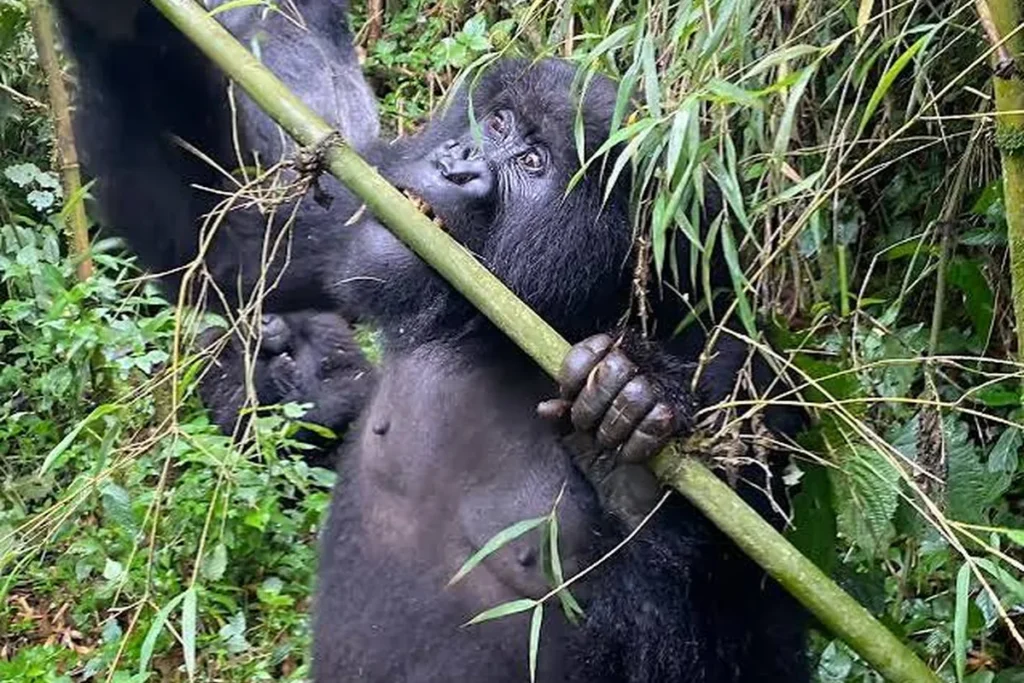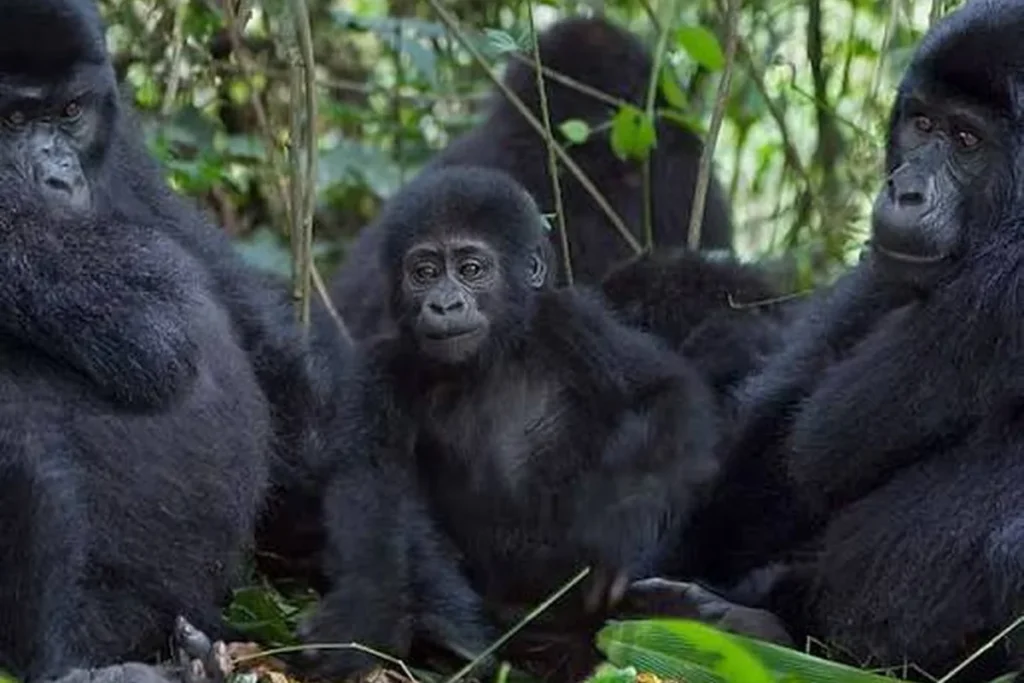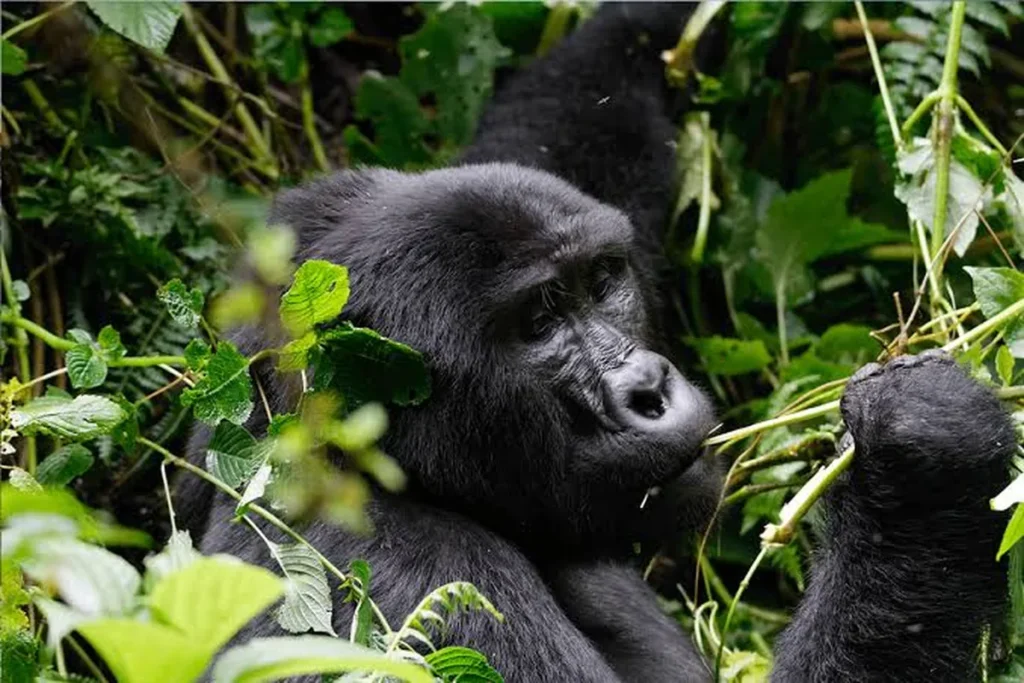
At PrideMark Safaris, we encourage guests to prepare for the forest as a complete system: tested boots, comfortable socks, suitable trousers, rain protection and a manageable daypack. A useful gaiter should work with those items rather than introduce pressure, rubbing or extra difficulty when walking uphill.
1. Why Gaiters Matter on Gorilla Trekking Trails
The real problem at the boot opening
Forest trails rarely stay perfectly clean and dry from beginning to end. Even when the sky is clear, leaves and soil can retain moisture, and narrow passages may brush against the lower legs. A gaiter covers the gap between trouser hem and boot opening, making it harder for small debris to fall inside. That benefit is most noticeable when a trek involves repeated steps through low vegetation or soft earth.
A gaiter cannot seal a boot completely. Water can still enter from above during heavy rain, through a boot’s upper, or when a foot goes into water deeper than the gaiter. Think of it as an extra barrier, not a promise of dry feet. Good socks and dependable footwear remain the foundation of comfort.
Why the walking conditions are unpredictable
The route to a habituated gorilla family is determined by where the animals are found, not by a fixed sightseeing path. Some sections may be relatively straightforward, while others can involve inclines, uneven footing and vegetation. The Uganda Wildlife Authority describes gorilla tracking as an activity that may take several hours, so small equipment annoyances can become distracting over time.
When planning your clothing, prepare for variability rather than trying to predict the exact distance or amount of mud. A flexible setup that remains comfortable through a long walk is more useful than the heaviest or most expensive equipment. Gaiters are one optional part of that preparation.
Comfort rather than a fashion accessory
The best gaiters for gorilla trekking in Uganda should stay in place without restricting your stride. A fabric cover that continually slides down, catches against the other leg or presses into the calf can become more irritating than the mud it was meant to block. Choose function, fit and simple adjustment over elaborate styling.
Before traveling, wear your complete outfit on a practice walk. Try stairs, gentle slopes and a few steps through damp grass if safe to do so. Notice whether the gaiter shifts, whether its strap rubs against the boot and whether the upper edge feels tight when your calf muscles work.
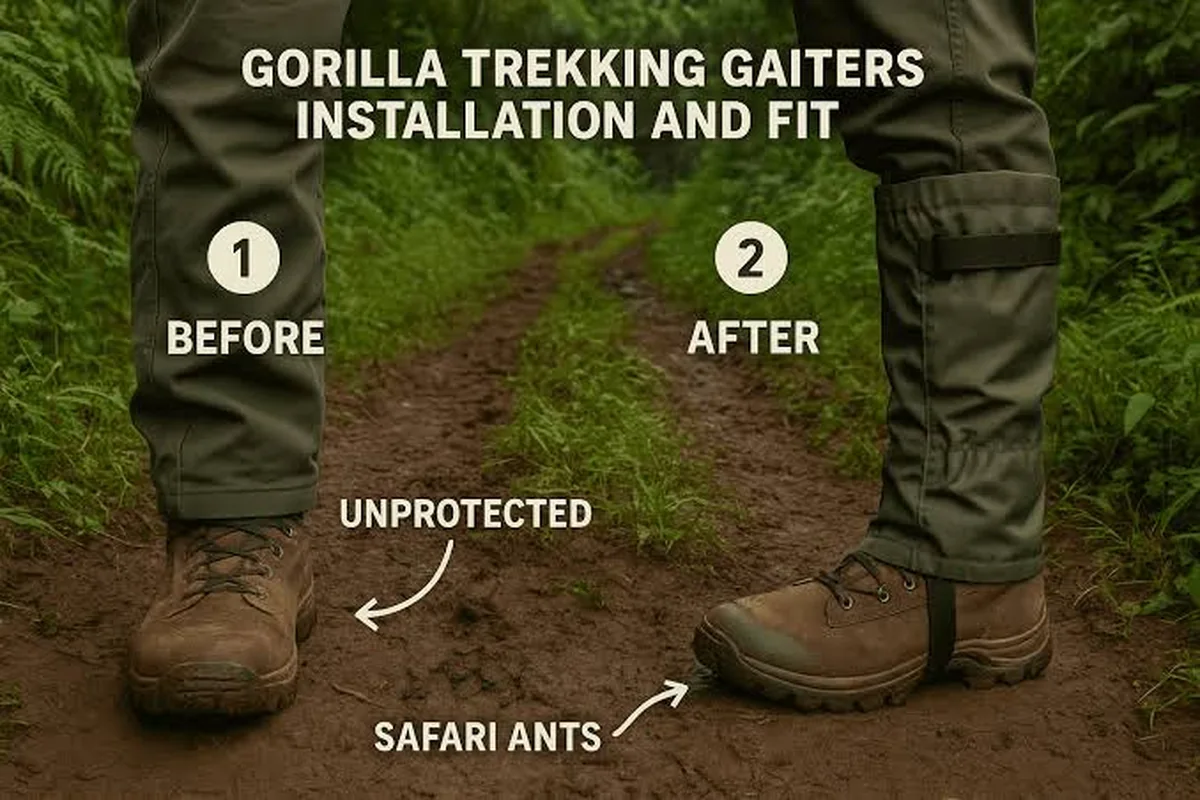
Before-and-after illustration showing how properly fitted gaiters cover the lower legs and hiking boots during gorilla trekking.
2. Understanding the Main Types of Hiking Gaiters
Low-cut trail gaiters
Low-cut gaiters generally cover the boot opening and ankle area. Their lighter construction may feel less restrictive in warm weather and can be convenient for travelers who dislike bulky clothing. They are particularly useful for reducing the entry of small stones, seeds and loose soil into low or mid-height footwear.
Their limitation is coverage. A low gaiter does not protect much of the lower leg from wet grass or splashing mud, and some models are designed for trail-running shoes rather than traditional hiking boots. Check compatibility with your actual footwear before relying on a low-cut design.
Mid-height gaiters
Mid-height gaiters extend farther up the shin and offer a practical compromise between protection and ventilation. For many travelers, this is a sensible starting point when comparing the best gaiters for gorilla trekking in Uganda. They can shield more of the trouser cuff while remaining easier to pack than a tall, heavy-duty pair.
The exact height varies by manufacturer, so product labels alone are not enough. Measure where the top edge sits on your leg while wearing your trekking trousers. If it ends at an awkward point that folds when you bend your knee, try another design rather than tightening it to force a fit.
Tall or knee-high gaiters
Tall gaiters cover most of the lower leg and can be helpful when vegetation is persistently wet or mud splashes above the ankle. They may appeal to hikers who expect frequent contact with undergrowth and want more coverage for trouser legs. A well-designed tall gaiter should still allow normal movement and should not press into the back of the knee.
Extra coverage brings tradeoffs: more warmth, more fabric to dry, and sometimes more adjustment points. Travelers who already wear waterproof trousers should consider whether the additional layer is necessary. The most protective-looking option is not automatically the most comfortable option for every person.
| Gaiter type | Main benefit | Main consideration |
|---|---|---|
| Low-cut | Lightweight debris protection | Limited lower-leg coverage |
| Mid-height | Balanced coverage and comfort | Fit varies between brands |
| Tall | More protection from wet vegetation | Can feel warmer and bulkier |
3. Waterproof Versus Breathable Gaiters
What waterproof fabric actually does
A waterproof or water-resistant gaiter can reduce moisture reaching the trouser cuff and boot opening when brushing against wet vegetation. Its usefulness depends on the material, seam construction, closure and how well it overlaps the footwear. Some designs shed brief splashes but are not intended for sustained contact with water.
Read the manufacturer’s description carefully and distinguish a waterproof membrane from a basic water-repellent finish. Neither means that your socks will remain dry in all conditions. Water can travel down clothing or enter through footwear, especially during heavy rain or when stepping into deep puddles.
Breathability and heat
A very protective gaiter can also trap warmth and moisture from perspiration. In a humid forest, a hot lower leg may feel uncomfortable even when outside water is being kept away. Breathable fabrics and well-positioned openings can improve comfort, although they may provide less resistance to prolonged wet conditions.
If you tend to overheat, test the gaiters during a brisk walk rather than only while standing indoors. Check whether the material feels clammy and whether loosening the top safely improves comfort. A pair that feels fine for five minutes may behave differently after a sustained uphill climb.
Matching fabric to the whole outfit
The best gaiters for gorilla trekking in Uganda are not necessarily the ones with the strongest waterproof claim. If your boots, socks and trousers already manage moisture effectively, a lighter gaiter may provide sufficient protection from debris. If your trousers absorb water readily, a more protective gaiter may help shield the lower portion.
Treat the clothing combination as a system. Water-resistant gaiters worn over loose cotton trousers cannot prevent the upper trouser fabric from becoming soaked. Similarly, a waterproof boot may still admit water around the ankle if the gaiter is incorrectly fitted. Practice with the actual pieces you intend to pack.
4. Choosing the Right Height and Fit
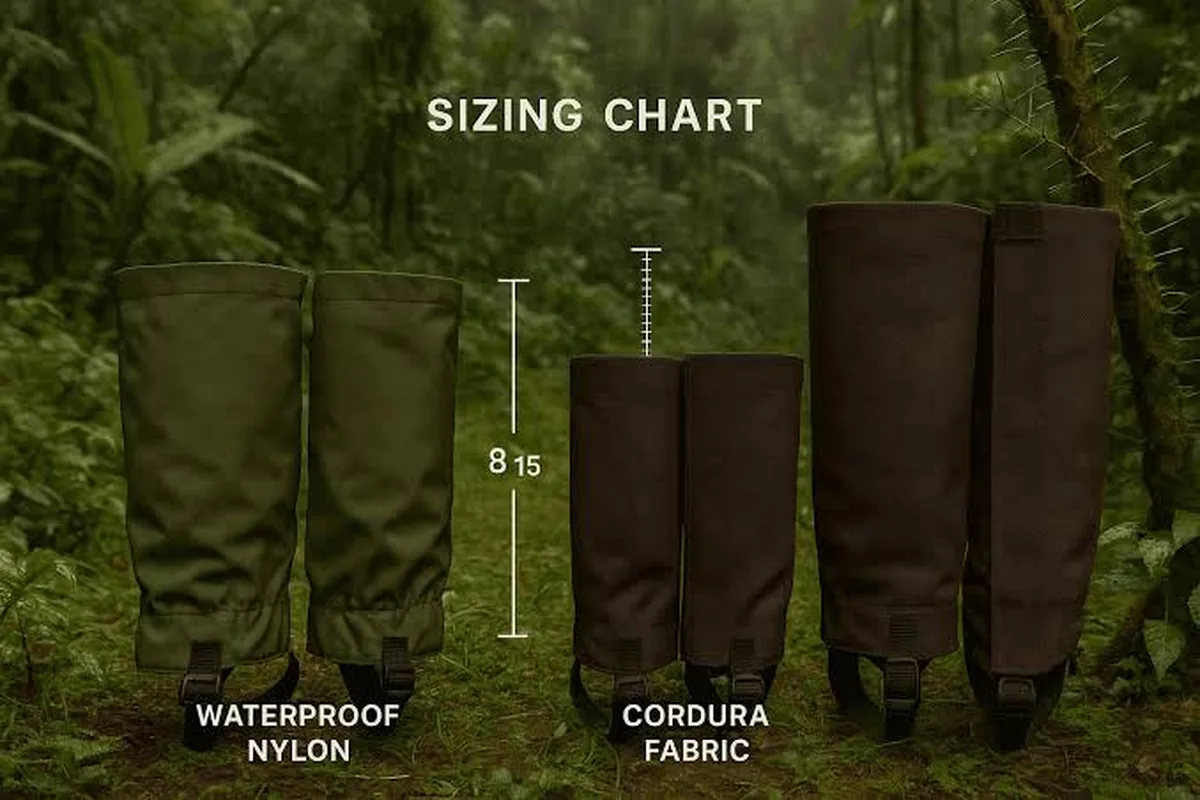
Comparison of hiking gaiters made from waterproof nylon and Cordura fabric, illustrating different designs and heights for forest trekking.
Measure your calf and boot together
Gaiter sizes often depend on shoe size, calf circumference or both. Measure over the trousers you plan to wear, not directly against bare skin if that is not how you will trek. Check the manufacturer’s size chart and confirm that the closure has adjustment room rather than being stretched to its limit.
A snug fit is useful only if it stays comfortable during movement. Sit, squat gently, step up onto a safe platform and walk downhill. If the upper band digs into your calf or the material bunches at the ankle, change the adjustment or choose a different size.
Avoid interference with your stride
Tall gaiters should end below the knee joint without restricting bending. Short gaiters should not roll down over the boot opening. A front closure may be easy to inspect, while side closures can suit some boot shapes better; the important question is whether the design remains secure as you move.
Walk for at least twenty to thirty minutes in your complete setup before judging fit. Pay attention to rubbing around the ankle bones and the back of the calf. Discomfort that begins mildly may become more noticeable during a long forest walk, especially if your clothing becomes damp.
Think about putting them on in the morning
An unfamiliar gaiter can be surprisingly fiddly when you are dressed for an early departure. Practice identifying the left and right pieces, locating the front closure, positioning the underfoot strap and securing the top. You should be able to put them on without assistance in a few calm steps.
Simple fastenings are valuable when your hands are cold or wet. Check that any hook, buckle or zipper works smoothly before departure. If you have limited hand dexterity, prioritize closures you can operate comfortably and ask your tour organizer about practical support during the morning briefing.
| Feature | What to check | Why it matters |
|---|---|---|
| Height | Clearance below the knee | Allows natural bending |
| Calf adjustment | Comfort over trekking trousers | Reduces pressure and slipping |
| Underfoot strap | Secure position beneath boot | Helps hold gaiter in place |
| Closure | Easy to fasten and inspect | Simplifies adjustments |
| Fabric | Breathability and water resistance | Balances comfort and coverage |
5. Gaiters for Bwindi and Mgahinga Forest Conditions
Preparing for Bwindi
Bwindi’s mountainous forest terrain can be damp, muddy and uneven. Some approaches involve vegetation close to the path, while others pass through more open sections. Gaiters can be useful when lower trouser legs repeatedly brush wet plants or when small clumps of soil collect around boot collars.
Avoid assuming that every sector or every trekking day will have identical conditions. Buhoma, Ruhija, Rushaga and Nkuringo are different starting areas, and the location of the gorilla family affects the day’s route. Prepare adaptable equipment rather than buying a specialized item based on a promised trail condition.
Preparing for Mgahinga
Mgahinga sits in a volcanic mountain landscape where weather and vegetation can change across the route. Gaiters may help with moisture and debris around the lower leg, but traction and overall clothing comfort remain more important than any single accessory. A sturdy boot with an appropriate sole should be tested before the trip.
A tall gaiter is not automatically necessary simply because the destination is mountainous. Consider your tolerance for heat, the likely season and whether you will also use the equipment on other hikes. A versatile pair may be better value than a specialized product used only once.
Rainy and comparatively dry periods
Even during months that are often described as drier, mountain forests can receive showers and hold moisture in shaded ground. Wet-season trekking may make a water-resistant gaiter more appealing, but rain can still overwhelm clothing systems. Pack a suitable rain jacket and protect electronics separately.
Do not confuse gaiters with rain trousers. Gaiters cover a limited portion of the leg, so they cannot protect the upper trousers or jacket. If you expect heavy rain, choose layers that work together and allow enough movement to follow the ranger safely on uneven ground.
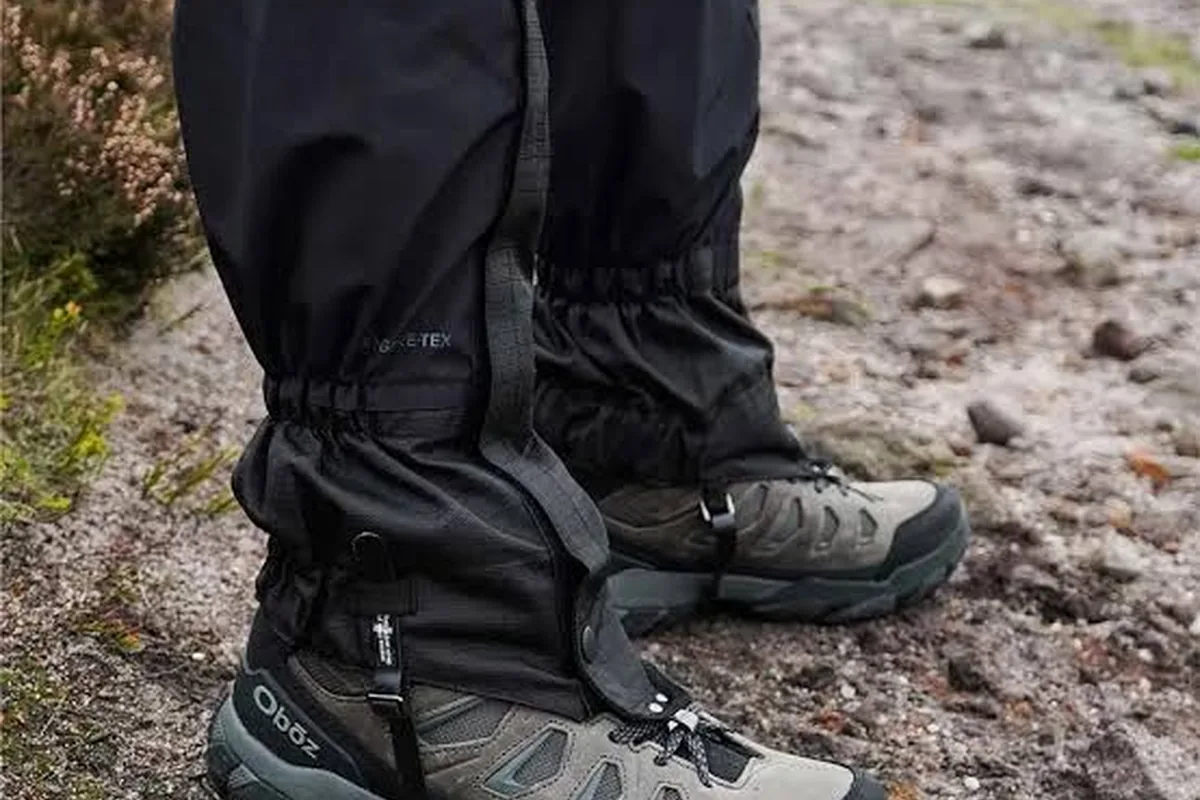
Black protective hiking gaiters fitted securely over trekking boots, helping keep mud, water splashes and trail debris away from the lower legs.
6. How to Wear Gaiters Correctly With Boots and Trousers
Start with the boot and sock fit
Put on your usual trekking socks and lace your boots as you would for a walk. Check that the heel stays secure and that your toes have room during downhill movement. Gaiters cannot fix boots that are too small, too loose or already causing blisters.
Only after the footwear feels right should you add the gaiters. This order makes it easier to identify the true cause of any pressure or rubbing. If the gaiter changes how your boot laces sit, readjust it rather than tightening the boot excessively.
Position the lower fastening
Most conventional hiking gaiters use an underfoot strap or similar attachment to hold the lower edge near the boot. Position it according to the manufacturer’s instructions, usually beneath the arch area where the sole is recessed. Secure any front lace hook so the gaiter covers the boot opening without pulling forward.
The strap should not hang loosely where it could snag, nor should it sit on a high-wear part of the tread if the design allows a safer position. Check both feet while standing. If the fastening interferes with traction or walking, stop and correct it before entering a difficult trail.
Close the fabric without over-tightening
Bring the fabric around the lower leg and fasten the zipper, hook-and-loop strip or other closure. Smooth out folds, then adjust the upper strap until the gaiter stays in place without squeezing. Your trousers should sit comfortably beneath the gaiter according to its design.
Take several steps and bend each knee. The gaiter should not twist around the leg or slide into the boot. If the material bunches, release the fastenings and reposition it. Do not rely on extreme tightness to compensate for a shape that does not fit.
Inspect after the first few minutes
Stop briefly at a safe point during your practice walk and inspect the straps. The underfoot section may settle, and the top edge may move as fabric warms and flexes. A quick adjustment at home is much easier than discovering a problem after hours of trekking.
On the actual trek, make adjustments only when the ranger indicates it is safe to stop. Avoid bending down unexpectedly in narrow passages or on steep ground. If a strap breaks or becomes loose, tell the guide and secure the material before continuing.
Before-and-after illustration showing how properly fitted gaiters cover the lower legs and hiking boots during gorilla trekking.
7. Gaiters Versus Tucking Trousers Into Socks
The simple trouser-and-sock approach
Tucking trouser cuffs into long socks is a common practical technique for keeping loose fabric controlled and reducing exposed gaps around the ankle. It requires no additional equipment and may be sufficient for travelers who already own suitable socks and trousers.
However, socks can become wet when they contact vegetation or absorb splashes, and loose cuffs may work their way free. The technique does not create the same outer fabric barrier as a fitted gaiter. It is a convenient option, not an exact substitute for all conditions.
When gaiters offer an advantage
Gaiters add an external layer over the trouser cuff and boot collar. This may help keep mud off fabric and reduce small debris entering the footwear. They are particularly attractive to travelers who have experienced repeated problems with grit or damp trouser hems on previous hikes.
Their disadvantages include cost, packing space, extra warmth and the need to learn the fastenings. If you rarely hike and expect to use the pair only once, weigh those disadvantages against the benefit. Good footwear and a comfortable sock system deserve priority.
Choosing between the two methods
The best gaiters for gorilla trekking in Uganda are useful when they solve a real problem for the individual wearer. A traveler with tall boots, well-fitting long trousers and durable socks may be comfortable without them. Another traveler using a lower boot collar may appreciate the extra barrier.
Neither approach guarantees protection from insects or scratches. Keep skin covered appropriately, use insect repellent according to its label where relevant and follow ranger instructions. Avoid making unsupported claims that gaiters alone prevent bites from particular species.
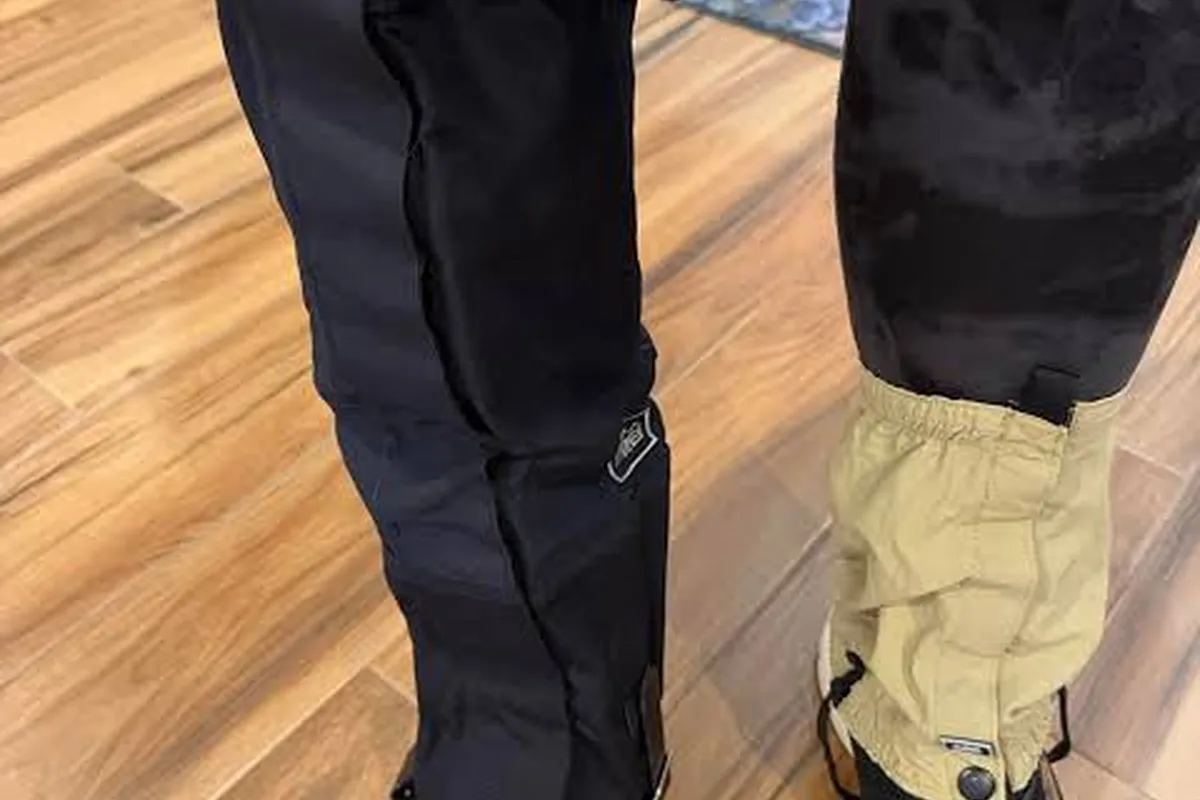
Black knee-high and beige ankle-height gaiters demonstrating different levels of lower-leg coverage for trekking preparation.
8. Nine Essential Tips for Selecting and Using Gaiters
Tip 1: Prioritize compatibility
Check the gaiter against the actual boots you will bring. A model designed for low trail shoes may not fit a high hiking boot correctly. Confirm that the lower edge covers the opening and that any hook or strap has a secure attachment point.
Do not make the decision from product photographs alone. If shopping in person, bring your boots; if ordering online, check measurements and the return policy. Compatibility matters more than brand popularity.
Tip 2: Test comfort before departure
Wear the gaiters on several walks with your planned socks and trousers. Include gentle hills or stairs to simulate changing leg movement. A pair that stays in place on level ground may shift on a descent.
Use the test to find rubbing points early. Adjust the closure or change the design if discomfort persists. Do not save a brand-new pair for the first morning in the forest.
Tip 3: Choose height for your needs
Select low, mid-height or tall coverage according to your tolerance for heat and the kind of protection you want. Taller models cover more fabric but can feel warmer; shorter models are lighter but leave more leg exposed.
There is no single correct height for every gorilla trek. Focus on the balance between comfort and coverage, not a claim that one style is mandatory.
Tip 4: Consider fabric carefully
Look for a durable outer fabric and clear information about water resistance and breathability. A tough material may tolerate repeated brushing against plants, while a lighter material may feel more comfortable in humid conditions.
Inspect stitching and seams rather than judging by thickness alone. The best fabric is one you can wear comfortably for the duration of a demanding walk.
Tip 5: Check closures and straps
Try opening and closing every fastening with your hands. Look for straps that stay adjusted, closures that do not catch fabric and components that can be inspected easily.
A simple, reliable design is often more useful than multiple complicated features. Practice fastening both gaiters before packing them.
Tip 6: Pack them where they are accessible
Keep gaiters near your boots or rainwear rather than buried under the rest of your luggage. If conditions are wet in the morning, you can put them on before entering the vehicle or at a suitable preparation point.
After a trek, separate muddy gaiters from clean clothing using a washable bag. Avoid sealing damp fabric for a long period if it can be dried safely.
Tip 7: Maintain them after use
Brush off dried mud gently and follow the manufacturer’s washing instructions. Check for worn underfoot straps, loose stitching and damaged closures before the next outing.
Do not assume that every waterproof fabric should be treated with the same cleaner or heat setting. Care instructions vary and improper treatment may damage coatings or fastenings.
Tip 8: Keep your full clothing system balanced
Pair gaiters with broken-in boots, moisture-managing socks and trousers that allow a full stride. Add a rain jacket and carry drinking water and essential items in a manageable pack.
An expensive gaiter cannot make an uncomfortable boot suitable for a long trek. Spend preparation time on the items that affect your balance and feet most directly.
Tip 9: Follow the ranger’s guidance
Gaiters are trail clothing, not special permission to move through vegetation independently. Stay with the assigned group, follow the guide’s route and avoid leaving the path to test equipment.
The best gaiters for gorilla trekking in Uganda are those that help you concentrate on the experience without distracting from safety or conservation instructions.
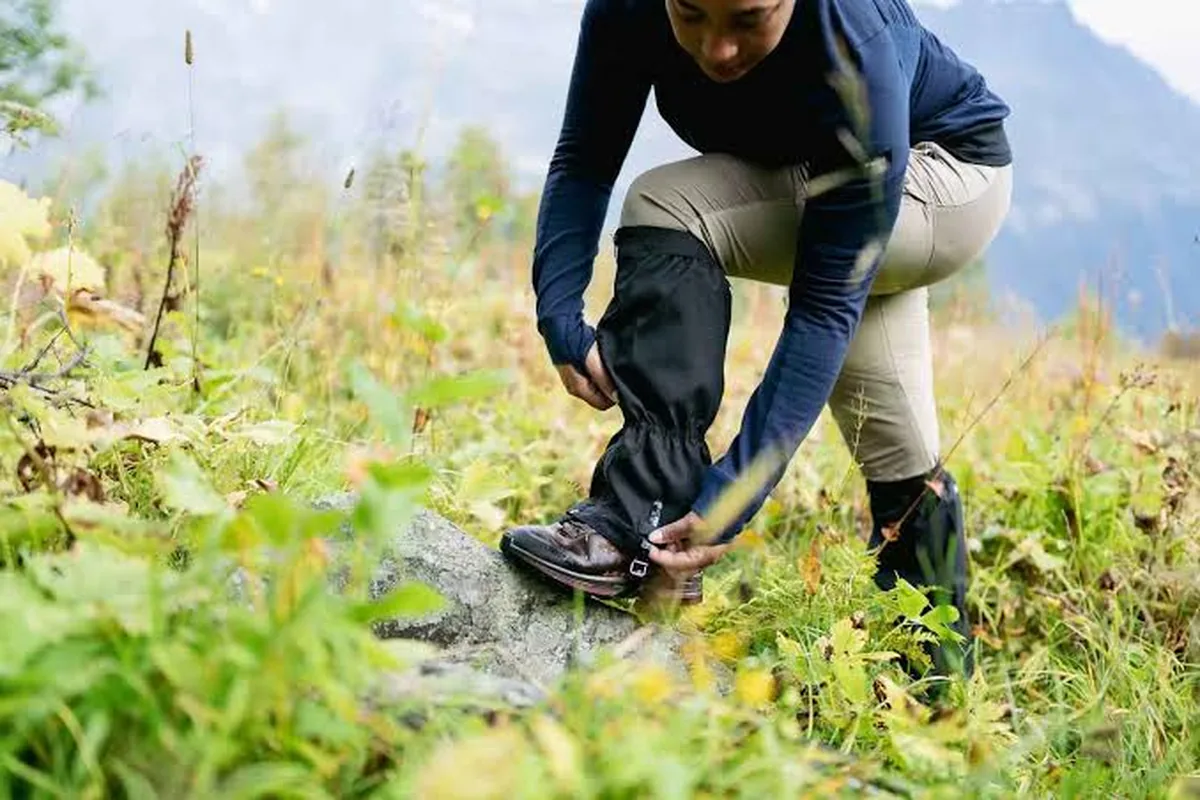
A hiker adjusts a protective gaiter over a trekking boot, demonstrating how to secure gaiters before walking through grassy or muddy terrain.
9. Common Mistakes and Final Preparation Advice
Buying without checking the boot shape
A gaiter may fit the calf perfectly yet fail to cover the boot collar or attach securely to its laces. This happens when travelers choose by general size without checking the intended footwear style.
Test the combination before the trip and return unsuitable equipment while there is still time. If the strap rides over the tread or the front hook cannot attach, the product may simply be incompatible.
Mistaking waterproof for completely dry
Waterproof labels describe material properties under specified conditions, not a guarantee that rain cannot reach your feet. Water can run down trousers, enter from the boot upper or accumulate after a deep step into a puddle.
Carry a spare pair of socks when practical and dry your feet after the trek. Good moisture management includes footwear, socks and the opportunity to change damp clothing.
Overlooking the value of local preparation
Travelers sometimes spend too much time comparing accessories and too little time preparing for uneven walking. Practice hills, wear your boots repeatedly and choose a pack that does not interfere with balance.
PrideMark Safaris can help guests understand the broad trekking environment and organize the travel arrangements around their chosen itinerary. For questions about permits, accommodation and transport, contact our team before your journey.
| Common mistake | Better approach | Why it matters |
|---|---|---|
| Buying without testing | Wear with planned boots | Finds compatibility problems |
| Overtightening the top | Adjust for a secure comfortable fit | Avoids calf pressure |
| Ignoring loose straps | Inspect before walking | Reduces snagging risk |
| Assuming waterproof means dry feet | Prepare a complete moisture system | Sets realistic expectations |
| Packing wet gaiters | Dry according to care instructions | Helps preserve equipment |
Practical checklist for the evening before your trek
Lay out your boots, socks, trousers and gaiters together rather than packing each item separately. Confirm that both underfoot straps are intact and that the closures operate smoothly. Put each gaiter on its matching boot and walk around the room, then take a few steps up and down a staircase if it is safe. This short check helps catch missing parts or unexpected fit problems before an early departure.
Inspect the sole and boot laces as carefully as the gaiters. Mud protection has little value if the boot is uncomfortable or the sole lacks reliable grip. Pack clean spare socks in a waterproof pouch, keep rain protection accessible and leave space for wet clothing after the trek. The best gaiters for gorilla trekking in Uganda work as part of a straightforward, well-tested clothing system.
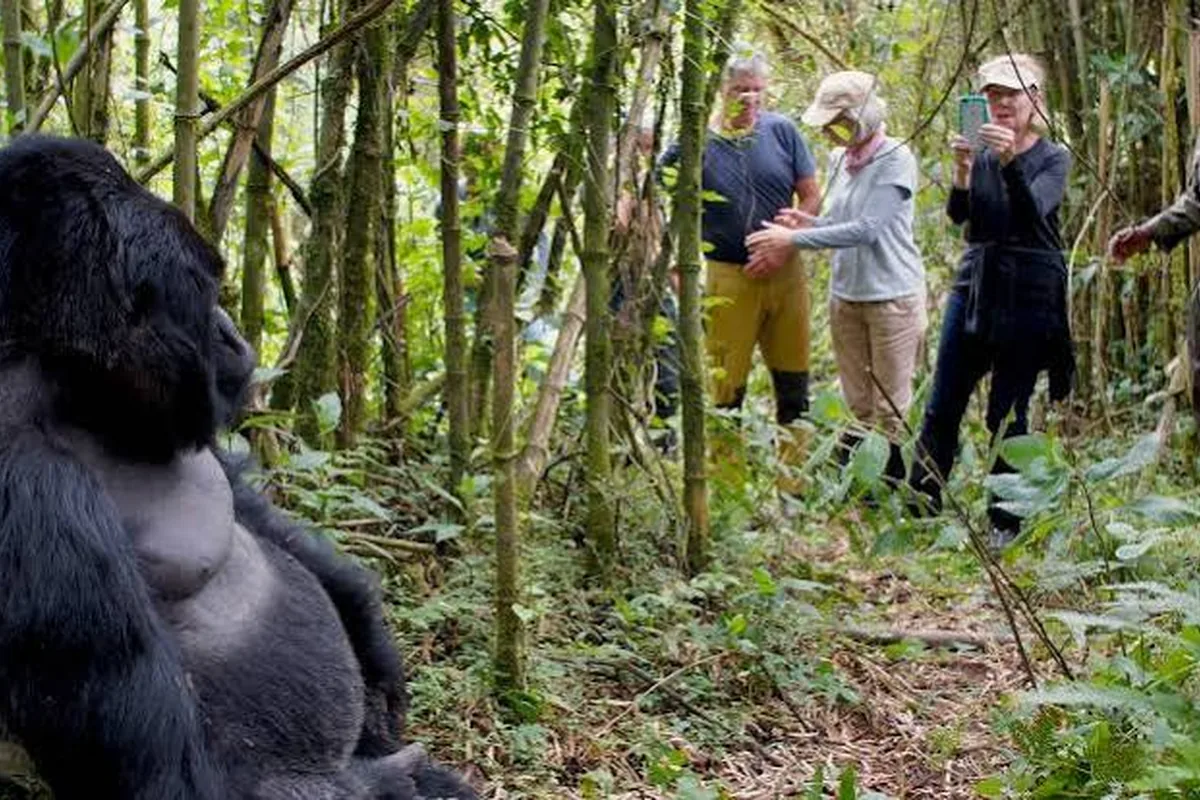
Visitors observe a mountain gorilla in its natural forest habitat, highlighting the importance of suitable footwear and protective clothing during gorilla trekking.
What to do when the trail becomes muddy
Slow your pace, follow the ranger’s chosen route and place your feet deliberately. Do not assume that a gaiter makes slippery ground safe. If the path crosses wet roots or soft soil, traction, balance and appropriate assistance matter more than the fabric around your calf. Tell the guide if a fastening comes loose instead of stopping abruptly where other walkers may be close behind you.
After a muddy stretch, wait for a suitable stopping point before checking the lower straps. Mud can conceal a twisted buckle or a loose attachment. Brush away loose debris gently without pulling sharply on the fabric. When comparing the best gaiters for gorilla trekking in Uganda, ease of inspection is a practical advantage that may not be obvious from a product description.
How to decide whether buying gaiters is worthwhile
Start with the trips you already take. If you frequently walk through wet grass, muddy woodland or mountain trails, a durable pair may be useful well beyond Uganda. If this is your only planned hike, you may prefer to invest first in good boots and socks. Borrowing a compatible pair can be reasonable, provided you have time to test the fit and inspect the attachments.
Avoid treating a high price as proof of suitability. A costly tall gaiter that overheats your legs may be less useful than a simple mid-height design that stays comfortable. Equally, a cheap gaiter with a fragile strap may fail quickly. The best gaiters for gorilla trekking in Uganda balance realistic coverage, comfort, durability and compatibility with the footwear you already own.
Preparing different travelers for the same trek
Travelers in one group may need different clothing solutions. Someone who becomes warm easily may prefer lighter material, while another person may value additional coverage from wet vegetation. Calf shape, boot height, walking style and experience with hiking equipment all influence fit. There is no reason for everyone in a safari party to buy an identical model.
If you are organizing equipment for family members or friends, ask each person to test their own pair. Do not assume that a gaiter that fits one person with the same shoe size will fit another calf. Choosing the best gaiters for gorilla trekking in Uganda is an individual comfort decision, and the group can still follow the same ranger-led route wearing different practical clothing combinations.
Understanding what gaiters cannot do
Gaiters do not prevent slips, eliminate exposure to insects or guarantee that your feet remain dry. They do not replace appropriate fitness preparation or the guidance of trained park staff. They also cannot compensate for boots that rub the heel or crush the toes. Their benefit is narrower and more realistic: limiting some of the mud, moisture and debris that reach the boot opening and lower trouser leg.
Keep this distinction clear when reading marketing descriptions. Phrases such as completely waterproof or full protection may refer to fabric tests rather than every situation on a real trail. Ask whether the closures leave gaps, whether the strap will survive contact with rough ground and how the product behaves after repeated use. The best gaiters for gorilla trekking in Uganda are dependable accessories, not safety guarantees.
How gaiters fit into a wider safari packing plan
For a multi-park safari, think about where the gaiters will be useful and where they can remain in your luggage. A forest walk may justify them, while a vehicle-based game drive usually will not. Pack them in a washable bag so muddy material does not touch clean clothes. If you will travel between lodges soon after trekking, make a practical plan for drying them.
Keep your packing list focused on versatile essentials: tested footwear, socks, long trousers, a rain layer, water and personal necessities. Carrying too much can make travel and hiking less comfortable. The best gaiters for gorilla trekking in Uganda should earn their space by providing a clear benefit on the trail, not simply by appearing on an online checklist.
What to ask a seller before purchasing
Ask which footwear types the gaiter is designed to fit, how the underfoot strap can be replaced and whether the fabric has a durable water-repellent treatment or a waterproof membrane. Request an accurate size chart and check the return conditions. If possible, inspect how the lower edge overlaps the boot collar and whether the top remains comfortable when the knee bends.
These questions help distinguish a useful hiking accessory from a product chosen only for appearance. The best gaiters for gorilla trekking in Uganda should withstand ordinary trail use without becoming complicated to adjust. Clear care instructions and accessible replacement parts can be more valuable than an impressive feature list.
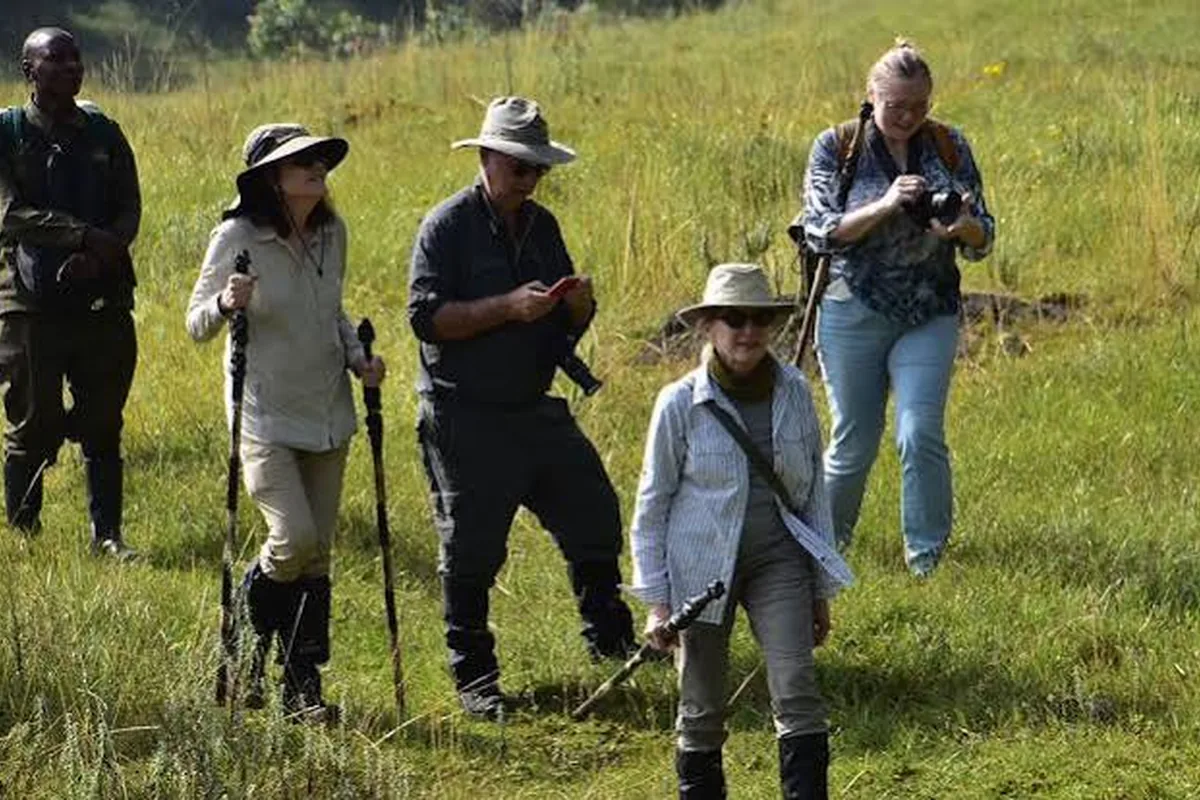
A group of hikers walks through tall grass with trekking sticks and protective footwear, illustrating the importance of preparing for varied terrain during a gorilla trekking adventure.
Frequently Asked Questions About Gorilla Trekking Gaiters
Do I need gaiters for gorilla trekking in Uganda?
Gaiters are optional protective accessories rather than a universal requirement. They can help reduce mud and debris entering boots, especially where vegetation is wet. Prioritize comfortable, tested boots, suitable socks and appropriate clothing first. If you have previously struggled with muddy boot openings, gaiters may be a worthwhile addition.
What are the best gaiters for gorilla trekking in Uganda?
The best choice fits your boots and calves securely, allows full movement and provides the level of coverage you want. Mid-height gaiters are a useful compromise for many walkers, but tall or low-cut styles can also work. Test your chosen pair with your complete trekking outfit before traveling.
Are waterproof gaiters necessary in Bwindi?
Not necessarily. Waterproof or water-resistant materials may help with wet grass and mud splashes, but no gaiter can guarantee dry feet in heavy rain. Breathability and comfort also matter. A lighter pair may be preferable for someone who overheats, while a more protective pair may suit frequent wet-weather hikers.
Should gaiters go over or under trousers?
Many conventional hiking gaiters are designed to sit over the lower trouser leg and around the boot opening. Follow the specific manufacturer instructions, because closures and attachment methods differ. Smooth the trouser cuff before fastening and check that the gaiter does not pull or twist as you walk.
Can I use running gaiters with hiking boots?
Some running gaiters work with certain hiking shoes, but others rely on attachment systems that are incompatible with traditional boots. Check the lace hook, heel attachment and collar coverage before buying. A gaiter that leaves a large gap at the boot opening may not provide the protection you expect.
Are knee-high gaiters better than ankle gaiters?
Knee-high designs cover more of the lower leg and can be helpful around wet vegetation. Ankle gaiters are lighter and may feel cooler. The right choice depends on fit, climate, clothing and personal comfort. Extra height is only beneficial if it does not restrict movement or create excessive heat.
Will gaiters stop insects from biting me?
Gaiters provide an additional physical layer over part of the lower leg, but they cannot guarantee protection against bites or other hazards. Insects may reach uncovered skin or enter through gaps. Use appropriate clothing and other preventive measures, and avoid relying on gaiters as your only protection.
Can gaiters replace waterproof hiking boots?
No. Gaiters cover the outside of the lower leg and boot opening; they do not replace the sole, upper, support or fit of a boot. Water may still enter through the footwear or from above. Choose reliable boots first and consider gaiters as a complementary accessory.
How should I clean gaiters after a muddy trek?
Allow excess mud to dry if the manufacturer recommends it, brush it off gently and wash according to the care label. Avoid harsh detergents or high heat unless specifically permitted. Dry the pair thoroughly before storing and inspect straps, hooks and closures for wear.
Can I rent or borrow gaiters for a gorilla trek?
Availability varies by location and supplier, so do not assume that gaiters will be provided at the park or lodge. Ask your safari organizer in advance if you want to borrow or rent a pair. If borrowing, check size and compatibility with your boots before the trekking morning.
How many pairs of gaiters should I pack?
For a typical short safari, one well-fitting pair is usually sufficient if you choose to bring gaiters at all. They can be cleaned and dried between walks when conditions allow. Spare socks are generally more useful than a second pair of gaiters for managing foot comfort after rain.
Do gaiters affect gorilla trekking rules?
No. Wearing gaiters does not change permit validation, ranger instructions or wildlife-viewing rules. Visitors must follow the Uganda Wildlife Authority briefing and remain with the guided group. The purpose of gaiters is personal trail comfort, not access to different routes or permission to approach gorillas.
Final Thoughts: Choose Comfort Before Complexity
The best gaiters for gorilla trekking in Uganda are the ones you can forget about once the walk begins. They fit without pinching, stay attached to the boots and provide useful coverage against everyday trail mess. If they continually need adjustment, feel excessively hot or interfere with your stride, they are not the right pair for you.
Prepare your equipment as a complete outfit and practice walking in it before leaving home. A dependable boot-and-sock combination, comfortable trousers and practical rain protection matter more than buying every accessory on a packing list. Gaiters can add value, but they should make the experience simpler rather than more complicated.
For help planning a guided gorilla safari, accommodation, transfers and permit arrangements, contact PrideMark Safaris. We can help you prepare for the wider journey while official Uganda Wildlife Authority rangers manage the trekking activity and wildlife encounter.