Eco-Tourism Uganda: Where Every Journey Protects the Future

Uganda Adventure Guide: Ziplining, Horse Riding, and Quad Biking
July 2, 2026
Uganda Through a Photographer’s Lens
July 14, 2026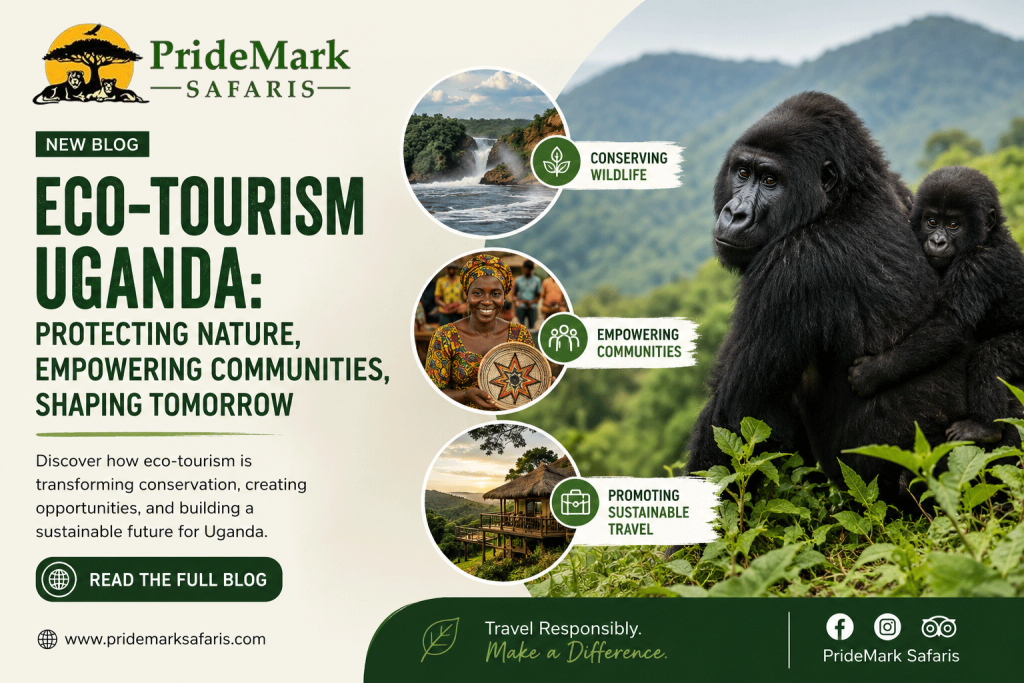
How Eco-Tourism Uganda Is Changing the Country’s Future


Uganda has become one of Africa’s leading destinations for travelers seeking authentic wildlife encounters while supporting conservation and local communities. Over the past three decades, Eco-Tourism Uganda has grown from a niche concept into a powerful force that shapes the country’s economy, protects endangered wildlife, creates employment, and preserves cultural heritage. Unlike conventional tourism that often focuses only on visitor numbers, eco-tourism emphasizes responsible travel that benefits nature and the people who live alongside it. This approach ensures that future generations will continue to experience Uganda’s extraordinary biodiversity while communities receive meaningful economic opportunities. At PrideMark Safaris, we believe every safari should leave a positive impact on wildlife, local families, and the environment, making every journey part of Uganda’s sustainable future.
What Is Eco-Tourism Uganda?
Eco-Tourism Uganda refers to responsible travel that conserves natural environments, protects wildlife, respects local cultures, and improves the well-being of surrounding communities. Visitors enjoy unforgettable experiences while minimizing environmental impact and supporting conservation initiatives through park fees, community projects, and sustainable tourism businesses.
Uganda offers one of Africa’s richest natural environments. The country contains over half of the world’s remaining mountain gorillas, thousands of chimpanzees, more than 1,000 bird species, extensive wetlands, tropical rainforests, savannah grasslands, volcanic mountains, and Africa’s longest river. These natural treasures make Uganda an ideal destination for eco-tourism because protecting them also supports livelihoods, scientific research, climate resilience, and national development.
Unlike mass tourism destinations where large developments sometimes threaten ecosystems, Uganda has adopted conservation-based tourism in many protected areas. National parks limit visitor numbers during sensitive wildlife activities such as gorilla trekking, ensuring that wildlife remains healthy while visitors enjoy intimate and meaningful experiences.
How Eco-Tourism Uganda Protects Wildlife Conservation


One of the greatest achievements of Eco-Tourism Uganda is its direct contribution to wildlife conservation. Revenue generated through tourism helps finance anti-poaching patrols, scientific monitoring, habitat restoration, ranger training, veterinary care, and conservation education programs throughout Uganda’s protected areas.
Every gorilla trekking permit contributes significantly toward the protection of mountain gorillas and their forest habitat. The carefully regulated permit system limits daily visitor numbers, reducing stress on gorilla families while generating essential conservation funding. Similar conservation efforts support chimpanzees in Kibale Forest, elephants in Queen Elizabeth National Park, rhinos at Ziwa Rhino Sanctuary, and numerous other species across the country.
Tourism also creates economic reasons for communities to value wildlife. When local people benefit from visitors through employment, guiding, accommodation, handicraft sales, and cultural experiences, wildlife becomes an important source of sustainable income instead of a threat to livelihoods. This relationship encourages stronger community participation in conservation and reduces illegal activities such as poaching and forest encroachment.
Eco-Tourism Uganda Supports Local Communities
Perhaps the most visible impact of Eco-Tourism Uganda appears in rural communities that live near national parks and protected forests. Tourism has created thousands of jobs for guides, drivers, lodge staff, chefs, conservation workers, porters, artisans, dancers, farmers, transport providers, and entrepreneurs.
Community tourism initiatives allow visitors to experience authentic Ugandan culture while ensuring that tourism income reaches local families directly. Travelers can participate in traditional dance performances, village walks, coffee experiences, basket weaving demonstrations, banana beer production, storytelling sessions, and cultural museums. These experiences preserve traditions that might otherwise disappear while generating income for local people.
Women have especially benefited from eco-tourism through handicraft cooperatives, hospitality employment, and community enterprises. Many women’s groups produce baskets, jewelry, textiles, and locally made souvenirs purchased by international visitors. These businesses improve household incomes, support children’s education, and strengthen financial independence within rural communities.
Additionally, tourism revenue contributes to schools, health centers, clean water projects, roads, and community development initiatives through revenue-sharing programs established around Uganda’s protected areas.
Eco-Tourism Uganda Encourages Sustainable Lodges


Accommodation plays a vital role in Eco-Tourism Uganda. Across the country, many safari lodges have adopted environmentally friendly practices that reduce their ecological footprint while providing exceptional guest experiences.
Modern eco-lodges increasingly rely on solar energy, rainwater harvesting systems, waste recycling programs, locally sourced food, and environmentally sensitive construction materials. Several properties minimize plastic use, support nearby farmers, employ local staff, and contribute to conservation organizations.
These sustainable operations demonstrate that luxury tourism and environmental responsibility can exist together. Travelers enjoy comfortable accommodation while knowing their stay supports conservation rather than environmental degradation.
At PrideMark Safaris, we prioritize accommodations that embrace responsible tourism principles whenever possible. This approach helps our guests contribute positively to the destinations they visit while enjoying memorable safari experiences.
Climate Action and Eco-Tourism Uganda
Climate change continues to affect ecosystems across East Africa through changing rainfall patterns, rising temperatures, prolonged droughts, and shifting wildlife habitats. Eco-Tourism Uganda contributes to climate resilience by protecting forests, wetlands, and biodiversity that naturally capture carbon and regulate local climates.
Protected forests such as Bwindi, Kibale, Mgahinga, and Budongo store vast amounts of carbon while providing habitat for endangered species. Conserving these forests helps reduce greenhouse gas emissions while preserving water sources for surrounding communities.
Many conservation organizations also promote tree planting, sustainable agriculture, clean energy solutions, and environmental education alongside tourism activities. Visitors increasingly choose operators that minimize carbon emissions and encourage environmentally responsible travel practices.
Eco-Tourism Uganda Creates Better Visitor Experiences
Responsible tourism offers more than environmental benefits. It also creates richer travel experiences because visitors develop deeper connections with nature, wildlife, and local communities.
Instead of rushing through attractions, eco-tourism encourages slower, more meaningful exploration. Travelers spend time learning about conservation, meeting local people, understanding cultural traditions, observing wildlife respectfully, and appreciating Uganda’s incredible biodiversity.
Activities such as gorilla trekking, chimpanzee tracking, birdwatching, nature walks, canoe excursions, community visits, and conservation volunteering provide educational experiences that remain memorable long after visitors return home.
These authentic encounters often inspire travelers to become ambassadors for conservation in their own countries, creating long-term global support for Uganda’s protected areas.
Challenges Facing Eco-Tourism Uganda
Although Eco-Tourism Uganda continues to grow, several challenges require ongoing attention. Climate change threatens ecosystems and wildlife habitats. Population growth increases pressure on forests and natural resources. Illegal wildlife trade, human-wildlife conflict, infrastructure limitations, and occasional disease outbreaks also affect conservation efforts.
Balancing tourism growth with environmental protection remains essential. Increasing visitor numbers should never compromise wildlife welfare or ecosystem health. Strong park management, community involvement, scientific research, responsible tour operators, and government commitment remain critical for maintaining Uganda’s reputation as a leading eco-tourism destination.
Fortunately, Uganda has demonstrated that conservation and tourism can work together successfully when supported by sound policies and responsible travelers.
How PrideMark Safaris Promotes Eco-Tourism Uganda
At PrideMark Safaris, responsible tourism forms the foundation of every safari experience we design. We encourage travelers to respect wildlife viewing guidelines, support community enterprises, minimize environmental impact, and appreciate Uganda’s extraordinary natural heritage.
Our itineraries include carefully selected eco-friendly accommodations, experienced local guides, community visits, cultural experiences, and conservation-focused activities that create lasting value for both visitors and host communities. By choosing responsible travel, our guests become partners in protecting Uganda’s wildlife while supporting sustainable economic development.
Every safari booked through PrideMark Safaris contributes toward promoting ethical tourism practices that safeguard Uganda’s remarkable ecosystems for future generations.
The Future of Eco-Tourism Uganda
The future of Eco-Tourism Uganda looks increasingly promising. Growing global awareness of sustainable travel has encouraged more travelers to seek meaningful experiences that protect nature while supporting local communities. Uganda’s exceptional biodiversity, conservation success stories, welcoming people, and expanding tourism infrastructure position the country as one of Africa’s leading sustainable tourism destinations.
Continued investment in conservation, education, infrastructure, renewable energy, community empowerment, and responsible tourism practices will strengthen Uganda’s position in the global travel market. Every responsible visitor becomes part of this positive transformation by supporting wildlife conservation, creating employment, preserving cultural heritage, and protecting natural ecosystems.
As more travelers embrace sustainable travel choices, eco-tourism will continue shaping Uganda’s future through conservation, economic growth, and community development. PrideMark Safaris proudly invites travelers from around the world to experience Uganda responsibly while helping preserve one of Africa’s most remarkable natural destinations.
Eco-Tourism Uganda represents far more than a travel trend. It is a long-term commitment to protecting wildlife, empowering communities, preserving cultural traditions, and safeguarding the country’s extraordinary natural heritage. Every responsible safari contributes to conservation funding, local employment, environmental protection, and sustainable development.
Whether you dream of trekking mountain gorillas, tracking chimpanzees, watching elephants roam the savannah, or meeting welcoming local communities, your journey can create lasting positive change. PrideMark Safaris remains committed to delivering unforgettable adventures that benefit both travelers and Uganda’s future, ensuring that every safari leaves behind a legacy of conservation and hope.