Can You Go Gorilla Trekking With Fibromyalgia in Uganda?
Yes, some travelers living with fibromyalgia may be able to participate in a guided gorilla trek, but suitability is individual rather than automatic. The condition can involve widespread pain, fatigue, sleep disruption, and sensitivity to exertion. A successful plan starts with an honest assessment of current function, symptom variability, and the demands of a remote forest excursion.
The important question is not whether a diagnosis appears on a list of permitted conditions. It is whether you can manage uneven ground, sustained walking, uncertain hiking duration, and a return journey without an unacceptable risk of worsening symptoms. Discuss these practical demands with the clinician who knows your medical history before paying for nonrefundable arrangements.
In Uganda, trekking takes place in protected mountain forest where gorillas move freely. Trackers help locate habituated groups, but their position changes from day to day. The distance between the briefing point and the gorillas therefore cannot be guaranteed in advance, even when a visitor asks for a less demanding experience.
For people researching gorilla trekking with fibromyalgia, it helps to separate the wildlife encounter from the effort needed to reach it. The time spent observing gorillas may be memorable, but the walk out is also part of the experience. Planning for the return, not merely the first sighting, is an essential safety decision.
For anyone considering gorilla trekking with fibromyalgia, a sensible decision begins with the demands of this specific excursion rather than a general statement about chronic pain. Discuss your personal limits, prepare for variable weather, and ask questions about the return route before deciding whether to proceed.
When contacting PrideMark Safaris, describe your usual walking distance, your ability to climb steps and descend slopes, and what happens after strenuous activity. That information is more useful than a diagnosis alone. Our About Us page introduces the team, while our travel planners can explain what arrangements may be requested from park authorities.
No safari operator can promise that a particular group will be close, that the trail will be dry, or that symptoms will remain stable. A flexible itinerary, realistic expectations, and permission to stop if necessary make gorilla trekking with fibromyalgia a more informed choice rather than an impulsive physical challenge.
One useful way to evaluate readiness is to imagine the whole trekking day as a series of decisions rather than a single hike. Can you travel to the starting point, stand during the briefing, walk on irregular ground, and still have enough reserve for the return? If any answer is uncertain, plan a clinical review and consider alternatives.
Travel companions should understand that fibromyalgia symptoms may not be visible. Agree on respectful communication and a practical stopping plan before departure. That reduces the pressure to minimize discomfort in front of others and helps keep decisions grounded in safety rather than expectations.
Keep the central question of gorilla trekking with fibromyalgia practical: what support is available, what cannot be predicted, and what would cause you to stop? A thoughtful plan gives you more control over decisions without creating false certainty about the day’s conditions.
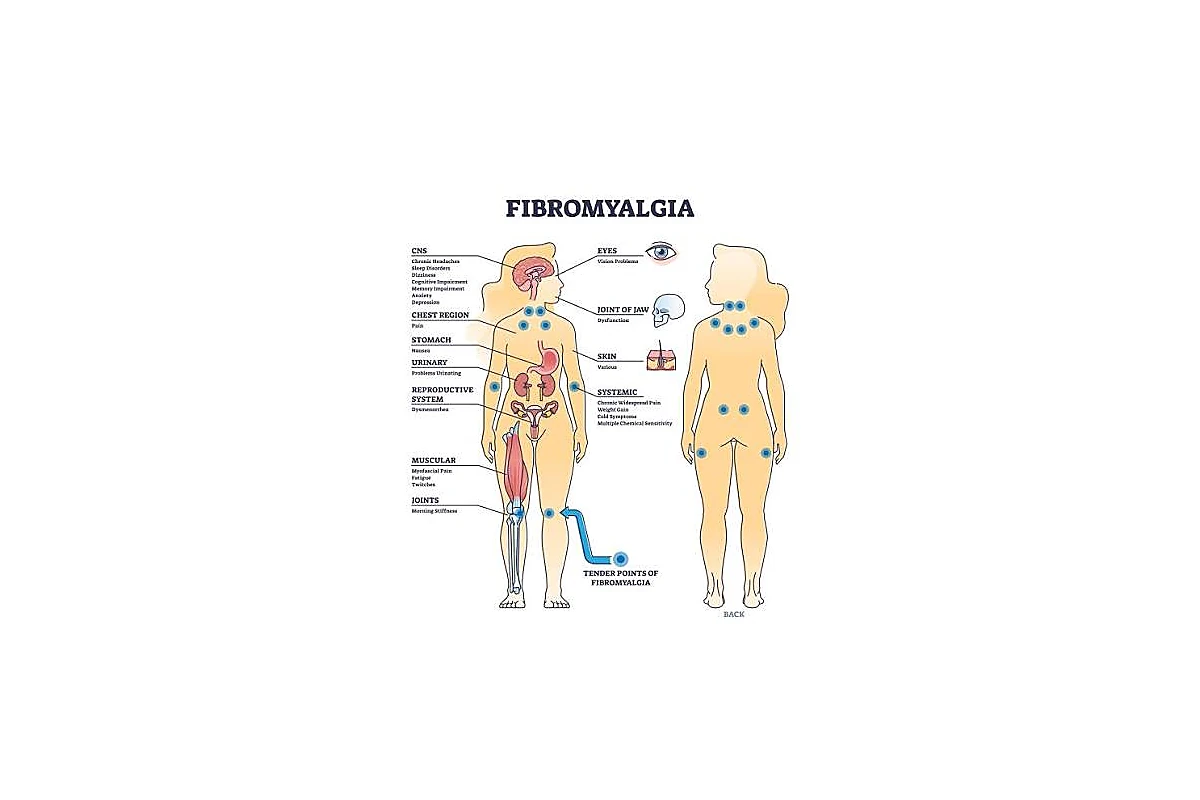
Educational illustration showing commonly discussed fibromyalgia symptoms and tender-point locations across the body.
Understanding Fibromyalgia, Pain, Fatigue, and Symptom Flare-Ups
Fibromyalgia is commonly associated with persistent widespread pain, tenderness, fatigue, cognitive difficulties, and disturbed sleep. The intensity and combination of symptoms differ among people and can change over time. A traveler who walks comfortably on one day may need considerably more recovery after poor sleep, a long journey, or unfamiliar exertion.
Pain alone does not reliably describe physical capacity. Some people have manageable discomfort but pronounced fatigue, dizziness, or difficulty concentrating. Others have good endurance but are sensitive to cold, pressure from backpack straps, or repeated downhill steps. Identify the symptoms that most directly affect walking, decision-making, and safe movement.
A flare-up can mean increased pain, exhaustion, or disrupted sleep after activity. The timing is not always immediate; symptoms may become more noticeable later in the day or the following morning. This matters when scheduling consecutive excursions. Leaving recovery time after a trek can be as important as choosing the day itself.
Gorilla trekking with fibromyalgia should be planned around your ordinary functional baseline, not your best-ever day. If a strenuous training walk leaves you unable to complete routine activities for several days, that response deserves attention before booking. Ask your treating clinician how to interpret your own recovery pattern.
For anyone considering gorilla trekking with fibromyalgia, a sensible decision begins with the demands of this specific excursion rather than a general statement about chronic pain. Discuss your personal limits, prepare for variable weather, and ask questions about the return route before deciding whether to proceed.
Temperature, wet clothing, noise, travel stress, and changes in sleep routine may influence comfort. There is no single universal trigger profile. Record what tends to aggravate your symptoms and what consistently helps, then build your travel arrangements around those observations rather than generic advice from other trekkers.
The most useful preparation includes communicating your needs clearly without assuming that every symptom comes from fibromyalgia. New chest pain, fainting, major weakness, or severe breathlessness requires appropriate medical assessment. A pre-existing pain condition should never be used to dismiss a new or potentially serious problem.
A simple symptom diary can record sleep quality, walking duration, terrain, pain, fatigue, and next-day recovery. The goal is not to predict every flare but to recognize patterns that matter to your travel planning. Share relevant observations with your clinician if you are unsure about exertion tolerance.
Fibromyalgia can coexist with other medical conditions, and not every symptom should be attributed to it. If you have joint disease, breathing problems, recurrent falls, or another diagnosis, those factors may change the suitability of mountain hiking. A personalized review is more reliable than comparing yourself with another traveler.
Keep the central question of gorilla trekking with fibromyalgia practical: what support is available, what cannot be predicted, and what would cause you to stop? A thoughtful plan gives you more control over decisions without creating false certainty about the day’s conditions.
How Uganda’s Forest Trails and Altitude Affect Physical Effort
Uganda’s gorilla habitats include steep hillsides, tangled vegetation, roots, muddy sections, and uneven footholds. Even a route described as moderate can require careful balance and repeated changes in stride length. The difficulty is affected by weather, the gorillas’ location, and the terrain encountered on that specific day.
Descending may be more uncomfortable than climbing for some travelers because it involves controlled braking through the legs and additional attention to balance. Wet soil and exposed roots increase the need for deliberate steps. Practice both uphill and downhill walking before deciding whether gorilla trekking with fibromyalgia fits your current abilities.
Bwindi Impenetrable National Park covers rugged, densely forested terrain, while Mgahinga Gorilla National Park has volcanic slopes and high-elevation environments. Neither destination offers a universally easy trek. Park staff, rather than safari companies, manage trekking groups and assess the day’s operating conditions.
Altitude can make exertion feel harder, especially for travelers arriving quickly from lower elevations. Fibromyalgia itself does not establish a specific altitude response, and individual experiences vary. Discuss any other heart, lung, balance, or medication-related concerns with a healthcare professional before traveling to the mountain parks.
For anyone considering gorilla trekking with fibromyalgia, a sensible decision begins with the demands of this specific excursion rather than a general statement about chronic pain. Discuss your personal limits, prepare for variable weather, and ask questions about the return route before deciding whether to proceed.
The forest can be humid, cool, rainy, or slippery. Waterproof layers and sturdy footwear reduce avoidable discomfort, but equipment cannot remove the physical demands. A walking stick can help with balance, provided you are already comfortable using it and can keep your hands free when necessary.
For gorilla trekking with fibromyalgia, consider the total physical load: travel to the park, early briefing, waiting, walking to the gorillas, observation, and the return. A short viewing period does not mean a short overall outing. Build your schedule around the full day and allow for changes outside your control.
Rain can transform a manageable path into a slippery one. Trekking poles, boots, and slower steps may reduce some risks but cannot make a hazardous slope predictable. Ask yourself whether you can respond safely to a sudden loss of footing, especially when tired or distracted by vegetation.
The physical effort also includes standing, stepping over fallen branches, and moving around plants while following ranger directions. Train for controlled movement rather than speed. A person who walks comfortably on pavement may find irregular forest ground considerably more demanding.
Keep the central question of gorilla trekking with fibromyalgia practical: what support is available, what cannot be predicted, and what would cause you to stop? A thoughtful plan gives you more control over decisions without creating false certainty about the day’s conditions.
| Trail consideration | Why it matters | Practical response |
|---|---|---|
| Steep slopes | Can increase effort and require careful balance | Practice controlled climbs and descents |
| Wet roots | May reduce traction | Wear tested footwear and follow ranger guidance |
| Uncertain distance | Makes pacing harder to predict | Allow reserve energy for the return |
Medical Preparation and a Realistic Fitness Assessment
Arrange a pre-travel consultation with a clinician familiar with your fibromyalgia and any other health conditions. Explain that you are considering a potentially strenuous hike in a remote, mountainous forest. Ask about your current exercise tolerance, medications, sleep, flare management, and warning symptoms that should lead you to stop.
A medical consultation is not a promise that trekking will be safe. Instead, it helps identify modifiable risks and situations in which travel plans should change. If you have experienced recent falls, major deterioration in walking ability, or unexplained symptoms, resolve those concerns before committing to a demanding itinerary.
Training is best approached gradually. Begin with walks you can complete without an excessive recovery cost, then add modest hills, uneven surfaces, and longer durations as tolerated. Increase one element at a time. Sudden large increases in activity can be counterproductive for people whose symptoms worsen after overexertion.
Practice wearing the footwear and carrying the light daypack you intend to use. Assess how your body responds to a full walking session, not only to the first ten minutes. Include rest breaks and observe symptoms later that evening and the next day to understand your recovery needs.
For anyone considering gorilla trekking with fibromyalgia, a sensible decision begins with the demands of this specific excursion rather than a general statement about chronic pain. Discuss your personal limits, prepare for variable weather, and ask questions about the return route before deciding whether to proceed.
People researching gorilla trekking with fibromyalgia often ask for a minimum number of training miles. There is no single distance that guarantees success because route conditions vary. Functional goals such as maintaining balance on irregular ground, negotiating slopes, and recovering predictably are more meaningful than an arbitrary mileage target.
If your symptoms remain unstable despite reasonable preparation, postponing may be the better choice. PrideMark Safaris can discuss itinerary alternatives, but medical decisions belong with you and your healthcare team. Choosing not to trek is a legitimate outcome of careful planning, not a failure.
Before departure, consider practicing a full simulated outing: early wake-up, breakfast, a moderately demanding walk, and a quiet recovery period. Notice whether the combination affects concentration, balance, or sleep. Use the result as information for discussion, not as a self-administered medical clearance test.
Ask your clinician which changes in symptoms would warrant postponement and whether you need a written medication list for travel. If specialist care is part of your usual routine, plan enough time for review rather than seeking advice at the last minute.
Keep the central question of gorilla trekking with fibromyalgia practical: what support is available, what cannot be predicted, and what would cause you to stop? A thoughtful plan gives you more control over decisions without creating false certainty about the day’s conditions.
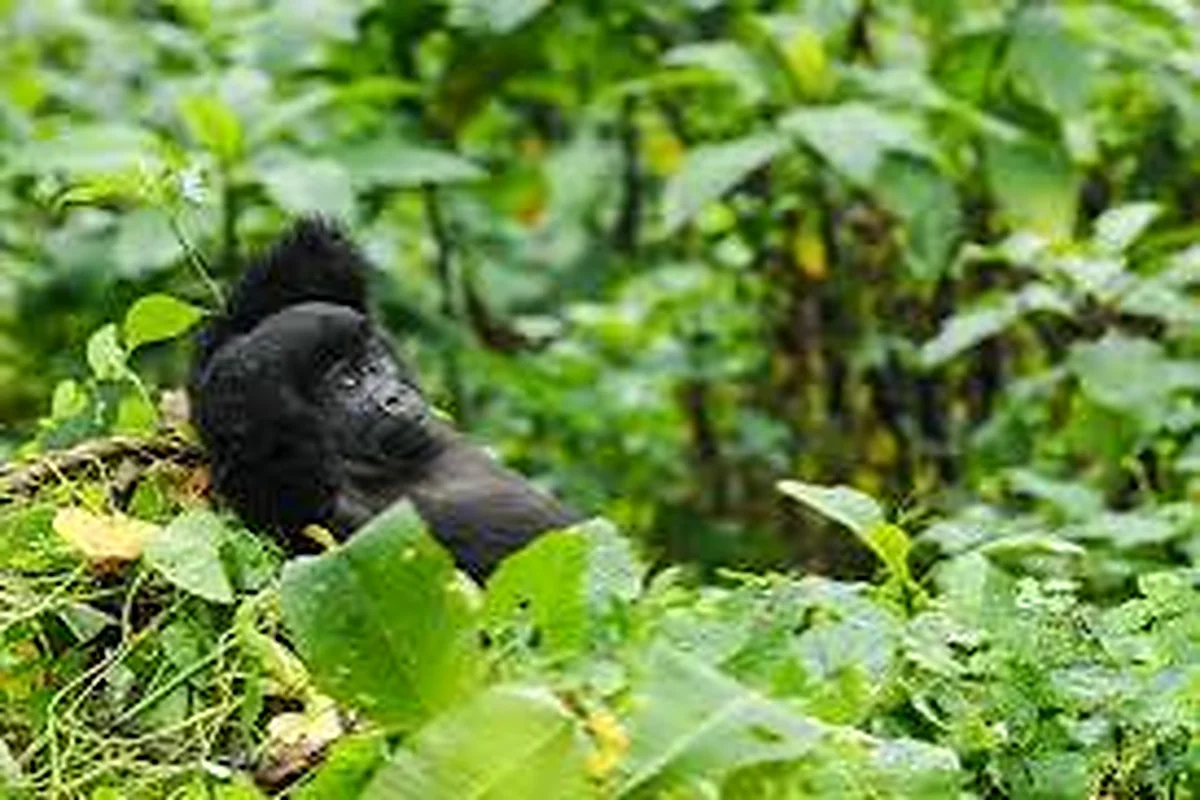
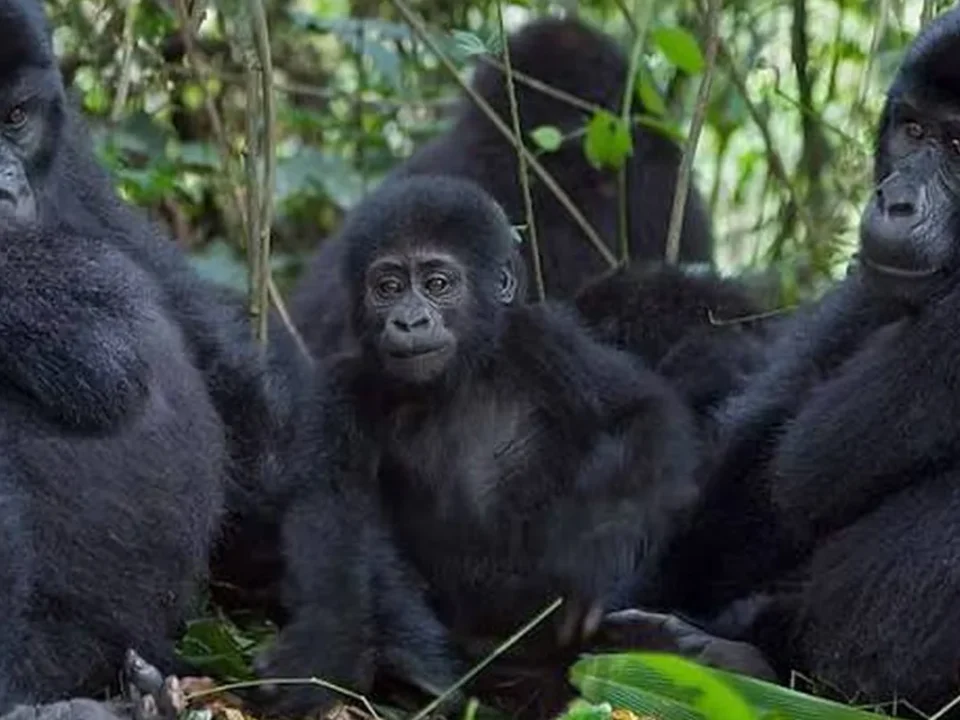
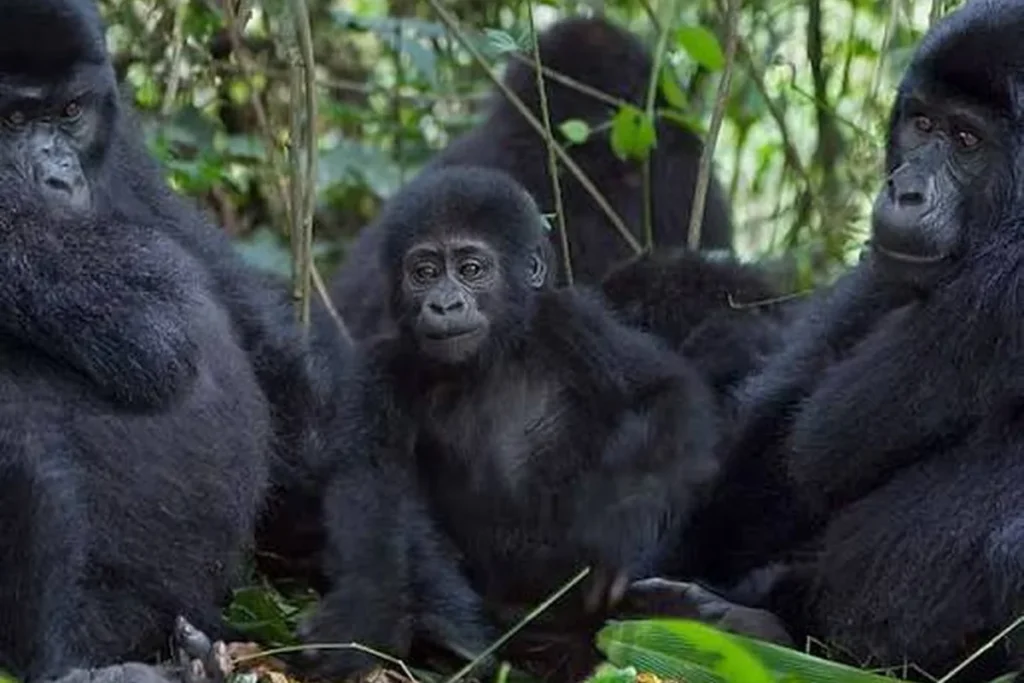
A young mountain gorilla rests quietly among lush green vegetation in its natural forest habitat.
Managing Sleep, Medication, Hydration, and Recovery
Long flights, changing time zones, early departures, and unfamiliar beds can disrupt sleep before trekking day. Because poor sleep may worsen fibromyalgia symptoms, schedule an acclimatization or rest day when possible. Avoid planning your most physically demanding activity immediately after an exhausting transfer.
Keep prescribed medicines in their original packaging and carry a sufficient supply according to your clinician’s advice and applicable travel rules. Ask about time-zone adjustments, potential sedation, dizziness, and interactions with any travel medicines. Do not start, stop, or change doses solely because a safari is approaching.
Some medicines used for pain or sleep can affect alertness or balance. That matters on slippery trails where concentration and steady footing are essential. Review possible side effects with your prescriber, especially if you have recently changed treatment or noticed unusual morning grogginess.
Carry drinking water and suitable snacks, and use breaks to monitor how you feel. Hydration supports ordinary physical functioning, but it does not prevent all flare-ups or eliminate the demands of a strenuous hike. Avoid relying on caffeine or painkillers to push through warning symptoms.
For anyone considering gorilla trekking with fibromyalgia, a sensible decision begins with the demands of this specific excursion rather than a general statement about chronic pain. Discuss your personal limits, prepare for variable weather, and ask questions about the return route before deciding whether to proceed.
Gorilla trekking with fibromyalgia may require more recovery time than the published safari schedule appears to allow. Consider a quiet afternoon and a less demanding following day. The 5-day gorilla and game safari can provide a planning starting point, although its activities and pace should be reviewed individually.
Pack only essential items in your daypack and consider hiring a porter to carry the remainder. A lighter load can improve comfort, but it does not guarantee reduced pain or prevent fatigue. Communicate early if you need to pause, rather than waiting until exhaustion makes safe movement difficult.
Comfort measures should be simple and tested in advance. A well-fitted daypack, familiar layers, snacks you tolerate, and scheduled pauses are often more practical than purchasing unfamiliar equipment. New products can cause pressure, rubbing, or other discomfort when first used during a long outing.
After the trek, prioritize a calm return to your lodge, a meal, hydration, and whatever ordinary recovery routine your clinician recommends. Avoid adding another strenuous excursion simply because the itinerary leaves a few free hours. Recovery needs can become apparent only after activity ends.
Keep the central question of gorilla trekking with fibromyalgia practical: what support is available, what cannot be predicted, and what would cause you to stop? A thoughtful plan gives you more control over decisions without creating false certainty about the day’s conditions.
Bwindi Versus Mgahinga: Choosing the Right Trekking Setting
Bwindi and Mgahinga both protect mountain gorillas, but their terrain, access arrangements, and trekking logistics differ. Bwindi has multiple trekking sectors and a large area of mountainous forest. Mgahinga is a smaller park with volcanic landscapes. The most suitable option depends on actual availability and personal circumstances.
Neither park can guarantee a short walk, a flat trail, or a specific amount of climbing. Gorilla groups move through natural habitat, and rangers make operational decisions based on the day’s conditions. Treat any claim that one park is always easier as an oversimplification.
Ask about the drive to the briefing point, the time needed to reach your lodge, and the availability of appropriate assistance. Reducing unnecessary road travel may conserve energy, especially if long seated journeys aggravate stiffness or pain. A lodge close to your assigned sector can sometimes simplify the morning.
For gorilla trekking with fibromyalgia, the best decision may depend less on park names and more on how much rest your itinerary provides. Allow room for delays, avoid unnecessary transfers, and ask the operator to communicate your mobility concerns to the relevant park team before trekking day.
For anyone considering gorilla trekking with fibromyalgia, a sensible decision begins with the demands of this specific excursion rather than a general statement about chronic pain. Discuss your personal limits, prepare for variable weather, and ask questions about the return route before deciding whether to proceed.
Our 3-day Uganda gorilla trekking safari is a useful example of a focused itinerary, but a short trip is not automatically the most comfortable choice. A 3-day flying luxury gorilla safari may reduce some road travel, subject to flight schedules and transfers.
Contact PrideMark Safaris to compare transport options, lodge locations, and realistic pacing. You can also read about our approach on the About Us page. Park allocation and trekking conditions remain subject to official decisions, and requests for easier arrangements cannot be guaranteed.
Accommodation location matters because trekking sectors can be far apart by road. Confirm which sector your permit is assigned to and whether the lodge choice is appropriate for that briefing point. An avoidable predawn drive can reduce sleep and increase fatigue before the hike even begins.
If you want to combine gorillas with other wildlife experiences, compare the travel time between destinations. A slower itinerary may be more comfortable than a packed one, but extra days also add expense and travel logistics. Choose the balance that works for your health and budget.
Keep the central question of gorilla trekking with fibromyalgia practical: what support is available, what cannot be predicted, and what would cause you to stop? A thoughtful plan gives you more control over decisions without creating false certainty about the day’s conditions.
| Park factor | Bwindi | Mgahinga |
|---|---|---|
| Terrain | Rugged forested hills | Volcanic mountain terrain |
| Route length | Variable by gorilla location | Variable by gorilla location |
| Best planning step | Confirm sector and transfers | Review access and altitude considerations |
Porters, Walking Sticks, and Practical Trekking Assistance
Porters can carry bags and may provide practical help on difficult ground, depending on local arrangements. This can reduce the amount of weight a visitor carries and make it easier to focus on footing. Tell your operator beforehand if you expect to need support rather than assuming assistance will automatically be available.
A walking stick can offer a useful point of contact on slippery or uneven surfaces. However, it should be familiar equipment, not something first tested during the trek. Practice with it on hills and steps, and follow ranger instructions about when to put it aside near gorillas.
Some visitors ask about additional carrying arrangements or specialized support. Availability, cost, terrain suitability, and park approval must be confirmed individually. Such services should never be presented as a universal solution for gorilla trekking with fibromyalgia or as a guarantee that every section of a route can be negotiated.
Choose boots with dependable grip and enough room for comfortable socks. Wear clothing in layers so you can adjust to changing temperatures without carrying unnecessary weight. Gloves can protect hands from rough vegetation, although their usefulness depends on your comfort and the guide’s instructions.
For anyone considering gorilla trekking with fibromyalgia, a sensible decision begins with the demands of this specific excursion rather than a general statement about chronic pain. Discuss your personal limits, prepare for variable weather, and ask questions about the return route before deciding whether to proceed.
Explain to your guide how to recognize when you are becoming fatigued or cognitively overwhelmed. A simple request for a pause is easier to act on than waiting until symptoms are severe. The guide can help coordinate group movement, but the overall pace and stopping opportunities may be constrained by conditions.
For gorilla trekking with fibromyalgia, assistance works best as one part of a broader plan that includes appropriate fitness, realistic scheduling, and an exit strategy. PrideMark Safaris can help you ask relevant logistical questions, while official park personnel retain authority over safety and trekking operations.
A porter should know which items you may need quickly, including water, snacks, rainwear, and prescribed medication. Keep essential personal items accessible rather than buried in a bag that is carried far ahead. Ask the guide about safe access to your belongings during breaks.
If hand pain or tenderness makes gripping a stick uncomfortable, test different handles during training. Do not assume that a mobility aid recommended for someone else will suit you. The most useful aid is one you can operate reliably while concentrating on your footing.
Keep the central question of gorilla trekking with fibromyalgia practical: what support is available, what cannot be predicted, and what would cause you to stop? A thoughtful plan gives you more control over decisions without creating false certainty about the day’s conditions.
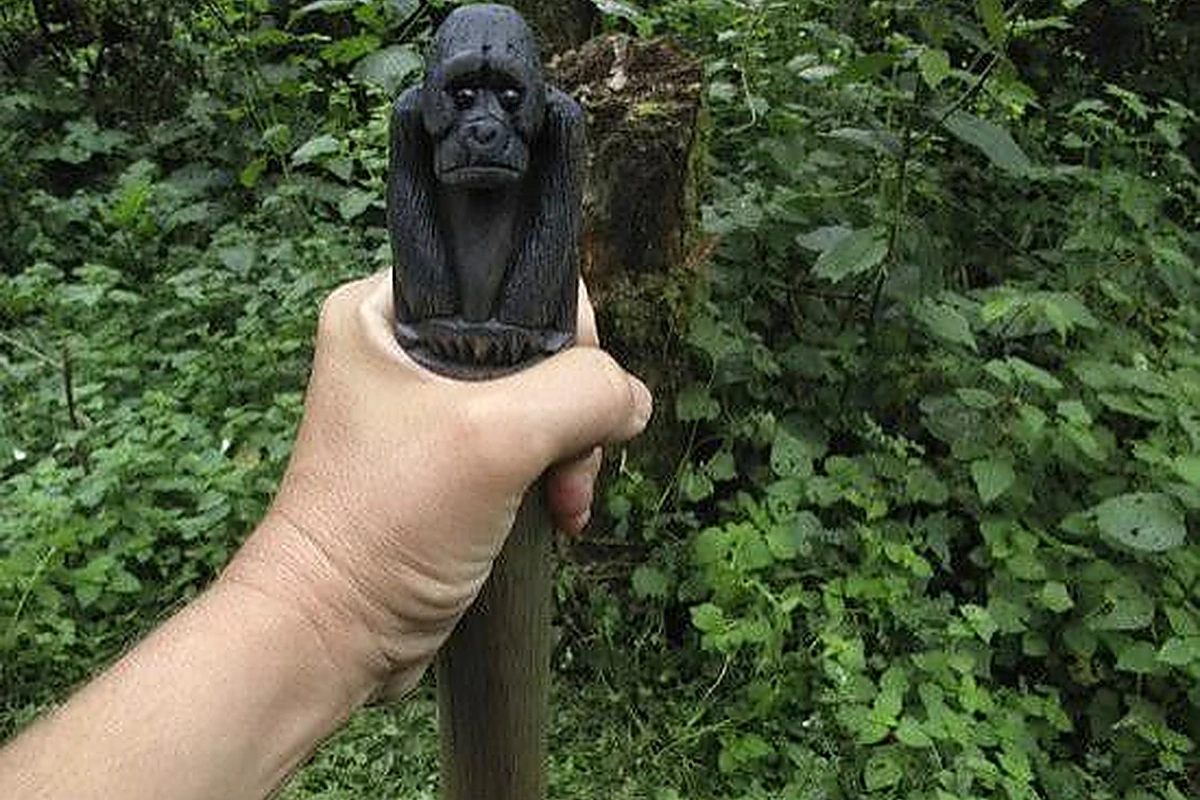
A wooden walking stick featuring a carved gorilla handle, photographed against lush forest vegetation.
Recognizing Flare-Ups, Warning Symptoms, and When Not to Trek
Not every increase in pain is an emergency, but worsening fatigue, dizziness, loss of balance, or difficulty concentrating can affect safety on forest trails. Agree in advance on the signs that mean you should slow down, rest, or turn back. Do not assume you must finish simply because a permit has been purchased.
If you develop new chest pain, severe breathing difficulty, fainting, sudden neurological changes, or other alarming symptoms, seek urgent medical attention. These should not be dismissed as ordinary fibromyalgia discomfort. Emergency access in remote forest terrain may be slower than in a town or city.
An active flare-up before departure is a reason to reassess the day. Consider your sleep, pain level, walking stability, and ability to complete the return journey. If you cannot safely perform basic movements that morning, discuss the situation with your healthcare adviser and the local trekking team.
Gorilla trekking with fibromyalgia should never depend on ignoring symptoms to keep up with other travelers. Communicate openly and promptly. Rangers can advise on operational options, but neither they nor the tour operator can guarantee immediate evacuation or a particular outcome.
For anyone considering gorilla trekking with fibromyalgia, a sensible decision begins with the demands of this specific excursion rather than a general statement about chronic pain. Discuss your personal limits, prepare for variable weather, and ask questions about the return route before deciding whether to proceed.
Consider travel insurance that explicitly addresses your declared medical conditions and the activities you plan to undertake. Read exclusions, emergency assistance provisions, and cancellation terms carefully. Insurance is financial protection under stated conditions, not a substitute for preparation or clinical judgment.
If trekking is not advisable, Uganda still offers rewarding travel experiences that may involve less walking. Discuss scenic drives, cultural visits, or carefully selected wildlife viewing with PrideMark Safaris. The right safari is one that respects your health needs while allowing you to enjoy the destination.
A written emergency contact list and a basic medical summary can help if unexpected care is needed. Ask your insurer how assistance is coordinated in Uganda and where its limitations apply. Keep copies accessible to you and a trusted travel companion.
There is no shame in deciding not to start after a difficult night. The cost of a permit can create emotional pressure, but a financial commitment does not change the terrain or your symptoms. Make the decision with your health and the available guidance in mind.
Keep the central question of gorilla trekking with fibromyalgia practical: what support is available, what cannot be predicted, and what would cause you to stop? A thoughtful plan gives you more control over decisions without creating false certainty about the day’s conditions.
Choosing Gorilla Safari Packages and Planning With PrideMark Safaris
An appropriate itinerary balances the desire to see mountain gorillas with the realities of your symptoms. Start by identifying the longest journey you can comfortably manage, the number of rest days you need, and the activities that usually trigger a flare. Then compare packages on those practical measures rather than headline duration alone.
The 3-day Uganda gorilla trekking safari concentrates on the gorilla experience and may suit travelers with limited holiday time. However, the compressed schedule can mean more travel relative to rest. Ask about exact transfers and accommodation before assuming that fewer days will reduce overall fatigue.
The 3-day flying luxury gorilla safari may be attractive when lengthy road journeys are a major concern. Flights do not remove the hiking demands, and airport transfers and early departures still require planning. Compare the complete door-to-door itinerary with your usual tolerance for travel.
The 5-day gorilla and game safari combines activities and may offer more opportunities to spread experiences across days, depending on the schedule. For gorilla trekking with fibromyalgia, ask whether rest time can be protected and whether optional excursions can be skipped without disrupting the group.
For anyone considering gorilla trekking with fibromyalgia, a sensible decision begins with the demands of this specific excursion rather than a general statement about chronic pain. Discuss your personal limits, prepare for variable weather, and ask questions about the return route before deciding whether to proceed.
When you contact PrideMark Safaris, share practical information: walking tolerance, balance concerns, mobility aids, medication storage needs, and preferred rest periods. You do not need to disclose more medical detail than is necessary for planning. Our About Us page explains who we are, and our contact page is the place to request a tailored conversation.
Ultimately, gorilla trekking with fibromyalgia can be considered by some travelers after individualized medical advice and realistic preparation. It is not automatically suitable for everyone. Prioritize your ability to walk safely, recover comfortably, and make a clear decision on trekking morning—even if that means choosing another experience.
When comparing offers, request a clear account of what is included: permits, transport, lodging, porter arrangements, and any optional activities. Also ask which elements can change due to weather or park operations. Transparent details help prevent a mismatch between expectations and the actual experience.
Internal resources on knee problems, back pain, osteoporosis, and walking sticks may help you compare related mobility questions. These are internal site-search links rather than verified direct article permalinks.
Keep the central question of gorilla trekking with fibromyalgia practical: what support is available, what cannot be predicted, and what would cause you to stop? A thoughtful plan gives you more control over decisions without creating false certainty about the day’s conditions.
| Package | Planning advantage | Question to ask |
|---|---|---|
| 3-day trekking safari | Focused gorilla itinerary | Is there adequate recovery time? |
| 3-day flying safari | May reduce road travel | What are transfer and flight times? |
| 5-day gorilla and game safari | More varied activities | Can optional activities be skipped? |
Planning gorilla trekking with fibromyalgia also means reviewing the weather forecast, expected transfers, and recovery days. Before departure, revisit whether gorilla trekking with fibromyalgia still fits your current symptoms and walking tolerance. If your condition changes, discuss gorilla trekking with fibromyalgia with your clinician and safari planner rather than relying on an earlier assessment.
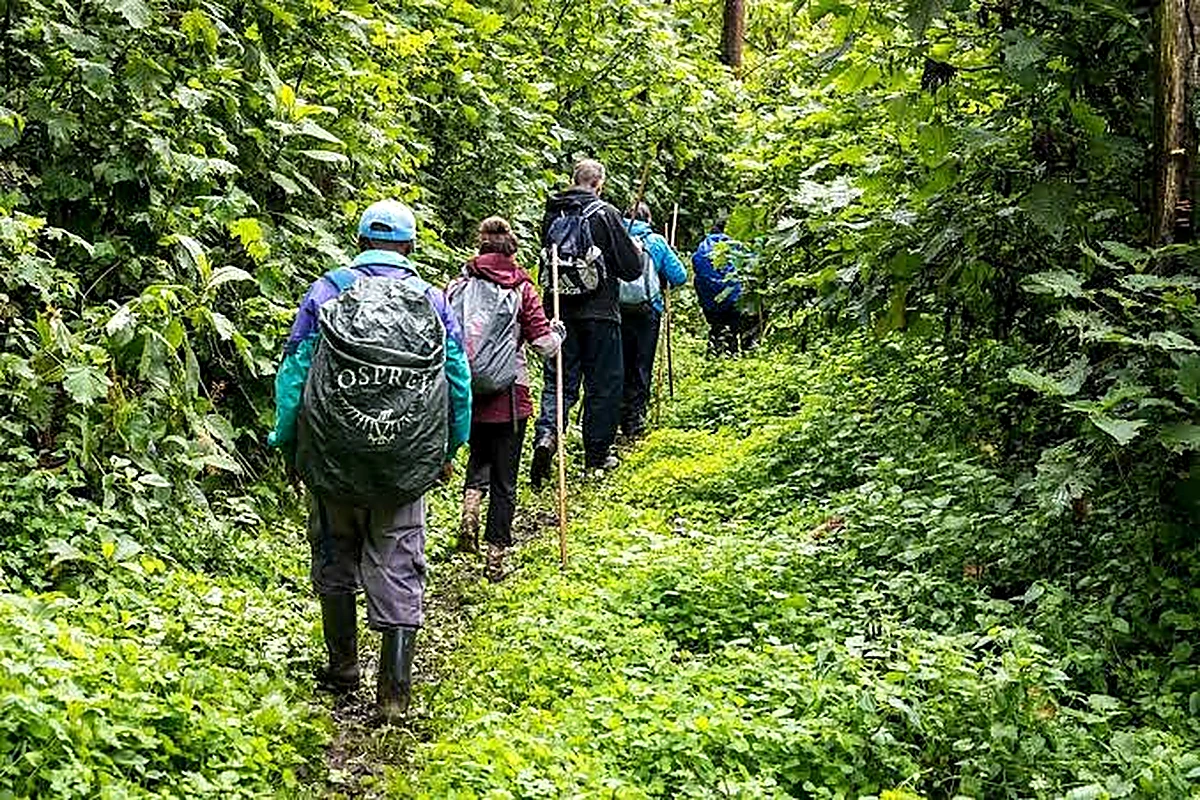
Gorilla trekking visitors use walking sticks while following a narrow trail through lush rainforest vegetation.
Frequently Asked Questions About Gorilla Trekking With Fibromyalgia
Is gorilla trekking with fibromyalgia allowed in Uganda?
A fibromyalgia diagnosis alone does not establish a blanket prohibition. Participation depends on park rules, your functional ability, and your own medical circumstances. Ask your clinician to assess the hiking demands and inform the operator of relevant mobility needs. If you are planning gorilla trekking with fibromyalgia, prioritize your individual circumstances and confirm relevant arrangements before booking.
Can fibromyalgia pain become worse after a gorilla trek?
Yes, physical exertion and disrupted routines may worsen symptoms for some people, although responses vary. Build recovery time into the itinerary, pace training gradually, and discuss your flare-management plan with your clinician. If you are planning gorilla trekking with fibromyalgia, prioritize your individual circumstances and confirm relevant arrangements before booking.
How long will I walk to see the gorillas?
The duration is unpredictable because gorillas move freely and trails vary. Even if the gorillas are reached relatively quickly, you still need to walk back. Do not rely on a promised short route. If you are planning gorilla trekking with fibromyalgia, prioritize your individual circumstances and confirm relevant arrangements before booking.
Is Bwindi easier than Mgahinga for someone with fibromyalgia?
Neither park is consistently easier. Both can involve steep, uneven terrain, and conditions change daily. Discuss the specific itinerary and your mobility concerns with the operator and park staff. If you are planning gorilla trekking with fibromyalgia, prioritize your individual circumstances and confirm relevant arrangements before booking.
Can I hire a porter during gorilla trekking with fibromyalgia?
Porters are commonly available for practical assistance and bag carrying, subject to local arrangements. Confirm availability, charges, and the kind of help provided in advance. A porter cannot eliminate the underlying terrain risks. If you are planning gorilla trekking with fibromyalgia, prioritize your individual circumstances and confirm relevant arrangements before booking.
Should I take extra pain medication before trekking?
Do not change prescribed doses without medical advice. Some medicines can cause dizziness or sedation, which may make slippery trails harder to negotiate. Review your medication plan with the prescriber before departure. If you are planning gorilla trekking with fibromyalgia, prioritize your individual circumstances and confirm relevant arrangements before booking.
What happens if I cannot finish the trek?
Tell the ranger or guide promptly if you are struggling. Available options depend on your location and the day’s conditions, and immediate evacuation cannot be assumed. Plan for this possibility before setting out. If you are planning gorilla trekking with fibromyalgia, prioritize your individual circumstances and confirm relevant arrangements before booking.
Will walking sticks make gorilla trekking with fibromyalgia safer?
They may help some people with stability, but effectiveness depends on correct use and the terrain. Practice beforehand and follow ranger directions. A stick is not a substitute for adequate balance or physical capacity. If you are planning gorilla trekking with fibromyalgia, prioritize your individual circumstances and confirm relevant arrangements before booking.
Can I request a shorter gorilla trekking route?
You can communicate your needs in advance, but a shorter route cannot be guaranteed. Gorilla locations and ranger assignments vary, and conservation and safety requirements take priority. If you are planning gorilla trekking with fibromyalgia, prioritize your individual circumstances and confirm relevant arrangements before booking.
Is the gorilla encounter itself physically demanding?
Visitors usually observe a habituated gorilla group under ranger supervision, but getting into and out of the viewing area may require uneven walking or standing. Follow distance rules and the guide’s instructions throughout. If you are planning gorilla trekking with fibromyalgia, prioritize your individual circumstances and confirm relevant arrangements before booking.
Should I buy travel insurance for a fibromyalgia safari?
Review policies carefully for declared pre-existing conditions, trekking activities, cancellation, and emergency assistance. Coverage varies widely, so obtain written clarification of exclusions before paying. If you are planning gorilla trekking with fibromyalgia, prioritize your individual circumstances and confirm relevant arrangements before booking.
Can PrideMark Safaris tailor a gorilla safari for my needs?
Yes, you can ask for a discussion about travel pace, lodge locations, transfers, and available assistance. Customization cannot guarantee a medically safe trek or override park decisions; contact the team early with your practical requirements. If you are planning gorilla trekking with fibromyalgia, prioritize your individual circumstances and confirm relevant arrangements before booking.
To discuss a suitable itinerary, contact PrideMark Safaris and review our About Us page. For official information about Uganda’s protected areas and gorilla trekking requirements, visit Uganda Wildlife Authority.