Is Gorilla Trekking in Uganda Worth the Money?
The decision behind the price
For many travelers, the question is gorilla trekking in Uganda worth it comes down to more than the price printed on a permit. A trek is an opportunity to observe endangered mountain gorillas in their forest habitat, with a regulated visitor experience and a demanding journey to reach them. We encourage guests to judge the entire experience, including travel time, comfort, conservation rules, and their personal interests.
What you are really buying
A gorilla permit is not simply admission to a viewpoint. It provides access to an organized activity overseen by the Uganda Wildlife Authority, with ranger-led procedures and a designated gorilla group when conditions allow. The walking distance and time to locate gorillas are unpredictable. That uncertainty is part of a wild encounter, not a defect that a safari company can eliminate.
The honest short answer
For wildlife lovers who can manage the forest conditions and appreciate observing animals without controlling their behavior, the experience can feel exceptional. For travelers who dislike hiking, expect a zoo-like sighting, or have little interest in primates, the expense may be harder to justify. Our role at PrideMark Safaris is to explain those trade-offs before guests commit their travel budget.
Start with your priorities
Ask yourself whether seeing mountain gorillas is the central purpose of your holiday or one possible activity among several. A person planning a once-in-a-lifetime primate journey may evaluate the permit differently from a visitor seeking broad wildlife variety. We recommend setting a total safari budget first, then comparing gorilla trekking with other Uganda experiences that matter to you.
A useful way to test the decision is to imagine returning home without a perfect photograph. Would the forest walk, ranger explanations, and opportunity to watch a gorilla family still feel meaningful? If the answer is yes, your expectations are probably aligned with the activity. If the answer is no, consider other wildlife experiences before committing a substantial share of your holiday budget.
We also recommend separating emotional value from financial value. A special wildlife encounter can be personally priceless while still requiring careful spending decisions. The right choice leaves room for transport, suitable lodging, insurance, and contingency funds. When planning with PrideMark Safaris, ask for a realistic total itinerary rather than focusing on the permit as though it were the entire holiday.
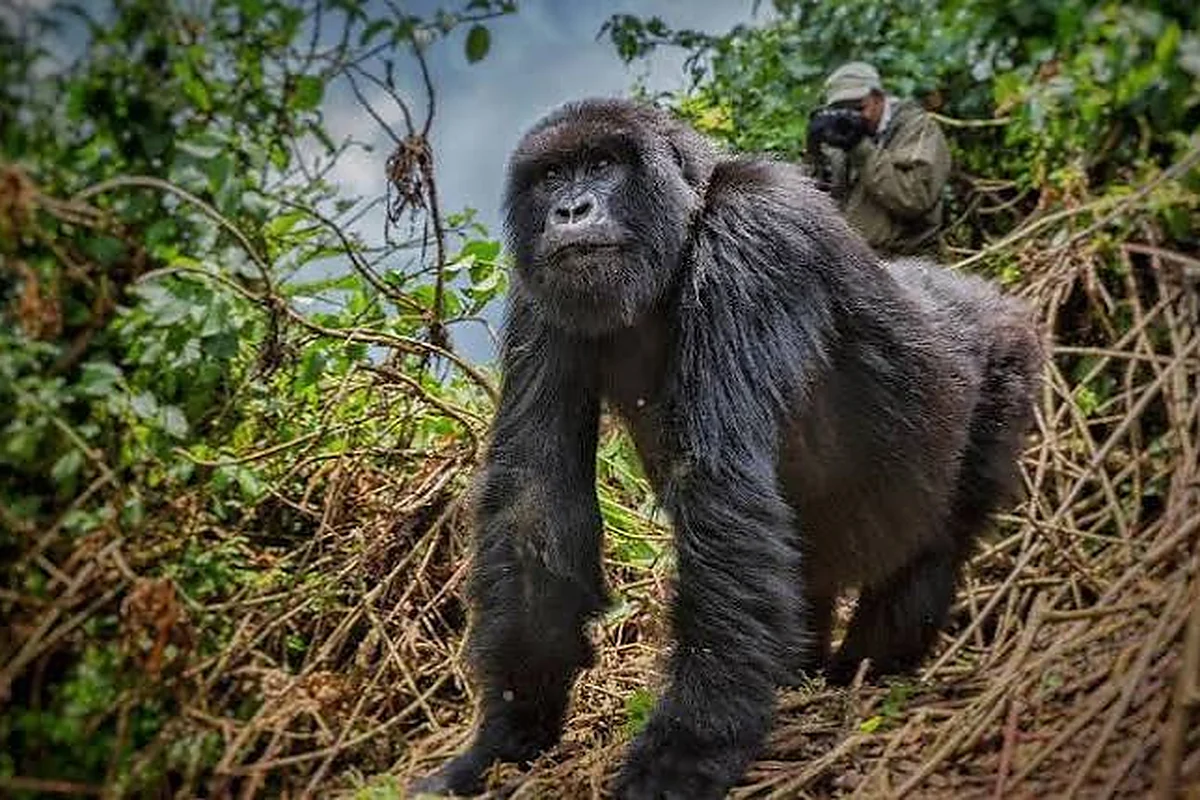
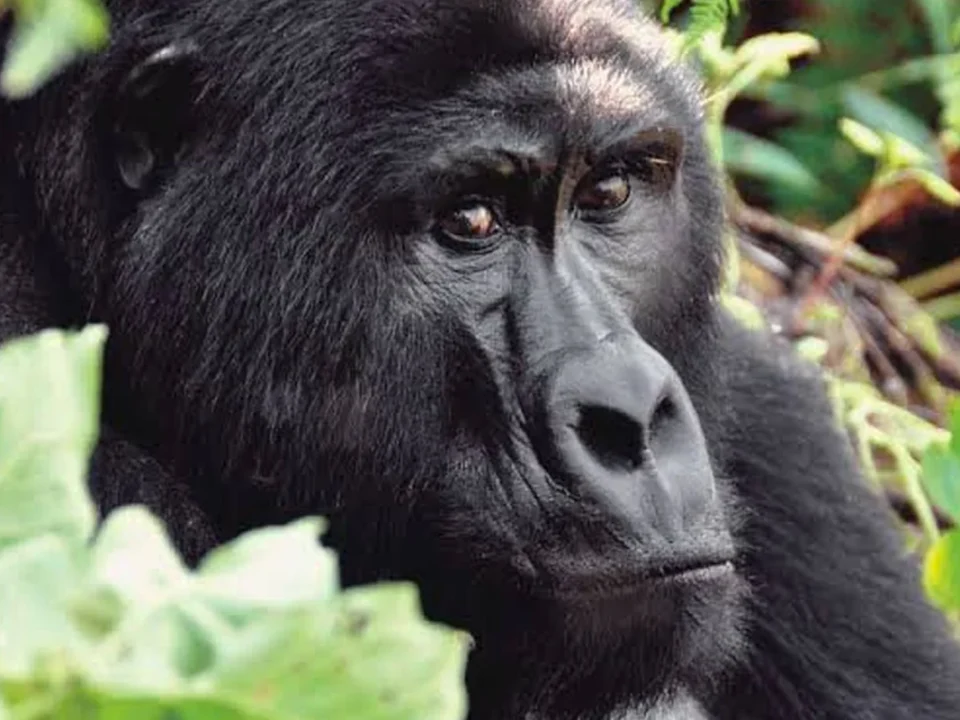
A mountain gorilla stands among dense rainforest vegetation while a photographer captures the wildlife encounter.
What Makes Uganda Mountain Gorilla Encounters Special?
The forest is part of the experience
Uganda offers gorilla trekking in Bwindi Impenetrable National Park and Mgahinga Gorilla National Park. These are living mountain ecosystems, not landscaped animal exhibits. Dense vegetation, changing weather, uneven ground, and steep sections can shape the day. Travelers who enjoy natural history often value the forest setting as much as the moment they first see a gorilla.
A close observation, not a performance
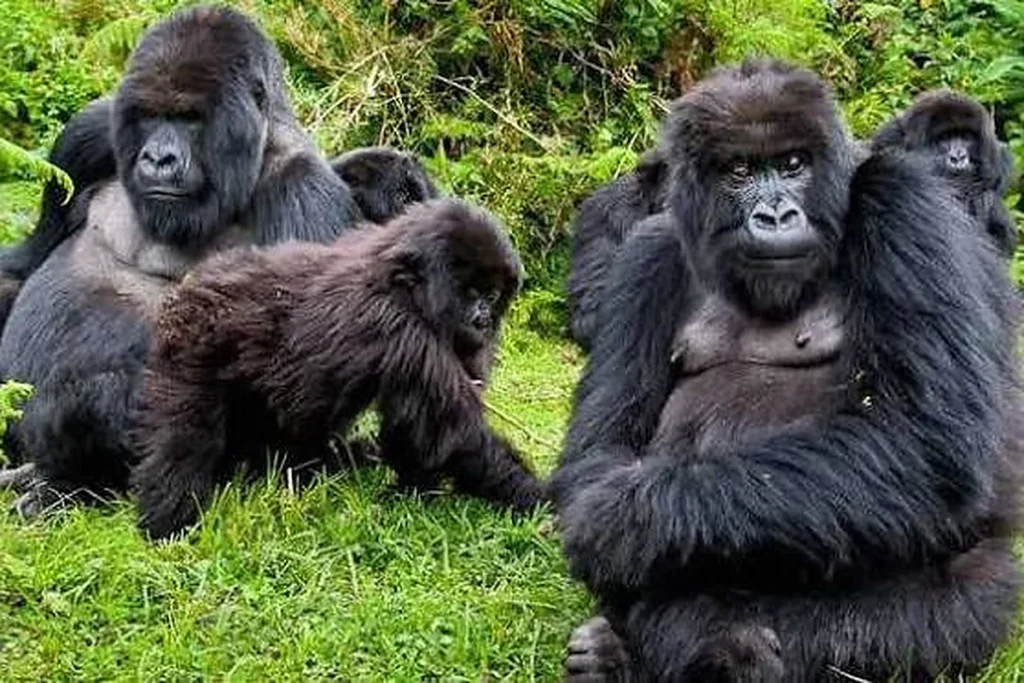
Mountain gorillas may feed, groom, rest, move, or interact while visitors watch. A silverback may appear impressive, but quiet family behavior can be equally memorable. No ethical operator should promise a particular pose, infant sighting, or photographic composition. We explain to guests that patience and respect are the foundations of a rewarding encounter.
A limited and managed activity
Gorilla tourism operates under rules intended to reduce disturbance and manage contact between humans and gorillas. Group sizes, viewing time, health precautions, and ranger instructions are important parts of the experience. These restrictions can feel strict, but they are also reasons why the encounter differs from unrestricted wildlife viewing. Visitors should expect to follow the latest park briefing.
The human side of the trek
A safari also involves local guides, trackers, porters, drivers, lodge teams, and communities near the parks. Their work supports the visitor experience, although the exact financial benefits and arrangements vary. We encourage guests to engage respectfully, hire support when useful, and treat conservation claims carefully. An operator should never suggest that a permit alone solves every challenge facing wildlife and nearby communities.
Bwindi is often discussed as one destination, but its trekking sectors affect where you should sleep and how you should travel. Booking a lodge without checking the relevant sector can create unnecessary early departures or long transfers. We recommend matching the confirmed permit location to the accommodation area before finalizing a trip, especially when road travel is already a major part of the schedule.
The forest setting also asks for a different attitude from conventional game viewing. You cannot expect to remain seated in a vehicle while the animals approach. Visitors participate in a guided walk, respond to instructions, and accept changes in conditions. That active element can add meaning for adventurous travelers, but it is an important reason to assess fitness and preferences honestly.
Nine Amazing Reasons Gorilla Trekking Can Be Worth It
Reason one: an uncommon wildlife experience
Seeing wild mountain gorillas in their natural habitat is fundamentally different from viewing animals in captivity. The forest, sounds, and movements are unscripted. Visitors must adapt to the animals and to ranger guidance. For travelers who value authenticity over convenience, that distinction often provides the strongest answer to whether gorilla trekking in Uganda is worth it.
Reason two: meaningful time observing behavior
The authorized viewing period for standard gorilla trekking is generally limited to one hour once the gorillas are located, subject to park rules and circumstances. That time can reveal social interactions, feeding habits, and the different personalities visitors perceive within a family. We advise guests to spend part of the encounter observing directly rather than seeing everything through a camera.
Reason three: the journey has its own rewards
The trek through montane forest can be memorable even before gorillas appear. Bird calls, mossy trees, shifting light, and the physical effort of moving through vegetation create a strong sense of place. Conditions are not guaranteed to be pleasant, and the hike can be strenuous. Yet some travelers remember the anticipation and teamwork as vividly as the sighting itself.
Reason four: two distinct Ugandan park options
Bwindi and Mgahinga offer different landscapes and travel considerations. Bwindi has multiple trekking sectors, while Mgahinga sits within the Virunga volcanic landscape. Permit availability, road access, accommodation, and itinerary design should determine the best fit. We do not assume one park is automatically better for every traveler; the right choice depends on confirmed logistics.
Reason five: a focused conservation context
Mountain gorillas remain a conservation-dependent species, and tourism is one element within wider protection efforts. Regulated access helps visitors understand why habitat management, veterinary work, monitoring, and local engagement matter. We recommend treating the permit as a contribution to an organized conservation tourism system, not as a guarantee that every payment directly reaches one specific project.
Reason six: a powerful shared memory
Couples, families with eligible older children, and groups of friends often value the chance to share an unusual experience. The anticipation, forest briefing, and quiet observation can create a story that lasts beyond the trip. Because the activity requires a minimum age and physical readiness, we help parties decide whether everyone should trek or whether some members need a different activity.
Reason seven: easy pairing with other Uganda highlights
Gorilla trekking can form one part of a wider safari that includes wildlife drives, boat excursions, birdwatching, or chimpanzee tracking where appropriate. A longer itinerary spreads international travel effort across several experiences. Our 5-day gorilla and game safari is one example of combining primate interests with broader wildlife viewing, subject to its current itinerary and inclusions.
Reason eight: choices across comfort levels
Travelers can plan a simpler road-based safari or consider more comfortable lodging and selected flight connections. The permit activity remains regulated regardless of accommodation class, so a luxury lodge does not buy more gorilla viewing time. Comfort upgrades can improve the overall holiday, but we encourage guests to distinguish these optional choices from the core trekking experience.
Reason nine: personal achievement
For travelers who prepare carefully and choose suitable assistance, completing a forest trek can bring a sense of achievement. The terrain may be muddy, steep, or slippery, and nobody should feel pressured to push beyond safe limits. We discuss mobility concerns early, including porter support and any available specialized arrangements that must be confirmed in advance.
A tenth consideration, beyond the nine reasons above, is the quality of preparation. Good boots, weather protection, water, and realistic expectations do not make the gorillas more impressive, but they can make the day less stressful. We encourage travelers to plan for mud and rain even during a generally drier period, because mountain forests can change quickly and the trail is not a controlled walkway.
Think also about the rhythm of the wider safari. A day spent with gorillas can be emotionally intense and physically tiring. Some visitors appreciate a quiet lodge evening afterward; others want to continue directly to another activity. There is no single correct pace. A good itinerary gives you time to enjoy the experience rather than rushing to the next destination immediately.
For travelers weighing these reasons, the 5-day gorilla and game safari provides a useful example of a combined itinerary. Always review its current inclusions before making comparisons, including permit arrangements, lodge location, transfers, meals, and the time available for other wildlife activities. These details determine whether a combined trip genuinely fits your travel goals.
Understanding the Real Value of a Gorilla Permit
Separate the permit from the safari
The permit pays for a defined park activity; a safari quote may also include lodging, transport, meals, guiding, and planning services. Those are different purchases. When comparing quotations, request a written breakdown that identifies the permit, what is included in the tour price, and which costs remain your responsibility. This prevents misleading comparisons between apparently cheap and expensive packages.
Why price alone can mislead
A lower advertised safari price might exclude a permit, use a different accommodation standard, or require a long transfer. A higher quote might include flights or additional nights. Neither is automatically better value. We recommend comparing like for like: same travel dates, number of travelers, park, permit category, room arrangement, meals, and transfer method.
Check the official tariff
Uganda Wildlife Authority sets official gorilla permit tariffs and booking conditions, which may change. Visitor categories can affect applicable rates. Rather than quoting a figure that could become outdated, we direct travelers to the official authority and confirm the relevant category before issuing a final safari quotation. The amount paid should match the actual permit and booking arrangement.
Value is not measured by photographs
Some guests return with dramatic images; others have a quieter encounter in difficult light or dense vegetation. Photographic results depend on weather, gorilla position, equipment, and visitor discipline. We suggest evaluating the experience through observation and learning, not through a promise of close-up portraits. Flash photography and unsafe approaches should never be treated as acceptable ways to improve a picture.
A practical value test
Before paying, list what matters most: seeing gorillas, minimizing travel time, staying in comfortable accommodation, or combining several activities. Then ask whether your proposed itinerary meets those priorities without hidden costs. When guests ask is gorilla trekking in Uganda worth it, this comparison gives a more useful answer than a universal yes or no.
When reviewing permit value, distinguish a booking confirmation from an inquiry or a provisional quotation. Availability can change while an itinerary is being discussed. A safari proposal should identify what must happen before a permit is secured and which payments are refundable under the relevant terms. We encourage travelers to request those details in writing before purchasing flights that depend on a particular trekking date.
Additional costs should be discussed openly rather than treated as unpleasant surprises. Depending on the chosen itinerary, they can include luggage arrangements, porter services, gratuities, extra meals, drinks, or optional activities. Some packages cover certain items and exclude others. Reading the inclusion list carefully is one of the simplest ways to judge whether the safari price represents fair value for your needs.
| What the permit covers | What to budget separately |
|---|---|
| Ranger-led trekking activity | Accommodation and transport |
| Regulated gorilla viewing | Porters, tips and personal purchases |
| Park procedures and briefing | Travel insurance and optional activities |
What to Expect During Your Hour With Mountain Gorillas
Before entering the forest
A typical trekking day begins with an official briefing and assignment procedures. Rangers explain conduct, health precautions, and the need to follow instructions throughout the activity. Exact start times and group assignments depend on the park. Travelers should arrive ready for variable weather, with suitable footwear, drinking water, and any essential medication they may need during the trek.
Finding the gorillas
Trackers and ranger teams work to locate habituated gorilla groups, but visitors still walk through real forest conditions. The time required varies substantially with gorilla movement, terrain, and weather. No responsible operator can guarantee a short hike. We recommend allowing flexibility in the day schedule and avoiding tight onward connections that assume an early return.
The viewing period
Once the group reaches the gorillas, the standard visit is generally limited to one hour under prevailing park rules. Visitors should remain quiet, follow the ranger positioning instructions, and avoid sudden movement. Gorillas may move away or come closer on their own. Travelers should never deliberately reduce the prescribed distance or attempt to touch an animal.
Health and respect
Human illnesses can pose risks to gorillas, so park health requirements are not optional details. Travelers who are unwell should disclose symptoms and seek guidance before trekking. The specific procedures in force must be checked with the authority. We also ask guests to avoid littering, feeding animals, or treating the encounter as a staged performance for social media.
After the encounter
Returning to the trailhead can take additional time and energy, particularly in wet conditions. A memorable sighting does not erase the physical demands of the hike back. We encourage travelers to keep their afternoon plans flexible, rest when needed, and discuss any concerns with their guide. The day is more enjoyable when the itinerary allows breathing room afterward.
At the briefing, guests may hear guidance that differs from advice found in older travel articles. The ranger’s current instructions take priority because conditions, health precautions, and operational procedures can change. We advise travelers not to challenge safety directions in pursuit of a photograph. Respectful behavior protects the animals, the group, and the chance for future visitors to experience the same forest.
Keep expectations flexible during the actual encounter. A gorilla may sit behind leaves, a youngster may move out of sight, and a silverback may remain still. These moments are authentic wildlife behavior rather than a failed experience. If you concentrate on watching movement, listening to the forest, and noticing social interactions, you may find that the quiet details become the most memorable part.
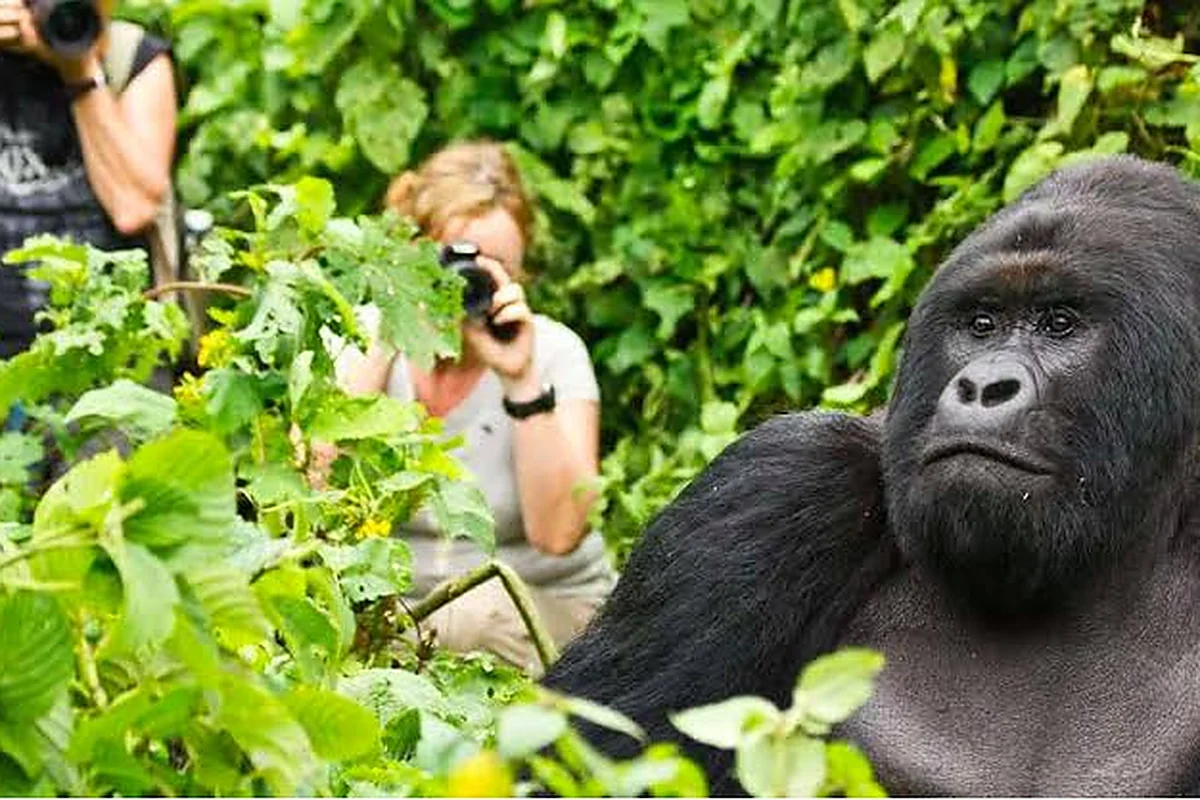
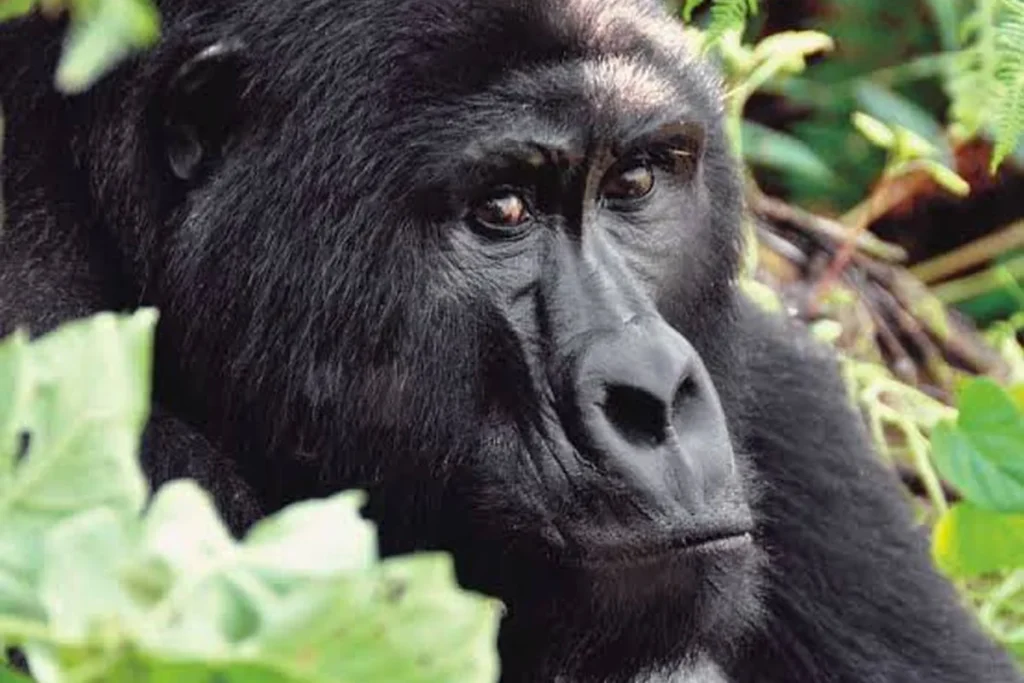
A mountain gorilla rests among lush vegetation as two visitors photograph the wildlife encounter.
Is Gorilla Trekking Worth It for Different Travelers?
First-time safari visitors
A first African safari can feel more complete when it combines gorilla trekking with open-country wildlife experiences. Forest encounters and savanna game drives offer different kinds of observation, neither replacing the other. We help first-time guests decide whether to devote most of their budget to gorillas or distribute it across several destinations and activities.
Older travelers and limited mobility
Age alone does not determine whether a person can enjoy gorilla trekking. Fitness, balance, health, and the daily terrain matter more. Porters can assist with carrying bags and negotiating difficult sections, while specialized carrying arrangements may be available by prior coordination. These services must not be assumed to guarantee suitability or access for every visitor.
Families and younger travelers
Uganda applies a minimum age for standard gorilla trekking, and families should verify the current rule before booking. Younger children may need alternative activities and appropriate supervision. For eligible teenagers, interest and stamina are important considerations. We advise families to plan the whole holiday around the needs of all members rather than focusing only on the gorilla encounter.
Photographers and naturalists
Gorilla trekking offers distinctive opportunities for observing behavior, but photography can be challenging under the canopy. Low light, foliage, rain, and restrictions on movement affect results. A longer lens and practical camera protection may help, yet equipment should never interfere with ranger instructions. Naturalists who enjoy watching quietly may find the visit rewarding even without a perfect photograph.
Travelers with a tight budget
If a permit would consume nearly the entire holiday budget, consider whether the remaining transport, accommodation, meals, and contingencies are realistic. A rushed itinerary can create unnecessary stress. We would rather help a traveler plan a sustainable safari than encourage an expensive commitment that leaves no margin for unforeseen travel costs.
Travelers with health concerns should discuss the trek before making nonrefundable commitments. A medical professional can advise on personal readiness, while the park and safari operator can explain practical arrangements. We cannot predict which gorilla group will be assigned or guarantee an easy route. Clear communication beforehand is much more helpful than discovering a mobility challenge on the morning of the trek.
For groups with different interests, splitting activities can sometimes improve the holiday. One traveler may prioritize gorillas while another prefers a gentle nature walk, cultural visit, or time at the lodge. Such alternatives require proper planning and should not be assumed available on demand. We recommend making sure every traveler feels included in the itinerary even when not everyone joins the trek.
| Traveler type | Planning consideration |
|---|---|
| First-time visitor | Consider pairing gorillas with game viewing |
| Older or mobility-conscious guest | Discuss terrain and support before booking |
| Photography-focused traveler | Prepare for low light and variable sightings |
Uganda Versus Rwanda: Comparing Gorilla Trekking Value
Compare complete itineraries
A meaningful Uganda–Rwanda comparison includes more than the face value of each permit. Consider international arrival points, transfers, lodging, time available, and whether you want additional destinations. The best-value route depends on the full journey. We advise travelers to compare complete, written itineraries instead of drawing conclusions from one headline price.
Uganda offers broader itinerary combinations
Uganda can combine gorilla trekking with other primate encounters, national parks, lakes, and varied landscapes. That range appeals to travelers who want a multi-stop safari. However, more destinations also mean more driving and potentially more nights. We help guests decide whether those additions increase personal value or simply make the itinerary busier.
Rwanda may suit a different schedule
For some international arrival plans, Rwandan gorilla trekking region can fit a shorter journey. Actual convenience depends on flight schedules, border arrangements, road conditions, and the rest of the itinerary. A shorter route is not automatically the cheapest or most enjoyable. Travelers should compare realistic transfer times and total expenses before deciding.
Do not overstate the difference
Both countries offer regulated mountain gorilla experiences, and both require adherence to official rules. Neither destination can promise particular gorilla behavior, weather, or photographic conditions. We focus on the traveler’s interests, budget, and schedule rather than declaring one country universally superior. The right destination is the one that fits the overall trip.
Comparing countries also means considering the style of travel you enjoy. Some travelers prefer fewer hotel changes and a concentrated primate visit. Others enjoy a longer route with several parks and landscapes. The same permit experience can feel more or less worthwhile depending on the days surrounding it. We encourage a comparison based on your entire trip rather than on a single headline number.
If you are arriving from abroad, account for flight schedules and the possibility of delays before selecting a trekking date. A seemingly efficient itinerary may offer too little margin if an international arrival is late. Overnight positioning near the park can be a valuable part of planning. Comfort, reliability, and the chance to arrive rested should count in the overall value calculation.
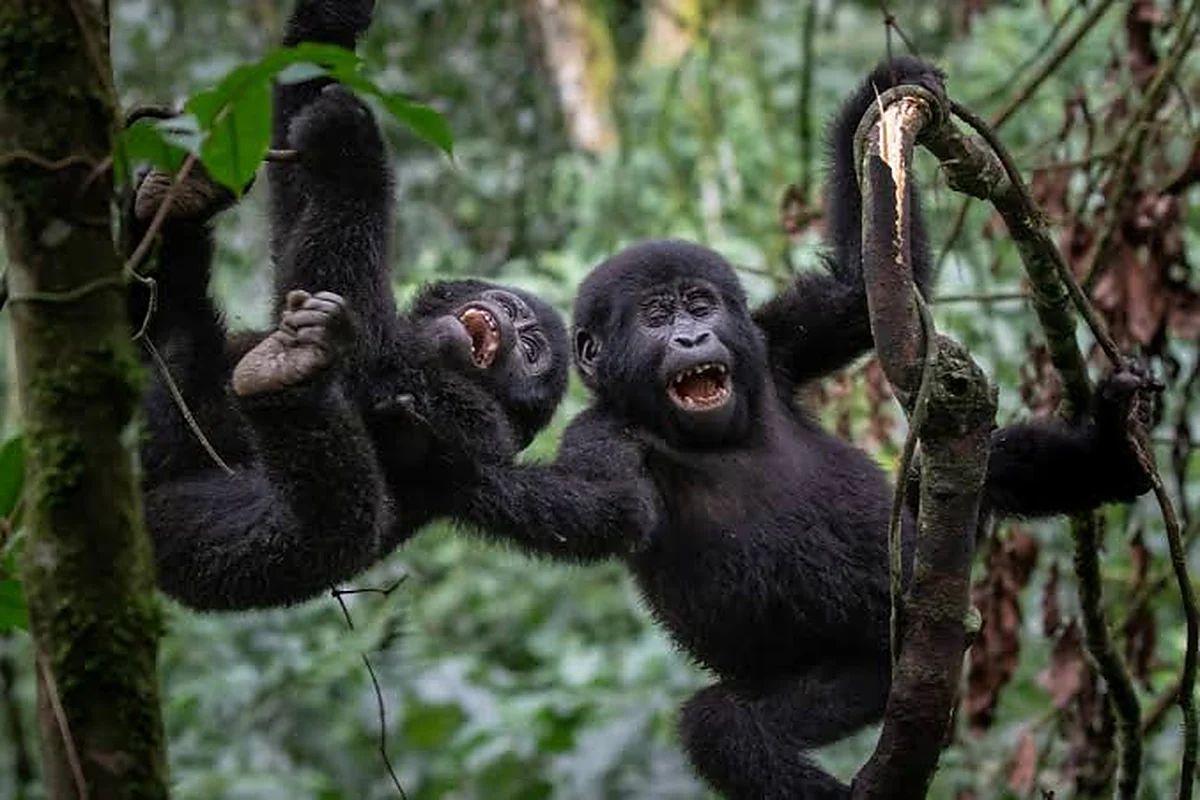
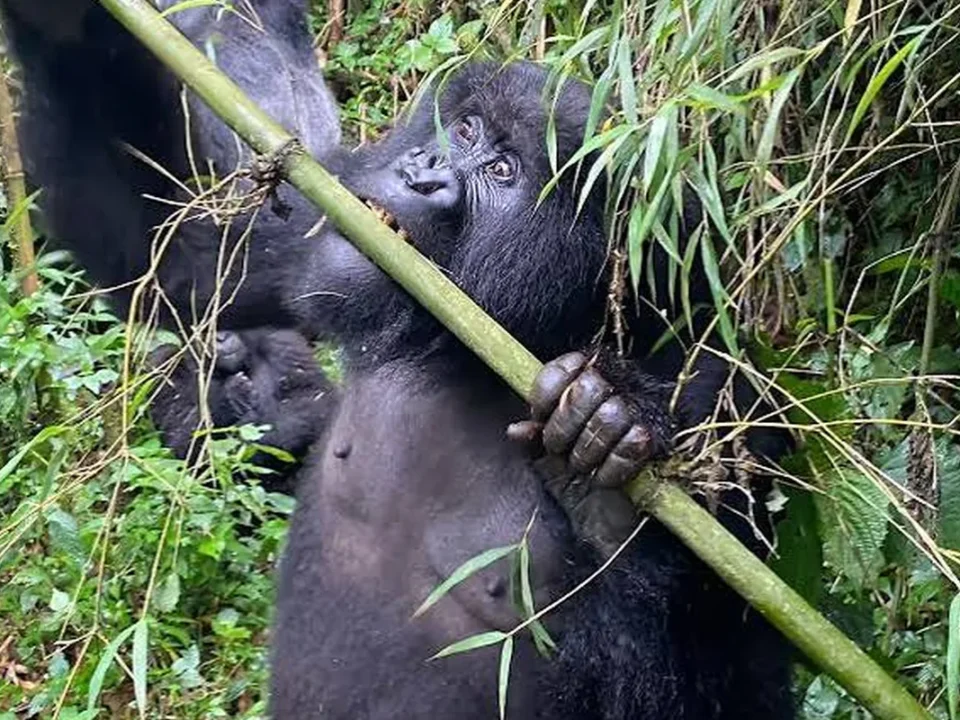
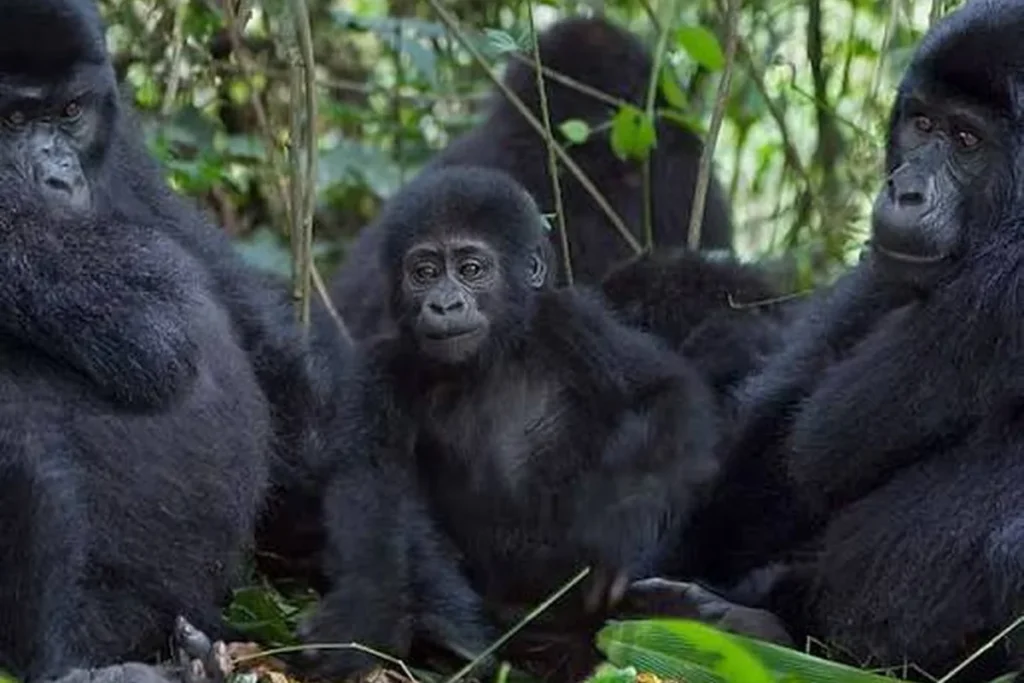
Two young mountain gorillas play among branches in their lush rainforest habitat.
When Gorilla Trekking Might Not Be Worth the Expense
If hiking conditions are unsuitable
Forest trekking can be physically demanding and unpredictable. Travelers with serious mobility limitations or medical concerns should seek qualified medical advice and discuss practical arrangements before paying. A porter may help but cannot remove every hazard. If the trek is unlikely to be safe or enjoyable, a different Uganda wildlife experience may be a better investment.
If you expect guaranteed behavior
Wild gorillas do not follow a schedule for visitors. They may be resting, feeding in dense vegetation, or moving during the encounter. Anyone expecting a specific animal interaction or a perfect photograph risks disappointment. We encourage guests to value responsible observation and accept that natural behavior, including quiet moments, is the point of the experience.
If your itinerary is too rushed
A short holiday with inflexible flights may not leave enough time for road transfers, park logistics, and recovery. Bad weather and travel delays can add pressure. A carefully timed itinerary is more valuable than squeezing in a permit without a practical plan. We review transfer choices and overnight stops so the gorilla day is not surrounded by avoidable stress.
If the budget creates financial strain
The permit is only one element of the total cost. International flights, accommodation, transport, meals, porter services, tips, and travel insurance may add substantially to the trip. When those expenses exceed a comfortable budget, postponing or selecting a different itinerary can be sensible. A safari should be exciting, not a source of financial anxiety.
If primates are not your main interest
Travelers drawn primarily to big cats, elephants, open landscapes, or birdwatching may find greater satisfaction in a game-focused itinerary. Gorilla trekking is remarkable for the right person, but it is not a compulsory part of every Uganda holiday. We ask what guests genuinely hope to see before recommending how to allocate their time and money.
Travel insurance is another area where expectations matter. Policies differ, and not every cancellation, illness, missed trek, or change of mind is covered. Read the terms yourself and ask the insurer specific questions before travel. Neither a permit nor a safari operator’s reassurance should be mistaken for insurance protection. Planning for uncertainty is part of making an expensive wildlife trip a responsible decision.
The emotional pressure of a once-in-a-lifetime holiday can encourage travelers to ignore their own preferences. It is reasonable to decide that gorilla trekking is not right for you at the moment. Uganda has many other rewarding experiences, and an alternative itinerary can still be excellent. A thoughtful operator should be willing to discuss those options rather than insist that everyone must trek.
| Concern | Practical response |
|---|---|
| Difficult terrain | Check fitness and available assistance |
| Tight schedule | Allow transfer and trekking flexibility |
| Unexpected extras | Request an itemized written quotation |
How PrideMark Safaris Helps You Plan for Better Value
We begin with the right questions
At PrideMark Safaris, our planning approach starts with your travel dates, budget, interests, physical readiness, and preferred comfort level. Those details determine whether gorilla trekking should anchor the holiday or complement other activities. We aim to make the decision clear before a deposit is paid, rather than assuming that every traveler needs the same itinerary.
Choose the right trip length
A three-day road-based gorilla safari can suit travelers with limited time who accept longer transfers, while a fly-in option may appeal to those prioritizing comfort and time. A five-day gorilla and game itinerary creates room for broader wildlife interests. We compare the practical differences, including what each package includes, instead of presenting duration alone as a quality measure.
Check permit availability before promises
Gorilla permits are date-specific and subject to official availability and booking procedures. We cannot responsibly promise a trek simply because a traveler prefers a particular date. Our advice is to verify the permit, confirm the appropriate park or sector, and align accommodation and transport before treating an itinerary as final. Written confirmation matters more than verbal reassurance.
Explain inclusions and exclusions
A clear safari quotation should show whether the gorilla permit is included and identify accommodation, meals, transport, guiding, and optional costs. Porter services, gratuities, personal purchases, and insurance should not be silently assumed to be covered. We encourage travelers to ask questions until the cost breakdown makes sense. Transparency helps prevent disappointment after arrival.
Build a safari around your interests
Our goal is not to sell the most expensive version of the trip. It is to match the experience to the traveler. If gorillas are the priority, we focus on a practical trekking itinerary. If the guest also wants wildlife drives or a relaxed pace, we discuss an appropriate extension. That is how we answer is gorilla trekking in Uganda worth it in a useful, individual way.
For travelers interested in a short visit, the three-day gorilla itinerary provides a starting point for discussion, but travel times and accommodation locations still deserve attention. Guests who prioritize reducing time on the road may ask about flight-based arrangements where suitable services exist. We explain the differences before suggesting upgrades, because convenience only adds value when it addresses a real preference.
For travelers who want variety, combining gorillas with a game safari can make the journey feel more balanced. That approach also requires additional nights, transfers, and budget. We ask guests to choose based on the wildlife they most want to encounter, not simply on the number of activities advertised. A carefully paced itinerary usually creates better memories than a crowded schedule.
Explore a 3-day Uganda gorilla trekking safari, compare a 3-day luxury fly-in gorilla safari, or consider our 5-day gorilla and game safari. For personalized planning, PrideMark Safaris can help you evaluate the options. We recommend comparing the complete itineraries, not just the trip length or headline price, and checking all permit conditions before paying.
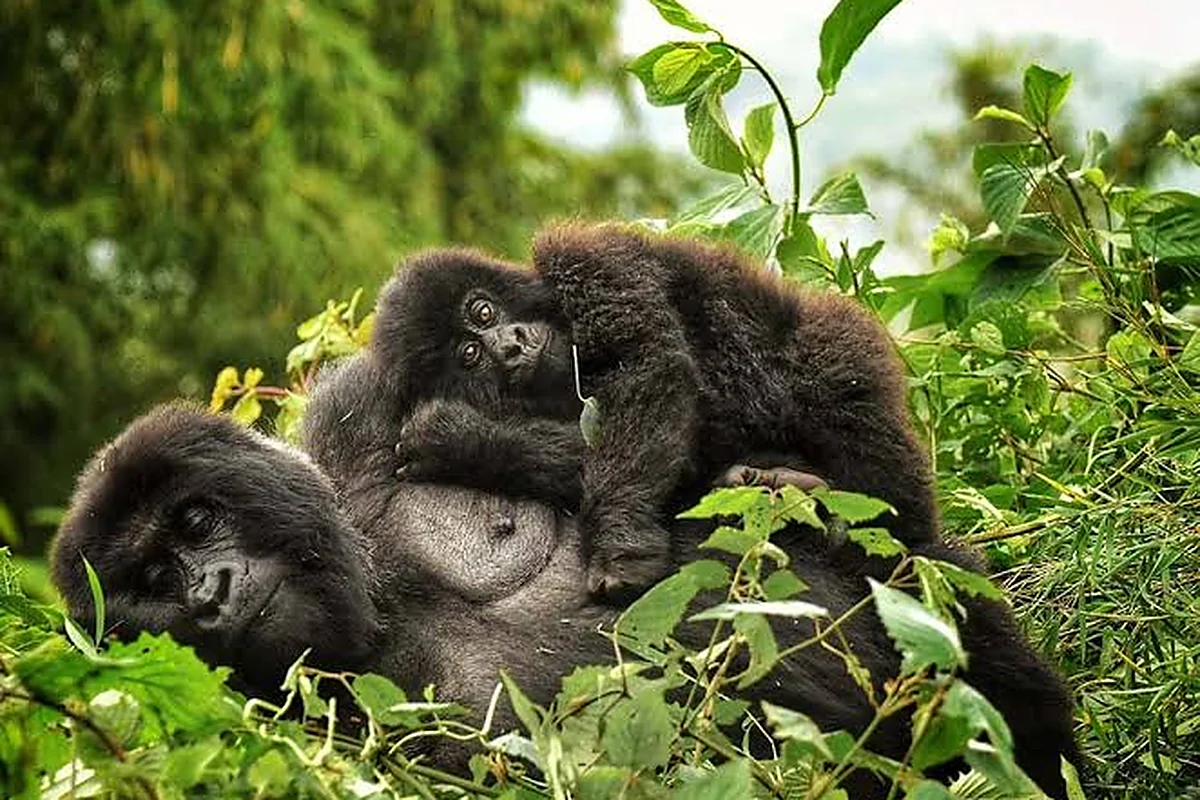
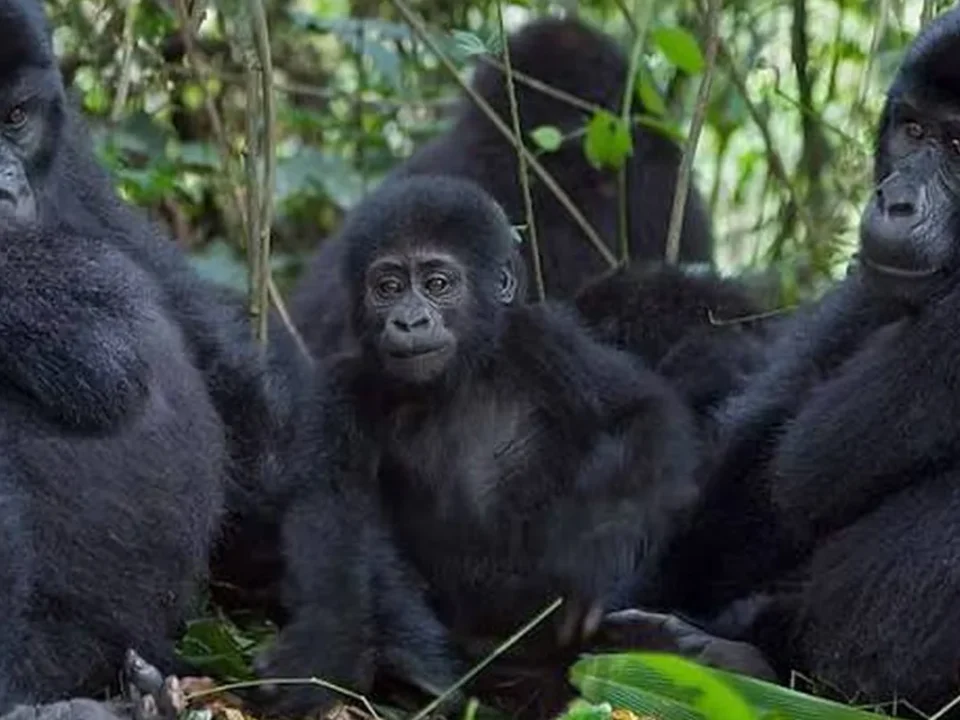
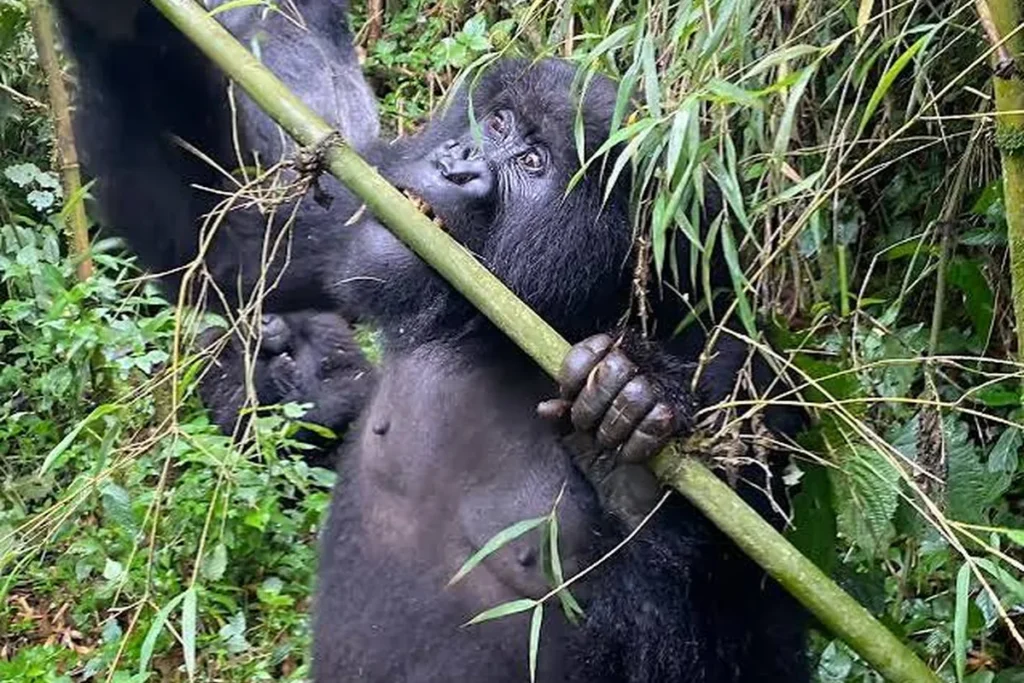
A young mountain gorilla rests comfortably on an adult gorilla amid lush forest vegetation.
Frequently Asked Questions
Is gorilla trekking in Uganda worth it for first-time visitors?
It can be, particularly for travelers fascinated by primates and wild forest habitats. The value depends on your interests, budget, mobility, and available time. First-time visitors often appreciate combining the trek with another wildlife activity. We recommend comparing the full safari cost rather than judging the experience solely by the permit price.
How long can visitors spend with the gorillas?
For standard gorilla trekking, the authorized viewing period is generally one hour after locating the gorillas, subject to current park rules and safety circumstances. The walk to reach the group can take considerably longer. Travelers should expect a full trekking outing rather than a guaranteed one-hour activity from departure to return.
Does the gorilla permit include accommodation?
A standard gorilla permit does not ordinarily include your hotel or lodge accommodation. Some safari packages combine the permit with lodging, transport, and meals, but the inclusions differ by operator and itinerary. Ask for a written quote that separates the official permit from the other travel services before comparing offers.
Can you see gorillas without hiking?
Gorilla trekking normally involves walking through natural forest, sometimes on steep or muddy terrain. Specialized mobility support may be possible in certain circumstances, but it requires advance discussion and cannot be guaranteed for every visitor. Travelers should seek realistic advice about the terrain and available assistance before committing to a permit.
Is the experience guaranteed if I have a permit?
A valid permit authorizes participation in a regulated trekking activity, not a promise of particular animal behavior or perfect viewing conditions. Ranger and tracker teams work to locate habituated groups, but wildlife and weather remain unpredictable. Review the official terms and discuss contingency arrangements with your safari operator before travel.
Which is better for gorilla trekking, Bwindi or Mgahinga?
Both parks offer legitimate gorilla trekking experiences. The better choice depends on permit availability, travel route, accommodation, terrain considerations, and your wider safari plan. Bwindi has several trekking sectors, while Mgahinga offers a different volcanic landscape. We recommend selecting the park based on confirmed logistics rather than a universal ranking.
Is Uganda gorilla trekking suitable for older travelers?
Many older travelers may be able to participate, but age alone is not a reliable measure of readiness. Walking ability, balance, medical considerations, and trail conditions all matter. Porter support can be useful, and some additional assistance may be arranged in advance. Individual suitability should be assessed realistically with medical and park guidance.
What should I pack for gorilla trekking?
Useful items generally include sturdy footwear with grip, long trousers, long sleeves, rain protection, water, and a small daypack. Gloves may help with vegetation, while a camera needs weather protection. Pack for changeable forest conditions rather than a dry-weather forecast alone. Follow any additional advice provided during your official park briefing.
Are porters worth hiring for gorilla trekking?
Porters can be valuable because they carry daypacks and may offer practical assistance on difficult sections of the trail. Their services are typically separate from the permit, so ask about arrangements and charges in advance. Hiring support can also provide local earning opportunities, although the nature of those opportunities varies by park and provider.
Can gorilla trekking be combined with a game safari?
Yes. A combined itinerary can include gorilla trekking and wildlife viewing in other Ugandan national parks, depending on your schedule and budget. A longer journey offers more variety but may require additional driving and accommodation nights. We recommend choosing the combination based on realistic transfer times and the animals you most want to see.
Is gorilla trekking better than a luxury safari?
These are not direct substitutes. Gorilla trekking is a regulated wildlife activity, while luxury generally describes accommodation and transport standards. You can pair gorilla trekking with high-end lodging, but a more expensive lodge does not extend the official viewing period. Decide which comforts genuinely improve your trip and which costs are optional.
How can I decide if the permit is worth the cost?
Start with your total holiday budget, not just the permit fee. Consider your interest in primates, tolerance for a potentially difficult hike, and the other experiences you might choose instead. Ask for an itemized safari proposal and confirm permit availability. If those factors align with your priorities, the experience may offer excellent personal value.
Plan Your Uganda Gorilla Safari With Confidence
So, is gorilla trekking in Uganda worth it? For travelers who love primates, respect wildlife rules, and can prepare for a variable forest hike, it can be a deeply rewarding choice. The best decision comes from comparing the full cost with your own priorities. Contact PrideMark Safaris for a practical itinerary discussion before booking.
For official information about park rules, tariffs, and permits, consult the Uganda Wildlife Authority. Permit conditions and travel logistics should always be reconfirmed before payment. We prefer accurate expectations to promises about sightings, trekking duration, or availability that nobody can responsibly guarantee.