A night safari in Uganda reveals a side of the country that many daytime visitors never experience. As the last orange light disappears behind the savannah, daytime animals settle into the darkness while another cast of wildlife becomes active. A spotlight moves slowly across the grass. Eyes shine briefly from the bushes. Somewhere in the distance, a nightjar calls, a hippo grunts near water, or a hyena moves quietly across the track.
A Uganda night safari is not simply a daytime game drive performed after sunset. It is a slower, quieter and more atmospheric way of experiencing the African wilderness. The darkness changes how animals behave, how guides read the landscape and even how visitors experience distance and sound. Instead of looking across an enormous savannah for a distant herd, you may suddenly notice a pair of reflective eyes only a few metres from the vehicle.
Uganda is especially interesting for night wildlife experiences because its protected areas contain a mixture of savannah, woodland, wetlands, riverine habitats and forests. Depending on where your safari takes place, you may encounter nocturnal or night-active mammals ranging from bushbabies and genets to hyenas, leopards, mongooses and porcupines. Larger animals such as elephants, hippos, buffalo and lions may also be active after dark.
This guide explains exactly what happens on a night safari in Uganda, what you should expect from the experience, where night drives may be possible, and the 20 animals you could see after dark. The emphasis is on realistic wildlife expectations rather than promising guaranteed sightings, because wild animals always make their own decisions.
Night Safari in Uganda: Quick Facts
| Feature | What to Know |
|---|---|
| Experience | Guided wildlife viewing after sunset, usually from a safari vehicle or through an approved night nature experience. |
| Main attraction | Nocturnal and night-active wildlife, unusual animal behaviour, darkness, sounds and a completely different wilderness atmosphere. |
| Possible wildlife | Leopard, spotted hyena, bushbaby, genet, mongoose, civet, porcupine, aardvark and many other species may be encountered depending on location. |
| Large mammals | Elephants, hippos, buffalo, lions and other large mammals may also be active at night. |
| Best approach | Use an experienced guide who understands animal behaviour, tracks, calls, habitats and safe spotlighting techniques. |
| Lighting | Guides generally use a controlled spotlight to locate wildlife without unnecessarily disturbing animals. |
| Booking | Availability and regulations vary by protected area, so confirm the activity and current requirements before travelling. |
| Important | Wildlife sightings are never guaranteed. A successful night drive is about the entire wilderness experience, not only a checklist of animals. |
What Is a Night Safari in Uganda?
A night safari in Uganda is a guided wildlife experience that takes place after darkness has fallen. Instead of following the familiar rhythm of an early-morning or afternoon game drive, visitors enter the bush when temperatures are cooler, visibility is reduced and many animals begin their nightly routines. The experience can involve a safari vehicle travelling slowly along established tracks while a trained guide uses a spotlight to search the edges of the road, grass, woodland and nearby water.
The first thing many travellers notice is how different the wilderness sounds at night. During the day, the landscape can feel visually overwhelming. There may be elephants in the distance, antelope grazing, birds calling and safari vehicles moving between sightings. At night, your eyes see less, but your ears become much more important. A rustle in the grass suddenly has meaning. A distant bark may indicate a small mammal. A deep grunt near a waterhole may belong to a hippo. A strange high-pitched call from a tree could reveal a bushbaby hidden among the branches.
This is why a night safari in Uganda should not be judged only by the number of animals you photograph. Some of the most memorable moments happen when you hear wildlife before you see it. Your guide may stop the vehicle, switch off the engine and allow the darkness to settle around you. For a few seconds there may be almost complete silence. Then the bush comes alive again.
Uganda Wildlife Authority materials identify night game drives as a regulated activity. UWA’s published tariff states that night game drives are restricted to tourists sleeping within the park and that a UWA guide is mandatory for a night game drive. Current rules and fees should always be confirmed with UWA or your safari operator before travel.
What Happens During a Night Game Drive?
A typical night game drive in Uganda begins after dinner or in the early evening, depending on the park and the lodge’s operating arrangements. Your guide will normally explain the experience before departure, including safety rules, what type of lighting will be used and why visitors should remain inside the vehicle unless the activity specifically involves an approved walking experience.
Once the vehicle leaves the lodge, the atmosphere changes almost immediately. The familiar landscape you saw during the day becomes a silhouette. Trees appear as dark shapes against the sky, while the beam of the spotlight scans carefully across the vegetation. The guide is not simply looking for animals. They are reading the road, watching for tracks, listening to calls and understanding which habitats are likely to attract particular species.
The spotlight may suddenly catch a pair of eyes. Your guide might identify the animal from the height of the eyes, their colour, movement and the surrounding habitat. Sometimes the animal remains visible for several seconds. Sometimes it disappears before everyone in the vehicle has seen it. This unpredictability is part of the excitement.
During a night safari in Uganda, you should expect the vehicle to move more slowly than it might during some daytime game drives. The goal is not to cover enormous distances. It is to search carefully and avoid unnecessary disturbance. Your guide may stop frequently, switch off the vehicle and listen before continuing.
Where Can You Experience a Night Safari in Uganda?
Night wildlife viewing is not automatically available in every Ugandan protected area. Activities depend on park regulations, approved operators, accommodation arrangements and current conservation rules. Uganda Wildlife Authority specifically notes that night game drives are restricted to tourists staying overnight inside the park, with a UWA guide required.
Queen Elizabeth National Park is one of the important places to ask about night wildlife experiences. The park contains extensive savannah, woodland, wetlands and lakeshore habitats, creating opportunities to encounter a wide variety of mammals. UWA also lists night game drives among activities available through its current activity and payment information.
Murchison Falls National Park is another major safari destination where visitors can ask about approved night wildlife experiences. The park is Uganda’s largest national park and contains extensive savannah and woodland habitats. Its wildlife includes elephants, buffalo, lions, leopards, hippos and many smaller mammals.
Lake Mburo National Park is also worth considering when planning after-dark wildlife experiences. Its combination of open grassland, woodland and wetland habitat supports a variety of antelope and other mammals. Because conditions and permitted activities can change, travellers should confirm the current night activity directly before booking.
Toro-Semliki Wildlife Reserve is particularly interesting for travellers fascinated by nocturnal wildlife. UWA describes game drives in the reserve as taking place in the morning, afternoon and at night, noting opportunities to encounter nocturnal species including white-tailed mongoose. This makes the reserve a particularly useful example of how Uganda’s after-dark wildlife experience extends beyond the most famous national parks.
Uganda Night Safari Map: Where the Main Wildlife Areas Are Located
A night safari can be added to a larger Uganda itinerary rather than treated as a completely separate holiday. The main safari circuit often connects Entebbe or Kampala with destinations such as Murchison Falls, Kibale, Queen Elizabeth and Lake Mburo. The map below gives visitors a broad geographical view of Uganda’s major wildlife areas.
Uganda safari map showing the country’s major wildlife regions. Always confirm the exact location and accessibility of your planned night activity with your safari operator.
20 Animals You Could See on a Night Safari in Uganda
The following animals represent some of the most interesting possibilities for a night safari in Uganda. They are not a guarantee of sightings, and their likelihood varies considerably between parks, habitats, seasons and individual nights. Some are strongly nocturnal, while others simply become more active after sunset.
Animal 01
1. African Leopard

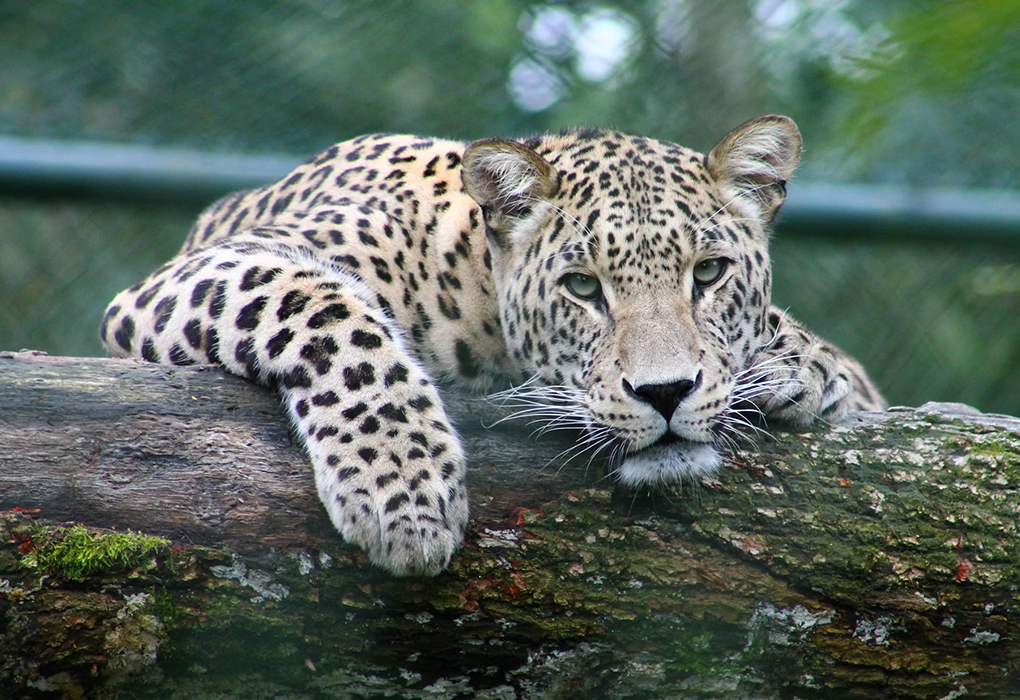
The leopard is one of the animals that can make a night safari in Uganda unforgettable. Leopards are famously secretive, solitary and difficult to see during ordinary game drives. Their spotted coats blend beautifully into grass, woodland and shadow, while their largely nocturnal behaviour means darkness can provide better opportunities to encounter one moving along a track or resting near vegetation.
Uganda Wildlife Authority describes the leopard as one of the country’s most elusive large carnivores and notes that it is nocturnal. Leopards occur in several Ugandan protected areas, including Murchison Falls, Queen Elizabeth, Kidepo Valley and Lake Mburo. Seeing one after dark is never guaranteed, but when the spotlight catches its reflective eyes, the moment can be extraordinary.
Animal 02
2. Spotted Hyena
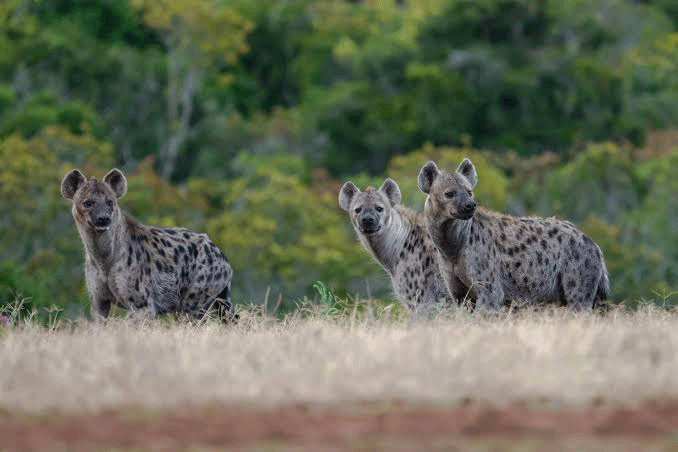
The spotted hyena is almost perfectly suited to after-dark wildlife watching. Its reputation for eerie calls, powerful jaws and social intelligence makes it one of the most fascinating predators to encounter at night. Uganda’s recent large-carnivore conservation work has documented spotted hyenas in several protected areas, including Queen Elizabeth, Murchison Falls, Kidepo Valley and Lake Mburo.
At night, you may hear a hyena before the spotlight reveals it. That is one reason an experienced guide is so valuable. The guide understands which calls are worth investigating and where hyenas are likely to travel.
Animal 03
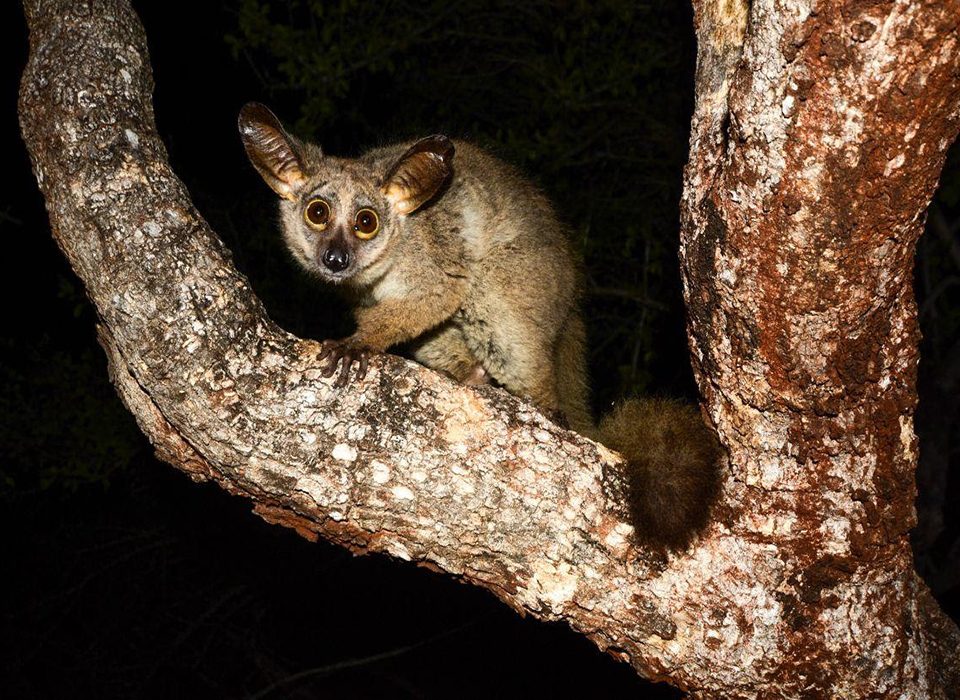
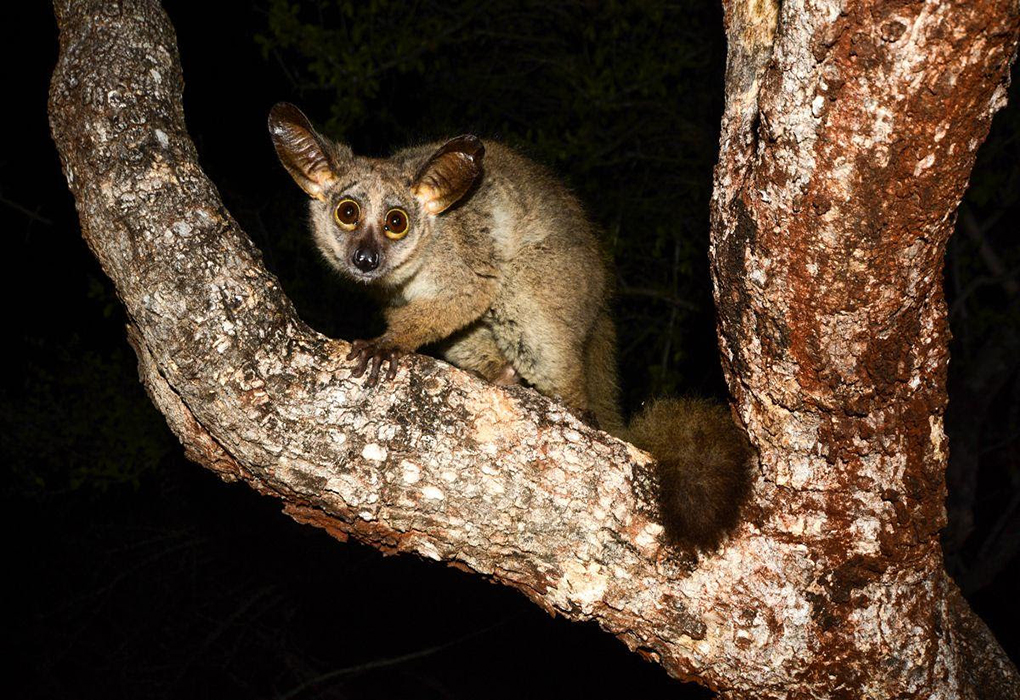
3. Bushbaby
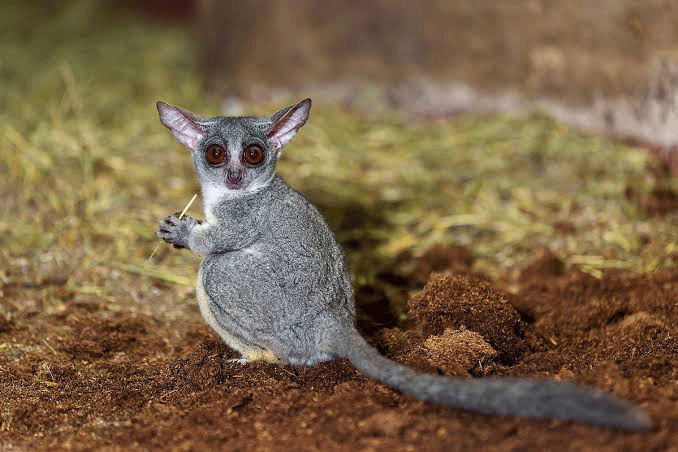
If your dream is to discover a truly nocturnal African animal, the bushbaby is one of the most charming possibilities. These small primates become active after dark and can move rapidly through trees and branches. Their enormous eyes are adapted to low-light conditions, making them especially fascinating when illuminated briefly by a guide’s spotlight.
Kibale National Park is particularly notable for its primate diversity, and UWA’s park information specifically identifies nocturnal bushbabies among its wildlife. Because they are small and quick, patience is essential. A good guide may locate one by its call before it becomes visible.
Animal 04
4. Common Genet
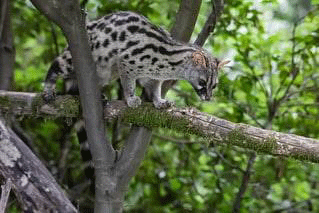
Genets are among the small carnivores that make night drives so rewarding. Their slender bodies, spotted or patterned coats and long tails allow them to move quietly through woodland and grassland edges. They are generally elusive, which means seeing one can feel like discovering a secret character in the bush.
Uganda’s wildlife directory includes the common genet among the country’s recorded mammals. Similar small carnivores may also be encountered in different protected areas, so your guide’s knowledge of local habitats becomes particularly important after dark.
Animal 05
5. White-Tailed Mongoose
The white-tailed mongoose is a wonderful example of why a night safari is not just about lions and leopards. This nocturnal mongoose may move through grassland and woodland searching for food after dark. Toro-Semliki Wildlife Reserve is specifically highlighted by UWA as a place where visitors may encounter white-tailed mongooses at night.
It is the sort of sighting that rewards people who slow down and pay attention to smaller movements. A large animal may dominate a daytime game drive, but after dark a small mongoose can become the star of the evening.
Animal 06
6. African Palm Civet
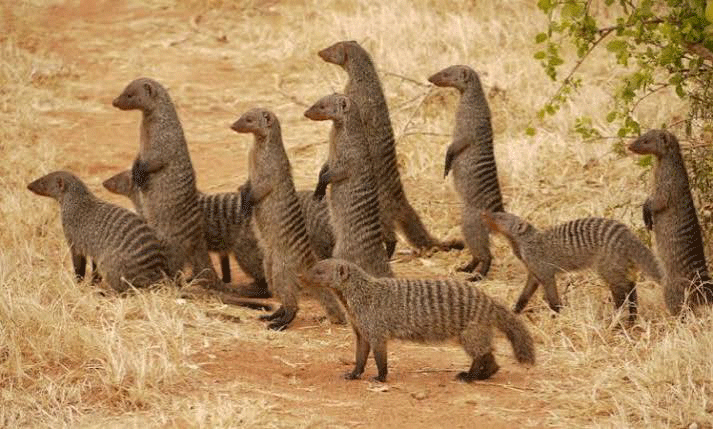
The African palm civet is another secretive mammal associated with nighttime activity. Civets are generally difficult to spot because they are quiet, often solitary and comfortable moving through vegetation. Uganda’s wildlife directory records the African palm civet, making it another fascinating possibility for travellers interested in small nocturnal mammals.
A civet sighting may last only a few seconds, so keeping conversations quiet and allowing the guide to control the spotlight can make a real difference.
Animal 07
7. African Crested Porcupine
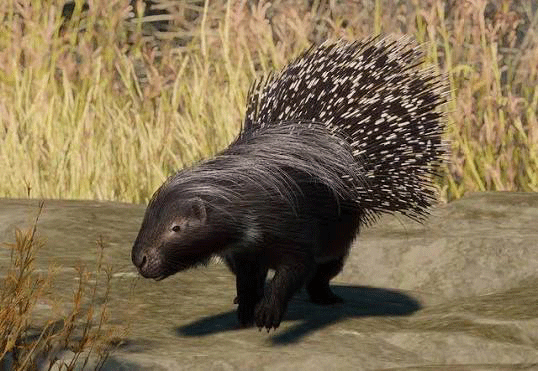
The African crested porcupine is one of the most memorable nocturnal mammals you can encounter. Its impressive quills create an unmistakable silhouette when the spotlight catches it. Porcupines often become active after sunset, when they leave shelter to forage.
UWA’s 2026 State of Wildlife Resources report records African crested porcupines among mammals identified in Uganda’s wildlife monitoring work. They are an excellent reminder that the smaller and stranger-looking creatures of the African night deserve as much attention as the famous Big Five.
Animal 08
8. Aardvark
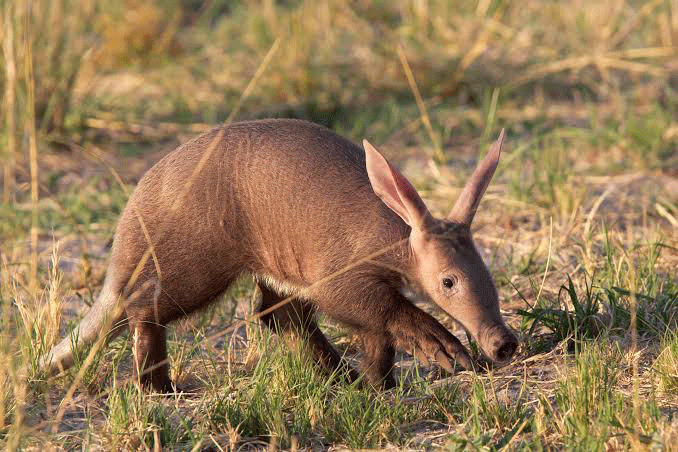
The aardvark is one of the more elusive possibilities on an African night drive. Its long ears, powerful claws and unusual snout make it instantly recognisable when seen. Aardvarks are predominantly nocturnal and spend much of their active period searching for ants and termites.
Recent UWA wildlife monitoring data includes aardvarks among mammals recorded in Uganda. Seeing one in the wild is much less predictable than encountering common antelope, which is precisely why a sighting can become a highlight of an after-dark safari.
Animal 09
9. Lion

Lions do not need darkness to be active, but night can be an excellent period for observing their behaviour. Uganda’s lions are found in key protected areas including Queen Elizabeth, Murchison Falls and Kidepo Valley. A lion resting beside a track may appear completely different at night, especially when the spotlight catches its eyes.
The sound of lions is also part of the experience. A distant roar travelling across a dark savannah can make the landscape feel much larger than it looked during the day. Your guide will determine whether a sound is worth following and will maintain an appropriate distance from the animals.
Animal 10
10. African Elephant

Elephants are not nocturnal in the strict sense, but they can remain active after sunset. In a night safari, their size can be surprisingly difficult to judge because darkness hides much of the surrounding landscape. You may first notice movement, the sound of branches breaking or the unmistakable rumble of communication before the spotlight reveals the animal.
UWA identifies elephants across several important Ugandan landscapes, including Murchison-Semliki, Kidepo and the Greater Virunga region. Observing elephants at night is a reminder that wildlife does not follow our human timetable.
Animal 11
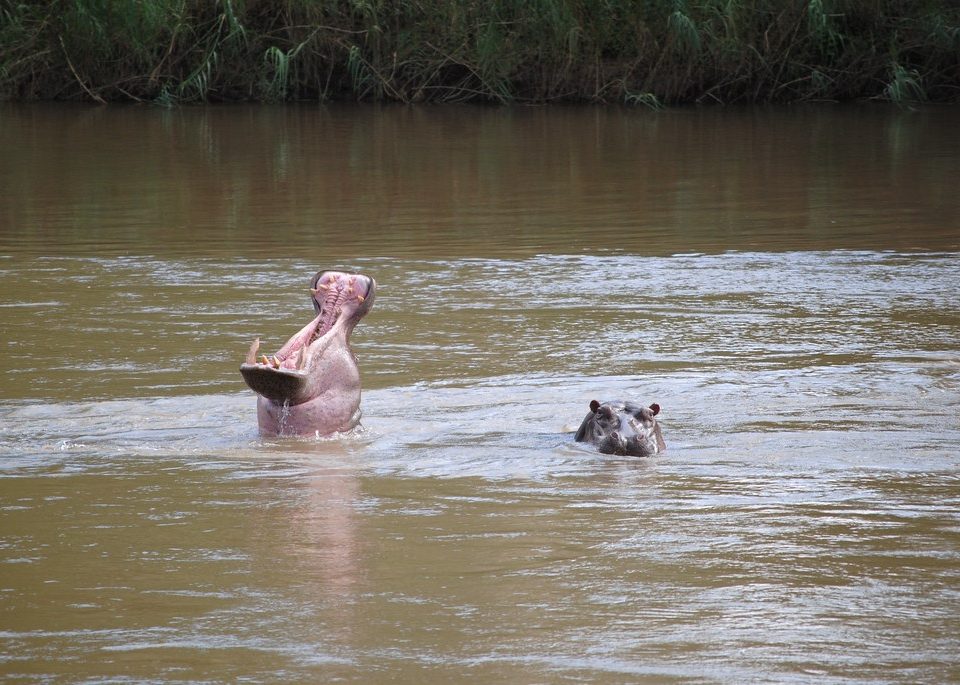
11. Hippopotamus
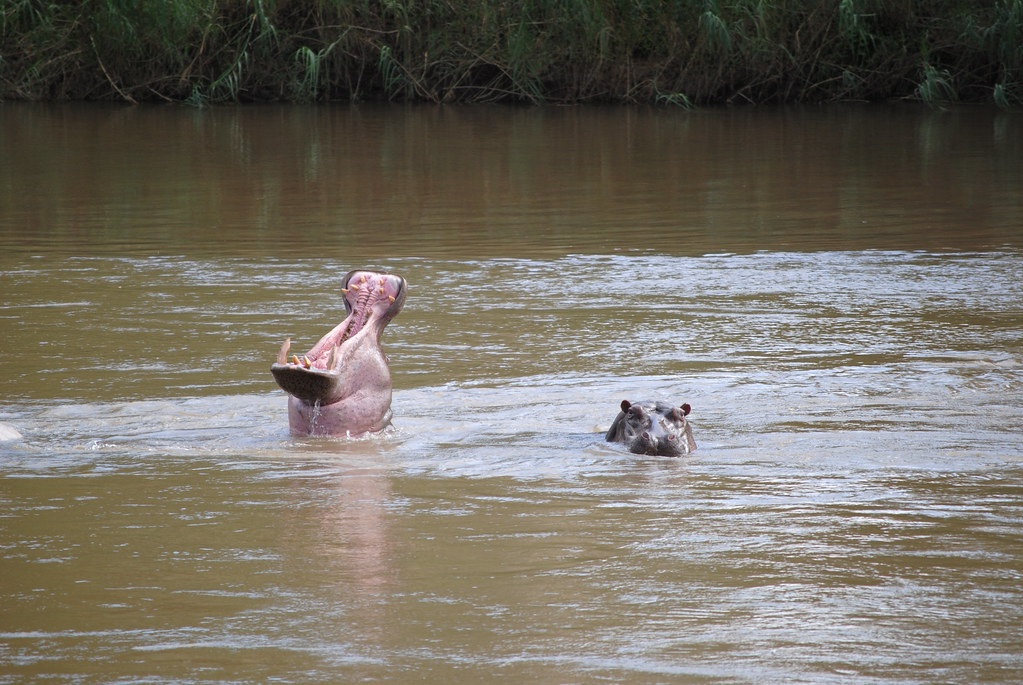
Hippos spend much of the day in or around water and commonly become more active on land after sunset, when they emerge to graze. This makes them particularly interesting around lakes, rivers and wetlands. Uganda has important hippo populations in places such as Queen Elizabeth, Murchison Falls and Lake Mburo.
At night, you may see hippos grazing on short grass near water or hear their deep calls before seeing them. Because hippos are powerful and potentially dangerous animals, visitors should never attempt to approach them on foot without an approved and professionally guided activity.
Animal 12
12. African Buffalo
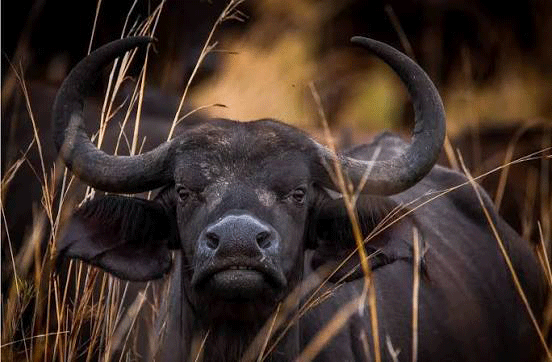
African buffalo are generally associated with daytime game drives, but they may still be encountered after dark. Large herds can remain active in open areas, while smaller groups may move through woodland. Their dark bodies can almost disappear into the night until the spotlight reveals them.
Uganda has important buffalo populations in Murchison Falls, Queen Elizabeth, Kidepo and other protected areas. A night sighting can be particularly atmospheric because the herd may be surrounded by darkness with only individual animals visible at first.
Animal 13
13. Bushbuck
Bushbucks are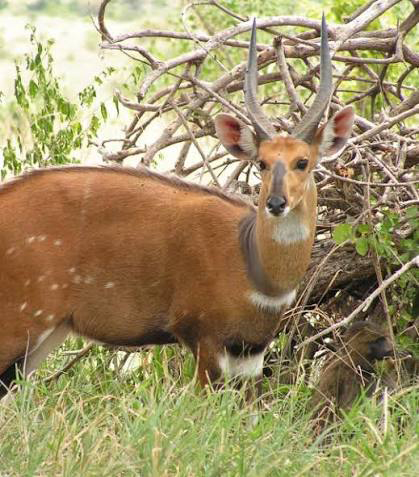 shy forest and woodland antelope and can be excellent night-drive subjects. They are often associated with thicker vegetation, forest edges and areas where cover allows them to remain concealed. When the spotlight catches one, its markings may appear dramatically bright against the darkness.
Uganda’s protected areas contain bushbucks in a variety of habitats. Because these antelope are more secretive than some open-country species, a patient night drive can provide a very different encounter from the large herds visible during daylight.
Animal 14
14. Waterbuck
Waterbuck are strongly associated with areas close to water and can sometimes be encountered after sunset. Their large bodies and distinctive markings make them relatively recognisable under a spotlight. Uganda’s wildlife monitoring has recorded substantial waterbuck populations, and the species occurs in a number of savannah and wetland landscapes.
A waterbuck may simply stand quietly near vegetation while the safari vehicle passes, but watching the animal move through the beam of the spotlight can be surprisingly beautiful.
Animal 15
15. Uganda Kob
The Uganda kob is one of Uganda’s characteristic antelopes and an important part of the country’s savannah ecosystems. It is primarily associated with open grassland and can be encountered during normal daytime game drives, but individual animals may also be active after dark.
Recent UWA wildlife monitoring shows Uganda kob as one of Uganda’s important and widely represented herbivore species. On a night drive, their eyes may appear first before the full shape of the animal becomes visible.
Animal 16
16. Warthog
Warthogs are another familiar African animal that can behave differently as darkness falls. Their habit of using open grassland and woodland edges makes them relatively easy to identify when illuminated. You may see a warthog moving quickly along the track or investigating vegetation.
UWA’s wildlife monitoring records warthogs among Uganda’s mammals. They are not the rarest animal on this list, but their unusual appearance and entertaining behaviour make them a favourite among safari visitors.
Animal 17
17. Side-Striped Jackal
Jackals are adaptable carnivores and can be particularly interesting after dark. The side-striped jackal is recorded in Uganda’s wildlife resources, including protected landscapes in northern and western Uganda. It may move through grassland or woodland searching for food while larger predators are also active.
Jackal sightings are often quick, making them another example of why a night drive requires concentration. If everyone is talking loudly or looking in different directions, a small carnivore can disappear before the vehicle has stopped.
Animal 18
18. Common Duiker
Duikers are small antelope adapted to moving through vegetation and forest edges. Their compact bodies and cautious behaviour make them easy to miss during a fast-moving daytime drive. At night, however, a careful spotlight sweep can sometimes reveal one standing beside the road.
Uganda’s wildlife monitoring and protected-area records include several duiker species. Their presence highlights the diversity of smaller herbivores that share Uganda’s ecosystems with elephants, buffaloes and big cats.
Animal 19
19. Giant Pouched Rat
Small nocturnal rodents rarely receive the attention given to lions or leopards, yet they are part of what makes the African night ecosystem so active. UWA’s recent wildlife monitoring at Ziwa Rhino Sanctuary recorded giant pouched rats among the mammals detected through camera-trap work.
You may not always identify a small rodent from a moving safari vehicle, but the experience of seeing tiny mammals emerge from cover helps visitors appreciate just how much life is moving through the darkness.
Animal 20
20. African Hare or Other Nocturnal Small Mammals
Hares and other small mammals can provide some of the quickest but most charming encounters of an after-dark safari. UWA’s recent wildlife monitoring has recorded rabbit or hare species among Uganda’s mammals. They may appear briefly along tracks before disappearing into grass or vegetation.
These encounters are particularly useful for children and first-time safari travellers because they demonstrate that a night safari is not simply a search for predators. It is an opportunity to experience an entire ecosystem when many species are active in ways that are less obvious during daylight.
Why Does Wildlife Behave Differently at Night?
Darkness changes the balance between predators and prey. During the hottest part of the day, many animals reduce their movement to conserve energy and avoid overheating. As temperatures fall, herbivores may begin feeding again, predators may become more active and nocturnal species emerge from shelter.
For humans, darkness reduces visibility. For wildlife, however, the night is not simply an empty black landscape. Many animals have highly developed senses of smell, hearing and low-light vision. Some use moonlight, while others depend heavily on sound and scent.
This is why a night safari in Uganda can feel so different from an ordinary game drive. The guide is not merely searching for animals with a pair of binoculars. They are interpreting clues from an ecosystem that continues functioning long after tourists have returned to their lodges.
When Is the Best Time for a Night Safari in Uganda?
There is no single perfect night for wildlife viewing because conditions vary. Weather, moonlight, vegetation, temperature, recent rainfall and animal behaviour can all influence what you encounter. A knowledgeable guide will consider these factors when deciding where and how long to search.
Clear nights can make the landscape easier to navigate visually, while cloudier darkness can create a different atmosphere. Moonlight may make some animals easier to observe but can also change how nocturnal species behave. Rain can reduce visibility and affect road conditions, yet it may also change animal movements.
For travellers planning a Uganda safari, the most useful strategy is not to build the entire trip around a guaranteed nocturnal sighting. Instead, add the night experience to a broader itinerary that includes daytime game drives, boat cruises, primate experiences, nature walks and cultural encounters.
What Should You Bring on a Night Safari?
| Item | Why It Helps |
|---|---|
| Light jacket or fleece | Temperatures can feel cooler once the sun goes down. |
| Neutral-coloured clothing | Comfortable, practical colours are preferable to bright clothing. |
| Binoculars | Useful when animals remain farther from the vehicle. |
| Camera with good low-light performance | Night photography is challenging, but suitable equipment can improve results. |
| Insect repellent | Useful in areas where mosquitoes and other insects are active. |
| Closed shoes | Useful around lodges and during any approved walking activity. |
| Patience | Probably the most important item. Nocturnal sightings can happen quickly and unexpectedly. |
Night Safari Photography: Why It Is Different
Night wildlife photography is considerably more difficult than daytime safari photography. There is less available light, animals move unpredictably and the use of flash may be inappropriate or restricted. Your guide should control the spotlight and advise you on responsible photography practices.
Rather than trying to photograph everything, consider enjoying the experience first. A spectacular photograph is wonderful, but seeing a wild leopard walk silently through the darkness is an experience that does not depend on your camera.
If you use a modern camera, a fast lens and a high ISO setting can help. A phone may capture reflective eyes but may struggle to produce a clear image of a moving animal. Never ask the driver to position the vehicle dangerously just to obtain a photograph.
Night Safari Safety and Responsible Wildlife Viewing
A night safari is thrilling because you are entering a wild environment after dark. That excitement should always be balanced with respect for wildlife and the instructions of your guide.
Important: Stay inside the safari vehicle unless your guide has specifically told you that you are participating in an approved walking activity. Never approach wildlife, shine your own bright lights directly into an animal’s eyes, call animals toward the vehicle, feed wildlife or ask the driver to leave established routes for a closer photograph.
Noise is also important. Loud conversations can make animals retreat and can reduce the quality of the experience for everyone in the vehicle. Keep voices low, listen to the guide and allow periods of silence. Often, the best sighting begins with something you hear rather than something you see.
Responsible tourism also means accepting that some nights will produce fewer sightings than others. Wildlife is not a performance. If a leopard does not appear, the safari has not failed. You have still experienced an ecosystem functioning naturally after dark.
Safari Regions Where You Can Ask About Night Wildlife Experiences
Uganda’s geography makes it possible to combine different wildlife experiences in one journey. The western and northern safari circuit contains several major wildlife landscapes, while Lake Mburo provides a convenient stop between Kampala and southwestern Uganda.
For an itinerary that includes a night safari in Uganda, your tour operator can check which destinations and accommodation areas currently support approved after-dark activities. This is particularly important because park regulations and operating arrangements can change.
Day Safari vs Night Safari: What Is the Difference?
| Day Safari | Night Safari |
|---|---|
| Excellent visibility | Limited visibility creates a more mysterious atmosphere |
| Large herds are often easier to scan | Smaller nocturnal animals become more important |
| Strong opportunities for landscape photography | Strong opportunities for atmospheric wildlife experiences |
| Bird activity is often high | Night calls and nocturnal sounds become more prominent |
| Often covers more distance | Usually involves slower, more careful searching |
| Animals visible across open plains | Spotlight reveals animals hidden in darkness and vegetation |
The two experiences complement each other. A traveller who only takes daytime game drives may see elephants, buffalo, antelope, giraffes and other wildlife beautifully. A traveller who adds a night experience gets another window into the same ecosystem. Neither needs to replace the other.
How to Add a Night Safari to Your Uganda Safari
The easiest way to include a night safari in Uganda is to build it into a safari itinerary rather than attempting to arrange it independently after arriving. Tell your tour operator that you want an after-dark wildlife experience and ask which destination on your route is currently able to provide it under the applicable regulations.
A classic itinerary might combine Murchison Falls with Kibale, Queen Elizabeth and Bwindi. Another route could include Queen Elizabeth and Lake Mburo before returning toward Entebbe. If nocturnal wildlife is your priority, your operator can consider accommodation location, driving times, park access and the availability of approved night activities.
Remember that a night safari should not make your entire itinerary exhausting. If you have a very early morning game drive the following day, staying out extremely late may reduce your enjoyment. The best safari is one that gives you enough time to rest, enjoy your lodge and appreciate each destination rather than rushing between activities.
The Real Magic of a Night Safari in Uganda
There is something deeply memorable about being in the African wilderness when the sun has disappeared. During the day, you can see the shape of the landscape. At night, you experience it differently. The darkness seems to enlarge the savannah. Sounds travel farther. The air feels cooler. A movement in the grass can suddenly become the most important thing in the world.
Perhaps the spotlight finds a bushbaby staring down from a branch. Perhaps a porcupine crosses the road. Perhaps you hear a hyena calling somewhere beyond the trees. Perhaps you spend twenty minutes searching for a leopard and find nothing, only to encounter it unexpectedly on the return journey.
That unpredictability is exactly what makes a night safari in Uganda so special. It is not a wildlife checklist. It is an invitation to experience the African bush on its own schedule.
Night Safari in Uganda: Frequently Asked Questions
Is a night safari in Uganda safe?
Night wildlife viewing should be conducted through an approved activity with an experienced guide and according to the regulations of the relevant protected area. Visitors should follow all guide instructions, remain in the vehicle when required and never approach wildlife independently.
Can I see lions on a night safari?
Yes, lions may be active at night, and Uganda has lion populations in important protected areas including Queen Elizabeth, Murchison Falls and Kidepo Valley. However, a sighting is never guaranteed.
Can I see leopards at night?
Leopards are nocturnal and extremely elusive, making them one of the most exciting potential sightings during an after-dark drive. Uganda Wildlife Authority lists leopards in several protected areas.
Are bushbabies found in Uganda?
Yes. Uganda has several nocturnal primates, and UWA’s information on Kibale National Park specifically mentions bushbabies among the park’s wildlife.
Can I take photographs during a night safari?
Photography is possible, but low light makes it challenging. Follow your guide’s instructions regarding spotlight use and avoid using equipment or techniques that could disturb wildlife.
Do all Uganda national parks offer night game drives?
No. Night activities depend on the individual protected area, current regulations, approved operators and accommodation arrangements. Always confirm availability before building your itinerary around a night drive.
What is the difference between a night game drive and a night nature walk?
A night game drive normally takes place from a vehicle, allowing visitors to cover more ground while searching for wildlife with a guide. A night nature walk is a different experience and involves travelling on foot under specific rules and guidance.
What is the best animal to see on a night safari?
There is no single best animal for everyone. Some travellers hope for a leopard or hyena, while others become fascinated by bushbabies, genets, porcupines, mongooses or other small nocturnal animals. The most rewarding approach is to appreciate the full ecosystem rather than focusing on one species.
Final Thoughts: Experience Uganda After Dark
A night safari in Uganda opens a door into a side of the country’s wilderness that daytime travellers can easily miss. It changes the rhythm of a safari from scanning distant plains to listening carefully, moving slowly and searching the darkness for signs of life.
You could encounter the silent presence of a leopard, hear a hyena calling across the savannah, watch a hippo emerge from the water, discover a porcupine crossing the road or catch the enormous eyes of a bushbaby high in a tree. You may even spend an entire drive seeing only a handful of animals and still return to your lodge feeling that you have experienced something completely different.
The beauty of the experience is its uncertainty. Wildlife is wild, and that is exactly how it should remain. With a responsible operator, an experienced guide and realistic expectations, an after-dark safari can become one of the most atmospheric experiences of your Uganda adventure.
If you are planning a Uganda safari and would like to include a night safari in Uganda, ask your safari planner to check the current availability, regulations and best location for your travel dates. The right combination of daytime wildlife viewing and carefully planned after-dark exploration can make your Uganda safari considerably richer.
Ready to Explore Uganda After Dark?
Let PrideMark Safaris help you build a Uganda safari that combines wildlife, primates, landscapes, culture and unforgettable after-dark experiences where available.