What’s the Oldest Mountain Gorilla in Uganda? The Remarkable Story of Ruhondeza

What Is the Lifespan of a Gorilla? 7 Amazing Facts About Their Lives
October 15, 2026
What Happens If You Get Sick Before Gorilla Trekking?
October 18, 2026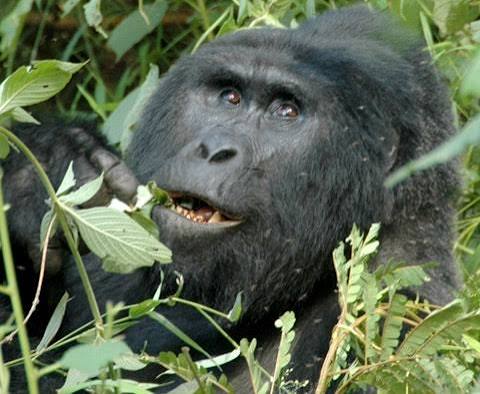
Uganda is home to some of the world’s most extraordinary wildlife, including the endangered mountain gorillas that inhabit the mist-covered forests of Bwindi Impenetrable National Park and Mgahinga Gorilla National Park. Among these magnificent primates, certain individuals have become legendary because of their remarkable age, leadership, and contribution to mountain gorilla conservation.
But what’s the oldest mountain gorilla in Uganda?
One of Uganda’s oldest and most famous recorded mountain gorillas was Ruhondeza, a legendary silverback who lived in Bwindi Impenetrable National Park. He was believed to be more than 50 years old when he died in June 2012, making him one of the country’s most remarkable long-lived mountain gorillas.
Although Ruhondeza is frequently described as Uganda’s oldest mountain gorilla, his exact birth date was never documented, and there is no publicly verified, up-to-date ranking identifying the oldest living mountain gorilla in Uganda.
His story remains an important chapter in Uganda’s wildlife conservation history.
Who Was Ruhondeza, Uganda’s Legendary Old Mountain Gorilla?
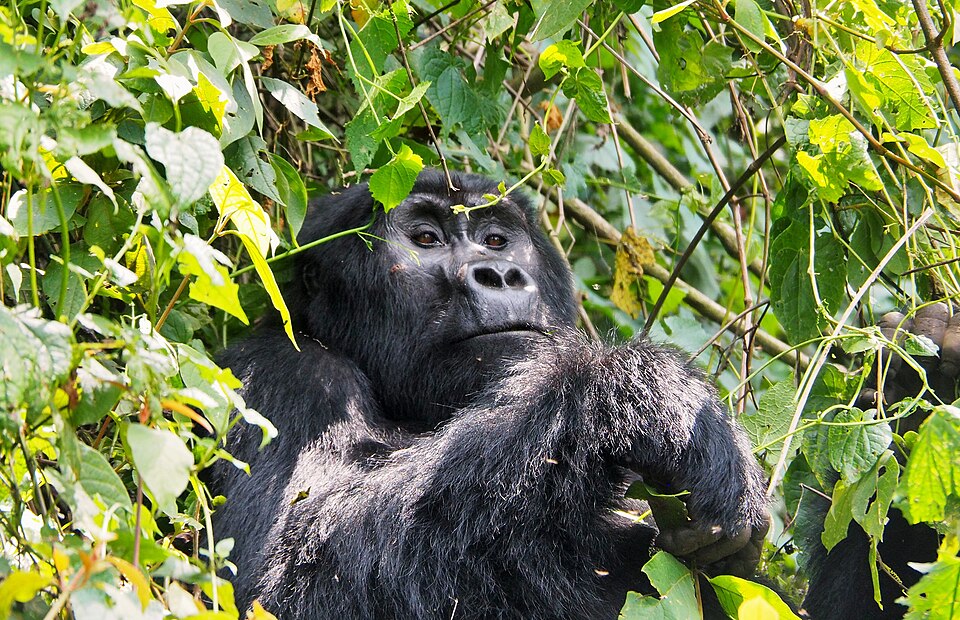
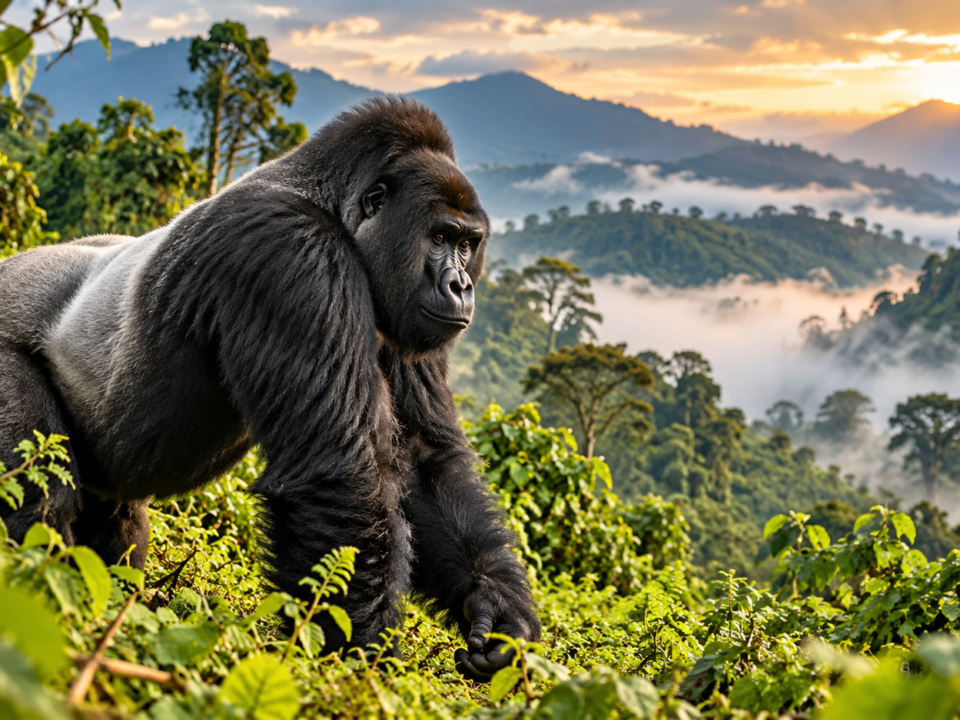
A mountain gorilla surrounded by lush forest vegetation, illustrating the natural habitat of Uganda’s endangered mountain gorillas.
Ruhondeza was a dominant silverback belonging to the famous Mubare gorilla family in the Buhoma sector of Bwindi Impenetrable National Park.
The name Ruhondeza is commonly translated as “the one who likes to sleep,” reflecting his calm and relaxed personality.
Unlike younger silverbacks that frequently compete for leadership, Ruhondeza became well known for his maturity, experience, and long-standing dominance over his family.
He was the leader of the Mubare gorilla group, which became the first mountain gorilla family habituated for tourism in Uganda.
When gorilla trekking began in Bwindi in 1993, Ruhondeza and his family played an important role in introducing visitors to the extraordinary experience of observing mountain gorillas in their natural habitat.
Today, visitors interested in learning about the history of Uganda’s mountain gorillas can explore PrideMark Safaris and discover tailor-made gorilla trekking adventures in southwestern Uganda.
How Old Was Ruhondeza When He Died?
Ruhondeza was estimated to be over 50 years old when he died on June 27, 2012.
Some accounts place his age at approximately 50–55 years, although these figures remain estimates because he was born in the wild before researchers began monitoring his life.
This longevity was especially remarkable because wild gorillas commonly live around 35–40 years, although some individuals survive considerably longer.
Reaching such an advanced age in the wild is exceptional because gorillas must overcome numerous challenges, including disease, injuries, competition, and environmental threats.
Ruhondeza’s long life made him an important symbol of resilience and mountain gorilla conservation in Uganda.
The History of the Mubare Gorilla Family in Bwindi
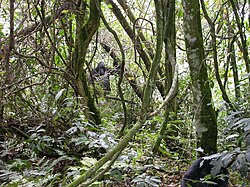
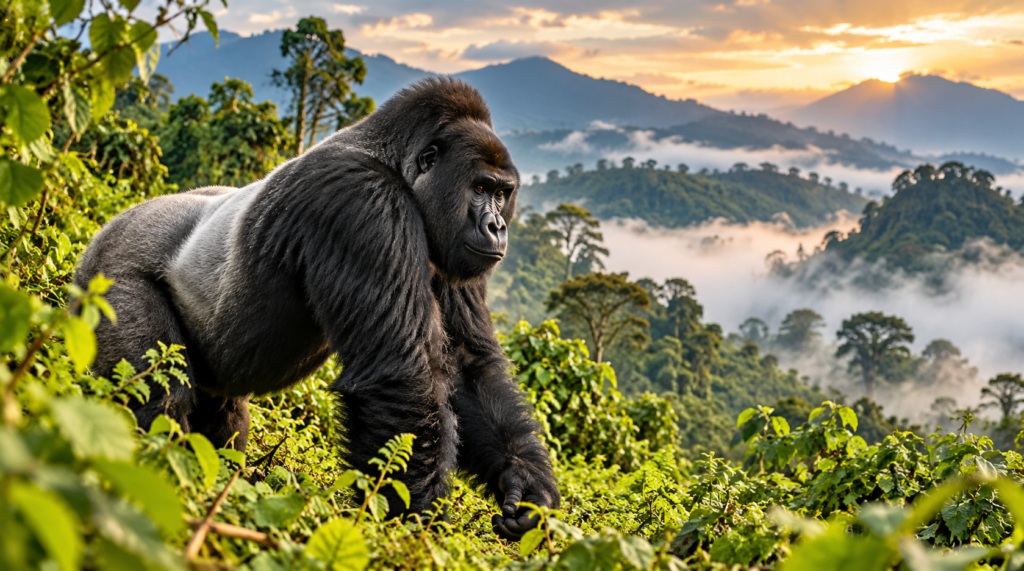
Dense tropical forest vegetation, illustrating the natural environment where Uganda’s mountain gorillas live.
The Mubare gorilla family holds a special place in Uganda’s tourism history.
Located in the Buhoma sector of Bwindi Impenetrable National Park, Mubare became the first gorilla family opened to visitors for trekking in 1993.
Its name comes from the Mubare Hills, where researchers and trackers first encountered the group.
Ruhondeza led the family during the early years of Uganda’s gorilla tourism industry, when conservationists were working to protect mountain gorillas while creating sustainable tourism opportunities.
As the years passed, the family experienced changes in membership, competition from other silverbacks, and the natural challenges associated with gorilla social structures.
Despite these difficulties, Ruhondeza remained one of the most recognizable silverbacks in Bwindi’s history.
His story demonstrates why protecting individual gorillas and their family groups is essential for the long-term survival of this endangered species.
What Happened to Ruhondeza Before His Death?
During his later years, Ruhondeza faced increasing competition from younger male gorillas.
As silverbacks grow older, they may become less capable of defending their families against stronger rivals.
Ruhondeza eventually lost his dominant position following encounters with other gorillas.
After separating from the Mubare family, he spent his final period away from the group while wildlife authorities continued monitoring him.
He died in June 2012, leaving behind a remarkable conservation legacy.
Today, Ruhondeza is remembered as one of the most influential silverbacks in the history of mountain gorilla tourism in Uganda.
How Long Do Mountain Gorillas Live in Uganda?
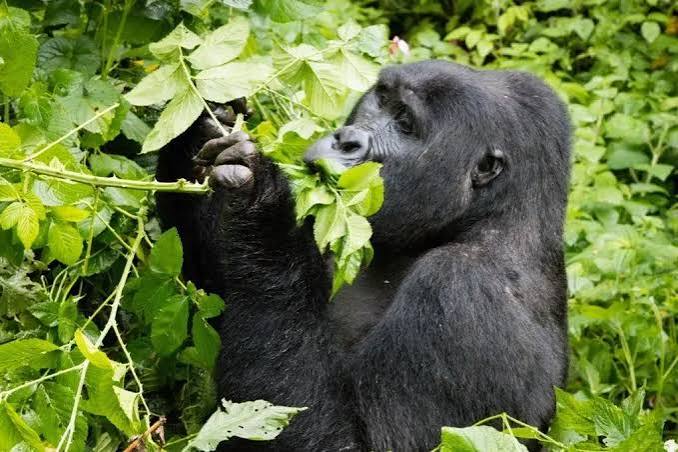
A mountain gorilla feeding on fresh green vegetation, demonstrating the natural feeding behavior of Uganda’s endangered mountain gorillas.
Mountain gorillas generally live for approximately 35–40 years in the wild, although their lifespan varies considerably between individuals.
Several factors influence how long a mountain gorilla survives.
1. Habitat Protection
Mountain gorillas depend on healthy forests for food, shelter, and protection.
Uganda’s Bwindi Impenetrable National Park and Mgahinga Gorilla National Park provide essential habitats where gorillas can live and reproduce.
2. Disease Prevention
Because mountain gorillas are genetically similar to humans, they are vulnerable to certain human respiratory illnesses and other infections.
Responsible gorilla tourism practices help reduce the risk of disease transmission.
3. Availability of Food
Mountain gorillas primarily feed on leaves, shoots, stems, roots, and other vegetation.
Healthy forest ecosystems provide the resources necessary for their survival.
4. Protection Against Poaching
Conservation patrols, veterinary interventions, and community engagement have helped reduce threats to Uganda’s mountain gorillas.
5. Social Stability
Gorillas live in family groups usually led by dominant silverbacks.
Stable family relationships can support protection, reproduction, and the survival of younger members.
Understanding these factors helps explain why some gorillas, such as Ruhondeza, survive far beyond the typical lifespan.
Where Can You See Mountain Gorillas in Uganda?
Uganda offers mountain gorilla trekking in two protected national parks.
Bwindi Impenetrable National Park
Bwindi Impenetrable National Park is Uganda’s most famous mountain gorilla trekking destination.
Located in southwestern Uganda, this UNESCO World Heritage Site is known for its dense tropical forest, exceptional biodiversity, and habituated mountain gorilla families.
The park has four main gorilla trekking sectors:
- Buhoma
- Ruhija
- Rushaga
- Nkuringo
Buhoma is particularly important because it is where the Mubare family, formerly led by Ruhondeza, first welcomed gorilla trekking visitors.
Travelers interested in visiting Bwindi can explore safari options through PrideMark Safaris’ Uganda safari website.
Mgahinga Gorilla National Park
Mgahinga Gorilla National Park is located in southwestern Uganda near the borders with Rwanda and the Democratic Republic of the Congo.
The park forms part of the wider Virunga Conservation Area and provides another opportunity to encounter mountain gorillas in their natural environment.
Its dramatic volcanic scenery, bamboo forests, and mountain landscapes make it an exceptional destination for primate enthusiasts.
Can Tourists See the Oldest Mountain Gorilla in Uganda?
It is not possible to visit Ruhondeza today because he died in 2012.
However, travelers can still visit Bwindi Impenetrable National Park, where his famous Mubare gorilla family helped establish Uganda’s gorilla trekking tourism.
During a gorilla trekking experience, visitors accompany trained guides and wildlife rangers into the forest to locate a habituated gorilla family.
Once the gorillas are located, visitors normally spend up to one hour observing them, following the applicable park regulations.
This experience offers a rare opportunity to observe mountain gorillas feeding, resting, grooming, and interacting with their families.
Although sightings of any particular gorilla cannot be guaranteed, every encounter provides an unforgettable opportunity to appreciate these extraordinary animals.
Why Is Mountain Gorilla Conservation Important in Uganda?
Mountain gorillas are among Africa’s most treasured wildlife species.
Their survival depends on continued habitat protection, veterinary monitoring, responsible tourism, and cooperation between conservation organizations and local communities.
Uganda’s conservation progress demonstrates the importance of sustained protection.
According to the Uganda Wildlife Authority, Bwindi’s mountain gorilla population increased from approximately 300 individuals in 1992 to 459 in the 2018 census.
These achievements highlight how conservation efforts can help protect endangered wildlife.
The legacy of Ruhondeza reminds us that mountain gorilla conservation is about more than population numbers. It is also about protecting individual animals, family relationships, and the ecosystems that support them.
Plan Your Uganda Gorilla Trekking Safari With PrideMark Safaris
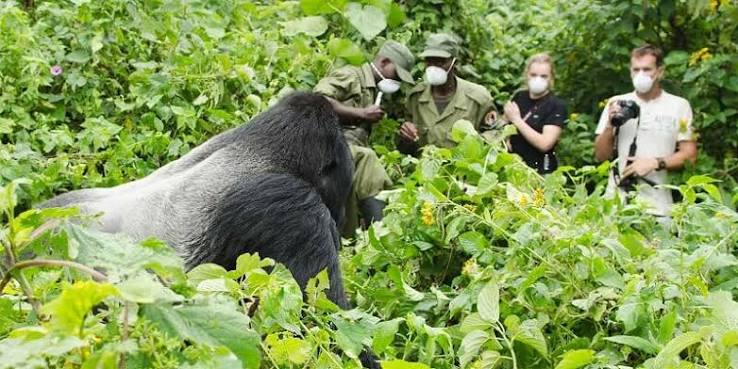
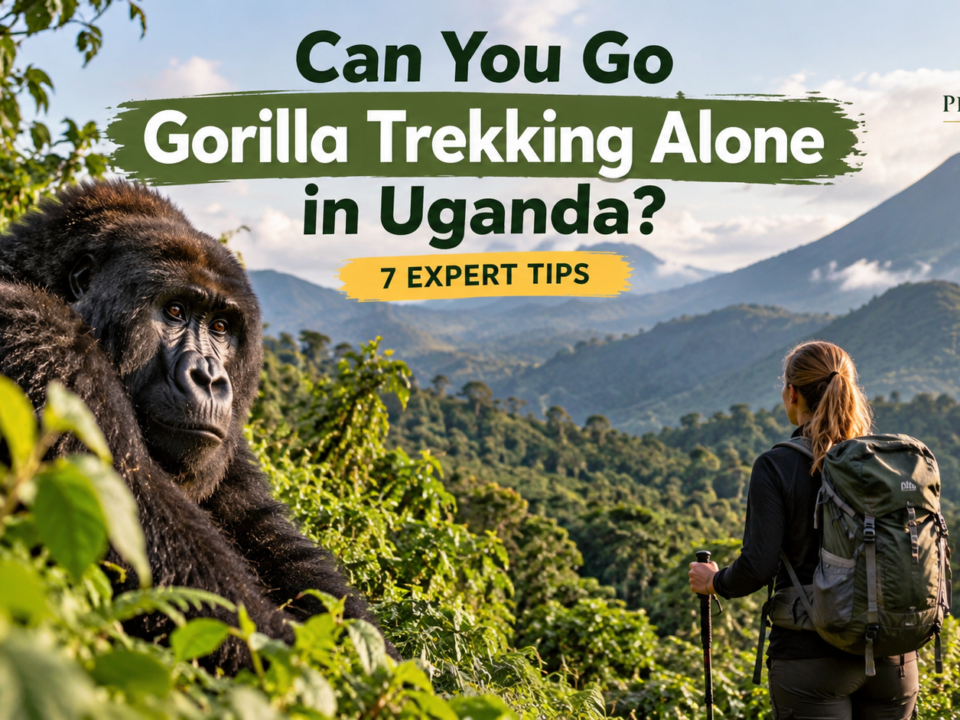
Visitors accompanied by wildlife rangers observe a magnificent silverback gorilla during a guided gorilla trekking experience.
Would you like to experience the remarkable mountain gorillas of Uganda in their natural habitat?
At PrideMark Safaris, we specialize in personalized Uganda and Rwanda safari experiences, including gorilla trekking, chimpanzee tracking, wildlife safaris, and cultural adventures.
Based in Kabale, southwestern Uganda, our team helps travelers plan unforgettable journeys to Bwindi Impenetrable National Park and other remarkable East African destinations.
Whether you prefer a budget-friendly adventure, a comfortable mid-range safari, or a luxury gorilla trekking experience, we can help you design an itinerary suited to your travel interests.
Discover our Uganda safari planning guide or visit the PrideMark Safaris homepage to explore our safari experiences.
Start planning your gorilla trekking adventure today.
Contact PrideMark Safaris:
Website: https://pridemarksafaris.com/
Email: info@pridemarksafaris.com
Phone/WhatsApp: +256 782 425 854
Frequently Asked Questions About the Oldest Mountain Gorilla in Uganda
What was the name of the oldest mountain gorilla in Uganda?
Ruhondeza is widely remembered as one of Uganda’s oldest recorded mountain gorillas. He was a legendary silverback in the Mubare family of Bwindi Impenetrable National Park. However, a definitive national longevity record has not been established.
How old was Ruhondeza when he died?
Ruhondeza was believed to be over 50 years old when he died in June 2012. His exact age remains uncertain because his birth was not recorded.
Is Ruhondeza still alive?
No. Ruhondeza died on June 27, 2012, after spending many years as one of Bwindi’s most famous mountain gorillas.
Which is the oldest gorilla family in Uganda?
The Mubare gorilla family is recognized as Uganda’s first habituated gorilla group opened for tourism. Visitors began trekking the family in 1993 in Bwindi’s Buhoma sector.
How long can a silverback gorilla live?
Wild silverback gorillas commonly live into their 30s or around 40 years, although some individuals survive longer. Their lifespan depends on health, habitat conditions, injuries, and other factors.
Where can I see mountain gorillas in Uganda?
Mountain gorillas can be seen in Bwindi Impenetrable National Park and Mgahinga Gorilla National Park. Both destinations offer regulated gorilla trekking experiences.
Can I visit the Mubare gorilla family?
The Mubare family has historically been one of Bwindi’s habituated trekking groups. However, group availability and trekking assignments are managed by the Uganda Wildlife Authority and can change.
Explore Uganda’s mountain gorillas with PrideMark Safaris and begin planning your unforgettable African safari.
What Can Ruhondeza’s Story Teach Us About Mountain Gorilla Families?
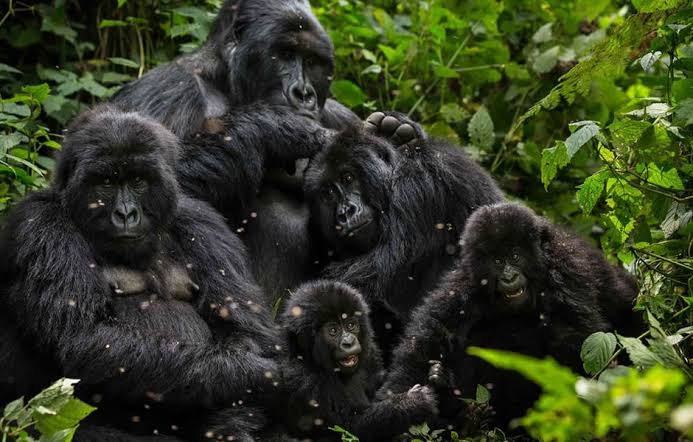
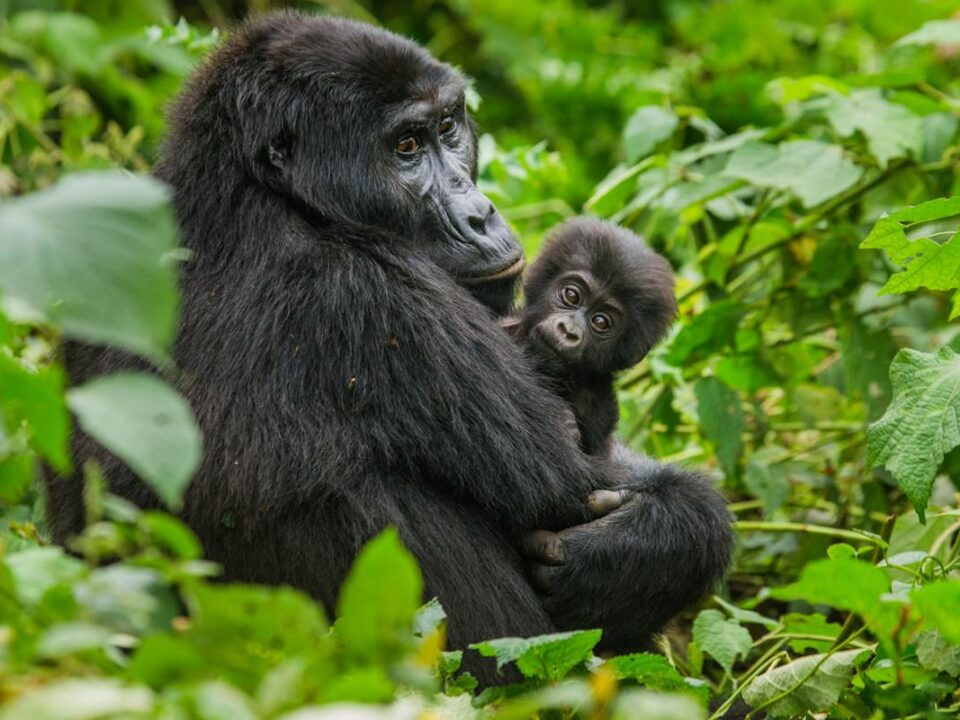
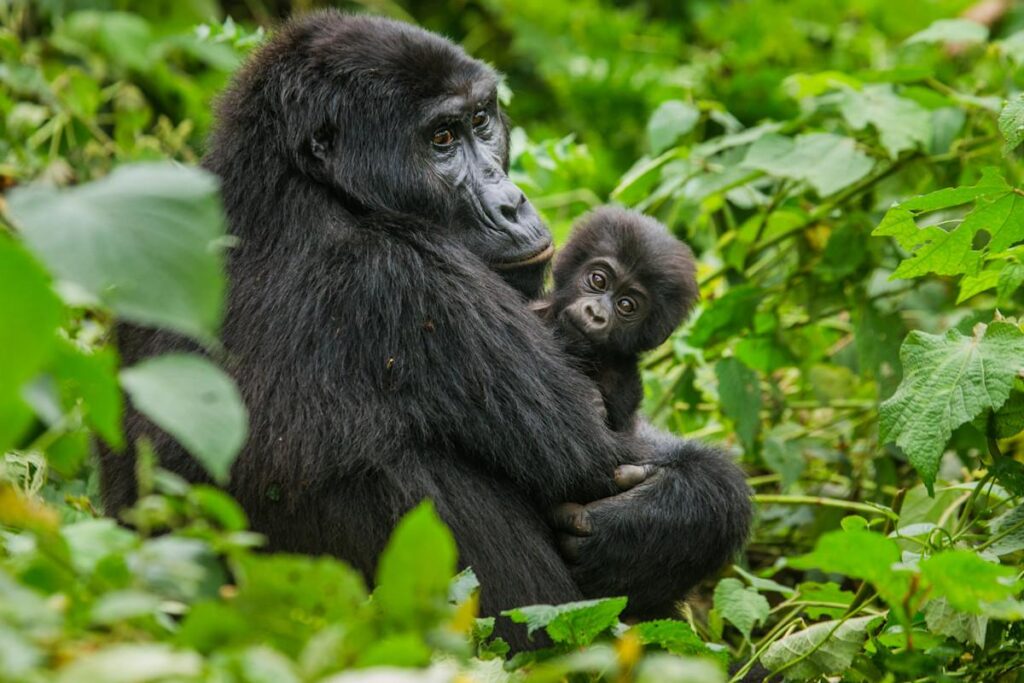
A mountain gorilla family resting together, illustrating the strong social bonds between adults and young gorillas.
Ruhondeza’s remarkable life reveals how important silverbacks are to mountain gorilla family structures. A dominant silverback is more than simply the strongest male in a group. He plays a central role in protecting family members, responding to threats, guiding group movements, and maintaining social relationships.
As a silverback ages, younger males may challenge his leadership. These changes are a natural part of mountain gorilla society and help explain why gorilla families sometimes split or reorganize.
For visitors planning a safari, understanding these relationships makes a gorilla encounter even more meaningful. Observing a silverback resting near his family, juveniles playing, and mothers caring for infants provides insight into the complex social lives of these remarkable primates.
Read more in our guide to gorilla tracking in Bwindi, which explains how experienced trackers locate gorilla families in Uganda’s dense forests.
How to Plan a Gorilla Trekking Safari to Bwindi
Although Ruhondeza is no longer alive, visitors can experience the forest where he spent much of his remarkable life.
Planning a successful gorilla trekking safari involves selecting the right trekking sector, arranging permits, choosing suitable accommodation, and preparing for the forest conditions.
For travelers interested in Buhoma, the historic home of the Mubare gorilla family, it is important to arrange accommodation and transport around the allocated trekking sector.
PrideMark Safaris helps travelers organize personalized gorilla trekking adventures based on their available time, budget, and preferred level of comfort.
Our detailed Bwindi Gorilla Trekking 2027 guide explains the four trekking sectors, travel options, gorilla permits, accommodation considerations, and safari planning essentials.
Travelers can also compare Bwindi and Mgahinga gorilla trekking to choose the most suitable destination.
Gorilla Trekking or Gorilla Habituation: Which Experience Should You Choose?
Travelers visiting Uganda have different ways to learn about mountain gorillas.
Standard gorilla trekking offers visitors an opportunity to observe a habituated mountain gorilla family for up to one hour once the gorillas are located.
The Gorilla Habituation Experience, available in designated areas of Bwindi, allows eligible visitors to spend a longer period with a gorilla group undergoing habituation, subject to park regulations.
Both experiences offer opportunities to understand mountain gorilla behavior, conservation, and the relationships between individual gorillas.
For a detailed comparison, explore our article on the difference between gorilla trekking and gorilla habituation in Uganda.
Experience the Legacy of Uganda’s Mountain Gorillas With PrideMark Safaris
The story of Ruhondeza reminds us that every mountain gorilla has a unique place in Uganda’s natural heritage.
From the historic Mubare family in Buhoma to other habituated gorilla groups across Bwindi, Uganda continues to offer extraordinary opportunities to observe these endangered primates in the wild.
At PrideMark Safaris, we help visitors transform their interest in mountain gorillas into memorable, responsibly planned wildlife adventures.
Whether you are interested in a short gorilla trekking trip or a longer safari combining primates, national parks, and cultural experiences, our team can help you plan the journey.
Explore Bwindi Impenetrable National Park and contact PrideMark Safaris to begin planning your Uganda gorilla safari.
Why Was Ruhondeza So Important to Uganda’s Gorilla Tourism?
Ruhondeza was more than an exceptionally old mountain gorilla. He was part of the foundation of Uganda’s modern gorilla trekking tourism.
As the dominant silverback of the Mubare gorilla family, Ruhondeza helped make it possible for early visitors to experience mountain gorillas in their natural habitat in Bwindi Impenetrable National Park.
The Mubare family was the first gorilla group habituated for tourism in Uganda, with organized gorilla trekking beginning in 1993.
Habituation is the gradual process through which wild gorillas become accustomed to the presence of researchers, trackers, and visitors without losing their natural behaviors.
This process requires patience, scientific monitoring, and careful conservation management.
Today, mountain gorilla tourism supports conservation activities, creates employment opportunities, and contributes to livelihoods in communities surrounding Uganda’s protected forests.
For travelers interested in discovering where Uganda’s gorilla tourism began, the Buhoma sector of Bwindi is particularly significant.
Explore our guide to gorilla tracking in Bwindi to learn more about visiting these magnificent primates.
What Is the Best Time to Visit Bwindi to See Mountain Gorillas?
Mountain gorilla trekking in Uganda is possible throughout the year, but some months offer more favorable hiking conditions.
The drier periods, generally from June to August and December to February, are popular because forest trails may be less muddy and easier to navigate.
However, Bwindi is a tropical rainforest, meaning rainfall can occur at any time of year.
The wetter seasons, generally March to May and September to November, can provide lush scenery and a quieter travel experience, although trekking conditions may be more challenging.
Regardless of when you visit, gorilla trekking offers an opportunity to observe one of Africa’s most extraordinary wildlife species.
Travelers planning their first visit should consider fitness levels, trekking-sector accessibility, accommodation preferences, and permit availability.
For more information, read our Bwindi Gorilla Trekking 2027 guide.
How Can Tourists Help Protect Uganda’s Oldest Mountain Gorillas?
Every visitor has a responsibility to support the long-term survival of Uganda’s mountain gorillas.
Responsible gorilla tourism helps protect older silverbacks, younger gorillas, mothers, and infants from avoidable threats.
Visitors should follow Uganda Wildlife Authority regulations, including maintaining the required distance from gorillas, avoiding trekking when ill, and following ranger instructions.
Flash photography is prohibited during gorilla encounters, and visitors should never attempt to touch or feed the animals.
Tourists can also support conservation by booking authorized gorilla trekking experiences, respecting protected habitats, and purchasing goods or services from local communities.
By choosing responsible tourism, visitors help protect the mountain gorillas of Bwindi and Mgahinga for future generations.
At PrideMark Safaris, we encourage visitors to experience Uganda’s wildlife responsibly while appreciating the country’s rich natural heritage.