
Best Time for Chimpanzee Trekking in Uganda
The best time for chimpanzee trekking in Uganda depends on what matters most to you: manageable forest trails, photography, quieter travel dates, or combining primate encounters with a wider safari. Chimpanzees live in tropical forest environments where rain can fall in any month, so no season guarantees sunshine or sightings. Understanding the practical differences between months is more useful than searching for one perfect date.
Most travellers begin with Kibale National Park, a leading chimpanzee tracking destination, but Uganda also offers experiences in places such as Kyambura Gorge and Kalinzu Forest. The weather, access arrangements, activity rules and availability may differ between destinations. This guide explains the seasonal patterns without promising a particular animal encounter, and helps you build a realistic itinerary with time for travel and rest.
If you are still comparing destinations, read our Uganda chimpanzee trekking guide and Kibale Forest chimpanzee trekking guide. For permit prices, visitor categories and total safari budgeting, see the Uganda chimpanzee trekking cost guide. Those articles complement this seasonal guide and help you decide when to travel, where to trek and what to reserve first.
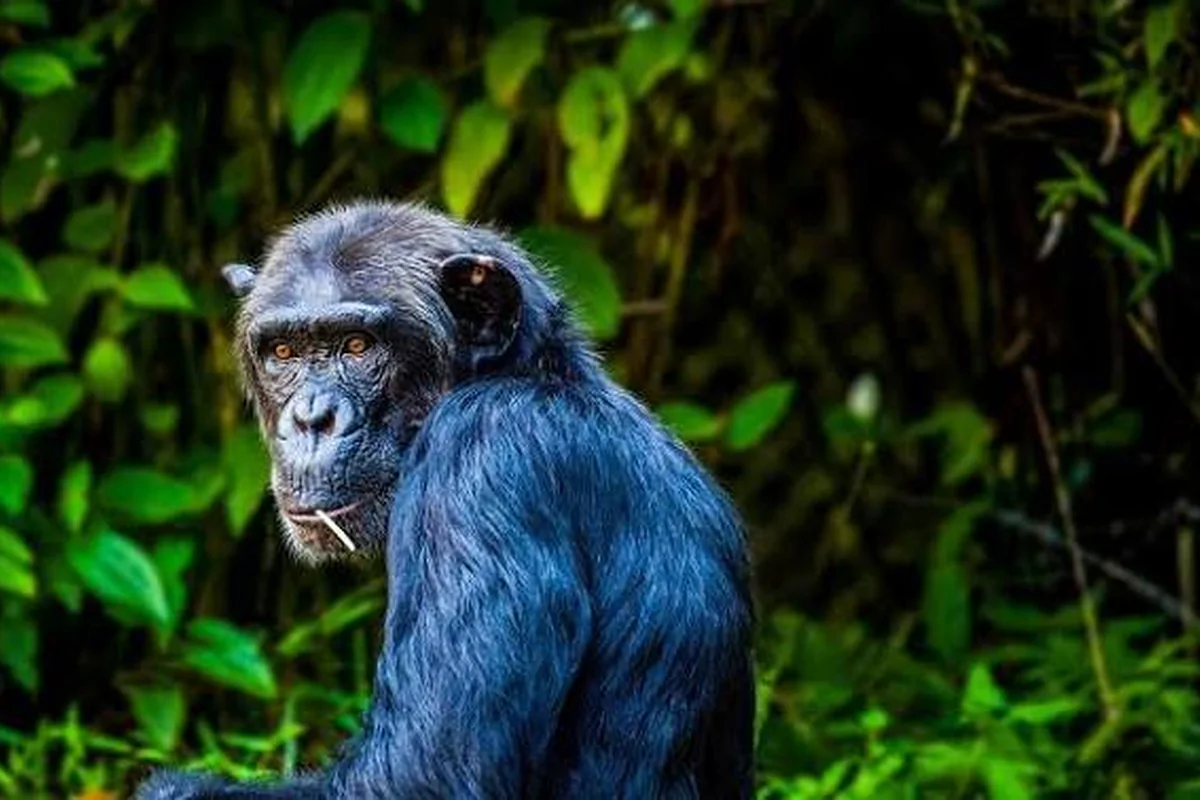
A chimpanzee resting among lush green vegetation, illustrating the remarkable primate encounters visitors can experience in Uganda’s tropical forests.
1. What Is the Best Time for Chimpanzee Trekking in Uganda?
For many visitors, the most convenient periods are the relatively drier months of June to August and December to February. Trails can be less muddy during these periods, and dry-season travel often makes it easier to combine forest trekking with road transfers and savannah game drives. These are broad climatic patterns, not a promise that every day will be dry or that a trek will be short.
The best time for chimpanzee trekking in Uganda is not necessarily the busiest dry-season week. Visitors who prefer fewer crowds, greener landscapes and flexible travel dates may enjoy the wetter shoulder periods. A well-organized rainy-season trek can be rewarding, particularly when you have appropriate boots, a waterproof layer and realistic expectations about slippery forest paths.
Chimpanzees are wild and mobile. Their location, feeding behaviour, movement and visibility can change from day to day. A dry trail does not guarantee a close encounter, and rainfall does not automatically prevent a successful trek. Choose a travel window that fits your comfort, budget and wider itinerary, then confirm the current activity arrangements before committing to flights.
| Travel window | Typical conditions | Planning advantage | Main consideration |
|---|---|---|---|
| June–August | Often relatively drier | Comfortable for multi-park travel | Popular dates; book early |
| December–February | Often relatively drier | Useful for combined primate and wildlife trips | Some days remain wet |
| March–May | Often wetter | Green forests and flexible itineraries | Muddy, slippery paths |
| September–November | Variable; often wetter in October–November | Potentially quieter travel dates | Unpredictable showers |
2. Understanding Uganda’s Dry and Rainy Seasons
Uganda sits close to the equator, but rainfall is influenced by elevation, local terrain and regional weather systems. The popular shorthand of two dry seasons and two rainy seasons is useful for initial planning, yet it oversimplifies conditions in forested western Uganda. A morning may begin sunny and finish with heavy rain, while another day during a supposedly wet month may remain bright.
Kibale is a moist tropical forest. Its vegetation, canopy and ground conditions are shaped by rainfall throughout the year. Even during relatively dry periods, shaded sections of a trekking trail can remain damp. This matters because visitors spend time walking on natural surfaces, stepping over roots and occasionally navigating slopes, rather than following a uniformly surfaced hiking path.
Rainy-season travel calls for a different approach, not necessarily cancellation. Waterproof boots with good grip, gaiters where useful, a lightweight rain jacket and protection for cameras make a significant difference. Allow some flexibility in driving days and avoid arranging an international flight immediately after a long cross-country transfer whenever possible.
For guests combining chimpanzee tracking with gorilla trekking, both activities involve forest conditions. The weather in Kibale and Bwindi can differ on the same date, so pack for both sunshine and rain. Our Uganda gorilla trekking guide offers further context for planning the second primate experience.
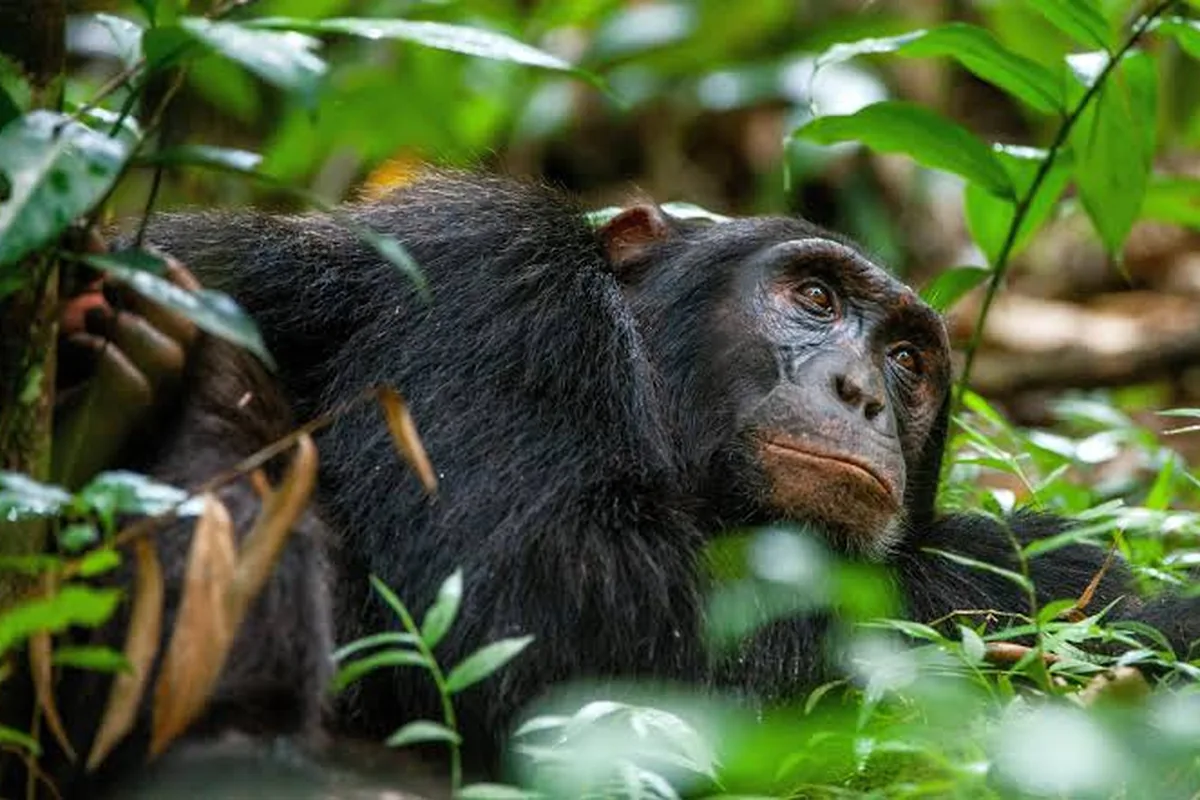
A chimpanzee resting among lush forest vegetation, offering a close-up view of its natural behaviour and surroundings.
3. Month-by-Month Chimpanzee Trekking Calendar
The following calendar gives practical expectations rather than rigid weather forecasts. Rainfall, trail conditions and chimpanzee behaviour vary from year to year. Use the monthly notes as a starting point, then confirm accommodation, permits and transfer arrangements for your chosen dates.
January
January often falls within a relatively drier spell. It can suit travellers who want to combine Kibale chimpanzee tracking with Queen Elizabeth National Park, Bwindi or Lake Mburo. Reserve permits and accommodation early when travelling around holiday periods, and remember that the forest can still receive rain.
February
February is frequently attractive for forest trekking and multi-park road trips. Trails may be more manageable than in wetter months, but heat and humidity can still be noticeable. Carry drinking water, pace yourself during uphill sections and avoid assuming that a clear morning means a rain-free afternoon.
March
March is often a transitional month toward wetter conditions. Visitors may encounter lush vegetation, changing cloud cover and increasingly muddy sections of trail. It is sensible to use a flexible daily schedule and to protect electronics against sudden showers. A good trekking experience remains possible.
April
April is commonly one of the wetter months in western Uganda, although individual years vary. Expect potentially slippery ground, dense greenery and the possibility of heavy rain. Travellers who value quieter travel periods can still enjoy the forest with suitable clothing and a willingness to move carefully.
May
May can remain wet, especially earlier in the month, though conditions may gradually improve. Forest paths can retain moisture even after rain eases. Check lodge access and driving times carefully, and treat advertised low-season offers separately from official activity fees, which must be verified for the actual travel year.
June
June generally marks a more favourable period for travellers prioritizing trail comfort. It is popular for combining chimpanzee tracking with gorilla trekking and wildlife game drives. Demand can increase, so request preferred trekking dates and accommodation well in advance rather than waiting until arrival.
July
July is often a strong choice for visitors travelling during school holidays and the northern summer. More predictable road conditions can help with longer Uganda itineraries. Popularity also means some lodges and activity dates may fill early; confirm permits before finalizing non-refundable travel arrangements.
August
August commonly offers relatively favourable conditions for a classic primate-and-wildlife safari. It can be busy, particularly around well-known destinations. Build in enough time between Kibale, Queen Elizabeth and Bwindi, and remember that even in a drier month forest trails can be damp.
September
September can be a useful shoulder month, with conditions varying as rainfall patterns shift. It may appeal to visitors who want a balance between travel flexibility and manageable trekking. Keep waterproof equipment close and ask your operator about the expected travel times between destinations.
October
October is often associated with increased rainfall. Chimpanzee tracking continues subject to local operational conditions, but muddy paths and rain showers can affect comfort. Choose shoes with traction, protect your camera and allow your guide to set a safe walking pace through difficult sections.
November
November is frequently wet in parts of western Uganda, although some days can be pleasant. Travellers who prefer greener scenery may appreciate the season. Do not assume that low-season gorilla permit promotions automatically apply to chimpanzee permits; check each official activity and visitor category independently.
December
December often becomes relatively drier, especially later in the month, making it appealing for holiday safaris. Christmas and New Year travel can bring higher accommodation demand. Book early, leave adequate time for airport transfers and prepare for occasional showers despite the seasonal trend.
| Month | General planning outlook | Useful preparation |
|---|---|---|
| January | Relatively drier | Pack waterproof layers |
| February | Relatively drier | Pack waterproof layers |
| March | Often wetter / transitional | Pack waterproof layers |
| April | Often wetter / transitional | Pack waterproof layers |
| May | Often wetter / transitional | Pack waterproof layers |
| June | Relatively drier | Book early |
| July | Relatively drier | Book early |
| August | Relatively drier | Book early |
| September | Often wetter / transitional | Pack waterproof layers |
| October | Often wetter / transitional | Pack waterproof layers |
| November | Often wetter / transitional | Pack waterproof layers |
| December | Relatively drier | Book early |
4. Best Time for Chimpanzee Trekking in Kibale Forest
Kibale is the best-known destination for Uganda chimpanzee trekking and is often the starting point for seasonal comparisons. Its forest setting makes year-round rain possible. During relatively dry months, visitors may find some walking sections more comfortable, while wetter months can create slippery paths and stronger contrasts of light and shade beneath the canopy.
The best time for chimpanzee trekking in Uganda should therefore be considered alongside your ability and preferred trekking pace. Ask about the meeting point, the expected briefing time and any current restrictions before departure. The length and difficulty of an individual trek cannot be guaranteed because chimpanzees move freely and conditions vary.
Kibale also works well as part of a western Uganda circuit. Many itineraries connect the forest with Queen Elizabeth National Park and then Bwindi. This combination can reduce backtracking compared with separate journeys, although the most suitable route depends on your arrival airport, accommodation choices and the actual activity dates.
If Kibale is your main priority, choose your trekking date first and build accommodation around it. Our Kibale Forest chimpanzee trekking guide explores the forest experience, while the Uganda chimpanzee trekking cost guide explains why permit fees are only one part of the total safari quotation.
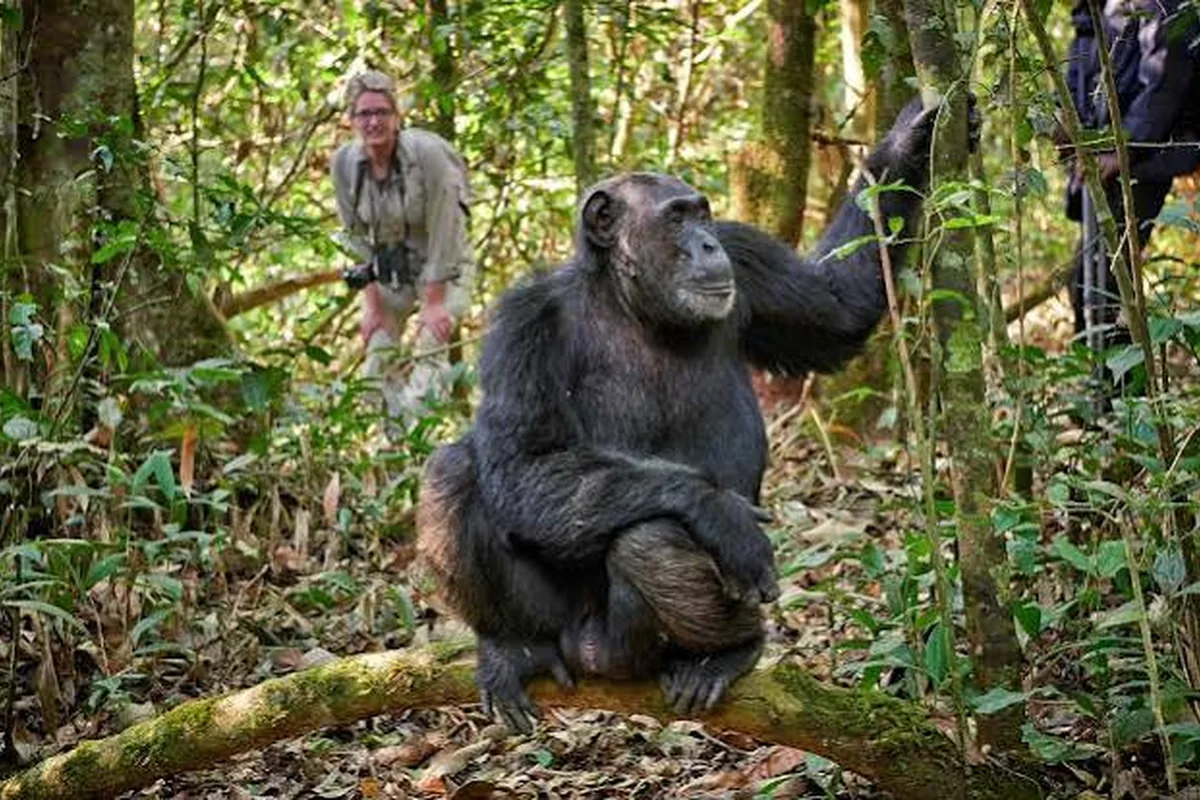
A chimpanzee resting on a fallen tree in a tropical forest as visitors observe from a distance during a wildlife encounter.
5. Is Chimpanzee Trekking Worth It During the Rainy Season?
Yes, rainy-season chimpanzee trekking can be worthwhile for travellers who are comfortable with wet forest conditions. The vegetation may look especially vibrant, and mist or filtered light can make the experience atmospheric. However, visitors should be prepared for muddy ground, reduced visibility in heavy showers and the need to protect valuables from moisture.
A rainy day does not mean that chimpanzees will be absent or inactive. Their movement and location are influenced by many factors, including food availability and group behaviour. The outcome of any trek remains unpredictable. Guides work within the activity rules and local conditions to help visitors experience the forest responsibly.
For photographers, wet leaves and dark backgrounds can create beautiful compositions, but low light may make sharp images more difficult. A camera with good low-light performance, a rain cover and a secure strap are helpful. Avoid flash photography where prohibited and always follow the instructions given during the pre-trek briefing.
Travellers with mobility limitations or concerns about slippery ground should discuss their needs before booking. A tour operator can explain the nature of the activity and help identify realistic options, but cannot promise that forest terrain will be level or that a particular chimpanzee group will be nearby.
6. Peak Season, Shoulder Season and Quieter Travel Dates
June to August and parts of December to February are popular because they often align with relatively drier weather and international holiday schedules. This can increase demand for selected lodges and trekking dates. Peak-season planning is less about finding a perfect weather forecast and more about securing the specific combination of permits, rooms and transfers you want.
Shoulder periods such as March and September may provide a useful compromise for visitors with flexible dates. Conditions can vary, so it is important to assess the actual itinerary rather than relying on broad seasonal labels. A shorter safari with fewer long driving days can sometimes be more enjoyable than a rushed itinerary packed with activities.
Quieter months can be attractive for travellers who prioritize flexibility or photography. However, a less busy lodge does not necessarily mean an empty trekking group, and no operator can guarantee solitude around wild chimpanzees. Group sizes and procedures are controlled by the relevant activity managers and may change.
When comparing quotations, check the named lodge, room category, meal plan, transport type and permit inclusions. A lower advertised price may reflect different services rather than a seasonal saving. Our Uganda chimpanzee trekking cost guide contains a detailed checklist for comparing safari offers on a like-for-like basis.
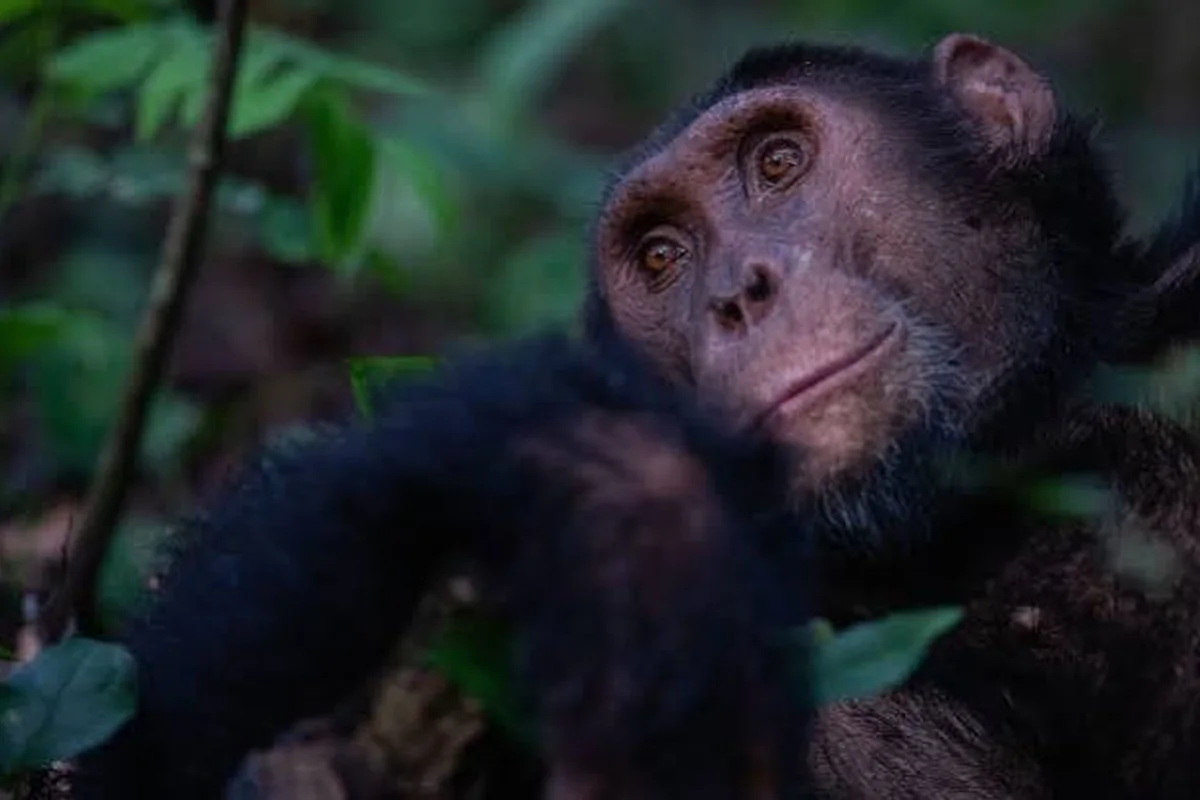
A close-up view of a chimpanzee looking upward while resting among the vegetation of a tropical forest.
7. How Rainfall Affects Trails, Visibility and Trekking Time
Rainfall changes how a forest feels underfoot. Roots and stones can become slippery, clay sections may hold water and steep patches can require more careful footing. The right footwear is therefore a safety consideration rather than merely a comfort upgrade. Lightweight clothing that dries quickly can also be preferable to heavy cotton.
Visibility is influenced by vegetation, the position of chimpanzees and the light beneath the canopy. On some days visitors may see chimpanzees high in trees; on others, animals may be closer to the ground. A seasonal forecast cannot predict where a particular group will be during your scheduled tracking activity.
Trekking time varies because guides must work with the animals’ movements and the conditions encountered. Avoid arranging an inflexible same-day connection that depends on the activity finishing at an exact hour. Build realistic margins into your road itinerary and communicate any onward travel obligations before booking.
Visitors should follow guide instructions, maintain required distances and avoid pushing ahead for photographs. Responsible behaviour protects both people and chimpanzees. Weather, terrain and wildlife movement are all reasons to keep expectations flexible and to value the entire forest experience, not only the final sighting.
8. Best Time to Combine Chimpanzee Trekking with Gorilla Trekking
Combining Kibale chimpanzee tracking with gorilla trekking in Bwindi is one of Uganda’s most compelling safari combinations. Both experiences involve walking in natural forest environments, so relatively drier months can make the overall journey more comfortable for many visitors. Nonetheless, weather conditions can differ between the two parks.
A sensible itinerary normally places adequate travel time between Kibale and Bwindi, often with Queen Elizabeth National Park as a wildlife stop. Depending on your interests, this can add a game drive or boat cruise without making the primate experiences feel rushed. Exact driving times depend on the chosen route and road conditions.
Gorilla and chimpanzee activities have separate permits, rules and booking arrangements. Do not assume that a promotional gorilla permit rate also applies to chimpanzee tracking. Confirm each fee and date independently, particularly when travelling in a period described as low season.
Our Uganda gorilla trekking guide and Uganda chimpanzee trekking guide help travellers compare the experiences. For a tailored combination, contact PrideMark Safaris with your approximate dates, number of travellers, preferred accommodation category and arrival airport.
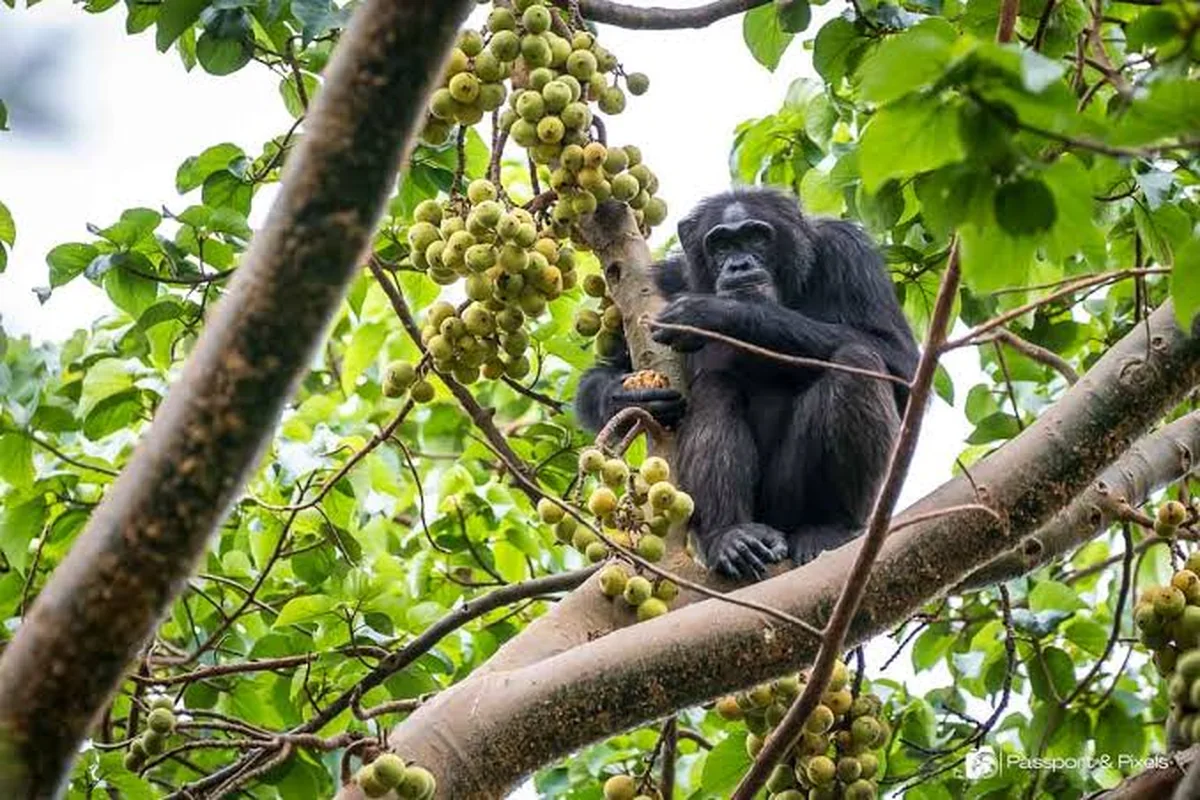
A chimpanzee feeding among clusters of fig-like fruits high in the forest canopy, illustrating its natural feeding behaviour.
9. Best Months for Chimpanzee Photography
Photographers may appreciate relatively drier months for equipment handling and trail comfort, but beautiful forest photography is possible throughout the year. In wetter months, leaves can appear richly coloured and the forest may have misty atmosphere. In all seasons, dense canopy cover can make light levels challenging.
Chimpanzees may move quickly, sit in deep shade or climb into branches that obscure their faces. A camera that performs well at higher ISO settings can be helpful, as can patience and an understanding that no photograph is guaranteed. Avoid making noise or leaving the approved group to chase an angle.
Carry a weather-resistant bag and use a protective cover when showers begin. A microfiber cloth, spare battery and dry storage for memory cards are practical additions. Keep gear compact enough that it does not interfere with safe walking or the ability to hold onto a support when navigating roots.
Photographers planning a longer Uganda journey may also include savannah wildlife and landscapes around Queen Elizabeth, Murchison Falls or Lake Mburo. These environments offer different light and weather considerations, so a mixed itinerary benefits from flexible timing rather than a single rigid photography schedule.
10. What to Wear for Chimpanzee Trekking in Every Season
Wear sturdy walking shoes or hiking boots with good traction, long trousers and a breathable long-sleeved shirt. Clothing that covers the skin can help reduce scratches from vegetation and exposure to insects. Neutral colours are practical for forest travel, while a lightweight waterproof jacket is useful even in relatively dry months.
Gaiters can help keep mud and debris out of footwear, especially after rain. Gardening-style gloves may be useful on rough vegetation where permitted, but do not touch chimpanzees or vegetation unnecessarily. A small daypack should carry water, snacks if allowed, personal medication and a waterproof pouch for electronics.
Weather changes quickly in forest environments, so layers are often more useful than one heavy garment. Avoid packing a large bag that becomes awkward during the trek. Consider a dry change of clothes in the vehicle for the journey back to your lodge, particularly during wetter months.
For safari clients, PrideMark Safaris includes bottled drinking water throughout the safari as part of its standard arrangements. Guests should still check what water and personal supplies they need to carry during the trekking activity itself and follow any instructions from park staff.
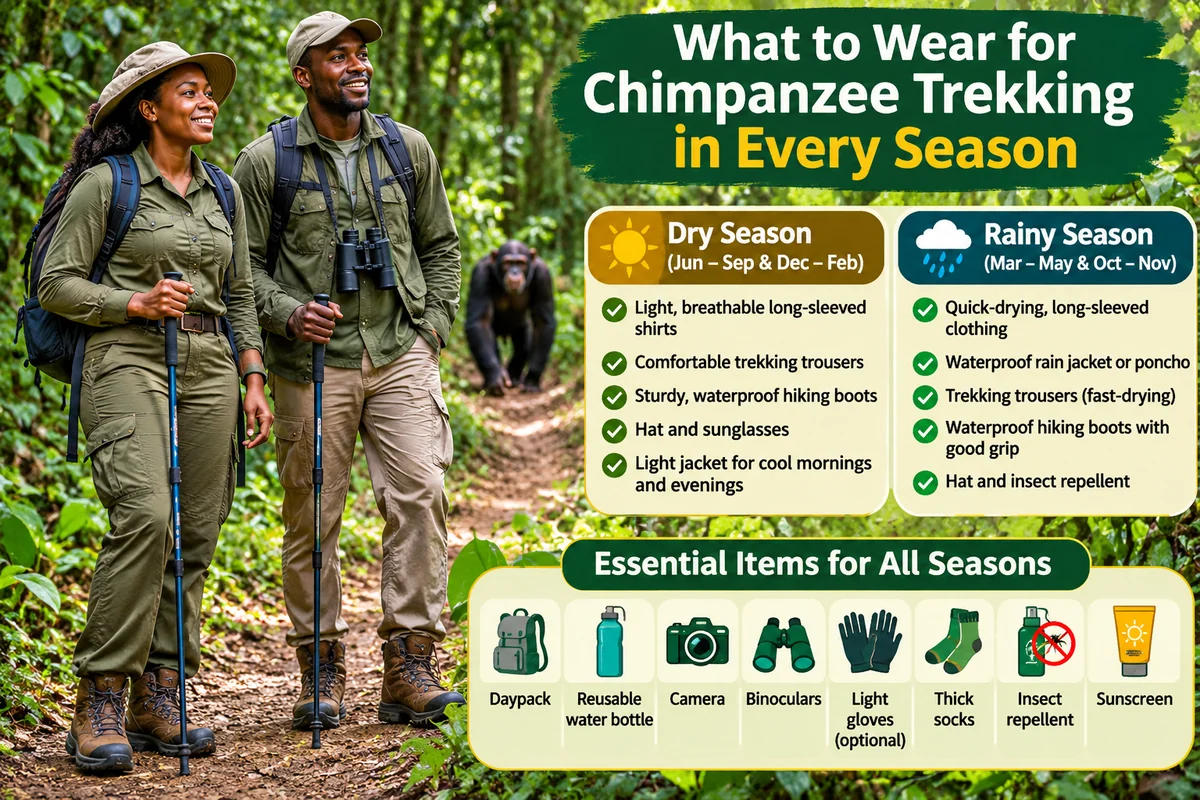
Essential clothing for chimpanzee trekking in Uganda, comparing dry-season and rainy-season requirements, including hiking boots, long-sleeved shirts and waterproof jackets.
11. How Far in Advance Should You Book?
Booking lead time depends on your month of travel, the number of people in your party and the flexibility of your itinerary. For popular periods, it is sensible to begin planning several months ahead. Group travellers who need matching rooms and permits on the same date often benefit from making arrangements even earlier.
Before making non-refundable flight commitments, request confirmation of the intended activity date and visitor category. Permit availability and payment procedures are not the same as a general lodge enquiry. An itinerary is only secure once the relevant reservations have been confirmed through the appropriate channels.
If you are travelling in a wetter or quieter period, do not assume you can always book at the last minute. The preferred lodge or trekking date may still be unavailable, and road travel needs to be coordinated carefully. Build your plan around confirmed activities rather than the expectation that every option will remain open.
When requesting a quotation from PrideMark Safaris, share your travel month, number of adults, preferred comfort level and whether you want gorilla trekking, wildlife drives or cultural experiences as well. That allows a more meaningful comparison of dates, routes and accommodation than a generic price request.
12. Choosing Your Best Travel Month: Practical Decision Guide
If your priority is easier trail conditions, start by considering June to August or December to February. If your priority is flexible travel dates, lush scenery or a quieter atmosphere, consider the wetter and shoulder periods with appropriate equipment. Neither approach is universally better; the right choice depends on your travel style.
If you want a long Uganda circuit, consider the seasonal demands of every destination rather than only Kibale. Road conditions, lodge availability and wildlife viewing preferences can influence the order of stops. A carefully paced route with adequate rest often delivers better value than trying to visit too many parks in too few days.
If your dates are fixed, focus on preparation rather than worrying about whether you selected the perfect month. Chimpanzee tracking is a wildlife experience, not a staged attraction. A respectful attitude, practical clothing and realistic expectations can improve the day in any season.
The best time for chimpanzee trekking in Uganda is ultimately the period when you can secure the appropriate permits, travel comfortably and enjoy the rest of your safari. Use the month-by-month guide above as a planning framework, then check current arrangements before confirming the final itinerary.
| Your main priority | Months to consider | Important qualification |
|---|---|---|
| Relatively drier trails | June–August; December–February | Rain can still occur |
| Lush scenery | March–May; October–November | Often muddier underfoot |
| Combined primate safari | June–August; December–February | Book both permits early |
| Flexible travel dates | Shoulder and wetter months | Confirm local conditions |
Frequently Asked Questions About Chimpanzee Trekking Seasons
Can I trek chimpanzees in Uganda all year?
Chimpanzee tracking is generally offered throughout the year, subject to current operating arrangements and local conditions. Rain can affect comfort, but it does not automatically make an activity impossible. Confirm the specific destination and date before booking.
Is June better than November?
June is often relatively drier and may suit travellers who prefer firmer trails. November is frequently wetter and may appeal to visitors comfortable with rain and greener scenery. Neither month guarantees sightings or particular walking distances.
What is the best time for chimpanzee trekking in Uganda with children?
First confirm the current minimum age and participation rules for the specific activity. For eligible young travellers, relatively drier months may be more comfortable, but fitness, attention span and willingness to walk on uneven terrain also matter.
Does rain make chimpanzees harder to find?
Rain can change visibility, sound and trail conditions, but the location of wild chimpanzees depends on many factors. It would be misleading to promise better sightings in one season. Follow the guides’ directions and prepare for a variable experience.
Should I book permits before accommodation?
Both should be coordinated, but limited activity availability often makes it wise to confirm the preferred trekking date early. Do not finalize non-refundable arrangements until your operator has checked the required services and explained the booking conditions.
Is chimpanzee habituation the same as tracking?
No. These are distinct experiences with different procedures, durations and tariffs. Check the current official descriptions and availability for the date you want. Our Uganda chimpanzee trekking cost guide discusses the price distinctions in greater detail.
Can I combine Kibale with Queen Elizabeth and Bwindi?
Yes, this is a common western Uganda safari combination. The most practical order depends on your entry and exit points, available permits, lodge choices and the time you can allocate. Avoid overly tight travel schedules.
Are permits cheaper in the rainy season?
Do not assume so. Promotional rates, where officially announced, may apply only to specified activities, visitor categories or dates. Check the applicable official tariff rather than treating the rainy season as an automatic discount period.
Plan Your Uganda Chimpanzee Trekking Safari with PrideMark Safaris
Choosing the best time for chimpanzee trekking in Uganda is easier when the season, route, permit availability and accommodation are considered together. PrideMark Safaris designs tailor-made Uganda and Rwanda safaris that can combine Kibale chimpanzee tracking with gorilla trekking, game drives, boat cruises, birdwatching and cultural experiences. We help travellers compare realistic options based on their dates and interests.
PrideMark Safaris is listed by the Uganda Tourism Board among licensed tour companies under licence UTB/RTT/TT/2026/102323. You can check the official UTB licensed tour companies directory. For assistance with a seasonal itinerary, please contact our reservations team and tell us your preferred month, group size and travel style.
Continue reading: Uganda chimpanzee trekking guide · Kibale Forest chimpanzee trekking guide · Uganda chimpanzee trekking cost guide · Uganda gorilla trekking guide.
Practical Planning Examples for Different Travellers
A couple travelling in July
A couple arriving in Entebbe in July may prefer a western circuit that begins with a relaxed arrival night, continues to Kibale for chimpanzee tracking, then moves through Queen Elizabeth National Park before reaching Bwindi. July is often relatively dry, which can make the road journey more comfortable, but it is also a popular period. The important step is to secure the preferred chimpanzee and gorilla activity dates before finalizing lodge nights. Allow room for unexpected traffic and changing conditions rather than treating every transfer as a fixed-duration journey.
A solo traveller visiting in April
A solo traveller visiting in April may find the green forest scenery particularly appealing. However, wetter paths mean footwear, rain protection and pacing deserve extra attention. A shorter itinerary concentrated around Kibale may be more enjoyable than several consecutive long drives. Ask whether the safari is private or shared, because vehicle costs can make a substantial difference for one person. The season alone does not determine the price: room occupancy, permit category and transportation arrangements must all be considered.
A family planning a December holiday
A family considering December should first check the eligibility rules for the ages of all travellers. Chimpanzee tracking is not suitable for every age group, and the activity managers set participation requirements. If some family members cannot participate, arrange a suitable alternative activity rather than assuming they can accompany the group into the forest. December holiday dates may be busy, so the family should confirm room configurations, meal plans and permits well before departure. A comfortable itinerary also includes rest periods and realistic expectations for younger travellers.
A photographer with flexible September dates
A photographer who can travel in September may benefit from flexibility in the wider schedule. Forest light is unpredictable, and a chimpanzee sighting may happen in shade, high branches or dense vegetation. Bring weather protection and be prepared to photograph behaviour rather than only portraits. If photography is a major priority, explain that to the operator during planning. However, a private safari vehicle does not mean the chimpanzee tracking group itself will be private, and normal wildlife-viewing rules still apply.
Friends combining Uganda and Rwanda
A small group combining Uganda and Rwanda should consider border logistics, travel time and the order of activities, not just the month. A Rwanda arrival can work well for some itineraries that include Bwindi, while an Entebbe arrival may suit a longer western Uganda circuit starting with Kibale. Border and visa rules should be checked through official immigration sources before travel. The most convenient sequence depends on flight schedules, available permits and accommodation, and a flexible route is often more valuable than trying to fit every attraction into a short holiday.
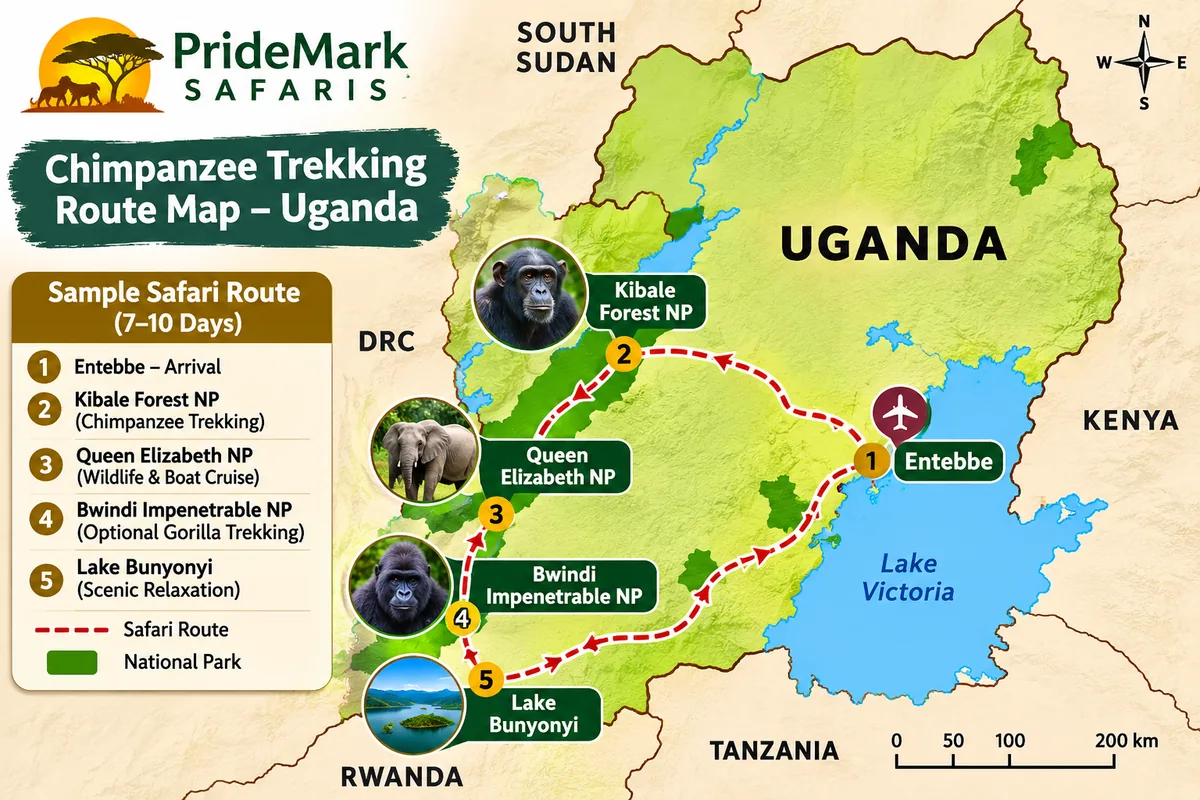
Illustrated Uganda safari route connecting Entebbe, Kibale Forest, Queen Elizabeth National Park, Bwindi and Lake Bunyonyi.
Detailed Seasonal Packing and Preparation Checklist
In relatively dry months, pack the same basic rain protection you would take during a wet-season trek. Forest showers are possible throughout the year. Choose footwear you have already worn on uneven ground, and avoid brand-new boots that may cause blisters. Long trousers, a lightweight long-sleeved top, a compact waterproof layer and a daypack with secure straps form a practical foundation for most travellers. Carry water and any essential personal medication according to the instructions provided before your activity.
During wetter periods, add a dry bag or waterproof liner inside your backpack. A spare pair of socks and a change of clothes in the vehicle can make the journey back to your lodge more comfortable. Keep passports and other important documents in secure waterproof storage rather than carrying unnecessary valuables into the forest. If you use a camera, protect it before rain starts, because sudden showers can leave little time to rearrange equipment. Take care with slippery roots and let the guide choose the safest route.
Travellers should also prepare physically for walking on uneven terrain. Ordinary walks on hills or nature trails can help build confidence, but no training routine guarantees that a forest trek will feel easy. Discuss relevant mobility concerns with the operator and seek appropriate medical advice for personal health questions. The activity may involve changes in pace and pauses while guides assess the animals’ location. Patience, hydration and attention to instructions are often as important as physical speed.
How to Compare Seasonal Safari Quotations
A quote for a July safari and one for an April safari may differ for reasons unrelated to weather. Accommodation suppliers may apply different seasonal rates, while vehicle costs depend on the number of days and travellers sharing the service. The quoted price may also include different meals, activities and transfers. Ask for a clear list of inclusions and exclusions rather than comparing only the headline figure. The same approach is important when evaluating budget, midrange and luxury safari proposals.
A transparent itinerary should identify the intended trekking destination, activity type and permit category. It should state the accommodation names or standards, rooming basis, meal plan and transport arrangements. For a private safari, confirm whether the vehicle, fuel and driver-guide services are included for the full trip. For optional experiences, ask whether the amount is already included or will be payable locally. This prevents misunderstandings and makes seasonal comparisons more meaningful.
Permit conditions deserve particular attention. Activity fees and policies can change, and the correct visitor category must be applied. Never rely on a social-media claim that all permits are cheaper in a particular month. Check the current official tariff and the booking terms for the specific activity. Travellers should also confirm deposit requirements, balance deadlines and cancellation terms before paying. A good quotation makes those obligations easy to understand rather than hiding them in vague wording.
Responsible Chimpanzee Tourism in Every Season
Chimpanzees are highly social wild animals, and responsible tourism requires visitors to respect their space. Follow the briefing on permitted viewing distances, group conduct, photography and hygiene. Never offer food, attempt to touch an animal or move away from the approved group to improve a photograph. These principles apply whether the trail is dry or wet, and they protect both visitors and the chimpanzees being observed.
If you feel unwell before a primate activity, tell your operator and the relevant staff rather than concealing symptoms. Close contact between people and great apes can create health risks, and participation rules may restrict visitors who are ill. Do not assume that a paid permit overrides the safety or conservation requirements. The experience is valuable precisely because the chimpanzees are living naturally, not performing for visitors.
Staying on approved routes, listening to guides and avoiding litter also help protect the forest. In wet weather, rushing or cutting around muddy sections can damage vegetation and increase the risk of a fall. Move deliberately and let the group maintain a safe pace. Choose operators who explain conservation expectations clearly and present the wildlife encounter as a privilege rather than a guaranteed close-up interaction.