Pride Mark Safaris · Gorilla Behavior Guide
Beyond the Silver Hair: 7 Important Roles of the Silverback Gorilla in the Wild
A silverback gorilla is instantly recognizable, but his silver hair
tells only part of the story. Beyond his powerful appearance lies
a complex social life shaped by leadership, protection, communication,
reproduction, and relationships with younger gorillas.
The silverback gorilla is often the animal travelers
most hope to see during a mountain gorilla trek. His broad shoulders,
striking silver saddle, and calm presence make an unforgettable
impression. Yet watching him quietly sit near his group can reveal
just as much as witnessing a dramatic display.
Understanding the roles of the silverback gorilla helps you recognize
the meaning behind everyday moments: a male moving through vegetation,
a youngster resting beside him, or another adult keeping a respectful
distance. These interactions reveal a society built around individual
relationships rather than strength alone.
This guide focuses on wild mountain gorillas, the gorillas visitors
encounter on Pride Mark Safaris’
3-Day Gorilla Trekking in Uganda
and
4-Day Mgahinga Gorilla and Golden Monkey Safari
.
Other gorilla populations can differ in their group structure and behavior.

more than his size: look at his posture, attention, and relationship
with the surrounding group.
What Is a Silverback Gorilla?
A silverback gorilla is a mature male whose back develops a
distinctive area of silver-gray hair. Silverbacks are not a
separate gorilla species. The term describes a stage of male
development, and the change in hair color varies between individuals.
Mountain gorilla groups may include adult females, infants,
juveniles, younger males, and one or more silverbacks. Where several
adult males live together, their relationships and relative ranks
help shape group life. The dominant silverback usually occupies
the leading position, while other males may contribute to group
protection or eventually pursue their own group.
The
Dian Fossey Gorilla Fund’s account of a group with several silverbacks
illustrates how different adult males can have distinct personalities
and positions within the same social group.
For visitors, this means the largest-looking male is not necessarily
the one whose position you can confidently identify. Ask your ranger
which silverback gorilla leads the group and how the other males
relate to him.
The 7 Roles of the Silverback Gorilla at a Glance
| Role | Why it matters | What a visitor might notice |
|---|---|---|
| Everyday leadership | Helps coordinate movement, feeding, and resting. | Group members moving after the dominant male changes location. |
| Group defense | Provides a powerful response to perceived threats. | Watchful attention or a display during an encounter. |
| Social stability | Influences relationships and responses to tension. | Different adults resting near or keeping distance from him. |
| Infant protection | Helps reduce risks associated with threatening males. | Mothers and young gorillas remaining near a familiar male. |
| Support for youngsters | Provides social contact and tolerance within the group. | A youngster approaching, resting beside, or interacting with him. |
| Reproduction | Contributes offspring to the next generation. | Associations between adult females and males. |
| Communication | Signals information through sounds, displays, and posture. | Chest beating, vocalizations, or changes in body position. |
These roles overlap. The table is a practical way to understand
silverback gorilla behavior, rather than a set of separate duties
performed in a fixed order.
1. The Silverback Gorilla Helps Lead Everyday Group Activities
The dominant silverback gorilla plays an important part in directing
the group’s daily activities. Movement, feeding, resting, and settling
for the night are connected parts of life in the forest. His movements
can influence where other group members go and when they follow.
This leadership may appear remarkably quiet. A male can finish
feeding, stand up, and move through vegetation while others gradually
change position. There need not be a dramatic call or display for
his behavior to affect the group.https://pridemarksafaris.com/what-happens-when-a-silverback-gorilla-dies/
Leadership does not mean the silverback personally feeds every
gorilla or controls every individual action. Group members forage
for themselves, and females and younger gorillas remain active
participants in daily life.
What to watch during your trek
When a silverback gorilla moves, notice whether others continue
feeding, pause, or follow. Ask the ranger whether the group is
changing feeding areas or simply adjusting its position. That
explanation can turn an ordinary movement into a meaningful
observation.
2. The Silverback Gorilla Defends His Group from Threats
Protection is one of the most important roles of the silverback
gorilla. A dominant male may respond strongly to a rival male
or another perceived threat. His size, presence, vocalizations,
and displays can discourage an opponent from approaching.
Defense does not always involve physical fighting. Displays can
communicate that a male is prepared to respond. When encounters
escalate, however, fights between adult males can cause serious
injuries.
Visitors should avoid interpreting every movement as aggression.
A silverback gorilla can be attentive without displaying, and
a quiet individual is still capable of a strong response. Let
the ranger interpret changes in behavior and direct your position.https://pridemarksafaris.com/why-mountain-gorillas-live-in-families/
Respect protection without provoking it
Never attempt to produce a reaction for a photograph. Calling,
imitating chest beating, blocking a gorilla’s route, or approaching
a youngster can disrupt the encounter. The most rewarding visit
allows the animals to continue their own activities.
3. The Silverback Gorilla Helps Maintain Social Stability
A mountain gorilla group is a network of relationships. Dominance,
familiarity, individual temperament, and social bonds all affect
how its members interact. The silverback gorilla’s position within
that network can help keep the group together.
A dominant male may intervene when tension develops, but he is
not a constant referee in every disagreement. Other gorillas
also influence relationships and conflict. Females and youngsters
can play active roles, and adult males may cooperate as well as compete.
Silverback gorilla leadership therefore involves more than winning
a contest. Maintaining relationships with females and other males
also matters. Changes in those relationships can lead to shifts
in rank or changes in group membership.https://pridemarksafaris.com/contacts/
Look at spacing and association
Observe who rests close to the dominant male, which individuals
approach him, and whether another silverback stays farther away.
These details provide useful questions for your guide, although
a short visit cannot reveal the group’s full social history.
Turn a Gorilla Sighting into a Deeper Wildlife Experience
Explore a forest safari with time to appreciate gorilla behavior,
scenery, and the knowledge shared by the park’s ranger team.
4. The Silverback Gorilla Provides Important Protection for Infants
A mother is an infant gorilla’s primary caregiver, providing milk,
close contact, and early care. The silverback gorilla contributes
another form of support: protection within the social group.
This role becomes especially important during encounters with
unfamiliar males or changes in leadership. Infanticide can occur
in gorillas, making group stability and access to a protective
adult male important for mothers with young infants.
The
Fossey Fund’s account of a mother traveling alone after her group broke apart
demonstrates how complicated these situations can become.
Outcomes vary; a leadership change does not automatically mean
every infant will be harmed.
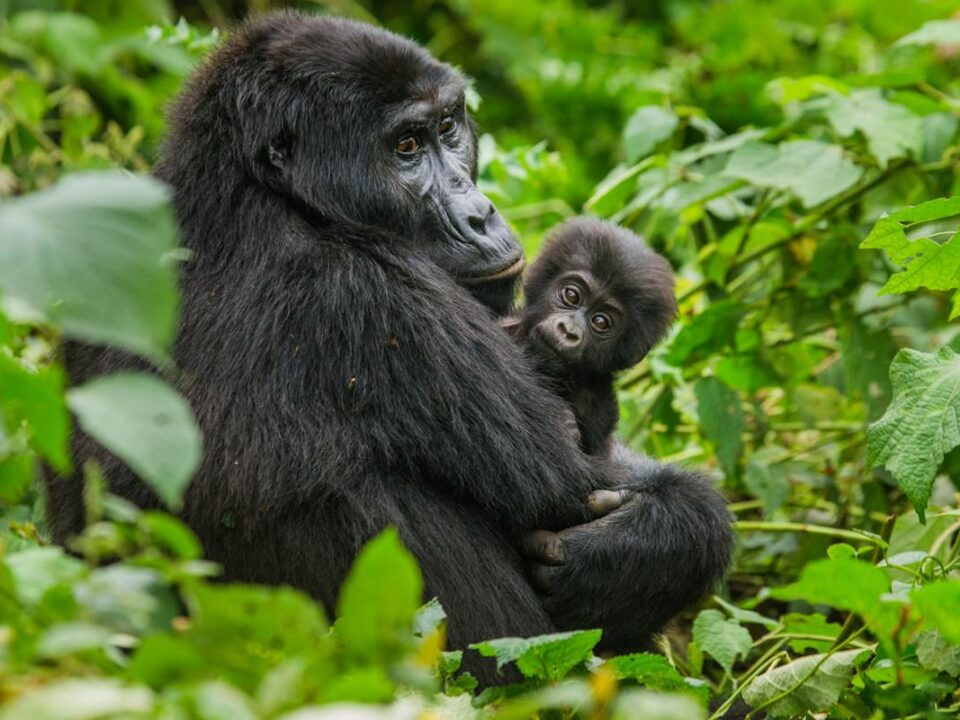
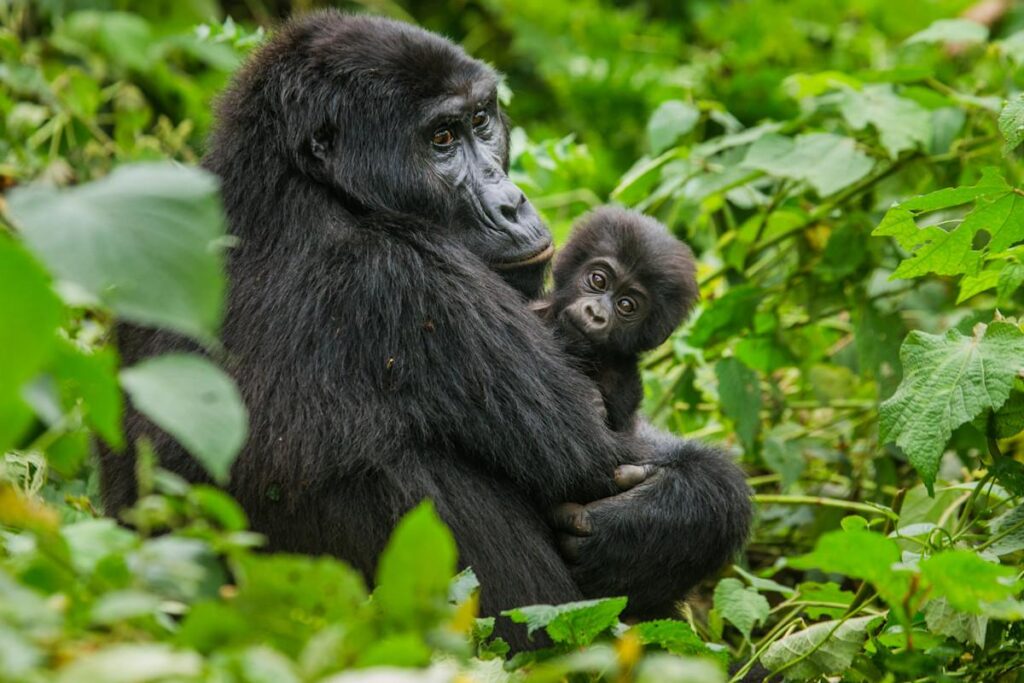
Why mothers may stay near a familiar male
When you see a mother and infant near a silverback gorilla,
appreciate the broader social setting. Their proximity may relate
to a protective relationship as well as the immediate location
of food or resting space. Your ranger can explain what is known
about those particular individuals.

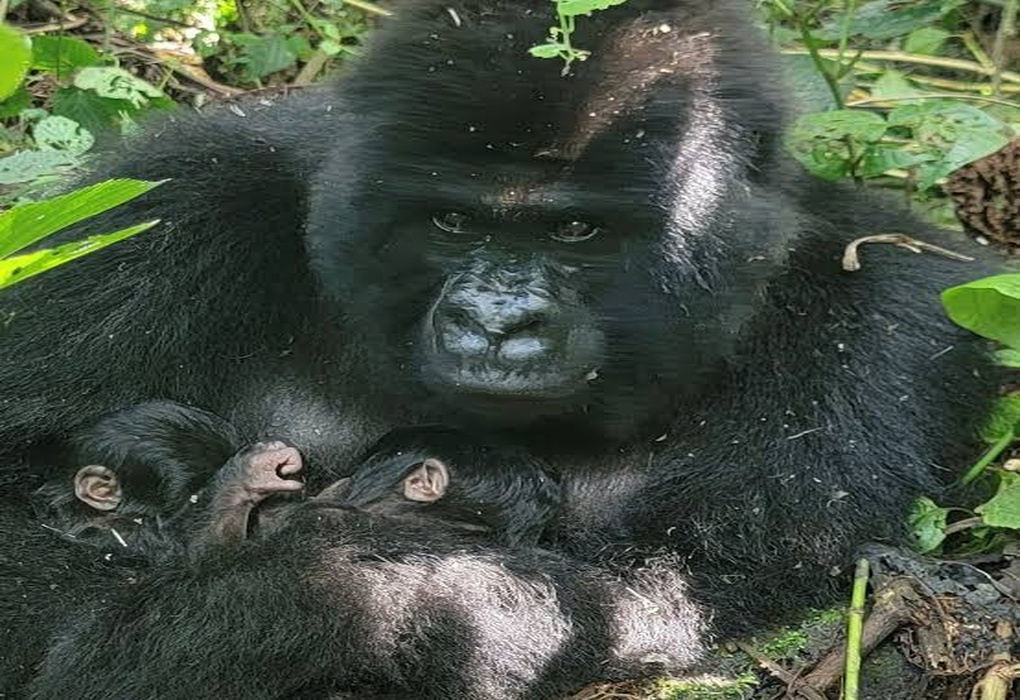
of social relationships. A photograph alone does not establish
parentage or the individuals’ exact roles.
5. The Silverback Gorilla Can Offer Social Support to Young Gorillas
Silverback gorilla behavior can include tolerance and gentle
interaction with youngsters. Young gorillas may approach an adult
male, rest beside him, or interact with him while exploring their
group’s social world.
Research published in
eLife on maternal loss in mountain gorillas
found that social relationships could help support immature gorillas
after losing their mothers. Dominant males increased their association
with orphaned youngsters, including individuals they had not fathered.
The study concerned youngsters who had lost their mothers after
reaching an age at which they could feed independently. It should
not be interpreted as evidence that a silverback gorilla can replace
milk or all the care needed by a very young nursing infant.https://pridemarksafaris.com/places-to-visit/bwindi-impenetrable-forest-national-park/
A quieter side of a powerful animal
A youngster sitting comfortably near an adult male can be as
memorable as a display. Take time to watch these small interactions
rather than concentrating only on a close-up photograph of the
silverback’s face.
6. The Silverback Gorilla Contributes to the Next Generation
Reproduction is another central part of silverback gorilla life.
A dominant male often has a major role in fathering offspring,
although other males can also reproduce in groups with several
adult males.https://pridemarksafaris.com/places-to-visit/volcanoes-national-park/
A silverback gorilla is therefore not necessarily the father of
every youngster in his group. Membership can change, females can
transfer between groups, and the history of an individual gorilla
may be more complicated than a visitor assumes.
Solitary males may attempt to attract females and form groups.
Success is not guaranteed, and some remain alone for extended
periods. The
Fossey Fund’s observations of solitary silverbacks forming groups
show that these processes can have different outcomes.
Why this matters for interpreting a gorilla family
“Family” is a helpful everyday term, but it does not mean every
member is closely related. When your ranger introduces the gorillas,
ask about known mothers, offspring, and leadership changes rather
than assuming a human-style household structure.
7. The Silverback Gorilla Communicates through Sounds and Displays
Communication connects many of the silverback gorilla’s other
roles. Body position, vocalizations, and conspicuous displays
convey information to nearby gorillas and potential rivals.
Chest beating is the most recognizable example.
A study of wild male mountain gorillas found that chest-beat
sound frequency carried information about body size: larger
males produced lower peak frequencies. This helps explain why
the display can matter when males assess one another.
You can read the
research on chest beats and male mountain gorilla body size
or explore Pride Mark Safaris’ article,
Why Do Gorillas Beat Their Chests?
,
for more background.
Does chest beating always mean an attack?
No. Chest beating is a display whose meaning depends on context.
It should not automatically be translated as an immediate attack,
but visitors should always follow their ranger’s instructions
when a gorilla displays.
A silverback gorilla may spend your entire visit feeding or resting.
A quiet encounter remains valuable. There is no reason to expect
a display or attempt to encourage one.https://pridemarksafaris.com/gorilla-trekking-vs-habituation-uganda/
What Happens When a Dominant Silverback Gorilla Dies?
The loss of a dominant silverback gorilla can alter the future
of his group. In a group with other adult males, an existing
silverback may assume leadership. Where there is no suitable
successor, the group may break apart and its members may join
other groups.https://pridemarksafaris.com/what-happens-when-a-silverback-gorilla-dies/
These transitions do not follow a single script. The males present,
their relationships, the females’ responses, and the age of
dependent youngsters all matter.
The
Fossey Fund’s observations following a silverback’s death
describe adult males collaborating in protection during a period
of change. Such observations show why long-term monitoring is
needed to understand a group.
For safari visitors, the practical lesson is simple: group
descriptions can change. Ask about the gorillas’ current situation
during your briefing rather than relying solely on an older
family profile found online.
How to Observe Silverback Gorilla Behavior on a Trek
The most useful approach is patient observation. You are visiting
wild animals, and the encounter will depend on what they are doing
when your ranger team locates them.https://pridemarksafaris.com/bwindi-vs-mgahinga-gorilla-trekking/
- Identify the individuals: ask which silverback
gorilla leads the group and whether other adult males are present. - Watch relationships: notice who approaches the
adult males and who rests nearby. - Observe movement: look at how the group responds
when a male changes location. - Listen carefully: ask your ranger about a sound
instead of assuming its meaning. - Allow quiet moments: put the camera down occasionally
and observe the entire group.
Follow the park briefing throughout the encounter
Maintain the distance directed by your ranger, keep your voice
low, avoid flash photography, and never touch or feed a gorilla.
If an animal approaches, follow the ranger’s instructions about
making space. Report illness before trekking and follow the park’s
current health requirements.https://pridemarksafaris.com/
Do not position yourself for a selfie beside a silverback gorilla
or block his path. Respectful observation gives the animals space
and helps preserve the quality of the experience for everyone.
Explore Gorilla Trekking with Pride Mark Safaris
Learning about the silverback gorilla adds depth to a forest
safari. Pride Mark Safaris offers itineraries that include gorilla
trekking in Uganda, with options for travelers who want a focused
gorilla trip or a wider primate adventure.
3-Day Gorilla Trekking in Uganda
Explore a short itinerary centered on a mountain gorilla
encounter in Bwindi, with travel and overnight stays arranged
around the trekking experience.
4-Day Mgahinga Gorilla and Golden Monkey Safari
Combine gorilla trekking with golden monkey tracking for
an introduction to two distinctive primate experiences
in Uganda’s volcanic highlands.
Browse more
Uganda and Rwanda safari ideas
or learn
about Pride Mark Safaris
.
When making an inquiry, share your travel dates, group size,
preferred accommodation, and any concerns about forest walking.
Frequently Asked Questions About the Silverback Gorilla
What is the main role of a silverback gorilla?
A dominant silverback gorilla helps lead and protect his group.
He also influences social relationships and reproduction.
Subordinate and solitary silverbacks have different positions,
so not every silverback is a group leader.
Can one group have more than one silverback gorilla?
Yes. Mountain gorilla groups can contain several silverbacks.
Usually one occupies the dominant position, while other adult
males hold lower ranks that may change over time.https://pridemarksafaris.com/places-to-visit/bwindi-impenetrable-forest-national-park/
Is a silverback gorilla the father of every infant in his group?
Not necessarily. Other males may father offspring in multi-male
groups, and group membership can change. The dominant male’s
position alone does not establish the parentage of every youngster.
Does a silverback gorilla care for young gorillas?
Silverbacks can provide protection, tolerance, and social contact.
Research has documented dominant males increasing their association
with older orphaned youngsters. Mothers remain essential caregivers,
especially for nursing infants.
Why does a silverback gorilla beat his chest?
Chest beating is a communication display. Research indicates
that its sound can convey information about a male’s body size.
Its meaning depends on the situation, and it does not always
indicate an immediate attack.
Can a silverback gorilla live alone?
Yes. Some adult males live alone, sometimes for extended periods.
A solitary silverback may later attract females or become involved
in changes to an existing group.
Where can I see a silverback gorilla in Uganda?
Mountain gorilla trekking takes place in Bwindi Impenetrable
National Park and Mgahinga Gorilla National Park. Pride Mark
Safaris can help you plan an itinerary around your travel dates
and trekking arrangements.
Will I see all seven roles during one gorilla trek?
No. A visit provides a brief view of the group’s life. You may
observe feeding, resting, movement, or social interaction, while
understanding other roles requires observations collected over
much longer periods.
Plan Your Mountain Gorilla Safari
See beyond the silver hair and discover the relationships that
make a gorilla encounter so memorable. Contact Pride Mark Safaris
to discuss your Uganda gorilla trekking itinerary.
Research and Further Reading
Explore these conservation and research sources for more detail
about silverback gorilla behavior:https://pridemarksafaris.com/what-happens-when-a-silverback-gorilla-dies/