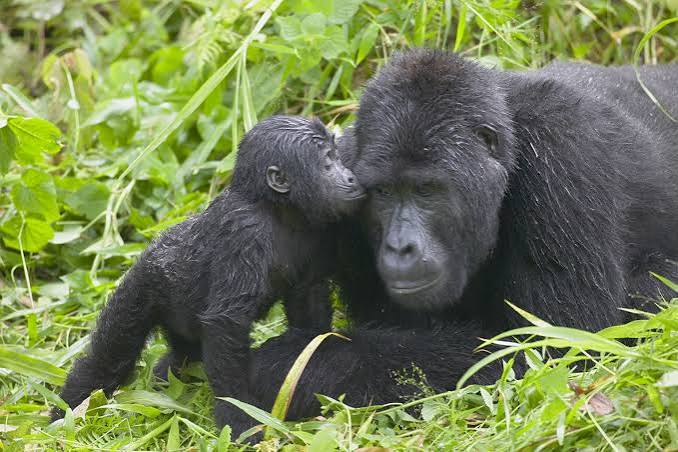
Explore how long gorillas live, their
extraordinary journey from birth to old age,
the lives of silverbacks and mothers,
and the conservation efforts protecting
mountain gorillas in Uganda.
What is the lifespan of a gorilla?
Gorillas commonly live approximately 30 to
40 years in the wild, although some individuals
live longer and others die considerably younger.
Under professional human care, gorillas may
survive into their 50s and, exceptionally,
beyond 60 years. The lifespan of a gorilla
is influenced by genetics, habitat quality,
nutrition, infectious diseases, social
relationships, reproductive demands, and
human-related threats.
Deep inside the rainforests of Uganda,
mountain gorillas live extraordinary lives
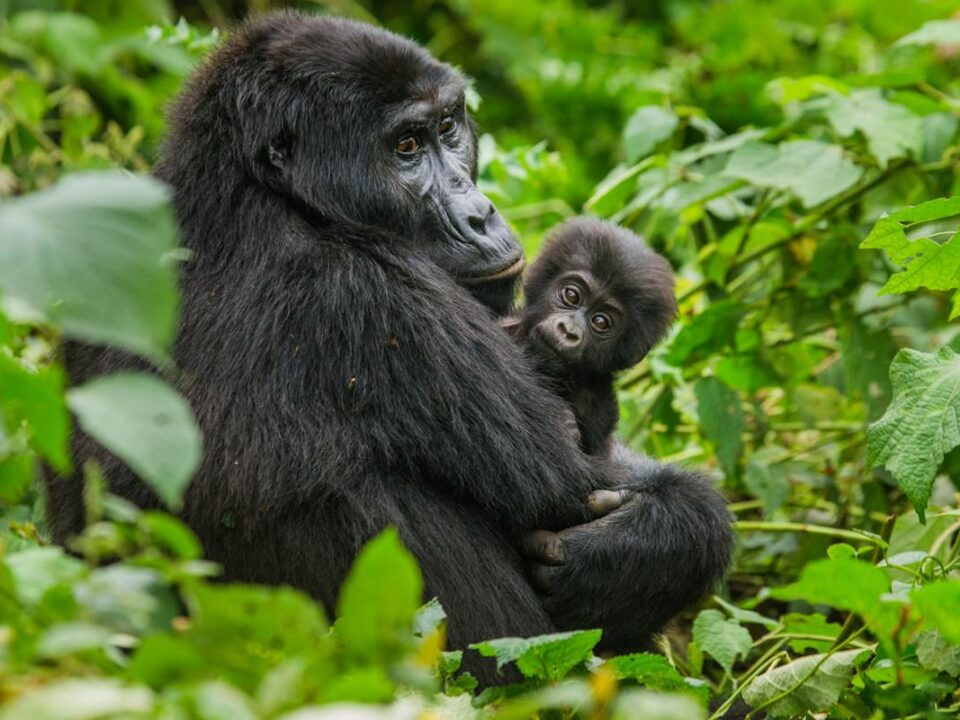
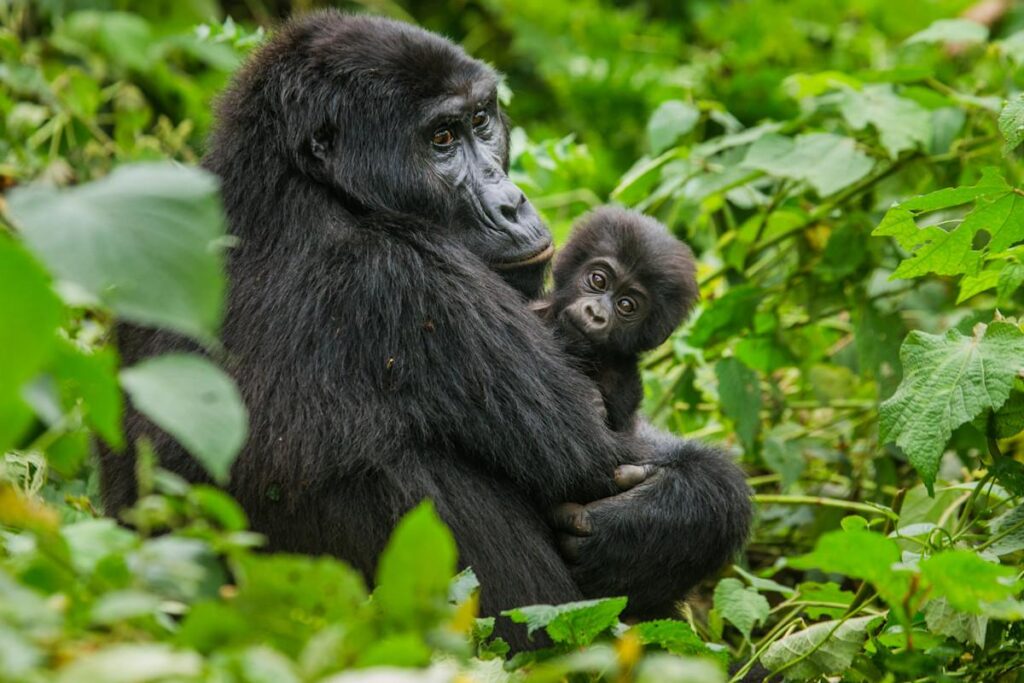
that unfold over several decades. A tiny
newborn begins life clinging tightly to
its mother’s chest. Years later, that same
animal may become an independent adult,
a nurturing mother, or a powerful silverback
responsible for the security and stability
of an entire family group.
Understanding the lifespan of a gorilla
offers a fascinating window into the biology
and behavior of one of humanity’s closest
living relatives. Gorillas demonstrate
remarkable intelligence, develop long-term
social relationships, communicate through
vocalizations and body language, and
invest years in raising their young.
For travelers planning a
gorilla trekking adventure in Uganda,
learning about gorilla longevity makes
every encounter more meaningful.
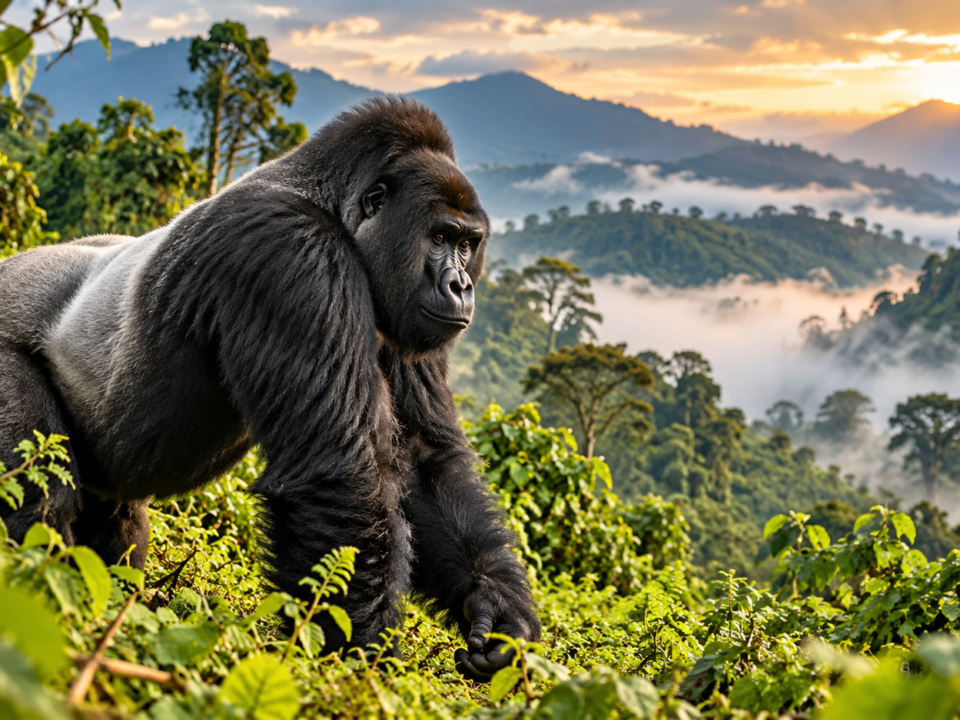
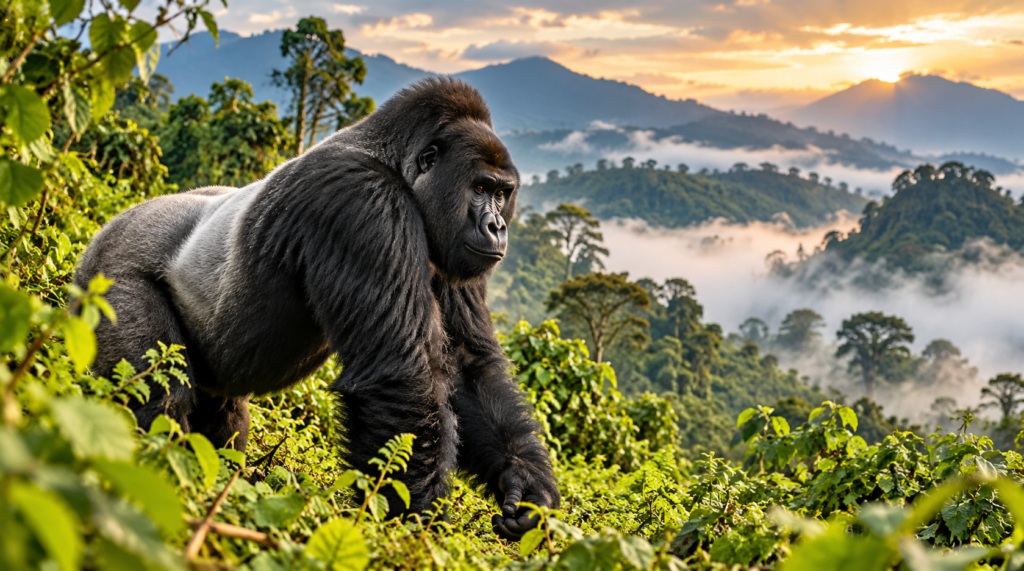
The silverback resting quietly in the forest
may have experienced decades of leadership,
while playful juveniles nearby represent
the future of a species whose survival
depends on continued conservation.
Commonly cited wild lifespan
Possible under professional human care
Approximate gestation period
Typical silverback development
1. How Long Do Gorillas Live in the Wild?
The lifespan of a gorilla in its natural
habitat is commonly estimated at approximately
30 to 40 years. However, this range should
not be interpreted as a guaranteed lifespan
or an exact average for every gorilla
population. Some gorillas die during infancy,
others survive into mature adulthood,
and a smaller number reach advanced ages.
Gorillas inhabit diverse environments across
Central and East Africa. Their habitats
include lowland tropical rainforests,
swamp forests, montane forests, and
high-altitude vegetation zones. These
different environments influence the
availability of food, the risk of disease,
and the physical challenges faced by
individual gorillas.
Wild gorillas spend much of their time
feeding, resting, traveling, interacting
with family members, and constructing
sleeping nests. Although their daily
routine may appear peaceful, survival
requires physical strength, knowledge
of the environment, and the ability
to respond to potential threats.
Gorillas can suffer from infectious
diseases, injuries, accidental encounters
with snares, and environmental disturbances.
Young infants are especially vulnerable
because they depend on their mothers
for food, warmth, and protection.
Older gorillas face different challenges.
As they age, their physical strength may
decline, their teeth may become worn,
and their ability to recover from illness
or injury can decrease. Nevertheless,
some elderly gorillas continue to maintain
strong social relationships and participate
in family activities.
Long-term scientific research is essential
for understanding gorilla longevity.
By identifying individual gorillas and
following their lives over many years,
researchers can document births, deaths,
social changes, reproductive histories,
and the causes of mortality.
The commonly cited 30–40-year lifespan
is a broad biological estimate. It does
not mean that most gorillas necessarily
reach 40 years of age.
2. What Is the Lifespan of a Mountain Gorilla?
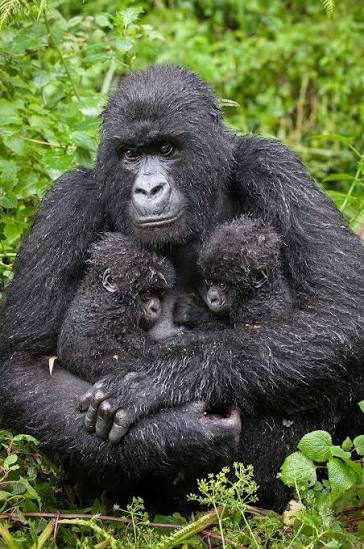
groups within protected forest habitats.
The lifespan of a mountain gorilla is
generally described as approximately
30 to 40 years in the wild. Mountain
gorillas are a subspecies of eastern
gorilla and inhabit the mountainous
forests of Uganda, Rwanda, and the
Democratic Republic of the Congo.
These remarkable primates are adapted
to cool, high-altitude environments.
Their thick fur helps protect them
from low temperatures, while their
powerful bodies allow them to move
through dense vegetation and across
steep forested slopes.
Mountain gorillas feed primarily on
plant materials, including leaves,
shoots, stems, roots, and other
vegetation. Their diets provide the
energy needed for growth, reproduction,
movement, and maintaining body condition.
One of the most important characteristics
of mountain gorilla life is the strength
of their family relationships. Young
gorillas depend heavily on their mothers,
while mature males often play important
roles in group protection and social
stability.
Long-term monitoring has helped
researchers understand how mountain
gorillas develop from infancy through
adulthood. Scientists can recognize
individuals, document their relationships,
and observe how changes in health,
group composition, and environmental
conditions influence survival.
Uganda protects mountain gorillas
within Bwindi Impenetrable National
Park and Mgahinga Gorilla National
Park. These protected landscapes
support conservation, scientific
research, and carefully managed
gorilla tourism.
Discover more about gorilla behavior
in our article on
what happens to gorillas after tourists leave.
3. Do Different Gorilla Species Have Different Lifespans?
Gorillas are divided into two recognized
species: eastern gorillas and western
gorillas. Each species contains two
subspecies. Although they share many
physical and behavioral characteristics,
their habitats and conservation
circumstances differ considerably.
Mountain gorillas inhabit high-altitude
forests, while Grauer’s gorillas,
also known as eastern lowland gorillas,
live in parts of the Democratic
Republic of the Congo. Western
lowland gorillas inhabit tropical
forests across Central Africa,
while Cross River gorillas survive
in a restricted region around the
Nigeria–Cameroon border.
All four subspecies can survive for
several decades. However, researchers
do not have equally detailed lifespan
records for every wild population.
Consequently, it would be misleading
to claim that one subspecies always
lives longer than another.
| Gorilla Subspecies | Natural Range | Lifespan Guidance |
|---|---|---|
| Mountain Gorilla | Uganda, Rwanda, DRC | Often around 30–40 years |
| Grauer’s Gorilla | Eastern DRC | Several decades; data vary |
| Western Lowland Gorilla | Central African forests | Often around 30–40 years |
| Cross River Gorilla | Nigeria and Cameroon | Limited long-term wild data |
Note: Gorilla lifespan estimates vary
between subspecies, populations, and individuals.
Long-term survival data are more limited for some
wild gorilla populations.
Differences in habitat, disease exposure,
food resources, and human disturbance
can affect mortality patterns.
Long-term research is therefore
necessary before drawing precise
comparisons between populations.
4. The Complete Life Cycle of a Gorilla: From Birth to Old Age
Understanding the lifespan of a gorilla
requires examining the different stages
of its development. Gorillas have
relatively slow life histories compared
with many mammals. They take years
to mature, invest considerable energy
in raising offspring, and form
relationships that can last decades.
Stage One: Newborn Gorilla
A gorilla’s life begins after a
gestation period of approximately
eight and a half months. Most births
produce a single infant, although
twins occasionally occur. Newborn
gorillas are small and vulnerable,
weighing approximately two kilograms.
During the earliest weeks, an infant
depends almost entirely on its mother.
She provides milk, warmth, transportation,
and protection. The infant clings to
her body while she moves through
the forest and feeds.
This is one of the most vulnerable
periods of the gorilla lifespan.
Disease, accidents, maternal health
problems, and other threats can
have serious consequences.
Stage Two: Infancy and Exploration
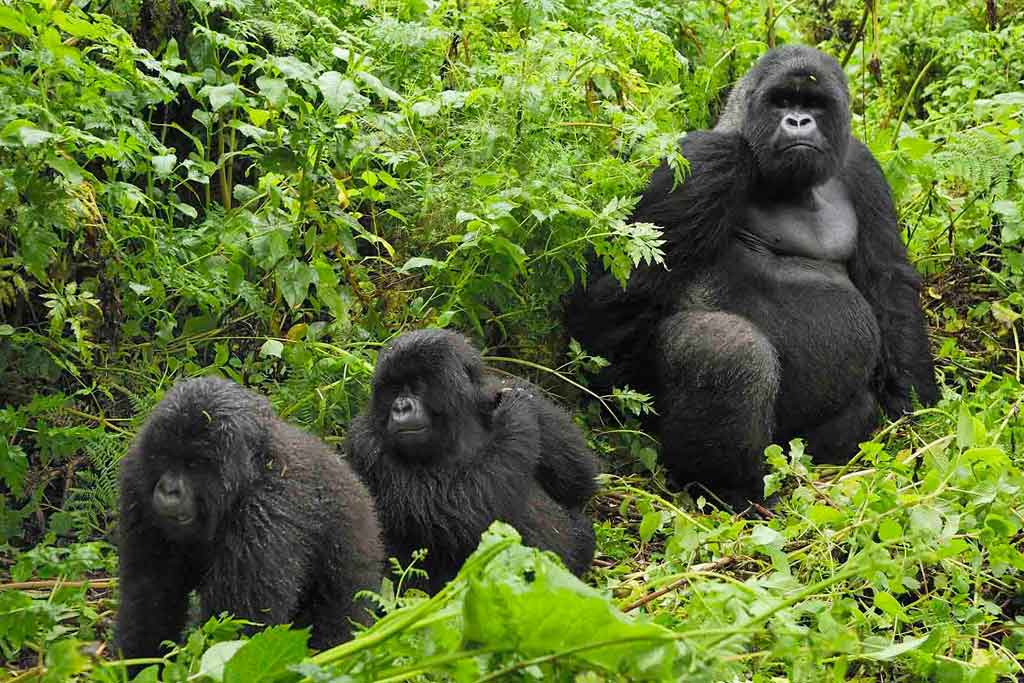
development of young mountain gorillas.
As infants grow, they become increasingly
curious about their surroundings.
They begin reaching for vegetation,
observing other gorillas, and
experimenting with movement.
During this stage, the mother remains
the infant’s main source of security.
Young gorillas may briefly move away
to explore but return quickly when
frightened or tired.
Infants also begin learning the
social rules of their groups.
They observe how adults communicate,
respond to threats, and interact
with other family members.
Stage Three: Juvenile Development
Between approximately three and six
years of age, gorillas become
increasingly independent. They spend
more time playing, climbing,
wrestling, and interacting with
other young gorillas.
Play is essential for physical
and social development. It improves
coordination, strength, confidence,
and the ability to understand
social boundaries.
Young gorillas also develop stronger
relationships with siblings and
other group members. These
interactions help prepare them
for the challenges of adulthood.
Stage Four: Adolescence
Adolescence brings significant
physical and behavioral changes.
Male gorillas gradually become
larger and stronger, while
females approach reproductive
maturity.
Young males may remain in their
birth groups or eventually
disperse. Some spend time
living independently before
establishing social relationships
with adult females.
During adolescence, gorillas
also learn to navigate competition,
cooperation, and changes in
group hierarchy.
Stage Five: Young Adulthood
As gorillas reach adulthood,
their responsibilities increase.
Females may begin reproducing,
while males develop greater
physical strength and social
influence.
Female gorillas generally
mature earlier than males.
Their reproductive success
depends on health, nutrition,
social conditions, and the
survival of previous offspring.
Stage Six: Mature Adulthood
Mature adulthood can last many
years. During this period,
females may raise several
offspring, while males may
establish or maintain
family groups.
Experienced adults often have
long-standing relationships
with other group members.
These relationships contribute
to the social complexity
of gorilla communities.
Stage Seven: Old Age
As gorillas grow older,
they may experience declining
strength, dental wear,
slower movement, and
greater vulnerability to illness.
However, aging varies considerably.
Some older gorillas remain active
and socially engaged, while others
spend more time resting.
Older animals may continue
maintaining important family
relationships even when their
physical abilities decline.
| Life Stage | Approximate Age | Main Characteristics |
|---|---|---|
| Newborn | 0–6 months | Complete maternal dependence |
| Infant | 6 months–3 years | Exploration and maternal care |
| Juvenile | 3–6 years | Play and social learning |
| Adolescent | 6–12 years | Growth and social development |
| Young Adult | 10–15 years | Maturation and reproduction |
| Mature Adult | 15–30 years | Parenting and social responsibilities |
| Older Adult | Often 30+ years | Variable age-related changes |
Note: These ages are approximate.
Development varies between individual gorillas and
between males and females. Some life stages overlap.
These developmental ranges overlap
and vary by sex and individual.
5. How Baby Gorillas Survive Their Most Vulnerable Years
The first years of a gorilla’s life
are especially important for
determining its chances of reaching
adulthood. Newborn gorillas are
completely dependent on their
mothers and cannot survive
independently.
Maternal care involves much more
than feeding. A mother must
transport her infant through
dense vegetation, protect it
from environmental hazards,
respond to its distress,
and gradually introduce it
to other group members.
As the infant grows, it begins
learning through observation.
It watches adults select food,
move through difficult terrain,
and communicate with one another.
The presence of a stable family
group can also support development.
Other gorillas may interact
with infants, while mature
males can contribute to
group protection.
Because gorillas reproduce slowly,
the survival of each infant
is especially important.
A female may spend several
years raising one offspring
before producing another.
Protecting mothers and infants
therefore contributes directly
to the long-term survival
of gorilla populations.
6. How Long Does a Silverback Gorilla Live?
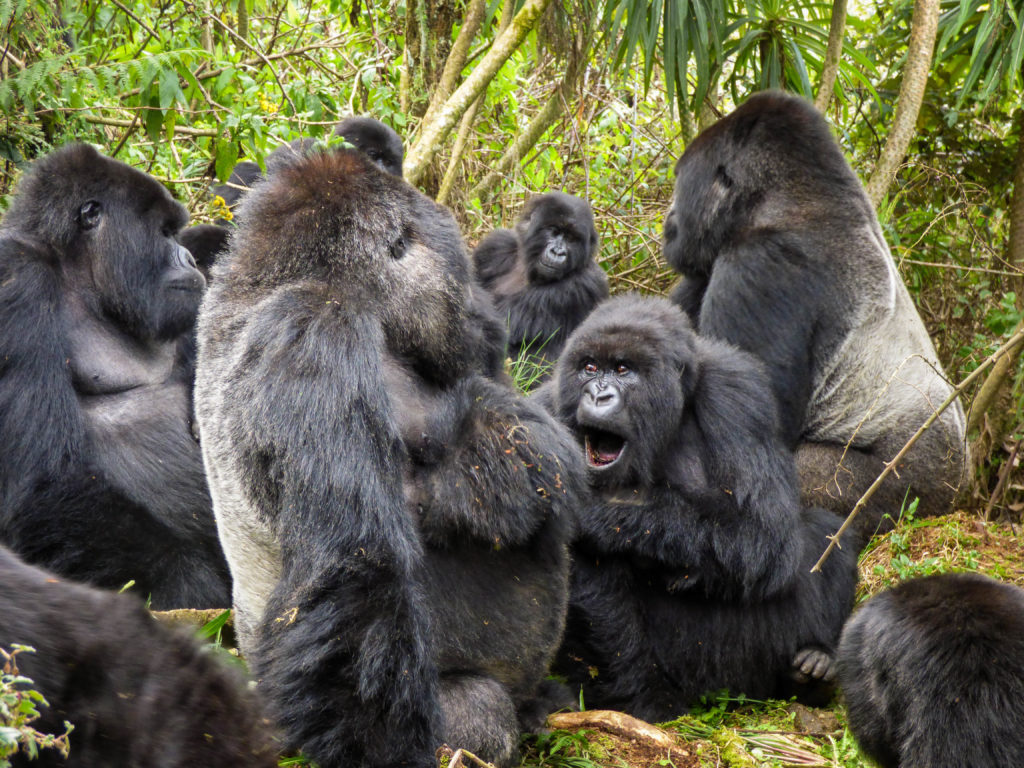
protective and social roles.
The lifespan of a silverback
gorilla commonly falls within
the broader wild gorilla range
of approximately 30 to 40 years.
Some individuals live longer,
while others die earlier
because of illness, injury,
or other threats.
The term silverback refers
to a mature male gorilla
that has developed distinctive
silver-gray hair across
its back. This appearance
usually begins developing
around 12 to 15 years of age.
Silverbacks are famous for
their immense physical strength,
but their social behavior
is equally remarkable.
A mature male may influence
group movement, respond to
potential threats, maintain
relationships with females,
and interact with young gorillas.
Not every silverback leads
a family group. Some groups
contain multiple mature males,
and leadership arrangements
can vary.
Competition between males
may occasionally result
in injuries. However,
gorillas often communicate
through vocalizations,
postures, and displays
before physical confrontation.
An older silverback may
have experienced decades
of changes in family
composition, including
births, deaths, dispersal,
and the arrival of new members.
When a dominant silverback
dies, the consequences
can be significant.
Another male may assume
leadership, or the group
may experience social
reorganization.
7. Female Gorilla Lifespan, Motherhood and Reproduction
Female gorillas can live
for several decades, with
some surviving into their
40s or beyond. Their
longevity is particularly
important because of
their substantial investment
in raising offspring.
Female gorillas generally
give birth to one infant
after a pregnancy lasting
approximately eight and
a half months. When an
infant survives, several
years may pass before
the next birth.
This slow reproductive
strategy means that
female gorillas may
raise only a limited
number of surviving
offspring during
their lifetimes.
Motherhood requires
significant energy.
Females must maintain
their own health while
supporting pregnancy,
milk production,
infant transportation,
and protection.
Female gorillas may
also transfer between
groups during their
lives. Such movements
can influence social
relationships and
reproductive opportunities.
Some females outlive
males, but lifespan
differences vary between
populations and cannot
be reduced to a single
universal rule.
8. How Gorilla Family Relationships Influence Survival
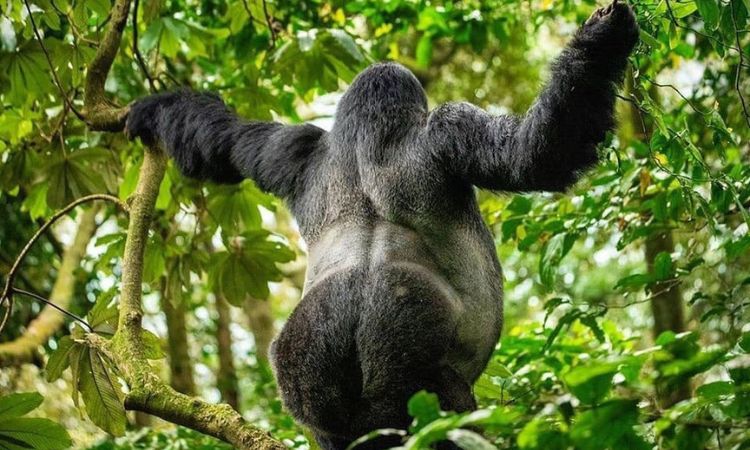
relationships that may last decades.
Gorillas are highly social
primates, and family life
is central to their survival.
A group may contain one
or more mature males,
adult females, juveniles,
and infants.
Young gorillas learn
essential behaviors
through interaction
with family members.
Play helps develop
physical coordination
and social skills,
while maternal care
provides protection
during vulnerable years.
Adult males may contribute
to group stability,
although their precise
roles vary between
groups and individuals.
Family relationships
can continue for many
years. Older gorillas
may remain closely
connected to offspring
and other familiar
group members.
Changes in leadership
or group composition
can influence survival,
particularly for
dependent infants.
These complex relationships
demonstrate why conservation
must protect functioning
populations and habitats,
not simply individual animals.
9. What Happens When a Gorilla Grows Old?
Aging in gorillas
involves gradual physical
changes that can influence
movement, feeding,
social behavior,
and general health.
Older gorillas may
experience reduced
muscle strength,
slower movement,
dental wear,
and greater vulnerability
to certain diseases.
Dental condition is
particularly important
because gorillas rely
on their teeth to
process large quantities
of fibrous vegetation.
Significant tooth wear
or dental disease may
make feeding more difficult
and influence body
condition in later life.
Some older gorillas
spend more time resting
or moving slowly.
Others remain active
and socially engaged
well into advanced age.
Age does not automatically
remove an individual’s
social importance.
Older gorillas may
continue maintaining
relationships established
over many years.
Scientists studying
aging gorillas monitor
body condition,
feeding behavior,
mobility, reproductive
history, and social
relationships.
These observations
help researchers
distinguish normal
aging from serious
medical problems.
10. Seven Major Factors That Affect the Lifespan of a Gorilla
1. Habitat Quality
Healthy forests provide
food, shelter, nesting
materials, and space
for movement. Habitat
loss and fragmentation
can increase environmental
pressure and contact
with human activities.
2. Nutrition
Gorillas require
adequate nutrition
to maintain their
large bodies, support
reproduction, and
recover from illness.
Food availability
varies between habitats
and seasons.
3. Infectious Diseases
Gorillas are vulnerable
to several infectious
diseases, including
certain illnesses
transmitted by humans.
Respiratory infections
are an important concern
for habituated
mountain gorillas.
4. Poaching and Snares
Snares intended for
other wildlife may
cause serious injuries
to gorillas. Anti-poaching
patrols and snare
removal help reduce
these preventable threats.
5. Social Stability
Stable family relationships
can support infant
development and group
cohesion. Social changes
may create additional
risks for vulnerable
individuals.
6. Genetics and Health
Individual genetic
differences, previous
injuries, and health
conditions may influence
longevity. Not all
gorillas age at
the same rate.
7. Conservation Protection
Ranger patrols,
habitat protection,
scientific monitoring,
and carefully managed
veterinary interventions
can help reduce
preventable mortality.
11. Gorilla Lifespan in the Wild vs Captivity
Some gorillas living
under professional
human care survive
into their 50s and,
exceptionally, beyond
60 years. This is
longer than the commonly
cited lifespan range
for wild gorillas.
Several factors can
contribute to longevity
under human care,
including consistent
nutrition, regular
veterinary treatment,
disease monitoring,
and protection from
certain environmental
hazards.
In the wild, a serious
injury or infection
may become life-threatening
because medical treatment
is generally unavailable.
However, captivity
does not eliminate
health problems.
Gorillas under human
care can experience
cardiovascular disease
and other medical
conditions.
Appropriate social
groups, environmental
enrichment, space,
and professional
animal welfare practices
are also essential.
Lifespan guidance Often 30–40 years Some reach 50+ years
Food Natural foraging Managed nutrition
Medical treatment Limited intervention Routine veterinary access
Environment Natural forest habitat Managed facilities
Major challenges Disease, injury, human threats Age-related illness and welfare needs
12. Can Gorillas Live Beyond 50 or 60 Years?
Yes. Exceptional gorillas
under professional human
care have survived
beyond 60 years.
These individuals
demonstrate that gorillas
have the biological
capacity for remarkable
longevity under
favorable circumstances.
However, such ages
are unusual and should
not be confused with
the typical lifespan
of gorillas living
in the wild.
Longevity records
also depend on reliable
birth documentation.
For wild gorillas,
exact ages can be
difficult to determine
unless individuals
have been monitored
since birth.
Long-term research
and accurate recordkeeping
therefore remain
essential for understanding
the maximum lifespan
of different gorilla
populations.
13. What Happens When a Gorilla Dies?
The death of a gorilla
can affect the social
relationships and
structure of its group.
The consequences depend
on the individual’s
age, sex, social
position, and relationships
with other members.
When an infant dies,
its mother may remain
near the body or
continue carrying
it for a period.
Such behavior has
been documented
among great apes
and is an important
subject of scientific
research.
When an adult female
dies, dependent offspring
may face serious
challenges, particularly
if they are still
nursing or require
maternal protection.
The death of a
dominant silverback
can trigger changes
in leadership or
group composition.
Some individuals may
remain together,
while others disperse.
Researchers study
these events to
better understand
gorilla social bonds,
mortality, and the
effects of losing
important group members.
14. How Conservation Helps Gorillas Survive Longer
Conservation plays
a critical role in
protecting gorilla
populations and reducing
preventable causes
of death.
In Uganda, Bwindi
Impenetrable National
Park and Mgahinga
Gorilla National Park
provide protected
habitats for mountain
gorillas.
Conservation activities
include anti-poaching
patrols, habitat
management, scientific
research, wildlife
health monitoring,
and community engagement.
Responsible tourism
can contribute to
these efforts through
park revenue and
employment opportunities.
However, tourism
must be carefully
managed to minimize
disturbance and
disease transmission.
Visitors should
follow ranger instructions,
avoid trekking when
ill, maintain required
viewing distances,
and respect all
park regulations.
For official conservation
and wildlife information,
visit the
Uganda Wildlife Authority
and the
IUCN Red List.
15. Where Can You See Mountain Gorillas in Uganda?
Bwindi Impenetrable National Park
Bwindi is one of
Africa’s most important
mountain gorilla habitats.
Its ancient rainforest
supports remarkable
biodiversity and
provides opportunities
for carefully regulated
gorilla trekking.
During a guided trek,
visitors may observe
gorillas feeding,
resting, grooming,
playing, and interacting
with their young.
Watching different
generations together
offers a memorable
perspective on the
lifespan of a gorilla.
Mgahinga Gorilla National Park
Mgahinga lies within
Uganda’s portion of
the Virunga Mountains.
Its beautiful volcanic
landscape and montane
vegetation provide
habitat for mountain
gorillas and other
wildlife.
Both national parks
require authorized
gorilla trekking
permits, and visitors
must follow conservation
guidelines established
by park authorities.
16. Plan Your Gorilla Safari with PrideMark Safaris
Experiencing mountain
gorillas in their
natural habitat is
one of Africa’s most
remarkable wildlife
adventures.
With PrideMark Safaris,
travelers can plan
gorilla trekking
experiences alongside
other Uganda wildlife
activities, including
game drives, chimpanzee
trekking, and scenic
national park visits.
Uganda Safari from Kigali
Explore convenient
cross-border safari
options for visiting
Uganda’s mountain gorillas.
Uganda Safari Packages 2027
Discover safari
planning ideas for
gorilla trekking and
wildlife adventures.
Uganda Safari Packages 2028
Begin planning a
future Uganda gorilla
and wildlife journey.
Experience Mountain Gorillas with PrideMark Safaris
Discover the extraordinary
lives of mountain gorillas
in Uganda. Our team can
help arrange gorilla
permits, accommodation,
transportation, and
guided wildlife experiences.
Frequently Asked Questions About Gorilla Lifespan
What is the average lifespan of a gorilla?
Gorillas are commonly
described as living
approximately 30 to
40 years in the wild.
This is a general range,
not an exact average
for every population.
How long can a mountain gorilla live?
Mountain gorillas
can live for several
decades, often around
30 to 40 years.
Individual lifespans vary.
Can gorillas live for 50 years?
Yes. Some gorillas
under professional
human care reach
their 50s or beyond.
Can a gorilla live for 60 years?
Yes. Exceptional
gorillas under human
care have survived
beyond 60 years,
although this is unusual.
How long does a silverback gorilla live?
Silverbacks may
live for several
decades, commonly
within the broader
wild gorilla range
of 30 to 40 years.
Do female gorillas live longer than males?
Some females outlive
males, but differences
depend on population
conditions, health,
and individual risks.
At what age does a gorilla become a silverback?
Males typically
begin developing
silver-gray back
hair around 12 to
15 years of age.
How long is a gorilla pregnant?
Gorilla gestation
lasts approximately
eight and a half months.
How many babies can a female gorilla have?
Females usually
give birth to one
infant at a time,
with several years
between surviving
offspring.
What causes gorillas to die in the wild?
Causes include
disease, injuries,
natural aging,
and human-related
threats such as
snares and habitat
disturbance.
Do gorillas experience old age like humans?
Yes. Gorillas
experience age-related
changes in mobility,
dental condition,
physical strength,
and health.
Where can I see mountain gorillas in Uganda?
Visitors can encounter
mountain gorillas
during authorized
treks in Bwindi
Impenetrable National
Park and Mgahinga
Gorilla National Park.
Conclusion: Understanding the Lifespan of a Gorilla
The lifespan of a gorilla
reveals a remarkable story
of growth, intelligence,
family relationships,
and survival. From the
vulnerability of infancy
to the responsibilities
of adulthood and the
challenges of old age,
gorillas experience
complex lives that
unfold over several
decades.
Although gorillas
commonly live approximately
30 to 40 years in the
wild, their longevity
depends on many factors,
including habitat quality,
nutrition, disease,
social stability,
and conservation protection.
Every surviving gorilla
represents an important
part of its family
and population.
Protecting gorillas
therefore requires
preserving their forests,
reducing preventable
threats, and supporting
long-term conservation.
For travelers,
encountering mountain
gorillas in Uganda
offers an extraordinary
opportunity to witness
these relationships
firsthand. A mother
caring for her infant,
juveniles playing
together, and a
mature silverback
resting among his
family all reveal
different chapters
of the gorilla
life cycle.
Discover Uganda’s
mountain gorillas with
PrideMark Safaris
and start planning
an unforgettable
wildlife adventure.