Can You Go Gorilla Trekking With a Knee Replacement?
A knee replacement does not automatically prevent someone from seeing mountain gorillas. The more useful questions are how well the joint functions, how confident the traveler feels on uneven ground, and whether their surgeon or rehabilitation clinician considers the proposed activity appropriate. Gorilla trekking with a knee replacement requires planning for both the outward hike and the return journey, which can be more tiring than visitors expect.
A successful operation is only one part of the decision. Some people regain excellent mobility after rehabilitation, while others continue to experience stiffness, swelling, weakness or difficulty descending steps. The age of the implant alone cannot tell a safari organizer whether someone can complete a forest trek. Current walking ability, balance and the presence of other medical conditions are much more informative. This is one reason gorilla trekking with a knee replacement calls for careful preparation.
Uganda offers extraordinary wildlife encounters, but the gorillas choose where they move. Rangers cannot promise a short or level route because gorilla families may travel through steep, muddy or densely vegetated terrain. A traveler who walks comfortably around a hotel may still find a forest hillside challenging. Planning should therefore start with an honest description of what walking feels like on an ordinary day. This is one reason gorilla trekking with a knee replacement calls for careful preparation.
The decision should consider the whole trip, not only the hour spent observing gorillas. Travelers may face long road transfers, early starts, vehicle steps and uneven paths around lodges. Comfortable accommodation and realistic travel days can reduce unnecessary strain. When arranging gorilla trekking with a knee replacement, ask about transfer durations, access to rooms and whether extra rest days can be built into the itinerary.
Before paying for a permit, discuss the trip with your treating clinician, especially if surgery was recent or recovery has not progressed as expected. Describe the possibility of several hours of walking, steep slopes, wet ground and remote conditions. A clinician who knows your rehabilitation history can advise on functional limitations and warning signs. A travel company cannot replace that individualized medical judgment.
It is also reasonable to decide that a trek is not the right activity at this stage of recovery. Uganda has other rewarding experiences, including scenic drives, cultural visits and wildlife viewing that involve less walking. A thoughtful itinerary leaves room for a change of plan rather than pressuring someone to complete a demanding excursion merely because a permit has been purchased. This is one reason gorilla trekking with a knee replacement calls for careful preparation.
When contacting PrideMark Safaris, explain whether you use a cane, need support on stairs, have trouble kneeling or cannot tolerate prolonged descents. These details help the team discuss transport and assistance options with local providers. They do not guarantee that a ranger can assign a particular gorilla group, but they can make the planning conversation more realistic and useful.
Gorilla trekking with a knee replacement can be possible for some well-recovered travelers who have suitable medical advice and adequate mobility. It can also be unsuitable for others, particularly when balance is poor, pain is uncontrolled or surgery is recent. The safest approach is individualized rather than based on a blanket rule about artificial joints or age.
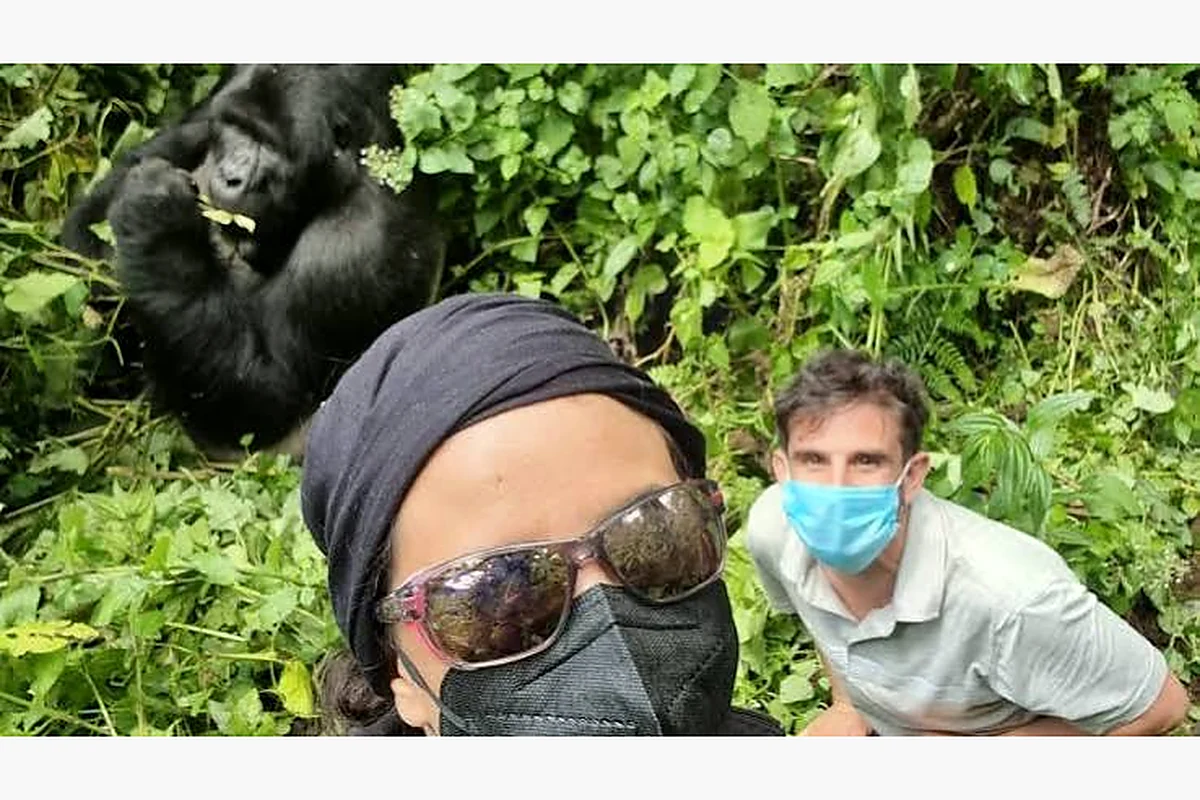
Two visitors wearing face masks take a photograph with a mountain gorilla visible behind them in lush forest vegetation.
How Knee Replacement Surgery Affects Hiking and Mobility
Knee replacement surgery aims to reduce pain and improve function, but recovery involves more than healing the incision. Muscles around the knee, especially the quadriceps, must regain strength and coordination. These muscles help control the body while walking downhill or stepping over obstacles. Weakness may remain even when everyday walking feels comfortable, so forest trekking deserves its own assessment.
Flexibility matters because mountain trails rarely offer a predictable sequence of flat steps. Visitors may need to step over roots, move sideways around vegetation or adjust their footing on sloping ground. Limited knee bend can make these movements awkward. It is worth practicing the kinds of movement recommended by your physiotherapist rather than assuming that distance walked on level pavement tells the whole story. This is one reason gorilla trekking with a knee replacement calls for careful preparation.
Balance can change after joint replacement, especially if a traveler spent years compensating for pain before surgery. Confidence may return slowly, and fear of falling can cause people to move stiffly or rush difficult sections. On a wet forest path, a controlled pace and reliable hand support matter more than speed. A trek should not become a test of determination at the expense of safety. This is one reason gorilla trekking with a knee replacement calls for careful preparation.
Some travelers experience swelling after prolonged standing, sitting or walking. Swelling can make a knee feel tight and reduce comfortable movement later in the day. Discuss practical strategies with your medical team before travel, including how to manage activity and recovery periods. Do not introduce new pain medicines or compression measures solely for the safari without checking whether they are appropriate for you.
Artificial knee joints can function well for many years, but they do not eliminate the possibility of injury. A fall may harm the surrounding bones or soft tissues, and a forceful twist can be painful even when the implant remains intact. This is why gorilla trekking with a knee replacement should be assessed as a balance and fall-prevention challenge, not simply as a question of implant durability.
Walking tolerance should be measured honestly. Think about whether you can walk on uneven paths, manage a long staircase, carry a small daypack and remain steady when tired. These are useful discussion points for your clinician. They are not pass-or-fail tests, and completing them at home does not guarantee a safe trek, but they reveal potential limitations that deserve attention. This is one reason gorilla trekking with a knee replacement calls for careful preparation.
People with replacements in both knees may have different needs from those with one replaced knee. Other issues, such as hip pain, back problems, heart disease or reduced vision, can further affect footing. Related guides about gorilla trekking with hip replacement and gorilla trekking with arthritis can help travelers identify questions to raise before booking.
The goal is not to prove that an artificial joint is as strong as a natural knee. The goal is to understand what your body can do comfortably and repeatedly under variable conditions. Gorilla trekking with a knee replacement is more manageable when rehabilitation has addressed strength, balance, endurance and confidence, and when the traveler is willing to stop if conditions exceed their abilities.
| Mobility consideration | Question to discuss | Why it matters |
|---|---|---|
| Strength | Can I control downhill steps? | Supports stable descents |
| Balance | Am I steady on uneven ground? | Helps reduce fall risk |
| Swelling | How does my knee respond after long walks? | May affect later mobility |
| Recovery | Are all surgical restrictions lifted? | Avoids premature exertion |
Understanding Steep, Muddy and Uneven Forest Trails
Uganda’s gorilla habitats are mountainous forests, not paved wildlife parks. In Bwindi Impenetrable National Park, visitors may encounter exposed roots, slippery leaves, narrow footpaths and thick undergrowth. Rain can make the same route harder within minutes. Anyone considering gorilla trekking with a knee replacement should picture variable footing rather than a marked hiking trail with predictable steps.
Downhill walking often places different demands on a replaced knee than climbing. The thigh muscles must control each step while the body moves forward, and a sudden slip can force an awkward movement. Travelers who cope well with uphill walking may find descents more uncomfortable. Mention this specifically to your physiotherapist when discussing whether a mountain trek is a sensible goal. This is one reason gorilla trekking with a knee replacement calls for careful preparation.
Mud can conceal rocks, holes and roots. A boot that grips well on one surface may still slide on wet vegetation or loose soil. Trekking poles can add support, but they cannot remove every hazard. A guide may suggest where to place your feet, yet the traveler remains responsible for deciding whether the next section feels safe to attempt. This is one reason gorilla trekking with a knee replacement calls for careful preparation.
Gorilla groups move independently, so the distance from a trailhead is unpredictable. A morning may involve a relatively short approach, or it may require a longer search through difficult vegetation. Even after reaching the gorillas, visitors must return over the terrain they crossed. That uncertainty is especially important when fatigue causes knee control to deteriorate later in the day.
Weather matters even outside periods commonly described as rainy seasons. Tropical forests can receive showers at any time, and shaded ground may remain damp. A flexible safari schedule can make travel more comfortable, but it cannot ensure dry trekking conditions. Pack clothing that allows movement, keep essential medication protected and expect changes in trail conditions.
Altitude and terrain should not be confused. The elevation of Mgahinga Gorilla National Park and Bwindi can influence exertion, but the immediate knee concern is often slope, footing and time spent walking. Choosing one park based only on its name or average elevation is unlikely to answer whether a particular route will be manageable. This is one reason gorilla trekking with a knee replacement calls for careful preparation.
A common mistake is to focus on how far a person can walk while overlooking the surface beneath their feet. Two kilometers on a steep muddy path may be more demanding than a much longer distance on a smooth road. For gorilla trekking with a knee replacement, describe the types of terrain that cause pain, instability or hesitation rather than quoting distance alone.
Ask the safari organizer about typical conditions in the sector under consideration, while remembering that the final trekking assignment and the gorillas’ location are not guaranteed. PrideMark Safaris can help discuss realistic expectations and lodging logistics. Rangers control the trek on the day and may adapt decisions to current conditions, but no operator can promise an easy route.
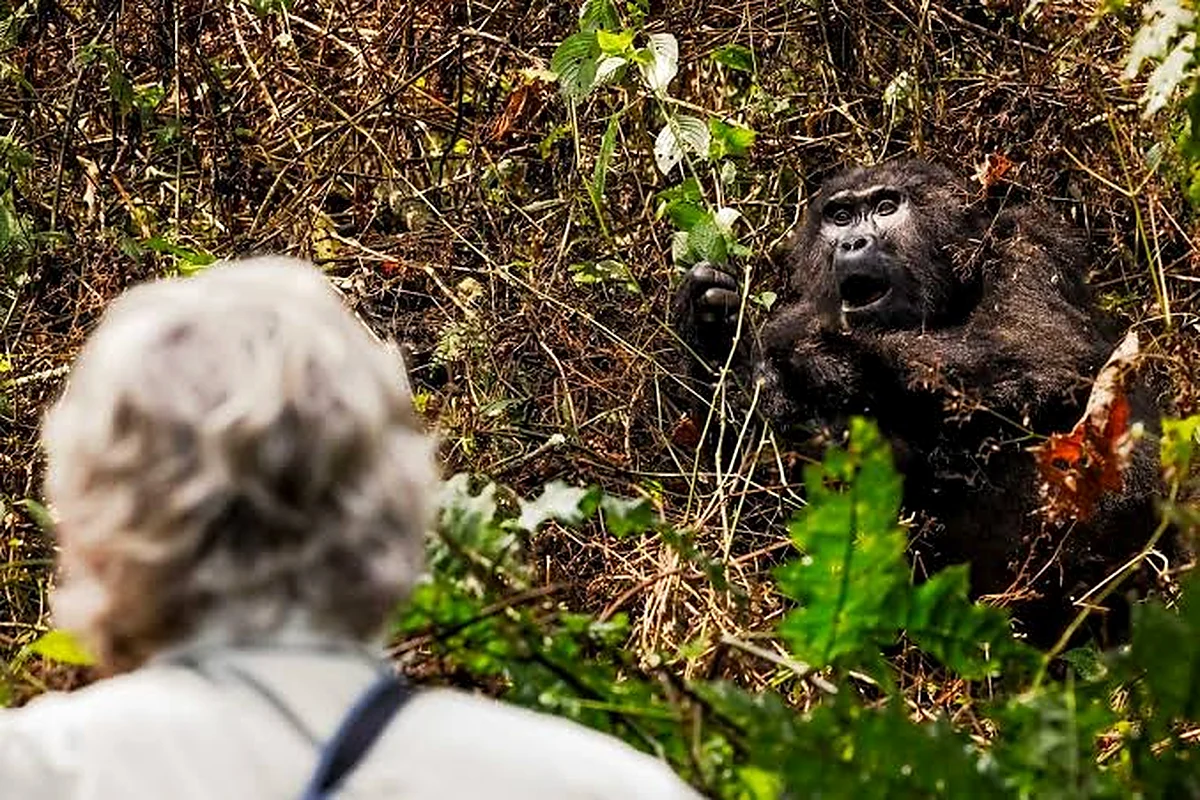
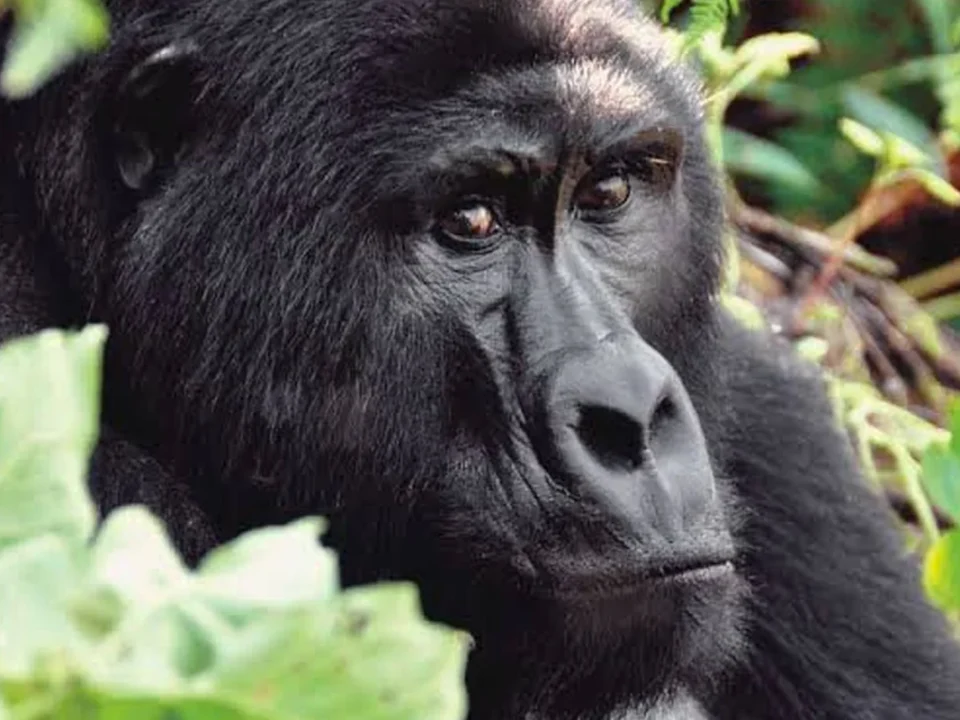
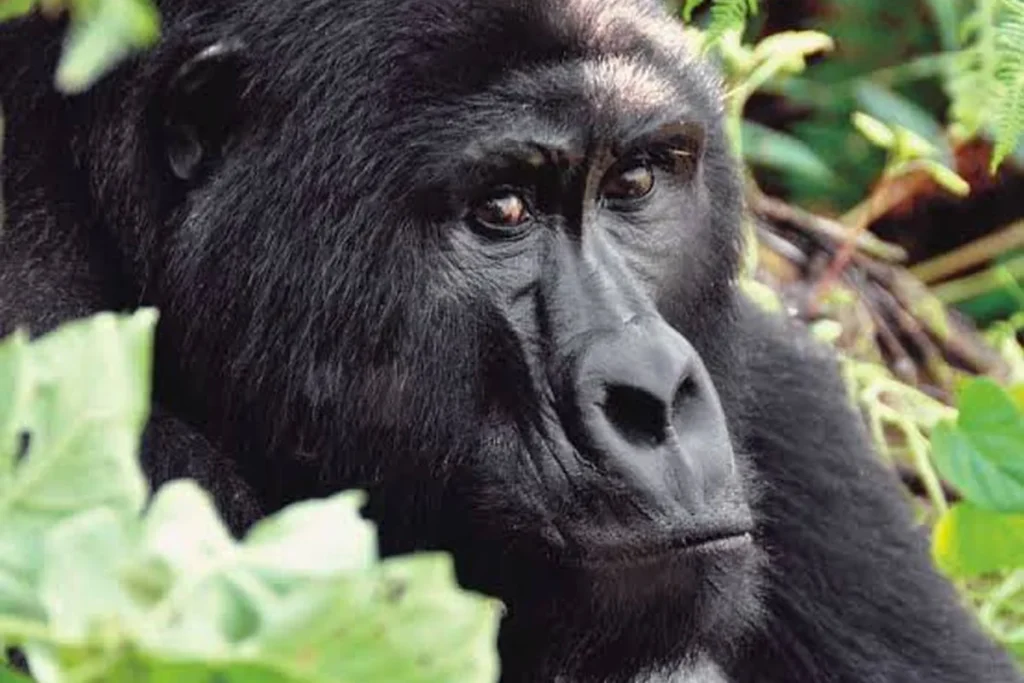
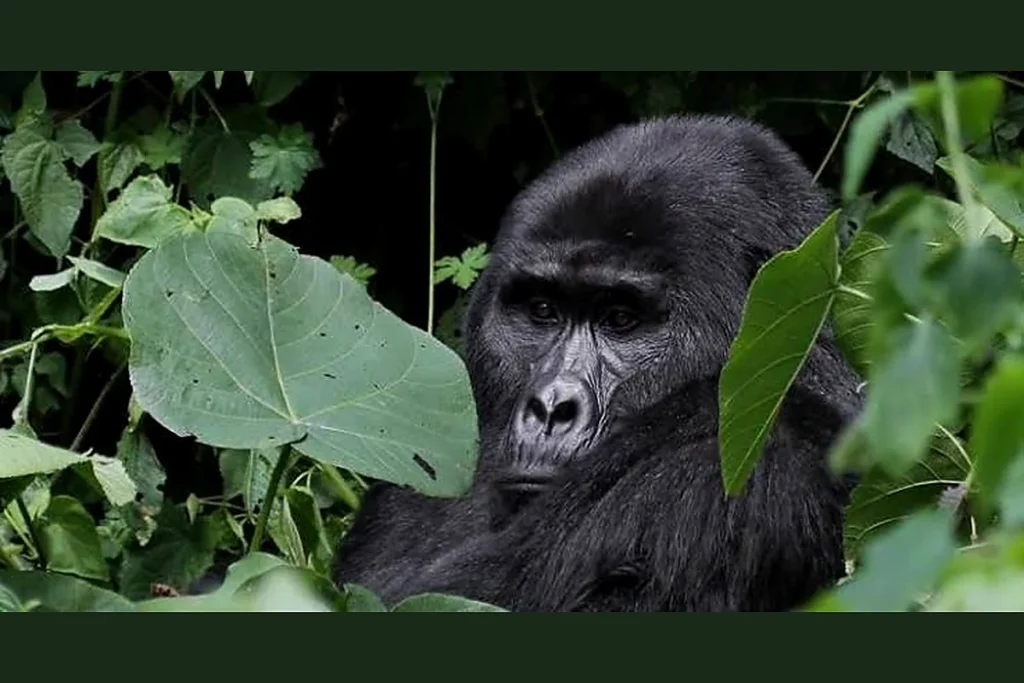
A visitor observes a mountain gorilla resting among dense forest vegetation during a guided gorilla trekking experience.
Medical Advice, Rehabilitation and Physical Preparation
Begin preparation with the clinician who knows your knee replacement and recovery history. Explain that the activity may involve steep, muddy ground, unpredictable walking time and limited access to urgent medical care. Ask whether your present strength, balance and endurance are suitable, what symptoms should end the activity, and whether additional rehabilitation is advisable before departure.
Timing after surgery is important, but there is no universal date at which every patient becomes ready for a gorilla trek. Healing, rehabilitation progress and other health conditions vary widely. If the operation was recent, follow your surgeon’s restrictions rather than a general travel article. Booking a demanding excursion too early may create avoidable pressure to exceed the limits of recovery. This is one reason gorilla trekking with a knee replacement calls for careful preparation.
A physiotherapist can assess tasks that resemble the challenges of trekking, including controlled step-downs, balance on uneven surfaces and walking with appropriate support. Training should be tailored to your abilities and progressed gradually. Sudden attempts at long hikes or steep hills shortly before travel can provoke swelling or injury and may be less useful than a consistent rehabilitation plan. This is one reason gorilla trekking with a knee replacement calls for careful preparation.
Practice with the boots, socks and walking aids you intend to use. New footwear may cause blisters or alter how confidently you step. A pole that is too long or too short can also feel awkward on slopes. If your clinician approves walking poles, learn how to use them before the safari rather than trying to master them in slippery forest conditions.
Consider your ability to recover after exertion. A comfortable walk today is encouraging, but repeated days of travel and activity can lead to fatigue. Build rest periods into the itinerary and avoid scheduling demanding activities immediately before the trek. Gorilla trekking with a knee replacement should be planned around sustainable function, not the single best day you have had in months.
Bring a concise medical summary if your clinician recommends it, including relevant surgical history, current medicines and any important restrictions. Keep medications in original labeled packaging and in hand luggage where appropriate. Travel insurance should be reviewed for exclusions relating to pre-existing conditions, adventure activities, evacuation and complications of previous surgery. This is one reason gorilla trekking with a knee replacement calls for careful preparation.
If you have had blood clots, recurrent falls, wound complications or persistent swelling, raise these issues explicitly before travel. Long flights and road transfers may require individualized advice about movement and clot prevention. Do not begin anticoagulants or change prescribed treatment based on general safari tips. Your medical team is best placed to assess the risks.
Planning gorilla trekking with a knee replacement is easier when the medical and travel conversations happen early. Share realistic mobility information with PrideMark Safaris through the contact page and review the About Us page to understand the company’s safari-planning approach. The organizer can discuss logistics, while medical clearance remains the responsibility of your treating professionals.
Choosing Between Bwindi and Mgahinga
Both Bwindi and Mgahinga offer mountain gorilla trekking, but neither park can be described as universally easier for someone with a replaced knee. Terrain varies between routes, and the gorillas’ daily movements influence how far visitors must travel. Gorilla trekking with a knee replacement therefore requires a discussion of current conditions and personal limitations rather than a promise about one park.
Bwindi has several trekking sectors, each with its own access roads, accommodation options and terrain. The sector named on a permit matters because transferring between distant starting points can be inconvenient. Ask your organizer to match lodging to the permit location and explain likely road travel. Reducing unnecessary transfers may help travelers who experience stiffness after long periods in a vehicle. This is one reason gorilla trekking with a knee replacement calls for careful preparation.
Mgahinga lies in the Virunga volcanic landscape and also has steep terrain. Its dramatic scenery should not be mistaken for an easier walking experience. A traveler who struggles on sustained inclines or slippery descents may encounter challenges in either park. The best conversation is about specific physical demands, support arrangements and what happens if the traveler cannot continue. This is one reason gorilla trekking with a knee replacement calls for careful preparation.
Permit availability and ranger assignments are operational matters managed through the relevant authorities. An operator can communicate accessibility concerns and seek practical guidance, but cannot guarantee that a particular gorilla family will be close to the trailhead. Avoid buying a permit on the assumption that a request for an easy group will always be granted.
Accommodation can make a meaningful difference to the overall experience. Look for short walking distances between the room, restaurant and vehicle, manageable steps, and a place to rest comfortably after the trek. Ask about bathroom access and whether the property has steep internal paths. A lodge described as luxurious is not automatically accessible to someone with reduced knee mobility.
Flying to southwestern Uganda may reduce time spent on some road transfers, depending on the itinerary, flight schedule and final lodge location. It does not eliminate driving or walking, and small aircraft may have boarding requirements worth checking. The 3-day flying luxury gorilla safari is a useful starting point for discussing travel time rather than a guarantee of reduced trekking difficulty. This is one reason gorilla trekking with a knee replacement calls for careful preparation.
For a compact itinerary, travelers can compare the 3-day Uganda gorilla trekking safari with a longer journey that allows additional rest. Those who want other wildlife experiences may consider the 5-day gorilla and game safari. The right choice depends on mobility, fatigue, budget and the number of travel days available, not just the headline duration.
When discussing gorilla trekking with a knee replacement, ask PrideMark Safaris to explain the advantages and limitations of both parks. It is more helpful to receive an honest account of uncertainty than an assurance that one route is flat or effortless. A well-planned safari leaves space for rest and accepts that conditions on the trekking day may require a change of plan.
| Planning factor | Bwindi | Mgahinga |
|---|---|---|
| Terrain | Steep forest routes vary | Volcanic mountain terrain varies |
| Trek duration | Unpredictable | Unpredictable |
| Accessibility | Discuss sector and lodge access | Discuss trail and lodge access |
| Guarantee of easy route | Not available | Not available |
Using Porters, Walking Sticks and Trekking Assistance
A local porter can help carry a daypack, reducing the weight on your shoulders and freeing your hands for balance. Porters may also offer assistance over awkward sections when appropriate. Their presence does not make a steep trail safe for everyone, and they are not substitutes for medical assessment or trained clinical care. Discuss the type of help you may need before the trek.
Walking sticks and trekking poles can improve confidence for some people, particularly on uneven paths. They need to be used correctly, however, and may be less helpful when the terrain is extremely tangled. If you rely on a cane after knee replacement, ask your physiotherapist whether a different aid is suitable for forest conditions. Practice before travel and avoid improvising on the day. This is one reason gorilla trekking with a knee replacement calls for careful preparation.
Good boots should fit securely and provide traction, but there is no footwear that prevents every slip. Wear socks you have tested on walks, and avoid heavy or rigid footwear that makes your knee feel less stable. Clothing should allow comfortable bending and stepping. A small waterproof bag can protect essential items without adding unnecessary weight. This is one reason gorilla trekking with a knee replacement calls for careful preparation.
Communicate your limits to the ranger before setting out. Explain whether descending slopes, kneeling, sudden turns or prolonged standing cause problems. Rangers are responsible for group safety and wildlife rules, and their instructions must be followed. Sharing information early gives them a clearer picture of your situation, although it does not create a guarantee of a shorter route.
In some circumstances, specialized carrying assistance may be discussed locally, subject to availability, terrain, cost and park arrangements. Do not assume a sedan-style chair or stretcher service will be available or appropriate on your date. Ask the operator for current, specific details and consider whether the experience would be safe and comfortable given your medical condition.
The most valuable support is often a realistic pace. Rushing to keep up with other visitors increases the chance of missteps, while frequent stops may help manage fatigue. Yet group trekking has operational limits, and a ranger cannot always extend the excursion indefinitely. Gorilla trekking with a knee replacement works best when the traveler understands these constraints in advance.
Read the related walking-stick trekking guide and knee-problem trekking guide for further planning questions. These links open site searches for the relevant articles; replace them with direct published permalinks when available. They complement, rather than replace, advice from your orthopedic team.
Before confirming a booking, ask PrideMark Safaris about porter arrangements, expected payment practices and whether assistance must be reserved in advance. Also discuss the 3-day gorilla trekking itinerary and lodging access. Clear expectations about what a porter can and cannot do are more useful than assuming that assistance eliminates the physical demands of the forest.
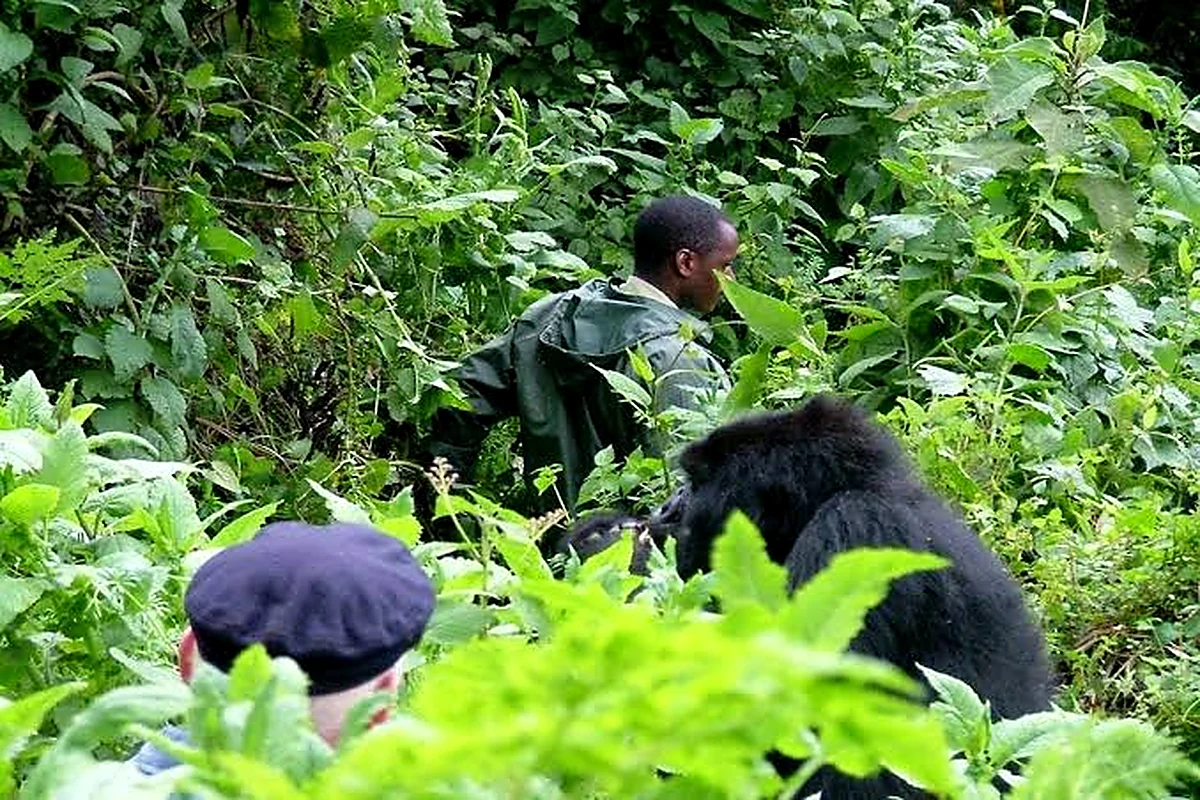
A mountain gorilla rests among lush forest vegetation while a park ranger and visitor observe nearby.
Managing Knee Discomfort, Swelling and Fatigue
Mild discomfort after activity and a concerning new symptom are not the same thing. Travelers should understand their usual recovery pattern before attempting a demanding hike. If the knee commonly becomes swollen after a short walk, a long forest trek may be poorly timed. Gorilla trekking with a knee replacement should be approached with realistic expectations about how the joint responds to exertion.
Pacing begins before the trek. Avoid exhausting sightseeing the previous day, get adequate sleep and eat a familiar breakfast if medically appropriate. Carry drinking water and a snack according to park guidance. Dehydration and fatigue can affect concentration and footing, even when they do not directly harm an implant. Small planning choices can help preserve attention for difficult terrain. This is one reason gorilla trekking with a knee replacement calls for careful preparation.
Long vehicle transfers can leave the knee feeling stiff. Discuss safe movement breaks with the driver and allow time to loosen up before walking, according to your clinician’s recommendations. Do not attempt forceful stretches on cold muscles or unfamiliar exercises on a steep path. The goal is comfortable movement, not achieving a particular range of motion at the trailhead. This is one reason gorilla trekking with a knee replacement calls for careful preparation.
Use prescribed pain medication only as directed by your clinician. Taking extra medicine to suppress warning pain may make it harder to judge whether continuing is sensible, and some drugs cause dizziness or drowsiness. Ask about medication storage, timing and possible interactions before traveling. Never borrow another traveler’s tablets or use a new treatment for the first time in the forest.
When stopping to rest, choose stable ground and avoid positions that strain the joint. Sitting on wet or uneven surfaces can make standing up difficult. If a break is needed, tell the ranger rather than silently falling behind. Some travelers benefit from a brief pause before descending, but the route and group conditions determine what is practical.
After the trek, monitor how your knee responds. Persistent or worsening pain, unusual swelling, warmth or reduced ability to bear weight deserves medical advice, especially if symptoms are new. A short period of rest may be sufficient for ordinary fatigue, but it should not be used to dismiss symptoms that differ from your normal pattern. This is one reason gorilla trekking with a knee replacement calls for careful preparation.
It can be tempting to compare your pace with that of other tourists. Such comparisons are unhelpful because people have different surgery histories, fitness levels and balance. Gorilla trekking with a knee replacement should be judged by your own comfort and stability. Completing the outing slowly and safely matters more than reaching the gorillas first or keeping up with the fastest walker.
A thoughtful itinerary from PrideMark Safaris can include a recovery day or a gentler activity after trekking. Compare the 5-day gorilla and game safari if you want to combine wildlife viewing with time between demanding excursions. Always confirm the actual day-by-day schedule and accessibility details before assuming that a longer safari will be physically easier.
Warning Symptoms and When Not to Trek
Certain symptoms call for medical assessment rather than an attempt to push through the hike. New severe knee pain, inability to bear weight, a fall with injury, or a sudden loss of joint function should stop the activity. A ranger can assist with the immediate situation and local response, but a forest trail is not a suitable place to investigate the cause of an orthopedic problem.
A hot, swollen and painful joint accompanied by fever can be a sign of infection and needs urgent medical attention, particularly in someone with a joint replacement. Do not dismiss these symptoms as ordinary trekking soreness. The same caution applies if a surgical wound is not fully healed or there are signs of infection before departure. This is one reason gorilla trekking with a knee replacement calls for careful preparation.
New calf swelling, pain or redness may raise concern about a blood clot, although these symptoms have other causes. Sudden breathlessness, chest pain, fainting or coughing blood requires emergency medical care. Travelers with a history of clotting problems should discuss long flights and road journeys with their clinician well before booking. This is one reason gorilla trekking with a knee replacement calls for careful preparation.
Falls can cause fractures around a knee implant, especially in people with reduced bone strength. If a fall leads to significant pain, deformity or difficulty standing, do not attempt to walk it off. Related information about gorilla trekking with osteoporosis can help frame the questions to ask about bone health and fall prevention.
Postponing the trek may be wise when rehabilitation is incomplete, balance is unreliable or walking on uneven ground consistently causes substantial pain. A medical professional should assess whether these problems are temporary or indicate a longer-term limitation. The fact that a permit is expensive does not justify overriding advice to avoid demanding activity.
Remote forest conditions can delay access to definitive medical care. Evacuation may require assistance over difficult ground before a vehicle can be reached. Review travel insurance carefully, including medical evacuation and exclusions for previous joint surgery. Keep emergency contacts accessible and ensure a travel companion understands any important medical instructions. This is one reason gorilla trekking with a knee replacement calls for careful preparation.
Gorilla trekking with a knee replacement is not a challenge that must be completed at all costs. If pain or instability increases during the hike, tell the ranger promptly and follow their instructions. Turning back may be disappointing, but continuing on a deteriorating knee can increase the risk of a fall or a more serious injury.
Before travel, ask PrideMark Safaris about itinerary flexibility, cancellation terms and alternative experiences if you cannot trek. The About Us page explains more about the company, while the contact page provides a route for discussing individual requirements. Financial terms and permit policies should be confirmed in writing before payment.
| Symptom or circumstance | Recommended response |
|---|---|
| New inability to bear weight | Stop and seek prompt medical assessment |
| Hot swollen knee with fever | Seek urgent medical care |
| New calf swelling or pain | Seek medical assessment for possible clot |
| Sudden chest pain or breathlessness | Seek emergency medical help |
| Increasing instability on trail | Inform ranger and stop if unsafe |
Choosing Suitable Gorilla Safari Packages With PrideMark Safaris
Choosing a safari package is about more than finding the shortest headline itinerary. Travelers should examine how many hours are spent in vehicles, whether the lodge has stairs, how early departures begin and what happens after the gorilla trek. Gorilla trekking with a knee replacement may be more comfortable when the schedule includes time to recover and avoids unnecessary transfers.
For gorilla trekking with a knee replacement, the 3-day Uganda gorilla trekking safari is a useful starting point for travelers who want a focused gorilla experience. Ask about the specific route, driving times and lodge location before deciding whether the pace suits your mobility. A short package can be efficient, but it may leave less room for rest or changes caused by weather and physical fatigue.
For gorilla trekking with a knee replacement, the 3-day flying luxury gorilla safari may appeal to travelers seeking to reduce some road travel. Flying does not eliminate transfers or the demands of trekking, and aircraft boarding arrangements should be checked. Compare the complete door-to-door journey, not simply the flight time, when deciding whether this option offers a meaningful comfort advantage.
The 5-day gorilla and game safari combines gorilla trekking with other wildlife experiences. Depending on the final schedule, this can create variety and additional time in Uganda. However, game drives can involve long periods seated in vehicles, so discuss stiffness, transfer breaks and accommodation access rather than assuming every non-trekking activity is effortless.
Ask for a written itinerary that identifies the trekking park, sector where applicable, expected transfers, accommodation and optional activities. Check whether the room is accessible without many steps and whether a driver can help with luggage. Travelers with an artificial knee may also want a vehicle that is comfortable to enter and exit without an awkward high step.
Be specific when discussing mobility with PrideMark Safaris. Rather than saying only that you have had surgery, explain how far you normally walk, whether you can descend uneven steps, and whether you use poles. This information helps with practical planning and can be shared with relevant local providers where appropriate, but it is not a substitute for medical clearance. This is one reason gorilla trekking with a knee replacement calls for careful preparation.
Explore the About Us page to learn about the safari company and use the contact page to request a tailored quotation. Ask about porter costs, cancellation conditions, permit restrictions and options if your clinician advises against trekking. Clear written answers are particularly valuable when a trip depends on medical recovery or uncertain walking ability.
Gorilla trekking with a knee replacement is most rewarding when the plan respects both the appeal of meeting mountain gorillas and the reality of forest terrain. A good safari does not promise an effortless hike; it provides honest information, appropriate logistical support and flexibility where possible. With informed medical advice and realistic expectations, travelers can make a decision that suits their circumstances.
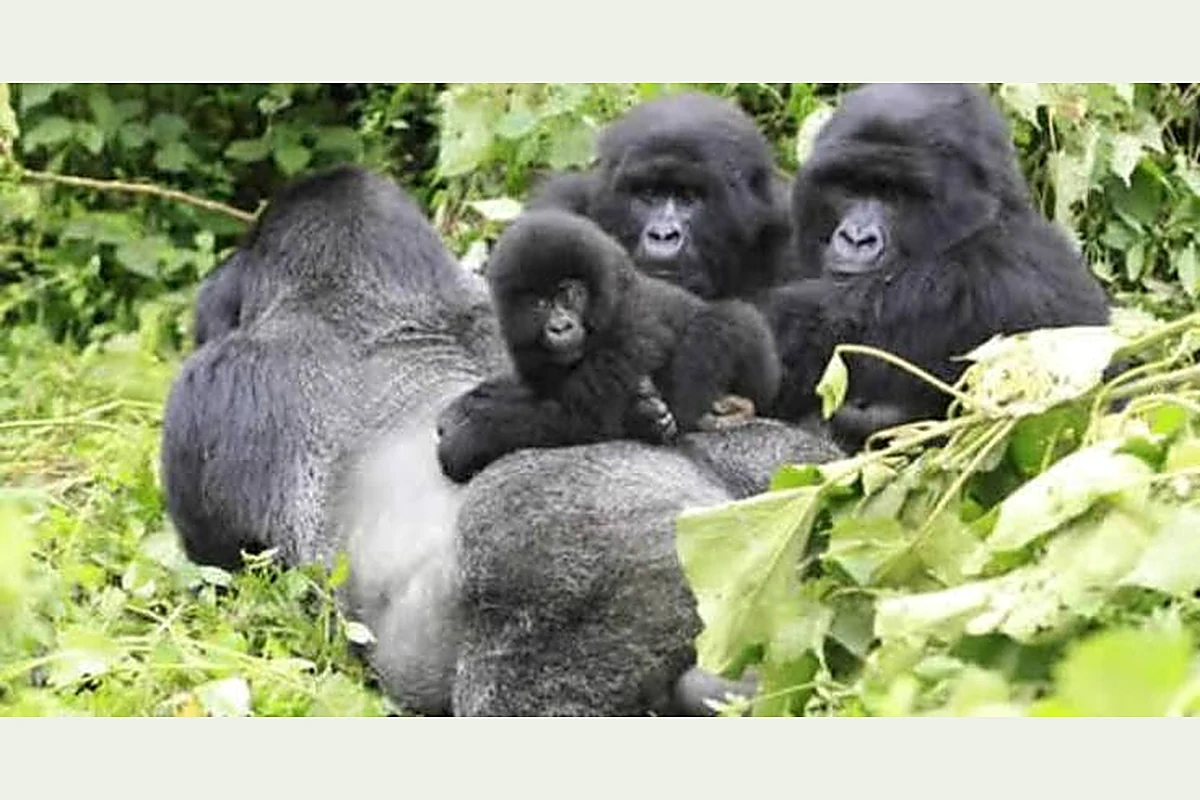
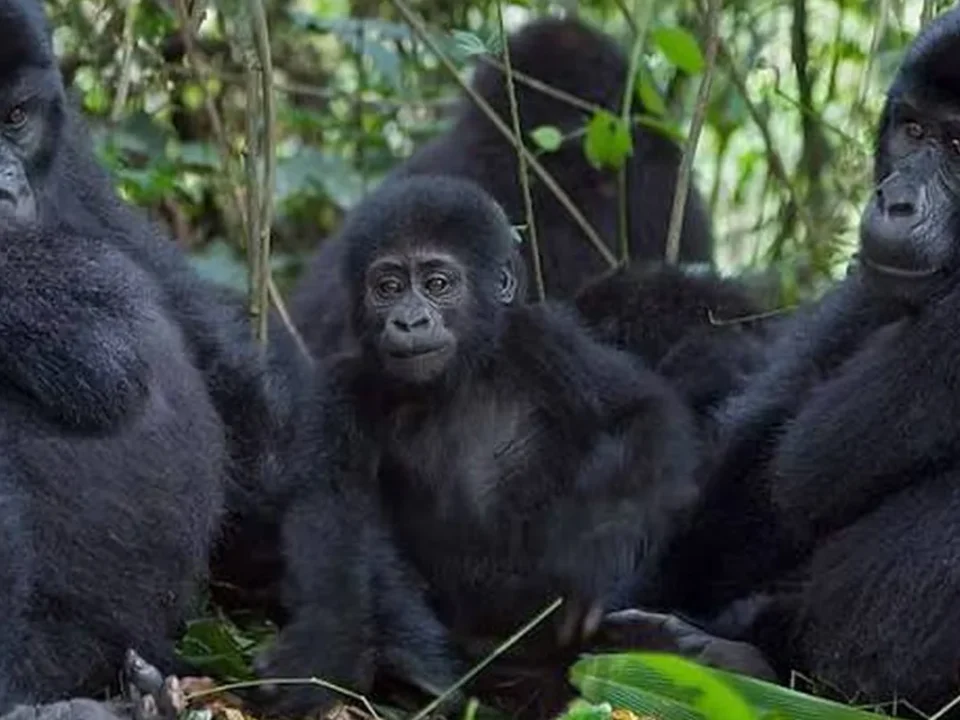
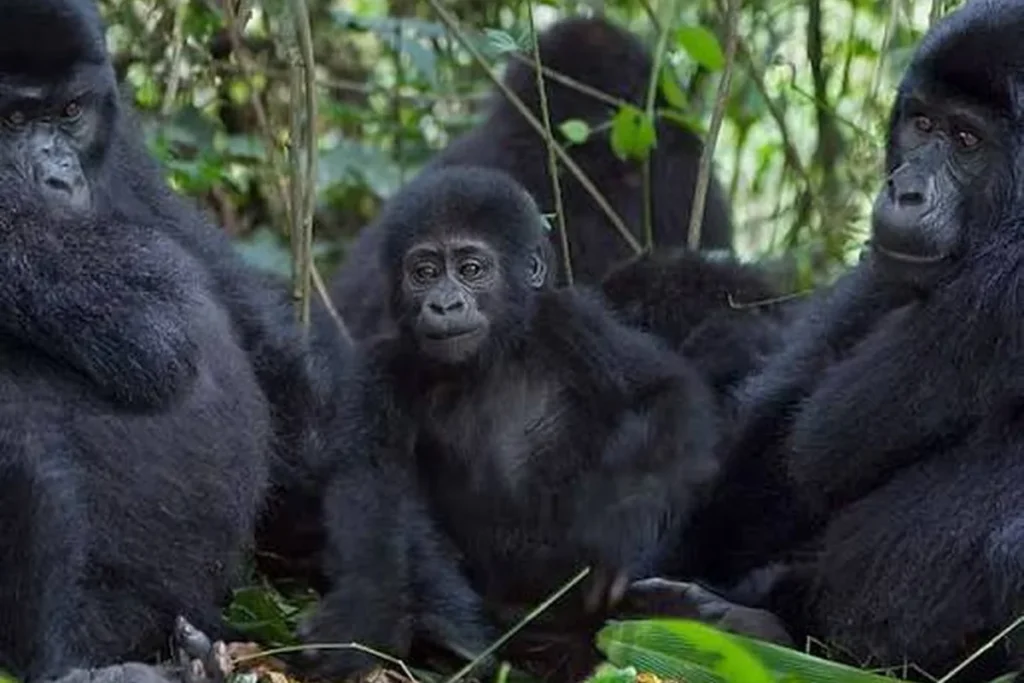
A young mountain gorilla rests among adult gorillas in a lush green forest habitat.
Frequently Asked Questions About Gorilla Trekking With a Knee Replacement
Can I go gorilla trekking after a total knee replacement?
Possibly, if you have recovered well and your orthopedic team considers your strength, balance and walking tolerance appropriate. The forest can be steep and slippery, and the route is unpredictable. A successful operation does not automatically make a demanding trek safe. Describe the expected terrain to your clinician before booking. Gorilla trekking with a knee replacement should always be planned around individual functional ability and current conditions.
How long after knee replacement surgery should I wait?
There is no single waiting period that applies to everyone. Recovery depends on healing, rehabilitation, other health conditions and the demands of the activity. Follow the restrictions and individualized advice from your surgeon or physiotherapist. Avoid scheduling a trek simply because a general recovery timeline has passed. Gorilla trekking with a knee replacement should always be planned around individual functional ability and current conditions.
Is Bwindi easier than Mgahinga for someone with a replaced knee?
Neither park is reliably easier for every visitor. Gorilla locations, slopes, weather and trail conditions change. Discuss your mobility with the organizer and ask about current conditions, but do not expect a guaranteed short or level route. The ranger and wildlife authorities manage trekking arrangements on the day. Gorilla trekking with a knee replacement should always be planned around individual functional ability and current conditions.
Can I use walking poles during a gorilla trek?
Walking poles may help some travelers maintain balance, particularly on uneven paths, but they need to be suitable for your abilities. Ask your physiotherapist whether poles are appropriate and practice using them before departure. Rangers may give instructions about equipment and behavior near gorillas, which visitors must follow. Gorilla trekking with a knee replacement should always be planned around individual functional ability and current conditions.
Will a porter help if I have an artificial knee?
A porter can carry belongings and may provide practical support on difficult sections, depending on local arrangements. A porter cannot eliminate steep terrain, guarantee that you will finish or provide medical treatment. Discuss assistance needs and availability with the safari organizer in advance, including any additional costs. Gorilla trekking with a knee replacement should always be planned around individual functional ability and current conditions.
Can I request an easy gorilla trekking route?
You can explain mobility concerns and ask whether practical accommodations are possible. However, no operator can guarantee an easy trek because gorilla families move and assignments are managed locally. Plan for uncertainty, and be prepared to turn back if the terrain exceeds your abilities or the ranger advises stopping. Gorilla trekking with a knee replacement should always be planned around individual functional ability and current conditions.
What if my knee starts hurting during the trek?
Tell the ranger promptly rather than trying to hide worsening pain. Stop if you feel unstable or cannot bear weight normally, and follow local safety instructions. Your clinician should explain in advance which symptoms require stopping and which may be expected after activity. Do not use extra medication simply to force yourself onward. Gorilla trekking with a knee replacement should always be planned around individual functional ability and current conditions.
Can I kneel or squat near the gorillas?
You should not assume that kneeling or squatting is necessary. Explain limitations to the ranger and follow their directions about safe positioning and respectful wildlife observation. If a position would strain your knee, say so. Visitors must also maintain required distance and follow the park’s rules throughout the encounter. Gorilla trekking with a knee replacement should always be planned around individual functional ability and current conditions.
Does gorilla trekking damage a knee implant?
A trek does not automatically damage a well-functioning implant, but falls, twisting injuries and excessive strain are possible. The relevant risk depends on your recovery, strength, balance and the conditions underfoot. Your treating orthopedic team is best placed to assess the implications for your specific implant and medical history. Gorilla trekking with a knee replacement should always be planned around individual functional ability and current conditions.
What boots are best for gorilla trekking after knee replacement?
Choose comfortable, well-fitting hiking footwear with reliable traction and adequate support for your walking style. Break the boots in before travel and test them with the socks you will wear. No boot prevents every slip. Ask your rehabilitation clinician if you have special footwear or gait requirements. Gorilla trekking with a knee replacement should always be planned around individual functional ability and current conditions.
Can I choose a flying gorilla safari to avoid knee strain?
Flying may shorten some road journeys, but it does not change the forest trekking route and may involve boarding steps or additional transfers. Compare the entire itinerary, including ground transport and lodge access. The flying safari package can be discussed with your organizer as one possible travel arrangement. Gorilla trekking with a knee replacement should always be planned around individual functional ability and current conditions.
Should I buy travel insurance for a knee replacement safari?
Yes, review insurance options carefully, particularly coverage for pre-existing conditions, trekking activities, medical care, evacuation and cancellation. Policies differ, and a past knee replacement may affect exclusions or disclosure requirements. Confirm coverage in writing and carry emergency contact details during the trip. Gorilla trekking with a knee replacement should always be planned around individual functional ability and current conditions.
Plan Your Uganda Gorilla Safari
If you are considering gorilla trekking with a knee replacement, discuss your medical readiness with your orthopedic team and share your practical mobility needs with PrideMark Safaris. Read About PrideMark Safaris, compare the 3-day Uganda gorilla trekking safari and 3-day flying luxury gorilla safari, and contact the safari team for itinerary information. No safari package guarantees a short or easy trek.