Can You Go Gorilla Trekking With COPD in Uganda?
When considering gorilla trekking with COPD, start with the practical realities. A diagnosis alone does not decide whether a trek is appropriate. Symptoms, recent exacerbations, oxygen levels, exercise capacity and the remoteness of the route all matter. Ask your respiratory clinician whether sustained uphill walking at altitude is reasonable, what warning signs should stop activity, and whether additional testing is needed.
Assess the starting point
Gorilla trekking with copd requires a thoughtful decision. Begin with your baseline rather than the dream itinerary. Record ordinary walking distance, stair tolerance, symptoms during exertion and recovery time. A traveler who needs frequent stops on level ground faces a different challenge from someone who walks hills comfortably. Share these details with your clinician and safari planner instead of relying on broad labels such as mild or moderate disease. Individual risk is not measured by a diagnosis name alone; exacerbation history, heart conditions and the need for supplemental oxygen can change the decision.
Conditions change from one trekking day to another. Rain can make footing difficult, a gorilla family may move farther into the forest and the group may encounter climbs that are not visible from the briefing point. Build a plan that allows you to stop or turn back when necessary. A successful trip should not depend on forcing yourself through worsening symptoms. The key question is not whether another traveler with COPD completed a trek, but whether this specific traveler can safely handle an unpredictable mountain hike.
Keep your prescribed treatment routine consistent while traveling. Long flights, time-zone changes, early departures and busy safari schedules can disrupt ordinary habits. Pack medication in original labeled packaging and keep essential doses within reach. Do not begin preventive steroids, antibiotics or oxygen on your own; follow an individualized plan prepared by your treating professional. Individual risk is not measured by a diagnosis name alone; exacerbation history, heart conditions and the need for supplemental oxygen can change the decision. For a planning example, compare the 4-Day Mgahinga Gorilla and Golden Monkey Safari and discuss which days could be adjusted.
Explain your practical needs without expecting the guide to act as a clinician. Useful information includes whether you require frequent breaks, carry a rescue inhaler, have known triggers or have a written emergency plan. Agree on how you will signal distress. Your companions should know when to call for help and should never assume that quietness means you are comfortable. The key question is not whether another traveler with COPD completed a trek, but whether this specific traveler can safely handle an unpredictable mountain hike.
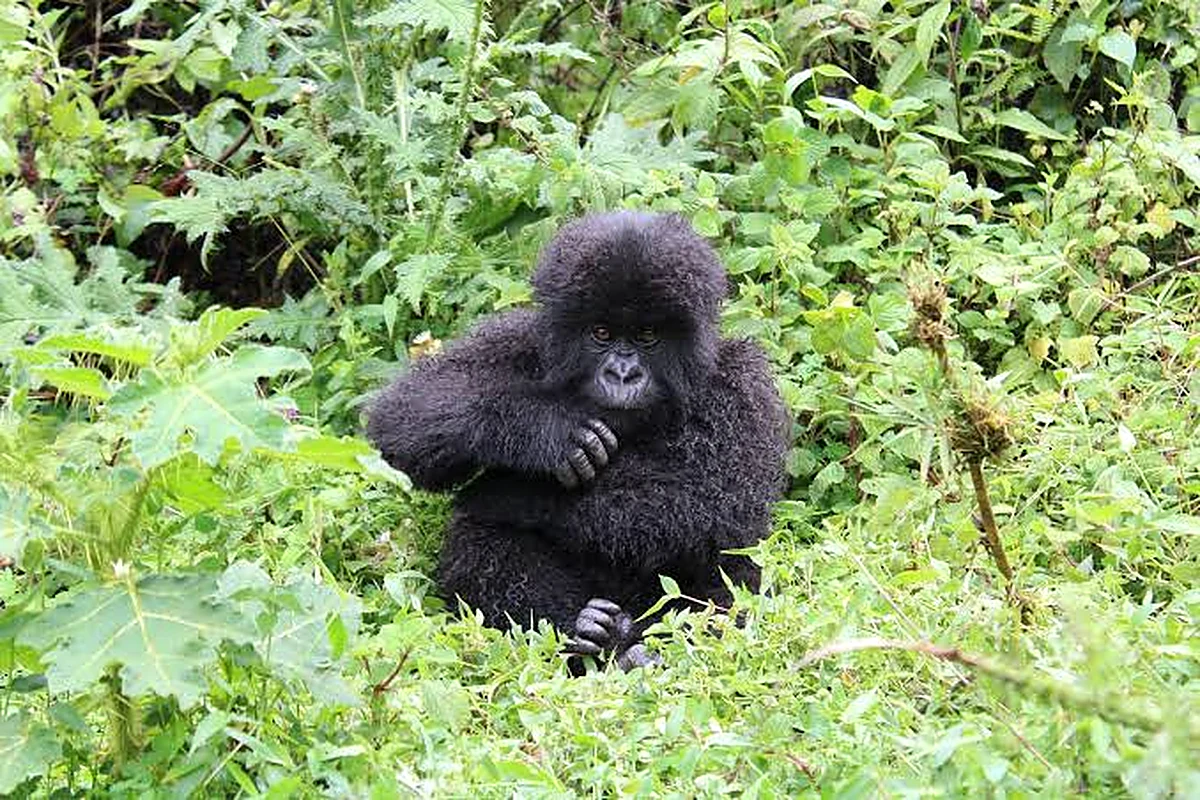
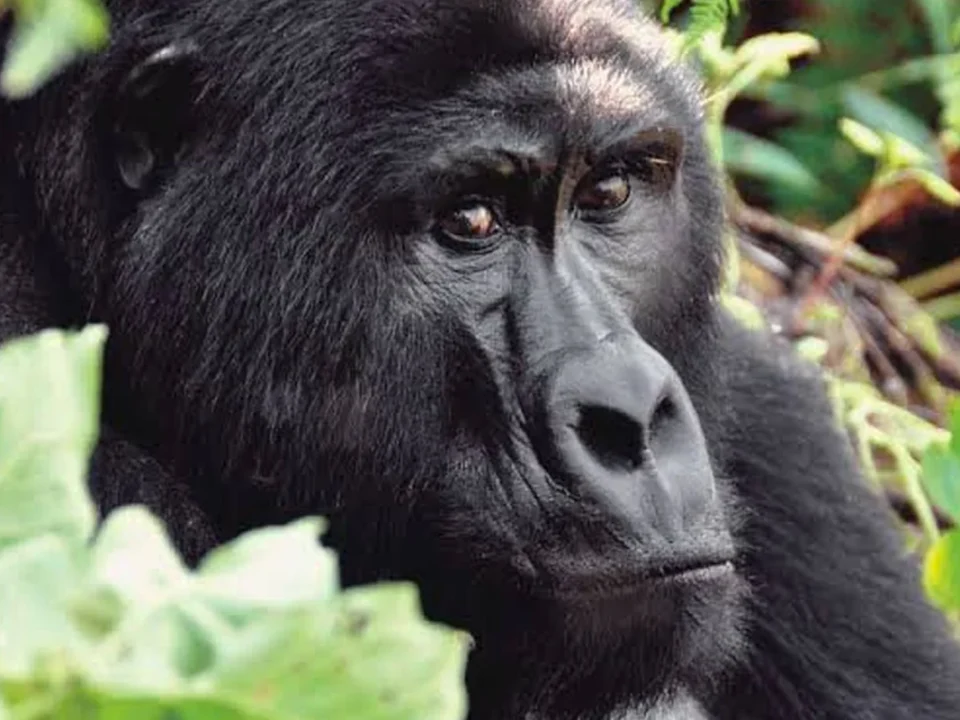
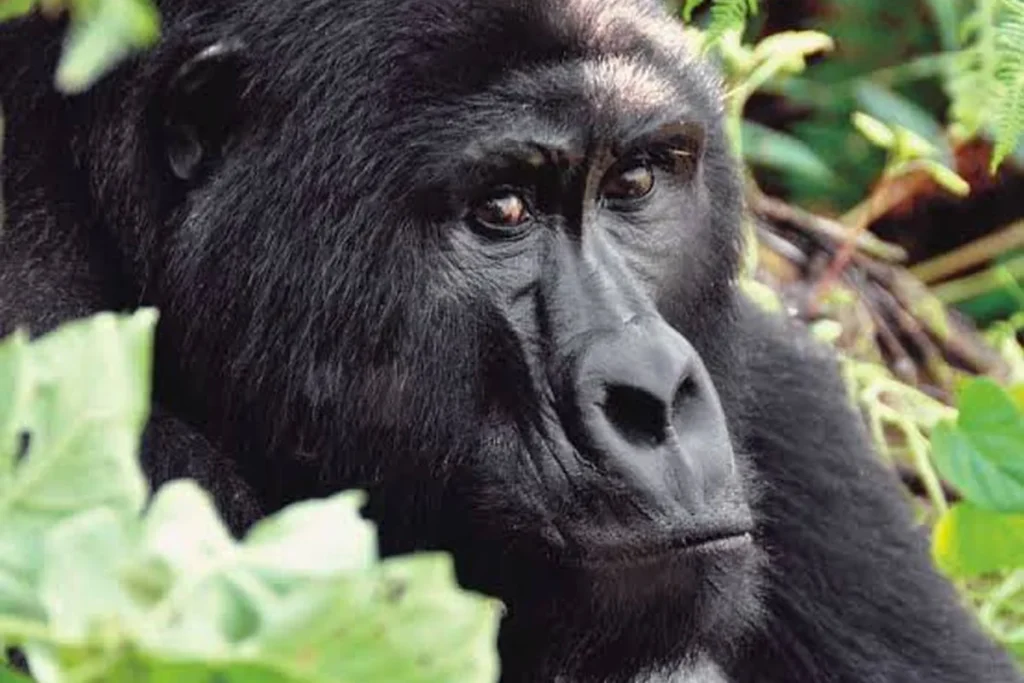
A young mountain gorilla sits quietly among dense green vegetation in its natural forest habitat.
Consider the complete journey
The trek is only one part of the experience. Road transfers, dusty conditions, altitude changes, lodge stairs, cold mornings and the journey home may also affect comfort. Compare the physical demands of each travel day and avoid stacking exhausting activities together. Rest days and reliable accommodation access may matter more than adding another attraction to the schedule. Individual risk is not measured by a diagnosis name alone; exacerbation history, heart conditions and the need for supplemental oxygen can change the decision. The Uganda safari ideas page gives a useful starting point for comparing travel styles.
For gorilla trekking with COPD, make decisions using current symptoms and your clinician’s recommendations rather than promises about easy routes. A diagnosis alone does not decide whether a trek is appropriate. Symptoms, recent exacerbations, oxygen levels, exercise capacity and the remoteness of the route all matter. If you need itinerary clarification, PrideMark Safaris can discuss practical travel arrangements, while medical suitability remains a decision for your healthcare team.
Understanding COPD and Its Effects on Physical Activity
When considering gorilla trekking with COPD, start with the practical realities. COPD can limit airflow and make exertion uncomfortable. Some travelers become breathless on stairs while others manage ordinary walks but struggle with prolonged climbs. Compare your usual walking tolerance with a variable forest hike rather than judging fitness from a single good day. Document how quickly you recover after exertion.
Assess the starting point
Gorilla trekking with copd requires a thoughtful decision. Begin with your baseline rather than the dream itinerary. Record ordinary walking distance, stair tolerance, symptoms during exertion and recovery time. A traveler who needs frequent stops on level ground faces a different challenge from someone who walks hills comfortably. Share these details with your clinician and safari planner instead of relying on broad labels such as mild or moderate disease. Breathlessness can be influenced by anxiety, deconditioning and other health problems, so unexplained changes deserve evaluation.
Conditions change from one trekking day to another. Rain can make footing difficult, a gorilla family may move farther into the forest and the group may encounter climbs that are not visible from the briefing point. Build a plan that allows you to stop or turn back when necessary. A successful trip should not depend on forcing yourself through worsening symptoms. A practical walking diary can help clinicians interpret symptoms more reliably than a vague claim that you feel reasonably fit.
Keep your prescribed treatment routine consistent while traveling. Long flights, time-zone changes, early departures and busy safari schedules can disrupt ordinary habits. Pack medication in original labeled packaging and keep essential doses within reach. Do not begin preventive steroids, antibiotics or oxygen on your own; follow an individualized plan prepared by your treating professional. Breathlessness can be influenced by anxiety, deconditioning and other health problems, so unexplained changes deserve evaluation. For a planning example, compare the 5-Day Gorilla & Game Safari Adventure and discuss which days could be adjusted.
Explain your practical needs without expecting the guide to act as a clinician. Useful information includes whether you require frequent breaks, carry a rescue inhaler, have known triggers or have a written emergency plan. Agree on how you will signal distress. Your companions should know when to call for help and should never assume that quietness means you are comfortable. A practical walking diary can help clinicians interpret symptoms more reliably than a vague claim that you feel reasonably fit.
Consider the complete journey
The trek is only one part of the experience. Road transfers, dusty conditions, altitude changes, lodge stairs, cold mornings and the journey home may also affect comfort. Compare the physical demands of each travel day and avoid stacking exhausting activities together. Rest days and reliable accommodation access may matter more than adding another attraction to the schedule. Breathlessness can be influenced by anxiety, deconditioning and other health problems, so unexplained changes deserve evaluation. The Uganda safari ideas page gives a useful starting point for comparing travel styles.
For gorilla trekking with COPD, make decisions using current symptoms and your clinician’s recommendations rather than promises about easy routes. COPD can limit airflow and make exertion uncomfortable. Some travelers become breathless on stairs while others manage ordinary walks but struggle with prolonged climbs. If you need itinerary clarification, PrideMark Safaris can discuss practical travel arrangements, while medical suitability remains a decision for your healthcare team.
| Everyday activity | What to record | Why it matters |
|---|---|---|
| Walking uphill | Breathlessness and recovery | Approximates sustained exertion |
| Stairs | Stops and symptoms | Shows tolerance of climbing |
| Recent flare-up | Date and treatment | Signals need for review |
How Altitude, Steep Trails and Forest Conditions Affect Breathing
When considering gorilla trekking with COPD, start with the practical realities. Bwindi and Mgahinga are mountainous destinations. Trekking may involve climbs, slippery roots, vegetation, mud and changing weather, with no predictable hiking duration. Higher elevation can reduce available oxygen compared with sea level. A familiar exercise routine at home does not perfectly predict response to a steep mountain forest.
Assess the starting point
Gorilla trekking with copd requires a thoughtful decision. Begin with your baseline rather than the dream itinerary. Record ordinary walking distance, stair tolerance, symptoms during exertion and recovery time. A traveler who needs frequent stops on level ground faces a different challenge from someone who walks hills comfortably. Share these details with your clinician and safari planner instead of relying on broad labels such as mild or moderate disease. Cool air and exertion may increase discomfort for some travelers; warm clothing and a measured pace can help comfort but do not replace treatment.
Conditions change from one trekking day to another. Rain can make footing difficult, a gorilla family may move farther into the forest and the group may encounter climbs that are not visible from the briefing point. Build a plan that allows you to stop or turn back when necessary. A successful trip should not depend on forcing yourself through worsening symptoms. Weather and trail conditions differ by day; the park cannot offer a guaranteed low-exertion assignment.
Keep your prescribed treatment routine consistent while traveling. Long flights, time-zone changes, early departures and busy safari schedules can disrupt ordinary habits. Pack medication in original labeled packaging and keep essential doses within reach. Do not begin preventive steroids, antibiotics or oxygen on your own; follow an individualized plan prepared by your treating professional. Cool air and exertion may increase discomfort for some travelers; warm clothing and a measured pace can help comfort but do not replace treatment. For a planning example, compare the 7-Day Uganda Primates & Game Safari and discuss which days could be adjusted.
Explain your practical needs without expecting the guide to act as a clinician. Useful information includes whether you require frequent breaks, carry a rescue inhaler, have known triggers or have a written emergency plan. Agree on how you will signal distress. Your companions should know when to call for help and should never assume that quietness means you are comfortable. Weather and trail conditions differ by day; the park cannot offer a guaranteed low-exertion assignment.
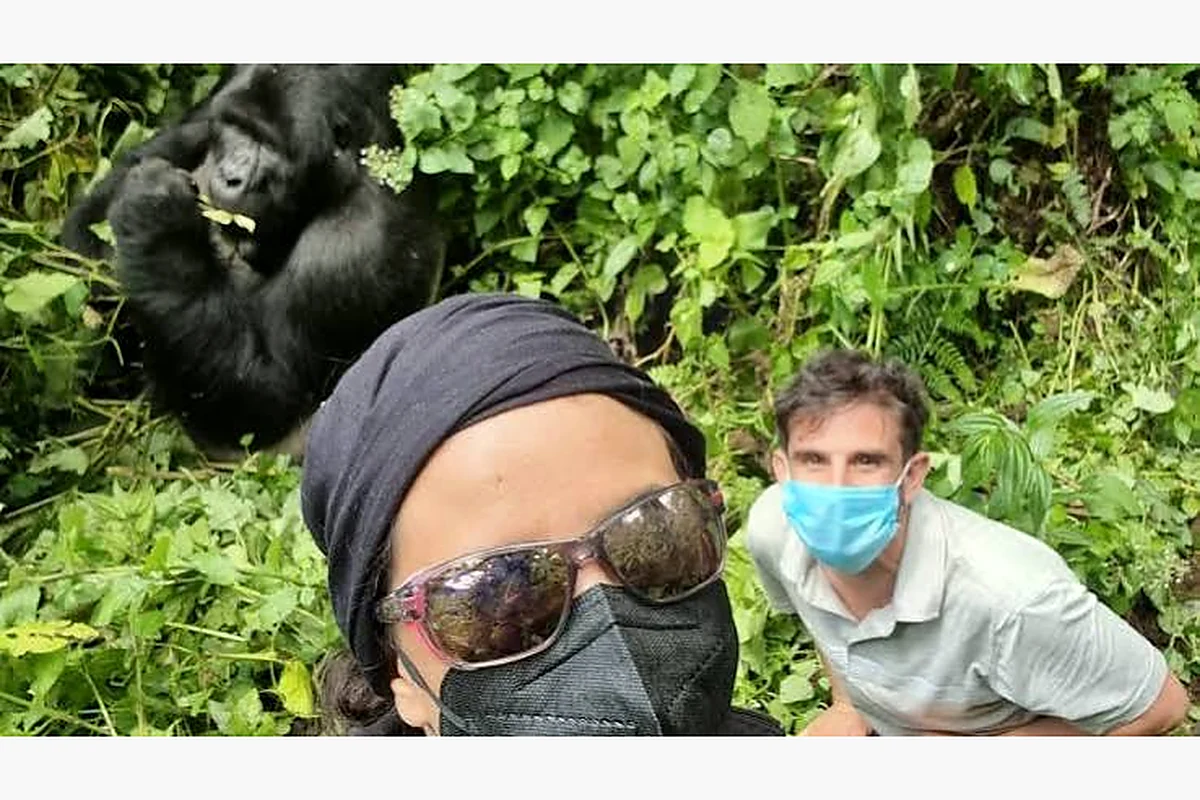
Two visitors wearing face masks take a photograph with a mountain gorilla visible behind them in lush forest vegetation.
Consider the complete journey
The trek is only one part of the experience. Road transfers, dusty conditions, altitude changes, lodge stairs, cold mornings and the journey home may also affect comfort. Compare the physical demands of each travel day and avoid stacking exhausting activities together. Rest days and reliable accommodation access may matter more than adding another attraction to the schedule. Cool air and exertion may increase discomfort for some travelers; warm clothing and a measured pace can help comfort but do not replace treatment. The Uganda safari ideas page gives a useful starting point for comparing travel styles.
For gorilla trekking with COPD, make decisions using current symptoms and your clinician’s recommendations rather than promises about easy routes. Bwindi and Mgahinga are mountainous destinations. Trekking may involve climbs, slippery roots, vegetation, mud and changing weather, with no predictable hiking duration. If you need itinerary clarification, PrideMark Safaris can discuss practical travel arrangements, while medical suitability remains a decision for your healthcare team.
Consulting a Respiratory Specialist Before Traveling
When considering gorilla trekking with COPD, start with the practical realities. Pretravel review should cover COPD severity, recent flare-ups, infections, exercise tolerance, inhaler technique and the availability of emergency treatment. Ask about whether pulse oximetry, walking assessment or altitude-specific advice is appropriate. Bring a concise medical summary and an individualized action plan.
Assess the starting point
Gorilla trekking with copd requires a thoughtful decision. Begin with your baseline rather than the dream itinerary. Record ordinary walking distance, stair tolerance, symptoms during exertion and recovery time. A traveler who needs frequent stops on level ground faces a different challenge from someone who walks hills comfortably. Share these details with your clinician and safari planner instead of relying on broad labels such as mild or moderate disease. Ask the clinician about vaccinations, respiratory infections and travel insurance wording, including pre-existing-condition exclusions.
Conditions change from one trekking day to another. Rain can make footing difficult, a gorilla family may move farther into the forest and the group may encounter climbs that are not visible from the briefing point. Build a plan that allows you to stop or turn back when necessary. A successful trip should not depend on forcing yourself through worsening symptoms. If your physician recommends against strenuous trekking, respect that advice even if travel arrangements have already been made.
Keep your prescribed treatment routine consistent while traveling. Long flights, time-zone changes, early departures and busy safari schedules can disrupt ordinary habits. Pack medication in original labeled packaging and keep essential doses within reach. Do not begin preventive steroids, antibiotics or oxygen on your own; follow an individualized plan prepared by your treating professional. Ask the clinician about vaccinations, respiratory infections and travel insurance wording, including pre-existing-condition exclusions. For a planning example, compare the 9-Day Gorilla Trekking and Wildlife Safari and discuss which days could be adjusted.
Explain your practical needs without expecting the guide to act as a clinician. Useful information includes whether you require frequent breaks, carry a rescue inhaler, have known triggers or have a written emergency plan. Agree on how you will signal distress. Your companions should know when to call for help and should never assume that quietness means you are comfortable. If your physician recommends against strenuous trekking, respect that advice even if travel arrangements have already been made.
Consider the complete journey
The trek is only one part of the experience. Road transfers, dusty conditions, altitude changes, lodge stairs, cold mornings and the journey home may also affect comfort. Compare the physical demands of each travel day and avoid stacking exhausting activities together. Rest days and reliable accommodation access may matter more than adding another attraction to the schedule. Ask the clinician about vaccinations, respiratory infections and travel insurance wording, including pre-existing-condition exclusions. The Uganda safari ideas page gives a useful starting point for comparing travel styles.
For gorilla trekking with COPD, make decisions using current symptoms and your clinician’s recommendations rather than promises about easy routes. Pretravel review should cover COPD severity, recent flare-ups, infections, exercise tolerance, inhaler technique and the availability of emergency treatment. If you need itinerary clarification, PrideMark Safaris can discuss practical travel arrangements, while medical suitability remains a decision for your healthcare team.
Managing Inhalers, Medication and Oxygen Requirements
When considering gorilla trekking with COPD, start with the practical realities. A remote forest is not the place to discover that an inhaler is empty, damaged or packed in checked baggage. Carry prescribed rescue and maintenance medicines accessibly. If you use oxygen, do not assume cylinders, concentrators, charging or compatible equipment are available on the trail. Arrange professional advice and logistics beforehand.
Assess the starting point
Gorilla trekking with copd requires a thoughtful decision. Begin with your baseline rather than the dream itinerary. Record ordinary walking distance, stair tolerance, symptoms during exertion and recovery time. A traveler who needs frequent stops on level ground faces a different challenge from someone who walks hills comfortably. Share these details with your clinician and safari planner instead of relying on broad labels such as mild or moderate disease. Carry more medication than the minimum needed for the scheduled itinerary, subject to travel and prescribing rules.
Conditions change from one trekking day to another. Rain can make footing difficult, a gorilla family may move farther into the forest and the group may encounter climbs that are not visible from the briefing point. Build a plan that allows you to stop or turn back when necessary. A successful trip should not depend on forcing yourself through worsening symptoms. Battery-powered equipment requires a realistic plan for power, transport, backups and airline approval where applicable.
Keep your prescribed treatment routine consistent while traveling. Long flights, time-zone changes, early departures and busy safari schedules can disrupt ordinary habits. Pack medication in original labeled packaging and keep essential doses within reach. Do not begin preventive steroids, antibiotics or oxygen on your own; follow an individualized plan prepared by your treating professional. Carry more medication than the minimum needed for the scheduled itinerary, subject to travel and prescribing rules. For a planning example, compare the 3-Day Gorilla Trekking in Uganda and discuss which days could be adjusted.
Explain your practical needs without expecting the guide to act as a clinician. Useful information includes whether you require frequent breaks, carry a rescue inhaler, have known triggers or have a written emergency plan. Agree on how you will signal distress. Your companions should know when to call for help and should never assume that quietness means you are comfortable. Battery-powered equipment requires a realistic plan for power, transport, backups and airline approval where applicable.
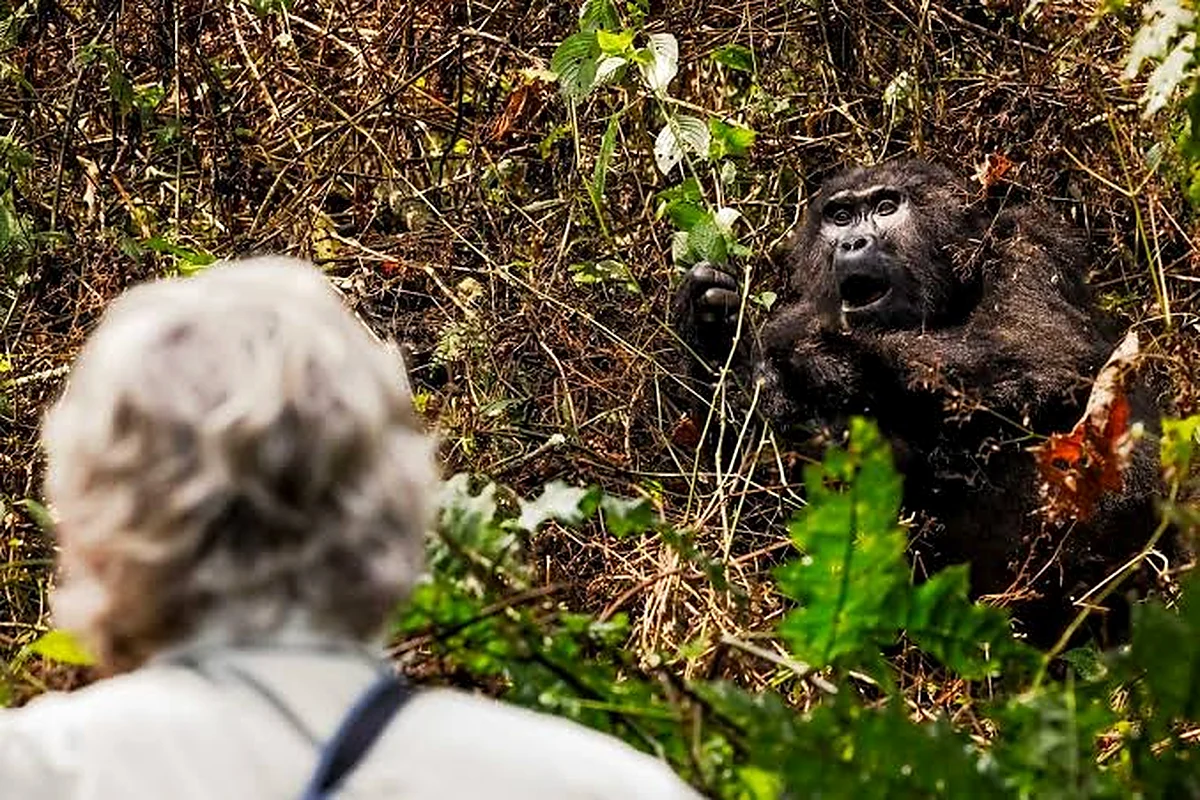
A visitor observes a mountain gorilla resting among dense forest vegetation during a guided gorilla trekking experience.
Consider the complete journey
The trek is only one part of the experience. Road transfers, dusty conditions, altitude changes, lodge stairs, cold mornings and the journey home may also affect comfort. Compare the physical demands of each travel day and avoid stacking exhausting activities together. Rest days and reliable accommodation access may matter more than adding another attraction to the schedule. Carry more medication than the minimum needed for the scheduled itinerary, subject to travel and prescribing rules. The Uganda safari ideas page gives a useful starting point for comparing travel styles.
For gorilla trekking with COPD, make decisions using current symptoms and your clinician’s recommendations rather than promises about easy routes. A remote forest is not the place to discover that an inhaler is empty, damaged or packed in checked baggage. Carry prescribed rescue and maintenance medicines accessibly. If you need itinerary clarification, PrideMark Safaris can discuss practical travel arrangements, while medical suitability remains a decision for your healthcare team.
| Item | Before departure | On trekking day |
|---|---|---|
| Maintenance inhaler | Check supply and technique | Follow prescription |
| Rescue medication | Confirm action plan | Keep readily accessible |
| Oxygen equipment | Specialist and transport review | Never assume availability |
Choosing Between Bwindi and Mgahinga for Gorilla Trekking
When considering gorilla trekking with COPD, start with the practical realities. Neither national park guarantees a gentle walk. Gorilla groups move, trail conditions change and the actual location of the animals is not known in advance. Discuss sectors, lodge location, transport and current operational arrangements with your operator, but do not treat a sector name as a medical safety guarantee.
Assess the starting point
Gorilla trekking with copd requires a thoughtful decision. Begin with your baseline rather than the dream itinerary. Record ordinary walking distance, stair tolerance, symptoms during exertion and recovery time. A traveler who needs frequent stops on level ground faces a different challenge from someone who walks hills comfortably. Share these details with your clinician and safari planner instead of relying on broad labels such as mild or moderate disease. Bwindi has multiple trekking sectors, while Mgahinga has a distinct volcanic landscape; neither should be labeled universally easier.
Conditions change from one trekking day to another. Rain can make footing difficult, a gorilla family may move farther into the forest and the group may encounter climbs that are not visible from the briefing point. Build a plan that allows you to stop or turn back when necessary. A successful trip should not depend on forcing yourself through worsening symptoms. A lodge close to the briefing point may reduce transfers, but it cannot shorten the forest trek itself.
Keep your prescribed treatment routine consistent while traveling. Long flights, time-zone changes, early departures and busy safari schedules can disrupt ordinary habits. Pack medication in original labeled packaging and keep essential doses within reach. Do not begin preventive steroids, antibiotics or oxygen on your own; follow an individualized plan prepared by your treating professional. Bwindi has multiple trekking sectors, while Mgahinga has a distinct volcanic landscape; neither should be labeled universally easier. For a planning example, compare the 3-Day Uganda Gorilla Flying Luxury Safari and discuss which days could be adjusted.
Explain your practical needs without expecting the guide to act as a clinician. Useful information includes whether you require frequent breaks, carry a rescue inhaler, have known triggers or have a written emergency plan. Agree on how you will signal distress. Your companions should know when to call for help and should never assume that quietness means you are comfortable. A lodge close to the briefing point may reduce transfers, but it cannot shorten the forest trek itself.
Consider the complete journey
The trek is only one part of the experience. Road transfers, dusty conditions, altitude changes, lodge stairs, cold mornings and the journey home may also affect comfort. Compare the physical demands of each travel day and avoid stacking exhausting activities together. Rest days and reliable accommodation access may matter more than adding another attraction to the schedule. Bwindi has multiple trekking sectors, while Mgahinga has a distinct volcanic landscape; neither should be labeled universally easier. The Uganda safari ideas page gives a useful starting point for comparing travel styles.
For gorilla trekking with COPD, make decisions using current symptoms and your clinician’s recommendations rather than promises about easy routes. Neither national park guarantees a gentle walk. Gorilla groups move, trail conditions change and the actual location of the animals is not known in advance. If you need itinerary clarification, PrideMark Safaris can discuss practical travel arrangements, while medical suitability remains a decision for your healthcare team.
Using Porters, Walking Sticks and Trekking Assistance
When considering gorilla trekking with COPD, start with the practical realities. A porter can reduce the load you carry and a walking stick may improve stability on slippery sections. Neither removes the respiratory demand of climbing. Request assistance in advance and tell the ranger team about realistic limits. Pace yourself, allow rest and avoid feeling pressured to keep up with faster visitors.
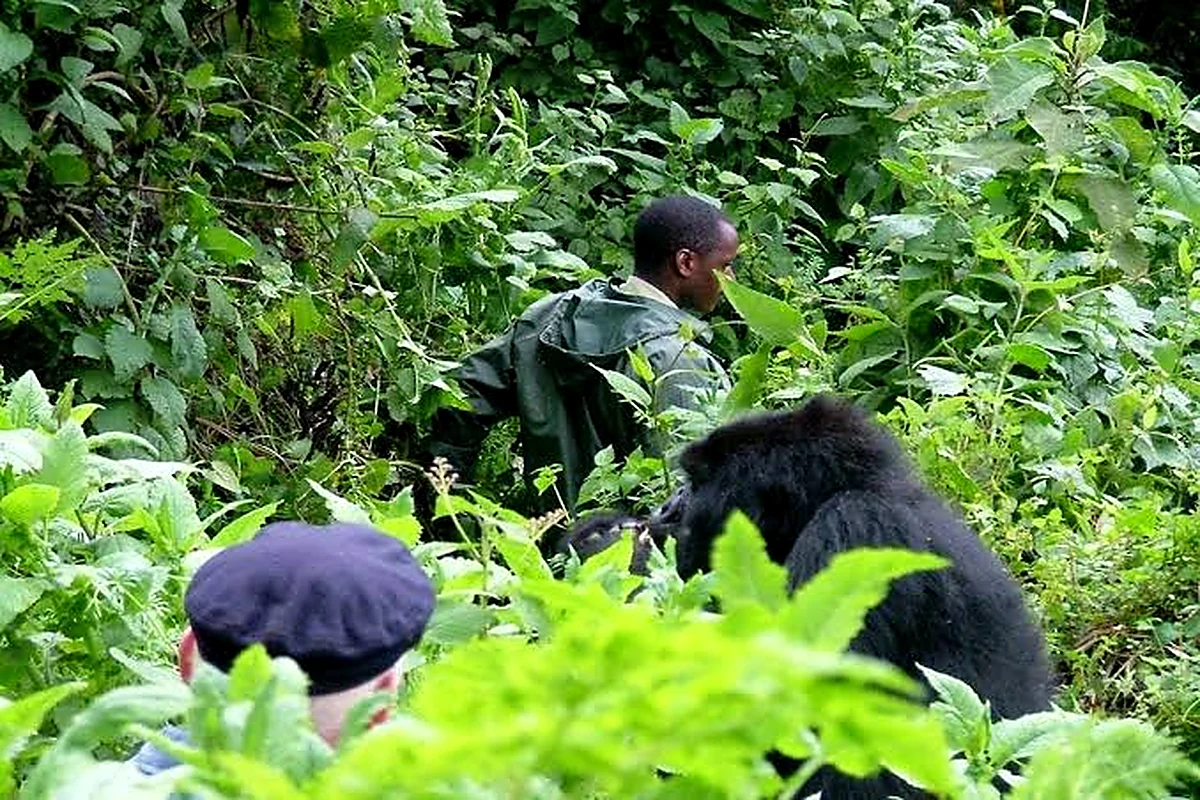
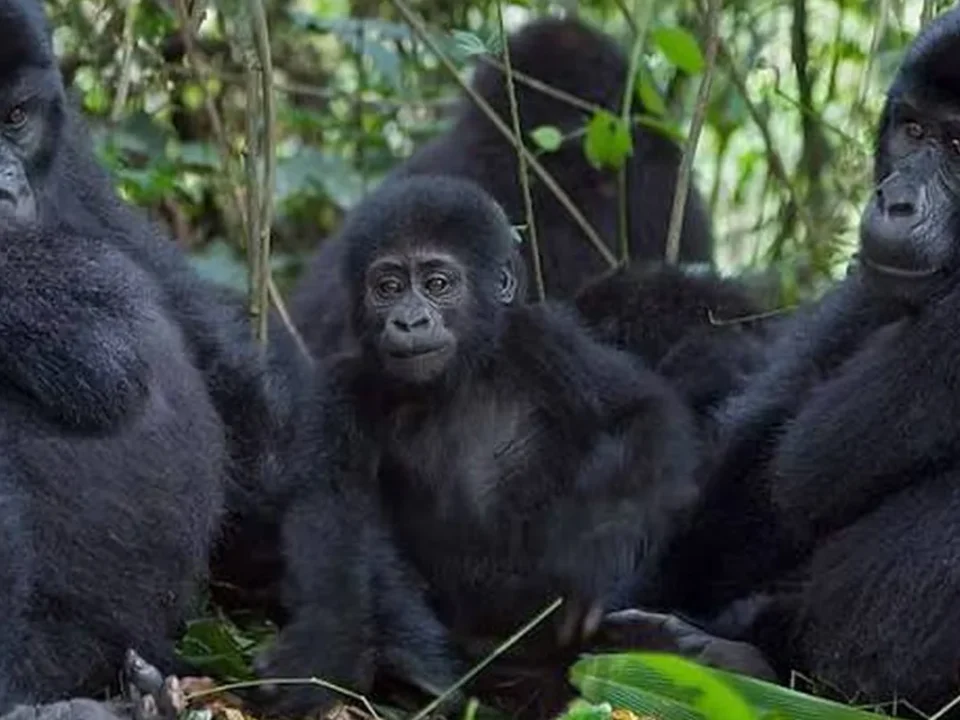
A mountain gorilla rests among lush forest vegetation while a park ranger and visitor observe nearby.
Assess the starting point
Gorilla trekking with copd requires a thoughtful decision. Begin with your baseline rather than the dream itinerary. Record ordinary walking distance, stair tolerance, symptoms during exertion and recovery time. A traveler who needs frequent stops on level ground faces a different challenge from someone who walks hills comfortably. Share these details with your clinician and safari planner instead of relying on broad labels such as mild or moderate disease. Some travelers benefit from slowing down early rather than waiting until they become markedly breathless.
Conditions change from one trekking day to another. Rain can make footing difficult, a gorilla family may move farther into the forest and the group may encounter climbs that are not visible from the briefing point. Build a plan that allows you to stop or turn back when necessary. A successful trip should not depend on forcing yourself through worsening symptoms. Tell your guide promptly if your usual recovery pattern changes, especially if you develop dizziness or chest discomfort.
Keep your prescribed treatment routine consistent while traveling. Long flights, time-zone changes, early departures and busy safari schedules can disrupt ordinary habits. Pack medication in original labeled packaging and keep essential doses within reach. Do not begin preventive steroids, antibiotics or oxygen on your own; follow an individualized plan prepared by your treating professional. Some travelers benefit from slowing down early rather than waiting until they become markedly breathless. For a planning example, compare the 4-Day Mgahinga Gorilla and Golden Monkey Safari and discuss which days could be adjusted.
Explain your practical needs without expecting the guide to act as a clinician. Useful information includes whether you require frequent breaks, carry a rescue inhaler, have known triggers or have a written emergency plan. Agree on how you will signal distress. Your companions should know when to call for help and should never assume that quietness means you are comfortable. Tell your guide promptly if your usual recovery pattern changes, especially if you develop dizziness or chest discomfort.
Consider the complete journey
The trek is only one part of the experience. Road transfers, dusty conditions, altitude changes, lodge stairs, cold mornings and the journey home may also affect comfort. Compare the physical demands of each travel day and avoid stacking exhausting activities together. Rest days and reliable accommodation access may matter more than adding another attraction to the schedule. Some travelers benefit from slowing down early rather than waiting until they become markedly breathless. The Uganda safari ideas page gives a useful starting point for comparing travel styles.
For gorilla trekking with COPD, make decisions using current symptoms and your clinician’s recommendations rather than promises about easy routes. A porter can reduce the load you carry and a walking stick may improve stability on slippery sections. Neither removes the respiratory demand of climbing. If you need itinerary clarification, PrideMark Safaris can discuss practical travel arrangements, while medical suitability remains a decision for your healthcare team.
Recognizing Breathing Emergencies and Knowing When Not to Trek
When considering gorilla trekking with COPD, start with the practical realities. Severe breathlessness at rest, blue or gray lips, confusion, fainting, chest pain or a marked deterioration require urgent attention, not an attempt to finish the hike. A recent exacerbation, active chest infection or unstable oxygen needs should prompt reassessment before trekking. Follow your clinician’s instructions and local emergency guidance.
Assess the starting point
Gorilla trekking with copd requires a thoughtful decision. Begin with your baseline rather than the dream itinerary. Record ordinary walking distance, stair tolerance, symptoms during exertion and recovery time. A traveler who needs frequent stops on level ground faces a different challenge from someone who walks hills comfortably. Share these details with your clinician and safari planner instead of relying on broad labels such as mild or moderate disease. An acute exacerbation may involve more cough, sputum, wheeze or breathlessness than usual and warrants medical advice.
Conditions change from one trekking day to another. Rain can make footing difficult, a gorilla family may move farther into the forest and the group may encounter climbs that are not visible from the briefing point. Build a plan that allows you to stop or turn back when necessary. A successful trip should not depend on forcing yourself through worsening symptoms. Emergency evacuation from remote forest terrain can take time; this is why pretrip planning matters so much.
Keep your prescribed treatment routine consistent while traveling. Long flights, time-zone changes, early departures and busy safari schedules can disrupt ordinary habits. Pack medication in original labeled packaging and keep essential doses within reach. Do not begin preventive steroids, antibiotics or oxygen on your own; follow an individualized plan prepared by your treating professional. An acute exacerbation may involve more cough, sputum, wheeze or breathlessness than usual and warrants medical advice. For a planning example, compare the 5-Day Gorilla & Game Safari Adventure and discuss which days could be adjusted.
Explain your practical needs without expecting the guide to act as a clinician. Useful information includes whether you require frequent breaks, carry a rescue inhaler, have known triggers or have a written emergency plan. Agree on how you will signal distress. Your companions should know when to call for help and should never assume that quietness means you are comfortable. Emergency evacuation from remote forest terrain can take time; this is why pretrip planning matters so much.
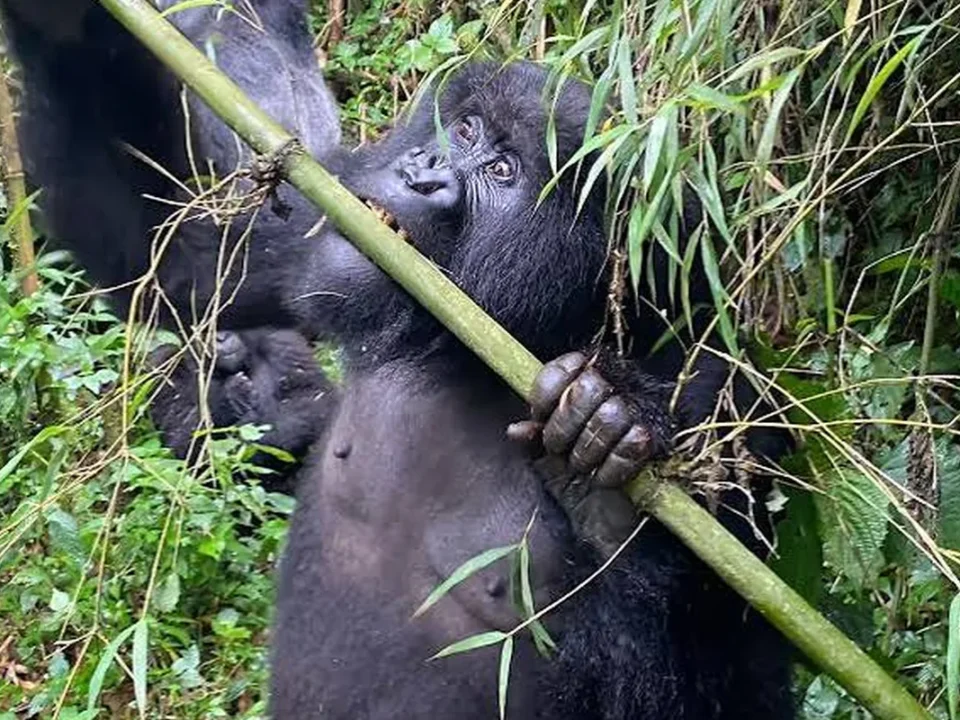
A young mountain gorilla rests quietly among lush green vegetation in its natural forest habitat.
Consider the complete journey
The trek is only one part of the experience. Road transfers, dusty conditions, altitude changes, lodge stairs, cold mornings and the journey home may also affect comfort. Compare the physical demands of each travel day and avoid stacking exhausting activities together. Rest days and reliable accommodation access may matter more than adding another attraction to the schedule. An acute exacerbation may involve more cough, sputum, wheeze or breathlessness than usual and warrants medical advice. The Uganda safari ideas page gives a useful starting point for comparing travel styles.
For gorilla trekking with COPD, make decisions using current symptoms and your clinician’s recommendations rather than promises about easy routes. Severe breathlessness at rest, blue or gray lips, confusion, fainting, chest pain or a marked deterioration require urgent attention, not an attempt to finish the hike. If you need itinerary clarification, PrideMark Safaris can discuss practical travel arrangements, while medical suitability remains a decision for your healthcare team.
| Situation | Suggested response | Planning implication |
|---|---|---|
| Usual mild exertional breathlessness | Slow down per medical plan | Allow breaks |
| Marked worsening of symptoms | Stop and seek assessment | Do not push onward |
| Chest pain, confusion or blue lips | Seek urgent emergency help | Plan evacuation procedures |
Choosing Suitable Gorilla Safari Packages With PrideMark Safaris
When considering gorilla trekking with COPD, start with the practical realities. A thoughtfully paced itinerary can reduce rushed transfers and allow time for rest, but no safari package can eliminate the physical risks of a gorilla trek. Compare short and longer itineraries, travel by road versus air, rest days and lodge access. Ask the operator about flexibility, contingency plans and non-trekking alternatives.
Assess the starting point
Gorilla trekking with copd requires a thoughtful decision. Begin with your baseline rather than the dream itinerary. Record ordinary walking distance, stair tolerance, symptoms during exertion and recovery time. A traveler who needs frequent stops on level ground faces a different challenge from someone who walks hills comfortably. Share these details with your clinician and safari planner instead of relying on broad labels such as mild or moderate disease. A flying safari can shorten some road travel but does not make gorilla trekking less physically demanding.
Conditions change from one trekking day to another. Rain can make footing difficult, a gorilla family may move farther into the forest and the group may encounter climbs that are not visible from the briefing point. Build a plan that allows you to stop or turn back when necessary. A successful trip should not depend on forcing yourself through worsening symptoms. Choose an itinerary for its flexibility and realistic pacing, not merely its advertised number of days.
Keep your prescribed treatment routine consistent while traveling. Long flights, time-zone changes, early departures and busy safari schedules can disrupt ordinary habits. Pack medication in original labeled packaging and keep essential doses within reach. Do not begin preventive steroids, antibiotics or oxygen on your own; follow an individualized plan prepared by your treating professional. A flying safari can shorten some road travel but does not make gorilla trekking less physically demanding. For a planning example, compare the 7-Day Uganda Primates & Game Safari and discuss which days could be adjusted.
Explain your practical needs without expecting the guide to act as a clinician. Useful information includes whether you require frequent breaks, carry a rescue inhaler, have known triggers or have a written emergency plan. Agree on how you will signal distress. Your companions should know when to call for help and should never assume that quietness means you are comfortable. Choose an itinerary for its flexibility and realistic pacing, not merely its advertised number of days.
Consider the complete journey
The trek is only one part of the experience. Road transfers, dusty conditions, altitude changes, lodge stairs, cold mornings and the journey home may also affect comfort. Compare the physical demands of each travel day and avoid stacking exhausting activities together. Rest days and reliable accommodation access may matter more than adding another attraction to the schedule. A flying safari can shorten some road travel but does not make gorilla trekking less physically demanding. The Uganda safari ideas page gives a useful starting point for comparing travel styles.
For gorilla trekking with COPD, make decisions using current symptoms and your clinician’s recommendations rather than promises about easy routes. A thoughtfully paced itinerary can reduce rushed transfers and allow time for rest, but no safari package can eliminate the physical risks of a gorilla trek. If you need itinerary clarification, PrideMark Safaris can discuss practical travel arrangements, while medical suitability remains a decision for your healthcare team.
Frequently Asked Questions About Gorilla Trekking With COPD
Is gorilla trekking possible with mild COPD?
Some people with stable symptoms may be able to consider trekking after individualized medical assessment. The difficulty of the forest hike remains unpredictable, so no diagnosis category alone establishes suitability. For anyone researching gorilla trekking with COPD, planning ahead and acknowledging the limits of remote assistance are essential.
Can someone with severe COPD trek gorillas?
Severe symptoms, limited exercise capacity or oxygen dependence can make a remote mountain hike especially risky. Discuss this directly with your respiratory specialist before purchasing a permit. For anyone researching gorilla trekking with COPD, planning ahead and acknowledging the limits of remote assistance are essential.
Is Bwindi easier than Mgahinga for breathing problems?
Neither park is consistently easier. Both involve altitude and uneven terrain, and the gorillas’ location determines the route on a particular day. For anyone researching gorilla trekking with COPD, planning ahead and acknowledging the limits of remote assistance are essential.
Should I carry a rescue inhaler?
Carry prescribed rescue medication according to your clinician’s action plan and keep it accessible. Do not rely on guides or other visitors to provide medication. For anyone researching gorilla trekking with COPD, planning ahead and acknowledging the limits of remote assistance are essential.
Can I use supplemental oxygen during the trek?
This requires specialist assessment and detailed operational planning. Do not assume oxygen supplies, battery charging or equipment transport can be arranged in remote forest terrain. For anyone researching gorilla trekking with COPD, planning ahead and acknowledging the limits of remote assistance are essential.
Does a porter make the trek safe?
A porter can reduce the weight you carry and may help with balance, but cannot remove the physical demands of climbing or prevent breathing emergencies. For anyone researching gorilla trekking with COPD, planning ahead and acknowledging the limits of remote assistance are essential.
Can I request a shorter route?
You may communicate your limitations to the operator and ranger team, but a short or easy trek cannot be guaranteed because gorillas move and conditions vary. For anyone researching gorilla trekking with COPD, planning ahead and acknowledging the limits of remote assistance are essential.
What happens if I become very breathless?
Stop activity and tell the ranger team immediately. Follow your prescribed emergency plan. Severe or unusual symptoms require urgent medical attention and may necessitate evacuation. For anyone researching gorilla trekking with COPD, planning ahead and acknowledging the limits of remote assistance are essential.
Should I travel after a COPD exacerbation?
A recent flare-up warrants medical reassessment. Your clinician should advise when travel and strenuous activity are appropriate based on recovery and current symptoms. For anyone researching gorilla trekking with COPD, planning ahead and acknowledging the limits of remote assistance are essential.
Are flying safaris better for COPD?
Flying may reduce lengthy road transfers for some itineraries, but the gorilla trek itself still involves unpredictable mountain walking. For anyone researching gorilla trekking with COPD, planning ahead and acknowledging the limits of remote assistance are essential.
Can I visit Uganda without gorilla trekking?
Yes. A customized trip can prioritize activities that better match your abilities, including some game drives and scenic experiences, subject to medical advice. For anyone researching gorilla trekking with COPD, planning ahead and acknowledging the limits of remote assistance are essential.
Who can help plan my safari?
PrideMark Safaris can discuss transport, accommodation and itinerary options. Your healthcare professional must advise on medical suitability, medication and emergency precautions. For anyone researching gorilla trekking with COPD, planning ahead and acknowledging the limits of remote assistance are essential.
Plan a Thoughtful Uganda Safari
There is no single itinerary that makes gorilla trekking with COPD risk-free. Begin with a respiratory consultation, then compare the 3-Day Gorilla Trekking in Uganda, 3-Day Uganda Gorilla Flying Luxury Safari and 5-Day Gorilla & Game Safari Adventure. Learn more about PrideMark Safaris or contact our safari team to discuss practical arrangements. The final decision to trek should reflect your health, the day’s conditions and ranger instructions.
Medical disclaimer: This is general travel information, not personal medical advice. Seek individualized guidance from a qualified respiratory clinician before travel; urgent symptoms require emergency care.