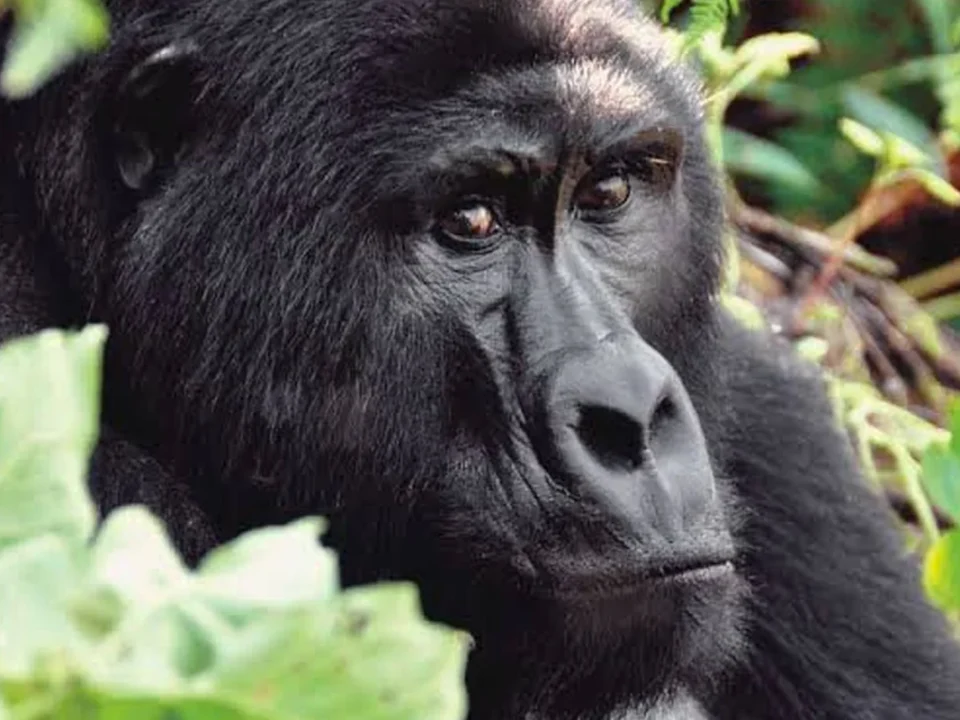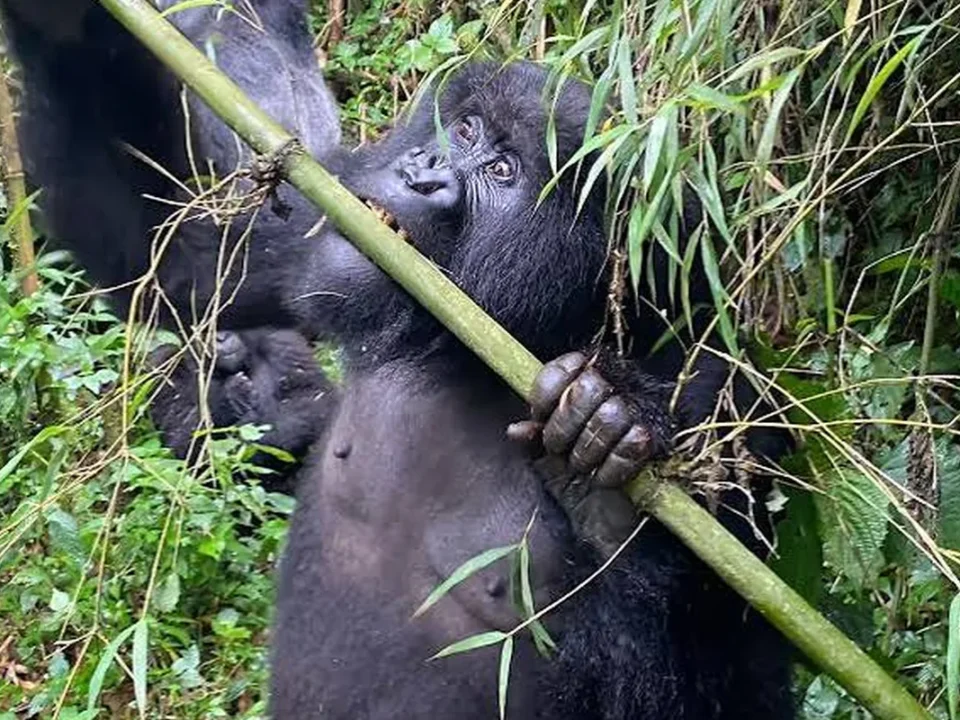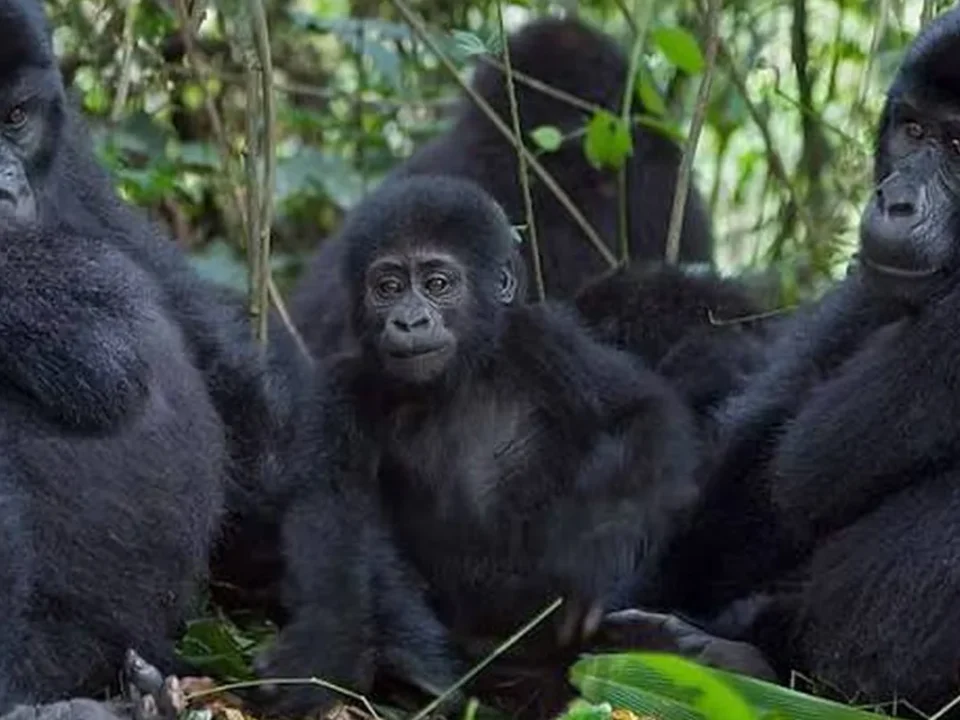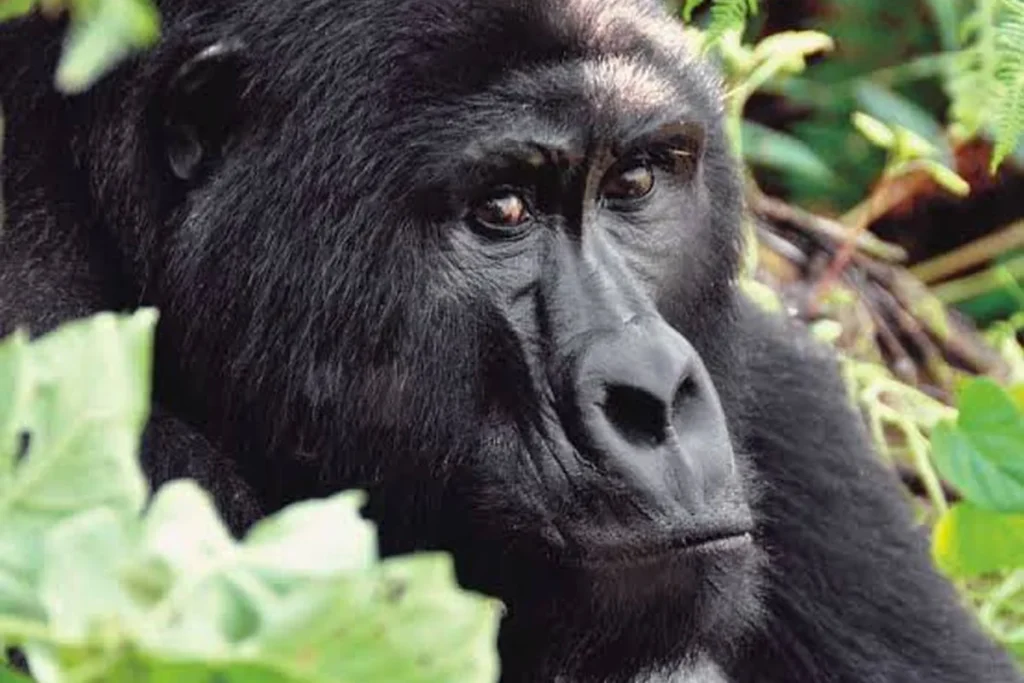
Uganda’s mountain gorillas live in protected habitats that are reached under the supervision of park rangers. Visitors must be prepared for variable walking distances, wet vegetation and remote conditions. For anyone considering gorilla trekking with multiple sclerosis, the safest starting point is an honest discussion with their treating clinician and an operator who can explain logistics without guaranteeing an easy route.
Can You Go Gorilla Trekking With Multiple Sclerosis?
Individual suitability
Multiple sclerosis does not automatically prevent someone from visiting Uganda or participating in a guided wildlife activity. The important question is whether the person can safely manage unpredictable walking conditions, possible prolonged exertion and a remote setting. MS symptoms vary widely, even between people with the same diagnosis. A decision about gorilla trekking with multiple sclerosis should therefore be based on present function rather than the diagnosis alone.
When weighing gorilla trekking with multiple sclerosis, turn this point into a practical question for your care team and travel planner: what would happen if symptoms worsened halfway through the route? Ask about the effort required to return, how quickly assistance could arrive and which parts of the itinerary can change. A sensible plan treats the option to stop as essential, not as a failure.
The experience
A typical gorilla trek begins with a ranger briefing, followed by travel on forest paths and sometimes off-trail vegetation. Tracking time is unpredictable because gorillas move freely. A visitor may encounter steep slopes, roots, muddy steps and uneven footing before reaching a habituated group. The viewing period is limited by park rules, and the return walk can be as challenging as the approach.
When weighing gorilla trekking with multiple sclerosis, turn this point into a practical question for your care team and travel planner: what would happen if symptoms worsened halfway through the route? Ask about the effort required to return, how quickly assistance could arrive and which parts of the itinerary can change. A sensible plan treats the option to stop as essential, not as a failure.
What matters most
Before committing to gorilla trekking with multiple sclerosis, consider how far you can walk comfortably on uneven ground, whether you have experienced recent falls, and how quickly fatigue develops. Think about the reliability of your balance when descending a hill, not just walking on a flat pavement. Symptoms that fluctuate from morning to afternoon deserve special attention when evaluating a full-day excursion.
Planning with honesty
Explain functional needs privately and clearly to your tour operator. You do not need to share every detail of your medical history, but the operator should understand whether you need a porter, more rest, additional assistance or a contingency plan. Contact PrideMark Safaris before purchasing permits to discuss transport, accommodation, sector selection and realistic expectations about a potentially demanding hike.
No guaranteed route
Neither Bwindi nor Mgahinga offers a guaranteed short or flat gorilla trek. Ranger teams may consider mobility concerns during group allocation, but the location of gorillas and prevailing conditions can change. Anyone researching gorilla trekking with multiple sclerosis should avoid interpreting a promised easier group as a medical safety guarantee. A flexible itinerary and a willingness to cancel are more useful than assurances.
For itinerary context, explore the 3-day Uganda gorilla trekking safari and compare it with the guidance on gorilla trekking with knee problems and gorilla trekking with fibromyalgia. Learn about the team on the About Us page, or contact PrideMark Safaris to discuss your individual travel needs.
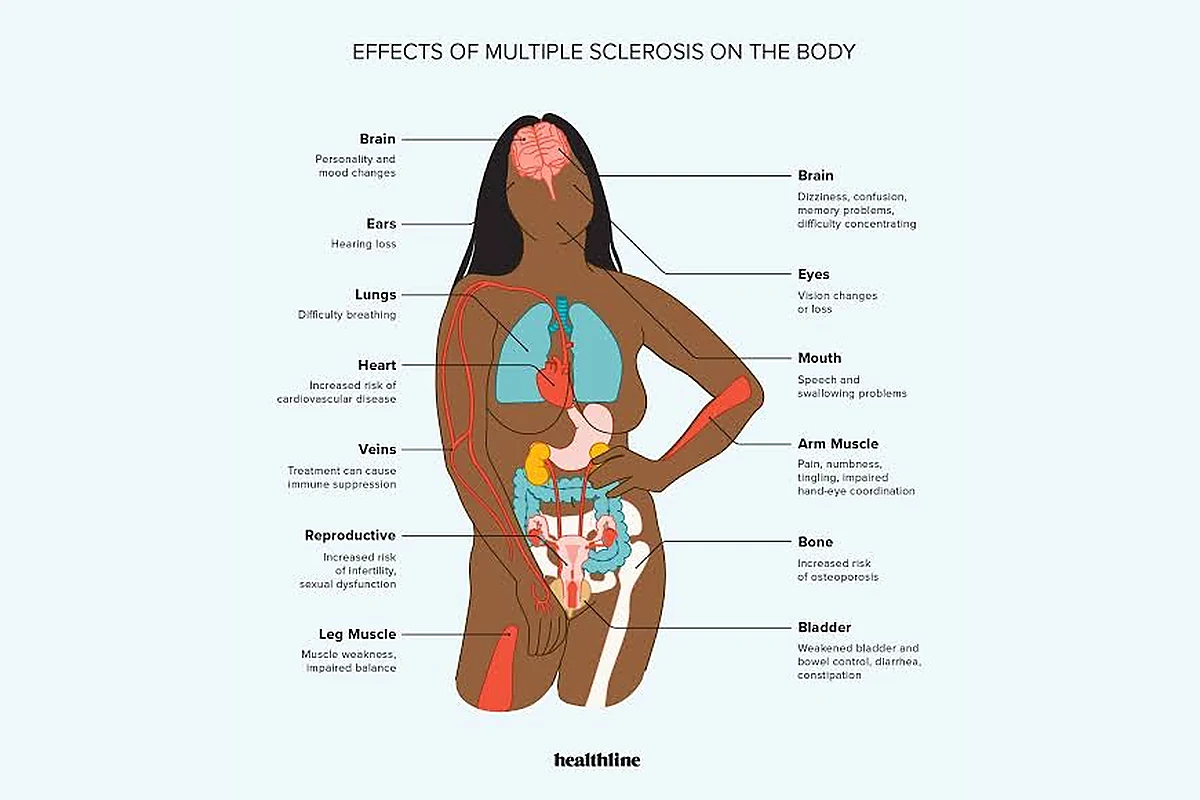
Educational illustration highlighting symptoms and body systems that may be affected by multiple sclerosis
Understanding MS Symptoms and Their Effects on Trekking
Variable symptoms
MS can affect the brain and spinal cord, producing symptoms such as weakness, sensory changes, muscle stiffness, vision difficulties, pain and impaired coordination. Some people have long periods of stability, while others experience progressive limitations or relapses. The practical demands of gorilla trekking with multiple sclerosis depend on which symptoms are active and how they affect movement and judgment on difficult terrain.
When weighing gorilla trekking with multiple sclerosis, turn this point into a practical question for your care team and travel planner: what would happen if symptoms worsened halfway through the route? Ask about the effort required to return, how quickly assistance could arrive and which parts of the itinerary can change. A sensible plan treats the option to stop as essential, not as a failure.
Walking and foot placement
Reduced sensation in the feet can make slippery roots and loose soil harder to detect. Foot drop may increase the risk of catching a toe on a branch, while spasticity can make stepping over obstacles uncomfortable. If you use an ankle-foot orthosis or another aid, practice with it on outdoor surfaces before travel. The forest is not the place to test unfamiliar equipment.
When weighing gorilla trekking with multiple sclerosis, turn this point into a practical question for your care team and travel planner: what would happen if symptoms worsened halfway through the route? Ask about the effort required to return, how quickly assistance could arrive and which parts of the itinerary can change. A sensible plan treats the option to stop as essential, not as a failure.
Vision and attention
Blurred vision, double vision or problems judging depth may complicate movement through shaded vegetation. Cognitive fatigue can also make it harder to concentrate on a guide’s instructions after hours of walking. Visitors considering gorilla trekking with multiple sclerosis should discuss recent changes in vision or cognition with their clinical team and choose a travel companion who understands the need for careful pacing.
Pain and stiffness
Pain, muscle spasms and stiffness may become more noticeable after sitting in a safari vehicle or walking downhill. Long drives to southwestern Uganda can be tiring even before the trek starts. Breaks during transfers, comfortable accommodation and a day without strenuous activity before the trek can improve the overall travel experience, although they cannot remove the inherent uncertainty of the forest.
Baseline assessment
A useful preparation exercise is to record your ordinary walking distance, number of rest stops, balance concerns and recovery time after exercise. Share this information with your treating clinician when discussing gorilla trekking with multiple sclerosis. It offers a more meaningful basis for decision-making than general descriptions such as “reasonably fit,” which can conceal important limitations.
| MS-related consideration | Practical trekking implication | Planning response |
|---|---|---|
| Fatigue | Return hike may be difficult | Allow rest and a turn-back plan |
| Balance changes | Roots and mud increase fall risk | Assess mobility and footwear |
| Heat sensitivity | Exertion may temporarily worsen symptoms | Use layers and cooling breaks |
| Vision problems | Foot placement can be harder | Seek clinical advice before booking |
For itinerary context, explore the 3-day flying luxury gorilla safari and compare it with the guidance on gorilla trekking with knee problems and gorilla trekking with fibromyalgia. Learn about the team on the About Us page, or contact PrideMark Safaris to discuss your individual travel needs.
Managing Fatigue, Muscle Weakness and Balance Difficulties
Fatigue is different
MS fatigue is often disproportionate to activity and may not respond quickly to a short rest. On a trek, fatigue can impair balance and decision-making as well as comfort. Plan conservatively: the energy needed to reach gorillas is only part of the effort, because you must still return to the trailhead. Avoid spending all available energy on the outward journey.
When weighing gorilla trekking with multiple sclerosis, turn this point into a practical question for your care team and travel planner: what would happen if symptoms worsened halfway through the route? Ask about the effort required to return, how quickly assistance could arrive and which parts of the itinerary can change. A sensible plan treats the option to stop as essential, not as a failure.
Train for the terrain
Where medically appropriate, gradually practice walking on modest hills, uneven paths and wet surfaces while accompanied by someone who can assist. Include controlled descents, as downhill steps can challenge balance more than uphill walking. A physiotherapist familiar with MS can suggest strength, gait and endurance exercises. Training should build confidence without provoking prolonged symptom worsening.
When weighing gorilla trekking with multiple sclerosis, turn this point into a practical question for your care team and travel planner: what would happen if symptoms worsened halfway through the route? Ask about the effort required to return, how quickly assistance could arrive and which parts of the itinerary can change. A sensible plan treats the option to stop as essential, not as a failure.
Use pacing strategies
For gorilla trekking with multiple sclerosis, a steady pace with planned pauses may be more useful than alternating fast walking and long rests. Eat before departure, carry water and tell the ranger early when fatigue begins. Waiting until you are exhausted may make a safe return more difficult. Your guide can help evaluate the situation, but cannot remove the risks associated with remote terrain.
Falls and stability
Consider whether you can recover safely from a stumble and whether you have fallen recently. Trekking poles may help on suitable surfaces, but they do not replace adequate balance and can be awkward in thick vegetation. Footwear with reliable traction matters. A porter can carry your daypack and offer some assistance, yet may not be able to prevent a fall on a steep or muddy slope.
Recovery time
Build recovery days into the itinerary rather than scheduling consecutive strenuous activities. A relaxed afternoon after the trek and a comfortable transfer schedule can reduce avoidable stress. If gorilla trekking with multiple sclerosis would require pushing through severe fatigue, repeated falls or unsafe weakness, it may be wiser to choose a different wildlife experience.
For itinerary context, explore the 5-day gorilla and game safari and compare it with the guidance on gorilla trekking with knee problems and gorilla trekking with fibromyalgia. Learn about the team on the About Us page, or contact PrideMark Safaris to discuss your individual travel needs.
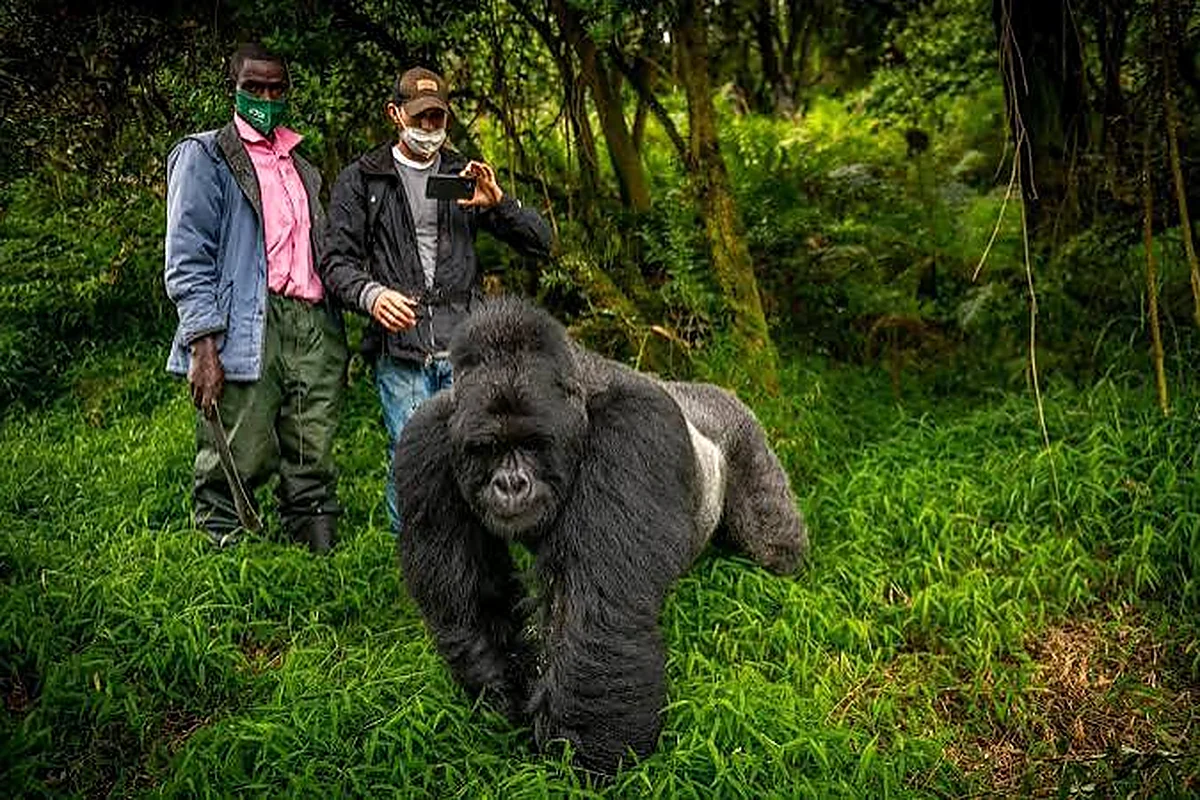
A magnificent silverback mountain gorilla moves through lush vegetation while two people observe from behind.
Heat Sensitivity, Altitude and Rainforest Conditions
Temperature changes
Some people with MS experience temporary worsening of symptoms when body temperature rises. This phenomenon is often called Uhthoff’s phenomenon and is not necessarily a new relapse. Even in a cool mountain forest, walking uphill in waterproof clothing can produce overheating. Discuss personal triggers and cooling strategies with your clinician before considering gorilla trekking with multiple sclerosis.
When weighing gorilla trekking with multiple sclerosis, turn this point into a practical question for your care team and travel planner: what would happen if symptoms worsened halfway through the route? Ask about the effort required to return, how quickly assistance could arrive and which parts of the itinerary can change. A sensible plan treats the option to stop as essential, not as a failure.
Cooling and clothing
Wear breathable layers that can be adjusted quickly, and carry a lightweight rain shell rather than relying on heavy insulation. Take breaks in shaded areas when feasible and drink regularly. A cooling scarf may help some travelers, but it should be tested before the trip. Avoid assuming that the forest’s greenery guarantees a cool or comfortable hiking temperature.
When weighing gorilla trekking with multiple sclerosis, turn this point into a practical question for your care team and travel planner: what would happen if symptoms worsened halfway through the route? Ask about the effort required to return, how quickly assistance could arrive and which parts of the itinerary can change. A sensible plan treats the option to stop as essential, not as a failure.
Altitude and exertion
Bwindi and Mgahinga are mountainous destinations, with some trekking areas at substantial elevation. The combination of altitude, exertion and uneven ground may feel more demanding than a similar-distance walk at home. Altitude alone does not determine suitability for gorilla trekking with multiple sclerosis, but it is another reason to assess breathing, endurance, medication effects and existing health conditions individually.
Rain and mud
Rain can arrive outside the commonly discussed wet seasons, leaving slippery clay, wet roots and dense vegetation. Trekking can involve stepping across small streams or negotiating steep sections without handrails. Waterproof boots with good grip and gaiters may help keep feet drier, but no footwear eliminates slip risk. Ask the operator about recent conditions while recognizing that the actual route remains unpredictable.
Symptom response
If heat causes new weakness, blurred vision or marked imbalance, stop, cool down and inform the ranger. If symptoms are severe, unusual, persistent or accompanied by other concerning signs, seek medical assessment rather than assuming they are harmless temperature effects. Safe planning for gorilla trekking with multiple sclerosis includes a clear decision to turn back when necessary.
For itinerary context, explore the 3-day Uganda gorilla trekking safari and compare it with the guidance on gorilla trekking with knee problems and gorilla trekking with fibromyalgia. Learn about the team on the About Us page, or contact PrideMark Safaris to discuss your individual travel needs.
Consulting Your Neurologist and Preparing Medication
Pretravel review
Arrange a pretravel consultation with your neurologist or MS care team well before booking nonrefundable services. Explain that gorilla trekking with multiple sclerosis involves uncertain walking distances, steep forest terrain and limited immediate medical access. Discuss relapse history, falls, heat sensitivity, medication effects, bladder needs and the possibility of an emergency far from a hospital.
When weighing gorilla trekking with multiple sclerosis, turn this point into a practical question for your care team and travel planner: what would happen if symptoms worsened halfway through the route? Ask about the effort required to return, how quickly assistance could arrive and which parts of the itinerary can change. A sensible plan treats the option to stop as essential, not as a failure.
Medication continuity
Carry essential medication in original labeled packaging, along with prescriptions and a concise medical summary. Keep necessary doses in hand luggage rather than checked baggage. Some MS treatments require refrigeration, special timing or monitoring, so confirm the transport and storage arrangements with your pharmacist or prescribing team. Do not alter treatment schedules without professional advice.
When weighing gorilla trekking with multiple sclerosis, turn this point into a practical question for your care team and travel planner: what would happen if symptoms worsened halfway through the route? Ask about the effort required to return, how quickly assistance could arrive and which parts of the itinerary can change. A sensible plan treats the option to stop as essential, not as a failure.
Infection considerations
Certain disease-modifying therapies can affect immune function. Gorilla tourism has strict rules intended to protect great apes from human infections. If you develop a contagious illness or respiratory symptoms, follow ranger and park instructions and do not approach gorillas. Ask your clinician about travel vaccines and infection precautions, especially if your treatment influences vaccine timing or suitability.
Travel insurance
Check that travel insurance covers your declared pre-existing condition, remote activities, medical treatment and evacuation where applicable. Policies vary, and general “adventure travel” wording may not cover every circumstance. Gorilla trekking with multiple sclerosis requires particular attention to exclusions involving mobility, previous relapses or planned medical care. Keep emergency contact details accessible offline.
Practical documentation
A short written plan can list medications, allergies, emergency contacts, seizure or spasm history if relevant, and instructions provided by your medical team. Share only the information necessary for safe assistance with your travel companion and operator. PrideMark Safaris can discuss logistics, but cannot replace an assessment from a qualified medical professional.
For itinerary context, explore the 3-day flying luxury gorilla safari and compare it with the guidance on gorilla trekking with knee problems and gorilla trekking with fibromyalgia. Learn about the team on the About Us page, or contact PrideMark Safaris to discuss your individual travel needs.
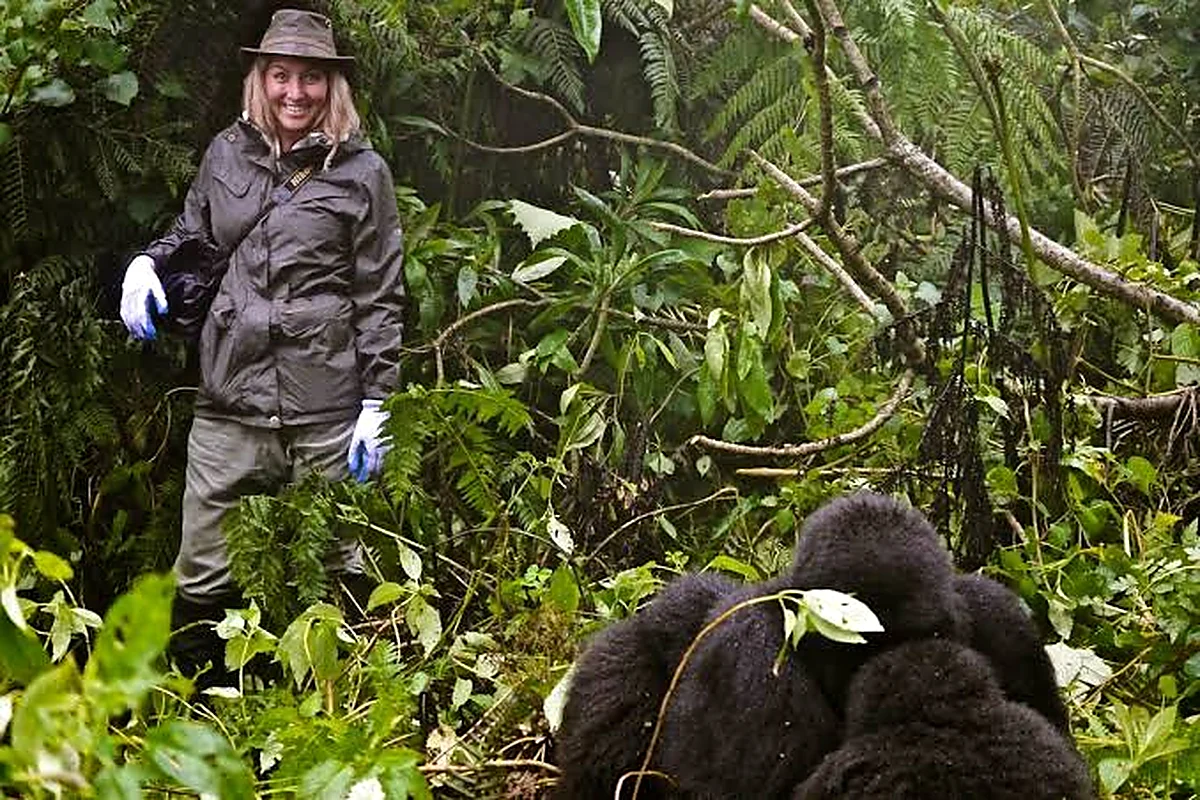
A visitor observes mountain gorillas during a guided trekking experience in a lush tropical rainforest.
Choosing Between Bwindi and Mgahinga
Bwindi overview
Bwindi Impenetrable National Park has multiple gorilla trekking sectors, including Buhoma, Ruhija, Rushaga and Nkuringo. Their terrain and access differ, but none guarantees an easy trek. Some sectors involve steep descents and climbs, and gorilla movements determine the final route. Discuss the practical implications of gorilla trekking with multiple sclerosis before selecting accommodation or buying a permit.
When weighing gorilla trekking with multiple sclerosis, turn this point into a practical question for your care team and travel planner: what would happen if symptoms worsened halfway through the route? Ask about the effort required to return, how quickly assistance could arrive and which parts of the itinerary can change. A sensible plan treats the option to stop as essential, not as a failure.
Mgahinga overview
Mgahinga Gorilla National Park lies in a volcanic landscape with forest and bamboo zones. It is sometimes portrayed as an easier alternative, but its elevation and changing gorilla locations can still make trekking strenuous. A traveler with MS should not choose Mgahinga solely because a brochure describes it as less difficult. Ask about terrain, access and realistic contingency options.
When weighing gorilla trekking with multiple sclerosis, turn this point into a practical question for your care team and travel planner: what would happen if symptoms worsened halfway through the route? Ask about the effort required to return, how quickly assistance could arrive and which parts of the itinerary can change. A sensible plan treats the option to stop as essential, not as a failure.
Accommodation proximity
Staying near the assigned briefing point reduces early-morning driving and may conserve energy. Choose lodging with accessible paths, manageable stairs, reliable electricity and appropriate bathroom facilities. For gorilla trekking with multiple sclerosis, accommodation comfort can matter as much as the trekking day because disrupted sleep and long transfers may worsen fatigue.
Allocation requests
Rangers may take age and mobility concerns into account when assigning groups where feasible, but allocations cannot promise a short route or a specific gorilla family. Tell your operator about walking limits well ahead of time and repeat relevant needs at the briefing. A ranger’s on-the-day assessment and park rules take precedence over any preliminary preference.
Compare realistically
The best park choice depends on available permits, travel time, symptoms, altitude tolerance and the ability to handle steep terrain. A flying safari may reduce time on the road, but it does not make the trek itself accessible. Compare the full journey rather than focusing only on the advertised gorilla encounter.
| Consideration | Bwindi | Mgahinga |
|---|---|---|
| Terrain | Steep forest slopes in several sectors | Mountainous volcanic terrain |
| Gorilla location | Varies daily | Varies daily |
| Easy route guaranteed? | No | No |
| Planning priority | Sector and lodge access | Altitude and travel logistics |
For itinerary context, explore the 5-day gorilla and game safari and compare it with the guidance on gorilla trekking with knee problems and gorilla trekking with fibromyalgia. Learn about the team on the About Us page, or contact PrideMark Safaris to discuss your individual travel needs.
Porters, Walking Sticks and Mobility Assistance
Porter support
Hiring a local porter can reduce the weight you carry and provide limited support over difficult sections. Explain the type of help you need and ask what assistance is realistically available. Porters are valuable, but they are not medical attendants and cannot guarantee safety. People planning gorilla trekking with multiple sclerosis should not rely on porter support to compensate for severe instability.
When weighing gorilla trekking with multiple sclerosis, turn this point into a practical question for your care team and travel planner: what would happen if symptoms worsened halfway through the route? Ask about the effort required to return, how quickly assistance could arrive and which parts of the itinerary can change. A sensible plan treats the option to stop as essential, not as a failure.
Walking aids
A walking stick or trekking pole can improve confidence on some surfaces. Practice using your preferred aid on slopes and mud before traveling. A pole that works well on a paved path may be less useful where vegetation is dense or both hands are needed. Ask whether any equipment restrictions apply and follow ranger instructions.
When weighing gorilla trekking with multiple sclerosis, turn this point into a practical question for your care team and travel planner: what would happen if symptoms worsened halfway through the route? Ask about the effort required to return, how quickly assistance could arrive and which parts of the itinerary can change. A sensible plan treats the option to stop as essential, not as a failure.
Sedan chairs
In some Bwindi areas, locally arranged carrying-chair or stretcher services may be available for visitors with major mobility limitations, subject to local availability, cost, terrain and advance coordination. These are not universally available or guaranteed suitable for every person. If considering gorilla trekking with multiple sclerosis using such support, confirm details directly before paying for permits.
Briefing and communication
Tell the ranger about balance concerns, fatigue limits and any symptoms that require stopping. Agree on a simple signal to request a break. A companion who understands your condition can help monitor changes, but the ranger remains responsible for group management and wildlife safety. Follow instructions about spacing, noise, food and movements near gorillas.
Respect personal limits
Mobility assistance is not a test of determination. If you cannot safely negotiate a slope, tell the team promptly. A good plan allows for turning back without embarrassment. PrideMark Safaris can help coordinate questions about porters and suitable transfers, while the final trekking decision remains subject to park conditions and individual medical judgment.
For itinerary context, explore the 3-day Uganda gorilla trekking safari and compare it with the guidance on gorilla trekking with knee problems and gorilla trekking with fibromyalgia. Learn about the team on the About Us page, or contact PrideMark Safaris to discuss your individual travel needs.
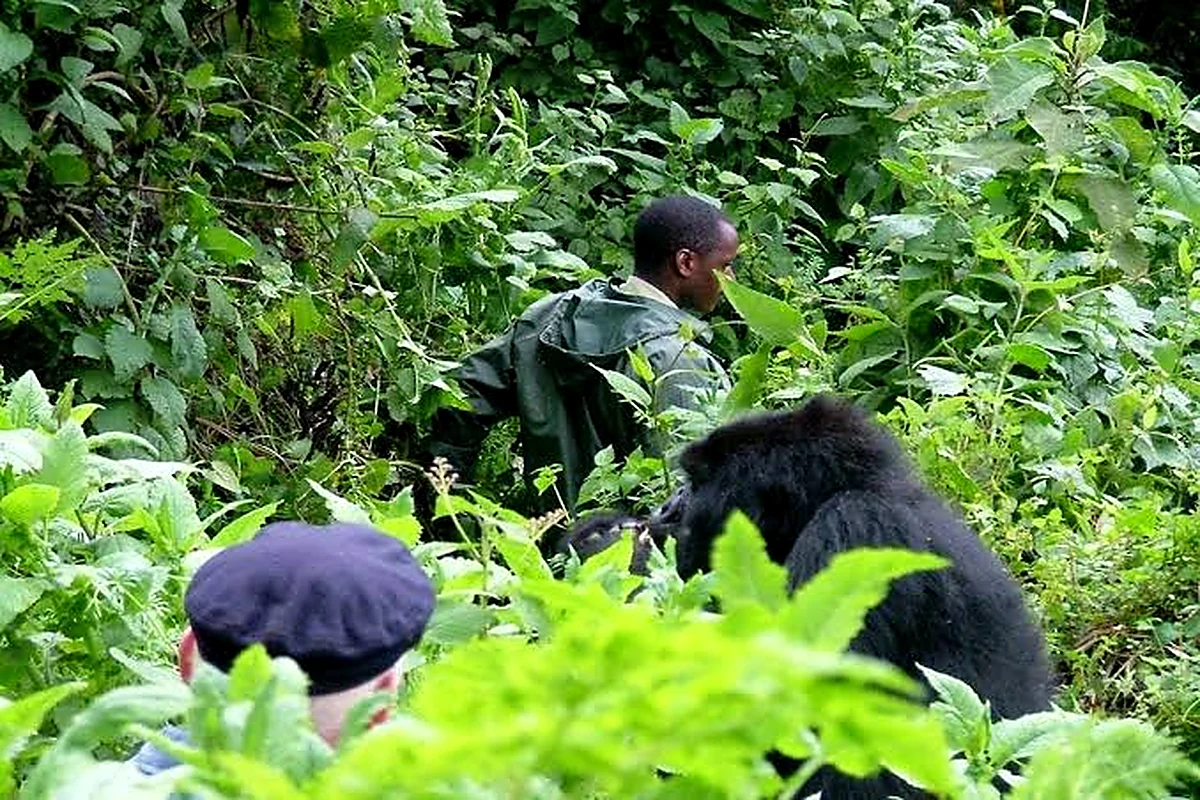
A mountain gorilla rests among lush forest vegetation while a park ranger and visitor observe nearby.
Warning Symptoms, Emergencies and When Not to Trek
Reasons to reconsider
A recent relapse, rapidly worsening weakness, repeated falls, severe uncontrolled fatigue or a new visual problem may be reasons to postpone trekking until evaluated. A person experiencing unstable symptoms should not assume that an operator can solve the problem by assigning an easier group. Gorilla trekking with multiple sclerosis should be postponed when the risks exceed the person’s current capabilities.
When weighing gorilla trekking with multiple sclerosis, turn this point into a practical question for your care team and travel planner: what would happen if symptoms worsened halfway through the route? Ask about the effort required to return, how quickly assistance could arrive and which parts of the itinerary can change. A sensible plan treats the option to stop as essential, not as a failure.
Urgent symptoms
Sudden weakness, severe headache, chest pain, difficulty breathing, loss of consciousness or other acute neurological changes require prompt medical attention. Do not continue hiking to reach gorillas while experiencing a possible emergency. Notify the ranger immediately and follow the evacuation plan. Distinguishing an MS symptom from another serious condition may require urgent clinical assessment.
When weighing gorilla trekking with multiple sclerosis, turn this point into a practical question for your care team and travel planner: what would happen if symptoms worsened halfway through the route? Ask about the effort required to return, how quickly assistance could arrive and which parts of the itinerary can change. A sensible plan treats the option to stop as essential, not as a failure.
Remote access
Forest trails can be far from roads and medical facilities. Communication may be unreliable and evacuation can take time. Discuss where emergency care is available and what your insurance covers. Carry essential medication and emergency details in a waterproof pouch. The possibility of delayed care should be part of any decision about gorilla trekking with multiple sclerosis.
Wildlife rules
Gorilla encounters are managed by trained rangers under conservation rules. Visitors should maintain the required distance, avoid touching gorillas and follow instructions if animals approach. A sudden loss of balance near a gorilla could create danger for both visitor and animal. Safety planning must therefore include the ability to remain calm and follow instructions during the viewing period.
Alternative experiences
Choosing not to trek does not mean losing the entire Uganda safari. Scenic drives, accessible viewpoints, cultural visits and some vehicle-based wildlife experiences may offer rewarding alternatives, depending on personal needs and the location. PrideMark Safaris can discuss itinerary adjustments if the forest trek is not appropriate.
For itinerary context, explore the 3-day flying luxury gorilla safari and compare it with the guidance on gorilla trekking with knee problems and gorilla trekking with fibromyalgia. Learn about the team on the About Us page, or contact PrideMark Safaris to discuss your individual travel needs.
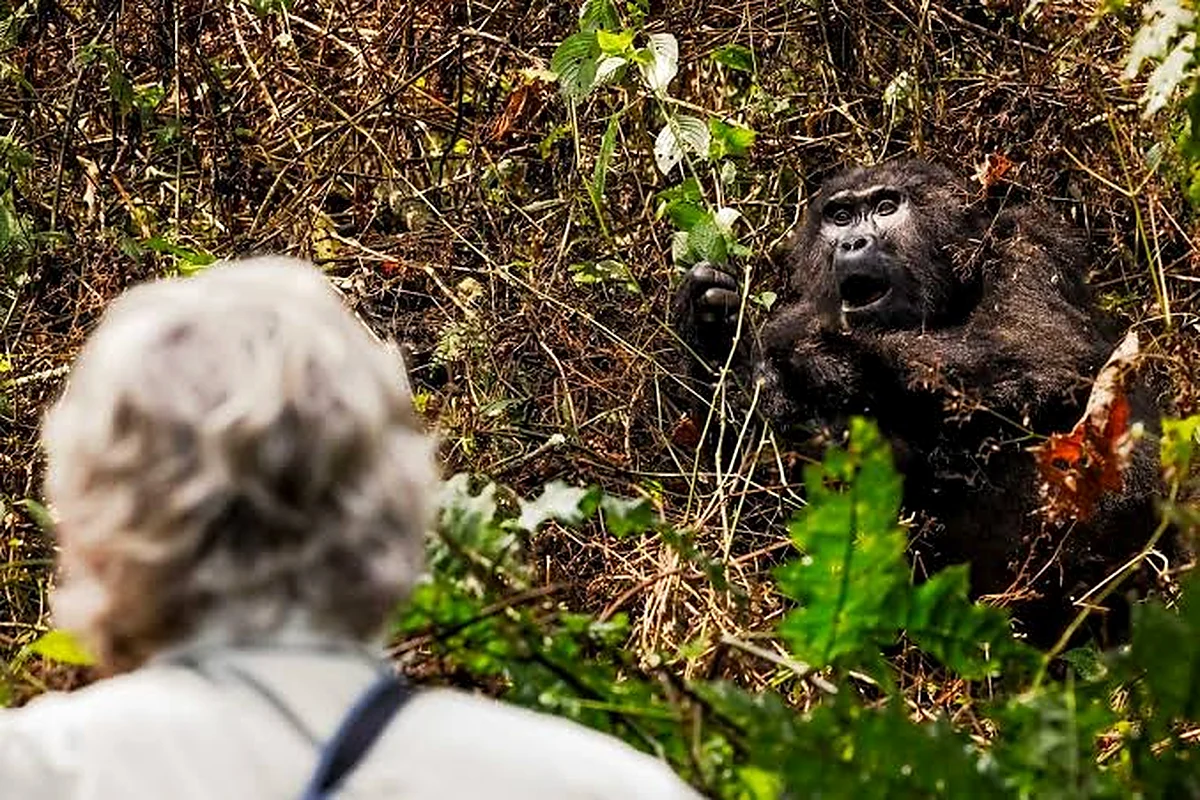
A visitor observes a mountain gorilla resting among dense forest vegetation during a guided gorilla trekking experience.
Choosing Suitable Gorilla Safari Packages With PrideMark Safaris
Match itinerary to stamina
A short itinerary may seem convenient, but compressed travel can leave little time for recovery or unexpected changes. Compare the pace of each package and allow extra nights when possible. For gorilla trekking with multiple sclerosis, a slower itinerary with rest days may be preferable to a tightly scheduled trip, even if the trek itself is only one activity.
When weighing gorilla trekking with multiple sclerosis, turn this point into a practical question for your care team and travel planner: what would happen if symptoms worsened halfway through the route? Ask about the effort required to return, how quickly assistance could arrive and which parts of the itinerary can change. A sensible plan treats the option to stop as essential, not as a failure.
Road versus flight
The 3-day flying luxury gorilla safari may reduce long road transfers, which can help travelers who struggle with prolonged sitting or fatigue. However, flight arrangements depend on availability and do not reduce the physical demands of trekking. Ask about ground transfers, luggage, accessibility and airport logistics before choosing a flying package.
When weighing gorilla trekking with multiple sclerosis, turn this point into a practical question for your care team and travel planner: what would happen if symptoms worsened halfway through the route? Ask about the effort required to return, how quickly assistance could arrive and which parts of the itinerary can change. A sensible plan treats the option to stop as essential, not as a failure.
Classic trekking option
The 3-day Uganda gorilla trekking safari offers a straightforward starting point for comparing accommodation, permits and transport. Travelers with MS should request a personalized discussion rather than assuming the published itinerary is appropriate as written. Ask how rest periods, extra nights and porter arrangements could fit into a realistic plan.
Combine experiences carefully
A 5-day gorilla and game safari combines primate viewing with additional wildlife activities. This can provide variety, but it may also add driving and early starts. Review each day’s schedule and decide which activities are optional. Gorilla trekking with multiple sclerosis is best approached as one element of a carefully paced holiday, not a challenge to complete at any cost.
Speak with the team
Read more about the company on the About Us page, then contact PrideMark Safaris with your travel dates, preferred comfort level and practical mobility requirements. Ask for clear explanations of permits, cancellation conditions, porter arrangements and what happens if you decide not to trek. Responsible planning prioritizes health, conservation rules and realistic expectations.
| Safari option | Potential benefit | Question to ask |
|---|---|---|
| 3-day Uganda gorilla trekking safari | Simple itinerary | Can rest nights be added? |
| 3-day flying luxury gorilla safari | Less road time | How accessible are transfers? |
| 5-day gorilla and game safari | Additional wildlife activities | Which activities are optional? |
For itinerary context, explore the 5-day gorilla and game safari and compare it with the guidance on gorilla trekking with knee problems and gorilla trekking with fibromyalgia. Learn about the team on the About Us page, or contact PrideMark Safaris to discuss your individual travel needs.
Frequently Asked Questions About Gorilla Trekking With Multiple Sclerosis
Is gorilla trekking with multiple sclerosis allowed in Uganda?
An MS diagnosis is not automatically a prohibition, but participation depends on park rules, current health, mobility and the ability to follow ranger instructions. Obtain individualized medical advice and discuss practical needs before booking. Gorilla trekking with multiple sclerosis requires an individualized plan, because current symptoms and forest conditions are more informative than a diagnosis alone. Check details with your clinician and the park team before travel.
Can someone with mild MS symptoms complete a gorilla trek?
Some travelers with mild, stable symptoms may be capable of trekking, but there is no reliable guarantee of route length or difficulty. Assess endurance, balance, fatigue and recovery, and plan for the possibility of turning back. Gorilla trekking with multiple sclerosis requires an individualized plan, because current symptoms and forest conditions are more informative than a diagnosis alone. Check details with your clinician and the park team before travel.
Does heat make MS symptoms worse during gorilla trekking?
Heat can temporarily worsen symptoms for some people with MS. Wear adjustable layers, take breaks and discuss personal cooling strategies with your clinician. New or severe symptoms should not automatically be attributed to heat. Gorilla trekking with multiple sclerosis requires an individualized plan, because current symptoms and forest conditions are more informative than a diagnosis alone. Check details with your clinician and the park team before travel.
Is Bwindi easier than Mgahinga for people with MS?
Neither park is consistently easier. Trek difficulty changes with gorilla movements, weather and the specific route. Compare travel logistics and current capabilities rather than relying on a general ranking. Gorilla trekking with multiple sclerosis requires an individualized plan, because current symptoms and forest conditions are more informative than a diagnosis alone. Check details with your clinician and the park team before travel.
Can I hire a porter for gorilla trekking with multiple sclerosis?
Porters can often be arranged to carry a daypack and provide limited assistance, subject to local arrangements. They are not a substitute for medical assessment or reliable balance on steep ground. Gorilla trekking with multiple sclerosis requires an individualized plan, because current symptoms and forest conditions are more informative than a diagnosis alone. Check details with your clinician and the park team before travel.
Are carrying chairs available for visitors with mobility difficulties?
Some trekking areas may offer carrying-chair services with advance planning, but availability, cost and suitability vary. Confirm the exact service and its limitations with your operator before booking. Gorilla trekking with multiple sclerosis requires an individualized plan, because current symptoms and forest conditions are more informative than a diagnosis alone. Check details with your clinician and the park team before travel.
Should I tell the ranger that I have MS?
Yes, share the functional information needed for safe group management, such as fatigue limits, balance difficulties and when you might need to stop. You can keep unrelated medical details private. Gorilla trekking with multiple sclerosis requires an individualized plan, because current symptoms and forest conditions are more informative than a diagnosis alone. Check details with your clinician and the park team before travel.
What should I do if I experience new weakness on the trail?
Stop walking, inform the ranger and assess the situation. Sudden or severe neurological symptoms need urgent medical evaluation. Do not continue simply to complete the gorilla encounter. Gorilla trekking with multiple sclerosis requires an individualized plan, because current symptoms and forest conditions are more informative than a diagnosis alone. Check details with your clinician and the park team before travel.
Can MS medication travel safely to Uganda?
Many medicines can be transported with proper planning, but storage, refrigeration, customs documentation and dosing schedules differ. Consult your prescribing team and airline before departure. Gorilla trekking with multiple sclerosis requires an individualized plan, because current symptoms and forest conditions are more informative than a diagnosis alone. Check details with your clinician and the park team before travel.
Does a flying safari make gorilla trekking with multiple sclerosis safer?
Flying may reduce road travel fatigue but does not remove steep slopes, mud, altitude or unpredictable trekking duration. Evaluate the full itinerary and personal medical needs. Gorilla trekking with multiple sclerosis requires an individualized plan, because current symptoms and forest conditions are more informative than a diagnosis alone. Check details with your clinician and the park team before travel.
Can I get a refund if MS symptoms prevent me from trekking?
Refunds and rescheduling depend on permit rules, supplier terms and insurance coverage. Do not assume medical cancellation is automatically refundable. Review written terms before paying. Gorilla trekking with multiple sclerosis requires an individualized plan, because current symptoms and forest conditions are more informative than a diagnosis alone. Check details with your clinician and the park team before travel.
What if gorilla trekking is not suitable for me?
Uganda offers other experiences, including scenic landscapes, cultural activities and some vehicle-based wildlife viewing. A tailored itinerary can preserve much of the trip without an unsafe forest hike. Gorilla trekking with multiple sclerosis requires an individualized plan, because current symptoms and forest conditions are more informative than a diagnosis alone. Check details with your clinician and the park team before travel.
Plan Your Uganda Safari Responsibly
To discuss permits, travel timing and practical arrangements, contact PrideMark Safaris. You can also read About Us and review the 3-day gorilla trekking safari. Gorilla trekking with multiple sclerosis is never a one-size-fits-all decision; your health, park rules and the actual conditions on the day should guide the final choice.