1. Why Socks Matter on a Gorilla Trek
Socks may look like a small detail beside boots, permits and rain jackets, yet they sit directly against the skin throughout the walk. In Bwindi Impenetrable National Park and Mgahinga Gorilla National Park, visitors can encounter damp undergrowth, roots, uneven ground and sections of mud. Good socks reduce friction, manage moisture and cushion pressure points, helping your boots do their job rather than creating discomfort. The best socks for gorilla trekking in Uganda should remain comfortable when you climb, descend and stop for briefings.
When choosing the best socks for gorilla trekking in Uganda, start with the complete footwear system: foot, sock, boot and trouser cuff. A technically impressive sock will not rescue a boot that pinches the toes or slips at the heel. Equally, a well-fitting boot can become uncomfortable if the sock bunches up, holds too much water or creates a seam against a sensitive area.
Gorilla tracking is not a fixed-distance hike. Rangers locate the habituated family on the day, and walking time depends on where the gorillas have moved, the assigned group and ground conditions. A visitor might spend relatively little time walking or face a longer, steeper outing. Choose clothing that remains comfortable when the plan changes rather than relying on an expected short trek. Before deciding on the best socks for gorilla trekking in Uganda, try the pair with the footwear you will actually pack.
The most common foot problems are rarely dramatic. A small hot spot can become a blister when repeated steps rub the same place; damp fabric can soften the skin; and a tight cuff can leave marks during a long walk. The best socks for gorilla trekking in Uganda are therefore the pair you have already tested successfully on varied terrain, not simply the pair with the highest price. The best socks for gorilla trekking in Uganda should be selected for the conditions you expect and the boots you own.
PrideMark Safaris encourages travelers to prepare boots and socks together several weeks before departure. This leaves time to discover whether a thicker pair makes the boot too tight, whether the heel slips on descents and whether your feet remain comfortable after walking in warm or wet conditions. A small rehearsal at home is far easier than solving a footwear problem at a forest briefing point. Choosing the best socks for gorilla trekking in Uganda also means planning for a damp morning and a warm afternoon.
Foot comfort also affects attention. Instead of focusing on rubbing, soggy fabric or a slipping sock, you can concentrate on the guide’s instructions, your footing and the forest itself. No sock guarantees blister-free trekking, but choosing and testing the right pair gives you a more reliable starting point for an enjoyable gorilla safari.
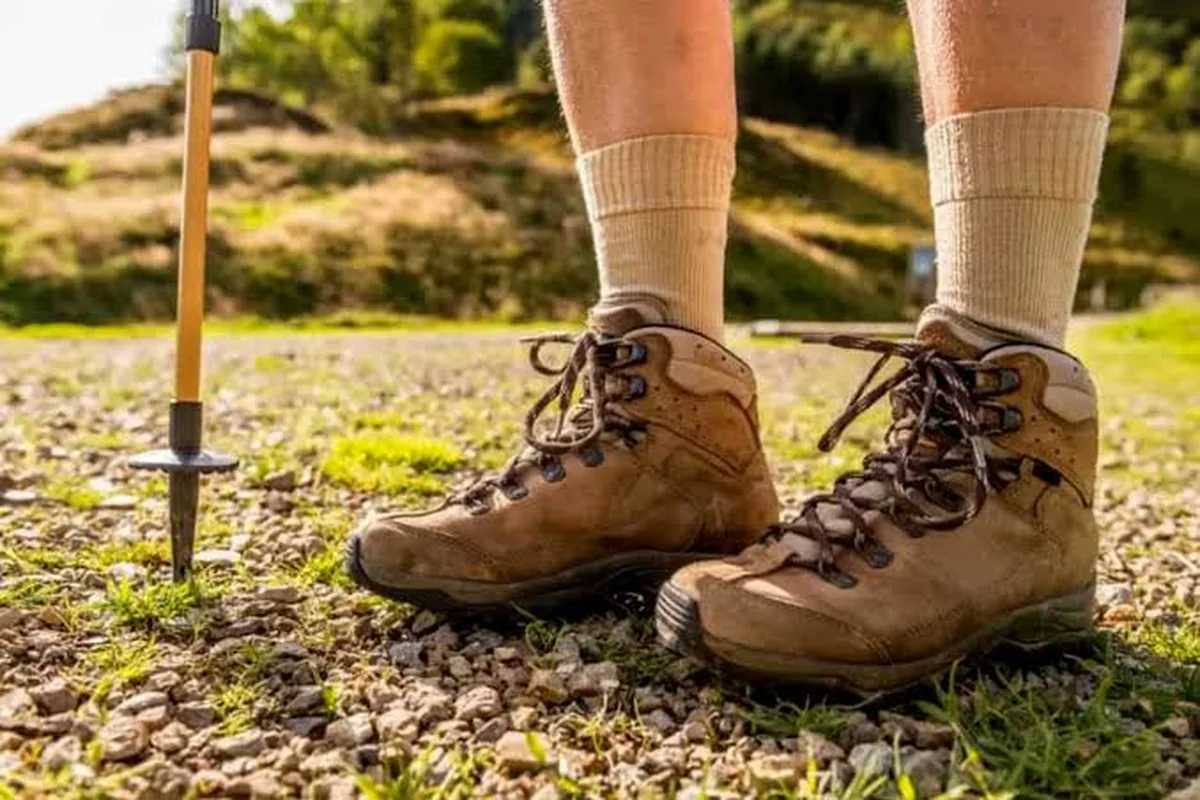
Comfortable hiking socks worn with sturdy trekking boots help protect the feet during long walks on uneven forest trails in Uganda.
2. The Best Sock Materials: Merino Wool, Synthetic and Cotton
Material is a useful first filter, but fabric blends and construction matter as much as a single fiber name. Many hiking socks combine wool or synthetic yarns with nylon for durability and elastane for stretch. The result should move moisture away from the skin, retain its shape and resist sliding inside the boot. Read the label, then judge the sock by fit and performance during a trial walk. For the best socks for gorilla trekking in Uganda, focus on consistent comfort rather than impressive packaging claims.
Merino wool is popular because it can feel comfortable across changing temperatures and often manages odor better than some alternatives. It does not mean that every wool sock is automatically cool or quick to dry. Thick merino fabric may remain damp after a soaking, while a lighter merino blend can be more versatile for a warm day in the forest.
Synthetic hiking socks made with polyester, nylon or polypropylene can be effective at transporting moisture and may dry quickly, depending on thickness and construction. Some people prefer their smooth feel, while others find particular fabrics warmer or more prone to odor. The best socks for gorilla trekking in Uganda can be either merino blends or well-made synthetic hiking socks; performance and fit decide. Travelers researching the best socks for gorilla trekking in Uganda should prioritize secure fit and reliable construction.
Ordinary cotton socks are less suitable for a long, damp hike because cotton absorbs moisture and can stay wet against the skin. That combination may increase friction and discomfort, particularly when footwear is already damp. Cotton is perfectly useful for relaxing at a lodge, but it is not the first material to choose for a potentially muddy trek.
Do not confuse “waterproof socks” with normal moisture-wicking socks. Waterproof membrane socks may keep external water away in some circumstances, but they can feel bulky or warm and may trap perspiration. They also change the fit of a boot. Consider them only after testing the whole combination, rather than assuming they are essential for Uganda. Even the best socks for gorilla trekking in Uganda will perform poorly when paired with boots that are the wrong size.
For most visitors, a medium-weight merino-blend or synthetic hiking sock with reinforced heel and toe areas is a sensible starting point. If your boots are snug, a thinner pair may fit better. If your boots are roomy, a slightly cushioned pair may help, but never use extra thickness to compensate for fundamentally poor boot sizing.
| Sock material | Potential benefit | Main consideration |
|---|---|---|
| Merino wool blend | Comfort across variable temperatures | Thickness and drying time vary |
| Synthetic hiking blend | Moisture management and durability | Fit and odor control vary |
| Cotton everyday sock | Easy to find and comfortable at the lodge | May stay damp during a wet trek |
| Waterproof membrane sock | May block external moisture | Bulk, warmth and boot fit need testing |
3. Sock Height, Fit and Cushioning for Bwindi and Mgahinga
Choose a sock that rises above the top edge of your footwear. If you are wearing ankle-high or mid-height hiking boots, a crew-length hiking sock is often practical because it creates a protective layer between the boot collar and the leg. Low-cut sports socks can slip below the collar and leave skin exposed to rubbing, especially when walking downhill. An important test of the best socks for gorilla trekking in Uganda is whether they stay smooth during downhill walking.
Sock fit should be close without feeling restrictive. The heel pocket needs to sit at the heel, the toe seam should lie flat, and the fabric should not fold under the arch. If the sock twists during a short walk, it is unlikely to become more comfortable after several hours in the forest. Try a different size or design instead of simply pulling it tighter. The best socks for gorilla trekking in Uganda will not replace a well-fitted boot, but they can improve day-long comfort.
Cushioning is a trade-off. Padding under the heel and ball of the foot can feel comfortable on rocky sections, yet heavy cushioning takes up room inside a boot and can make feet warmer. The best socks for gorilla trekking in Uganda generally balance targeted cushioning with enough space for toes to move naturally on descents. For many visitors, the best socks for gorilla trekking in Uganda are familiar hiking socks already tested on local walks.
Look for a comfortable cuff that stays in place without digging into the calf. Elastic should hold the sock up but should not leave deep pressure marks. Travelers who experience swelling during long walks may prefer a gentler cuff or a different sock size. Specialist compression socks are a separate product category and should not be assumed necessary for trekking.
Check the toe area carefully. A bulky seam across the toes can become irritating after repeated steps, particularly when the boot presses against it. Some hiking socks use flat or nearly seamless toe construction. Even so, individual foot shape matters; a seam that feels harmless to one person may rub another. The best socks for gorilla trekking in Uganda are part of a complete preparation plan, not a substitute for sturdy boots.
Before travel, walk up and down stairs in your full trekking outfit. The socks should stay in position as your feet move forward inside the boots. This simple test can reveal heel movement, toe pressure and a slipping cuff that might not appear when you are only standing in a shop.
| Sock feature | What to check | Why it matters |
|---|---|---|
| Height | Cuff sits above boot collar | Reduces rubbing at the ankle |
| Heel fit | Heel pocket stays aligned | Limits sliding and bunching |
| Toe seam | Flat and comfortable | Reduces localized pressure |
| Cushioning | Compatible with boot volume | Balances comfort and toe room |
| Fabric | Moisture-managing blend | Helps manage sweat and dampness |
4. Managing Moisture, Rain and Mud on Gorilla Trekking Trails
Rainfall and wet vegetation are possible in Uganda’s mountain forests even during months commonly described as drier. Morning dew, shaded soil and stream crossings can also leave footwear damp. A good sock helps manage sweat and minor moisture, but it cannot keep feet dry if water enters over the boot collar or the boot itself leaks heavily. One useful way to assess the best socks for gorilla trekking in Uganda is to notice how your feet feel after two hours.
When selecting the best socks for gorilla trekking in Uganda, think about how the sock behaves once damp. Fabric that clings, bunches or feels abrasive can become distracting. A tested hiking blend that retains its shape is more useful than a thick, fluffy pair that becomes heavy and stays wet.
Waterproof boots can reduce moisture from outside, but they do not eliminate perspiration. In humid conditions, a heavily insulated boot and thick sock may leave feet warm and sweaty. A lighter hiking sock can sometimes be more comfortable inside a waterproof boot, provided the fit remains secure and the fabric protects against rubbing. Pack the best socks for gorilla trekking in Uganda somewhere dry and accessible before your early morning departure.
If you step into deep mud or water, avoid pretending that a sock can solve the problem. Once safe to do so and with your guide’s instructions in mind, check for debris and adjust clothing. At the lodge, remove wet socks promptly, clean and dry your feet, and let boots air out. Avoid exposing footwear to damaging direct heat.
Pack at least one dry replacement pair for after the trek. This is especially useful when the safari continues by road or when you will spend the afternoon at a lodge. Fresh socks help you recover comfortably, and a second pair provides a backup if your primary pair becomes unexpectedly soaked before the briefing. The best socks for gorilla trekking in Uganda should protect the skin without making the boot collar feel restrictive.
If you are trekking on consecutive days, take enough pairs to start each morning with clean, dry socks. Laundry turnaround in remote accommodation can vary, and humid weather may slow drying. Planning a modest spare supply is simpler than relying on a single pair being dry by sunrise. For the best socks for gorilla trekking in Uganda, prioritize the fit you have tested over trends.
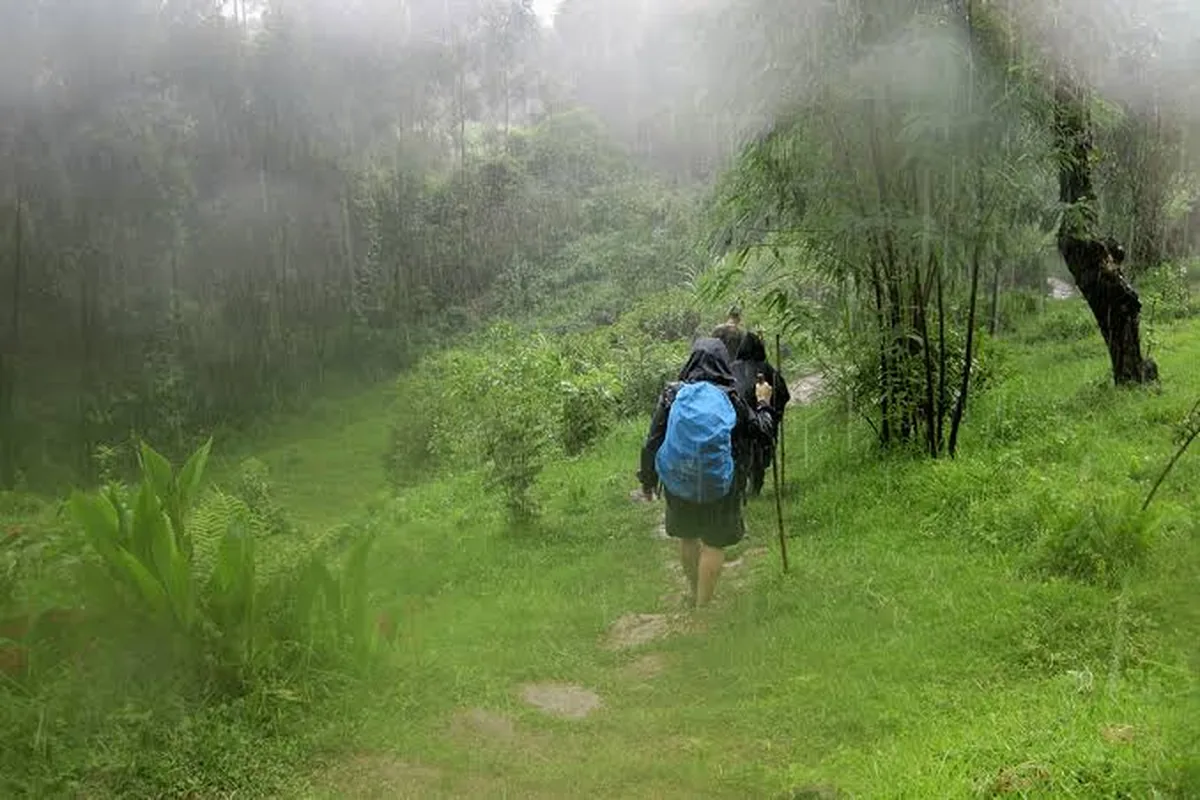
Hikers follow a narrow, mist-covered forest trail, illustrating the damp conditions that make moisture-managing trekking socks important.
5. How to Prevent Blisters and Foot Discomfort
Blisters commonly develop when friction repeatedly moves skin against fabric or footwear. Moisture, pressure and poor fit can make the problem worse. Prevention starts with boots that fit, socks that stay smooth and practice walks that resemble the effort of a real trek. There is no reliable shortcut on the morning you enter the forest. As you choose the best socks for gorilla trekking in Uganda, think about how quickly you can dry them between activities.
Test the best socks for gorilla trekking in Uganda on several walks, not just a brief fitting. Include hills, stairs and uneven ground where safe. Pay attention to the heel, little toe, ball of the foot and the top of the toes. If a particular spot becomes warm or tender, investigate the cause before it becomes a blister.
Adjust laces to reduce heel lift without squeezing the forefoot. Your toes need room when moving downhill. If tightening the laces solves one problem but creates another, the boot shape may not suit your feet. A different sock thickness can fine-tune a good fit, but it cannot fix a boot that is fundamentally too small. Comparing the best socks for gorilla trekking in Uganda is easier when you know your boot size and usual problem areas.
Some hikers like thin liner socks under a thicker outer sock to reduce skin friction. Others find that two layers make the boot tight, increase heat or create more fabric movement. If you want to try a liner system, test it on longer walks first. Do not introduce an unfamiliar combination on trekking day.
Keep toenails comfortably trimmed and feet clean and dry before putting on socks. Smooth out every wrinkle, check that the heel is aligned and avoid leaving small stones or grit inside boots. These basic habits are easy to overlook when a group is preparing to leave early. The best socks for gorilla trekking in Uganda need not be expensive if their fit, durability and moisture control are sound.
If you develop a hot spot during a hike, tell your guide at a suitable safe stopping point. Addressing a small problem early may prevent it from worsening. Carry a compact personal foot-care kit, but use dressings or tape according to product instructions and seek appropriate medical advice for persistent or complicated foot problems.
For more on matching socks with suitable footwear, see our guide to the best boots for gorilla trekking in Uganda. Good socks and boots should be chosen as one system, then tested together before you leave home. If you are buying the best socks for gorilla trekking in Uganda, leave enough time to return or replace an uncomfortable pair.
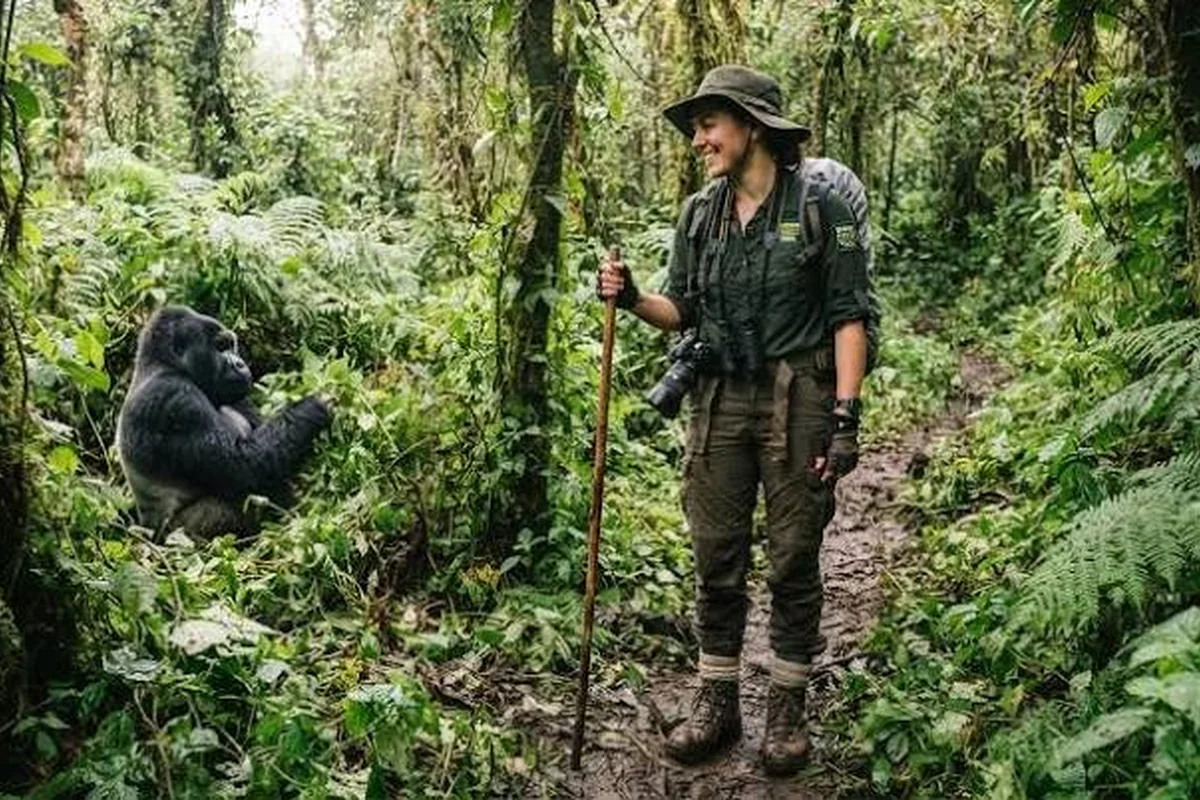
A visitor wearing sturdy hiking boots and trekking socks observes a mountain gorilla beside a lush forest trail, highlighting the importance of comfortable footwear.
6. Should You Tuck Trousers Into Socks or Wear Gaiters?
Visitors often hear advice to tuck long trousers into socks during gorilla trekking. This can reduce the amount of exposed skin around the ankle and may help limit insects or vegetation entering clothing. It is not a complete barrier against ants, bites, thorns or mud, and it should never replace following ranger instructions on the trail.
If you tuck trousers into socks, choose socks with enough height and a cuff that holds the fabric without becoming painfully tight. Bunched fabric around the ankle can create pressure inside the boot collar. Test the arrangement before the trek, then walk for several minutes to see whether it stays comfortable. For the best socks for gorilla trekking in Uganda, examine the toe seam and heel reinforcement rather than color alone.
Lightweight gaiters are another option. They cover the gap between boot and trouser leg and may help keep loose debris, wet vegetation and some mud out of footwear. Their usefulness depends on the design and fit. Gaiters should be secured correctly and should not interfere with walking or become loose around the heel.
The best socks for gorilla trekking in Uganda work with whichever leg-protection method you prefer. A tall sock can protect skin from a boot collar, while gaiters can cover the outer opening. Neither item guarantees protection from every insect or thorn, so visitors should remain alert and follow the guide’s directions. The best socks for gorilla trekking in Uganda should complement long trousers and any gaiters you plan to use.
For warm weather, avoid adding unnecessary layers simply because other travelers do so. Long trousers, suitable socks and properly fitted boots may be sufficient for many people. If you expect dense vegetation or very wet conditions, discuss practical clothing with your safari operator and decide whether gaiters add value.
When removing gaiters and boots after the walk, inspect socks and trouser cuffs for seeds, dirt and insects. Shake out clothing away from sleeping areas and allow damp gear to dry. Good post-trek care keeps equipment more comfortable for subsequent activities and reduces unpleasant surprises. Your search for the best socks for gorilla trekking in Uganda should include a plan for changing into dry clothing afterward.
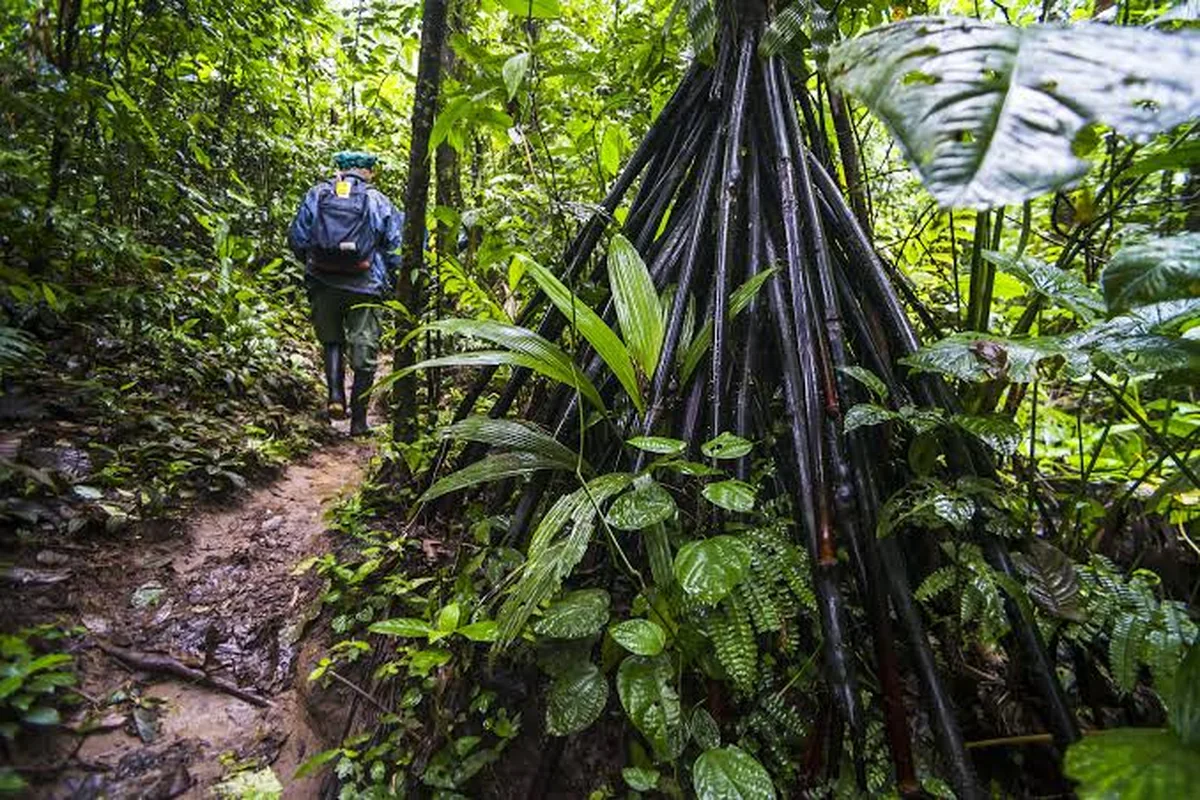
A hiker follows a narrow, muddy rainforest trail surrounded by lush vegetation, highlighting why comfortable, moisture-managing socks matter during forest trekking.
7. Packing Socks for a Multi-Day Uganda Safari
A gorilla trekking day is only one part of many Uganda itineraries. Travelers may also enjoy game drives, boat cruises, cultural visits or a second primate trek. Packing different socks for different activities is more practical than wearing heavy hiking socks throughout the trip. Keep a few lightweight pairs for road travel and relaxing at the lodge.
For one scheduled gorilla trek, bring at least one proven trekking pair plus a spare dry pair. For two trekking days or a longer safari, add more pairs according to your laundry arrangements and personal comfort. The best socks for gorilla trekking in Uganda should be reserved for the demanding forest walk rather than worn continuously until they become damp or dirty. The best socks for gorilla trekking in Uganda should not slide down or twist when the trail becomes uneven.
Pack trekking socks in a clean, dry bag inside your luggage. If the main bag gets wet during transfers, a small waterproof pouch or resealable bag can protect the pair you need for the next morning. Do not store already wet socks sealed for long periods; they need ventilation and drying.
Consider the relationship between sock thickness and luggage space. Two or three medium-weight pairs can be more versatile than several bulky pairs. If you plan to use waterproof boots, make sure every trekking sock you pack has been tested with those boots. Mixing unfamiliar thicknesses can create unexpected fit changes. When assessing the best socks for gorilla trekking in Uganda, remember that a thicker sock can alter the boot fit.
At your lodge, dry socks in a ventilated area away from intense direct heat. Follow fabric care instructions, especially for wool blends. High temperatures and harsh washing can affect elasticity or fit. A sock that shrinks or loses shape may rub even if it felt excellent before the trip.
PrideMark Safaris can help guests plan a sensible packing list based on the route, accommodation and number of trekking days. We recommend packing enough essentials to be self-sufficient while keeping the daypack light. Comfort and preparedness matter more than bringing a large collection of specialized accessories. The best socks for gorilla trekking in Uganda are the ones you can wear comfortably without constant adjustment.
You can also explore PrideMark Safaris for Uganda gorilla safari ideas and related travel preparation guides. Check each itinerary’s inclusions, especially permits, transport and accommodation, rather than assuming every package includes the same services.
When packing for a family or small group, remember that everyone may need different sock thicknesses and sizes. Children and adults should each test their own footwear rather than copying another traveler’s choice. Keep spare socks separated by person and label them if necessary. The goal is reliable comfort, not matching equipment across the group.
If shopping locally before departure, focus on the fabric label, stitching, fit and return policy rather than a specific brand. Take your trekking boots to the fitting if possible. Try walking on an incline and descending a few steps to check for toe pressure. Avoid buying several identical pairs until one has proved comfortable on a longer practice walk.
After the trek, take a moment to examine your feet for red marks, tender spots or signs of prolonged moisture. Clean socks should go on only after feet are dry. If you are trekking again, rotate to a fresh pair and check whether your boots need more drying time. These small routines are particularly useful on multi-day journeys with changing weather and accommodation.
Before setting out, inspect both socks for holes or worn areas, particularly around the heel and toe. A tiny damaged patch can become irritating when a boot presses on it repeatedly. Place the socks beside your boots and rain jacket the previous evening so nothing is overlooked during an early departure. Check the forecast, but prepare for wet vegetation even if the sky appears clear.
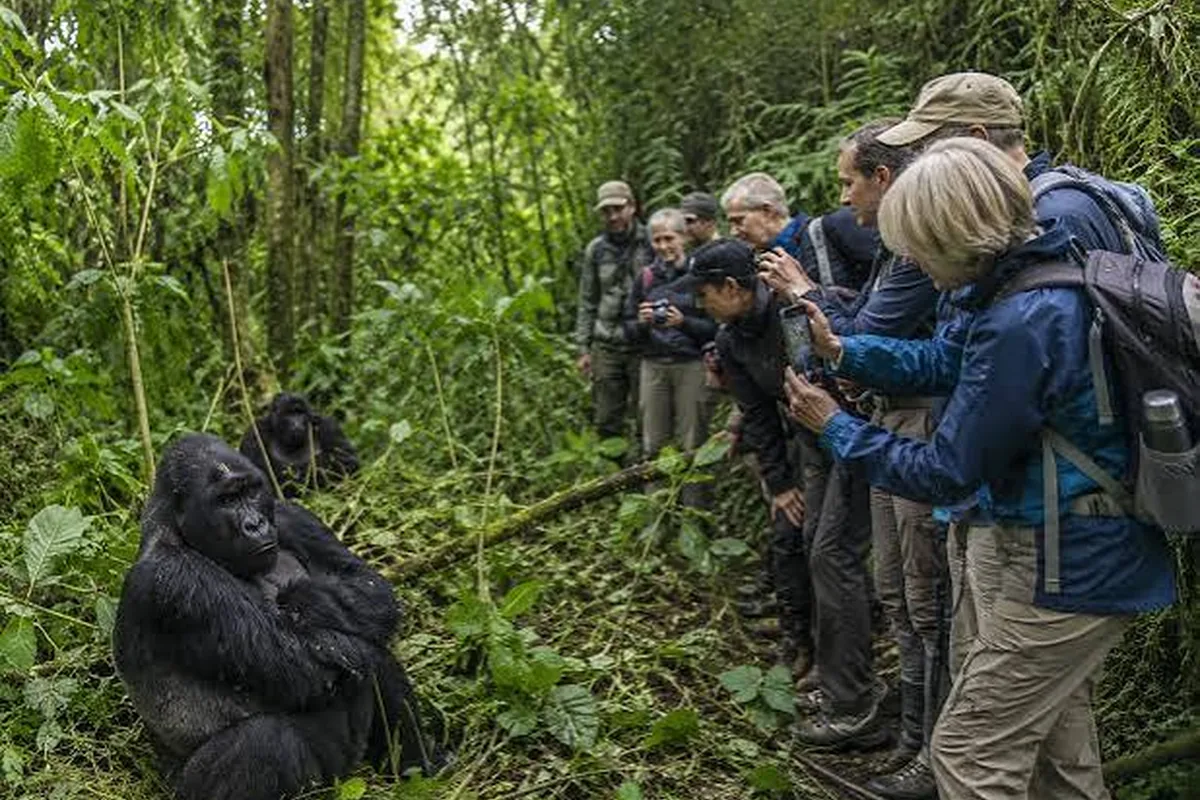
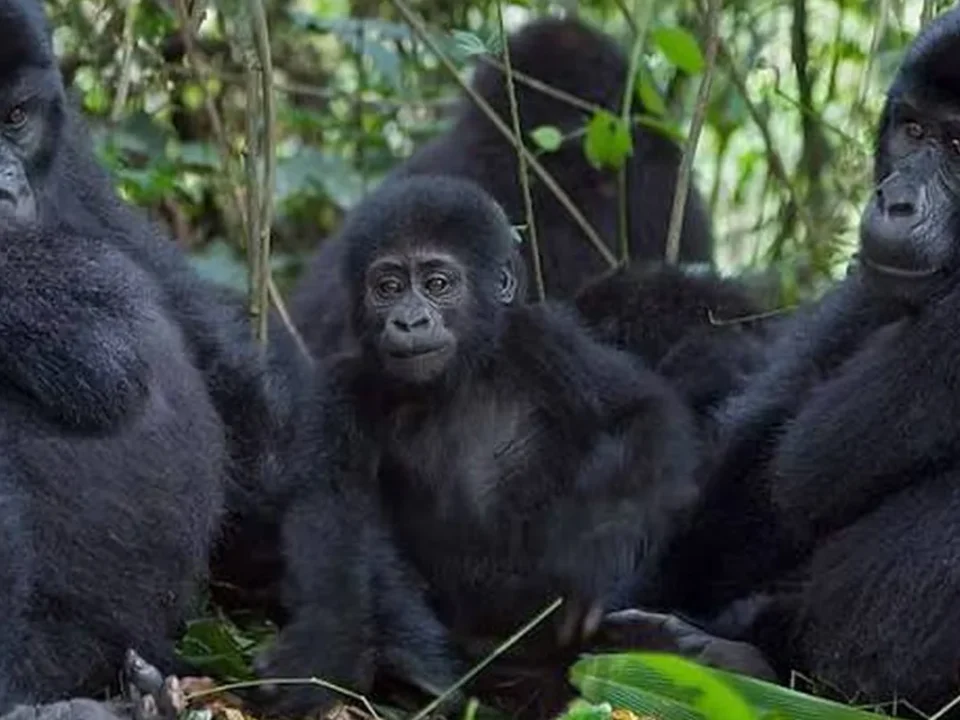
Visitors photograph two mountain gorillas resting among lush forest vegetation, highlighting the memorable wildlife encounters awaiting well-prepared trekkers.
8. Nine Essential Tips for Choosing Gorilla Trekking Socks
Tip 1 — Choose a hiking-specific sock rather than an ordinary fashion sock. Reinforced high-wear areas, a shaped heel and a secure cuff can help the sock stay in position. These details are more meaningful than a label that simply says “outdoor.” Check the actual construction and try the sock inside your trekking boots. As part of choosing the best socks for gorilla trekking in Uganda, check that the elastic cuff does not pinch your leg.
Tip 2 — Prioritize fit over brand. The best socks for gorilla trekking in Uganda should not wrinkle, slide or squeeze. Buy the size that matches your foot and confirm the heel pocket sits correctly. If you are between sizes, compare both options while wearing your boots rather than guessing from the packaging.
Tip 3 — Test socks with your exact boots. Thickness changes available space around the toes and heel. A comfortable pair of boots may become tight with heavily cushioned socks, while thin socks can allow unwanted movement in a roomy boot. A full trial walk is more revealing than standing still. Finding the best socks for gorilla trekking in Uganda may take a few trial walks, especially with new hiking boots.
Tip 4 — Prefer moisture-managing fibers. Merino blends and suitable synthetics are practical options for variable forest conditions. Avoid choosing ordinary cotton as your main trekking sock, especially if you expect wet ground. Remember that no fabric will stay dry after being completely submerged.
Tip 5 — Select a height that clears the boot collar. Crew-length socks often work well with hiking boots and can help prevent rubbing. If you tuck trousers into socks, make sure the cuff is tall and comfortable enough to hold the fabric without cutting into your calf. The best socks for gorilla trekking in Uganda should support a relaxed stride, even when the ground is wet.
Tip 6 — Carry a dry spare pair. Unexpected rain, perspiration or a muddy step can leave socks damp. A clean pair is particularly valuable after the trek and on multi-day itineraries. Keep spares protected in your main luggage rather than assuming the morning pair will dry quickly.
Tip 7 — Watch for hot spots during practice walks. If a heel or toe begins rubbing, investigate fit, lacing and sock construction before departure. Do not count on a blister disappearing once you reach the forest. Small adjustments made early can greatly improve comfort. For the best socks for gorilla trekking in Uganda, avoid relying solely on online reviews from hikers with different footwear.
Tip 8 — Keep the system simple. Gaiters and liners can be helpful for some travelers, but extra layers are not automatically better. The best socks for gorilla trekking in Uganda are the ones that work reliably with your boots, trousers and walking habits without introducing new pressure points.
Tip 9 — Prepare the evening before trekking. Set out clean socks, check that boots are dry enough to wear, and pack a spare pair. Arriving at the briefing point with comfortable footwear lets you concentrate on safety instructions and the experience rather than last-minute equipment problems. The best socks for gorilla trekking in Uganda should be clean and completely dry when you put them on at the lodge.
| Common mistake | Better approach | Why it matters |
|---|---|---|
| Wearing untested socks | Walk in them with your trekking boots | Reveals rubbing before travel |
| Choosing socks that are too thick | Check toe room and heel fit | Avoids pressure and fatigue |
| Packing only one pair | Carry a clean dry spare | Improves comfort after rain |
| Ignoring wet socks | Dry feet and change after trekking | Reduces prolonged dampness |
| Assuming socks fix poor boots | Choose correctly fitting footwear | Addresses the real cause of rubbing |
9. Plan Your Gorilla Trekking Adventure With PrideMark Safaris
Choosing socks is one useful step in a much larger safari plan. Travelers also need to consider trekking permits, the correct national park and sector, transport, accommodation, appropriate clothing and the timing of their journey. A thoughtfully arranged itinerary reduces avoidable stress and gives visitors more time to appreciate Uganda’s landscapes and wildlife.
PrideMark Safaris organizes tailor-made Uganda and Rwanda journeys that can include gorilla trekking, chimpanzee tracking, wildlife game drives, boat excursions and cultural experiences. We help travelers understand practical requirements before departure, including how to prepare for forest conditions and what to carry on the day of the trek. Visitors choosing the best socks for gorilla trekking in Uganda should carry a spare pair in case conditions change.
If you are unsure about the best socks for gorilla trekking in Uganda, begin with a reliable hiking pair that fits your boots and feels comfortable on practice walks. We can discuss the expected trekking environment, but no operator can guarantee a particular walking duration, dry trail or easy route. Preparation should account for that uncertainty.
Guests with particular mobility or health concerns should discuss their circumstances with an appropriate clinician and inform the safari team early. Rangers control activities in the national parks, and any assistance or special arrangements must be discussed in advance. Socks and boots can improve comfort, but they are not substitutes for individual medical advice or professional support. Comfortable feet make it easier to appreciate the forest, which is why the best socks for gorilla trekking in Uganda matter.
For itinerary guidance, permit planning and practical packing advice, contact PrideMark Safaris. We can help match your travel dates, interests and preferred accommodation standard to a suitable safari plan, with clear explanations of what is included before you confirm a booking.
The aim is straightforward: arrive prepared, follow your ranger’s instructions and enjoy the forest experience. A small investment of time in testing footwear can make a meaningful difference, leaving you better able to appreciate the extraordinary opportunity to observe mountain gorillas in their natural habitat. The best socks for gorilla trekking in Uganda work best when boots are properly laced and checked before the walk.
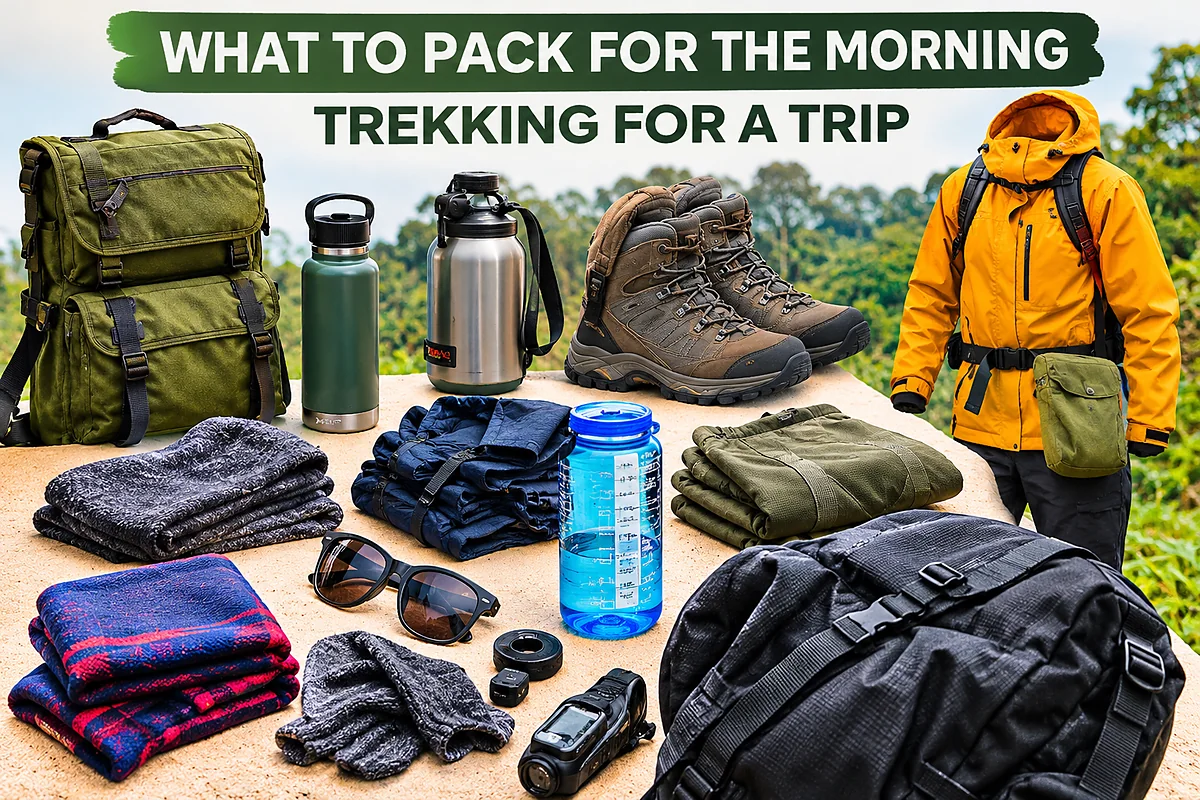
Essential gorilla trekking equipment, including hiking boots, a waterproof jacket, backpack, drinking water and protective clothing for a comfortable forest trek.
Frequently Asked Questions About Gorilla Trekking Socks
What are the best socks for gorilla trekking in Uganda?
A comfortable merino-blend or synthetic hiking sock that fits securely, rises above the boot collar and manages moisture is a sensible choice. Test it with your actual boots on several walks before traveling. No particular brand or fabric guarantees that you will avoid blisters.
Can I wear ordinary cotton socks for gorilla trekking?
Cotton is not ideal for potentially wet, demanding forest walks because it can absorb moisture and stay damp against the skin. A purpose-made hiking sock usually offers better moisture management and a more secure fit. Cotton socks remain useful for relaxing at your lodge. For the best socks for gorilla trekking in Uganda, aim for practical features you have personally tested.
Should gorilla trekking socks be thick or thin?
Choose the thickness that works with your boots and climate. Medium cushioning is a useful starting point, but thick socks can make snug boots too tight. Thin socks may feel better in warm conditions, provided they do not create heel slip or rubbing.
Are merino wool socks good for Bwindi?
Merino wool blends are a popular option because they can be comfortable across changing temperatures and often manage odor well. Their performance depends on construction and thickness. Try the pair before departure and carry a spare if wet conditions are likely. The best socks for gorilla trekking in Uganda are those that fit securely without bunching around the toes.
Do I need waterproof socks for gorilla trekking?
Most visitors do not need specialist waterproof socks if they have suitable boots and comfortable hiking socks. Waterproof socks can feel bulky or warm and may alter boot fit. They are an optional choice that should be tested rather than introduced for the first time on trekking day.
Should I tuck my trousers into my socks?
Tucking long trousers into taller socks may help reduce exposed skin and limit debris entering clothing. Make sure the arrangement is comfortable and does not bunch around your boot collar. It does not guarantee protection against insects, thorns or mud. When choosing the best socks for gorilla trekking in Uganda, take personal foot sensitivity into account.
Are gaiters better than long socks?
They serve different purposes. Socks cushion and protect the foot inside the boot, while gaiters cover the outer gap between boots and trousers. Some travelers use both. Choose based on comfort, terrain and how the equipment fits together.
How many pairs of socks should I pack for one gorilla trek?
Bring one well-tested pair for the trek and at least one dry spare pair. Pack additional pairs if you have consecutive trekking days or uncertain laundry arrangements. Dry socks after the walk are useful even when the trek itself is relatively short. The best socks for gorilla trekking in Uganda can vary between travelers, even on the same itinerary.
Can I wear two pairs of socks to prevent blisters?
A liner-and-outer-sock system works for some hikers but makes other boots too tight or warm. Try it on practice walks before traveling. Two layers are not automatically safer or more comfortable than one properly fitted hiking sock.
What should I do if my socks become wet during the trek?
Follow your guide’s directions and deal with the issue at a suitable safe stopping point. After trekking, remove wet socks, clean and dry your feet and change into a spare pair. Let damp boots and socks air out before the next activity.
Do I need special socks for Mgahinga as well as Bwindi?
The same basic principles apply: secure fit, moisture management, sufficient height and comfort inside your boots. Actual conditions differ by route, weather and terrain. Pack footwear that has been tested for variable ground rather than assuming one park will always be easier.
Can PrideMark Safaris help with my gorilla trekking packing list?
Yes. PrideMark Safaris can discuss practical packing needs alongside your Uganda or Rwanda safari itinerary, including footwear, rain protection and daypack essentials. Contact the team before departure so you have time to test or replace unsuitable equipment.
Prepare for Your Gorilla Safari With PrideMark Safaris
For practical trekking preparation and a tailor-made Uganda safari itinerary, contact PrideMark Safaris. We can help you plan permits, accommodation and transport while you prepare the clothing and equipment that works best for you.