1. Why footwear matters on a gorilla trek
Choosing footwear is not simply a matter of appearance or brand. Gorilla tracking takes place on forest paths that may be steep, wet, uneven or crossed by exposed roots. The best boots for gorilla trekking in Uganda are the pair that fit your feet, hold securely on variable ground and remain comfortable over a long walking day. A boot that looks rugged but pinches your toes is not a sound choice.
Uganda Wildlife Authority identifies Bwindi Impenetrable and Mgahinga Gorilla national parks as the country’s gorilla tracking destinations. UWA notes that trekking may take approximately two to seven hours, depending on circumstances. That broad range is why visitors should prepare for more than a short stroll. The duration is not a promise about the specific family or route assigned to you.
Paths can shift from firm soil to damp leaf litter within minutes. Rainfall, shade and repeated foot traffic affect the surface. A boot that feels secure on pavement can slide on slick clay or wet roots. Traction therefore matters alongside fit, and neither feature eliminates the need to move carefully, listen to the ranger and take manageable steps.
Footwear also affects energy. When your heel lifts repeatedly, your toes strike the front of the boot, or your socks bunch up, small irritations become distracting. On a longer ascent, these problems may turn into painful blisters. Good preparation reduces avoidable discomfort and allows more attention for the forest and the wildlife experience.
The objective is not to buy the heaviest or most expensive boot. A well-fitting midweight hiking boot with dependable tread can be more useful than a rigid expedition boot that you have never worn. Existing boots may be suitable if the soles remain sound, the fit is comfortable and you have tested them on wet or uneven ground.
When PrideMark Safaris discusses a trekking itinerary, we encourage guests to describe their walking experience and any concerns before departure. The team can help explain likely conditions and what to pack, but the exact difficulty remains unpredictable because gorillas move through the forest. Sound footwear is one part of preparation, not a guarantee of an easy trek.
A useful fitting test is to walk downhill on an incline and notice whether the toes press against the front. If they do, adjust the lacing and try another size or shape. When evaluating the best boots for gorilla trekking in Uganda, also consider how the boots feel after a longer walk, not just their initial softness. A reliable pair should support confident movement without causing numbness, sharp pressure or repeated heel slipping. This matters because the trekking route may include several hours of mixed uphill and downhill movement.
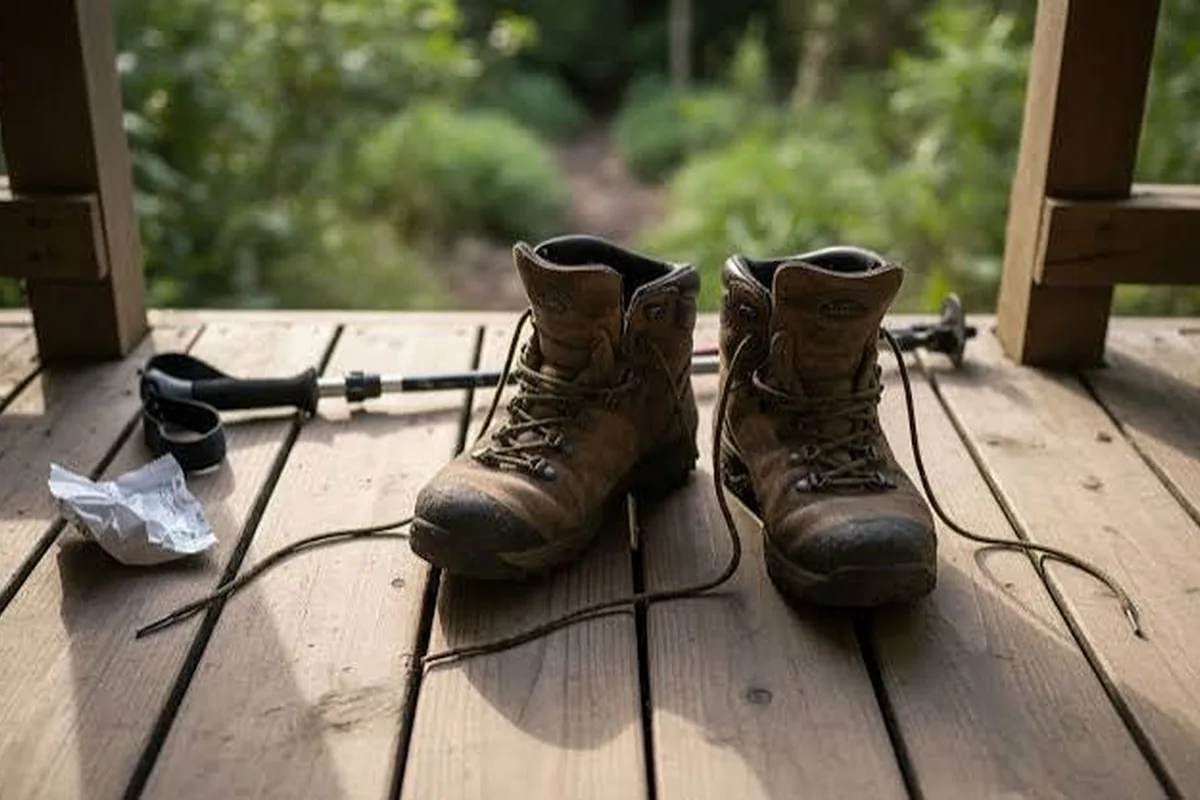
A pair of sturdy brown hiking boots and trekking poles prepared for an outdoor adventure, illustrating essential footwear for Uganda’s forest trails.
2. How to choose the right hiking boot
Start with fit rather than a product label. Try boots on with the socks you plan to wear in Uganda, preferably later in the day when feet may be slightly swollen. Your toes should have room to move without sliding forward on descents. Your heel should feel secure without painful pressure across the ankle or instep.
The best boots for gorilla trekking in Uganda usually combine a grippy outsole, a stable heel, protective upper materials and a fit that remains comfortable after several hours. These characteristics matter more than whether a boot is described as tactical, mountaineering or adventure footwear. Marketing categories alone do not establish trail performance.
Check the outsole pattern. Deep, spaced lugs may help shed soft mud, while a quality rubber compound can improve contact with rock and hard surfaces. No tread grips every surface equally well. Smooth roots, wet wood and polished stones can still be slippery, so deliberate foot placement is essential even with new boots.
Consider the sole’s flexibility. Very soft footwear can feel comfortable initially but may offer little protection when you step on irregular roots or stones. Extremely stiff boots can feel awkward on rolling forest ground if you are not accustomed to them. Look for a balanced level of support suited to your body, walking history and expected conditions.
Ankle-height boots can provide coverage from vegetation and may help some walkers feel more stable. However, ankle height does not prevent all sprains, and a poor-fitting high boot may cause rubbing. Travelers who already use supportive low-cut hiking footwear successfully should compare their actual comfort and grip rather than assume higher is automatically safer.
Inspect stitching, toe protection, heel counters and the way the sole attaches to the upper. Worn-out tread, peeling soles and cracked waterproof linings are reasons to reconsider an older pair. Repairable cosmetic marks are different from structural damage. If a sole begins separating during a trek, replacing the boot in a remote area may be difficult.
When comparing the best boots for gorilla trekking in Uganda, ask whether the footwear works for your own feet rather than a reviewer’s. A narrow heel, wide forefoot or high instep can change which model fits best. Try more than one shape if possible and do not assume a larger size solves every pressure problem. The best boots for gorilla trekking in Uganda should hold your heel while preserving toe room. A well-fitted midweight pair is often a more practical investment than a heavily advertised specialist boot.
| Boot feature | What to look for | Why it matters |
|---|---|---|
| Fit | Secure heel and room for toes | Reduces rubbing and toe pressure |
| Outsole | Defined tread and suitable rubber | Improves traction on variable ground |
| Upper | Durable material and sensible water resistance | Helps manage vegetation and moisture |
| Weight | Comfortable for several hours | Avoids unnecessary fatigue |
| Condition | Sound stitching and attached sole | Reduces equipment failure risk |
3. Waterproof boots versus breathable boots
Waterproof membranes can help keep feet drier when walking through wet vegetation, shallow mud and light rain. They are especially appealing in a humid mountain forest where morning plants may remain damp even when the sky is clear. Yet waterproof is not the same as completely watertight under every condition, particularly when water enters over the cuff.
The best boots for gorilla trekking in Uganda are not necessarily the most heavily insulated waterproof models. Warm, humid conditions and exertion can make feet sweat. If moisture cannot escape effectively, socks may become damp from perspiration. Breathability, drying time and personal comfort deserve attention alongside a waterproof label.
If rainwater flows inside a boot from above, a membrane can slow drying because moisture is trapped behind the upper. Lightweight gaiters and trousers arranged to shed water away from the opening may help. They do not make boots floodproof, and deep water or prolonged immersion can overwhelm ordinary hiking footwear.
Non-waterproof trail footwear often dries faster and may feel cooler, but it can become wet quickly in saturated grass or mud. Some experienced hikers prefer this trade-off. For first-time visitors who expect wet forest trails, a comfortable waterproof hiking boot is a reasonable starting point, provided it has been worn and tested before travel.
Waterproofing treatments on leather or fabric uppers require appropriate care. A spray or wax should be compatible with the material and any membrane; follow the manufacturer’s instructions. Do not assume that applying more product improves performance. Excessive heat, harsh chemicals and unsuitable treatments can damage the boot.
After trekking, remove insoles when practical, loosen laces and dry footwear in a shaded, ventilated place. Avoid placing boots against a fire or intense heater, which can damage adhesives and materials. Packing dry socks and comfortable shoes for the lodge is often as valuable as choosing a waterproof upper.
Visitors choosing the best boots for gorilla trekking in Uganda should understand that waterproof membranes have limits. Wet grass can brush the boot repeatedly, and rain may run down trousers into the opening. Tuck clothing and gaiters in a way that sheds water, but avoid sealing everything so tightly that your feet overheat. The best boots for gorilla trekking in Uganda balance moisture protection with comfort, and the right balance differs between travelers. Carry dry socks for after the trek, and let damp boots air out gently at the lodge.
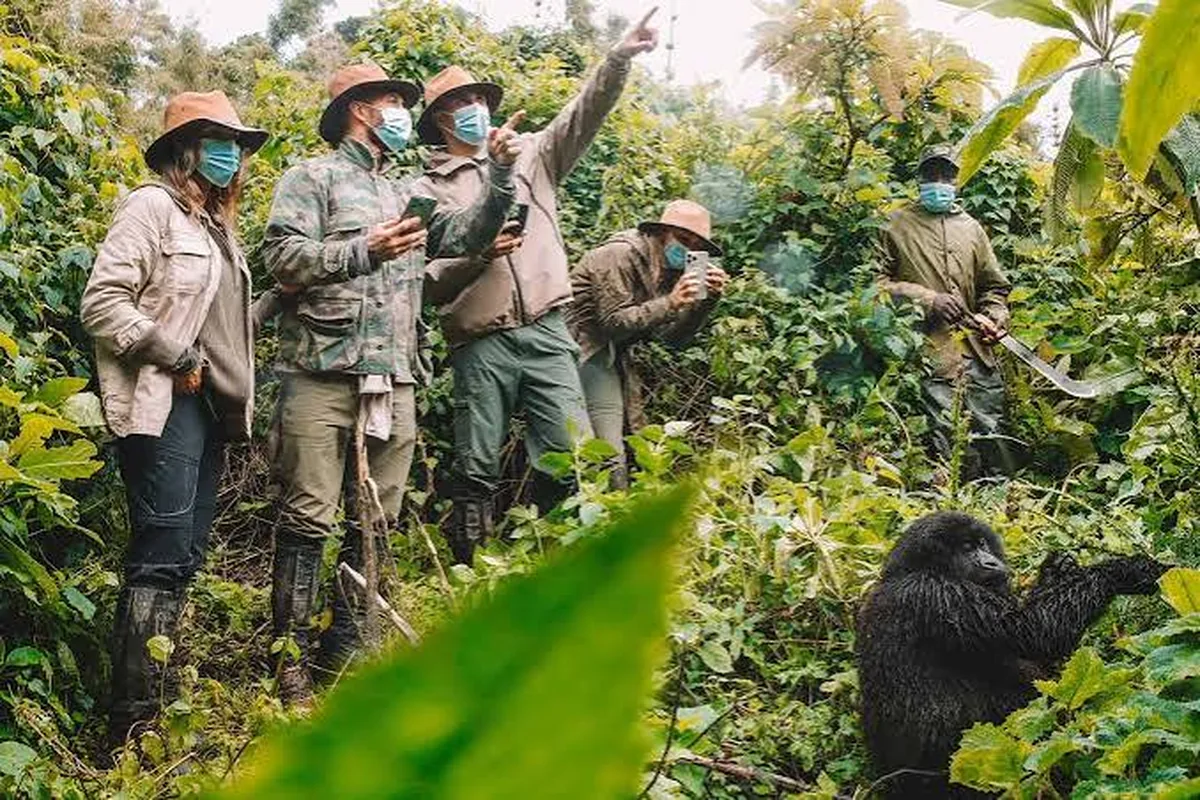
Visitors wearing tall rubber boots observe a mountain gorilla among thick forest vegetation, illustrating practical footwear choices for muddy trekking conditions.
4. Grip, stability and ankle support
Grip is a combination of tread design, rubber, trail surface and technique. Mud needs a different kind of contact from wet rock, and even excellent footwear can lose traction on slimy roots. Test the best boots for gorilla trekking in Uganda on local slopes or uneven paths before departure, rather than judging them solely on a shop floor.
When descending, keep steps shorter and place your foot deliberately. Avoid leaning too far backward or rushing to catch the group. Rangers set the route and can advise on difficult sections. If you feel unstable, speak up early instead of waiting until you are exhausted or already slipping.
Boots should not squeeze the ankle or restrict normal movement to the point of discomfort. Secure lacing can improve heel hold, while a different lacing pattern may reduce pressure over a sensitive instep. Practice adjustments on training walks. Do not tighten laces so much that your toes tingle or circulation feels restricted.
For travelers with previous ankle injuries, knee discomfort or balance concerns, footwear is only one part of the plan. Seek individualized advice from an appropriate clinician if necessary, and discuss practical limitations with your operator. A boot cannot substitute for rehabilitation, suitable pacing or an honest assessment of trekking demands.
Walking sticks can offer an additional point of contact on certain surfaces. They are most helpful when used thoughtfully and in line with ranger instructions. Do not rely on a pole to compensate for an outsole that has worn smooth, and avoid swinging equipment near other trekkers or wildlife.
Visitors often ask whether expensive specialist mountaineering boots are required. Usually, a properly fitted hiking boot with good traction is the more practical category to evaluate. Heavy alpine boots can be tiring if they are unfamiliar, while casual fashion boots may lack secure tread. Choose for the real terrain, not for dramatic appearance.
A traction test does not mean deliberately walking onto unsafe surfaces. Instead, wear your boots during ordinary practice walks that include modest inclines, compact earth and some uneven ground. The best boots for gorilla trekking in Uganda should feel predictable as you change direction or step down. If the sole feels slippery on familiar ground, investigate before traveling. Remember that even the best boots for gorilla trekking in Uganda cannot remove the hazards of wet roots, loose soil or unexpected rain. Follow the ranger and avoid rushing.
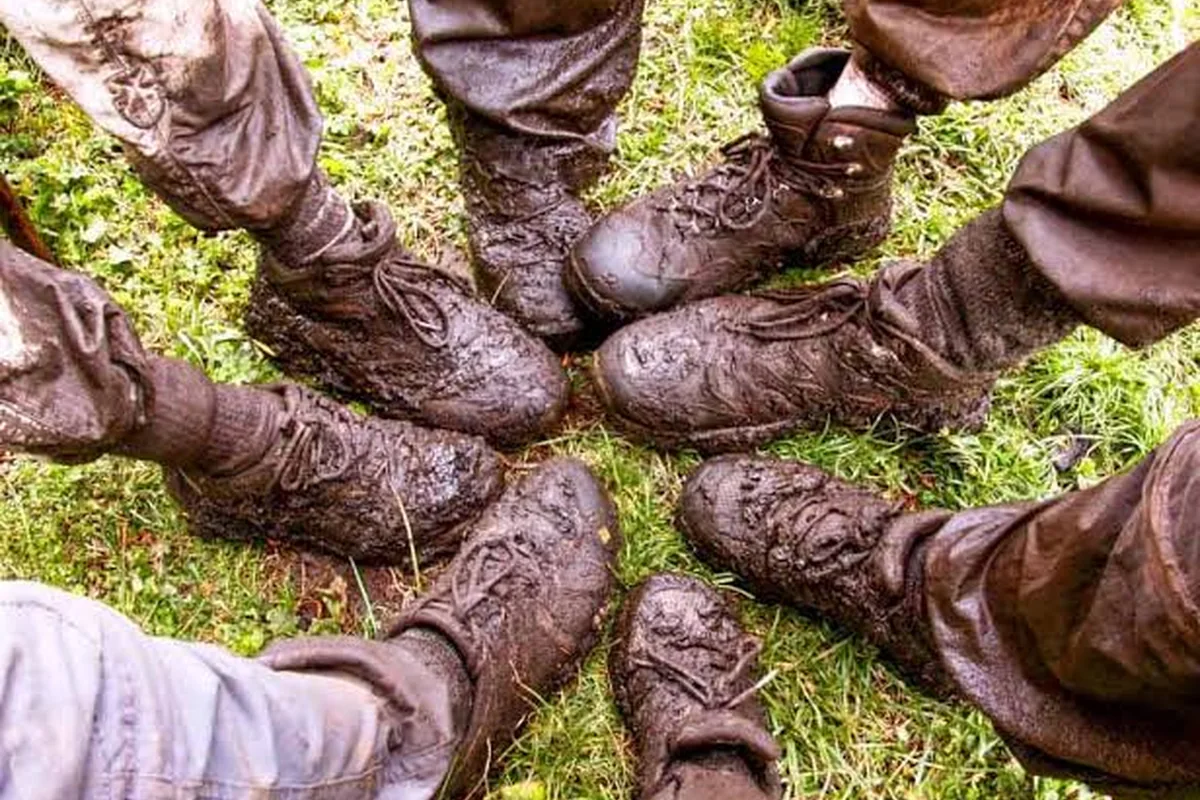
Mud-covered hiking boots demonstrate why reliable traction, comfortable footwear and water resistance are important when preparing for Uganda’s forest trekking conditions.
5. Footwear for Bwindi and Mgahinga
Bwindi includes several trekking sectors, among them Buhoma, Ruhija, Rushaga and Nkuringo. These are not interchangeable starting points, and their trails can vary considerably. A booking in one sector does not mean you will begin at another. Confirm the actual briefing location and lodge transfer before deciding how to organize your trekking morning.
The best boots for gorilla trekking in Uganda should handle mixed forest terrain rather than a single idealized surface. Bwindi routes can involve steep vegetation-covered slopes, damp earth and irregular footpaths. The conditions of one group’s trek do not predict the next group’s route, because gorilla locations and weather change.
Mgahinga sits in a different volcanic mountain environment. Visitors may encounter forest vegetation, slopes and variable ground underfoot. It is misleading to declare either Mgahinga or Bwindi universally easier. The location of the gorillas, the day’s route and individual walking ability all affect the experience.
When arranging accommodation, avoid assuming that a short drive to the park gate means a short trek. The journey to the briefing point and the walking time in the forest are separate matters. Pack footwear for the full trekking activity, not just for the transfer from the lodge.
Weather patterns can influence how quickly paths become slippery, but dry-season travel does not guarantee dry ground. Rain may fall at any time in mountain environments. A traveler arriving in a relatively drier month should still test traction and pack rain protection rather than leave suitable boots behind.
PrideMark Safaris can help coordinate the route, accommodation and transfer timing for a confirmed trekking sector. We encourage guests to check the sector shown on their permit arrangements and to ask about realistic driving time. That planning reduces logistical surprises while leaving room for the natural uncertainty of the trek itself.
Different sectors may have different vegetation, trail conditions and transfer logistics, yet there is no dependable shortcut that allows travelers to choose a universally easy walk. The best boots for gorilla trekking in Uganda are versatile enough for changes in the route. Ask which sector your permit is associated with and whether your lodge is conveniently placed for the briefing. The best boots for gorilla trekking in Uganda will be more useful if you arrive rested, hydrated and prepared to walk at a realistic pace rather than trying to hurry to an onward appointment.
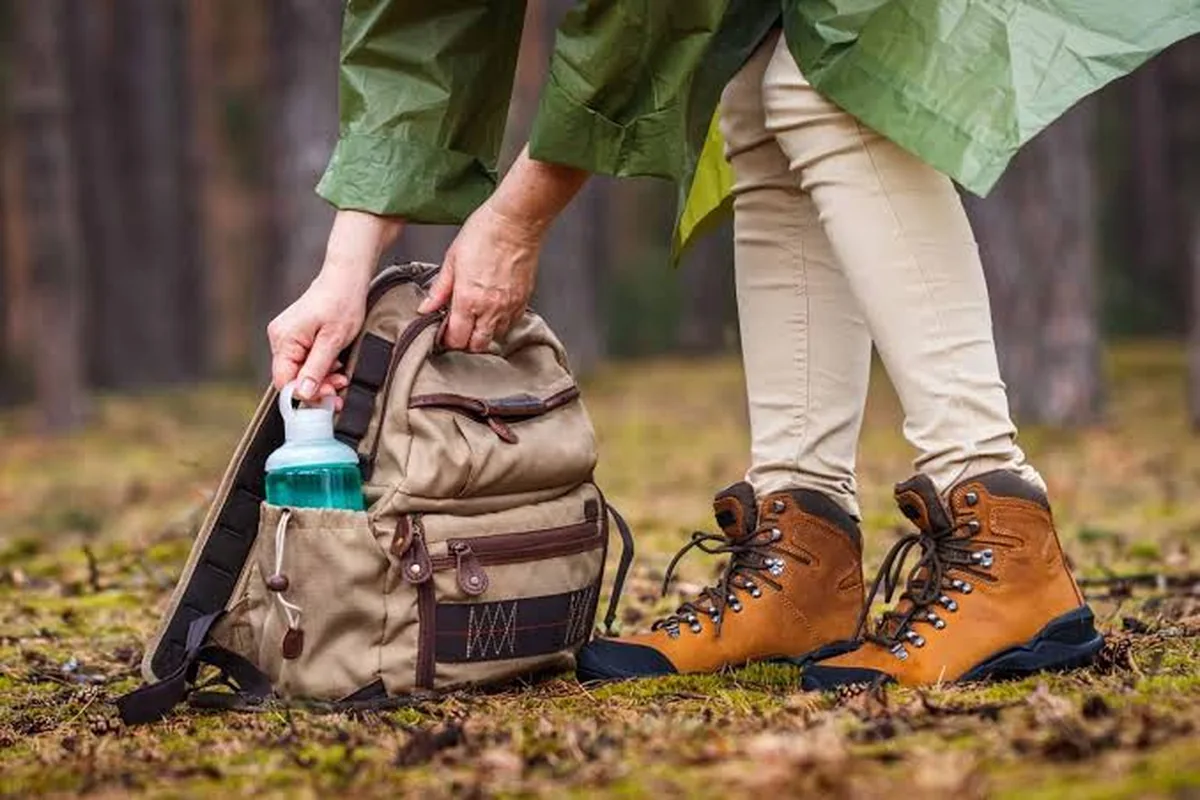
A traveler wearing sturdy brown hiking boots prepares a backpack and water bottle, highlighting essential footwear and equipment for a comfortable forest trekking adventure.
6. Boots versus gumboots, trainers and trail shoes
Rubber gumboots are easy to rinse after muddy work and can resist water through the shaft, but many basic models lack the supportive fit and tread behavior of quality hiking footwear. Loose rubber boots may cause heel movement and blisters on long slopes. Some visitors use specialized outdoor rubber boots successfully, yet the individual fit and sole matter.
Ordinary trainers can be comfortable on roads and around lodges, but smooth soles or flexible uppers may perform poorly on wet forest ground. The best boots for gorilla trekking in Uganda provide a more dependable starting point for visitors unfamiliar with muddy mountain paths. Trainers remain useful as a separate pair for travel and recovery.
Trail-running shoes may offer excellent grip and lower weight, particularly for experienced hikers who know how their feet respond on uneven terrain. Their lower cuffs expose more of the ankle to wet vegetation and mud. A good trail shoe is not automatically unsuitable, but it should be chosen with an informed understanding of its trade-offs.
Fashion boots can look sturdy while lacking functional tread, reliable heel hold or durable construction. Do not confuse a thick sole with good traction. Check the actual outsole and walk on slopes before travel. Boots that have been stored for years should be inspected for brittle materials and weakening adhesives.
Borrowed or rented footwear creates additional uncertainty. Even if the size printed inside seems correct, the last shape, arch support and heel fit may be different. If borrowing is unavoidable, test the pair well ahead of the trek and carry suitable socks. Do not rely on finding the perfect size at a remote departure point.
Choose one primary trekking pair and one comfortable spare pair for the lodge. This is generally more useful than packing multiple untested options. If luggage space is tight, wear your trekking boots during travel or pack them securely, while remembering that airport and airline baggage rules vary.
The distinction between hiking footwear and casual shoes becomes clearest after prolonged exposure to mud, roots and hills. A casual shoe may feel ideal during a short airport walk yet lack the outsole or structure needed on a forest slope. The best boots for gorilla trekking in Uganda are selected for the forest, not for the lodge dining room. Still, do not replace familiar, effective trail shoes simply to follow a rule of thumb. The best boots for gorilla trekking in Uganda are ultimately those that match your experience, comfort and actual walking needs.
| Footwear type | Potential advantage | Main caution |
|---|---|---|
| Hiking boots | Traction and structured fit | Must be broken in |
| Waterproof hiking boots | Better protection from wet vegetation | Can feel warm and dry slowly |
| Trail shoes | Light and flexible | Less ankle coverage |
| Gumboots | Easy to clean after mud | Fit and grip vary greatly |
| Casual trainers | Comfortable for travel | Often unsuitable on slick slopes |
7. Socks, gaiters, lacing and blister prevention
Socks are part of the footwear system, not an afterthought. A comfortable hiking sock that manages moisture and fits without bunching can reduce friction. Some visitors prefer wool blends or technical synthetic fabrics. Cotton tends to stay wet for longer, which may contribute to discomfort during prolonged activity.
The best boots for gorilla trekking in Uganda should be tried on with the same sock thickness you intend to use in the forest. A thick sock inside a tight boot can increase pressure, while a thin sock in a loose boot may allow rubbing. Fit the combination together rather than choosing each item independently.
Break in boots gradually with several walks of increasing duration. Include hills, steps and uneven ground when safe and available. Pay attention to heel lift, toe pressure and hotspots. A short stroll around the house does not reveal how a boot feels after hours of climbing or descending.
Gaiters can help reduce the amount of loose debris and water entering from above the shoe, particularly where vegetation is thick. Choose a pair that is easy to put on and does not snag or overheat your legs. They are optional equipment, not a requirement for every visitor or a substitute for properly fitted boots.
If you notice a hotspot while training, adjust the lacing, socks or boot fit before a blister forms. Carry a small personal blister-care kit suitable for your needs. Anyone with circulation problems, diabetes or reduced sensation should seek individualized medical advice about foot care rather than relying on generic trekking tips.
Keep toenails comfortably trimmed before travel, and make sure toes do not strike the front of the boot on downhill sections. After the trek, change into dry socks and inspect your feet. Small care routines help keep the rest of a multi-day safari comfortable, especially when you have additional walks planned.
Foot care starts before travel and continues afterward. Keep feet clean and dry where practical, rotate socks when needed and allow boots to air out after a wet day. The best boots for gorilla trekking in Uganda cannot prevent every blister if socks bunch or the fit is wrong. During practice walks, note exactly where rubbing occurs and adjust early. The best boots for gorilla trekking in Uganda should remain comfortable with your planned socks even when you are slightly tired. Do not ignore persistent pain simply because the purchase was expensive.
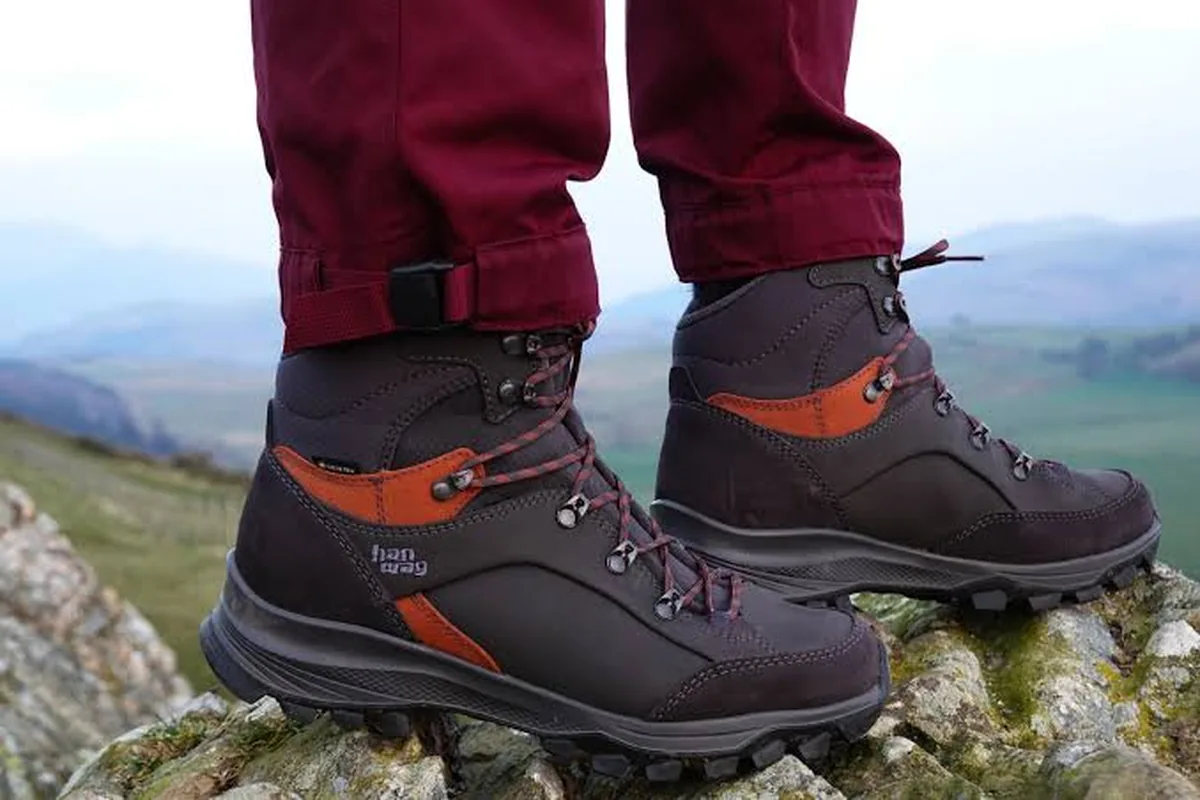
Sturdy ankle-high hiking boots with rugged soles and protective gaiters demonstrate important footwear features for navigating uneven forest trails.
8. Nine essential tips before your trekking day
Tip one is to prioritize fit. Try boots on carefully, check both feet and allow enough room at the toes. Tip two is to inspect tread quality, because traction matters more than fashionable styling. The best boots for gorilla trekking in Uganda should feel stable on slopes without being painfully stiff or excessively heavy.
Tip three is to test footwear before the trip. Walk in the boots on several occasions rather than saving them for the safari. Tip four is to practice with the exact socks you will use. If pressure points appear during preparation, solve them before you reach the forest.
Tip five is to prepare for rain. Even in comparatively drier months, wet vegetation and muddy paths remain possible. Tip six is to pack dry socks and suitable footwear for after the trek. The comfort of the following day can depend on how quickly you dry your feet and equipment.
Tip seven is to use secure, comfortable lacing. Adjust your boots before the briefing rather than halfway through a difficult slope. Tip eight is to pack lightly and consider a local porter when appropriate. Less weight on your back can make foot placement easier, although a porter cannot guarantee an easy route.
Tip nine is to communicate with your ranger and safari organizer. Mention mobility concerns, prior injuries or unusual footwear needs in advance. The team may offer practical advice or explain available support, but no one can promise a fixed trekking duration or a particular level of difficulty.
On the morning itself, check that your boots are dry enough to wear comfortably, laces are secure, and socks are not folded under the heel. Keep waterproof layers accessible. Arrive for the official briefing with time to adjust equipment and listen carefully to ranger instructions.
A practical final inspection takes only a few minutes: examine tread, check that the sole is firmly attached, confirm laces are intact and try the boots with your trekking socks. The best boots for gorilla trekking in Uganda should be ready before you leave home. Keep a small amount of spare space in your daypack for a dry sock change or basic foot-care items. Even the best boots for gorilla trekking in Uganda work better when you use them with sensible pacing, appropriate clothing and attention to the terrain underfoot.
| Common mistake | Better approach | Why it matters |
|---|---|---|
| Wearing new boots | Practice on several walks | Reveals blisters before travel |
| Choosing by appearance | Check fit and outsole | Focuses on real trail needs |
| Ignoring sock thickness | Test boots with trekking socks | Prevents tightness and rubbing |
| Assuming dry-season paths are dry | Prepare for mud and rain | Avoids false expectations |
| Packing only one pair of footwear | Bring lodge shoes too | Lets wet boots dry |
9. Planning your gorilla safari with PrideMark Safaris
PrideMark Safaris helps travelers plan gorilla trekking within wider Uganda and Rwanda safari itineraries. Practical preparation begins with confirmed dates, permit arrangements, trekking sector, accommodation and transfer logistics. We can discuss footwear and packing recommendations alongside those essentials, without suggesting that any equipment guarantees an easy wildlife encounter.
If you are uncertain about the best boots for gorilla trekking in Uganda, describe the pair you already own: its age, fit, tread condition and how it performs on hills. Often the most useful next step is a proper fitting session and several practice walks rather than an expensive purchase based on a single online recommendation.
Visitors combining gorilla trekking with chimpanzee tracking, game drives or cultural experiences should plan for different footwear needs. Hiking boots may be ideal for forest terrain, while comfortable lightweight shoes are useful around lodges and during road transfers. A sensible two-pair approach can keep luggage manageable.
Ask for a written itinerary that identifies the relevant gorilla trekking area and the travel arrangements around it. Confirm which activities, permits, meals and porter services are included, and which are optional. The trekking permit and a porter’s fee are separate considerations; avoid assuming a porter is automatically covered by your package.
Official guidance and ranger instructions take priority over general travel advice. Uganda Wildlife Authority manages gorilla tracking in its protected areas and may update operational requirements. Read the latest official information before departure and follow the guidance given at the briefing point on the day.
For a personalized safari quotation, contact PrideMark Safaris with your travel dates, number of travelers, preferred comfort level and any walking concerns. Thoughtful preparation helps visitors arrive ready to appreciate the rainforest, respect the gorillas and make the most of a remarkable Uganda safari experience.
When you contact PrideMark Safaris, share whether you are an experienced hiker or a first-time forest walker, and mention any specific footwear concern. We can help you plan the logistics and suggest a sensible packing approach. The best boots for gorilla trekking in Uganda remain a personal equipment decision, and we do not claim that a particular brand is mandatory. What matters is preparation: the best boots for gorilla trekking in Uganda are tested, comfortable and suited to a forest where the exact route and weather cannot be promised.
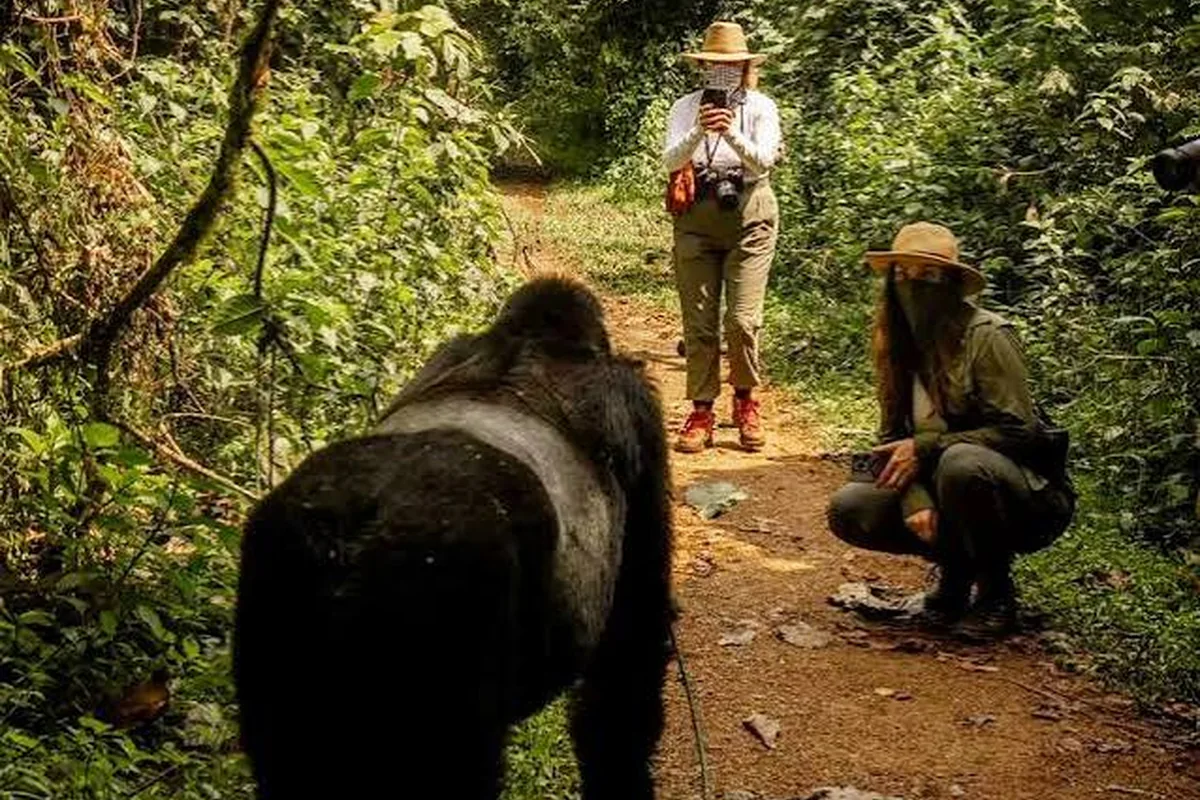
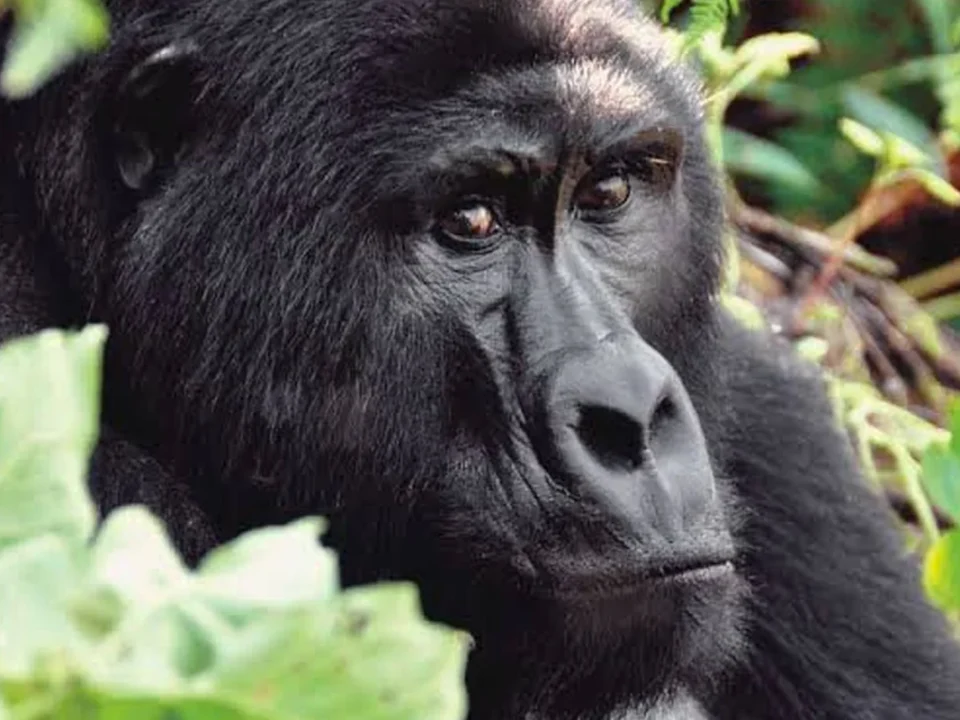
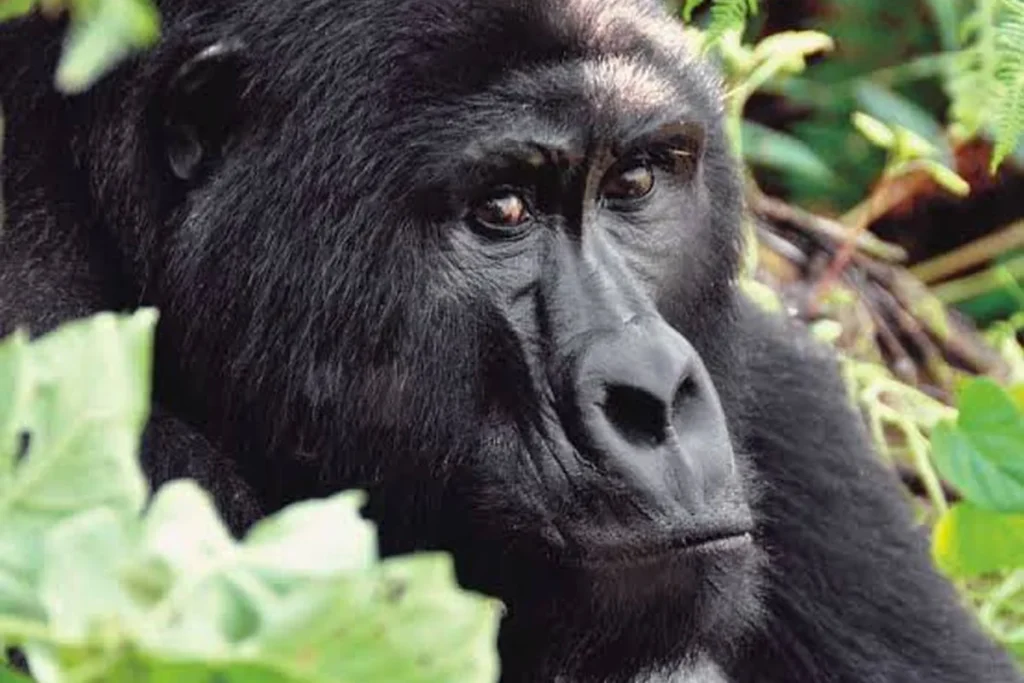
Visitors observe a silverback mountain gorilla on a forest trail, illustrating the importance of comfortable hiking footwear during a gorilla trekking adventure.
Frequently Asked Questions: Gorilla Trekking Footwear
What are the best boots for gorilla trekking in Uganda?
A comfortable, broken-in hiking boot with reliable traction, a secure heel and enough toe room is a sensible choice. Many visitors prefer waterproof models for wet vegetation and mud, but fit and breathability remain important. Avoid buying a heavy boot solely because it looks rugged. Test the actual pair on uneven ground before travel and consider your individual walking experience. When choosing the best boots for gorilla trekking in Uganda, prioritize your individual fit and the actual forest conditions.
Do I need waterproof hiking boots for Bwindi?
Waterproof hiking boots are useful but not an absolute guarantee of dry feet. Rain, wet plants and mud are common considerations in a rainforest, while water can still enter over the cuff. Choose a comfortable pair, consider gaiters if appropriate and pack dry socks. A non-waterproof shoe may suit experienced walkers who understand the trade-off. When choosing the best boots for gorilla trekking in Uganda, prioritize your individual fit and the actual forest conditions.
Can I wear ordinary trainers for gorilla trekking?
Ordinary trainers may lack grip and protection on steep, muddy forest paths. Some specialist trail shoes can work for experienced hikers, but smooth-soled casual trainers are a poor default. Assess tread, fit, stability and prior use on uneven terrain. If unsure, choose tested hiking footwear rather than relying on everyday street shoes. When choosing the best boots for gorilla trekking in Uganda, prioritize your individual fit and the actual forest conditions.
Are gumboots better than hiking boots?
Not necessarily. Gumboots resist surface water and can be easy to clean, but basic models may fit loosely and provide limited comfort during long climbs. Hiking boots generally offer a wider range of supportive fits and traction designs. Select based on the actual model and your feet, not just the category name. When choosing the best boots for gorilla trekking in Uganda, prioritize your individual fit and the actual forest conditions.
Should gorilla trekking boots cover my ankles?
Ankle-height boots can help shield your lower legs from vegetation and may feel more supportive, but they do not prevent every ankle injury. Comfortable low-cut trail footwear may suit some experienced walkers. Choose a height that allows natural movement, secure lacing and confidence on slopes. Seek professional advice if you have a history of ankle problems. When choosing the best boots for gorilla trekking in Uganda, prioritize your individual fit and the actual forest conditions.
How far in advance should I break in new boots?
Begin well before departure, allowing time for several increasingly long walks. There is no universal number of days because boots and feet differ. Include safe hills or uneven paths in your practice and check for pressure points. If a pair remains painful, do not assume a difficult forest trek will solve the problem. When choosing the best boots for gorilla trekking in Uganda, prioritize your individual fit and the actual forest conditions.
What socks should I wear with hiking boots?
Choose comfortable hiking socks that manage moisture, fit smoothly and do not bunch inside the boot. Wool blends and technical synthetic fabrics are common options. Try the socks with your chosen footwear during practice walks. Carry a dry spare pair for after the trek and avoid wearing socks so thick that they make your boots tight. When choosing the best boots for gorilla trekking in Uganda, prioritize your individual fit and the actual forest conditions.
Do I need gaiters for gorilla trekking?
Gaiters are optional but can be useful for keeping some mud, moisture and debris away from the top of your footwear. Their effectiveness depends on fit and conditions. They do not make a boot completely waterproof. If you use gaiters, practice putting them on and ensure they do not interfere with your walking. When choosing the best boots for gorilla trekking in Uganda, prioritize your individual fit and the actual forest conditions.
Can I hire or buy trekking boots near Bwindi?
Do not rely on finding a suitable pair in the correct size near your trekking sector. Local retail options can be limited and stock cannot be guaranteed. Bring your own tested footwear whenever possible. If you have a specific equipment need, ask your safari operator about realistic local options well before departure. When choosing the best boots for gorilla trekking in Uganda, prioritize your individual fit and the actual forest conditions.
Are the trails easier in the dry season?
Relatively drier periods may reduce some mud, but rainforest weather is variable and shaded ground can remain wet. The route also depends on where the gorillas are located. Plan for slippery terrain throughout the year. Proper footwear, a realistic pace and ranger guidance matter more than assuming the weather will be dry. When choosing the best boots for gorilla trekking in Uganda, prioritize your individual fit and the actual forest conditions.
Can a porter help if my boots are uncomfortable?
A porter may carry an agreed daypack and offer practical assistance on difficult sections, but cannot fix an unsuitable fit or guarantee safe footing. Resolve blisters and pressure points before the trek. Confirm porter arrangements and fees separately, and speak to the ranger if you experience difficulty during the activity. When choosing the best boots for gorilla trekking in Uganda, prioritize your individual fit and the actual forest conditions.
What footwear should I bring for the rest of my safari?
A tested hiking pair and a lightweight comfortable pair for lodges and transfers usually cover many itineraries. Consider any additional activities such as chimpanzee tracking or nature walks when packing. Let wet boots dry properly and change into clean socks after the forest. Avoid carrying multiple heavy pairs that you are unlikely to use. When choosing the best boots for gorilla trekking in Uganda, prioritize your individual fit and the actual forest conditions.
Plan Your Uganda Gorilla Trek With PrideMark Safaris
Tell us your dates, number of travelers, accommodation preferences and trekking questions. Request a personalized PrideMark Safaris quotation and prepare for the rainforest with practical, tailored advice.
References: UWA gorilla tracking; UWA Bwindi National Park; PrideMark Safaris rainy-weather guide. Footwear recommendations are general travel guidance, not an official UWA boot specification or medical advice.