Animals on a Uganda Safari: 15 Amazing Wildlife Experiences!

Why Do Gorillas Beat Their Chests? 7 Amazing Secrets
September 21, 2026
Ugandan Cultural Experiences: 10 Amazing Things to Try
September 23, 2026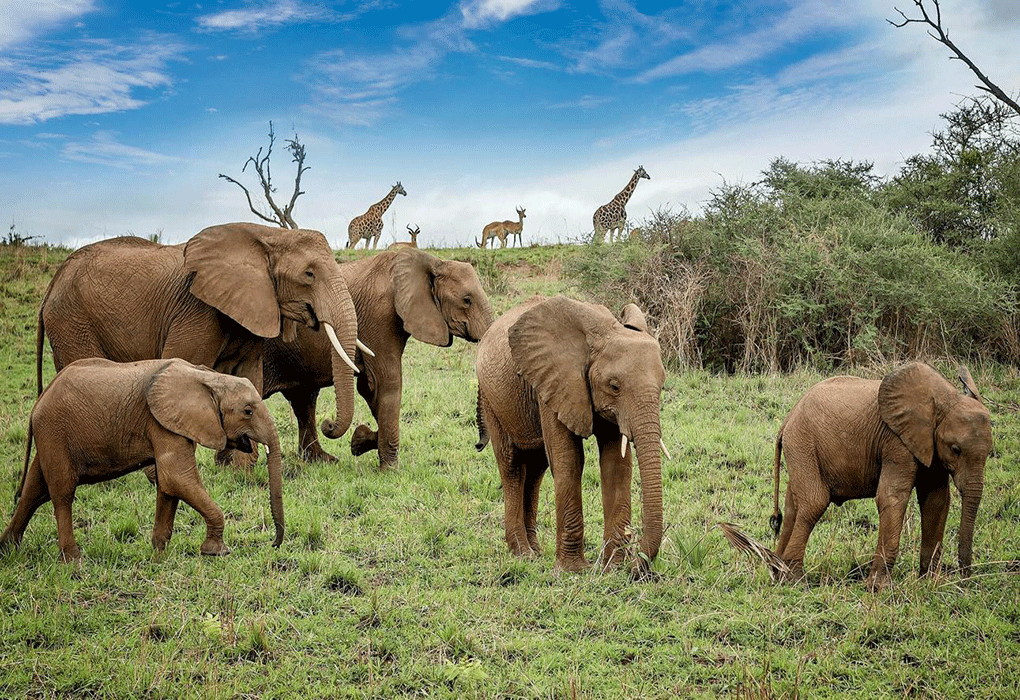
Animals in Uganda national parks are among the country’s greatest attractions, from powerful elephants and lions roaming the savannah to chimpanzees calling through tropical forests and mountain gorillas moving quietly through the misty highlands. A Uganda safari gives travelers the opportunity to experience an extraordinary variety of wildlife across Murchison Falls, Queen Elizabeth, Kidepo Valley, Lake Mburo, Kibale, Bwindi and Mgahinga. Whether you are searching for the best animals to see on safari in Uganda, tracking primates in ancient forests or exploring open grasslands, Uganda offers wildlife experiences that go far beyond the traditional Big Five.


Uganda safari animals! A Uganda safari is not simply a journey through beautiful landscapes. It is an invitation to slow down, listen to the wilderness and watch Africa unfold naturally in front of you. From a herd of elephants crossing a dusty game track to a chimpanzee calling from the forest canopy, the animals on a Uganda safari can turn an ordinary morning into a memory that stays with you for years.
Uganda is particularly fascinating because its wildlife is spread across remarkably different environments. Open savannahs, tropical forests, wetlands, lakes, rivers, mountains and woodland all occur within the country’s protected areas. Uganda Wildlife Authority manages 10 national parks, including Murchison Falls, Queen Elizabeth, Kidepo Valley, Lake Mburo, Kibale, Bwindi and Mgahinga.
That diversity means a Uganda wildlife safari can be much more than a conventional Big Five game drive. You can spend one morning looking across a savannah for lions and giraffes, then spend another day walking through ancient forest searching for chimpanzees or mountain gorillas. You may encounter animals from a safari vehicle, boat, guided nature walk or forest trek, depending on the destination.
The following 15 species offer a wonderful introduction to the wildlife you may encounter when exploring Uganda.
Quick Facts About Animals on a Uganda Safari
| Animal | Best-known Uganda destinations | Typical safari experience | Habitat |
|---|---|---|---|
| African Elephant | Murchison Falls, Queen Elizabeth, Kidepo | Game drive, boat cruise | Savannah, woodland, riverbanks |
| African Lion | Queen Elizabeth, Murchison Falls, Kidepo | Game drive | Savannah, woodland |
| Leopard | Queen Elizabeth, Murchison Falls, Kidepo, Lake Mburo | Game drive | Woodland, savannah |
| Rothschild’s/Nubian Giraffe | Murchison Falls, Kidepo, Lake Mburo | Game drive | Savannah, woodland |
| African Buffalo | Murchison Falls, Queen Elizabeth, Kidepo | Game drive, boat cruise | Savannah, woodland, wetlands |
| Hippopotamus | Queen Elizabeth, Murchison Falls, Lake Mburo | Boat cruise, game viewing | Lakes, rivers, wetlands |
| Plains Zebra | Lake Mburo, Kidepo | Game drive, walking safari | Open grassland, savannah |
| Uganda Kob | Murchison Falls, Queen Elizabeth | Game drive | Open grassland |
| Warthog | Murchison Falls, Queen Elizabeth, Lake Mburo | Game drive | Savannah, woodland |
| Chimpanzee | Kibale, Budongo, Queen Elizabeth | Forest tracking | Tropical forest |
| Mountain Gorilla | Bwindi, Mgahinga | Gorilla trekking | Montane forest |
| Golden Monkey | Mgahinga | Forest tracking | Bamboo and montane forest |
| Southern White Rhino | Ziwa, Kidepo/Ajai conservation areas | Guided tracking/game viewing | Savannah, woodland |
| Spotted Hyena | Kidepo, Queen Elizabeth, Lake Mburo | Game drive | Savannah, woodland |
| Sitatunga | Wetlands around Lake Mburo and other suitable habitats | Guided nature/wetland experience | Papyrus swamp, wetlands |
The exact animals encountered vary with location, season, weather and the movements of wildlife. A safari is wildlife viewing rather than a guaranteed checklist.
Where Are the Main Wildlife Areas in Uganda?
Uganda’s protected areas are distributed across different parts of the country. Murchison Falls lies in the northwest, Kidepo Valley in the far northeast, Queen Elizabeth in the west, Lake Mburo in southwestern Uganda, while Kibale, Bwindi and Mgahinga provide forest-based wildlife experiences farther west and southwest. UWA’s park-location material provides an overview of these protected areas and their relative positions.
For your WordPress page, place the following map as a full-width image immediately below this section. Set the image width to 100%, remove the default narrow alignment, and use a descriptive alt text such as: “Map showing Uganda national parks and major wildlife safari destinations.”


The map is especially useful for travelers because Uganda is geographically compact compared with some African safari destinations, yet the distances between major wildlife areas can still be substantial. UWA’s published park information, for example, lists approximate road distances from Kampala ranging from about 229 km for Mount Elgon and 253 km for Lake Mburo to 571 km for Kidepo Valley.
This is one reason itinerary planning matters. A safari that combines Murchison Falls, Queen Elizabeth, Kibale and Bwindi is very different from one focused on the remote wilderness of Kidepo.
1. African Elephants
Few encounters compare with seeing an African elephant emerge from tall grass or woodland and slowly cross the road in front of a safari vehicle. Elephants are among the most memorable animals on a Uganda safari, partly because of their immense size but also because of their social behaviour. Families can move together, calves often stay close to adults, and larger individuals may pause to investigate vehicles before continuing on their way.
Uganda Wildlife Authority describes elephants as highly social animals living in family groups led by matriarchs. They also influence their surroundings by opening vegetation, digging for water and dispersing seeds.
Murchison Falls National Park is particularly notable for elephant viewing. The Victoria Nile also creates excellent opportunities for observing elephants from a boat, especially around riverbanks and water-access areas. UWA describes Murchison’s riverbanks as important wildlife viewing areas where elephants, giraffes and buffaloes gather.
Queen Elizabeth and Kidepo Valley are also important elephant destinations. Kidepo’s Narus Valley becomes particularly significant during dry conditions because remaining water attracts wildlife. UWA reports that elephant numbers in Kidepo have recovered substantially from historic lows.
Safari tip: Give elephants plenty of space. Never ask a driver to move closer simply for a photograph.
2. African Lions
The lion is one of the animals many travelers secretly hope to encounter before they even arrive in Uganda. Seeing a lion resting beneath a tree, walking through golden grass or watching its surroundings from a rocky rise can completely change the atmosphere inside a safari vehicle.
Uganda’s current wildlife information identifies three national parks where lions occur: Murchison Falls National Park, Queen Elizabeth National Park and Kidepo Valley National Park.
Queen Elizabeth is famous for the tree-climbing lions of Ishasha, while Kidepo offers a particularly wild setting where lions can be encountered around the Narus Valley. Murchison’s savannah also supports lions, where they prey on abundant herbivores such as Uganda kob.
Lion sightings are never guaranteed. Even in a park with a healthy lion population, predators may be resting in thick vegetation or moving beyond the area being explored. That uncertainty is part of what makes wildlife viewing exciting.
The latest UWA State of Wildlife Resources report also highlights that lion populations require continued conservation attention.
3. Leopards
If lions announce themselves with presence, leopards often do the opposite.
The leopard is one of the most elusive animals on a Uganda safari. Its spotted coat blends beautifully into vegetation, woodland and shadows, while its largely solitary behaviour means there may be only one animal moving through a large area.
UWA notes that leopards occur in several Ugandan national parks, including Kidepo Valley, Murchison Falls, Queen Elizabeth, Lake Mburo and Semuliki.
A leopard encounter can be incredibly brief. You might see a spotted body disappearing behind bushes, a tail hanging from a branch or an animal resting quietly beneath vegetation. Your guide’s experience can make a significant difference because guides learn to recognize tracks, alarm calls and subtle signs that visitors may completely overlook.
Early morning and late afternoon game drives are particularly valuable because wildlife activity changes with temperature and light.
Animals in Uganda national parks: A Different Side of Uganda’s Wildlife
The beauty of animals on a Uganda safari is that the experience does not end with the traditional big-game species. Uganda’s wildlife story becomes increasingly interesting as you move from open savannah into wetlands and forests.


There is something almost magical about seeing a giraffe walking slowly across a Ugandan savannah. Its height allows it to browse vegetation far above the reach of many other herbivores, while its patterned coat creates a beautiful silhouette against the landscape.
Uganda’s giraffes occur in Murchison Falls, Lake Mburo, Kidepo Valley and Pian-Upe Wildlife Reserve. UWA particularly highlights Murchison Falls as an important stronghold for the country’s giraffes and records their successful reintroduction into Lake Mburo.
Murchison’s open landscapes can be particularly rewarding because giraffes are often visible from a distance. In Kidepo, they become part of a completely different landscape, surrounded by rugged hills and dry-country scenery.
Lake Mburo is another interesting destination because giraffes were reintroduced there in 2015, expanding their range within Uganda.
For photographers, giraffes are wonderful subjects because their long necks and distinctive patterns create strong compositions against trees, hills and open skies.
5. African Buffalo
The African buffalo is powerful, heavy and surprisingly expressive. Large herds moving through grassland can create one of the most impressive sights of a Uganda wildlife safari.
Buffalo occur across several major savannah parks. UWA describes both large savannah buffalo and smaller forest buffalo in Uganda, with savannah buffalo especially associated with areas such as Murchison Falls and Kidepo.
Murchison Falls is especially rewarding for buffalo viewing. They can be encountered on game drives and around water sources. Queen Elizabeth also supports substantial buffalo populations.
Look closely at a herd and you will notice that it is not simply a collection of identical animals. Adults, younger buffalo and calves may behave differently, and individuals often remain closely connected.
Their dark bodies can look almost black in certain light, while their horns create the distinctive boss across the forehead of mature males.
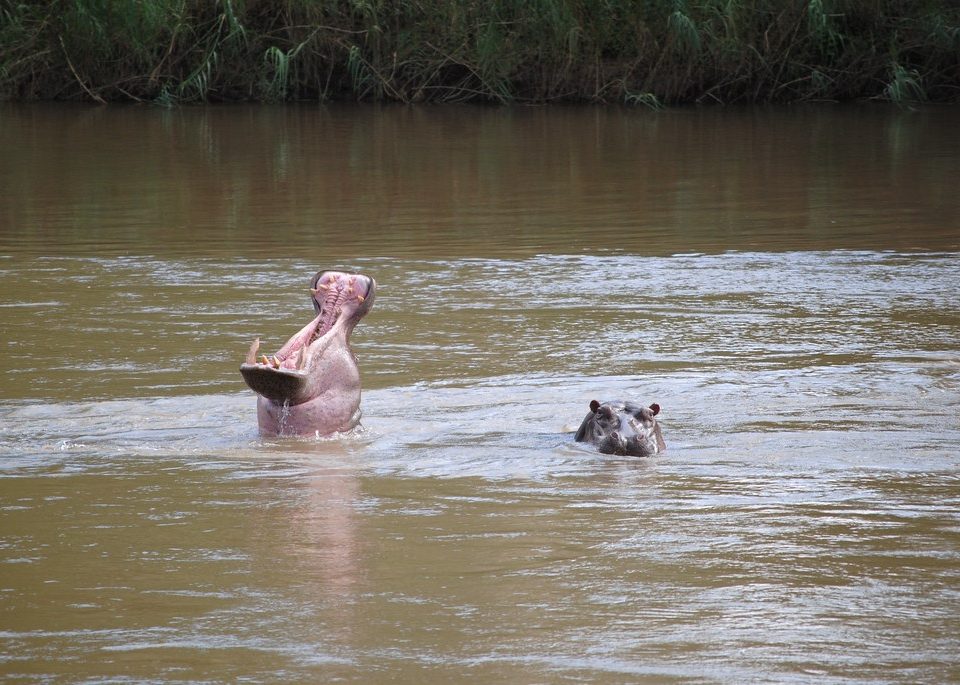
6. Hippopotamuses
A Uganda safari becomes particularly special when the route reaches water.
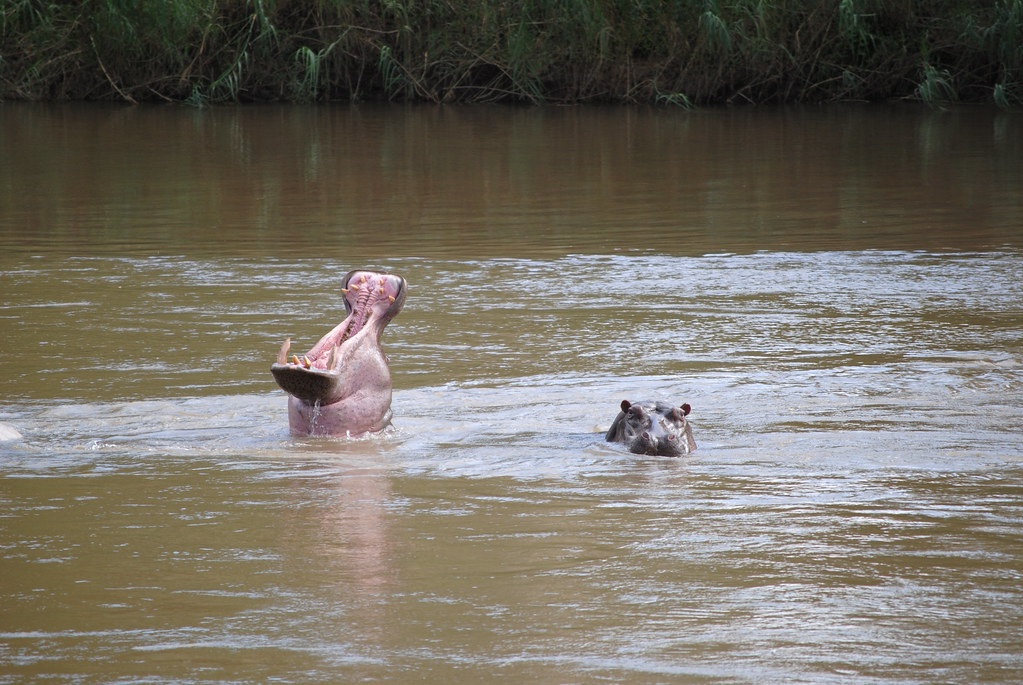
Hippos spend much of the day in water or along the shoreline, emerging to graze when conditions are cooler. Queen Elizabeth National Park’s Kazinga Channel is one of the country’s most famous places for seeing them.
UWA identifies Queen Elizabeth, Murchison Falls, Lake Mburo and Semuliki among Uganda’s important hippo habitats.
A boat cruise gives visitors a completely different perspective. Instead of seeing a distant animal through a vehicle window, you can watch hippos surface, yawn, grunt and interact from the water.
But their apparently sleepy behaviour should never be confused with harmlessness. Hippos are powerful wild animals and must always be viewed from a safe distance under the direction of guides and boat crews.
7. Plains Zebras
The black-and-white pattern of a zebra is one of the unmistakable images of an African safari. Yet seeing a zebra herd in Uganda can feel surprisingly different from the classic safari scenes many travelers have seen in documentaries.
Lake Mburo and Kidepo Valley are particularly important destinations for zebra viewing. UWA identifies these two parks as Uganda’s strongest zebra-viewing locations.
Lake Mburo is especially convenient for travelers combining wildlife with southwestern Uganda itineraries. The park’s landscape of grassland, woodland, wetlands and lakes provides a distinctive setting for zebra herds.
Zebras are social animals, and watching several individuals graze together makes for excellent photography. Look for the subtle differences in their stripe patterns and the way individuals position themselves within a group.


The Uganda kob deserves much more attention than it usually receives.
This antelope is closely associated with Uganda’s open grasslands and is an important prey species for predators such as lions. A large group moving across the plains can create a beautiful scene, particularly in the soft light of early morning.
Uganda Wildlife Authority’s 2026 State of Wildlife Resources report recorded an increase in Uganda kob numbers between its 2021–2022 and 2023–2025 surveys, from 166,526 to 175,109 animals nationally.
Murchison Falls and Queen Elizabeth are among the places where travelers can encounter Uganda kob during game drives.
Their presence also helps explain why predator sightings are connected to herbivore populations. Where prey is abundant, carnivores have an important food resource.
9. Warthogs
Warthogs may not have the glamour of lions or giraffes, but they are among the most entertaining animals on a Uganda safari.
They often move quickly across open ground with their tails raised, almost as though they are carrying little flags. When alarmed, they can disappear into vegetation surprisingly fast.
Warthogs are found in several savannah environments, including Murchison Falls, Queen Elizabeth and Lake Mburo. They spend time grazing, digging and moving between feeding areas and shelter.
One of the most charming things to observe is a family group. Young warthogs can be particularly energetic, while adults often kneel when feeding.
Their appearance also tells an interesting story about adaptation. Their broad snouts and tusks help them interact with the ground while searching for food.
10. Chimpanzees
A Uganda safari does not have to stay on the savannah.
In the forests of western Uganda, the experience changes completely. The sound of birds replaces the open silence of the plains, vegetation closes around the trail and suddenly you may hear a chimpanzee calling somewhere above you.
Kibale National Park is Uganda’s best-known destination for chimpanzee tracking. Chimpanzees are highly intelligent great apes and share about 98 percent of their genes with humans, according to UWA. Their diet includes fruits, leaves, buds and blossoms, and they can spend many hours foraging.
Chimpanzee tracking is different from a traditional game drive. You are walking through forest with trained guides and trackers, following signs and sounds rather than simply scanning open grassland.
Uganda’s forests also support chimpanzees beyond Kibale. UWA’s recent conservation reporting includes significant chimpanzee populations across several forest ecosystems.
For travelers interested in primates, chimpanzee tracking adds an entirely different dimension to the Uganda wildlife experience.
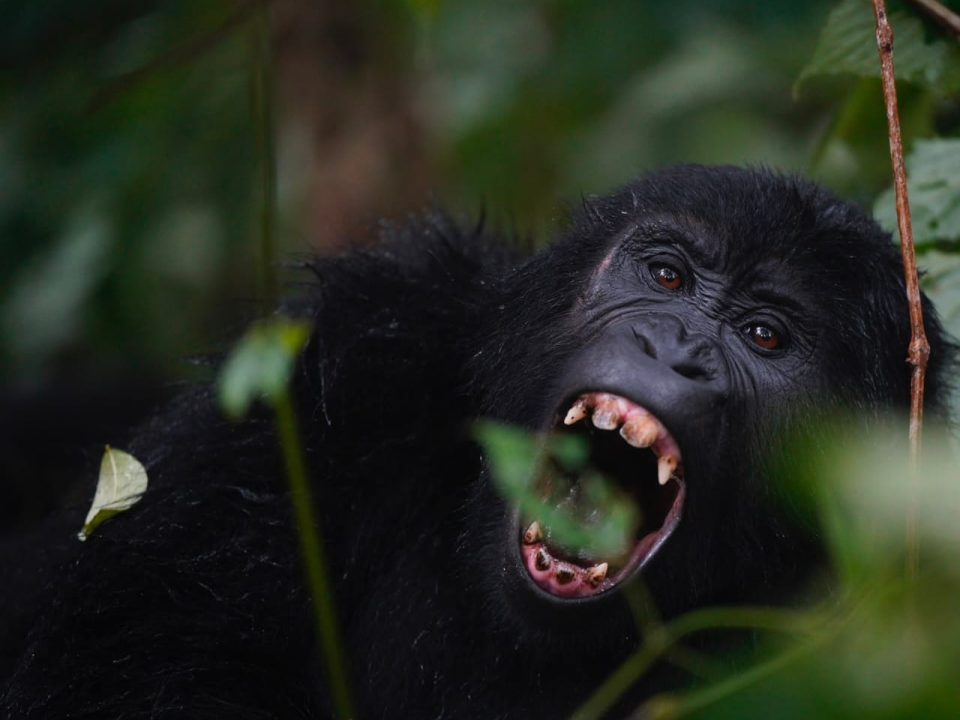
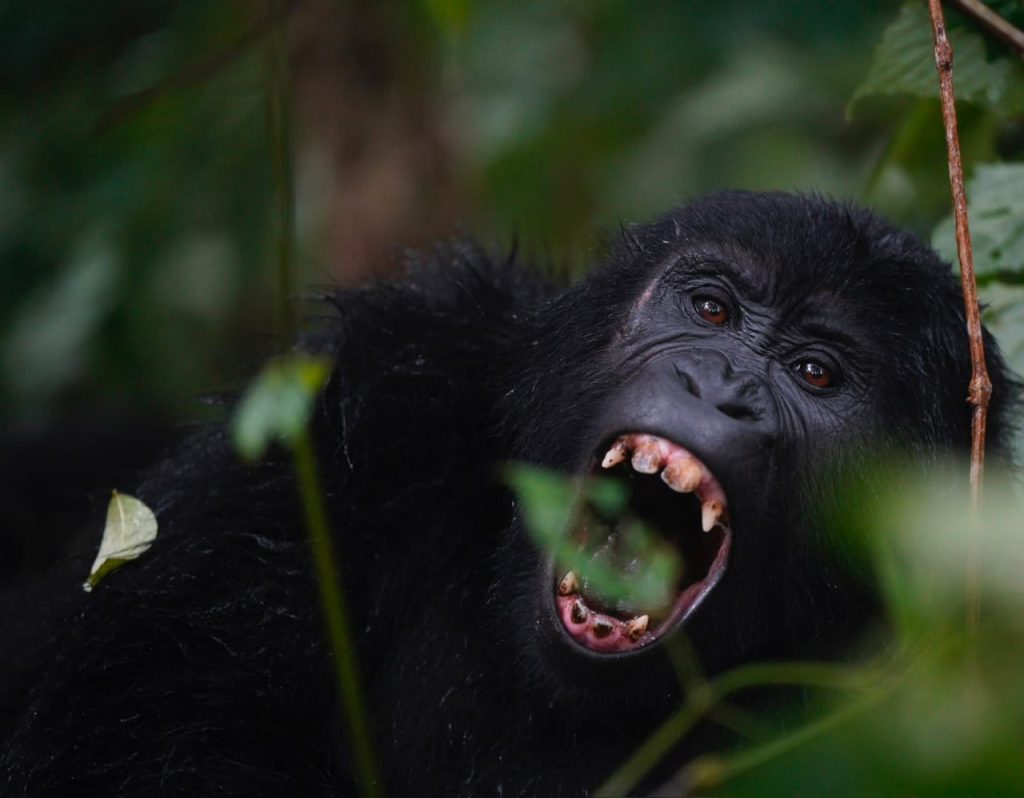
11. Mountain Gorillas
For many visitors, mountain gorillas are the emotional highlight of a Uganda trip.
The experience is unlike a conventional safari. You walk through steep, misty montane forest, following trackers who interpret broken vegetation, footprints, feeding signs and other clues. Eventually the forest opens just enough for you to see a gorilla family.
Uganda’s mountain gorillas live in Bwindi Impenetrable National Park and Mgahinga Gorilla National Park. UWA states that Uganda is home to more than half of the world’s mountain gorilla population.
Gorilla trekking generally lasts several hours, depending on the location and movement of the family being visited. UWA notes that treks can take approximately two to seven hours, including the time spent moving through the forest.
The encounter is deliberately controlled. Visitors follow ranger instructions and observe habituated gorilla families for a limited period.
It is important to remember that gorillas are not simply another item on a wildlife checklist. They are endangered great apes living in fragile mountain ecosystems, and responsible tourism plays an important role in supporting their conservation.
12. Golden Monkeys
Deep in the Virunga Mountains, another remarkable primate waits among the bamboo and forest vegetation.
The golden monkey is smaller than a gorilla but immediately recognizable because of its bright golden-orange coat. Uganda Wildlife Authority identifies Mgahinga Gorilla National Park as the Ugandan home of this endemic Virunga primate.
Golden monkey tracking can be an excellent addition to a gorilla-focused itinerary because it introduces travelers to another forest species and another style of wildlife observation.
They live in troops and feed on a variety of vegetation, including bamboo shoots, leaves and seasonal fruits. Their quick movements can make photography challenging, but that is part of the fun.
Unlike a slow-moving elephant herd on the savannah, golden monkeys can suddenly leap through vegetation and disappear before your camera is ready.
Forest Wildlife Map Placement
Recommended full-width map: Uganda’s western and southwestern wildlife circuit showing Kibale, Queen Elizabeth, Bwindi and Mgahinga, with major towns such as Fort Portal, Kasese, Kabale and Kisoro.
Place this map at 100% page width so visitors can understand how the primate destinations connect with the savannah parks.


The story of rhinos in Uganda is one of loss, conservation and restoration.
Historically, Uganda had both black and northern white rhinoceroses, but prolonged conflict, habitat problems and poaching caused rhinos to disappear from the country. Southern white rhinos were later reintroduced through Ziwa Rhino Sanctuary.
The story is now developing further. In March 2026, UWA announced the beginning of a southern white rhino reintroduction programme into Kidepo Valley National Park, with the first animals moved from Ziwa and a total of eight planned for the initial exercise.
UWA also reported a wider national rhino conservation programme involving Ajai Wildlife Reserve.
This means the rhino experience in Uganda is evolving. Travelers should always check the latest UWA guidance when planning rhino viewing because locations and conservation arrangements can change as reintroduction programmes develop.
For a traditional safari itinerary, Ziwa Rhino Sanctuary has historically provided one of the country’s best opportunities to see rhinos in a protected setting.
14. Spotted Hyenas
The spotted hyena is one of Africa’s most misunderstood predators.
Its unusual appearance, powerful jaws and distinctive vocalizations make it a fascinating animal to encounter. Hyenas can live in complex social groups and play an important ecological role as both hunters and scavengers.
In Uganda, spotted hyenas occur in several savannah landscapes, including Kidepo Valley and Queen Elizabeth, while Lake Mburo also supports them. UWA’s wildlife directory includes the spotted hyena among Uganda’s recorded mammals.
Hyenas are often associated with night-time activity, so sightings during daylight can feel particularly special. A safari guide may recognize their tracks, calls or resting areas even when the animals themselves are hidden.
Their presence also reminds visitors that a healthy ecosystem needs more than charismatic animals. Predators, scavengers, herbivores, birds and smaller creatures all form part of the same interconnected system.
15. Sitatunga
The sitatunga is perhaps one of the most unusual animals on this list because finding one requires a very different kind of wildlife experience.
Instead of searching open savannah for a large herd, you may need to look into papyrus swamps and wetland vegetation.
Sitatunga are specially adapted to wet habitats. Their splayed hooves help them move through soft, muddy ground, making them much better suited to swamp environments than many other antelopes.
Lake Mburo’s wetlands provide habitat for this secretive species. UWA’s Lake Mburo conservation material specifically identifies sitatunga among the wetland wildlife associated with the park.
Seeing one is not necessarily about finding the largest animal or the most famous predator. It is about noticing the smaller details of Uganda’s ecosystems and understanding how wildlife adapts to very specific environments.
The Best Parks for Seeing Animals on a Uganda Safari
Different parks offer different wildlife experiences. Rather than asking which park has all the animals, it is more useful to ask which combination matches the kind of safari you want.
| Destination | Wildlife experience | Notable animals |
|---|---|---|
| Murchison Falls | Classic savannah + Nile wildlife | Elephant, lion, leopard, giraffe, buffalo, hippo, kob, warthog |
| Queen Elizabeth | Savanna, crater landscapes and Kazinga Channel | Lion, elephant, buffalo, hippo, leopard, kob, chimpanzee |
| Kidepo Valley | Remote wilderness and dramatic landscapes | Lion, elephant, buffalo, giraffe, zebra, leopard, hyena |
| Lake Mburo | Compact savannah, wetlands and walking experiences | Zebra, giraffe, impala, eland, buffalo, hippo, warthog, sitatunga |
| Kibale | Forest primate experience | Chimpanzee and numerous monkey species |
| Bwindi | Montane rainforest | Mountain gorilla, chimpanzee and forest wildlife |
| Mgahinga | Virunga mountain forest | Mountain gorilla and golden monkey |
| Ziwa Rhino Sanctuary | Rhino conservation experience | Southern white rhinoceros |
UWA officially lists ten national parks across Uganda, while wildlife is also protected in reserves and sanctuaries.
Can You See All 15 Animals on One Uganda Safari?
It is possible to design an itinerary that covers many of these species, but seeing all 15 should never be presented as guaranteed.
A safari is different from visiting a zoo. Wildlife moves freely, and animals respond to rainfall, food availability, temperature, breeding cycles, predators and human activity.
For example, a traveler focusing on Murchison Falls may have excellent opportunities for elephants, giraffes, buffaloes, lions, leopards, hippos, Uganda kob and warthogs. Adding Lake Mburo can introduce stronger opportunities for zebra, impala and wetland species. Moving into Kibale adds chimpanzee tracking, while Bwindi or Mgahinga provides access to mountain gorillas.
Kidepo, meanwhile, offers a completely different wilderness atmosphere and is particularly valuable for travelers interested in northern Uganda’s distinctive wildlife.
The secret is not trying to collect species as quickly as possible. The best itineraries allow enough time in each ecosystem to appreciate what makes it different.
What Is the Best Time to See Wildlife in Uganda?
Uganda is a year-round wildlife destination, but conditions influence what you see and how easy animals are to locate.
During drier periods, vegetation may be shorter and animals can become more concentrated around reliable water sources. This can make game viewing easier in some savannah parks. UWA’s visitor information notes that the dry seasons are generally favorable for wildlife viewing in savannah reserves.
The wetter months have their own advantages. Landscapes become intensely green, many animals reproduce, and birdlife can be particularly rewarding. Forest environments also remain biologically active throughout the year.
Instead of choosing a month solely because someone promises “guaranteed sightings,” consider the entire travel experience: road conditions, trekking preferences, photography interests, accommodation and the particular parks you want to visit.
How to Photograph Animals on a Uganda Safari
Wildlife photography is one of the great pleasures of an African safari, but good photographs do not always require getting extremely close to an animal.
A long lens can help you photograph wildlife without disturbing it. Early morning and late afternoon often provide softer light, while overcast conditions can produce beautifully balanced portraits.
Keep your camera ready when approaching waterholes and riverbanks. Animals often behave differently around water, and a boat cruise can provide unusual angles that are difficult to achieve from a safari vehicle.
Most importantly, listen to your guide. A good guide understands animal behaviour and knows when moving closer is inappropriate.
Avoid shouting, sudden movements or attempts to attract an animal’s attention for a photograph. A natural photograph of an animal behaving normally is far more meaningful than an image created by disturbing it.
Responsible Wildlife Viewing in Uganda
The excitement of seeing wild animals should always be balanced with respect.
Do not feed wildlife. Do not attempt to touch wild animals. Never leave a vehicle unless your guide or ranger has confirmed that it is safe and permitted. During gorilla and chimpanzee experiences, follow all health, distance and photography instructions.
Uganda Wildlife Authority’s rangers play a major role in protecting wildlife and monitoring illegal activities in protected areas. UWA reports that rangers patrol areas, record signs of illegal activity and remove snares and traps.
Responsible tourism therefore has a much wider meaning than simply behaving well during a game drive. It means respecting the ecosystem, supporting conservation and recognizing that these landscapes are home to wild animals first.
Why Uganda Is Such a Special Wildlife Destination
What makes animals on a Uganda safari so interesting is not simply the number of species. It is the variety of experiences packed into one country.
You can watch elephants beside the Nile at Murchison Falls. You can search the Ishasha sector of Queen Elizabeth for its famous tree-climbing lions. You can watch hippos crowd the Kazinga Channel. You can cross the grasslands of Lake Mburo with zebras nearby. You can travel deep into Kidepo and experience a remote wilderness framed by mountains.
Then the scenery changes.
The savannah gives way to tropical forest. Chimpanzees call from the canopy. Golden monkeys move through bamboo. Finally, in the misty mountains of Bwindi or Mgahinga, you may come face-to-face with a mountain gorilla.
That variety is what makes a Uganda wildlife safari feel so much bigger than a simple list of animals.


The best Uganda safari itinerary starts with a simple question: Which wildlife experience matters most to you?
If elephants, giraffes, lions and classic savannah scenery are the priority, Murchison Falls, Queen Elizabeth or Kidepo can form the foundation of your trip.
If zebras, impalas and walking experiences interest you, Lake Mburo deserves consideration.
If chimpanzees are high on your list, Kibale should feature prominently.
If gorillas are your dream encounter, Bwindi and Mgahinga are the key destinations.
If you want a more remote and rugged experience, Kidepo can provide a dramatically different perspective on Uganda’s wilderness.
And if rhinos are important to your trip, check the latest conservation and visitor arrangements for Ziwa and the country’s developing rhino reintroduction areas before travelling.
Uganda Wildlife Authority remains the primary official source for national park information, conservation updates and protected-area guidance.
Frequently Asked Questions About Animals on a Uganda Safari
What animals can I see on a Uganda safari?
Depending on your itinerary, you can encounter elephants, lions, leopards, giraffes, buffaloes, hippos, zebras, Uganda kob, warthogs, chimpanzees, mountain gorillas, golden monkeys, rhinos, hyenas, sitatunga and many other mammals and birds.
What is the most famous animal to see in Uganda?
Mountain gorillas are among Uganda’s most internationally recognized wildlife attractions, while elephants, lions, giraffes, chimpanzees and other savannah and forest species are also major safari attractions.
Where can I see lions in Uganda?
Current UWA information identifies Queen Elizabeth National Park, Murchison Falls National Park and Kidepo Valley National Park as Uganda’s main lion areas.
Where can I see giraffes in Uganda?
Giraffes can be found in Murchison Falls National Park, Kidepo Valley National Park, Lake Mburo National Park and Pian-Upe Wildlife Reserve.
Where can I see zebras?
Lake Mburo and Kidepo Valley are among Uganda’s best destinations for zebra viewing.
Where can I see chimpanzees?
Kibale National Park is the country’s best-known destination for chimpanzee tracking, while chimpanzees also occur in other forest ecosystems.
Where can I see mountain gorillas?
Mountain gorilla trekking in Uganda takes place in Bwindi Impenetrable National Park and Mgahinga Gorilla National Park.
Can I see the Big Five in Uganda?
Uganda has elephants, lions, leopards, buffaloes and southern white rhinos, but these animals are not all concentrated inside one national park. Rhinos have historically been associated with dedicated conservation areas such as Ziwa, while UWA began new rhino reintroduction efforts in 2026.
Is wildlife guaranteed on a Uganda safari?
No. Wildlife is free-ranging and sightings can never be guaranteed. Experienced guides improve the chances of finding animals, but the unpredictability is part of the safari experience.
Final Thoughts: The Animals Are Only the Beginning
The greatest thing about a Uganda safari is that the animals are never completely separate from the landscape around them.
An elephant means the woodland around it. A hippo means the river or lake. A giraffe means the open savannah and the trees it browses. A gorilla means the misty mountain forest. A chimpanzee means the complex canopy above your head. A zebra means the grasslands stretching toward the horizon.
That is why the animals on a Uganda safari are so memorable. You are not simply looking at wildlife. You are entering the environments that shaped their behaviour, movement and survival.
From the powerful elephant and watchful lion to the elusive leopard, elegant giraffe, enormous hippo, striped zebra, intelligent chimpanzee and extraordinary mountain gorilla, Uganda offers an impressive range of wildlife experiences.
And sometimes the most unforgettable sight is not the animal you expected to see.
It is the one that appears unexpectedly around the next bend.
That is the magic of a Uganda safari.