Do Mountain Gorillas Mourn Their Dead? 7 Remarkable Discoveries About Their Emotional World

The Secret Lives of Mountain Gorillas: Love, Family Bonds and Survival in Uganda’s Wild
November 12, 2026
Can Mountain Gorillas Recognise Humans? 7 Amazing Discoveries
November 13, 2026
Deep within the mist-covered forests of East and Central Africa, mountain gorillas live in closely connected social groups where relationships influence almost every aspect of daily life. Silverbacks protect their families, mothers nurture their infants, and younger gorillas develop essential survival skills through observation and play. Yet one of the most fascinating questions about these intelligent primates concerns what happens when a familiar member of their social world is no longer alive.
Do Mountain Gorillas Mourn Their Dead? Scientific observations suggest that their responses to loss can be remarkably complex. Researchers have documented individuals remaining near deceased companions, showing sustained interest in familiar group members, and behaving differently according to their previous relationships. These observations have opened an important discussion about animal emotions, social attachment, memory, and whether mourning-like behaviour exists beyond human societies.

For travellers exploring Uganda’s remarkable gorilla habitats, understanding these relationships adds an entirely different dimension to wildlife encounters. The animals encountered during gorilla trekking are not simply impressive creatures living together in a forest. They belong to social communities shaped by individual personalities, shared experiences, maternal relationships, protective leadership, and changes that occur throughout their lives.
At PrideMark Safaris, we believe that meaningful wildlife travel begins with curiosity about the animals themselves. Learning about mountain gorilla emotions, family relationships, and conservation challenges allows visitors to appreciate these endangered primates beyond their physical appearance. Their behaviour provides a window into a fascinating natural world where scientists continue investigating questions about attachment, intelligence, social awareness, and responses to loss.
To answer the question Do Mountain Gorillas Mourn Their Dead, this article explores seven remarkable discoveries from scientific research into gorilla responses to death, examining what researchers have observed, what remains uncertain, and why these findings matter for conservation. Along the way, we will explore the extraordinary mountain forests of Uganda, the social lives of gorilla families, and how responsible wildlife tourism can contribute to protecting the relationships that make these primates so remarkable.
Understanding the Emotional World of Mountain Gorillas
Mountain gorillas, scientifically known as Gorilla beringei beringei and profiled by the pride mark safaris are a subspecies of eastern gorilla inhabiting the Bwindi forest ecosystem and the Virunga mountain landscape. Their natural populations occur across protected habitats in Uganda, Rwanda, and the Democratic Republic of Congo. These environments provide the vegetation, shelter, and ecological conditions necessary for feeding, reproduction, social interaction, and the development of young gorillas.
Unlike animals that spend most of their lives alone, mountain gorillas generally live in organised social groups containing adult males, adult females, juveniles, and infants. Their relationships develop through repeated interactions over extended periods. Individuals become familiar with one another’s behaviour, establish social preferences, respond to changes in group composition, and maintain relationships that can influence their daily activities and long-term survival.

The dominant silverback frequently plays an important role in group protection and movement, although social organisation is more complex than simple leadership by physical strength. Adult females maintain their own relationships, make important decisions concerning their offspring, and contribute to group stability. Young gorillas gradually learn how to communicate, recognise familiar individuals, and participate in social interactions within their family environment.
These established relationships help explain why scientists are interested in gorilla responses to death. When a familiar individual disappears from a social group, the event may affect more than its numerical composition. It can change patterns of association, parental care, group movement, leadership, and the opportunities available to younger members. Understanding these consequences requires careful observation of both immediate reactions and longer-term behaviour.
Understanding Do Mountain Gorillas Mourn Their Dead begins with a scientific field called comparative thanatology. The study of animal responses to death belongs to a developing scientific field known as comparative thanatology. Researchers investigate how different species respond to dying individuals, deceased companions, and the disappearance of familiar social partners. The goal is not simply to identify behaviours resembling human mourning, but to understand the cognitive, emotional, social, and evolutionary processes that may produce those responses.
Importantly, observing a gorilla remaining close to a deceased companion does not automatically establish that it understands death in the same way humans do. Such behaviour may reflect attachment, curiosity, confusion, previous caregiving habits, or several influences operating together. Scientific interpretation becomes more reliable when researchers consider the individual’s history, the circumstances of the event, and patterns documented across multiple observations.
Discovery One: Mountain Gorillas Can Show Remarkable Responses to the Loss of Familiar Companions
What Researchers Have Observed in Wild Gorilla Groups
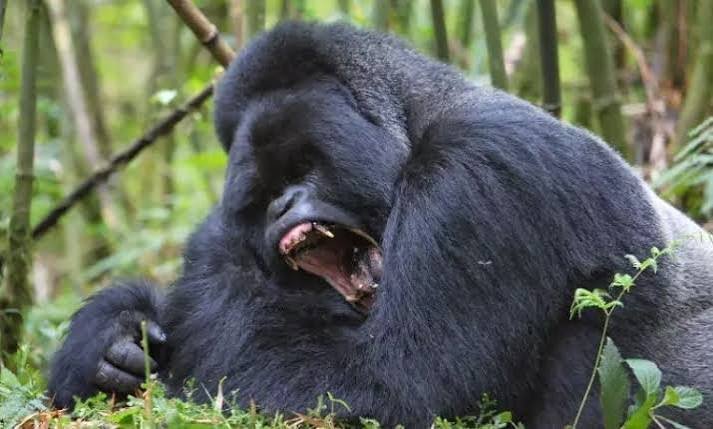
One of the most significant discoveries about gorilla grief behaviour comes from scientific observations of mountain gorillas living in Rwanda’s Volcanoes National Park. Researchers documented the responses of group members following the deaths of a dominant silverback named Titus and an adult female named Tuck. Both individuals had established social histories within their group, providing opportunities to examine how surviving gorillas responded to familiar companions.
The research, published in the scientific journal PeerJ, described several forms of behaviour around deceased gorillas, including remaining nearby, prolonged observation, and investigative or affiliative interactions. These responses were not identical among all individuals. Some showed greater interest than others, suggesting that social history and individual relationships could influence the way gorillas responded to the loss of a group member.
The researchers also examined the behaviour of Grauer’s gorillas, a different subspecies of eastern gorilla, when a group encountered an unfamiliar silverback in the Democratic Republic of Congo. Although this observation did not involve mountain gorillas, it provided a useful comparison. The responses demonstrated that interest in a deceased gorilla was not necessarily limited to individuals with established family relationships.
The comparison is particularly important because it challenges overly simple explanations of gorilla mourning. If gorillas investigate unfamiliar deceased individuals as well as familiar companions, some responses may arise from curiosity or difficulty interpreting unusual social information. However, differences in the amount of attention given to familiar individuals suggest that established relationships may also influence behaviour.
For anyone searching Do Mountain Gorillas Mourn Their Dead, these findings provide a meaningful starting point. Gorillas clearly demonstrate responses that warrant scientific investigation, but researchers must distinguish between observable behaviour and conclusions about subjective feelings. A carefully documented interaction provides evidence of what happened; interpreting the animal’s emotional experience requires additional information and appropriate scientific caution.
Why These Observations Matter
Mountain gorilla societies depend on relationships that develop over time. A mature silverback may remain associated with particular females and offspring for many years, while young individuals establish familiarity with adults through repeated interactions. When an established member disappears, surviving gorillas may encounter a situation that differs substantially from the normal social patterns they have learned to recognise.
Scientific observations of these responses help researchers understand the importance of social bonds in gorilla society. They also reveal why studying animals in their natural environments is valuable. Long-term field monitoring allows researchers to connect individual behaviour with previous relationships, family histories, and changes in group composition rather than relying on isolated observations.
These findings help answer Do Mountain Gorillas Mourn Their Dead without overstating the evidence. The findings remind wildlife enthusiasts that mountain gorillas possess complex social lives that cannot be fully understood through a brief encounter. During gorilla trekking in Uganda, visitors may observe only a small part of a family’s daily activities. Behind those moments are established relationships, individual histories, and social experiences that influence how the animals interact with one another.
Discovery Two: Strong Social Bonds May Influence How Gorillas Respond to Loss
The Importance of Familiarity and Long-Term Relationships
The question Do Mountain Gorillas Mourn Their Dead is especially relevant when considering the strength of their relationships. Among the most intriguing findings from research on eastern gorillas is that individuals with close social relationships sometimes spend more time near deceased companions than other group members. This pattern suggests that previous familiarity and attachment may influence responses to loss. It does not prove that all gorillas experience grief identically, but it establishes an important connection between social relationships and observable behaviour.

Mountain gorilla social bonds develop through repeated interactions involving feeding, resting, travelling, play, and parental care. Individuals learn to recognise familiar companions and adjust their behaviour according to established relationships. A juvenile may regularly remain near a particular adult, while females can maintain different associations with dominant males, subordinate males, and other members of their group.
These social patterns are important because gorilla families are not collections of interchangeable individuals. Each animal has a distinctive position within the group, shaped by age, reproductive status, personal history, and relationships with other members. The disappearance of one individual may therefore affect surviving gorillas differently, depending on the nature and importance of their previous interactions.
Researchers studying the deaths of Titus and Tuck found that close social associations were relevant to understanding certain individuals’ responses. This observation is consistent with the broader scientific understanding that relationships matter in great ape societies. However, researchers must avoid assuming that the length of an observed response directly measures the intensity of an animal’s emotional experience.
Can Mountain Gorillas Miss Their Family Members?

A related question to Do Mountain Gorillas Mourn Their Dead is whether mountain gorillas miss their family members is understandable because their behaviour often resembles familiar aspects of human social life. They recognise companions, maintain preferences, and participate in prolonged relationships. Nevertheless, scientists cannot directly ask gorillas about their experiences, making it necessary to interpret behavioural evidence without assigning precise human emotions to every action.
A gorilla that remains near a familiar individual may be responding to an established social bond, a disrupted routine, or an unfamiliar situation. These explanations are not necessarily mutually exclusive. Animal emotions and cognition may involve several interacting processes, and a single observation rarely allows researchers to determine exactly which process is responsible for a particular response.
Studying these questions also requires recognising differences between attachment and mourning. Attachment refers to the social relationship connecting individuals, while mourning generally describes responses following a loss. Evidence that gorillas form strong attachments helps explain why researchers investigate mourning-like behaviour, but it does not independently establish how gorillas understand the permanence or meaning of death.
For visitors interested in mountain gorilla emotions, observing ordinary family interactions provides essential context. A silverback tolerating playful juveniles, a mother remaining close to her infant, or familiar adults resting near one another may reveal relationships that have developed over many years. These everyday interactions help scientists understand why the loss of particular individuals could have significant social consequences.
Discovery Three: Mother Gorillas Demonstrate Extraordinary Attachment to Their Infants
Why Maternal Bonds Are Central to Gorilla Society
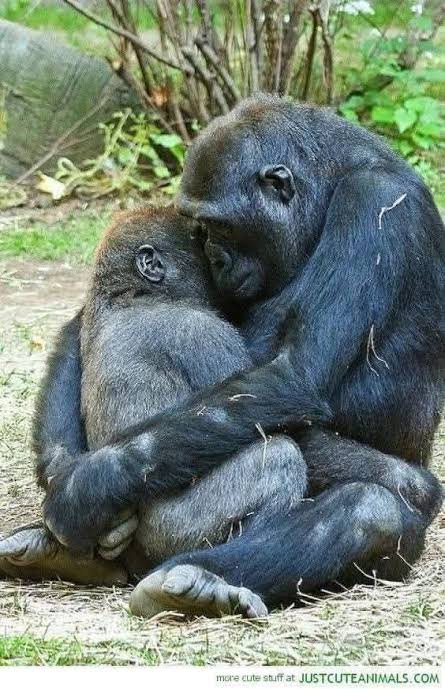
The relationship between a mother mountain gorilla and her infant is among the most important connections within a gorilla family. Newborn gorillas are highly dependent on maternal care, requiring nourishment, warmth, protection, and assistance with movement. Their mothers provide these essential forms of support while continuing to participate in the daily feeding, resting, and travelling activities of the wider group.
As infants develop, they gradually begin exploring their surroundings while remaining closely associated with their mothers. They learn to recognise suitable vegetation, navigate uneven forest terrain, interpret social signals, and interact with other gorillas. This prolonged period of development reflects the considerable investment required to raise young great apes successfully within challenging natural environments.
Maternal attachment also helps explain why responses to infant loss have attracted substantial scientific attention. Researchers have documented cases in which gorilla mothers continued familiar caregiving behaviour following an infant’s death. These observations raise important questions about the persistence of attachment, the recognition of changes in an infant’s condition, and the relationship between established maternal behaviour and responses to loss.
A study of mountain gorilla responses to infant loss published in Primates examined long-term observations involving numerous infant losses. Researchers found that continued carrying after infant death occurred in a substantial proportion of documented cases. The findings also indicated that characteristics of the infant and the circumstances surrounding the loss influenced the likelihood and duration of this behaviour.
The study is especially valuable because it moves beyond a single memorable observation. By examining many cases across an extended monitoring period, researchers could investigate patterns and evaluate competing explanations. The findings suggest that persistent attachment and difficulty interpreting the absence of normal responses may contribute to maternal behaviour following infant loss.
Does This Behaviour Mean Gorilla Mothers Experience Grief?

For readers asking Do Mountain Gorillas Mourn Their Dead, maternal responses are among the most thought-provoking observations. Maternal responses to infant loss are often described as evidence of gorilla grief, but the scientific explanation remains more complicated. A mother may continue familiar caregiving behaviour because the relationship has been reinforced through extensive daily contact. She may also respond to changes in the infant’s condition in ways that researchers cannot fully interpret from observation alone.
The persistence of maternal attachment is nevertheless significant. It demonstrates that caregiving relationships can continue to influence behaviour even after the circumstances supporting those relationships have changed. Scientists investigate whether these responses involve emotional distress, learned caregiving patterns, uncertainty, or combinations of different processes rather than assuming that one explanation applies to every case.
Research has also documented interest from individuals other than mothers, showing that infant-related social relationships extend beyond direct maternal care. Young gorillas develop within family groups where siblings, juveniles, and mature males may interact with them. The social environment surrounding an infant can therefore influence more than the relationship between mother and offspring.
For conservationists, the importance of maternal care has direct implications for protecting mountain gorilla populations. Female gorillas reproduce relatively slowly, and young individuals require several years of development before becoming increasingly independent. Protecting reproductive females, their offspring, and the wider family environment is therefore essential for maintaining stable populations over successive generations.
Discovery Four: Silverbacks Can Form Important Relationships With Younger Gorillas
The Social Role of a Dominant Silverback

Silverback gorillas are widely recognised for their powerful appearance, distinctive silver-grey backs, and important leadership roles. However, their social influence extends beyond physical strength. Dominant males frequently contribute to group stability, influence movement, respond to disturbances, and maintain relationships with females and younger individuals. These responsibilities make them important figures within the organisation of mountain gorilla families.
Young gorillas may spend considerable time near familiar silverbacks, particularly during resting periods or ordinary social activities. Some develop close associations with adult males, demonstrating that relationships between mature males and immature individuals can be an important feature of gorilla society. Such associations are not necessarily determined exclusively by biological fatherhood, because social relationships can develop through prolonged familiarity.
The loss of an established silverback can influence the organisation of a gorilla group. His absence may change leadership relationships, patterns of movement, reproductive opportunities, and interactions between surviving individuals. The consequences depend on group composition and the presence of other mature males, making it difficult to predict a single outcome for every family.
The question Do Mountain Gorillas Mourn Their Dead also applies to the loss of influential adult males. Scientific observations involving the silverback Titus provided evidence that some group members maintained considerable interest following his death. Researchers considered the previous social relationships between individuals when interpreting their responses. These observations contribute to broader questions about whether close associations with adult males influence the way younger gorillas respond when those relationships are disrupted.
What Happens to a Gorilla Family When Its Silverback Dies?
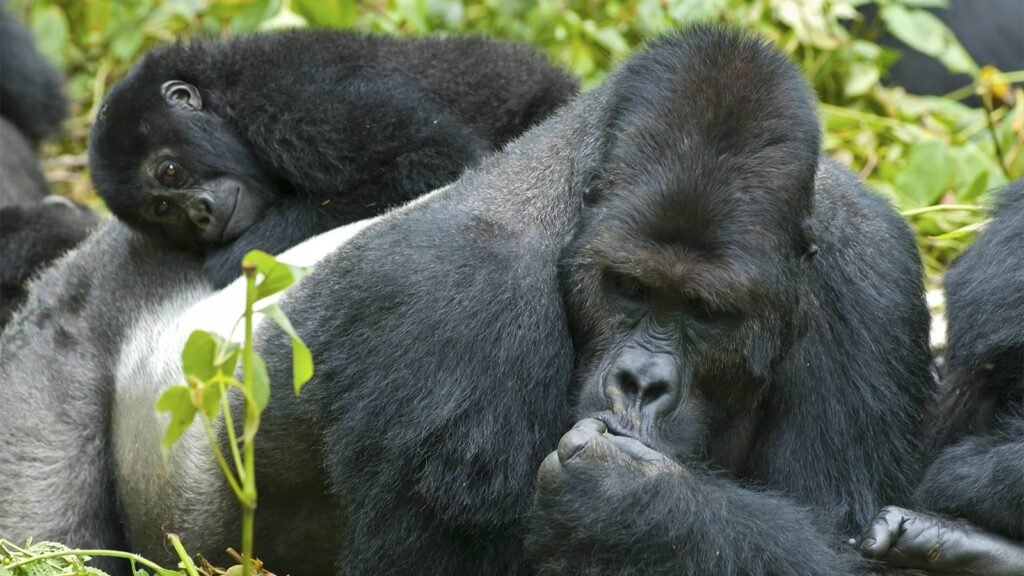
A mountain gorilla family does not necessarily respond to the loss of its dominant male in one predictable way. Groups containing additional mature males may experience changes in leadership or social relationships, while groups with different compositions may undergo other forms of reorganisation. Adult females can also influence future group membership through their decisions and social associations.
These changes matter because the dominant silverback often contributes to the security and cohesion of the group. His presence may influence how individuals respond to unfamiliar gorillas and potential threats. When leadership changes, surviving group members must continue navigating their social environment under circumstances that may differ from those they previously experienced.
Researchers distinguish between the immediate response to a deceased individual and the longer-term consequences of losing an important social partner. An individual may show little visible interest during one observation yet experience substantial changes in daily associations afterward. Conversely, prolonged attention during an encounter does not necessarily predict a particular long-term outcome.
Understanding silverback behaviour helps travellers appreciate why gorilla conservation focuses on entire social groups rather than isolated animals. A mature male’s role may influence the lives of numerous companions, including females and young gorillas. Protecting family stability and monitoring changes in group composition are therefore important aspects of scientific research and conservation management.
Discovery Five: Gorillas May Respond to Unfamiliar Individuals, Not Only Family Members

The Unexpected Findings From Eastern Gorilla Research
One reason Do Mountain Gorillas Mourn Their Dead remains a complex scientific question is that responses are not always limited to close relatives. One of the most surprising discoveries in gorilla research is that responses to deceased individuals are not always restricted to familiar family members. Scientists studying Grauer’s gorillas in the Democratic Republic of Congo documented a group’s response to an unfamiliar silverback. The observation provided an opportunity to compare reactions toward a stranger with responses previously recorded among mountain gorillas.
The researchers identified similarities in the general types of investigative and affiliative behaviour observed across the different cases. This was unexpected because encounters between living gorilla groups or unfamiliar adult males can involve avoidance, displays, or competition. The findings demonstrated that the social context surrounding an unresponsive individual may produce behaviour that differs from ordinary encounters.
These observations suggest that curiosity may contribute to gorilla responses to death. An individual who does not behave or respond as expected presents an unusual situation. Gorillas may investigate that situation because it conflicts with the patterns of movement, communication, and social responsiveness they normally encounter in other animals.
However, curiosity does not eliminate the possible importance of attachment. In the documented mountain gorilla cases, close relationships appeared relevant to differences in individual responses. Researchers therefore considered both general investigative behaviour and established social bonds rather than treating every interaction as evidence of the same underlying emotional process.
Why Researchers Compare Different Gorilla Subspecies
Comparing mountain gorillas with Grauer’s gorillas allows scientists to investigate whether particular behaviours occur across closely related populations. Both belong to the eastern gorilla species, but they occupy different habitats and have distinct ecological and social circumstances. Their similarities can provide useful comparative evidence, while their differences require careful interpretation.
It is important not to present every observation involving eastern gorillas as though it occurred among mountain gorillas in Uganda. The documented cases involving Titus and Tuck occurred in Rwanda, while the unfamiliar silverback observation involved Grauer’s gorillas in the Democratic Republic of Congo. These distinctions matter because accurate wildlife education should identify where scientific evidence originated.
The findings nevertheless have relevance for understanding mountain gorilla behaviour throughout the region. They encourage researchers to examine whether social familiarity, individual experience, age, and environmental circumstances influence responses across populations. They also demonstrate why conservation science benefits from collaboration between researchers working in different protected landscapes.
For travellers exploring Uganda’s gorilla habitats, the broader lesson is that gorilla intelligence involves responding to complex social information. These primates continuously interpret the behaviour of companions, recognise familiar individuals, and adjust their actions according to circumstances. Scientific research into unusual encounters offers another perspective on the sophistication of their social awareness.
Discovery Six: Scientists Are Still Investigating Whether Gorillas Understand Death
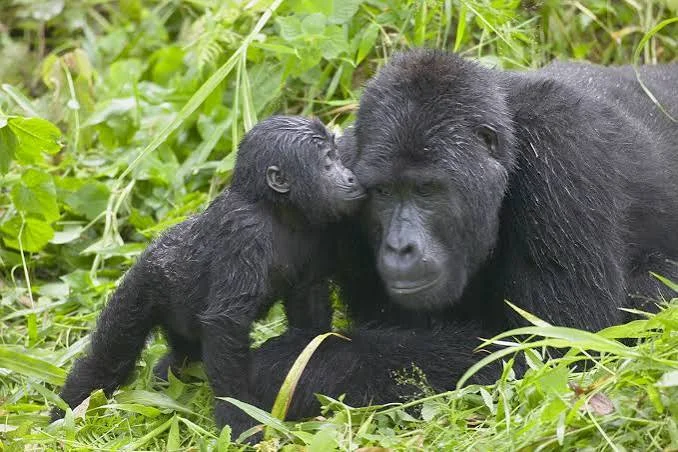
The Difference Between Observing Behaviour and Understanding Emotion
The question Do Mountain Gorillas Mourn Their Dead cannot be answered responsibly without distinguishing observable behaviour from subjective experience. Researchers can document how long an individual remains in a particular location, how it interacts with companions, and whether its behaviour changes. They cannot directly observe an internal emotional state or establish its precise meaning from a single action.
Human mourning often involves memories, emotional responses, social expectations, and an understanding that a familiar individual will not return. Scientists cannot assume that mountain gorillas possess all these experiences in the same form. Instead, they investigate specific components of cognition, including social recognition, attachment, responsiveness, learning, and the ability to distinguish ordinary inactivity from permanent biological change.
One important scientific question concerns how animals recognise whether another individual is responsive. Living gorillas normally communicate through movement, posture, facial expressions, vocalisations, and physical interaction. When those expected responses are absent, a gorilla may investigate because the situation does not match its previous experience of social interaction.
Researchers have proposed that some animal responses to death may arise from difficulties interpreting this unusual combination of familiar appearance and absent responsiveness. Other explanations emphasise attachment, concern, curiosity, and the persistence of established caregiving behaviour. These hypotheses are not necessarily mutually exclusive, and different circumstances may produce different combinations of responses.
What Comparative Thanatology Can Reveal
Comparative thanatology examines how animals respond to death and dying across different species. Researchers investigate observations involving great apes, elephants, certain birds, and other social animals to identify patterns and differences. These comparisons may help clarify which responses arise from shared evolutionary histories, social complexity, learning, or species-specific behaviour.
For mountain gorillas, long-term monitoring is especially valuable because it provides information about individual identities and previous relationships. Researchers who know the composition of a group can interpret unusual behaviour within a broader social history. Without this context, an observer may misunderstand an interaction or assign a human emotional meaning unsupported by available evidence.
Scientific caution should not be confused with dismissing the emotional capacities of animals. Mountain gorillas demonstrate complex social behaviour, prolonged parental care, individual preferences, and responses to familiar companions. These characteristics provide strong reasons to investigate their emotional lives while acknowledging the limits of what behavioural evidence can establish.
So, Do Mountain Gorillas Mourn Their Dead? The most accurate conclusion is that mountain gorillas exhibit behaviours consistent with strong social attachment and, in some circumstances, mourning-like responses. Whether their subjective experiences correspond closely to human grief remains an open scientific question. Recognising this uncertainty makes the research more interesting because it invites continued investigation rather than replacing evidence with assumptions.
Discovery Seven: Protecting Gorilla Relationships Is Essential for Their Future

Why Conservation Must Protect Entire Social Groups
The emotional and social complexity of mountain gorillas provides another reason to consider conservation at the family level. Protecting individual animals remains essential, but the relationships connecting those individuals also influence reproduction, infant development, social stability, and group survival. Conservation programmes therefore benefit from understanding how gorilla families change over time and respond to environmental pressures.
Mountain gorillas reproduce relatively slowly, making successful infant development important for population growth. Young individuals depend on prolonged maternal care and opportunities to learn from other family members. Their survival is influenced by access to suitable habitat, protection from threats, and the social environment in which they develop essential skills.
The loss of an important group member can produce consequences that extend beyond the individual. A change in leadership may influence group organisation, while the loss of a reproductive female affects future breeding opportunities. These possibilities illustrate why conservation monitoring considers family composition, reproductive histories, and relationships alongside population numbers.
Healthy forest habitats remain fundamental to protecting mountain gorilla societies. Gorillas require suitable vegetation for feeding, areas for resting and nesting, and connected habitats that support movement. Habitat pressure, disease risks, illegal activities, and disturbances associated with human land use can threaten the ecological conditions upon which their survival depends.
The Connection Between Gorilla Research and Wildlife Protection
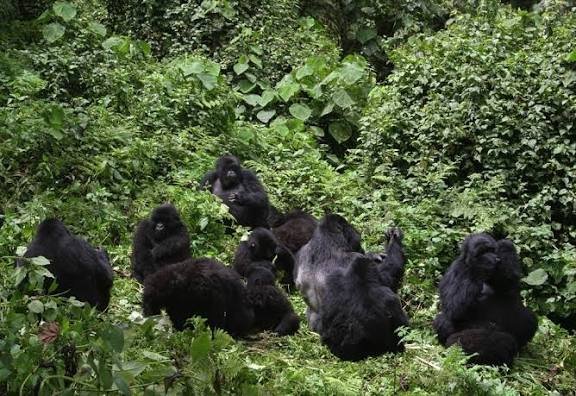
Scientific investigation into Do Mountain Gorillas Mourn Their Dead depends on long-term monitoring. Long-term scientific research helps conservation teams identify changes in gorilla populations and understand the challenges affecting individual groups. Monitoring can provide information about births, social relationships, group movements, health concerns, and changes in family composition. These observations support informed conservation decisions and contribute to a deeper understanding of mountain gorilla ecology.
Research into gorilla responses to loss also highlights potential health concerns associated with close interactions between individuals. Investigative contact during unusual social situations may have implications for disease transmission, making veterinary monitoring and appropriate conservation responses important. Such findings demonstrate that behavioural research can contribute practical knowledge beyond the study of animal emotions.
Conservation also depends on cooperation with communities living near protected areas. Tourism employment, responsible business development, environmental education, and community participation can help strengthen the relationship between wildlife protection and local livelihoods. Effective conservation recognises that the future of mountain gorillas is connected to the people and landscapes surrounding their habitats.
For PrideMark Safaris, responsible tourism means helping travellers appreciate these broader connections. Gorilla trekking offers an opportunity to observe remarkable wildlife, but it also encourages awareness of the research, protected-area management, and community participation required to maintain suitable habitats for future generations of mountain gorillas.