Can You Change Your Gorilla Trekking Date in Uganda? Complete Guide to Permit Rescheduling

What Happens If It Rains During Gorilla Trekking in Uganda? 9 Essential Facts
November 3, 2026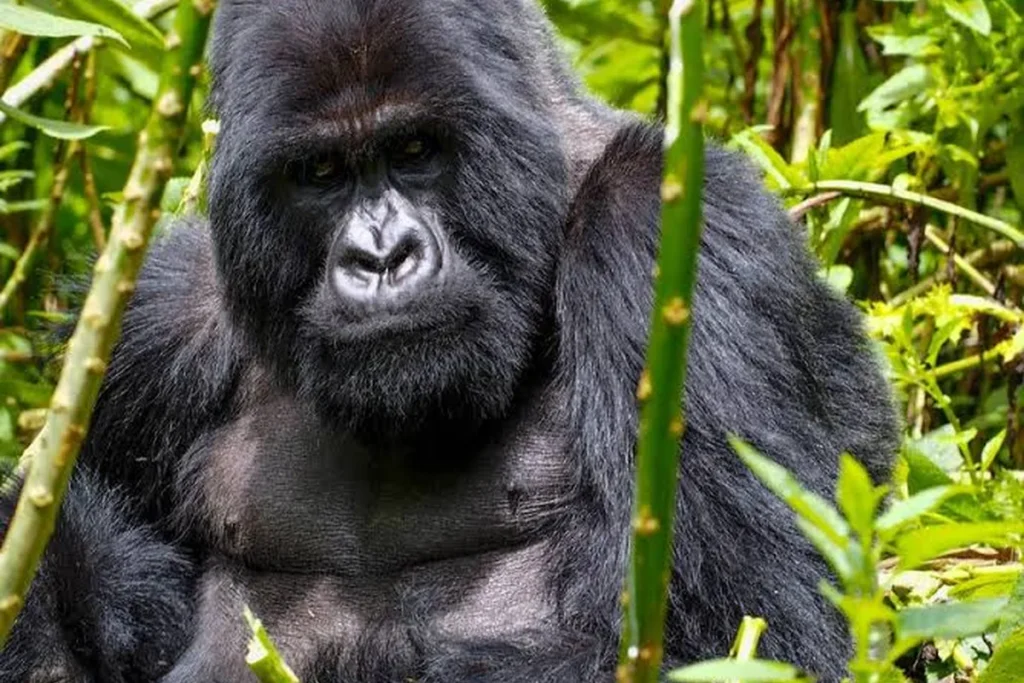
Change Gorilla Trekking Date in Uganda is a common concern among travelers whose safari plans change after booking their gorilla trekking permits. Fortunately, the Uganda Wildlife Authority (UWA) allows eligible gorilla trekking permits to be rescheduled under specific conditions. At Pridemark Safaris, we help travelers understand permit rescheduling requirements, applicable charges, availability, and the steps involved in adjusting their Uganda gorilla trekking safari without unnecessary complications.
At Pridemark Safaris, we understand that travel plans sometimes change after visitors have already secured their Uganda gorilla trekking permits. International flight adjustments, unexpected family commitments, health concerns, and changes in safari itineraries can all make it necessary to move a trekking date. Fortunately, Uganda has an established permit rescheduling procedure that allows eligible travelers to adjust their arrangements without automatically purchasing another permit.
However, changing a gorilla trekking date in Uganda is not the same as changing an ordinary hotel reservation. Gorilla trekking permits are issued for specific dates, designated trekking locations, and approved activities. Every rescheduling request must comply with UWA regulations, and a new date cannot be guaranteed until the wildlife authority confirms the necessary availability and approves the amendment.
This detailed guide explains how Uganda gorilla permit rescheduling works, when additional charges apply, how much notice travelers should provide, and what happens when the preferred new date is unavailable. We also explain the practical arrangements that need attention when changing a safari, including accommodation, transport, trekking sectors, and the differences between rescheduling and canceling a permit.
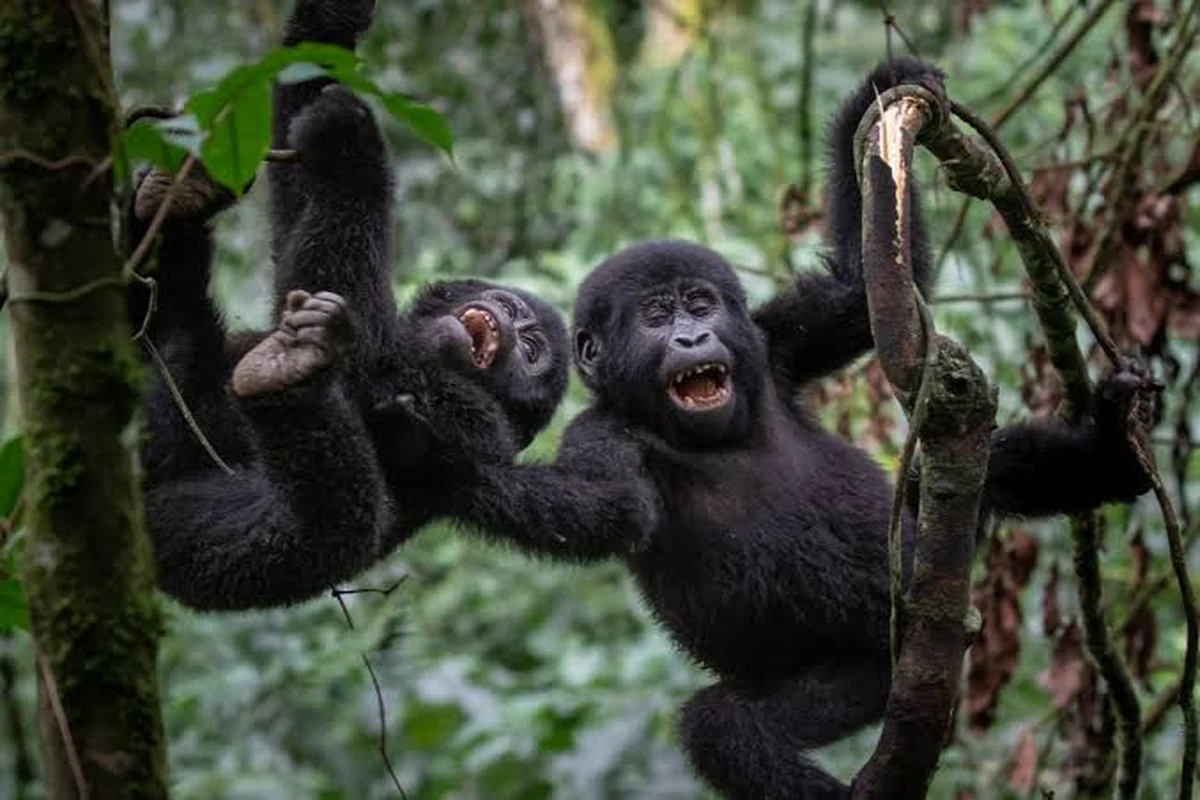
Playful young mountain gorillas in Uganda’s tropical forest, highlighting the wildlife experiences available on gorilla trekking safaris.
Can You Change Your Gorilla Trekking Date After Booking?
You can request a change to your Uganda gorilla trekking date after booking and paying for your permit. The Uganda Wildlife Authority recognizes permit rescheduling as an official procedure, allowing eligible visitors to request a different trekking date or location within the limits established by its regulations. Approval depends on permit availability, the type of permit purchased, and whether previous changes have already been made.
The important distinction is that a rescheduling request does not automatically reserve a new trekking slot. Even when your reason for changing dates is understandable, UWA must first establish whether space is available on the requested date. If all available permits have been allocated, you may need to consider another date or an eligible alternative trekking location.
Uganda’s mountain gorillas are visited under a carefully controlled tourism system designed to protect the animals and manage visitor numbers. This means trekking permits cannot simply be moved between dates without checking the official reservation system. The limited number of daily visitors makes early communication particularly important when requesting a change during busy travel periods.
For travelers who booked through Pridemark Safaris, the first practical step is to contact our reservations team with the existing booking information and preferred alternative dates. We can review the request, check the relevant arrangements, and help coordinate the official rescheduling procedure. Final authorization remains with the Uganda Wildlife Authority.
Understanding Uganda Gorilla Trekking Permits and Why Dates Matter
A Uganda gorilla trekking permit is an official authorization to participate in a guided mountain gorilla tracking experience on an allocated date and at a designated entry point. The permits are administered by the Uganda Wildlife Authority, which manages gorilla tourism in Bwindi Impenetrable National Park and Mgahinga Gorilla National Park.
Each permit is connected to an organized conservation and tourism system. Visitors attend a briefing at their designated entry point before accompanying authorized guides and trackers into the forest. The standard experience allows a maximum of one hour observing a gorilla family after the group has been located, although the total trekking experience may take considerably longer.
Gorilla trekking is different from an ordinary wildlife game drive because the number of visitors allowed to track each habituated gorilla family is strictly limited. A maximum of eight visitors can track a gorilla group during a standard trekking visit. These restrictions help reduce disturbance and support the long-term protection of Uganda’s endangered mountain gorillas.
Because daily trekking capacity is limited, permits for particular dates and sectors may sell out before travelers arrive in Uganda. A permit that is available for one day does not necessarily mean there will be space on the following day. This is why changing a gorilla trekking date requires confirmation rather than an informal adjustment to the safari itinerary.
Where Gorilla Trekking Takes Place in Uganda
Uganda offers mountain gorilla trekking in two protected areas in the southwestern part of the country. Bwindi Impenetrable National Park has several designated trekking sectors, while Mgahinga Gorilla National Park offers tracking through its own designated entry point. Understanding these locations is essential because changing a date may also affect where a visitor must report for the activity.
| National Park | Designated Trekking Entry Points | Planning Consideration |
|---|---|---|
| Bwindi Impenetrable National Park | Buhoma, Ruhija, Rushaga, Nkuringo | Four different sectors with separate accommodation and access arrangements. |
| Mgahinga Gorilla National Park | Ntebeko/Muhavura | A separate conservation area requiring specific approval for booking changes. |
Bwindi’s trekking sectors are spread across mountainous terrain, and traveling between them can require several hours by road. Consequently, a permit confirmed for Buhoma should not be treated as interchangeable with one for Rushaga or Nkuringo. The selected trekking sector affects the most suitable lodge, morning departure arrangements, and the route your safari vehicle follows.
At Pridemark Safaris, our location in Kabale, southwestern Uganda, gives us a practical understanding of the travel arrangements involved in reaching the different gorilla trekking areas. When discussing a date change, we consider the trekking location alongside the new date so that the revised itinerary remains realistic and convenient.
Official Uganda Wildlife Authority Rules for Changing Gorilla Trekking Dates
The Uganda Wildlife Authority provides formal guidelines covering permit reservations, payments, rescheduling, cancellations, and refunds. These rules apply to the management of gorilla and chimpanzee tracking activities. For travelers wishing to change a gorilla trekking date in Uganda, the most important provisions concern the number of permitted changes, available spaces, applicable surcharges, and the timing of requests.
Under the published UWA guidelines, an eligible permit can be rescheduled up to two times. The first reschedule is free when the request qualifies under the rules, while the second reschedule attracts a surcharge equal to 25% of the permit value. Requests made less than fourteen days before the original trekking date also attract a 25% surcharge if accepted.
The guidelines further state that permits purchased through promotional offers or issued on a complimentary basis cannot be rescheduled. Once a permit has been rescheduled, it is no longer eligible for a refund under the ordinary rescheduling provisions. Travelers should therefore carefully consider their proposed new dates before submitting a formal request.
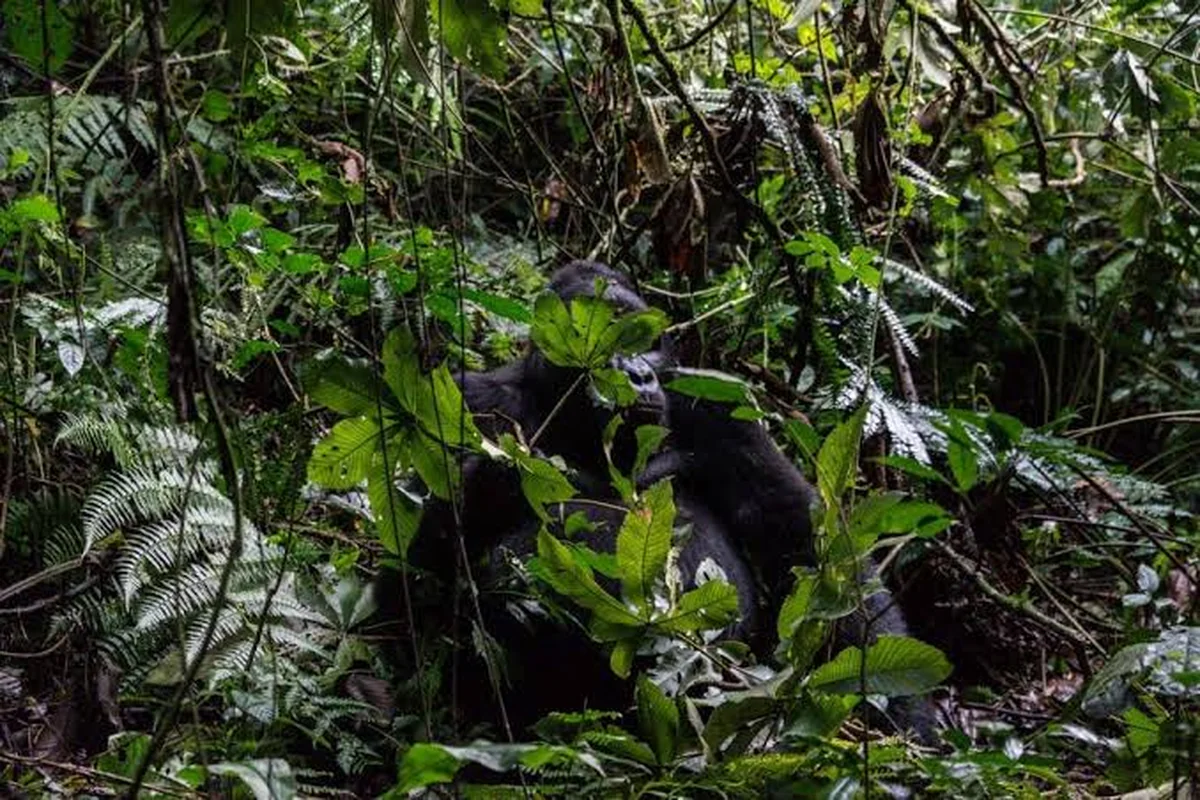
Mountain gorillas among dense tropical forest vegetation, illustrating Uganda’s remarkable gorilla trekking experiences.
Uganda Gorilla Permit Rescheduling Rules at a Glance
| Rescheduling Condition | Official Requirement | What It Means for Travelers |
|---|---|---|
| First eligible reschedule | No rescheduling charge | A date change may be approved without a rescheduling fee. |
| Second reschedule | 25% surcharge | An additional permit-related payment is required. |
| Maximum changes | Two | A third reschedule is not permitted. |
| Advance notice | At least 14 days recommended | Earlier requests avoid the late-request surcharge. |
| Late rescheduling | 25% surcharge | Applies to accepted requests received less than 14 days before trekking. |
| New date availability | Mandatory | The requested slot must be available. |
| Rescheduling period | Subject to a 12-month limit | The applicable period is measured from the original trekking date. |
| Promotional permits | Cannot be rescheduled | The original permit conditions remain binding. |
| Refund after rescheduling | Not permitted | A changed permit loses ordinary refund eligibility. |
These provisions come from the Uganda Wildlife Authority’s official tracking permit guidelines. Travelers should note that rescheduling fees are separate from any difference in permit tariff, accommodation charges, or other safari costs. UWA also reserves the right to amend its guidelines, making confirmation at the time of the request essential.
How Many Times Can You Reschedule a Uganda Gorilla Trekking Permit?
The Uganda Wildlife Authority allows a maximum of two reschedules for one eligible gorilla trekking permit. This restriction is particularly important for visitors planning complex international journeys because repeated flight changes or adjustments to a larger African itinerary may create pressure to move the trekking date more than once.
Your first approved reschedule uses the initial opportunity to change the permit. If you subsequently need another date, the second request must still meet the authority’s conditions, including available trekking slots and the applicable surcharge. Once the second change has been approved, no additional rescheduling is allowed under the published guidelines.
For example, a visitor who originally books a trek for the fifth day of a month might later request the tenth day. If approved, that becomes the first reschedule. Should the visitor then request the twentieth day, the second change would attract the applicable fee, and the permit would no longer be eligible for another date change.
At Pridemark Safaris, we recommend choosing a replacement date only after reviewing the main components of your journey. Confirming your international flights, available accommodation, ground transport, and other scheduled activities before using a rescheduling opportunity can reduce the likelihood of needing another amendment.
Is the First Gorilla Trekking Date Change Free in Uganda?
Yes. Under UWA’s standard rescheduling guidelines, the first eligible reschedule can be made without a rescheduling fee when the request is submitted within the required notice period and space is available. This is a useful provision for travelers whose arrangements change after their permits have already been secured.
However, the word free refers specifically to the rescheduling charge. It does not mean that every aspect of the revised safari will remain at the original price. If the new trekking period carries a higher official permit tariff, UWA requires the visitor to pay the difference between the original and prevailing rates.
Other safari expenses may also change. A lodge might charge a different nightly rate, a revised route could require additional transportation, or an extra night might become necessary to accommodate the new trekking schedule. These costs are separate from the official gorilla permit rescheduling fee and depend on the travel arrangements involved.
Travelers should also understand that a first change requested less than fourteen days before trekking does not qualify for the usual fee-free treatment. UWA’s late-request provision imposes a 25% surcharge on accepted requests received within that period. Therefore, the timing of your request is just as important as whether you have previously rescheduled.
How Much Does It Cost to Change Gorilla Trekking Date in Uganda?
The cost of changing a Uganda gorilla trekking date depends on the number of previous reschedules, how close the request is to the trekking date, and whether the new booking falls under a different official permit tariff. UWA calculates the relevant percentage surcharge using the value of the permit.
For an eligible first reschedule submitted at least fourteen days before trekking, the official rescheduling fee is zero. A second reschedule attracts a surcharge of 25% of the permit price. The same percentage applies to a late request received less than fourteen days before the scheduled activity, subject to approval and availability.
Example of Uganda Gorilla Permit Rescheduling Costs
| Permit Change Scenario | Official Rescheduling Charge |
|---|---|
| First eligible change with sufficient notice | Free |
| Second approved date change | 25% of permit value |
| Accepted request made less than 14 days before trekking | 25% of permit value |
| Change to a higher-priced tariff period | Applicable tariff difference, plus any relevant surcharge |
| Third rescheduling request | Not permitted |
To illustrate the percentage calculation, consider a traveler holding a permit valued at US$800. A 25% rescheduling surcharge would equal US$200. This example explains how the charge is calculated; it should not be interpreted as confirmation that US$800 is the applicable permit tariff for every traveler or travel period.
UWA’s published guidelines identify both second-reschedule and late-request surcharges. If a request falls into both categories, travelers should obtain an official assessment of the amount payable rather than assume that one charge automatically replaces the other or that the percentages must be added together. The authority’s confirmed invoice should determine the final permit-related payment.
When requesting a date change through Pridemark Safaris, we recommend asking for a clear breakdown separating official permit charges from any revised accommodation, transport, or safari-service costs. This makes it easier to understand whether the change affects only the trekking permit or the overall safari budget.
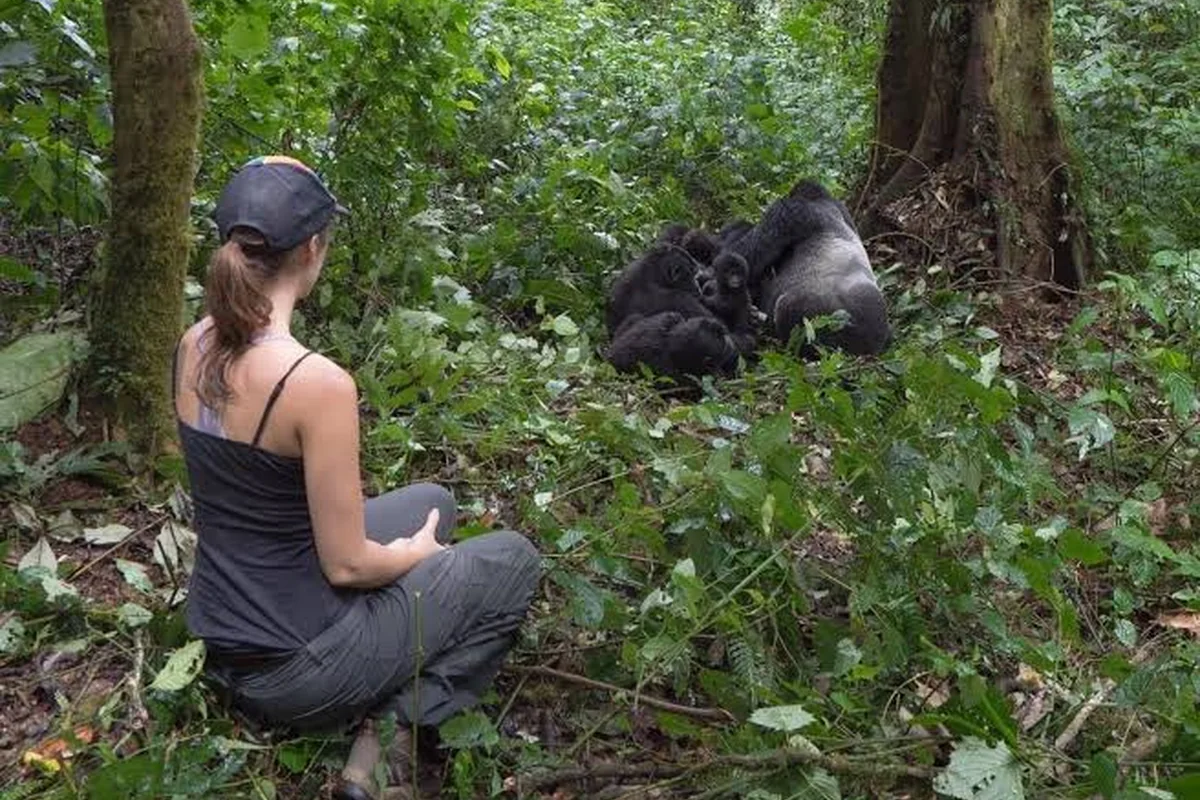
A visitor observing mountain gorillas in their natural forest habitat during a gorilla trekking experience.
How Far in Advance Should You Request a Gorilla Trekking Date Change?
Uganda Wildlife Authority guidelines state that rescheduling requests should be received no later than fourteen days before the scheduled trekking date. Submitting your request earlier provides more time to identify available permits, coordinate accommodation, and adjust the itinerary without the additional late-request surcharge.
Although fourteen days is the official notice threshold, it should not be treated as the ideal time to begin planning. Popular trekking periods can have limited availability well before that deadline. Travelers who know that their dates may change should contact their safari operator immediately rather than wait until the final two weeks.
For a group traveling together, earlier notice becomes even more important. Finding one available gorilla permit on an alternative date may be relatively straightforward in some periods, but securing several permits for the same sector and day can be more challenging. Every member of the group must have an appropriate confirmed permit.
At Pridemark Safaris, we advise travelers to share potential changes as soon as they become likely, even when the final decision has not yet been made. An early discussion allows us to explain the possible options without implying that an unconfirmed alternative date has already been secured.
Can You Change Your Gorilla Trekking Date Less Than 14 Days Before the Trek?
Yes, a gorilla trekking date change may still be possible when fewer than fourteen days remain before the scheduled activity. However, UWA treats these as late rescheduling requests, and approval depends on whether the preferred new date and location have available trekking spaces.
An accepted late request attracts a surcharge equal to 25% of the permit value. This applies even where the visitor has not previously used the first rescheduling opportunity. Travelers should therefore avoid assuming that their initial change will automatically be free simply because they have never amended the permit.
The practical difficulty of a late change extends beyond the official fee. Accommodation may already be within its cancellation-penalty period, transport arrangements may have been finalized, and the preferred alternative trekking dates may be fully booked. These considerations can make a short-notice amendment more expensive than an earlier adjustment.
If your travel circumstances change shortly before trekking, contact Pridemark Safaris immediately with the reason for the change and the dates you can realistically travel. We can help review the available options, but visitors should not cancel existing arrangements on the assumption that UWA will approve a replacement permit.
How to Change Gorilla Trekking Date in Uganda: Step-by-Step Guide
Changing a Uganda gorilla trekking date requires coordination between the traveler, the tour operator handling the booking, and the Uganda Wildlife Authority. The process is usually easier when the traveler provides accurate permit details and several acceptable alternative dates instead of requesting only one replacement day.
Step 1: Contact the Tour Operator Who Arranged Your Permit
Start by contacting the company through which your gorilla trekking permit was purchased. Explain that you need to change the trekking date and provide the original booking information. If your permit was arranged by Pridemark Safaris, you can contact our team directly to discuss the proposed amendment.
Include your full name as it appears on your travel documents, the original trekking date, your booking reference if available, and the preferred new date. Mention whether you have already changed the permit previously, since this determines which rescheduling rules and charges may apply.
Step 2: Provide Alternative Trekking Dates
It is helpful to provide at least two or three possible replacement dates when your travel schedule allows. Gorilla permits are allocated according to available spaces, and the first date you request may already be fully booked. Having alternatives can make the rescheduling process more efficient.
Consider the rest of your itinerary before suggesting dates. A replacement trekking day should allow sufficient time to reach the correct park sector, attend the morning briefing, complete the activity, and continue to your next destination without unnecessary pressure or unrealistic driving schedules.
Step 3: Check Availability With Uganda Wildlife Authority
The next stage is to establish whether suitable gorilla trekking permits are available on the proposed dates. UWA manages the official permit inventory, so availability must be checked through the authorized reservation process rather than estimated from general travel-season patterns.
If the preferred date is unavailable, another date or an eligible alternative sector within the same conservation area may be considered. Any proposed change must still comply with UWA’s restrictions on locations and activities. Availability alone does not override the official rules governing rescheduling.
Step 4: Confirm the Applicable Rescheduling Charges
Before proceeding, establish whether the request qualifies for a free first reschedule or attracts a 25% surcharge. Check whether the new travel period has a higher official permit price and whether additional payments are required to cover a tariff difference.
At this stage, also review potential costs involving lodges, transfers, domestic flights, or other booked services. The gorilla permit is only one part of the safari. A well-planned amendment should account for the entire journey rather than concentrating exclusively on the permit.
Step 5: Submit the Formal Rescheduling Request
Once the preferred replacement date and relevant charges have been established, the official rescheduling request can be processed through the appropriate UWA booking procedure. The request must identify the original permit and the proposed amendment clearly enough for the authority to review it.
Travelers should understand that submitting the request does not itself constitute approval. The existing booking should not be treated as changed until UWA confirms the amendment. Any required payment must also be completed according to the authority’s instructions.
Step 6: Obtain Confirmation of the New Trekking Date
After approval, ensure that you receive updated booking information showing the confirmed trekking date and designated entry point. Check the visitor details against your passport or other required identification to avoid complications during permit verification at the park.
Keep the updated confirmation accessible throughout your journey. Uganda Wildlife Authority staff validate visitor documents against the official booking records before allowing participation in the gorilla trekking briefing and activity. Incorrect dates or inconsistent visitor details can cause avoidable difficulties.
Step 7: Adjust Accommodation and Safari Transport
Once the new permit date is confirmed, review the accommodation and transport arrangements. A change from one Bwindi sector to another may require a different lodge or a revised driving route, even when the new trekking date is only one day later.
For travelers using a complete safari package, Pridemark Safaris can help coordinate the practical changes associated with the revised itinerary. The objective is to align the confirmed permit with realistic travel times, suitable accommodation, and the other activities included in the journey.
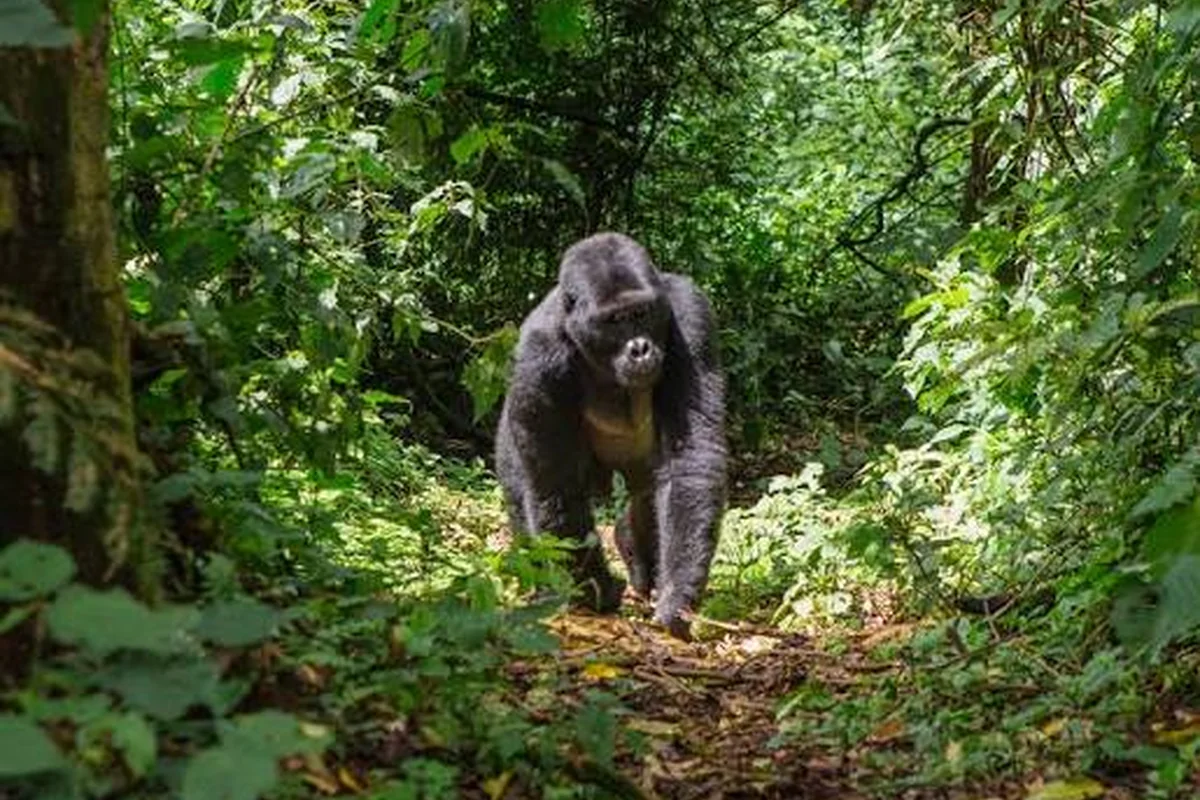
A magnificent silverback mountain gorilla walking through its natural forest habitat, showcasing Uganda’s gorilla trekking experience.
What Information Do You Need to Reschedule a Uganda Gorilla Permit?
Preparing the necessary information before requesting a date change can prevent delays and misunderstandings. The Uganda Wildlife Authority needs to identify the existing booking, while your safari operator needs enough information to establish the available alternatives and assess how the amendment affects your travel arrangements.
| Information Required | Why It Matters |
|---|---|
| Traveler’s full name | Identifies the visitor connected to the permit |
| Original trekking date | Establishes the existing reservation |
| Permit or booking reference | Helps locate the booking |
| Current trekking sector | Identifies the designated entry point |
| Preferred alternative dates | Allows availability checks |
| Previous rescheduling history | Helps determine eligibility and fees |
| Travel itinerary | Supports practical planning around the new date |
Where visitor identification details have already been submitted, those details should remain consistent with the official permit records. UWA verifies visitor categories and supporting documentation, so travelers should not assume that a permit can simply be reassigned to another person without an authorized procedure.
We recommend sending the relevant information in one clear message to Pridemark Safaris. Providing the original date, preferred alternatives, and any fixed travel commitments allows the reservations team to understand the request without repeated exchanges that could delay a time-sensitive amendment.
Can You Change Your Gorilla Trekking Date in Bwindi Impenetrable National Park?
Yes, eligible gorilla trekking permits booked for Bwindi Impenetrable National Park can be rescheduled under Uganda Wildlife Authority guidelines. Bwindi is Uganda’s best-known mountain gorilla trekking destination, with visitors entering through the Buhoma, Ruhija, Rushaga, or Nkuringo sectors depending on their confirmed permit.
The main consideration when changing a Bwindi gorilla trekking date is the availability of permits in the designated sector. A traveler who originally booked Rushaga may wish to move the experience to another day, but the new date must have sufficient capacity for the visitor or group.
Changing dates within Bwindi may be more practical than reorganizing an itinerary around a different national park. Nevertheless, the distance between trekking sectors should never be overlooked. Accommodation near Buhoma, for example, may not be convenient for a visitor whose revised permit requires an early briefing in Nkuringo.
Can You Change Your Gorilla Trekking Sector in Bwindi?
A change of trekking sector may be possible under UWA’s rescheduling framework, provided the requested location is eligible and space is available. The published guidelines permit qualifying changes of dates and locations within the same conservation area and for the same activity.
This distinction is important because visitors sometimes assume they can use a Bwindi permit at any entry point. In reality, the permit identifies a designated trekking location, and the visitor must report to the appropriate reception for verification and briefing. Changing sectors requires an officially recognized amendment.
When arranging a Bwindi safari, Pridemark Safaris considers the sector together with the lodge location, access roads, and onward travel plans. If a different sector becomes available during rescheduling, we recommend reviewing these arrangements before deciding whether the alternative is genuinely suitable.
Can You Change Your Gorilla Trekking Date in Mgahinga Gorilla National Park?
Visitors holding eligible gorilla trekking permits for Mgahinga Gorilla National Park may also request rescheduling under Uganda Wildlife Authority guidelines. Mgahinga is located in southwestern Uganda near the borders with Rwanda and the Democratic Republic of Congo, and gorilla trekking takes place through the park’s designated Ntebeko/Muhavura entry point.
The same general principles apply: the permit must qualify for rescheduling, the requested date must have available spaces, and any applicable charges must be paid. Travelers should not assume that a date change is guaranteed simply because they already hold a valid Mgahinga permit.
Mgahinga is particularly attractive to visitors combining gorilla trekking with golden monkey tracking, hiking, or other activities in the Kisoro area. When moving the gorilla trekking date, it is important to check whether these additional activities can remain on their original dates or need to be reorganized.
Can You Transfer a Gorilla Permit From Bwindi to Mgahinga?
Travelers sometimes ask whether a permit originally booked for Bwindi can be transferred to Mgahinga instead of changing the trekking date within Bwindi. This requires particular care because UWA’s published rescheduling guidelines restrict ordinary reschedules to the same conservation area and the same activity.
Therefore, a traveler should not assume that a standard Bwindi permit can simply be transferred to Mgahinga. Although both parks offer mountain gorilla trekking, they are separately designated protected areas. A proposed move between them requires direct clarification with UWA and may involve canceling the original booking and obtaining a different permit.
At Pridemark Safaris, we recommend exploring available dates within the original conservation area before considering a different national park. This approach is generally more consistent with the published rescheduling framework and reduces the risk of making travel plans around an unauthorized transfer.
What Happens if Your Preferred New Gorilla Trekking Date Is Fully Booked?
If the new date you request has no available gorilla trekking permits, UWA cannot approve the reschedule for that particular date and location. Having an existing permit does not give a traveler priority over confirmed reservations or create an additional trekking space beyond the permitted daily capacity.
The most practical response is to identify other dates that fit your journey. Moving the activity by one or two days may be sufficient, especially when your safari includes flexible accommodation or activities that can be rearranged without affecting international flights.
Another possibility is to investigate availability in a different eligible trekking sector within the same conservation area. This option requires official approval and may affect accommodation or transportation arrangements. It should be considered only when the revised location can be reached comfortably and the visitor understands the logistical implications.
Travelers with limited flexibility may need to retain their original permit or consider the applicable cancellation provisions. At Pridemark Safaris, we encourage guests to compare the available options before giving up an existing confirmed date, particularly when the original booking falls within a busy travel period.
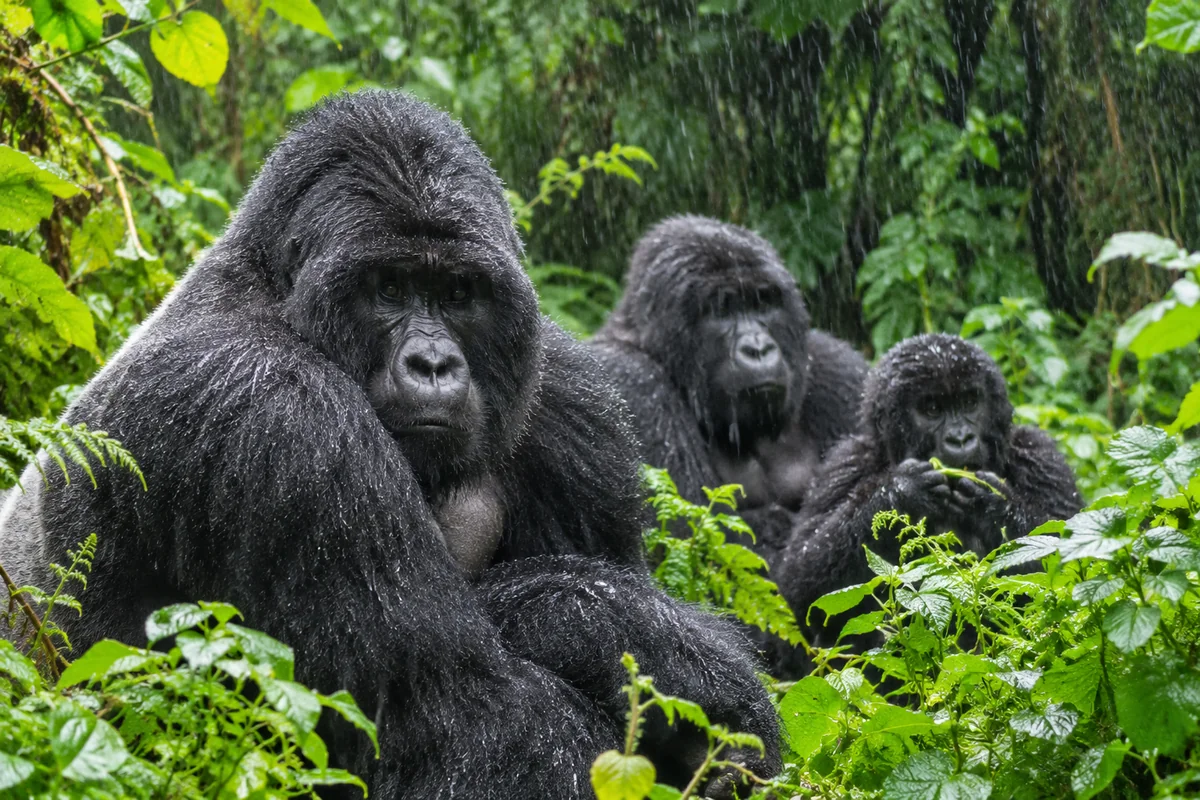
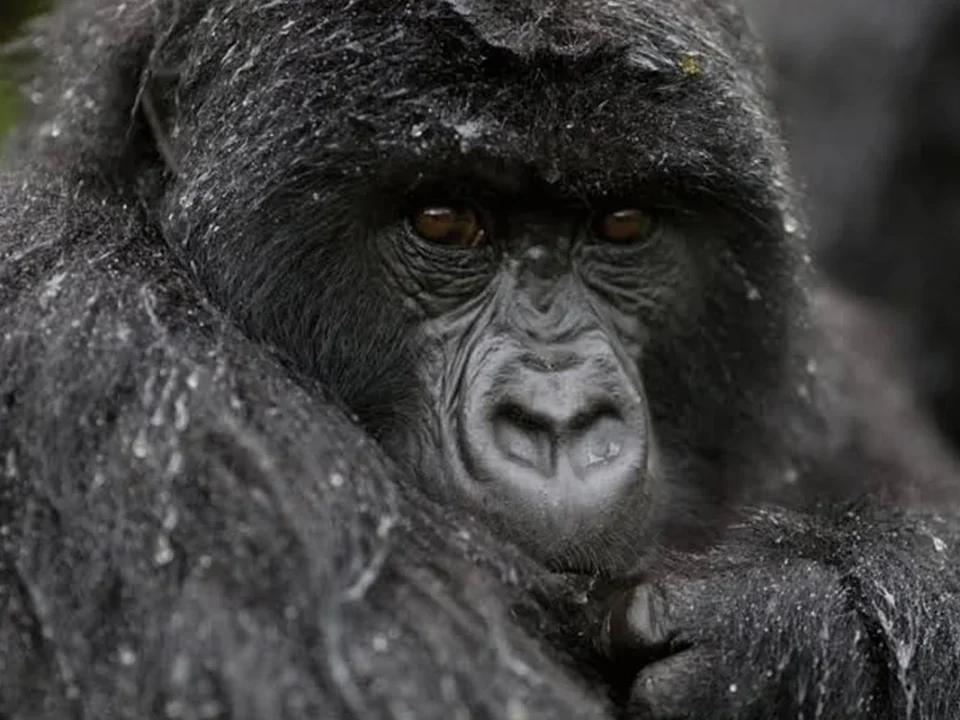
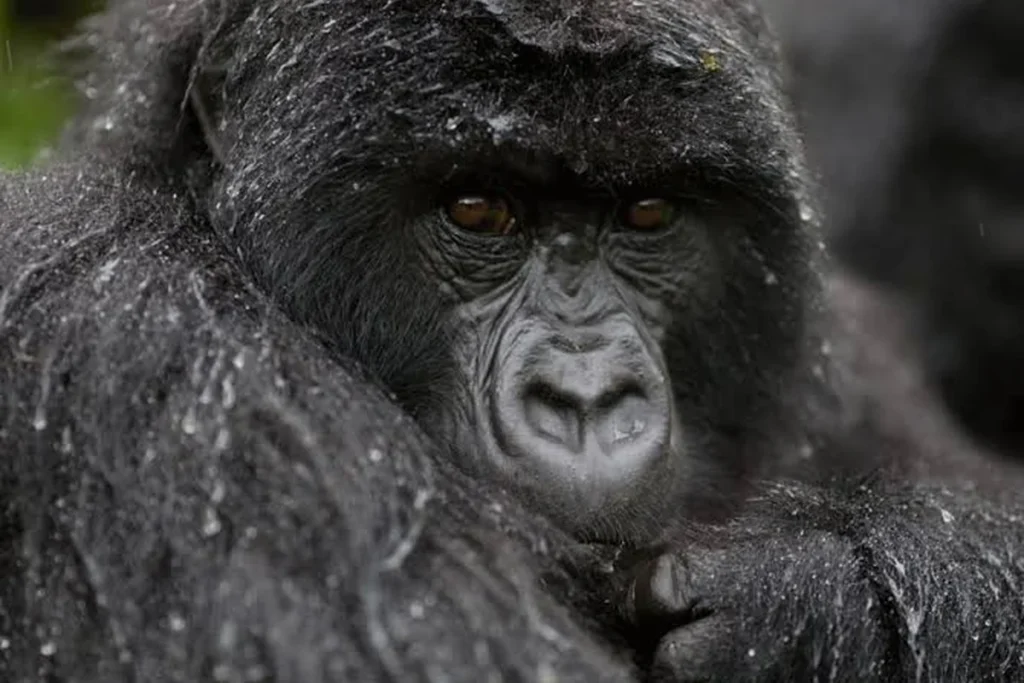
Mountain gorillas rest among lush rainforest vegetation during rainfall, showing the wet conditions visitors may experience while gorilla trekking in Uganda.
Can You Change Gorilla Trekking Date During the Peak Season?
Changing a Uganda gorilla trekking date during the peak travel season is possible, but finding available permits can be more difficult. Uganda receives substantial international interest in mountain gorilla trekking, particularly during the relatively drier travel periods and major holiday seasons.
The months from June through September and December through February are commonly preferred by travelers planning gorilla trekking safaris. Demand can be strong during these periods, and popular sectors may have limited remaining availability. A rescheduling request is therefore more dependent on the specific date and sector than on general seasonal expectations.
Visitors should also remember that a permit becoming available on an alternative date does not guarantee suitable accommodation nearby. Lodges in convenient locations may already have confirmed reservations, making it necessary to compare several options or adjust the broader itinerary.
For peak-season travel, Pridemark Safaris recommends submitting rescheduling requests as early as possible and considering several alternative dates. The more flexibility you have, the greater the practical opportunity to identify an arrangement that satisfies both the official permit requirements and your travel plans.
Can You Reschedule Gorilla Trekking During the Rainy Season?
Gorilla trekking in Uganda operates throughout the year, including during periods of rainfall. The wetter months can bring muddy forest trails, slippery slopes, and changing weather conditions, but rain does not automatically mean that gorilla trekking activities will be canceled.
Visitors sometimes consider changing their trekking dates after seeing a forecast for heavy rain. Before requesting a permit amendment, it is worth understanding that Bwindi and Mgahinga are tropical mountain environments where weather can change quickly. Even traditionally drier periods may experience showers.
A traveler who prefers to avoid a particularly wet period can request a different date, but approval remains subject to the usual UWA rules. Weather preferences do not automatically remove rescheduling charges or create an entitlement to a free late change.
At Pridemark Safaris, we encourage travelers to consider suitable waterproof clothing, sturdy hiking boots, and realistic expectations about forest conditions before deciding to reschedule because of rain. Where the issue involves an official safety-related suspension, the appropriate arrangements should be confirmed directly with UWA.
Can You Change Your Gorilla Trekking Date Because of Flight Delays?
Flight delays are among the practical reasons travelers may need to change a gorilla trekking date in Uganda. International flights can be affected by missed connections, operational disruptions, or unexpected schedule adjustments, and these changes may reduce the time available to reach southwestern Uganda.
A delayed arrival does not automatically entitle a visitor to a free gorilla permit reschedule. The ordinary UWA conditions still apply unless the authority formally approves a different arrangement. This is particularly important when the delayed flight leaves fewer than fourteen days before the scheduled trek.
If your arrival changes, inform your safari operator immediately. Provide the revised flight details, expected arrival time, and any other confirmed commitments. This information helps determine whether the original trekking date remains practical or whether an alternative permit date needs to be requested.
For travelers booking through Pridemark Safaris, we recommend allowing sufficient time between arrival in Uganda and the gorilla trekking activity. An itinerary that includes a reasonable travel buffer can reduce the risk of losing a valuable trekking opportunity because of a disrupted flight connection.
Can You Change Your Gorilla Trekking Date Because of Illness?
Health concerns require special consideration because mountain gorillas are vulnerable to infectious diseases transmitted by humans. Visitors showing signs of illness should not participate in gorilla trekking when their condition presents a risk to the animals or violates Uganda Wildlife Authority health requirements.
UWA’s guidelines provide specific procedures for visitors who develop or display signs of illness before tracking. Such visitors may be referred to a health facility for assessment, and medical confirmation is required when an illness-related refund is being considered. The cost of diagnosis and treatment is borne by the visitor.
The authority may authorize a partial refund under qualifying medical circumstances, but this should not be confused with an automatic right to change the trekking date without charges. The decision depends on the relevant medical evidence, permit conditions, and UWA’s official determination.
If you become unwell before your trek, contact Pridemark Safaris promptly and explain the situation. We recommend following medical advice and UWA instructions rather than attempting to participate while sick. Protecting the gorillas is an essential responsibility of every visitor.
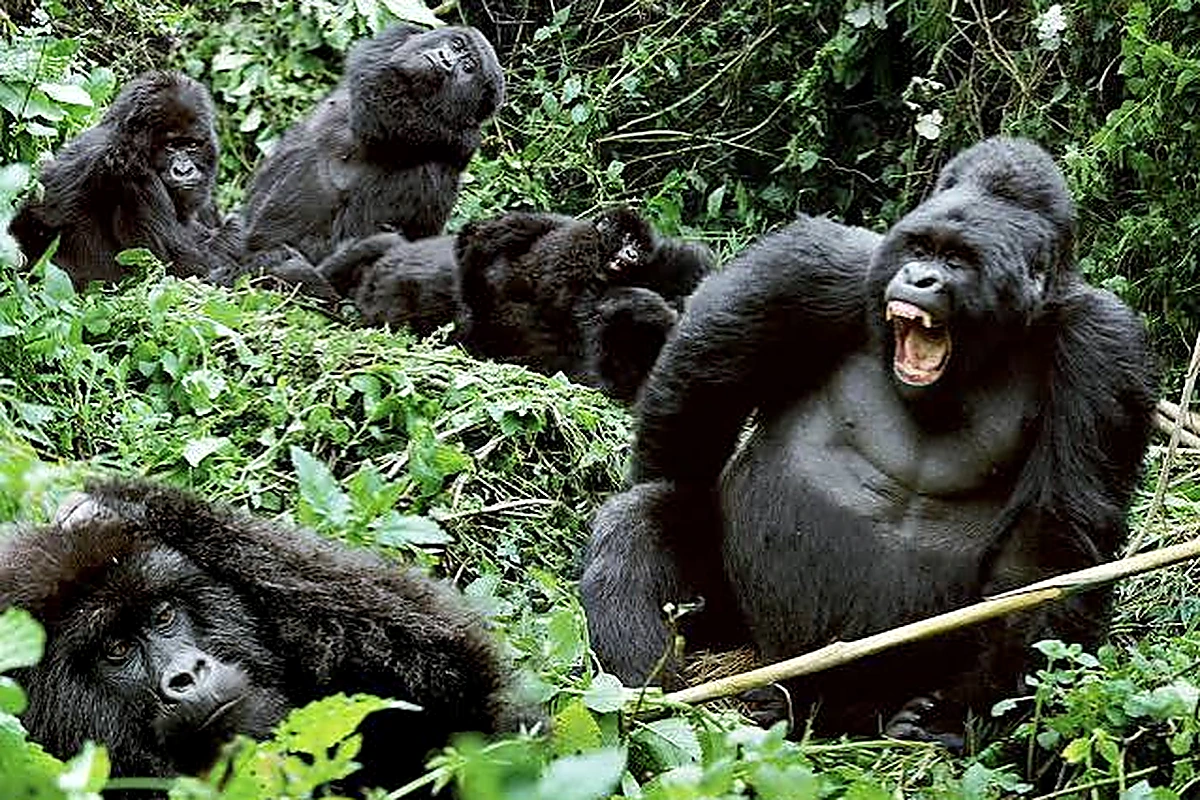
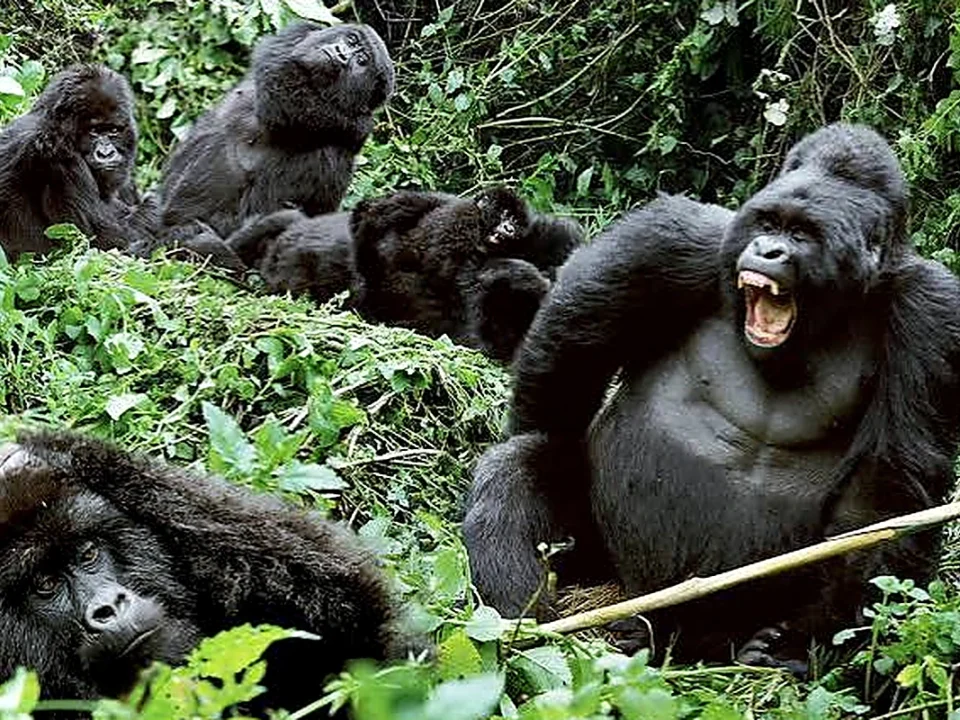
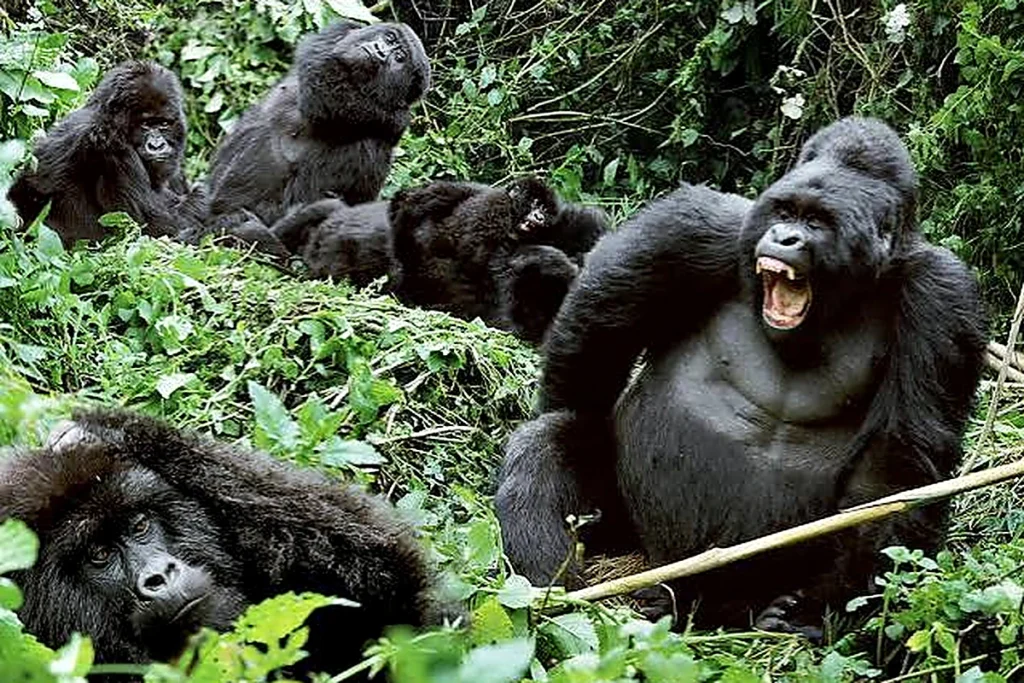
A mountain gorilla family resting together in lush forest vegetation, with a dominant silverback displaying its teeth.
Can You Change a Gorilla Trekking Date Because of Family Emergencies?
Unexpected family emergencies can make it necessary to postpone a Uganda safari even after the gorilla trekking permit has been purchased. Although such circumstances may be beyond the traveler’s control, they do not automatically exempt the booking from the official rescheduling rules.
The visitor should submit the request as soon as possible and provide the proposed alternative dates. Where the situation arises close to the trekking date, the late-request surcharge may apply, and the new date must still have available trekking capacity.
It is advisable to review your travel insurance policy when an emergency affects an international safari. Some policies provide protection for qualifying cancellations or interruptions, but coverage depends on the policy wording, supporting documentation, exclusions, and the circumstances of the claim.
At Pridemark Safaris, we understand that personal circumstances can change unexpectedly. Our role is to help travelers understand the available booking options and coordinate appropriate requests, while making clear that official permit decisions and any exceptions remain under UWA’s authority.
Can You Change Your Gorilla Trekking Date After Arriving in Uganda?
A traveler who has already arrived in Uganda can still inquire about changing a gorilla trekking date, provided the permit remains eligible and the request is made before the scheduled activity. However, requests made during the final fourteen days are subject to the late-rescheduling provisions.
The main challenge is that visitors already in Uganda often have less flexibility. Accommodation, transport, and other activities may be arranged for specific dates, while the remaining time before departure may limit the number of realistic alternatives.
For example, a visitor staying near Lake Bunyonyi might wish to move the trek by one day to accommodate another activity. The request can be considered, but the new trekking slot must be officially available and confirmed before the traveler changes the original schedule.
If you are already traveling with Pridemark Safaris, speak to your safari guide or reservations contact immediately. The team can help review the existing itinerary and explain which adjustments may be practical, subject to official permit approval and the conditions of other booked services.
Can You Change Your Gorilla Trekking Date on the Trekking Day?
Travelers should not expect to change a gorilla trekking date simply by arriving at the park and asking to participate on another day. Gorilla permits are date-specific, and the official booking records must be validated before visitors can join the briefing and guided tracking activity.
UWA’s guidelines do provide procedures for particular circumstances, including qualifying situations where visitors cannot access the gorillas after undertaking a full day of tracking. These are separate from an ordinary voluntary rescheduling request and require the relevant authority’s assessment.
A visitor who chooses not to attend the scheduled briefing without an approved amendment risks losing the opportunity to use the permit. The existence of a paid booking does not mean the visitor can return on an unconfirmed date and demand access to the forest.
For this reason, Pridemark Safaris recommends resolving any proposed changes before the trekking day whenever possible. If an unexpected problem arises at the park, follow the instructions of the authorized UWA staff and ensure that any decision is formally documented.
Can You Reschedule a Uganda Gorilla Habituation Experience?
The Gorilla Habituation Experience is different from standard gorilla trekking because it allows visitors to spend up to four hours observing a gorilla group during the habituation process, rather than the maximum one-hour viewing period provided under standard tracking.
Uganda Wildlife Authority’s permit-management guidelines cover gorilla tracking and habituation activities. Eligible habituation permits may therefore be considered for rescheduling under the applicable rules, including availability, timing, the number of changes, and relevant surcharges.
However, visitors cannot assume that a standard gorilla trekking permit can be converted into a Gorilla Habituation Experience permit through ordinary rescheduling. UWA requires reschedules to remain within the same activity, making these distinct experiences subject to their respective booking conditions.
If your itinerary includes gorilla habituation rather than standard trekking, make this clear when contacting Pridemark Safaris. The distinction is essential because the activity type affects permit availability, the price calculation, and the arrangements needed for the revised safari.
Can You Transfer Your Gorilla Trekking Permit to Another Person?
Travelers sometimes ask whether they can give a booked gorilla trekking permit to a friend or family member when they can no longer travel. This is different from changing the trekking date because it involves changing the visitor details associated with an official booking.
UWA requires visitor information to be recorded and verified against appropriate identification documents. Its published rescheduling provisions do not establish an unrestricted right to transfer a paid permit to another person, so travelers should not assume that changing the name is automatically permitted.
Visitor categories also matter because permit prices and eligibility depend on nationality or residence status. UWA specifically restricts certain changes between visitor categories, and incorrect declarations can create serious problems during permit verification.
Before offering your permit to another traveler, contact Pridemark Safaris or the authorized booking operator to establish whether UWA permits the proposed amendment. Do not rely on an informal agreement or assume that a replacement visitor can simply present the original permit at the park.
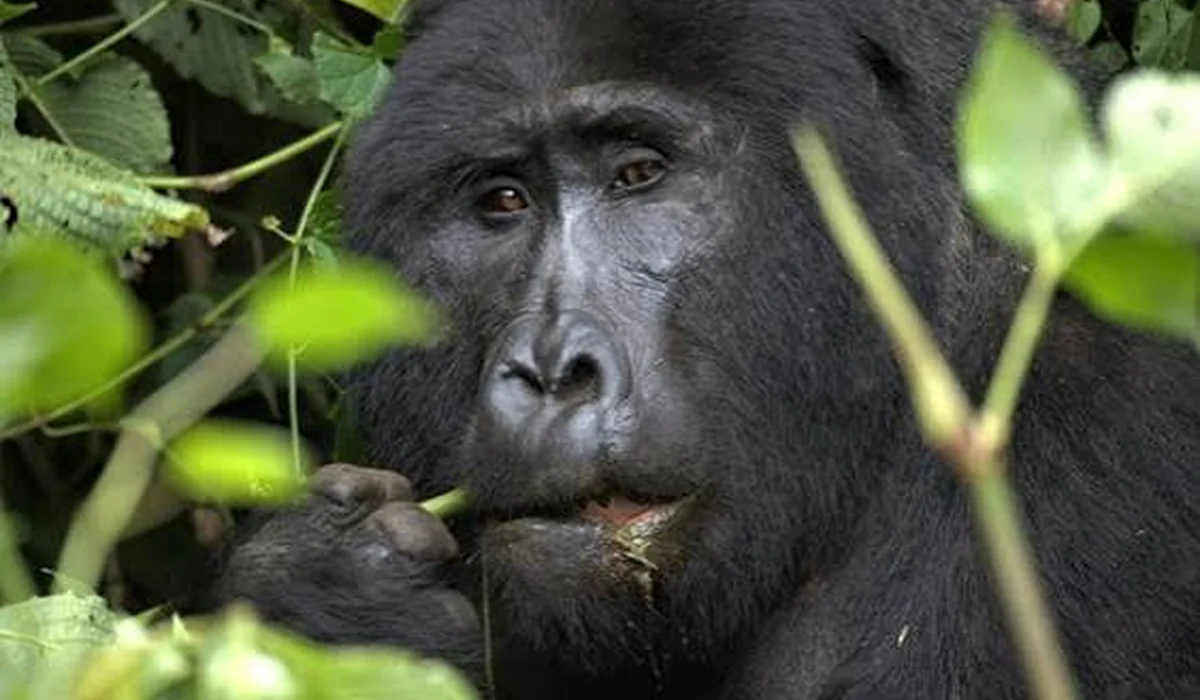
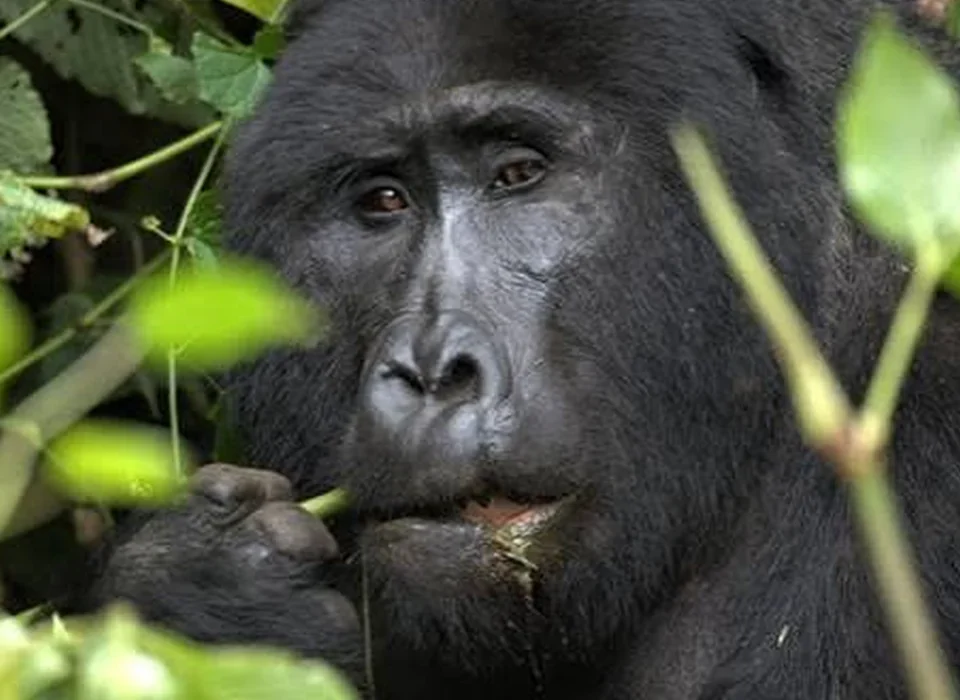
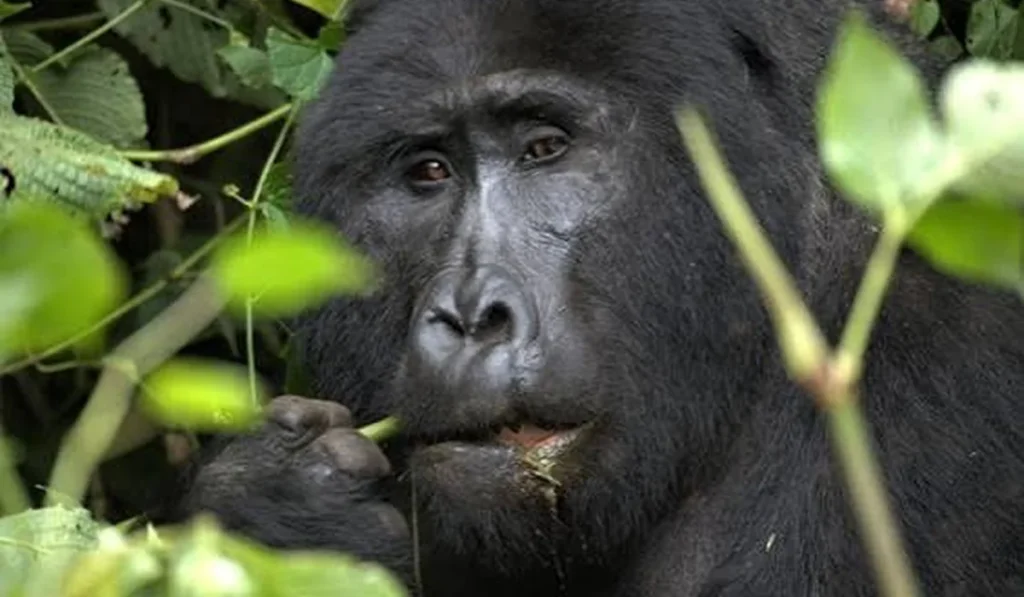
A mountain gorilla feeds on vegetation in its forest habitat. Learn what happens if you don’t see gorillas during trekking in Uganda with Pridemark Safaris.
Can You Change a Promotional or Discounted Gorilla Trekking Permit?
Not every gorilla trekking permit qualifies for rescheduling. Uganda Wildlife Authority’s published guidelines specifically exclude promotional permits and complimentary permits from the ordinary rescheduling procedure. These permits must be used according to their issued dates and locations.
This distinction matters when travelers purchase permits during special promotional campaigns or receive permits under an official complimentary arrangement. A lower price does not necessarily carry the same flexibility as a standard permit purchased under the prevailing tariff.
UWA’s guidelines state that promotional and complimentary permits that are not used on their designated dates and locations are forfeited. Travelers should therefore examine the applicable booking conditions before purchasing a discounted permit, especially if their travel schedule remains uncertain.
When comparing gorilla trekking offers, Pridemark Safaris recommends considering the permit conditions alongside the advertised price. A lower permit cost may be attractive, but limited flexibility can become important if flights, leave arrangements, or other parts of the journey have not been finalized.
How Long Can You Postpone a Uganda Gorilla Trekking Permit?
Uganda Wildlife Authority’s guidelines place a time limit on rescheduled permits. The published rules specify that, where a permit has been rescheduled twice, the new trekking dates must not extend beyond twelve months from the initially booked trekking date.
This provision prevents travelers from treating a gorilla trekking permit as an indefinitely transferable travel credit. Even where an eligible visitor has not used the maximum number of changes, the proposed date must be assessed under the authority’s applicable booking conditions.
For a traveler considering postponing a safari for several months, the practical approach is to identify a realistic replacement travel period and obtain confirmation of its eligibility before changing flights or accommodation.
At Pridemark Safaris, we recommend that visitors planning a long postponement request written confirmation of the permitted date range. This avoids confusion about whether the proposed new trekking date remains within the applicable rescheduling period.
What Is the Difference Between Rescheduling and Canceling a Gorilla Permit?
Rescheduling and cancellation are two separate procedures under Uganda Wildlife Authority regulations. Rescheduling involves requesting an eligible change to the existing permit’s date or location, while cancellation involves requesting that the booking be terminated and, where permitted, that part of the payment be refunded.
A major distinction is that UWA’s guidelines do not permit refunds for permits that have already been rescheduled. This makes the decision to change a permit particularly important for travelers who are uncertain whether they will be able to undertake the trek on the replacement date.
Cancellation refunds are not automatically equivalent to the full amount originally paid. The authority applies specific conditions based on the timing and reason for cancellation, and applicable incidental charges may be deducted. Formal approval is required through the relevant UWA procedure.
Uganda Gorilla Trekking Permit Cancellation and Refund Conditions
| Time Remaining Before Trekking | Potential Refund Under Ordinary Cancellation Rules |
|---|---|
| 61 days or more | 75% of permit payment |
| 46–60 days | 50% of permit payment |
| 15–45 days | 25% of permit payment |
| Within 14 days | No ordinary cancellation refund |
| After an approved reschedule | No refund permitted |
These percentages describe UWA’s published ordinary cancellation framework and are subject to authorization and applicable deductions. Special provisions exist for qualifying circumstances such as medically confirmed illness, accidents within the park before tracking, and failure to encounter the animals after a completed tracking effort.
For travelers deciding between cancellation and rescheduling, Pridemark Safaris recommends reviewing the likely future travel date before making a decision. Rescheduling may preserve the opportunity to trek, while cancellation may be more appropriate when the traveler cannot confidently commit to another date.
What Happens if You Do Not See Gorillas During Your Trek?
Mountain gorillas move naturally through their forest habitat, and wildlife encounters cannot be guaranteed in exactly the same way as a scheduled indoor attraction. Uganda Wildlife Authority guides and trackers use their knowledge of gorilla movements to locate the animals, but unusual circumstances can occasionally prevent a successful encounter.
UWA’s published guidelines address the situation where a visitor completes a full day of tracking without seeing the gorillas. In such circumstances, the Executive Director may authorize rescheduling to the following day, subject to the applicable procedure.
If the following day’s activity cannot be arranged because no suitable spaces are available or the visitor’s itinerary does not allow an additional day, the guidelines provide for a potential refund of 60% of the permit value, less applicable incidental costs.
This arrangement requires confirmation by the responsible park authority and should not be confused with voluntarily changing a permit before trekking. At Pridemark Safaris, we advise guests to follow the guidance of UWA personnel if an unsuccessful tracking experience occurs.
Will Changing Your Gorilla Trekking Date Affect Your Accommodation?
Changing your gorilla trekking date may affect accommodation because lodges around Bwindi and Mgahinga often receive bookings linked to specific trekking sectors and travel dates. A confirmed lodge reservation does not automatically move when UWA approves a permit amendment.
The impact depends on the accommodation’s cancellation and amendment conditions, room availability, and whether the revised permit remains in the same trekking sector. A lodge may allow a date change without a penalty, but another property may require a new rate or charge for canceling the original reservation.
If the new trekking permit is allocated to a different Bwindi sector, staying at the original lodge may also become inconvenient. The distance between some sectors makes it important to select accommodation close enough to the confirmed briefing point.
For complete safari packages, Pridemark Safaris can help coordinate revised accommodation requests after the permit amendment has been confirmed. Travelers should nevertheless understand that lodge changes remain subject to each property’s availability and booking conditions.

Will Rescheduling Affect Your Safari Transportation?
Transportation is another important consideration when changing a gorilla trekking date in Uganda. A revised schedule may affect airport transfers, driving distances, vehicle allocation, or the order in which other national parks and attractions are visited.
For example, a safari combining Bwindi with Queen Elizabeth National Park may have been arranged to minimize unnecessary driving. Moving the gorilla trek by several days could require changes to the route, particularly if accommodation and wildlife activities have already been booked.
Travelers using domestic flights should pay particular attention to airline amendment conditions. A gorilla permit reschedule does not automatically change an airline ticket, and the flight operator may apply separate availability restrictions or charges.
At Pridemark Safaris, we approach permit changes as part of the complete safari itinerary. The objective is to preserve a comfortable travel schedule while avoiding unnecessary transfers, excessive driving, and conflicts between confirmed activities.
Can You Change a Gorilla Trekking Date on a Group Safari?
A group safari can be rescheduled when the relevant permits qualify and enough trekking spaces are available for the group on the requested date. However, group changes can be more complicated because each traveler requires an appropriate permit and may have different travel commitments.
A group of six visitors, for example, needs six available trekking places if everyone wishes to participate together on the same day and at the same designated location. Finding only two or three available permits does not solve the rescheduling problem for the entire group.
There may also be differences in individual permit histories. If one member has previously rescheduled while the others have not, the applicable fees and eligibility conditions may not be identical for every permit.
For families, friends, and organized travel groups, Pridemark Safaris recommends identifying the dates acceptable to all participants before submitting an official request. This helps reduce the possibility of splitting the group across different trekking dates.
Can You Change Your Gorilla Trekking Date When Combining Uganda and Rwanda?
Visitors combining Uganda and Rwanda in one safari sometimes need to adjust their gorilla trekking dates because of border-crossing arrangements, flight schedules, or changes to the order of destinations. Uganda and Rwanda operate separate gorilla permit systems, so their booking conditions must not be treated as interchangeable.
A Uganda gorilla trekking permit is administered by Uganda Wildlife Authority and cannot simply be used for gorilla trekking in Rwanda’s Volcanoes National Park. A visitor wishing to replace a Uganda trek with a Rwanda experience must consider the separate permit requirements and financial implications.
If the objective is simply to change the date of the Uganda experience while retaining the Rwanda portion of the safari, it is important to account for travel time between destinations and the applicable border-entry requirements.
Because Pridemark Safaris organizes tailored safaris in Uganda and Rwanda, we can help travelers review the practical implications of changes affecting both destinations. However, each country’s permit regulations and official approval procedures remain separate.
Why You Should Not Book a New Flight Before Confirming the Gorilla Permit Change
One of the most avoidable mistakes when rescheduling gorilla trekking is changing international flights before securing the replacement permit date. A traveler may find a convenient flight only to discover that no gorilla permits remain available for the corresponding trekking day.
The safer approach is to check the relevant permit availability and understand the official amendment conditions before making irreversible travel changes. Where flight prices or ticket deadlines require an immediate decision, travelers should recognize the financial risk of proceeding without a confirmed permit.
This principle also applies to accommodation. A hotel room near Bwindi may be available for the proposed dates, but that does not establish that the Uganda Wildlife Authority has a trekking space available.
At Pridemark Safaris, we recommend coordinating major booking changes in a sensible order, with the gorilla permit treated as a central component of the itinerary. Written confirmation is preferable to relying on an informal indication that space might be available.
Common Mistakes to Avoid When Rescheduling Uganda Gorilla Trekking
Travelers can reduce unnecessary expenses by understanding the most common problems associated with changing a Uganda gorilla trekking date. Many difficulties arise not because rescheduling is impossible, but because the request is submitted too late or the replacement itinerary is arranged before the permit is officially confirmed.
Common mistakes include assuming the first change is always free, overlooking the fourteen-day notice threshold, treating all Bwindi trekking sectors as interchangeable, and forgetting that a rescheduled permit is not eligible for an ordinary refund.
Another mistake is confusing the cost of changing the permit with the cost of changing the entire safari. UWA may approve a fee-free first reschedule while a lodge, airline, or other service provider applies its own amendment charges.
We encourage travelers contacting Pridemark Safaris to provide complete information about their travel constraints and previous booking changes. Clear communication makes it easier to identify suitable alternatives and avoid decisions based on incomplete assumptions.
How to Reduce the Risk of Needing a Gorilla Trekking Date Change
Although unexpected events cannot always be prevented, careful planning can reduce the likelihood of needing to reschedule a Uganda gorilla trekking permit. The most effective approach is to secure the trekking arrangements around realistic travel dates rather than building an itinerary around uncertain international connections.
Allowing sufficient time between arrival and trekking is particularly useful for visitors traveling from distant countries. Long-haul flights, immigration procedures, domestic transfers, and road journeys can all introduce delays that affect a tightly scheduled safari.
Travelers should also confirm their leave arrangements, passport details, and important personal commitments before making final permit payments. When traveling as a group, everyone should agree on the trekking dates and understand the relevant booking conditions.
Booking through Pridemark Safaris allows travelers to discuss the itinerary with a Uganda-based tour operator familiar with the country’s gorilla trekking destinations. We recommend prioritizing confirmed permits, suitable accommodation, and realistic transfers when planning a dependable safari.
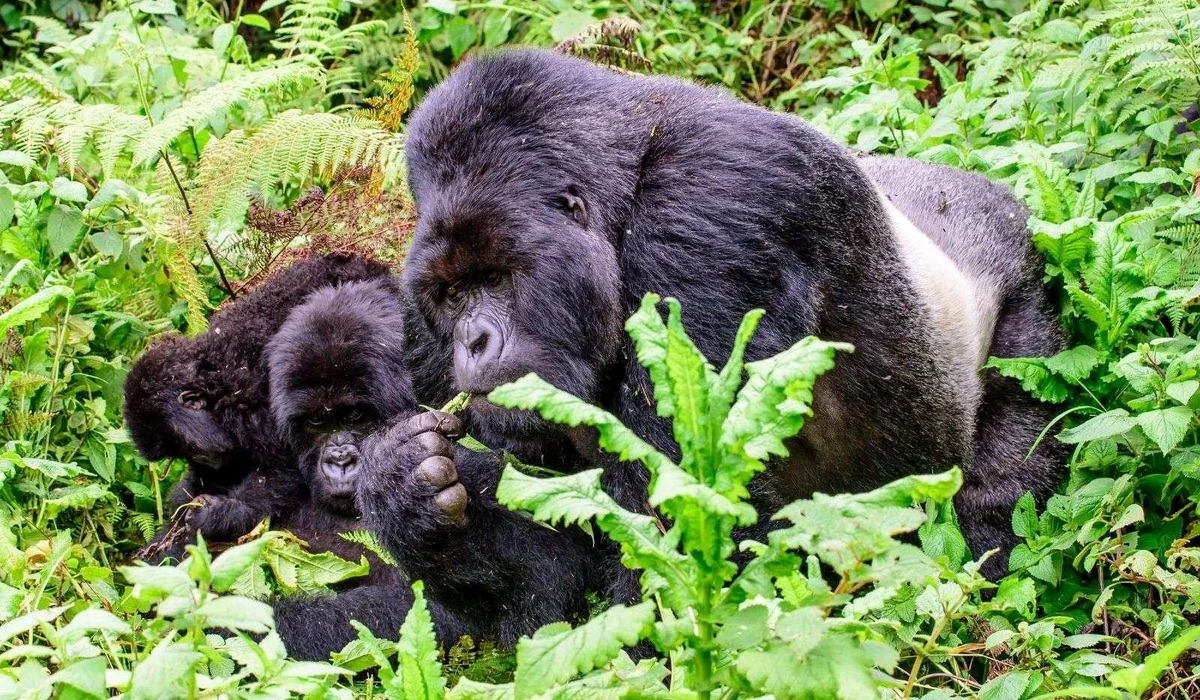
Mountain gorillas resting together in dense forest vegetation. During gorilla trekking in Uganda, visitors should follow ranger instructions, maintain the required viewing distance and avoid disturbing the gorillas.
Why Choose Pridemark Safaris for Uganda Gorilla Trekking Rescheduling?
Pridemark Safaris is a Uganda-based safari company offering tailored wildlife and primate experiences in Uganda and Rwanda. Our operations are based in Kabale, southwestern Uganda, a convenient location for planning journeys to Bwindi Impenetrable National Park and Mgahinga Gorilla National Park.
Our safari services include gorilla trekking, chimpanzee tracking, golden monkey experiences, wildlife game drives, cultural visits, and customized multi-destination itineraries. This broader planning experience is useful when a gorilla permit date change affects other activities included in a traveler’s safari.
We believe travelers should receive clear information about official permit conditions before committing to an amendment. A responsible tour operator should distinguish UWA charges from accommodation and transport costs, explain availability restrictions, and avoid promising a replacement date before it has been officially confirmed.
Whether you are planning a short Bwindi gorilla trekking safari or a longer Uganda and Rwanda journey, Pridemark Safaris can help you discuss suitable travel arrangements and the steps involved in requesting an eligible permit change.
Frequently Asked Questions About Changing Gorilla Trekking Dates in Uganda
Can I change my gorilla trekking date in Uganda after paying for the permit?
Yes. A fully paid, eligible gorilla trekking permit can be considered for rescheduling under Uganda Wildlife Authority guidelines. The requested new date must have available trekking spaces, and the permit must meet the relevant conditions. The first qualifying reschedule is free when sufficient notice is provided, while subsequent or late changes may attract additional charges.
How many times can I change my Uganda gorilla trekking date?
Uganda Wildlife Authority permits a maximum of two reschedules for an eligible permit. The first qualifying change is free, and the second attracts a surcharge of 25% of the permit value. Once the second change has been approved, the published rules do not allow a third rescheduling request.
Can I reschedule my gorilla permit without paying extra?
You may reschedule without an official rescheduling fee when making your first eligible request at least fourteen days before trekking, provided space is available. However, you may still need to pay a tariff difference if the new period has a higher permit price. Accommodation and transportation amendments may also create separate costs.
Can I change my gorilla trekking date one week before the trek?
You can submit a request one week before trekking, but approval is not guaranteed. Requests received less than fourteen days before the activity are subject to availability and a 25% surcharge under the published guidelines. Contact your booking operator immediately so the available options can be assessed.
Can I change my Bwindi gorilla trekking date to another month?
Yes, an eligible Bwindi permit may be rescheduled to a different month when the requested date has availability and the amendment satisfies UWA regulations. Travelers should check whether the new period carries a different permit tariff and whether the existing accommodation can be moved without additional charges.
Can I use my gorilla trekking permit in a different Bwindi sector?
A change of sector within the same conservation area may be considered under the official rescheduling framework, subject to available spaces and approval. You cannot simply report to a different sector with your original permit. The revised designated entry point must be reflected in the authorized booking arrangements.
Can I change my Uganda gorilla trekking permit to Rwanda?
No. Uganda and Rwanda operate separate gorilla trekking permit systems. A Uganda Wildlife Authority permit cannot be used for trekking in Rwanda’s Volcanoes National Park. Travelers changing destinations must review the applicable Uganda booking conditions and obtain the appropriate Rwanda permit separately.
Can I get a refund if I decide not to trek after rescheduling?
Under Uganda Wildlife Authority’s published guidelines, a permit that has already been rescheduled is not eligible for a refund. This is an important consideration before accepting a new trekking date. If you are uncertain about future travel, review the alternatives carefully before submitting the formal amendment.
Can I reschedule my gorilla trekking permit because of bad weather?
You can request a date change because of weather preferences, but the ordinary UWA rescheduling rules still apply. Rainfall alone does not automatically qualify a traveler for a free amendment. Gorilla trekking operates throughout the year, and visitors should prepare for changing mountain weather conditions.
Can Pridemark Safaris help me change my gorilla trekking date?
Yes. If your permit or safari was arranged through Pridemark Safaris, contact our team with your original booking details and preferred alternative dates. We can help review the request, coordinate the relevant arrangements, and explain the applicable conditions. Final permit approval remains with Uganda Wildlife Authority.
Contact Pridemark Safaris to Change Your Uganda Gorilla Trekking Date
If your travel plans have changed and you need assistance with an existing gorilla trekking booking, Pridemark Safaris can help you understand the next steps. Whether your original permit is for Buhoma, Ruhija, Rushaga, Nkuringo, or Mgahinga, it is important to establish eligibility and availability before changing the rest of your journey.
Our team can discuss your preferred replacement dates, review the practical implications for accommodation and transport, and help coordinate an eligible rescheduling request through the appropriate official procedure. We recommend contacting us as early as possible to reduce the risk of late-request charges and limited permit availability.
Get in touch
Kabale, Southwestern Uganda
info@pridemarksafaris.com
+256 782 425 854
Final Thoughts: Can You Change Your Gorilla Trekking Date in Uganda?
Changing your gorilla trekking date in Uganda is possible, but it requires compliance with Uganda Wildlife Authority regulations. Eligible permits may be rescheduled up to twice, with the first qualifying change free and the second subject to a 25% surcharge. Late requests, availability restrictions, permit categories, and the consequences for refund eligibility must also be considered.
The most important advice is to act early and obtain official confirmation before changing your flights, accommodation, or other safari arrangements. Gorilla trekking permits are limited, and a suitable replacement date cannot be guaranteed until the authority has approved the amendment.
At Pridemark Safaris, our aim is to help travelers plan well-organized Uganda gorilla trekking experiences while understanding the conditions attached to their bookings. If you need to change your trekking date, contact our team to discuss the available options and make an informed decision about your safari.