Gorilla Trekking for Overweight Travelers: 7 Amazing Tips

Gorilla Trekking for Pregnant Women in Uganda: Safety & Travel Guide
October 23, 2026
Pridemark Safaris · Uganda Travel Guide
Introduction
Gorilla trekking for overweight travelers is absolutely worth exploring when planning a Uganda safari. Seeing a mountain gorilla family in its natural forest home is a remarkable wildlife experience, and there is no single body type that defines who can appreciate it.
The important question is not simply how much you weigh. It is whether a particular trek, with its hills, footing, elevation and duration, is appropriate for your mobility, stamina and health—and what assistance can realistically be arranged.
At Pridemark Safaris, we encourage honest, respectful conversations about comfort, pacing and accessibility so travelers can make informed choices. This guide covers seven practical planning tips, what to expect in Bwindi and Mgahinga, the role of porters and sedan chairs, and alternatives if a forest trek is not right for you.
Can Overweight Travelers Go Gorilla Trekking in Uganda?
Yes. Being overweight is not, by itself, a published blanket exclusion from Uganda gorilla trekking. The Uganda Wildlife Authority (UWA) sets visitor rules, including a minimum trekking age of 15, and park staff manage activities in the field.
Participation still depends on the practical demands of the outing and applicable park procedures. Weight and fitness are not interchangeable: someone in a larger body may have strong hiking endurance, while a smaller traveler may find steep forest terrain challenging.
Avoid making assumptions about yourself or others based on appearance. Discuss your experience with walking, climbing steps, handling slippery ground and recovering after exertion. If you have a heart, breathing, joint or other relevant condition, ask a qualified clinician about the proposed activity. A reputable operator should focus on your needs without embarrassment or judgment.
What Makes Uganda Gorilla Trekking Physically Demanding?
Gorillas live in mountain forests rather than on paved sightseeing paths. In Bwindi Impenetrable National Park, treks may involve steep inclines, exposed roots, wet leaves, narrow trails and uneven steps.
Mgahinga Gorilla National Park also sits in mountainous terrain and can involve substantial climbing. Weather changes quickly: even a morning that begins sunny can turn muddy. The time needed to reach a gorilla group varies with the animals’ movements, tracking conditions and the assigned route.
No operator can guarantee a flat path, a particular trekking duration or a close gorilla sighting at the roadside. Once a group is located, visitor time with the gorillas is ordinarily limited to one hour under standard trekking rules. The approach and return journey may require far more effort than that single hour suggests. It is helpful to assess the full day, not just the wildlife encounter.
7 Amazing Tips for Gorilla Trekking for Overweight Travelers
The following seven tips help make plans more realistic and comfortable. They are not a promise that every trek will be accessible. Rather, they offer ways to reduce avoidable difficulties and decide whether a trek matches your abilities.
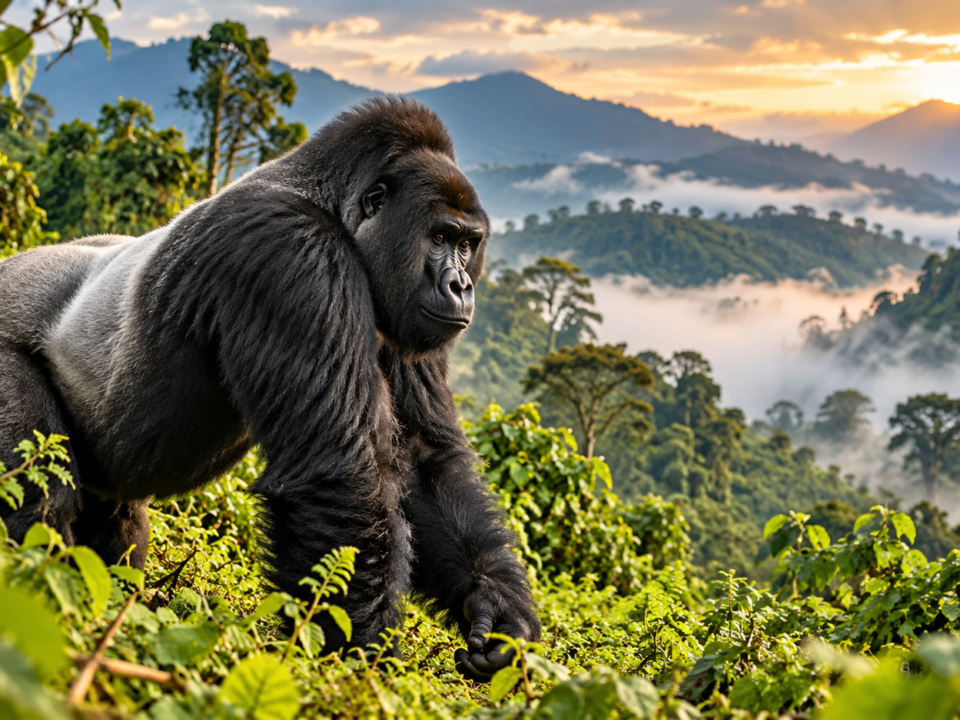
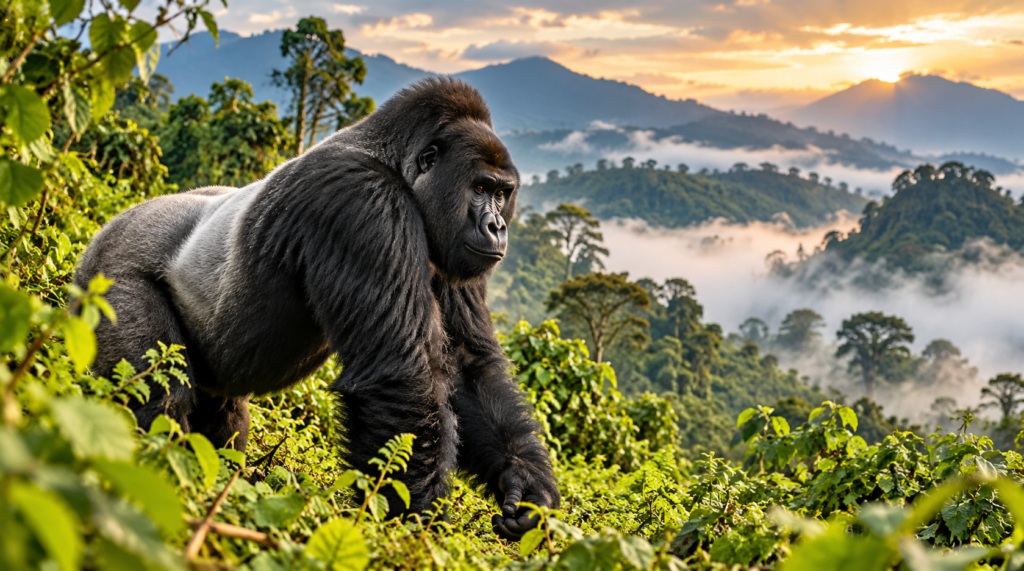
A magnificent silverback mountain gorilla resting in its natural forest habitat. Explore 7 amazing tips for gorilla trekking for overweight travelers in Uganda with Pridemark Safaris.
Tip 1: Describe Your Mobility and Hiking Experience Honestly
Before booking, tell your safari planner what a normal active day looks like. Can you walk for an hour on uneven ground? How do you feel on hills or stairs? Do you use a walking aid? Do you need frequent rests? These answers are more useful than a clothing size or a number on a scale.
You can share limitations privately and ask how that information will be communicated to park personnel. Be especially clear about knee pain, balance concerns, heat intolerance or past difficulty at altitude. This enables better preparation, though it does not guarantee assignment to a short or easy trek.
Tip 2: Ask About Trekking Groups and Route Expectations
On the morning of trekking, rangers brief visitors and organize groups. Visitors can communicate mobility concerns and request consideration for a less demanding assignment where operationally possible. However, gorillas move freely, and terrain and distance cannot be guaranteed. Do not rely on an advertised “easy gorilla trek” as a promise.
Ask Pridemark Safaris what the operator can request, what the park decides, and what options exist if the planned route feels beyond your abilities. A flexible itinerary with adequate time in the region is generally more comfortable than rushing between long road transfers and early-morning activities.
Tip 3: Hire a Local Porter
A porter can carry a daypack and may help steady you on difficult sections, subject to park practices and individual capability. This can make a substantial difference when crossing muddy ground or climbing. Hiring a porter also provides income to people living around the protected area.
Agree on the service and fee before starting, and carry only essentials such as water, rain protection and medication. A porter is not a medical professional and cannot remove the risks of a challenging mountain hike. If you may need more extensive mobility assistance, discuss that separately rather than assuming one porter will be enough.
Tip 4: Ask Whether a Sedan Chair Is Suitable
In parts of Bwindi, locally arranged carrying services—sometimes described as sedan chairs or stretchers—may be available for travelers who cannot comfortably walk the entire route. These services require a team of carriers and advance coordination. Availability, equipment, pricing, capacity and weight limits are not universal and must be confirmed for the exact sector and date.
A sedan chair is not an automatic solution for every traveler or route. Ask about safe handling, terrain limitations, the number of carriers, contingency plans and what happens if conditions change. Do not pay for a service based solely on a generic online claim that “anyone can be carried.”
Tip 5: Choose Supportive Gear and Practice Before Traveling
Comfortable, broken-in hiking boots with reliable grip are important. Wear moisture-managing clothing, long trousers and layers that allow easy movement. Gardening-style gloves can be useful when holding vegetation for balance, while a waterproof jacket helps during sudden rain.
Trekking poles may assist some visitors, but check with your guide about appropriate use near gorillas. In the weeks before travel, practice walking on slopes or uneven paths at a comfortable pace, ideally after consulting a clinician if you have relevant health concerns.
Build confidence and endurance gradually; this is not a crash fitness or weight-loss program. Your aim is to learn how your body responds to sustained movement and to identify what support you need.
Tip 6: Plan Rest, Hydration and Realistic Travel Days
Gorilla trekking usually starts early, so a lodge near your designated briefing point can reduce morning travel stress. Ask about stairs, paths between rooms and dining areas, vehicle step height and bathroom accessibility before reserving accommodation.
Carry enough drinking water and food as permitted by park rules, and pace yourself during the approach. Uganda’s mountain weather may feel cool at first but strenuous climbing can still be tiring. If you need regular medication, keep it accessible and ask a clinician about travel, altitude and exertion. Schedule a lighter day after trekking rather than immediately committing to another demanding hike or an exhausting transfer.
Tip 7: Put Safety and Enjoyment Ahead of Completing the Trek
There is no shame in deciding that a route is unsuitable or turning back when necessary. Tell your guide promptly if you feel dizzy, unusually breathless, faint, or experience chest pain or severe joint pain. Stop and seek appropriate assistance; do not try to push through serious symptoms to reach the gorillas.
Before departure, ask your tour operator about emergency communication, evacuation arrangements, refund and permit policies, and travel insurance that covers the planned activity.
A memorable Uganda safari can include boat cruises, wildlife drives, community experiences and forest scenery even if you choose not to trek. The best trip is one that respects your limits and leaves you with positive memories.
Bwindi or Mgahinga: Which Park Should You Consider?
Bwindi Impenetrable National Park has several trekking sectors, commonly identified as Buhoma, Ruhija, Rushaga and Nkuringo. Each offers distinct access roads, lodges and terrain. It is tempting to label one sector universally easiest, but actual routes depend on the gorilla group location and conditions on the day.
Some approaches may be less demanding than others; none should be represented as reliably flat.
Mgahinga Gorilla National Park is another option, with spectacular volcanic scenery and its own logistical considerations. Rather than selecting a park based on a blanket claim, ask which permit location fits your dates, what assistance is currently offered there, and how far your lodge is from the briefing point.
Pridemark Safaris can help you compare travel arrangements, while park officials remain responsible for field assignments and rules.
A breathtaking view of mountainous rainforest terrain, highlighting the natural environment and trekking conditions travelers may encounter during a Uganda gorilla safari with Pridemark Safaris.
How Much Does Assisted Gorilla Trekking Cost?
Budget for more than the gorilla permit. Your total safari may include the permit, guide and park arrangements, lodging, vehicle and driver, meals, a porter, any specially arranged carrying service and tips. Gorilla permit fees vary by visitor category and can change, so check the current schedule with the Uganda Wildlife Authority rather than relying on an old blog price.
Likewise, sedan-chair or stretcher services are not necessarily included in standard tour prices. Request a written quote showing exactly what is covered, whether the service is confirmed, any weight or equipment restrictions, cancellation conditions and additional payments due on the day.
Be wary of prices presented as fixed for every visitor and every sector. The cheapest itinerary is not always the best value if it adds long transfers, poor rest or inaccessible accommodation.
Health, Fitness and Accessibility Questions to Ask Before Booking
If you have a health condition that may affect strenuous activity, speak with your healthcare professional before making non-refundable commitments. Explain that you may hike at elevation on slippery, steep ground for an unpredictable length of time.
Travelers with mobility disabilities or larger bodies should be treated as individuals; neither a diagnosis nor body size alone describes what support will be effective. Ask your insurer whether gorilla trekking, evacuation and any pre-existing conditions are covered.
Also consider malaria prevention and routine travel-health planning with a qualified travel-health provider. Check your airline’s mobility-assistance policies and whether your safari vehicle and lodge can accommodate your requirements. Sharing practical needs early is the best way to avoid last-minute surprises.
A Comfortable Sample Uganda Gorilla Safari Itinerary
A slower-paced itinerary might begin with arrival and an overnight stay near Entebbe, followed by a dedicated travel day to the southwest. Spend the next day resting, checking equipment and discussing the trekking briefing with your guide.
Trek on the following morning only if conditions and your health make it appropriate. Leave the afternoon open for recovery. A further night near the park allows a less hurried departure, and your safari can continue with a relaxed boat cruise or game drive elsewhere in Uganda if suitable.
This is an illustrative plan, not a guaranteed schedule. Actual driving times, lodge availability, permit sectors and activities depend on your dates. If you prefer to avoid a long road transfer, ask whether a domestic flight plus a shorter vehicle journey is available and practical for your route.
Alternative Uganda Safari Activities
A gorilla trek is not the only way to experience Uganda’s wildlife. Depending on the destination and conditions, game drives may offer chances to see elephants, antelope, buffalo and other species from a vehicle.
Boat-based wildlife viewing can provide a different perspective with less walking, though boarding access should be checked. Scenic drives, cultural visits and lodge-based birdwatching may also suit travelers who prefer lower-exertion days. Accessibility varies significantly: a boat jetty may have steps, a vehicle may sit high off the ground, and even a short nature walk may be muddy.
Ask specific questions about seating, transfers, walking distances and restroom access rather than assuming an activity is accessible because it sounds relaxed.
Plan Gorilla Trekking for Overweight Travelers with Pridemark Safaris
At Pridemark Safaris, thoughtful planning begins with a conversation about what you want from your Uganda journey.
Tell us your preferred travel dates, walking comfort, accommodation priorities and any assistance you would like us to investigate. We can help shape a realistic itinerary, explain which details require confirmation with park authorities, and discuss alternative activities if trekking is not suitable.
Our goal is to help you make an informed decision without pressure or unrealistic promises. Contact Pridemark Safaris before paying for permits or special assistance so the relevant arrangements, availability and terms can be checked.
Frequently Asked Questions About Gorilla Trekking for Overweight Travelers
Is there a maximum weight for gorilla trekking in Uganda?
There is no single general body-weight cutoff stated here for ordinary walking participation. However, specific carrying equipment or assistance providers may have operational limits. Confirm current requirements directly before booking.
Can I ask for an easier gorilla trekking group?
You can communicate your mobility needs and request consideration. Park staff control group allocation, and the gorillas’ location means no short or easy route can be guaranteed.
Can a porter carry me?
A standard porter typically carries belongings and offers practical support. Carrying a visitor requires a separately arranged team and suitable equipment where available.
Should I lose weight before booking?
There is no universal weight-loss requirement. Focus on whether the proposed activity is safe and manageable for you. A clinician can advise on relevant health concerns.
How long will I walk?
Walking time varies considerably with the group’s location, trail conditions and return route. Plan for uncertainty rather than relying on a fixed advertised duration.
What if I cannot finish?
Tell your guide immediately if you need to stop. Discuss contingency, insurance and permit terms with your operator before traveling.
Can I still enjoy Uganda without trekking?
Yes. Wildlife drives, boat cruises, scenic journeys and suitable cultural experiences can form a rewarding safari, subject to individual access needs.
A powerful silverback mountain gorilla in its natural rainforest habitat. Discover helpful advice for gorilla trekking for overweight travelers in Uganda with Pridemark Safaris.
Final Thoughts
Gorilla trekking for overweight travelers should be discussed in terms of ability, comfort and support—not stereotypes. Some larger-bodied visitors can complete demanding treks confidently; others may benefit from a porter, additional arrangements or a different safari activity.
The forest remains unpredictable, and no operator should guarantee an effortless route. With honest preparation, accurate information and respect for your choices, you can decide whether a Uganda gorilla trek belongs in your travel plans. Pridemark Safaris is ready to help you explore the possibilities.
Helpful Official Resources
For current park regulations and permit details, consult the Uganda Wildlife Authority. For destination-specific health advice, see CDC Uganda travel health guidance.
Explore more: Uganda gorilla trekking · Uganda safari packages · Contact Pridemark Safaris.
Editorial note: This guide is general travel information, not medical advice. Confirm current park policies, services, prices and health guidance before travel.