Seeing mountain gorillas in their natural habitat is one of Africa’s most memorable wildlife experiences. But if you are expecting a baby, you may be wondering: gorilla trekking for pregnant women.
The short answer is that pregnancy is not expressly listed as an automatic ban in the Uganda Wildlife Authority’s published general gorilla-tracking rules. However, that does not mean trekking is safe for every pregnant traveler. The steep terrain, slippery trails, physical exertion, remote location and infectious-disease considerations make a personalized medical assessment essential. In some circumstances, postponing the trek is the safest choice.
Gorilla Trekking for Pregnant Women in Uganda
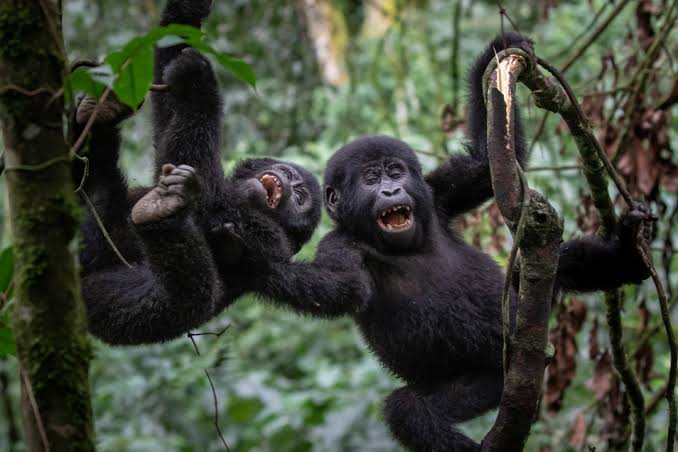
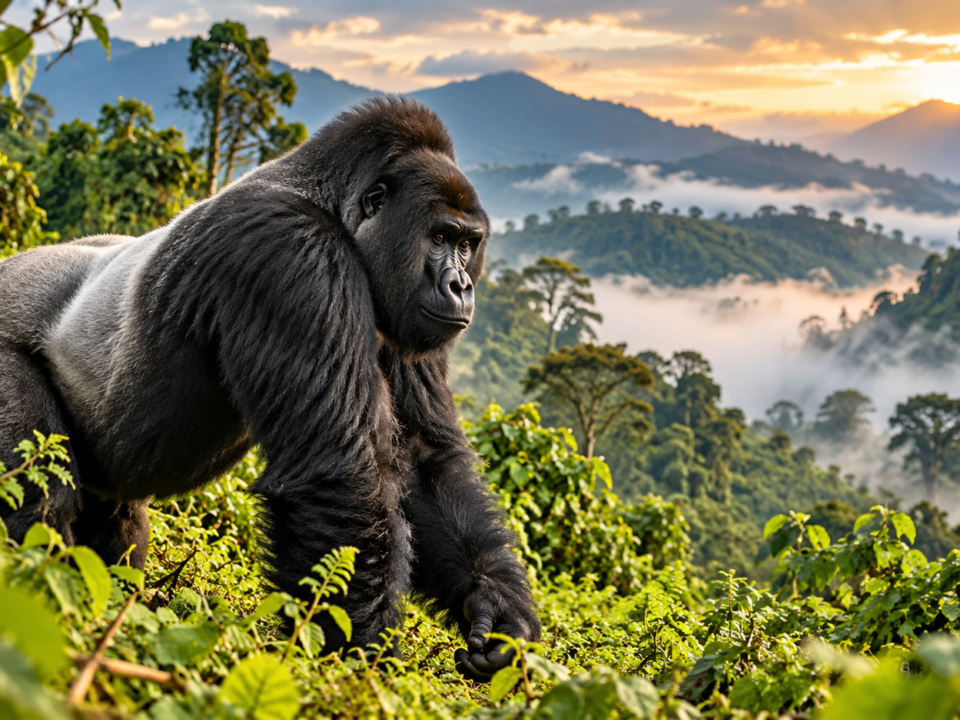
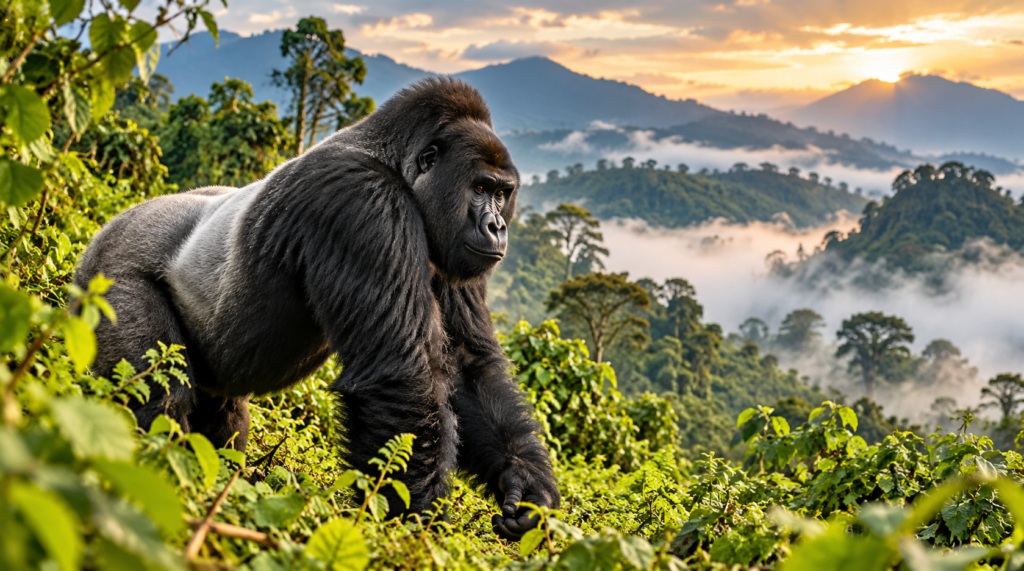
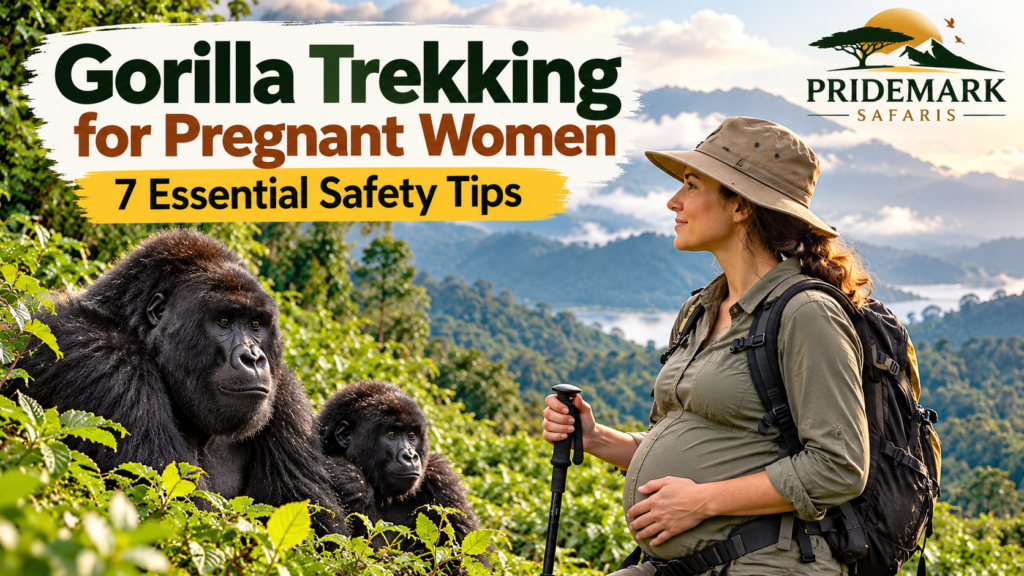
Mountain gorillas relaxing in their natural rainforest habitat in Uganda. Discover essential safety tips and travel advice for gorilla trekking for pregnant women with Pridemark Safaris.
Uganda offers gorilla trekking in Bwindi Impenetrable National Park and Mgahinga Gorilla National Park. UWA’s published general rules specify a minimum trekking age of 15, require visitors to be free from infectious illness and establish conduct rules for gorilla encounters. They do not specify a blanket pregnancy prohibition. Nevertheless, park staff may assess a visitor’s ability to participate safely, and trekking conditions vary significantly.
Permission to participate is not medical clearance. A pregnant traveler should only consider a trek after discussing her medical history, pregnancy stage, fitness, planned route and access to emergency care with her healthcare team. Even then, a trek may be inadvisable.
Why Gorilla Trekking Can Be Challenging During Pregnancy
1. Uneven and slippery forest terrain
Gorilla trekking may involve muddy slopes, exposed roots, rocks and narrow paths. Falls are a particular concern during pregnancy because balance and mobility can change. Trails cannot be guaranteed to be short, level or dry.
2. Unpredictable walking distances and exertion
According to UWA, treks may take approximately 2–7 hours, depending on conditions and where the gorillas are found. You cannot reliably know the distance or duration in advance. The CDC advises pregnant travelers against unaccustomed vigorous activity.
3. Altitude and fatigue
Uganda’s gorilla habitats are mountainous. Some travelers may experience greater breathlessness, fatigue or difficulty with exertion at elevation. Discuss the itinerary and elevation with your clinician, particularly if you are not accustomed to mountain walking.
4. Limited access to urgent medical care
Gorilla trekking takes place in remote forest areas. Reaching a medical facility may take time, and emergency evacuation can be complicated by terrain and weather. This matters if pregnancy-related symptoms develop unexpectedly.
5. Malaria and other travel-health concerns
Pregnancy increases the potential severity of malaria and the risk of pregnancy complications. The CDC recommends that pregnant travelers avoid malaria-risk destinations when possible. Uganda travel plans should therefore be discussed with a travel-medicine professional well in advance, including pregnancy-appropriate mosquito-bite prevention, medications and vaccinations.
Does the Stage of Pregnancy Make a Difference?
There is no universally safe trimester for gorilla trekking. Fitness, pregnancy complications, symptoms, altitude exposure and access to care are more important than the trimester alone.
First trimester
Nausea, dizziness and fatigue can make a long forest walk especially difficult. Medical review remains necessary even if you feel well.
Second trimester
Some travelers feel more energetic during this period, but that does not make steep, muddy trekking inherently safe. Falls, dehydration, malaria exposure and remoteness remain concerns.
Third trimester
Changes in balance, increased physical strain and the possibility of urgent obstetric needs can make remote trekking particularly unsuitable. Discuss whether travel itself should be postponed, and check airline pregnancy policies.
Travelers with a high-risk pregnancy, bleeding, significant anemia, heart or lung problems, or other complications should seek specific medical advice and should not assume trekking is appropriate.
How to Plan a Uganda Gorilla Safari During Pregnancy
If your healthcare team considers the overall trip appropriate, these steps can help you make informed decisions. They do not eliminate trekking risks.
- Get an individual medical assessment. Ideally arrange a pre-travel appointment at least four to six weeks before departure. Bring the planned itinerary and ask specifically about forest trekking, altitude, malaria and evacuation.
- Discuss the specific trekking sector. Bwindi includes Buhoma, Ruhija, Rushaga and Nkuringo. Routes differ, but no sector guarantees an easy trek. Ask Pride Make Safaris to communicate your mobility concerns to the relevant park team before booking.
- Ask about support arrangements. Porters can help with bags and difficult sections, but they cannot remove the risks of falls or medical emergencies. Never rely on an assumed short route or guaranteed porter-assisted evacuation.
- Review the cancellation terms. Gorilla permits are limited and refund or rescheduling rules can be restrictive. Confirm the current written terms before paying, especially if your medical circumstances may change.
- Plan transport and medical access. Choose a realistic itinerary with rest breaks and confirm where appropriate obstetric care could be obtained. Consider insurance that expressly covers pregnancy-related complications and medical evacuation.
- Carry essentials. If cleared for travel, pack sturdy walking footwear, rain protection, safe drinking water, snacks, prenatal records, prescribed medications and your clinician’s contact details.
- Be prepared to cancel the trek. If you feel unwell, experience warning signs or your clinician advises against exertion, do not trek. Inform the guide and seek medical care when appropriate.
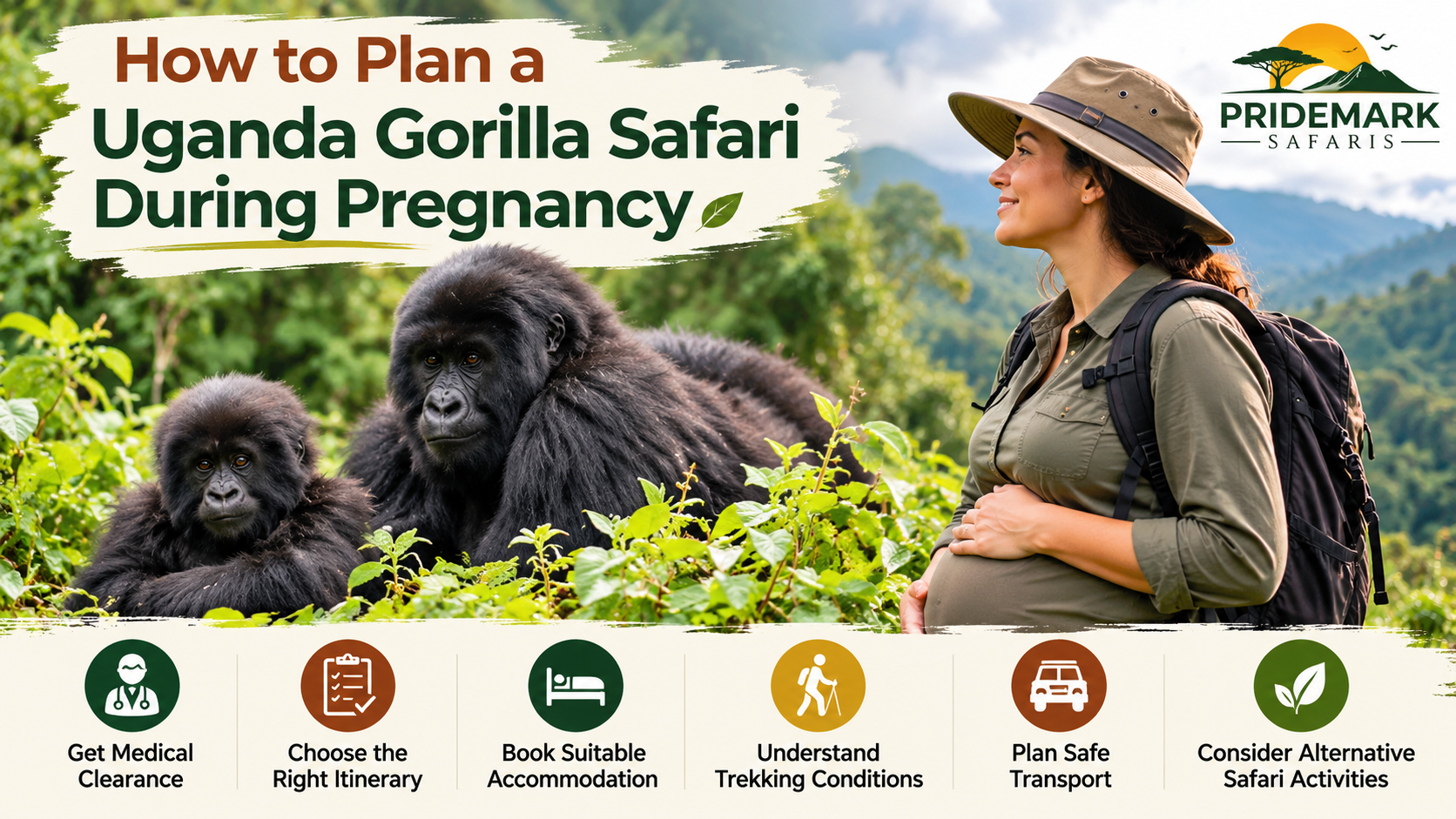
Planning a gorilla safari during pregnancy requires medical guidance, careful itinerary planning, and an understanding of trekking conditions. Explore Uganda safari options with Pridemark Safaris.
Can You Request an Easier Gorilla Trek in Bwindi?
You can communicate your fitness and mobility limitations before trekking and ask whether a less demanding group assignment might be possible. However, no operator or ranger can guarantee an easy, short or flat trek: gorillas move freely, and the actual trail conditions depend on their location. For a pregnant traveler, a requested easier route should never replace medical clearance or an honest evaluation of whether to participate at all.
What About Gorilla Trekking Permits?
Every visitor needs a valid gorilla trekking permit. Availability, prices, entry rules and cancellation policies may change. Check the latest information through the Uganda Wildlife Authority or ask Pride Make Safaris for a tailored quotation. Do not commit to a nonrefundable permit until you understand the medical and financial implications.
Gentler Alternatives to Gorilla Trekking in Uganda
If your doctor advises against gorilla trekking, Uganda still offers memorable experiences that may be easier to adapt to your needs, subject to medical clearance for the destination and travel itself:
- Scenic wildlife drives: Consider a customized game drive with frequent breaks and a comfortable vehicle, while recognizing that rough roads and long travel days may still be unsuitable.
- Relaxed lodge stays: Enjoy views, birdwatching from accessible areas and downtime in a well-located lodge.
- Cultural visits: Arrange short, accessible community or craft experiences rather than strenuous walks.
- Postpone the gorilla trek: Save the forest encounter for a future trip when you can enjoy it without pregnancy-specific risks.
Our Uganda safari itineraries can be customized around comfort, pacing and the advice of your medical team.
Why Plan Your Uganda Safari With Pride Make Safaris?
At Pride Make Safaris, we believe a great journey should fit the traveler, not the other way around. Tell us about your preferred travel dates, interests and mobility requirements, and we can help you explore appropriate itineraries, communicate with park authorities about practical arrangements and understand booking conditions. We cannot provide medical clearance or promise that a gorilla trek will be safe.
Plan a Thoughtful Uganda Safari
Interested in gorilla trekking or a gentler wildlife experience? Contact Pride Make Safaris to discuss a personalized Uganda itinerary before booking your permits.
Explore more: Gorilla Trekking in Uganda | Uganda Safari Packages
Best Time for Gorilla Trekking for Pregnant Women in Uganda
Choosing the right season is an important part of planning gorilla trekking for pregnant women in Uganda. The country’s tropical rainforest climate means trekking trails can become muddy, slippery, and physically demanding, particularly during periods of heavy rainfall.
Uganda generally experiences drier conditions from June to September and December to February. These months may offer more manageable trekking conditions in Bwindi Impenetrable National Park and Mgahinga Gorilla National Park. However, rain is possible throughout the year, and no season guarantees an easy trek.
Why the Dry Season May Be Preferable
During relatively dry months, some forest trails may be less muddy, reducing certain slipping hazards. Nevertheless, gorilla trekking involves uneven terrain, steep slopes, high elevations, and unpredictable walking distances.
Pregnant travelers should consult their obstetric healthcare provider before booking. Medical advice should consider the stage of pregnancy, fitness, malaria prevention, travel vaccinations, access to emergency healthcare, and the physical demands of trekking.
Planning Your Safari with Pridemark Safaris
Pridemark Safaris can help travelers explore suitable accommodation, transportation, trekking arrangements, and alternative wildlife experiences in Uganda. Pregnant visitors should confirm their medical fitness to travel and participate before making non-refundable bookings.
For information about gorilla trekking regulations and permits, visit the Uganda Wildlife Authority.
Frequently Asked Questions
Is gorilla trekking in Uganda prohibited for pregnant women?
UWA’s published general gorilla trekking rules do not state a blanket pregnancy ban. However, individual fitness, health and park requirements matter. Confirm with UWA and seek medical clearance before considering a trek.
Is gorilla trekking safe during the second trimester?
Not necessarily. Although some pregnant travelers feel better in the second trimester, slippery slopes, unpredictable walking times, malaria exposure and limited emergency access still pose risks. Your obstetrician should advise based on your circumstances.
Can pregnant women hire a porter for gorilla trekking?
Porters may help carry belongings and provide assistance on challenging ground, subject to local arrangements. They cannot guarantee a safe route or eliminate medical and fall risks.
Can a pregnant woman request a short gorilla trek?
You can ask about a less strenuous assignment, but the duration and difficulty cannot be guaranteed because gorillas move within the forest.
Should I book a gorilla permit before consulting my doctor?
No. Seek medical and travel-health advice first, then check the latest permit terms and potential cancellation costs before making a commitment.
What should I do if my doctor advises against gorilla trekking?
Consider a relaxed safari itinerary, a lodge-based holiday or postponing the gorilla encounter until after pregnancy and recovery. Ask your healthcare team about the suitability of any alternative travel.
Final Thoughts: Should Pregnant Women Go Gorilla Trekking in Uganda?
Pregnancy does not automatically mean that park rules forbid gorilla trekking, but the experience can involve meaningful health and safety risks. There is no guaranteed easy route, and the remote forest setting makes prompt medical attention more difficult. The best decision is one made with your obstetrician and travel-medicine clinician, with up-to-date guidance from UWA.
Whether you decide to trek, choose a gentler Uganda safari or return for the gorillas another time, Pride Make Safaris can help you plan around your travel priorities.