This guide from PrideMark Safaris explains the terrain, the role of rangers and porters, ways to prepare, and the questions to ask before booking. It also separates realistic assistance from promises nobody can make. If your fear is severe or affects balance and movement, professional health advice may be important before travel.
Can You Go Gorilla Trekking With a Fear of Heights?
Yes, many travelers who dislike heights can consider a gorilla trek in Uganda, but the decision depends on what triggers their anxiety and how they manage uneven ground. Gorilla trekking is a guided forest walk rather than a ropes course or cliff-climbing activity. Nevertheless, steep hillsides, exposed-looking slopes, and muddy descents can be uncomfortable for someone who fears losing balance.
The important distinction is between fear of looking down from a high place and fear of walking on an incline. A person who dislikes balconies may cope well under a forest canopy, while someone who panics on narrow paths could find some routes difficult. Describe your particular triggers before booking instead of assuming every highland trail feels the same.
Gorilla trekking with a fear of heights calls for realistic expectations rather than promises that the route will be flat. The gorillas move through natural habitat, and trackers follow their location on the day. Even if a route begins gently, the group may encounter slippery roots, a short steep bank, or vegetation that requires careful footing.
Park guides manage the trek and explain how to move through difficult sections, but they cannot remove every slope or guarantee a particular gorilla family will remain near a trail. The safest approach is to discuss your comfort level early, wear reliable footwear, and accept that conditions may require changing your plans.
For many guests, the most intimidating moment is not the gorilla encounter but the anticipation of the hike. Understanding what happens at the briefing, how a group moves together, and when to ask for assistance can make the day more predictable. Predictability matters when anxiety is linked to unfamiliar terrain.
A visitor who experiences severe panic, dizziness, or an inability to move safely on slopes should seek appropriate professional advice before committing to a remote trek. Neither a safari operator nor a park ranger can diagnose a phobia or promise that an individual will be comfortable. Safety must come before completing the activity.
When you ask PrideMark Safaris about suitability, share specific examples such as difficulty with steep stairways, narrow trails, or slippery descents. This helps the team discuss realistic logistics and communicate your concerns to the relevant local staff, without promising a special route or a guaranteed easy trek.
A useful first step is to identify the difference between discomfort and an unsafe reaction. Feeling nervous while looking at a hillside is not the same as freezing, losing balance, or becoming unable to follow instructions. This distinction can guide your decision and help a ranger understand your needs. If uncertainty remains, plan a conversation with a qualified professional before traveling rather than testing your limits for the first time in a remote forest.
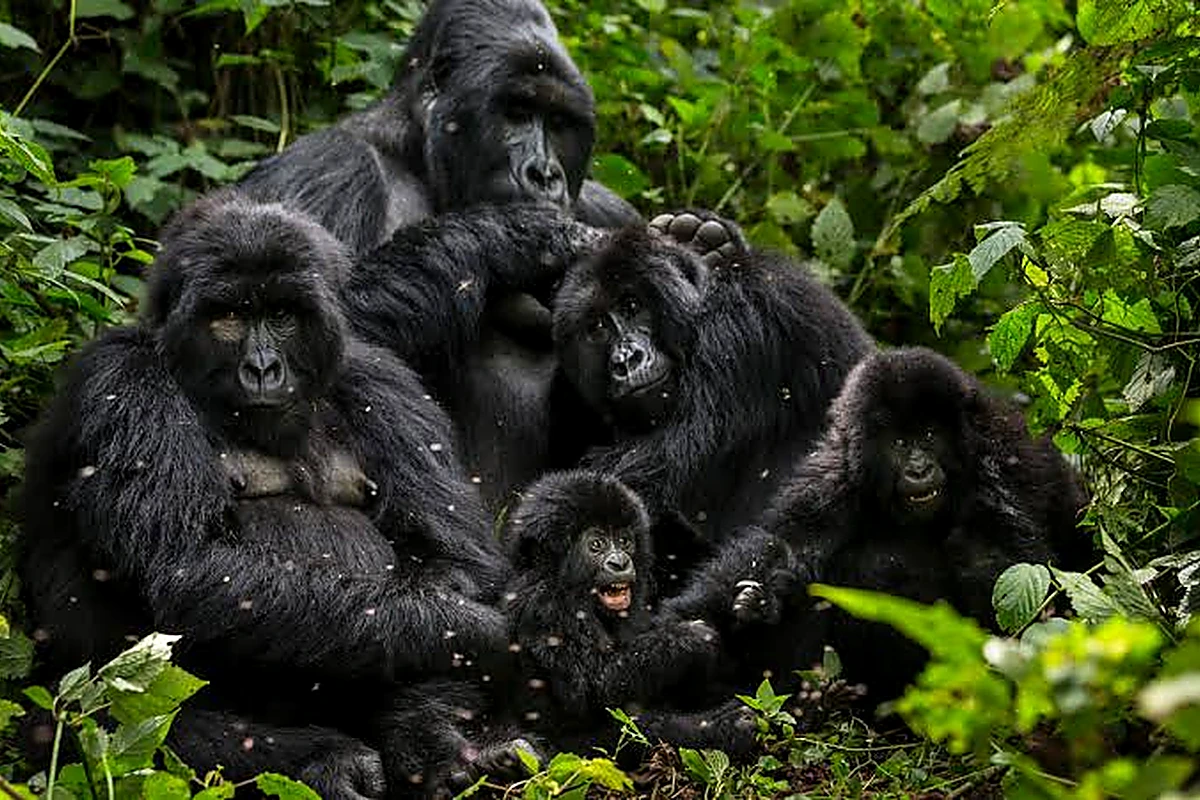
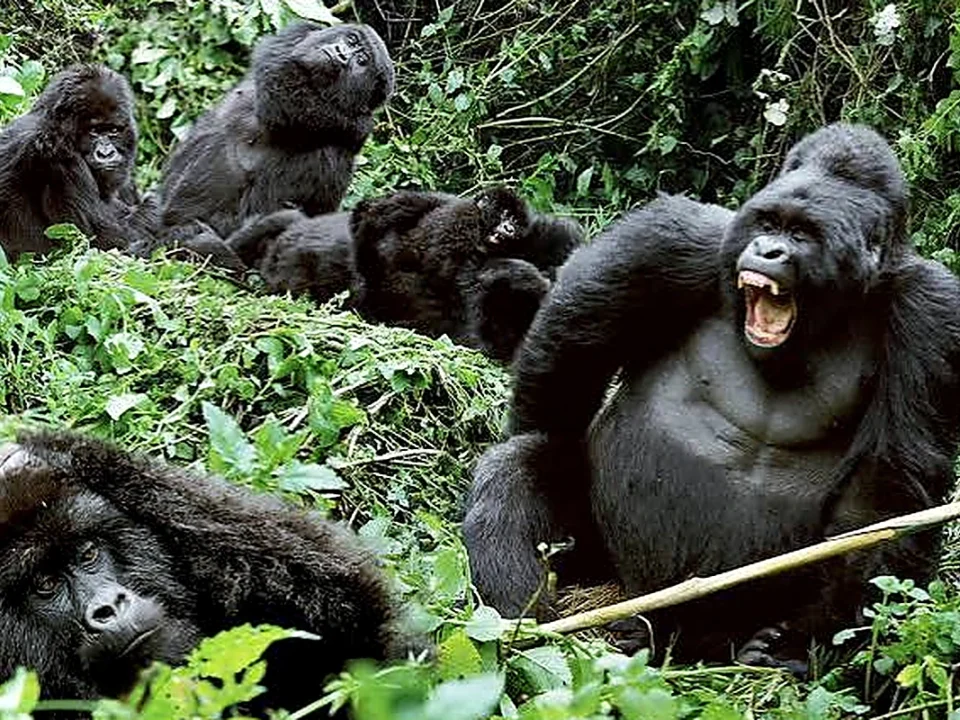
A family group of mountain gorillas rests together among lush rainforest vegetation.
How Steep Are the Trails in Bwindi?
Bwindi Impenetrable National Park is a mountainous forest with valleys, ridges, dense vegetation, and frequently damp ground. Its famous biodiversity is part of the attraction, but the same landscape can make walking demanding. Visitors should expect a natural forest environment rather than a constructed tourist path with railings and predictable steps.
In Bwindi, the starting point matters because the park has several trekking sectors: Buhoma, Ruhija, Rushaga, and Nkuringo. These are distinct access areas, not interchangeable entrances to one short walking route. Your permit sector determines where you report, while the exact gorilla family and route are allocated through park procedures.
People sometimes describe one Bwindi sector as easier than another, yet such comparisons can mislead. Elevation, current weather, the family location, and the path taken all affect difficulty. A visitor may have a relatively manageable outing in a rugged area or a demanding walk where they expected a straightforward approach.
Gorilla trekking with a fear of heights can feel different when a slope is heavily vegetated. Dense plants may reduce the sensation of exposure, but they can also conceal roots and uneven ground. Keep your attention on the next few steps and use the walking aid correctly rather than watching distant drops through gaps in foliage.
Rain can turn firm earth into slick clay and make steep sections more tiring. Even in a drier period, shaded forest areas may remain wet. Hiking boots with dependable grip, a measured pace, and deliberate steps are more useful than assuming that the weather forecast alone will determine how easy the trek becomes.
The Uganda Wildlife Authority explains that trekking requires moderate fitness and can take several hours, depending on gorilla movements. Treat published duration ranges as general guidance, not a personal promise. A route that feels manageable for one person may take more concentration and effort for someone who is anxious on slopes.
Before selecting accommodation, confirm the trekking sector attached to your permit. Staying near the correct briefing point reduces stressful early travel and helps you arrive prepared. PrideMark Safaris can discuss suitable lodge locations and transfer arrangements while making clear that only park personnel control the trekking allocation.
The length of the walk is only one part of the challenge. Short but steep sections can demand more concentration than a long gentle path, particularly when soil is wet. Consider practicing uphill and downhill movement with your actual hiking boots and a small daypack. Familiarity with equipment can reduce avoidable distractions, although it cannot predict the precise terrain or wildlife location you will encounter in the park.
Will You Encounter Cliffs, Ridges, or Exposed Drop-Offs?
Gorilla trekking is not normally described as a cliff-edge sightseeing excursion, but it takes place in steep highland terrain where slopes and ridgelines exist. It would be inaccurate to guarantee that you will never see a drop-off. The route is shaped by where gorillas are found and by the judgments of the park team.
Some paths pass through thick forest with little distant visibility, while other stretches may reveal open hillsides or valleys. The appearance of a slope can be more distressing than its technical difficulty. If seeing an open drop is your principal trigger, explain that clearly during planning and again at the park briefing.
Gorilla trekking with a fear of heights becomes more manageable when visitors distinguish an actual footing hazard from an uncomfortable view. A ranger may be able to indicate where to place your feet or suggest a steadier line through a section. However, no guide can guarantee that every part of the trek will feel psychologically comfortable.
When approaching a difficult bank, avoid rushing to keep pace with confident walkers. Plant your foot on secure ground, keep your hands available for balance, and ask for instructions before moving. Sudden movements, particularly on wet soil, are more hazardous than taking a few extra seconds to assess the terrain.
If you feel overwhelmed, tell the ranger promptly rather than silently continuing until you are exhausted. The team can assess what support is feasible and whether continuing is sensible. A pause may help some visitors, but persistent panic or unsafe movement may require ending participation instead of pushing toward the gorillas.
You should also consider the return walk. Reaching the gorillas is not the end of the physical outing, and a descent can feel more intimidating than the climb. Save enough energy, drinking water, and concentration for the journey back, even if the encounter itself is the highlight of your trip.
Photographs of mountain gorillas often show peaceful clearings and close-up wildlife, not the full approach route. Avoid judging trekking difficulty from social media images alone. Ask about realistic terrain and accept that natural conditions can change quickly, especially after rainfall or when trackers adjust the path.
If you are concerned about exposure, consider how you respond to a wide trail beside a slope compared with a narrow path hidden by vegetation. Both may be physically manageable yet feel very different. Share this information without embarrassment during planning. The purpose is to give the team accurate information, not to secure an impossible promise that every view and every step will match your preference.
Trail situations and sensible responses
| Situation | Why it may feel difficult | Practical response |
|---|---|---|
| Muddy descent | Fear of slipping or losing control | Slow down, shorten steps, and ask the ranger for guidance |
| Open hillside | Feeling exposed when looking into a valley | Focus on secure footing and communicate your discomfort |
| Roots and uneven soil | Unpredictable steps and poor balance | Use suitable boots and a walking stick where appropriate |
| Long return walk | Fatigue can worsen anxiety | Pace yourself and keep water and energy for the return |
Is Mgahinga Easier Than Bwindi for Visitors Afraid of Heights?
Mgahinga Gorilla National Park lies in the Virunga volcanic landscape and offers a different forest setting from Bwindi. Some travelers prefer its scenery or its smaller-scale itinerary, but volcanic terrain is not automatically flatter. The presence of slopes and the gorillas’ movements still influence the difficulty of an individual trek.
It is tempting to search for a single park that guarantees an easy route for people who fear heights. Neither Bwindi nor Mgahinga can provide that guarantee. What matters is your trigger, the conditions on the trekking day, the walking demands, and the guidance available from the authorized park team.
Gorilla trekking with a fear of heights should not be booked on the assumption that Mgahinga is a universally easier substitute. Some paths may feel open, while other sections involve uneven forest or volcanic ground. Ask for a balanced explanation of both parks rather than relying on broad labels such as easy or difficult.
Mgahinga can fit an itinerary that also includes golden monkey tracking, although that second activity has its own walking requirements. Travelers should not assume that adding another primate excursion will provide a rest day. Think about the cumulative physical demands and whether you would enjoy each activity independently.
If you want to compare itineraries, the published four-day Mgahinga gorilla and golden monkey safari offers a useful planning starting point. Read the actual itinerary and discuss whether its schedule, transfers, and activity combination suit your comfort level before requesting changes or confirming a booking.
Bwindi offers multiple designated trekking entry points, which may create different logistical options, but access to a particular sector depends on permit arrangements. A tour company cannot promise that a preferred sector will provide an easy gorilla family or a route without any exposed slopes.
PrideMark Safaris can help compare park access, travel time, lodge positioning, and overall itinerary pacing. The practical goal is not to eliminate all uncertainty but to make an informed choice with enough flexibility to respond if the terrain proves more difficult than expected.
Choosing between the two parks also involves travel logistics, accommodation, and the wider activities you hope to enjoy. A beautiful itinerary can still be unsuitable if it leaves you tired before trekking day. Compare the whole journey, including transfers and rest, rather than treating the forest walk as an isolated event. A well-paced schedule helps you arrive with the concentration needed for uneven terrain and changing conditions.
How Rangers Organize Gorilla Trekking Groups
Your gorilla trekking day begins with a park briefing at the designated entry point. Rangers explain the rules, describe the activity, and organize visitors according to the applicable procedures. This is an important moment to mention a fear of heights, balance concerns, or difficulty descending steep ground.
Park personnel make trekking assignments, and any accommodation of visitor needs depends on operational realities. A guide may take concerns into account where feasible, but no visitor should treat a request for an easier group as a contractual entitlement. The gorillas’ location and conservation requirements remain central.
Gorilla trekking with a fear of heights is often easier to approach when you know who makes decisions. Your safari driver handles transport and itinerary logistics; park rangers lead the authorized forest activity. Ask questions through the appropriate person and follow ranger instructions once the trek begins.
The group may travel along an established path before moving through less defined vegetation. The pace can change as trackers communicate information and guides assess the route. Do not interpret a slow section as a problem; careful movement is normal in forest terrain, especially when visibility or footing is poor.
Rangers may instruct visitors to leave bags or walking sticks at a suitable point near the gorillas, depending on the circumstances and safety guidance. Follow their directions rather than applying a fixed rule learned online. During the encounter, the animals’ welfare and the safety of the group take priority.
The official Uganda Wildlife Authority guidelines identify designated entry points and make clear that visitors must trek with authorized guides and valid permits. This structured system is one reason you should avoid arranging an independent forest walk or attempting to find gorillas outside the authorized trekking process.
If you need to stop, speak up before the rest of the group moves too far ahead. Clear communication is more helpful than trying to hide your concern. A ranger can assess the immediate situation, but you must remain prepared for the possibility that your safest option is not to continue.
The briefing is also a chance to check your understanding of basic behavior near the gorillas. Ask when photographs may be taken, how to respond to ranger signals, and where you should stand if the group stops. Clear instructions reduce unnecessary uncertainty. The exact circumstances of an encounter cannot be scripted, so the ability to listen and respond calmly remains more valuable than memorizing a fixed sequence of events.
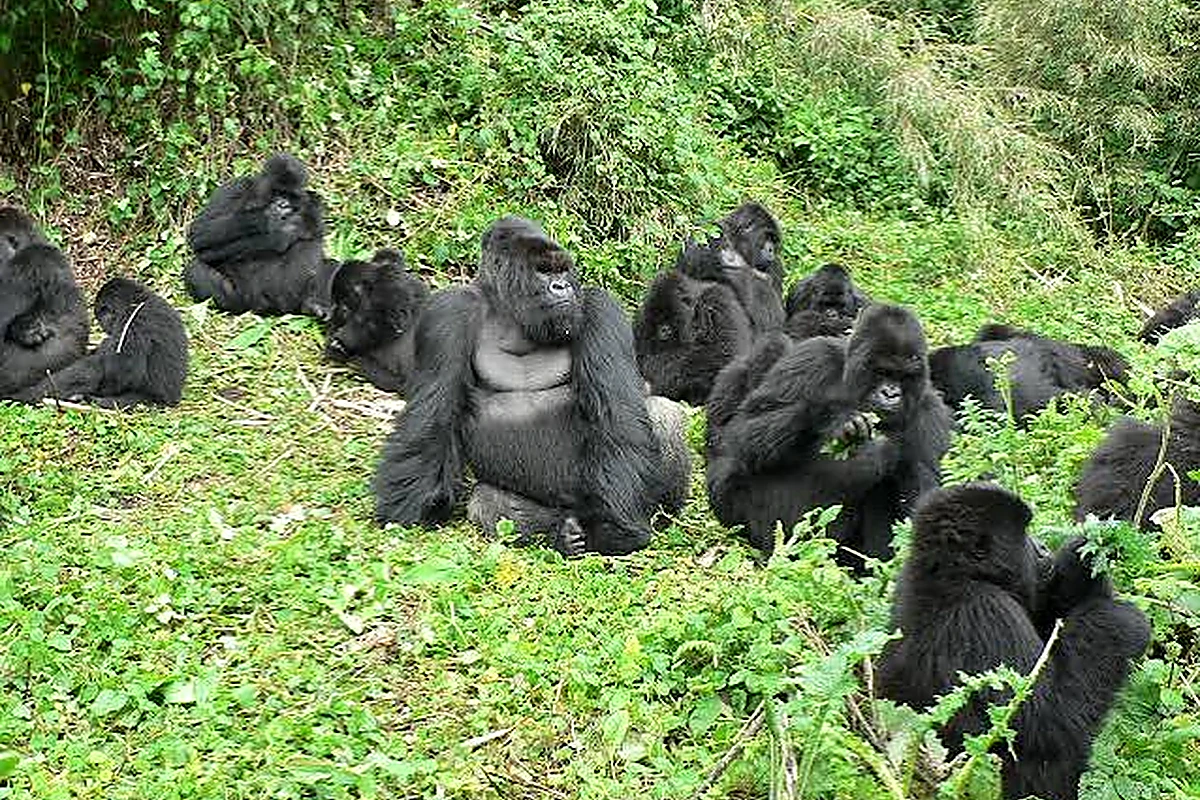
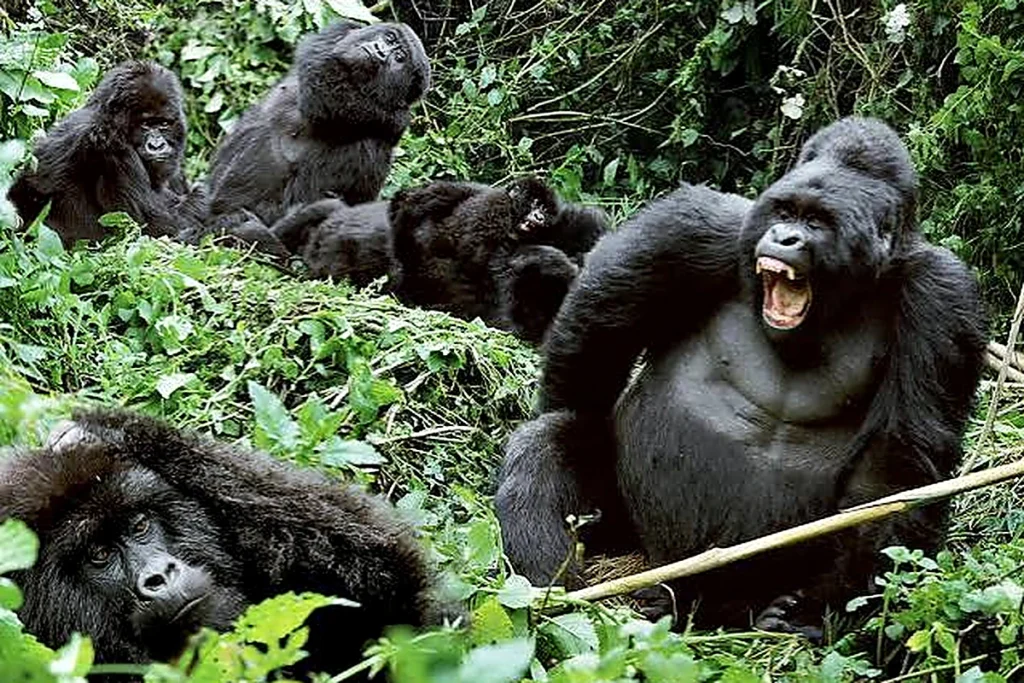
A group of mountain gorillas gathers in a lush forest clearing, with several adults and younger gorillas resting among the vegetation.
Can Walking Sticks and Porters Help With Steep Trails?
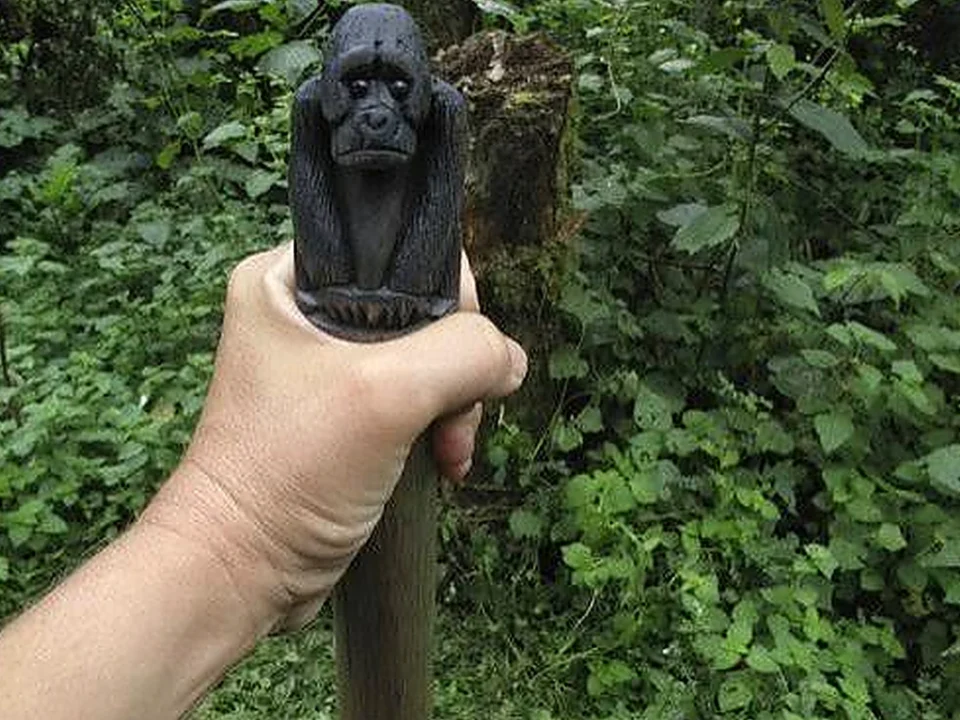
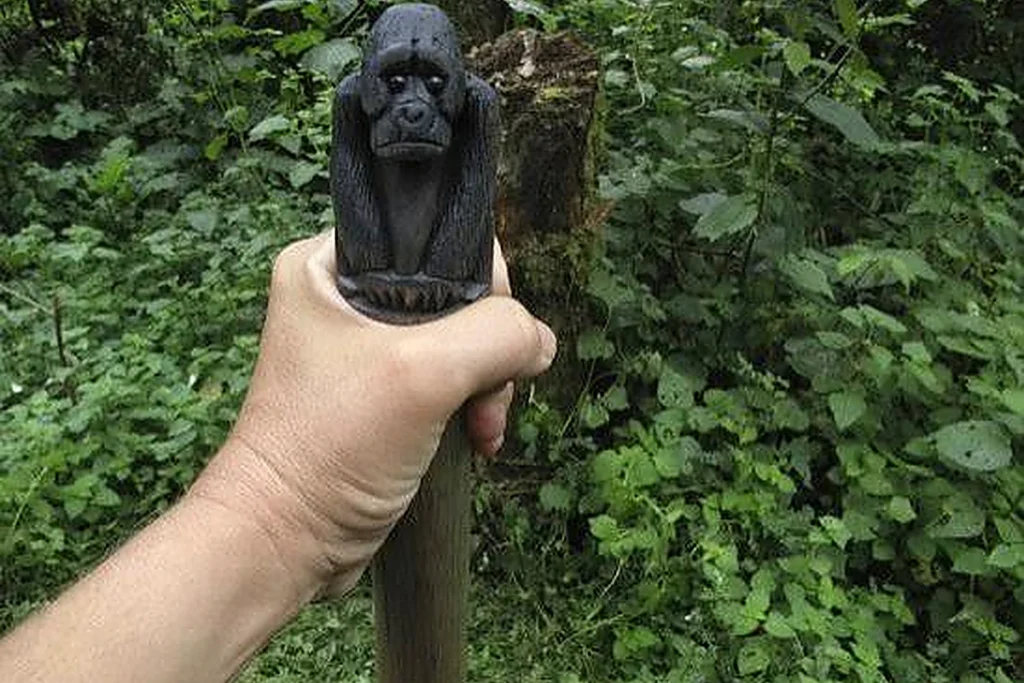
A walking stick can provide an additional point of contact on muddy ground, but it does not turn a steep trail into level terrain. Use it to test footing and improve balance while keeping your weight distributed sensibly. A stick is especially helpful when stepping over roots or negotiating a short descent.
Gorilla trekking with a fear of heights may be less stressful when a visitor feels physically stable. Proper hiking boots, a correctly sized walking stick, and an unhurried pace can support that stability. However, equipment cannot replace safe judgment, and an anxious person should not lean on a stick as if it were a handrail.
Local porters may be available to carry a daypack and offer practical assistance on difficult sections, subject to availability and the arrangements at the trekking point. Their help can conserve energy and free your hands. Ask about the service in advance and confirm costs locally rather than assuming it is included.
A porter is not a substitute for medical support, a technical climbing guide, or a guarantee that you can finish the route. Be candid about your mobility and anxiety needs so that assistance can be planned realistically. If a section requires movement you cannot perform safely, the responsible choice may be to stop.
When descending, shorten your steps and avoid planting the stick too far ahead. On an ascent, use it for balance rather than pulling your body uphill. Listen to the ranger’s instructions because wet rocks, soft soil, and tangled vegetation require different techniques from a maintained walking path.
Keep your backpack light enough to move comfortably. Water, weather protection, necessary medication, and a few essentials matter more than carrying numerous camera accessories. The less you need to adjust or hold, the easier it becomes to concentrate on footing and respond to instructions.
For additional practical advice, see our guide to gorilla trekking with a walking stick. It explores equipment and trail use in greater detail, while this article focuses on the emotional and safety considerations of steep terrain. The exact support available always depends on the conditions and instructions at the trekking location.
Before using any walking aid, check that the grip is comfortable and the tip is appropriate for the ground. A poorly sized stick can force an awkward posture and make balance harder rather than easier. Practice on safe uneven surfaces at home if possible. On trekking day, let the ranger explain any restrictions near the gorillas and avoid swinging a pole around other visitors or wildlife.
Walking aids and support compared
| Option | Potential benefit | Important limitation |
|---|---|---|
| Wooden walking stick | Additional balance point on slippery paths | Not a substitute for safe footing or a handrail |
| Personal trekking pole | Familiar grip and adjustable length | Check whether it is suitable and permitted for the route |
| Local porter | Helps with baggage and may assist on difficult ground | Availability, cost, and degree of assistance vary |
| Park ranger | Provides route leadership and safety instructions | Cannot guarantee a flat route or remove all anxiety |
Practical Ways to Manage Anxiety on the Trail
Preparation begins well before you enter the forest. Practice walking on gentle slopes and uneven paths in a safe local setting, gradually increasing difficulty only when comfortable. This can help you learn whether your main challenge is physical balance, looking down, or the anticipation of losing control.
Gorilla trekking with a fear of heights should involve a personal coping plan rather than relying on a single trick. Some people find it helpful to focus on nearby ground, breathe steadily, and use short verbal check-ins with a companion. These are practical strategies, not treatments for a diagnosed anxiety disorder.
Avoid staring continuously at the steepest part of a hillside if doing so increases your distress. Look where your next step will land and follow the guide’s directions. At the same time, remain aware of your surroundings; keeping your gaze down should never mean ignoring branches, other walkers, or ranger instructions.
Build a little flexibility into the safari schedule. Arriving exhausted after a long transfer can make any physical activity feel harder. A well-timed overnight stay near the correct trekking entrance allows you to eat, rest, and prepare without rushing from a distant town before the morning briefing.
Tell a travel companion what support is useful. You may want quiet encouragement, a reminder to slow down, or simply enough space to concentrate. Avoid asking someone to pull you through an unstable section; physical assistance should follow guidance from the authorized team and suit the conditions.
If your fear has previously caused panic attacks, fainting, or loss of balance, consult a qualified healthcare professional about whether this activity is appropriate. Do not start or change medication solely on advice from a travel article. Remote forest conditions make advance medical planning especially important.
Celebrate good decisions, not only completion. Asking for a pause, accepting assistance, or deciding against a hazardous section can demonstrate sound judgment. The purpose of the safari is a meaningful wildlife experience, not proving that you can endure every possible trail condition.
Some travelers benefit from writing down a simple plan: tell the guide early, slow down when needed, pause at a secure point, and reassess before continuing. Keep the plan short enough to remember when anxious. It is also sensible to discuss with a companion what they should do if you need support. None of these steps removes the physical demands, but they can make your response more deliberate.
What to Tell Your Safari Operator Before Booking
When contacting a safari operator, explain exactly what makes you uncomfortable. Saying only that you are afraid of heights leaves important questions unanswered. Mention whether you struggle with narrow paths, steep descents, open viewpoints, slippery steps, or the feeling of being far from an easy exit.
Gorilla trekking with a fear of heights requires honest conversations about expectations. Tell the team about your usual walking ability, relevant mobility limitations, and whether you are comfortable hiking for several hours. You do not need to share unnecessary private medical details, but practical constraints matter for planning.
Ask which trekking sector is associated with the proposed permit and where you will stay the night before. A lodge near the correct entry point is more useful than one chosen solely for an attractive photograph. Road transfers and early starts can influence how rested you feel on trekking morning.
You should also ask how a porter can be arranged, what equipment is recommended, and what happens if you decide not to continue. Permit conditions and refund eligibility are governed by the relevant authority and booking terms. Never assume that fear or a voluntary early return automatically qualifies for reimbursement.
For a focused visit, consider the three-day Uganda gorilla trekking itinerary. Travelers who want to reduce long road journeys may also compare the three-day flying luxury safari, remembering that flying changes transfer logistics rather than the physical nature of the forest trek itself.
If you want wildlife experiences beyond the forest, a five-day gorilla and game safari can provide a broader itinerary with game drives. Those additional activities do not remove the demands of the gorilla trekking day, but they may help you design a trip that remains rewarding even if the forest walk feels challenging.
PrideMark Safaris can discuss these packages and help shape a realistic travel plan. The strongest booking decision is based on your comfort, the authorized trekking arrangements, and a clear understanding of what can and cannot be guaranteed on the day.
Ask the operator to explain what is included in a proposed quote and what requires separate payment. Porter assistance, optional activities, and itinerary adjustments may have different arrangements. Clear financial and logistical expectations help you focus on the trek rather than last-minute surprises. If you have concerns about refunds or cancellation, request the applicable written terms before paying for permits and accommodation.
How to Prepare for a Safer and More Comfortable Trek
Begin with footwear. Choose broken-in hiking boots with reliable traction and enough ankle support for your needs. Test them on uneven ground before traveling. New boots that rub or slip can make a demanding walk feel much worse, particularly when you are already concentrating on managing anxiety.
Gorilla trekking with a fear of heights also benefits from thoughtful clothing. Long trousers, a lightweight rain layer, and comfortable layers help you respond to wet vegetation and changing temperatures. Gloves may protect your hands when navigating vegetation, but avoid relying on branches for support unless the ranger indicates it is safe.
Carry drinking water, a small snack if permitted by park instructions, personal essentials, and a waterproof pouch for electronics. Keep your hands as free as possible and avoid an overloaded daypack. If you hire a porter, arrange how to access items you may need during the walk.
Plan your photography around safety rather than the other way around. Do not step backward toward a slope to frame a picture, and do not look through a camera while moving on uneven ground. Stop in a safe position before taking photographs and always follow the ranger’s rules near the gorillas.
At the briefing, explain your fear calmly and specifically. Ask about the likely terrain without expecting an exact forecast of every turn. A useful question is whether there are known difficult sections at the start, but the guide may still need to adjust the route as trackers locate the gorilla family.
Remember that wildlife viewing involves conservation rules. Follow instructions about distance, behavior, illness, and group movement, even if anxiety makes you want to hurry toward or away from an animal. The Uganda Wildlife Authority’s published guidance should take precedence over casual advice shared on travel forums.
Finally, decide in advance what would make you stop. A clear personal boundary, such as persistent dizziness or inability to place your feet securely, can prevent unsafe decisions made under pressure. A successful trip is one that respects your wellbeing and the park’s conservation requirements.
On the evening before trekking, organize your clothes and pack so you are not searching for essentials in the morning. Charge your camera, check weather protection, and confirm the reporting location with your driver. Eat and rest as you normally would before physical activity. These ordinary preparations cannot flatten a hill, but they can reduce stress and leave more attention for safe movement through the forest.
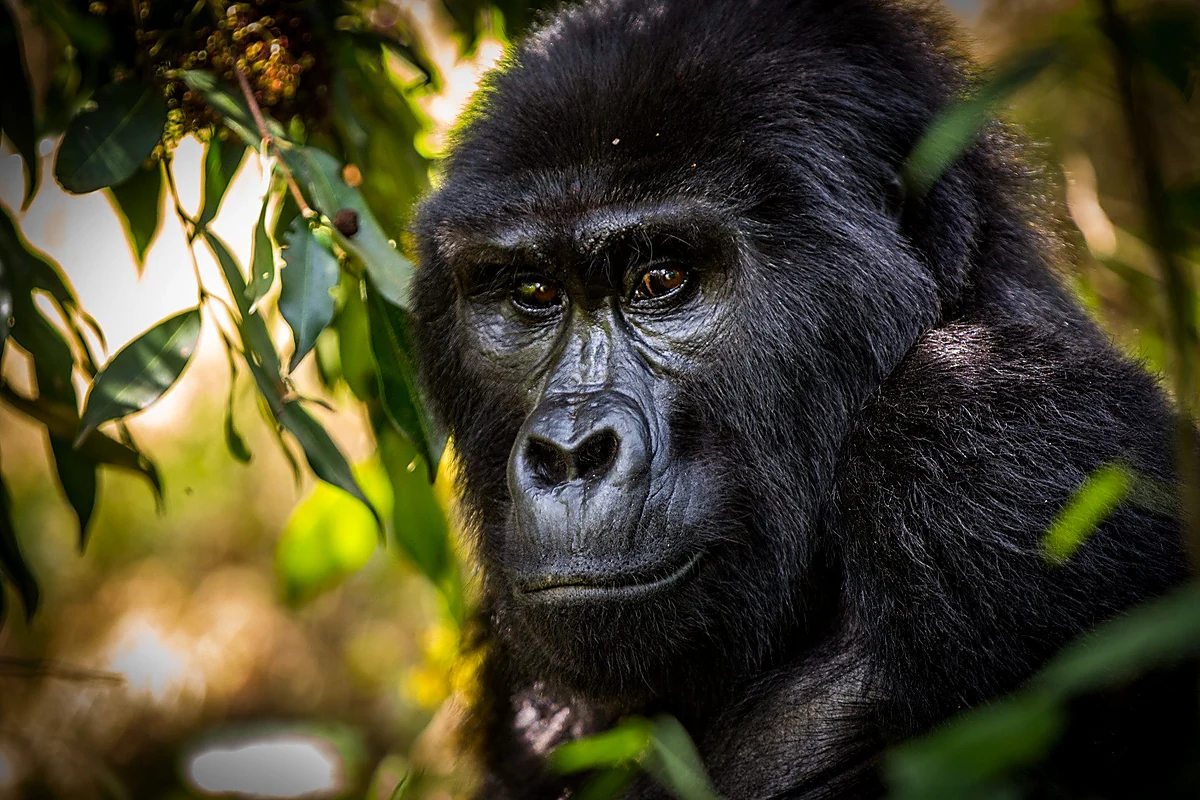
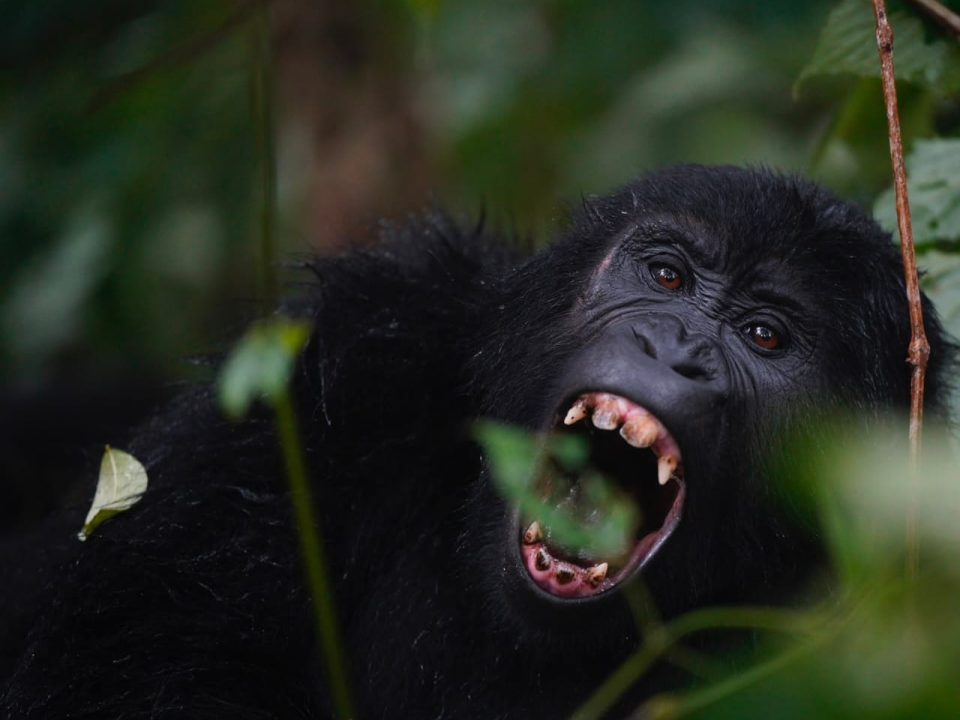
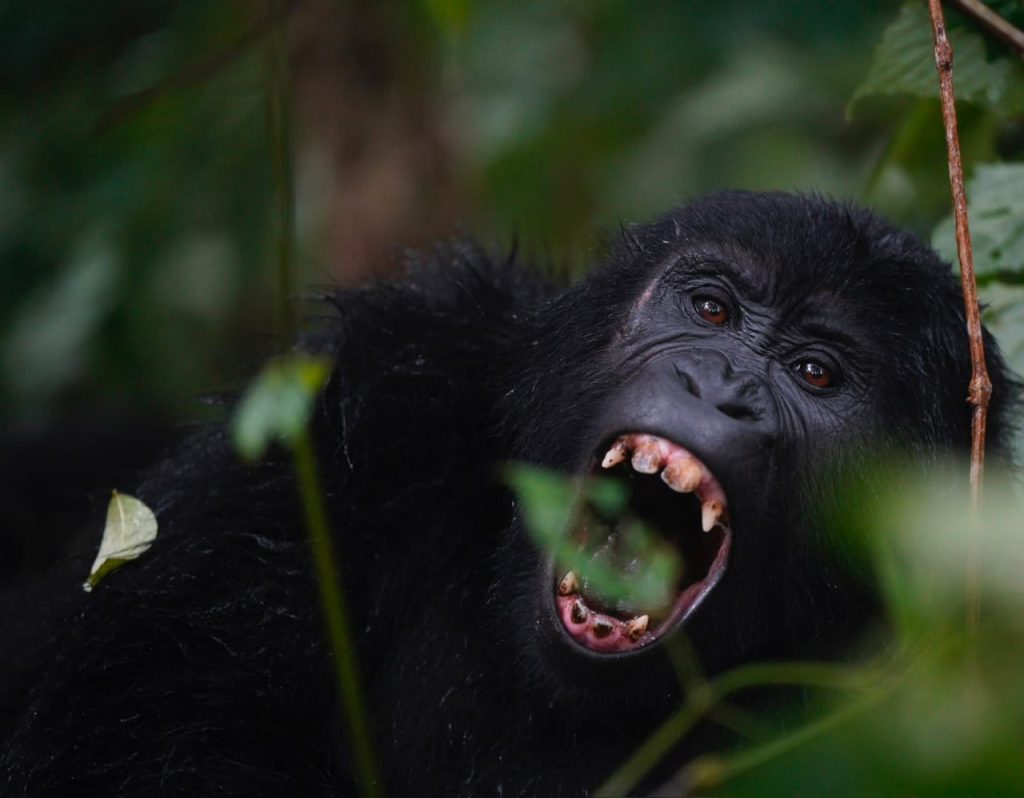
A mountain gorilla photographed up close among leafy rainforest vegetation.
Pre-trek preparation checklist
| What to prepare | Why it matters | When to check |
|---|---|---|
| Broken-in hiking boots | Grip and comfort on wet ground | Before leaving home |
| Walking stick or trekking pole | Extra balance where appropriate | Before trekking day |
| Water and light daypack | Energy and less unnecessary weight | The evening before |
| Permit sector and lodge location | Avoids a stressful early transfer | Before confirming accommodation |
| Anxiety and mobility concerns | Supports realistic communication with the team | At booking and at park briefing |
Frequently Asked Questions
Can I go gorilla trekking if I am afraid of heights?
Possibly. Many forest routes do not resemble exposed cliff walks, but the terrain can be steep and uneven. Your suitability depends on your triggers, fitness, and ability to move safely. Discuss your concerns with the safari operator and park staff before the trek.
Does Bwindi have dangerous cliffs?
Bwindi has mountainous terrain, ridges, and slopes. It would be misleading to guarantee that every route avoids exposed-looking ground. Rangers choose and manage trekking routes according to conditions and gorilla movements, so ask for realistic expectations rather than an assurance of no drop-offs.
Is Mgahinga flatter than Bwindi?
Not necessarily. Mgahinga is part of a volcanic mountain landscape, and gorilla locations change. Neither park guarantees an easy route. Compare access, logistics, and your personal comfort instead of choosing solely from generalized descriptions of which park is easier. Remember that individual trail conditions and park decisions can vary, so confirm practical details with authorized staff.
Can I request an easier gorilla trekking group?
You can explain your concerns at the briefing and ask whether your needs can be considered. However, park staff control assignments and cannot guarantee an easy family, short trek, or route without slopes. Treat any accommodation as subject to operational conditions.
Will a walking stick help with my fear of heights?
A walking stick can improve balance on uneven ground, which may make some visitors feel steadier. It does not remove steep sections or treat anxiety. Practice using one safely and follow ranger instructions about where it may be carried during the trek.
Can I hire a porter during gorilla trekking?
Porters are often available at trekking areas to help carry bags and assist with difficult terrain, subject to local arrangements. Ask your operator about availability and payment. A porter cannot guarantee completion or replace medical advice when someone cannot walk safely.
How long does a gorilla trek take?
Duration varies with the gorillas’ location, weather, and route. Uganda Wildlife Authority describes treks as potentially lasting several hours. Plan for a demanding outing and remember that you must also return from the viewing area after the gorilla encounter. Remember that individual trail conditions and park decisions can vary, so confirm practical details with authorized staff.
Can I turn back if I panic?
Tell the ranger immediately if you feel unable to continue safely. Park staff will assess what is possible in the circumstances. Do not leave the group independently or assume that an early return creates an automatic entitlement to a permit refund.
Is the gorilla viewing area on a cliff?
There is no fixed viewing platform where all encounters occur. Gorillas move naturally, so viewing takes place wherever the authorized group locates them and conditions permit. The ground may be sloping or uneven, and rangers direct visitors to safe positions.
Should I choose a flying safari to avoid steep hiking?
A flying safari can shorten some road transfers, but it does not change the forest terrain or guarantee an easier trek. It is primarily a transport and itinerary choice. Evaluate the trekking requirements separately from the method used to reach the park.
What shoes are best if I worry about slipping?
Broken-in hiking boots with good traction are generally more appropriate than smooth-soled casual shoes. Choose footwear that fits your needs and test it before travel. Grip helps, but cautious steps and following ranger guidance remain essential on muddy slopes. Remember that individual trail conditions and park decisions can vary, so confirm practical details with authorized staff.
Who should I contact to plan the trip?
Contact PrideMark Safaris with your preferred travel dates, concerns about heights, walking ability, and desired safari duration. The team can discuss permits, suitable logistics, and published packages while making clear that trekking routes and gorilla locations cannot be guaranteed. Remember that individual trail conditions and park decisions can vary, so confirm practical details with authorized staff.
Plan a Gorilla Safari That Respects Your Comfort
Gorilla trekking with a fear of heights is not automatically impossible, but the decision should be based on your own response to steep ground and the reality of Uganda’s forests. The most useful preparation combines honest self-assessment, appropriate equipment, realistic expectations, and open communication with the people responsible for your trek.
If you are comparing a short gorilla visit, a flying itinerary, or a longer wildlife safari, PrideMark Safaris can help you understand the travel arrangements and discuss practical concerns before you commit. Review the relevant package details and contact the team with your dates, walking preferences, and questions about the park briefing process.
The reward of seeing mountain gorillas in their habitat can be extraordinary, but it should never come at the expense of safety. Follow authorized ranger instructions, respect conservation rules, and remain willing to adapt when conditions change. Good planning means preparing for the forest as it is, not expecting it to become a paved path.